Bloomberg

Gates-Backed Start-Up Seeks Zambia Copper for Green-Energy Shift

(Bloomberg) — A Bill Gates-backed mining start-up agreed to invest $150 million in a Zambian project that will use artificial intelligence to explore for copper, a metal key to the green-energy transition.

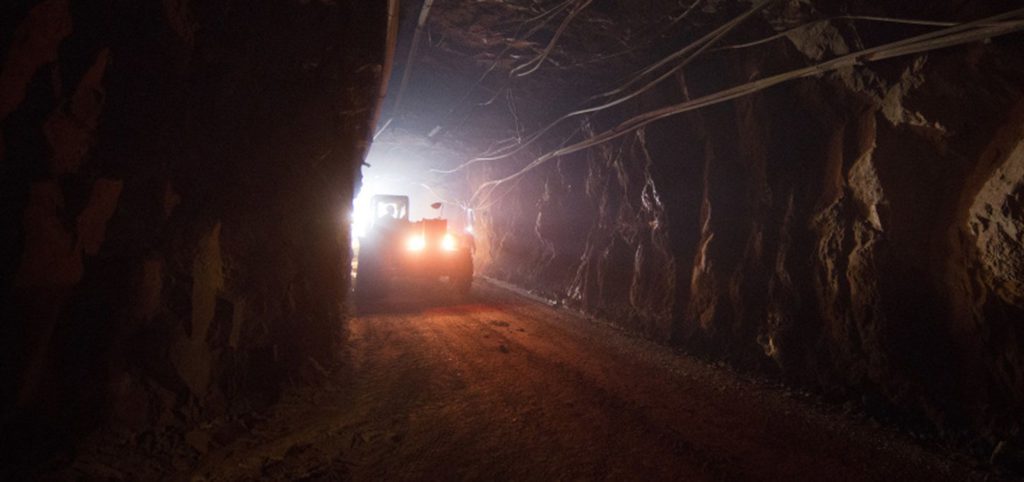
KoBold Metals — which counts Gates’s Breakthrough Energy Ventures and No. 1 miner BHP Group Ltd. among its shareholders — will use its AI technology to process drilling data and optimize exploration for copper and cobalt at Mingomba. Located near Zambia’s border with the Democratic Republic of Congo, it’s the world’s highest-grade undeveloped large deposit of copper, according to the company.

Mining companies have been warning of looming copper deficits, driven by rising demand for the metal in wind and solar farms, high voltage cables, and electric vehicles. That green revolution is spurring competition for scarce resources, with the US playing catch-up after Chinese firms long dominated mining investment in Africa.

“We’ve seen in Zambia and across the region an intense effort by the People’s Republic of China to try to lock up access to a lot of critical minerals,” Mike Gonzales, US ambassador to Zambia, said in an interview. “And so this investment is really important.”

It’s a rare US private investment in the southern African nation’s mining industry, and a boost for Zambia’s ambitions to more than triple copper production over the next decade. The country is the continent’s No. 2 producer after Congo.

Mingomba’s average copper grades are about six times higher than those found in Chile, the world’s biggest producer. High concentrations of the metal in the earth’s crust are becoming increasingly difficult to find, and there’s growing interest in a region many big miners had neglected for decades.

“This is a perfect fit for what we do as a technology-guided exploration company,” KoBold President Josh Goldman said in an interview, as the firm announced the investment on Wednesday. “We want to get the highest quality resource developed as quickly as possible.”

KoBold is buying into what will be a joint venture with the existing owners of Mingomba, EMR Capital. That private equity company, which operates the neighboring Lubambe mine, said in 2020 the new deposit could support a mine that would cost about $1 billion to develop and produce as much as 160,000 tons of copper a year. 

Those estimates — which would make it Zambia’s third-biggest copper mine — are reasonable, though the output may be even higher, according to KoBold. The project has enough copper to produce 100 million electric vehicles, according to KoBold’s Goldman. 

Sam Altman, founder of Y Combinator and chief executive officer of OpenAI, has invested personally in KoBold through his Apollo Projects vehicle. So has T. Rowe Price Group Inc. and Andreessen Horowitz, known for investing in Airbnb Inc., Lyft Inc. and Slack. 

KoBold, which raised $192.5 million in February, has hired software engineers from Google, Lyft and Apple Inc.

“None of them would’ve taken a call from a mining company, but they’re like: ‘Oh wait a second’,” said Goldman. “Cool technology and technology that we need to solve a really urgent societal problem. We’re either gonna have the metals or we’re not gonna have the electric cars.”

Michael Bloomberg, owner of Bloomberg News, is an investor in Breakthrough Energy Ventures, according to the company’s website. 

More stories like this are available on bloomberg.com

©2022 Bloomberg L.P.

Visa to Invest $1 Billion in Africa After Opening New Offices

(Bloomberg) — Visa Inc. will invest $1 billion in its business across Africa as the technology giant seeks to push adoption of digital payments across the continent.

The investment will be spread over five years, Chief Executive Officer Al Kelly said during the U.S-Africa Business Forum in Washington, DC, on Wednesday. The forum is taking place alongside the US-Africa Leaders Summit, which drew about 50 heads of state and senior government officials from African countries to address issues related to Covid-19, food security and the climate crisis.

“Visa has been investing in Africa for several decades to grow a truly local business, and today our commitment to the continent remains as firm and unwavering as ever,” Chief Executive Officer Al Kelly said in a statement. 

For Visa, there’s a business imperative: Investors have grown increasingly worried about the firm’s growth prospects in developed markets like the US, where digital payments are already widely adopted. That’s why the firm has sought to increase its presence in emerging markets. 

The company now has 10 offices across Africa after it recently established local operations in the Democratic Republic of Congo, Ethiopia and Sudan. The company also opened an innovation studio in Nairobi, its first on the continent, earlier this year. 

“Africa is an enormous opportunity for us — there are about 800 million people in Africa, about 500 million of them are yet to be banked,” President Ryan McInerney, who will take over as CEO next year, told investors last month. “As soon as the U.S. relaxed their sanctions, we opened an office in Sudan.”

Visa said the opportunity lies in the majority of Africa’s adult population who haven’t made or received digital payments yet, as well as the more than 40 million merchants there that don’t accept digital payments. 

“Over the past year Visa has continued growing our investment in Africa,” Aida Diarra, senior vice president for Visa in Sub-Saharan Africa, said in the statement. “The investment pledge outlines our long-term commitment to Africa.”

More stories like this are available on bloomberg.com

©2022 Bloomberg L.P.

Hedge Funds Drawn to Crypto’s Next Big Short After FTX Reveals Cracks

(Bloomberg) — Before Sam Bankman-Fried was arrested in the Bahamas and charged with fraud this week, and before the demise of a $60 billion crypto ecosystem decimated digital asset lenders in May, there was the industry’s original bogeyman: Tether.

A handful of hedge funds are now turning their focus back to the $66 billion stablecoin, which they warn could be the next crypto catastrophe — one that would make the implosion of Bankman-Fried’s FTX exchange look small in comparison. 


Fir Tree Capital Management and Viceroy Research are among the firms shorting Tether, according to people familiar with their wagers — positions they’ve held for months, waiting to cash in on their bets. 

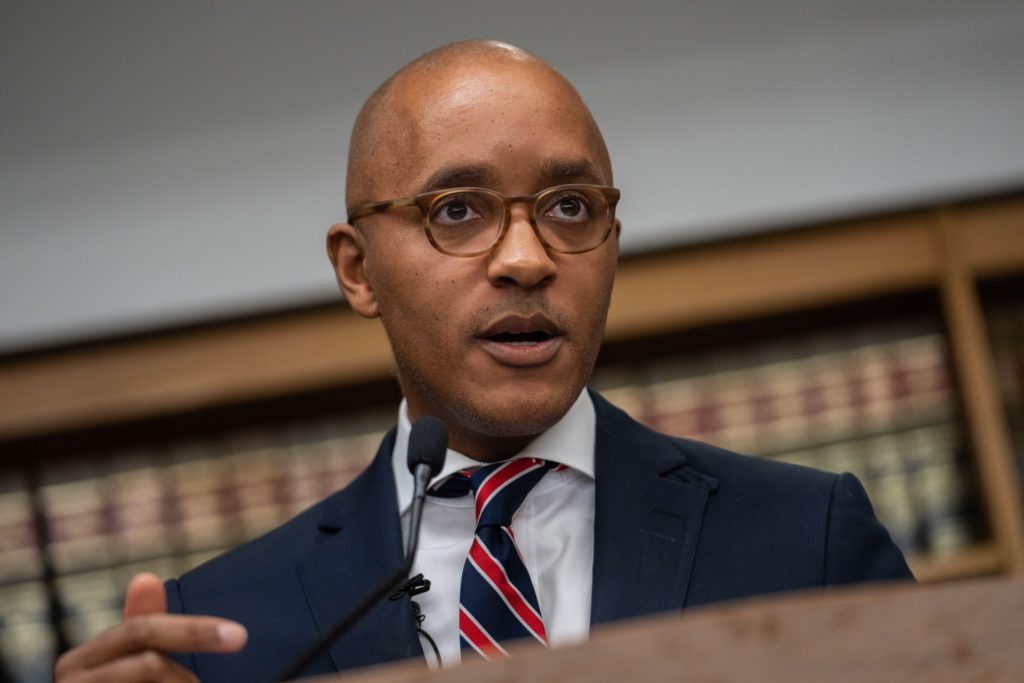
Those in the trade — and those interested — argue the payoff could be fast approaching as the turmoil in the crypto market could push Tether’s value below its promised 1-to-1 exchange rate with the dollar. Among the other reasons: US Attorney Damian Williams, who is leading the case against Bankman-Fried, also recently took over a probe into Tether and whether executives behind the stablecoin committed a crime.

Even so, the short is hardly straightforward. Valiant, a San Francisco-based hedge fund, made the trade earlier this year, but backed away and made it out unscathed, according to people familiar with the matter. The fund would consider shorting Tether again if it could do so without risking collateral, the people said. 

Philippe Laffont’s Coatue Management and other funds looked at the trade and also passed due to counterparty risk, according to people familiar with the matter.

“I’m not short Tether – I haven’t found the vehicle,” said Andrew Left, founder of Citron Research, a short seller. “If someone showed me a way to do it with Goldman Sachs as a counterparty, I’m in.”

Left said he’s short the world’s second-largest cryptocurrency, Ether, which has a well-regulated futures contract, but declined to comment on the size of the position.

Representatives for Fir Tree, Viceroy, Valiant and Coatue declined to comment.

Tether, the world’s third-most traded token, is considered the backbone of the crypto ecosystem, even though the stability of its exchange rate with the dollar has been questioned repeatedly since it began in 2014. 

Its executives — including former plastic surgeon Giancarlo Devasini — haven’t put those doubts to rest. Tether and sister exchange Bitfinex agreed to pay more than $60 million to settle allegations that it misled investors about its reserves. 

Yet Tether persists, even thrives, despite its unaudited financials — carrying on a high-stakes game of chicken with the crypto industry.

Coin Cracks

Some crypto leaders argue Tether is too big to fail without putting the entire $870 billion market at risk. 

In a sign of its importance, Bankman-Fried’s rival, Binance’s Changpeng “CZ” Zhao, sent him messages before FTX’s bankruptcy urging him not to drive down Tether’s price, according to testimony Bankman-Fried prepared for a Congressional hearing before his arrest. He denied that he ever tried to manipulate the stablecoin’s price.

Tether sent about $37 billion of its token to Alameda Research through late last year, according to Protos, making the trading firm its biggest client.

As panic over FTX spread in early November, Tether fell as low as 96.35 cents, before recovering. A crack — and one of its biggest to date — but not a breaking of the dam.

“If Tether goes down, it is not unrealistic to imagine that cryptocurrencies fall by 50%,” said Chris Solarz, chief investment officer of digital assets at Forest Road Co. “That’s true systemic risk.”

Critics have long argued that Tether Holdings doesn’t have enough high-quality, liquid assets for its stablecoin to be worth a guaranteed $1. Others fret Tether is used for illicit activities, like gambling in places where it’s illegal.

“This is yet another ridiculous attempt to tarnish the reputation of Tether with inaccurate and baseless claims,” a Tether spokesperson wrote in an email. “The obsession over Tether is what led Bloomberg and many other media outlets to overlook the real bad actors in this industry.”

Perfect Short

Shorting Tether — either by borrowing the stablecoin and selling it, hoping to buy back later at a lower price, or through swaps — can serve as a hedge against long crypto bets or an outright wager against the token.

Crypto lender Genesis, which told investors it may need to seek bankruptcy in the wake of FTX’s collapse, is among the brokers that allowed customers to bet against Tether.

In theory, it’s the perfect short — a classic asymmetric trade. It can’t rocket to the moon like a meme stock because it’s capped at $1, meaning losses should be limited to the cost of putting on the trade. The payoff, though, could be huge if there’s a run on the bank. If reserves don’t equal outstanding Tether, then investors who are last to redeem might get nothing.

Tether and other stablecoins were created to make it easier for traders to move in and out of volatile tokens. Despite questions around it, people continue to use Tether because it offers features its competitors don’t. It can be exchanged — or paired — with more cryptocurrencies than other stablecoins, and it isn’t based in the US — a big appeal to crypto traders globally.

Speculators aren’t the only ones who depend on it. The token has become a cheaper and faster replacement for Western Union, a way for foreign workers to send money home instantaneously. 

Still, Tether hasn’t been immune to the steep losses across the crypto industry. About $16 billion has been redeemed since the end of March, when the outstanding amount reached $82 billion.

FTX Links

Meanwhile, Tether’s skeptics are scouring for links between the stablecoin and FTX.

Alameda, FTX’s trading firm, injected $11.5 million into tiny Moonstone Bank through the firm’s parent company, FBH Corp., earlier this year. FBH’s chairman is Jean Chalopin — who also chairs Bahamas-based Deltec Bank, which counts Tether as a client.

Moonstone, based in Washington state, said in a statement after FTX’s collapse that it was completely separate from Deltec and that Alameda had no board memberships or involvement with management.

A pair of lawyers who work for the companies, Dan Friedberg from FTX and Stuart Hoegner from Tether, had previous ties to Ultimate Bet, a poker site that authorities caught in a cheating scandal — a link one participant made in prepared testimony for a Senate Banking Committee hearing on Wednesday.

On Nov. 10, as FTX was imploding, Alameda borrowed $1.8 million of Tether, a trade visible on the blockchain. 

In their exchange, Zhao reached out to Bankman-Fried telling him to “stop trying to depeg stablecoins,” something the FTX founder suggested was impossible to do without putting a lot of money at risk.

“Are you claiming that you think that $250k of USDT trading would depeg it?” Bankman-Fried asked, using another name for Tether.

“No, I don’t think 100x that size will succeed,” Zhao shot back. It just causes “small issues here and there.”

FTX and other firms folding “can be attributed to bad business, bad leadership, poor management, bad loans, and bad collateral none of which has anything to do with Tether,” the Tether spokesperson said.

Open Question

Still, Tether’s reserves remain the largest open question. 

Tether concealed the loss of more than $850 million of reserves to a Panamanian entity called Crypto Capital Corp. as recently as 2018, the New York Attorney General found. In a separate case, the Commodity Futures Trading Commission found Tether didn’t have enough fiat reserves to back circulating tokens more than two-thirds of the time, in a period between 2016 and 2018.

Though it’s promised to undergo an audit for years, Tether has never produced one — nor anything more than quarterly “transparency updates.” It has had six accountants since 2017, and has said the big four firms have balked at taking it as a client because of liability issues. 

Some potential short sellers want more proof that the stablecoin is on shaky ground. Hindenburg Research last year promised a bounty of up to $1 million for anyone who could produce information on Tether and the assets backing it.

Tether’s attestation for Sept. 30 says roughly 18% of its reserves, or almost $12 billion, were in assets other than cash or cash equivalents: corporate bonds, funds and precious metals, secured loans and an “other investments” category.

Reducing Lending

Some of those mystery assets include stakes in crypto companies and loans to entities that have been caught up in the industry’s meltdown, according to investors who have studied the token.

Tether said Tuesday that it would steadily reduce its practice of lending out funds from its reserves and look to stop the activity in 2023.

“I don’t know why anyone would trust any of their financial attestations at this point,” said John Griffin, a professor at the University of Texas who works on forensic finance and has spent more than a decade looking at illicit corners of the financial system.

“If they are fully backed, you could just put all that money in Treasuries,” he said.

Though Tether didn’t arrange an interview with any executives, its co-founder Reeve Collins reached out to Bloomberg via a spokeswoman to discuss FTX’s collapse and his career at Tether, which spanned 2013 to 2015. 

He arrived to a December Zoom meeting a few minutes late, video camera off, and mentioned he was in Miami for Art Basel and crypto conferences.

Asked how FTX’s downfall would affect the token, he said it meant nothing, just like the years-long concerns of regulators, journalists and anonymous Twitter accounts.

“It’s always a dollar,” he said. “To me, it’s rock solid.”

–With assistance from Emily Nicolle and Hema Parmar.

More stories like this are available on bloomberg.com

©2022 Bloomberg L.P.

China Startup Hopes Methane-Powered Rocket Will Beat SpaceX to Orbit

(Bloomberg) — A Chinese startup seeking to be the country’s answer to SpaceX is preparing a satellite launch that could beat Elon Musk’s company and other rivals by relying on the next generation of rocket fuel. 

LandSpace Technology Corp. expected to launch an uncrewed rocket that burns a combination of liquid methane and liquid oxygen to put its payload into orbit on Wednesday, according to a person familiar with the matter. By Wednesday evening in China, it wasn’t clear if the launch had taken place, or if it had been successful.

SpaceX and others have been developing rockets that can use methane-based fuel, thanks to its potential to be cleaner and safer than solid propellants, liquid hydrogen and other fuels currently used. 

To date, no company has used methane to send a satellite or astronauts into orbit. A successful launch by LandSpace would provide the Beijing-based company with bragging rights and boost President Xi Jinping’s strategy to have China eventually challenge the US as the dominant power in space.

“What it tells us is that China has had an extremely rapid evolution in its technological capabilities,” said Matija Renčelj, a research fellow at the European Space Policy Institute in Vienna, thanks in part to “the financial and political support that it is giving to its space sector and its space program.”

Since its founding in 2015 by Zhang Changwu, LandSpace has raised at least 2.1 billion yuan ($300 million) from the government-backed China SME Development Fund as well as private-sector Chinese investors such as Sequoia China and Matrix Partners China, according to statements from the company.

LandSpace’s first launch attempt, using a more conventional solid propellant, failed in 2018. Since then, the company has focused on leapfrogging to more advanced technology using methane for its engines.

“It is a historic opportunity for the new entrants in China’s aerospace industry,”  Zhang said in an interview with China-based Economic View in November. The whole development process was “extremely difficult,” he said.

Xi’s government opened the space industry to private investment in 2014.

China’s space program has notched many accomplishments since then, most recently sending three astronauts to the newly completed Chinese space station in late November. In 2019, China was the first to send a probe to land on the far side of the moon and last year became only the second country, after the US, to successfully place a rover on Mars.

China’s startups haven’t come close to delivering such impressive results, though. Having begun much later than the nation’s state-run space agency, the private-sector companies have so far just managed a few orbital launches. Nevertheless, Chang Young-keun, a professor of aerospace and mechanical engineering at Korea Aerospace University near Seoul, said there’s reason for optimism about their potential.

“China has at least 20 great startups trying to develop rockets at low costs,” Chang said.

Beijing Interstellar Glory Space Technology Ltd., which like LandSpace is backed by Sequoia China and Matrix Partners China, has received at least 1.9 billion yuan in investments and is working on developing a methane-fueled rocket, according to the company’s website.

The company, known as iSpace, has suffered several launch failures of its solid-propellant rockets, the most recent on May 13, with the Xinhua news agency reporting that “abnormal performance was identified during the flight of the rocket.”

Rocket engine maker JiuZhou Cloud Arrow (Beijing) Space Technology Co., founded in 2017 and backed by FreeS Fund, is also developing liquid oxygen/methane engines. 

Some in the Chinese space industry argue that rocket startups would be better off sticking with the model set by SpaceX by first focusing their efforts on developing reusable rockets burning kerosene and saving methane for later.

That’s the strategy of Deep Blue Aerospace, founded in 2016, which in May sent a kerosene-fueled rocket to a height of one kilometer and then safely conducted a vertical landing.

“We followed SpaceX’s path,” said Huo Liang, founder and CEO of Deep Blue, “and want to repeat what the industry pioneer has achieved.”

Still, for Chinese and foreign companies hoping to make rocket launches routine, methane has significant advantages.

The compound is plentiful on Mars, and crewed missions to the red planet in the future could conceivably take advantage of Martian methane to fuel trips back to Earth, said Chang. Burning methane also creates less soot than kerosene, another liquid-fuel option, making cleanup after a mission easier, said Martin Ross, an atmospheric scientist at the Aerospace Corp., a non-profit in El Segundo, California.

“Methane is so simple. You can make it in the laboratory and you can make it in a factory, presumably with renewable electricity,” he said. “So with methane we could be moving to a regime where rocket fuels are sustainable.”


–With assistance from Heejin Kim and Loren Grush.

(Updates to say rocket’s status is unknown in second paragraph.)

More stories like this are available on bloomberg.com

©2022 Bloomberg L.P.
US Futures Swing Before Fed’s Final Hurrah of 2022: Markets Wrap

(Bloomberg) — US equity-index futures fluctuated between gains and losses, and Treasuries were mixed, as investors debated whether inflation had eased enough to encourage the Federal Reserve to slow monetary tightening.

Contracts on the S&P 500 and Nasdaq 100 index fell 0.1% each after Tuesday’s rally in US stocks on the back of a fifth month of decline in consumer-price growth. Shorter-term Treasuries gained, while the dollar slipped. Charter Communications Inc. declined 7.3% in premarket New York trading amid concern its capital-spending plan may crimp cash flow.

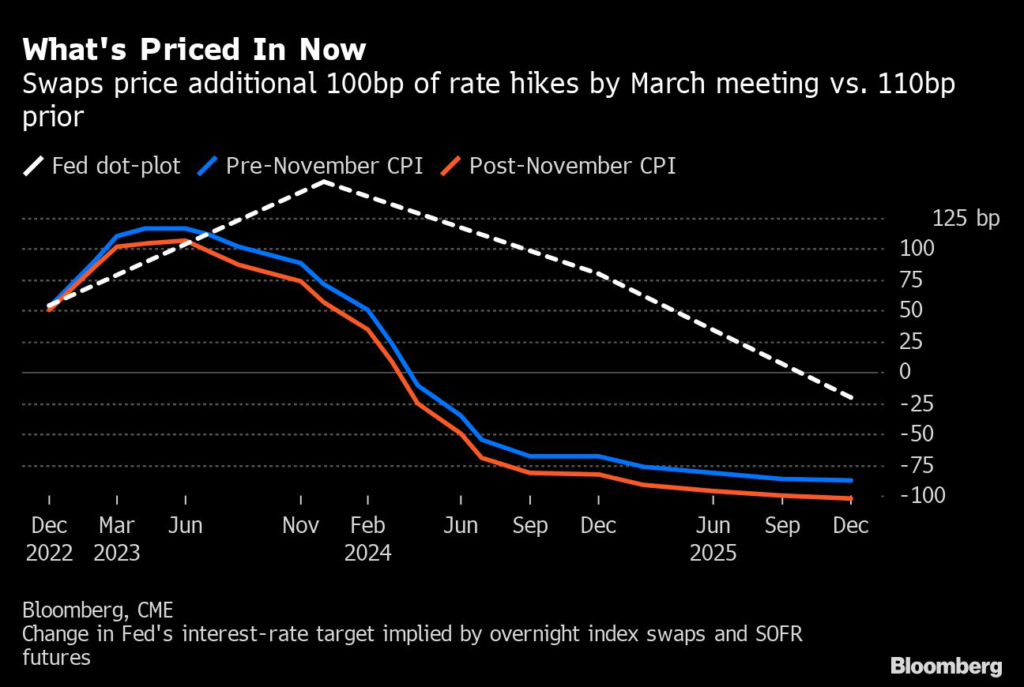
While a softer-than-expected figure for US consumer price index stoked a rally across stocks and bonds, the gains were tempered by caution that the Fed may still remain resolute on continuing rate hikes. After a 50 basis-point increase in Fed’s policy rate later Wednesday was firmly priced in, traders remained on the edge over what signals policymakers may offer on when the hikes will stop and whether a rate cut is possible next year.

“The question is, with inflation still at generational highs, will the Fed walk through that door?” Stephen Innes, managing partner at SPI Asset Management, wrote in a note. “After an initially high-spirited response, the relatively muted reaction for stocks is likely attributable to pre-risk event positioning, prevailing bearish growth sentiment, technical factors and the devil in the details.”


Treasuries with shorter-term maturities gained Wednesday, with the two-year yield shedding 2 basis points. The 10-year rate added 2 basis points. Traders are betting that the Fed, after today’s move, will opt for 50 basis points more of hikes, and then an equivalent-sized cut by the end of next year.

Charter Communications Inc., the second-largest US cable TV provider, fell in early trading after saying it will spend $5.5 billion to bring higher-speed broadband connections to customers. Higher capital expenditure and lower cash flow create near-term uncertainty, yet expanding the footprint could fuel subscriber growth, Bloomberg Intelligence analysts said.

In the UK, two-year gilts advanced. Inflation in the country fell from a 41-year high in November, raising the possibility that the worst of the cost-of-living squeeze is over. A gauge of the dollar’s strength traded 0.2% lower. 

Europe’s equity benchmark fell after posting the biggest single-day advance since Nov. 10 as caution prevailed over Fed’s messaging later in the day as well as expectations for rate hikes by the European Central Bank and Bank of England on Thursday.

Oil futures erased losses. West Texas Intermediate contracts rose for a third day and traded around $76 a barrel. Traders also weighed the demand outlook amid a rapid relaxation of Covid restrictions in China against the effect of new cases on economic activity in the country.

Key events this week:

  • FOMC rate decision and Fed Chair news conference, Wednesday
  • China medium-term lending, property investment, retail sales, industrial production, surveyed jobless, Thursday
  • ECB rate decision and ECB President Lagarde briefing, Thursday
  • Rate decisions for UK BOE, Mexico, Norway, Philippines, Switzerland, Taiwan, Thursday
  • US cross-border investment, business inventories, empire manufacturing, retail sales, initial jobless claims, industrial production, Thursday
  • Eurozone S&P Global PMI, CPI, Friday

Some of the main moves in markets:

Stocks

  • Futures on the S&P 500 fell 0.1% as of 8:31 a.m. New York time
  • Futures on the Nasdaq 100 fell 0.1%
  • Futures on the Dow Jones Industrial Average were little changed
  • The Stoxx Europe 600 fell 0.4%
  • The MSCI World index was little changed

Currencies

  • The Bloomberg Dollar Spot Index fell 0.1%
  • The euro rose 0.1% to $1.0645
  • The British pound was little changed at $1.2359
  • The Japanese yen rose 0.4% to 135.03 per dollar

Cryptocurrencies

  • Bitcoin rose 0.8% to $17,908.44
  • Ether rose 0.8% to $1,330.05

Bonds

  • The yield on 10-year Treasuries advanced two basis points to 3.52%
  • Germany’s 10-year yield advanced four basis points to 1.97%
  • Britain’s 10-year yield advanced two basis points to 3.32%

Commodities

  • West Texas Intermediate crude rose 1% to $76.15 a barrel
  • Gold futures fell 0.3% to $1,819.90 an ounce

This story was produced with the assistance of Bloomberg Automation.

–With assistance from Richard Henderson, James Hirai and Georgina Mckay.

More stories like this are available on bloomberg.com

©2022 Bloomberg L.P.

Carlyle-Backed Tech Agency DEPT Agrees to Buy US Peer Melon

(Bloomberg) — DEPT, a technology and marketing business owned by Carlyle Group Inc., has agreed to buy smaller peer Melon.

The Amsterdam-based company will pay about $50 million to $60 million to acquire Melon, people familiar with the matter said, asking not to be identified discussing confidential information.

DEPT employs more than 3,500 people across five continents and counts Google, Philips and eBay Inc. among its clients. The company, which expects to generate revenue of about €500 million ($532 million) this year, has been working with Morgan Stanley and Jefferies Financial Group Inc. on its strategic options, the people said.

A spokesperson for DEPT and Melon confirmed the acquisition. Representatives for Jefferies and Morgan Stanley declined to comment.

US-based Melon has more than 100 staff and has worked with brand names including Under Armour Inc. and Nike Inc. on commercial strategy, with a focus on the Salesforce ecosystem. It has offices in the US and has been growing operations in Argentina to serve clients in Latin America.

More stories like this are available on bloomberg.com

©2022 Bloomberg L.P.
Tech and Telecom Firms Have Resumed Giving to Election-Denying Republicans

(Bloomberg) — Some of the biggest technology and telecom companies jettisoned pledges made in the wake of the US Capitol assault and gave money to reelect lawmakers who voted against certifying Joe Biden’s electoral victory, according to filings reviewed by Bloomberg News.

The companies expressed horror after supporters of then-President Donald Trump went on a rampage Jan. 6, 2021, in an effort to halt Biden’s certification. Citing the need to defend democracy, the firms said they would suspend campaign donations to the 147 Republicans who voted against certifying the presidential election results that day.

In some cases those suspensions only lasted a few months, according to the Bloomberg News review of hundreds of campaign finance disclosures covering the period from March 2021 to last month. Major companies including AT&T Inc., Amazon.com Inc. and Intel Corp. quietly reopened the taps in time to help the GOP win control of the House of Representatives.

Other industries also resumed giving when it became clear Republicans were poised to retake the House — a tacit acknowledgment that election denial is still a powerful force in the party. But the Bloomberg News review revealed that the technology and telecom sectors were especially generous, contributing $1.3 million in total. And they targeted lawmakers overseeing a potentially hostile congressional agenda likely to include hearings on the treatment of conservative viewpoints on social media, among other topics.

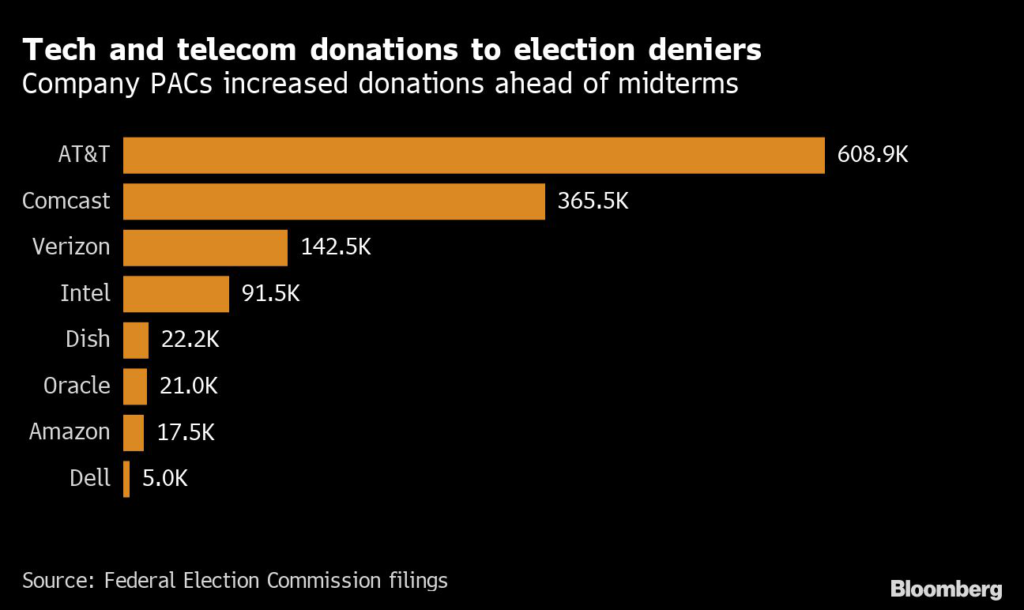
The biggest giver in the tech and telecom sectors was AT&T. The No. 3 wireless carrier vowed on Jan. 11, 2021, to “suspend contributions to members of Congress who voted to object to the certification of electoral college votes.” 

In the months leading up to last month’s midterm elections, the company gave more than $608,900 to dozens of the objectors, documents show. That includes Representatives Burgess Owens of Utah, who said he has “no doubt” that Trump won; New York’s Nicole Malliotakis, who claimed the election was rife with “irregularities and alleged fraud”; and Florida’s Greg Steube, who called the election results “sketchy.” 

AT&T declined to comment on its giving. 

Jeremy Funk, spokesman for government watchdog group Accountable.US, said the companies are “choosing to chase after influence, even though a number of them have made bold declarations to their customer base and their shareholders and their own employees about how much they support democracy.”

Comcast Corp. said in a statement in January of last year that “the peaceful transition of power is a foundation of America’s democracy.” It vowed to “suspend all of our political contributions to those elected officials who voted against certification of the electoral college votes.”

By the end of the 2021, the Philadelphia-based cable giant had not only resumed giving to those candidates, but increased its contributions throughout 2022 to $365,500, becoming the second-biggest donor to election deniers among the tech and telecom firms. 

Comcast didn’t respond to a request for comment.

Industries Facing Congressional Scrutiny

One reason for the reversals is the companies have a lot to gain or lose in a GOP-led House. 

Republicans have already signaled they intend to target social media companies and their treatment of conservative viewpoints in the first 100 days of taking the majority next month. Other blockbuster issues the companies are nervously watching include net neutrality, antitrust and online privacy.

Conversely, telecom companies and semiconductor makers want more government aid for programs to boost broadband rollout and domestic manufacturing. That requires developing relationships with newly empowered Republicans.  

Intel donated to 29 members who voted against Biden’s certification. The contributions came even as Intel Chief Executive Officer Pat Gelsinger made appearances with Biden at the White House and was a guest at his State of the Union address. 

Intel is set to receive a windfall of cash from the government after Biden signed legislation granting $53 billion to boost domestic semiconductor research and development. 

Intel, in a statement, said it strives for a balance between donations to Democrats and Republicans “to build a bipartisan coalition of members of Congress who share our vision for strengthening America’s semiconductor industry, innovation capabilities and technological leadership.”

“Intel’s Political Action Committee continuously evaluates its contributions to ensure that they align with our values, policies and priorities. Over the past year, we have implemented additional due diligence processes as Intel resumed contributions that were previously halted,” the company said.  

Key Lawmakers in Leadership Targeted

The companies aimed their donations strategically. 

Among the big recipients: Kevin McCarthy of California, who is running to be speaker in January, and Louisiana Representative Steve Scalise, who will serve as House majority leader and sits on the House Energy and Commerce Committee. Both men voted against certifying Biden’s victory. 

McCarthy collected thousands of dollars from companies including Verizon Communications Inc., Dish Network Corp., Intel and Comcast.  

Ohio Republican Representative Jim Jordan is expected to take the top spot on the House Judiciary Committee, which oversees tech issues including antitrust and patent reform. He voted against Biden’s certification but got money from Verizon and Oracle Corp., both of which had pledged to suspend those gifts and declined to comment on the reversals. 

Comcast gave to several lawmakers who serve on the House Energy and Commerce Committee, which oversees telecom issues and will likely pursue a deregulatory agenda under GOP leadership. Among them: Indiana Representative Greg Pence and Pennsylvania Representative Mike Kelly, both of whom voted against certification of Biden’s win. Kelly filed lawsuits seeking to throw out all of Pennsylvania’s mail-in ballots. 

Some Companies Gave Even While Sticking to Pledge

Other companies, including Alphabet Inc.’s Google, Meta Platforms Inc. and Microsoft Corp., stuck to pledges not to contribute to the 147, but backed other candidates who cast doubt on the election in court filings, debates, campaign rallies and interviews. 

Google, Dell Technologies Inc., Qualcomm Inc., Microsoft and other tech companies showered $90,000 on Washington’s Cathy McMorris Rodgers, who is set to become the chair of the powerful House Energy and Commerce Committee, where she will help lead the GOP’s tech and telecom agenda. McMorris Rodgers didn’t vote against certifying Biden’s win, but she supported the Texas lawsuit asking the Supreme Court to intervene in the election. 

Amazon contributed $135,500 to election deniers, including $17,500 to lawmakers who voted against certification.

Amazon said its pause lasted long enough. “When we announced shortly after the attack on the Capitol in January 2021 that we would suspend donations to members of Congress who voted against certifying the results of the 2020 US presidential election, it was not intended to be permanent,” a company spokesperson said in an emailed statement. “It’s been more than 21 months since that suspension and, like a number of companies, we’ve resumed giving to some members.”

Microsoft gave roughly $95,000 to lawmakers who expressed doubt about the 2020 election results, but didn’t vote against certification in accordance with its pledge. The company said it hasn’t decided how much longer to keep that ban in place. 

“It’s a really good question — we’ll have to sit down and decide as we get to January,” Microsoft President Brad Smith said in an interview. “I hope that we’ll see politicians as they look to the future and future elections sign up for the proposition that if they come up short in the votes, they will concede in the election.”

More stories like this are available on bloomberg.com

©2022 Bloomberg L.P.

Tech Firms Are Giving Money to Election Deniers Again

(Bloomberg) — Some of the biggest technology and telecom companies jettisoned pledges made in the wake of the US Capitol assault and gave money to reelect lawmakers who voted against certifying Joe Biden’s electoral victory, according to filings reviewed by Bloomberg News.

The companies expressed horror after supporters of then-President Donald Trump went on a rampage Jan. 6, 2021, in an effort to halt Biden’s certification. Citing the need to defend democracy, the firms said they would suspend campaign donations to the 147 Republicans who voted against certifying the presidential election results that day.

In some cases those suspensions only lasted a few months, according to the Bloomberg News review of hundreds of campaign finance disclosures covering the period from March 2021 to last month. Major companies including AT&T Inc., Amazon.com Inc. and Intel Corp. quietly reopened the taps in time to help the GOP win control of the House of Representatives.

Other industries also resumed giving when it became clear Republicans were poised to retake the House — a tacit acknowledgment that election denial is still a powerful force in the party. But the Bloomberg News review revealed that the technology and telecom sectors were especially generous, contributing $1.3 million in total. And they targeted lawmakers overseeing a potentially hostile congressional agenda likely to include hearings on the treatment of conservative viewpoints on social media, among other topics.

The biggest giver in the tech and telecom sectors was AT&T. The No. 3 wireless carrier vowed on Jan. 11, 2021, to “suspend contributions to members of Congress who voted to object to the certification of electoral college votes.” 

In the months leading up to last month’s midterm elections, the company gave more than $608,900 to dozens of the objectors, documents show. That includes Representatives Burgess Owens of Utah, who said he has “no doubt” that Trump won; New York’s Nicole Malliotakis, who claimed the election was rife with “irregularities and alleged fraud”; and Florida’s Greg Steube, who called the election results “sketchy.” 

AT&T declined to comment on its giving. 

Jeremy Funk, spokesman for government watchdog group Accountable.US, said the companies are “choosing to chase after influence, even though a number of them have made bold declarations to their customer base and their shareholders and their own employees about how much they support democracy.”

Comcast Corp. said in a statement in January of last year that “the peaceful transition of power is a foundation of America’s democracy.” It vowed to “suspend all of our political contributions to those elected officials who voted against certification of the electoral college votes.”

By the end of the 2021, the Philadelphia-based cable giant had not only resumed giving to those candidates, but increased its contributions throughout 2022 to $365,500, becoming the second-biggest donor to election deniers among the tech and telecom firms. 

Comcast didn’t respond to a request for comment.

Industries Facing Congressional Scrutiny

One reason for the reversals is the companies have a lot to gain or lose in a GOP-led House. 

Republicans have already signaled they intend to target social media companies and their treatment of conservative viewpoints in the first 100 days of taking the majority next month. Other blockbuster issues the companies are nervously watching include net neutrality, antitrust and online privacy.

Conversely, telecom companies and semiconductor makers want more government aid for programs to boost broadband rollout and domestic manufacturing. That requires developing relationships with newly empowered Republicans.  

Intel donated to 29 members who voted against Biden’s certification. The contributions came even as Intel Chief Executive Officer Pat Gelsinger made appearances with Biden at the White House and was a guest at his State of the Union address. 

Intel is set to receive a windfall of cash from the government after Biden signed legislation granting $53 billion to boost domestic semiconductor research and development. 

Intel, in a statement, said it strives for a balance between donations to Democrats and Republicans “to build a bipartisan coalition of members of Congress who share our vision for strengthening America’s semiconductor industry, innovation capabilities and technological leadership.”

“Intel’s Political Action Committee continuously evaluates its contributions to ensure that they align with our values, policies and priorities. Over the past year, we have implemented additional due diligence processes as Intel resumed contributions that were previously halted,” the company said.  

Key Lawmakers in Leadership Targeted

The companies aimed their donations strategically. 

Among the big recipients: Kevin McCarthy of California, who is running to be speaker in January, and Louisiana Representative Steve Scalise, who will serve as House majority leader and sits on the House Energy and Commerce Committee. Both men voted against certifying Biden’s victory. 

McCarthy collected thousands of dollars from companies including Verizon Communications Inc., Dish Network Corp., Intel and Comcast.  

Ohio Republican Representative Jim Jordan is expected to take the top spot on the House Judiciary Committee, which oversees tech issues including antitrust and patent reform. He voted against Biden’s certification but got money from Verizon and Oracle Corp., both of which had pledged to suspend those gifts and declined to comment on the reversals. 

Comcast gave to several lawmakers who serve on the House Energy and Commerce Committee, which oversees telecom issues and will likely pursue a deregulatory agenda under GOP leadership. Among them: Indiana Representative Greg Pence and Pennsylvania Representative Mike Kelly, both of whom voted against certification of Biden’s win. Kelly filed lawsuits seeking to throw out all of Pennsylvania’s mail-in ballots. 

Some Companies Gave Even While Sticking to Pledge

Other companies, including Alphabet Inc.’s Google, Meta Platforms Inc. and Microsoft Corp., stuck to pledges not to contribute to the 147, but backed other candidates who cast doubt on the election in court filings, debates, campaign rallies and interviews. 

Google, Dell Technologies Inc., Qualcomm Inc., Microsoft and other tech companies showered $90,000 on Washington’s Cathy McMorris Rodgers, who is set to become the chair of the powerful House Energy and Commerce Committee, where she will help lead the GOP’s tech and telecom agenda. McMorris Rodgers didn’t vote against certifying Biden’s win, but she supported the Texas lawsuit asking the Supreme Court to intervene in the election. 

Amazon contributed $135,500 to election deniers, including $17,500 to lawmakers who voted against certification.

Amazon said its pause lasted long enough. “When we announced shortly after the attack on the Capitol in January 2021 that we would suspend donations to members of Congress who voted against certifying the results of the 2020 US presidential election, it was not intended to be permanent,” a company spokesperson said in an emailed statement. “It’s been more than 21 months since that suspension and, like a number of companies, we’ve resumed giving to some members.”

Microsoft gave roughly $95,000 to lawmakers who expressed doubt about the 2020 election results, but didn’t vote against certification in accordance with its pledge. The company said it hasn’t decided how much longer to keep that ban in place. 

“It’s a really good question — we’ll have to sit down and decide as we get to January,” Microsoft President Brad Smith said in an interview. “I hope that we’ll see politicians as they look to the future and future elections sign up for the proposition that if they come up short in the votes, they will concede in the election.”

More stories like this are available on bloomberg.com

©2022 Bloomberg L.P.
Workers at Experimental Starbucks-Amazon NYC Store Push to Unionize

(Bloomberg) — Baristas at an experimental Starbucks-Amazon Go store in New York say the tie-up between the coffee chain and e-commerce giant has doubled their workload with no additional pay.

Some 30 Starbucks Corp. employees at the Times Square location will decide Dec. 15 whether to join Starbucks Workers United, which has already unionized hundreds of cafes in cities around the US. Amazon.com Inc. itself has been roiled by labor activism at its warehouses, but this is the first time workers have sought to hold a union election at one of its retail locations.

The two companies launched the pilot partnership last year, with the aim of using Amazon’s cashierless technology and Starbucks’ mobile ordering to facilitate a fast and convenient experience for customers. There are now two “Starbucks Pickup with Amazon Go” stores, the one near Times Square and another on Manhattan’s east side. 

The locations are divided into three sections: a Starbucks waiting area, Amazon Go market and a lounge. The idea is for people to pick up a coffee ordered from the Starbucks app, grab food from the Amazon Go and then walk out without having to stand in line.

“At the beginning I realized, ‘Oh, we don’t get paid extra for this Amazon work,’” said one barista, who requested anonymity to avoid possible retaliation from their manager. “There’s a whole plethora of new work that has to be done.”

Employees at the Times Square location joined colleagues at more than 100 Starbucks cafes who went on strike last month. The union has organized campaigns nationwide, with more than 250 successful store elections, though momentum has slowed in recent months. Amazon warehouse workers in Staten Island voted to join the Amazon Labor Union in April but the union lost two subsequent elections.

“From the beginning, we’ve been clear in our belief that we are better together as partners, without a union between us, and that conviction has not changed,” a Starbucks spokesperson said in an email. Amazon declined to comment.

The two Seattle-based companies have branded the pilot stores as effortless and contactless convenience. Yet some employees say the concept has been anything but effortless. 

“Half of our customers come in and leave because they don’t even understand or comprehend what this is,” the barista said.

One Starbucks worker stands near the entrance to serve as a concierge, directing people to the coffee line or Amazon Go. 

Starbucks workers stock Amazon inventory, such as prepared hot foods in the morning, which they say is a safety hazard. Employees claim they have been mildly burned while heating up Amazon foods. Management’s only response was to provide ointment, they said. 

Employees also clean both the Starbucks and Amazon areas. Amazon representatives worked frequently in the store when it first opened, but now only come in a couple of times a week to check on the technology, the workers said. 

Employees, who filed for the union election in October, say the difficult nature of the job, compared with working at a regular Starbucks, has fueled high turnover.

–With assistance from Spencer Soper and Josh Eidelson.

More stories like this are available on bloomberg.com

©2022 Bloomberg L.P.
US Futures Rise Before Fed’s Final Hurrah of 2022: Markets Wrap

(Bloomberg) — US equity-index futures posted moderate gains and the dollar slipped as investors debated whether inflation had eased enough to encourage the Federal Reserve to slow monetary tightening.

Contracts on the S&P 500 and Nasdaq 100 index rose 0.1% each after Tuesday’s rally in US stocks on the back of a fifth month of decline in consumer-price growth. Shorter-term Treasuries rallied, while the dollar slipped. Charter Communications Inc. declined 7.3% in premarket New York trading amid concern its capital-spending plan may crimp cash flow.

While a softer-than-expected figure for US consumer price index stoked a rally across stocks and bonds, the gains were tempered by caution that the Fed may still remain resolute on continuing rate hikes. After a 50 basis-point increase in Fed’s policy rate later Wednesday was firmly priced in, traders remained on the edge over what signals policymakers may offer on when the hikes will stop and whether a rate cut is possible next year.

“The question is, with inflation still at generational highs, will the Fed walk through that door?” Stephen Innes, managing partner at SPI Asset Management, wrote in a note. “After an initially high-spirited response, the relatively muted reaction for stocks is likely attributable to pre-risk event positioning, prevailing bearish growth sentiment, technical factors and the devil in the details.”


Treasuries with shorter-term maturities gained Wednesday, while the 10-year note gave up its advance. The two-year and five-year yields shed 3 basis points each. Traders are betting that the Fed, after today’s move, will opt for 50 basis points more of hikes, and then an equivalent-sized cut by the end of next year.

Charter Communications Inc., the second-largest US cable TV provider, fell in early trading after saying it will spend $5.5 billion to bring higher-speed broadband connections to customers. Higher capital expenditure and lower cash flow create near-term uncertainty, yet expanding the footprint could fuel subscriber growth, Bloomberg Intelligence analysts said.

In the UK, the pound traded near the strongest level since June. Inflation in the country fell from a 41-year high in November, raising the possibility that the worst of the cost-of-living squeeze is over. A gauge of the dollar’s strength traded 0.2% lower. 

Europe’s equity benchmark fell after posting the biggest single-day advance since Nov. 10 as caution prevailed over Fed’s messaging later in the day as well as expectations for rate hikes by the European Central Bank and Bank of England on Thursday.

Oil futures erased losses. West Texas Intermediate contracts rose for a third day and traded around $76 a barrel. Traders also weighed the demand outlook amid a rapid relaxation of Covid restrictions in China against the effect of new cases on economic activity in the country.

Key events this week:

  • FOMC rate decision and Fed Chair news conference, Wednesday
  • China medium-term lending, property investment, retail sales, industrial production, surveyed jobless, Thursday
  • ECB rate decision and ECB President Lagarde briefing, Thursday
  • Rate decisions for UK BOE, Mexico, Norway, Philippines, Switzerland, Taiwan, Thursday
  • US cross-border investment, business inventories, empire manufacturing, retail sales, initial jobless claims, industrial production, Thursday
  • Eurozone S&P Global PMI, CPI, Friday

Some of the main moves in markets:

Stocks

  • Futures on the S&P 500 rose 0.1% as of 7:27 a.m. New York time
  • Futures on the Nasdaq 100 were added 0.1%
  • Futures on the Dow Jones Industrial Average rose 0.1%
  • The Stoxx Europe 600 fell 0.4%
  • The MSCI World index was little changed

Currencies

  • The Bloomberg Dollar Spot Index fell 0.2%
  • The euro rose 0.1% to $1.0647
  • The British pound rose 0.2% to $1.2386
  • The Japanese yen rose 0.4% to 135.01 per dollar

Cryptocurrencies

  • Bitcoin rose 0.6% to $17,874.29
  • Ether rose 0.8% to $1,330.12

Bonds

  • The yield on 10-year Treasuries was little changed at 3.50%
  • Germany’s 10-year yield advanced six basis points to 1.98%
  • Britain’s 10-year yield advanced one basis point to 3.32%

Commodities

  • West Texas Intermediate crude rose 0.8% to $75.96 a barrel
  • Gold futures fell 0.4% to $1,818 an ounce

This story was produced with the assistance of Bloomberg Automation.

–With assistance from Richard Henderson, James Hirai and Georgina Mckay.

More stories like this are available on bloomberg.com

©2022 Bloomberg L.P.

Close Bitnami banner
Bitnami
