

Bloomberg

Renewed Selling in Big Tech Leads Stocks Lower: Markets Wrap

(Bloomberg) — US stocks erased gains in a choppy session that saw the benchmark bounce between gains and loss after dropping to the lowest intraday level since 2020.

The S&P 500 turned lower amid renewed selling in tech shares that sent the Nasdaq 100 down more than 1%.  The dollar reversed declines, while Treasury yields edged higher.

Risk sentiment remained fragile after a four-day losing streak wiped $1.6 trillion off the value of the S&P 500 Index. US inflation data Thursday may seal the case for another 75-basis-point interest-rate increase at the Federal Reserve meeting in the absence of a major shortfall. 

Nor have officials given any inclination to pause their rate-hiking cycle in the near future, with Cleveland Fed President Loretta Mester saying Tuesday officials need to keep raising interest rates and cannot get complacent. 

In addition to inflation data, big US banks kick off the third-quarter earnings season in earnest later this week, with strategists braced for weak profits against a drumbeat of warnings over the rising risk of a global recession. The International Monetary Fund joined the refrain, warning of a worsening outlook as efforts to curb inflation may add to damage from the war in Ukraine and China’s slowdown. 

“We have not seen the impact of tightening,” Michael Kelly, head of the multi-asset team at PineBridge Investments told Bloomberg TV. “That lies ahead and when we see that, it’s another leg down for risk assets.” 

Turmoil in UK bond markets eased Tuesday as the Bank of England was forced to expand its emergency measures to include inflation-linked debt in an effort to avert what it called a “fire sale” that threatens financial stability. 

Meanwhile, Russian President Vladimir Putin threatened further missile attacks on Ukraine after hitting Kyiv and other cities in the most intense barrage of strikes since the first days of its invasion.

“It’s little wonder investors enter the week in a dreary mood, especially with headlines from Ukraine signaling a further escalation in geopolitical tensions,” Christopher Smart, chief global strategist at Barings, said in a note. 

With world growth under pressure, US oil futures tumbled about 2%, giving up more of last week’s 17% rally. 

Key events this week:

  • Earnings this week include: JPMorgan Chase & Co., Citigroup Inc., Morgan Stanley, BlackRock Inc., Delta Air Lines Inc., UnitedHealth Group Inc., U.S. Bancorp, Wells Fargo & Co.
  • Fed’s Loretta Mester speaks, Tuesday
  • BOE’s Andrew Bailey speaks, Tuesday
  • FOMC minutes for September meeting, Wednesday
  • US PPI, mortgage applications, Wednesday
  • OPEC Monthly Oil Market Report, Wednesday
  • Fed’s Michelle Bowman and Neel Kashkari speak
  • ECB’s Christine Lagarde speaks
  • US CPI, initial jobless claims, Thursday
  • G-20 finance ministers and central bankers meet, Thursday
  • China CPI, PPI, trade, Friday
  • US retail sales, business inventories, University of Michigan consumer sentiment, Friday
  • BOE emergency bond buying is set to end, Friday

Some of the main moves in markets:

Stocks

  • The S&P 500 fell 0.4% as of 2:54 p.m. New York time
  • The Nasdaq 100 fell 1.1%
  • The Dow Jones Industrial Average rose 0.4%
  • The MSCI World index fell 0.8%

Currencies

  • The Bloomberg Dollar Spot Index was little changed
  • The euro rose 0.3% to $0.9728
  • The British pound was little changed at $1.1057
  • The Japanese yen was little changed at 145.77 per dollar

Cryptocurrencies

  • Bitcoin fell 1.3% to $18,987.84
  • Ether fell 2.2% to $1,279.12

Bonds

  • The yield on 10-year Treasuries advanced four basis points to 3.92%
  • Germany’s 10-year yield declined four basis points to 2.30%
  • Britain’s 10-year yield declined three basis points to 4.44%

Commodities

  • West Texas Intermediate crude fell 2.7% to $88.67 a barrel
  • Gold futures rose 0.6% to $1,685 an ounce

More stories like this are available on bloomberg.com

©2022 Bloomberg L.P.

Hedge Fund Boss Laffont Says Coatue Still Mostly in Cash, Sees Stock Woes Ahead

(Bloomberg) — Philippe Laffont’s Coatue Management has kept the majority of its assets in cash after slashing its hedge fund’s equity market exposure earlier this year, and he expects stocks to fall much further. 

The firm now has 70% to 80% of its assets in cash, Laffont said Tuesday at the Robin Hood Investors Conference in New York, according to people who heard his remarks. The event was closed to the media.

As of May, Coatue had cut net exposure of its hedge fund to 14%. The fund has lost 18.7% this year through September.

Read more: Tiger Cubs Stung by Rout Dumped Stocks, Then Missed Rally 

While the effects of rising interest rates are already evident in the housing market, their impact on “everything else” will be delayed, said Laffont, 55. But when that hits, it will happen quickly, he said, according to the people. 

A spokeswoman for New York-based Coatue declined to comment. 

Laffont said his firm is moving aggressively to provide credit to private companies in need, the people said. Coatue recently launched a structured equity fund to provide liquidity to cash-strapped startups and to help them avoid having to raise money at lower valuations.

Read more: Coatue, JPMorgan Weigh Funds to Buoy Capital-Hungry Startups

He added that funds should take a conservative approach to valuing private companies in this environment by marking them down aggressively. 

Laffont’s remarks weren’t all bearish. He said the trend toward electric vehicles is still in its infancy and that the cost of electricity will fall as the US improves its ability to produce power. 

He also said he sees “green shoots” of opportunity in China and that he’s keen on artificial intelligence and the infrastructure of technology and the internet. 

More stories like this are available on bloomberg.com

©2022 Bloomberg L.P.

Central Banks Will Face Challenges in Digital Money Adoption, ECB Study Finds

(Bloomberg) — Central banks will likely have a much tougher time getting consumers to use their digital money than they do issuing them, according to researchers from European Central Bank. 

While ongoing discussions by policy makers and academics often don’t touch on adoption of digital currencies or assume it’s “a given,” broader adoption might in fact force central banks to weigh difficult trade-offs, the ECB paper by Alejandro Zamora-Perez, Eliana Coschignano and Lorena Barreiro said. 

Previous and ongoing experiments in countries like Ecuador with central-bank-issued digital currencies are limited and provide little insights but they do reveal it hasn’t always been easy to convince consumers or merchants to use them, the paper said. 

Global central banks including the ECB are still exploring the benefits and drawbacks of issuing digital money. The ECB has indicated that it could launch a digital euro as early as the middle of this decade and is even examining whether it should award it legal-tender status.

“Central banks may find themselves on the horns of a dilemma in seeking to balance” certain policy goals, broader adoption, and potential adverse economic effects, according to the paper.

For instance, while replicating certain features of traditional cash — such as its highly sought-after store-of-value function — could make a digital currency attractive for users and possibly expand its role in retail transactions, central banks might want to prevent competing with commercial banks for deposits. 

“Deciding between these two options may depend on the central bank’s hierarchy of desired policy goals,” the researchers said, such as weighing improvements in retail payment markets against financial stability concerns. 

More stories like this are available on bloomberg.com

©2022 Bloomberg L.P.

Google Chases Amazon and Microsoft in Cloud With AI Technology

(Bloomberg) — Google on Tuesday announced a broad swath of updates to its cloud offerings, aiming to capitalize on its strength in artificial intelligence to gain market share from rivals.

The new services — announced at Google’s Next ’22 event — include Vertex AI Vision, which is designed to make it easier to use AI technology such as image recognition. There’s also an AI-based service called Translation Hub that translates documents in 135 languages, the Alphabet Inc.-owned company said.

Google is beefing up its cloud infrastructure as well, relying on a fourth-generation version of Intel Corp.’s Xeon Scalable processor and Google’s custom Intel chip. The company unveiled a new C3 machine series that’s powered by the chips, as well as an updated Tensor processing unit that helps accelerate AI functions.

The equipment helps customers train large data sets using machine learning. Cloud users such as Snap Inc. are already getting a boost from the new hardware, Google said. That company saw a 20% increase in performance over the previous generation C2 machine, Google said. The tech giant also announced an expanded partnership with Nvidia Corp. that it said would deepen its AI infrastructure, including work on open AI frameworks.There’s new cryptocurrency support as well. Google Cloud will enable some customers, starting with those in the web3 industry, to pay using currencies through Coinbase Global Inc., according to a statement. Google will also use Coinbase Prime for institutional crypto services, such as custody and reporting.

“We see our collaboration with Google as an opportunity to bring web3 to a new set of users and provide powerful solutions to founders and developers,” Coinbase Chief Executive Officer Brian Armstrong said during the conference.

Google also announced new cybersecurity initiatives intended to capitalize on its recent acquisition of Mandiant, including Chronicle Security Operations, a program to help companies identify and address threats. That deal was completed last month.

In addition, Google will begin serving six additional countries: Austria, the Czech Republic, Greece, Norway, South Africa and Sweden. The idea is to either build data centers locally or partner with existing players in those countries, the company told reporters in a briefing. Google didn’t disclose when those expansions would occur.

Read more: Google to open its first data center in Japan

“These cloud regions help bring innovations from across Google closer to our customers around the globe, and provide a platform that enables organizations to transform the way they do business,” Sachin Gupta, a Google Cloud executive, wrote in a blog post detailing the expansion.

The company also rolled out more integrations and developer tools for its Workspace productivity suite.

Although Google is a distant third in the cloud market, trailing Amazon.com Inc. and Microsoft Corp., the effort is viewed as one of the company’s best bets for growth as the core search business matures.

More stories like this are available on bloomberg.com

©2022 Bloomberg L.P.
Crypto Startup Funding Plunges to Lowest Level in Over a Year

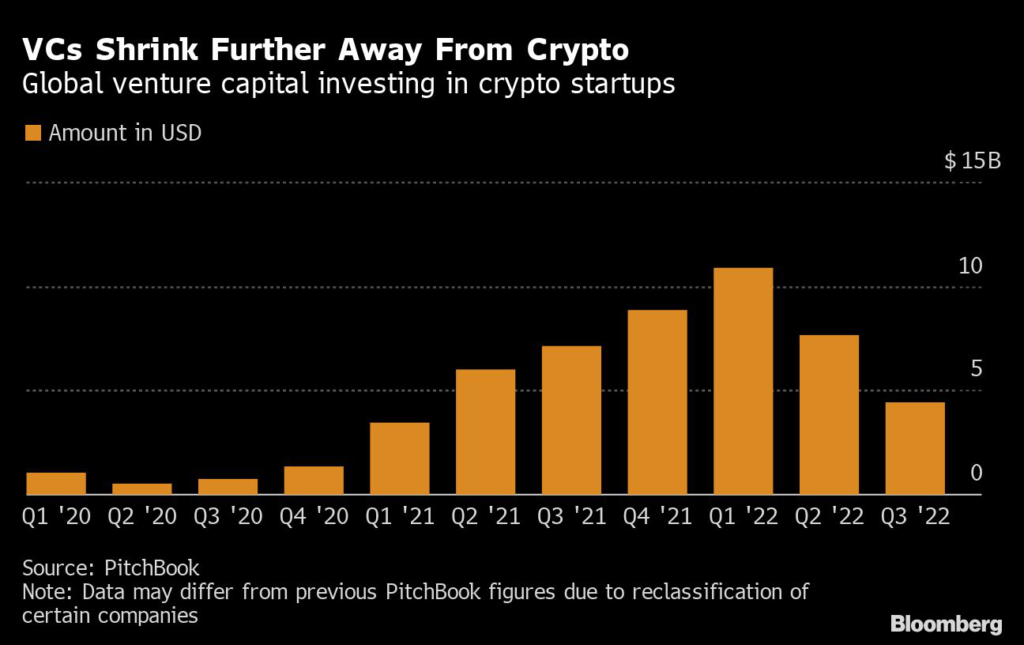
(Bloomberg) — Crypto startups are suffering from this year’s mass selloff of digital currencies. Venture capital investment in the industry sank to its lowest level in more than a year during the third quarter, according to data from research firm PitchBook.

Globally, VC firms invested $4.44 billion in crypto startups in the quarter, a 37% decline from the same period in 2021, the PitchBook numbers show. The funding drop is even more severe compared with the highs of the first quarter, when venture capitalists poured a record $8.83 billion into crypto and blockchain companies.

The pullback mirrors declines in technology investing more broadly, according to PitchBook analyst Robert Le. But crypto has seen a sharper downturn due to the high risk associated with the asset class and plunging cryptocurrency prices. Bitcoin, the largest digital currency by market capitalization, is worth less than $20,000 apiece, having lost more two-thirds of its value since reaching an all-time high of more than $67,000 in November.

“We’re in the depths of crypto winter, so investors are not really excited about crypto, especially generalist investors,” Le said.

The crypto industry had been riding high before the crash. As investors amassed millions, even the most elite venture capital firms were spinning up crypto investment funds and rushing to back the hottest startups. “Last year, a lot of capital was raised with companies that don’t even have use cases yet,” Le said. Now, PitchBook has found that once sky-high valuations have fallen, and deals aren’t closing as quickly.

But there are exceptions. Dedicated crypto funds are continuing to back startups in the space, and many founders are committed to their companies’ decentralized visions. Quadrata Inc., a startup that developed a nonfungible token passport for accessing blockchain-based services and games, raised $7.5 million in funding in July. Co-founder and President Lisa Fridman said the round drew a mix of investors from both crypto and traditional finance, such as Dragonfly Capital and Franklin Templeton. 

“There is still a lot of support for the potential of blockchain,” she said.

Investors are also interested in gaming platforms, where the use case for web 3 technology is more immediate. For example, two gaming companies that use NFTs, Improbable and LootMogul, each raised more than $100 million in September. Investors are excited about advertising opportunities in the virtual worlds being built by gaming companies, Le said. “A lot of investors think that that is going to be the next area where eyeballs are.”

Andrew Steinwold, managing partner at Sfermion, a VC firm that specializes in NFT and gaming investments, said his team is doing the same amount of deals that it was before crypto winter and that there’s still interest in the potential for NFTs in the metaverse. “Things are happening, but it’s not as flashy it was before,” he said.

More stories like this are available on bloomberg.com

©2022 Bloomberg L.P.
Ripple CEO Expects ‘Answer’ in SEC Suit by First Half of 2023

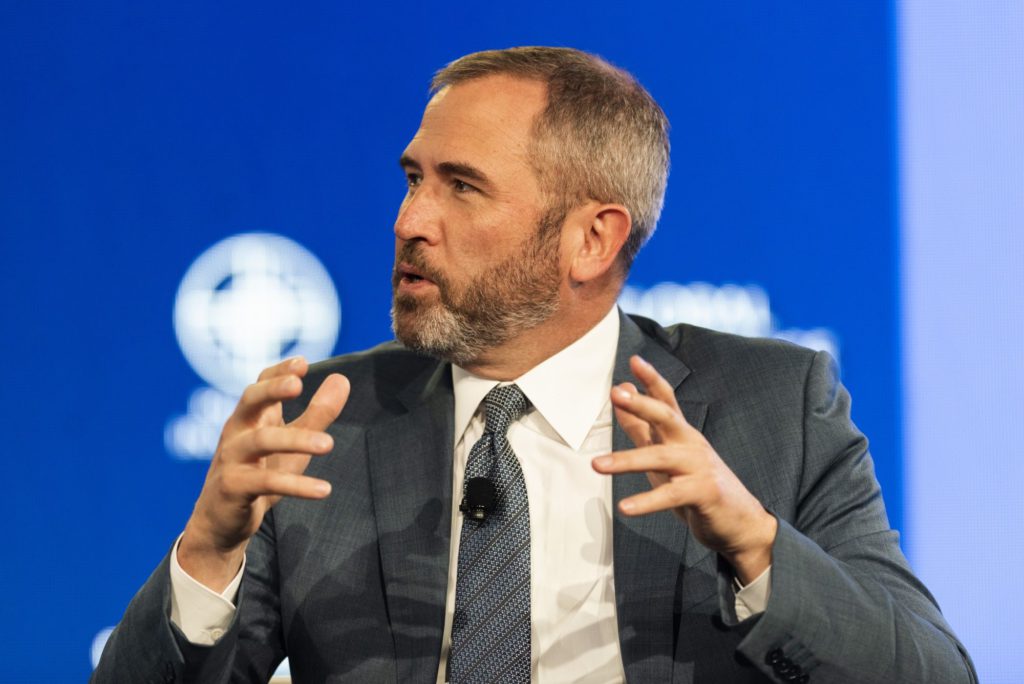
(Bloomberg) — Brad Garlinghouse expects an “answer” in the US Securities and Exchange Commission’s suit against his crypto payments company, Ripple Labs Inc., by the first half of next year.

The SEC sued Ripple in 2020. The regulator alleged that Ripple and its top executives misled XRP investors because it failed to register the digital asset as a security and did not provide adequate disclosure. 

Garlinghouse, Ripple’s chief executive officer, said on Tuesday that it is hard to predict the pace of court proceedings. 

“I think we’ll have an answer in the first half of next year,” Garlinghouse said during an event for DC Fintech Week. “Whether that’s the first quarter or second quarter, we shall see.” 

In September, Ripple filed a motion seeking to dismiss the suit, claiming its XRP token is not a security that is subject to SEC authority. The SEC has also asked for a ruling in its favor without a trial. 

Ripple would consider a settlement with the SEC if the regulator states that XRP is not a security, Garlinghouse said Tuesday. The case “is about the whole industry” he said. “Everyone acknowledges how important this is.”

Already, Ripple’s business in the US is limited, according to Garlinghouse. “For all intents and purposes, XRP does not have liquidity in the United States,” he said.

XRP is the sixth-largest cryptocurrency, with a market value of about $25 billion. The token fell about 5% to 49 cents on Tuesday, and is down around 40% this year. 


More stories like this are available on bloomberg.com

©2022 Bloomberg L.P.
Bored-Ape Creator Yuga Labs Faces SEC Probe Over Unregistered Offerings

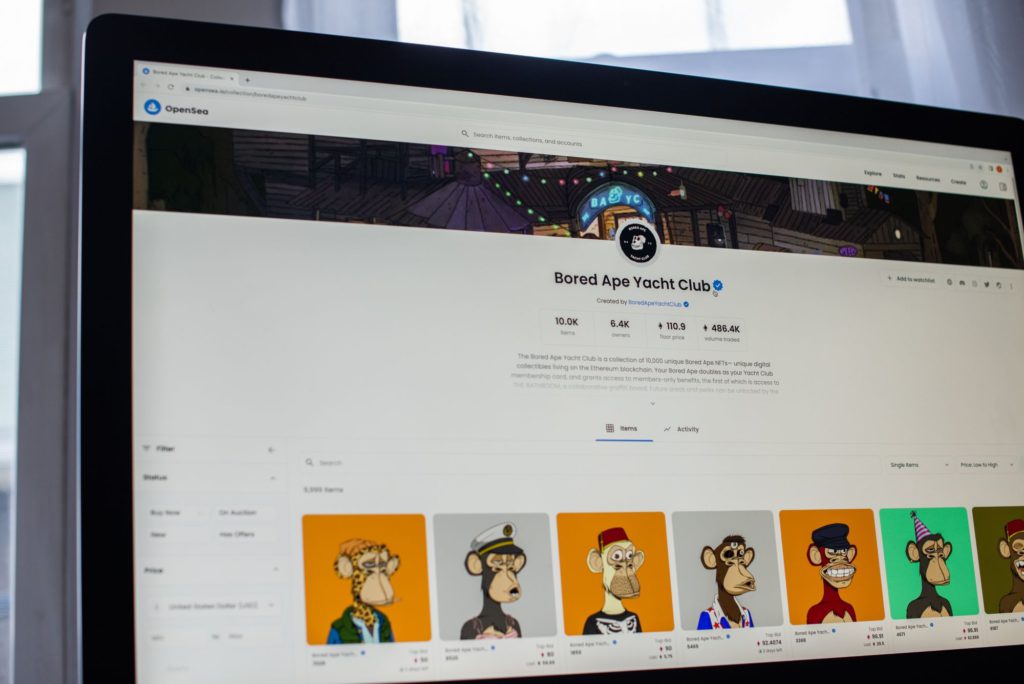
(Bloomberg) — The US Securities and Exchange Commission is investigating Yuga Labs Inc., the creator of the popular Bored Ape Yacht Club collection of NFTs, over whether sales of its digital assets violate federal law.

The SEC is examining whether certain nonfungible tokens from the Miami-based company are more akin to stocks and should follow the same disclosure rules, according to a person familiar with the matter, who asked not to be named because the probe is private. Wall Street’s main regulator is also examining the distribution of ApeCoin, which was given to holders of Bored Ape Yacht Club and related NFTs. The cryptocurrency was created in part for web3, a vision of a decentralized internet built around blockchains.

Yuga hasn’t been accused of wrongdoing and the opening of an SEC probe doesn’t mean the agency will sue the firm.

“It’s well-known that policymakers and regulators have sought to learn more about the novel world of web3. We hope to partner with the rest of the industry and regulators to define and shape the burgeoning ecosystem,” Yuga said in a statement to Bloomberg News. “As a leader in the space, Yuga is committed to fully cooperating with any inquiries along the way.”

A spokesperson for the SEC declined to comment.  

The investigation is the latest attempt by SEC Chair Gary Gensler to ensure the crypto market adheres to its regulations. Gensler has repeatedly said that most crypto assets should be regulated by the agency since they have characteristics of securities as defined by a 1940s Supreme Court decision. That ruling gave the agency authority to label investments as securities when there’s an expectation of profit from management. In recent years, the regulator has brought dozens of enforcement cases against digital asset firms for failing to register their offerings, including a $50 million penalty against BlockFi Inc. in February. 

Yuga Labs, which was founded in 2021, has become one of the most prominent brands in crypto. Its NFTs of cartoon primates are a sought-after status symbol — buyers include celebrities Jimmy Fallon and Madonna — and often trade for hundreds of thousands of dollars.

NFTs are digital assets that can be used to denote ownership of items such as paintings or sports memorabilia. The tokens can also serve as certificates of authenticity that can’t be replicated. 

The SEC has been probing the NFT market broadly, including the crypto exchanges where they trade, Bloomberg News reported in March. As part of that review, the SEC is investigating so-called fractional NFTs, which involve breaking down the assets into units that can be easily bought and sold. 

The SEC is also investigating whether ApeCoin, which was distributed in March to certain holders of Bored Ape NFTs, is tantamount to a security. ApeCoin gives holders influence over another crypto-native entity known as a decentralized autonomous organization, or DAO. The idea was to give the Bored Ape community a hand in shaping the decentralized, blockchain-powered vision of the internet that venture capitalists often describe as web3. The Bored Ape DAO will use the blockchain to enable and record votes on decisions related to how the community is managed.  

The price of ApeCoin fell about 9% to $4.76 as of 1:45 pm in New York, according to data from CoinMarketCap. 

The key legal question is whether NFTs are securities as defined by the agency. The SEC applies the so-called Howey test, which comes from a 1946 US Supreme Court decision, to decide if something is a security. Under that framework, an asset generally falls under the agency’s remit when it involves investors kicking in money to fund a company with the intention of profiting from the efforts of the organization’s leadership.   

(Updates with price of ApeCoin in penultimate paragraph.)

More stories like this are available on bloomberg.com

©2022 Bloomberg L.P.

US Bank Regulator Says ‘Immature’ Crypto Industry Full of Conflicts and Risks

(Bloomberg) — A top Wall Street bank watchdog said the crypto industry has a long way to go in winning over regulators. 

“Crypto today is an immature industry based on an immature technology,” Acting Comptroller of the Currency Michael Hsu said on Tuesday. He added that the comment wasn’t meant to be disparaging, but that the industry still needs to deal with “the unabating volume of scams, hacks, and fraud.”

Digital-coin giants have increasingly argued that blockchain technology lets them offer financial services akin to those that consumers expect from banks, brokerages and investment firms. Hsu said Tuesday that he’s concerned about integrating crypto into the traditional financial system without a more “accurate and complete” view of the risks.

“The largest crypto players today want to provide an increasingly broad range of services seamlessly under one roof for their customers,” Hsu said during the DC Fintech Week event. “While commingling these activities may offer convenience for consumers and cost savings for crypto firms, conflicts abound and the riskiest activity threatens the whole bundle.”

Since he took charge of the OCC last year, Hsu has focused on how banks should handle digital tokens. While they’ve downplayed systemic risks, US regulators have been sounding the alarm about the possible systemic dangers of widespread adoption of so-called crypto stablecoins. 

In separate comments for a Harvard Law School event on Tuesday, Hsu said regulators should coordinate efforts to write rules that help mitigate some of the risk associated with digital assets. “Sharing information with peer agencies and seeking a common understanding of the risks and opportunities in the space can help ensure that regulatory standards remain high and the playing field stays level,” he said.

More stories like this are available on bloomberg.com

©2022 Bloomberg L.P.
Amazon’s Prime Day Sequel Fails to Boost Sales in Early Hours

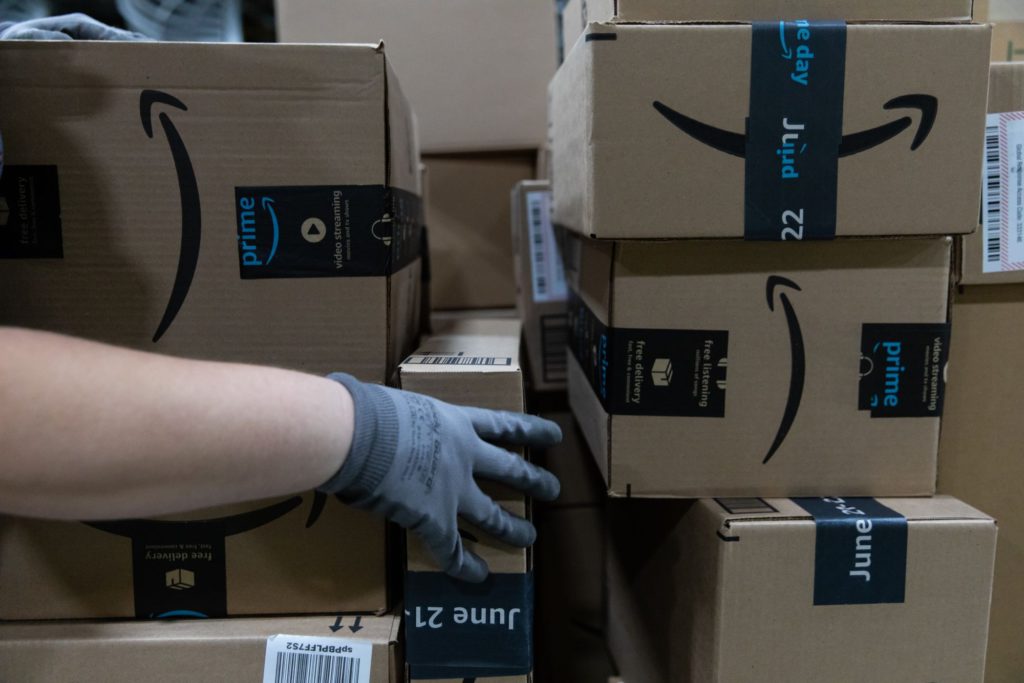
(Bloomberg) — Amazon.com Inc.’s Prime Day sequel is generating about the same sales as a regular day — at least so far. 

As of 11 a.m. in New York Tuesday — eight hours into the event — sales were similar to the previous 30-day average, according to Klover, a research firm that uses real-time spending data from 3 million US shoppers. By contrast, spending during the entire Prime Day sale in July was about 13% higher, the firm said. 

“Usually it’s off to the races,” Klover Chief Executive Officer Brian Mandelbaum said in an interview. “This Prime Day isn’t going to move the needle.”

Retailers are bracing for a lackluster holiday that will require deep discounts to move a glut of inventory. Many consumers, meanwhile, are planning to cut back because higher food and fuel costs have left them with less disposable income. US online spending in November and December will grow just 2.5% this year to $209.7 billion, according to Adobe Inc. That would be a big slow-down from last year’s gain of 8.6%.

As of noon, about 58% of items purchased during the Amazon sale, which runs through Wednesday, cost less than $20, according to Numerator, indicating shoppers aren’t digging very deep. The average household outlay was about $75 since many households placed two orders, said Numerator, which based its data on 1,485 orders from 875 households.

The Seattle-based company launched Prime Day in 2015 to attract new subscribers who now pay $139 a year for shipping discounts, video streaming and other perks. The event helps Amazon lock in shoppers before the holidays and deepen its relationship with existing customers by offering them deals on Amazon gadgets and other goods. This is the first time the company is hosting two big Prime member sales in the same year. Amazon is touting hundreds of thousands of deals on electronics, appliances, toys and other products to lure shoppers.

The event generated little enthusiasm on social media, a sign of consumer fatigue and a potential harbinger for the holiday shopping season.

Twitter mentions of “Prime Early Access Sale” on the day the event was announced last month fell 70% compared with mentions for the previous event in June, according to analytics firm Sprout Social Inc. And buzz about the two-day sale that begins Tuesday has been waning, the opposite of what happened during the run-up to the summer event.

“The data suggests possible fading consumer enthusiasm around seasonal promotions,” said Mike Blight, a market research manager at Sprout. “Announcing a second, similar campaign during the crowded holiday promotion season likely contributed to the lack of engagement.”

Still, Amazon has an opportunity to win market share even if shoppers pull back, helping the e-commerce giant stand out when investors pick holiday winners and losers, according to Scott Gravelle, who runs the robotic logistics firm Attabotics in Calgary. As an online marketplace with millions of merchants, Amazon offers a broader selection of goods than traditional retailers without having to buy inventory.

“There’s a battle about to happen for market confidence about who captures more consumer spending dollars when shoppers spend less,” Gravelle said. “I think Amazon has a bit of an advantage.”

More stories like this are available on bloomberg.com

©2022 Bloomberg L.P.
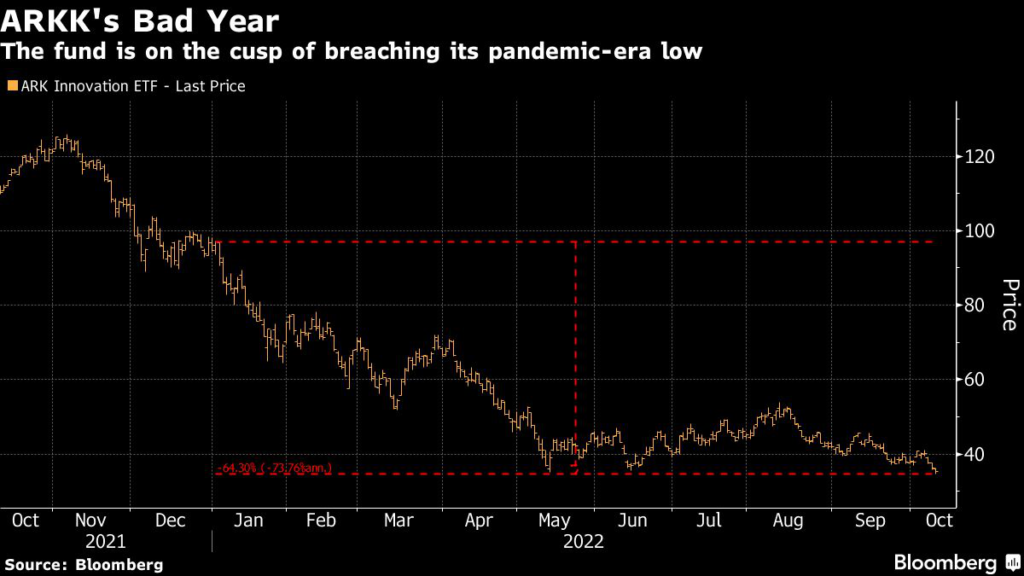
Cathie Wood’s ARKK on the Verge of Taking Out Its Covid Low

(Bloomberg) — The drubbing in Cathie Wood’s flagship exchange-traded fund threatens to take out its low reached during the depths of the pandemic.

The $7.1 billion ARK Innovation ETF (ticker ARKK) hovered near its lowest closing level since March 2020 on Tuesday. The fund has plummeted 61% so far in 2022, more than twice the pace of the plunge in S&P 500.

The year hasn’t been kind to the ETF and growth-centered products as the Federal Reserve raises rates to knock down scorching levels of inflation. Wood this week took the central bank to task for its aggressive tightening campaign, penning an open letter to officials to express concern that they could be making a policy error. 

Speaking at the Greenwich Economic Forum, Wood said she believes the current risk-off environment means investors and trading algorithms are looking for safety in passive benchmark-tracking products. She says they’re failing to recognize that the companies ARK targets are positioned to help tackle some of the macro challenges facing the market.

“We have so many more problems now,” she said, citing the supply chain and Russia’s invasion of Ukraine. “Innovation solves problems, and yet these algorithms and very short-term time horizons — ours is five years, the market in risk-off goes to one quarter — algorithms are dominating the market.”

“ARKK has really been the poster child for pain from this environment — global interest rates surging and a Fed set on continuing to tighten until inflation is put to bed,” said Todd Sohn, ETF strategist at Strategas Securities. 

In another sign of how brutal things have been for ARKK, Sohn highlighted the fact that the fund’s median constituent is down 76% from its 52-week highs.

Read: Cathie Wood Warns Fed of Policy Error as Rate Hikes Hit ARK ETFs

It’s not only ARKK that has been hit. Short sellers have been targeting Wood’s ARK Investment Management family recently, even paying up to wage against the funds. 

Things weren’t always like this for ARKK and other growth stocks and funds. Wood’s flagship ETF added 35% in 2020 and almost 150% last year, becoming a darling of retail traders and others who had bought into Wood’s vision of innovation. The fund saw inflows of roughly $14 billion over those two years. 

It’s also on pace for inflows this year, though its performance has triggered heavy outflows of late, says Mohit Bajaj, director of ETFs at WallachBeth Capital. The fund has seen outflows of $244 million for the month of October — through the latest session for which data is available.

“As sentiment continues to sour, those with higher-beta exposure may see further outflows,” he said.

(Updates prices and adds comments at Greenwich Economic Forum.)

More stories like this are available on bloomberg.com

©2022 Bloomberg L.P.

Close Bitnami banner
Bitnami
