Bloomberg

Bitcoin Miner Argo’s Shares Plummet as Liquidity Concern Rises

(Bloomberg) — Bitcoin miner Argo Blockchain PLC’s shares are plummeting after the firm announced several measures, including issuing stock at a discount to an unnamed investor for $27 million, to ease liquidity pressures. 

The London-based mining company’s American depository receipts fell as much as 13% to $2.14 on Tuesday. The ADRs have dropped about 47% since the firm announced on Friday the issuance of the 87 million common shares, or about a 15% stake. 

Argo also plans to amend loan agreements with its primary lender, New York Digital Investment Group, to unlock $6 million. Argo has $84 million outstanding loans with NYDIG, most of which are backed by mining machines. It will also sell 3, 400 mining machines for nearly $7 million, Argo’s CEO Peter Wall said in a video. 

“We are going to bring in about 40 million bucks,” Wall said. “Assuming all of these transactions close as agreed upon in the letter of intent, we are confident that we have the liquidity and the balance sheet necessary to get us through the next 12 months.”

Bitcoin mining companies have been battered by low Bitcoin prices, soaring energy costs and more competition in the sector. Shares of public miners have been deep in the red this year. Argo has one of the largest Bitcoin mining farms in Texas with one facility planning to have 800-megawatt capacity. “The high power prices in Texas this summer really hurt us.” Wall said.

The company’s Bitcoin production also fell to 215 in September from 235 coins in the previous month, according to an operational update on Tuesday. The firm attributed the decrease to rising mining difficulty due to more computing power for the Bitcoin network. 

Other miners have also raised money through new shares. Core Scientific signed a $100 million common stock purchase agreement with B. Riley Principal Capital II, while Iris Energy agreed to sell up to $100 million in equity to the same investment bank.

“We know that there is going to be some folks out there who are going to be upset because there is dilution and the deal was done at a rough 20% discount, but this is a really important strategic investor,’ Wall said. “It’s not fast money, it is not hedge fund, we are going to have them on the board and they are going to be part of the long-term vision for the company.”  

More stories like this are available on bloomberg.com

©2022 Bloomberg L.P.

Stocks Rise as Dip Buyers Emerge; Dollar Falls: Markets Wrap

(Bloomberg) — US stocks rose as dip buyers emerged after a selloff sent the benchmark to the lowest intraday level since 2020. The dollar erased gains and Treasury yields traded off multiyear highs.

The S&P 500 posted a modest gain, retracing losses after a New York Fed survey showed near-term consumer inflation expectations cooled though were less optimistic longer term. Treasuries were mixed, with yields on the short-end of the curve falling from multiyear highs. 

The mood remains fragile after a four-day losing streak wiped $1.6 trillion off the value of the S&P 500 Index. US inflation data Thursday may seal the case for another 75-basis-point interest-rate increase in the absence of a major shortfall, given the swaps market is almost fully pricing in such a move at the Federal Reserve’s next meeting. Nor have officials given any inclination to pause their rate-hiking cycle in the near future.

Strategists are also bracing for weak profits against a drumbeat of warnings over the rising risk of a global recession. The International Monetary Fund joined the refrain, warning of a worsening outlook as efforts to curb inflation may add to damage from the war in Ukraine and China’s slowdown. Big US banks kick off the third-quarter earnings season in earnest later this week.

“We have not seen the impact of tightening,” Michael Kelly, head of the multi-asset team at PineBridge Investments told Bloomberg TV. “That lies ahead and when we see that, it’s another leg down for risk assets.” 

Yields on two-year Treasuries slipped to around 4.27% after earlier hitting the highest since 2007. The 30-year yield briefly touched a fresh 2014 high in the US session.

Turmoil in UK bond markets eased Tuesday as the Bank of England was forced to expand its emergency measures to tackle what it called “fire-sale dynamics.” 

Meanwhile, Russian President Vladimir Putin threatened further missile attacks on Ukraine after hitting Kyiv and other cities in the most intense barrage of strikes since the first days of its invasion.

“It’s little wonder investors enter the week in a dreary mood, especially with headlines from Ukraine signaling a further escalation in geopolitical tensions,” Christopher Smart, chief global strategist at Barings, said in a note. 

With world growth under pressure, US oil futures tumbled about 2%, giving up more of last week’s 17% rally. 

Key events this week:

  • Earnings this week include: JPMorgan Chase & Co., Citigroup Inc., Morgan Stanley, BlackRock Inc., Delta Air Lines Inc., UnitedHealth Group Inc., U.S. Bancorp, Wells Fargo & Co.
  • Fed’s Loretta Mester speaks, Tuesday
  • BOE’s Andrew Bailey speaks, Tuesday
  • FOMC minutes for September meeting, Wednesday
  • US PPI, mortgage applications, Wednesday
  • OPEC Monthly Oil Market Report, Wednesday
  • Fed’s Michelle Bowman and Neel Kashkari speak
  • ECB’s Christine Lagarde speaks
  • US CPI, initial jobless claims, Thursday
  • G-20 finance ministers and central bankers meet, Thursday
  • China CPI, PPI, trade, Friday
  • US retail sales, business inventories, University of Michigan consumer sentiment, Friday
  • BOE emergency bond buying is set to end, Friday

Some of the main moves in markets:

Stocks

  • The S&P 500 rose 0.2% as of 11:45 a.m. New York time
  • The Nasdaq 100 was little changed
  • The Dow Jones Industrial Average rose 0.9%
  • The Stoxx Europe 600 fell 0.6%
  • The MSCI World index fell 0.3%

Currencies

  • The Bloomberg Dollar Spot Index fell 0.2%
  • The euro rose 0.3% to $0.9731
  • The British pound rose 0.7% to $1.1132
  • The Japanese yen was little changed at 145.63 per dollar

Cryptocurrencies

  • Bitcoin fell 0.5% to $19,151.76
  • Ether fell 1.2% to $1,291.75

Bonds

  • The yield on 10-year Treasuries advanced one basis point to 3.89%
  • Germany’s 10-year yield declined four basis points to 2.30%
  • Britain’s 10-year yield declined four basis points to 4.44%

Commodities

  • West Texas Intermediate crude fell 2.1% to $89.25 a barrel
  • Gold futures rose 0.6% to $1,685.80 an ounce

More stories like this are available on bloomberg.com

©2022 Bloomberg L.P.

Honda, LG to Invest $4.4 Billion to Make EV Batteries in Ohio

(Bloomberg) — Honda Motor Co. and Korea’s LG Energy Solution Ltd. plan to spend $4.4 billion to build electric-vehicle batteries at a new joint venture in Ohio, part of project by the automaker to start EV production at its plants in the state.

The two companies will initially invest $3.5 billion and create 2,200 jobs at the battery facility in southwestern Ohio, construction of which will begin next year and from which mass manufacturing will get underway by late 2025, they said Tuesday in a statement. 

Honda and LG had previously announced the investment plans in August, but not provided a location. Bloomberg reported in June that Ohio was a front-runner.

The Japanese company also said it will start production of US-made battery-powered cars on its own EV platform from 2026 at three existing manufacturing plants in the state. It plans to spend $700 million retooling an engine factory and its East Liberty and Marysville, Ohio, vehicle assembly plants, creating some 300 new jobs, it said. 

“This is a very challenging time for our entire industry,” Bob Nelson, executive vice president of American Honda, said at an event in Columbus. “This requires a bold vision for the future.”

The battery joint venture aims to have approximately 40 gigawatt-hours in annual production capacity of pouch-type lithium-ion batteries, the companies said.

More stories like this are available on bloomberg.com

©2022 Bloomberg L.P.

Coinbase Stock Rises After Adding Google Cloud Partnership

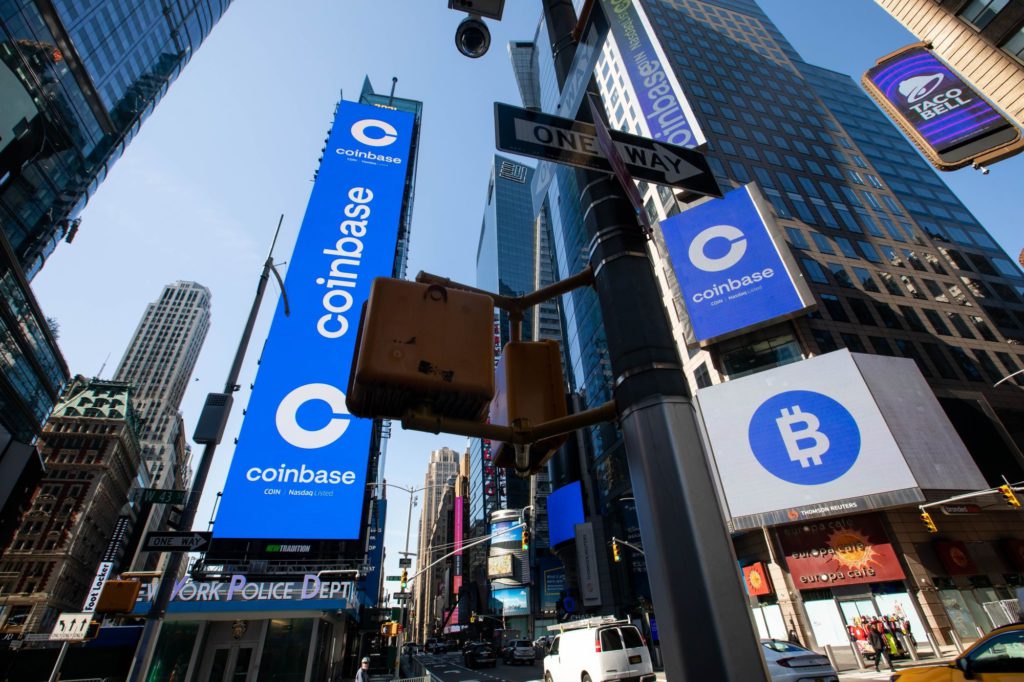
(Bloomberg) — Coinbase Global Inc. entered into a partnership with Alphabet Inc.’s Google over cloud services, its latest corporate pact after prior accords with BlackRock Inc. and Meta Platforms Inc. 

Google Cloud will enable some customers, starting with those in the web3 industry, to pay using cryptocurrencies through Coinbase, according to a statement. Google will also use Coinbase Prime for institutional crypto services, such as custody and reporting. 

Shares of Coinbase rose 4.3% on Tuesday. The stock is down roughly 72% so far this year amid a global rout that has hit risky digital assets particularly hard.

With the pact, the largest US crypto exchange company will move some data-related applications to Google from the Amazon Web Services cloud, according to a Coinbase spokesperson.

The partnership with Google further “solidifies Coinbase’s opportunities across non-trading revenue streams,” and may eventually help it expand share, according to Bloomberg Intelligence analysts Paul Gulberg and Ethan Kaye. 

The firm has been cementing its presence by securing partnerships with companies outside of the digital-asset industry. In August, BlackRock Inc. announced a pact with Coinbase to make it easier for institutional investors to manage and trade Bitcoin, while Meta, the parent company of Facebook and Instagram, said it will support integration with Coinbase Wallet, among others. 

(Adds stock move in third paragraph.)

More stories like this are available on bloomberg.com

©2022 Bloomberg L.P.

China’s Electric Trucks May Well Pull Forward Peak Oil Demand

(Bloomberg) —

Electric trucks are grabbing a lot of headlines lately. Elon Musk announced Tesla Semis will start shipping to PepsiCo in California. Volvo is delivering battery-powered big rigs to Amazon in Germany.

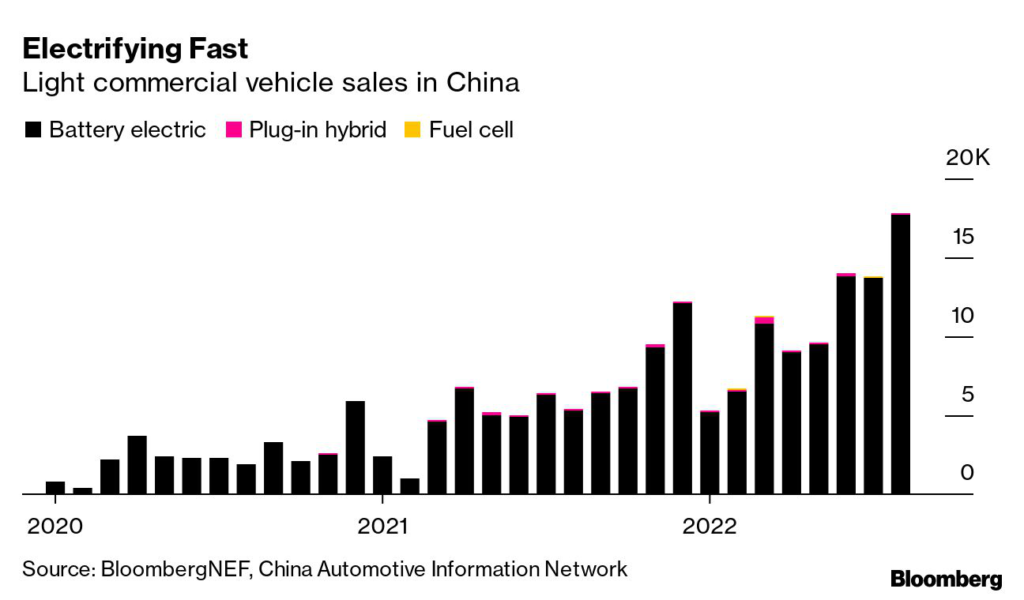
But few markets are electrifying quite like China, where EVs have gone from less than 1% of light commercial vehicle sales to 10% in just the last two years. Sales reached a record high of almost 18,000 in August and look likely to keep rising in the final few months of the year.

China is the largest commercial vehicle market in the world, so what happens there moves the needle globally. At 10% electric share, China is well ahead of almost all other countries in this segment. Only South Korea has a higher adoption rate, with more than 20% of its light commercial vehicle sales already electric so far in 2022.

The adoption curve for light electric vans and trucks in China has started to look a bit like what happened with passenger vehicles a few years earlier, when the combination of policy support, more model availability and a surge in charging-infrastructure investment led the market to take off. Momentum has continued on the passenger vehicle side, with plug-in vehicles hitting 29% of all sales in September. Full electrics were 22% of the market.

The market for electric medium and heavy-duty trucks in China is also picking up. Sales of electric big rigs in that segment rose 224% in July and hit 3.4% of the total market. Deliveries dipped slightly in August, falling to 2% share, but the trend for the year is still strongly up and to the right.

So far, most of these heavy trucks are operating in shorter-range urban duty cycles, rather than long-haul routes, but the picture is changing quickly nonetheless. It’s easy to be dismissive of a few percentage points of market share, but technology adoption stories have a habit of going slowly, right up until they don’t.

Earlier this year, I wrote about how China was  experimenting with the right mix of policy, technology and economic levers to drive zero-emission options in these heavier vehicle segments, and that things could move quickly once the optimal mix becomes clearer. That point may be arriving now, and the latest data challenges two widely held beliefs in both the transport and energy sectors.

The first is that hydrogen fuel cells are the main, or even the only, way to clean up heavy trucks. The data so far shows that while fuel cells are playing a role, most of the alternative heavy trucks being sold in China are battery-electric. It’s early days and this could still change, but BNEF analysis indicates that at least for urban duty cycles, electric heavy trucks are already much more economically competitive and will remain so even with the expected decline in the cost of hydrogen and fuel cell stacks.

The last standing area of contention is long-haul trucking. That segment is still up for grabs, but even there, recent BNEF analysis on planned model launches showed a huge divergence between the number of electric and fuel cell trucks coming to market. There are a lot corporate net-zero targets that are starting to filter down to the supply chain in the next few years that will pressure big logistics fleet operators to start getting zero-emission options on the road. Electric models have a serious head start.

China is also experimenting with battery swapping for commercial vehicles, showing there’s more than one way to skin the cat. Data compiled by BNEF shows a 318% increase in the number of commercial battery swap stations set up in China last year, and planned deployment of 34,000 vans and trucks with swappable batteries. A single city, Tangshan, has deployed over 4,400 heavy-duty battery-swapping trucks as of September. That’s more than the entire global heavy duty fuel cell truck fleet.

The other orthodoxy that sales data cuts against is that commercial vehicles will keep oil demand in the road transport sector growing steadily in the decades ahead. Most major oil outlooks now acknowledge that passenger vehicle oil demand has either already peaked or will soon. But almost all of them assume steady growth in demand from the commercial vehicle segment as countries get richer and more freight continues to be moved by road.

In BNEF’s 2022 Road Fuel Outlook, commercial vehicle growth keeps oil demand growing, but not for long. This year’s outlook has overall road transport oil demand peaking in 2027, but if sales of electric trucks continue to rise sharply in China, that could be pulled forward.

(Corrects city name in the 10th paragraph.)

More stories like this are available on bloomberg.com

©2022 Bloomberg L.P.

QVC Owner Qurate Stakes Future on Livestream Shopping

(Bloomberg) — QVC host Jayne Brown was jubilant after selling 1,500 units of a size-inclusive duster jacket and maxi dress set.

The next item up for sale during her 11 a.m. show on a recent Monday is a jersey keyhole top (also size-inclusive), which Brown touts as “the Botox of fabrics” because it always stays smooth. 

Brown’s show on the free-to-air network, which shares parent company Qurate Retail Inc. with the Home Shopping Network, is beamed to millions of homes. The channels make up a niche slice of the shopping industry that’s nevertheless been a cultural mainstay for some 40 years. But home-shopping, sitting at the intersection of two industries in upheaval — entertainment and retail — faces fresh existential threats. 

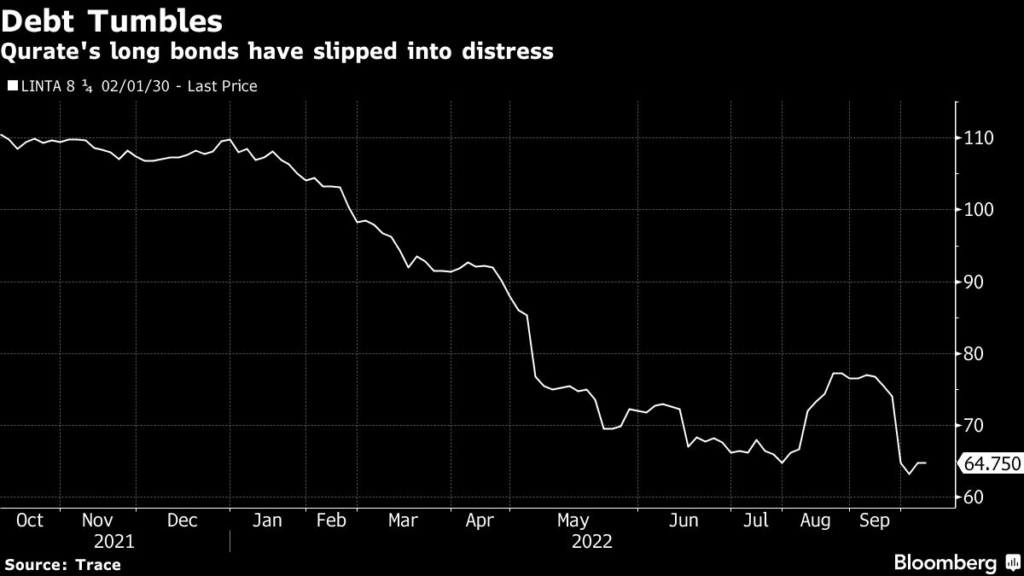
Core customers are aging, and younger ones are increasingly turning to streaming. Supply chain woes created piles of excess inventory, just as consumers tighten their spending in response to inflation. Shares of Qurate have plunged more than 70% this year, and its debt has fallen to distressed levels. 

“QVC and HSN are struggling with relevancy,” said Oliver Wintermantel, an equity analyst at Evercore ISI. “Consumer tastes or shopping behaviors are changing.”

Qurate Chief Executive Officer David Rawlinson has implemented a turnaround plan, dubbed Project Athens, designed to focus the Englewood, Colorado-based company on a future in streaming and e-commerce, while cutting costs. The aim is to expand beyond broadcast television and into the multi-billion dollar livestreaming industry to compete with the likes of Amazon Live. 

A representative for Qurate declined to comment. 

Booms and Busts

Qurate, which counts discretionary goods like electronics and beauty as core sales drivers, enjoyed an early-pandemic sales boom from cooped-up customers. But that momentum quickly faded as in-person shopping returned. Sales last year were below the same period in 2020, and inventories climbed to $1.74 billion as the company struggled to manage supply chain disruptions. A fire last year at one of the company’s warehouses delivered another blow. 

The recent pain has sent some of the company’s more than $5 billion of debt tumbling into distress, from prices around par at the beginning of the year. S&P Global Ratings analysts called recent financial results “volatile” in a note that downgraded the company’s credit rating, and said the numbers and ongoing supply chain woes threaten the company’s turnaround goals. 

Qurate is seeking to cut down on its inventory in the next 18 months, which is likely to further weigh on results, according to Bloomberg Intelligence analyst Mike Campellone.

For now, the company has sufficient liquidity — including more than $560 million of cash — to address its upcoming debts including first-lien notes due March 2023 and March 2024, according to S&P. Those obligations trade near par. 

“We still think the company has adequate liquidity and will be able to address the incoming maturities. Is the debt load an impediment to its turnaround? That’s not the case,” S&P analyst Khaled Lahlo said. 

Longer-dated debt holders, however, remain skeptical. The company’s 8.25% notes due 2030 trade around 64.75 cents on the dollar, according to Trace. 

As part of the turnaround, the company launched its vCommerce Ventures division, designed to focus on its streaming projects. It’s touted 70% growth in streaming viewership since the beginning of the year, and some 600,000 watchers on online platforms QVC+ and HSN+, which offer recorded shows touting wares like Broadway star Idina Menzel’s Encore apparel line.

And while Qurate’s core audiences may be aging, older customers tend to be more brand loyal. The company should also benefit from a rising number of adults who are looking to fill their time after their children leave home, said Tom Forte, an equity research analyst at D.A. Davidson & Co. who covers Qurate.

“Their core customers will enable them to emerge from the challenges they face today because the demographics are so favorable and because, to the company’s credit, they’ve found a way to manage through these challenges historically,” Forte said. “They have an almost timeless appeal to the empty nester.” 

More stories like this are available on bloomberg.com

©2022 Bloomberg L.P.

Plunging PC Shipments Threaten Tech Stocks

(Bloomberg) — Semiconductor stocks extended their underperformance in Tuesday morning trading, sliding to the lowest since October 2020, as a sharp decline in global PC shipments added to concern about soft demand. Tech mega-caps were among top S&P 500 decliners by value.

The sector has been pummeled this year, most recently on the heels of AMD’s disappointing forecast, and with new scrutiny on US restrictions on China’s access to American tech. The S&P 500 tech sector lags the broader index on a year-to-date basis by the most in a generation.

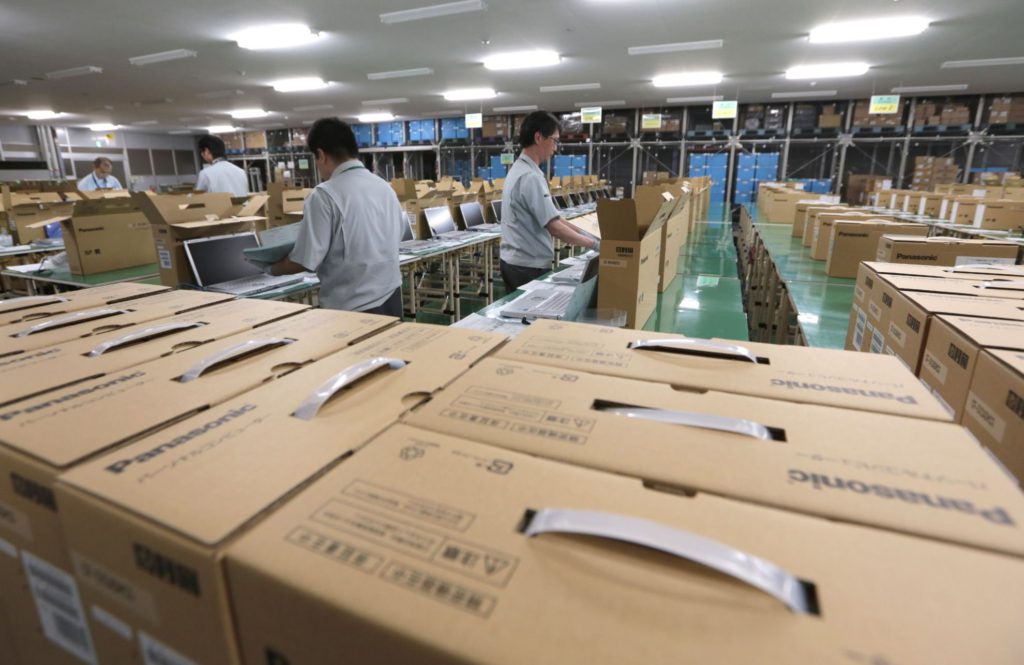
Fresh figures from Gartner are adding to the gloom: Worldwide PC shipments sank 19.5% year-over-year in 3Q, the steepest decline since the firm started tracking the PC market in the mid-1990s. Supply chain woes have eased, but high inventory is now a significant issue due to weak demand from both consumers and businesses. 

Gartner flagged disappointing back-to-school sales in particular — even with massive promotions and price drops, as many people have new PCs purchased in the last two years. (Another wave of discounts is yet to come with holiday promotions, potentially offering the Fed some comfort as it focuses on fighting higher prices.)

In the US, PC shipments fell for a fifth quarter, sliding 17%, led by laptops. Even so, there was an encouraging sign: Desktops grew a bit, driven by small and midsize businesses and public sector. Interestingly, earlier data showed still-low US small-business optimism improved for a third month in September, with firms more upbeat about sales. It’s also worth noting aspects of AMD’s business beyond PCs, including data center growth, weren’t so bad.

In other regions, shuttered operations in Russia and lockdowns in China (unsurprisingly) hurt PC demand. And the overall economic outlook isn’t great, with the latest warnings coming from the IMF and JPMorgan’s Jamie Dimon, which will weigh on tech and other equities.

  • NOTE: Felice Maranz writes for Bloomberg’s Markets Live blog. The observations she makes are her own and not intended as investment advice. For more markets commentary, see the MLIV blog

More stories like this are available on bloomberg.com

©2022 Bloomberg L.P.

Google’s ‘Incognito’ Mode Inspires Staff Jokes — and a Big Lawsuit

(Bloomberg) — On International Data Privacy Day last year, an email popped into Alphabet Inc. Chief Executive Sundar Pichai’s inbox from Google’s marketing chief Lorraine Twohill full of ideas on gaining user trust.

“Make Incognito Mode truly private,” she wrote in a bullet point. “We are limited in how strongly we can market Incognito because it’s not truly private, thus requiring really fuzzy, hedging language that is almost more damaging.”

Now, billions of dollars in damages could be at stake in a consumer lawsuit targeting the private-browsing feature if a judge agrees Tuesday to let the case proceed as a class action on behalf of millions of users.

Twohill’s assessment of Incognito’s shortcomings was remarkably candid considering Google had already been sued at the time she messaged her boss, who himself had shepherded the feature through development back when the company launched its Chrome browser in 2008.

Google denies wrongdoing. “Privacy controls have long been built into our services and we encourage our teams to constantly discuss or consider ideas to improve them,” spokesman Jose Castaneda said in an email. 

Court filings show that well before the search engine giant was taken to court, rank and file Googlers frankly voiced their own frustrations that Incognito didn’t live up to its name.

“We need to stop calling it Incognito and stop using a Spy Guy icon,” one engineer said in a 2018 chat among Google Chrome engineers, after sharing research that showed users misunderstood features of private browsing modes. He was referring to the image of sunglasses under a hat that pop ups with a message, “You’ve gone Incognito,” when a user opens a new tab to browse privately.

A colleague responded by posting a link to a wiki profile of a character on “The Simpsons” cartoon show called Guy Incognito, who is a doppelganger of protagonist Homer Simpson. “Regardless of the name, the Incognito icon should have always been” Guy Incognito, the employee said. “Which also accurately conveys the level of privacy it provides.”

Twohill’s memo and a transcript of the employee chat are part of a larger collection of emails, presentations and employee testimony, all buried in court records, that offers a window into the controversy within Google around Incognito.

All the Ways Google Is Coming Under Fire Over Privacy: QuickTake

The paper trail of criticism has been submitted as evidence in a lawsuit that accuses Google of quietly scooping up troves of user data after misleading people into thinking their privacy is protected.

Tuesday’s hearing in Oakland, California, is critical because US District Judge Yvonne Gonzalez Rogers will decide whether tens of millions of Incognito users can be grouped together to pursue statutory damages of $100 to $1,000 per violation — a potentially staggering amount.

Google argues in court filings that while it’s common knowledge Incognito doesn’t make browsing invisible, users have given consent for the company to track their data.

“Incognito mode offers users a private browsing experience, and we’ve been clear about how it works and what it does, whereas the plaintiffs in this case have purposely mischaracterized our statements,” Castaneda said in the email.

What Bloomberg Intelligence Says

“We don’t think Alphabet will prevent a suit about alleged use of data from private-browsing sessions from being ruled a class action.”

— Matthew Schettenhelm, Litigation Analyst

Click here to read the full report

The Incognito litigation is among several cases by consumers and states accusing Google of privacy violations. Just last week, Google agreed to pay $85 million to resolve claims by Arizona that it surreptitiously collects data on users’ whereabouts for targeted advertising. 

So far only Google knows what it’s doing with data it may be collecting from Incognito Mode searches and “some of that will come out at trial,” Serge Egelman, research director of the Usable Security and Privacy Group at University of California at Berkeley’s International Computer Science Institute.

Data on where Incognito Mode users go online, what they do on certain sites and what ads they view could be used for conversion tracking, which lets advertisers learn how users interact with ads, according to Egelman.

It’s also “probably valuable from a profiling standpoint, in terms of selling targeted advertisements,” Egelman said.

The consumers who are suing argue Google’s transparency about the data mining is woefully inadequate. In a court filing they highlighted an internal proposal by a Google Chrome product lead to change the customer-facing language on the Incognito launch screen so that it says “You are NOT protected from Google,” instead of “You are protected from other people who use this device.” 

It was rejected by Google executives, according to a court filing that cites a sealed email.

The exhibits in court also include a 2020 presentation that drew from a survey on users’ experience with Incognito Mode. “Unless it is clearly disclosed that their activity may be trackable, receiving targeted ads or suggestions based on private mode may erode trust,” a slide warned. 

Read More: Google Judge Disturbed That ‘Incognito’ Users Are Tracked 

Google has failed so far to dismiss claims in the case. But it has fended off two attempts by plaintiffs to force Pichai to submit to questioning under oath. The judge overseeing the suit has yet to set a trial date.

The case is Brown v. Google LLC, 20-3664, U.S. District Court, Northern District of California (Oakland).

More stories like this are available on bloomberg.com

©2022 Bloomberg L.P.

5G Cell Service Can Coexist With Planes, US Study Suggests

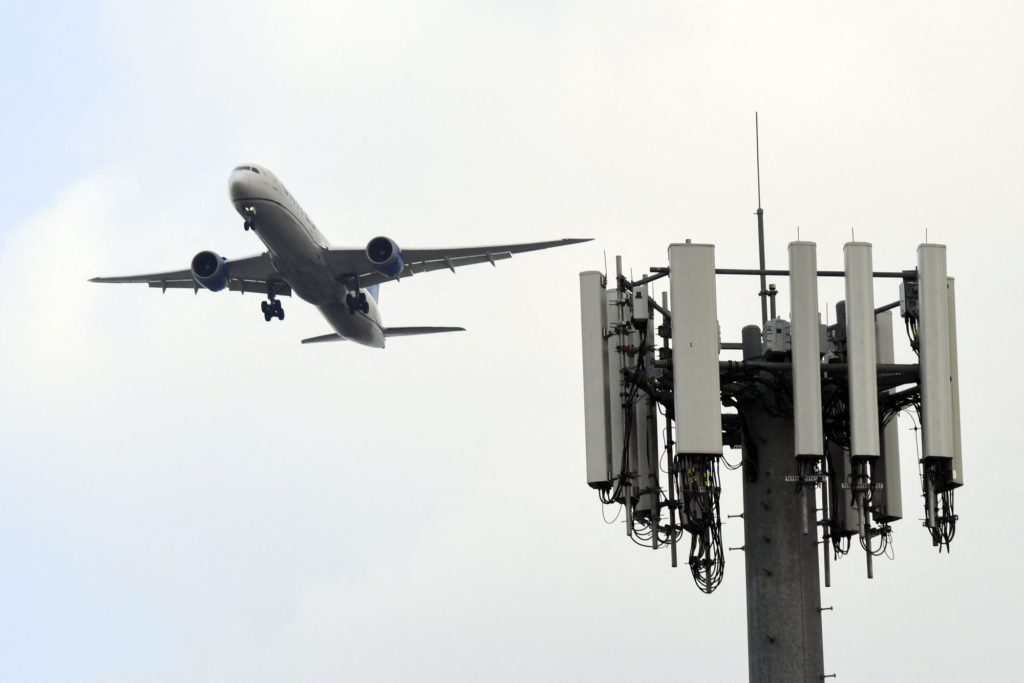
(Bloomberg) — The new 5G cell towers that generated controversy this year are well designed to limit radio-wave interference on airliners, according to a US government study that appears to show the technology can soon safely coexist with aviation.

Researchers found that 5G transmissions stay safely within their assigned frequencies and mostly don’t point signals skyward where aircraft operate, according to the report released Tuesday, the first of several from the government on the new high-speed mobile phone service.

There is a “low level of unwanted 5G emissions” in frequencies used by so-called radar altimeters — which calculate a plane’s distance from the ground and are critical to landing in low visibility — the National Telecommunications and Information Administration said in the report.

The findings offer the the strongest indication to date that the patches being applied to some aircraft models should work well to protect them. 

The introduction of AT&T Inc. and Verizon Communications Inc.’s 5G service in January produced months of controversy and led the Federal Aviation Administration to push companies to reduce power levels near major airports after it concluded they could cause altimeters to give dangerous, inaccurate readings. In June, the FAA began pushing airlines to attach protective filters to the altimeters in a compromise to allow the full use of 5G.

The FAA has said the existing limits on signals by the two cell companies will have to remain in place until the patches are installed on aircraft because some models are susceptible even when the 5G signals are well controlled.

The NTIA, the government’s arbiter of radio-frequency disputes, conducted the testing in conjunction with the Defense Department, and was joined by other federal agencies and representatives of telecom companies and the aviation industry. The NTIA tested all three of the 5G broadcast-tower technologies used by AT&T and Verizon in a variety of real-world conditions.

More stories like this are available on bloomberg.com

©2022 Bloomberg L.P.

Chipmaker Earnings Estimates Fall at Fastest Pace Since 2008

(Bloomberg) — A string of warnings on semiconductor demand from the likes of Micron Technology Inc. and Samsung Electronics Co. is forcing analysts to slash earnings forecasts at the fastest pace since 2008.

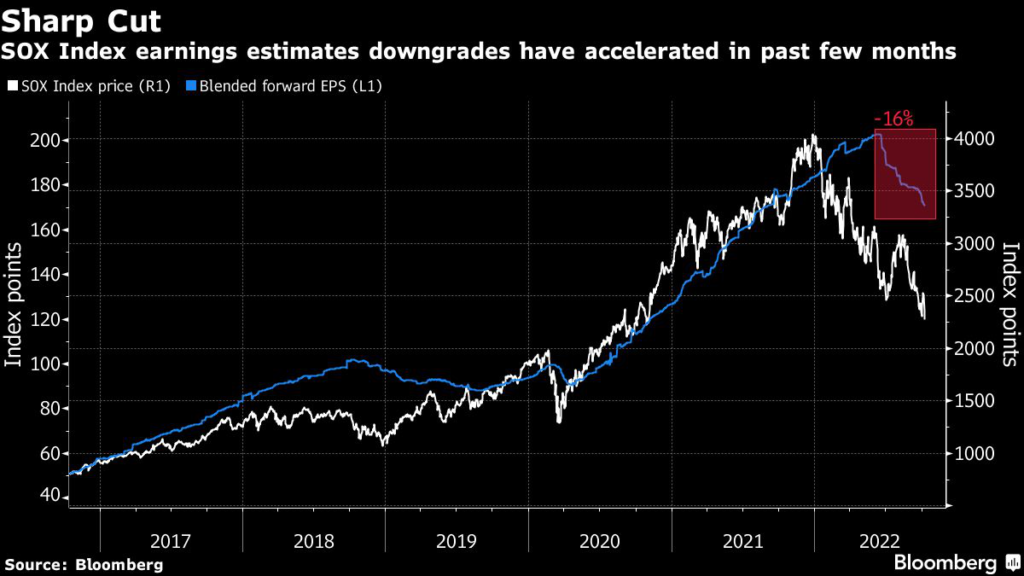
Having gone from boom to bust in less than a year, the semiconductor industry is now bracing for a storm that’s expected to hit everyone, from producers of memory chips to semiconductor-equipment makers and manufacturers of computer processors. The benchmark Philadelphia Semiconductor Index has fallen 42% this year, on track for its worst annual performance in 14 years as demand falls off a cliff.

The global personal computer market saw its steepest decline on record in the third quarter, according to Gartner, as economic uncertainty and a glut of unsold inventory dented shipments for the fourth straight quarter. Ominous signals are also coming out of early chipmaker forecasts as they find themselves saddled with excess inventory: Samsung, Micron and Advanced Micro Devices Inc. were the latest to issue warnings.

Profit expectations have fallen 16% in the past three months, according to data compiled by Bloomberg, and Citigroup Inc. analysts see more pain coming and expect the Philadelphia index to fall further as the crisis gains steam.

“Strap on a helmet –- it will likely get worse,” said Christopher Danely, an analyst at Citigroup who expects NXP Semiconductors NV and Texas Instruments Inc. to both report weakness in bookings. “This is just the beginning of the downturn and every company/every end market will feel it.”

While valuations have taken a beating, they’re still above the lows of previous market cycles, supporting the firm’s view that the stocks have further to fall. The Philadelphia index, known as the SOX, is priced at 13.3 times estimated earnings, versus a low of 11.3 in 2018. 

Nvidia Corp., whose chips are a staple of high-end gaming computers, has lost about $544 billion in market value from its November peak. The SOX was down 2% on Tuesday, touching a near two-year low. 

“This slowdown is dramatic and pointing towards rapidly deteriorating demand for consumer electronics,” wrote Peter Garnry, head of equity strategy at Saxo Bank. 

Beyond the cyclical downturn, US-China tensions are adding to the industry’s woes. Washington unveiled sweeping curbs on the way chip companies do business with China’s tech industry — restrictions that could weigh big on companies such as Nvidia and Taiwan Semiconductor Manufacturing Co.

While bad news is all stacked up against the sector, there’s probably one good sign: Typically the stocks bottom out well before an earnings trough, suggesting there’s only a bit more downside left before a 2023 turnaround. 

East to West

A turn in the tide is seen starting in Asia first, with Morgan Stanley projecting a return to growth for the industry by the second half of 2023. 

“We see Asia stocks emerging from the downturn more rapidly than the US — as most US stocks have not even guided down yet, though stocks are down meaningfully,” wrote analysts led by Joseph Moore.

Not all investors are optimistic that the chip industry will have such a quick turnaround. 

The inflection point probably won’t come until 2024 when inflation cools and appetite for chips recovers, according to Richard Windsor, founder of independent researcher Radio Free Mobile. Even for memory-chip makers that have seen a sharp drop in demand, he said its “impossible to tell” when the bottom will arrive and how sharp that will be.

(Updates to market open.)

More stories like this are available on bloomberg.com

©2022 Bloomberg L.P.
Close Bitnami banner
Bitnami