Bloomberg

Meituan Said to Mull First Global Push as China Growth Slows

(Bloomberg) — Chinese food delivery titan Meituan is studying an expansion into Hong Kong and international markets as domestic growth slows, according to people familiar with the matter.

Tony Qiu, an executive hired from Kuaishou Technology earlier this year, will lead Meituan’s international efforts, said the people, who asked not to be identified because the information isn’t public.

The company will first attempt to break into the Hong Kong food delivery market, the people said. Plans are still at a preliminary stage and could change, they said.

Meituan didn’t respond to an inquiry seeking comment outside of regular business hours.

There was speculation about the Beijing-based company’s ambition to expand into international markets when Qiu’s hire was reported in July. Growth in the Chinese market has slowed for almost all of the country’s biggest consumer tech firms as the economy lost steam and the government’s increased scrutiny on big tech left limited space for future expansion at home. Chinese e-commerce platform Pinduoduo recently also made its first overseas push in the US.

More stories like this are available on bloomberg.com

©2022 Bloomberg L.P.

China Says Biden’s New Chip Technology Curbs Will Harm Recovery

(Bloomberg) — China criticized expanded US restrictions on its access to semiconductor technology, saying they’ll harm supply chains and the world economy.

President Joe Biden administration announced the export curbs on Friday, escalating tensions between the two countries and adding complications for an industry faced with slumping demand. 

The measures seek to stop China’s drive to develop its own chip industry and advance its military capabilities. They include restrictions on the export of some types of chips used in artificial intelligence and supercomputing and tighten rules on the sale of semiconductor manufacturing equipment to any Chinese company.

China “has poured resources into developing supercomputing capabilities and seeks to become a world leader in artificial intelligence by 2030,” said Assistant Secretary of Commerce for Export Administration Thea D. Rozman Kendler. “It is using these capabilities to monitor, track and surveil their own citizens, and fuel its military modernization.”

Chinese Foreign Ministry spokesperson Mao Ning said Saturday that the measures, which begin to enter into force this month, are unfair and will “also hurt the interests of US companies,” according to an official briefing transcript. They “deal a blow to global industrial and supply chains and world economic recovery,” she said.

The US is seeking to ensure that Chinese companies don’t transfer technology to the country’s military and that chipmakers in China don’t develop the capability to make advanced semiconductors themselves.

The rules come at a difficult time for the chip industry, which is suffering a steep drop in demand for personal-computer and smartphone components. Shares of many of the world’s biggest semiconductor makers tumbled on Friday following reports that the slump may be even worse than thought.

The government’s actions add another layer of uncertainty for investors already trying to work out how much demand for semiconductors might shrink. Companies such as Applied Materials Inc. and Intel Corp. can’t easily walk away from China, the biggest single market for their products and a key part of a global supply chain for electronics used everywhere in the world.

Chipmaker stocks have struggled throughout 2022, following three straight years where the group climbed between 40% and 60%. The Philadelphia Stock Exchange Semiconductor Index is down nearly 40% so far this year, on track for its biggest annual drop since 2008, and it recently fell to its lowest level since November 2020.

Widespread Losses

The losses have been widespread, with nearly every component of the industry benchmark index in negative territory this year. Nvidia Corp. and Advanced Micro Devices Inc. have declined almost 60%. AMD reported preliminary third-quarter revenue on Thursday that was weaker than expected. AMD and Nvidia have already disclosed that the China-related restrictions on AI chips will hurt their sales. 

Nvidia said Friday that the broader regulations won’t have “a material impact on our business,” which is already restricted by previous export controls. 

When the new rules come into force, it will be harder for providers of chips used in Chinese supercomputers and related gear to get permission to fill orders. They should presume requests will be denied, according to senior Commerce Department officials.

Commerce also put a raft of restrictions on supplying US machinery that’s capable of making advanced semiconductors. It’s going after the types of memory chips and logic components that are at the heart of state-of-the art designs.

While there will be more latitude for overseas companies needing technology for their own operations in China — or for parties that can prove they’re making things there for immediate export elsewhere — Commerce said it will enforce the rules and also cut off support for existing deployments of machinery covered by the restrictions.

While the US is home to the biggest block of companies that design vital electronic components and provide the complex machinery to manufacture them, other regions have capabilities that could undermine some of the government’s efforts.

Commerce Department officials acknowledged that overseas cooperation is necessary to avoid hampering the initiatives and said there are talks with other parties underway around the world on the topic. 

Chipmaking gear restrictions cover production of the following:

  • Logic chips using so-called nonplanar transistors made with 16-nanometer technology or anything more advanced than that. Generally speaking, the smaller the nanometers, the more capable the chip.
  • 18-nanometer dynamic random access memory chips.
  • Nand-style flash memory chips with 128 layers or more.

For companies with plants in China, including non-US firms, the rules will create additional hurdles and require government signoff.

South Korea’s SK Hynix Inc. is one of the world’s largest makers of memory chips and has facilities in China as part of a supply network that sends components around the world. 

“The new measures restrict sale of equipment for memory products of certain level of technology or above, but allow Korean chipmakers to export if they have a license from the Commerce Department,” the company said in a statement. “SK Hynix is ready to make its utmost efforts to get the US government’s license and will closely work with the Korean government for this.”

Separately, Commerce added more names to a list of companies that it regards as “unverified,” meaning it doesn’t know where their products end up being used. The 31 additions are all Chinese. That indicates that US suppliers will face new hurdles in selling technologies to those entities.

The biggest name to be added to the list is Yangtze Memory Technologies Co. The memory-chip maker is widely regarded as being the best bet China has of breaking through into the front ranks of the industry and has made progress with advanced products for chip-based storage.

The US chip industry has expressed concern that moving too aggressively could put domestic companies at a disadvantage. They worry that losing China sales will hurt their ability to spend on innovation and potentially help competitors abroad.

The Semiconductor Industry Association, which represents all of the largest US chipmakers, said it’s evaluating the impact of the new export controls and will ensure compliance.

 A bill signed by Biden in August promises to infuse about $52 billion into the US semiconductor industry. 

(Updates with response from Chinese foreign ministry in sixth paragraph.)

More stories like this are available on bloomberg.com

©2022 Bloomberg L.P.

Social Media Buzz: Ukraine Stamp, Inflation Aid, Jon Stewart

(Bloomberg) — What’s buzzing on social media this morning:

BUZZING HEADLINES:

Within hours of the devastating explosion on Russia’s bridge to Crimea, Ukraine’s postal service issued a commemorative stamp echoing the destruction of the Titanic, complete with the likenesses of Kate Winslet and Leonardo DiCaprio defying the edge of the smoldering Kerch Strait Bridge. President Vladimir Putin’s flagship bridge to Crimea was severely damaged in a blast that hit a fuel train and caused the partial collapse of the only road link running from the Russian mainland to the Black Sea peninsula that Moscow annexed in 2014.

A steady stream of data this week suggested that the Federal Reserve’s interest rate hikes are starting to bite in the real economy, including indications trade and manufacturing are slowing. Equity investors are nervous ahead of earnings season, which will kick up with big banks next week. Fed officials and Friday’s jobs report hammered home the message that the US central bank would hike rates until they are restrictive and then hold them there, even if it means recession.

California residents have begun receiving stimulus checks to help them deal with decades-high inflation. The checks, which range between $200 and $1,050 dollars, are part of a relief package announced in June that will give $9.5 billion of tax rebates to millions of residents. States including Colorado, Maine, Indiana and Delaware have announced similar measures to help people cope with high prices, particularly for necessities like gas and food. Some economists say the stimulus measures will fuel spending, making it harder for the Federal Reserve to tame price surges.

BUZZING TWEETS

Jon Stewart has a new show, and the first episode featured an interview with Arkansas Attorney General Leslie Rutledge about why her state banned gender-affirming care for minors.

More stories like this are available on bloomberg.com

©2022 Bloomberg L.P.

‘Plot Twist!’: Musk’s Deal for Twitter Lurches Toward a Close

(Bloomberg) — Elon Musk is running out of ways to evade his original $44 billion contract to buy Twitter Inc.

The world’s richest man, who was in a rush to acquire the social network in April and then abruptly soured on the deal, spent months trying to exit the obligation entirely. In recent weeks, both sides discussed a price that was about $4 below the $54.20 per-share accord, but couldn’t agree on additional terms, according to people familiar with the matter.

On Oct. 3, Musk applied public pressure by formally re-offering to buy the company at the original price, aiming to avoid an Oct. 17 fight in Delaware Chancery Court. Twitter’s stock shot up, with investors sensing the drama was nearly over. But the company’s lawyers, suspicious of conditions in Musk’s letter, including the stipulation that Twitter drop its lawsuit, called it “an invitation to further mischief.”

“Plot twist!” Musk tweeted.


Behind the scenes, Twitter’s lawyers raced to verify Musk’s renewed affinity for the deal, checking whether he had indeed asked lenders for the money they had earlier committed (one bank said he hadn’t, Twitter says). Those same big banks tried to tally up potential losses on the months-old deal terms, while Twitter employees, still in limbo, turned to memes and gallows humor to get through the week.

By the night of Oct. 6, the billionaire finally got something he wanted: a delay of the trial. There, a judge would have scrutinized all his reasons for backing away from the deal in full view of the public and the media. In return, Musk was given a new, court-issued deadline of Oct. 28 to make good on his promises. If he and Twitter don’t complete the transaction by then, he’ll likely be on the witness stand in November.

The shift buys Musk time. And if he really doesn’t want to go to court, it also edges Twitter shareholders closer to a payday.  “At $54.20 cash deal price closing this year, it is good to be long TWTR!,” Kevin Stadtler, chief executive officer of Twitter investor Stadtler Capital, celebrated in an email.

There’s still “a 10% chance that Musk is trying a clever end-around to exit the deal,” according to Gene Munster, managing partner at Loup Ventures. A person familiar with his strategy says one possible scenario still involves Musk getting the deal at a lower price. But Musk shows signs he’s resigned himself to owning the product; his public commentary has shifted from critiquing the social network to talking about its future under him, as part of an “ everything app” called X, with “very fast” product development, according to his tweets this week.

Now, one of the parties has to budge. Musk wants to add that the deal should be contingent on him receiving $13 billion in debt financing, but the original contract didn’t contain that stipulation, so Twitter isn’t interested in allowing it. Musk is also seeking to reserve his rights to file a fraud suit over his claims the platform’s executives misled him and other investors about the number of spam and bot accounts among its more than 230 million users. Again, based on Musk’s track record, the company has little reason to agree.

Read more: Morgan Stanley-Led Banks Face $500 Million Loss on Twitter Debt

Within Twitter, employees have spent the week debating the real agenda behind Musk’s latest change of heart. Many believe it’s a play for time, with Musk conscious he was unlikely to win at trial and looking for options that would allow him to pull out at a later date. Some former Twitter staffers expressed relief at getting out before the whiplash of Musk’s public statements, as well as all the distraction and stress that his eventual ownership would likely entail.

Those who remain are bracing for cuts. If the deal closes very soon, a number of Twitter employees are worried they will be laid off before they have a chance to vest their restricted stock units, a milestone scheduled for the start of November, people familiar with the matter said. Employees are especially concerned in departments related to policy, communications and marketing; Musk said in a tweet that at his version of Twitter, “software engineering, server operations & design will rule the roost.”

If the acquisition goes forward, banks led by Morgan Stanley stand to lose, also — potentially more than $500 million, according to Bloomberg calculations. With yields at multi-year highs and the new closing date fast approaching, the financial institutions will probably have to directly fund the debt they could otherwise sell to investors.

Still, one of Musk’s bankers complained privately on a call with a reporter that he was sick of the entire saga and hoped it would end soon. A second banker was bewildered, saying they hadn’t thought about the deal in months while overall market conditions worsened. Others were harder to reach, saying they’d been advised not to speak, given how tenuous the situation had become. 

Despite edging closer to a deal, talks remained contentious. “Twitter offered Mr. Musk billions off the transaction price. Mr. Musk refused because Twitter attempted to put certain self-serving conditions on the deal. Any statement to the contrary is a lie,” Musk’s attorney, Alex Spiro of Quinn Emanuel Urquhart & Sullivan LLP, said in a statement Oct. 6. While there were talks between the two parties about a price cut, Twitter insisted the offer would have to remain above $50 per share, according to people familiar with the matter. Since then, the talks have been focused on preventing Musk from finding an out from the deal, the people said.Musk has indicated, via filings and delays, that he is in no rush to be in front of a judge. The billionaire recently had a trove of hundreds of personal text messages become public as part of the court process, revealing negotiations with his business contacts and chatter with friends. Any further court movement could mean more private matters are exposed. 

The Tesla Inc. CEO’s legal team was perhaps already getting the sense that the case was not going well, as Judge Kathaleen St. J. McCormick sided repeatedly with Twitter in pretrial rulings, according to one person familiar. Even with the late emergence of a Twitter whistleblower who alleged executives weren’t forthcoming on security and bot issues, there were concerns Musk’s side would not be able to prove a material adverse effect, the legal standard required to exit the contract.

Just days before reviving his $54.20 bid, Musk’s deposition was canceled and rescheduled multiple times — first because of the location (Delaware) and then, later, because the lawyer who was slated to question him had been exposed to Covid-19, according to people familiar with the matter and court filings. Musk’s lawyers say they weren’t made aware of the exposure until they were already en route to San Francisco, presumably for the deposition of Twitter Chief Executive Officer Parag Agrawal, which was slated for the following morning. Agrawal ended up rescheduling his questioning as well, for Oct. 3. Read more: Elon Musk’s Path From Twitter Shareholder to Successful Acquirer

For his part, Musk says in court filings that he has been “working diligently, cooperatively, and in good faith with the financing banks to prepare for the closing,” but that it will take time because the parties are “working through the complex process” of drafting documents, arranging security interests for a portion of the debt financing, and “finalizing funding mechanics.” He said that attorneys for the financing banks estimated they’ll need until Oct. 28 to fund the loans. He also said that the lawyers have advised that each of their clients is “prepared to honor its obligations” under their debt commitments.

Twitter isn’t buying it. In its Oct. 6 response, the company said a banker involved in the debt financing testified that day that Musk had yet to send them a borrowing notice, and had otherwise not communicated that he intended to close the deal. The banker also said that “the main task necessary to close the deal — memorializing the debt financing — could have happened in July but didn’t because Mr. Musk purported to terminate the deal,” according to Twitter.

Now there’s an official deadline, per the judge: 5 p.m. on Oct. 28.

Investor Stadtler, whose firm manages $80 million, said he’s pleased with the outcome so far — but he doesn’t want Musk to run the next version of Twitter. He “carelessly entered into a merger agreement and overpaid for the asset,” Stadtler said. “One of Musk’s advisors should have used the most important word for investing: No.”

More stories like this are available on bloomberg.com

©2022 Bloomberg L.P.

Musk Turns His Diplomatic Gaze to China-Taiwan From Ukraine

(Bloomberg) — Elon Musk, chief executive officer of Tesla Inc. and SpaceX, sees himself as a man “trying to do the right thing, which is not always clear.”

But in recent days his remarks about Russia’s invasion of Ukraine and the tensions between China and Taiwan have demonstrated the risks of public diplomacy by a billionaire with complex business interests around the globe.

The Financial Times published a profile on Friday in which Musk proposed his own solution for the tensions between China and Taiwan — handing some control to Beijing. Taiwan is governed independently, but China considers the island part of its territory. He also said Beijing has sought assurances that he won’t offer SpaceX’s Starlink internet service in China.

“My recommendation…would be to figure out a special administrative zone for Taiwan that is reasonably palatable, probably won’t make everyone happy,” Musk told the newspaper. “And it’s possible, and I think probably, in fact, that they could have an arrangement that’s more lenient than Hong Kong.”

The comments matter because Tesla operates an auto plant in Shanghai. At the same time, SpaceX is developing Starlink, a satellite-based internet service that’s proved to be a military asset in Ukraine’s defense against Russia’s invasion. 

Taiwan Tensions Spark New Round of US War-Gaming on Risk to TSMC (1)

The remarks are also out of step with US policy: President Joe Biden has said the US would defend Taiwan in the event of a Chinese invasion. The president has also said the US stands by its “One China” policy, in which it has avoided formal recognition of the government in Taipei or providing it a binding security guarantee.  

Taiwan’s Mainland Affairs Council Deputy Minister Chiu Chui-cheng said in a text message on Saturday that the island wouldn’t accept the proposal put forward by Musk “based on investment interests to turn a democratic country into a special administration.” The crucial role Taiwan plays in regional democratic politics and global technology and economy is not a product of commercial transactions, he said.

“Taiwan has an advantage in the chip and tech supply chain and has long worked with Tesla,” Chiu said. “We welcome Mr Musk and other global business leaders to visit Taiwan to see Taiwan’s democracy, freedom and innovation for themselves.”

Chao Tien-lin, a ruling Democratic Progressive Party lawmaker, proposed on his Facebook page that Taiwanese boycott Tesla indefinitely if Musk does not change his tune.

China said it continues to adhere to the basic policy of “peaceful reunification and one country, two systems” on Taiwan, Foreign Ministry spokeswoman Mao Ning said at a regular press briefing on Saturday. China will “resolutely smash” any separatist attempts for Taiwan independence, or external interference, she said.

Earlier this week, Musk angered Ukrainian President Volodymyr Zelenskiy by tweeting out a “peace” plan urging Ukraine to seek a negotiated settlement with Russia that includes ceding Crimea for good. Zelenskiy responded on Twitter.

Though Starlink has been a key asset to Ukraine, the service has failed Ukrainian troops at times on the frontlines. 

(Adds China’s reaction in tenth paragraph)

More stories like this are available on bloomberg.com

©2022 Bloomberg L.P.

Chinese Crypto Mogul Li Sells Stake in Exchange Firm Huobi

(Bloomberg) — Huobi Global said controlling shareholder Leon Li sold his entire stake in the cryptocurrency exchange operator and will cease to be involved in its operations.

Li sold his holding in Huobi to a buyout firm managed by About Capital Management (HK)Co., the company said in an emailed statement. The co-founder will no longer be involved in any aspect of Huobi Global’s business, according to a Huobi spokesperson. Bloomberg reported the intended sale in August. 

Once the most active Bitcoin trading platform on the globe, Huobi has in recent years retreated from China, its biggest user base and revenue source at one time. Li’s exchange stopped providing services to Chinese users after Beijing declared crypto transactions illegal last year. 

The bourse has since accelerated its expansion into overseas markets including Turkey and Brazil, but is fighting bigger rivals such as Binance and FTX. As of Saturday, it was ranked eighth in 24-hour volume among exchanges with a top “trust score” of 10 for the legitimacy of its data, according to tracker CoinGecko.

“Following Huobi’s exit from the Chinese mainland market in 2021, we have accelerated our globalization push amidst a challenging market environment, which adds to the impetus for Huobi to seek a new shareholding structure with a global vision and international resources,” Li said in the statement. 

The transaction has no impact on Huobi’s core operations and business management teams, the company said.

After the transaction, Huobi Global will enact a series of initiatives including the injection of sufficient capital in margin and risk provision funds, as well as measures to further enhance competitiveness and compliance procedures, a spokesperson said. 

“We believe the virtual asset industry is still in its early stage and there is tremendous upside for long term growth,” said Ted Chen, chief executive officer of About Capital, in the statement. Chen founded About in 2008 and previously was a founding partner of China investment manager Greenwoods Asset Management. “We are confident that the holistic approach to rebuild Huobi Global as the premier international virtual asset exchange would solidify both the recognition and trust of Huobi’s international users.”

Huobi was co-founded in 2013 by former Oracle Corp. coder Li, who quickly transformed the Beijing startup into the world’s most active Bitcoin exchange by charging zero transaction fees. In 2017, Chinese regulators told local exchanges to stop hosting trades between fiat and digital money, the first of a stream of pronouncements that quelled a perceived threat to the country’s financial stability. 

Li had at different times ceded daily management as he dealt with health issues. The current chief executive officer is Hua Zhu, an ex-Alibaba Group Holding Ltd. technologist who joined Huobi in 2020.

In an interview for a 2020 Bloomberg News report, Li said he had never received any official notice barring him from leaving China but he’s chosen not to, unsure of the risks that would entail. 

(Updates with rank in fourth paragraph, and Huobi comment and Chen quote.)

More stories like this are available on bloomberg.com

©2022 Bloomberg L.P.

Hacked Optus Customers Kick Off Legal Hunt for Compensation

(Bloomberg) —

Lawyers for customers hit by a huge hack at Australian mobile-phone operator Optus filed a complaint with the government’s privacy protection office, kicking off a process that could force the company to compensate those who lost personal data.

Law firm Maurice Blackburn said it lodged a formal complaint with the Office of the Australian Information Commissioner. The firm alleges Optus, which is owned by Singapore Telecommunications Ltd., failed to protect the personal information of customers and destroy data it no longer needed.

Optus said it will “vigorously defend” the complaint. 

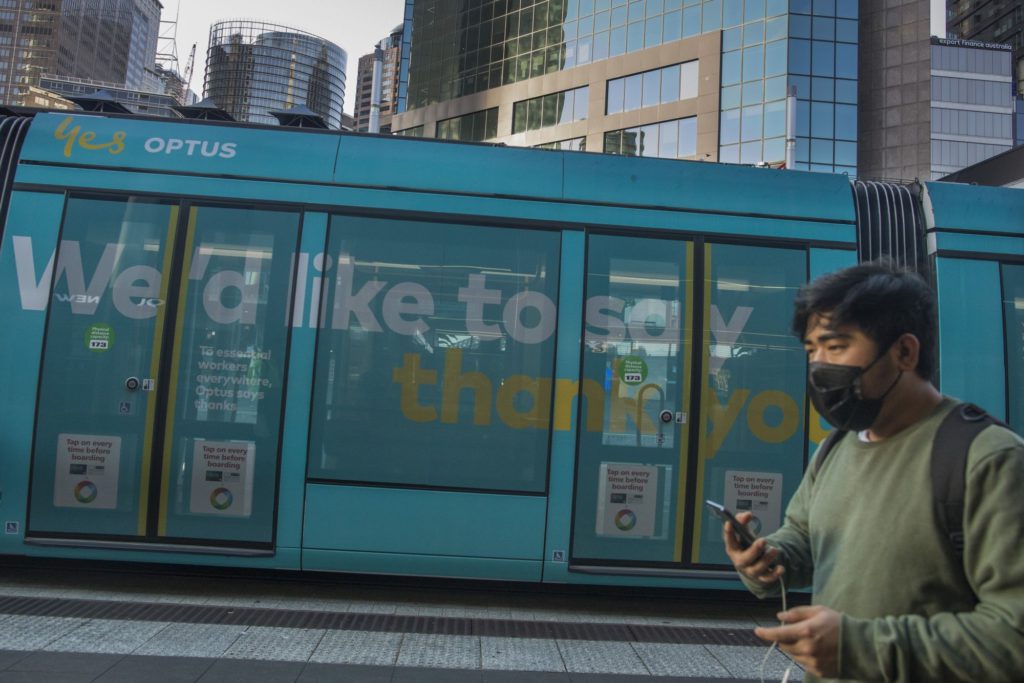
Optus last month said a security breach exposed the details of 9.8 million former and current customers. More than 2 million of them had identify document numbers compomised, triggering concerns about financial fraud.

Maurice Blackburn Principal Vavaa Mawuli said it’s not yet clear how badly Optus customers have been affected. “People are still getting information about how their data may have been misused,” she said by phone. “Losses aren’t crystallized for many people.”

The hack, one of the largest in Australian history, is threatening to become a crisis for Optus and its Singapore parent. The company is already paying for replacement drivers licenses and passports, and total costs including bills and fines could stretch into hundreds of millions of dollars, according to some estimates.

Read more: Giant Optus Hack May Swallow a Quarter of Singtel Profits

Mawuli said tens of thousands of Optus customers have registered their details with the firm. The complaint with the Office of the Australian Information Commissioner is likely to be the largest ever seen in Australia, she said.

The Office of the Australian Information Commissioner didn’t respond to an email seeking a response. SingTel said earlier this month it had engaged lawyers to defend any potential class action, and reports of potential fines and costs were speculative.

(Updates with Optus saying it will defend the complaint in the third paragraph)

More stories like this are available on bloomberg.com

©2022 Bloomberg L.P.

Winter Warnings Spur UK Households to Dial Down Thermostats

(Bloomberg) —

Britons confronted by staggering costs this winter are turning down the heating and putting on the jumpers, and that matters for energy markets.

Keeping the thermostat a few degrees cooler than usual could reduce residential gas consumption by as much as 23%, according to a BloombergNEF forecast. That would be enough to stave off forced rationing and carry households comfortably through the coldest of the last 30 winters, giving suppliers a bit of a cushion while seeking replacements for dwindling Russian flows.

Regulator Ofgem warned the country faces a “significant risk” of gas shortages in coming months, and Britain’s grid operator said there could be three-hour power cuts on cold, calm days. Those flares attracted attention, with customers doing some belt-tightening even before winter’s arrival. About three-quarters of households are expected to make behavioral changes such as reducing the amount of time the heating is on and not using it in every room, according to modeling by Lane Clark & Peacock LLP.

Additional layers of clothing and bedding also help when nights get colder. University student Hannah Kinnane lives in Brighton with four family members, including her 84-year-old grandmother, who suffers from heart arrhythmia.

“With the bills going up, we’re planning on keeping the heating off until at least November,” Kinnane, 20, said in a private message on Twitter. “To keep warm, we’ve all been congregating in the same room for three or four hours before going to bed with extra blankets.”

All told, those changes could reduce energy consumption in an average household by as much as 20%, said Steven Ashurst, head of heat at an LCP unit.

“We are all hoping for a mild autumn and winter heating season,” he said. “People will try to manage without their heating for as long as possible.”

The government so far has prioritized reducing costs for consumers over pushing conservation. The European Union raised concerns about the UK and Germany providing billions of dollars of support for energy bills without addressing demand.

Rationing is rare in the UK, but not unknown. Three-day work weeks were introduced in the early 1970s after strikes by coal miners and railroad workers curbed power generation.

The UK is spending £130 billion ($144 billion) to freeze the unit cost of energy for households for two years. Still, a typical domestic bill will be £2,500 a year, almost double last year’s average.

Europe has a voluntary target to cut gas consumption by 15% this winter, and France unveiled dozens of measures, pledges and incentives to cut energy use by 10% over two years. By comparison, the UK made no estimates, and Prime Minister Liz Truss blocked an energy-saving campaign.

While using less energy helps wallets and can be pitched as part of a war effort to help punish Russia for invading Ukraine, there can be severe health effects associated with the cold.

Spending extended periods at temperatures below 15C (59F) can increase the risk of serious respiratory illness, and temperatures below 14C worsen cardiovascular conditions, according to the Centre for Sustainable Energy charity.

Comfortable indoor temperatures vary — depending on age, health and other factors — but the Met Office forecasting agency recommends at least 18C.

“Consumers are rightly spooked by the promise of high prices, so many will choose a jumper over the thermostat,” said Caspian Conran, an energy markets economist at London-based consultancy Baringa Partners LLP. He estimates residential demand falling by 10%.

With bills rising, fuel poverty campaigners warn of potentially dire consequences for the millions of households that can’t afford to pay. Cold weather contributes to about 265 deaths a month in England and Wales, according to a report published in The Lancet medical journal.

That tally could rise this year, said Peter Smith, director of policy and advocacy for the National Energy Action charity.

A calamity on that scale would overwhelm a National Health Service already pushed to its breaking point by Covid-19 and tight budgets. Hospitals aren’t covered by the heating aid package, so they’re paying tariffs that have doubled or tripled.

Spending more on energy could lead to staff reductions, longer waiting times and potential cutbacks in patient care.

But some experts say energy usage is not a zero-sum game: either turn up the heat and pay a lot or keep it off and shiver.

The most effective way to minimize power consumption during colder months is by improving insulation, said Raman Bhatia, chief executive officer of Ovo Energy Ltd., noting the average UK home loses heat three times faster than those in Germany or Sweden.

He also recommended using “smart-home” technology to boost efficiency. Ovo, the nation’s third-biggest household supplier, is training customer-service agents to offer more advice and audit homes.

“Small changes in consumer behavior could account for substantial changes in the gas balance,” said Stefan Ulrich, a European gas analyst at BNEF.

More stories like this are available on bloomberg.com

©2022 Bloomberg L.P.

Hacked Optus Customers Kick Off Legal Search for Compensation

(Bloomberg) — Lawyers for customers hit by a huge hack at Australian mobile-phone operator Optus filed a complaint with the government’s privacy protection office, kicking off a process that could force the company to compensate those who lost personal data.

Law firm Maurice Blackburn said it lodged a formal complaint with the Office of the Australian Information Commissioner. The firm alleges Optus, which is owned by Singapore Telecommunications Ltd., failed to protect the personal information of customers and destroy data it no longer needed.

Optus last month said a security breach exposed the details of 9.8 million former and current customers. More than 2 million of them had identify document numbers compomised, triggering concerns about financial fraud.

Maurice Blackburn Principal Vavaa Mawuli said it’s not yet clear how badly Optus customers have been affected. “People are still getting information about how their data may have been misused,” she said by phone. “Losses aren’t crystallized for many people.”

The hack, one of the largest in Australian history, is threatening to become a crisis for Optus and its Singapore parent. The company is already paying for replacement drivers licenses and passports, and total costs including bills and fines could stretch into hundreds of millions of dollars, according to some estimates.

Read more: Giant Optus Hack May Swallow a Quarter of Singtel Profits

Mawuli said tens of thousands of Optus customers have registered their details with the firm. The complaint with the Office of the Australian Information Commissioner is likely to be the largest ever seen in Australia, she said.

Optus and the Office of the Australian Information Commissioner didn’t respond to emails or phone calls seeking response to the complaint. SingTel said earlier this month it had engaged lawyers to defend any potential class action, and reports of potential fines and costs were speculative.

More stories like this are available on bloomberg.com

©2022 Bloomberg L.P.
Chinese Crypto Mogul Li Sells Stake in Exchange Operator Huobi

(Bloomberg) — Huobi Global controlling shareholder Leon Li has sold his entire stake in the cryptocurrency exchange operator and will cease to be involved in its operations, according to the company.

Li sold his holding in Huobi to a buyout firm managed by About Capital Management (HK)Co., the company said in an e-mailed statement. The co-founder will no longer be involved in any aspect of Huobi Global’s business, according to a Huobi spokesperson. Bloomberg reported the intended sale in August. 

Once the most active Bitcoin trading platform on the globe, Huobi has in recent years retreated from China, once its biggest user base and revenue source. Li’s exchange stopped providing services to Chinese users after Beijing declared crypto transactions illegal last year. The bourse has since accelerated its expansion into overseas markets including Turkey and Brazil, but is fighting bigger rivals like Binance and FTX. 

“Following Huobi’s exit from the Chinese mainland market in 2021, we have accelerated our globalization push amidst a challenging market environment, which adds to the impetus for Huobi to seek a new shareholding structure with a global vision and international resources,” Li said in the statement. 

The transaction has no impact on Huobi’s core operations and business management teams, Huobi said.

Huobi was co-founded in 2013 by former Oracle Corp. Coder Li, who quickly transformed the Beijing startup into the world’s most active Bitcoin exchange by charging zero transaction fees. In 2017, Chinese regulators told local exchanges to stop hosting trades between fiat and digital money, the first of a stream of pronouncements that quelled a perceived threat to the country’s financial stability. 

Li had at different times ceded daily management as he dealt with health issues. The current chief executive officer is Hua Zhu, an ex-Alibaba Group Holding Ltd. technologist who joined Huobi in 2020.

In an interview for a 2020 Bloomberg News story, Li said he had never received any official notice barring him from leaving China but he’s chosen not to, unsure of the risks that would entail. 

More stories like this are available on bloomberg.com

©2022 Bloomberg L.P.

Close Bitnami banner
Bitnami