
Bloomberg

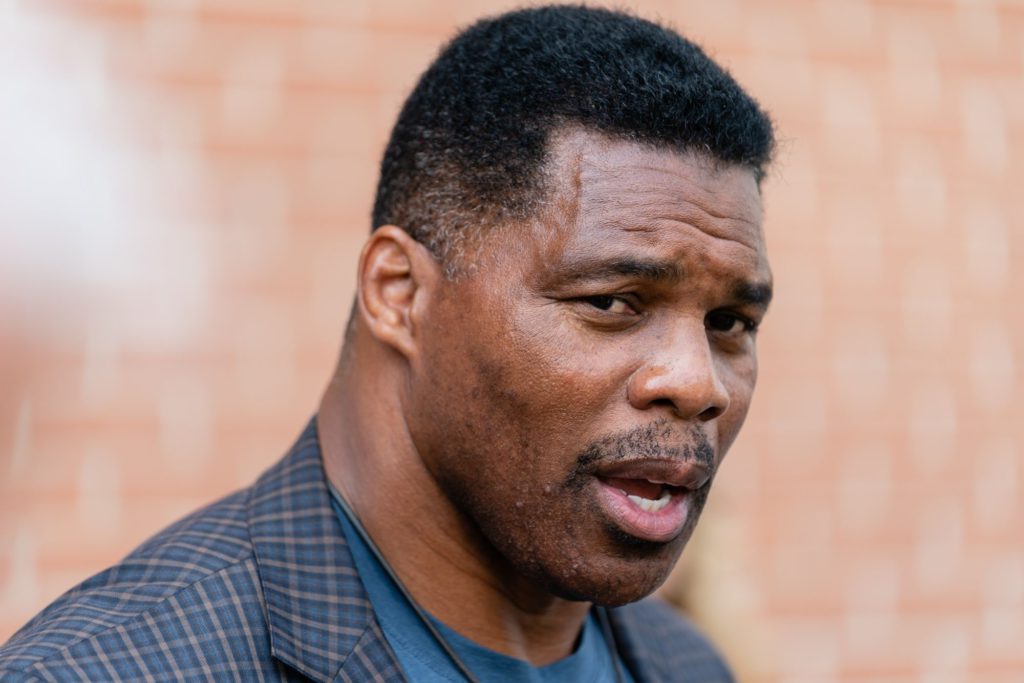
Herschel Walker’s Senate Campaign in Disarray After Firing, New Abortion Report

(Bloomberg) — Herschel Walker’s Georgia Senate campaign plunged deeper into turmoil Friday, with the firing of his political director and an accusation that he asked a woman to have a second abortion, imperiling Republican efforts to recover a vaunted seat and a majority in the upper chamber.

The cascade of disruptions illustrated the extraordinary public airing of dismay in Walker’s candidacy outlined by Georgia Lieutenant Governor Geoff Duncan in an opinion column published Thursday by CNN that the Republican Party has only itself to blame for betting on Walker as its choice to unseat incumbent Democrat Raphael Warnock in a state long regarded as a GOP bastion.

Hours after the Duncan column was published, CNN reported that the Walker campaign’s political director, Taylor Crowe, had been fired. Then the New York Times published an account of a woman who said Walker had pressured her to have a second abortion.

The bombardment of bad news for the campaign prompted one Georgia Republican operative to text Bloomberg an image of a sinking ship. 

With some 30 days before the Nov. 8 election, it’s too late for Republicans to replace Walker under Georgia election rules, even if they wanted to, Charles Bullock, a University of Georgia political scientist, said Friday.  

“He’s the horse they gotta ride,” Bullock said in a telephone interview. 

The Walker-Warnock contest is one of the pivotal races in the battle for control of the Senate. Warnock has clung to a narrow lead in most polls, but Georgia is one of the two contests involving Democratic-held seats that independent analysts rate as a tossup. It was regarded as a Republican stronghold until Warnock and now-US Senator Jon Ossoff won elections in January 2021. 

Republicans need a net gain of one seat to gain a majority in the Senate.

Bullock said the revelations are bound to erode support for Walker, regardless of how much Georgia Republicans covet the seat. He said some dismayed Republicans may back Warnock, or some may choose the libertarian candidate, which could trigger a consecutive run-off election for the seat if none of the candidates get more than 50% of the total vote.  

Walker has publicly expressed support for bans on abortion. 

He has denied reports in the Daily Beast, which Bloomberg has not independently verified, that he paid for a woman’s abortion and that they had a child together. He told reporters at an event Thursday he would “not back down” and that “We’re going to win this race.”

And in a fundraising pitch Friday, Walker attributed the allegations to “politics.”

“Let me be clear: I have never paid for anyone to have an abortion. It’s a flat-out lie,” Walker said in the fundraising email to donors. 

Former President Donald Trump, who encouraged Walker to run, has stood by him. Make America Great Again Inc., the new super PAC started by Trump allies, has spent $753,000 on cable television commercials, according to AdImpact, which tracks political advertising.

But despite the PAC’s ad purchases, Trump associates expressed concerns and even disappointment in discussions with the Walker campaign, a person familiar with the matter said on Friday. 

The Times said it had interviewed the woman who told the Daily Beast that Walker paid for her abortion in 2009. She told the Times that when she became pregnant again, Walker urged her to have another abortion. She refused and gave birth some months later. She added that Walker had not taken part in her 10-year-old child’s life, other than giving some gifts and providing court-ordered child support. 

Walker’s campaign didn’t immediately respond Friday to requests for comment. Early voting begins in Georgia on Oct. 17.

But on Thursday, he called the initial Daily Beast article “a lie” during his first public appearance after it was published. 

“I know why you’re here,” he told reporters and others attending the event at a lumber yard. “You’re here because the Democrats are desperate to hold onto this seat here, and they’re desperate to make this race about my family.”

Walker has rode Trump’s endorsement and the state’s very close partisan divide to stay competitive. Still, the scrutiny of the former University of Georgia and NFL football star’s past has been intensifying. There already had been allegations of past domestic abuse and that he exaggerated his business prowess.

Duncan, reflecting rising concern among Republicans, wrote that the party should never have put forth “an untested and unproven first-time candidate,” like Walker in such an important race.

“If we want the American public to take us seriously, we need to take the first step by nominating candidates they should take seriously,” Duncan wrote.

Duncan, who was a vocal critic of Trump’s unfounded claims of voting fraud in the 2020 election, isn’t seeking re-election.

He cited Warnock’s slight edge in the race and his near lockstep voting record to support President Joe Biden’s legislative agenda, despite his deep unpopularity in Georgia. 

“Yet instead of Warnock’s voting record, the attention has focused on the Republican challenger, a trend that will only accelerate after recent events,” he wrote. “Just as in the special elections in 2021, if the GOP squanders this year’s Georgia Senate race, we only have ourselves to blame.”

Before publication of the Times article, Warnock had told reporters at an event in Macon on Friday that “We have seen some disturbing things. We’ve seen a disturbing pattern and it raises real questions.”

Many conservatives in Georgia and elsewhere, however, have closed ranks around Walker. Pat Gartland, a former chairman of the Georgia Christian Coalition, said that among people he has been talking to, Walker “is still better than the alternative.”

And Jack Kingston, a former Republican congressman from Georgia, said he didn’t agree with Duncan that the party had wrecked its chances of winning the Senate seat, pointing out that “the lieutenant governor could have run, himself, but didn’t.”

“Herschel Walker is part of the solution in checking the Biden administration and I think most people realize that, and will stick with him,” Kingston said.

More stories like this are available on bloomberg.com

©2022 Bloomberg L.P.
Herschel Walker’s Senate Campaign in Disarray After Firing, Abortion Report

(Bloomberg) — Herschel Walker’s Georgia Senate campaign plunged deeper into turmoil Friday, with the firing of his political director and an accusation that he asked a woman to have a second abortion, imperiling Republican efforts to recover a vaunted seat and a majority in the upper chamber.

The cascade of disruptions illustrated the extraordinary public airing of dismay in Walker’s candidacy outlined by Georgia Lieutenant Governor Geoff Duncan in an opinion column published Thursday by CNN that the Republican Party has only itself to blame for betting on Walker as its choice to unseat incumbent Democrat Raphael Warnock in a state long regarded as a GOP bastion.

Hours after the Duncan column was published, CNN reported that the Walker campaign’s political director, Taylor Crowe, had been fired. Then the New York Times published an account of a woman who said Walker had pressured her to have a second abortion.

The bombardment of bad news for the campaign prompted one Georgia Republican operative to text Bloomberg an image of a sinking ship. 

With some 30 days before the Nov. 8 election, it’s too late for Republicans to replace Walker under Georgia election rules, even if they wanted to, Charles Bullock, a University of Georgia political scientist, said Friday.  

“He’s the horse they gotta ride,” Bullock said in a telephone interview. 

The Walker-Warnock contest is one of the pivotal races in the battle for control of the Senate. Warnock has clung to a narrow lead in most polls, but Georgia is one of the two contests involving Democratic-held seats that independent analysts rate as a tossup. It was regarded as a Republican stronghold until Warnock and now-US Senator Jon Ossoff won elections in January 2021. 

Republicans need a net gain of one seat to gain a majority in the Senate.

Bullock said the revelations are bound to erode support for Walker, regardless of how much Georgia Republicans covet the seat. He said some dismayed Republicans may back Warnock, or some may choose the libertarian candidate, which could trigger a consecutive run-off election for the seat if none of the candidates get more than 50% of the total vote.  

Walker has publicly expressed support for bans on abortion. 

He has denied reports in the Daily Beast, which Bloomberg has not independently verified, that he paid for a woman’s abortion and that they had a child together. He told reporters at an event Thursday he would “not back down” and that “We’re going to win this race.”

And in a fundraising pitch Friday, Walker attributed the allegations to “politics.”

“Let me be clear: I have never paid for anyone to have an abortion. It’s a flat-out lie,” Walker said in the fundraising email to donors. 

Former President Donald Trump, who encouraged Walker to run, has stood by him. Make America Great Again Inc., the new super PAC started by Trump allies, has spent $753,000 on cable television commercials, according to AdImpact, which tracks political advertising.

But despite the PAC’s ad purchases, Trump associates expressed concerns and even disappointment in discussions with the Walker campaign, a person familiar with the matter said on Friday. 

The Times said it had interviewed the woman who told the Daily Beast that Walker paid for her abortion in 2009. She told the Times that when she became pregnant again, Walker urged her to have another abortion. She refused and gave birth some months later. She added that Walker had not taken part in her 10-year-old child’s life, other than giving some gifts and providing court-ordered child support. 

Walker’s campaign didn’t immediately respond Friday to requests for comment. Early voting begins in Georgia on Oct. 17.

But on Thursday, he called the initial Daily Beast article “a lie” during his first public appearance after it was published. 

“I know why you’re here,” he told reporters and others attending the event at a lumber yard. “You’re here because the Democrats are desperate to hold onto this seat here, and they’re desperate to make this race about my family.”

Walker has rode Trump’s endorsement and the state’s very close partisan divide to stay competitive. Still, the scrutiny of the former University of Georgia and NFL football star’s past has been intensifying. There already had been allegations of past domestic abuse and that he exaggerated his business prowess.

Duncan, reflecting rising concern among Republicans, wrote that the party should never have put forth “an untested and unproven first-time candidate,” like Walker in such an important race.

“If we want the American public to take us seriously, we need to take the first step by nominating candidates they should take seriously,” Duncan wrote.

Duncan, who was a vocal critic of Trump’s unfounded claims of voting fraud in the 2020 election, isn’t seeking re-election.

He cited Warnock’s slight edge in the race and his near lockstep voting record to support President Joe Biden’s legislative agenda, despite his deep unpopularity in Georgia. 

“Yet instead of Warnock’s voting record, the attention has focused on the Republican challenger, a trend that will only accelerate after recent events,” he wrote. “Just as in the special elections in 2021, if the GOP squanders this year’s Georgia Senate race, we only have ourselves to blame.”

Before publication of the Times article, Warnock had told reporters at an event in Macon on Friday that “We have seen some disturbing things. We’ve seen a disturbing pattern and it raises real questions.”

Many conservatives in Georgia and elsewhere, however, have closed ranks around Walker. Pat Gartland, a former chairman of the Georgia Christian Coalition, said that among people he has been talking to, Walker “is still better than the alternative.”

And Jack Kingston, a former Republican congressman from Georgia, said he didn’t agree with Duncan that the party had wrecked its chances of winning the Senate seat, pointing out that “the lieutenant governor could have run, himself, but didn’t.”

“Herschel Walker is part of the solution in checking the Biden administration and I think most people realize that, and will stick with him,” Kingston said.

More stories like this are available on bloomberg.com

©2022 Bloomberg L.P.
Weight-Loss App Noom Searches for New CEO to Replace Jeong

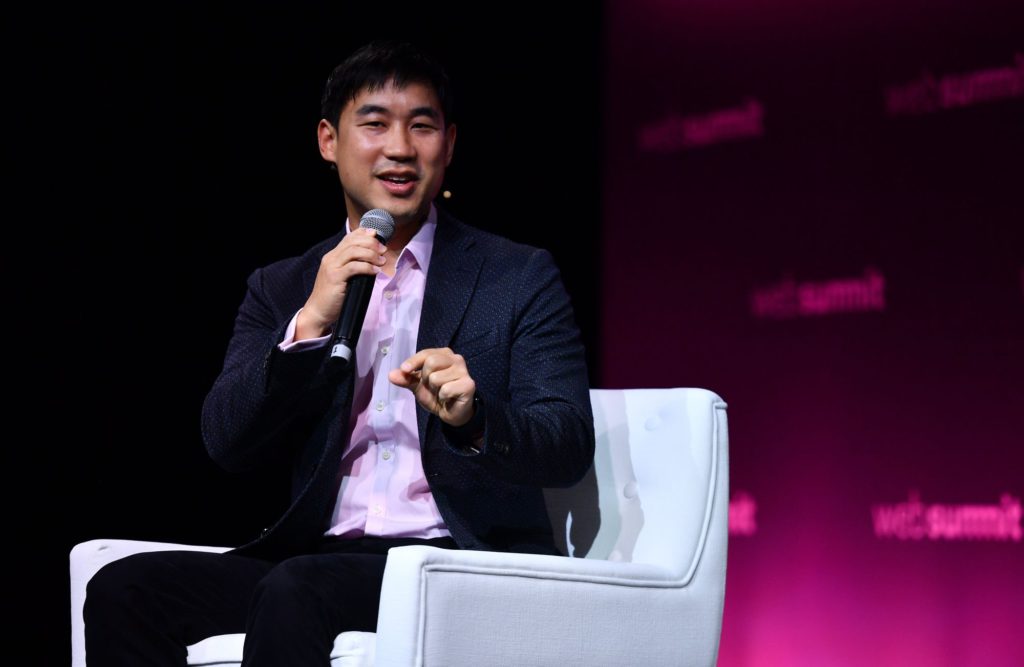
(Bloomberg) — Noom Inc., the maker of a controversial weight loss app, is looking for a new chief executive officer to replace co-founder and CEO Saeju Jeong.

Jeong will remain in the post while the New York-based company conducts an external search for a successor, a spokesperson confirmed. He will become executive chairman when a new CEO is named, the company said Friday in a statement. Noom’s other co-founder, Artem Petakov, is president of the company. 

Noom, which introduced its weight-loss app in 2016, was valued by investors at $3.7 billion in 2021. Its app color-codes foods into categories like green and yellow, tracks calories and offers lifestyle tips in an attempt to help users lose weight and keep it off. A subscription to Noom costs about $60 a month.

The closely held company told Bloomberg in July that it brought in about $400 million in revenue in 2020. Noom has raised more than $650 million, according to Crunchbase data. 

In July, Noom paid $56 million to settle a lawsuit that alleged it tricked users into automatically renewing their subscriptions.

More stories like this are available on bloomberg.com

©2022 Bloomberg L.P.
Ukraine Latest: IMF Will Provide $1.3 Billion for Payment Needs

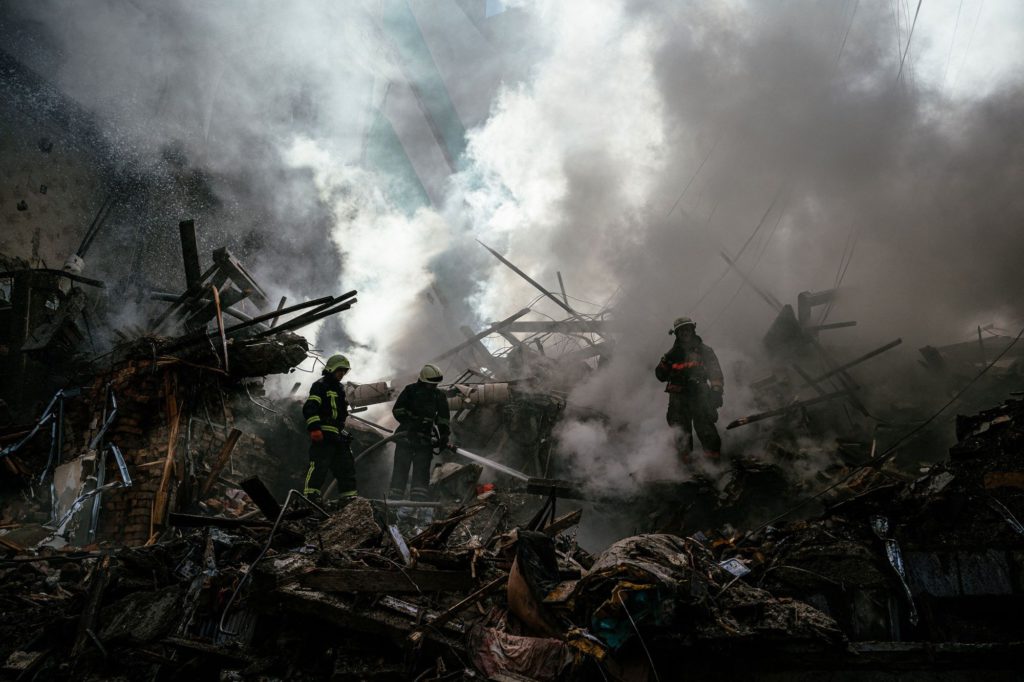
(Bloomberg) — The International Monetary Fund’s executive board approved $1.3 billion to help Ukraine with its financing. European Union leaders edged closer to a Russian gas-price cap as a further measure to punish President Vladimir Putin for his invasion of Ukraine, as Kremlin forces intensified strikes on the southern city of Zaporizhzhia. 

The Nobel Peace Prize was awarded to backers of human rights in Russia, Ukraine and Belarus, collectively cited by the Nobel committee for their “outstanding effort to document war crimes, human right abuses and the abuse of power.” But some in Ukraine made clear their chagrin at sharing the prize.

(See RSAN on the Bloomberg Terminal for the Russian Sanctions Dashboard.) 

Key Developments

  • Human Rights Champions Win Nobel Peace Prize as War Rages
  • For Europe, Biden’s ‘Armageddon’ Warning Can’t Be Dismissed
  • NATO Once Feared a Putin Victory; Now It Worries Over His Defeat
  • Russia Escalates Strike on Southeast City as Ukrainians Advance
  • Oil Poised for Biggest Weekly Rally Since March on OPEC+ Move
  • European Gas Prices Ease as Bloc Seeks to Blunt Energy Crisis

On the Ground

Moscow’s troops are likely establishing defensive positions in the upper Kherson region following the collapse of the Russian line in northeast Kherson, the US-based Institute for the Study of War said. Russian forces continued to conduct routine artillery, air and missile strikes west of Hulyaipole, and in the Dnipropetrovsk and Mykolaiv regions on Thursday. In the past 24 hours, Russia has carried out eight missile and 15 air strikes. The city of Zaporizhzhia was attacked on Thursday night by Iranian-made drones, with infrastructure damaged in two districts, according to regional governor. 

(All times CET)

IMF Approves $1.3 Billion in Assistance (2:50 a.m.)

The International Monetary Fund on Friday said its executive board had agreed to provide $1.3 billion to help with Ukraine’s balance of payment obligations.

“More than seven months after the start of Russia’s invasion of Ukraine, the humanitarian and economic toll remains massive, resulting in large and urgent fiscal and external financing needs,” the organization said in a press release.

“Amid massive population displacement and destruction of housing and key infrastructure, real GDP is projected to contract by 3% in 2022 relative to 2021 and financing needs remain very large,” the IMF added. 

Zelenskiy Says Army Has Freed 96 Settlements (9:11 p.m.)

President Volodymyr Zelenskiy said Ukraine’s troops have already liberated 2,434 square kilometers (940 square miles) of territory, including 96 settlements, since the start of its active counteroffensive.

“With this war against Ukraine, against the international legal order, against our people, Russia has put itself in conditions that it is now only a matter of time — the real liberation of everything that was once seized and is now under the control of the Kremlin,” Zelenskiy said in his nightly address.

Zelenskiy Says IMF Approved $1.3 Billion in Immediate Aid (7:45 p.m.)

Zelenskiy said on Twitter that the International Monetary Fund’s executive board approved providing about $1.3 billion in immediate aid to Ukraine under its Rapid Financing Instrument. The IMF’s press office didn’t immediately respond to a request for comment.


Shared Nobel Peace Prize Rankles Some in Ukraine (6:28 p.m.)

Ukrainian presidential adviser Mykhailo Podolyak criticized the Nobel committee for awarding its peace prize to activists from Russia and Belarus together with a rights group in his country, summing up the anger many in Ukraine expressed on social media.

Sardonically calling the peace prize “awesome,” Podolyak wrote on Twitter that “the Nobel Committee has an interesting understanding of word ‘peace’ if representatives of two countries that attacked a third one receive @NobelPrize together. Neither Russian nor Belarusian organizations were able to organize resistance to the war.”

But Olexandra Matviychuk, the head of the winning Ukrainian rights organization, praised the Russian and Belarusian winners on Facebook. “Delighted that the Center for Civil Liberties, which I lead, received the Nobel Prize today along with our friends and partners at Memorial and Viasna,” she wrote. 

Ukranian Troops Say Musk’s Starlink Devices Are Out on Front Lines (6:34 p.m.)

Ukrainian troops are reporting outages of their Starlink devices on the front lines, limiting communication efforts in recent weeks, the Financial Times reported, citing Ukrainian officials and soldiers.

But that may be because Elon Musk’s SpaceX was trying to prevent misuse of the satellite communications system by Russian forces, Roman Sinicyn a co-coordinator at the Serhiy Prytula Charity, a foundation that donates Starlink systems to the Ukrainian armed forces, told the FT.

Ukrainian Railways to Restore Connections with Izyum, Minister Says (6:15 p.m.)

Ukrainian’s state-run railway company, Ukrzaliznytsia, plans to restore connections with the liberated town of Izyum in the Kharkiv region, on Monday, Infrastructure Minister Oleksandr Kubrakov said on Facebook.

“As soon as we get the ‘green light’ from military and pyrotechnicians, will work on connection with Kupiansk, the key railway hub of Kharkiv Region,” Kubrakov said. He said establishing contact with Izyum and other settlements will allow providing aid faster and displaced people will be able to check the homes they left behind.

EU Aims to Finish Gas Price-Cap Plan in Two Weeks (5:33 p.m.) 

The EU’s executive arm is urgently planning to prepare several different options for how to cap the price of natural gas as it tries to alleviate an energy crisis

The aim is for a proposal to be completed by the time leaders meet in Brussels for an Oct. 20-21 summit. A consensus for measures to tackle rising energy prices emerged at an EU leaders summit in Prague, as several member states warned the EU needs to act quickly or jeopardize the bloc’s solidarity as nations start go their own way.

St. Petersburg Cancels New Year Celebrations for War Effort (4:05 p.m.) 

Putin’s hometown of St. Petersburg announced Friday that it’s canceling New Year celebrations to redirect funds to the war effort in Ukraine. The money saved will be spent on equipment for Russian conscripts and volunteers fighting in the conflict, City Hall said on its website.

Some regional officials, including the governor of the Siberian region of Omsk, have complained they lack the financial means to make promised state payouts to those mobilized.

Oil Poised for Biggest Weekly Rally Since March (2:45 p.m.) 

Oil headed for the biggest weekly gain since early March as OPEC+ put the market on course for further tightening ahead of winter.

West Texas Intermediate was near $90 a barrel on Friday, with futures up almost 12% for the week. Benchmark Brent topped $95 for the first time since mid-September. Russia reiterated this week that it won’t sell oil to countries that adopt a US-led price cap, adding to supply uncertainty. 

Russia Demands Involvement in Nord Stream Leak Investigation (11:36 a.m.)

Russia sent a letter to Sweden demanding its authorities and state-owned gas company Gazprom PJSC be included in the investigation of the damage to the Nord Stream gas pipelines, newspaper Expressen reported. 

The letter comes a day after Swedish public prosecutors and the security service concluded that the two Nord Stream leaks in the country’s exclusive economic zone were caused by detonations. 

Read more: Russia Demands Involvement in Nord Stream Leak Investigation

Nobel Peace Prize Goes to Activists in Ukraine, Belarus, Russia (11 a.m.)

The Nobel Peace Prize for 2022 was awarded to a human rights activist from Belarus, Ales Bialiatski, who’s currently in detention, along with the Russian rights organization Memorial and Ukraine’s Center for Civil Liberties.

“They have made an outstanding effort to document war crimes, human right abuses and the abuse of power,” said Berit Reiss-Andersen, head of Norway’s Nobel committee said. “Together they demonstrate the significance of civil society for peace and democracy.” 

Memorial, a group founded by Soviet-era dissidents including Nobel Peace Prize laureate Andrei Sakharov, was shut down earlier this year on the grounds that it failed to identify itself as a “foreign agent” under Russian law.


More stories like this are available on bloomberg.com

©2022 Bloomberg L.P.

More Robots, Less Cash, New Shibuya Await Tourists Back to Japan

(Bloomberg) — Japan is opening up again after closing its borders due to the Covid-19 pandemic for almost three years. Vaccinated tourists from most countries will be allowed in from Oct. 11, without the need to quarantine or submit to PCR tests. 

When visitors arrive, they’re bound to notice (and appreciate) the affordability of dining, accommodation and shopping, thanks to a much weaker yen. There are also some new places to visit.

At the same time, a few things have changed, for better or for worse. Here’s a list compiled by Bloomberg Tokyo’s newsroom on what to expect:

Shibuya Transformed

Shibuya — famous for its huge crossing, Hachiko statue and plethora of shops — has seen some big changes over the past few years. Once known for underground clothing brands, graffiti and night clubs, the enclave has seen four mega-skyscrapers open in the past four years: Scramble Square, Fukuras, Stream and the re-built Parco. Each one houses stores from international and domestic brands, including Chanel and Asics. 

The Scramble Square building, right in the middle of what used to be bus stops, is a visitor’s playground. There’s a large underground food hall at the bottom, and the observatory 46 floors above offers a nearly unobstructed 360-degree view of western Tokyo.

The iconic Miyashita Park underwent a large-scale renovation in 2020. Dotted with homeless tents less than a decade ago, the area is now a triple-story industrial chic complex made up of shops, green spaces, city views and a boutique hotel. On the roof is a fenced off skateboard park, a sandy court area for beach volleyball, a bouldering wall and grassy lawns maintained by a robot.

A massive project to move the Ginza subway line hub was also completed, to make way for even more construction. While much of the transformation was driven by the 2020 Olympic and Paralympic Games, rail operator and real-estate developer Tokyu Corp. plans to erect another mega skyscraper enveloping the rail station in 2027.

Less Waiting, Crowding

Generally speaking, crowds at major tourist draws have gotten smaller due to more cautious attitudes toward going out, and in some places there are caps on visitor numbers. That may change as the number of tourists from abroad surge. Subways and other forms of public transportation that used to be jam-packed during peak commuting hours also tend to be less crowded as more people work from home and alter their commutes.

Many attractions now require online ticket reservations, getting rid of the snaking queues often seen before the pandemic. This includes Tokyo Disney Resort and the National Museum of Nature and Science, so plan accordingly and don’t assume you can buy tickets on the spot.

When shopping at one of the country’s ubiquitous convenience stores or at supermarkets, cashier lines move more quickly thanks to the introduction of self-checkout terminals. Contactless payments and more efficient payment options in supermarkets, retail outlets and restaurants have also led to shorter lines and smaller crowds.

Mask Wearing

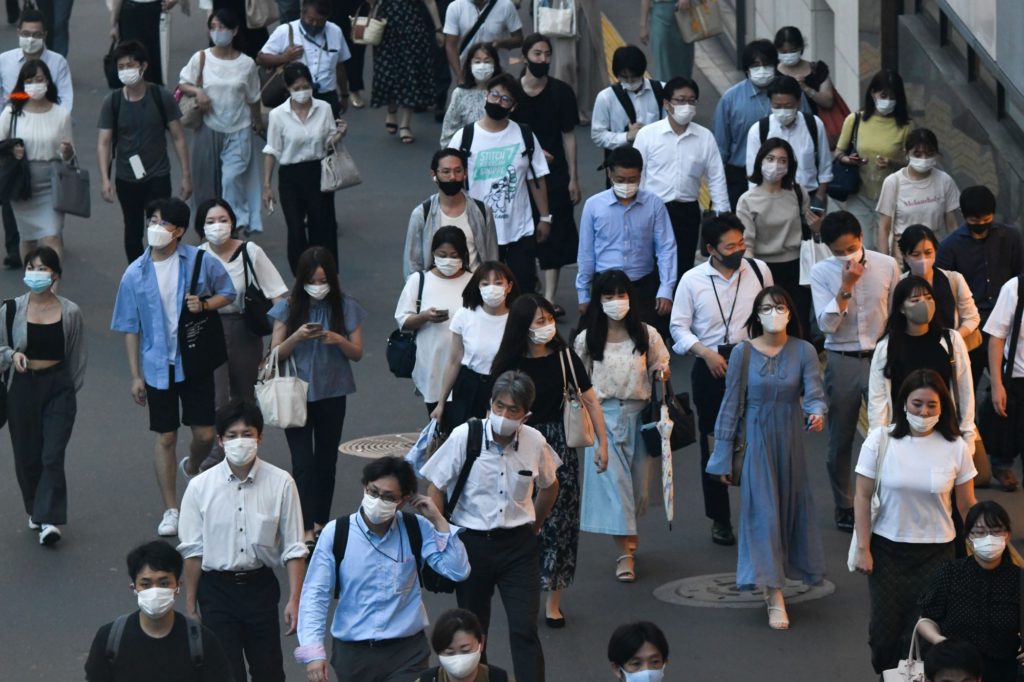
Unlike many other countries, Japan has stuck to mask-wearing, not just on public transport, but almost all the time. That’s no surprise to anyone who visited the mask-friendly country before the pandemic.

While there are no laws enforcing the practice, the government advises people to wear masks indoors, and outdoors when talking to others in close proximity, although it has hinted that it wants to move toward international norms. Even so, it has become a social norm to wear a mask indoors and out, except when eating or drinking. 

Going maskless may attract unwanted attention. A huge variety of disposable masks are available at pharmacies and convenience stores. Expect to be asked to disinfect your hands and have your temperature taken on entering many restaurants and other businesses, as well. You’ll also see gadgets informing you of air quality indoors, and in taxis.

Taxi Apps

Hailing a taxi used to be a big challenge in Japan. Cab drivers seldom spoke any language other than Japanese, and addresses aren’t based on street names, so passengers would often have to point, bring a map or just trust that the driver would know the destination.

All that’s changed, thanks to the proliferation of taxi apps. Go and S.Ride are commonly used now to summon taxis, with the ability to directly add the destination before or during the ride. Payments can also be handled in-app as well. Didi also offers taxi-hailing in Japan. Uber is available as well for black-car rides or to summon taxis, although ride sharing is still not allowed. 

Payment is easier too, with taxis accepting only cash a rarity. Passengers can use credit cards or use the apps to pay for rides, even after hailing a cab on the street. Flat rates to the airports have also been introduced, although we recommend taking the Narita Express or bus to Narita International Airport far outside Tokyo.  

Less Cash

Before the pandemic, Japan was notorious for restaurants and retailers accepting only cash. Like many other countries, the risk of infection and health protocols has ushered in the era of cashless and contactless payments.

Almost all restaurants and shops accept credit cards, as well as contactless payments. QR-code based payments systems have also proliferated, including Japan’s PayPay. In fact, one new problem is that there can sometimes be too many options. We recommend getting hold of transit cards such as Suica and Pasmo; recharge them with cash or a credit card. They can be used across the country to pay for trains, taxi rides and quick purchases at convenience stores. 

Sure, there are still plenty of places that accept (and prefer) cash, but there’s less pressure to carry around a wad of bills to travel, shop and eat. For the rare occasion where only cash is accepted, the ATMs at convenience stores work with most major debit and credit networks.

More Robots 

Tokyo’s infamous Robot Restaurant has, mercifully, disappeared. But one thing a visitor to Japan is bound to see are a few more robots replacing human labor. 

Robot waiters — such as the BellaBot, KettyBot, HolaBot  — now deliver food in some restaurants.  Delivery robots, as well as security & disinfection robots, helped reduce transmission risks. AI robots are assisting vaccine-related inquiries at municipalities, and “healing robots” gave company to lonely people during stay-at-home measures and gave support to health-care workers. Some buildings have security robots to patrol lobbies and keep an eye on things. 

In fact, orders of new industrial robots rose 29.6% in 2021, a record high, according to the Japan Robot Association.

More stories like this are available on bloomberg.com

©2022 Bloomberg L.P.
Spotify Podcast Union Says Corporate Decisions Led to Audience Collapse

(Bloomberg) — Union members at two of Spotify Technology SA’s podcast studios said a decision by the company to put their shows exclusively on its own streaming service led to a drop in listeners, and a subsequent decision to cancel programs and fire workers.Spotify said Thursday that it was ending 11 podcasts and terminating employees. Union representatives at the company’s Parcast and Gimlet Media studios issued a joint statement in response on Friday saying each had 30% of their members let go. About 38 people lost their jobs in total. Some of their programs had lost up to 75% of their listeners after going exclusive, the employees said, and Spotify management didn’t do enough to stop the decline.

“Shows languished without marketing support, and teams were not given clear audience goals to meet,” the union representatives wrote. “The strongest indication these employees received that their shows were not meeting Spotify’s goals was when they were laid off yesterday.”Spotify declined to comment. The music streaming giant has made a big push into podcasting in recent years, acquiring studios and launching new shows. But the company now seems to be in a period of retrenchment.

The Parcast and Gimlet employees are organized through the Writers Guild of America, East. The union is asking Spotify to allow affected employees to take their contacts, sources and unfinished work with them.

The union members said the laid-off employees were given as little as an hour to wrap up their work and that listeners have not been provided any explanation for their shows’ cancellation. The majority of members in the Parcast union’s Diversity, Equity, Inclusion and Accessibility Committee were terminated, the workers said. They say Spotify didn’t provide explanation of how they chose who to terminate.

More stories like this are available on bloomberg.com

©2022 Bloomberg L.P.
Morgan Stanley-Led Banks Face $500 Million Loss on Twitter Debt

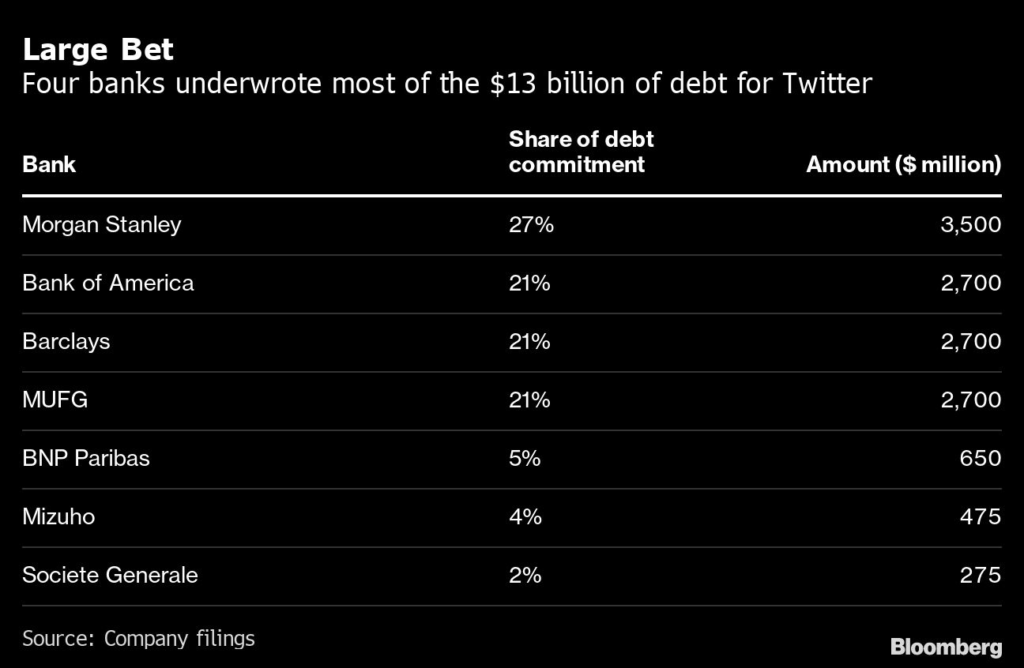
(Bloomberg) — When banks led by Morgan Stanley agreed in April to help finance Elon Musk’s purchase of Twitter Inc., they were eager to aid an important client, the richest person in the world. Now neither Musk nor the banks have an obvious way to wriggle out of it.

Lenders that also include Bank of America Corp., Barclays Plc and Mitsubishi UFJ Financial Group Inc. committed to provide $13 billion of debt financing for the deal. Their losses would amount to $500 million or more if the debt were to be sold now, according to Bloomberg calculations. They agreed to fund the purchase whether or not they were able to offload the debt to outside investors, according to public documents and lawyers who have looked at them. 

“I think that those banks would like to get out of it, I think the deal makes less sense for them now, and that the debt will be harder to syndicate to investors,” said Howard Fischer, partner at law firm Moses Singer. But Fischer, a former senior trial counsel at the Securities and Exchange Commission who isn’t involved in Twitter, said there’s no legal basis for them to back out.

Junk bond and leveraged loan yields have surged since April, meaning that banks will lose money from having agreed to provide financing at lower yields than the market will accept now. Any pain the banks bear from this deal comes as lenders have already sustained billions of dollars of writedowns and losses this year after central banks worldwide have started hiking rates to tame inflation. 

Even if the banks could find buyers for Twitter debt in the market now, which is far from certain, selling bonds and loans tied to the deal probably wouldn’t be possible before the buyout closes. 

Banks have a pipeline of around $50 billion of debt financings they’ve committed to provide in the coming months, according to Deutsche Bank AG estimates. While usually banks would sell bonds and loans to fund those deals, investors are less eager to buy now than they were toward the beginning of the year, and offloading this debt will be hard. 

That’s forcing banks to provide the financing themselves on a number of deals, a strain on their earnings and capital requirements. For example, lenders including Bank of America and Barclays expect to have to fund $8.35 billion of debt for the leveraged buyout of Nielsen Holdings next week, Bloomberg reported on Tuesday. 

Representatives for Morgan Stanley, Bank of America, Barclays, MUFG and Twitter declined to comment. A representative for Musk did not immediately respond to a request for comment.

Way Out?

Banks may not be able to back out of the Twitter deal, but Musk has been trying to. Twitter said on Thursday that it’s dubious of the billionaire’s promises to close on the transaction. The company said that a banker involved in the debt financing testified earlier Thursday that Musk had yet to send them a borrowing notice, and had otherwise not communicated to them that he intended to close the deal.

The lack of a borrowing notice on its own isn’t necessarily a problem. Usually that document comes toward the end of the process of closing on a purchase, said David Wicklund, a partner at Vinson & Elkins who focuses on complex acquisition and leveraged financings. It’s often submitted to banks two or three days before closing, making it one of the last items to be finished.

But leading up to the closing of a big acquisition typically involves a blizzard of paperwork that has to be negotiated between both parties. There may be 50 to 80 documents that get discussed, Wicklund said. 

A Delaware judge said on Thursday that if the transaction isn’t done by October 28, she will set new dates in November for the lawsuit between Twitter and Musk. That date comes from a filing from Musk’s team that said the banks needed until then to provide the debt funding.

On Monday, Musk sent Twitter a letter saying he would go through with his acquisition “pending receipt of the proceeds of the debt financing.” That made it seem like there was some doubt as to whether the banks would provide their promised financing, which became a sticking point in negotiations between the company and the billionaire.   

But in a court document on Thursday, Musk’s team said that counsel for the banks “has advised that each of their clients is prepared to honor its obligations.” 

Bonds, Loans

The banking group originally planned to sell $6.5 billion of leveraged loans to investors, along with $6 billion of junk bonds split evenly between secured and unsecured notes. They are also providing $500 million of a type of loan called a revolving credit facility that they would typically plan to hold themselves.

Of the more than $500 million of losses that the banks are estimated to have on the Twitter debt, up to about $400 million stems from the riskiest portion, the unsecured bonds, which have a maximum interest rate for the company of about 11.75%, Bloomberg reported earlier this year. The losses exclude fees the banks would usually earn on the transaction.  

The rest of the losses are estimated based on where the maximum interest rates would have been determined for the loan and secured bond when compared to the unsecured portion. The expected loss could ultimately be higher or lower. 

The banking group is expected to give the cash to Twitter and become a lender to the soon-to-be highly indebted social media giant. 

Morgan Stanley would hold onto the most at about $3.5 billion of debt, based on the debt commitment letter:

The banks will have to mark down the debt based on where it would trade in the secondary market, which would likely be at steep discounts to face value, especially for the riskiest portions. BNP Paribas, Mizuho and Societe Generale SA declined to comment. The banks can then wait until better market conditions and try to sell the debt to investors at a later date, likely at a discount to face value. 

More stories like this are available on bloomberg.com

©2022 Bloomberg L.P.
Stock Traders Hit Sell Button on Hawkish Fed Bets: Markets Wrap

(Bloomberg) — Wall Street got a reality check, with data showing a hot labor market that will likely keep the Federal Reserve on its aggressive hiking trail. Those bets sent stocks tumbling and drove 10-year US yields to their longest weekly up streak since 1984.

To David Donabedian at CIBC Private Wealth US, the report puts an “an exclamation point” on the idea that the market-bottoming process is going to be “a long one”. In this “bizarro world” of big hikes, traders may see the solid data as a reason to brace for turmoil, says Callie Cox of eToro. The conclusion for Brown Brothers Harriman’s Win Thin is that a 75-basis-point Fed boost in November is a “done deal,” with another increase of that size in December becoming a “real possibility.”

Almost 95% of the companies in the S&P 500 fell. The slide came just a few days after the gauge notched its biggest back-to-back rally since the onset of the pandemic amid a debate on whether the Fed would be closer to “peak hawkishness.” Those gains gave the measure its best week in a month even with the post-jobs plunge. The Nasdaq 100 sank nearly 4% Friday.

Ten-year yields approached 3.9% amid their 10th consecutive weekly rise. The dollar advanced. The swap contract for the November Fed meeting priced in nearly 75 basis points of tightening. Market-implied expectations for where the rate will peak also increased, with the derivative contract for the March gathering trading around 4.66%. The current range for the benchmark rate stands between 3% and 3.25%.

Resolutely Hawkish

Fed Bank of New York President John Williams said rates need to rise to around 4.5% over time, but the pace and ultimate peak of the tightening campaign will hinge on how the economy performs. Several officials, in separate remarks this week, delivered a resolutely hawkish message that price pressures remain elevated and they won’t be deterred from raising rates by volatility in financial markets.

Former Treasury Secretary Lawrence Summers said it’s important for the Fed to deliver on the further monetary tightening it has signaled, even in the face of financial risks stemming from its actions.

All eyes will now be on next week’s US inflation data after a hotter-than-expected reading in August tempered hopes of a nascent slowdown. Separately, minutes from the Fed’s September meeting will give clues into the central bank’s tolerance for economic pain.

Amid fears of a looming recession, investors poured the most money into cash since April 2020, but stocks could see further declines as they don’t fully reflect that risk, according to Bank of America Corp. strategists. Their report cited EPFR Global data showing cash funds received nearly $89 billion in the week through Oct. 5 — while investors withdrew $3.3 billion from global stock funds.

Wall Street is “rebelling against” policy tightening, the strategists led by Michael Hartnett wrote before the labor-market report.

From a technical perspective, the fact that the S&P 500 remains oversold enough alongside bearish sentiment may warrant “more rally efforts” that could materialize as early as next week, according to Dan Wantrobski at Janney Montgomery Scott.

“The data being reported alongside our proprietary cycle work to date gives us confidence that we are on the right track in anticipating more of a ‘U’-shaped market bottom and recovery in the months ahead (into 2023),” he added. “We believe the floor will be established at some point in the weeks/months ahead — but for now, investors should continue to expect a very choppy glide path due to significant macro overhang.”

More comments on jobs:

Jeffrey Roach, chief economist at LPL Financial:

“In a word: ‘frustrating.’ As long as job gains are strong, the markets should expect aggressive rate hikes by the Federal Reserve.”

Michael Shaoul, chief executive officer at Marketfield Asset Management:

“This report should keep expectations of any ‘dovish pivot’ at bay, and underlines our concerns that any shift in policy is much more likely to be provoked by much worse financial market conditions than a soft landing in the underlying US economy.”

Shawn Cruz, head trading strategist at TD Ameritrade:

“The market has been in a ‘bad-news-is-good-news’ mentality and there’s really no bad news in this report. It’s a solid jobs report, but it’s not what the market wants to see because it doesn’t give the Fed a reason to pause or shift away from its hawkish intentions.”

Ronald Temple, managing director at Lazard Asset Management:

“While job growth is slowing, the US economy remains far too hot for the Fed to achieve its inflation target. The path to a soft landing keeps getting more challenging. If there are any doves left on the FOMC, today’s report might have further thinned their ranks.”

Seema Shah, strategist at Principal Global Investors:

“Today’s job number is a hawkish reading. With the Fed’s dot plot pointing to policy rates closer to 5% than 4% next year, we have a market that is wishing for the economy to slow quickly. That’s when you know there is only one path ahead: risk assets have further to fall.”

Ian Lyngen, head of US rate strategy at BMO Capital Markets:

“On net, it was a strong enough read to keep a 75 bp Nov hike as the path of least resistance, but the deceleration in wage growth YoY adds to the case for a slowed hiking pace to 50 bp in December, and we still expect the final 25 bp hike in February to reach terminal.”

Some of the main moves in markets:

Stocks

  • The S&P 500 fell 2.8% as of 4 p.m. New York time
  • The Nasdaq 100 fell 3.9%
  • The Dow Jones Industrial Average fell 2.1%
  • The MSCI World index fell 2.4%

Currencies

  • The Bloomberg Dollar Spot Index rose 0.4%
  • The euro fell 0.5% to $0.9739
  • The British pound fell 0.7% to $1.1080
  • The Japanese yen fell 0.2% to 145.36 per dollar

Cryptocurrencies

  • Bitcoin fell 2.9% to $19,461.43
  • Ether fell 2.7% to $1,327.55

Bonds

  • The yield on 10-year Treasuries advanced six basis points to 3.89%
  • Germany’s 10-year yield advanced 11 basis points to 2.19%
  • Britain’s 10-year yield advanced seven basis points to 4.24%

Commodities

  • West Texas Intermediate crude rose 4.6% to $92.48 a barrel
  • Gold futures fell 1% to $1,703 an ounce

More stories like this are available on bloomberg.com

©2022 Bloomberg L.P.
Herschel Walker’s Candidacy May Squander GOP Chances, Georgia’s No. 2 Republican Says

(Bloomberg) — Georgia’s second-highest ranking Republican says the GOP has only itself to blame for betting on Herschel Walker as a candidate to unseat Senator Raphael Warnock and potentially squandering a chance for the party to win control of the US Senate.

The Republican Party should never have put forth “an untested and unproven first-time candidate,” like Walker in a pivotal election, Lieutenant Governor Geoff Duncan wrote in a opinion column published by CNN, a public reflection of rising concern within Republican ranks.

Walker’s campaign has been thrown into turmoil five weeks before the Nov. 8 election, after a series of revelations about his personal and business affairs, most recently a report by the Daily Beast that Walker paid for an abortion in 2009, despite his stated opposition to the procedure. Amid the tumult, Walker’s political director, Taylor Crowe has been fired, CNN reported Friday, citing two people familiar with the matter.

Walker denies the Daily Beast report, which Bloomberg has not independently verified. He told reporters at an event Thursday he will “not back down” in the contest. “We’re going to win this race,” he said. His campaign didn’t immediately respond Friday to a request for comment.

The scrutiny the former University of Georgia and NFL football star’s personal past has been intensifying. There already had been allegations of past domestic abuse and exaggerations of his business prowess.

Polling shows Warnock with a slim lead over Walker. The only debate in the race is set for Oct. 14 in Savannah.

Former President Donald Trump, who encouraged Walker to enter the race, has stood by him. Make America Great Again Inc., the new super PAC started by Trump allies, has spent $753,000 on cable television commercials according to AdImpact, which tracks political advertising.

But although the ad purchases went forward, Trump associates expressed concerns and even disappointment in discussions with the Walker campaign, a person familiar with the matter said on Friday. 

“If we want the American public to take us seriously, we need to take the first step by nominating candidates they should take seriously,” Duncan wrote in the CNN column.

The lieutenant governor, who was a critic of Trump’s unfounded claims of voting fraud in the 2020 election, isn’t seeking re-election.

He cited Warnock’s slight edge in the race and his near lockstep voting record to support Joe Biden’s legislative agenda, despite the president’s deep unpopularity in Georgia, until recently considered a Republican bastion. 

“Yet instead of Warnock’s voting record, the attention has focused on the Republican challenger, a trend that will only accelerate after recent events,” he states. “Just as in the special elections in 2021, if the GOP squanders this year’s Georgia Senate race, we only have ourselves to blame.”

(Updates with Trump buying ads for Walker, in seventh paragraph.)

More stories like this are available on bloomberg.com

©2022 Bloomberg L.P.

American Tower Weighs Offer for Stake in Vodafone Towers Unit

(Bloomberg) —

American Tower Corp. is weighing entering the race for a stake in Vodafone Group Plc’s €13 billion ($12.6 billion) wireless towers unit, people familiar with the matter said. 

The US telecommunication infrastructure operator is exploring a possible investment in Frankfurt-listed Vantage Towers AG, the people said, asking not to be identified discussing confidential information. 

Vodafone plans to sell part of its roughly 82% interest in Vantage and has invited suitors to participate in an auction process. Private equity firms KKR & Co., Global Infrastructure Partners and EQT AB are already in the running, Bloomberg News reported last month. Spain’s Cellnex Telecom SA has also studied the feasibility of an offer, the people said.

Deliberations are ongoing and there’s no certainty that American Tower or Cellnex will decide to bid. Some of the interested parties may decide to form consortiums and other suitors could also emerge, according to the people. Vodafone expects bids to be made as soon as next week and may announce a new partner for Vantage next month, they said.

American Tower fell 3.5% to close at $194.63 in New York trading Friday, giving the company a market value of about $91 billion. 

Representatives for American Tower, Cellnex, Vantage and Vodafone declined to comment.

Europe’s phone carriers have started to sell off infrastructure assets to raise money for investments in costly fiber-optic rollouts and wireless network upgrades, as well as to cut their large debt piles. In July, Deutsche Telekom AG agreed to sell a majority stake in its towers unit to Brookfield Asset Management Inc. and DigitalBridge Group Inc. in a deal valuing the business at €17.5 billion. Cellnex was also bidding for the asset before dropping out. 

These assets, which carriers once saw as vital to their business models, are attractive to investment firms thanks to their steady, predictable returns. 

Read more: Vodafone Confirms Potential Merger With Rival Three UK

(Updates trading in fifth paragraph.)

More stories like this are available on bloomberg.com

©2022 Bloomberg L.P.

Close Bitnami banner
Bitnami