
Bloomberg

Hackers Feast on Crypto Weak Link and Even Binance Isn’t Spared

(Bloomberg) —


There’s a gaping hole in the crypto industry’s security architecture, and even the most deep-pocked players haven’t figured out how to plug it. 

The weakness in question is what’s known in industry parlance as cross-chain bridges — software that allows crypto tokens to move between different blockchains. 

On Thursday, a hacker made off with about $100 million via a bridge used by Binance Holdings Ltd., crypto’s largest exchange. 

“The worrying thing about this is that Binance are not fools, Binance have got capital, resources and are able to hire the best,” said Paddy Cerri, chief architect at blockchain startup Minima. “If they can’t do this, who exactly can build a secure bridge?”

A total of 2 million Binance Coin — equivalent to nearly $570 million — were effectively minted and taken by the hacker. Binance said in a statement that the incident was isolated to BNB Chain, over which it doesn’t exert control. About $100 million of the stolen funds were not recovered, while the rest were frozen, according to the statement. No user funds were lost, Binance added.

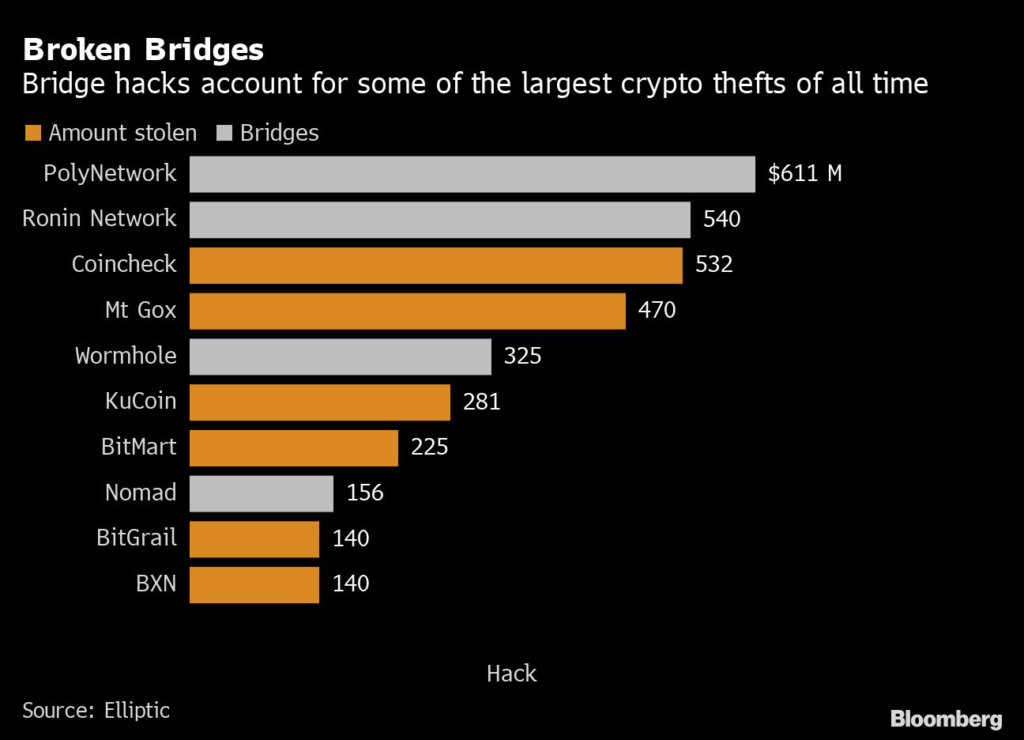
The inability to make bridges safe — Chainalysis estimates that $2 billion worth of tokens have been looted from 13 separate attacks, the majority of which was stolen this year — presents a fundamental dilemma, because without such platforms, major blockchains from Ethereum to Solana remain largely segregated from each other. The vision behind web3, billed by protagonists as the internet’s next iteration, rests in part on tokens flowing freely between various ecosystems. 

Underscoring the demand for this technology, protocols built around cross-chain bridges and interoperability have raised around $347 million across 30 deals since 2021, according to Kunal Goel, a research analyst at Messari. LayerZero had the largest deal where it raised $135 million but most of the deals have been seed rounds, Goel said.

Watch: About $100 Million in Binance Coin Stolen

But even well-funded bridges built specifically to be “security-first” have not been spared. In August, one such bridge called Nomad — which uses a method for verifying transactions that it says is safer than those used by other cross-chain platforms — was hit by a $200 million hack. 

One of the major challenges around building secure bridges is their complexity, which gives hackers many potential entry points. And there are few qualified experts who can build and secure them, security analysts and blockchain developers say. Bridge developers must not only be deeply knowledgeable about how the software works, but also about the functioning of the different blockchains it connects to. Finding someone with this knowhow is not easy, according to analysts and programmers. 

“I have studied distributed computing and consensus and yet I must say don’t understand bridges well,” said Paul Frambot, chief executive officer of crypto startup Morpho Labs, which developed a new protocol. “This is very hard to understand well and so even harder to build secure ones.”

Bridges are open-source software, so their code is available for everyone to see. This is a double-edged sword: It makes them more naturally vulnerable to hacks than traditional financial networks, such as the private ones operated by banks, but also allows more individuals to help improve the code, experts said.

“In the short term the code being open-source allows malicious actors to spot vulnerabilities in libraries and packages that have been recently built and developed,” said David Kroger, a digital data scientist at Cowen Digital. “However, being open-source allows communities to come together exposing attack surfaces early to be taken care of before it becomes detrimental.”

Another issue with bridges is that most operate with a small set of custodians or entities such as validators that are responsible for securing the network. This makes them vulnerable as they sacrifice decentralization for the sake of operating at scale.

Pesky Bugs

Bugs are also common on bridges, in part because the technology being used is very new, security experts said. But there is a silver lining. 

“Secure bridge design is still a technical challenge that the industry is trying to resolve through trial and error,” said Adrian Hetman, tech lead of triaging at bug bounty hunter site Immunefi. “With every new hack and security bug found, we can learn from the mistakes and build better solutions.”

Developers still don’t have many tools for creating, debugging or supporting bridge software, though, nor basic operating standards, Chase Devens, a research analyst at Messari, wrote in a July report. 

On top of technical challenges, developers building bridges are facing more dangerous enemies. Lazarus, a North Korea state-backed hacking group, was identified as the attacker behind Ronin Bridge hack and $100 million Horizon Bridge theft in June. To fend off savvy hackers with vast resources and prove they can be more than a costly headache for the sector, bridges may face no choice but to step up their game, security experts said. 

“We are still in the infancy stage,” says Mudit Gupta, chief information security officer at Ethereum scaling solution Polygon. “There’s a lot more work that needs to happen.”

More stories like this are available on bloomberg.com

©2022 Bloomberg L.P.
Fedex Expects Fewer Packages During Holiday Season

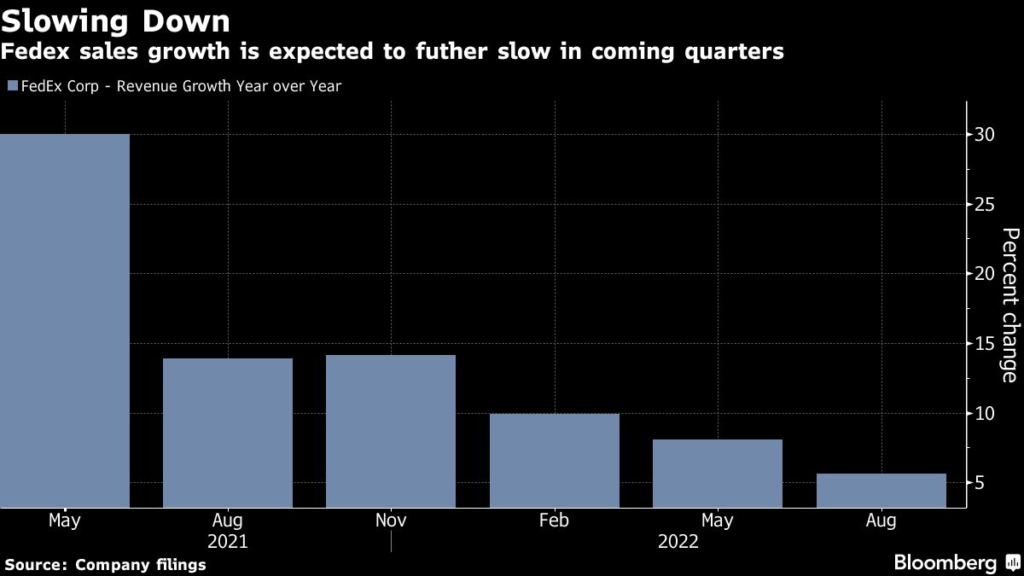
(Bloomberg) — FedEx Corp. plans to pare parcel volume forecasts at its key ground unit as its customers plan to ship fewer packages during the holiday season.

FedEx Ground, which handles the bulk of the company’s e-commerce deliveries in the US, will update its expectations in roughly two weeks to account for softening economic conditions that are anticipated to erode shipping volume, Reuters reported on Friday, citing an internal memo.

It’s another sign of weakening demand after FedEx shocked investors last month with quarterly earnings that fell far short of Wall Street’s expectations. The company also withdrew its full-year financial forecast and said it would park aircraft, close facilities and take other steps to deliver as much as $2.7 billion in savings this fiscal year. 

“We are constantly collaborating with customers on their projected shipping needs and making adjustments as necessary to ensure our network is prepared to deliver outstanding service for this year’s Peak season and beyond,” FedEx said in a statement in response to an inquiry from Bloomberg. The company didn’t comment on the memo in the Reuters report. 

Fedex shares fell 1.5% to $152.81 at 1:09 p.m. on Friday, paring much of an earlier decline. The stock has declined more than 40% so far in 2022. 

More stories like this are available on bloomberg.com

©2022 Bloomberg L.P.
India Plans Phased Central Bank Digital Rupee Launch

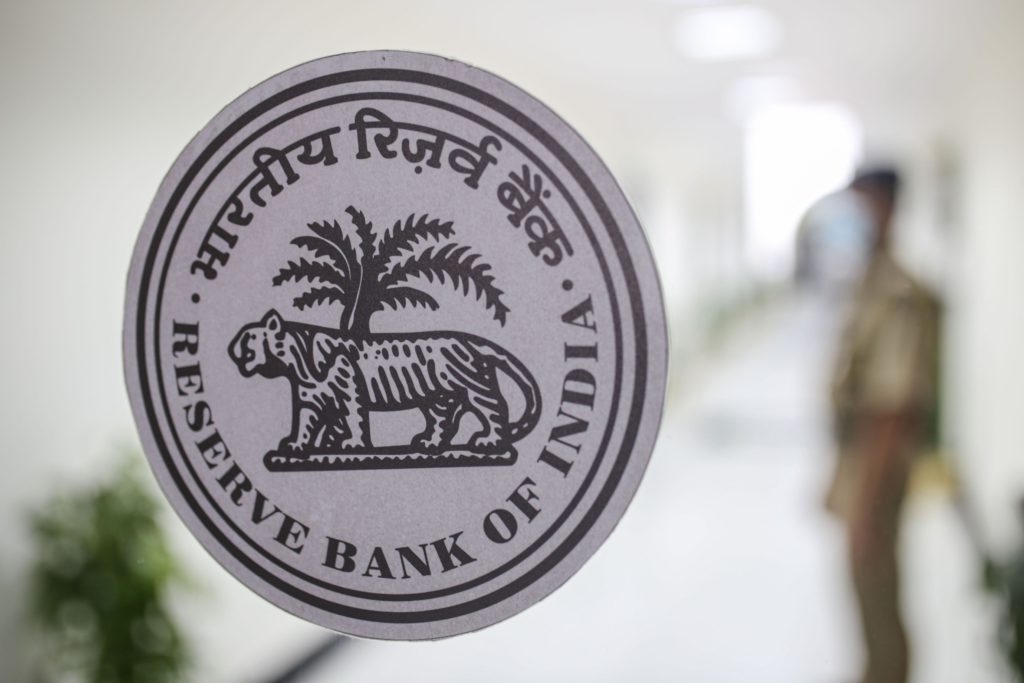
(Bloomberg) — India’s central bank is working toward a phased introduction of a digital currency and will put forth a final design after it has conducted large scale pilot projects. 

The Reserve Bank of India is exploring the option of implementation of an account-based central bank digital currency or CBDC for the wholesale segment and token-based currency for the retail sector, it said in a paper released on Friday. The digital currency will be referred to as the e-rupee and will provide an additional option to all the available forms of money, it said. 

Cash-dependent India is joining countries including China in pushing forward with digital versions of their currencies as they look to harness new technologies to make transactions and payments more efficient. In her budget speech in February, Finance Minister Nirmala Sitharaman said the RBI would launch the digital currency this year.

“As there are multiple compelling motivations for the introduction of CBDCs, the RBI is currently engaged in working towards a phased implementation strategy, going step by step through various stages of pilots followed by the final launch,” the paper said.

The RBI will soon kick off a limited pilot launch for the e-rupee.

The “CBDC holds a lot of promises by way of ensuring transparency, and low cost of operation among other benefits and the potential to expand the existing payment systems to address the needs of a wider category of users,” the RBI said.

In the note the RBI acknowledged that privacy and data protection were a matter of concern when it comes to designing CBDCs. 

“Ensuring anonymity for a digital currency particularly represents a challenge, as all digital transactions leave a trail. Clearly, the degree of anonymity would be a key design decision for any CBDC and there has been significant debate on this issue,” the note said.

“In a rather roundabout way, the RBI acknowledges India’s love for crypto by saying that CBDCs will provide the public with the benefits and features of crypto without the associated risks,” said Rajagopal Menon, vice president at crypto exchange, WazirX.

India has had a hot and cold relationship with crypto assets. In 2018 the RBI had cut crypto startups from the country’s payment network and earlier this year India announced a new crypto tax regime, under which a 1% transactoinal tax has decimated volumes on crypto exhchanges as the are down by over 90% since the start of the year.

More stories like this are available on bloomberg.com

©2022 Bloomberg L.P.

Tesla Plans to Deliver Semis to Pepsi Years After Unveiling

(Bloomberg) — Tesla Inc. will deliver its first Semi trucks to PepsiCo Inc. five years after Elon Musk showed off prototypes and began taking deposits for the electric big rigs.

The carmaker will hand over Semis to PepsiCo on Dec. 1, Musk tweeted Thursday. The food and beverage giant has said it’s reserved 100 of the trucks and expects to deploy an initial 15 by the end of the year.

PepsiCo confirmed Friday in its own tweet that it will take delivery of its first Tesla trucks in early December to serve a Frito-Lay plant in Modesto, California, and beverage plant in Sacramento.

Musk said when Tesla first unveiled the Semi in November 2017 that it would go into production two years later. While would-be customers including Walmart Inc. and Anheuser-Busch InBev SA put down deposits, the automaker ended up prioritizing output of Model 3 sedans and Model Y sport utility vehicles for consumers while contending with battery cell and semiconductor supply issues.

In January, Musk told analysts Tesla wouldn’t roll out any new models this year because of parts constraints. He changed his tune three days after the US Senate passed the Inflation Reduction Act, which made heavy-duty electric trucks eligible for as much as $40,000 federal tax credits. The chief executive officer tweeted on Aug. 10 that the company would start shipping Semis with 500 miles of range this year.

Tesla will compete with other makers of battery-powered big rigs including relative newcomer Nikola Corp. and more established firms like Sweden’s Volvo AB. The latter announced this week that it will deliver 20 fully electric trucks to Amazon.com Inc. by year-end.

Tesla shares fell 4.3% to $227.79 as of 11:39 a.m. in New York. PepsiCo declined 0.6% to $161.83.

(Updates with PepsiCo confirmation in third paragraph.)

More stories like this are available on bloomberg.com

©2022 Bloomberg L.P.

White House Adds New Restrictions on Chip Exports to China

(Bloomberg) — The Biden administration announced new restrictions on China’s access to US semiconductor technology, adding measures aimed at stopping Beijing’s push to develop its own chip industry and advance the country’s military capabilities. 

The new measures will include restrictions on the export of some types of chips used in artificial intelligence and supercomputing and also tighten rules on the sale of semiconductor manufacturing equipment to any Chinese company.

Washington is looking to ensure that Chinese companies don’t act as a conduit for the transfer of technology to their country’s military — and that chipmakers there don’t develop the capability to make advanced semiconductors themselves.

China “has poured resources into developing supercomputing capabilities and seeks to become a world leader in artificial intelligence by 2030,” said Assistant Secretary of Commerce for Export Administration Thea D. Rozman Kendler. “It is using these capabilities to monitor, track, and surveil their own citizens, and fuel its military modernization. Our actions will protect U.S. national security and foreign policy interests while also sending a clear message that U.S. technological leadership is about values as well as innovation.”

The new rules are coming at a difficult time for the chip industry, which is suffering a steep drop in demand for personal-computer and smartphone components. Shares of many of the world’s biggest semiconductor makers tumbled on Friday following reports that the slump may be even worse than thought.

When the new rules come into force, it will be harder for providers of chips used in Chinese supercomputers and supercomputer-related gear to get permission to fill orders. They should presume requests will be denied, according to senior Commerce Department officials.

Commerce also put a raft of restrictions on supplying US machinery that’s capable of making advanced semiconductors. It’s going after the types of memory chips and logic components that are at the heart of state-of-the art designs.

While there will be more latitude for overseas companies needing technology for their own operations in China — or for parties that can prove they’re making things there for immediate export elsewhere — Commerce said it will enforce the rules and also cut off support for existing deployments of machinery covered by the restrictions.

The US is home to the biggest block of companies that design vital electronic components — and provide the complex machinery needed to manufacture them — but other regions have capabilities that could undermine some of the government’s efforts.

Commerce Department officials acknowledged that overseas cooperation is necessary to avoid hampering the initiatives and said there are talks with other parties underway around the world on the topic. The officials declined to characterize how advanced the negotiations are or how likely they are to result in similar actions in key countries, such as the Netherlands and Japan.

Separately, Commerce added more names to a list of companies that it regards as “unverified,” meaning it doesn’t know where their products end up being used. The 31 additions are all Chinese. That indicates that US suppliers will face new hurdles in selling technologies to those entities.

The biggest name to be added to the list is Yangtze Memory Technologies Co. The memory-chip maker is widely regarded as being the best bet China has of breaking through into the front ranks of the industry and has made progress with advanced products for chip-based storage.

The moves are the next step in trying to break the link between Chinese companies and their country’s military and security apparatus. 

The Semiconductor Industry Association, a lobbying group representing all of the largest US chipmakers, said it’s evaluating the impact of the new export controls and will ensure compliance with the restrictions. “We understand the goal of ensuring national security and urge the US government to implement the rules in a targeted way — and in collaboration with international partners — to help level the playing field and mitigate unintended harm to US innovation,” the association said in a statement.

Anyone receiving the unverified designation has to submit to checks on where their products go. While that process is underway, anyone who supplies them with US technology will be required to go through extra certification steps related to the use of the products.

Successfully proving they’re not breaking rules allows the companies to be removed from the list. Not doing so — or failing to cooperate — risks putting them on the so-called entity list, meaning that US technology exports to them are subject to prior approval by the Commerce Department.

Bloomberg reported this week that the administration was readying new restrictions, part of a broader strategy that also includes bolstering domestic chip production. Earlier this year, Biden signed a bill that promises to infuse about $52 billion into the US semiconductor industry.

A sustained rally in chip stocks hasn’t materialized. Financial disclosures from Samsung Electronics Co. and Advanced Micro Devices Inc. this week indicated a slowdown in future sales. The Philadelphia Stock Exchange Semiconductor Index is down 39% this year and fell as much as 4.6% on Friday.

(Updates restrictions on types of chip gear and semiconductors starting in second paragraph.)

More stories like this are available on bloomberg.com

©2022 Bloomberg L.P.

Biden Order Brings New Transatlantic Data Pact Ever Closer

(Bloomberg) — The European Union and U.S. moved a step closer to securing the privacy of transatlantic data flows as President Joe Biden moved to end years of uncertainty and allow thousands of companies to legally move customer data across the Atlantic.

Biden signed an executive order Friday that’ll create an independent court system in the US for EU citizens who think their data was unlawfully accessed or used by intelligence agencies. Decisions by the the Data Protection Review Court will be binding and force the likes of the CIA to limit data collection to the “pursuit of defined national security objectives,” according to a White House fact sheet.

The EU Court of Justice in 2020 toppled the so-called Privacy Shield over concerns that user data wasn’t safe from prying eyes once on US soil. The ruling meant thousands of businesses that ship commercial data to the U.S. had to figure out an alternative and EU-U.S. negotiators were forced back to the drawing table. The prospect of no accord led Meta Platforms Inc. to say it would may have no choice but to pull its Facebook and Instagram services from the EU.

The order is designed to address concerns about the ability of American spies to access EU data, which led to two previous data transfer accords being struck down by the bloc’s top court. The EU and US have been working on a new deal for months and in March reached a breakthrough with an agreement in principle.

The order gives the European Commission a tool to “restore an important, accessible, and affordable” data transfer mechanism while also providing greater legal certainty for companies  shipping data across the Atlantic, the White House said. 

For its part, an EU official at a Friday briefing said the new commitments address all of the EU court’s concerns, giving the EU “a solid file that we are ready to defend.”

While EU judges upheld a separate contract-based system to keep transferring data, the doubts they expressed about American data protection made this a shaky alternative too. The Irish Data Protection Commission, the main privacy watchdog in the EU for some of the biggest US tech firms, has maintained it had doubts about the validity of transatlantic data transfers under the so-called standard contractual clauses.

Read more: Meta Repeats Why It May Be Forced to Pull Facebook From EU

Privacy campaigner Max Schrems has been behind two EU court cases that ended up striking down down the bloc’s previous transatlantic data flow decisions. Schrems said on Friday that his privacy group, Noyb, will analyze the package of measures proposed by the US toward a third deal “in detail.”

“At first sight it seems that the core issues were not solved and it will be back” in the EU court “sooner of later,” Schrems said.

Tech companies also weighed in on Friday. Microsoft Corp. said the US “makes meaningful commitments that will help realize the promise of trusted data flows and critical privacy protections for businesses and individuals worldwide.” Nick Clegg, Meta’s president for global affairs, tweeted that the “update to US law will help preserve the open internet.”

(Updates with responses in the last three paragraphs)

More stories like this are available on bloomberg.com

©2022 Bloomberg L.P.
Credit Agricole in Talks With Worldline on Payments Partnership

(Bloomberg) — Credit Agricole SA is in talks with Worldline SA about a payment systems cooperation agreement to replace the French lender’s previous partnership with scandal-ridden Wirecard AG.

The firms are exploring a range of options, including a potential joint-venture, according to people familiar with the deliberations, who asked not to be identified because the information is private. Talks are at an early stage and likely won’t lead to an agreement before next year, one of the people said.

Credit Agricole and Worldline representatives declined to comment.

Worldline shares jumped as much as 4.9% to 44.68 euros after the news. Credit Agricole shares were down 0.3% at 8.49 euros at 4:47 pm in Paris.

The Paris-based lender is looking to boost its merchant payments business by increasing market share in e-commerce transactions. In its most recent strategic plan, the bank said it’s weighing partnerships to achieve that goal, and is seeking to grow overall payments unit revenue 20% by 2025. 

Credit Agricole in 2018 signed a strategic agreement with Wirecard, but paused the development of joint projects and offers in late 2019 as concerns around the German firm emerged. 

Wirecard filed for insolvency in June 2020, in the culmination of an accounting scandal that also led to the arrest of its CEO.

(Updates with share moves in fourth paragraph)

More stories like this are available on bloomberg.com

©2022 Bloomberg L.P.

Stocks Sink as Swaps Show Jumbo Hike a ‘Done Deal’: Markets Wrap

(Bloomberg) — Stocks slumped and bond yields climbed as data showing a still hot US jobs market threw cold water on expectations the Federal Reserve would soon moderate its pace of interest-rate hikes to prevent a more significant economic slowdown.

Almost 95% of the companies in the S&P 500 retreated, with a selloff in technology shares weighing heavily on the market. Treasury 10-year yields climbed, pushing toward a 10th straight week of increases — the longest winning run since 1984. The dollar rose. Bitcoin sank below $20,000.

The swap contract for the November Fed meeting priced in nearly 75 basis points of tightening. The market-implied expectation for where the policy rate will peak also increased, with the derivative contract for the March gathering around 4.65%. The current range for the benchmark rate stands between 3% and 3.25%.

Fed’s Williams Sees Rates Heading to Around 4.5% Over Time

The September jobs report is the latest illustration of the worrisome strength of the US job market at a time when the Fed wants to see just the opposite — cooling wage growth and ultimately inflation. Several Fed officials, in separate remarks this week, delivered a resolutely hawkish message that price pressures remain elevated and they won’t be deterred from raising rates by volatility in financial markets.

All eyes will now be on next week’s US inflation data after a hotter-than-expected reading in August tempered hopes of a nascent slowdown. Separately, minutes from the Fed’s September meeting will give clues into the central bank’s tolerance for economic pain after policy makers delivered a third straight 75-basis-point hike and signaled they’ll continue to tighten monetary conditions for now.

Wall Street’s reaction to jobs report:

Jeffrey Roach, chief economist at LPL Financial:

“In a word: ‘frustrating.’ As long as job gains are strong, the markets should expect aggressive rate hikes by the Federal Reserve.”

Win Thin, head of currency strategy at Brown Brothers Harriman:

“Bottom line: 75 bp in November is a ‘done deal,’ and I think 75 bp in December is becoming a real possibility.”

Callie Cox, U.S. Investment Analyst at eToro:

“The job market is still in good shape, which is great news for the economy. But in this ‘bizarro world’ of aggressive Fed rate hikes, the market may see this as a reason to brace for more turmoil. These numbers still look too hot in the context of unusually high inflation.”

Michael Shaoul, chief executive officer at Marketfield Asset Management:

“This report should keep expectations of any ‘dovish pivot’ at bay, and underlines our concerns that any shift in policy is much more likely to be provoked by much worse financial market conditions than a soft landing in the underlying US economy.”

David Donabedian, chief investment officer of CIBC Private Wealth US:

“The report puts an exclamation point on the idea that this bear-market bottoming process is going to be a long one. The Fed is probably going to be raising rates into spring and summer next year — and that will continue to be a headwind.”

Shawn Cruz, head trading strategist at TD Ameritrade:

“The market has been in a ‘bad-news-is-good-news’ mentality and there’s really no bad news in this report. It’s a solid jobs report, but it’s not what the market wants to see because it doesn’t give the Fed a reason to pause or shift away from its hawkish intentions.”

Ronald Temple, managing director at Lazard Asset Management:

“While job growth is slowing, the US economy remains far too hot for the Fed to achieve its inflation target. The path to a soft landing keeps getting more challenging. If there are any doves left on the FOMC, today’s report might have further thinned their ranks.”

Seema Shah, strategist at Principal Global Investors:

“Today’s job number is a hawkish reading, with almost all the elements of the report moving in the wrong direction for the Fed.”

Ian Lyngen, head of US rate strategy at BMO Capital Markets:

“On net, it was a strong enough read to keep a 75 bp Nov hike as the path of least resistance, but the deceleration in wage growth YoY adds to the case for a slowed hiking pace to 50 bp in December, and we still expect the final 25 bp hike in February to reach terminal”

Cliff Hodge, chief investment officer at Cornerstone Wealth:

“The September jobs report reinforced the fact that the labor market remains tight and will keep the Fed on course for continuing to aggressively tighten monetary policy. The one silver lining from the report is on the wage front. Average hourly earnings continued to moderate month over month, which may help future inflation readings, but does nothing for the market today.”

Anxiety over the struggles from central banks to rein in inflation has been running rampant. Investors poured the most money into cash since April 2020 on fears of a looming recession, but stocks could see further declines as they don’t fully reflect that risk, say Bank of America Corp. strategists.

Even as major benchmarks bounced off last month’s lows, the bank’s report citing EPFR Global data showed cash funds received nearly $89 billion in the week through Oct. 5, while investors withdrew $3.3 billion from global stock funds.

Some of the main moves in markets:

Stocks

  • The S&P 500 fell 1.9% as of 10:41 a.m. New York time
  • The Nasdaq 100 fell 2.7%
  • The Dow Jones Industrial Average fell 1.4%
  • The Stoxx Europe 600 fell 1%
  • The MSCI World index fell 1.7%

Currencies

  • The Bloomberg Dollar Spot Index rose 0.2%
  • The euro fell 0.2% to $0.9770
  • The British pound fell 0.6% to $1.1098
  • The Japanese yen was little changed at 145.21 per dollar

Cryptocurrencies

  • Bitcoin fell 2% to $19,645.68
  • Ether fell 1.8% to $1,340.1

Bonds

  • The yield on 10-year Treasuries advanced seven basis points to 3.89%
  • Germany’s 10-year yield advanced 13 basis points to 2.22%
  • Britain’s 10-year yield advanced six basis points to 4.23%

Commodities

  • West Texas Intermediate crude rose 3.1% to $91.17 a barrel
  • Gold futures fell 0.9% to $1,706.10 an ounce

More stories like this are available on bloomberg.com

©2022 Bloomberg L.P.

Facebook Is Warning 1 Million Users About Stolen Usernames, Passwords

(Bloomberg) — Meta Platforms Inc. said it would notify roughly 1 million Facebook users that their account credentials may have been compromised due to security issues with apps downloaded from Apple Inc. and Alphabet Inc.’s software stores.

The company announced Friday that it identified more than 400 malicious Android and iOS apps this year that target internet users in order to steal their login information. Meta said it informed both Apple and Google about the issue in order to facilitate removal of the apps.

The apps worked by disguising themselves as photo editors, mobile games or health trackers, Facebook said.

Apple said 45 of the 400 problematic apps were on its App Store and have been removed. Google removed all the malicious apps in question, a spokesperson said.

“Cybercriminals know how popular these types of apps are, and they’ll use similar themes to trick people and steal their accounts and information,” said David Agranovich, director of global threat disruption at Meta. “If an app is promising something too good to be true, like unreleased features for another platform or social media site, chances are that it has ulterior motives.”

A typical scam would unfold, for example, after a user downloaded one of the malicious apps. The app would require a Facebook login to work beyond basic functionality, thus tricking the user into providing their username and password. Users could then, for example, upload an edited photo to their Facebook account. But in the process, they unknowingly compromised their account by giving the author of the app access.

Meta said it would be sharing tips with potential victims on how they can avoid being “re-compromised” by learning how to better spot problematic apps that pilfer credentials, whether for Facebook or other accounts. The malicious activity occurred off Meta systems, Agranovich said, adding that not all 1 million people necessarily had their passwords compromised.

(Updates with details in the sixth paragraph on how malicious apps behaved)

More stories like this are available on bloomberg.com

©2022 Bloomberg L.P.

Mexico Names Tax Hardliner Buenrostro as New Economy Chief

(Bloomberg) — Mexico’s new economy minister will be the tax chief who oversaw a crackdown on big companies for allegedly abusing loopholes, amid a prolonged dispute with the US and Canada over the terms of the North America’s free trade agreement.

Raquel Buenrostro, announced as new economy chief by President Andres Manuel Lopez Obrador during a press conference Friday, has brought billions of dollars to public coffers through settlements with companies and spearheaded battles with some of Mexico’s most influential businessmen. She will replace Tatiana Clouthier, who suddenly resigned this week. 

Her crusade against big businesses has extracted settlements from telecommunication giant America Movil SAB, owned by Mexico’s richest man Carlos Slim, plus convenience store operator Fomento Economico Mexicano SAB and International Business Machines Corp. Those payments added an extra $13 billion to the nation’s purse in 2020. Walmart de Mexico SAB was among companies that paid, coughing up 8.1 billion pesos ($403 million) in one of Mexico’s biggest tax settlements.

“In some way it’s expected, because Raquel Buenrostro is a tough person, like a soldier. She’s efficient and follows instructions perfectly,” said Valeria Moy, director of the Mexican Institute for Competitiveness, a think tank in Mexico City. “She’s close to the president and is a useful player that the president is going to put wherever he has to resolve a problem.”

Buenrostro studied mathematics at the National Autonomous University of Mexico and went on to earn a master’s in economy at the Colegio de Mexico. She served as a deputy general manager in the Finance Ministry and worked as fiscal official in Mexico City’s government, in addition to taking on roles in the education ministry, the tourism ministry, and the state oil company.

Delicate Timing

Lopez Obrador’s third economy minister in almost four years in government, Buenrostro arrives at a delicate time for the role, which focuses on trade and the promotion of exports and Mexican companies.

Mexico is in difficult negotiations with its major trading partners, the US and Canada, because of their allegations that the energy policies of Lopez Obrador discriminate against foreign firms. The president has sought to reinforce the power of Petroleos Mexicanos, the state oil company, and the Comision Federal de Electricidad, rolling back some of the privatization pushed by prior governments. Separately, Mexico has complained the US has misinterpreted the rules of the auto trade.

The countries agreed to extend talks on the energy issue beyond the limit outlined in their trade agreement, delaying the involvement of a possible arbitration panel, which could be damaging for Mexico. 

Analysts say that Buenrostro’s arrival signal a hardening of president’s stance, as the countries have sought to plow forward with high-level economic talks, despite their conflict, the tone of which has rankled the nationalistic president, known as AMLO.

Read More: Mexico’s Economy Minister Resigns Amid US Energy Dispute

“What he fails to understand is that this is not a question of negotiation stances but of legality,” said Duncan Wood, a vice president of the Wilson Center based in Washington. “The rules of North American trade and investment will determine the outcomes and lawyers are going to be more important than politicians.”

Clouthier, a political strategist from the industrial north of the country, served as AMLO’s campaign manager in the 2018 presidential election and has been in charge of navigating the relationship with companies and trade partners since being named Economy Minister in late 2020. She had championed Mexico’s role in the growing electric vehicle industry and sought to entice semiconductor companies. 

She also wasn’t shy of clashing with those she saw as interfering in Mexico’s policies, including the Texas governor and lawmakers promoting a US-only tax credit for greener cars.

The arrival of another ally of Lopez Obrador on the scene will not necessarily change the broad direction of the talks in a government where the president exercises absolute control.

“No minister of AMLO’s has been capable of making him change his opinion, especially when it comes to question of recouping state power of the energy sector,” said Joan Domene Camacho, senior economist at Oxford Economics. “There have been two economy ministers, and there have already been three finance ministers.”

(Updates with analyst comments from fourth paragraph.)

More stories like this are available on bloomberg.com

©2022 Bloomberg L.P.

Close Bitnami banner
Bitnami