Bloomberg

Activist Petrus Takes Temenos Stake Saying Stock in ‘Free-Fall’

(Bloomberg) — Activist fund Petrus Advisers told senior executives of Temenos AG that it has taken a small stake in the Swiss banking software specialist and questioned their ability to regain investor confidence and boost the share price.

An ambitious mid-term plan Temenos presented in February has failed to convince investors and despite “your stock entering a dangerous free-fall, research analysts are still not convinced that bottom has been reached,” Petrus said in an Oct. 6 letter to Executive Chairman Andreas Andreades and Chief Executive Officer Max Chuard. Petrus owns a stake of less than 3% in the company, according to the letter, which was reviewed by Bloomberg News.

Petrus questioned whether Andreades and Chuard have the ability to master the challenges ahead and said it expected the two to present a convincing plan while reviewing “all options you have to execute on your strategy.”

Temenos attracted interest from private equity firms EQT AB and Thoma Bravo, which explored potential bids for the Swiss company about a year ago, Bloomberg News reported at the time. Several analysts have named the firm as a top takeover target.

The company ignored interest from private equity investors at “prices substantially above the current share price,” Petrus said.

A representative for Temenos didn’t immediately respond to a request for comment.

Petrus has successfully pushed for higher takeover bids, most recently for an improved offer from Advent International and Centerbridge Partners for German real estate lender Aareal Bank AG.

‘New Targets’

The fund’s founder, Klaus Umek, said in April that the firm was looking for new targets.

For Temenos, the fund questioned the firm’s ambitious mid-term plan targeting a compounded annual revenue growth of 10% to 15% and an increase of its earnings margin.

“You must focus on explaining how the company will achieve your ambitious goals combining growth, higher margins, and higher cash flow; or you risk losing the capital market community further,” Petrus said in the letter. The company has lost a high amount of credibility placing its 2022 guidance on two contracts that are still to be won, it said.

Reputable analysts have “your vision on hold or sell,” Petrus said in the letter, adding, “Your communication with capital markets seems out of touch.”

More stories like this are available on bloomberg.com

©2022 Bloomberg L.P.

A Key Indian Crypto Exchange Is Seeking a License in Singapore

(Bloomberg) — One of India’s oldest cryptocurrency exchanges is looking overseas for growth as the nation’s tax policies crush the domestic market.

Eight-year-old ZebPay has applied for a license in Singapore and is assessing the potential of a similar step in the United Arab Emirates, outgoing Chief Executive Officer Avinash Shekhar said in an interview.

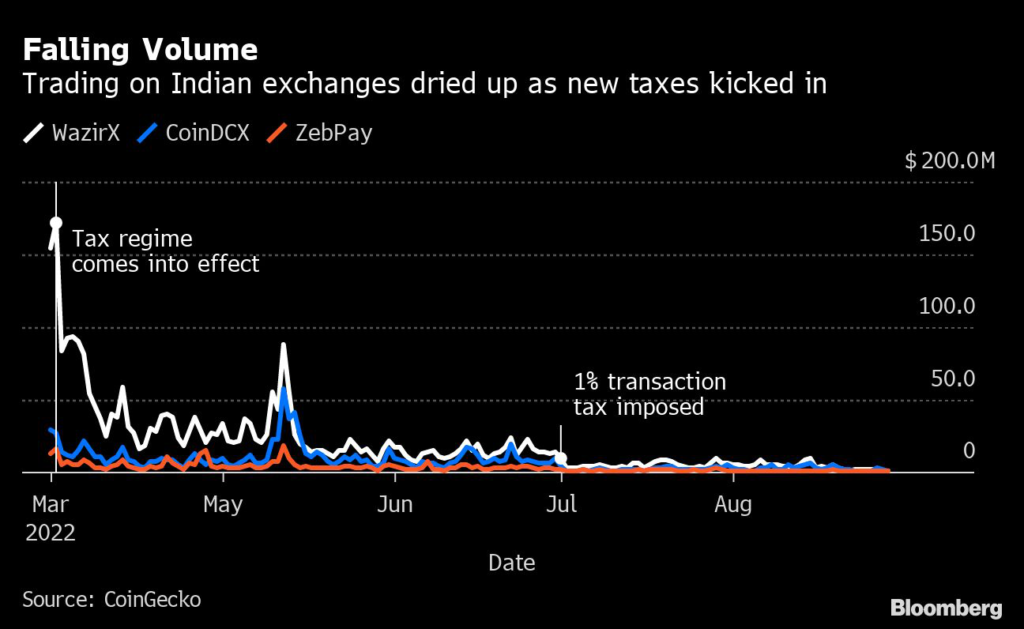
While the company will retain its focus on India, the 1% transaction tax the nation imposed on crypto this year is hurting trading volumes and the levy “has to come down, otherwise things are not going to improve,” he said.

Daily volumes at key India-based platforms are down over 90% since the transaction levy took effect in July. That’s exacting a toll on brokerages. For instance, Binance-affiliate WazirX — India’s largest crypto exchange — has laid off nearly 40% of its staff. Shekhar said ZebPay has implemented salary cuts, including a 6% drop for non-management staff.

He is leaving to start his own Web3 venture, which will receive its seed funding from ZebPay, but will also continue in an advisory role at the firm. The term “Web3” refers to a vision of a decentralized internet built around blockchains.

Shekhar said he plans to start his venture out of India but warned the crypto tax is leading entrepreneurs to develop Web3 projects from Dubai or Singapore.

Daily trading volume on ZebPay has dropped from a high of $122 million in October 2021 to just over $700,000, data from Nomics shows.

More stories like this are available on bloomberg.com

©2022 Bloomberg L.P.

Roblox and Discord Sued Over Girl’s Sexual, Financial Exploitation

(Bloomberg) — Roblox Corp. and Discord Inc. are the latest targets in a wave of lawsuits over social media addiction, in a case alleging an 11-year-old girl was exploited by a sexual predator while playing online video games.

The girl became acquainted with adult men through Roblox and Discord’s direct messaging services, which she thought had safeguards protecting her, according to a statement by her lawyers at the Seattle-based Social Media Victims Law Center who have brought numerous other addiction cases. 

Wednesday’s complaint in state court in San Francisco also blames Snap Inc. and Meta Platforms Inc. for the girl’s mental-health difficulties and suicide attempts.

“These men sexually and financially exploited her,” the group said. “They also introduced her to the social media platforms Instagram and Snapchat, to which she became addicted.”

Discord, Roblox and Snap declined to comment on pending litigation, but all said they try to make their platforms safe. Discord and Roblox said they have “zero tolerance” for behavior that endangers or sexualizes children, while Snap said it gives users “dealing with mental health issues resources to help them deal with the challenges facing young people today.”

Meta also declined to comment on the suit, but has previously said it provides resources on mental health topics and has improved safeguards to stop the spread of harmful content.

More than 80 lawsuits have been filed this year against Meta, Snap, ByteDance Inc.’s TikTok, and Alphabet Inc.’s Google centering on claims from adolescents and young adults that they’ve suffered anxiety, depression, eating disorders, and sleeplessness after getting hooked on social media. In at least seven cases, the plaintiffs are the parents of children who’ve died by suicide.

Discord is a gaming chat app that has 150 million monthly active users. Popular with young people, Discord was known as a sort of wild-west space online. The company beefed up its moderation efforts over the past two years. In 2022, at least a half-dozen cases involving child sex abuse material or grooming children cited Discord, according to a Bloomberg News search of Justice Department records.

Roblox is a gaming platform with over 203 million monthly active users, many of whom are children. Young players have been introduced to extremists on the platform, who may take conversations elsewhere online like Discord or Skype. Roblox has robust moderation efforts, which include scanning text chat for inappropriate words as well as every virtual image uploaded to the game.

Read More: When The Scrolling Doesn’t Stop: Social Media Lawsuits Pile Up

The girl in the lawsuit, who’s identified only by the initials S.U., and her family are seeking to hold the social media companies financially responsible for the harms they allegedly caused. The family also wants a court order directing the platforms to make their products safer, which the Social Media Victims Law Center said can be done through existing technologies and at minimal time and expense for the companies.

S.U. said soon after she got an iPad for Christmas at age 10, a man named Charles “befriended” her on Roblox and encouraged her to drink alcohol and take prescription drugs. 

Later, encouraged by the men she met on Roblox and Discord, S.U. opened Instagram and Snapchat accounts, initially hiding them from her mother, according to the complaint.

While she wasn’t yet 13 — the minimum age for accounts on Instagram and Snap under their terms of service — S.U. became addicted to the platforms to the point that she would sneak online in the middle of the night, leading her to become sleep-deprived, according to the complaint.  

In 2020, S.U. says she fell victim to a Roblox user named Matthew, a 22-year-old from Missouri who convinced her to send sexually explicit images, which he allegedly sold online. 

S.U. relied heavily on Snapchat’s “My Eyes Only” feature to hide what was happening from her mother, who continued to monitor S.U.’s social media use but didn’t know about My Eyes Only, according to the complaint.

She tried to take her own life in July 2020 and again in August 2020 and her parents went more than $10,000 into debt in 2021 from expenses related to her mental-health crises, according to the complaint.

The case is C.U. and S.U. v. Meta Platforms Inc., California Superior Court, San Francisco County.


(Updates with comments by Roblox and Snap)

More stories like this are available on bloomberg.com

©2022 Bloomberg L.P.

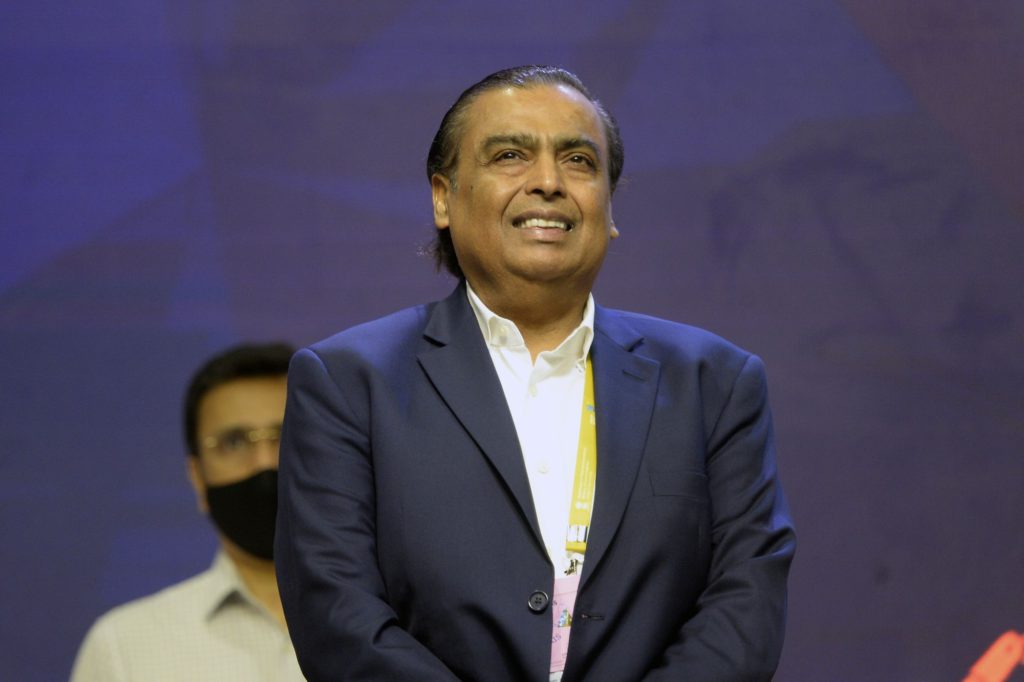
Billionaire Mukesh Ambani to Open Family Office in Singapore

(Bloomberg) — Asia’s second-wealthiest man, Reliance Industries Ltd. Chairman Mukesh Ambani, is setting up a family office in Singapore, according to people familiar with the move. 

The Mumbai-based billionaire has picked a manager to hire staff for the new entity and get it running, the people said, asking not to be identified because the matter is private. The Ambanis have also chosen real estate, one of the people said. 

A spokesman for Reliance, who also represents Ambani, wasn’t available for comment.

Ambani is the latest in a series of ultra-rich people to pick Singapore for their family offices — the organizations set up to manage the affairs of wealthy clans — joining the likes of hedge fund billionaire Ray Dalio and Google co-founder Sergey Brin.

The city-state has become an attractive hub for family offices thanks to its low taxes and relative security. The Monetary Authority of Singapore estimates about 700 were in place by the end of 2021, up from 400 a year earlier. 

Read how family offices face a backlog of tax-break applications 

But the rising number of global rich crowding Singapore’s shores is also resulting in higher prices for cars, housing and other goods. Deputy Prime Minister Lawrence Wong signaled in an August interview that the wealthy may face more taxes to boost inclusive growth.

Ambani 

Ambani’s move to set up the family office ties in with his larger vision of taking his retail-to-refining empire global and acquiring assets outside India. While announcing the appointment of Aramco’s chairman on the board of Reliance in 2021, the billionaire told his shareholders that this marked “the beginning of internationalization” of his conglomerate, without elaborating. “You will hear more about our international plans in the times to come,” he had said at the time.

Reliance paid $79 million for Stoke Park Ltd. in April 2021, adding an iconic UK locale that’s been the setting for two James Bond films. It also bought an indirect 73.4% stake in Mandarin Oriental New York for $98.15 million in January and an $80 million beach-side villa in Dubai this year.

Ambani, who is worth an estimated $83.7 billion according to the Bloomberg Wealth Index, wants the Singapore family office to be running within a year, one of the people said. His wife Nita Ambani is also helping to set it up, the people added.

Reliance has been pivoting from its legacy oil refining and petrochemicals business toward e-commerce, green energy and the expansion of its retail footprint across India. In 2020, its technology venture Jio Platforms Ltd. lured more than $25 billion from marquee Silicon Valley investors including Meta Platforms Inc. and Google. It has also unveiled ambitious plans to take on Amazon.com Inc. in the country, including in streaming.

More stories like this are available on bloomberg.com

©2022 Bloomberg L.P.

Chip Earnings Weigh on Stocks Before US Payrolls: Markets Wrap

(Bloomberg) — Stocks in Asia slipped as traders digested disappointing earnings from chipmakers that may foreshadow a wider decline in corporate profits. Uncertainty also increased ahead of US monthly payrolls data.

The MSCI Asia Pacific Index dropped for the first time in four days, with tech shares the biggest losers. Samsung Electronics Co. reported a decline in profit for the first time since late 2019, underscoring the depth of a global PC and memory-chip downturn. Advanced Micro Devices Inc. slid in late US trading after worse-than-expected preliminary results.

US equity contracts fluctuated following declines for a second day on Thursday, with the S&P 500 and tech-heavy Nasdaq 100 both ending near session lows. 

The Japanese yen weakened against the dollar toward levels that triggered direct market intervention last month, as traders test authorities’ tolerance for a depreciating currency. Treasuries and the dollar were both little changed.

The US jobs report is forecast to show employers added another 255,000 workers in September. That would be the fewest jobs added in a month since a decline in late 2020.

The drumbeat of hawkish comments from Federal Reserve officials kept stocks on the back foot for much of the US session Thursday, thwarting brief attempts to rebound.

Read more: VIX Surge to 150 Is Day’s Biggest Options Bet for ‘Fear Gauge’

Chicago Fed President Charles Evans said the benchmark rate will probably be at 4.5% to 4.75% by next spring as officials fret over high core inflation. Rates markets currently price a peak around 4.6% in the first half. Minneapolis Fed’s Neel Kashkari said the central bank is “quite a ways away” from pausing its campaign of rate increases, while Cleveland Fed chief Loretta Mester said the US is in an unacceptably high inflation environment.

“There’s so much money out in the system chasing little supply,” Mariann Montagne, portfolio manager at Gradient Investments, said on Bloomberg Radio. “And what really needs to happen is we need more manufacturing in the US, more dependable sources of parts. We need more manufacturing goods available so that we can have a better economy.”

Elsewhere, China’s foreign exchange reserves at the end of September fell to the lowest since 2017.

Oil topped $88 a barrel and gold fell. Bitcoin traded around $20,000.

Key events this week:

  • US unemployment, wholesale inventories, nonfarm payrolls, Friday
  • BOE Deputy Governor Dave Ramsden speaks at event, Friday
  • Fed’s John Williams speaks at event, Friday

Some of the main moves in markets:

Stocks

  • S&P 500 futures added 0.1% as of 12:03 p.m. Tokyo time. The S&P 500 fell 1%
  • Nasdaq 100 futures climbed 0.2%. The Nasdaq 100 fell 0.8%
  • Japan’s Topix index dropped 0.6%
  • South Korea’s Kospi index rose 0.2%
  • Hong Kong’s Hang Seng Index slumped 1.1%
  • Australia’s S&P/ASX 200 Index decreased 0.6%

Currencies

  • The Bloomberg Dollar Spot Index was down 0.1%
  • The euro strengthened 0.2% to 0.9809 per dollar
  • The British pound rose 0.2% to 1.1186 per dollar
  • The Japanese yen surged 0.2% to 144.92 per dollar
  • The offshore yuan slipped 0.1% to 7.0916 per dollar

Bonds

  • The yield on 10-year Treasuries fell almost one basis point to 3.82%
  • Australia’s 10-year yield advanced seven basis points to 3.85%

Cryptocurrencies

  • Bitcoin fell 0.1% to $20,024
  • Ether fell 0.5% to $1,356

Commodities

  • West Texas Intermediate crude was at $88.50 a barrel
  • Gold was at $1,712.51 an ounce

More stories like this are available on bloomberg.com

©2022 Bloomberg L.P.

Health-Care Workers Are Swamped Again, This Time With Angry Calls From Podcast Listeners

(Bloomberg) — In January, the staff of Mercy Hospital in Coon Rapids, Minnesota, was flooded with tens of thousands of angry phone calls, all with the same concern. Calling in from as far away as Australia, the people were worried that an unvaccinated Covid-19 patient was getting a lower level of care, and wanted to ensure he would be transferred elsewhere. 

Mercy eventually transferred the patient to a Texas hospital. But in the meantime, administrators increased security, and the staff had to set up a new phone system so that unrelated inquiries about patient care could still get through, according to a person familiar with the matter. Tensions grew among staff, who feared that they were going to continue being targeted by furious callers no matter what they did, the person said.

The source of the outrage was a popular podcast called The Stew Peters Show, which, after hosting the patient’s wife, asked its listeners to call the hospital and apply “social pressure,” alleging that Mercy was treating the unvaccinated patient unfairly while pushing back against the idea that a Covid-19 vaccine could have helped with severe illness from the virus. At the time, Mercy was dealing with one of the pandemic’s worst surges of Covid-19 in the state. All beds at Mercy’s intensive care unit were in use back then, according to data gathered by USA Today’s network of local newspapers.

It’s one of several podcasts, distributed through major platforms such as Apple Inc. and Alphabet Inc.’s Google, which have encouraged listeners to direct anger at health-care workers, according to new research from the Tech Transparency Project. In an analysis published Thursday, the nonprofit group also documented the spread of monkeypox conspiracies and a large volume of Covid-19 misinformation through audio content.

The research, based on a collection of 401 episodes TTP gathered that aired between February 2020 and June 2022, underscores the extent to which misinformation and provocation can proliferate on podcasts, which are distributed to millions using platforms operated by tech giants — often with little content oversight. Apple’s podcast guidelines state that the company prohibits “content that may lead to harmful or dangerous outcomes,” while Google says it won’t promote podcasts that include “harassing” and “hateful” content, or podcasts that depict “deceptive practices.” But the companies continue to distribute such podcasts, even when competing platforms have removed them.

Apple distributing such podcasts “shows how the company’s lofty talk about corporate responsibility often fails to translate into concrete actions in how it runs its business,” the Tech Transparency Project said in its report. “In the case of podcasts, Apple is allowing a huge body of misinformation about the coronavirus to reach its listeners, endangering the public at large.”

Four episodes that encouraged directing anger at healthcare workers, despite being removed from Spotify were still distributed through Apple Podcasts and Google Podcasts, according to TTP. The Stew Peters Show, a program hosted through a service called Podbean and that has ranked as high as No. 48 in Apple’s most popular US political podcasts in September, according to data from Chartable, was behind three of the four documented incidents. In one case, the wife of the unvaccinated patient at Mercy Hospital joined Peters on a January episode. She played the recording of a call in which doctors informed her of their decision to remove life support. At the time, she pushed back against the idea that a Covid-19 vaccine could have helped her husband. 

“These people are cold-hearted,” Peters said in response. “Cold-blooded killers are what they are.”

He then encouraged listeners to call up the hospital. When the episode was posted on Apple Podcasts, the description included individual workers’ names and phone numbers, which TTP says violates Apple’s rule to prohibit content that is “likely to humiliate, intimidate, harass or harm individuals or groups.”Apple Podcasts declined to comment. A Google spokesperson said its podcast product crawls and indexes audio content hosted on third-party servers and the open web. “Like Search, our systems are designed to surface high quality results and we have established policies against recommending content containing harmful misinformation,” they added. The episodes flagged by Bloomberg are not recommended by Google Podcasts.

Allina Health, which oversees Mercy Hospital, said in a statement that privacy laws prohibit it from commenting on the care provided to specific patients. But a spokesperson added that the company “has great confidence in the exceptional care provided to our patients, which is administered according to evidence-based practices by our talented and compassionate medical teams.”

In another episode that same month, Peters called medical staff a “coronavirus death cult” and encouraged listeners to “flood” a Virginia hospital’s phone lines. During a third episode in January, he called a pediatrician a “murderous tyrant” while simultaneously promoting an unproven “Z-Stack Protocol” from Vladimir Zelenko to protect against Covid-19 vaccines that become “self-spreading bioweapons threatening the purebloods.” TTP said episodes of The Stew Peters Show are routinely removed as newer ones are added on Apple and Google Podcasts, where the show’s archive only goes back to May. The group included text descriptions and screenshots of the episodes on Apple Podcasts in its report. Bloomberg reporters verified the quotes by listening to the episodes available on Peters’s show archive on his website.

“Our efforts have always been about saving lives,” Peters said in an interview. The show has been mischaracterized, he added, and “has never harassed anybody. We want to hold to account these death panels.” He later added, in an email: “I categorically reject that I, Stew Peters, or anyone at the Stew Peters Network has harassed ANYONE, at ANY TIME.”

A separate Podbean-hosted podcast, SGT Report’s The Propaganda Antidote, has been banned by Twitter and YouTube but remains on Apple and Google Podcasts. Since January, according to the TTP’s report, show host Sean Turnbull mentioned one pediatrician 13 times on his show who he says concealed the Covid-19 vaccine’s effects on pregnancies. On a livestream, he also showed a picture of her face along with information on her workplace, including its address and phone numbers. Bloomberg reporters watched a copy of the livestream and verified TTP’s findings. A Podbean spokeswoman said she wasn’t aware of any reports made about SGT Report’s or Stew Peters’ show. 

TTP also collected a number of examples in which several popular podcasts spread unverified origin stories about the monkeypox virus. In a May episode of The Stew Peters Show, Peters stated that “globalists were plotting the course of a monkeypox outcome at this exact time a year ago.” In a June episode of The Highwire with Del Bigtree, the anti-vaccine activist Del Bigtree pushed the notion that monkeypox is a tool by governments to oppress their people. Bigtree’s show is hosted on Spreaker, an IHeartMedia-owned platform. There is no evidence of a global conspiracy to plan the monkeypox pandemic.

“When monkeypox came along I simply warned my audience to keep an eye on the coverage,” Bigtree said in response to TTP’s report. “I hypothesized that the same tech and pharmaceutical industries, along with world and federal agencies may attempt to use the ‘opportunity’ provided by the monkeypox outbreak to try again to install vaccine mandates, cell phone tracking systems, and other familiar Draconian measures.”

Turnbull did not return a request for comment.

Francesco Baschieri, head of Spreaker parent company Voxnest, said because of the large number of shows that use Spreaker as their hosting tool, including Bigtree’s, the team, “obviously cannot preemptively check each and every new episode for all of these violations. But we do react strongly when we become aware of them.” He said the team is looking into whether Bigtree’s monkeypox statements violate its terms, which don’t allow podcasters to publish content that harms others.

(Updates with a response from Del Bigtree in the fifteenth paragraph)

More stories like this are available on bloomberg.com

©2022 Bloomberg L.P.

Tech Stocks Set for More Pain as AMD Revives Earnings Fears

(Bloomberg) — Technology stocks are facing more pain after chipmaker Advanced Micro Devices Inc. revived fears about the upcoming earnings season after warning that third-quarter sales were softer than expected.

AMD blamed disappointing preliminary results on weakness in the personal computer market, sending its shares and those of other companies involved in the sector lower in postmarket trading. AMD, Nvidia Corp., Intel Corp. and Microchip Technology Inc. were among chipmakers down more than 2%, while computer makers HP Inc. and Dell Technologies Inc. also fell.

The Santa Clara, California-based company’s announcement was followed by a report from South Korea’s Samsung Electronics Co. that its profit dropped for the first time since 2019, underscoring the depth of a global PC and memory chip downturn. Samsung shares slid as much as 2% before erasing losses.

Futures tracking the tech-heavy Nasdaq 100 Index slipped as much as 0.6% during early trading hours in Asia, before recovering. Weak demand and supply chain issues in the semiconductor sector may have already been priced in, leaving futures little changed ahead of Friday’s US monthly payrolls data, according to Tina Teng, an analyst with CMC Markets.

Investors are bracing for a potentially difficult earnings season amid rising risk of a recession with inflation and the strong dollar eating into profit margins. Analysts have trimmed 2023 profit estimates for technology companies at a faster rate than the broader market, though most expect further cuts if results disappoint.

(Adds analyst comment in fourth paragraph.)

More stories like this are available on bloomberg.com

©2022 Bloomberg L.P.

Mizuho to Buy Stake in Rakuten’s Brokerage Unit for $552 Million

(Bloomberg) — Mizuho Financial Group Inc. agreed to buy a minority stake in Rakuten Group Inc.’s online securities arm for 80 billion yen ($552 million), the latest move by a Japanese bank to team up with a technology company and bolster digital services.

The Japanese lender’s brokerage unit will buy almost 20% of Rakuten Securities Inc., the companies said on Friday. The transaction is scheduled to be completed in November.

The deal comes after billionaire Hiroshi Mikitani’s e-commerce giant this year announced plans to separately list its securities and banking businesses, which have been supporting earnings after a foray into Japan’s mobile market led to losses and put a strain on cash. 

“Rakuten Securities Holdings is currently preparing for a stock listing,” the parent company said in a statement. “We believe that an alliance with a securities company will lead to an increase in the value of shares of both Rakuten Securities Holdings and the company.”

Rakuten shares have climbed about 4% since news of the deal emerged on Wednesday, paring this year’s decline to 41%. Mizuho is little changed in the past two trading sessions. 

Japan’s biggest banks have been struggling to build scale in their online securities businesses and compete with industry leaders like SBI Holdings Inc. and Rakuten. Sumitomo Mitsui Financial Group Inc. in June agreed to take a 10% stake in SBI, the country’s largest internet brokerage. 

S&P Global Ratings said Mizuho’s investment will help increase revenue for Japan’s third-largest bank since it should expand its base of younger customers who are beginning to build their nest eggs.

“Rakuten Securities and Mizuho Securities aim to leverage the power of attracting customers from a wide range of generations,” the companies said. They plan to collaborate in areas including asset management consulting and equity and bond offerings arranged by Mizuho.

Rakuten Securities has about 8 million accounts, compared with SBI’s 8.8 million at the end of June, according to the companies. Like other Rakuten Group businesses, the brokerage has taken advantage of the internet retailer’s popular loyalty points program to attract customers.

After media including Bloomberg reported Mizuho’s investment this week, Natsumu Tsujino, an analyst at Mitsubishi UFJ Morgan Stanley Securities Co., said a price tag of 80 billion yen for a 20% stake was too expensive.

Bloomberg Intelligence analysts including Shin Tamura said the price implies a “hefty” price-to-book ratio of almost three times, versus 1.2 times for rival Monex Group Inc.

Tsujino said Japan’s online brokerage industry is likely to face tough competition ahead, given SBI’s plan to scrap trading fees for domestic equities. She also said Rakuten’s profit is likely to be affected by a recent suspension of structured bond sales.

(Updates with Rakuten statement in fourth paragraph and shares in fifth)

More stories like this are available on bloomberg.com

©2022 Bloomberg L.P.
AT&T CEO Says His Satellite Service Has Lead on Musk’s

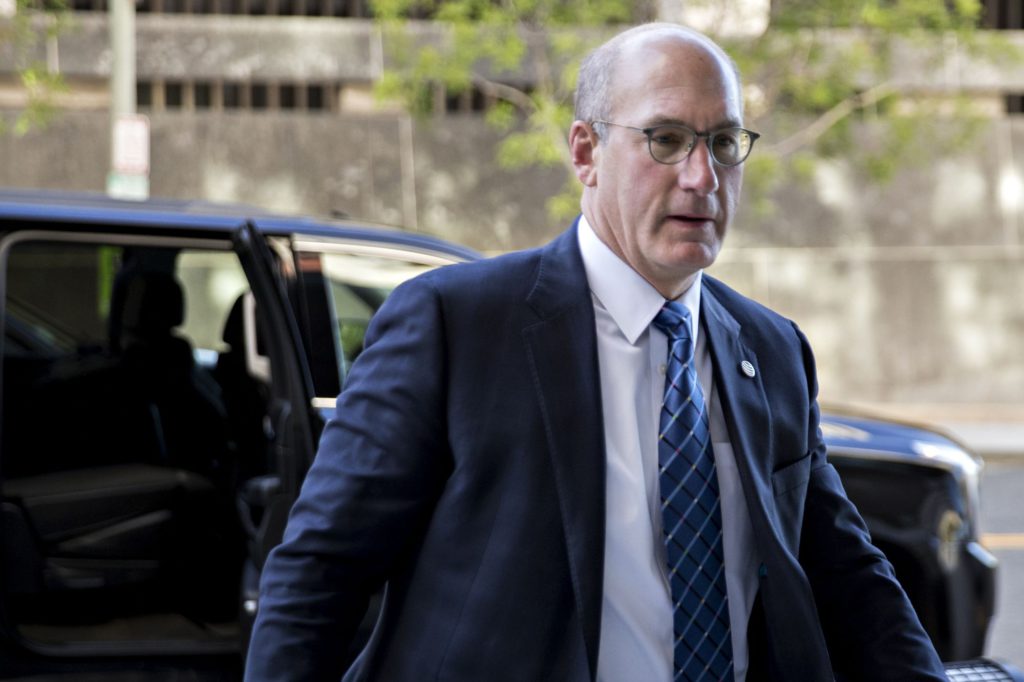
(Bloomberg) — AT&T Inc. Chief Executive Officer John Stankey said his company is way ahead of T-Mobile US Inc. and Elon Musk in efforts to provide mobile phone service to remote areas via satellites.

They each have announced plans to offer wireless phone and internet connectivity to remote regions through a series of low-Earth orbit satellites still being launched.

T-Mobile and Musk, operating through his company SpaceX, announced with great fanfare in August a service they said would save lives by beaming signals to and from areas like remote mountain tops and seas where hikers or sailors may be stranded.

“I would say we probably have an 18 month lead on this,” Stankey said in an interview Wednesday. “SpaceX is going to have to go through the same process. And they’re not going to have their satellite up for testing until the middle of next year.”

Spokespeople for T-Mobile and SpaceX didn’t immediately respond to requests for comment. 

Amazon.com Inc. founder Jeff Bezos and Verizon Communications Inc. are pursuing similar plans.

AT&T has been working with AST SpaceMobile Inc., its satellite partner. The companies will need further approval from the Federal Communications Commission for satellites to serve as cell sites in space. The airwaves they plan to use are currently approved for land-based mobile communications and will need to be licensed for space as well.

“We are comfortable with our test data,” Stankey said. “The next step is to present our findings to the FCC, to support changing the license parameters.”

The initial uses for satellite communications will be for emergency services including connectivity for FirstNet, a government-run network. A consumer application would follow later, according to Stankey.

“It’s inevitable that satellite communications will be a supplement to mobile service,” he said.

(Corrects the licensing details for airwaves in seventh paragraph)

More stories like this are available on bloomberg.com

©2022 Bloomberg L.P.

Crypto Hacked Again in $100 Million Theft of Binance Coin

(Bloomberg) — An already bad year for cryptocurrencies took another turn for the worse after roughly $100 million of Binance Coin was stolen in what appears to be the latest hack to hit digital assets.

An exploit occurred on a bridge between blockchains and the issue is “contained now,” Changpeng “CZ” Zhao, billionaire co-founder of Binance, the world’s biggest crypto exchange, said on Twitter on Friday.

A spokesperson for Binance-backed blockchain BNB Chain estimated the incident involved $100 million to $110 million of digital tokens. At least $7 million of stolen funds has already been frozen, the spokesperson added. The bridge, BSC Token Hub, has been suspended.

About $2 billion has been lost in crypto hacks this year, many perpetrated by North Korea-linked groups. Cross-chain bridges used to transfer tokens across blockchains have been a popular target. 

The Binance ecosystem is among the highest profile to be buffeted. Zhao said on Twitter that “in all likelihood, Binance will cover any fund that the hackers get away with.” 

BNB Chain said it’s working with security services to freeze transfers of stolen funds. Binance Coin, also known as BNB, fell as much as 3.3% on Friday and was trading around $285 as of 10:08 a.m. in Tokyo.

The crypto sector has been pummeled both by hacks and a deep rout that’s wiped some $2 trillion off the value of digital assets.

The wider crypto markets took the latest developments in their stride. Bitcoin was little changed at around $20,000.

(Updates from the second paragraph with comments from Binance CEO.)

More stories like this are available on bloomberg.com

©2022 Bloomberg L.P.
Close Bitnami banner
Bitnami