
Bloomberg

Twitter Trial Against Musk Is Halted to Allow Deal to Close

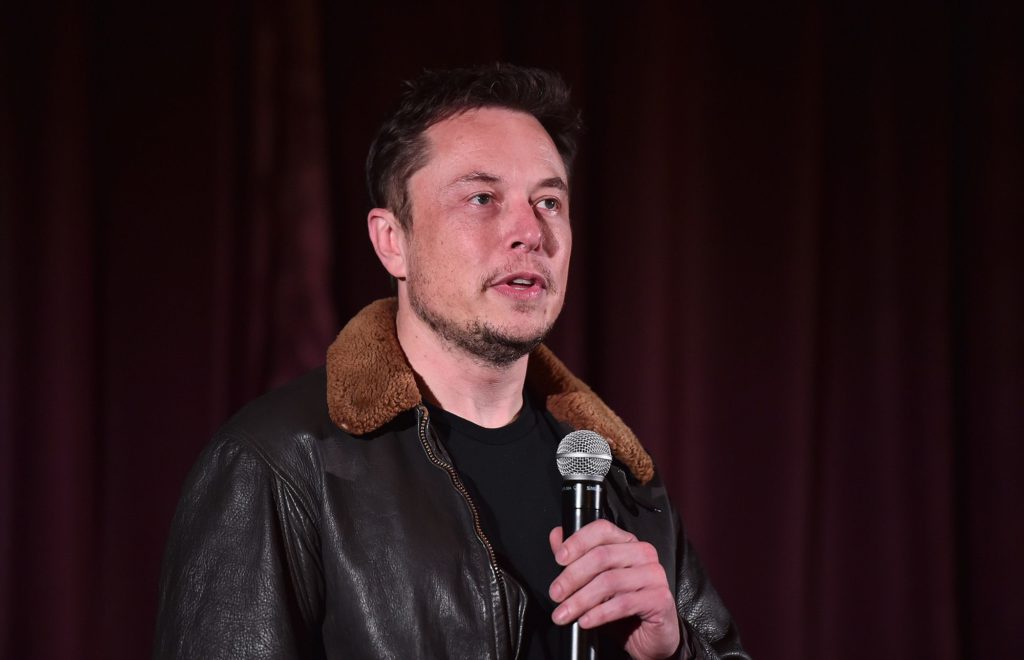
(Bloomberg) — A Delaware judge halted a court case against Elon Musk over his $44 billion purchase of Twitter Inc., giving the parties more time to complete the deal.

Delaware Chancery Judge Kathaleen St. J. McCormick said if the transaction isn’t done by 5 p.m. on Oct. 28, she will set new trial dates in November, according to an order issued Thursday.

The ruling hands a partial victory to Musk, who earlier in the day had asked the judge to pause Twitter’s lawsuit against him ahead of an Oct. 17 trial date. But it also gives Musk a deadline by which he needs to make good on his April agreement to pay $54.20 a share — an obligation he previously tried to abandon. Shares in San Francisco-based Twitter rose as much as 3.5% in late trading after the judge’s ruling, a sign of optimism that the order gives Twitter some of the certainty it was seeking. 


Acrimony between the parties escalated Thursday, with both sides trading barbs in court filings. Musk requested a pause in the hearing, saying the social media company “will not take yes for an answer” after he proposed consummating the buyout in an Oct. 3 letter. His lawyers targeted an Oct. 28 closing. Twitter had objected to the request, saying Musk “can and should” close the deal next week.

Talks between the two sides had snagged after Musk said that his offer was now contingent on receiving $13 billion in debt financing. The original deal didn’t contain such a contingency. Musk said Twitter was resisting halting court proceedings based on the “theoretical possibility of a future failure to obtain the debt financing.”


Following the judge’s ruling, Twitter General Counsel Sean Edgett sent an update to staffers, saying the company won’t be going to court Oct. 17 and will work to close the deal by Oct. 28 as ordered by the judge.

“Our intention remains the same: to close the acquisition at the price and terms in the original merger agreement,” Edgett wrote in the memo reviewed by Bloomberg. “Thank you to all of the teams working hard to navigate these twists and turns.”

Within hours of McCormick’s order, Musk began tweeting about his plans for Twitter. “There will be very rapid product evolution,” he wrote in response to another user’s query. “Software engineering, server operations & design will rule the roost,” he continued in another post.

No Harm

In their filing earlier Thursday, Musk’s lawyers had argued that a short pause would not harm Twitter. “In the event a closing does not occur, the litigation can promptly resume based on the then existing facts and whatever issues remain at the time.” But going ahead with the scheduled Oct. 17 trial, and the appeals that would follow, would have caused the deal to take “months” to complete, Musk’s lawyers said.

Twitter said it’s dubious of Musk’s promises, and said that a banker involved in the debt financing testified earlier Thursday that Musk had yet to send them a borrowing notice, and had otherwise not communicated to them that he intended to close the deal. The banker also said that “the main task necessary to close the deal — memorializing the debt financing — could have happened in July but didn’t because Mr. Musk purported to terminate the deal.”

“Now, on the eve of trial, defendants declare they intend to close after all,” Twitter said in its filing. “‘Trust us,’ they say, ‘we mean it this time,’ and so they ask to be relieved from a reckoning on the merits.”

Musk’s proposed stay “is an invitation to further mischief and delay,” the platform added. “Until Defendants commit to close as required, Twitter is entitled to its day in Court.”

The two parties had been gearing up for the week-long courtroom battle, which would have determined whether the billionaire had legitimate grounds to torpedo the buyout because of alleged fake user accounts. McCormick ruled against the Tesla Inc. CEO on about a half-dozen pre-trial issues that could have foreshadowed difficulties in making his case in court. 

Bank Obligations

Seven banks, led by Morgan Stanley, fully underwrote the debt portion of the financing, according to an April filing. As is usual in this type of contract, banks originally planned to sell most of that debt to institutional money managers before the Twitter deal closed, but they have always been on the hook for providing the funding if anything went wrong.

There are very few, if any, ways for banks to get out of providing such debt commitments after signing the contract. And most banks wouldn’t want to, even if it meant preventing a loss, because backing out would reflect poorly on their investment banking business and could harm their ability to win new deals with companies and private equity firms in the future.

A representative for Morgan Stanley declined to comment about the Musk deal.

Bloomberg reported earlier that, as part of the talks with Twitter, Musk has also been seeking to reserve his rights to file a fraud suit over his claims the platform’s executives misled him and other investors about the number of spam and robot accounts among its more than 230 million users. 

Alex Spiro, an attorney for Musk, said in a statement Twitter had offered to take “billions” off its sale price in exchange for “self-serving conditions” that Musk refused. Twitter hasn’t replied to a request for comment on Spiro’s statement or the deal conditions it’s seeking.

The case is Twitter v. Musk, 22-0613, Delaware Chancery Court (Wilmington). 

(Updates with Musk tweets in eighth paragraph)

More stories like this are available on bloomberg.com

©2022 Bloomberg L.P.

Faraday’s Executive Chair Exits EV Startup, Citing Threats

(Bloomberg) — Faraday Future Intelligent Electric Inc.’s executive chair resigned following what the company said were death threats and baseless allegations against certain directors, accelerating a planned transition of the troubled electric-vehicle startup’s leadership. 

Two additional board members stepped down this week along with Executive Chair Susan Swenson, the company said Thursday in a securities filing. Adam He was appointed to serve as interim non-executive chair.

The startup has been rocked by a fight over control, which veered into the morbid last month when Faraday reported that criticism of current management has escalated to include “threats of physical violence and even death threats.” That contributed to a shakeup under which Swenson was to have left once the company received certain funding as part of a wider overhaul giving more control to a group of dissident shareholders.

That group, known as FF Top Holding LLC and which owns about 36% of the company, issued a statement late Thursday saying it welcomed the departure of the three board members but decried the threats against them.

“FF Top strongly condemns any threats of violence against anyone and looks forward to the persons responsible being identified and brought to justice,” it said. “Following these recent resignations, we look forward to working with the new board of directors and management.”

Expedited Exit

Faraday said those threats prompted Swenson and the two other board members — lead independent director Jordan Vogel and Scott Vogel — to expedite their planned exits.

The directors “cited such threats and their fear that their continued association with the company might heighten the risk to themselves and their respective families as the reasons for their resignations,” it said.

Shares of the company rose 9.6% to close at 71 cents in New York trading Thursday. The stock is down 87% this year.

Faraday last month delayed the launch of its debut electric vehicle until at least next year after having pledged when it went public last year to start production by mid-2022. It cited a need for additional cash as the reason for the postponement.

‘Employee Whistleblowers’

The company blamed what it called “self-described ‘employee whistleblowers’” and “various individuals and entities who represented themselves as current investors” for making allegations against the board of conspiring to run the company into the ground for their own personal benefit. Those claims were determined to be without merit, according to what it said was an independent external investigation.

FF TOP said in its statement it supports efforts by company insiders and others to hold management accountable. 

“We firmly support the right of stockholders, employees and others to make their concerns known to public companies through lawful means,” it said.

Faraday has said it believes the dissident shareholder group is under the influence of co-founder Jia Yueting. He was sidelined in April after an internal probe led by Swenson concluded that managers misled investors on Jia’s day-to-day control and influence.

The Los Angeles-based startup has faced a number of other obstacles, including the resignation of its auditor. The SEC has opened a probe into Faraday’s financial statements.

(Updates with investor group statement from fourth paragraph.)

More stories like this are available on bloomberg.com

©2022 Bloomberg L.P.
Musk Says Tesla Starting Output of Semi, Deliveries to Pepsi

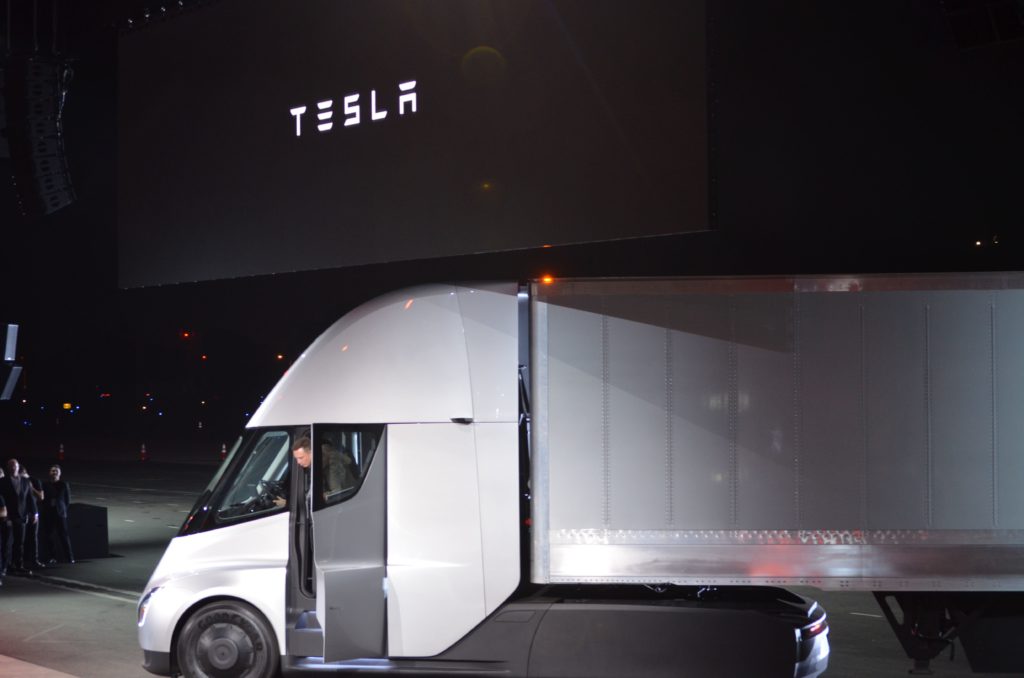
(Bloomberg) — Tesla Inc. is starting production of its long-awaited Semi truck and will start deliveries from Dec. 1. 

Elon Musk, the electric vehicle maker’s chief executive officer, announced the plans to begin output of the big rig in a tweet Thursday, saying the first semis would be delivered to PepsiCo Inc. 

Tesla first unveiled the semi in November 2017, saying it would go into production within two years. But launch and production has been pushed back multiple times — in part due to a lack of battery cell availability and the company’s decision to prioritize its consumer models.

Musk had tweeted in August that the 500-mile (805 kilometers) range vehicle would start shipping this year, but he’s also known for missing his own deadlines or forecasts. Earlier this year, he told Tesla investors that debuting the Semi in 2022 “would not make any sense because we’ll still be parts-constrained.” 

PepsiCo didn’t immediately respond to a request for comment.

PepsiCo has said it expects to deploy the first 15 Tesla Semi truck tractors by the end of the year, part of an order for 100 all-electric Class-8 tractors from the Austin, Texas-based company. Other corporate customers for the Tesla truck include retail giant Walmart Inc., which placed pre-orders for the Semi the year it was unveiled. 

The zero-emission Semi is expected to be eligible for federal tax credits of as much as $40,000 per heavy-duty truck purchase under recently passed legislation. But Tesla will compete in a growing field for battery-electric big rigs including players like startup Nikola Corp. and more established firms like Sweden’s Volvo AB. 

(Updates with additional details on Tesla Semi from third paragraph.)

More stories like this are available on bloomberg.com

©2022 Bloomberg L.P.

South Korea Posts Worst Goods Deficit Ever as Trade Slows

(Bloomberg) — South Korea posted its worst goods deficit on record, underscoring strains in the trade-reliant economy that’s facing slowing global demand, elevated oil prices and rising interest rates.

The shortfall in the goods balance came in at $4.4 billion in August, worsening from $1.4 billion in the previous month, according to data released Friday by the Bank of Korea. The overall current account also fell into the red, posting a deficit of $3.1 billion, the worst in more than two years.

The deficit intensifies concerns about the strength of the won at a time when the Federal Reserve is accelerating the pace of its policy tightening. The Korean currency has been Asia’s worst performer this year after the yen and the BOK may raise its own rate by a bigger-than-usual margin to try to help support the won.

“The current account will likely keep fluctuating,” said Ha Keon-hyeong, an economist at Shinhan Securities Co. “If the oil price hovers near $90 per barrel, trade deficits will continue and raise questions about economic fundamentals.”

Korean policymakers have signaled a deficit might occur in August, pointing to mounting trade shortfalls. Rising commodity prices, supply-chain snags and slowing demand for semiconductors have been among factors weighing on exports.

The current account is “highly” likely to have returned to a surplus in September as the trade deficit was sharply reduced, the BOK said in a separate statement. Still, high volatility in energy prices and rising demand for overseas travel by Koreans are among factors slowing improvement in the current account, it added.

Korea has now posted a current account deficit twice this year. Finance Minister Choo Kyung-ho told reporters on Thursday that the annual balance would exceed $30 billion, dismissing concerns that the deficit could trigger a more significant fallout.

(Adds central bank forecast)

More stories like this are available on bloomberg.com

©2022 Bloomberg L.P.
Bad News for Global Trade as South Korea Posts Worst Goods Deficit Ever 

(Bloomberg) — South Korea posted its worst goods deficit on record, underscoring strains in the trade-reliant economy that’s facing slowing global demand, elevated oil prices and rising interest rates.

The shortfall in the goods balance came in at $4.4 billion in August, worsening from $1.4 billion in the previous month, according to data released Friday by the Bank of Korea. The overall current account also fell into the red, posting a deficit of $3.1 billion, the worst in more than two years.

The deficit intensifies concerns about the strength of the won at a time when the Federal Reserve is accelerating the pace of its policy tightening. The Korean currency has been Asia’s worst performer this year after the yen and the BOK may raise its own rate by a bigger-than-usual margin to try to help support the won.

“The current account will likely keep fluctuating,” said Ha Keon-hyeong, an economist at Shinhan Securities Co. “If the oil price hovers near $90 per barrel, trade deficits will continue and raise questions about economic fundamentals.”

Korean policymakers have signaled a deficit might occur in August, pointing to mounting trade shortfalls. Rising commodity prices, supply-chain snags and slowing demand for semiconductors have been among factors weighing on exports.

The current account is “highly” likely to have returned to a surplus in September as the trade deficit was sharply reduced, the BOK said in a separate statement. Still, high volatility in energy prices and rising demand for overseas travel by Koreans are among factors slowing improvement in the current account, it added.

Korea has now posted a current account deficit twice this year. Finance Minister Choo Kyung-ho told reporters on Thursday that the annual balance would exceed $30 billion, dismissing concerns that the deficit could trigger a more significant fallout.

(Adds central bank forecast)

More stories like this are available on bloomberg.com

©2022 Bloomberg L.P.
Crypto Fans Think It’s Time to Rebuild: Crypto IRL

(Bloomberg) — Hey, it’s Tim. This year’s digital-asset rout has wiped out $2 trillion in wealth. It’s collapsed companies, challenged the crypto faithful, and rearranged the industry’s constellations of power. 

But does that mean it’s time to “buidl?” The mangled word is an offshoot of crypto’s buy-and-hold mentality, only this time it’s a rallying cry for construction and contributions.       

After all, Disney came of age during the Great Depression, and Airbnb was built in the wake of the housing crisis. 

So where are the opportunities now that the so-called “froth” has been taken out of the market? Where are VCs investing their money? And how will regulators treat new digital assets? Those are some of the questions that Katie Greifeld and I explore in Ep. 2 of the new Bloomberg Quicktake series, “Crypto IRL”. We turn to our in-house expert, stacy-marie ishmael, Bloomberg’s managing editor for crypto, and go deep with Nic Carter, founding partner at the crypto VC firm Castle Island Ventures. 

Watch “Crypto IRL” on Thursdays at 8:30 p.m. New York time on Bloomberg Quicktake, and Fridays at 8:30 p.m. on Bloomberg TV. And it’s always streaming at https://www.bloomberg.com/qt/series/crypto-irl.

More stories like this are available on bloomberg.com

©2022 Bloomberg L.P.
Samsung Profit Sinks 32% as Memory Chip Downturn Worsens

(Bloomberg) — Samsung Electronics Co. reported its first profit drop since 2019, underscoring the depth of a global PC and memory chip downturn.

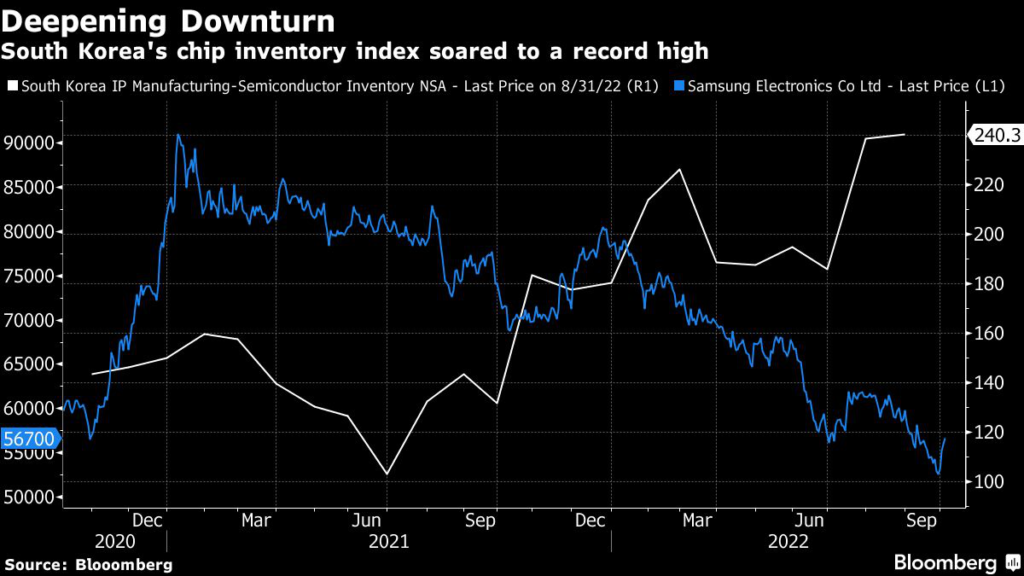
Operating profit fell by 32% to 10.8 trillion won ($7.7 billion) for the three months ended September, South Korea’s largest company said Friday in a statement. Analysts had estimated 12.1 trillion won on average. Sales also missed estimates, coming in at 76 trillion won. Samsung will provide net income and details of divisional performance with its full report at the end of this month.

Global memory chipmakers warned in recent weeks that they are facing a tougher market as inventories build up and orders are being cut by data center as well as consumer tech clients after demand for PCs and smartphones weakened further than expected. Micron Technology Inc. and Kioxia Holdings Corp. are cutting output to try and rebalance supply and avert a price crash.

Shortly before Samsung’s results, US processor and graphics chip maker Advanced Micro Devices Inc. also missed estimates with its third-quarter sales figures, which came in $1 billion shy of its own forecast. “Macroeconomic conditions drove lower than expected PC demand and a significant inventory correction,” AMD Chief Executive Officer Lisa Su said.

Samsung shares fell by as much as 2% in Seoul on Friday after the news.

“This downcycle is not merely driven by typical supply and demand dynamics, it’s different from the past cycles due to geopolitical risks,” said Heo Pil-Seok, chief executive officer at Midas International Asset Management in Seoul. “The US government’s exports controls would further limit IT companies’ sales in China and a large chunk of demand for chips will be weakened. If AMD, Nvidia can’t sell their chips in China, memory makers’ earnings will deteriorate further.”

South Korea, home to the world’s two largest memory chipmakers, reported a decline in chip output in August for the first time in more than four years, according to Statistics Korea data. Samsung compatriot SK Hynix Inc. said during its last earnings call that a significant adjustment to its capital expenditure next year was “inevitable.”

The sudden memory market crash comes after a series of macroeconomic shocks ranging from Russia’s invasion of Ukraine to soaring inflation and gas prices along with US Fed rate hikes. Consumer sentiment has rapidly deteriorated and memory buyers like PC manufacturers have reduced orders and are using their existing stockpiles.

While electronics demand has crumbled this year, Morgan Stanley upgraded the semiconductor sector at the start of this week, which pushed Samsung and Hynix’s share prices up on the expectation of a market rebound in the latter half of 2023.

TSMC, Chipmakers Rally After Morgan Stanley Calls a Recovery 

Still, Samsung’s chip business head Kyung Kyehyun has said the memory market’s unlikely to find momentum for a recovery throughout next year. Kyung told employees at an internal event that Samsung cut its guidance for chip sales in the second half of this year by 32% compared to its forecast in April, according to the Korea Economic Daily.

“Due to the extremely sluggish demand, customers began to reduce inventory from the end of 2Q22,” said Song Myung-sup, an analyst at HI Investment & Securities, noting that DRAM and NAND prices fell by 15% in the third quarter. “With the exception of some big tech companies, clients are slashing their chip orders despite sharp price cuts.”

Samsung Warns Chip Industry Is Headed for Tough Close to 2022

(Updates with share price and AMD earnings)

More stories like this are available on bloomberg.com

©2022 Bloomberg L.P.
Amazon Abandons Home Delivery Robot Tests in Latest Cost Cuts

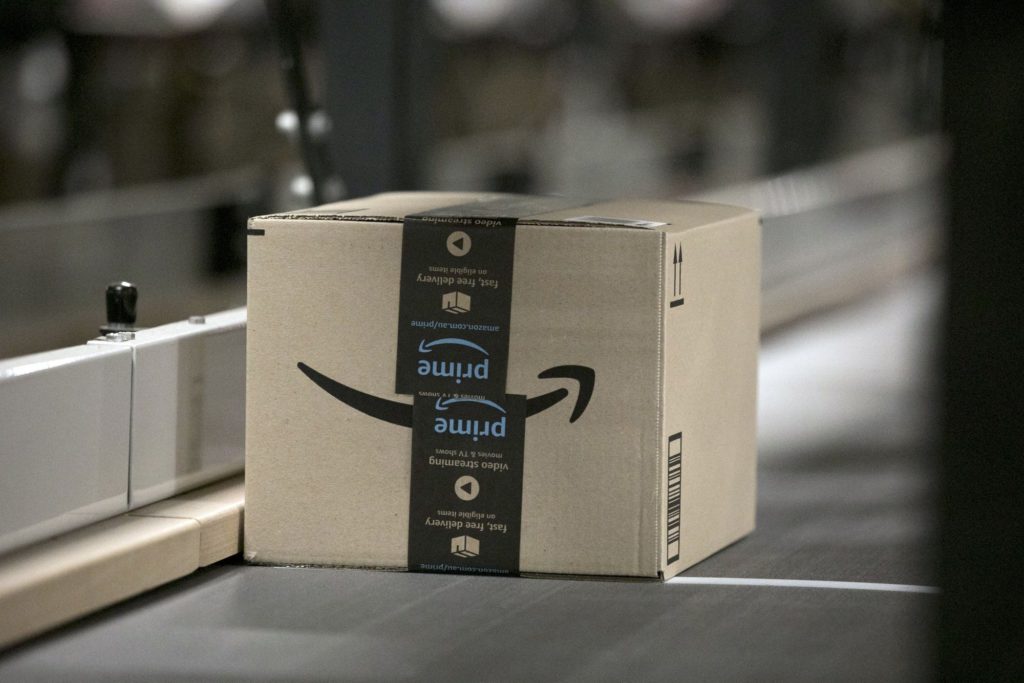
(Bloomberg) — Amazon.com Inc. is shutting down tests of its home delivery robot, the latest sign that the e-commerce giant is starting to wind down experimental projects amid slowing sales growth.

Work on Scout, an autonomous machine launched about three years ago, has already been halted, according to a person familiar with the situation. Amazon spokesperson Alisa Carroll said the Scout team was being disbanded and would be offered new jobs in the organization. About 400 people were working on the project globally, according to the person, who requested anonymity to discuss a private matter. A skeleton crew will continue to consider the idea of an autonomous robot, but the current iteration isn’t working.

“During our Scout limited field test, we worked to create a unique delivery experience, but learned through feedback that there were aspects of the program that weren’t meeting customers’ needs,” Carroll said. “As a result, we are ending our field tests and reorienting the program. We are working with employees during this transition, matching them to open roles that best fit their experience and skills.”

The Seattle-based company began testing the cooler-sized bots on suburban sidewalks outside Seattle in 2019, before expanding the trials to Southern California, Georgia and Tennessee. The slow-moving devices, accompanied by human minders during tests, were designed to stop at a front door and pop open their lids so a customer could pick up a package. Amazon said the battery-powered robots were part of an effort to reduce greenhouse gas emissions in its delivery operations.

Only a few month ago, Amazon was still holding meet-and-greets in communities where it was testing the devices. Sean Scott, the vice president who oversaw the robot’s development, left the company last year, according to his LinkedIn profile. 

Under Chief Executive Officer Andy Jassy, Amazon is adjusting to slowing growth in its core retail group, delaying some investments and pulling the plug on others. The company has a reputation for backing radical experiments that can take years to come to fruition, a roster that includes cashierless stores, flying delivery drones and a satellite constellation that promises to beam internet access around the world. 

On Tuesday, Bloomberg reported that Amazon was discontinuing Amazon Glow, a kids-focused video calling device. The company has also frozen hiring for its corporate retail teams and is winding down Amazon Care, its startup telehealth service. 

(Updates with more context in the second paragraph.)

More stories like this are available on bloomberg.com

©2022 Bloomberg L.P.
Google Contractors Allege They Were Fired for Union Ties

(Bloomberg) — Contract workers at Google’s data centers allege that they were fired for supporting a union and faced retaliation after pushing for better benefits, according to a pair of complaints filed this week with the US National Labor Relations Board.

The Alphabet Workers Union, whose members include both direct employees and subcontracted staff for Google’s parent company, claims that two workers at a data center in Council Bluffs, Iowa, were terminated for discussing their working conditions and because of their affiliation with the labor organization, according to documents viewed by Bloomberg.

Another worker at the site faced retaliation for having a role in the union, according to the complaint, which was filed on Wednesday against Google and Modis, an information-technology firm that serves as a subcontractor.

Labor groups have been pushing to make inroads this year in big tech companies, long seen as resistant to union organizing. In addition to Google, Amazon.com Inc. and Apple Inc. have faced labor campaigns in recent months — with mixed results. 

In another complaint filed with the NLRB on Wednesday, two contract security guards working at Google data centers in North and South Carolina allege that they lost their security clearances after discussing working conditions. The workers said they had spoken out about a lack of benefits such as sick days and parental leave and have been unable to work without their security clearances.

The cases appear to be the first in which Alphabet Inc. workers were fired for their union membership, according to Parul Koul, a Google software engineer and the executive chair of AWU, a so-called minority union that doesn’t have collective bargaining authority but advocates on behalf of workers. Google is named in the complaints as a “joint employer,” or a company with sufficient control over a group of workers to be legally liable for their treatment.

Google didn’t have an immediate comment. Modis, which is owned by Adecco Group AG, didn’t immediately respond to a request for comment.  

Claims filed with the NLRB are investigated by regional officials. If they find merit in the allegations and can’t secure a settlement, they issue a complaint on behalf of the labor board’s general counsel, which is considered by an agency judge. Those judges’ rulings can be appealed to the NLRB members in Washington and then to federal court. 

The agency has the authority to order companies to reinstate fired workers and change policies, but generally can’t hold executives personally liable for alleged wrongdoing or issue any punitive damages.

Last year, another NLRB complaint filed by AWU on behalf of a subcontracted Google data-center worker in South Carolina led to a settlement. As part of that agreement, the tech giant promised to obey federal law by not silencing workers about their pay.

The treatment of the workers in Council Bluffs violates that settlement, AWU alleges. In June, one of the workers, Eli Cave, who uses they and them pronouns, suggested a walkout to protest a new timekeeping system that they feared could lead to lost wages. Shortly thereafter, a manager said Cave’s actions “could be considered insubordination” and threatened to put Cave on a performance improvement plan, according to a statement of facts in the case viewed by Bloomberg.

In July, two other workers at the site, Dustin Sommers-Hehn and Leilani Morton, met in the data center’s common area to discuss working conditions, according to the statement of facts. Later that week, management gave Sommers-Hehn a “final warning” for having a “union meeting” and told Morton that discussing unions was forbidden, the document states. Sommers-Hehn and Morton learned in August and October, respectively, that their contracts wouldn’t be renewed.

The other complaint filed Wednesday is tied to security guards at Google contractor Allied Universal. Earlier this year, Allied workers realized they weren’t receiving key benefits, such as sick days, special leave for Covid-19 and parental leave, though they were guaranteed under Google’s minimum benefits standards for US contractors, according to the complaint.

Allied rolled out some benefits in September after a petition circulated by employees attracted hundreds of signatures, workers said. Cynthia West, who was working as a security guard in North Carolina, said she helped organize the petition, but she feels she has paid a steep price. Shortly after accepting a new job at another Google contractor on the site, she learned that she had lost her security clearance.

A representative for Allied didn’t have an immediate comment.

Although she was employed by Google’s contracting firms, West said that the client bears responsibility for working conditions on the site.

“The client does or should have some culpability for that,” said West, 37, who is cited by the AWU complaint. “If they don’t know, they need to know.”

Another worker who is part of the complaint against Google and Allied, Heather Smith, said she had spoken out about the lack of benefits and also advocated on behalf of a pregnant colleague.

In late September, she learned she had lost her security clearance. “It was a blow out of nowhere,” said Smith, 31. “I was terminated without them actually saying ‘terminated.’”

(Adds detail from complaint in sixth paragraph.)

More stories like this are available on bloomberg.com

©2022 Bloomberg L.P.

Europe’s Carmakers Scrap Growth Hopes, Ask Policy Makers for Aid

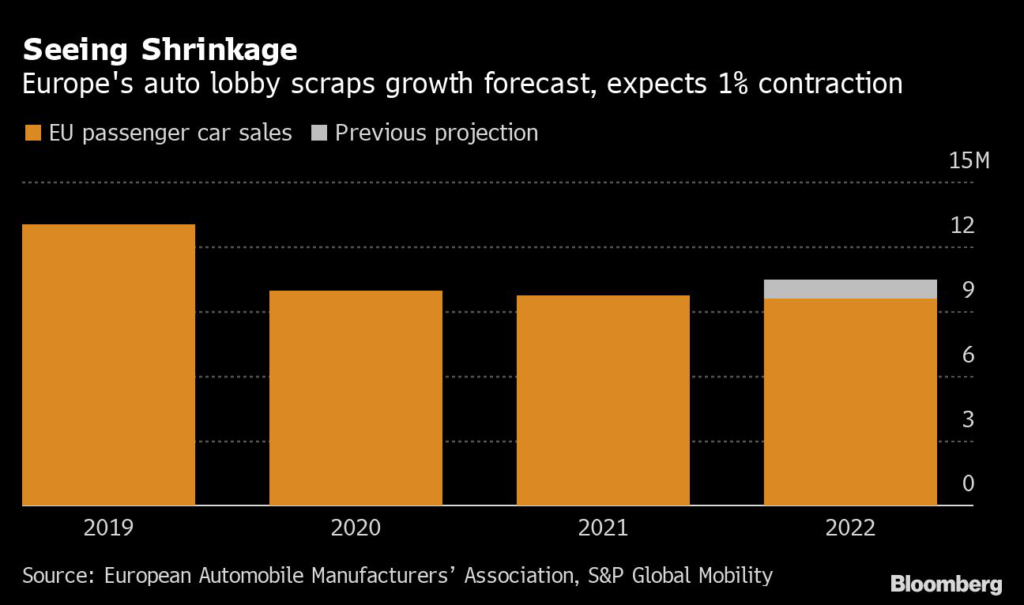
(Bloomberg) — Europe’s automakers warned they’re likely headed for another year of shrinking sales and called for policy makers to step up their support of the industry struggling to recover from the pandemic.

Passenger car sales will probably drop 1% to 9.6 million this year, the European Automobile Manufacturers’ Association said Friday. While that outlook suggests there may be some recovery in the closing months — registrations were down almost 12% through August — the lobby group doesn’t expect enough of a bounce back to stick with its forecast toward the beginning of the year for a bit of growth.

A pile-up of setbacks — including Brexit, semiconductor shortages, the war in Ukraine and the resulting energy crisis — have contributed to the industry struggling to get back to pre-pandemic volumes, Oliver Zipse, the ACEA’s president and the chief executive officer of BMW AG, said in a statement. Until recently, carmakers’ concerns were about constraints on production limiting vehicle supply. Now, runaway inflation and fears of recession are weighing on demand.

“To ensure a return to growth — with an even greater share of electric vehicle sales so climate targets can be met — we urgently need the right framework conditions to be put in place,” Zipse said. “These include greater resilience in Europe’s supply chains, an EU Critical Raw Materials Act that ensures strategic access to the raw materials needed for e-mobility, and an accelerated roll-out of charging infrastructure.”

Read more: Global Car Sales Seen Below Pre-Pandemic Level for Fourth Year

European Commission President Ursula von der Leyen said during an address last month that the bloc’s ambition to become the first climate-neutral continent is at risk without secure access of raw materials including lithium and rare earths. The act the ACEA is throwing its weight behind would streamline procedures and improve access to financing for strategic mining, refining, processing and recycling projects.

More stories like this are available on bloomberg.com

©2022 Bloomberg L.P.

Close Bitnami banner
Bitnami