Bloomberg

Commerce Department Defends Its Ethics After Senator Warren Slams Tech Ties

(Bloomberg) — The Commerce Department said it observes “unprecedented, heightened” ethical standards in response to criticism that it’s beholden to the interests of the world’s largest technology companies, including Alphabet Inc.’s Google, Amazon.com Inc., Apple Inc. and Meta Platforms Inc. 

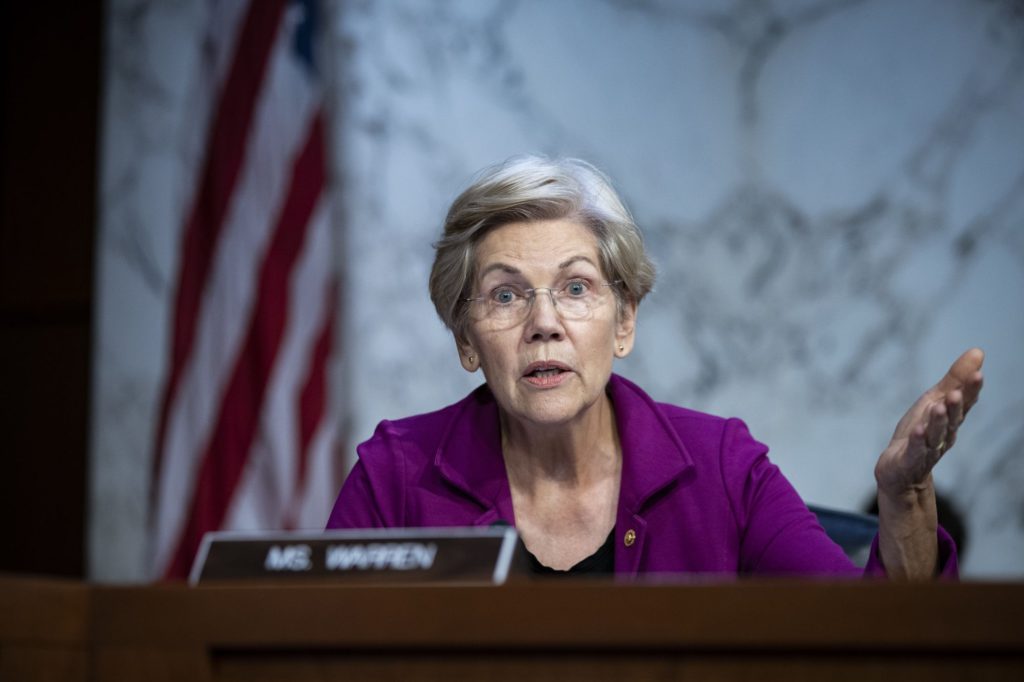
In a letter to Senator Elizabeth Warren, who has criticized the department’s ties to the tech industry, the Commerce Department’s senior adviser for legislative affairs wrote that the agency complies with the laws and regulations preventing conflicts of interest among government officials, as well as the Biden administration’s ethics pledge. 

The response comes after months of scrutiny from progressive lawmakers and groups who say the Commerce Department’s personnel and policies demonstrate excessive ties to the largest technology companies. The clash with the left wing of the Democratic Party has focused particularly on staff brought in under Commerce Secretary Gina Raimondo. 

Warren responded to Raimondo on Thursday, saying the department’s response wasn’t enough to quell her concerns. The letter didn’t “provide information on how you would address the untoward influence of Big Tech on free-trade agreements,” the Massachusetts Democrat said in a follow-up letter.

Washington Democratic Representative Pramila Jayapal, the head of the House progressive caucus, also signed on to the letter.

The Commerce Department said in a statement that President Joe Biden and Raimondo share the same views on paring back the power of the largest tech companies and that all of the department’s political appointees were approved by the White House. 

A report earlier this year from the government ethics group Revolving Door Project found that the department has a number of former tech company employees in key positions overseeing tech policy issues. Raimondo’s deputy chief of staff, Luis Jimenez, was a member of the government affairs team at Google for four years, and her deputy White House liaison, Calynn Jenkins, worked on Amazon’s public policy team.  

The letter from the Commerce Department also noted that Raimondo is committed to putting “families and workers” at the center of its economic policies, while also promoting “innovation” by the tech industry. 

Warren has pummeled Raimondo’s office in recent months as the Commerce Secretary helps to lead conversations within the US-EU Trade and Technology Council as well as the Indo-Pacific Economic Framework, two trade negotiations that would heavily impact the tech industry. Under previous administrations, trade policies have enshrined special rights for the largest tech companies, making it more difficult for countries to regulate them. 

Warren urged Raimondo to ignore the tech industry’s policy suggestions, saying they would “obstruct regulators’ efforts to protect the digital rights of workers, consumers, and small businesses.”

The Commerce Department oversees key trade issues for US business and officials traditionally maintain close ties to corporations.   

(Updates with statement from Commerce Department in sixth paragraph)

More stories like this are available on bloomberg.com

©2022 Bloomberg L.P.

Nancy Pelosi Urges FCC to Scrutinize $5.4 Billion Takeover of Broadcaster Tegna

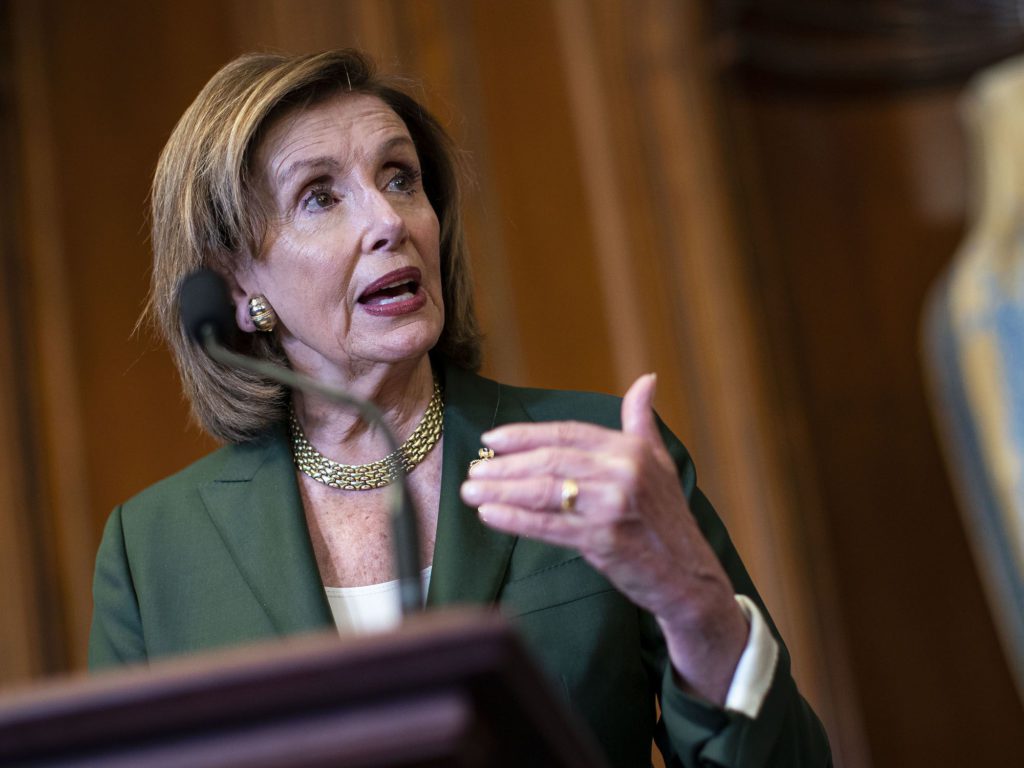
(Bloomberg) — House Speaker Nancy Pelosi urged regulators to closely scrutinize Standard General LP’s proposed purchase of broadcaster Tegna Inc., citing concerns the transaction could result in less local news, journalism job cuts and higher prices for consumers.

“This transaction deserves your full and complete attention,” Pelosi said in a letter Thursday to Federal Communications Commission Chairwoman Jessica Rosenworcel, who is leading the agency’s review of the $5.4 billion deal. Representative Frank Pallone, chairman of the House Energy and Commerce Committee, also signed the letter.

The deal needs approval from the FCC, which is in a two-to-two partisan split as a nominee who would give Democrats a majority awaits Senate confirmation. Rosenworcel, a Democrat, was selected by President Joe Biden, whose administration has criticized mergers that lead to “excessive concentration.”

Standard General, a private equity firm, agreed to pay $24 a share in cash for Tegna in February. Shares of Tegna dropped as much as 3.7% on Thursday, to $20.28 in New York. 

Opponents of the Tegna deal have told the FCC the transaction could raise prices for cable-TV distributors and lead to substantial job cuts. Standard General has said it would enhance news coverage, and that a competitive market would keep prices in check. Tegna owns 64 television stations in cities including Dallas, New Orleans, Cleveland and Washington.

Democrats Pelosi and Pallone asked the FCC “to fully examine the concerns raised by public comments — and shared by many of our colleagues in Congress.”

The FCC is reviewing the letter, said Will Wiquist, a commission spokesperson. Last month, the commission told Standard General to produce more documents about the deal.

“It’s hard to see the FCC approving this deal, given the evidence against it and given that key members of Congress have voiced their concern,” Yosef Getachew, Media & Democracy program director at the advocacy group Common Cause, said in an interview. Common Cause has asked the FCC to deny the merger.

Pelosi’s letter increases odds of the FCC requiring conditions that carry financial impact, Blair Levin, an analyst for New Street Research, said in a note.

In an emailed statement, a Standard General spokesperson said the firm was “disappointed” to see critics “enlist the involvement of Speaker Pelosi and Congressman Pallone by misleading them with the same false statements they have been making to the FCC.”

Standard General said in the statement that it wouldn’t supplant local news with broadcasts produced in Washington, and isn’t planning to cut jobs at Tegna stations.

“The time has come to approve the transaction,” the company said.

(Updates with comments from agency, analyst, opponents and company starting in seventh paragraph.)

More stories like this are available on bloomberg.com

©2022 Bloomberg L.P.

Bitcoin Miner Marathon Reveals $80 Million Exposure to Bankrupt Firm

(Bloomberg) — Top Bitcoin mining firm Marathon Digital Holdings Inc. disclosed it has over $80 million of exposure in the bankrupt data center firm Compute North Holdings Inc. 

The total includes investments comprised of $10 million in convertible preferred stock of Compute North and $21.3 million related to an unsecured senior promissory note with the firm, according to a monthly report released by Marathon on Thursday. The miner has also paid approximately $50 million in operating deposits to Compute North entities for its hosting services.

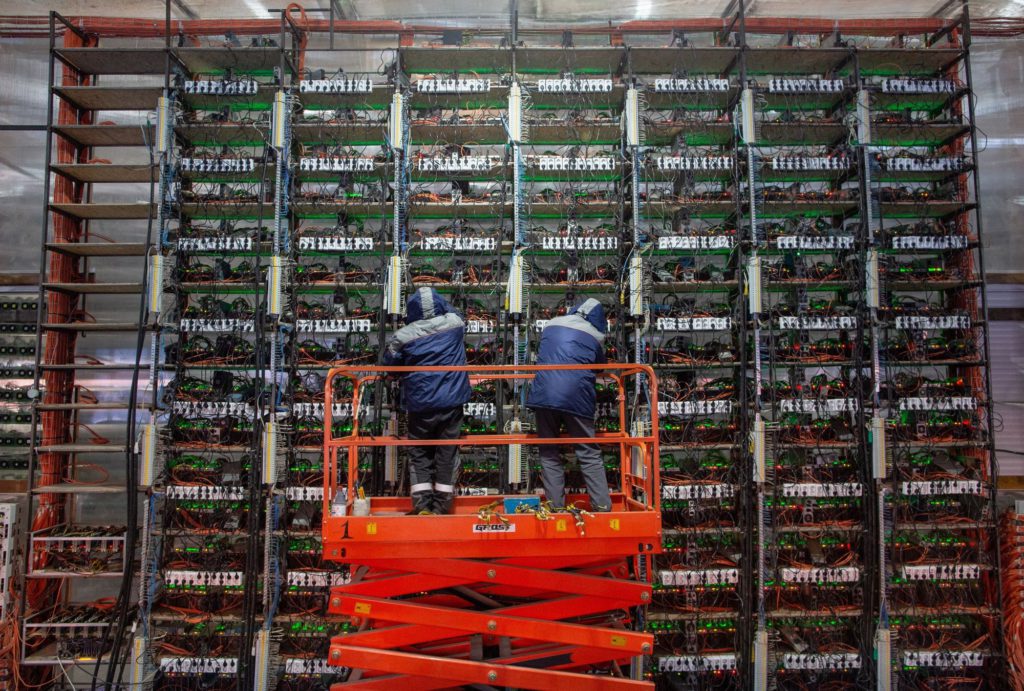
More than 68,000 Bitcoin mining machines from Marathon were being installed and hosted by Compute North in its wind-powered Texas facility, according to the miner’s latest quarterly report. However, that facility faced delays for several months due to pending regulatory approvals and about 40,000 installed machines were waiting to be energized, the report said.

As a Bitcoin miner hosting company, Compute North helps miners connect their rigs to the power grid and houses them in data centers with hundreds of megawatts of hosting capacity. Compute North is one of the world’s largest crypto-mining infrastructure providers with facilities across the US, including Texas, Nebraska and South Dakota. 

Compute North filed for Chapter 11 bankruptcy on Sept. 22 and is among the first major bankruptcies in the crypto-mining industry amid lower Bitcoin prices, soaring energy costs and fierce competition. 

There’s only a limited number of newly minted tokens to be mined so companies use powerful computers to be the first to finish validating a certain amount of transaction data encrypted by the Bitcoin network.

Marathon takes an “asset-light” approach to expand its operations, meaning the miner relies on third-party data center companies like Compute North to host their rigs so it doesn’t have to make hefty investments in building up infrastructure. That is opposed to vertically integrated miners who construct sites themselves or even have their own power plants. 

“While we expect operations to continue as originally anticipated, our asset light model provides us with the optionality to relocate our miners to other locations, should the need arise.” Marathon said in the monthly report. 

More stories like this are available on bloomberg.com

©2022 Bloomberg L.P.

Stocks Push Away From Lows in Run-Up to Jobs Data: Markets Wrap

(Bloomberg) — Stocks came off session lows, with traders not very keen on making big moves ahead of the all-important US jobs report as they digested remarks from Federal Reserve officials who sounded unequivocally committed to their goal of crushing inflation with rate hikes.

The S&P 500 trimmed most of a slide that approached 1% amid gains in energy and tech shares. Treasury 10-year yields moved away from Thursday’s highs while still remaining close to 3.8%. The dollar rose.

So far, the labor market has remained robust even after the Fed began to aggressively increase interest rates and economic activity slowed. Friday’s monthly jobs report is expected to show that employers added 250,000 payrolls last month, based on the median estimate from economists. The unemployment rate is seen holding at 3.7%, which is just above a five-decade low.

The US central bank has not finished the task of bringing inflation down and is “quite a ways away” from pausing its campaign of interest-rate increases, Minneapolis Fed President Neel Kashkari said. His Cleveland counterpart Loretta Mester noted the US is in an unacceptably high inflation environment.

“There’s going to still be a lot of volatility to this market,” said Rich Steinberg, chief market strategist at The Colony Group. “I don’t think the Fed is going to be ready to pivot so quickly. We’re going to be in this kind of tug of war between good news, bad news.”

Read: Yellen Flags Need to Mind ‘Global Repercussions’ of Tightening

Investors counting on a Fed pivot any time soon are bound to get burned again, according to PGIM Fixed Income.

“We’ve seen this movie time and time again,” said Greg Peters, co-chief investment officer at the Newark-based firm, in an interview. “The market gets hyped up on different narratives between inflation releases. I’ve been surprised by it, and we’ve been using it as an opportunity to sell into.”

With the economy likely to slow down next year, tech stocks and US equities are looking more attractive, according to Citigroup Inc. strategists led by Robert Buckland. They expect 18% returns for global stocks by the end of 2023 but warn “it will likely be a volatile ride.”

Mortgage rates in the US fell, shifting direction after a six-week streak of gains that sent borrowing costs to a 15-year high. Even with the latest decline, mortgage costs have more than doubled since starting the year around 3% — a steep climb that has slammed the brakes on the pandemic housing rally, highlighting one of the Fed’s goals in its effort to cool inflation.

Key events this week:

  • US unemployment, wholesale inventories, nonfarm payrolls, Friday
  • BOE Deputy Governor Dave Ramsden speaks at event, Friday
  • Fed’s John Williams speaks at event, Friday

Some of the main moves in markets:

Stocks

  • The S&P 500 fell 0.2% as of 11:52 a.m. New York time
  • The Nasdaq 100 rose 0.1%
  • The Dow Jones Industrial Average fell 0.3%
  • The Stoxx Europe 600 fell 0.6%
  • The MSCI World index fell 0.3%

Currencies

  • The Bloomberg Dollar Spot Index rose 0.6%
  • The euro fell 0.6% to $0.9820
  • The British pound fell 1.3% to $1.1181
  • The Japanese yen fell 0.2% to 144.86 per dollar

Cryptocurrencies

  • Bitcoin rose 0.5% to $20,096.48
  • Ether rose 1.7% to $1,367.77

Bonds

  • The yield on 10-year Treasuries advanced six basis points to 3.81%
  • Germany’s 10-year yield advanced six basis points to 2.09%
  • Britain’s 10-year yield advanced 14 basis points to 4.17%

Commodities

  • West Texas Intermediate crude rose 0.6% to $88.28 a barrel
  • Gold futures were little changed

More stories like this are available on bloomberg.com

©2022 Bloomberg L.P.

Microsoft Rivals Quizzed During EU Review of Activision Deal

(Bloomberg) — European Union regulators have asked for more information on Microsoft Corp.’s bid for computer games developer Activision Blizzard Inc. from rivals and market players as it takes a closer look at the $69 billion deal.

The European Commission sent out different questionnaires to video games developers, publishers, distributors, competing operating systems and providers of cloud services, according to a person familiar with the process. The planned takeover was formally notified to the EU last week, with a Nov. 8 deadline on whether it will refer the deal for an in depth probe. 

Scrutiny of the transaction has already intensified with the UK’s Competition and Markets Authority deciding last month to open an extended review after it initially found that the deal could lead to “a substantial lessening of competition” in the gaming console, multi game subscription and cloud markets. 

The questions sent by the commission — a normal part of deal scrutiny — focus on markets, their main rivals, the effects the deal could have on the behavior of gamers and prices, and on Microsoft’s position more generally, according to a document seen by Bloomberg. 

The combination with Activision — which owns some popular franchises including Call of Duty, World of Warcraft and Guitar Hero — will make Microsoft the world’s third-largest gaming company and boost the Xbox maker’s roster of titles for its Game Pass subscribers.

Microsoft said that the EU review “is progressing in line with the expected regulatory schedule and process” and that the company is “confident that the acquisition will close in fiscal year 2023.”

The EU commission declined to comment.

The Federal Trade Commission is also examining the deal, focusing on the combination of the company’s gaming portfolio with Microsoft’s consoles and hardware systems. 

(Updates with EU response in penultimate paragraph)

More stories like this are available on bloomberg.com

©2022 Bloomberg L.P.

Google Unveils New Phones and Watch That Undercut Apple on Price

(Bloomberg) — Alphabet Inc.’s Google on Thursday said its new Pixel phones will deliver improved voice and camera features while bringing back facial recognition for unlocking the device as it seeks to better compete with Apple Inc. and Samsung Electronics Co.

The company’s Pixel 7 and 7 Pro devices offer more affordable prices than the dominant duo of the mobile market, coming in at $599 and $899, respectively, and introduce the second generation of Google’s in-house Tensor chip. The 6.7-inch Pro version has an additional zoom camera, better display and more memory than the 6.3-inch Pixel 7.

Google’s Pixel phones every year serve as the showcase for the company’s latest Android software and artificial intelligence-based services, such as the Google Assistant. They demonstrate how Google hopes device-making partners will best use its operating system. Google continues developing its own hardware, which has only ever sold in small numbers, in part as insurance against missteps by Samsung, the only credible Apple rival in the US.

“Google cannot afford to bet its future on Samsung not just for the US market but for the higher-end market across the board,” said Atlanta-based mobile industry analyst Carolina Milanesi. “It also needs a clean experience to show off its AI.”

Google AI shows up in the upgraded language-processing capabilities of its latest software. The Recorder app for voice memos can now automatically label different speakers in transcriptions, and transcriptions are also being added to audio messages in the new Pixels’ messaging app.

The Pixel lineup had only 2% of the North American market in the second quarter, whereas Apple’s iPhone commanded 52%, according to Canalys data. Still, Google said it’s now the fastest-growing smartphone developer, in comments ahead of its launch event in New York Thursday.

Also introduced at the event was the $349 Pixel Watch. It’s the first smartwatch from the company to bear the Pixel name and undercuts the latest-generation Apple Watch, which starts at $399. Google will equip its smartwatch with an on-board app store, Google Wallet for mobile payments and Fitbit health sensors and workout services, the company said. There will be models with and without cellular connectivity and Google promises up to 24 hours of battery life for the round-faced device. It will be available Oct. 13, alongside the new phones.

What Bloomberg Intelligence Says

Google could aggressively diversify its supply chain as it has expanded into various categories including wearables, security systems and smart speakers. Hardware makes up about $10 billion, or 4% of Alphabet’s sales, and could grow much faster if the company expands into AR/VR and robots.

— Mandeep Singh and Ashley Kim, BI analysts

Click here for the full research

Among Google’s other smartphone upgrades this year is a promised 72-hour battery life on low-power mode, up from last year’s 48 hours. The higher-tier Pixel 7 Pro has three rear cameras, including a 50-megapixel wide-angle lens with the ability to take macro shots and a 48-megapixel telephoto lens with 5X optical zoom. It can record 4K video at 60 frames per second. The standard model benefits from the same macro camera but misses out on the zoom; it also has a slower 90Hz screen rather than the 120Hz display of the Pro. 

Both phones see the return of face unlock, matching most of the high-end handsets on the market, after that biometric authentication option was removed from the Pixel line with the fifth-generation model in 2020. Google also matches a feature introduced with much fanfare on the iPhone 13 last year: a Cinematic Blur mode that can synthesize depth of field and background blur in videos.

Questions about the long-term viability of the Pixel line have circulated for years and may intensify now that all tech companies, Google included, are looking at ways to control costs and streamline operations. Success in the smartphone business requires significant upfront and marketing investment.

“If Google does not become serious about the hardware business, I’m afraid this product will be another lost opportunity to expand its phone business in critical markets, such as North America and Europe,” IDC’s Francisco Jeronimo said ahead of the launch event.

Also at its Thursday event, Google teased details about its new Pixel Tablet, which was first announced at the company’s I/O developer conference in May. Like the Pixel 7 and 7 Pro, the tablet will run Google’s Tensor G2 chip, said Rose Yao, vice president of product management. It will be made from “100% recycled aluminum” and have a charging speaker dock that magnetically attaches to the back of the device. When the Pixel Tablet is docked, it will essentially act as a Nest Hub, allowing people to control their smart home with Google Assistant.

Google didn’t announce any pricing information or a specific release date, only that the tablet would arrive by 2023.

(Updates to add details on new tablet in final paragraph)

More stories like this are available on bloomberg.com

©2022 Bloomberg L.P.

Citi Ventures Makes First Crypto Seed Investment in Startup Xalts

(Bloomberg) — Citigroup Inc.’s venture capital investing group made its first digital asset seed investment in a Hong Kong-based digital-asset management firm. 

Citi Ventures co-led a $6 million initial capital financing round for xalts, which was co-founded by a former trader at HSBC Holdings and a former executive at Meta Platforms Inc. Accel, the Palo Alto, California-based venture-capital firm that has funded technology companies that include Facebook and Spotify, was the other firm that co-led the funding round. Citi Ventures didn’t disclose the amount it invested. Polygon co-founder Sandeep Nailwal and other hedge fund managers were also investors.

Xalts is seeking to take advantage of what it said is increased institutional participation in the digital asset ecosystem even after this year’s plunge in the prices of cryptocurrencies. The firm aims to launch multiple fund products linked to digital assets, including mutual funds and ETFs listed on global exchanges. 

“The world has changed a lot, you know with the macro environments and obviously markets have been suffering as a result of that,” Luis Valdich, a managing director at Citi Ventures, said in an interview. “Obviously we are very prudent in terms of where to and how to deploy capital, but we’re absolutely active with lots of opportunities not only outside of digital assets, but also within the digital asset space, which we believe is here to stay.”

Ashutosh Goel, co-founder and chief investment officer of xalts, said in an interview that his firm is expanding to multiple locations including Dubai, Singapore and New Delhi. Former Meta Asia executive Supreet Kaur is the other co-founder. 

More stories like this are available on bloomberg.com

©2022 Bloomberg L.P.

DeFi Protocol MakerDAO Puts $500 Million in Treasuries, Bonds

(Bloomberg) — One of the original decentralized-finance protocols that was set up to challenge the legacy banking system is moving $500 million into short-term US Treasuries and corporate bonds. 

MakerDAO, the so-called decentralized autonomous organization that supports the crypto stablecoin DAI, is shifting $500 million worth of the token to the fixed-income obligations, which have traditionally been havens for conventional investors during times of turmoil.   

The move aims to diversify MakerDAO’s balance sheet, limit exposure to any one asset and expand revenue, according to a statement issued by the DAO on Thursday. The allocation of DAI will promote the usability of digital assets in the traditional space, extending DAI’s influence beyond crypto, the statement said. 

The community behind MakerDAO, which was launched in 2015, agreed to put 80% of the fund in short-term Treasuries and 20% to investment-grade corporate bonds, after an initial vote was put in place in late June. An initial deployment of $1 million has now been completed by DeFi asset advisor Monetalis.

DeFi, which took off in the last bull market, has faced challenges this year as the prices of tokens that underpin the system crashed and the sector continued to be plagued by hacks. Many projects have sought to develop strategies to survive. Lido, another DeFi startup, recently sold its native tokens to venture capital firm Dragonfly in order to cover two years worth of expenses.  

MakerDAO’s shift comes just a few months after another decentralized stablecoin, TerraUSD, collapsed dramatically. Unlike TerraUSD, which used an algorithmic model to keep its peg to the dollars, MakerDAO’s DAI stablecoin is issued on an over-collateralized basis. Previous discussions argued that an investment in Treasuries and short-term bonds wouldn’t affect DAI’s peg to the dollar. 

More stories like this are available on bloomberg.com

©2022 Bloomberg L.P.

Celsius Bosses Withdrew $30 Million in Crypto Before Bankruptcy

(Bloomberg) — Top executives at bankrupt crypto lender Celsius Network LLC withdrew at least $30 million of cryptocurrencies in the month before suspending customer withdrawals from the platform, court documents show.

Now-former Chief Executive Officer Alex Mashinsky, co-founder Daniel Leon and Chief Technology Officer Nuke Goldstein made a series of withdrawals in May totaling more than $30 million, according to bankruptcy court documents submitted by Celsius lawyers in New York late Wednesday. Transactions were denominated in Bitcoin, Ether, USDC, Celsius’s own CEL token and “wrapped” Bitcoin.

Mashinsky withdrew about $10 million in cryptocurrency over the course of May, the filing shows. Leon withdrew about $7 million and Goldstein withdrew around $13 million. The calculations include withdrawals by entities and people related to the executives, as designated by Celsius advisers. A Celsius representative didn’t immediately respond to an email seeking comment.

Read more: Bankrupt Crypto Firm Celsius Sets Dates for Auction of Assets

Celsius, once one of the industry’s most prominent lenders, suspended customer withdrawals in June and filed for bankruptcy protection the following month after making risky bets before the broader crypto market soured. The bankruptcy judge presiding over the case recently appointed an examiner to explore allegations of misconduct against the company and its executives.

Mashinsky stepped down from his position as CEO last month, followed by Leon whose resignation from the firm was confirmed by Celsius on Tuesday.

CoinDesk earlier reported on the withdrawals.

More stories like this are available on bloomberg.com

©2022 Bloomberg L.P.

Podcasts Spur Listeners to Swamp Health Workers With Angry Calls

(Bloomberg) — In January, the staff of Mercy Hospital in Coon Rapids, Minnesota, was flooded with tens of thousands of angry phone calls, all with the same concern. Calling in from as far away as Australia, the people were worried that an unvaccinated Covid-19 patient was getting a lower level of care, and wanted to ensure he would be transferred elsewhere. 

Mercy eventually transferred the patient to a Texas hospital. But in the meantime, administrators increased security, and the staff had to set up a new phone system so that unrelated inquiries about patient care could still get through, according to a person familiar with the matter. Tensions grew among staff, who feared that they were going to continue being targeted by furious callers no matter what they did, the person said.

The source of the outrage was a popular podcast called The Stew Peters Show, which, after hosting the patient’s wife, asked its listeners to call the hospital and apply “social pressure,” alleging that Mercy was treating the unvaccinated patient unfairly while pushing back against the idea that a Covid-19 vaccine could have helped with severe illness from the virus. At the time, Mercy was dealing with one of the pandemic’s worst surges of Covid-19 in the state. All beds at Mercy’s intensive care unit were in use back then, according to data gathered by USA Today’s network of local newspapers.

It’s one of several podcasts, distributed through major platforms such as Apple Inc. and Alphabet Inc.’s Google, which have encouraged listeners to direct anger at health-care workers, according to new research from the Tech Transparency Project. In an analysis published Thursday, the nonprofit group also documented the spread of monkeypox conspiracies and a large volume of Covid-19 misinformation through audio content.

The research, based on a collection of 401 episodes TTP gathered that aired between February 2020 and June 2022, underscores the extent to which misinformation and provocation can proliferate on podcasts, which are distributed to millions using platforms operated by tech giants — often with little content oversight. Apple’s podcast guidelines state that the company prohibits “content that may lead to harmful or dangerous outcomes,” while Google says it won’t promote podcasts that include “harassing” and “hateful” content, or podcasts that depict “deceptive practices.” But the companies continue to distribute such podcasts, even when competing platforms have removed them.

Apple distributing such podcasts “shows how the company’s lofty talk about corporate responsibility often fails to translate into concrete actions in how it runs its business,” the Tech Transparency Project said in its report. “In the case of podcasts, Apple is allowing a huge body of misinformation about the coronavirus to reach its listeners, endangering the public at large.”

Four episodes that encouraged directing anger at healthcare workers, despite being removed from Spotify were still distributed through Apple Podcasts and Google Podcasts, according to TTP. The Stew Peters Show, a program hosted through a service called Podbean and that has ranked as high as No. 48 in Apple’s most popular US political podcasts in September, according to data from Chartable, was behind three of the four documented incidents. In one case, the wife of the unvaccinated patient at Mercy Hospital joined Peters on a January episode. She played the recording of a call in which doctors informed her of their decision to remove life support. At the time, she pushed back against the idea that a Covid-19 vaccine could have helped her husband. 

“These people are cold-hearted,” Peters said in response. “Cold-blooded killers are what they are.”

He then encouraged listeners to call up the hospital. When the episode was posted on Apple Podcasts, the description included individual workers’ names and phone numbers, which TTP says violates Apple’s rule to prohibit content that is “likely to humiliate, intimidate, harass or harm individuals or groups.”Apple Podcasts declined to comment. A Google spokesperson said its podcast product crawls and indexes audio content hosted on third-party servers and the open web. “Like Search, our systems are designed to surface high quality results and we have established policies against recommending content containing harmful misinformation,” they added. The episodes flagged by Bloomberg are not recommended by Google Podcasts.

Allina Health, which oversees Mercy Hospital, said in a statement that privacy laws prohibit it from commenting on the care provided to specific patients. But a spokesperson added that the company “has great confidence in the exceptional care provided to our patients, which is administered according to evidence-based practices by our talented and compassionate medical teams.”

In another episode that same month, Peters called medical staff a “coronavirus death cult” and encouraged listeners to “flood” a Virginia hospital’s phone lines. During a third episode in January, he called a pediatrician a “murderous tyrant” while simultaneously promoting an unproven “Z-Stack Protocol” from Vladimir Zelenko to protect against Covid-19 vaccines that become “self-spreading bioweapons threatening the purebloods.” TTP said episodes of The Stew Peters Show are routinely removed as newer ones are added on Apple and Google Podcasts, where the show’s archive only goes back to May. The group included text descriptions and screenshots of the episodes on Apple Podcasts in its report. Bloomberg reporters verified the quotes by listening to the episodes available on Peters’s show archive on his website.

“Our efforts have always been about saving lives,” Peters said in an interview. The show has been mischaracterized, he added, and “has never harassed anybody. We want to hold to account these death panels.” He later added, in an email: “I categorically reject that I, Stew Peters, or anyone at the Stew Peters Network has harassed ANYONE, at ANY TIME.”

A separate Podbean-hosted podcast, SGT Report’s The Propaganda Antidote, has been banned by Twitter and YouTube but remains on Apple and Google Podcasts. Since January, according to the TTP’s report, show host Sean Turnbull mentioned one pediatrician 13 times on his show who he says concealed the Covid-19 vaccine’s effects on pregnancies. On a livestream, he also showed a picture of her face along with information on her workplace, including its address and phone numbers. Bloomberg reporters watched a copy of the livestream and verified TTP’s findings. A Podbean spokeswoman said she wasn’t aware of any reports made about SGT Report’s or Stew Peters’ show. 

TTP also collected a number of examples in which several popular podcasts spread unverified origin stories about the monkeypox virus. In a May episode of The Stew Peters Show, Peters stated that “globalists were plotting the course of a monkeypox outcome at this exact time a year ago.” In a June episode of The Highwire with Del Bigtree, the anti-vaccine activist Del Bigtree pushed the notion that monkeypox is a tool by governments to oppress their people. Bigtree’s show is hosted on Spreaker, an IHeartMedia-owned platform. There is no evidence of a global conspiracy to plan the monkeypox pandemic.

Turnbull and Bigtree did not return requests for comment.

Francesco Baschieri, head of Spreaker parent company Voxnest, said because of the large number of shows that use Spreaker as their hosting tool, including Bigtree’s, the team, “obviously cannot preemptively check each and every new episode for all of these violations. But we do react strongly when we become aware of them.” He said the team is looking into whether Bigtree’s monkeypox statements violate its terms, which don’t allow podcasters to publish content that harms others.

More stories like this are available on bloomberg.com

©2022 Bloomberg L.P.

Close Bitnami banner
Bitnami