

Bloomberg

Electronic-Trading Startup OneChronos Hires Trumid Executive to Lead New Platform

(Bloomberg) — Vlad Khandros, an executive at electronic bond-trading platform Trumid, has left to lead OneChronos, which lets institutional investors bid for stocks in an automated auction.

Khandros, Trumid’s former head of corporate development, will become chief executive officer of OneChronos Capital Markets, a subsidiary of OCX Group Inc., according to people familiar with the move who asked to not be named discussing a private matter. He starts next week based in New York and will report to Kelly Littlepage, co-founder and CEO of OneChronos.

The firm’s technology, which went live earlier this year, enables potential buyers to dictate what they think the value of a portfolio or large quantity of stocks is at a given time, known as an “expressive” bid. The system pairs bids from the buy and sell sides through periodic auctions and if values match from both parties, the trade happens.

Having held both advisory and investment roles, Khandros has been central to driving Wall Street’s adoption of electronic trading across asset classes. Prior to Trumid he spent nearly a decade at UBS Group AG where he focused on sell-side equities market structure and trading strategists. It was during that time Khandros was introduced to the OneChronos concept and team, he said in an interview.

The firm took years to get off the ground, launching in beta phases and fully this June with a dozen broker-dealers signed on. That’s grown to 20 with another dozen broker-dealers expected to connect in the next two quarters, according to co-founder Richard Suth. The CEO hire expands the team of 14, 11 of whom are focused on engineering.

“We relied on Vlad’s views and advice during his time at UBS as we developed the product,” Suth said. “Today, our early execution metrics look strong.”

The field of alternative-trading systems is crowded with new entrants fighting for orders. Among the early adopters of OneChronos is Bank of Montreal’s electronic-trading group and Jefferies Financial Group Inc., Bloomberg reported earlier.

“While US equities is a significant market, and I will help further drive that part of the business, I’m excited to apply the application to other asset classes, other regions and other business lines,” Khandros said.

Read More: New Trading Platform OneChronos Brings AI Auctions to Stocks

More stories like this are available on bloomberg.com

©2022 Bloomberg L.P.

This Cardboard-Clad SUV Would Be Better for Your Wallet and the Environment

(Bloomberg) —

Do the electric trucks and SUVs of the future really need to be as big and bulletproof as they’ve been in the combustion era?

Citroën says non — there’s another way.

Last week, the Stellantis-owned French brand unveiled its Oli concept, a more efficient, affordable and sustainable battery-powered sport utility vehicle than some of the bulky beasts others have unveiled or already put on the road.

The Oli features recyclable parts that could be replaced or upgraded. A driver’s smartphone functions as the source of in-car entertainment. The partially 3D-printed seats use fewer components. The roof, flat bonnet and rear panels are made from fiberglass-reinforced cardboard, shedding about 50% of the weight of a steel construction.

The SUV tips the scale at around 1 ton, roughly half what Tesla’s slightly longer Model Y weighs. With fewer pounds to move and a top speed limited to just over 68 miles per hour, the Oli can afford to pack a smaller, cheaper battery and still drive some 400 kilometers (249 miles) on a charge.

“Heavy cars are bad for the planet but they are also bad for your wallet,” said Laurence Hansen, Citroën’s director of strategy and product. The Oli is meant to “live longer, to be upgraded, to be refurbished, to be customized for the years to come.”

This idea of a downsized SUV is a very European concept being presented by a brand without much of a global presence, including a notable absence from the US. Citroën’s parent also owns Jeep, Ram and Dodge — brands that are unlikely to shrink or slim down their models anytime soon.

Still, the Oli feels like it’s arrived at the right time. Automakers the world over are under pressure intensified by climate crises, raw-materials shortages and inflationary headwinds, with consumers increasingly demanding that the products they buy become more sustainable. In Europe especially, large, fossil-fueled SUVs have come under greater scrutiny for their emissions and the space they take up in urban areas. Last month, a climate activist group claimed it deflated the tires of more than 600 SUVs in one night in countries including the UK, France and Germany. Its goal is to immobilize 10,000 vehicles by Christmas.

Carmakers build concept cars like the Oli to showcase the latest in technology and design, and to test how car-show visitors react to those new ideas. Not every one of these concepts makes sense or enters series production, and sometimes they’re simply PR stunts. Notable failures include the leopard skin-upholstered 1950 Cadillac Debutante and the 1958 Ford Nucleon, which was meant to be powered by a small nuclear reactor.

But there also are concepts that foreshadow key technology breakthroughs, like the 1938 Buick Y-Job that showed off electric windows, modern-day thick tires, and a vertical waterfall grille design still used today.

Concepts can even go so far as to convince carmakers to alter their lineups. Volkswagen unveiled a series of electric iterations of its hippy-era microbus over the last two decades that initially were meant to just be design exercises. Feedback was so positive that enthusiastic designers and engineers were told to discuss options with the bean counters to develop a mass-production version that went on sale earlier this year.

Citroën was behind some iconic designs during the 20th century, including the low-cost 2CV that ended up in the hands of almost 4 million customers, and the more luxurious DS that featured headlamps that turned 80 degrees in line with steering. More recently, its electric AMI urban microcar made it from concept to series production in less than a year.

While Citroën isn’t planning to mass-produce the Oli, it’ll be “cherry-picking”’ ideas from it for future models, Hansen said. Drivers who aren’t so interested in the 9,000-pound GMC Hummer EV or stainless steel exoskeleton-clad Tesla Cybertruck, stay tuned.

More stories like this are available on bloomberg.com

©2022 Bloomberg L.P.
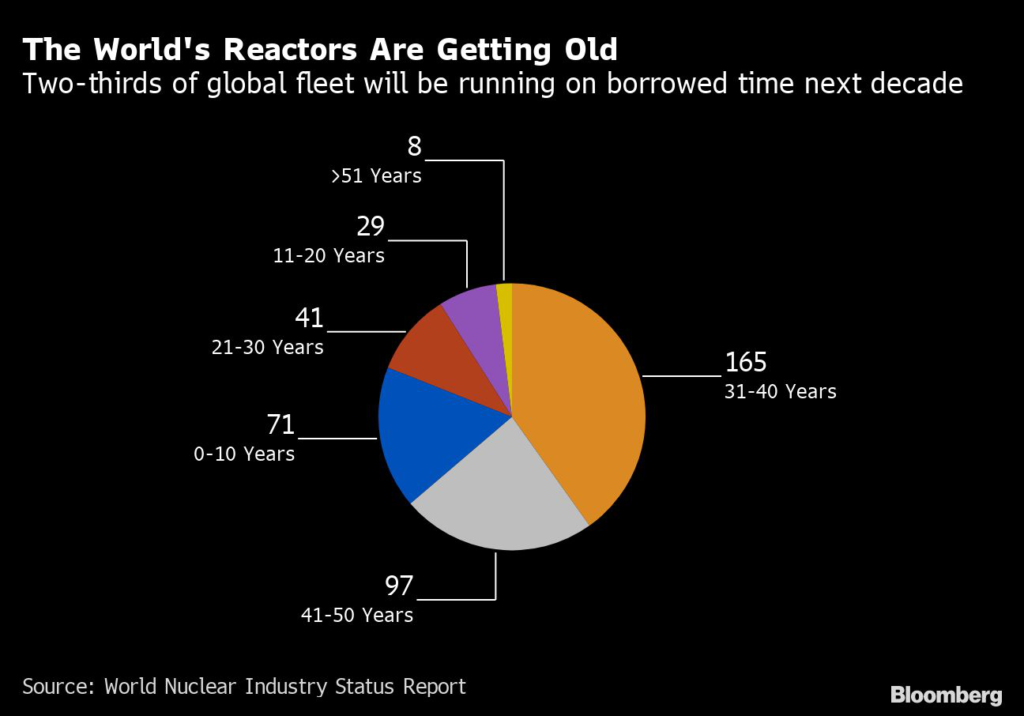
Putin’s War Exposes Risks to Deploying Small Nuclear Reactors

(Bloomberg) — The Russian army’s seizure of the biggest nuclear power plant in Europe isn’t just exposing Ukrainians to the risk of an atomic accident but may also undermine plans to install new miniature reactors in far-flung places. 

Months of shelling and rocket attacks against the Zaporizhzhia Nuclear Power Plant are revealing vulnerabilities that power utilities haven’t historically been forced to consider. Engineers typically design reactors to withstand storms, earthquakes or plane crashes but until now haven’t factored war into their calculations. 

“No nuclear power plant in the world has been designed to operate under wartime conditions,” said Mycle Schneider, the lead author of the World Nuclear Industry Status Report published Wednesday. “Nuclear power plants are immediately vulnerable.”

International Atomic Energy Agency monitors have reported dozens of attacks at Zaporizhzhia, where strikes sporadically cut power and water supplies, forcing a plant that would normally generate a fifth of Ukraine’s electricity into shutdown. The station’s resilience is being closely monitored by a nuclear industry that’s working on a new generation of small-modular reactors, or SMRs, to replace the world’s aging fleet of traditional plants. 

SMR manufacturers, including NuScale Power Corp. and the Bill Gates-backed TerraPower LLC, say their machines will be cheap and quick to deploy. There are about 80 unique mini-reactor designs in development around the world, with some vendors promoting SMRs as solutions for remote, frontier towns in need of power. 

“In theory, we’re talking about thousands of units that would need to be installed in order to have an impact on electricity markets or climate change,” Schneider said in an interview. “But if you multiply units, you’re also multiplying potential targets.”

The 2022 edition of the status report dedicates a chapter to the new threats exposed by Russia’s war on Ukraine. The annual publication is written by top nuclear researchers from around the world and prepared with funding by the the US MacArthur Foundation and Germany’s Heinrich Boell Stiftung.

“The higher the nuclear share, the more difficult to shut down all reactors as a precautionary measure in case of war,” reads the 385-page report. “Physics do not change under wartime conditions. If a core meltdown is triggered by the impact of weapons on the reactor building, more radioactivity is likely to escape because a damaged reactor enclosure cannot fulfill its intended containment purpose.”

Regulators attending last month’s IAEA general conference similarly warned that nuclear vendors need to reconsider safety engineering if plants are expected to withstand the threat of war. 

“Even if structures are extremely well designed, you cannot expect them to withstand a military-style attack,” said Aybars Gurpinar, a former IAEA director of nuclear safety. “They are not designed for this.”

While the US Department of Defense has awarded funds to BWX Technologies, X-Energy LLC and Westinghouse to explore the feasibility of tractor-trailer sized SMRs that are battle hardened and could be deployed in combat zones, most designers aren’t factoring in military risks. Forcing engineers to reconsider safety issues caused by war could further tax the economics of the technology.

“Because SMRs have been and will be, like large reactors, subject to delays and cost overruns, there is no identifiable scenario under which they could become economical under these circumstances,” said Schneider. He predicts nuclear power will continue to grow among Asian nations while slowly losing ground to solar and wind energy in Europe and the US.


(Updates final chart to specify WNISR-defined construction as of July 2022)

More stories like this are available on bloomberg.com

©2022 Bloomberg L.P.

M&S Starts Digital Payment Tool to Help Customers Buy on Credit

(Bloomberg) —

Marks & Spencer Group Plc is starting to offer a digital credit account allowing customers to spend as much as £500 interest-free as shoppers battling the higher cost of living seek to postpone their payments.

Sparks Pay is available to customers who have signed up to the M&S Sparks loyalty program and allows shoppers one-click purchases on the M&S website and app with deferred interest payments. Later, the annual interest rate is 23.9%.

Shoppers are increasingly buying on credit as the cost of living crisis pushes up the price of everything from food to fuel to electricity. The Bank of England noted last month that consumer credit-card borrowing grew by 13% in the year to August, the highest rate since 2005.

Budget grocery chain Iceland Foods has also started to offer interest-free loans to customers, allowing them to pay for their food in installments. The offering has received tens of thousands of applications. Buy-now-pay-later options from the likes of Klarna and Afterpay, which are unregulated, are increasingly being used to buy essentials.

For M&S, this is part of the retailer’s turnaround efforts as it seeks to boost online sales, streamline its store portfolio and cut costs. In 2020, M&S relaunched its Sparks loyalty scheme as a digital program, and since then the membership has more than doubled to almost 16 million customers. M&S shoppers are buying more and more online with the website making up 34% of clothing and home sales.

Sparks Pay is a regulated account that will offer up to 76 days interest free on the first order and then the grace period will be shortened to as many as 45 days for further purchases. M&S acts as the credit broker, while M&S Bank, a joint venture between HSBC Holdings Plc and M&S, is the lender. 

More stories like this are available on bloomberg.com

©2022 Bloomberg L.P.

US Futures Fall as Oil Stokes Inflation Debate: Markets Wrap

(Bloomberg) — US equity-index futures fell as the OPEC+ alliance’s plan to cut oil supply stoked inflation fears and as traders awaited labor-market data to gauge the risk of recession.

Futures on the S&P 500 and Nasdaq 100 each dropped 0.6%, while Europe’s Stoxx 600 erased an advance. US crude futures held on to weekly gains of about 11% after the oil cartel said it would cut daily output by 2 million barrels. Treasuries were steady, with the two-year rate hovering about the 4.15% level. In New York premarket session, Twitter Inc. traded 7% below Elon Musk’s offer price.

While higher energy prices could stoke inflation, some investors speculated they’ll reduce demand and hit company earnings — potentially encouraging the Federal Reserve to slow monetary tightening. While such expectations fueled equity gains this week, several money managers are cautioning that the economic path to a less aggressive Fed could be painful.

“If you want to preempt the Fed, you are playing a very high-stakes game,” said Kenneth Broux, a strategist at Societe Generale SA. “The Fed do not want financial conditions to loosen; they don’t want equity markets to take off and get too comfortable.”

West Texas Intermediate futures traded near $88 a barrel, while Brent crude held near $93.30. The output-cut plan drew a warning from the White House about negative effects on the global economy. Goldman Sachs Group Inc. increased its fourth-quarter price target for Brent to $110 a barrel. 

In Europe, the Stoxx 600 drifted lower as losses for energy and insurance stocks offset advances in real estate and travel shares. Shell Plc tumbled 4.6% after the energy giant pointed to a weaker third-quarter performance. 

Investors are wary of placing large-scale equity bets as they await a report on US initial jobless claims later Thursday and the official nonfarm payrolls data Friday. A Bloomberg survey shows the US economy will have added 260,000 jobs last month; a higher-than-anticipated number may spook markets. 

Fed officials have been at pains to stress that market anticipation of rate cuts next year is misplaced, a point San Francisco Fed President Mary Daly reiterated in an interview on Bloomberg Television. The bank aims to keep policy tight to secure 2% inflation, she added.

The dollar swung between gains and losses Thursday. Britain’s pound slipped 0.4% and gilt yields rose after Fitch Ratings lowered its outlook on the nation to negative. 


Key events this week:

  • US initial jobless claims, Thursday
  • Fed’s Charles Evans, Lisa Cook, Loretta Mester speak at events, Thursday
  • US unemployment, wholesale inventories, nonfarm payrolls, Friday
  • BOE Deputy Governor Dave Ramsden speaks at event, Friday
  • Fed’s John Williams speaks at event, Friday

Will earnings disappoint and push equities to new lows? This week’s MLIV Pulse survey asks about corporate earnings. It’s brief and we don’t collect your name or any contact information. Please click here to share your views.

Some of the main moves in markets:

Stocks

  • Futures on the S&P 500 fell 0.6% as of 5:56 a.m. New York time
  • Futures on the Nasdaq 100 fell 0.6%
  • Futures on the Dow Jones Industrial Average fell 0.5%
  • The Stoxx Europe 600 fell 0.1%
  • The MSCI World index was little changed

Currencies

  • The Bloomberg Dollar Spot Index was little changed
  • The euro was little changed at $0.9891
  • The British pound fell 0.4% to $1.1282
  • The Japanese yen was little changed at 144.70 per dollar

Cryptocurrencies

  • Bitcoin rose 0.7% to $20,136.02
  • Ether rose 1% to $1,358.63

Bonds

  • The yield on 10-year Treasuries was little changed at 3.76%
  • Germany’s 10-year yield was little changed at 2.03%
  • Britain’s 10-year yield advanced seven basis points to 4.11%

Commodities

  • West Texas Intermediate crude was little changed
  • Gold futures rose 0.2% to $1,723.80 an ounce

More stories like this are available on bloomberg.com

©2022 Bloomberg L.P.

Animoca Charts Path from Gaming Studio to Crypto VC

  • Listen to Bloomberg Crypto on the iHeartRadio App
  • Listen to Bloomberg Crypto on Apple Podcasts
  • Listen to Bloomberg Crypto on Spotify  

(Bloomberg) — How do you go from video game studio to major crypto VC firm in the space of a few short years? That’s exactly the path that Animoca Brands has been on. Since its founding in 2014, Animoca has expanded well beyond making games to owning and operating a portfolio of investments and acquisitions that includes more than 300 finance, gaming and social media companies.

Yat Siu, Animoca’s co-founder, has become one of the most influential people in the space.  

Bloomberg reporter Zheping Huang  joins this episode to chart the path of Animoca and its founder from indie game studio to crypto conglomerate. 

Follow us on Twitter @crypto, and subscribe to the Bloomberg Crypto Newsletter at https://bloom.bg/cryptonewsletter

More stories like this are available on bloomberg.com

©2022 Bloomberg L.P.

IBM to Unveil $20 Billion Investment as Biden Visits N.Y. Campus

(Bloomberg) — IBM Corp. will announce plans to invest $20 billion over the next decade during a visit by President Joe Biden to the company’s campus in Poughkeepsie, New York.

The investments will go toward research and development and the manufacturing of semiconductors, mainframe technology, artificial intelligence and quantum computing in the Hudson Valley, according to a White House official. 

Biden on Thursday will meet with workers and tour the Poughkeepsie site. IBM builds mainframe computer systems at the campus, which also houses the company’s first Quantum Computation Center, one of the largest concentrations of quantum computers.

The trip is the latest by Biden to promote the Chips and Science Act, which provides $52 billion to bolster domestic semiconductor research and development. Biden signed the measure into law in August, part of an effort to reduce dependence on Asian suppliers of semiconductors like Taiwan and South Korea, whose homegrown companies are leading the market, and to ease supply-chain disruptions that raised prices for goods.

IBM has promoted key elements of Biden’s legislative agenda. IBM Chairman Arvind Krishna attended the August signing ceremony and the company lobbied lawmakers to pass a bipartisan infrastructure bill that includes funding to build out broadband networks. Krishna is to accompany Biden on Thursday’s tour.

Read more: Micron Plans to Invest Up to $100 Billion in NY Chip Factory

With less than five weeks until the November midterm elections, Biden has been stepping up his travel to tout legislative victories, including the semiconductor subsidies and the Inflation Reduction Act — the Democrats’ climate, tax and health-care package.

The president took a victory lap on the chips act during a visit to Ohio last month, attending the groundbreaking of an Intel Corp. semiconductor manufacturing facility outside Columbus. Biden said the act would bring semiconductor manufacturing that is crucial to national security back to the US and help curb inflation, which remains a political liability for Democrats.

The IBM announcement follows one on Tuesday from Micron Technology Inc., which said it plans to invest as much as $100 billion over the next 20 years to build a factory in upstate New York to boost domestic production of memory chips.

More stories like this are available on bloomberg.com

©2022 Bloomberg L.P.
Citi Strategists Favor Tech and US Stocks as Recession Looms

(Bloomberg) — With the global economy likely to slow down next year, tech stocks and US equities are looking more attractive, according to Citigroup Inc. strategists. 

Strategists led by Robert Buckland expect 18% returns for global stocks by the end of 2023 but warn “it will likely be a volatile ride.” Growth strategies will be back in play as investor focus shifts from higher rates headwinds to earnings resilience.

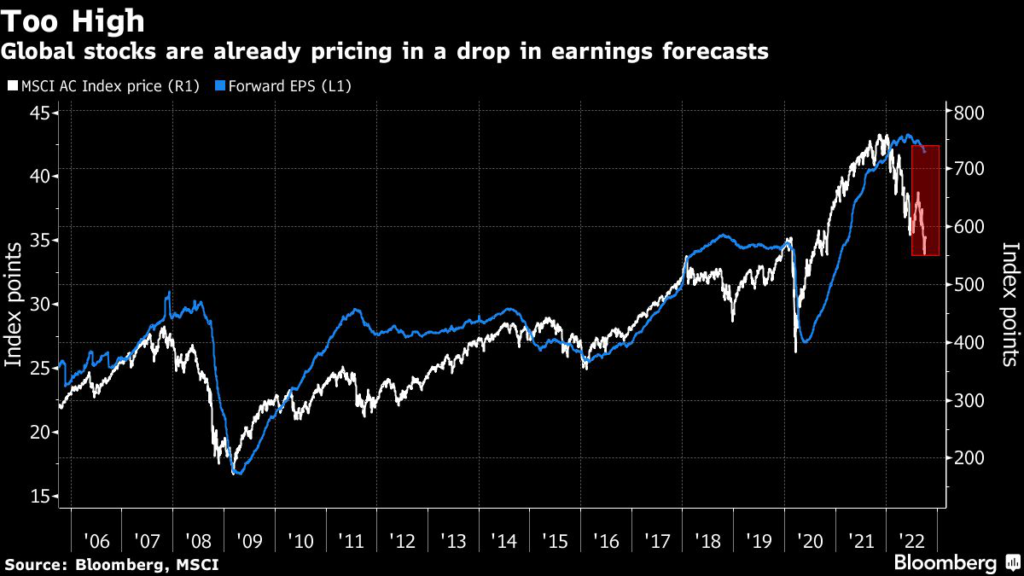
“We suspect investor attention will increasingly switch to EPS risks,” the strategists wrote in a note on Thursday. “We tilt our recommendations towards those markets and sectors where EPS should hold up better in a global slowdown,” they said, lifting global tech stocks to overweight. 

Global technology shares have been hit hard this year, with multiple central bank rate hikes across the globe taking a toll on elevated valuations. The MSCI World Information Technology Index has lost nearly 30% of its value in 2022, while the US benchmark Nasdaq 100 Index is down 29%.

Globally, Buckland and his team see analyst profit forecasts as “too high,” with bottom-up consensus at 10% EPS growth for the MSCI AC World in 2022, followed by 6% in 2023. They expect a 5% earnings contraction for 2023, consistent with below-trend global GDP growth and above-trend inflation. However, they note that should be much milder than the average EPS downturn in the last three big global profit recessions, which was 31%.

Investors should continue to favor defensive equities over cyclical peers, but keep their focus on sectors with resilient earnings, the strategists said. They expect health care and technology will hold up “reasonably well in a recession,” while the only traditional cyclical sector they like is financials, as they should benefit from higher rates and credit risks are lower than in previous downturns.

Country-wise, the strategists’ preference goes to US and UK stocks. They see the US as “more defensive than other markets in a global EPS contraction,” while the strong currency will continue to boost relative performance. As for the UK, it’s their favorite “value trade,” given cheap valuations and high overseas exposure.


More stories like this are available on bloomberg.com

©2022 Bloomberg L.P.
Chinese EV Battery Maker CALB Targets Top Three Rivals After IPO

(Bloomberg) — Newly Hong Kong-listed CALB Co. aims to become a top-three player in the electric vehicle battery industry within five years, Chief Executive Officer Jingyu Liu said.

Shares in the Changzhou, Zhejiang-based firm ended at HK$38, matching the IPO price. The offer raised about HK$10.1 billion ($1.3 billion), with the shares sold at the bottom of a marketed range that went as high as $51.

“We want to reach top five in the global EV battery market in a year’s time, and be third within three-to-five years,” Liu said in an interview with Bloomberg Television. 

The company is currently building out production lines that will have a combined annual capacity of more than 200 gigawatt hours. “This increased battery capacity will place us among the top few globally,” said Liu, the only female CEO of a top 10 global battery maker. 

A New Chinese EV Battery Giant Has Emerged: Anjani Trivedi

China Aviation Lithium Battery Technology Co., as its formally known, was formed in 2015 under Luoyang Co., a wholly owned unit of the China Airborne Missile Academy, which is part of state-owned aerospace and defense firm Aviation Industry Corp. of China Ltd.

The lofty goals for the Xpeng Inc. supplier come with a need to pay for the expansion. Liu said going public was a “natural next step” in the high-growth sector.

“Our IPO funds will be used for business expansion and R&D,” Liu said. “But our finances have been stable and we have sufficient capital for current needs.” 

CALB is projecting a “big” increase in domestic battery market share as it increases output, followed by “significant growth” from 2024 in overseas markets, she said.

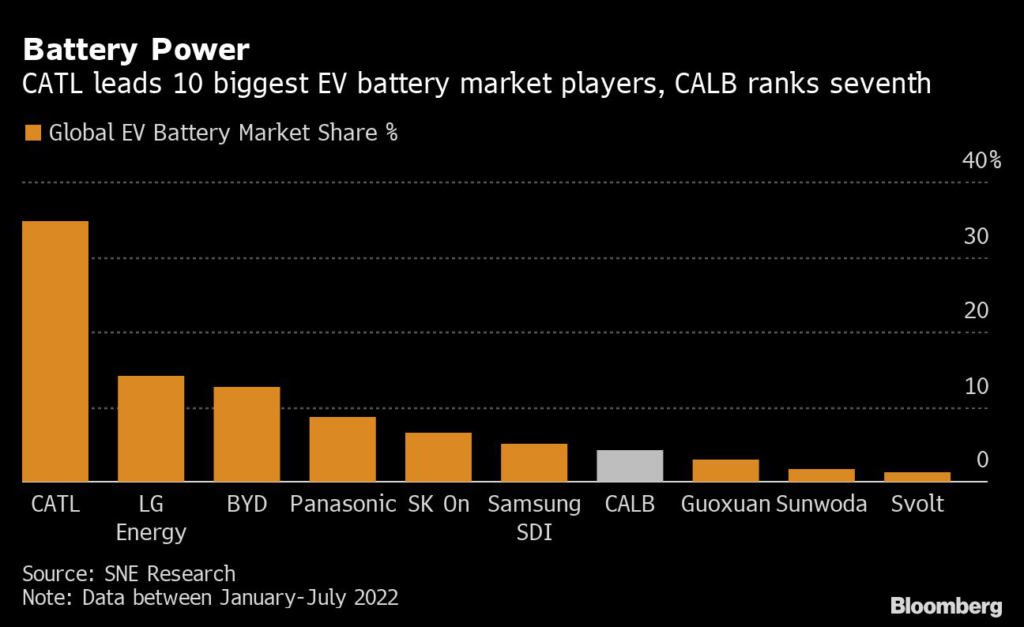
The company ranks seventh among global EV battery suppliers, according to SNE Research, but is dwarfed by larger Chinese rival Contemporary Amperex Technology Co. Ltd., followed by South Korea’s LG Energy Solution Ltd. and BYD Co., all whom have deep pockets and equally high ambitions to expand their market share.  

Market leader CATL has already unveiled around $20 billion worth of spending commitments this year on a slate of factories to be built at home, and as far away as Hungary and resource-rich Indonesia.

As the EV supply chain grapples with soaring costs of key battery materials like lithium and copper, CALB has seen through the worst of the industry-wide price shocks, Liu said. Margins have continued to grow, with first-quarter profit higher than a year earlier, and second quarter earnings higher than the first, she said.

“We expect our profits to continue increasing in every subsequent quarter,” she said. “We’ll reduce supply chain costs through working with our upstream suppliers and battery recycling.”

Even at a smaller size than initially expected, CALB is the third-largest IPO in Hong Kong this year, as mid-to-large sized deals return after a slow first half. Still, funds raised in the city are down about 75% since the start of January as rising interest rates roil markets and keep issuers on the sidelines.

Half of the 18 companies that have listed in Hong Kong after offerings larger than $100 million this year ended their first session underwater. Five finished little changed and only four rose on day one.

CALB’s debut comes one week after a disastrous first-day of trading for Chinese EV maker Zhejiang Leapmotor Technology Co., which plunged 34%, after raising $800 million in an IPO that was priced at the bottom of the marketed range. The slide was the biggest first-day decline for a listing of that size or bigger on record in the Hong Kong.

Huatai International Ltd. is the sole sponsor of CALB’s Hong Kong IPO.

(Updates stock performance to close in second paragraph)

More stories like this are available on bloomberg.com

©2022 Bloomberg L.P.
UK Tech M&A Spree Pauses as Buyers Pull Out Amid Chaotic Markets

(Bloomberg) —

A foreign buying spree of British technology companies has hit a wall after market turbulence scuppered a couple of high-profile deals, casting a shadow over future dealmaking in the sector.

Private equity firm GTCR said on Tuesday it would not be making an offer for software company GB Group Plc, having previously disclosed it was mulling a cash bid for the software company. 

That prospective deal collapsed just weeks after another buyout firm, Thoma Bravo, ended talks for cybersecurity company Darktrace Plc. In both cases, the parties said they could not agree on terms, but gave no further details. 

GB Group declined to share further details on the cancelled deal, while representatives for Darktrace didn’t immediately respond to requests for comment.

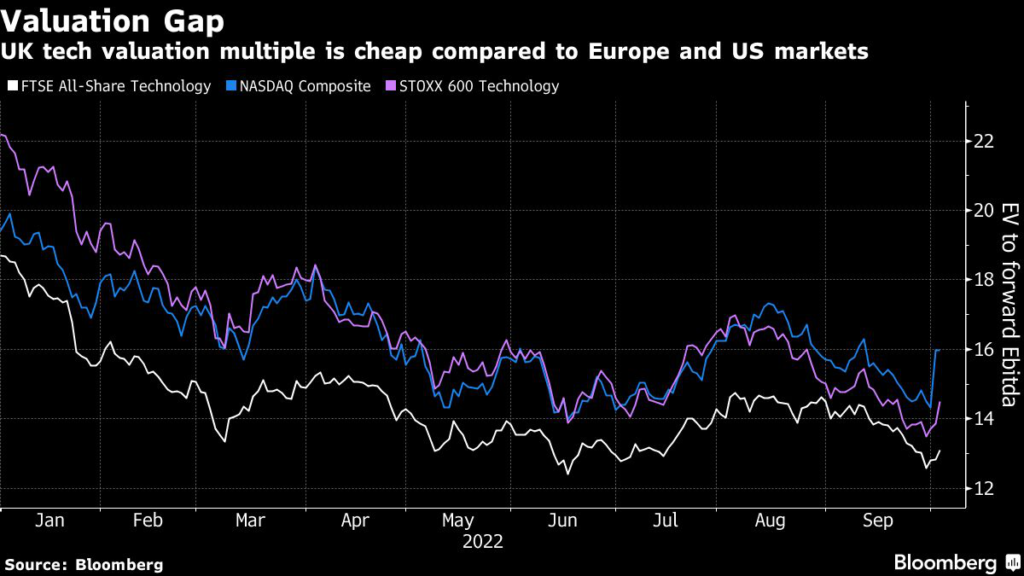
After five major tech M&A attempts this year in a sector that accounts for less than 2% of the FTSE All-Share index, the announcements shocked UK technology shares, pumped up on expectations that a weak pound and relatively cheap valuations would unleash a dealmaking wave. 

Read: Foreign Buyers Hoover Up Britain’s Fast-Growing Tech Firms

Shares in GBG and Darktrace plunged after their talks ended, with the latter losing as much as 33% of its value on the day Thoma Bravo ditched its bid.

The good news for the sector is that some takeovers are still proceeding, including Canadian Open Text Corp’s purchase of Micro Focus International Plc, and a bid by France’s Schneider Electric SE for software developer Aveva Group Plc. 

However, market turbulence and higher borrowing costs will present hurdles for other deals, especially in cases where the takeover approach comes from a financial suitor, rather than a sector peer that can reap synergies, analysts say. 

Read: ‘Uninvestable’ UK Market Lost £300 Billion in Truss’ First Month

In such choppy markets, investors and company management may find it hard to agree on the right price valuations, Goodbody analyst George O’Connor said. And Britain’s deepening economic doldrums mean buyers can probably afford to wait. 

“Valuations are expected to go cheaper as we see an unsettling macro wash through to cautious (earnings) outlook statements,” O’Connor said.

Another issue is that the current backdrop of rising interest rates is a challenging one for leveraged buyouts, as many private equity-led deals tend to be. As borrowing costs rise, private equity managers must re-assess the impact on their IRR, or internal rate of return — a measure of how much they can expect to earn over the life of the investment.

“I don’t think it means UK M&A is paused, more that buyers are scrutinizing targets in more detail,” said Neil Campling, head of TMT research at Mirabaud Securities, in an emailed comment. 

Achieving the targeted return from their leverage buyout model is tougher in a rising-rate environment, so buyout groups have to look deeper or set a higher watermark, Campling said. So when investors “analyze the books, it may well be that they don’t quite see the bargain they first thought,” he added.

But many are inclined to consider the recent hiccups as just that, mostly because the pound’s recent exchange rate slump makes UK companies cheaper than ever to foreign buyers. A Bloomberg survey late last month showed British firms represented seven of the top 10 global M&A targets, with tech names placing highly.  

“Trend being paused? Not really. The dollar is still very strong, and UK tech is still cheap, even in pound terms,” Panmure Gordon analyst Alasdair Young said in an emailed comment.  

“We still expect more M&A.”

More stories like this are available on bloomberg.com

©2022 Bloomberg L.P.

Close Bitnami banner
Bitnami
