Bloomberg

MUFG in Talks to Invest $200 Million in Ant-Backed Indonesia Fintech Akulaku, Sources Say

(Bloomberg) — Mitsubishi UFJ Financial Group Inc. is in talks to invest about $200 million in Akulaku Inc., an Indonesian online lender backed by Jack Ma’s Ant Group Co., according to people familiar with the matter.

MUFG, as Japan’s biggest lender is known, is negotiating the terms of a potential financing for Akulaku as it seeks to expand its presence in the Southeast Asian nation, the people said. The funds could give the startup a valuation of around $1.5 billion, the people said, asking not to be identified because the matter is private.

An investment by MUFG in Akulaku would add to the capital raised by the company including a $100 million fundraising from Thailand’s Siam Commercial Bank Pcl earlier in the year, the people said. Other investors including private equity firms have shown interest in investing in Akulaku, the people said.

Considerations are ongoing and talks could still fall apart, the people said. Representatives for Akulaku and MUFG declined to comment.

Founded in 2014, Akulaku offers digital banking, consumer credit, digital investment and insurance brokerage services, according to its website. It operates in Indonesia, Vietnam, Malaysia and the Philippines, the site shows. Earlier in the year, Akulaku had been considering a US listing via a merger with a blank-check company that could have valued the combined entity at about $2 billion, people familiar with the matter said at the time.

MUFG has been expanding in Southeast Asia to tap into the region’s growth potential and young population. Last month, Bank of Ayudhya Pcl, a Thai banking unit of MUFG, said it will acquire the consumer finance businesses of Netherlands-based Home Credit NV in Indonesia and the Philippines for about 474 million euros ($500 million).

–With assistance from Komaki Ito and Fathiya Dahrul.

More stories like this are available on bloomberg.com

©2022 Bloomberg L.P.

Binance CEO Zhao Warns Bumpy Road Ahead in Message to His Staff

(Bloomberg) — Binance Holdings Ltd. Chief Executive Officer Changpeng Zhao warned his colleagues to expect tough months ahead and said the firm will overcome current challenges, as the crypto billionaire tries to assuage concerns about the company’s financial health.

In a memo sent to staff, CZ, as the founder of the world’s largest crypto exchange is known, said the industry for digital assets is going through “a historic moment” and that Binance is in a strong financial position and “will survive any crypto winter.”

“While we expect the next several months to be bumpy, we will get past this challenging period – and we’ll be stronger for having been through it,” he wrote in the memo seen by Bloomberg. He added that FTX’s recent collapse has brought with it “a lot of extra scrutiny and tough questions” on his firm, referring to reports this week on customer withdrawals. 

FTX’s shock collapse has rocked investor sentiment and prompted some traders to take control of their tokens, causing outflows at other exchanges. Binance was one of the exchanges hit by large outflows on Tuesday, which have since started to show signs of easing.

The memo and rebuttals on Twitter came on the back of a record number of net daily Bitcoin and Ether token outflows from Binance on Tuesday.

“Rest assured, this organization was built to last,” Zhao wrote in the memo.

More stories like this are available on bloomberg.com

©2022 Bloomberg L.P.

NATO Eyes Boosting Air Defenses to Repel Drone, Missile Strikes

(Bloomberg) — NATO is weighing how to bolster its air and missile defenses to combat threats like the commercially available drones and cruise missiles Russia has used in Ukraine.

The range of challenges the North Atlantic Treaty Organization faces has increased over the past decade, with the ability for both state actors like Russia but also terrorist groups to procure and weaponize drones in the thousands, Air Marshal Johnny Stringer, the deputy commander of NATO’s Allied Air Command said in an interview. The proliferation of cruise missiles and the first operational uses of hypersonic missiles are also a concern, he said. 

The military alliance needs to ensure its air defense capabilities, from radars and shared early warning systems through to missiles, are “reflective of the threat we face,” Stringer said. He added it would continue to be an important area of focus as Russia resorts to cruise missile attacks against key national infrastructure in Ukraine amid failures on the battle field. 

“NATO will now, and are already, looking at what that future posture and what a future raft of capabilities will need to be,” he said, declining to provide more details.

Iranian Drones

Russian missile and drone attacks in Ukraine in recent weeks have hit vast parts of the country’s critical infrastructure, leaving millions without reliable electricity and water in winter. Russia has likely received a resupply of drones from Iran and is attempting to obtain more weapons, including hundreds of ballistic missiles, according to the UK’s Ministry of Defense. 

Since Russia invaded Ukraine in February, the alliance has already beefed up its air defenses along the eastern flank, with German and Dutch Patriots in Slovakia and France’s ground-to-air MAMBA system in Romania. Germany is also sending Patriot missiles to Poland after an errant Ukrainian air defense missile landed in a border village in November, killing two.

Around 15 countries, including the U.K. and the Netherlands, are signing up to a German-led project to jointly acquire air defense equipment and missiles to create a European anti-missile shield that would boost protection for much of the continent.  

Bolstering air and missile systems fits into a broader overhaul of the alliance’s defenses prompted by Russia’s invasion of Ukriane. NATO leaders agreed at a summit in Madrid last June to establish a new force model that would put about 300,000 troops on high alert to deal with any future threats.

Space-Based Services

Drones in particular can be a challenge for air defense systems as they typically fly low and are hard to detect. And the ammunition to shoot them down can often cost more than the drones themselves are worth, raising the costs of warfare although this depends on the defense systems that are used, Stringer said.

The war in Ukraine has also shown how readily available access to space-based services like GPS and other encrypted communications could change the nature of warfare. The increasing number of commercial providers with satellite constellations in the hundreds, like Elon Musk’s Starlink, “allows people to harness that domain, which was previously a closed book,” according to Stringer.

While it could create more threats, it could also create more opportunities as militaries are no longer tethered to specific systems, Stringer said.

More stories like this are available on bloomberg.com

©2022 Bloomberg L.P.

Bankman-Fried’s Arrest in Bahamas Sets Up US Extradition Fight

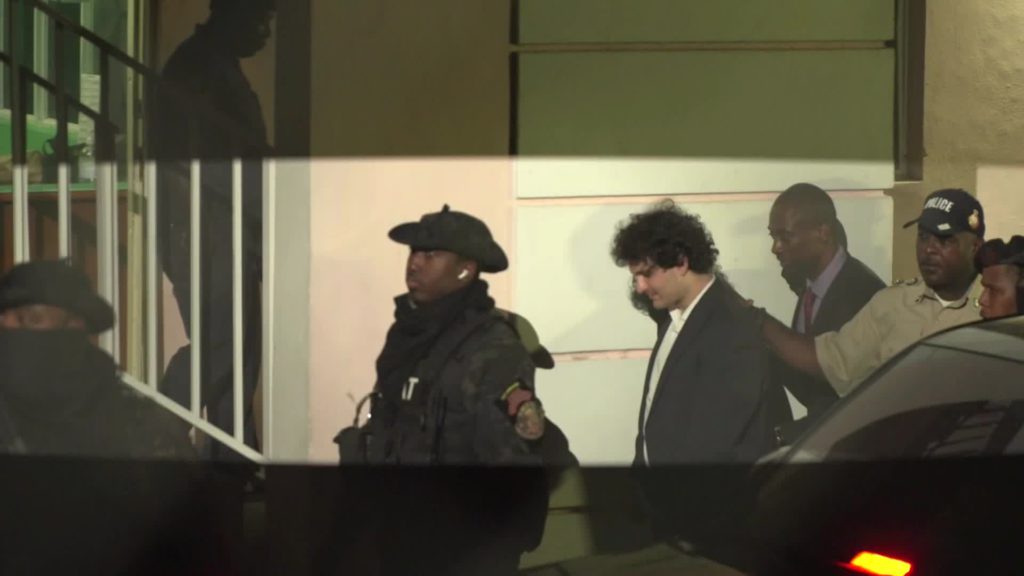
(Bloomberg) — At his press conference on charges against Bahamas-based FTX founder Sam Bankman-Fried, Manhattan US Attorney Damian Williams said the case shows “you can commit fraud in shorts and t-shirts in the sun.” 

But Williams didn’t address how US authorities plan to get Bankman-Fried back from his tropical locale to face the eight-count indictment unsealed against him Tuesday in New York federal court.

In his first appearance since his arrest Monday evening, Bankman-Fried told a Bahamian judge at an arraignment Tuesday that he wouldn’t waive his right to an extradition hearing. A defense lawyer said Bankman-Fried planned to fight being sent to the US.

The charges against him include wire fraud, conspiracy to commit securities fraud and several other counts for allegedly misappropriating billions of dollars in FTX customers funds for personal use and risky bets by sister trading house Alameda Research. Williams on Tuesday called the case “one of the biggest financial frauds in American history” and said the investigation of the alleged scheme is “very much ongoing.”

Bankman-Fried has denied knowingly committing fraud in numerous media interviews. Mark Cohen, a New York lawyer for the FTX founder, said in a statement on Tuesday that his client is “reviewing the charges with his legal team and considering all of his legal options.” 

Though his office has said it will seek Bankman-Fried’s extradition, Williams declined to comment on those efforts on Tuesday.

If Bankman-Fried does fight extradition, there may be potential for him to drag things out. Many high-profile extradition battles have gone on for years. WikiLeaks founder Julian Assange was charged by US authorities in 2019 for publishing leaked government secrets but is still fighting extradition from the UK, largely on mental-health grounds.

Huawei Technologies Co. Ltd. Chief Financial Officer Meng Wanzhou was arrested in Canada in 2018 at the request of the US government which accused her of conspiring to avoid US sanctions on Iran. She fought extradition to the US until September 2021, when she was released under a non-prosecution deal with the Justice Department.

Meng’s case had political and diplomatic dimensions Bankman-Fried’s lacks. The Chinese government vociferously objected to her arrest and took two Canadians living in China into custody in response — they were released shortly after she was. But her legal arguments also prolonged the case. She focused on the US-Canada extradition treaty’s requirement that the charged offense be a crime in both jurisdictions, arguing that violating US sanctions wasn’t illegal in Canada.

The US-Bahamas extradition treaty has a similar “double criminality” requirement, and lawyers can parse statutes extremely closely to distinguish between two nations’ definitions of a crime. 

Czech-born businessman Viktor Kozeny successfully fought extradition from the Bahamas on US charges that he orchestrated a scheme to bribe Azerbaijani officials in return for rights to buy the country’s state oil company. A local court found that Kozeny’s alleged bribes occurred before the Bahamas joined the Inter American Convention Against Corruption and therefore weren’t crimes in the country at the time.

“Extradition law can be rather arcane,” said Douglas McNabb, a Houston lawyer who specializes in extradition cases. He said the Bahamas sees a number of such cases, though mainly involving drug-trafficking defendants.

Eight men facing US drug charges managed to put off extradition from the Bahamas for 11 years before they were finally sent to Florida in 2015. Among the arguments they employed against extradition was that one of the judge who heard the case had been subject to a mandatory retirement age.

Bruce Zagaris, a Washington lawyer, said one reason extraditions from the Bahamas can drag on is that the British Commonwealth country sends final appeals to the Privy Council in London. Defendants with money don’t hesitate to take the case all the way.

“That could take five, six, seven years between all the levels,” Zagaris said.

On the other hand, Bankman-Fried could ultimately decide to return to the US, said Michael Zweiback, a Los Angeles-based criminal defense lawyer with extradition experience. He said many Americans choose to return rather than sit in a foreign jail. 

Though Bankman-Fried was living in a luxury penthouse in the Bahamas, he might not enjoy those accommodations while fighting extradition, Zweiback said. 

Bankman-Fried’s request to be released on $250,000 cash bail was rejected on Tuesday by a Bahamian judge who deemed him a flight risk. An extradition hearing was set for Feb. 8.

“He can waive extradition and of course he will be placed in handcuffs and put on board a plane with an escort from the US Marshals Service and brought to La Guardia or JFK Airport and brought straight to the SDNY courthouse.” Zweiback said, referring to the Manhattan federal court.

“He can sign extradition paperwork tomorrow and be there within a week.”

–With assistance from Katanga Johnson, David Voreacos and Bob Van Voris.

(Updates with extradition hearing date in 18th paragraph.)

More stories like this are available on bloomberg.com

©2022 Bloomberg L.P.

Bipartisan Senate Bill Would Bar Huawei From US Finance System

(Bloomberg) — US lawmakers have introduced legislation that could cut Huawei Technologies Co. and other foreign firms from the world’s largest financial system, in the latest attempt to curb China’s technological ambitions. 

The Senate bill, whose sponsors include Senate Majority Leader Chuck Schumer, a New York Democrat, would ban US companies from participating in significant transactions with foreign firms that produce 5G technology and engage in industrial espionage. If Huawei were so designated, it would effectively halt its access to US banks. 

“We cannot allow Huawei and the Chinese Communist Party to have access to Americans’ personal data and our country’s most sensitive defense systems,” said Senator Tom Cotton, an Arkansas Republican who also backed the bill. “We must address the dire threat these Chinese companies pose to our national security.” 

The legislation comes amid broad support in Washington for finding ways to curb China’s influence, and Huawei in particular. Last month, the Federal Communications Commission barred Huawei and other telecommunications firms including ZTE Corp. from selling electronics in the US on grounds they posed risks to data security.

US lawmakers are also seeking to ban Chinese-owned video app TikTok, which the Federal Bureau of Investigation has warned could control millions of users’ software, steal information, launch hacking attacks or conduct influence operations.  

China has denounced measures by the US to restrict the capacity of its technology sector, including sweeping sanctions that limit its access to advanced chipmaking equipment.

More stories like this are available on bloomberg.com

©2022 Bloomberg L.P.

Asia Stocks Benchmark Clings to Gain Before Fed: Markets Wrap

(Bloomberg) — A gauge of Asian stocks eased from its session highs, mirroring moves seen on Wall Street, as investors weighed a slowdown in US inflation ahead of the Federal Reserve’s policy decision.

Shares in Japan, South Korea and Australia held advances of less than 1% while those in Hong Kong and mainland China fluctuated. 

US equity futures rose about 0.2% in Asia after the S&P 500 closed off its intraday peak on Tuesday. Investors are awaiting more clues on the Fed’s interest-rate path from the decision later Wednesday and Chair Jerome Powell’s briefing.

The dollar clawed back some of the ground it lost to its Group-of-10 counterparts Tuesday while emerging-market currencies strengthened versus the greenback. The New Zealand dollar fell in a decline that accelerated after the government warned a recession was likely next year.

Treasuries were little changed after rallying Tuesday, when data showed Powell’s key measure of services prices excluding energy and rents moderated again in November. While price pressures appear to have peaked, headline CPI remains above 7%, suggesting the Fed has more work to do to rein in inflation. 

Australian bonds rose, led by the rate-sensitive three-year maturity.

“The market is now anticipating a slower pace of hikes and a moderation of the peak terminal rate in the US,” said Kellie Wood, deputy head of fixed-income at Schroders in Sydney. “We believe the market is fully priced for this interest rate cycle given the level of inflation in the US economy.”

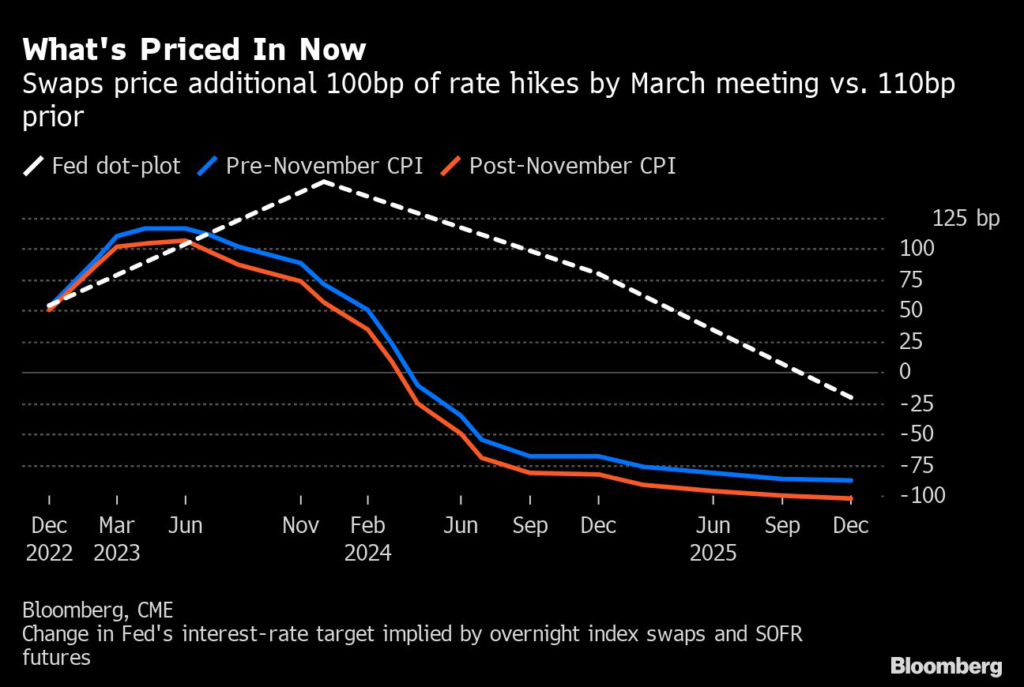
A dovish repricing swept across rates markets on Tuesday. With a half-percentage point move by the Fed notched in, wagers leaned toward a quarter-point increase as early as February. Further out, swaps priced the peak Fed policy rate around 4.85% by May, down from almost 5% ahead of Tuesday’s inflation print. The current Fed policy range is 3.75% to 4%. 

Elsewhere in markets, oil fell slightly ahead of the Fed decision and after rallying 6% over the previous two sessions. Gold steadied near its highest level since July.

Following the Fed, the European Central Bank will announce its rate decision Thursday. Markets will also contend with decisions from the Bank of England and monetary authorities in Mexico, Norway, the Philippines, Switzerland and Taiwan.

Key events this week:

  • FOMC rate decision and Fed Chair news conference, Wednesday
  • China medium-term lending, property investment, retail sales, industrial production, surveyed jobless, Thursday
  • ECB rate decision and ECB President Lagarde briefing, Thursday
  • Rate decisions for UK BOE, Mexico, Norway, Philippines, Switzerland, Taiwan, Thursday
  • US cross-border investment, business inventories, empire manufacturing, retail sales, initial jobless claims, industrial production, Thursday
  • Eurozone S&P Global PMI, CPI, Friday

Some of the main moves in markets:

Stocks

  • Futures on the S&P 500 rose 0.2% as of 12:15 p.m. Tokyo time. The S&P 500 gained 0.7%
  • Nasdaq 100 futures rose 0.2%. The Nasdaq 100 advanced 1.1%
  • The Topix Index rose 0.5%
  • The S&P ASX Index rose 0.5%
  • The Hang Seng Index rose 0.2%
  • The Shanghai Composite Index was little changed

Currencies

  • The Bloomberg Dollar Spot Index was little changed
  • The euro was little changed at $1.0625
  • The Japanese yen was little changed at 135.51 per dollar
  • The offshore yuan was little changed at 6.9637 per dollar

Cryptocurrencies

  • Bitcoin rose 0.3% to $17,819.79
  • Ether rose 0.2% to $1,322.6

Bonds

  • The yield on 10-year Treasuries was little changed at 3.50%
  • Australia’s 10-year yield declined four basis points to 3.36%

Commodities

  • West Texas Intermediate crude fell 0.4% to $75.12 a barrel
  • Spot gold was little changed

This story was produced with the assistance of Bloomberg Automation.

–With assistance from Georgina Mckay and Stephen Kirkland.

More stories like this are available on bloomberg.com

©2022 Bloomberg L.P.

Japan Lawmaker Chides Crypto Watchdog Over FTT Coin Approval

(Bloomberg) — A Japanese lawmaker urged more clarity on cryptocurrency regulation after an industry watchdog didn’t tell consumers about potential red flags around FTX’s native coin when it approved the token for a local listing this year.

“It will become more and more important to ensure transparency for consumers when there are any matters that require attention on tokens,” Akihisa Shiozaki, a lawmaker with the ruling Liberal Democratic Party, said in an interview. Still, FTX’s meltdown shouldn’t cause Japan to reverse course in relaxing coin-listing rules, according to Shiozaki, who helped to design the nation’s crypto policy. 

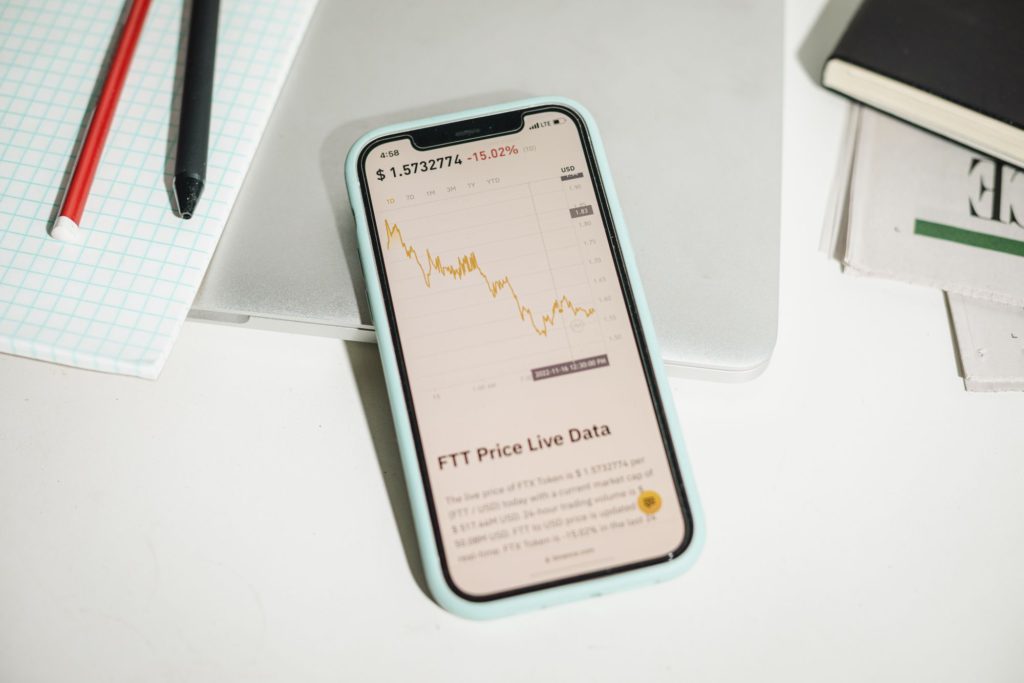
Disgraced crypto founder Sam Bankman-Fried’s digital assets empire imploded just as Japan was warming up to crypto again, betting that developing digital asset ventures would help the country’s economic growth. The plummeting value of FTX’s native token FTT was part of the chain of events in the company’s collapse. 

FTX’s Japan subsidiary added FTT to its offerings in February after getting a go-ahead from the industry’s self-regulatory body that screens listing requests from local exchanges. The large FTT holdings between FTX and its trading house Alameda Research that resulted from lax record keeping, poor centralized controls and alleged co-mingling of customer assets was part of the reasons behind FTX’s downfall.

The approval from the Japan Virtual and Crypto Assets Exchange Association, also known as JVCEA, was “conditional”, according to a document circulated last month during a political meeting and seen by Bloomberg News. The watchdog had required FTX Japan K.K. to monitor Alameda Research’s FTT holding balance as a condition for its approval, according to the document. 

JCVEA declined to comment, when asked about this information that hasn’t been made public to consumers. The JVCEA reported to the Financial Services Agency when it authorized FTT’s listing under some conditions, an official at the country’s financial regulator said.  

Offering consumers such details is important for Japan to “maintain trust in a token economy,” Shiozaki said. Even so, while JVCEA needs to be more upfront with information, it should stay the course in its policies toward crypto, he added, in a broad reference to the association’s recent moves to make it easier for local exchanges to list tokens. 

A lawyer by training, he’s the son of Yasuhisa Shiozaki, who served as health, labor and welfare minister under former Prime Minister Shinzo Abe and was instrumental in overhauling the country’s pension system.

FTX’s demise was due to “problems in its governance as an exchange,” he said. “We need to think of that separately from the issue of how token vetting should be.”

–With assistance from Suvashree Ghosh.

More stories like this are available on bloomberg.com

©2022 Bloomberg L.P.

Bankman-Fried’s Bid for Bail Denied by Bahamas Judge

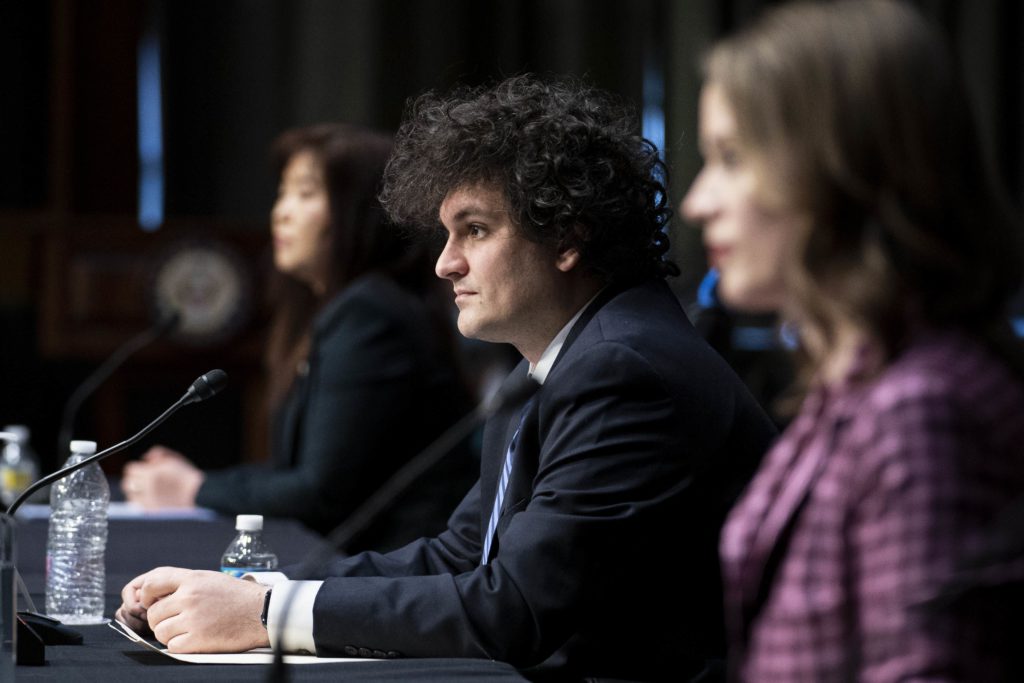
(Bloomberg) — Sam Bankman-Fried was denied bail by a judge in the Bahamas on Tuesday, leaving the disgraced co-founder of crypto giant FTX behind bars.

During his first court appearance since being arrested on Monday, Chief Magistrate Joyann Ferguson-Pratt said that Bankman-Fried posed too big of a flight risk to be released. His attorney had proposed that his client pay $250,000 cash and wear an ankle bracelet to be allowed to leave his cell. 

“Risk of flight is so great that Samuel Bankman-Fried ought to be remanded in custody,” she said. “I am not satisfied that there is any condition that I could place in Samuel Bankman-Fried to sufficiently satisfy, because of his access to substantial finances, that he would not and could not abscond.”

An extradition hearing for Bankman-Fried was set for Feb. 8. Earlier in the arraignment proceedings on Tuesday, his lawyer said that he would fight plans to send him to the US. 

Federal prosecutors in Manhattan have charged Bankman-Fried with eight criminal counts, including conspiracy and wire fraud, for allegedly misusing billions of dollars in customers’ funds before last month’s spectacular collapse of his cryptocurrency empire. 

Dressed in a blue suit and white shirt for the arraignment proceedings, Bankman-Fried at times appeared shaky and fidgety. His parents were present in the courtroom as their 30-year-old son was frequently referred to as a “fugitive.”

Bankman-Fried’s need to take medication for ADHD and allergies frequently came up during the proceedings, which spanned most of Tuesday. At one point, the hearing was halted so he could take them because he missed doses following his arrest the night before. 

After the judge announced that his bail would be denied, his mom hugged him with teary eyes. Bankman-Fried was allowed 15 minutes with his parents before he was to be taken away by authorities. 

Fox Hill

A court clerk said after the hearing that Bankman-Fried wouldn’t be allowed regular visits due Covid protocols.“That’s so sad,” Bankman-Fried’s father was overheard telling an onlooker about soon not being able to spend time with his son. 

The judge said that Bankman-Fried would be taken to the Bahamas Department of Correctional Services facility, which is known commonly known as Fox Hill and is the government’s only prison. 

Although it’s unclear whether Bankman-Fried will be held among the general population, a 2020 report from the US State Department painted a grim picture of the place. The facility’s conditions were harsh due to overcrowding and poor ventilation, among other issues.

(Updates with new details from hearing starting in seventh paragraph.)

More stories like this are available on bloomberg.com

©2022 Bloomberg L.P.

Amazon’s Post-Covid Cutbacks Draw Ire of Vietnamese Supplier

(Bloomberg) — Amazon.com Inc. faces a $280 million lawsuit from a Vietnamese manufacturer of warehouse storage systems that alleges the e-commerce giant abruptly scaled back orders after online spending growth cooled this year, leaving the manufacturer saddled with excess production capacity and raw materials.

Gilimex Inc. said it was a key partner of Amazon from 2014 to 2022, investing tens of millions of dollars in manufacturing facilities to build the steel-and-cloth storage pods used to organize inventory in Amazon warehouses. Those pods are carried by robots, speeding the fulfillment of online orders so workers don’t have to race around the sprawling facilities on foot. 

The lawsuit provides a rare glimpse into Amazon’s relationships with suppliers needed to fuel its rapid expansion during the pandemic and how those suppliers often took big risks. The Ho Chi Minh City-based company said it swelled to more than 7,000 employees across multiple factories to produce more than 1 million warehouse storage units annually. Production for Amazon increased 20-fold during the eight-year relationship. The partnership was built around “trust,” according to the 32-page complaint, with Gilimex relying on the accuracy of Amazon’s forecasts to make adequate investments to meet demand.

Gilimex said it had a long-standing agreement with Amazon regarding transparency about anticipated demand so that it could procure materials, factory capacity and employees to fulfill Amazon’s growth, which soared during the pandemic as many people sheltered at home and spent money online. But Amazon in April and May “immediately changed and reduced the projected demand” for the remainder of 2022 and 2023 to a small fraction of previous forecasts, according to the lawsuit, which was filed Monday in New York state court.

Amazon had no immediate comment.

The dispute highlights how the abrupt change in spending habits as pandemic-related restrictions eased rippled through global business relationships. Bloomberg reported in May that Amazon was looking to sublet excess warehouse space following a pandemic overbuild. The company this fall began eliminating experimental projects and laying off workers in cost-cutting that is expected to continue into 2023.

Amazon was Gilimex’s biggest customer, with orders totaling $146.6 million in 2021, according to the lawsuit. Gilimex sidelined other big customers including IKEA and Columbia Sportswear to meet Amazon’s demand, according to the lawsuit.

Meeting Amazon’s needs during the pandemic required Gilimex to relocate production and packing facilities to continue manufacturing through Covid outbreaks and navigate around government safety measures.

“Thus, while Amazon enjoyed unprecedented increases in revenue during the pandemic due in large part to the explosion in online ordering by consumers from the safety and comfort of their homes, Gilimex management and laborers literally risked their lives on a daily basis to make such record growth a reality,” according to the complaint.

More stories like this are available on bloomberg.com

©2022 Bloomberg L.P.

TikTok Security Deal’s Prospects Are Clouded by FBI’s Doubts, State Bans

(Bloomberg) — The Biden administration is facing new roadblocks in its effort to address the national-security concerns around TikTok after the FBI warned about the dangers of the Chinese-owned video-sharing app and five states banned it from employee phones.

The public critique from FBI Director Christopher Wray, the state bans and growing objections from Congress are building pressure on the Committee on Foreign Investment in the US. The panel is seeking a way to let TikTok, owned by China’s ByteDance Ltd., keep operating in the US while also preventing the possibility that the Chinese government could access user data.

A final agreement has been stalled at the Justice Department, and questions remain about whether any deal could keep all US users’ data from being leaked to the Chinese government. A plan would be expected to build on an arrangement announced by TikTok in June under which US user traffic is routed through servers maintained by Oracle Corp.

In the latest signal of opposition to a compromise, a bipartisan group of lawmakers in the Senate and the House, led by Senator Marco Rubio, introduced a bill Tuesday that would ban TikTok from operating in the US. Rubio, a Florida Republican, said “it is time to ban Beijing-controlled TikTok for good.”

In response, TikTok spokeswoman Brooke Oberwetter said plans to secure the platform in the US were “developed under the oversight of our country’s top national security agencies”’ and are “well underway.”

“It is troubling that rather than encouraging the administration to conclude its national security review of TikTok, some members of Congress have decided to push for a politically motivated ban that will do nothing to advance the national security of the United States,” Oberwetter said in a statement. 

FBI’s Concerns

Wray, the FBI chief, entered the fray in November, when he said he remained “extremely concerned” about TikTok and worried that China could use its proprietary algorithm to shape US public opinion and hoover up user data. He said the FBI has shared its views with Cfius, whose review centers on the 2017 merger between Bytedance and Musical.ly which created TikTok in the US.

Wray’s comments amounted to a public intervention into the debate by Cfius, a secretive inter-agency panel led by the Treasury Department that reviews foreign investments in U.S. companies. It appeared to be an effort to shape the decision-making process, said James Lewis, the director of the Strategic Technologies Program at the Center for Strategic and International Studies

“They had an agreement drafted, DOJ and FBI didn’t like it, they didn’t think it was tough enough, so Wray did the typical Washington thing, which is to take the deal back to the table,” Lewis said.

The FBI and the Justice Department declined to comment.

But the longer the Cfius review has dragged on, the more scrutiny has focused on TikTok, especially among state officials and politicians in Washington. Five states have banned the use of TikTok on government phones, with more expected to follow, and several federal agencies are also mulling bans. The trend highlights a growing appetite among policymakers to curtail TikTok’s explosive growth in the US over concerns about its ties to Beijing.

Congressional Moves

Rubio and colleagues who introduced the legislation to ban TikTok saw no room for a compromise. 

“We know it’s used to manipulate feeds and influence elections,” Rubio said in a statement. 

Democratic Representative Raja Krishnamoorthi of Illinois called the bill “a strong step in protecting our nation from the nefarious digital surveillance and influence operations of totalitarian regimes.”

Senator Richard Blumenthal, a Connecticut Democrat, has said the platform promotes videos and trends that may prove harmful to children, and Senator Mark Warner, a Virginia Democrat who’s chairman of the Senate Intelligence Committee, said in October that TikTok has “a big mountain to climb” to prove that it can really keep US data safe.

TikTok’s Pushback

Tiktok has pushed back against claims about the app, calling it “misinformation.” TikTok’s top US lobbyist Michael Beckerman told CBS News that TikTok is no different than any US-based social media platform.

“Maybe they should consider banning all social media apps from government phones,” Beckerman said.

With Republicans taking control of the House in January, pressure will only rise on the Biden administration to be tough on TikTok.

“The calculation now is whether it’s better to do it before the Congress flips or after,” Lewis said. “If they’re smart, they’ll try and get it done before the House flips. But on the other hand, once the House flips, they’ll be critical of any deal that doesn’t go particularly hard on TikTok.”

Emily Kilcrease, a senior fellow at the Center for a New American Security who worked on Cfius issues while in government, argues that the Cfius discussion is too far along for any major changes. 

“I wouldn’t think that discrete state-level action would change the trajectory of the federal-level review or disposition of the case,” Kilcrease said, noting that even though a handful of states have instituted a ban, most have taken no action.

Earlier: Wray Says US Still Discussing Terms of TikTok Security Agreement

In that case, the question is more one of timing and whether the administration can satisfy the concerns of Wray and other national security officials.

Texas, South Dakota and Maryland are among the states that banned the app on government devices. Indiana Attorney General Todd Rokita announced his state filed two lawsuits against TikTok, taking aim at the social media app’s treatment of sensitive user data and underage users. 

“These decisions show that state executives are unwilling to wait for some type of federal action,” said Klon Kitchen, a technology expert with the American Enterprise Institute. “It is the federal government who has the primary responsibility for securing the national security interests of the United States.” 

–With assistance from Chris Strohm.

(Updates with agencies declining to comment in 10th paragraph)

More stories like this are available on bloomberg.com

©2022 Bloomberg L.P.

Close Bitnami banner
Bitnami