Bloomberg

Twitter’s Former CEO Dorsey Calls Online Attacks on Ex-Workers ‘Dangerous’

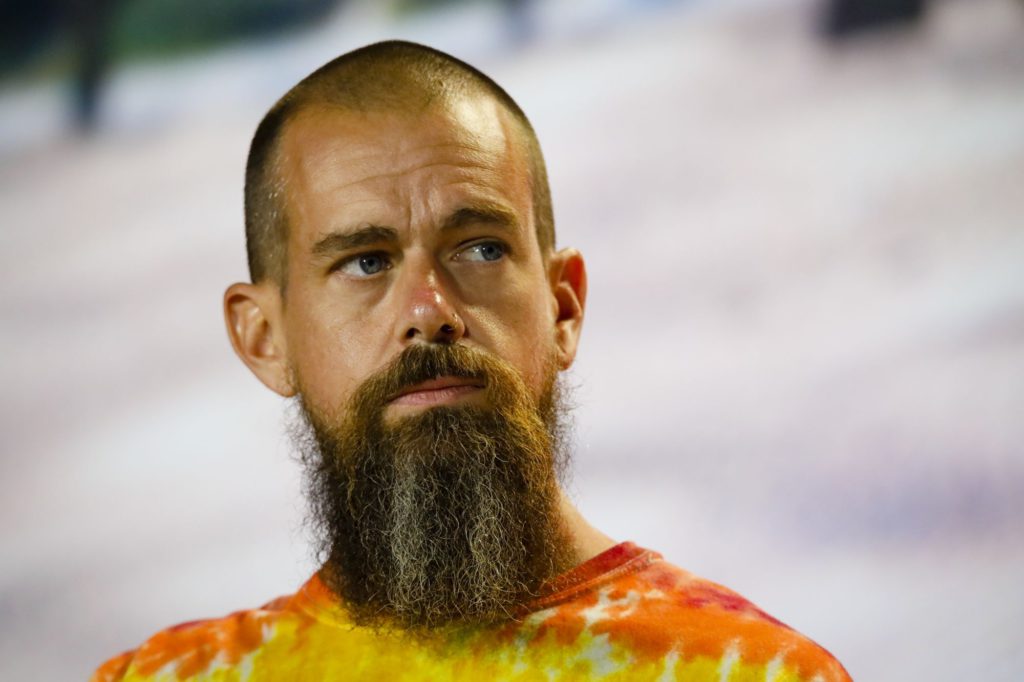
(Bloomberg) — Former Twitter Inc. Chief Executive Officer Jack Dorsey called recent online attacks on his former employees “dangerous” while taking the blame for controversial content decisions that the company made under his leadership. 

Dorsey wrote in a blog post Tuesday that Twitter ultimately had too much power to make content decisions under his guidance. Users should have had more control over what they see online, and Twitter did a poor job building tools to handle that, he said. Dorsey added that he “completely gave up pushing for” those ideas after an activist investor showed up in early 2020. 

“I no longer had hope of achieving any of it as a public company with no defense mechanisms (lack of dual-class shares being a key one),” he said. “I planned my exit at that moment knowing I was no longer right for the company.”

Twitter has drawn fire over the past week following a release of internal communications about moderation decisions, including the ban of former President Donald Trump. The documents, dubbed by new owner Elon Musk as the “Twitter Files,” have been published by journalists that the billionaire brought into Twitter and gave what he called “unfettered” access. 

People who are upset about the decisions have targeted Twitter employees who were involved in them. 

“The current attacks on my former colleagues could be dangerous and doesn’t solve anything,” Dorsey said. “If you want to blame, direct it at me and my actions, or lack thereof.”

Dorsey defended the sale of Twitter to Musk, saying that taking the company private has given it the chance for a “fresh reset.”

More stories like this are available on bloomberg.com

©2022 Bloomberg L.P.

Australia Targets Crypto, Clearing Reforms in Finance Overhaul

(Bloomberg) — Australia is set to make sweeping changes to financial services laws that will tighten safety nets on the cryptocurrency market and pave the way for possible competition in the clearing of equity trades. 

Under considerations outlined on Wednesday, the government will examine which crypto tokens should be covered under finance laws and also seek to strengthen Australia’s payments system. In cash equities, proposed legislation will either allow competition in clearing and settlement if a rival to ASX Ltd. emerges or give regulators more powers in the event of its ongoing dominance.

“The one constant in finance is change. It’s fast moving, dynamic and our regulatory frameworks haven’t kept up,” Treasurer Jim Chalmers said in the statement. “Our reforms are about starting to fix that in pursuit of a financial system that is stronger and more secure.”

The government said its consultation paper Wednesday will form the basis of a new “strategic plan” for the payments system to be passed in the first quarter of 2023, with changes in other areas also expected next year.

Regulators around the world are looking to tighten their grip on digital assets as the recent bankruptcy of the FTX exchange highlighted a significant lapse of risk controls. Meantime in Australia, ASX, which has a monopoly on the clearing and settlement of stock trades, is under pressure following its years-long abandonment of a technology upgrade that was backed by blockchain technology.   

“The digital age has brought new opportunities and risks to finance,” Chalmers said. “Our plan is about opening up space for further innovation while making sure we have the right regulatory approach in place to keep consumers, businesses and the system safe.” 

The government is also considering cryptocurrency custody and licensing settings to safeguard consumers and is expected to consult on a framework for that next year before introducing legislation. 

A regulatory framework will be set up for the so-called buy now, pay later sector, according to the plans, that will make it easier for companies to ascertain whether or not they require a license.

More stories like this are available on bloomberg.com

©2022 Bloomberg L.P.

Australia to Boost Cryptocurrency Regulation in 2023

(Bloomberg) — Australia’s government under Prime Minister Anthony Albanese said it’s taking steps to improve regulation of cryptocurrency providers. 

  • The government will release a consultation paper early next year to help decide which digital assets will be regulated by laws, according to a statement Wednesday from Treasurer Jim Chalmers and Assistant Treasurer Stephen Jones
  • The administration is also looking to build custody and license settings to create a framework that keeps consumers safe
  • The government will consult first on this next year before introducing legislation
  • Read more: Australia to Map Crypto Tokens as Part of Regulatory Ramp-Up

More stories like this are available on bloomberg.com

©2022 Bloomberg L.P.

Stocks Notch Post-CPI Gain on Eve of Fed Decision: Markets Wrap

(Bloomberg) — US stocks advanced on Tuesday as investors mulled whether latest data showing prices rose less than forecast last month would prompt the Federal Reserve to alter its aggressive approach to battling inflation.

The S&P 500 and the Nasdaq 100 capped a volatile session with a gain after data indicated the worst of inflation has likely passed. Fed Chair Jerome Powell’s closely watched measure of services prices that excludes energy and rents also continued to moderate.

The soft consumer price index data was briefly celebrated with a surge in equities, but the indexes pared those gains as investors turned their focus to what the latest numbers mean for the Fed’s path of rates.

While the Fed is largely expected to raise rates by half a percentage point Wednesday, investors will be watching what officials say for further policy clues. Swap markets are now favoring a quarter-point hike as early as the Fed’s February meeting. 

Still, some investors are cautious about overstating the latest CPI print. 

“Investors aren’t seeing the handwriting on the wall that the Fed is going to stay higher for longer,” said Jason Katz, managing director and private wealth adviser at UBS on Bloomberg Television. “If they cut rates in the latter part of next year, that’s going to be because they broke things along the way and things are ugly. So it’s our view that the terminal rate lands anywhere between 5%-5.25% and remains there for the full calendar year.” 

Read More: Powell’s ‘Most Important’ US Inflation Indicator Cools Again

Meanwhile, Treasuries surged, with the policy-sensitive two-year yield dropping as much as 24 basis points. The greenback halted a two-day rally.

Read More: US Downplays Idea of CPI Leak Following Pre-Report Trading

Following the Fed, the European Central Bank will announce its rate decision Thursday. Markets will also contend with decisions from the Bank of England and monetary authorities in Mexico, Norway, the Philippines, Switzerland and Taiwan.

Key events this week:

  • FOMC rate decision and Fed Chair news conference, Wednesday
  • China medium-term lending, property investment, retail sales, industrial production, surveyed jobless, Thursday
  • ECB rate decision and ECB President Lagarde briefing, Thursday
  • Rate decisions for UK BOE, Mexico, Norway, Philippines, Switzerland, Taiwan, Thursday
  • US cross-border investment, business inventories, empire manufacturing, retail sales, initial jobless claims, industrial production, Thursday
  • Eurozone S&P Global PMI, CPI, Friday

Some of the main moves in markets:

Stocks

  • The S&P 500 rose 0.7% as of 4 p.m. New York time
  • The Nasdaq 100 rose 1.1%
  • The Dow Jones Industrial Average rose 0.3%
  • The MSCI World index rose 0.5%

Currencies

  • The Bloomberg Dollar Spot Index fell 0.9%
  • The euro rose 0.9% to $1.0629
  • The British pound rose 0.7% to $1.2360
  • The Japanese yen rose 1.5% to 135.62 per dollar

Cryptocurrencies

  • Bitcoin rose 3.3% to $17,750.42
  • Ether rose 3.4% to $1,318.35

Bonds

  • The yield on 10-year Treasuries declined nine basis points to 3.52%
  • Germany’s 10-year yield declined one basis point to 1.93%
  • Britain’s 10-year yield advanced 10 basis points to 3.30%

Commodities

  • West Texas Intermediate crude rose 3.2% to $75.50 a barrel
  • Gold futures rose 1.7% to $1,822.90 an ounce

This story was produced with the assistance of Bloomberg Automation.

–With assistance from Natalia Kniazhevich and Michael Msika.

More stories like this are available on bloomberg.com

©2022 Bloomberg L.P.

RBA’s Lowe Urges Banks to Cut Costs, Boost Speed on Payments

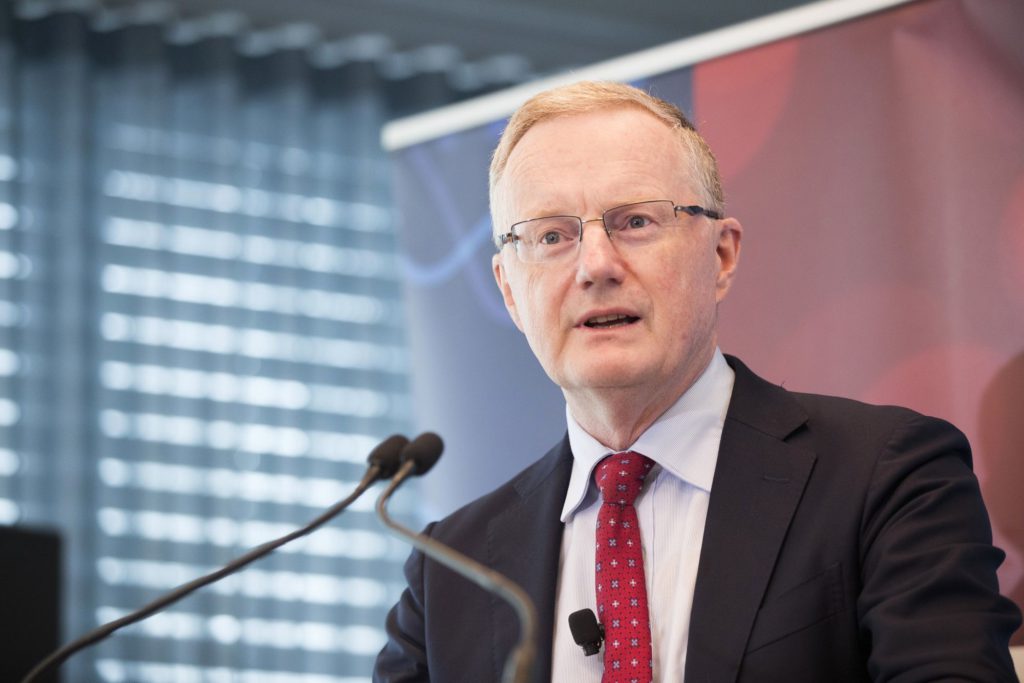
(Bloomberg) — Reserve Bank of Australia Governor Philip Lowe called on the nation’s lenders to intensify efforts to reduce the cost of payments and increase their speed, including for cross-border transactions.

“Slow progress by the major banks imposes a cost on the rest of the industry,” Lowe said in a speech Wednesday, referring to delays in launching a direct-debit service that allows businesses to receive real-time payments from customers’ banks accounts. 

“Investments have to be put on hold as successful uptake of the system requires a critical mass to be operational,” Lowe said. The RBA now expects the service to be launched in April 2023.

Lowe did not talk about monetary policy or the outlook for the Australian economy in the speech, his last for the year according to the RBA’s website.

The governor also restated his frustration at the persistent high cost of international payments from Australia, which undermines the nation’s commitment to make cross-border payments cheaper, faster, more transparent and easier to access. 

“Progress is being made in this area, but it is slow,” he said. “There is a lot more to be done here, and we need the assistance of Australia’s financial institutions to make further improvements.”

The nation’s four major banks — Commonwealth Bank of Australia, Westpac Banking Corp., Australia & New Zealand Banking Group Ltd. and National Australia Bank Ltd. — together hold 72% market share, meaning there’s limited pressure on them to innovate.

According to data from SWIFT, more than 80% of the time taken for a cross-border payment to reach an Australian recipient is due to the final Australian dollar leg, Lowe said, referring to research from the Bank for International Settlements. 

“A number of other comparable countries process incoming payments more quickly, including some in similar time zones. We need to do better here,” the RBA chief said.

Australia’s financial industry is committed to providing a new “international payments business service” which will allow the final Australian dollar leg of inbound payment to be processed much faster by December 2023, Lowe said. 

“Delays will hurt Australian customers and hold back Australia’s progress in meeting its G20 commitments,” he added.

In a separate statement shortly before Lowe’s address, Treasurer Jim Chalmers said the government will in 2023 update and strengthen Australia’s payments system and establish a framework for the licensing and regulation of crypto service providers.

“Unfortunately, our regulatory architecture has not kept pace with changes in the market, including the advent of new digital products and service,” Chalmers said. “We will work closely with regulators, industry, and consumer and business advocacy groups over the coming months to get these reforms right.”

More stories like this are available on bloomberg.com

©2022 Bloomberg L.P.

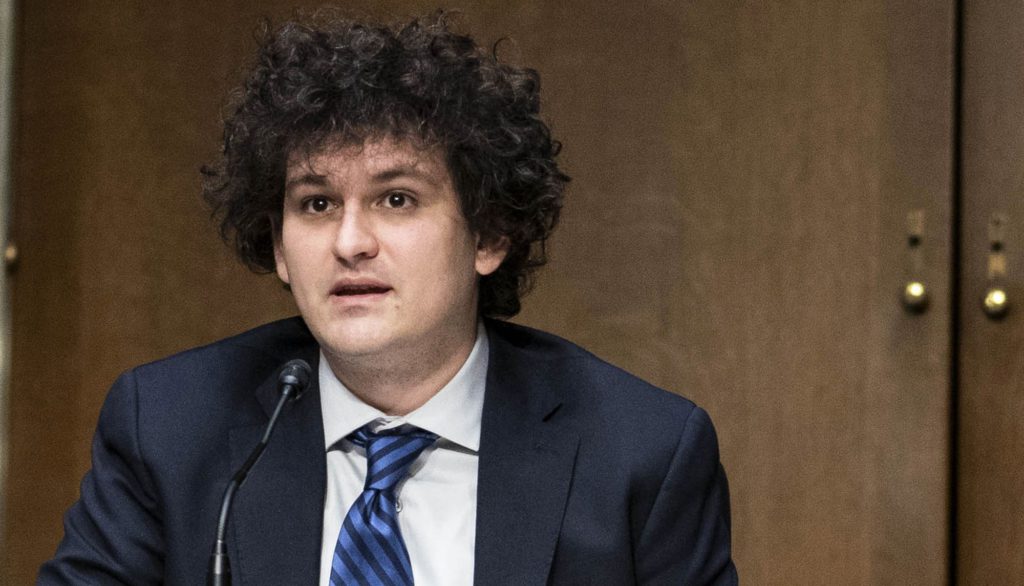
Sam Bankman-Fried Risks Decades Behind Bars on Fraud

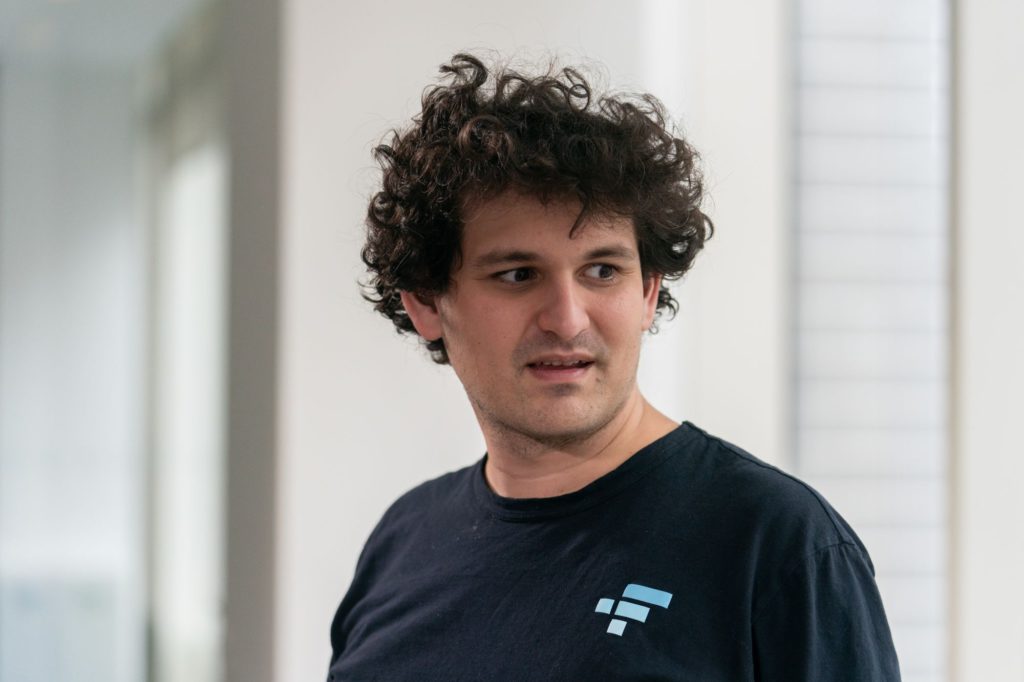
(Bloomberg) — Sam Bankman-Fried faces up to 115 years in prison if he’s convicted on all eight charges filed by the US Department of Justice on Tuesday — though he’s unlikely to be sentenced to that long a term. 

The Federal Bureau of Investigation, the Securities Exchange Commission and the Commodity Futures Trading Commission have been working “around the clock” to unravel what happened in “one of the  biggest financial frauds in American history,” Manhattan US Attorney Damian Williams said during a press conference. The SEC and the CFTC sued Bankman-Fried separately on Tuesday for his alleged role in the collapse of FTX.  White-collar defendants, if convicted, rarely serve statutory maximum sentences.

“Fraud is fraud,” FBI New York Assistant Director in Charge Michael Driscoll said in the press conference. “It does not matter the complexity of the investment scheme, it does not matter the amount of money involved.”  

Bankman-Fried, 30, was arrested in the Bahamas on Monday and is accused of misusing billions of dollars in customer money to prop up his Alameda Research crypto fund and influence US public policy, Williams said. The FTX founder faces two counts of wire fraud, two of wire fraud conspiracy and  one of money-laundering charges, each of which carries a maximum sentence of 20 years, the DOJ said in a statement. He’s also charged with conspiracy to commit commodities fraud, conspiracy to commit securities fraud and conspiracy to defraud the US and commit campaign finance violations, each carrying a maximum five-year term.

Congress sets the statutory maximum terms, but a judge will ultimately determine the length of the sentence. 

Read More: Bankman-Fried’s Bid for Bail Denied by Bahamas Judge

More stories like this are available on bloomberg.com

©2022 Bloomberg L.P.

Sam Bankman-Fried’s Prison Sentence Could Stretch to 115 Years

(Bloomberg) — Sam Bankman-Fried faces up to 115 years in prison if he’s convicted on all eight charges filed by the US Department of Justice on Tuesday — though he’s unlikely to be sentenced to that long a term. 

The Federal Bureau of Investigation, the Securities Exchange Commission and the Commodity Futures Trading Commission have been working “around the clock” to unravel what happened in “one of the  biggest financial frauds in American history,” Manhattan US Attorney Damian Williams said during a press conference. The SEC and the CFTC sued Bankman-Fried separately on Tuesday for his alleged role in the collapse of FTX.  White-collar defendants, if convicted, rarely serve statutory maximum sentences.

“Fraud is fraud,” FBI New York Assistant Director in Charge Michael Driscoll said in the press conference. “It does not matter the complexity of the investment scheme, it does not matter the amount of money involved.”  

Bankman-Fried, 30, was arrested in the Bahamas on Monday and is accused of misusing billions of dollars in customer money to prop up his Alameda Research crypto fund and influence US public policy, Williams said. The FTX founder faces two counts of wire fraud, two of wire fraud conspiracy and  one of money-laundering charges, each of which carries a maximum sentence of 20 years, the DOJ said in a statement. He’s also charged with conspiracy to commit commodities fraud, conspiracy to commit securities fraud and conspiracy to defraud the US and commit campaign finance violations, each carrying a maximum five-year term.

Congress sets the statutory maximum terms, but a judge will ultimately determine the length of the sentence. 

Read More: Bankman-Fried’s Bid for Bail Denied by Bahamas Judge

More stories like this are available on bloomberg.com

©2022 Bloomberg L.P.

Mexico’s Televisa Rebuffed in Takeover Bid for Rival Cable Company

(Bloomberg) — Megacable Holdings SAB rejected an offer by Grupo Televisa SAB, the world’s largest Spanish-language broadcaster, to purchase a 55% stake in the Mexican cable and internet provider, arguing its current business plan offers better prospects. 

Megacable received an unsolicited offer on Nov. 14, it said in a filing to the Mexican stock exchange, confirming an earlier statement from Televisa. The Guadalajara, Mexico-based company said it rejected the offer last week and informed Televisa of its decision on Monday, adding that the business isn’t for sale. 

In the earlier statement, Televisa said it presented Megacable shareholders with an offer that would have given them a 19% premium to merge that company with its own competing business. Televisa said it also offered a special cash dividend of about 14.8 billion pesos ($760 million) and pledged to continue to pursue a deal. 

Trading of both stocks was halted after Megacable soared 13% and Televisa rose 6.4% on news of a possible deal. A combination of the companies would strengthen Televisa’s grip on the Mexican internet and cable TV market. 

Reuters had reported Televisa’s offer late Tuesday.

More stories like this are available on bloomberg.com

©2022 Bloomberg L.P.

Microsoft Says It Offered FTC Consent Decree on Call of Duty

(Bloomberg) — Microsoft Corp. said that antitrust regulators shrugged off its offer to make Call of Duty available to gaming rivals — including Sony Group Corp. — as part of its $69 billion purchase of Activision Blizzard Inc. 

The company, which needs regulatory approval in 16 countries for the Activision deal, made the offer before meetings with US Federal Trade Commission commissioners last week, according to President Brad Smith. But the agency went ahead and voted to sue to block the deal. 

“The thing that probably disappoints me is not that we will have to present this case to a judge in a court because this is a case in which I have great confidence,” Smith said at Microsoft’s annual shareholder meeting Tuesday. “I’m disappointed that the FTC didn’t give us the opportunity to even sit down with the staff to even talk about our proposal to even see if there was a solution there.”

The FTC has said it’s concerned the Activision deal will “enable Microsoft to suppress competitors to its Xbox gaming consoles and its rapidly growing subscription content and cloud-gaming business.” 

Weeks ahead of the FTC’s decision, Microsoft discussed possible remedies with the agency’s staff in an effort to address their concerns, according to a person familiar with the matter. The agency’s staff rebuffed the company’s overtures, said the person, who asked not to be identified because the talks were private. Then, days before the meetings with commissioners last week, the company put forth the formal offer for Call of Duty, a proposal known as a consent decree that would be legally binding.

The FTC declined to comment on the specifics of any Microsoft offers. “The bureau’s longstanding policy is that we are always willing to consider remedy proposals that are put on the table in the course of our investigations and litigations,” Holly Vedova, the director of the FTC’s Bureau of Competition, said in an emailed statement.

Microsoft declined to comment beyond Smith’s public remarks.

Under FTC Chair Lina Khan, the agency has been more reluctant to accept settlements to resolve concerns about deals, particularly in instances where companies agree to change their behavior.

“Behavioral remedies can often be ineffective and difficult to administer,” Khan said at an October conference. Regulators need to be “extremely wary” of behavioral settlements to “make sure we’re being mindful about when these will or won’t work.”

Smith said the FTC is focused on the potential impact to Sony, but that company’s PlayStation console outsells Microsoft’s Xbox. 

“The FTC’s case is really based on a market that they’ve identified that they say has two companies and two products, Sony PlayStation, and Microsoft Xbox,” he said. “If you look at the global market, Sony has 70% of that market, and we have 30%. So the first thing a judge is going to have to decide is whether the FTC lawsuit is a case that will promote competition or is it really instead of case that will protect the largest competitor from competition.”

Smith said PlayStation has 286 exclusive games, compared with Xbox’s 59, “so the administrative law judge is going to have to decide whether going from 59 to 60 is such a danger to competition that he should stop this from moving forward.”

Microsoft’s proposal to make Call of Duty available on the PlayStation includes offering the blockbuster franchise on Sony’s subscription service too, Bloomberg has reported. 

(Updates with further details on Microsoft’s offer starting in fifth paragraph.)

More stories like this are available on bloomberg.com

©2022 Bloomberg L.P.

Bankman-Fried Accused of Record US Campaign-Finance Violations

(Bloomberg) — Sam Bankman-Fried, the second biggest Democratic donor in the 2022 election cycle, is charged with violating campaign finance laws, in what could be the biggest infusion of illegal corporate money into US politics in decades.

The FTX founder and two other top executives at the bankrupt crypto empire have lavished $76.1 million on super-PACs and other political committees in recent years. That spending is now the subject of one of the eight criminal counts of the Justice Department’s indictment, which alleges the former billionaire conspired with other unnamed individuals to use corporate money and shadow donors starting in 2020 to contribute to political campaigns.

“This is the largest corporate conduit contribution case in US history,” said Brett Kappel, a political lawyer with Harmon Curran. He said the previous high involved the Grocery Manufacturers Association, now the Consumer Brands Association, which was fined $18 million for making $11 million in disguised corporate contributions in a Washington state referendum campaign. After a lengthy court battle, the association agreed to the fines in 2022.

The FTX collapse could pull in the dozens of Republican and Democrat candidates, super-PACS and other fundraising groups into a complicated legal proceeding, and could put them at reputational risk for holding money that may have come unwittingly from FTX’s customers accounts. The ongoing bankruptcy proceeding could also force fundraising committees to pay back the money — plus interest — just as they’re trying to bring in cash for the 2024 presidential election.

Under campaign finance laws, it’s illegal to donate corporate money to campaigns, parties and PACs. While super-PACs can accept direct donations from corporations, they have to disclose the source of the funds. 

Bankman-Fried, Ryan Salame, the chief executive officer of FTX Digital Markets, and Nishad Singh, FTX’s director of engineering, have emerged as major political donors. They combined to give $70.5 million in the midterms, and Bankman-Fried previously donated $5.6 million in the 2020 election cycle.

All three received large sums of money in the form of loans made by Alameda Research, Bankman-Fried’s hedge fund, according to a November bankruptcy filing. Bankman-Fried borrowed $1 billion, Singh took $543 million and Salame got $55 million. 

Bankman-Fried received numerous loans and in one case signed as both the issuer and the recipient, John J. Ray III, who is now FTX chief executive, told lawmakers at a House hearing Tuesday.

“We have no information, at this time, as to what the purpose or the use of those funds were — and that is part of our investigation,” he said.

The indictment says only that the amount of money donated exceeded $25,000, the threshold triggering fines, a prison sentence of up to five years, or both.

Manhattan US Attorney Damian Williams said Tuesday that the alleged scheme involved “dirty money” that was “used in service of Bankman-Fried’s desire to buy bipartisan influence and impact the direction of public policy in Washington.”

Bankman-Fried also is charged with wire fraud and conspiracy.

Previous schemes to use conduit contributions, an enforcement priority for the Justice Department, have tended to involve much smaller amounts — some, in part because donors used straw-man contributions to get around contribution limits to campaigns, said Craig Engle of ArentFox Schiff. Bankman-Fried and his colleagues gave about $1.8 million to committees with contribution limits, with the remainder going to super-PACs.

Since the Supreme Court’s 2010 Citizens United case and related rulings, corporations can legally donate to super-PACs. FTX US and Alameda Research also donated directly to super-PACs, combining to give $8.4 million since 2020. 

“There are so many ways to do things legally,” Engle said “I’m always surprised that people resort to illegal means.”

–With assistance from Allyson Versprille and Laura Davison.

More stories like this are available on bloomberg.com

©2022 Bloomberg L.P.

Close Bitnami banner
Bitnami