
Bloomberg

EU Puts Crypto at Top of List for IMF Meetings, McGuinness Says

(Bloomberg) — The European Union is looking to exchange views on the development of crypto legislation with US officials during next week’s International Monetary Fund-World Bank annual meetings, as calls grow for a more coordinated global regulatory framework. 

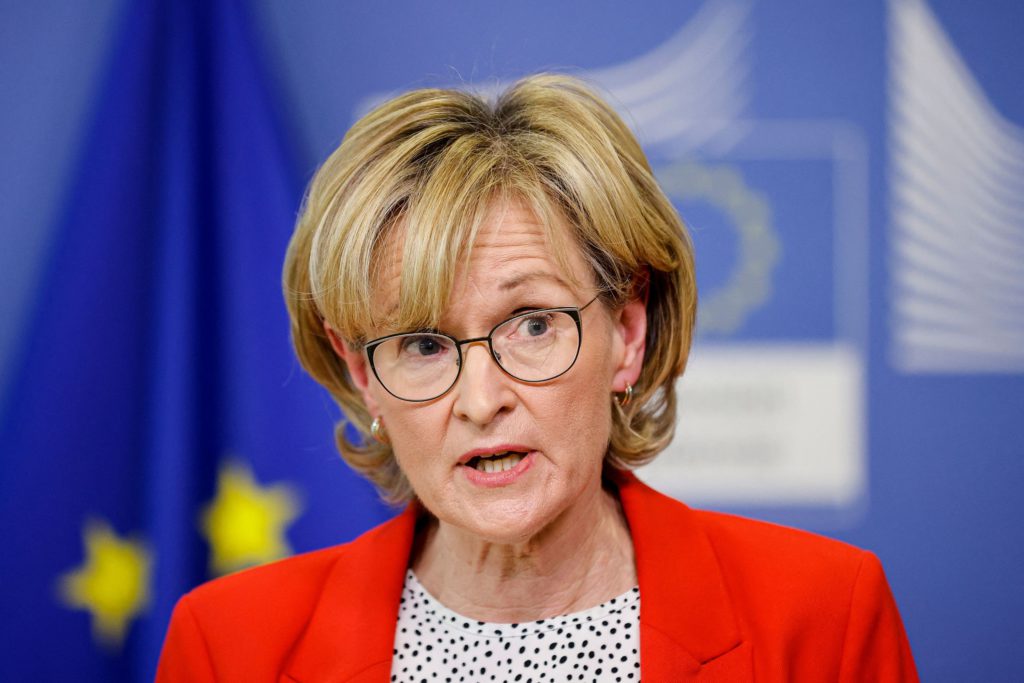
“We have a crowded agenda for the US next week, and one of the items that won’t be bottom of the list, it will be in there right around the top is crypto,” EU Commissioner for financial services Mairead McGuinness said Tuesday at a media roundtable hosted by Bloomberg News in Brussels. “I am sure they want to hear what we’ve done, how it went, what the problems were. I would be very happy to share our experience but also to hear what the US is planning to do.”

The EU is moving ahead with key legislation to regulate the crypto sector with common rules across all 27 member states, marking the first time globally that lawmakers have attempted to supervise the industry on such a scale. 

In June, the bloc reached an agreement on its landmark Markets in Cryptoassets (MiCA) directive as the European Parliament, Council and Commission approved new provisions on the supervision of cryptoasset service providers (CASPs), as well as consumer protection and environmental safeguards for crypto assets such as Bitcoin and Ether.

However, given the global nature of cryptocurrency flows, central bankers have been urging governments around the world to better synchronize regulations. The fallout from the collapse of the TerraUSD stablecoin in May upended markets from Singapore to the US, underscoring the need for more concerted efforts. 

“The message I will be bringing to Washington is that here in the EU we have a piece of legislation, we are a frontrunner in this,” McGuinness said. But “a little bit like climate change, addressing crypto alone in the EU is not enough, we need to have global engagement and sharing of experience.”

More stories like this are available on bloomberg.com

©2022 Bloomberg L.P.
The Big Winners in Musk’s Twitter Deal? Merger Arbitrage Traders

(Bloomberg) — Elon Musk’s decision to revive his $44 billion buyout of Twitter Inc. is shockingly good news for investors including billionaire Carl Icahn who continued to bet on the outcome of the deal through months of uncertainty.

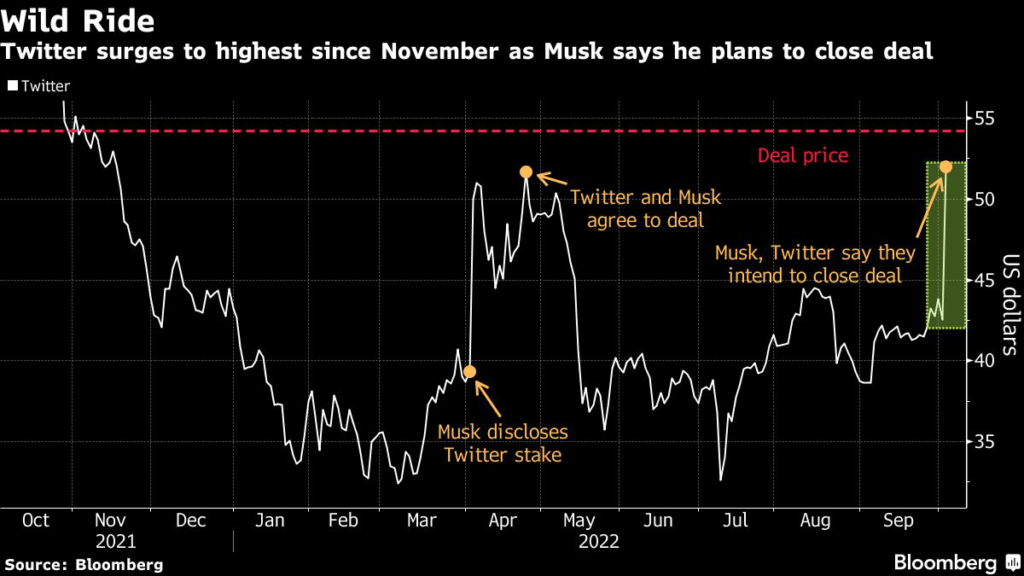
After Musk and Twitter agreed to proceed with the deal at the original offer price at $54.20 a share on Tuesday, the social media company’s stock rallied as much as 23%, pushing the spread to its narrowest level since the pair entered a merger pact back in April. Shares of the company slipped 0.4% in premarket trading on Wednesday.

Tuesday was a “great day for arbs,” said Julian Klymochko, chief executive officer of Accelerate Financial Technologies. The saga closing in Twitter’s favor demonstrates the strength of definitive merger agreements and contract law, said Klymochko, who runs a merger-arbitrage investment fund.

Arbitrage traders make money by betting on merger agreements, with the potential for millions of dollars in profits if the deals go through. Now, all that’s left is to wait for the agreement to close. 

Icahn capitalized on the dispute, according to people familiar with the matter. He acquired a roughly $500 million stake in the mid-$30-a-share range, the people said, asking not to be identified because the matter is private. 

The veteran investor purchased the stake under the belief that Musk wouldn’t be able to get out of the deal, and the assumption that the value of the stock was in the range of roughly the mid-$30s a share, making the downside risk if Musk won the trial minimal, they added.

As a result, Icahn made roughly $250 million after the run up in the company’s stock. A representative for Icahn declined to comment. His stake was reported earlier by the Wall Street Journal.

The contentious deal has sent Twitter’s stock on a rollercoaster ride in recent months. It surged as high as $54.57 in April as the deal appeared to be moving to closure, and as low as $32.52 in July after Musk sent a termination letter in an attempt to back away from the buyout proposal. The stock rebounded again last month as a judge heard arguments in Twitter’s lawsuit aimed at forcing Musk to complete the transaction.

“For arb traders, it’s overall a good outcome,” said Aaron Glick, a merger arbitrage specialist at Cowen & Co., which makes markets and is long common stock and equity options in Twitter.

(Updates with premarket trading.)

More stories like this are available on bloomberg.com

©2022 Bloomberg L.P.
EU Strikes Russia Sanctions Compromise, Adding Oil Price Cap

(Bloomberg) — European Union countries reached a compromise on a new package of Russia sanctions that includes support for a price cap on oil sales to third countries, with a formal agreement expected on Wednesday, according to people familiar with the matter. 

EU ambassadors on Tuesday night discussed ways to mitigate the impact the new package would have on countries with large shipping industries, said the people, who asked not to be identified because the talks were private. 

Greece, Cyprus and Malta expressed concerns about curbs on transporting Russian oil and have been pushing for assurances on the effectiveness of the new mechanism and its potential impact, according to the people. 

Josep Borrell, the EU’s foreign policy chief, told European lawmakers in Strasbourg on Wednesday that he expects an agreement to be reached later in the day on “sectoral and targeted personal sanctions.”

“This should further constrain Russia’s export capacity and the relations its industry continues to carry out particularly in the technological sector,” Borrell said. 

The sanctions would add a ban on shipping Russian oil to existing restrictions on services needed to transport it, but carve out an exemption for oil priced at or under a level set by a coalition of the Group of Seven and other countries, according to a draft of the proposal seen by Bloomberg. The compromise reached on Tuesday would make entry into force of the sanctions conditional on adoption of the measures by the G-7. 

The sanctions package will be formally adopted by the bloc on Wednesday barring any last-minute objections by national governments.

The broader sanctions package would target a range of individuals and entities, including senior Russian ministry officials and people involved in staging the recent, widely condemned referendums. It would also restrict access to aviation items, electronic components and specific chemical substances to deprive Russia’s military from important technologies. 

Some nations were upset that the latest draft of the sanctions appears to have weakened several of the proposed measures, including the removal of a Russian diamond mining company from the penalty list.

To allow for an oil price cap, the bloc will have to change its current legislation. In June, EU nations agreed to a full ban on insurance and financial services for seaborne oil, while shipping was spared from the restrictions. Most of those prohibitions are due to kick in Dec. 5 alongside a ban on EU purchases of Russian crude.

The G-7, which endorsed a cap earlier this month, has said it wants an agreement in place before that date.

(Updates with Borrell comments in fourth, fifth paragraphs)

More stories like this are available on bloomberg.com

©2022 Bloomberg L.P.
TSMC, Chipmakers Rally After Morgan Stanley Calls a Recovery

(Bloomberg) — Taiwan Semiconductor Manufacturing Co. surged the most in almost three months after Morgan Stanley projected a return to growth for the semiconductor industry by the second half of 2023, spurring a sector rally in Asia. 

The investment bank crowned TSMC — Asia’s most valuable listed corporation — a top pick, calling it “an enabler of future technology.” TSMC gained 3.7% in Taipei, while memory chipmaker SK Hynix Inc. jumped 4.2%.

Global chipmakers had been riding high during the pandemic, when work-from-home fueled demand for computers and other consumer electronics. But inflation and recession fears — plus a return to the office — have put a damper on purchases. In response, memory chipmakers such as Micron Technology Inc. and Kioxia Holdings Corp. have slashed output to try to prop up prices.

TSMC, however, is in a different position. As the world’s most advanced logic chipmaker, it should benefit as industry demand begins to climb back next year, Morgan Stanley analysts wrote. The US investment bank also upgraded Korean technology and Chinese chip sector to “attractive.”

“We are well advanced in the current cyclical downturn from where global semiconductor shipment units peaked around September last year,” the analysts wrote in a research report. “We are not calling for the beginning of a new cycle but acknowledge that an inflection (bottom) is closer.”

In a separate report, Morgan Stanley also upgraded emerging-market stocks to overweight from equal weight, saying it’s likely a bottom is near. 


More stories like this are available on bloomberg.com

©2022 Bloomberg L.P.
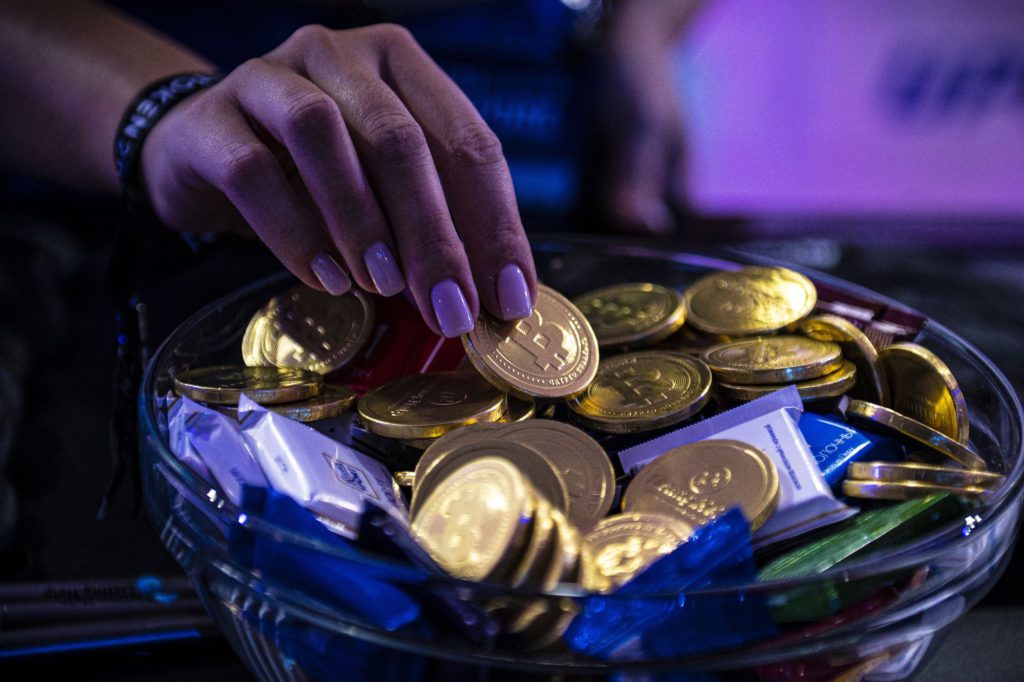
Singapore Official Says Some Crypto Activities Aren’t Regulated

(Bloomberg) — Singapore said not all crypto-related activities are regulated and that its monetary authority wouldn’t know about the number of people interested in setting up crypto firms unless they sought a central-bank license.

Companies that provide services involving buying, selling or facilitating the exchange of digital payment tokens would be governed by the Payment Services Act, Monetary Authority of Singapore Chairman Tharman Shanmugaratnam said in a reply to questions from a member of parliament.

“MAS would not have information on the number of parties interested in setting up cryptocurrency investment companies in Singapore unless they apply for a license from MAS,” Tharman said.

Tharman also said that other jurisdictions, not just Singapore, are in a situation where some activities related to digital assets are unregulated. Singapore’s monetary authority conducts surveillance to identify unlicensed firms, he said.

This year’s crypto rout dealt a setback to Singapore’s earlier embrace of the potential of blockchain technology and spurred a tougher regulatory stance. Companies with ties to Singapore were among those toppled or damaged by the meltdown, such as the Three Arrows Capital hedge fund, the collapsed Terraform Labs stablecoin project and crypto platforms Hodlnaut and Zipmex.

Separately, Tharman said that digital-payment token service providers that engage in customer transactions involving anonymity features like privacy coins, privacy wallets and mixers must take additional measures to mitigate risks regarding money laundering and terrorism financing.

More stories like this are available on bloomberg.com

©2022 Bloomberg L.P.

World’s Largest Oilfield Contractor Tackles Lithium’s Water Woes

(Bloomberg) — Schlumberger NV, the world’s largest oilfield contractor, is teaming up with a Massachusetts Institute of Technology spinoff on efforts to limit the amount of water needed to produce lithium, a key environmental hurdle for the clean energy raw material.

Boston-based Gradiant, a developer of water treatment facilities, is aiming to deploy technology already in use in copper to nickel mines in Chile and Australia to help reduce the environmental footprint of producing lithium from salt lakes, a process that accounts for 43% of global supply.

Demand for battery minerals — including lithium, the key raw material used in electric vehicle batteries — is expanding rapidly as the global auto industry accelerates a transition away from fossil fuels. But the lithium supply chain has been facing environmental challenges, including over the vast volumes of water needed to pump lithium-rich brines from deep underground in key hubs like Chile.

Read more: Saving Earth With Electric Cars Means Wrecking a Fragile Desert

“The lithium supply problem is very much also a water problem,” Prakash Govindan, co-founder and chief operating officer of Gradiant, said in an interview this week in Singapore. Gradiant was founded at MIT in 2013.

Dozens of companies are pursuing new technologies to lower costs, cut water use and improve the green credentials of lithium operations, including the deployment of direct lithium extraction, or DLE, a term used to describe ways to chemically capture lithium compounds that could speed up production. Most remain at a pilot stage, though US producer Livent Corp. already deploys similar techniques at operations in Argentina.

Gradiant’s process, which Govindan said can vastly improve lithium recovery and allow almost all wastewater to be recycled, has been developed in connection with Schlumberger’s NeoLith Energy venture. Schlumberger last year announced a plan to collaborate with a unit of Tesla Inc. battery supplier Panasonic Corp. on a DLE plant in Nevada.

Gradiant is seeking to raise $100 million by the middle of 2023 to fund expansion plans, including acquiring companies involved in clean-technology water and sustainability, Govindan said in the interview. In November, it raised more than $100 million in a funding round led by a Schlumberger unit and buyout firm Warburg Pincus.

More stories like this are available on bloomberg.com

©2022 Bloomberg L.P.
US Futures Fall as Asian Stocks Play Catch-Up: Markets Wrap

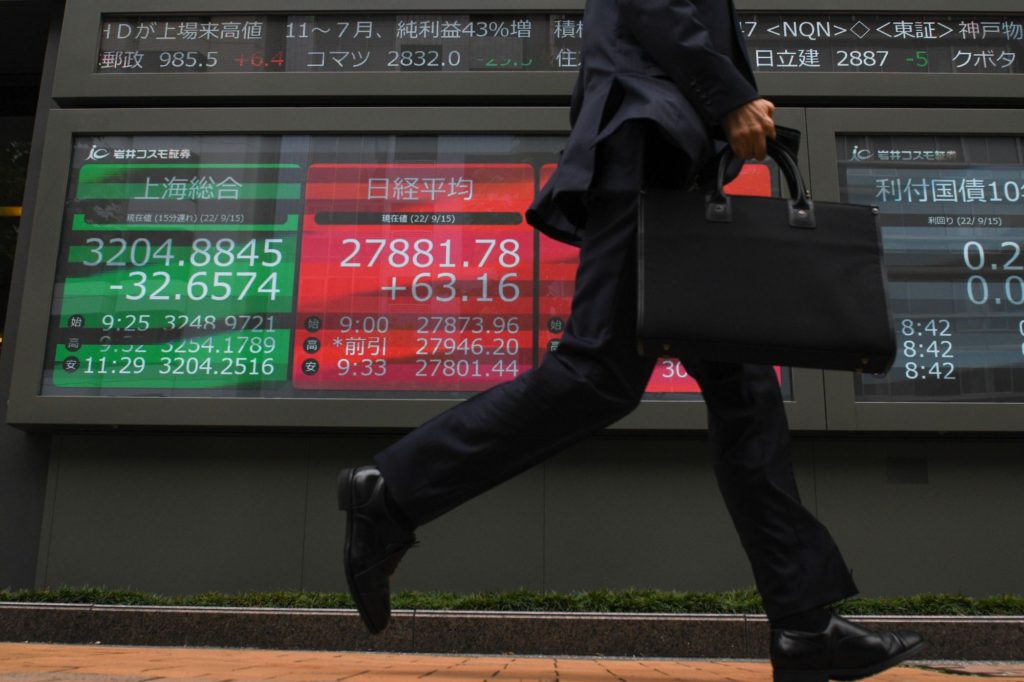
(Bloomberg) — Asian stocks played catch-up to a sharp rally in US and European equities that began to fade as fledgling hope that central banks would temper the pace of interest rate increases slipped further from view.

US and European equity futures fell on Wednesday, taking the shine off the best two-day run for the S&P 500 since March 2020 and the strongest session for European stocks in six months. Equities gained ground across Asia. Shares in Australia and Japan traded higher and Hong Kong stocks headed for their best session since March after a one-day break. 

The action reflects the seesawing outlook on monetary policy as investors scan central bank commentary and economic data for signs interest rates will begin to peak.

A decline in US job openings helped stoke such a sentiment on Tuesday, which was dimmed by comments from a Federal Reserve official who indicated further tightening lay ahead. The Reserve Bank of New Zealand hiked rates to the highest level since 2015, as expected, failing to mirror its Australian counterpart, which slowed the pace of increases on Tuesday in a surprise that lifted risk assets.

“It’s a dangerous bet to make that last Friday’s bottom was the ultimate bottom,” said Charles Lemonides, founder of hedge fund ValueWorks. “We’re probably in the middle of an important relief rally but the Fed has said they will keep tightening until inflation is out of the system.”

The Bloomberg Dollar Spot Index inched lower and has fallen 3% from a peak last week. The pound fell after climbing on Tuesday to the highest level in two weeks. The price of oil eased lower after jumping on Tuesday as OPEC+ said it was considering an output cut of as much as 2 million barrels a day, double prior estimates.

Rising fears of a recession may benefit traditional havens including Treasuries and the Japanese yen, according to Fidelity International, which said Treasuries make up about 2% of the firm’s global multi-asset income fund, up from zero just a few months ago.

Investors will be keenly focused on Friday’s US jobs data that economists anticipate is set to show a slowing in new jobs added.

“For the market to continue higher, the jobs data will have to be in-line with, or short of expectations,” said Lindsey Bell, chief markets and money strategist at Ally. The market is currently anticipating a “goldilocks” labor-market report that’s “not too hot and not too cold.”

Key events this week:

  • Eurozone services PMIs, Wednesday
  • OPEC+ meeting begins, Wednesday
  • Fed’s Raphael Bostic speaks, Wednesday
  • The Reserve Bank of New Zealand meets, Wednesday
  • Eurozone retail sales, Thursday
  • US initial jobless claims, Thursday
  • Fed’s Charles Evans, Lisa Cook, Loretta Mester speak at events, Thursday
  • US unemployment, wholesale inventories, nonfarm payrolls, Friday
  • BOE Deputy Governor Dave Ramsden speaks at event, Friday
  • Fed’s John Williams speaks at event, Friday

Will earnings disappoint and push equities to new lows? This week’s MLIV Pulse survey asks about corporate earnings. It’s brief and we don’t collect your name or any contact information. Please click here to share your views.

Some of the main moves in markets:

Stocks

  • S&P 500 futures fell 0.4% as of 2.35 p.m. in Tokyo. The S&P 500 added 3.1%
  • Nasdaq 100 futures fell 0.4%. The Nasdaq 100 gained 3.1%
  • Japan’s Topix climbed 0.4%
  • Australia’s S&P/ASX 200 added 1.7%
  • Hong Kong’s Hang Seng index jumped 6%
  • South Korea’s Kospi index added 0.3%
  • Euro Stoxx 50 futures fell 0.4%

Currencies

  • The Bloomberg Dollar Spot Index climbed 0.1%
  • The Japanese yen traded flat at 144.10 per dollar
  • The offshore yuan was flat at 7.0441 per dollar
  • The euro fell 0.1% to $0.9975

Cryptocurrencies

  • Bitcoin fell 0.8% to $20,178.96
  • Ether dropped 0.6% to $1,353.19

Bonds

  • The yield on 10-year Treasuries fell one basis points to 3.62%
  • Australia’s 10-year yield fell three basis points to 3.64%

Commodities

  • West Texas Intermediate crude fell 0.2% $86.36 a barrel
  • Gold futures fell slightly to $1,720.91 an ounce

More stories like this are available on bloomberg.com

©2022 Bloomberg L.P.
Bitcoin Jump Stalls Around $20,000; Doge Pares Post-Musk Rally

(Bloomberg) — A climb in Bitcoin paused on Wednesday as a dip in US equity futures suggested a two-day surge in risk appetite is set for a breather.

The largest crypto shed about 1% and was trading near $20,160 as of 6:32 a.m. in London, following its biggest two-day increase in about a month. Ether, Cardano and Solana were also on the back foot.

Virtual coins rose along with other risk assets over the start of the week, buoyed by speculation that the peak of a global wave of monetary tightening is close. But high inflation has proved a stubborn foe and previous bouts of optimism have tended to fizzle in a bruising year for many investors.

“Crypto markets still trade tit-for-tat with traditional markets,” Walter Teng, vice president of digital-asset strategy at Fundstrat, wrote in a note Tuesday.

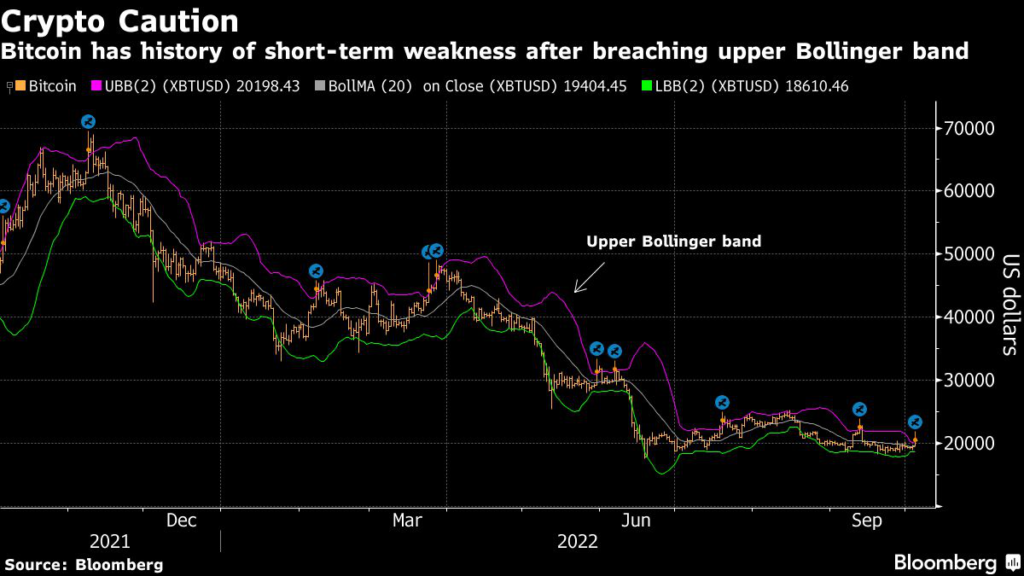
A technical signal around Bitcoin, which has shed about 56% this year, sounded a note of caution. The signal comes from a Bollinger study, a popular way of analyzing volatility. 

The token has breached its upper Bollinger band, and the previous times it did that in the past year, it fell an average of 12% over the next 20 days, according to data compiled by Bloomberg. 

Dogecoin pared a rally sparked by Tesla Inc. Chief Executive Officer Elon Musk’s revival of his $44 billion bid for Twitter Inc. Musk is seen as a supporter of the token. The meme coin originally created as a joke in 2013 is up about 9% in the past 24 hours.

More stories like this are available on bloomberg.com

©2022 Bloomberg L.P.
Hundreds of NFTs Moved From Three Arrows Fund, Tracker Says

(Bloomberg) — More than 300 NFTs were moved out of a crypto address associated with Starry Night Capital, a NFT-focused fund launched by the co-founders of the now-bankrupt crypto hedge fund Three Arrows Capital.

It’s the first time the NFTs have been transferred since the main crypto wallet belonging to Starry Night Capital shifted almost all of digital tokens to a new address about four months ago. Blockchain data firm Nansen tweeted on Tuesday that some of the NFTs that moved include “Pepe the Frog NFT Genesis,” which was sold for 1,000 Ether, or about $3.5 million, on Oct 5, 2021. Ether has since dropped about 62%.

Su Zhu and Kyle Davies, the two co-founders of Three Arrows, started Starry Night Capital during the height of the nonfungible token craze last year. They’ve since been sparring with the court-appointed liquidators charged in June with unwinding their assets. Some estimates had placed the value of the collection at around $35 million.

Advisory firm Teneo was appointed by a British Virgin Islands court to liquidate Three Arrows. Bloomberg reported previously that the Singapore High Court granted a petition by Teneo to have greater insight into Three Arrows’ remaining assets. 

Teneo said in a statement that thanks to the cooperation of Starry Night Capital co-investor VincentVanDough, all Starry Night Capital NFTs of which VincentVanDough is aware “have been accounted for and are in our possession or are being transferred to us.”

Teneo added that it will likely be working with VincentVanDough to oversee the disposal of the NFTs, with more details to be shared later.

Three Arrows, which operated from Singapore until earlier this year, collapsed after the implosion of the Terra algorithmic stablecoin in May sent cryptocurrencies tumbling.

Zhu and Davies didn’t immediately respond to a request for comment Tuesday.    

(Updates with statement from liquidators from the fifth paragraph.)

More stories like this are available on bloomberg.com

©2022 Bloomberg L.P.
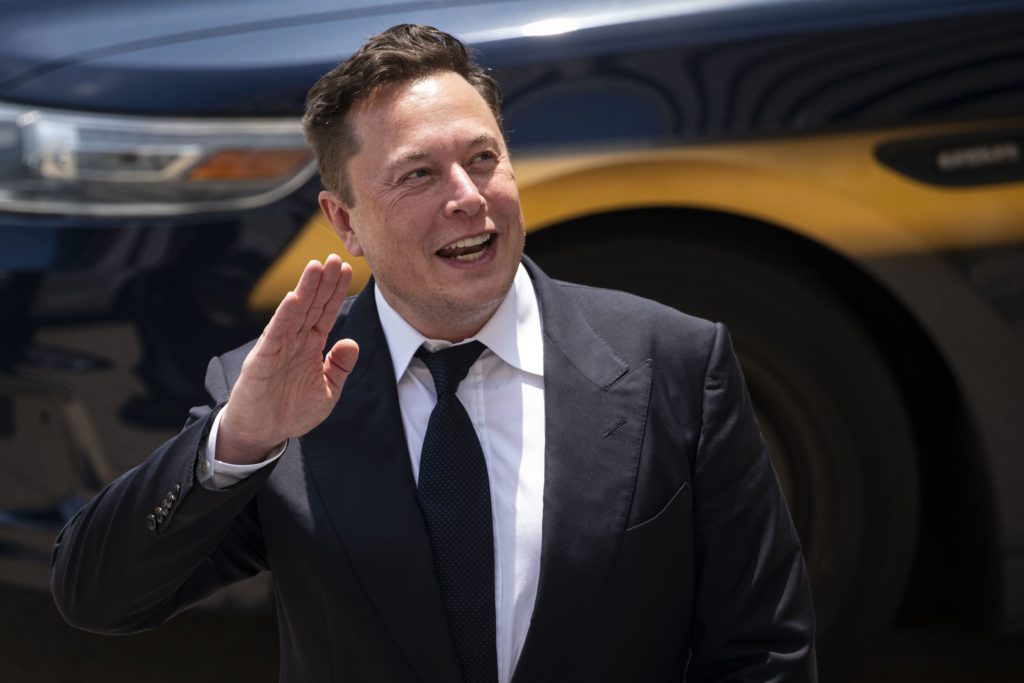
Musk’s Everything App ‘X’ Sounds a Lot Like China’s WeChat

(Bloomberg) — Elon Musk has teased something called “X, the everything app” after he buys Twitter Inc. Based on the billionaire’s past comments, that service could look a lot like Chinese super-app WeChat.

Musk didn’t provide many details beyond a one-line tweet. But the Tesla Inc. impresario has openly admired the Tencent Holdings Ltd. app that’s grown from a messaging service to a mini-internet used daily by more than a billion Chinese.

He’s mused aloud about making Twitter more useful, indicating he wants it to be more like WeChat and TikTok, the video-sharing service owned by ByteDance Ltd. that’s taken off across the US. And he’s drawn parallels to so-called super apps common in parts of Asia, letting people use a single smartphone application for a range of services from communications to summoning a car.

Here’re five things about WeChat that could serve as a template for Musk:

  • It’s much more than social media. A true super-app, hundreds of millions use WeChat daily to book rides, make dining reservations, order food. That’s possible through a vibrant network of “mini programs” or lite apps that connect directly to WeChat’s interface.
  • WeChat is a fintech titan, one of China’s biggest payments and online finance networks. Users send each other money, pay for goods and services, and even borrow money.
  • It’s one of the country’s most popular news and entertainment portals. As in the US, many younger users increasingly get much of their news through their social media feeds, just even more so in China.
  • Businesses use it too. The WeChat mini-programs economy is worth roughly $240 billion and grew about 12.5% to 450 million users in 2021.
  • In short, WeChat functions as an all-in-one service — combining the uses of apps like Facebook, Twitter, Uber, Instagram and Substack.

At Tesla’s annual shareholder meeting in August, Musk stressed that he uses Twitter a lot and that he has ideas on ways to make the platform “radically better.” He compared his ambitions for Twitter with the vision he had for X, a financial services company he co-founded in 1999.

There’s one thing though that Musk — an advocate for internet freedoms — is unlikely to take a page from. WeChat is heavily monitored and censored: armies of AI and human moderators help ensure it’s clean of content the ruling Communist Party deems undesirable. That’s everything from lewd posts to dissent and criticism of the government.

More stories like this are available on bloomberg.com

©2022 Bloomberg L.P.

Close Bitnami banner
Bitnami
