Bloomberg

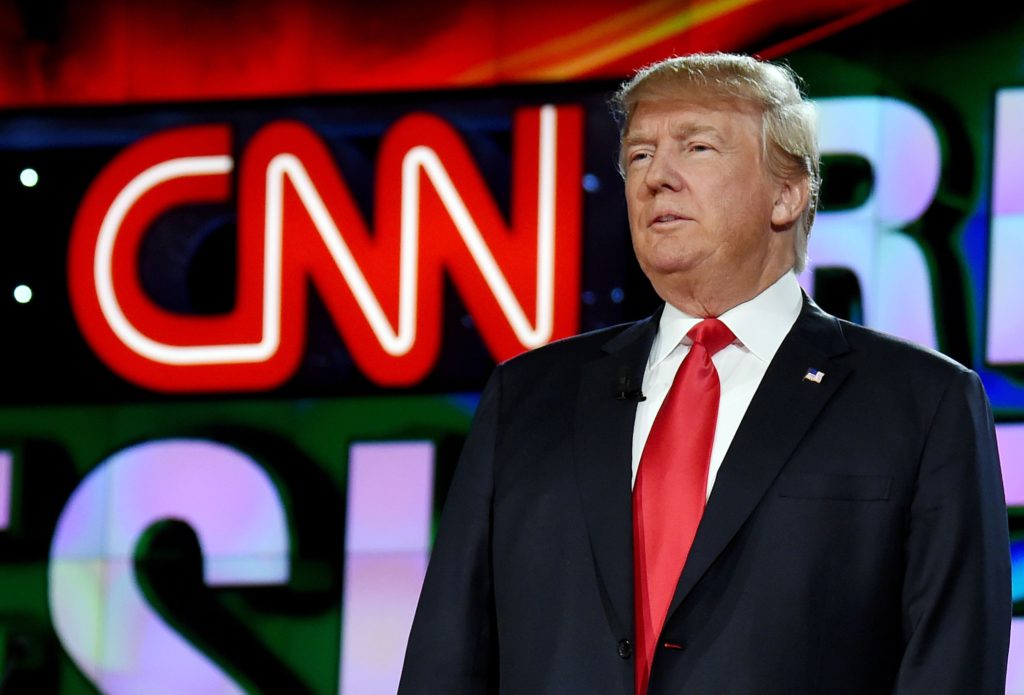
Trump Sues CNN for Defamation, Saying Network Fears He’ll Run in 2024

(Bloomberg) — Former President Donald Trump sued CNN for defamation, accusing the network of smearing him — including with frequent comparisons to Adolf Hitler — to undermine a potential run for re-election in 2024.

CNN has tainted Trump’s image by using “ever-more scandalous” labels to describe him in broadcasts, including “racist,” “Russian lackey,” and “insurrectionist,” culminating in false comparisons to the late Nazi leader, according to a suit filed Monday in federal court in Fort Lauderdale, Florida.

Comparing Trump to “arguably the most heinous figure in modern history” is evidence that CNN had “actual malice” toward him — the required threshold for proving defamation against a public figure, Trump’s lawyers claim.

Trump, who has long clashed with CNN over its reports on his behavior and policies, is seeking at least $475 million in damages.

Trump hasn’t shied away from suing his perceived enemies since leaving office, though he’s had limited success. His suit accusing his 2016 election rival Hillary Clinton and dozens of others of conspiring against him with allegedly fake Russia claims was tossed out by a Florida judge last month.

“The time has finally come to hold CNN responsible and legally accountable for their willful deception and defamatory statements made about me and both, directly and indirectly, my strong, devoted, and patriotic supporters,” Trump said in an emailed statement.

CNN declined to comment on the lawsuit.

The former president’s false claim that the 2020 election was rigged — and a subsequent violent attack on the Capitol by a mob of his supporters — led to widespread comparisons of Trump to authoritarians like Hitler, while Trump’s regular criticism of immigrants has led to claims that he is racist. Notably, Trump has also drawn criticism for accusing other people of being racist, including New York Attorney General Letitia James and Fulton County District Attorney Fani Willis, both of whom are Black women investigating him.

The complaint points to several examples of Trump allegedly being compared unfairly to Hitler, including a special report called “The Fight to Save Democracy” by CNN anchor Fareed Zakaria that aired on Jan. 9, 2022, about a year after Jan. 6 insurrection.

“America has vanquished demagogues before. So how do we do it now?” Zakaria said in a promotion for the report, according to the complaint.

Trump alleges the report went too far far because “a focal point of the report is a discussion of the ascendancy of Hitler and comparisons to the plaintiff, interspersing discussion of Hitler and Nazi Germany with footage of the plaintiff.”

Zakaria said in the report: “Let’s be very clear. Donald Trump is not Adolf Hitler,” according to the complaint.

The case is Trump v. Cable News Network Inc., 0:22-cv-61842, US District Court, Southern District of Florida (Fort Lauderdale).

(Updates with damages sought by Trump)

More stories like this are available on bloomberg.com

©2022 Bloomberg L.P.

California Investigators Seize Edison Gear in Fairview Fire Probe

(Bloomberg) — California officials investigating the deadly Fairview Fire seized some Edison International overhead wires, including one that showed signs of damage, according to a report the company filed with state regulators.

The fire in Riverside County erupted on Sept. 5, killing two people and injuring three. Investigators with the California Department of Forestry and Fire Protection have identified two “areas of interest,” one of them near a Southern California Edison power line, the other about 500 feet (150 meters) to the west, according to the filing Monday. Telecom company Frontier Communications also has equipment on the same utility poles, the report said.

At the investigators’ request, Edison and Frontier removed some overhead equipment in the area and turned it over to the department, better known as Cal Fire. Wires from both Edison and Frontier showed signs of damage, according to the report, but the cause was not immediately clear. Edison previously reported unusual activity on one of its circuits close to the start time of the fire. 

More stories like this are available on bloomberg.com

©2022 Bloomberg L.P.

US to Announce New Limits on Chip Technology Exports to China

(Bloomberg) — The Biden administration plans to announce new restrictions on China’s access to U.S. semiconductor technology, according to people with knowledge of the situation, an escalation of Washington’s efforts to stifle Beijing’s industrial ambitions and a risk to growth for the $550 billion sector.

The Commerce Department will roll out a package of rules this week to govern which semiconductor technologies can be exported to China, including codifying earlier guidance given to specific companies, said the people, who asked not to be identified as the information isn’t public. 

The White House and Commerce Department declined to comment. 

The US has been increasingly focused on limiting access to high-end semiconductor technology, and boosting its own domestic production capacity, as part of its broader strategic competition with the world’s second-biggest economy.

The new measures, previously reported by the New York Times, are expected to include formalizing export restrictions on technology that produces advanced semiconductors, the people said, as well as prohibiting the sale of tools for logic and memory chip production in China and restricting access to chips used in supercomputing and artificial intelligence.

The guidelines will also codify restrictions recently imposed on Nvidia Corp. and Advanced Micro Devices Inc., according to one of the people.


Members of Congress have long pushed the White House to tighten controls around semiconductor equipment to China, with prior actions more focused on companies designated as risks to national security, such as Huawei Technologies Co.

Under current guidelines, US-based chip equipment makers, such as Applied Materials Inc., have been allowed to sell machinery for use in China under certain circumstances, or equip some Chinese companies with machinery to produce less-advanced semiconductors.

The steps to be announced this week will include formalizing restrictions on technology to produce chips that are designated as 14-nanometer or better, the people added. As a general guide in chip manufacturing, the smaller the number of nanometers indicates more advanced capabilities. The restrictions will also expand the so-called foreign direct product rule on more Chinese entities, they said.

Explainer: How ‘Chip War’ Puts Nations In Technology Arms Race

More stories like this are available on bloomberg.com

©2022 Bloomberg L.P.

Texas Crypto Boom Slows as ‘Double Compression’ Hinders Miners

(Bloomberg) — The growth in Texas crypto-mining capacity will be stunted as Russia’s war on Ukraine drives up global energy prices and Bitcoin prices languish, according to an industry group.

Mining capacity in the Lone Star State will increase by 2 gigawatts to 3.5 GW by the first quarter of 2024, rather than the former forecast of up to 5 GW, said Lee Bratcher, president of the Texas Blockchain Council. 

The “double compression effect” of higher electricity prices and declining cryptocurrency values means it’ll take longer to bring online the huge queue of mining projects set to connect to the state grid, Bratcher said at a conference on Monday.

“It’s going to increase slower than we thought because the war on Ukraine had pushed energy prices up,” Bratcher said at the Gulf Coast Power Association gathering in the state capital of Austin.

Even at a scaled-back pace, crypto is helping push Texas electricity usage to unprecedented heights. In recent months, power demand soared to all-time highs almost a dozen times, prompting the Electric Reliability Council of Texas to urge businesses and households to curtail usage to avoid shortages. Miners have argued that they are super sensitive to power costs and voluntarily curtail operations to aid the state’s grid.

“We spend every waking minute thinking about electricity,” Chad Harris, chief commercial officer of Riot Blockchain Inc., which operates the largest Texas mining facility.

More stories like this are available on bloomberg.com

©2022 Bloomberg L.P.

Louisiana Congressional Candidate Shows Herself in Labor in Campaign Ad

(Bloomberg) — Louisiana Democrat Katie Darling hopes to jump-start her longshot bid to unseat House Minority Whip Steve Scalise with one of the most intimate campaign ads in recent memory: It features a video of her giving birth.

Darling on Monday released the 75-second ad, which shows her going to the hospital and in labor with her son, Ollie, last month. It also showcases her home life with her husband and daughter. 

In the spot, Darling, who currently works in the education technology sector, according to her website, spotlights concerns about climate change and reproductive health care. Louisiana has one of the country’s most restrictive abortion bans.

“We should be putting pregnant women at ease, not putting their lives at risk,” Darling says in the ad.

Scalise has held the seat since his first win in 2008. Louisiana uses the majority-vote system: All candidates will compete in a primary on Nov. 8. If no candidate garners more than half the vote, the top two will face off in a December election, according to Ballotpedia, a nonprofit that researches elections.

Despite the record number of women serving in Congress, it’s only recently that politics and early motherhood have begun to intersect more publicly. In 2018, Tammy Duckworth of Illinois became the first US senator to give birth while in office. The first lactation room in the House of Representatives was installed after Nancy Pelosi became speaker in 2007, according to the New York Times.

More stories like this are available on bloomberg.com

©2022 Bloomberg L.P.

Stocks Rise From the Ashes in Best Day Since July: Markets Wrap

(Bloomberg) — Stocks kicked off the week with big gains after suffering their worst September in two decades as Treasury yields halted a seemingly endless surge, with weak US manufacturing data soothing concern the Federal Reserve will overtighten monetary policy.

As a sign of exhaustion that followed the recent washout, about 97% of the S&P 500’s shares flashed green, with the gauge having its best day since July. Aside from being oversold from a technical perspective, extreme pessimism and low fund positioning also fueled a rebound that followed its third-worst performance during the first nine months of a year since 1931.

In a bad-news-is-good-news world as far as Fed policy goes, a drop in the Institute for Supply Management’s gauge of factory activity suggested the economy may be faltering, reducing the urgency for more aggressive rate hikes. Fed Bank of New York President John Williams said the central bank still has more work to do to curb inflation, warning the process will take time.

Equities also managed to gain even in the face of Credit Suisse Group AG’s market turmoil and Tesla Inc.’s disappointing deliveries that prompted an 8.6% plunge in the electric-vehicle giant’s shares.

“The market is oversold, and sentiment is extremely negative, so a bounce…even a sharp one…could happen at any time,” wrote Matt Maley, chief market strategist at Miller Tabak + Co. “However, we see lower-lows before the ultimate bottom is reached for this bear market…as the stock market has not fully priced-in a recession.”

Read: BofA’s Subramanian Says Wall Street Hasn’t Fully Capitulated Yet

As equities snapped back, the Cboe Volatility Index dropped to around 30 after also closing above that threshold every day last week. Nicholas Colas at DataTrek Research said Friday he’d like to see the gauge finishing over that mark for several more days before believing on a “tradeable low.”

Key technicals will likely need to capitulate before the S&P 500 can truly bottom, according to Bank of America Corp.’s Stephen Suttmeier. Although the US equity market typically turns bullish in the fourth quarter of midterm election years, capitulation remains elusive in equity put-call ratios and S&P 500 selling volume.

JPMorgan Chase & Co.’s Marko Kolanovic reiterated that increasingly hawkish central banks and the destruction of the Nord Stream pipelines will likely cause delays in the US equity-market’s recovery, putting the firm’s year-end target for the S&P 500 — which implies a potential upside of about 30% from Monday’s close — at risk.

Treasuries surged across the curve, with the five-year yield at one point plummeting over 30 basis points. The 10-year rate sank to 3.65% after recently topping 4% and climbing for nine straight weeks. Swaps tied to Fed policy meeting dates fell sharply for early 2023. The March meeting contract’s rate currently suggests a peak policy rate of 4.46% next year, down from recent highs above 4.60%.

The dollar slipped, yet the latest MLIV Pulse survey showed the greenback is expected to hit new highs over the next month. Gold surged. US coal prices surged past $200 for the first time as a global energy crunch drives up demand for the dirtiest fossil fuel. Oil saw its biggest rally since July as potential OPEC+ output cuts heighten fears of supply tightness on the horizon.

Read: Credit Wipeout Foretells More Junk-Debt Pain as Recession Looms

Despite the rebound in risk assets, markets are bracing for more turbulence as a crucial reading on the still-tight US labor market is set to give traders a chance to reassess the Fed’s commitment to its aggressive path of rate hikes.

The Fed should consider stopping its tightening campaign after one more rate hike in November, according to Ed Yardeni, who coined terms like “Fed Model” and “bond vigilantes.” The stress in financial markets from big rate increases, a surging dollar and quantitative tightening has reached the point that officials should make financial stability the top priority, he added.

“Investors are starting to doubt central banks globally will remain aggressive with fighting inflation as financial stability risks are growing,” said Ed Moya, senior market analyst at Oanda. “It is too early to call for a Fed pivot, but it seems the action in Treasury markets suggests traders are growing confident that the global growth slowdown is starting to drag down pricing pressures.”

Elsewhere, Brazilian assets soared after President Jair Bolsonaro secured his way to a runoff election against Luiz Inacio Lula da Silva as investors cheered on the incumbent’s better-than-expected showing and bet his leftist challenger will be forced to moderate his stances in the second stretch of the race. 

The real was the best-performing among the world’s major currencies Monday, while the Ibovespa gauge of stocks climbed 5.5% — its biggest gain since April 2020.

After two consecutive months of declines, Bitcoin advocates are hoping that the largest cryptocurrency reverts to form in October, which has typically been one of its best months for gains. The virtual currency tends to rise roughly 25% in October and has, since 2015, advanced more than 85% of the time during it, according to Bespoke Investment Group.

Read: Wall Street Watchdogs Seek More Muscle to Police Bitcoin Trades

Key events this week:

  • Eurozone PPI, Tuesday
  • US factory orders, durable goods, Tuesday
  • Fed’s John Williams, Lorie Logan, Loretta Mester, Mary Daly speak at events, Tuesday
  • Eurozone services PMIs, Wednesday
  • OPEC+ meeting begins, Wednesday
  • Fed’s Raphael Bostic speaks, Wednesday
  • Eurozone retail sales, Thursday
  • US initial jobless claims, Thursday
  • Fed’s Charles Evans, Lisa Cook, Loretta Mester speak at events, Thursday
  • US unemployment, wholesale inventories, nonfarm payrolls, Friday
  • BOE Deputy Governor Dave Ramsden speaks at event, Friday
  • Fed’s John Williams speaks at event, Friday

Some of the main moves in markets:

Stocks

  • The S&P 500 rose 2.6% as of 4 p.m. New York time
  • The Nasdaq 100 rose 2.4%
  • The Dow Jones Industrial Average rose 2.7%
  • The MSCI World index rose 2%

Currencies

  • The Bloomberg Dollar Spot Index fell 0.5%
  • The euro rose 0.3% to $0.9828
  • The British pound rose 1.4% to $1.1325
  • The Japanese yen was little changed at 144.67 per dollar

Cryptocurrencies

  • Bitcoin rose 1.7% to $19,556.6
  • Ether rose 1.2% to $1,319.21

Bonds

  • The yield on 10-year Treasuries declined 17 basis points to 3.65%
  • Germany’s 10-year yield declined 19 basis points to 1.92%
  • Britain’s 10-year yield declined 13 basis points to 3.96%

Commodities

  • West Texas Intermediate crude rose 4.7% to $83.26 a barrel
  • Gold futures rose 2.2% to $1,709.20 an ounce

More stories like this are available on bloomberg.com

©2022 Bloomberg L.P.

Waymo Driverless Trucks Haul Beer to Houston From Dallas

(Bloomberg) — Waymo, Alphabet Inc.’s driverless-vehicle unit, said it has carted in excess of 1 million pounds of Modelo and Corona beer over 220 miles a day to Houston from Dallas under a pilot program for Constellation Brands Inc.

The test, which started in April, is being done with the trucker C.H. Robinson Worldwide Inc. and Waymo Via, Alphabet’s autonomous trucking program. The companies are delivering the freight in Class 8 trucks using Waymo’s self-driving software and a safety driver behind the wheel.

“We saw really good maturity and performance from the system,” said Charlie Jatt, head of commercialization for trucking at Waymo. “There were no harsh brakes or swerving events.”

For C.H. Robinson, a trucking company with more than $23 billion in revenue, working with Waymo is a potential long-term answer to the shortage of long-haul drivers, while Waymo sees it as a way to commercialize its 13-year investment in self-driving vehicles. The Google unit is already running robotaxis in three regions in the U.S. 

The route from Dallas to Houston is a good test, Jatt said. The roads have fog, rain and lots of bugs that can interfere with the system’s sensors and lidar. The company hasn’t set a date to debut service without a test driver. 

“It’s not super far away,” Jatt said. “It’s something we’re working toward with urgency and expect to be ready in the coming years.”

(Updates with trip frequency in first paragraph.)

More stories like this are available on bloomberg.com

©2022 Bloomberg L.P.
American Air Says Covid Led It to Seek Controversial JetBlue Alliance

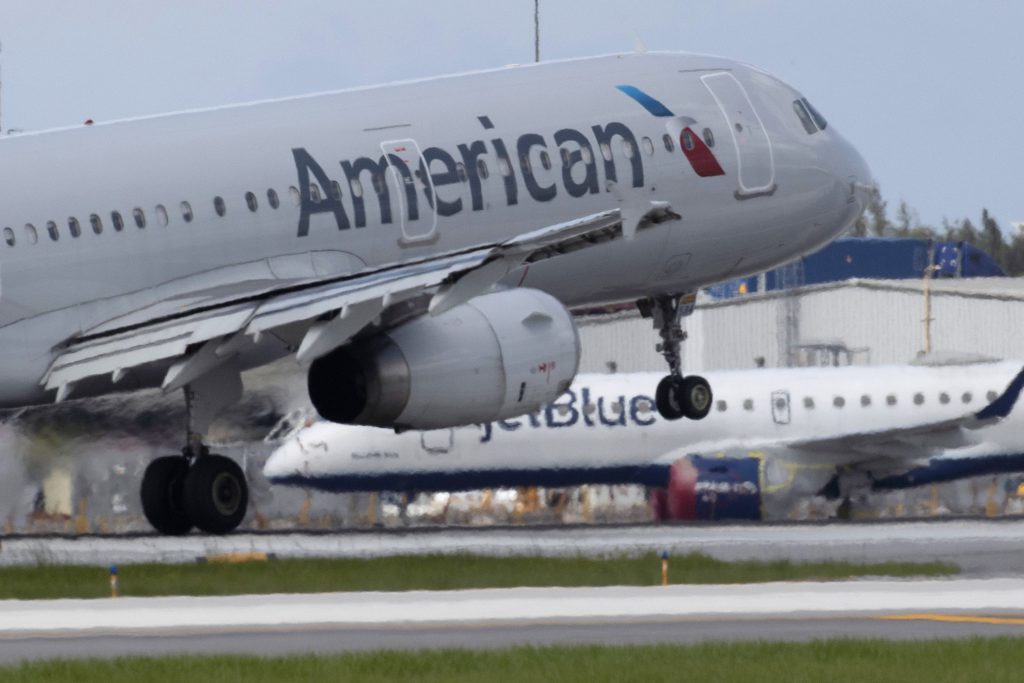
(Bloomberg) — American Airlines Group Inc. credited Covid as a key reason it pursued a controversial business partnership with JetBlue Airways Corp., saying it needed the alliance to stay competitive in the heavily trafficked US Northeast.

“Our business was hemorrhaging cash” in the spring of 2020, American’s CEO Robert Isom testified Monday in a federal court in Boston, adding that the airline was losing more than $100 million a day as Covid-19 shut down air travel. Identifying the pandemic downturn as a “mortal threat” to American’s survival, Isom authorized executives to focus “fast and hard” on partnerships with JetBlue and Alaska Air Group Inc., to put his airline “in a stronger position when we came out than when we went in.”

American’s partnership with JetBlue, called the Northeast Alliance, allows the two airlines to share routes, bookings and passengers, particularly at airports in Boston and New York. The Justice Department has accused it of being “a merger in all but name,” and sued American and JetBlue last year. Prosecutors seek to unwind the partnership, which they claim reduces choice at US Northeast airports and costs passengers as much as $700 million annually in increased fares. 

Rival carriers like Southwest Airlines Co. and Spirit Airlines Inc. have also accused the alliance of putting outsized control of New York flights under American, the country’s largest airline.

The alliance, which has been operational for about 18 months, lets passengers use either carrier’s website to book itineraries on both airlines and enjoy some reciprocal loyalty reward benefits. Offering corporate customers and frequent flyers a seamless reservation and travel experience “would absolutely help us maintain market presence in a downturn,” Isom said at the start of the trial’s second week.

William Jones II, an attorney for the Justice Department, asked Isom if the alliance was intended to “help American shed capacity.” The CEO replied it was merely to “help American,” and that the partnership offered it the opportunity “to expand or improve in an area where we’ve been historically weak.”

‘Distinct’ Services

In his testimony on Monday, Isom defended the alliance as wholly different from a merger, pointing to the five years of extensive, expensive integration American undertook to merge with US Airways in 2013. After that merger, the two airlines had to convert to the same computer and reservations systems, negotiate agreements with employee unions, reconfigure aircraft, retrain some staff, and convert airport properties to one brand.

With the Northeast Alliance, he said, “we’re not trying to merge our carriers or make JetBlue identical to American.” When Jones asked if the two “operate as a single airline” in New York and Boston, Isom replied, “We have our own gates, our own planes, our own services that make us distinct.”

Isom said the airline’s goal was to encourage high-value travelers to book with the Northeast Alliance instead of with United Airlines Inc. or Delta Air Lines Inc., which have large presences in Northeast markets. “It’s not something that takes billions to bring about,” like a merger, he said. “There’s no comparison at all. They’re not on the same magnitude, not the same scale.”

The case is US v American Airlines, 21-cv-11558, US District Court of Massachusetts (Boston).

More stories like this are available on bloomberg.com

©2022 Bloomberg L.P.

Tesla Tumbles Most in S&P as Quarterly Deliveries Disappoint

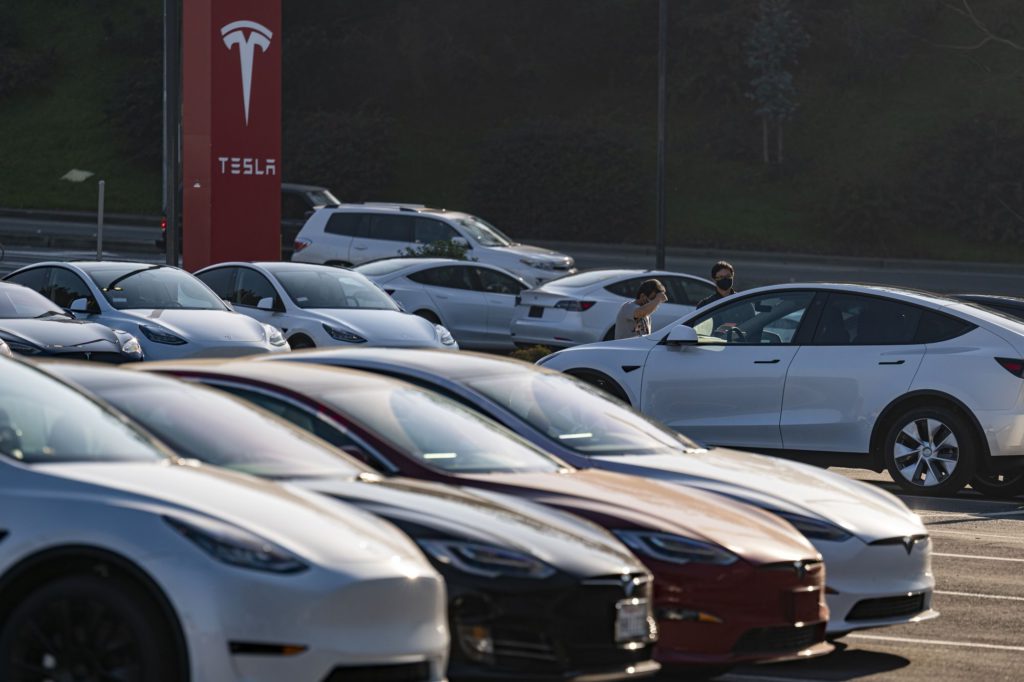
(Bloomberg) — Tesla Inc.’s shares dropped the most in four months after the carmaker blamed a disappointing deliveries report on shipment issues that increased the number of vehicles on their way to customers as the quarter ended.

The maker of Model 3 sedans and Model Y crossovers handed over 343,830 vehicles to customers in the last three months, short of the almost 358,000 total that analysts expected.

That sent Tesla’s stock tumbling 8.6% Monday, its biggest one-day decline since June 3. It was also by far the worst performer in the S&P 500 Index, which notched its best day since July.

Tesla has for years delivered big batches of vehicles toward the end of each quarter, a practice Chief Executive Officer Elon Musk has tried to move away from by localizing production in all major regions. While the carmaker opened its first European factory in Germany in March, record shipping costs are still bedeviling the auto industry along with shortages of semiconductors and other components.

See also: Musk Sets Off Uproar by Tweeting His Ukraine ‘Peace’ Plan

“As our production volumes continue to grow, it is becoming increasingly challenging to secure vehicle transportation capacity and at a reasonable cost during these peak logistics weeks,” Tesla said in a statement Sunday. “In Q3, we began transitioning to a more even regional mix of vehicle builds each week, which led to an increase in cars in transit at the end of the quarter.”

Through the first nine months of the year, Tesla’s deliveries are up about 45%, shy of the 50% average annual growth rate the company has targeted for the next several years. Legacy automakers and new entrants alike are bringing more EVs to market to take on Tesla, which has led the charge for battery-powered cars since the Model S sedan debuted a decade ago.

See also: General Motors Retains US Sales Crown in Third Quarter

“Naysayers on the Tesla story will point to the shortfall in 3Q as a demand issue,” Jeffrey Osborne, an analyst at Cowen & Co. with the equivalent of a holding rating on the shares, wrote in a report. “Monthly registrations and 4Q results will need to be monitored to better assess the situation.”

Tesla had said that its delivery count is conservative and that final numbers could vary by 0.5% or more. The company produced 365,923 vehicles for the quarter.

Musk wrote in a series of tweets on Sunday that the company was “smoothing out” the number of vehicles it hands over to customers from quarter to quarter. Deliveries rose to a record in the last three months, recovering from lockdowns in Shanghai that crimped production in the second quarter.

“Customer experience suffers when there is an end of quarter rush,” Musk wrote in one post. “Steady as she goes is the right move.”

Tesla doesn’t break out sales by geography, but the US and China are its largest markets. The Model 3 and Model Y accounted for almost 95% of last quarter’s deliveries. The company also makes the Model S and X at its factory in Fremont, California.

The delivery figures came on the heels of Tesla’s AI Day event, held after the close on Sept. 30. Musk showed off a prototype humanoid that walked and raised its hands just over a year after a human dressed as robot danced on stage during a similar showcase of the company’s artificial intelligence efforts in August 2021.

Read more: Tesla Shows Latest Robot Prototype With Opposable Thumbs

“One of the main purposes of hosting AI day 2 was to attract talent,” Ben Kallo, a Baird analyst who rates Tesla the equivalent of a buy, said in a note. “This is a critical piece of advancing its initiatives as the shortage of laborers in the market continues, specifically for highly trained engineers.”

(Updates with share decline beginning in first paragraph)

More stories like this are available on bloomberg.com

©2022 Bloomberg L.P.

Top Wall Street Watchdogs to Congress: Give Us More Power to Police Bitcoin

(Bloomberg) — The top US financial regulators want Congress to give them new powers to directly oversee trading in Bitcoin, the world’s largest cryptocurrency. 

In a Monday report, the heads of the Federal Reserve, the Treasury and other leading financial watchdogs said the government has limited ability to regulate crypto assets that aren’t covered by securities laws. Although many tokens fall under the Securities and Exchange Commission’s rules, some, like Bitcoin, are not directly under any federal agency’s jurisdiction.

“As a result, those markets may not feature robust rules and regulations designed to ensure orderly and transparent trading, to prevent conflicts of interest and market manipulation, and to protect investors and the economy more broadly,” the Financial Stability Oversight Council said. FSOC also includes the SEC chair and the head of the Commodity Futures Trading Commission, which is vying for a bigger piece of the crypto regulatory action. 

The report is the latest from the Biden administration to call for a more coordinated approach to regulating digital assets after years of patchwork oversight. The SEC claims turf over assets that are considered securities, the CFTC oversees derivatives on crypto and banking regulators also assert some powers. 

Congress should also give regulators new powers to weigh in on a range of subjects, including conflicts of interest, abusive trading practices, recordkeeping requirements, segregation of customer assets, and cybersecurity, FSOC said in 100-plus-page report released on Monday. Legislation should also give agencies more enforcement and examination authority, the regulators said. 

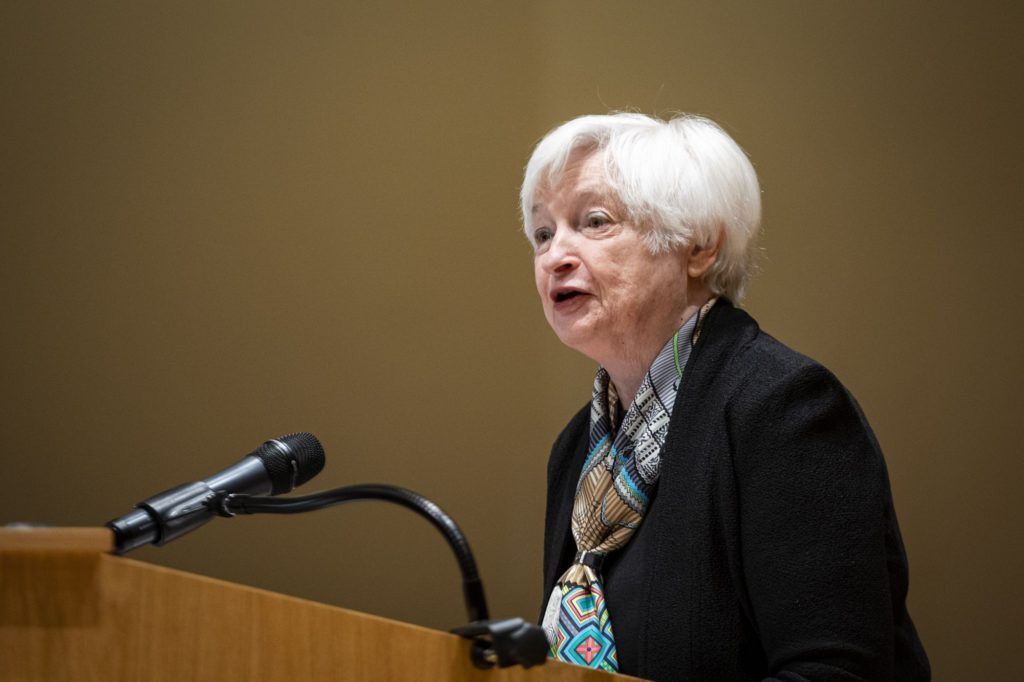
“Innovation without adequate regulation can result in significant disruption and harm to the financial system,” Treasury Secretary Janet Yellen said during the virtual meeting. 

There are multiple bills in Congress that would give the CFTC power to oversee Bitcoin and other commodity tokens, but the FSOC report didn’t signal its support for any specific legislation. Those measures have the backing of many in industry because they don’t want to be regulated by the SEC, which has tough investor-protection requirements.

FSOC also recommended that: 

  • Agencies assess the impact of plans to give retail customers direct access to digital-asset markets. The CFTC is currently considering a proposal from the US arm of crypto trading giant FTX that would take the middleman out of Bitcoin and Ether futures trading.
  • Congress create a regulatory framework for issuer of so-called crypto stablecoins, which are used as an on- and off-ramp to traditional money.
  • Lawmakers give regulators power to look at the activities of affiliates and subsidiaries of crypto firms.
  • Congress provide agencies with the funding they need to regulate crypto activities.
  • Lawmakers give the Federal Housing Finance Agency and the National Credit Union Administration authority to take enforcement action against firms providing crypto-related services to banks.

More stories like this are available on bloomberg.com

©2022 Bloomberg L.P.
Close Bitnami banner
Bitnami