Bloomberg

Peloton Signs Deal to Put Fitness Bikes in Hilton’s 5,400 US Hotels

(Bloomberg) — Fans of Peloton Interactive Inc. will have a new place to ride the company’s workout bikes: Hilton Worldwide Holdings Inc.’s 5,400 hotels in the US. 

The two companies announced Monday that Hilton will be the first chain to offer Peloton Bikes across all of its US branded hotels. The companies also said that members of the Hilton Honors rewards program will get a 90-day free trial to the digital Peloton app and $100 off a Bike, Bike+ or Tread purchase through Jan. 1. The standard Peloton app free trial is 30 days. 

Peloton said about 300 Hilton hotels already have the fitness company’s equipment, but those were purchased by the individual property operators rather than the hotel company itself. Data show that 90% of Peloton’s members say they are more likely to stay at hotels with Peloton equipment and 1.6 million Peloton rides occurred at hotels over the past year, the New York-based fitness company said. 

The companies didn’t disclose financial terms, but said the deal will include at least one standard Peloton Bike per hotel fitness center and that the rollout will start in the coming weeks. Peloton shares rose as much as 2.9% during trading Monday morning.

As part of an effort to turn around a company that has seen its stock price fall about 80% in 2022, Peloton executives have recently enacted a series of distribution deals. Last month, the company started selling its bikes through Amazon.com Inc.’s online store and last week it announced a partnership with retailer Dick’s Sporting Goods Inc. 

Peloton has recently attempted to cut costs by outsourcing all manufacturing and distribution, while also reducing its in-house customer service teams. The company also plans to shutter most of its retail outlets. Chief Executive Officer Barry McCarthy has pushed the company to generate more revenue, saying that “we simply must become self-sustaining on a cash flow basis.”

(Updates with shares in the fourth paragraph.)

More stories like this are available on bloomberg.com

©2022 Bloomberg L.P.

Retailers Including Target, Walmart Get Tough on Suppliers With Fines for Late Orders

(Bloomberg) — Large retailers grappling with supply-chain snarls, inflation and increased automation are cracking down on orders from their vendors.

Stores such as Walmart Inc. and Target Corp. have long fined suppliers that fail to deliver products on time, in the right amount or with the correct specifications. But after the pandemic allowed for some leeway, US retailers are now coming back with tougher standards and tightening expectations on how goods are received.

Anything less than exact compliance can result in penalties from fines to losing shelf space when contract negotiations come up — a particular challenge for small brands that often have limited resources to scrutinize shipments. 

It’s something Marta Cros, who owns a natural skincare company called Apto, experienced firsthand after Walmart started selling some of her products last year. A mishap with the barcodes on an order of lip balms triggered penalties and delayed payments that led to about $200,000 in losses, she said. She recouped roughly 90% of that, but only after about 10 months of back-and-forth with the retailer.

“You need to be very conscious about what you’re getting into,” said Cros, who doesn’t blame Walmart. “You can freaking bankrupt your company if you’re not very careful.”

The changes among retailers are varied. Target is beefing up the team in charge of policing orders, according to a person familiar with the matter. The number of companies levying supply-chain charges also is growing, said David Friedler, managing partner at consumer-goods consultancy Simpactful. And Walmart recently rolled out extra levies for suppliers using its transportation services.

Walmart is telling suppliers that their shelf space will be reviewed more frequently than in the past, a person familiar said, and that vendors with persistent out of stocks could see their products quickly replaced. The retailer also is looking to capitalize on trends, including those sparked by social media, by quickly swapping items in and out.

Target declined to comment. In a statement, Walmart said its goal is ensuring items are in stock.

“The customer is at the center of everything we do and one of the best ways we can help them save time and money is by having the products they want, when they want them,” the company said. “We appreciate our suppliers and the work they are doing to help ensure their products move efficiently through the supply chain to our stores — and ultimately to more of our customers.”

For suppliers, charges can be make-or-break and eventually affect prices for consumers. Fines and fees can cost sellers as much as 12% of the amount they bill to Walmart, according to SupplyPike, a software company that helps vendors track and fight retailer deductions. 

Some suppliers said they’ll start raising prices to recoup the charges, said Stacy Tan, SupplyPike’s vice president of retail insights. Amazon.com Inc. sellers vowed as much when the firm levied a 5% fuel and inflation fee on online merchants that use its shipping services.

“There are companies that are literally saying, ‘we’re paying Walmart more in fines that we made on this invoice,’” Tan said.

Higher Stakes

Store operators that grappled with empty shelves over the past three years say that penalties encourage vendors to get their supply chains in order to avoid out of stocks, which in 2021 cost consumer-goods retailers $82 billion, according to NielsenIQ. 

The fines are costly for manufacturers. McKinsey estimated in 2018 that sanctions for faulty shipments could rise collectively to $5 billion a year in the US if consumer-packaged goods companies didn’t get their act together — and that was before the pandemic-fueled supply chain chaos and higher retailer expectations.

“The range of areas that retailers are assessing, either fines or fees, is broader than in the past,” Simpactful’s Friedler said. “There are certainly tensions in the relationship between the two parties.”

Read about how supply-chain snarls are affecting the aftermath of Hurricane Ian

Along with Walmart’s new fuel surcharge, the retailer also implemented a pickup fee assessed as a percentage of cost of goods received. The charge ranges from 0.01% for eyewear to 5.51% for some fabrics-and-crafts materials, according to an internal document. 

Walmart also is rolling out automated warehouses where robots receive, store and retrieve products. That means labels and barcodes must be correct and placed in the right spot or machines won’t be able to read them. 

Some vendors argue that charges aren’t about ensuring products are on shelves, but rather about shoring up retailer margins. When Walmart introduced the fuel and department-based fees, it said it wanted to “share cost accountability” so it could continue offering its signature “everyday low prices.” The retailer expects earnings per share to decline as much as 11% this year in part because of inflation.

Suppliers agree to potential fines when they sign contracts with retailers, said Jonathan Greenway, global leader of the consumer-products practice at consulting firm AlixPartners. Still, the magnitude of the penalties can surprise smaller companies looking to expand sales, since they often focus on getting into as many stores as possible rather than the quality of their supply chain.

Artisan coffee purveyor Bean Box, which entered Walmart this year, uses a workaround: It only bills the retailer for the number of cases that actually made it to a distribution center, not for the number ordered. That way invoices won’t get held up over the difference, allowing the coffee firm to get paid on time, said Chief Executive Officer Matthew Berk.

“We’ve engineered our whole process to be as Walmart-friendly as possible,” he said.

Looking back, Apto’s Cros said it might have been a good idea to start off with fewer than the 3,500 Walmart stores her brand is currently in. But she was eager to do business with the retailer, which helped reach her target audience of busy moms and smooth the path to other chains. 

“I don’t think it’s a retailer’s responsibility to hold your hand,” Cros said. “You need to put your big girl pants on and deal with it.”

More stories like this are available on bloomberg.com

©2022 Bloomberg L.P.

Wall Street-Backed Bitcoin Firm NYDIG Replaces CEO, President

(Bloomberg) — Bitcoin firm NYDIG, which counts some of the biggest Wall Street banks as its partners, appointed a new chief executive officer and president, the latest changing of the guard in the battered crypto industry.  

Tejas Shah and Nate Conrad were named to the roles of CEO and president, respectively, the New York-based firm said in a  statement Monday. Outgoing CEO Robert Gutmann and President Yan Zhao will remain at NYDIG’s parent, Stone Ridge Holdings Group. 

Both alum of Goldman Sachs Group Inc., Shah and Conrad were most recently the firm’s global head of institutional finance and global head of payments, respectively. They will focus on growing the businesses serving North American miners and payments partners, the company said. 

NYDIG has been one of the major lenders that funded the Bitcoin miners’ expansion since the last bull run in 2021. With the collapse of crypto prices, many mining firms have struggled to raise capital and become distressed. In August, Stronghold Digital Mining Inc. said it reached agreements with NYDIG and WhiteHawk Capital to eliminate over half its debt and add liquidity. 

NYDIG said its balance sheet is “the strongest it’s ever been” with its Bitcoin balance hitting an all-time high in the third quarter, up almost 100% year-over-year. Revenue is up 130% through the second quarter and set to increase in the third quarter. The firm raised $1 billion last year at a valuation of more than $7 billion, in a round led by WestCap with participation from Morgan Stanley, MassMutual, and others. 

The crypto industry has seen a raft of successions recently. Celsius Network Ltd.’s CEO Alex Mashinsky and FTX US President Brett Harrison both announced departures last week, following earlier moves by Kraken CEO Jesse Powell and crypto brokerage Genesis CEO Michael Moro. 

Crypto Shakeout Engulfs the C-Suite as CEOs Start Leaving  

More stories like this are available on bloomberg.com

©2022 Bloomberg L.P.

L3Harris to Buy Viasat’s Data Links Unit for $1.96 Billion

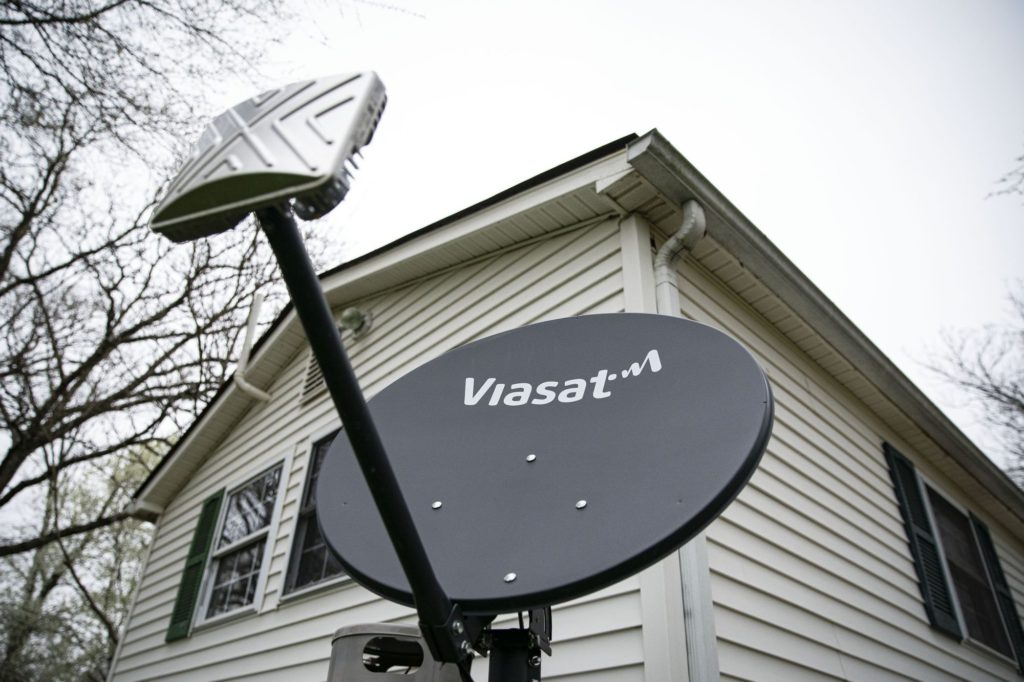
(Bloomberg) — Viasat Inc. shares jumped after L3Harris Technologies Inc. agreed to buy its tactical data links division for about $1.96 billion to beef up its military communications business.

The Viasat unit has 450 employees and generates about $400 million in annual sales, the companies said Monday. The deal is expected to close in the first half of 2023.

The business provides encryption technology, an area that’s growing in importance as cybersecurity becomes a new frontier for geopolitical conflict. The acquisition could help L3Harris compete with larger Pentagon suppliers such as Raytheon Technologies Corp. and Lockheed Martin Corp.

“Global national security requirements are increasing rapidly in this sector,” L3Harris Chief Executive Officer Christopher Kubasik said in a statement.

Viasat, a geostationary satellite company, had been exploring a sale of the unit, Bloomberg reported in July. The company expects about $1.8 billion in cash proceeds from the deal and plans to use that to pay down debt.

Viasat’s shares rose as much as 27%, their biggest intraday gain since March 2020, in New York trading. L3Harris climbed as much as 2.6%.

(Updates with L3Harris comment in fourth paragraph, proceeds in fifth and shares in sixth.)

More stories like this are available on bloomberg.com

©2022 Bloomberg L.P.

Harley-Davidson’s E-Bike Spinoff Climbs in Volatile Trading

(Bloomberg) — LiveWire Group Inc. jumped Monday as the electric motorcycle business spun off by Harley-Davidson Inc. rebounded from last week’s disappointing stock market debut.

The shares surged as much as 46% during the regular session — after a 91% pop during premarket trading — despite no company announcements or other apparent news involving LiveWire. The stock was up 13% to $8.09 at 9:49 a.m. in New York.

Representatives for LiveWire didn’t respond to a request for comment.

Monday’s stock surge follows bizarre price action in other thinly traded firms in the wake of corporate news events. Small initial public offerings have been popping at an unusually high rate this year, while some companies that announce reverse stock splits have seen similarly unexplained spikes.

LiveWire began trading Sept. 27 after completing a merger with AEA-Bridges Impact Corp., a special purpose acquisition company. The listing brought in $295 million in net proceeds, far short of the $545 million anticipated when the deal was announced in December, reflecting the market’s growing unease with blank-check deals.

Read more: Harley’s EV Spinoff Raises Less Than Planned in SPAC Debut

LiveWire’s shares fell in each of the first three trading sessions following its debut. Harley has said it would retain a 74% stake in the business.

(Updates with share trading in second paragraph)

More stories like this are available on bloomberg.com

©2022 Bloomberg L.P.

Relentless Dollar Rally Raises Bets on Interventions, Investors Say

(Bloomberg) — The US dollar is expected to extend its gains, increasing speculation that governments will stage unusual market interventions to drive up the value of the currencies on the losing end of the trade. 

About 45% of 795 respondents to the latest MLIV Pulse survey expect an orchestrated attempt by major world powers to weaken the dollar, even though the US has moved to tamp down talk of such a move. Nearly as many said they expect Japan to step up its pricey efforts to shore up the yen by itself, without the support of others. Two thirds of respondents see the Bloomberg dollar spot index climbing to new highs over the next month.

The dollar has surged as international investors seize on higher US interest rates or seek a haven from market turmoil, including in crisis-ridden UK and emerging markets. The rally is exaggerating the economic difficulties of nations around the world by pushing up prices of imported food and fuel. That’s putting further pressure on many central banks, which have been raising interest rates in an effort to tamp down the surge in consumer prices. 

The unstoppable dollar is also a drag on American corporate earnings by reducing the value of money made abroad. Almost 90% of survey respondents expect third-quarter earnings to show more impact from the dollar than a quarter before.

“The dollar’s uptrend in the near term is going to persist,” said Joseph Lewis, head of corporate hedging and FX solutions at Jefferies LLC. “In the long term, the world will shift and some of the other currencies will bounce back. But human behavior tells me that it feels like being in the US is just a better place now.”

The dollar has been pulled higher by the Federal Reserve’s most aggressive policy tightening since the early 1980s, which has pushed up US bond yields. The Bloomberg dollar index has risen 14% this year, with the currency gaining even more against the pound and yen. The pound collapsed to a record low in late September due to the concerns over the UK’s deep tax-cut plans.

Japan spent $19.7 billion on its first intervention since 1998 to bolster the currency, but the surprise move didn’t bring long-lasting results.  On Monday, the yen weakened past 145 per dollar, nearing the level where Japanese authorities intervened to support the currency last month. Unlike the Fed, the Bank of Japan has been keeping interest rates low.

“There’s a big divergence between central banks’ monetary policy with the Fed being very hawkish and some others actually dovish,’’ such as the Bank of Japan and People’s Bank of China, said Nancy Davis, founder of Quadratic Capital Management. “It’s making the dollar incredibly strong.”

President Joe Biden’s administration has little incentive to weaken the dollar, since it could put further pressure on US inflation. And White House National Economic Council Director Brian Deese said he doesn’t expect any agreement among major economies to counter the currency’s strength. 

But MLIV survey respondents said a sharper runup could spark such a move. 

The last time there was a major round of coordinated action to weaken the dollar was in the 1980s, when the UK, France, West Germany, Japan, and the US agreed to act in concert in the effort dubbed the Plaza Accord. Japan in 2011 was able to secure Group of Seven support for intervention after the tsunami and during the Asian financial crisis. G-7 members also cooperated to shore up the euro in September 2000.

Any potential coordinated currency intervention could lead to significant bounces in most currencies versus the dollar. In the two months following the Plaza Accord, the dollar fell by over 10%, with the total decline over the next two years peaking at almost 50%. Currently, many investors have taken long positions in the dollar, and an intervention to weaken it would trigger a wave of selling.

The pound and the euro are already in a “semi” currency crisis and eventually, we “might even need some central banks’ coordination if this continues,” Adrian Zuercher, head of global asset allocation at UBS Global Wealth Management, told Bloomberg TV in an interview. 

Read more: How and When Japan Intervenes in Currency Markets: QuickTake

The strong dollar is also causing harm to some stock investors. Nearly 90% of respondents said the impact will be more apparent in third-quarter results.

Microsoft Corp. warned that a stronger greenback was hurting its bottom line when it cut its outlook in June, just ahead of the second-quarter earnings season. During that quarter’s earnings calls with companies in the S&P 500 Index, analysts and executives mentioned the dollar more than 1,000 times, the most in three years, according to data compiled by Bloomberg.

“Hedging rates and FX is top of mind for people,” Jefferies’s Lewis said. “For most companies, a 5% or 10% move in a currency is something they can ignore, but a 20% move is something they kind of have to contend with.”

Some MLIV Pulse respondents also listed emerging markets debt crisis, refinancing and liquidity issues as potential threats resulting from the dollar rally this year. Energy crisis was also mentioned, as a rising dollar makes oil and gas more expensive in local-currency terms, pushing up already elevated inflation.

For full survey results, click here. To subscribe to MLIV Pulse stories, click here. For more markets analysis, see the MLIV blog.

(Updates with yen weakening to prior intervention levels in 7th graph.)

More stories like this are available on bloomberg.com

©2022 Bloomberg L.P.
Meta Probe Into 533 Million-User Data Leak Draws to a Close

(Bloomberg) — Meta Platforms Inc. could face a hefty fine as a probe by a key European Union privacy watchdog into the leak of the personal data of more than half a billion users last year draws to a close.

The Irish Data Protection Commission submitted its draft decision in the investigation for approval to its EU counterparts, it said in a statement on Monday. Meta is among a number of big US tech companies that have set up an EU hub in Ireland, making the watchdog there its main supervisor for possible data protection violations.

The probe was opened in 2021 “after media reports highlighted that a collated dataset of Facebook user personal data had been made available on the internet,” the watchdog said. Personal information on 533 million Facebook users worldwide reemerged on a hacker website in April 2021, including their phone numbers and email addresses. 

Several companies, including Marriott International Inc. and Uber Technologies Inc., have faced fines from European data regulators in cases where user data was compromised. EU data protection rules introduced in 2018 gave the bloc’s privacy enforcers for the first time the power to levy fines of as much as 4% of a company’s annual sales.

Meta has said the data was old and was already reported back in 2019. 

“Unauthorized data scraping is unacceptable and against our rules,” Meta said in an emailed statement. “We have engaged closely with the Irish Data Protection Commission on this important issue and continue to invest in our systems to prevent scraping on our platform.”

Meta said it “will continue to work with our peers on this industry challenge and await the final report.”

(Updates with Meta response in the last two paragraphs)

More stories like this are available on bloomberg.com

©2022 Bloomberg L.P.

Vodafone Confirms Potential Merger With Rival Three UK

(Bloomberg) —

Vodafone Group Plc said it’s in discussions with Three UK-owner CK Hutchison Holdings Ltd. about combining their British businesses, a long-speculated tie-up that would create the UK’s largest mobile operator. 

Newbury, England-based Vodafone would hold 51% of the combined business and Hong Kong conglomerate CK Hutchison, 49%, Vodafone said in a statement on Monday, adding there’s no certainty a deal will be reached. CK Hutchison also confirmed the talks separately.

The ownership stakes would be determined by relative allocations of debt, and there won’t be a cash consideration, the statement added.

A potential deal between Vodafone and Three UK has been talked about for years, and Vodafone has previously teamed up with CK Hutchison in other markets such as Australia. Vodafone expressed interest late last year in acquiring its smaller rival, Bloomberg previously reported.

Shares in Vodafone rose 2.6% to 103.74 pence in London trading at 1:55 p.m., and earlier gained as much as 3.6% on Monday following the statement. The advanced talks were reported earlier by Sky News. 

“By combining our businesses, Vodafone UK and Three UK will gain the necessary scale to be able to accelerate the roll-out of full 5G,” Vodafone said in the statement. “The merged business would challenge the two already consolidated players for all UK customers,” it added, referring to BT Group Plc and Virgin Media O2, which both struck mergers in recent years and offer fixed and wireless services. 

Vodafone’s statement added that both it and Three struggle to earn back their cost of capital in the UK, citing regulator Ofcom, and said the UK is at risk of losing opportunities from next-generation 5G wireless technology.

Vodafone has become increasingly vulnerable after losing half its market value in the last five years. Chief Executive Officer Nick Read is trying to merge units with rivals in several key markets, while facing pressure from shareholders including Europe’s largest activist fund, Cevian Capital AB. A vehicle backed by French billionaire Xavier Niel also bought a 2.5% stake in Vodafone last month, citing opportunities to “accelerate” deals.

Read has openly said he’s pursuing a deal in the UK, and Three UK CEO Robert Finnegan has likewise said he wants to consolidate the market. 

Read also said he wants deals in Spain, Italy and Portugal – but it’s been a bumpy road. Rival Orange SA clinched the biggest likely deal in Spain, and Read turned down an offer for Vodafone Italy from Niel’s Iliad SA.

However, along with the UK talks, there are other signs of progress for Vodafone: On Friday it announced it agreed to acquire small Portuguese rival Nowo. Private equity giants including KKR & Co. are vying for a stake in Vodafone’s mobile mast business Vantage Towers AG, Bloomberg reported last month. And in August, Vodafone agreed to sell its Hungarian business in a deal valued at $1.8 billion. 

Regulatory Hurdle

A Vodafone-Three merger would face intense antitrust scrutiny.

Telecommunications companies are paying billions to build faster and more efficient 5G and fiber networks, while revenues stagnate amid competition from challengers and Big Tech. Still, regulators have previously blocked combinations that would reduce the number of operators in each market. In 2016, Three was prevented from buying Telefonica SA’s O2 business in the UK by the European Union with backing from British watchdog Ofcom.

In 2020, however, that decision was toppled by the European General Court, and a final ruling on the matter from the European Court of Justice in the first quarter of next year could pave the way to more deals, according to analysts at Moody’s Corp.. Another test case comes with the merger of Orange and Masmovil Ibercom SA in Spain, agreed in March.

The UK’s Competition and Markets Authority “might consider remedies to maintain retail competition, including requiring the merged firm to reserve a portion of network capacity for virtual players,” said Assembly Research analyst James Robinson in an emailed comment, referring to “virtual” mobile network operators which don’t own their own networks, such as Tesco and Sky. He added that he expects the CMA will want to protect against consumer price rises amid a cost of living crisis in the UK.

(Updates with background throughout. An earlier version corrected the spelling of Vodafone in sixth paragraph)

More stories like this are available on bloomberg.com

©2022 Bloomberg L.P.
Harley-Davidson’s E-Bike Spinoff Surges in Volatile Trading

(Bloomberg) — LiveWire Group Inc. soared in early trading Monday as the electric motorcycle business spun off by Harley-Davidson Inc. rebounded from last week’s disappointing stock market debut.

The shares rose as much as 91% despite no company announcements or other apparent news involving LiveWire. The stock was up 28% to $9.22 as of 8:22 a.m. in New York.

Representatives for LiveWire did not immediately respond to a request for comment.

Monday’s stock surge follows bizarre price action in other thinly traded firms in the wake of corporate news events. Small initial public offerings have been popping at an unusually high rate this year, while some companies that announce reverse stock splits have seen similarly unexplained spikes.

LiveWire began trading Sept. 27 after completing a merger with AEA-Bridges Impact Corp., a special purpose acquisition company. The listing brought in $295 million in net proceeds, far short of the $545 million anticipated when the deal was announced in December, reflecting the market’s growing unease with blank-check deals.

Read more: Harley’s EV Spinoff Raises Less Than Planned in SPAC Debut

LiveWire’s shares fell in each of the first three trading sessions following its debut. Harley has said it would retain a 74% stake in the business.

More stories like this are available on bloomberg.com

©2022 Bloomberg L.P.
Morgan Stanley’s Wilson Says Fed Pivot Won’t End Profit Pain

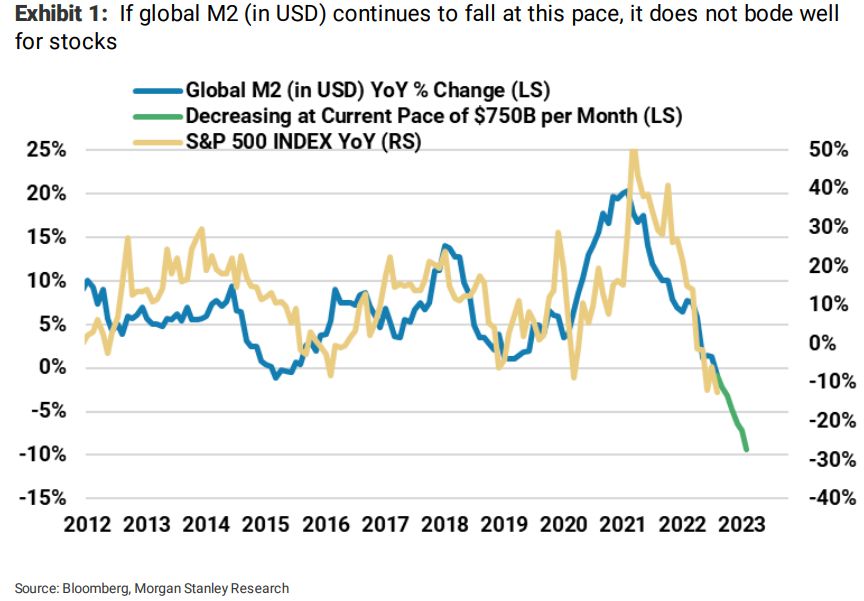
(Bloomberg) — Michael J. Wilson, one of Wall Street’s biggest equity bears, says that while the Federal Reserve’s dovish pivot is becoming more likely amid falling money supply, this doesn’t remove the risk of a sharp contraction in earnings. 

The tightening of liquidity in the global financial system is entering a “danger zone” where economic accidents tend to happen, increasing the chances of the Fed restarting quantitative easing, Morgan Stanley strategist wrote in a note on Sunday. This could lead to a recovery in stocks, he said, but this doesn’t change Morgan Stanley’s concern about the outlook for earnings.

“A Fed pivot, or the anticipation of one, can still lead to sharp rallies,” Wilson said. “Just keep in mind that the light at the end of the tunnel you might see if that happens is actually the freight train of the oncoming earnings recession that the Fed cannot stop.” 

Wilson, who predicted this year’s equities selloff, wrote that the year-on-year rate of change in money supply in dollars for the US, China, the Eurozone and Japan has turned negative for the first time since March 2015, a period that immediately preceded a global manufacturing recession. Such tightness is unsustainable “and the problem can be fixed by the Fed, if it so chooses,” he wrote.

The strategist said last week that US equities are in the “final stages” of a bear market and could stage a rally in the near term going into the earnings season before selling off again. 

Wilson has said that he sees an eventual low for the S&P 500 coming later this year, or early next, at the 3,000 to 3,400 point level. That implies a drop of as much as 16% from Friday’s close.

READ: Goldman Sees More Selling in US Stocks by Households in 2023

Credit Suisse AG strategists led by Jonathan Golub on Monday cut their year-end target for the S&P 500 by 10% to 3,850 points, implying 7.4% upside from Friday’s close. Separately, the strategists initiated their end-2023 target at 4,050, seeing just 5.4% gains for that year.

Rapidly declining nominal gross domestic product growth should result in less-robust revenues for companies, while declining inflation combined with sticky wages should lead to margin contraction in 2023, according to the strategists. Separately, recessionary concerns should weigh on buybacks, they said. 

(Updates with Credit Suisse strategists in seventh paragraph)

More stories like this are available on bloomberg.com

©2022 Bloomberg L.P.
Close Bitnami banner
Bitnami

