
Bloomberg

Ian Latest: Storm’s Insured Losses Seen as High as $57 Billion

(Bloomberg) — Five days after Hurricane Ian slammed into Florida, bringing with it a deadly storm surge, catastrophic flooding and powerful winds, the death and destruction it has wrought are starting to become clearer.

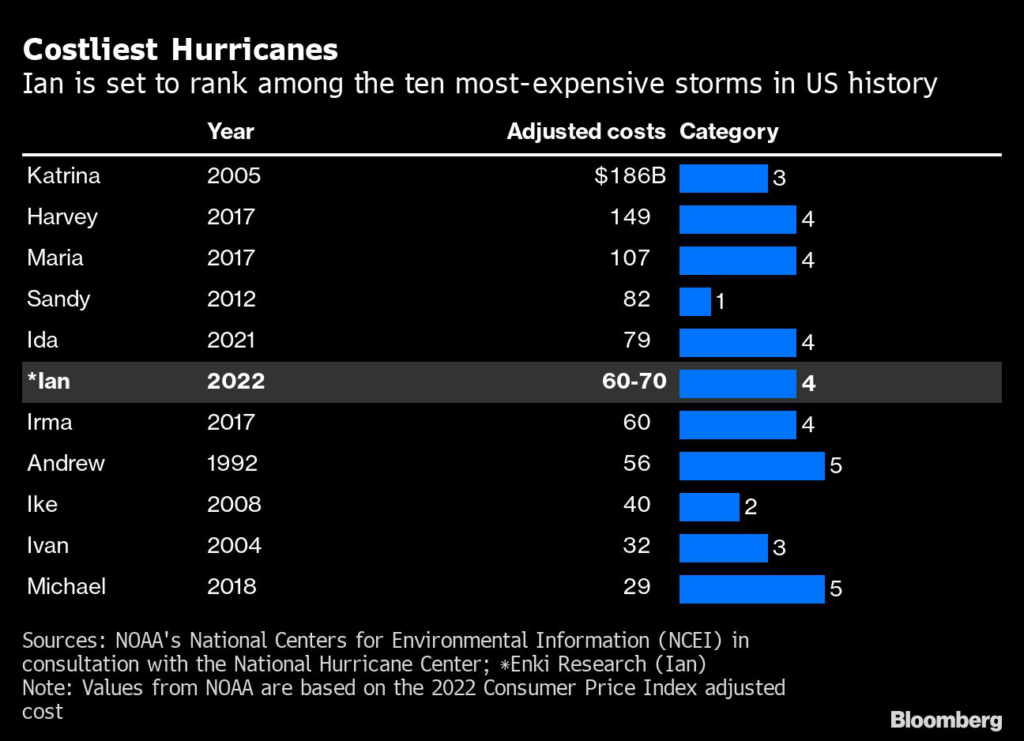
By early Monday, the overall death toll from Ian had climbed to at least 68, according to the Associated Press. Insured losses have risen to as much as $57 billion, according to modeler Verisk. On Wednesday, Joe Biden is scheduled to visit Florida to survey the damage from what he described as one of the worst storms to ever hit the US. But first, he is headed to Puerto Rico, where he is announcing more than $60 million in funding to help the island rebuild after Hurricane Fiona.

The National Hurricane Service discontinued its updates on Ian over the weekend after it had weakened to a post-tropical cyclone. By Saturday, the system had “fully dissipated,” according to the National Weather Service.

Climate Change Made Ian’s Rainfall Worse (8:21 a.m. NY)

Climate change made Hurricane Ian’s most extreme rainfall about 10% worse than it would have been without two centuries of greenhouse gas pollution, according to a first-take analysis of the storm by two US climate researchers. The rapid analysis by Michael Wehner of the Lawrence Berkeley National Laboratory and Kevin Reed of Stony Brook University was shared on Twitter.

Wehner said the quick look at Hurricane Ian turned out to be “a little more interesting” scientifically than he had expected.

About 613,000 in Florida Are Still Without Power (7:45 a.m. NY)

Just over 613,000 customers in Florida still have no electricity as of early Monday morning, according to PowerOutage.us. Crews have already restored power to some 1.8 million customers across the state, figures from the Florida Division of Emergency Management show. In Puerto Rico, more than 120,000 are without power.

Insured Losses Mount From Ian’s Devastation (6:05 a.m. NY)

Verisk estimated that insured losses to onshore property from Ian will range from $42 billion to $57 billion. That includes wind, storm surge and inland flood losses resulting from both of Ian’s landfalls in Florida and South Carolina. 

Wind damage accounts for the majority of the loss estimate, totaling anywhere from $38 billion to $51 billion. Ian’s storm surge likely racked up $3 billion to $5.5 billion in insured losses and inland flooding less than $1 billion.

Death Toll From Ian Rises to At least 68 (4:44 a.m. NY)

At least 68 people have been confirmed dead: 61 in Florida, four in North Carolina and three in Cuba, the Associated Press reported. Deanne Criswell, administrator of the Federal Emergency Management Agency, told the news wire that the federal government was ready to help in a “huge way,” focusing first on victims in Florida, which took the brunt of one of the strongest storms to make landfall in the United States.

More than 640,000 in Florida Still Without Power (11:34 p.m. NY)

More than 640,000 customers in Florida are still without power, according to PowerOutage.us. Electricity has been restored to more than 1.8 million user accounts across the state, figures from the Florida Division of Emergency Management showed on Sunday.

Governor Ron DeSantis visited the cities of North Port and Arcadia over the weekend, where flooding hasn’t subsided, according to local media reports.

Lee County Reports 42 Deaths Amid Rising Florida Toll (6:32 p.m. NY)

The death toll in Florida is rising, though the numbers remained uncertain and incomplete amid ongoing searches through masses of wreckage.   

In Lee County, on the state’s southwest coast, Sheriff Carmine Marceno said on Sunday that 42 people had died there.

“We have buildings, multiple-floor buildings that have been washed out, OK? It is incomprehensible what we’re looking at,” Marceno said. “Those numbers could go up. I don’t know. I pray and hope that they don’t.”

On Saturday night, the Florida Medical Examiners Commission released a count of 44 dead across the state, including 30 in Lee County. The commission had not updated the toll on Sunday. 

Florida Cell Service Returning With Gaps in Hard-Hit Areas (3:51 p.m. NY)

Cell-service has been restored across most of Florida, though the hardest-hit counties are still experiencing significant zones without signal, according to a report from the Federal Communications Commission Sunday. 

The report listed the top counties by percentage with cell sites still not operational: DeSoto 38.5%; Hardee 33.3%; Charlotte 20.2%; and Lee 19.5%.

Governor Ron DeSantis announced Saturday that Elon Musks’s SpaceX will deploy 120 units of its Starlink satellites to southwest Florida to provide Internet service for those affected.

More Than 820,000 in Florida Remain Without Power (1:12 p.m.)

About 822,000 customers remain without power in Florida, according to PowerOutage.US. That’s a recovery from the peak of 2.7 million customers without power after Hurricane Ian made landfall in southwest Florida on Wednesday. 

In North Carolina, where the storm hit on Friday, there are close to 21,000 customers without power.

‘Old Florida’ Flattened by Hurricane, Rubio Says (12:21 p.m.)

Some of Florida’s oldest and most popular beach destinations devastated by Hurricane Ian will never look the same, Senator Marco Rubio said on Sunday.

Fort Myers Beach, a seaside tourist town, “no longer exists,” Rubio said on ABC’s “This Week.” Sanibel Island, another barrier island along Florida’s southwest coast, has also been ravaged, he said. 

“This is a character-altering event,” he said. 

FEMA Head Warns of Post-Storm Hazards (9:50 a.m.)

People working to clean up after Hurricane Ian need to “stay vigilant right now” because of the potential danger amid debris, downed power lines and other hazards, warned Deanne Criswell, administrator of the Federal Emergency Management Agency. 

“We see so many more injuries and sometimes more fatalities after the storm, because there are so many dangers out there,” Criswell said on “Fox News Sunday.” “Standing water brings with it all kinds of hazards…We want to make sure that people are being extra cautious.”

Biden to Visit Puerto Rico, Florida (10:39 p.m.)

President Joe Biden will travel to Puerto Rico on Monday and Florida on Wednesday to survey the damage there after vowing to commit the full strength of the federal government to recovery efforts in the wake of two devastating hurricanes.

The president will be accompanied by the first lady, the White House said.

Ian Expected to End by Sunday Morning (5:12 p.m.)

Storm Ian is expected to dissipate on Sunday morning, the National Weather Service said in an update. By 5 p.m., the storm had slowed over Virginia, moving east-northeast at about 6 miles an hour with maximum sustained winds near 25 miles per hour, the service reported.

Central Florida will continue to experience “major to record” river flooding through next week. Areas of Maryland and West Virginia may also experience several inches of rain into Sunday morning, with the potential of some flooding.

Four Die in North Carolina (4:06 p.m.)

Four storm-related deaths were reported in North Carolina: one drowning, two in vehicle accidents and one poisoned by carbon monoxide from a generator, Governor Roy Cooper’s office reported. 

Power was restored to about half the 418,000 customers who had lost electricity on Friday night, his office said in a press release Saturday.

No Deaths in South Carolina, Governor Says (3:09 p.m.)

South Carolina suffered no deaths despite being hit by winds as high as 92 miles an hour from Hurricane Ian on Friday, Governor Henry McMaster said in a press briefing Saturday. Unlike Florida, there has been relatively little flooding, and most electricity has already been restored, he said.

“We know that we have much cleaning up and rebuilding to do,” McMaster said. “There’s some heartbreak, there’s work to be done. But all in all it’s a good story.”

Florida Governor Says Flooding Did Most Damage (2:47 p.m. NY)

Florida suffered more damage from flooding caused by Hurricane Ian than strong winds, Governor Ron DeSantis said Saturday.

“When you’ve got a torrent of water coming in, there’s really nothing you can do about that, so that’ll require a lot of flood claims being filed,” DeSantis said at a news briefing in Fort Myers. 

DeSantis added that nearly 55% of power has been restored to those affected by power outages. Power has been restored to 1.5 million customers serviced by Florida Power & Light, with another 650,000 customers still without power, said FPL president and chief executive officer Eric Silagy. 

Biden Briefed on Damage, Restoration of Power and Water (2:26 p.m.)

President Joe Biden was briefed by advisers including Chief of Staff Ron Klain on the damage from the storm, focusing on power and water restoration in Florida and damage in South Carolina, White House Press Secretary Karine Jean-Pierre said in a tweet.

Ian Weakens as It Moves North (12:15 a.m.)

Post-tropical cyclone Ian continued to weaken midday Saturday as it moved north through North Carolina and toward Virginia, according to a National Weather Service update at 11 a.m. 

Maximum sustained winds slowed to to 25 mph (40 kph), the service reported. Another 1-3 inches or rain was expected to fall across the central Appalachians and mid-Atlantic, “with local heavier amounts possible.” 

Across central Florida, “major to record river flooding” is expected over the next week.

Biden Calls Storm Damage ‘Among Worst’ Ever in US (10:41 a.m.)

President Biden said the damage from storm Ian “is likely to rank among the worst” in US history. 

Few Florida Homes Covered for Flooding (9:12 a.m.)

A majority of Florida homeowners caught in the hurricane’s path now face rebuilding without the benefit of flood insurance — and some might not even realize they’re uncovered.

Only 18% of all Florida homes — of which there more than 10 million, per census data — have flood insurance, according to the Insurance Information Institute. And some property owners harbor the misconception that policies protecting against damage from wind and rain will also apply to losses brought on by rising water.

Officials in Florida County Delayed Evacuation, NYT Says (3:53 a.m.)

Emergency officials in Lee County, Florida, only issued a mandatory evacuation order for the areas likely to be hit the most by Hurricane Ian on Tuesday, giving residents less time to evacuate, the New York Times reported.

While much of the areas set to be affected had told their residents to flee on Monday, Lee County officials opted to wait to see how forecasts for the hurricane evolved overnight. At least 16 storm-related deaths have been identified in Lee County, the highest toll anywhere in the state, the newspaper said.

Biden Declares Emergency in North Carolina (1:51 a.m.)

US President Joe Biden has declared an emergency in the state of North Carolina in the wake of Hurricane Ian, and ordered federal assistance to supplement response efforts, according to a statement released by the White House. 

Cuba Requests US Aid After Devastation, WSJ Says (7:38 p.m.)

Cuba’s government is seeking emergency assistance from the US in the aftermath of Ian’s devastation, the Wall Street Journal reported, citing email communications.

No exact amount was requested and the US is trying to determine if Cuba will supplement its request, the newspaper said. Havana is making the rare request as it contends with an economic crisis and while its longtime supporter Russia struggles with the war in Ukraine.   

More stories like this are available on bloomberg.com

©2022 Bloomberg L.P.

US Futures Rise Amid Debate on Treasury Yield Peak: Markets Wrap

(Bloomberg) — US index futures advanced as investors weighed the possibility of a peak in Treasury yields against concern that hawkish policies by global central banks will spark a recession. 

December contracts on the S&P 500 Index rose 0.6%, while similar futures on the Nasdaq 100 added 0.3%. Treasuries rallied, with the two-year and 10-year rates shedding at least 12 basis points each. Oil jumped on signals the OPEC+ alliance may opt for a production cut. Credit Suisse Group AG’s shares hit record low in Zurich as traders continued to speculate about its future. Carmaker Tesla tumbled 4.8% in premarket New York trading after deliveries in the third quarter fell short of expectations.

Global markets remain nervous about the potential impact of monetary tightening on the economy after central banks, including the Federal Reserve, reiterated their resolve to contain runaway inflation. Traders cut back on their bets for Fed rate hikes, pricing in a peak in the Fed Funds Rate by March. They now await US jobs data later this week for further clues on the path of the economy and Fed policy.

“Financial conditions have tightened a lot,” said Colin Asher, a senior economist at Mizuho Bank Ltd. in London. “Because inflation is so high central banks will be wary of declaring victory just yet. But toward the end of last week, there were some signs that US interest rates may be peaking. Quite a lot is priced in.”

Inflation fears were further stoked by a renewed surge in oil prices, with West Texas Intermediate oil trading near $83 a barrel on indications that the OPEC+ alliance was considering slashing production by more than 1 million barrels a day when it meets this week. 


Concern is also growing that central-bank policy tightening risks sending the global economy into recession and hitting corporate profits. EV maker Tesla offered a reminder of those risks, sliding after third-quarter deliveries fell short of expectations. Shares of fellow EV makers also came under pressure on fears that supply-chain snarls would dampen their efforts to ramp up production.

Treasuries advanced, recouping some of the losses sustained late Friday. The 10-year rate shed 12 basis points, while two-year yields slipped almost 13 basis points.

In Europe, stocks trimmed losses as energy shares advanced. The pound traded higher after Chancellor of the Exchequer Kwasi Kwarteng withdrew a proposal to abolish the top 45% tax rate.

The other big focus was Switzerland’s Credit Suisse Group AG, which slumped more than 11% as speculation mounted about the company’s future and its requirement for fresh capital. The cost of insuring against exposure to the company surged to a record high as investors shrugged off Chief Executive Officer Ulrich Koerner’s efforts to calm the market.

Brazil’s dollar bonds gained after the nation’s presidential election headed for a run-off vote on Oct. 30. The yield on debt due 2031 fell 19 basis points to 6.45%, poised for the lowest since Sept. 23. The Lyxor MSCI Brazil ETF in Paris jumped the most since July 7. 

Investors now await this week’s US jobs data for further clues about the Fed’s rate-hike trajectory. Central banks in Australia and New Zealand, considered bellwethers for developed market peers, are expected to extend their tightening cycles and raise rates by 25 basis points and 50 basis points respectively, according to Bloomberg Economics. 


Key events this week:

  • US construction spending, ISM Manufacturing, light vehicle sales, Monday
  • Fed’s Raphael Bostic, John Williams speak at events, Monday
  • Euro-area and EU finance ministers meet, Monday
  • Eurozone PPI, Tuesday
  • US factory orders, durable goods, Tuesday
  • Fed’s John Williams, Lorie Logan, Loretta Mester, Mary Daly speak at events, Tuesday
  • Eurozone services PMIs, Wednesday
  • OPEC+ meeting begins, Wednesday
  • Fed’s Raphael Bostic speaks, Wednesday
  • Eurozone retail sales, Thursday
  • US initial jobless claims, Thursday
  • Fed’s Charles Evans, Lisa Cook, Loretta Mester speak at events, Thursday
  • US unemployment, wholesale inventories, nonfarm payrolls, Friday
  • BOE Deputy Governor Dave Ramsden speaks at event, Friday
  • Fed’s John Williams speaks at event, Friday

Key market moves:

Stocks

  • Futures on the S&P 500 rose 0.6% as of 8:07 a.m. New York time
  • Futures on the Nasdaq 100 rose 0.3%
  • Futures on the Dow Jones Industrial Average rose 0.8%
  • The Stoxx Europe 600 was little changed
  • The MSCI World index fell 0.1%

Currencies

  • The Bloomberg Dollar Spot Index was little changed
  • The euro fell 0.4% to $0.9763
  • The British pound rose 0.4% to $1.1214
  • The Japanese yen was little changed at 144.88 per dollar

Cryptocurrencies

  • Bitcoin was little changed at $19,225.42
  • Ether fell 0.5% to $1,296.43

Bonds

  • The yield on 10-year Treasuries declined 12 basis points to 3.71%
  • Germany’s 10-year yield declined 10 basis points to 2.01%
  • Britain’s 10-year yield declined 14 basis points to 3.95%

Commodities

  • West Texas Intermediate crude rose 4.4% to $82.99 a barrel
  • Gold futures rose 0.1% to $1,674.10 an ounce

More stories like this are available on bloomberg.com

©2022 Bloomberg L.P.

MuleSoft Founder Seeks Backing for London-Based Venture Fund

(Bloomberg) — MuleSoft Inc. founder Ross Mason is seeking investment for a $100 million venture capital fund to back software startups at their earliest stages of development. 

After selling enterprise software company MuleSoft to Salesforce Inc. for about $6.5 billion in 2018, Mason has since invested his own funds into startups under the banner of his family office, Dig Ventures. After generating around a 50% rate of return on his first $50 million fund, Mason is now staffing up and raising a second fund backed by institutional investors, Mason told Bloomberg.

London-based Dig has brought on as partners Rytis Vitkauskas, formerly of Lightspeed Venture Partners, and entrepreneur Scott Grimes to join Mason and former MuleSoft employee Melissa Lester. 

Dig will focus its investments on European business-to-business software companies, building core infrastructure tools in areas such as security, privacy, machine learning and analytics, the firm’s partners said. 

“These businesses are very stable, they tend to be in the heart of businesses, they don’t get ripped out very easily so they have a lot of longevity,” Mason said. 

Dig Ventures has already backed two startups whose valuations have surpassed $1 billion: revenue-intelligence platform People.ai and technical-interview startup Karat. The firm is also invested in anti-money laundering firm ComplyAdvantage, code-free programmer Bubble and customer-analytics software company Hook.

The partners aim to complete fund-raising by early 2023, Grimes said.

More stories like this are available on bloomberg.com

©2022 Bloomberg L.P.

One America News Plots a Comeback That Includes TV Antenna Users

(Bloomberg) — After being dropped by two major pay-TV distributors this year, One America News is attempting a comeback by leveraging an old technology: the antenna.

The conservative channel, which has been accused of spreading misinformation about the 2020 election and praised by former President Donald Trump, lost millions of homes when DirecTV and Verizon Communications Inc. stopped carrying it.

To replace them, OAN is signing up partners to broadcast on so-called “subchannels.” OAN airs on free, over-the-air channels in about 30 markets and plans to be in about 100 by the end of this year, according to a person familiar with the company’s strategy who asked not to be identified because the plans aren’t public. The markets include Pittsburgh; Las Vegas; Wichita, Kansas; Jacksonville, Florida; and Birmingham, Alabama. 

Subchannels, which are sometimes called “multicasts” or “diginets,” are a little-noticed corner of the TV business. But they’ve been growing as more people cancel cable-TV and use antennas to supplement their Netflix binges with free broadcast stations. About 15% of US households use antennas, up from 10% in 2010, according to Nielsen.

Over a decade ago, a government-mandated switch to digital broadcasting freed up airwaves for TV station owners to create multiple channels where just one existed previously. Their viewers are typically cord-cutters who use digital antennas. In Pittsburgh, for example, OAN reached a deal in July to air on channel 61.8. 

Vernon Van Winkle, chief executive officer of KPVM, a broadcast station in the Las Vegas market, has been carrying OAN as a subchannel for about a year. As part of the agreement, he shares advertising inventory equally with OAN. His signal reaches 875,000 households in southern Nevada.

“Viewers absolutely love it,” he said of OAN. “If my signal goes down for a second my phone lines are blowing up with people asking ‘What’s going on?’”

Digging Deeper

Van Winkle, who believes that Trump won the 2020 presidential election, said OAN “shows more of the truth” than other news channels. 

“OAN is able to dig deeper without a message that’s edited by the major market broadcasters,” said Van Winkle, whose closely held station was the subject of an HBO docuseries.

In Pittsburgh, OAN airs on a subchannel owned by a local production company called the Videohouse Inc., whose signal reaches over 1.6 million households. About 160,000 homes in the Pittsburgh market are using antennas, according to S&P Global Market Intelligence.

In an interview, Ron Bruno, president of the Videohouse, said he carries OAN to give antenna users a range of political views.

“I’m trying get as much programming as I can so the people of Pittsburgh don’t have to suffer once they leave cable,” he said.

Charles Herring, the president of OAN’s owner, Herring Networks Inc., said the channel being distributed over-the-air is a free, ad-supported one called OAN Plus that’s different from the cable network.

Many subchannels carry reruns. They often host networks like Cozi TV, which airs old sitcoms such as Roseanne and Frasier; Buzzr, which features game shows; and Bounce TV, which caters to Black audiences with programs like The Bernie Mac Show.

They have also become a home for conservative news. Newsmax has a subchannel with mostly documentaries, according to a spokesman. Real America’s Voice, which airs War Room with Steve Bannon, appears on several subchannels across the country, according to the website RabbitEars.info.

It’s hard to determine how many people are watching OAN. Nielsen, which measures TV viewers, doesn’t report OAN’s audience, though it is reportedly far smaller than Fox News.

The ad revenue from subchannels isn’t likely to be as lucrative as the subscriber fees that OAN once got from DirecTV. In 2020, an OAN lawyer said in court that if the channel’s DirecTV contract ended, “the company would go out of business tomorrow,” Reuters has reported.

Meanwhile, OAN still faces lawsuits from Smartmatic Corp. and Dominion Voting Systems Inc. that allege the network made false claims that their voting machines were rigged in the 2020 presidential election. Herring has unsuccessfully sought to dismiss both suits, saying they were meritless. 

Subchannels are part of OAN’s broader strategy to reach fans outside cable TV. It’s also offering free three-month trials of its streaming service, and recently announced distribution deals with Tivify, a streaming service in Spain, and Zito Media, a TV and Internet provider with over 75,000 subscribers. It also appears on Pluto TV, a free streaming service owned by Paramount Global.

Deploying Correspondents

OAN’s strategy seems to be “let’s find as many distribution partners as we can,” said Angelo Carusone, president of Media Matters for America, a nonprofit watchdog group.

The approach may not be making OAN much money, he said, but it could help it stay relevant with fans and make the case to get carried by a larger TV provider. The network has “developed an ability to be nimble and adaptable and that’s allowed them to survive,” he said.

In a statement announcing the distribution agreement with Zito in September, OAN said it was moving quickly to get its signal out there before the “critical” midterm elections. Part of the strategy includes deploying correspondents in political hotspots across the country, the company said.

More stories like this are available on bloomberg.com

©2022 Bloomberg L.P.
Card Debt App Tally Triples Valuation to $855 Million in Round

(Bloomberg) — Tally Technologies Inc., a startup that automates credit card payments, has tripled its valuation to $855 million in a funding round led by Sway Ventures.

Participants in the $80 million Series D round included Israeli insurance company Menora Mivtachim, along with earlier investors Kleiner Perkins, Andreessen Horowitz, Shasta Ventures and Cowboy Ventures. Tally was valued at $280 million in a round led by Andreessen Horowitz in 2019.

Tally uses machine learning to determine the ideal amount and timing of payments on customers’ credit cards, with the overall goal of minimizing the time to full repayment. 

The company issues its customers a line of credit and then pays down their debt, automating their card payments to save on interest and late fees. Tally makes money from the interest on the line of credit and also offers some customers the option of paying an annual fee, which comes with a lower annual percentage rate and higher credit limit.

$900 billion of debt

US credit card debt has increased to $900 billion from $700 billion over the past decade and affects four in 10 households, according to Tally Chief Executive Officer Jason Brown. He said his experiences with financial insecurity as a child inspired him to start the company. 

Brown said he expects credit card debt — and Tally’s total addressable market — to continue to increase given inflation and interest rate hikes.

“I think what we’re going to see, unfortunately, over the next couple of quarters, is that the absolute amount of credit card debt is going up, and also the cost of carrying that debt is increasing,” Brown said in an interview. “It’s really driven by the fact that for banks and financial institutions, credit cards are the single most profitable consumer product that they have.”

San Francisco-based Tally specifically targets consumers carrying revolving debt. 

“The thing about the $900 billion of credit card debt is that roughly 96% of that is current, meaning it’s people who are paying on time. They’re just flushing billions of dollars down the toilet in interest and fees,” Brown said.

“The industry labels them as ‘revolvers,’ which is like treading water,” Brown said. “Tally is really designed for people who have the ability to pay their cards but just are not making progress, which is the majority of people with card debt.”

Student loans

Brown said his company will use the new funds to invest in additional engineering talent to expand its offerings to cover more types of debt, including student debt. The national conversation about the crippling effect of student loans has intensified this year, and Brown says student loan repayment support is the product most frequently requested by Tally customers.

The plan announced by the Biden administration in August to partially forgive loans for eligible borrowers is currently being challenged in court by six Republican-led states.

Sway General Partner Ken Denman has joined Tally’s board as part of the round. He said in an interview that the round came together during a difficult time in the financial markets. 

“We were confident nevertheless, given strong metrics and performance,” Denman said. “We believe the problem Tally is attacking gets even bigger in this window.” 

More stories like this are available on bloomberg.com

©2022 Bloomberg L.P.
Vodafone Confirms Potential Tie-Up With Rival Three UK

(Bloomberg) —

Vodafone Group Plc said it’s in discussions with CK Hutchison Holdings Ltd. about a combination with rival Three UK, the latest attempt to consolidate Britain’s telecom market. 

The deal would involve a combination of the two companies’ UK businesses, with Vodafone holding 51% and CK Hutchison owning 49% of the new unit, Vodafone said in a statement on Monday. There’s no certainty a deal will be reached, the company said. 

A combination of Vodafone and Three UK has been speculated for years, and Vodafone has teamed up with CK Hutchison in other markets including Australia. Vodafone initially expressed interest late last year in acquiring its smaller rival, Bloomberg previously reported. 

Shares in Vodafone rose 1.6% in London trading at 12:13 p.m. and earlier gained as much as 3.6% on Monday following the statement. The talks were reported earlier by Sky News. 

“By combining our businesses, Vodafone UK and Three UK will gain the necessary scale to be able to accelerate the rollout of full 5G,” Vodafone said in the statement. “The merged business would challenge the two already consolidated players for all UK customers.”

Telecommunications companies are facing the expense of rollouts for faster, denser 5G networks in the coming years and are looking for ways to make the builds more cost efficient. Still, regulators have resisted combinations that would reduce the number of major operators. In 2016, Three was blocked from buying Telefonica SA’s O2 business in the UK by the European Union with backing from British watchdog Ofcom.

Vodafone Chief Executive Officer Nick Read is trying to consolidate in key markets while facing pressure from shareholders including Europe’s largest activist fund, Cevian Capital AB. An investment vehicle backed by French billionaire Xavier Niel bought a 2.5% stake in Vodafone last month. 

Read More: Billionaire Niel Buys 2.5% of Vodafone to ‘Accelerate’ Deals (3)

Read has said he is pursuing deals in the UK, Spain, Italy and Portugal. However, rival Orange SA clinched the biggest likely deal in Spain, and Read turned down an offer for Vodafone Italy from Iliad SA.

The ownership stakes in the new company would be determined by different leverage contributions, and there won’t be a cash consideration, Vodafone’s statement added. 

(Updates with background throughout. An earlier version corrected the spelling of Vodafone in sixth paragraph)

More stories like this are available on bloomberg.com

©2022 Bloomberg L.P.

Crypto Slump Leaves 12,100 Coins Trapped in Zombie Trading Limbo

(Bloomberg) — When it comes to putting a number on this year’s crypto swoon, the one cited most often is $2 trillion, the amount of digital-asset market value that evaporated in the downdraft. But here’s a figure that captures the breadth of the bear market: 12,100. 

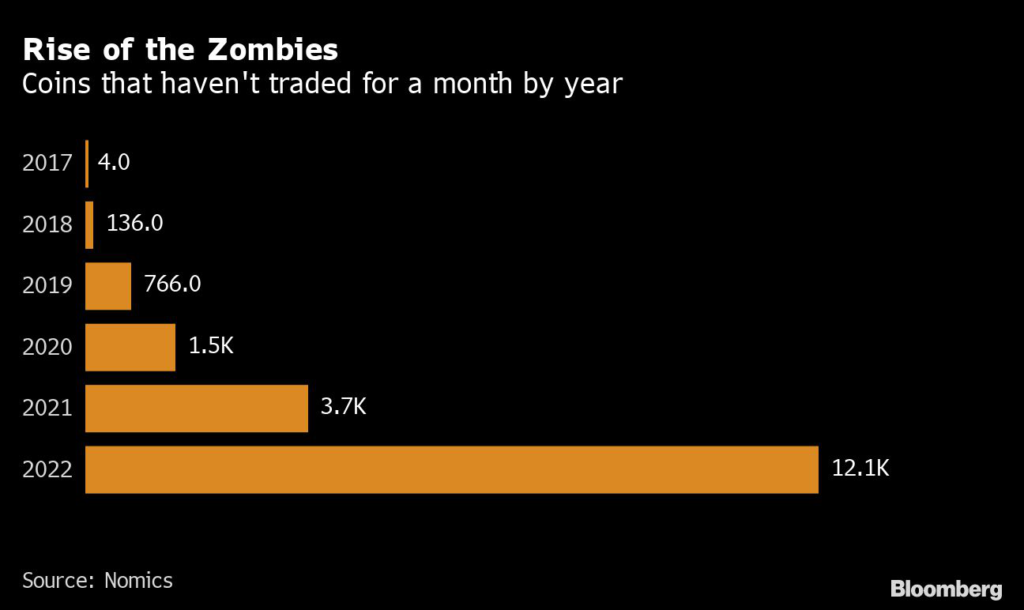
That’s the number of crypto tokens that have effectively ceased trading this year, according to data provider Nomics — not dead technically, but like zombies, not quite alive either. 

Most blockchain projects are built around bespoke digital coins, which often function as user rewards and compensate developers for their work, giving them incentive to stay involved. During last year’s price run-up, thousands of crypto startups issued new tokens to support these projects, and bullish sentiment meant there was ample demand for the market to absorb the vast majority of them and still drive prices higher. 

That all changed this year, as macroeconomic conditions put investors off risk assets and token prices nosedived. The implosion of the Terra blockchain, as well as the collapse of hedge fund Three Arrows Capital and crypto firms like Celsius Network caused a further selloff and cooled venture capital funding. The biggest tokens, like Bitcoin and Ether, suffered major declines before eventually finding support. But for many coins backing fledgling, riskier and sometimes sketchier endeavors, the downturn has delivered the equivalent of a knockout blow.

Nomics compiled an analysis of coin activity for Bloomberg  and discovered that more than 12,100 tokens have become “zombies” this year, defined as tokens that have not traded for a month. That’s more than twice as many as in all prior years combined, the researcher found.

“During the bull market of 2021, there was plenty of money, attention, and liquidity for new and existing projects,” Jacob Joseph, a research analyst at researcher CryptoCompare, said in an interview. “However, in the ongoing bear market, even good projects with utility will struggle to sustain their operations as they lose access to capital and funding.”

This contrasts with the bust-up in initial coin offerings that occurred during the previous bear market starting in 2018. Then, startups issued coins — often illegally, it turns out — to raise funding. Most ICOs didn’t even have working prototypes, much less users; when they went under, only investors got burned. And the market was smaller: in 2018, a total of 136 tokens turned into zombies, while 766 coins earned that designation in 2019, far below this year’s level.

It’s difficult to know the scope or seriousness of the projects affected this time around, though a decent chunk are likely memes, short-term leveraged assets, or small personal projects done for fun, according to Nick Gauthier, a co-founder at Nomics. Many, such as a project called BoomSpace, which purported to work on blockchain gaming, no longer have a live website, but only a Twitter account that hasn’t been updated in several months. Elonmoon, a token for a game related to moon exploration, has a warning on tracker CoinMarketCap, “We have received multiple reports that some holders cannot sell their tokens. Please exercise caution and do your own due diligence!”

Even among active coins, trading can be thin. Of the more than 64,400 assets Nomics tracks, only about 13,800 had trading volume in a recent 24-hour period last week, Gauthier said. And there are myriad coins that are not quite zombies yet but nearly so, and trading at a fraction of a cent — Terra Classic is one example — perhaps even offering those with a taste for adventure a chance at gains.

Read more:  Coin Worth $0.00004893 Highlights Crypto’s Wild Decimal Frontier

While many projects held their own coins as a reserve during the boom, the current environment suggests startups take a more cautious approach, perhaps holding more widely traded and valued coins like Ether or even cash as a backup. 

“I think crypto projects are going to need to ensure they’re ready for the lows as much as they want to ride the highs,” Gauthier said. 

Still, with many predicting no letup to the lackluster market environment, the ranks of the zombies will likely increase, said John Griffin, a finance professor at the University of Texas at Austin. 

Listen:  Buyer Beware: The Hunt For Zombie Crypto Tokens Goes On

Unlike other industries, it’s not as noticeable in crypto when coins turn to zombies and projects become effectively defunct. 

“There’s no storefront to board up, no inventory to sell, no employees to claim unemployment,” said Aaron Brown, a crypto investor who writes for Bloomberg Opinion. “Just people lose interest in a token and move on to other things.”

This dynamic is one reason new coins keep getting birthed as others get abandoned, and why it’s possible the next bull market will bring even more new tokens — many of which may become zombies in time.

“Since the cost of a crypto startup is close to zero, and anyone in the world can try without discrimination or regulation, lots of people will keep trying,” Brown said. “Where do you think the dead coins are piling up? It’s not like cyberspace is a warehouse with limited capacity.”

More stories like this are available on bloomberg.com

©2022 Bloomberg L.P.
Hollywood-Backed Startup Wants You to Try Its Low-Carb Bagel

(Bloomberg) — California has long sought to replicate New York’s world-famous bagels. From the low-calcium Manhattan tap water to the specialized boiling techniques, countless West Coast shops have struggled to recreate the signature crust and texture of the fabled deli staple. Now, a new celebrity-backed bagel venture has stopped trying.

Instead, it’s making a bagel that’s quintessentially Los Angeles: a round piece of bread with a hole in the middle, and 90% fewer carbs.

The unusually healthy bagel is the creation of BetterBrand, a startup that has raised more than $5 million. Its investors include Reddit Inc. co-founder Alexis Ohanian’s firm, a founder of driverless car business Cruise and streaming platform Twitch, the Shameless actress Emmy Rossum and Patrick Schwarzenegger, son of Arnold. The company is currently in the late stages of raising another, several-times-larger funding round, its chief executive said, declining to give the new total or the valuation. 

Aimee Yang founded BetterBrand after experiencing the guilt that’s attendant with eating normal food. “I’d literally dream of this world where we could eat what we wanted and never have to worry about weight gain,” said Yang, BetterBrand’s chief executive officer. “It really consumed so much of my mindspace and was such a point of anxiety. Enabling us to eat what we want is so incredibly freeing and empowering.”

Now, Yang wants her company to be the “Beyond Meat of carbs.” BetterBrand follows a long line of venture capital-backed companies seeking to reinvent the food we eat, from Soylent’s meal replacement beverages to Upside Foods, which has raised more than $600 million in its quest to develop lab-grown meat. Athletic Greens, which makes a green powdered vitamin blend, vaulted to unicorn status earlier this year. And vegan burger startup Impossible Foods was valued by investors at $7 billion.

Low-carb bagels aren’t exactly new — similar products exist on shelves at Walmart and Kroger. But Yang has a grander vision. Whole Foods started carrying the bagels last month, about a year after BetterBrand began selling them online, and the company plans to soon offer its products in stores across Europe and Latin America. Eventually, the company hopes to not only remake bagels, but a variety of bread products, like pretzels.

While the company makes most of its money from direct sales at the moment, Yang expects its wholesales business to grow. In addition to expanding to other grocers in new markets, Yang said she is in discussions with airlines to place the bagels in airport lounges. 

BetterBrand has a natural home in Los Angeles, the city that’s both health-obsessed and gourmet, and which also brought us companies like Moon Juice—the venture-backed wellness brand that sells supplements like Magnesi-Om and Sex Dust. BetterBrand says each of its bagels contains the same sugar content as a stalk of celery and the protein content of four eggs. The bagels come in familiar flavors: classic, everything, cinnamon, chocolate chip and, for the fall, pumpkin spice.

Of course, some bagel purists resist the new creation. “I would not call it a better bagel,” said Emily Winston, the owner of Berkeley, California-based Boichik Bagels, who recently sampled a BetterBrand’s classic flavor that she ordered on Instacart. Winston spent years trying to recreate the New York-style bagels of her childhood, the result of which is her bakery. Winston described the Better Bagel as “foamy,” “spongey” and “almost like cotton.” “It’s like a mirage of a bagel. I’d eat them before I starved to death,” she said. But, “I don’t think everyone’s going to start eating these and stop eating regular bagels.” 

In a taste test, Bloomberg staffers found that the classic bagel was, by a wide margin, not better than a regular bagel and, remarkably, had almost no flavor at all, except for an aftertaste of margarine. The hallmark of a bagel, a dense and chewy interior, was instead lightweight and turned gummy upon chewing, making it difficult to swallow. Topped with cream cheese, though, the experience hardly improved. The chocolate chip version was not significantly redeemed by the cocoa bits. 

One of the selling points for the Better Bagel is that it’s both lower in carbohydrates and higher in protein and fiber than its traditional doughy counterpart. One testimonial on the company’s website notes, “I never would’ve imagined not feeling guilty after eating two bagels.” But dietician Alissa Rumsey warned that prebiotic inulin fiber, a key ingredient in the bagels, doesn’t get absorbed by the body. Too much could lead to trouble. “I could see this causing constipation for someone,” said Rumsey, author of a book called Unapologetic Eating who resists labeling food as inherently good or bad.

Yang said her goal isn’t to make bagel-eaters feel guilty. “Us transforming the bagel is definitely a celebration of the product itself,” she said. “It’s about addressing a feeling I think a lot of people relate to, and turning that feeling that already exists of guilt or anxiety into a sense of freedom, or empowerment or joy.”

More stories like this are available on bloomberg.com

©2022 Bloomberg L.P.

EV Makers Must Partner With Miners to Secure Key Metals

(Bloomberg) —

A key lithium producer in Australia, the world’s top supplier, is urging electric car manufacturers and battery makers to become its partners in new refinery projects, arguing their direct financial backing is vital to avoid shortfalls of the material that’s crucial to the clean energy transition.

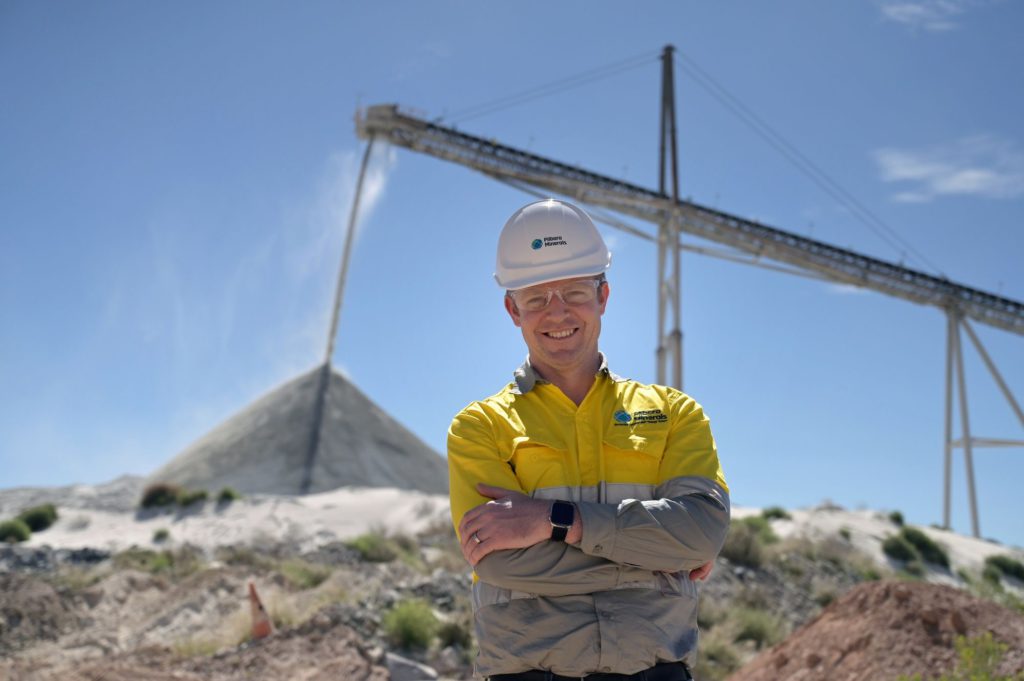
Pilbara Minerals Ltd. is seizing on a current rush by automakers to secure future supplies of battery materials by seeking new deals with customers to jointly develop refineries, Chief Executive Officer Dale Henderson said in an interview.

“There’s certainly a level of desperation from some groups” who are end-users of lithium and seeking more access to output, he said. “If you believe the supply-demand outlook, there’s going to be a shortage, and the car companies who haven’t secured the supply chain are going to have a problem.”

Lithium demand is forecast to almost triple by mid-decade from last year’s level, BloombergNEF said in a July report. Prices hit a new record in China last month on increasing consumption, with automakers including BMW AG and General Motors Co. among companies adding new supply agreements in recent weeks.

Pilbara Minerals — which has a market valuation of about $8.5 billion — is planning a major expansion of its mine in Western Australia in the next two years that will nearly double output of lithium-bearing raw materials. At the same time, the company will aim to leverage current strong demand to move away from long-term supply deals and win more pricing power.

Previously, lithium miners had rushed to strike agreements with refiners, battery companies and car manufacturers to show investors the strength of the market for their product, and to help secure funding to develop projects. With analysts now predicting prices will stay elevated after more than doubling this year, according to a key index, producers are in a stronger position to demand better deals.

“Two years ago, no one wanted to be in lithium, and the phone would not ring,” Henderson said. “Now, the phone won’t stop ringing.”


Another Australian lithium miner, Liontown Resources Ltd., demonstrated the sector’s growing bargaining power in June, when it sealed a deal with Ford Motor Co. The supply pact was notable because it included a A$300 million ($195 million) loan from the car giant at a comparatively low interest rate of 1.5% above the bank bill swap rate, a common benchmark in Australia.

Whereas Liontown sought funding for its Kathleen Valley mine project in western Australia, Pilbara Minerals sees the chance to add to its foothold in downstream chemical processing, a strategy designed to help the producer diversify away from the volatility of raw commodities.

Pilbara Minerals has an 18% stake in a joint venture with South Korea’s POSCO Holdings Inc. and expects their plant to begin producing battery-grade lithium hydroxide late next year. The Australian miner is now actively seeking other similar deals, potentially with carmakers, Henderson said in Perth last week.

Read more: Australia’s Mining State Aims to Build Battery Manufacturing Hub

China-based Tianqi Lithium Corp. has begun producing lithium hydroxide at a refinery in western Australia — the first new major hub outside its home country — and Albemarle is developing a separate operation nearby. It’s unlikely Pilbara would add a similar facility in Australia, though, it’s in the early stages of planning a refinery that would turn lithium-bearing ore — known as spodumene — into an intermediary salt product.

That would be easier to produce than lithium hydroxide, and also more valuable and cheaper to transport than spodumene concentrate, Henderson said.

Pilbara’s mine expansion will add an extra 400,000 tons a year of hard rock lithium ore — which equates to around 50,000 tons of battery grade lithium — within the next two years, Henderson said. Last year, Australia exported 247,000 tons of lithium, accounting for around 50% of global supply.

More stories like this are available on bloomberg.com

©2022 Bloomberg L.P.

Global Task Force Chief Goes After Criminals and Illicit Money

(Bloomberg) — The new chief of the Financial Action Task Force wants stronger laws to go after dirty money. T. Raja Kumar, who became president of the global watchdog in July, lays out his priorities in an interview.

“We need to go after the proceeds of crime because they fuel more serious crime. You are cutting off the lifeblood of criminal enterprise,” Kumar, who’s also a senior adviser in Singapore’s Ministry of Home Affairs, said last month. “This can then really make a huge dent in crime.”

Here are other comments he made:

  • Reports suggest that less than 1% of the proceeds of crime are recovered by law enforcement, Kumar said. FATF and Interpol have launched an initiative to boost asset recovery including stronger legislation and global anti-money laundering standards.
  • “Countries that are effective in recovering illicit assets have made this a national and law enforcement organizational priority.” He cited New Zealand, which has a target to seize at least NZ$500 million ($280 million) of illicit assets within three years.
  • Another priority: stopping criminals from hiding illegal activities and money behind anonymous shell companies or other complex structures. FATF recently strengthened its standards on beneficial ownership.
  • He also touched on cryptocurrencies. “There’s clear evidence that organized crime gangs, for example, are laundering funds with crypto. Terrorists, for their part, are turning to crypto to raise and move funds.” North Korea is using crypto and hacking crypto exchanges to finance their weapons of mass destruction program, he said.

More stories like this are available on bloomberg.com

©2022 Bloomberg L.P.

Close Bitnami banner
Bitnami