Bloomberg

Firefly’s Alpha Rocket Launches Successfully in Second Attempt

(Bloomberg) — Firefly Aerospace Inc. launched its first rocket into orbit, advancing the private space startup’s bid to become a reliable partner for NASA.

The Alpha rocket took off from Vandenberg Space Force Base in California early Saturday and successfully put three small payloads into Earth orbit, including one for the US space agency. A previous launch attempt failed in September 2021 when the debut Alpha rocket veered off course and had to be exploded shortly after takeoff.

The launch follows years of engineering work, litigation and financial struggles for Cedar Park, Texas-based Firefly, one of several companies NASA selected to deliver science payloads to the moon as part of the agency’s Commercial Lunar Payload Services (CLPS) program.

Alpha is designed to carry about 2,200 pounds (1,000 kilograms) of cargo to low-earth orbit and nearly 1,400 pounds to a 500-kilometer sun-synchronous orbit. That puts it in the market between the large rockets of Elon Musk’s SpaceX and United Launch Alliance, and the smaller-payload rockets built by several industry players, including Virgin Orbit and Rocket Lab USA Inc.

Firefly has said it plans to launch Alpha twice monthly for commercial customers, charging $15 million per flight. The company scrubbed an earlier launch attempt on Sunday due to a drop in helium pressure.

Until recently, Firefly was partly owned by Ukrainian tech entrepreneur Max Polyakov. In November, the US government requested that Polyakov sell his stake in the company due to national security concerns. Polyakov agreed and sold his stake in Firefly in February to AE Industrial Partners.

More stories like this are available on bloomberg.com

©2022 Bloomberg L.P.

Social Media Buzz: Ian, Gazprom, US Midterms, Carter’s Birthday

(Bloomberg) — What’s buzzing on social media this morning:

BUZZING HEADLINES:

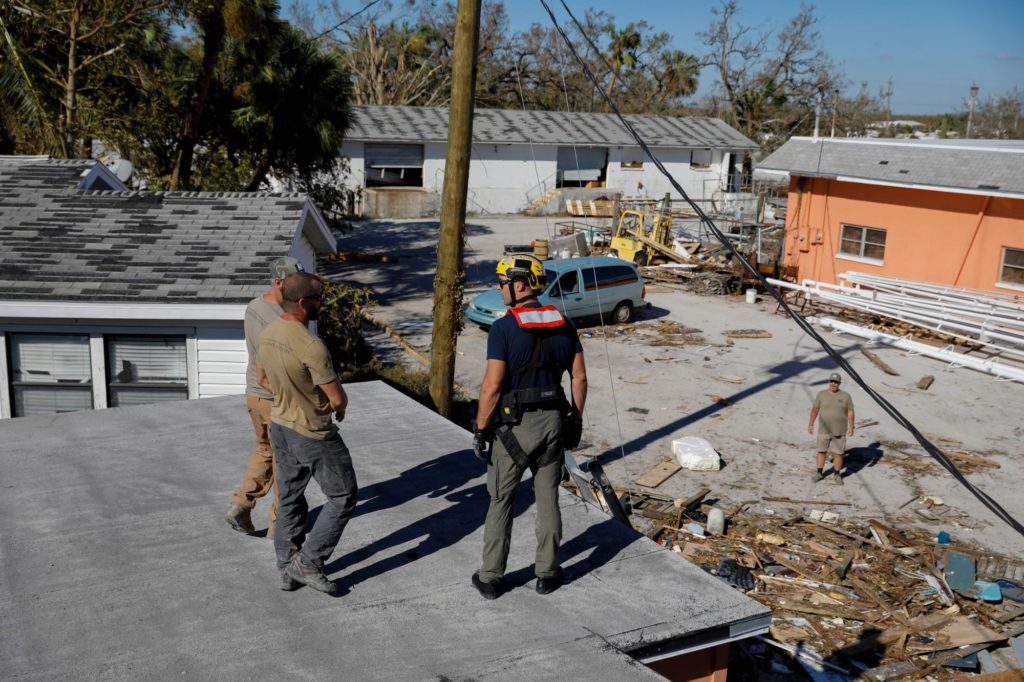
The death toll from Hurricane Ian has risen to nearly 30, almost all in Florida, as the state reels from the storm’s impact, with nearly 2 million homes and businesses still without power. Ian made its second landfall in South Carolina on Friday and was causing heavy rain and winds across portions of the US Mid-Atlantic region and New England on Saturday.

Russia’s state-controlled Gazprom PJSC suspended natural gas deliveries to Italy Saturday, deepening Europe’s ongoing energy crisis.

Discussions of the US midterm elections is picking up as early voting begins.  The Nov. 8 election will determine control of Congress.

BUZZING TWEETS:

A New York City Council member is proposing a bill that would allow civilians to report illegally parked cars, like those blocking bike lanes and sidewalks — and receive 25% of the $175 parking ticket.

Jimmy Carter, the oldest living former US president, celebrates his 98th birthday Saturday. Carter served as the 39th president from 1977 to 1981.

More stories like this are available on bloomberg.com

©2022 Bloomberg L.P.

Ambani Plans 5G Services in India With Most Affordable Tag

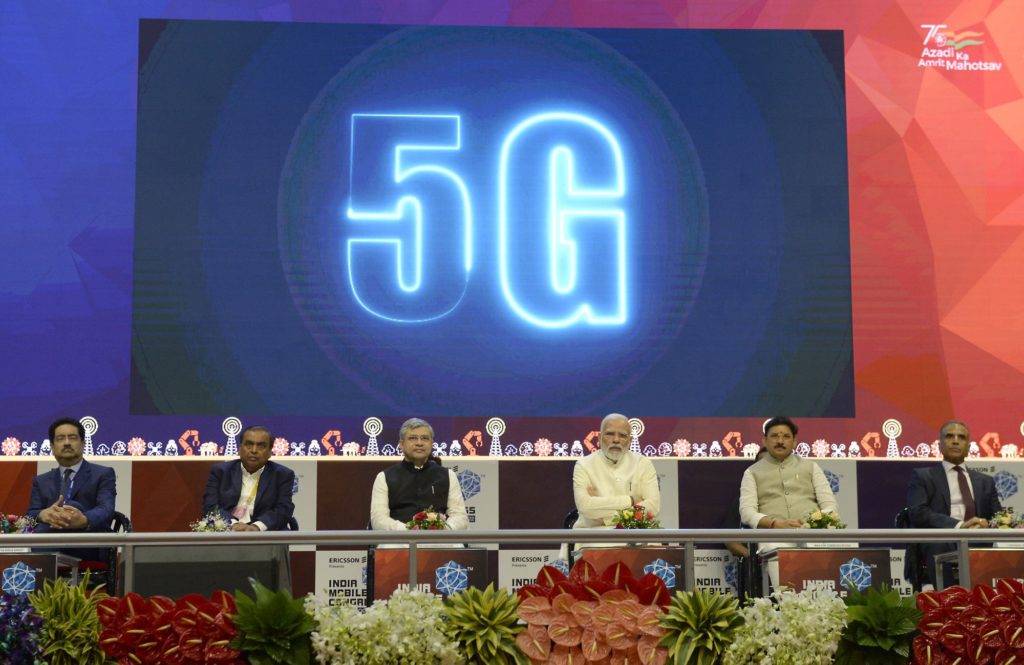
(Bloomberg) — Billionaire Mukesh Ambani said Reliance Industries Ltd.’s 5G network will cover the remotest corners of India by December next year, providing services “more affordable than anywhere else in the world.”

The technology can bring affordable, superior education and skill development to ordinary Indians and deliver high-quality healthcare to rural and remote areas, Ambani said on Saturday at India Mobile Congress, a technology and media forum. Reliance — an conglomerate spanning from oil to retail services — is vying to become the first in the nation to offer 5G after investing billions of dollars to acquire the airwaves. 

“India may have started a little late, but we’ll finish first by rolling out 5G services that are of higher quality and more affordable,” Ambani said at the event, which was jointly organized by the Department of Telecommunications and the Cellular Operators Association of India.

Carriers agreed to pay $19 billion just two months ago for airwaves at a government auction, with Reliance’s $11 billion bid topping the list. Additionally, the company in August said it will invest 2 trillion rupees ($24.6 billion) to roll out 5G across India as the conglomerate continues to expand and diversify into newer businesses. It said telecom unit Reliance Jio Infocomm Ltd. will deploy a “standalone 5G” version that doesn’t depend on the earlier 4G network and will deliver speedier connectivity.

Ambani also expects the technology will help India become a major exporter of high-value digital solutions and services as 5G can power the country’s emergence as the world’s intelligence capital. 

“The global market for 5G-enabled business applications is expected to grow to $20 billion over the five years and India will be a critical contributor to this expansion,” according to Manoranjan Mohapatra, chief executive officer of mobility solutions provider Comviva, a Tech Mahindra Ltd. unit.

Reliance is counting on countrywide deployment of 5G to help woo high-paying wireless users and boost its e-commerce and media business even though the technology hasn’t yet proven profitable for other Asian wireless operators.

“5G is much more than just the next generation of connectivity technology,” Ambani said in his speech. “It is a foundational technology that unlocks the full potential of other transformative technologies like Artificial Intelligence, Internet of Things, Robotics, Blockchain, and Metaverse.”

(Updates with comments from Ambani, industry executive from fifth paragraph)

More stories like this are available on bloomberg.com

©2022 Bloomberg L.P.

West Africa’s Fifth Coup in Just Two Years Tests Regional Bloc

(Bloomberg) —

West Africa’s fifth successful coup in just over two years is testing a regional bloc that’s running out of ideas to maintain political stability in the face of threats by jihadists.

The Economic Community of West African States, which aims to create a trading bloc and promote democracy, is negotiating a return to civilian rule in three member states including Burkina Faso, where the latest coup occurred this week. The country’s now-ousted leadership had agreed for elections to be held by July 2024 to restore democracy.

“Ecowas finds this new coup unfortunate at a time when progress had been made, through diplomatic and Ecowas efforts, to ensure a methodical return to democracy,” the 15-nation bloc said Friday in a statement calling for the deadline of July 2024 to be maintained.

The African Union echoed that call in a separate statement.

Burkina Faso, Africa’s fourth-biggest gold producer, has been under military rule since Jan. 24 when mutinous soldiers forced then-President Roch Marc Christian Kabore to resign. The regional bloc had initially hoped for a quick return to civilian rule after a succession of putsches suspended constitutional order. Mali and Guinea, the world’s top bauxite producer, have also succumbed to coups since August 2020. 

Meanwhile, Niger President Mohamed Bazoum and his Guinea-Bissau counterpart, Umaro Sissoco Embalo, have both survived military attempts to topple their governments in the past 18 months. It’s gotten so bad that Embalo, who currently holds the one-year rotating presidency of Ecowas, floated the idea of creating an anti-putsch force to deter coup plotters. 

In Mali and Burkina Faso, those originally seizing power from civilian governments did so on the grounds that national security was under threat by jihadists who’ve destabilized the wider region. But power grabs could also make the region more vulnerable to Islamist attacks by creating vacuums or jeopardizing military cooperation. 

Mali and Burkina Faso have now faced second coups with control moving between military leaders.

In the latter, the same junta, known by its French acronym MPSR, remains in power after replacing Paul-Henri Sandaogo Damiba over his inability to stem jihadist violence, a junta spokesman said Friday on the state broadcaster, Radio Television du Burkina. Still, the new leadership ditched the democratic transition plan, suspended the constitution, and dissolved the cabinet and parliament. It also closed all borders and imposed a curfew.

Little Success

Damiba, a 41-year-old colonel, had himself seized power in January, toppling Kabore over failure to quash Islamist violence. His replacement, Ibrahim Traore, a 34-year old captain, was named new MPSR President.

Ecowas’ attempts to restore civilian rule in the region have so far been met with little success. The bloc imposed strict economic and trade sanctions on Mali for six months, but took a softer stance in Burkina Faso and Guinea, conceding to longer-than-demanded transitions. In Guinea-Bissau, it deployed soldiers to protect Embalo in a rare military intervention.

“Ecowas warns any institution, force or group of people who, by their actions, prevent the planned return to constitutional order or contribute to thwarting peace and stability in Burkina Faso and in the region,” it said in its statement. 

More stories like this are available on bloomberg.com

©2022 Bloomberg L.P.

India Enters 5G Era as Debt-Laden Carriers Gird to Spend Billions

(Bloomberg) — India became the last major Asian economy to kick off a 5G network, marking a new wave of spending by indebted carriers on high-speed wireless technology that’s touted to revolutionize everything from gaming to manufacturing and health care.

Prime Minister Narendra Modi made the first 5G video call on Saturday to school students to demonstrate use of the service in education. “5G is the beginning of an infinite space of opportunities,” especially for the country’s youth, he said.

Though fifth-generation mobile technology — first introduced in South Korea three years ago — has been viewed by consumers as underwhelming so far because of a dearth of matching applications, local operators led by billionaire Mukesh Ambani’s Reliance Jio Infocomm Ltd. are betting that will change. They are counting on the nation’s 600 million-plus smartphone users to switch to the new network in due course and also on industries gearing for a digital transformation.

Carriers agreed to fork out $19 billion just two months ago for airwaves at a government auction, with Reliance’s $11 billion bid topping the list. The conglomerate proposes to invest 2 trillion rupees ($25 billion) more. Billionaire Sunil Mittal’s Bharti Airtel Ltd. and Vodafone Idea Ltd. haven’t disclosed their spending plans as yet.

While Reliance raised more than $25 billion from marquee investors in 2020 to help fund digital expansion, the need to spend big on 5G could weigh on the finances of rivals. Bharti and unprofitable Idea have a combined net debt of $37 billion, and the latter staved off bankruptcy by giving 36% of its equity to the Indian government earlier this year in lieu of back fees it couldn’t pay.

At the launch event on Saturday, Ambani said Jio’s 5G network will cover the entire country by December next year, while Mittal said Bharti Airtel plans to do so by 2024. Given the scale of spending, some experts said carriers are unlikely to undercut each other on prices once again — something that was tried in 2016 when Jio entered the market by offering free calls and cheap 4G data plans, which ended up putting some rivals out of business.

Long Road

“They will likely provide 5G services to those segments of the market that are willing to pay higher and try and recover as much as possible before making it available to others,” said Rajat Kathuria, a senior visiting professor at the Indian Council for Research on International Economic Relations in New Delhi.

5G’s long road to India has been dogged by several controversies. The main one was about how secure Chinese equipment is — a crucial issue for a country engaged in a border conflict with its northern neighbor. Last year, carriers decided to avoid Chinese vendors such as Huawei Technologies Co. and ZTE Corp., and opted instead to tie up with makers like Ericsson AB, Nokia Oyj and Samsung Electronics Co., potentially adding to their costs.       

“India may have started a little late, but we’ll finish first by rolling out 5G services that are of higher quality and more affordable,” Ambani said at the launch event. The technology can bring affordable, superior education and skill development to ordinary Indians and deliver high-quality healthcare to rural and remote areas, he said.

Offering low latency and data speeds about 100 times faster than 4G, the technology has the potential to enable a variety of advanced applications such as holograms, 3D avatars of people in metaverses and telemedicine, in which near-instantaneous transmission of video and data would allow surgeons to operate remotely using a robotic scalpel. So far, such applications have been too slow to evolve. For average users, 5G has mostly meant faster video games and content streaming.

To capitalize on 5G, China has been rolling out smartphone apps and industrial projects such as super high-definition live streaming, remote manufacturing, virtual reality and robotic surgery arms. The country’s three state-owned carriers have introduced more than 25,000 such applications, according to a news article posted by the State Council on its website in August. In South Korea, despite mobile operators’ efforts to come up with killer apps, average revenue per person has only climbed slightly since the 4G era.

In India’s race to roll out 5G, the only winner to emerge so far has been the government: The airwave auction was set to raise a record amount, Telecom Minister Ashwini Vaishnaw said in July.

Proceeds from the spectrum auction could provide a big financial boost to Modi’s administration, which has been seeking to tame inflation and rein in fiscal deficits as economists warn of a looming global recession.

More stories like this are available on bloomberg.com

©2022 Bloomberg L.P.

Noisy, Polluting Leaf Blowers Are Finally Going Electric

(Bloomberg) — In much of the northern hemisphere, the time of year is nigh for both brilliant fall foliage and its inescapable corollary: the persistent drone of high-powered leaf blowers. This year, however, may be just a little quieter.

Leaf blowers aren’t just autumn’s loudest hardware — they’re also hurricanes of pollution. Blowing just one hour’s worth of leaves with a gas-powered machine produces about as many smog-forming chemicals as driving 1,100 miles in a Toyota Camry, according to the California Air Resources Board. After years of pressure, those chemical (and audible) impacts are now pushing US municipalities to ban gas-powered tools, and presenting an opportunity for a new class of electric options. As those alternatives become more powerful and affordable than ever before, the American lawn is finally starting to go green. 

“It’s a better way to do business — better for the environment, better for the guys, better for the clients,” says Jared Kocaj, owner of Outdoor Digs, a small landscaping company in New Jersey.

A small cohort of noise- and climate-conscious homeowners started switching to electric blowers and mowers years ago, but the most important shift will come from companies like Kocaj’s: commercial landscaping crews that dominate lawn-gear purchases and keep their machines in constant use. The average commercial lawn mower, for example, runs 406 hours a year, or 17 straight days, according to the Environmental Protection Agency.

By some measures, the emissions from those machines are piling up even quicker than those clouding US highways and interstates. In 2011, the most recent year of data available, gas-powered lawn equipment accounted for 43% of the country’s volatile organic compound emissions and 12% of its carbon monoxide, not to mention a cocktail of other nasty stuff like NOx, benzene, butadiene, acetaldehyde and formaldehyde.

Over the past two years, Kocaj joined a wave of entrepreneurs starting to tackle that challenge, shelling out $65,000 to electrify Outdoor Digs. He purchased two massive mowers from Mean Green Mowers that will handle a full day’s work on a single charge, plus a truck full of smaller mowers, blowers, trimmers and saws from Milwaukee Electric Tool Corp. and Stihl Inc., each with batteries that his crew of 45 people swaps out two or three times per shift. 

If the new machinery lasts three years — the average life of Kocaj’s gas-powered tools — the electric investment will break even. And if the tools last a little longer, the battery-powered gear will actually be a cheaper option. 

“It just made sense,” says Kocaj, noting that high gas prices are making the economics even more favorable. (In a busy month, his crews used to burn 1,200 gallons.)

How lawn gear went electric 

The noise level of a leaf blower is generally correlated to its cost. To date, much of the industry has been driven by two-stroke engines, which have few moving parts and are thus relatively cheap and easy to maintain. They are also far louder than more refined engines. Insulation adds to the price tag, so the unit itself often acts as an amplifier for the whirring machinery and tiny combustions happening inside.

But the blowing part of the hardware is just a large, concentrated fan, which makes it relatively easy to run on a battery, or at least easier than a 7,000-pound SUV. A few years ago, even Elon Musk pledged to make a quiet leaf blower, before the Internet told him such a thing already existed. The most popular commercial model from Stihl is about as loud as an electric toothbrush, even as it pumps air out at a velocity of up to 154 miles per hour — literally tornado speed.  

“We now have battery tools that rival the power of gas,” says Murray Bishop, Stihl’s vice president of sales and marketing. “On the pro side, gas is still king, but battery is growing quickly.” 

Stihl now sells four different battery platforms and an array of chargers, including a mobile charging cabinet that it rolled out last year. Electric machines currently account for just under half of the company’s overall sales and certain products, like Stihl’s hedge trimmers, can even run longer on a battery than they do on a tank of gas.

Writ large, the potential of quieter, cleaner lawn care is an enormous business opportunity, and an excuse for companies and weekend warriors alike to upgrade their gear. The companies making lawn equipment shipped some 38 million tools last year, according to the Outdoor Power Equipment Institute, a trade group of manufacturers. Just over half of those sales were of electric tools, but the bulk of battery-powered purchases were made by individual homeowners. That means manufacturers can still expect plenty of upside ahead as the commercial sector embraces new technology. 

Toro Co., for example, is working with Home Depot on stocking some stores exclusively with electric tools. “Just buying a gas walk-power mower from us, that may be [a consumer’s] only purchase,” CEO Rick Olson told analysts in March. “But when they buy a battery electric product from us, then there are 50 other attachments that we’re going to market to them as great solutions — whether it’s pole saws, trimmers, string trimmers, blowers … so it provides an incremental boost.”

Likewise, Stanley Black & Decker Inc. CEO Don Allan has called the trend towards battery-operated machines a “growth catalyst” for the company. “I really believe when we look back at this space five, six, seven years from now, we’re going to see that a radical shift has happened,” Allan said at a conference in June.

For companies like Kocaj’s, battery-powered machines can also be helpful in landing commercial clients, including office parks, schools and distribution centers that often are stretching to hit internal ESG goals or land LEED certifications (and the valuable tax breaks that come with them). 

Kicking the backyard gas habit may not be voluntary forever. Realizing the noise and chemical pollution associated with gas-powered blowers, policymakers all over the US are now passing measures to eliminate them. California was first, voting in December to ban the sale of most small gas-powered tools by the end of next year. The state has almost as many lawn tools as cars and trucks — and only about 6% of the gear used by professionals is electric, according to an estimate by the California Air Resources Board.

A string of smaller governments have since followed suit, including Washington, DC; Burlington, Vermont; Portland, Oregon and Palm Beach, Florida. Seattle’s City Council approved a similar measure last month, and in Outdoor Digs’ backyard of New Jersey, blower bans are spreading. “There’s Montclair, Summit, Short Hills,” Kocaj says. “We kind of saw it coming and got ahead of it.” 

Kocaj is now hoping to push his company’s electron advantage further, planning a solar farm on its 11-acre headquarters — and solar panels on its trucks — so Outdoor Digs can be electrically self-sustaining. “Right now, we have to plug into the building every night,” he says, “and I feel like that’s cheating.”


More stories like this are available on bloomberg.com

©2022 Bloomberg L.P.

Solana Says Successfully Completed Cluster Restart After Outage

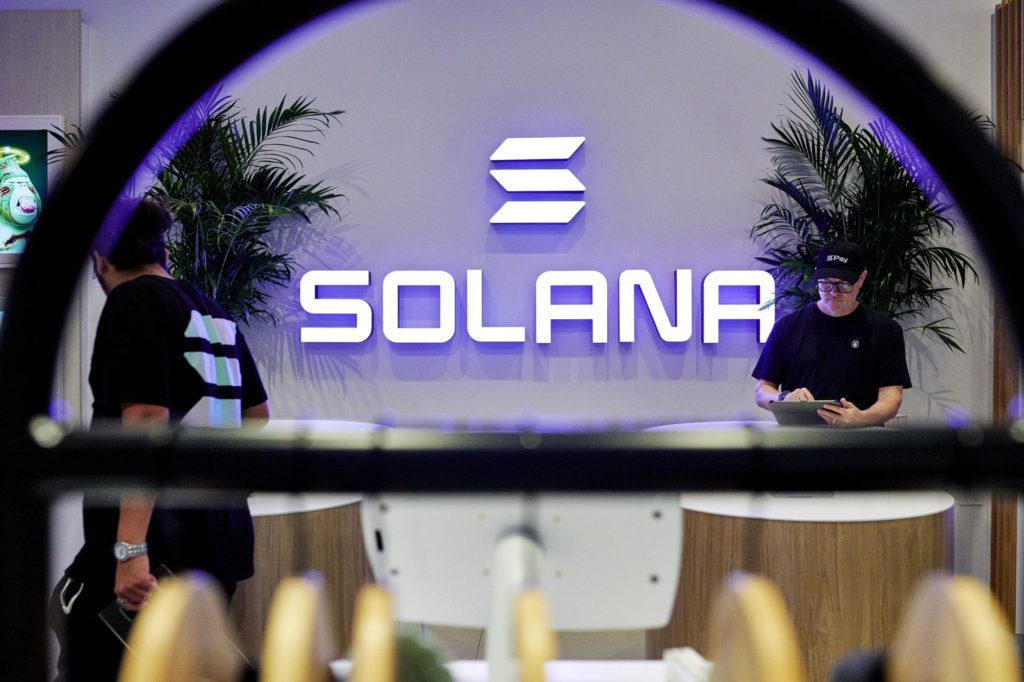
(Bloomberg) — The Solana blockchain is back up and running after a glitch caused an outage for several hours, the latest in a series of shutdowns of the crypto network in less than a year. 

In an update to the Bitcoin-alternative’s service Twitter, Solana said it had performed the necessary restart of Mainnet Beta at 8 a.m. London time. Now, network operators “will continue to restore client services over the next several hours,” it said in the tweet.

This isn’t the first time a bug has caused Solana’s network to temporarily fail. In June, the digital asset’s support structure suffered an outage of more than four hours. In January, a wave of blackouts and service issues lasting as long as 18 hours prompted ire from frustrated traders who watched their portfolio values decline while unable to offload tokens.

More stories like this are available on bloomberg.com

©2022 Bloomberg L.P.

UK’s Bruised Markets Need More Than BOE Support to Snap Back

(Bloomberg) —

Having settled into an uneasy calm after the Bank of England action staunched a record government bond selloff, UK markets risk a return of the turmoil.

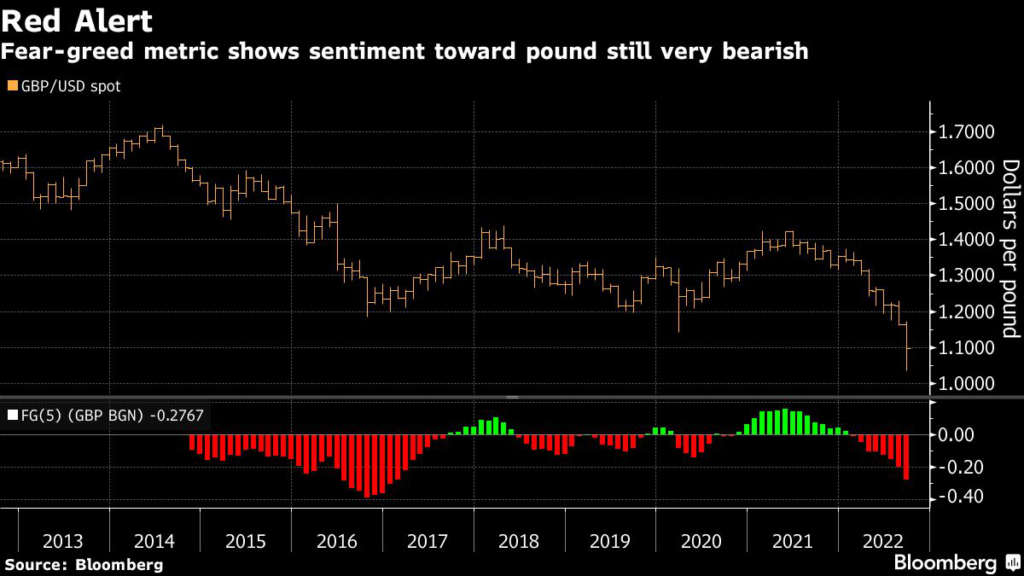
The bank’s intervention averted what some say could have been a financial catastrophe, triggered by a gilt selling avalanche from pension funds. It helped long-dated bonds reverse course and post their biggest-ever rally, while the pound bounced off record lows to trade above $1.12 on Friday, its biggest weekly gain since 2020. 

But if a slump to parity versus the dollar has been dodged, it may not be for long — unless Prime Minister Liz Truss executes a U-turn on her plan for some 45 billion pounds worth of unfunded tax cuts. 

Truss has so far signalled she will stick to her guns. Investors’ hopes have also been dashed that full forecasts might be published by the Office for Budget Responsibility, an independent watchdog, earlier than the scheduled Nov. 23 date. They will look for any signs of a softer stance from the government.

“Market reaction shows that confidence was damaged substantially,” Julius Baer economist David Alexander Meier said. 

“The government would be advised to take markets more seriously and bring forward the detailed budget with its projections on the fiscal balance, or at least offer more detail on the impact of its plans on the UK’s balance,” Meier said. “That could restore confidence.”

The Bank of England’s revived asset purchase program is to last only two weeks however, and the bank will almost certainly deliver a string of hefty interest rate rises in coming months,. In short, Truss’s ambitions to kickstart growth are squarely at odds with central bank policy. 

Meanwhile on the pound, the fear-greed indicator, a technical measure used by traders to gauge the strength of buying or selling intentions, is at the most bearish level since the UK voted in 2016 to leave the European Union. 

Chris Turner, a strategist at ING Bank NV said the government still needed to find a way to “balance the books.”

But Turner noted that with Truss’s Conservative party gathering this weekend for a conference, it’s “far too early for a U-turn on fiscal policy and, combined with a very difficult external environment, sterling should stay vulnerable.”

Truss Won’t Change Fiscal Plan After UK Budget Watchdog Meeting

Investors will also be on alert in coming days for any negative action from the ratings agencies, particularly after Moody’s Investors Service warned of lasting damage to the nation’s debt affordability. 

Here’s a snapshot of what’s happening across other UK markets: 

Gilts

UK 30-year yields had dropped to nearly 3.80% by Friday after soaring past 5% earlier in the week, the highest since 1998. Still, the BOE is only planning to buy gilts until Oct. 14, and its plans to reduce its gilt portfolio are only on hold until the end of next month. 

Credit risk

A measure of the UK’s credit risk has rocketed, soaring to levels last seen around the Brexit referendum in 2016 and the pandemic fueled-rout in 2020. While the implied probability of a default remains minuscule, it has become costlier for investors wanting to insure exposure to UK sovereign debt. 

Stocks 

The recent turmoil drove a 5% decline in the FTSE 250 index — which is more dependent on the Britain’s economy than the FTSE 100– and at one point pushing it to the lowest since May 2020. 

But the latest falls only add to year-to-date losses which have sharply reduced the combined market capitalization of companies with a primary UK listing — This is just over $133 billion above the nearest challenger Paris, a record low.

More stories like this are available on bloomberg.com

©2022 Bloomberg L.P.
Ambani Plans to Roll Out 5G in India Starting December 2023

(Bloomberg) — Billionaire Mukesh Ambani said his oil-to-retail conglomerate Reliance Industries Ltd. will roll out 5G services across India from December next year that will be “more affordable than anywhere else in the world.”

Reliance is vying to become the first in the nation to offer 5G after investing billions of dollars to acquire the airwaves. The technology can bring affordable, superior education and skill development to ordinary Indians and deliver high-quality healthcare to rural and remote areas, Ambani said on Saturday at India Mobile Congress, a technology and media forum.

“India may have started a little late, but we’ll finish first by rolling out 5G services that are of higher quality and more affordable,” Ambani said at the event, which was jointly organized by the Department of Telecommunications and the Cellular Operators Association of India.

Reliance Industries in August said it will invest 2 trillion rupees ($24.6 billion) to roll out 5G across India as the conglomerate continues to expand and diversify into newer businesses. It said telecom unit Reliance Jio Infocomm Ltd. will deploy a “standalone 5G” version that doesn’t depend on the earlier 4G network and will deliver speedier connectivity.

Reliance hopes countrywide deployment of 5G will help woo high-paying wireless users and boost its e-commerce and media business even though the technology hasn’t yet proven profitable for other Asian wireless operators.

“5G is much more than just the next generation of connectivity technology,” Ambani said in his speech. “It is a foundational technology that unlocks the full potential of other transformative technologies like Artificial Intelligence, Internet of Things, Robotics, Blockchain, and Metaverse.”

More stories like this are available on bloomberg.com

©2022 Bloomberg L.P.
Raging Markets Selloff in Five Charts: $36 Trillion and Counting

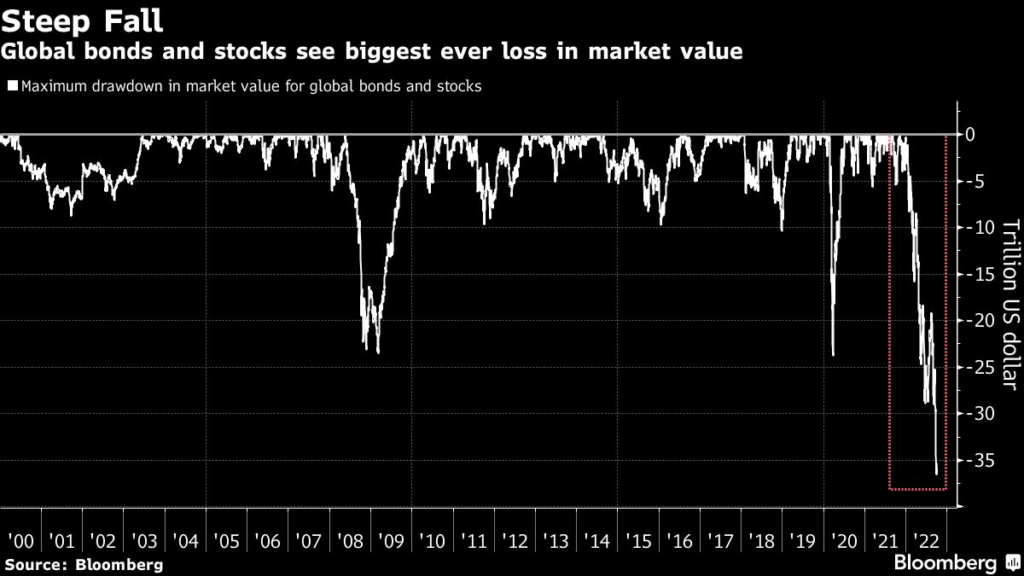
(Bloomberg) — Whether super-safe US Treasuries or the riskiest emerging equities, global stocks and bonds have lost a record $36 trillion in value over the past nine months in a wild selloff that engulfed assets right across the risk spectrum.

With the year heading into its last quarter, there is likely more pain ahead. Central banks are in full fire-fighting mode, making clear they intend to raise interest rates further to douse inflation, even if that leads to economic recession. 

From the look of it, one could be forgiven for stashing cash under the mattress. Indeed, in the latest Bank of America Corp.’s fund manager survey, participants said their exposure to cash was at all-time highs. 

And for markets that started the year with valuations at multi-year, or even record highs, the liquidity pullback has been pretty much like pressing a reset button.

“We are seeing the world being remade politically and economically, with the trends beginning now set to last for the rest of the decade,” says David Dowsett, global head of investments at GAM Investment. “We are experiencing what is known in German as a ‘Zeitenwende,’ an epochal shift.”

Here are five charts showing the damage to global financial markets this year, offering hints for rest of the year:

The Big Dent

This year’s pullback outpaces steep declines seen during the 2008-2009 financial crisis and the 2020 pandemic, based on the drop in market value of the Bloomberg GlobalAgg Index and the MSCI All-Country World Stocks Index combined.

Perhaps this is not surprising given the tidal wave of cash that flooded into world markets during the easy years. But the pace of this year’s value destruction is still alarming: the $36 trillion shaved off markets in nine months had been amassed over roughly double that time, between mid-2020 and late-2021. 

Not Easy Anymore

Ultra-easy monetary policy was the cornerstone of the longest-ever equity bull market, that was only briefly interrupted in 2020 by Covid. Now the US Federal Reserve and its peers are knocking down what they helped build.

Strategists at BofA have counted 294 interest rate hikes globally since August 2021 alongside $3.1 trillion in “quantitative tightening” in the past seven months. As a result, the “global stock and bond market cap has cold-turkey collapsed,” they wrote on Friday, adding that the rates and quantitative tightening shock had hit Wall Street’s “addiction” to liquidity.

Volmaggedon

Gauges of currency and bond volatility have been a leading indicator of the ongoing rout. They have been elevated most of this year, with the ICE BofA Treasury volatility index approaching levels hit when the pandemic erupted in 2020. However, the CBOE Volatility Index, known as Wall Street’s fear gauge, remains below levels seen during past bear markets. Given it has room to rise, some investors are concerned. Goldman Sachs Group Inc. and BlackRock Inc. are among those warning that markets are yet to price in the risk of a global recession.

Nowhere to Hide

It’s been one of those rare years when bonds and stocks have sold off simultaneously. After all, inflation is at multi-decade highs, forcing central banks to act aggressively. Rising borrowing costs, high oil prices and the war in Ukraine meanwhile cloud the outlook for economic growth and company earnings. 

All that has put the S&P 500 Index and the Nasdaq 100 Index on track for their third consecutive quarter in the red, their longest losing streak since the global financial crisis and the bursting of the dot-com bubble, respectively. 

As for alternatives: Treasuries and gold are the two traditional safe heavens but they have lost even more than stocks this quarter. Bitcoin and the dollar are the only assets offering positive returns.

A Quarter to Forget

The third quarter will also get its place in the history books for one of the biggest reversals: It is the first quarter since 1938 that the S&P 500 Index closed in the red after gaining more than 10%. 

All in all, 2022 is the year that reflects a “painful regime change,” said Michael Hartnett, BofA’s chief investment strategist.

More stories like this are available on bloomberg.com

©2022 Bloomberg L.P.
Close Bitnami banner
Bitnami