
Bloomberg

EU Sees Stress Test on Infrastructure after Blast: Energy Update

(Bloomberg) — European Union energy ministers backed an initial package of measures to tame the gas crisis, including a power-demand reduction goal and a profit grab from energy companies.

There’s some frustration in Brussels that more hasn’t been done, however, as the challenges facing policymakers keep growing. Ministers called on the Commission for more concrete proposals.

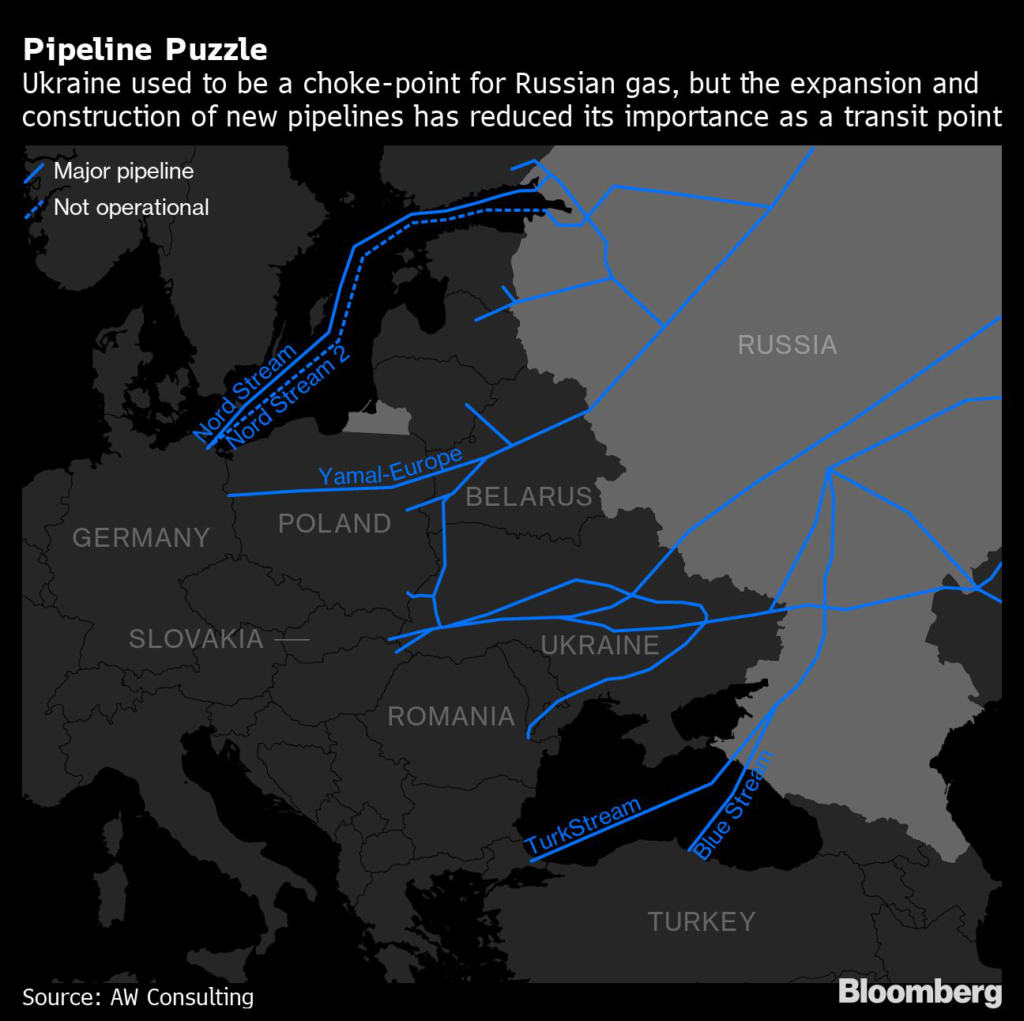
Overshadowing the meeting is the threat to the security of energy infrastructure after the suspected sabotage of the Nord Stream pipelines. Countries are moving to step up security, even as they admit their ability to prevent attacks is limited. 

Key Developments:

  • Habeck says Germany must save more gas
  • TotalEnergies spots drone flying near North Sea field
  • Italy sends navy to protect pipelines
  • Gas flows via Ukraine stable; prices fall
  • Satellites capture first images of pipeline leaks
  • NATO chief will speak at 6 p.m. Brussels time
  • Germany tells allied gas suppliers not to exploit situation
  • Draghi warns against distorting market
  • France mulls shielding businesses from costs

Read this: How Would You Manage Europe’s Energy Crisis?

EU Sees Stress Test on Infrastructure (3 p.m.)

Energy Commissioner Kadri Simson said she’d work with her home affairs counterpart to propose a stress test on European energy infrastructure as a response to the Nord Stream blasts. 

Ministers Demand More Action (2:45 p.m.)

Czech Energy Minister Jozef Sikela, whose country holds the rotating presidency, called on the commission to press ahead at pace with more measures to stem the crisis.

Sikela has heard “serious concerns” from member states about the lack of urgency.

“We have to act now,” he told reporters. 

Common gas purchases, work on a parallel benchmark gas index, and measures to cut the link between gas and power prices should be considered. 


Habeck Points Finger at Russia (2:20 p.m.)

German Economy Minister Robert Habeck indicated that Russia is to blame for the Nord Stream explosions, in the clearest statement yet from a European leader.

“There’s an investigation ongoing and we should wait for the result but that Russia is saying it wasn’t us is like saying I’m not the thief,” he said. “I don’t know who has done the explosions but saying it wasn’t us is not an answer I would trust.”

The Kremlin has denied responsibility.

Habeck Underlines the Challenge (2:15 p.m.)

Habeck underlined the challenge facing ministers as they contemplate measures such as gas price caps: “We need to find a way to reduce prices without risking supply.”

For now, there’s no agreement on any kind of gas price cap. But several member states are still pushing.

“I’m optimistic we’ll find better solution than what is currently on the table,” he told reporters. 


‘Progress’ on Oil Price Cap (1:15 p.m.)

There’s been progress in discussions on the oil price cap, according to Poland’s ambassador to the EU, Andrzej Sados.

A new draft on the broader sanctions package will be circulated in coming days for discussion on Monday, he told reporters in Brussels.

Poland is one of the key backers of the plan in the bloc.

How Big Is the Nord Stream Leak? (1 p.m.)

Whichever way you look at it, the amount of natural gas bubbling up in the Baltic Sea from Russia’s ruptured Nord Stream pipelines is massive. 

The underwater pipes, damaged by what European and US leaders say was sabotage, contained 778 million cubic meters of gas, based on data compiled by the Danish Energy Agency. That would be enough to meet three days’ supply for Germany, Europe’s biggest user of the fuel. It’s also the same as two-and-a-half days of production from Norway, currently the continent’s top gas supplier.  

What Happened to the Caps? (11:45 p.m.)

As the EU moves forward with its first package of measures, it’s becoming increasingly clear that some of its most radical ideas are running into stark divisions within the bloc, as well as market realities.

Some key member states have all but dropped an idea of putting a price cap on gas from Russia. That was meant to cut Moscow’s revenues as well as helping European prices. The idea was also floated of a wider cap that would also cover gas from Algeria and Norway.

The problem is any such measure would endanger supply, at a time when the bloc is desperate for alternative sources of gas. And capping LNG is probably not an option in a vastly competitive global market.

Another idea is a cap on the wholesale gas price, as backed by 15 nations. That’s looking hard to execute as it would require an overhaul of the market.

That leaves the option of capping the price of gas just for power production in order to sever the link between gas and power and alleviate the burden on bills. It’s the narrowest, most modest version of a price cap, though it still comes at a big fiscal cost.

EU Ministers Back Package (11:06 a.m.) 

Ministers reached an agreement on an initial energy intervention package, setting a goal to reduce power consumption and agreeing to tap windfall profits of companies and redirect them to customers and businesses.

It includes a binding target for each member state to lower its electricity use by 5% during peak hours during the heating season. It also allows governments to slap levies on fossil-fuel companies and power producers with cheaper inputs, a move the bloc estimates could raise 140 billion euros ($138 billion).

Habeck Says Allies Should Avoid ‘Exploitation’ (10 a.m.)

German Economy Minister Robert Habeck suggested that countries stepping into supply gas to the EU, which include Norway and the US, shouldn’t exploit the skyrocketing prices at Europe’s expense.

“I call on the EU to work for a different negotiation position with those states which are supplying gas,” he told reporters. “Because in this situation, we are in a partnership, and partnership cannot mean exploitation.”

Italy Sends Navy to Protect Pipelines (9:20 a.m.)

Italy is reinforcing protection of strategic trans-Mediterranean pipelines, the Navy said.

Two ships of the Italian Navy, equipped with remote-controlled submarines, are in charge of monitoring key areas in the Mediterranean Sea, specifically around the infrastructures transporting energy from Maghreb countries to Italy, according to a statement.

EU Focuses on Three Steps for Now (9:15 a.m.)

Ministers are likely to sign off on a package based around three main measures — the easiest ones on which to achieve consensus. A gas cap is not part of the package as it’s proved too controversial, at least for now. The main measures to be approved today are:

  • A mandatory power demand reduction target at peak hours
  • A profit-grab on power producers with cheaper input costs — for example those using nuclear, renewables
  • A levy on excess profits of fossil-fuel producers. The funds would be redistributed to help struggling consumers

German Finance Chief Says Putin’s ‘Energy War’ Will Fail (9:10 a.m.)

German Finance Minister Christian Lindner said the government is protecting Europe’s biggest economy from the fallout of the energy crisis with an “all-in strategy” and warned Russian President Vladimir Putin that his “energy war” will fail.

Putin’s “goal is clear,” Lindner said in a speech to the lower house of parliament in Berlin ahead of a vote approving the government’s temporary cut in sales tax on gas purchases to 7% from 19%. “Our prosperity should be shaken, our economic structure hit so that in the end our social cohesion erodes, also with the aim of bringing the solidarity that this country has for Ukraine to an end,” Lindner added. “We’re sending out a clear signal that he will fail.”

Sweden Taking Steps to Secure Infrastructure (9:20 a.m.)

Swedish Energy Minister Khashayar Farmanbar said authorities are taking steps to secure energy infrastructure after the Nord Stream blasts, which he said were probably perpetrated by a state actor. 

Norway Can’t Avert Sabotage (9 a.m.)

Norway’s security service lacks tools to prevent sabotage against the country’s energy facilities while such risks have increased, public broadcaster NRK reported, citing the agency’s Deputy Chief Hedvig Moe.

Frustration at Slow Pace (8:30 a.m.)

Some member states expressed frustration that more hasn’t been done to reach an agreement sooner to bring down gas prices. 

The European Commission set out earlier this week the risks of implementing a gas price cap on its own without additional measures.

Not Safe Enough Yet to Assess Pipeline Damage (8:25 a.m.)

US Defense Secretary Lloyd Austin said he spoke with his Danish counterpart, who said it will still be several days before it’s safe enough to assess the damaged pipelines.

“There is a lot of speculation but quite frankly, until a complete investigation is done, no one will be able to determine for certain what happened,” Austin told reporters in Hawaii.

EU to Focus on Three Steps (8:20 a.m.)

Ministers will focus on three measures that were the easiest to secure consensus around: a reduction of electricity demand, a cap on profits from energy producers with cheap input costs, and a tax on excess profits from fossil fuel companies. A cap on gas prices is not on the table. 

Czech Energy Minister Jozef Sikela said more needs to be done, and now. 

“This is just the first part in the puzzle. We must not stop here,” Sikela said. “We are in an energy war with Russia. The winter is coming and we have to act now.”


Europe’s Biggest Reactor Reaches Full Capacity (8 a.m.)

Europe’s newest nuclear reactor now has the biggest output too, bringing some relief to the region’s strained electricity market. 

Finland’s Olkiluoto-3, which sits on a peninsula by the Baltic Sea, reached full power for the first time last night, its operator Teollisuuden Voima Oyj said.

Germany Warns of Gas Shortage Threat This Winter (7:30 a.m.)

German Economy Minister Robert Habeck said the government’s move to put a lid on gas prices won’t hinder efforts to cut consumption, but he reiterated an appeal for all consumers to use less fuel to avert a shortage this winter.

“We’re still in this emergency situation and if we don’t save, if households don’t reduce usage, then the threat remains that we’ll have too little gas this winter,” Habeck said in an interview with Deutschlandfunk radio. 

The EU must also come up with a “unanimous response” to help bring down prices for gas imported into Europe, he added, accusing some countries, even allies, of “making out like bandits.”


More stories like this are available on bloomberg.com

©2022 Bloomberg L.P.
US Futures Waver as Key Data to Keep Fed on Path: Markets Wrap

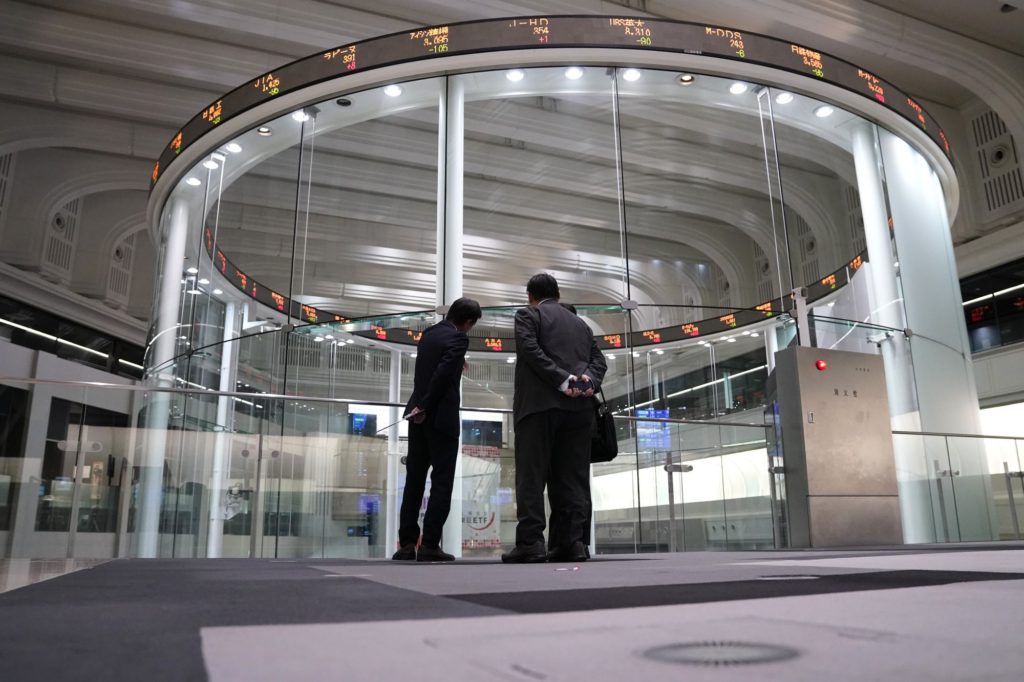
(Bloomberg) — US Treasuries advanced and equity futures wavered after consumer spending rose more than expected and a key inflation metric picked up steam.

The 10-year Treasury yield tumbled 10 basis points, offering some respite to equities that have been roiled by debt market volatility this week. Contracts on the S&P 500 fluctuated along with those on the Nasdaq 100. The dollar strengthened after reversing an earlier loss.

Markets are on the edge as traders expect the latest economic data that released Friday will keep the Fed on its path of aggressive rate hikes. A bruising session on Wall Street Thursday had already taken the S&P 500 down 2% to the lowest in almost two years and sent the Nasdaq 100 tumbling almost 4%. The S&P 500 Index is headed for its third straight quarter of losses for the first time since 2009 and the Nasdaq 100 Stock Index for the first time in 20 years. 

Fears of global recession are mounting as the threat of higher rates saps growth. The case of the UK shows how faultlines between government and central bank policy on tackling inflation can erupt into a crisis. Hopes evaporated that the British government would succumb to pressure to back down from tax cuts that brought the pound to the edge of dollar parity.

The pound renewed its tumble as it emerged the UK Treasury hasn’t asked its fiscal watchdog to accelerate its economic forecast, suggesting that the government has no plans to backtrack on the economic strategy roiling markets.

Read more: UK Treasury Hasn’t Sought to Speed Up Budget Watchdog’s Forecast 

Now traders are gauging the next pressure points that will further erode gains won by the Bank of England’s billions in bond-market buying in the past two days.

Global equity funds garnered inflows of $7.6 billion in the week to Sept. 28, according to data compiled by EPFR Global. Bonds had $13.7 billion of outflows in the week, while $8.9 billion flowed into US stocks, the data showed.

How much damage is a strong dollar causing? That’s the theme of this week’s MLIV Pulse survey. It’s brief and we don’t collect your name or any contact information. Please click here to share your views.

Key events this week:

  • Euro zone CPI, unemployment, Friday
  • US consumer income , University of Michigan consumer sentiment, Friday
  • Fed’s Lael Brainard and John Williams speak, Friday

Some of the main moves in markets:

Stocks

  • Futures on the S&P 500 rose 0.1% as of 8:49 a.m. New York time
  • Futures on the Nasdaq 100 were little changed
  • Futures on the Dow Jones Industrial Average were little changed
  • The Stoxx Europe 600 rose 0.4%
  • The MSCI World index fell 1.4%

Currencies

  • The Bloomberg Dollar Spot Index rose 0.1%
  • The euro fell 0.5% to $0.9769
  • The British pound fell 0.3% to $1.1085
  • The Japanese yen was little changed at 144.48 per dollar

Cryptocurrencies

  • Bitcoin fell 1.2% to $19,268
  • Ether fell 0.9% to $1,325.7

Bonds

  • The yield on 10-year Treasuries declined 10 basis points to 3.69%
  • Germany’s 10-year yield declined nine basis points to 2.09%
  • Britain’s 10-year yield declined nine basis points to 4.06%

Commodities

  • West Texas Intermediate crude fell 1% to $80.43 a barrel
  • Gold futures rose 0.4% to $1,674.80 an ounce

More stories like this are available on bloomberg.com

©2022 Bloomberg L.P.

Polish Prime Minister Loses Chief Aide After Email Leaks

(Bloomberg) — Polish Prime Minister Mateusz Morawiecki’s chief aide resigned after becoming embroiled in an email-hacking scandal that has plagued the government for more than a year.

Leaks of emails allegedly stolen from aide Michal Dworczyk’s private inbox exposed sensitive correspondence with administration officials including Morawiecki and became frequent media fodder. Dworczyk, who stepped down Friday, said the account was hacked, but also that some emails published on the poufnarozmowa.com website were doctored.

The departure of one of Morawiecki’s most trusted lieutenants — Dworczyk led the roll-out of Poland’s Covid-19 vaccination program and helped coordinate support for Ukrainian refugees — comes as the prime minister is under growing pressure to prove he can deal with the consequences of the escalating cost-of-living crisis. 

Surging inflation has chipped away at the ruling party’s support before elections expected late next year.

Poland’s most powerful politician and the leader of the ruling Law & Justice party, Jaroslaw Kaczynski, recently sidestepped a question about whether Morawiecki will continue to lead the government amid worries over coal shortages before the northern winter heating season starts.

More stories like this are available on bloomberg.com

©2022 Bloomberg L.P.

Does Crypto Owe Anyone an Apology After $2 Trillion Slump?

(Bloomberg) — Bankruptcies, layoffs and eye-popping losses have become fixtures of the digital-asset sector over the past few months, as it reels from a $2 trillion drop in its market value. 

So as the fallout continues to reverberate, does the industry owe anyone an apology?

That’s one of the questions we addressed on the first episode of Crypto IRL, a new Bloomberg Quicktake series.

“I do think that certain executives of certain companies that lost millions, tens of millions, billions of dollars of consumers’ funds, they definitely have explaining to do,” Meltem Demirors, chief strategy officer at CoinShares, said on the show. “And I do think they’ll be held to account.”

Over the course of eight episodes, Crypto IRL will sort through the rubble to assess what’s left standing and what’s ahead.

Demirors says there could still be more pain, as crypto-mining companies struggle to stay afloat with asset prices declining and the cost of energy rising. 

“The big part of the ecosystem I’m still concerned about is crypto miners,” she said.

Watch Crypto IRL on Fridays at 8 p.m. New York time on Bloomberg Quicktake, and at 8:30 p.m. on Bloomberg TV. And it’s always streaming at www.bloomberg.com/qt.

More stories like this are available on bloomberg.com

©2022 Bloomberg L.P.
Ian Aftermath Even Harder to Fix With Supply Chain Tattered

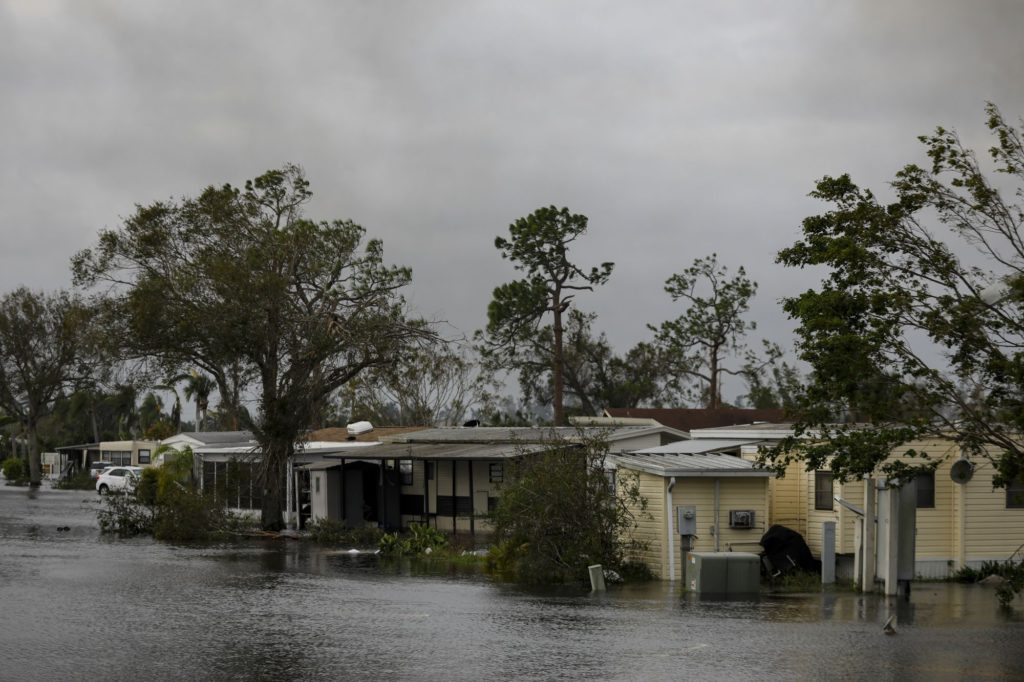
(Bloomberg) — The difficult job of rebuilding communities pummeled by Hurricane Ian is expected to be made even worse by a problem that’s lingered since the early days of the pandemic: snarled supply chains.

Ian tore a path of destruction across Florida, leaving more than 2 million homes and businesses without power, after landing as one of the strongest storms to hit the US. Residences, bridges and other infrastructure are in ruin, with damage estimates ranging from $65 billion to $100 billion, and Florida Governor Ron DeSantis said it will take years to recover. Construction groups warn that labor shortages and supply-chain difficulties are likely to hamper rebuilding efforts. 

“Across the board, we are seeing challenges in obtaining all types of building materials in a reliable time frame,” said Steve Cona III, president of Associated Builders and Contractors’ Florida Gulf Coast chapter. 

Damage in Florida’s Lee, Collier and Charlotte counties is “devastating,” and it will take substantial time and resources to rebuild, Cona said. Compounding those challenges are ongoing labor shortfalls, supply-chain issues and the fact that material costs remain unpredictable, he said.

Lumber prices have been volatile since the pandemic began, and this year’s surge in borrowing costs sent prices falling from records set in 2021. While there is an oversupply of material in North America, disruptions from Ian may cause logistical issues transporting lumber, according to Kevin Mason of ERA Forest Product Research.

“If you’ve just had a hurricane go through, your logistics are going to be a challenge,” said Russ Taylor, president of consulting firm Russ Taylor Global in Vancouver. “The whole building sector is going to shut down for a while until things dry out and waters recede.”

While supplies from lumber mills have been improving in 2022, there are still issues getting wood to market due to a shortage of rail cars and trucks, Taylor said. The storm will slow deliveries to affected areas, creating a glut of lumber and sending prices lower, he said. Florida and South Carolina have seen strong building demand, and that will dip in Ian’s immediate aftermath, Taylor said.

On Thursday, lumber futures in Chicago fell as much as 6.9% to touch the lowest price in more than two years.

‘Some Constraints’

Home Depot Inc. teams on the ground in Florida are assessing damage to homes, which will help the company better understand what they might need to supply to Florida sites, said Pete Capel, head of emergency operations for the retailer. Home Depot positions goods ahead of hurricane season in areas along the Gulf Coast and Southeast, and they’re either there already or on the way to stores, he said. 

“Improvements have been made” since earlier in the pandemic, Capel said, but “there are still some constraints in the supply chain in total.”

Several insurance adjusters said they’re expecting shortages in labor and construction materials. Scott Harris of North American Public Adjusters Insurance Claims Consultants in Cape Coral, Florida, said he’s concerned about the possibility of severe delays in getting such rebuilding materials as lumber, drywall, tile and shingles.

Homes that managed to withstand the storm are at risk of additional damage in its aftermath. Properties flooded with several feet of water — “homes that are boarded up, devoid of light or airflow” — are quickly at risk of mold damage, said Harris, who’s worked in insurance adjustment for more than 20 years.

Toxic Mold

“In Florida, microbial growth has a life of its own, and you have to quickly get in and you have to cut out all the drywall to let the wall cavities dry out,” said Jason Holzem, a public adjuster at Day Adjusting & Consulting. “Otherwise your entire property will be covered in mold — it’ll be on your ceilings, on your walls, all your personal property, and you can’t live in that environment. And then we end up getting black mold, which is toxic.”

Adding to labor constraints, logistical problems transporting supplies and volatile materials costs is the wide path of Ian’s devastation. That means everyone rebuilding has to cope with the “demand surge” resulting from other residents and business owners also trying to recover from the hurricane, said Michael Millette, founder of Hudson Structured Capital Management, which focuses on the reinsurance and transportation sectors.

“You need to keep in mind that it costs a lot more to rebuild your house when everyone in the region is rebuilding theirs,” Millette said. “There are only so many contractors and so much building machinery and material.”

Darryl Davis, an adjuster for more than 30 years, said his company — DDavis & Associates Inc., in Coral Springs, Florida — has fielded a couple dozen calls for adjustments so far, and expects that figure to grow exponentially as residents regain mobile-phone service. He plans to start inspections Saturday, covering the areas of Marco Island, Cape Coral, North Port and Venice.

“It’s gonna take months and years to get the area back to where it was before the storm hit,” Davis said. “I’m sure there’ll be shortages of materials. There were a shortage of materials before this happened, so it’s only gonna exacerbate the problem.”

(Updates with storm details in second paragraph.)

More stories like this are available on bloomberg.com

©2022 Bloomberg L.P.

Top US Green Energy Firms to Visit UAE as China Makes Inroads

(Bloomberg) — A delegation of leading US green energy firms will visit the United Arab Emirates in March seeking to boost cooperation at a time of rising competition from Chinese businesses in the Gulf, according to an American official. 

“We’re going to have top companies visiting, who can be great solution providers in the clean tech space,” Dilawar Syed, Special Representative for Commercial & Business Affairs at the State Department, said in an interview in Dubai. Syed expects deals but didn’t name any of the roughly 15 companies likely to participate.  

The UAE became the first of the Gulf’s oil-exporting states to commit to a net-zero strategy, and is set to host next year’s COP28 climate summit. The country’s ties with the US, meanwhile, are being tested by the inroads made by Chinese companies and technologies.  

In December, the UAE said it was suspending talks with the US on a $23 billion deal to purchase 50 F-35 jets and other weaponry. Negotiations had slowed amid American pressure on the Gulf country to remove Huawei Technologies Co. from its telecommunications network and take other steps to distance itself from Beijing.

Syed’s attending the US-UAE Economic Policy Dialogue, where agencies are focused on boosting cooperation in energy diversification, supply chains, food security, IP data, healthcare and life-science research.

He dismissed concerns the US is losing out to China in the Gulf. 

“There’s so much willingness to do business with US companies and US entrepreneurs,” he said, pointing to links forged by Emiratis educated in the US. “They are way more familiar with us than with anyone else in the world and those are very important levers, because relationships matter.”

More stories like this are available on bloomberg.com

©2022 Bloomberg L.P.
Stellantis Weighs New Chip, Materials Strategy, Citroen CEO Says

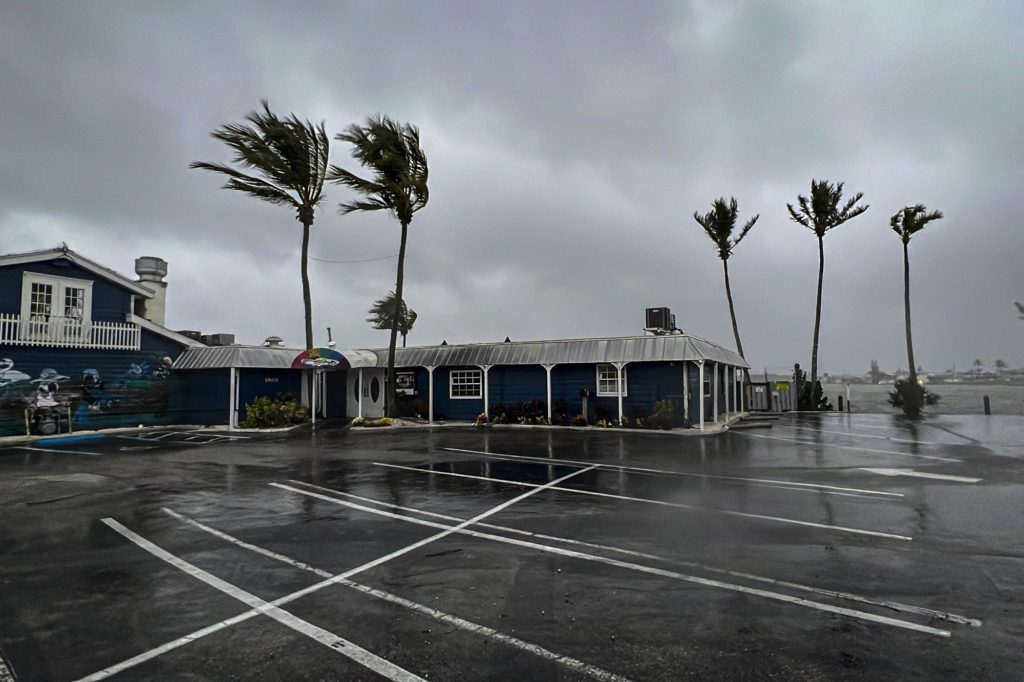
(Bloomberg) — Stellantis NV is considering unprecedented actions to shore up its access to raw materials and vital car parts as soaring energy prices and ongoing supply-chain disruptions threaten the auto industry’s transition to electric vehicles, according to the head of the carmaker’s Citroen brand.

The maker of Jeep and Fiat cars is seeking direct talks with chipmakers, an unusual step in the multi-layered supply chain in carmaking, according to Citroen chief Vincent Cobee. The manufacturer may also go as far as buying battery material providers to ensure reliable supply, he said.   

That’s what “we have to do to progressively get out of the storm,” he said in an interview in Paris, where Citroen presented its new Oli concept car this week. “It’s a very nasty discussion but it’s shaking the business model of the auto industry.”

Carmakers are struggling to secure essential parts and materials ranging from lithium for EV batteries to semiconductors for increasingly computerized automobiles. Stellantis is “looking at all options,” Cobee said, adding that the traditional model of using a chain of vendors to procure parts “is starting to crack.”

The supply-chain model for the past “30, 40 years is being put into question by the volatility, the brutality of the crises of the past three years,” Cobee said.

Stellantis is in direct talks with chipmakers about supplies, he added, and is pursuing a range of actions to secure EV battery materials. 

“We can secure lithium via a purchase contract, we can be a co-investor into a new mine development, we could buy material providers,” Cobee said. 

Meanwhile, Citroen’s concept Oli car is built to showcase a vehicle with fewer energy-consuming features, bucking the trend of making bigger, heavier autos, said Laurence Halsen, product and strategy director at Citroen. 

The car, much lighter than comparable vehicles, can be upgraded over time with recycled materials, including cardboard.

“This summer changed everything,” Cobee said in a speech before Oli was unveiled. “We see heatwaves. We see raw materials going up, we see inflation coming, we see energy concerns. The world is not infinite in its resources. We need to address that.”

More stories like this are available on bloomberg.com

©2022 Bloomberg L.P.
Social Media Played a Role In UK Teen’s Death, Judge Says

(Bloomberg) — Online material from sites including Meta Platforms Inc.’s Instagram and Pinterest Inc. played a “more than minimal” part in a teenager girl’s death, according to a London judge. 

Coroner Andrew Walker concluded Friday that Molly Russell’s death in 2017 at the the age of 14, would “not be safe” to be called suicide and was instead “an act of self-harm whilst suffering from depression and the negative effects of online content.” 

The verdict came after a two-week London inquest which examined whether social media contributed to her death. Executives from Meta and Pinterest were grilled during the hearings on whether the algorithms used on their social media sites exacerbated her mental health. 

A raft of lawsuits have been filed in the US against Big Tech from young people who claim social media addiction caused them to develop serious mental health issues. Meta whistle-blower Frances Haugen accused the company of knowingly preying on vulnerable young people to boost profits.

“We’re committed to ensuring that Instagram is a positive experience for everyone, particularly teenagers, and we will carefully consider the Coroner’s full report when he provides it,” a Meta spokesperson said. 

Social Media Firms Fed Teenage Girl ‘Hopelessness’ Before Death

Russell had liked, shared or saved a total of 16,300 posts on Instagram, 2,100 of which were self-harm related, in the six-months before her death, according to her family’s lawyers. On Pinterest, Russell had 5,793 pin impressions and 2,692 close-ups in the same time period — types of engagement on the site.

“The platforms operated in such a way using algorithms as to result, in some circumstances, of binge periods of images, video clips and text,” which “romanticized acts of self-harm” and “sought to isolate and discourage discussion with those who may have been able to help,” Walker said.  

Oliver Sanders, the Russell family lawyer, asked the judge Friday to send instructions on how to prevent this happening again to Pinterest, Meta, the UK government and the communications regulator.

“Over the past few years, we’ve continued to strengthen our policies around self-harm content,” Pinterest said after the ruling. “Molly’s story has reinforced our commitment to creating a safe and positive space for our pinners.”

Anyone feeling emotionally distressed or suicidal can call Samaritans for help on 116 123 or email jo@samaritans.org.

(Updates throughout)

More stories like this are available on bloomberg.com

©2022 Bloomberg L.P.

Ian Latest: Storm Strengthens as It Roars Toward South Carolina

(Bloomberg) — Ian, a hurricane once more, is swirling over the Atlantic and barreling toward South Carolina, threating to carve a new path of destruction when it roars ashore near the historic city of Charleston.

The storm is forecast to make landfall as a Category 1 hurricane, driving a surge of water up to 7 feet (2.1 meters) ashore and dropping up to 8 inches (20 centimeters) of rain, according to the National Weather Service. 

Florida, meanwhile, continues to reel under the storm’s impact. More than 2 million homes and businesses remain with out power. Homes, bridges and other infrastructure are in ruin, with damage estimates ranging from $65 billion to $100 billion. Florida Governor Ron DeSantis said it will take years to recover. 

At least seven people have been killed in the storm: four in Florida and three in Cuba, according to the Associated Press. Authorities have warned the death toll may climb.


Ian Strengthens to Become Strong Category 1 Storm (7:45 a.m.)

Ian’s top winds are now gusting at 85 miles per hour, making it a strong Category 1 hurricane. Shortly before dawn, it was about 145 miles southeast of Charleston, South Carolina. 

The hurricane will hit a large part of the state’s coast with a wall of water 3 feet (0.9 meters) high, with the surge reaching as much as 7 feet in the area around flood-prone Charleston. Some areas will get as much as 12 inches (30 centimeters) of rain. About half of all hurricane deaths are from flooding. 

Storm Surge, Flooding Rains Forecast (5 a.m. NY)

Ian is expected to bring life-threatening storm surge and hurricane conditions along the Carolina coast by the afternoon, the National Hurricane Center said in an update just before 5 a.m. Flooding rains are likely across the Carolinas and southern Virginia.

The storm was located about 145 miles south-southeast of Charleston in South Carolina, and 225 miles south-southwest of Cape Fear in North Carolina. Maximum sustained winds were 85 miles per hour, with higher gusts, and hurricane-force winds extend outward up to 70 miles from the center. The storm is moving north-northeast at 9 mph.

“On the forecast track, the center of Ian will approach and reach the coast of South Carolina today, and then move farther inland across eastern South Carolina and central North Carolina tonight and Saturday.”

While little change in strength is expected before it reaches the coast later today, Ian should see a “rapid” weakening after landfall.

Biden Declares Emergency for South Carolina (2 a.m. NY)

Biden declared an emergency exists in South Carolina, authorizing the Federal Emergency Management Agency to provide equipment and resources to the state now in the storm’s crosshairs.

Orlando Airport, Disney World to Reopen Friday (11 p.m. NY)

Orlando International Airport will resume passenger flights at noon Friday and the Walt Disney World Resort will restart theme park operations in a phased approach starting Friday as the threatening winds and rain move north.

Florida Sees Remaining Ports Reopening by Saturday (8 p.m. NY)

Ports in Florida that are still shut will reopen by Saturday, and the state is trucking in food, water, ice, blankets, tarp and pet supplies to help people devastated by the storm, Governor Ron DeSantis said at a press conference Thursday evening. 

“They will bounce back, but we have to make sure we pave the way for them,” DeSantis said of the people impacted by the hurricane in Southwest Florida.

DeSantis said he anticipates deaths from the storm, but wouldn’t say how many fatalities the state had been able to confirm yet. Trucks are delivering gasoline to fueling stations in the state and utility workers are restoring power to many, but in areas including Fort Myers Beach, Sanibel Island and Pine Island the damage is severe enough that blackouts will remain lengthy, he said. The state had more than 2 million customers without power, according to PowerOutage.us.

Ian’s Winds Reach Hurricane Strength Again (5 p.m. NY)

Ian’s wind have strengthened to 75 mph, making it a Category 1 hurricane on the five-step, Saffir-Simpson scale, the National Hurricane Center said in an advisory. 

The hurricane’s top winds will likely strengthen to 80 mph overnight, however it will still be a Category 1 storm, the hurricane center said. 

“Hurricane-force winds are expected across the coasts of South Carolina and southeastern North Carolina beginning early Friday, where a hurricane warning is in effect,” Eric Blake, a forecaster at the center, wrote in his outlook. “Hurricane conditions are possible tonight along the coasts of northeastern Florida, Georgia, and North Carolina where a hurricane watch is in effect.”

Cattle Ranches ‘Are Kind of Wrecked’ (4:42 p.m. NY)

Hurricane Ian swept through about 40% of Florida’s beef cattle country, leaving ranches “kind of wrecked,” Jim Handley, executive vice president of the Florida Cattlemen’s Association said by phone from Kissimmee. The key for animals now is for water on pastures to recede so they can resume feeding before hunger becomes critical. “It hammered us pretty good,” Handley said.

Utility With Major Outages Had Pole Woes in 2021 (4:26 p.m. NY)

Lee County Electric Cooperative said that 92% of its customers are without power as of Thursday afternoon after Ian swept through the region. One compounding issue may have been the condition of its utility poles.

When the cooperative filed a report to regulators on its storm-hardening efforts earlier this year, it disclosed that 5,904 distribution poles — or 19% of inspected poles on its network — failed inspections last year. The vast majority failed due to rot, decay or other damage. The utility said it repaired or replaced nearly 750 poles in 2021.

Storm Knocked Out 11% of Florida’s Wireless Networks (3:27 p.m. NY)

Storm damage and power outages knocked out more than 1,500 cell sites, leaving about 11% of Florida’s wireless networks out of service in the wake of Hurricane Ian, according to a status update from the Federal Communications Commission.

The scope of the mobile phone service disruptions span the entire state from the Keys, where Monroe County to Bradford County in northern Florida. So far, most of the severe damage was in western and southern Florida, including Lee and Hendry counties, where about 66% of cell sites are reported to be out of service.

The damage to communication systems also includes disruption to cable and phone company services such as TV, phone and internet. About half a million landline subscribers in the hurricane disaster area are without service, according to the FCC update.

Fertilizer Firm Sees No Chemical Leaks (3:10 p.m. NY)

Fertilizer maker Mosaic Co. found no releases of toxic fertilizer byproduct in the wake of Ian’s landfall, spokesman Bill Barksdale said Thursday by email. The company will continue to inspect sites in the coming days to confirm its initial assessment, he said.

Florida is home to much of America’s production of phosphate fertilizer and Ian’s path came close to Tampa, close to where Mosaic Co. has the bulk of its phosphate facilities. 

Iconic Causeway Damaged from ‘Biblical’ Surge (2:51 p.m. NY) 

Sanibel Island off Florida’s Gulf coast was hit with a “biblical storm surge” from Hurricane Ian, which destroyed homes and caused a collapse of the sole road linking the island to mainland, according to Florida Governor Ron DeSantis.

The hurricane caused extensive damage to the Sanibel Causeway, an iconic trio of two-lane bridges spanning San Carlos Bay to connect the island of Sanibel to the mainland. The storm left the link unusable to vehicle traffic. The governor said there are air and boat operations to rescue those who are still stranded on the island, which is home to about 6,000 people.

Sanibel Island, a 25-mile drive from Fort Myers, is a popular tourist destination with many people visiting during the winter months.

Utility Uses Drones to Assess Damage (2:38 p.m. NY)

Florida’s largest utility said it will provide estimates for when power will be restored within 24 hours of assessing damage, though it will take longer for hard-hit areas, especially where Ian made landfall. Florida Power & Light has 21,000 people in the field working to assess damage and restore power.

“In areas impassable due to floodwater or debris, we will use a fleet of drones to assess damage,” company representative Bryan Garner said at an afternoon news briefing. 

Florida Gas Stations Wait for Power to Return (2:15 p.m. NY)

Florida gas stations that were in Ian’s path are closed while others outside the cone of destruction may face disruption as suppliers wait for the power to return and roads to clear.

Close to 11% of Florida’s gas stations were without fuel Thursday, said Patrick De Haan, head of petroleum analysis at GasBuddy. All of the stations between Fort Meyers and Naples were closed, Ned Bowman, executive director of the Florida Fuel Marketers Association, said in an interview. The state has about 7,400 retail stations, he said.

Fuel racks in Jacksonville were still closed, while flooded terminals in Orlando were waiting for deliveries from other parts of the state. Fuel bottlenecks could complicate efforts to rebuild from what is likely to amount to tens of billions of dollars in damages. Across Florida’s southwest, residents were still trapped in their homes with limited electricity and mobile phone coverage.

Duke Energy Prepares for Outages in Carolinas (1:58 p.m. NY)

Duke Energy Corp. said it’s readying crews to respond to potential power outages across the Carolinas as Ian approaches the region.

“The storm is expected to bring with it strong winds and heavy rains that could lead to localized flooding,” the company said in a statement.

High water and flooding is possible on Duke Energy lakes, said the company, which is lowering levels by moving water through its river systems, creating more storage for rainfall and runoff.

President Biden Hears of ‘Substantial’ Loss of Life (1:17 p.m. NY)

President Joe Biden said at a Federal Emergency Management Agency briefing that he’s getting early indications of a significant death toll from Hurricane Ian.

 “We’re hearing early reports of what may be substantial loss of life,” Biden said at the agency’s headquarters in Washington, D.C.

Since 1980, tropical cyclones have killed an average of 156 people a year in the US, according to the National Centers for Environmental Information. In the time frame they were the deadliest weather events killing a total of 6,708 people.

Orange Juice Soars to 5-Year High (12:25 p.m. NY)

Orange juice surged to the highest since 2017 as a storm-ravaged Florida starts to assess citrus crop damage from Hurricane Ian.

“It will take another day or two to fully understand the damage the storm caused but damage is expected to be very big,” Jack Scoville, vice president of Chicago brokerage Price Futures Group, said in a note. Orange juice inventories in Florida are 41% below year-earlier levels, he said.

Ian is expected to be a massive blow to the citrus industry of Florida, which supplies nearly all of the orange juice to the country. The storm’s impact on domestic fertilizer output is also under scrutiny, since supply disruptions could hurt production of grains and other key crops.

More stories like this are available on bloomberg.com

©2022 Bloomberg L.P.

Apple’s Tech Supply Chain Shows Difficulty of Dumping China

(Bloomberg) —

American companies have had a growing list of reasons to downgrade their ties with China in recent years. Former President Donald Trump’s tariffs. Beijing’s stringent Covid lockdowns. The US-Sino standoff over Taiwan. Political pressure to “friend-shore” supply chains toward nations aligned with Washington.

But breaking up, as the adage goes, is hard to do.

That conclusion is evident from a Bloomberg Intelligence analysis of Apple Inc., which is trying to reduce its dependence on China. The Cupertino, California-based company already started producing some iPhone 14 models in India, in an earlier than usual move for new models. And Apple’s largest supplier, Foxconn Technology Group, recently agreed to a $300 million expansion of its production facilities in Vietnam.

Read BI’s Report: Untangling US-China Technology Supply Chain Hard, Not Impossible

But Bloomberg Intelligence estimates it would take about eight years to move just 10% of Apple’s production capacity out of China, where roughly 98% of the company’s iPhones have been made. Scores of local component suppliers — not to mention modern and efficient transport, communication and electricity supplies — make it particularly difficult to get out of the world’s second-largest economy.

“With China accounting for 70% of global smartphone manufacturing and leading Chinese vendors accounting for nearly half of global shipments, the region has a well-developed supply chain, which will be tough to replicate — and one Apple could lose access to if it moves,” BI’s report from analysts Steven Tseng and Woo Jin Ho said.

An Apple spokesperson did not respond to a request for comment. 

It’s one thing to look outside China for other makers of toys and t-shirts. But US technology firms invested more than two decades, and tens of billions of dollars, setting up complex production chains to provide essential goods for the e-commerce boom. Unwinding those ties could end up taking just as long, and may result in lasting damage to an already battered global economy. 

Of course, unanticipated events — like Europe and America’s rupture with Russia — provide a potent reminder of both the systemic risks of deep economic integration and the speed at which decoupling can occur. 

Political headwinds in the US have been steadily leaning against US-Chinese integration. Under President Joe Biden, the $615 billion US-China trade relationship has simmered into a cold war following the commercial tensions under Trump that resulted in tariffs on a collective $360 billion worth of bilateral goods, along with US sanctions on key Chinese technology manufacturers like Huawei Technologies Co Ltd.

The pandemic then ushered in President Xi Jinping’s strict virus-containment policies, which essentially barred travel and has left major areas locked down for extended periods of time. Rising tensions over US ties with Taiwan and China’s unprecedented scale of military exercises in the Taiwan Strait have become the latest flashpoint offering a case for decoupling.

“There was some momentum in this direction as a consequence of the trade war and the pandemic,” Scott Kennedy, a senior adviser at the Washington-based Center for Strategic and International Studies, said about decoupling. “The Shanghai lockdown was really a monster accelerant. And the cross-strait crisis in early August added more fuel to the fire.”

Yet the Biden administration’s reshoring strategy — or “friend-shoring” as termed by US Treasury Secretary Janet Yellen — remains a lofty but unfulfilled ambition, as far as the data go. 

US firms had $90 billion directly invested in China at the end of 2020, and despite all the talk of decoupling, added another $2.5 billion in 2021, according to data compiled by China’s commerce ministry. The actual total is likely even higher, because some businesses are thought by analysts to route some investments through Hong Kong, or via tax havens like the Cayman and Virgin Islands. 

US tech supply chains in China rely on firms from Taiwan and elsewhere as well as domestic Chinese firms, increasing the level of dependence further.

Friendshoring Reticence 

Furthermore, America’s allies aren’t exactly swayed by Yellen’s “friend-shoring” concept. Key US partners like Singapore warned the Biden administration that isolating China could destabilize the global economy and potentially “sleepwalk” the world’s largest economies into a dangerous conflict. 

“Such actions shut off avenues for regional growth and cooperation, deepen divisions between countries and may precipitate the very conflicts that we all hope to avoid,” Singapore’s Prime Minister Lee Hsien Loong said following Biden’s visit to the region in May. 

That’s not to say untangling the tech supply chains that link the US with China isn’t already happening to some extent. A Sept. 23 report from Goldman Sachs Group Inc. found that the share of US tech imports coming directly from China has declined by 10 percentage points since 2017, “mainly on moderating China mobile phone exports.” 

Apple’s exposure to China is also notably bigger than many others. Amazon.com Inc., HP Inc., Microsoft Corp., Cisco Systems Inc. and Dell Technologies Inc. also depend on China to produce hardware for servers, storage and networking products, but the extent of their dependence is far below that of Apple. 

Bloomberg Intelligence says that overall tech-industry dependence could be reduced by 20%-40% “in most cases” by 2030. For hardware and electronic manufacturers, they could reduce their reliance on the Chinese market to 20%-30% over the next decade, BI calculates.

The Biden administration is taking a two-pronged approach to weakening economic ties with China that simultaneously incentivizes companies to shift their production via subsidies and penalizes investment in China via tariffs and export controls. 

This summer, Biden signed two pieces of legislation — the Chips and Science Act and the Inflation Reduction Act — that contain provisions to help bolster domestic manufacturing of certain strategic goods like semiconductors, electric vehicles, batteries and pharmaceuticals.

The legislation bars companies that access the program’s $52.7 billion in federal funding from materially expanding production of chips more advanced than 28-nanometers in China — or a country of concern like Russia — for 10 years.

Also this year, the US administration expanded curbs on sending US semiconductors to China, with new license requirements to sell chip-making equipment to factories that produce 14-nanometer or more advanced chips. 

US industry officials are developing contingency plans in anticipation of more barriers to US-China trade and expect the Biden administration to trigger a slate of additional export restrictions sometime this fall.

While there’s the potential for a political reset between Biden and Xi on the sidelines of the upcoming Group of 20 leaders summit in Bali, expectations for a grand détente remain low.

“I don’t see any breakthroughs coming out of the Xi-Biden meeting,” said Wendy Cutler, a former US trade negotiator and vice president at the Asia Society Policy Institute. 

Meanwhile, private-sector sentiment has also deteriorated.

A recent survey from the US-China Business Council found that US firms’ optimism about China has already fallen to a record low and evolving challenges — like China’s Covid Zero policy, power cuts and geopolitical tensions — have caused more than half of surveyed companies to delay or cancel planned investments in China. 

Nearly a quarter of the survey respondents said they’ve moved segments of their supply chains out of China over the past year.

US Commerce Secretary Gina Raimondo said at an event Thursday that even some companies that have been manufacturing in China for decades — for which it would be “very disruptive” to depart the country — are putting plans in place, citing conversations she’s had with chief executives.

But it’s not exactly an exodus from China. A common approach has become “China Plus One” — whereby China remains a core production base, and any additional capacity is added in South and Southeast Asian nations like India, Vietnam, Malaysia, Thailand and Indonesia. 

Last year, US firms pledged to invest about $740 million in Vietnam, the most since 2017 and more than double the amount in 2020.

Taiwan itself remains a vital but vulnerable component of US supply chains. Led by Taiwan Semiconductor Manufacturing Co. Ltd., the island currently manufactures more than 90% of the world’s most advanced chips used for military and corporate computing services. Apple, MediaTek and Qualcomm, which control more than 85% of the global handset chip market, all rely on TSMC’s supply. 

Taiwan is expected to remain the key manufacturing hub for cutting-edge chips over the next five years, according to the Bloomberg Intelligence report.

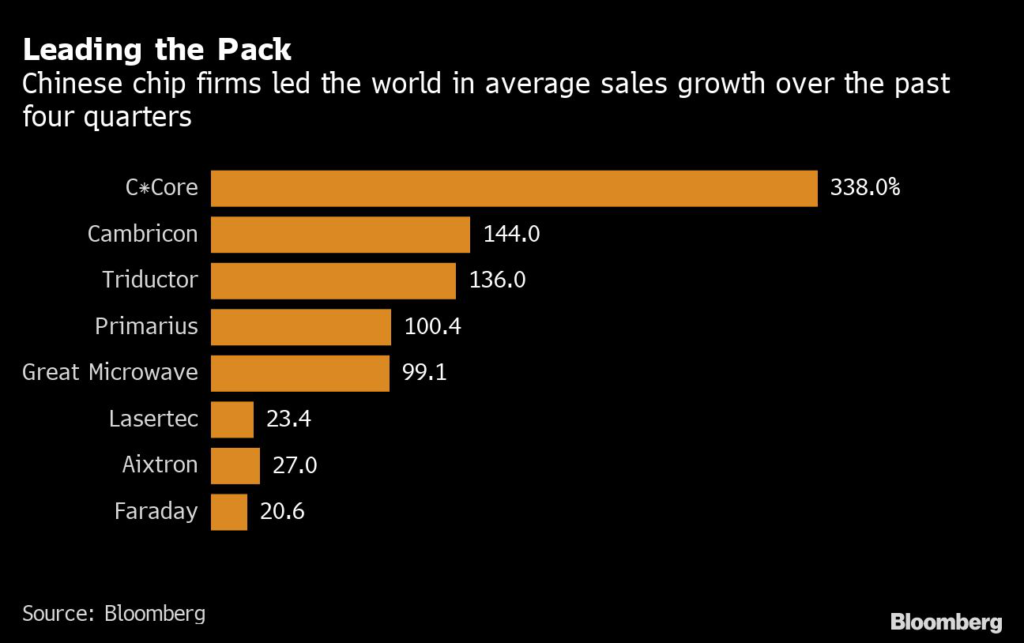
China’s booming market also underscores the opportunity cost for US suppliers. Some 19 of the world’s 20 fastest-growing chip industry firms over the past four quarters, on average, are based in China, according to data compiled by Bloomberg. 

(Updates with comment from US Commerce secretary in second paragraph after ‘China Headaches’ chart.)

More stories like this are available on bloomberg.com

©2022 Bloomberg L.P.

Close Bitnami banner
Bitnami