Bloomberg

Korea’s Exporters Show More Hints of Slowdown in Global Demand

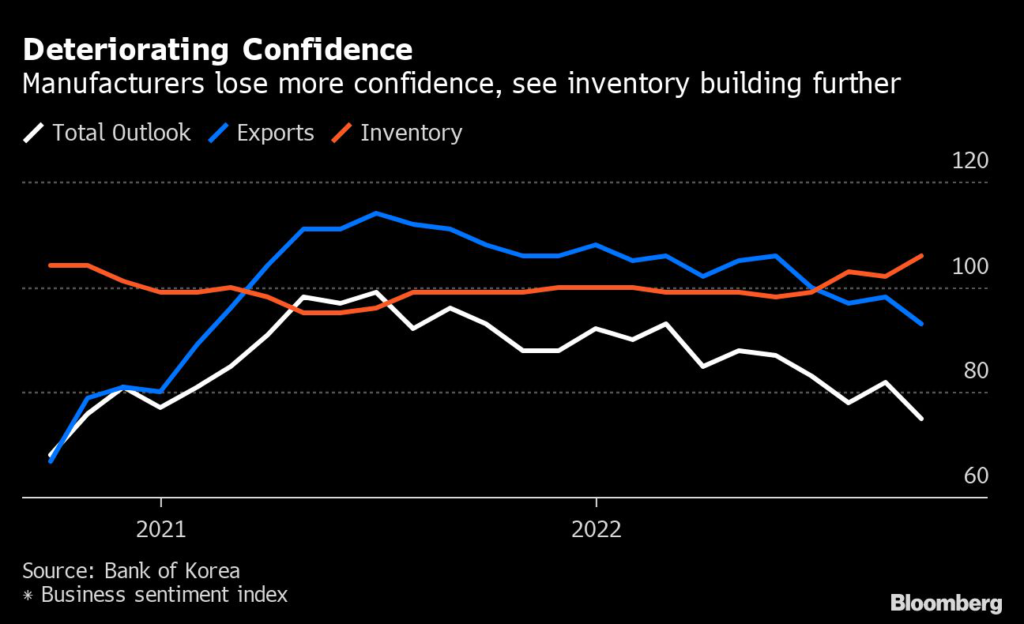
(Bloomberg) — Inventories at South Korea’s manufacturing giants are piling up as global demand deteriorates, signaling a potential slowdown in the export-driven economy.

Inventories at the nation’s 100 biggest firms by revenue surged to 300 trillion won ($208 billion) as of Sept. 29, from 193 trillion won a year ago — rising at the fastest pace in a decade, according to data compiled by Bloomberg based on company filings. Tech giant Samsung Electronics Co. reported 52 trillion won worth of inventories, up 52% from a year earlier, while steelmaker Posco Holdings Inc.’s inventories swelled to 17.9 trillion won from 11.4 trillion won a year ago.

Soaring stockpiles at Korean manufacturers, whose exports are seen as a bellwether for global growth, come as central banks across the world raise interest rates to combat inflation. Suppliers are “feeling a burden” with rising inventories as consumption slows “faster than their expectations,” said Kim Hojung, an economist at Seoul-based Yuanta Securities Korea. 

The situation is likely to keep worsening. Korean manufacturers expect inventories to rise 7.1% next month from a year earlier, the fastest pace since the global financial crisis, according to a business sentiment index released Thursday by the central bank.

Read more: Amazon Sellers See ‘Scary’ Holiday Season as Consumers Pull Back

The overall business outlook for October is also cooling, falling to the lowest point since October 2020 when the global economy was still reeling from the first wave of the coronavirus pandemic. That coincides with deteriorating confidence in exports, with manufacturers’ outlook for shipments dropping at the fastest pace in two years for next month, according to the Bank of Korea.

“No one buys smartphones, PCs and laptops,” said Choi Kwangwook, the chief investment officer at J&J Investments. “Excessive rate hikes by central banks are pushing consumers to close their wallets.” 

More stories like this are available on bloomberg.com

©2022 Bloomberg L.P.

US’s Harris Goes to DMZ Hours After North Korea Missile Launch

(Bloomberg) — US Vice President Kamala Harris went to the Demilitarized Zone dividing the two Koreas, in a high-stakes visit for Washington that came just hours after Kim Jong Un’s regime fired two short-range ballistic missiles into the sea.

Harris entered a hut from the South Korean side used for discussions that straddles the border with North Korea on Thursday, becoming the highest-ranking member of the Biden administration to enter the 4-kilometer (2.5-mile) wide buffer where hundreds of thousands of troops are stationed on their respective sides of razor-wire fencing in a place dubbed the Cold War’s last frontier.

She also stood on the South Korean side of the demarcation line border while North Korean soldiers kept close tabs. Before going to the DMZ, Harris held talks in Seoul with President Yoon Suk Yeol, where they denounced North Korea’s missile launches and pledged tough action if Pyongyang went ahead with its first test of a nuclear device in five years.

“The commitment of the United States to the defense of the Republic of Korea, I will report, is ironclad,” Harris said at the DMZ, referring to South Korea by its formal name and saying the North Korean launches were “clearly a provocation.”

She added the DMZ dramatically shows the paths the two Koreas took after their 1950-1953 war, with South Korea becoming a thriving democracy and North Korea becoming “a brutal dictatorship” with rampant human rights violations and an unlawful weapons program that threatens peace. 

The DMZ visit offered the chance for Harris to show she can tackle delicate relationships abroad, while burnishing her foreign policy credentials ahead of the 2024 presidential race. The visit also included meeting service members and receiving an operational briefing.

 Her trip put attention on North Korea’s return to provocations and signaled support for allies in the region, including the two that host the bulk of US troops in the region — South Korea and Japan. 

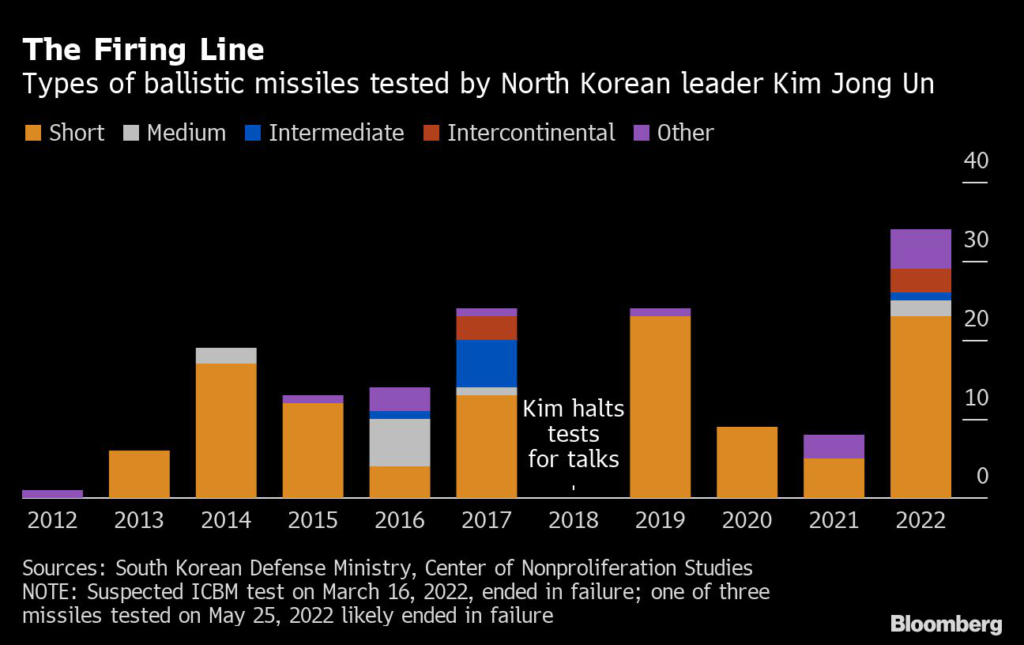
Kim has ignored US calls to get back to stalled nuclear disarmament talks and fired off a record number of ballistic missiles this year in defiance of United Nations Security Council resolutions. This includes the launch of two short-range ballistic missiles on Wednesday and a single short-range missile on Sunday — the first such barrages since June.

North Korea has a habit of timing its provocations to political events. The latest launch also took place as the USS Ronald Reagan arrived in South Korea for joint drills and about a month after the US and South Korea held the Ulchi Freedom Shield — their biggest joint military exercise in about five years. North Korea has bristled for decades at the joint military exercises, calling them a prelude to an invasion. 

In addition to North Korea, the Biden administration is facing an emboldened China that Biden aides worry is taking provocative actions in the Taiwan Strait.

The vice president’s office quietly planned the DMZ visit over the past two weeks, according to a senior administration official, once it became clear Harris would travel to the region to attend the state funeral of former Japanese Prime Minister Shinzo Abe. But South Korean Prime Minister Han Duck-soo upstaged her office by announcing her DMZ stop at the start of their bilateral meeting in Tokyo.

“Your visit to the DMZ and Seoul will be very symbolic demonstrations of your strong commitment to the security and peace to the Korean Peninsula,” Han said to Harris on Tuesday. 

A White House official then quickly confirmed the DMZ stop, raising the stakes for Harris’s already busy trip to the region.

In August, House Speaker Nancy Pelosi went to the Panmunjom truce village in the Demilitarized Zone. The place where soldiers from the two sides stare down each other is a symbol of military tensions that have simmered since the US came to South Korea’s defense in 1950 after North Korea invaded and started the Korean War.

On her trip, Harris has met Japanese Prime Minister Fumio Kishida and Australian Prime Minister Anthony Albanese, discussing Taiwan in both meetings, according to a senior administration official. She also led the US delegation to Abe’s state funeral, met with CEOs from the semiconductor industry to tout the recently passed CHIPS and Science Act, which is aimed at boosting competitiveness with China, and visited US troops stationed in Japan on the warship USS Howard.

More stories like this are available on bloomberg.com

©2022 Bloomberg L.P.

Japan Should Consider Allowing Medical Cannabis, Health Panel Says

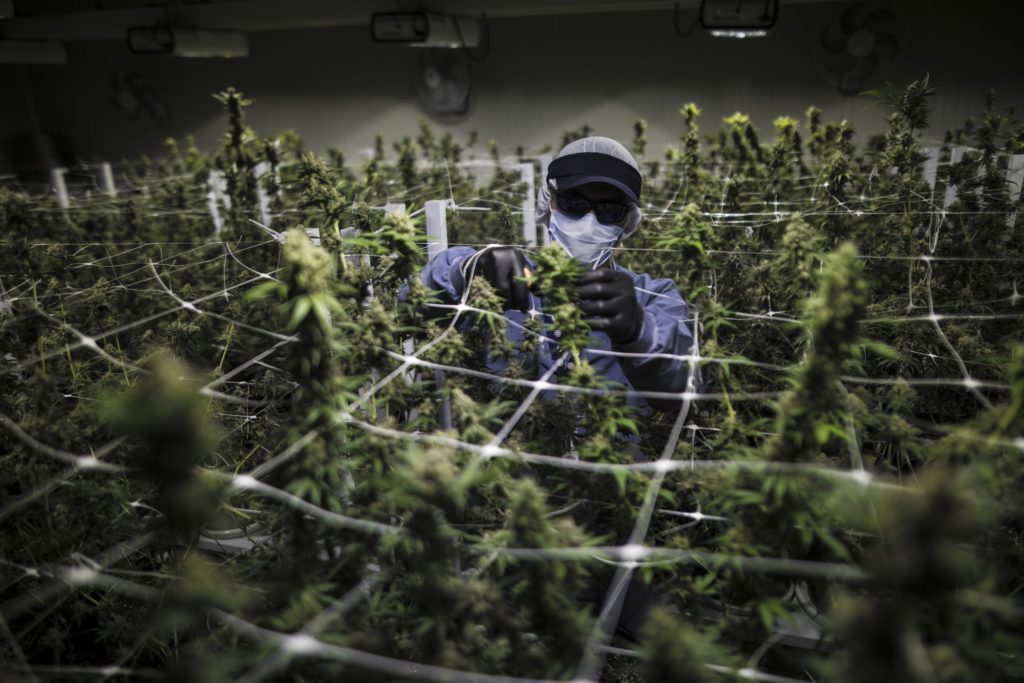
(Bloomberg) — Japan — which has strict laws against the use of marijuana — should consider approving the import, manufacture and use of medicines derived from cannabis, subject to the same approval process as pharmaceuticals, a health ministry panel said. 

At the same time, the country should do more to discourage recreational use of the plant, the committee said in its findings following a meeting Thursday. Possession of cannabis is illegal but not its use; the panel recommended that unsanctioned use should also be made a criminal offense.

While Canada, several US states and some European countries have decriminalized the recreational use of marijuana, penalties for possession, cultivation and sales of the substance in Japan can carry prison sentences of as long as 10 years. Just 1.4% of the population have ever tried cannabis, according to one study with 2017 data. Celebrities caught for possession often become front-page news. 

Read more: Japan’s Pot Laws Are Harsh, But Its Pensioners Invest in Growers

The health panel cited the example of cannabis-based epilepsy drug Epidiolex, which Japan has permitted for domestic clinical trials. The panel said the constraints of the current Cannabis Control Act mean that even if such treatments are approved in the future by the health ministry, doctors won’t be able to prescribe them.

Some cannabidiol (CBD) products are already legal in Japan, on the condition that they are produced only from stalks or seeds. Medicines or other products made from other parts of the plant are illegal, even if the psychoactive substance has been filtered out.


More stories like this are available on bloomberg.com

©2022 Bloomberg L.P.
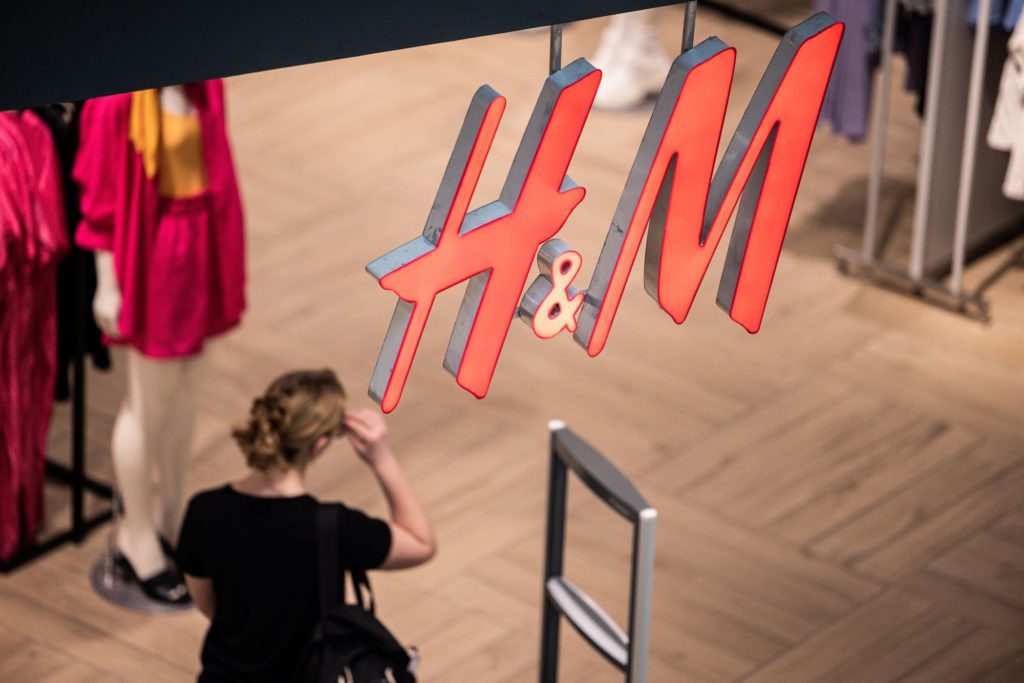
Next Warning, H&M Cuts Add to European Retail Woe as Prices Soar

(Bloomberg) — Next Plc and Hennes & Mauritz AB reports added to gloom from European retailers as inflation simultaneously makes clothing more expensive and reduces consumer purchasing power.

Next issued its second profit warning this year on Thursday. H&M said it will cut costs by 2 billion Swedish kronor ($180 million) annually after its exit from Russia and higher garment and transport costs caused third-quarter earnings to slump 86%.

Retailers are suffering a drop in demand as customers cut expenses as energy and gasoline bills mount. Meanwhile, the strength of the dollar is making clothes more expensive to source, according to H&M. Next said pressure from the highest inflation in four decades will rise into next year, aggravated by the recent slump in the pound’s value. 

Next shares fell as much as 10% after the report, while H&M’s 7.2% decline brought the stock close to an 18-year low. Other European retailers also dropped, with online vendor Zalando SE down as much as 5.6% and Marks & Spencer Group Plc falling 5.6%.

H&M Chief Executive Officer Helena Helmersson, who started off the year by setting an ambitious goal of doubling sales by 2030, has been struggling recently to generate revenue growth even as rival Zara-owner Inditex SA zips ahead. 

The retailer said markdowns had increased somewhat in the quarter, which also cut into profit.

Next, seen as a bellwether for the health of Britain’s main streets, cut guidance earlier this year before raising its outlook last month. 

“With so many variables at play, predicting near-term sales trends is unusually difficult,” Chief Executive Officer Simon Wolfson wrote. “All the more so with recent government stimulus measures yet to take full effect.”

The British clothing and housewares chain said that profit for the year will total £840 million ($905 million), compared with previous guidance of £860 million. Full-price sales in the second half are expected to drop 1.5% rather than climb 1%.  

All retailers are battling against weak consumer demand in the UK. Prices in British shops hit a fresh record high this month, with brands increasingly having to pass costs onto consumers. Online fast-fashion retailer Boohoo Group Plc cut its profit guidance Wednesday. 


More stories like this are available on bloomberg.com

©2022 Bloomberg L.P.
UFC Rival One Signs Distribution Deal With BeIN for 24 Markets

(Bloomberg) — Group One Holdings, the company behind mixed martial arts brand One Championship, agreed to a multiyear partnership with Qatar’s BeIN Media Group to broadcast its events live across the Middle East and North Africa.

The pact will allow Doha-based BeIN to distribute mixed martial arts content to its audience in Arabic and English in 24 territories in the region to meet growing demand, according to a statement by the companies Thursday.

The deal brings synergies and helps One boost growth across the region, said Chatri Sityodtong, its chairman and chief executive officer. One and rivals such as Endeavor Group Holdings Inc.-owned Ultimate Fighting Championship are striking partnerships with broadcast and streaming companies as they compete for viewers in new markets.

“It has been a rollercoaster ride, with ups and downs, but now the company is gaining a lot of momentum,” Sityodtong said in an interview.

One is poised to report double-digit revenue growth this year, reaching at least $80 million, and expects to become profitable within the next three years, he said.

The company is considering a US initial public offering after previously exploring a listing via a blank-check firm, Bloomberg News has reported. One will pursue a potential IPO once economic and market conditions improve, the executive said, declining to provide a specific timeline. In April, it agreed on a multiyear deal with Amazon.com Inc.’s Prime Video to broadcast at least 12 live One Championship martial arts events annually in the US and Canada.

The MMA firm in December raised $150 million in an equity financing round led by Guggenheim Investments and Qatar Investment Authority. The round gave Group One a post-money valuation of $1.35 billion, people familiar with the matter have said.

“We went through a very tough time during Covid for sure, but our numbers are growing again,” Sityodtong said.

More stories like this are available on bloomberg.com

©2022 Bloomberg L.P.
Finland Sees Russia Moving Espionage to Cyber Environment

(Bloomberg) — Finland’s authorities said Russia’s war in Ukraine and the expulsions of diplomats that followed have hampered Russian espionage operations, causing the country increasingly to turn to the cyber environment for intelligence gathering.

Russia’s traditional method of spying is to use human intelligence under diplomatic cover and that has now “become substantially more difficult,” the Finnish Security and Intelligence Service, Supo, said in a national security overview published on Thursday. It also warned of risks to critical infrastructure.

“We consider it highly likely that Russia will turn to the cyber environment over the winter,” said Supo Director Antti Pelttari. “We nevertheless consider it unlikely that any cyberattack will paralyze critical infrastructure in the near future.”

The security agency also warned authoritarian states “can secure access to or influence over critical infrastructure” via corporate acquisitions or investments, and identified China as a potential perpetrator alongside Russia.

In March, Supo said it expects more Russian spying and influencing operations amid Finland’s plans to join the NATO defense alliance.

More stories like this are available on bloomberg.com

©2022 Bloomberg L.P.
Hang Seng Tech Index Sinks, Set for Lowest Since 2020 Inception

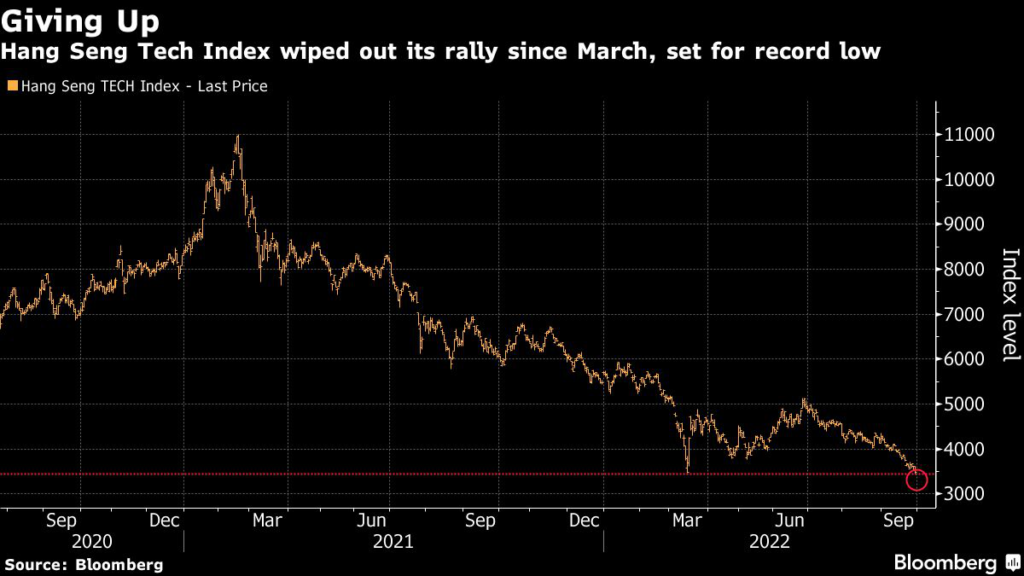
(Bloomberg) — Chinese tech stocks slid to a fresh low on Thursday, as concerns about the Federal Reserve’s aggressive rate hikes coupled with regulatory risks mire the sector’s outlook.   

The Hang Seng Tech Index dropped as much as 2.5% in Hong Kong before paring losses, touching the lowest since the gauge’s inception in 2020. The decline sent the gauge below its trough in March — before authorities pledged broad support. The benchmark Hang Seng Index slid as much as 1.2%, trading at the lowest since October 2011. 

Risk off sentiment has deepened for Chinese growth shares in recent days after the Federal Reserve hiked interest rates by 75-basis-points and signaled further pain ahead. Weakness in the pound also hurt sentiment, as investors are concerned that the UK’s dramatic tax cuts may further fuel global inflation.  

That comes against rising geopolitical tensions and a slowing economy due to pandemic-linked lockdowns. Meanwhile, many technology firms’ listing status in the US remains uncertain, as US inspectors and Chinese regulators just had a tense start when they converged to discuss about reviewing audit work paper of the companies.

“Market sentiment is on a turbulent ride, driven by fluctuation of major currencies alongside governments’ intervention,” said Banny Lam, head of research at CEB International Investment Corp, adding that a weaker yuan is also hurting high-valuation tech stocks. 

(Updates with new comment)

More stories like this are available on bloomberg.com

©2022 Bloomberg L.P.

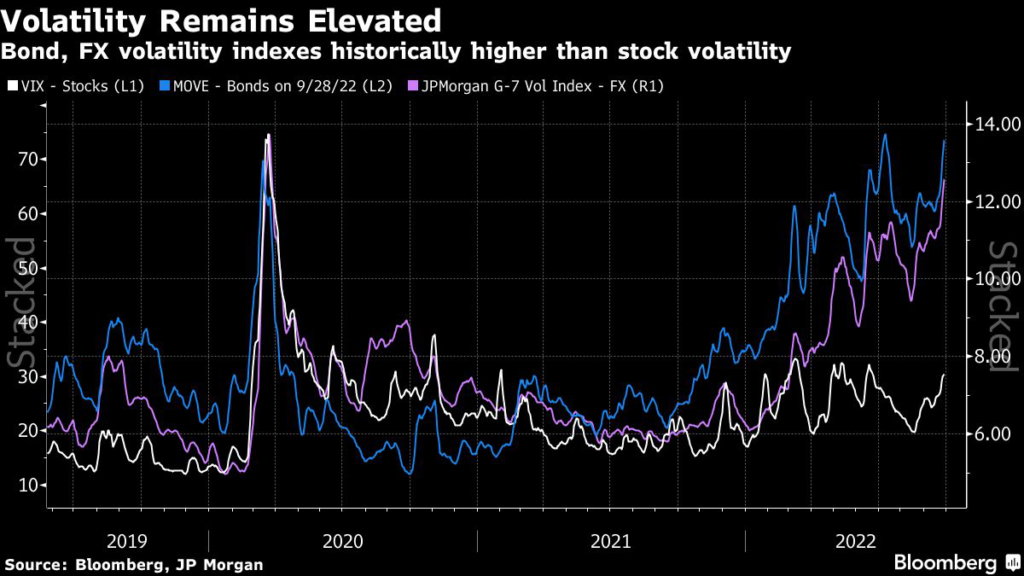
Stocks Rally Falters, Pound Falls as Doubt Returns: Markets Wrap

(Bloomberg) — Asian equities trimmed gains while US and European stock futures slumped and the dollar rose as investors returned their focus to inflation and the risk of global recession.

Positive sentiment ebbed during afternoon trading in Asia following early rallies in Japan, China and Australia in the wake of a 2% advance for the S&P 500. Hong Kong’s Hang Seng Tech Index reversed course and headed for its lowest since inception.

The Treasury 10-year yield jumped 10 basis points and the greenback climbed versus all of its Group-of-10 counterparts. Inflation data in Germany underscored the risk to markets of rising consumer prices.

“The markets are very pessimistic. Investors are fairly on the sidelines,” said Julia Raiskin, Asia-Pacific head of markets for Citigroup Inc. “Other than the dollar, there are not many assets that are trading constructively.”

Investors are contending with threats posed by discordant moves from central banks over the past few days, with Federal Reserve officials adamant on further monetary tightening, the BOE unveiling a £65 billion ($71 billion) plan to support government debt and authorities in Asia trying to prop up weakening currencies.

The pound fell about 1%, as did the Australian and New Zealand dollars. The euro also droppedl. 

“The central bank is in a very difficult position right now,” Julie Biel, Kayne Anderson Rudnick portfolio manager and senior research analyst, said of the BOE in an interview with Bloomberg TV. “Everyone has been a little bit backed into a corner in seeing the volatility and market reaction.”

Federal Reserve officials continued to hammer home the central bank’s hawkish outlook. The Fed’s Atlanta President Raphael Bostic said he backs raising rates by a further 1.25 percentage points by the end of this year to counter inflation that has been worse than he expected.

European Union officials unveiled fresh economic limits on Russia in response to further annexing of Ukraine. The new round of sanctions would bar sales of Russian oil by third party countries beyond a set price cap. The plan would inflict around $6.7 billion in economic pain on Russia.

China’s onshore yuan advanced for the first time in nine sessions, after the central bank issued a verbal warning against currency speculation.

How much damage is a strong dollar causing? That’s the theme of this week’s MLIV Pulse survey. It’s brief and we don’t collect your name or any contact information. Please click here to share your views.

Key events this week:

  • Euro zone economic confidence, consumer confidence, Germany CPI, Thursday
  • US initial jobless claims, GDP, Thursday
  • Fed’s Loretta Mester, Mary Daly speak at events, Thursday
  • China PMI, Friday
  • Euro zone CPI, unemployment, Friday
  • US consumer income , University of Michigan consumer sentiment, Friday
  • Fed’s Lael Brainard and John Williams speak, Friday

Some of the main moves in markets:

Stocks

  • S&P 500 futures fell 0.6% as of 7:37 a.m. in London. The S&P 500 climbed 2%
  • Nasdaq 100 futures fell 0.9%. The Nasdaq 100 jumped 2%
  • The Topix index rose 0.7%
  • Australia’s S&P/ASX 200 Index jumped 1.4%
  • The Kospi index rose 0.1%
  • The Hang Seng Index fell 0.6%
  • Shanghai Composite Index fell 0.1%
  • Euro Stoxx 50 futures dropped 0.3%

Currencies

  • The Bloomberg Dollar Spot Index rose 0.6%
  • The Japanese yen fell 0.4% to 144.69 per dollar
  • The offshore yuan weakened 0.5% to 7.2010 versus the dollar. Its onshore counterpart strengthened
  • The euro fell 0.7% to $0.9669

Cryptocurrencies

  • Bitcoin was fell 1% to $19,360
  • Ether slipped 1.6% to $1,328

Bonds

  • The yield on 10-year Treasuries rose 10 basis points to 3.83%
  • Australia’s 10-year yield fell 16 basis points to 3.94%

Commodities

  • West Texas Intermediate crude fell 0.8% to $81.52 a barrel
  • Gold was at $1,645.66 an ounce

More stories like this are available on bloomberg.com

©2022 Bloomberg L.P.
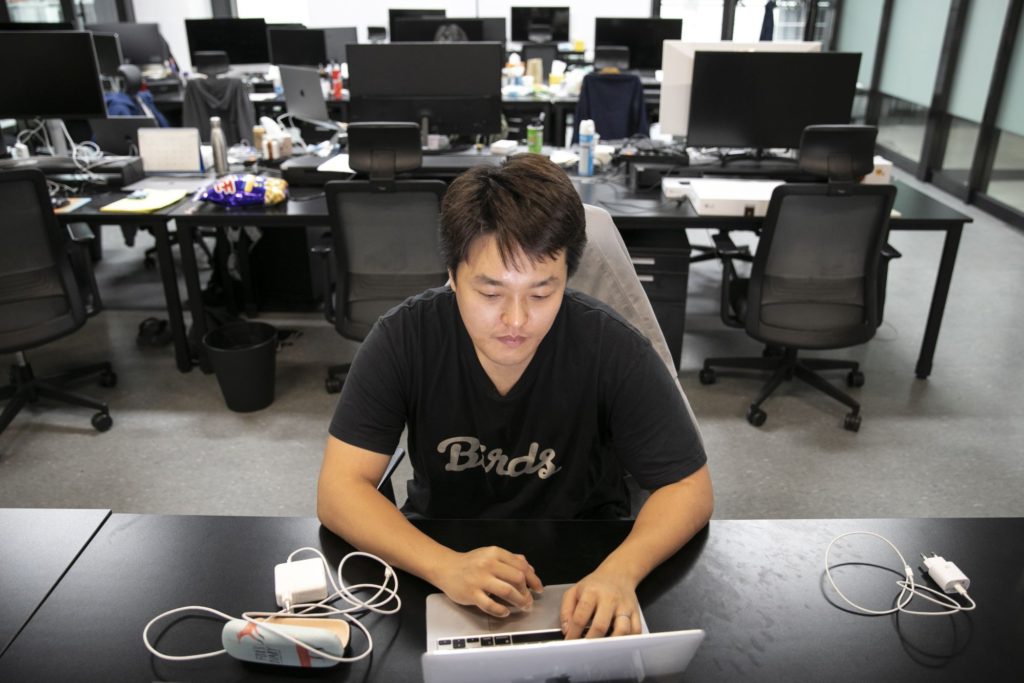
Do Kwon’s Terra Says Crypto Case Unfair and ‘Highly Politicized’

(Bloomberg) — Terraform Labs, the digital-asset firm of hunted entrepreneur Do Kwon, rejected South Korean charges over a $60 billion cryptocurrency collapse and said the case against him had become “highly politicized.”

A spokesperson for the firm said in a statement that prosecutors had demonstrated “unfairness and a failure to uphold basic rights guaranteed under Korean law,” adding that there’s “no reasonable basis” for their accusation of breaches of capital-markets law.

The prosecutors’ office said in a text message it won’t comment on every one-sided claim from a “fleeing suspect” and added it would be appropriate for Kwon to make a prompt appearance before them to make his position clear.

South Korea has sought help from Interpol to find Kwon, whose TerraUSD stablecoin project collapsed in May, exacerbating this year’s crypto rout. His location is unknown after Singapore earlier this month said he’s no longer there. Prosecutors on Sept. 14 said a court had issued a warrant for Kwon’s arrest. 

Officials have previously suggested Kwon is evading their probe. The Terraform Labs spokesperson said the 31-year-old via lawyers “is in contact with all government agencies that have asked to communicate with him.”

The spokesperson said “he is not on the run and remains actively involved in the management and oversight of Terraform Labs.”

The statement followed controversy over a Bitcoin reserve — the Luna Foundation Guard — connected to Kwon. 

Kwon and the reserve denied transferring digital tokens after a trail of coin movement prompted South Korea to take steps to freeze assets.

Prosecutors sent requests to crypto exchanges KuCoin and OKX to freeze a total of 3,313 Bitcoins, worth about $65 million at current prices.

The TerraUSD stablecoin was meant to be pegged to the US dollar. The system relied on a complex mix of algorithms and trader incentives involving its sister token Luna. But it unraveled when confidence in Kwon’s project evaporated.

The Terraform Labs statement rejected categorizing Luna as a security under South Korea’s capital-markets legislation. Just how to classify digital tokens remains a highly vexing issue for regulators the world over.

(Updates with comment from prosecutors in the third paragraph.)

More stories like this are available on bloomberg.com

©2022 Bloomberg L.P.
Toyota Output Rises First Time in Five Months as Covid Eases

(Bloomberg) — Toyota Motor Corp.’s global output rose for the first time in five months in August, led by gains in overseas markets — in particular Southeast Asia, where a Covid surge disrupted supply chains a year ago. 

The world’s biggest automaker made 766,683 vehicles in August, up 44% from a year earlier, according to a statement Thursday. Global sales rose 3.8% to 777,047 units, the first increase in 12 months, the Japanese automaker said.

While Toyota still faces a shortage of semiconductors and is battling lingering supply-chain constraints stemming from the pandemic, the situation has improved from 12 months ago when Covid cases were higher, causing factory shutdowns that led to a dearth of parts. Toyota has stuck to its production target of 9.7 million vehicles for the fiscal year through March 2023.

What Bloomberg Intelligence says:

Toyota’s sales, profit and cash flow could exceed pre-pandemic times, while net debt may be lower — potential catalysts for the company to reclaim its prior Aa/AA tier ratings in the intermediate term.

Toyota’s output in Japan in August rose 5.6% from a year earlier to 196,038 units, also the first increase in five months, according to the statement. 

Toyota was up 0.4% as of 2:55 p.m. in Tokyo. The shares are down about 7% this year.

Meanwhile, Nissan Motor Co. said its global output rose for a second month in August, climbing 9% from a year earlier to 288,218 vehicles. However, sales fell 16% to 254,842 units. Honda Motor Co.’s global output rose 27% to 347,661 units, the third consecutive month of gains, according to a statement. 

(Updates with Nissan, Honda numbers in final paragraph.)

More stories like this are available on bloomberg.com

©2022 Bloomberg L.P.
Close Bitnami banner
Bitnami