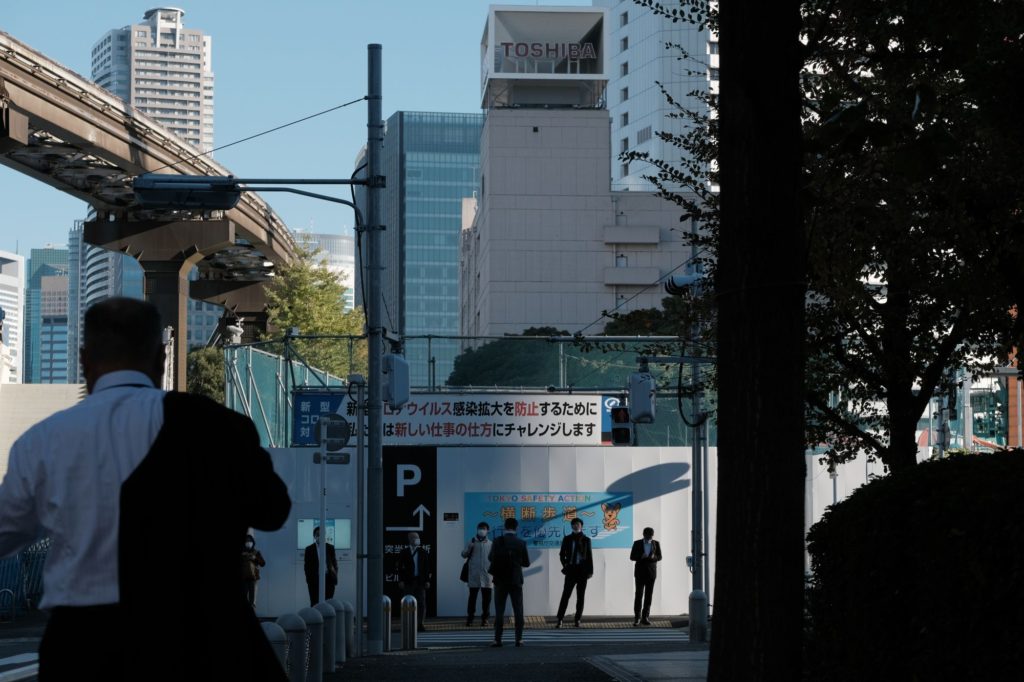
Bloomberg

BlackRock, Indonesia Join $300 Million Funding for Southeast Asian Travel Startup

(Bloomberg) — Traveloka has secured $300 million in new financing from investors including BlackRock Inc., as Southeast Asia’s biggest online travel startup counts on a post-Covid rebound to expand in the region.

The Jakarta-based company said in a statement Thursday it struck a deal for financing with investors including Allianz Global Investors and the Indonesia Investment Authority.

The size of the funding round is significantly larger than the previously discussed target of about $200 million that Bloomberg News reported in June. Traveloka, backed by investors including GIC Pte and Expedia Group Inc., is considering an initial public offering in the US or in Indonesia, according to a person familiar with the matter, who asked to remain anonymous discussing a private matter.

Southeast Asia’s tourism industry plunged into crisis during the pandemic when lockdowns all but brought travel to a halt. Traveloka ventured into financial services during the pandemic by partnering with banks including PT Bank Rakyat Indonesia and PT Bank Negara Indonesia. 

Many countries are now removing pandemic-era restrictions and reopening borders. For example, Thailand — where international tourism contributes about 12% to gross domestic product — has seen a rush of foreign travelers in recent months after scrapping restrictions in July. 

Regional startups are raising funds despite worries about a global economic downturn, hoping to position themselves for an eventual rebound. Traveloka helps consumers book a range of services including airline tickets and hotels as well as spas and tourism attractions. It also offers food delivery and financing, payment and insurance products. Its app has been downloaded more than 100 million times, according to its website.

The valuation of the deal is unclear. Traveloka had been valued at $3 billion, according to CB Insights, but Bloomberg News reported in 2020 that it was seeking funds at a lower valuation.

More stories like this are available on bloomberg.com

©2022 Bloomberg L.P.

Ontario Pension Aims to Triple Asian Assets Within Eight Years

(Bloomberg) — The Ontario Municipal Employees Retirement System aims to triple its assets in Asia-Pacific over the next eight years from the C$13 billion ($9.5 billion) it’s already deployed in the region, according to its President and Chief Executive Officer Blake Hutcheson.

Speaking at the Milken Institute Asia Summit on Thursday, Hutcheson said the Canadian pension fund was in “full diversification mode.”

“So far we’re very focused on India and Australia in two areas — infrastructure and real estate — and basically computer screen investing in the rest of Asia and Southeast Asia from an equities standpoint,” he said.

The Ontario pension, also known as Omers, had C$119.5 billion in assets as of June 30. It posted a 0.4% loss for the first six months of the year partly due to a fall in public stocks.

More stories like this are available on bloomberg.com

©2022 Bloomberg L.P.

HSBC Sees Bright Spots in China Stocks From Internet to Solar

(Bloomberg) — The outlook of some Chinese industries from internet to property has turned brighter as much of the bad news has been priced in, according to HSBC Holdings Plc., joining a debate among global investors over the health of the world’s No. 2 stock market.  

HSBC identified four sectors in China that look promising, including internet firms with better-than-expected earnings growth, developers to win from major industry consolidation, renewable firms blessed with favorable policies and consumer goods producers that benefit from demographic shifts. 

“There is a clear disconnect between the gloomy macro-economic picture and the more positive bottom-up view of Chinese equities,” strategists including Herald van der Linde wrote in a note dated Wednesday. “Add to this that most funds are underweight and valuations are low, and we argue investors should be overweight this market.”

HSBC’s more upbeat assessment of the select industries comes even as it has slashed end-of-year targets for benchmark indexes for shares in both Hong Kong and the mainland, citing underestimation of factors from stubborn US inflation to China’s rigid Covid controls. It also deepens a debate among investors over the prospects of Chinese stocks at a time when a fast-depreciating yuan has renewed concerns about capital flight. 

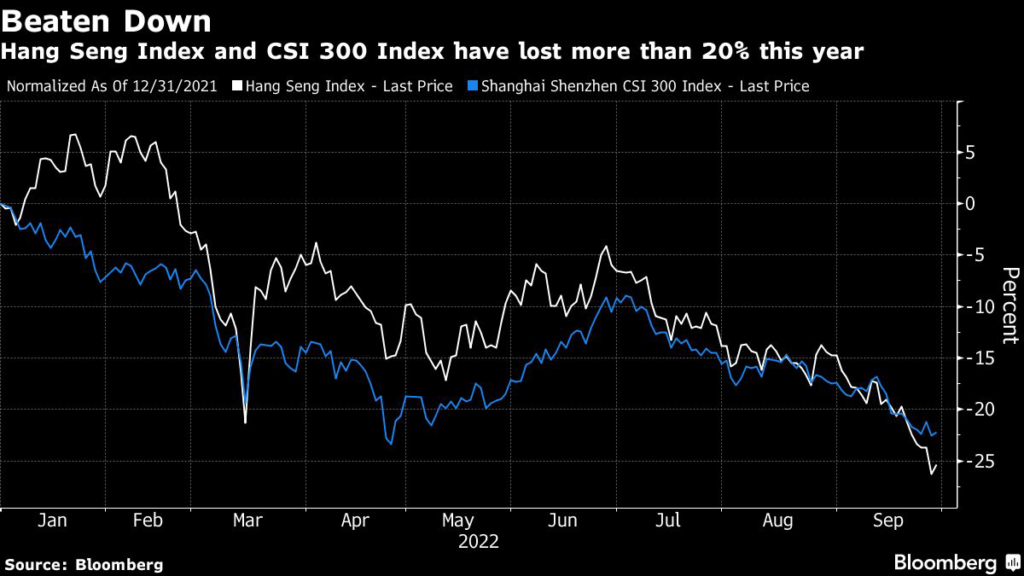
The global lender maintains an overweight recommendation on Chinese shares but has cut its end-2022 target on the Hang Seng Index by about 20% and that for the CSI 300 by 16%. 

Elsewhere, HSBC upgraded its stock rating on the Philippines to neutral from underweight, saying the country is the region’s strongest earnings growth story this year. It cut Malaysia to underweight from neutral, citing headwinds from geopolitical tensions and a global trade slowdown. 

More stories like this are available on bloomberg.com

©2022 Bloomberg L.P.

India Eyes $550 Million Incentives to Draw Apple, Tablet Makers

(Bloomberg) — India plans to boost the financial incentives for manufacturers that make tablets and laptops in the country, wooing companies such as Apple Inc. and Dell Technologies Inc. as part of its bid to challenge China as a production base.

The federal technology ministry has floated the revamped program to electronics industry executives for consultation, including payments that could exceed a half a billion dollars per company, people familiar with the matter said. India wants to boost production of tablets and laptops to cut imports and make the country an export hub in the longer term.

The effort is aimed at companies such as Apple, Dell, HP Inc. and Asustek Computer Inc. to widen or begin local production, the people said. In particular, the country wants to persuade Apple, which already assembles iPhones in India via its Taiwanese suppliers, to make iPads locally.

The plan offers as much as 45 billion rupees ($549 million) per manufacturer, according to a government document seen by Bloomberg News. To qualify, foreign companies would need to invest 7 billion rupees in India over five years on top of outlays they’ve made through March 2021. The incentives would depend on local procurement of components and could go as high as the equivalent of about 6% of the sales of finished products.

The plan could change after consultation with the industry. Last year, India launched a program worth 73.5 billion rupees to ramp up local manufacturing and build exports of IT products such laptops, tablets and personal computers, but the effort failed to attract companies due to a perceived small size of the incentives.

The Narendra Modi administration has been ramping up efforts to attract global electronics names through policy initiatives, as China’s allure wanes because of geopolitical tensions and its disruptive Covid Zero policy. There are signs of momentum: Apple began making its new iPhone 14 in India sooner than anticipated, after a surprisingly smooth production rollout that slashed the lag between Chinese and Indian output from months to mere weeks.

Apple has yet to expand iPad production to India though. Besides the incentives, the US company could be attracted by an Indian computer and tablet market that grew at a 12% rate last quarter, according to researcher Canalys, even as global electronics demand slowed.

Companies like Dell and HP, which already make laptops in India on a small scale and have excess capacity, could find it unattractive to invest more to ramp up production. Chinese manufacturers such as Lenovo Group Ltd., meanwhile, could find it difficult to win the incentives amid New Delhi’s frosty relationship with Beijing since a Himalayan border clash between the countries in 2020.

More stories like this are available on bloomberg.com

©2022 Bloomberg L.P.

Giant Data Hack in Australia Risks Eating Into SingTel’s Profit

(Bloomberg) — The cost for Singapore Telecommunications Ltd. to make good customers exposed to one of Australia’s worst data breaches risks wiping out more than one-quarter of its annual profit. 

Optus, SingTel’s Australian mobile-phone business, last week revealed hackers accessed the personal information of as many as 9.8 million customers — over one-third of the population. Some 2.8 million of them lost details of passports, drivers licenses or government-issued medical identity cards, triggering concerns about large-scale identity fraud, according to the government.

One week after the hack was disclosed, the scale and the fallout — as well as the potential costs for Optus — are growing. 

Prime Minister Anthony Albanese said the company should pay for replacement passports, while Australia’s biggest states said Optus would pick up the tab for new driving permits. The government also plans to tighten cybersecurity legislation because of the breach.

Cyberattacks have become more common worldwide, exposing at least 11.43 billion customer records at several hundred entities in the space of more than a decade. Australian police are working with the US Federal Bureau of Investigation on the Optus hack. Home Affairs and Cyber Security Minister Clare O’Neil on Wednesday described the attack as “a big wakeup call” for corporate Australia. 

The average cost incurred by a hacked company for each customer record lost is $150 to $200, said Ajay Unni, chief executive officer and founder of cybersecurity consultancy StickmanCyber. That includes compensation, legal bills and the cost of public relations campaigns. “Some organizations end up spending double that,” he said.

Applied only to the 2.8 million worst-affected Optus customers, that would equate to between $420 million and $560 million. Optus-owner SingTel made a profit of $1.44 billion in the year ended March.

Optus is also likely to spend money tightening security and on training, according to Unni. At the same time, Australian law firm Slater & Gordon Ltd. is assessing a class action against Optus and says it has received tens of thousands of registrations. 

It’s difficult to itemize the costs for Optus. It has offered the worst-hit customers a free 12-month subscription to credit monitoring and identity protection service Equifax. That costs A$14.95 a month, so if 2.8 million customers accepted the offer, it could notionally cost A$502 million ($326 million). Of the identity documents exposed, passports are the most expensive, though it’s not clear how many have been compromised. A replacement costs A$193. 

Optus didn’t reply to an email seeking comment on possible costs, or the estimate of between $420 million and $560 million. The company has apologized for the data breach. It said late Wednesday that 36,900 medical identity numbers were among the records exposed.

“The Australian government should have better powers to enforce cybersecurity provisions on private companies and that’s something I’ll be looking to do in the wake of the attack,” O’Neil said.

More stories like this are available on bloomberg.com

©2022 Bloomberg L.P.

Giant Optus Hack May Swallow a Quarter of Singtel Profits

(Bloomberg) — The cost for Singapore Telecommunications Ltd. to make good customers exposed to one of Australia’s worst data breaches risks wiping out more than one-quarter of its annual profit. 

Optus, SingTel’s Australian mobile-phone business, last week revealed hackers accessed the personal information of as many as 9.8 million customers — over one-third of the population. Some 2.8 million of them lost details of passports, drivers licenses or government-issued medical identity cards, triggering concerns about large-scale identity fraud, according to the government.

One week after the hack was disclosed, the scale and the fallout — as well as the potential costs for Optus — are growing. 

Prime Minister Anthony Albanese said the company should pay for replacement passports, while Australia’s biggest states said Optus would pick up the tab for new driving permits. The government also plans to tighten cybersecurity legislation because of the breach.

Cyberattacks have become more common worldwide, exposing at least 11.43 billion customer records at several hundred entities in the space of more than a decade. Australian police are working with the US Federal Bureau of Investigation on the Optus hack. Home Affairs and Cyber Security Minister Clare O’Neil on Wednesday described the attack as “a big wakeup call” for corporate Australia. 

The average cost incurred by a hacked company for each customer record lost is $150 to $200, said Ajay Unni, chief executive officer and founder of cybersecurity consultancy StickmanCyber. That includes compensation, legal bills and the cost of public relations campaigns. “Some organizations end up spending double that,” he said.

Applied only to the 2.8 million worst-affected Optus customers, that would equate to between $420 million and $560 million. Optus-owner SingTel made a profit of $1.44 billion in the year ended March.

Optus is also likely to spend money tightening security and on training, according to Unni. At the same time, Australian law firm Slater & Gordon Ltd. is assessing a class action against Optus and says it has received tens of thousands of registrations. 

It’s difficult to itemize the costs for Optus. It has offered the worst-hit customers a free 12-month subscription to credit monitoring and identity protection service Equifax. That costs A$14.95 a month, so if 2.8 million customers accepted the offer, it could notionally cost A$502 million ($326 million). Of the identity documents exposed, passports are the most expensive, though it’s not clear how many have been compromised. A replacement costs A$193. 

Optus didn’t reply to an email seeking comment on possible costs, or the estimate of between $420 million and $560 million. The company has apologized for the data breach. It said late Wednesday that 36,900 medical identity numbers were among the records exposed.

“The Australian government should have better powers to enforce cybersecurity provisions on private companies and that’s something I’ll be looking to do in the wake of the attack,” O’Neil said.

More stories like this are available on bloomberg.com

©2022 Bloomberg L.P.

AI Guru Is Helping Retool Popular Japanese Snacks Like Pocky

(Bloomberg) — Junichi Hasegawa has made a career of tackling tough problems, from connecting PlayStation 3 users for online play to researching self-driving cars. Now he wants to invent healthier food ingredients with the help of artificial intelligence.

The 61-year-old Hasegawa built up Japan’s top AI startup, Preferred Networks Inc. (PFN), by striking deals and partnerships with the country’s industrial giants, from Toyota Motor Corp. to Eneos Holdings Inc. Now at century-old snack food maker Ezaki Glico Co., he’s set his sights on adapting those skills to the notoriously cost-conscious food sector and revitalizing the Osaka-based maker of Pocky chocolate sticks.

Personally recruited by Etsuro Ezaki, the 49-year-old great-grandson of Glico’s founder and recently appointed chief executive officer, Hasegawa’s primary job is to help find the perfect blend of taste and nutrition through massive data harvesting and machine learning. He’ll also be instrumental in linking up Glico’s internal research with outside AI firms like PFN to accelerate the development of healthier foods.

It’s the first leadership transition at the company in four decades, and the new CEO’s mantra is that there’ll be no Glico snacks sold that don’t contribute to people’s wellbeing. The company’s shares rose as much as 1.1% in Tokyo on Thursday after falling about 16% over the past year.

“We asked Hasegawa to join not only because he’s a talented engineer, but because he knows the industry, people and subject very well,” Ezaki said. “Machine learning can help people focus on more creative projects. That’s why we decided to actively leverage AI for a wide range of business we do at Glico.”

At PFN from its inception in 2014 to earlier this year, Hasegawa led business and capital alliances with big local companies including Toyota, Eneos, Fanuc Corp. and Chugai Pharmaceutical Co. He expects Glico to similarly grow through collaboration. “Hasegawa mapped out most of our partnership strategy. Without him, we wouldn’t be where we are today,” PFN co-founder and CEO Toru Nishikawa told Bloomberg News.

Glico’s push into high-tech health foods comes as funding dwindles for startups developing alternative foods and agritech this year. But Glico and Hasegawa are banking on continued demand for healthier eating that will help them tap into a projected $1 trillion industry by developing personalized nutrition plans, automated ovens that bake the perfect Bisco biscuit and new bacteria strains to improve gut health.

Read more: Food Prices Test Shoppers, But They’ll Pay for Healthy Options

“Glico’s laboratory owns more than 10,000 types of strains,” Hasegawa said in an interview in Tokyo. Among them, the company’s BifiX is a type of bacteria that’s effective when combined with dietary fiber and used in some yogurt products. To make Pocky sticks and the rest of the company’s offerings healthier, Glico will need the power of AI. “This kind of research and experimentation by humans takes a long time, but AI can speed up the process.”

Celebrating its centenary this year, Glico’s first products in 1922 were candies packed with glycogen from oyster broth, which the founder credited for his son’s recovery from typhus. Glico’s image of itself as a supporter of people’s nutrition and health has fallen by the wayside to be replaced by one of a peddler of indulgent snacks.

“A snack that just tastes good has no future as consumer behavior changes,” Hasegawa said. “People increasingly eat for their health because that’s ultimately what counts.”

Hasegawa plans to use AI technology to help in-house Glico researchers identify new ingredients faster. He’s training staff to use machine learning and also optimizing work processes. One possible example lies in the company’s popular Bisco biscuits, which now require a baking maestro to manually monitor every bake: Hasegawa’s agenda includes training AI algorithms to replace that step.

Compatriot food maker Ajinomoto Co. is trialling an AI-powered diet recommendation app for athletes, and Glico similarly wants to tailor its services to customers. Ultimately, the company would like to offer a subscription-based personalized nutrition service.

The use of AI in the food industry is still rare, because the typical low-margin, high-volume model does not allow big investments, University of Tokyo professor Yutaka Matsuo said. “Hasegawa moving to the industry is positive news for both the sector and AI, as others are sure to follow if this becomes a success.”

Hasegawa also pointed to cost as the primary barrier to AI’s deployment in food development, but he sees partnerships with the likes of PFN as a way to spread the cost and he’s been given a good budget by the Glico CEO, he said without specifying numbers.

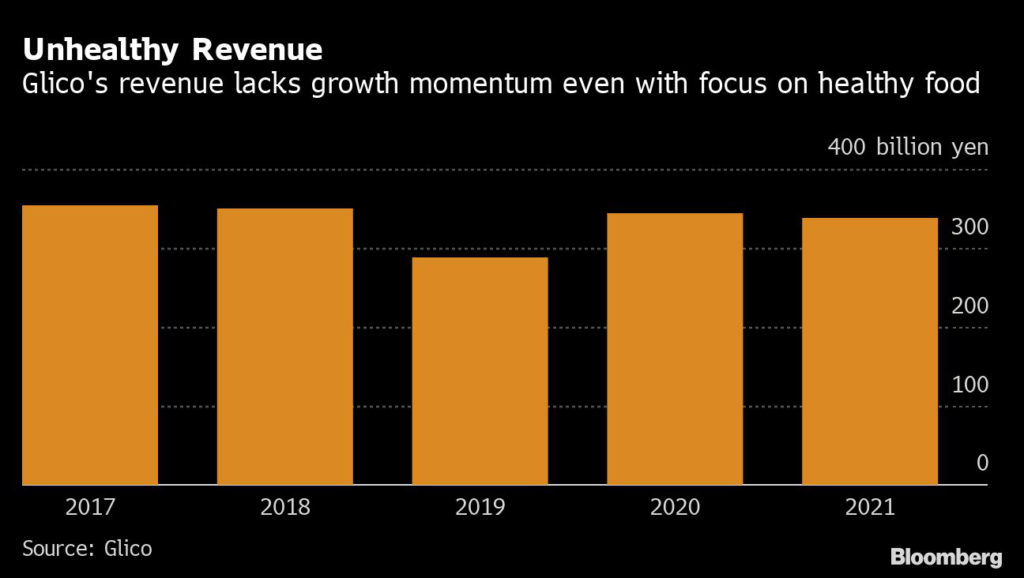
Still, Glico is likely to face an uphill climb convincing investors that its growth strategy is correct. Analysts are skeptical in part because Glico’s push toward healthy and functional food has been underway for several years and has yet to bear fruit.

“Glico slashed its product range to focus on healthy food, which resulted in lost opportunity,” Okasan Securities analyst Manabu Sumoge said. “People may want less guilt when snacking, and cutting out some sugar may help, but I’m not sure they want to become healthy by eating snacks.”

The health food strategy will take time to prove itself and, even if it does, competition will be fierce as rivals are also looking at the sector, Sumoge said. The market would react more favorably to Glico strengthening established products like Pocky and Bisco and expanding them to more consumers overseas, he added.

Hasegawa has no doubts about Ezaki’s vision, however. He sees a lack of consumer awareness about Glico’s healthier products — such as its Sunao low-carb ice cream, a favorite of his daughter which she didn’t realize was made by Glico until he joined the company.

“That’s the only ice cream she eats now, and the future will bring more consumers like her, who will pay extra for snacks that are good for them,” Hasegawa said.

(Updates with share price in fourth paragraph)

More stories like this are available on bloomberg.com

©2022 Bloomberg L.P.

Bill to Restrict Stock Trading by Lawmakers, Presidents Unveiled by Democrats

(Bloomberg) — A House proposal to restrict stock ownership and trading by members of Congress, and other top US officials, including the president, has stalled.

Democratic infighting put off movement on the measure, frustrating expectations by supporters of a victory before the November midterm elections. Multiple House officials familiar with Democrats’ discussions said any floor action on the measure, which was introduced on Wednesday, has been shelved, at least for now. 

Lawmakers are scheduled to leave Washington this week until after the midterms.

“I think that’s probably accurate,” Majority Leader Steny Hoyer said Wednesday night, confirming that a vote this week is unlikely. 

Hoyer pointed out that the bill’s text was only circulated among members late Tuesday night, and that “it’s a very serious issue.” He said lawmakers should have a chance to go through it, but “that does not mean it is not going to be considered.” 

The bill’s main sponsor, House Administration Chair Zoe Lofgren, a California Democrat. responded: “That’s a leadership decision, not my decision on whether bills come up.”

Lofgren described the reception the bill is getting as “pretty positive,” but that “we’re Democrats. You know, we always have a point of view.” She added that delaying a vote beyond this week should not taken as any signal about its chances. “I don’t think so because the Senate is not going to get theirs done this week, either, she said.

Other officials, who did not want to be identified in discussing private conversations, described deep divisions among top party leaders over details of the bill. Democrats in competitive races oppose parts of the legislation and don’t want to take a politically difficult vote just weeks before the election, the officials said. A group of senators is drafting their own legislation, but it hasn’t been unveiled and the Senate doesn’t have any immediate plans to take up the bill.

But some Democrats are urging Speaker Nancy Pelosi and her lieutenants to act before the midterm elections on good-governance legislation taking aim at conflicts of interest at the highest levels of the government. Forcing a vote now has the added bonus of putting Republicans on the spot, they said.

The legislation would require public officials to divest current holdings or put them in a blind trust. It would also tighten disclosure requirements and increase penalties for violations. The vice president, Supreme Court justices, cabinet officers and other top government officials would face the restrictions as well.

The bill’s trade and ownership restrictions cover commodities, futures, cryptocurrency or other digital assets as well as stocks. Also covered are interests acquired through derivatives, including options.

The bill would apply to the spouses and dependent children of the listed officials, as indicated last week to lawmakers in an outline by Lofgren. 

That has been a point of contention, with some attention falling on Pelosi’s husband, Paul Pelosi. Some of his recent transactions, while legal, helped to draw renewed attention to the current law governing lawmakers’ trades that critics say should be changed.  A Pelosi spokesperson didn’t immediately respond to requests for comment on the bill.

According to the bill’s text, the “supervising ethics office” for each government branch would be called on to issue regulations implementing the the bill’s provisions within 180 days of the bill’s enactment.

Congressional leaders have faced intensifying calls in the past year to adopt new rules governing lawmakers’ financial activities. A New York Times analysis of disclosure forms published earlier this month found that from 2019 to 2021, almost 100 senators and representatives reported that they or an immediate family member traded a stock or other financial asset that had some overlap with issues before congressional committees on which they served.

More stories like this are available on bloomberg.com

©2022 Bloomberg L.P.
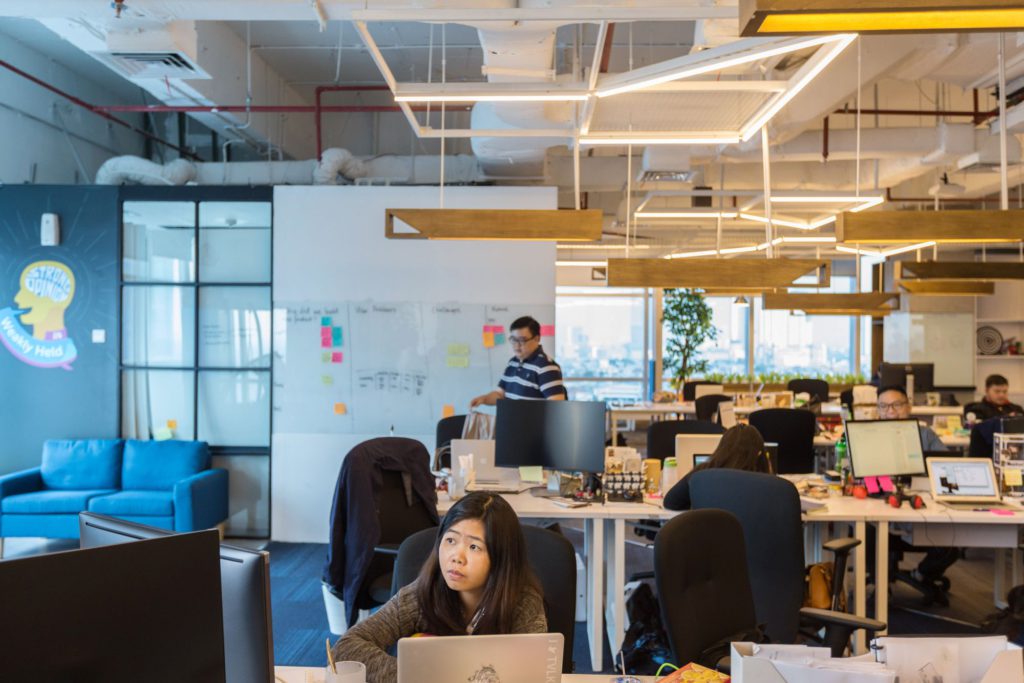
Asian Stocks Rally as BOE Lifts Risk Sentiment: Markets Wrap

(Bloomberg) — Asian equities jumped on Thursday following the strongest day for US stocks since early August after the Bank of England unveiled a bond-buying program that triggered a global rally in government debt.

Equities rose in Japan, Hong Kong and Australia, mirroring a 2% advance for the S&P 500, which snapped a six-day losing streak. 

The rally in riskier assets was triggered by the BOE’s plan to purchase up to £65 billion ($71 billion) in UK government debt over the next two weeks. The move averted a crisis for retirement funds and has lifted risk sentiment in Asia’s markets Thursday.

The region’s financial authorities have been on high alert in recent weeks, with China, Japan and South Korea among nations taking action in markets to prevent a downward spiral. China’s onshore yuan advanced for the first time in nine sessions, after the central bank issued a verbal warning against currency speculation.

Read more: Plunging Markets Spur New Intervention Warnings Across Asia 

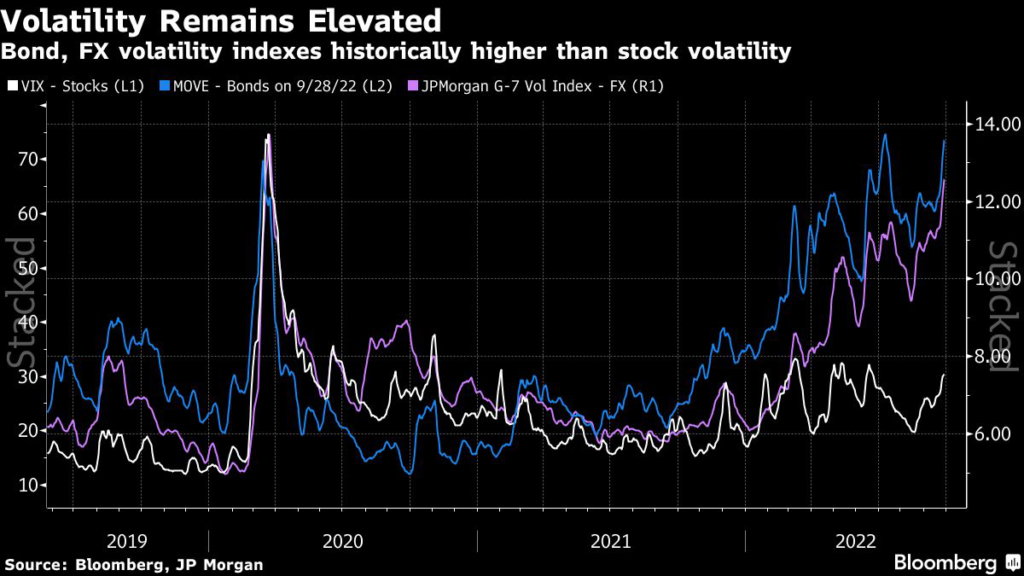
The BOE’s bond buying buoyed the pound, which recently fell to the lowest since 1985. It was weakening again Thursday morning in Asian trading as the dollar rose slightly against its Group-of-10 counterparts

“The central bank is in a very difficult position right now,” Julie Biel, Kayne Anderson Rudnick portfolio manager and senior research analyst, said of the BOE in an interview with Bloomberg TV. “Everyone has been a little bit backed into a corner in seeing the volatility and market reaction.”

Read more: UK Government Hopes to Rebuild Credibility After BOE Bailout

Treasuries rallied Wednesday while a Bloomberg dollar index fell by the biggest margin since the early weeks of the pandemic. Treasuries were little changed Thursday.

Federal Reserve officials continued to hammer home the central bank’s hawkish outlook. The Fed’s Atlanta President Raphael Bostic said he backs raising rates by a further 1.25 percentage points by the end of this year to counter inflation that has been worse than he expected.

“All eyes are on inflation and interest rates,” said Josh Emanuel, chief investment officer of investment management at Wilshire. “Equities are really going to take their cues from bond market. So if you see bond yields move lower, that is a good sign for equities.”

European Union officials unveiled fresh economic limits on Russia in response to further annexing of Ukraine. The new round of sanctions would bar sales of Russian oil by third party countries beyond a set price cap. The plan would inflict around $6.7 billion in economic pain on Russia.

“The markets are very pessimistic. Investors are fairly on the sidelines,” said Julia Raiskin, Asia-Pacific head of markets for Citigroup Inc. “Other than the dollar, there are not many assets that are trading constructively.” 


How much damage is a strong dollar causing? That’s the theme of this week’s MLIV Pulse survey. It’s brief and we don’t collect your name or any contact information. Please click here to share your views.

Key events this week:

  • Euro zone economic confidence, consumer confidence, Germany CPI, Thursday
  • US initial jobless claims, GDP, Thursday
  • Fed’s Loretta Mester, Mary Daly speak at events, Thursday
  • China PMI, Friday
  • Euro zone CPI, unemployment, Friday
  • US consumer income , University of Michigan consumer sentiment, Friday
  • Fed’s Lael Brainard and John Williams speak, Friday

Some of the main moves in markets:

Stocks

  • S&P 500 futures fell 0.1% as of 10.42 a.m. in Tokyo. The S&P 500 climbed 2%
  • Nasdaq 100 futures fell 0.1%. The Nasdaq 100 jumped 2%
  • The Topix index added 0.4%
  • Australia’s S&P/ASX 200 Index jumped 1.8%
  • The Kospi index rose 1.9%
  • The Hang Seng Index gained 2%
  • Shanghai Composite Index added 0.8%
  • Euro Stoxx 50 futures gained 0.6%

Currencies

  • The Bloomberg Dollar Spot Index rose 0.4%
  • The Japanese yen fell 0.2% to 144.37 per dollar
  • The offshore yuan weakened 0.3% to 7.1838 versus the dollar. Its onshore counterpart strengthened
  • The euro fell 0.5% at $0.9685

Cryptocurrencies

  • Bitcoin traded flat at $19,554
  • Ether slipped 0.2% to $1,347

Bonds

  • The yield on 10-year Treasuries rose two basis points to 3.75%
  • Australia’s 10-year yield declined 19 basis points to 3.91%

Commodities

  • West Texas Intermediate crude fell 0.5% to $81.75 a barrel
  • Gold was at $1,654.83 an ounce

More stories like this are available on bloomberg.com

©2022 Bloomberg L.P.
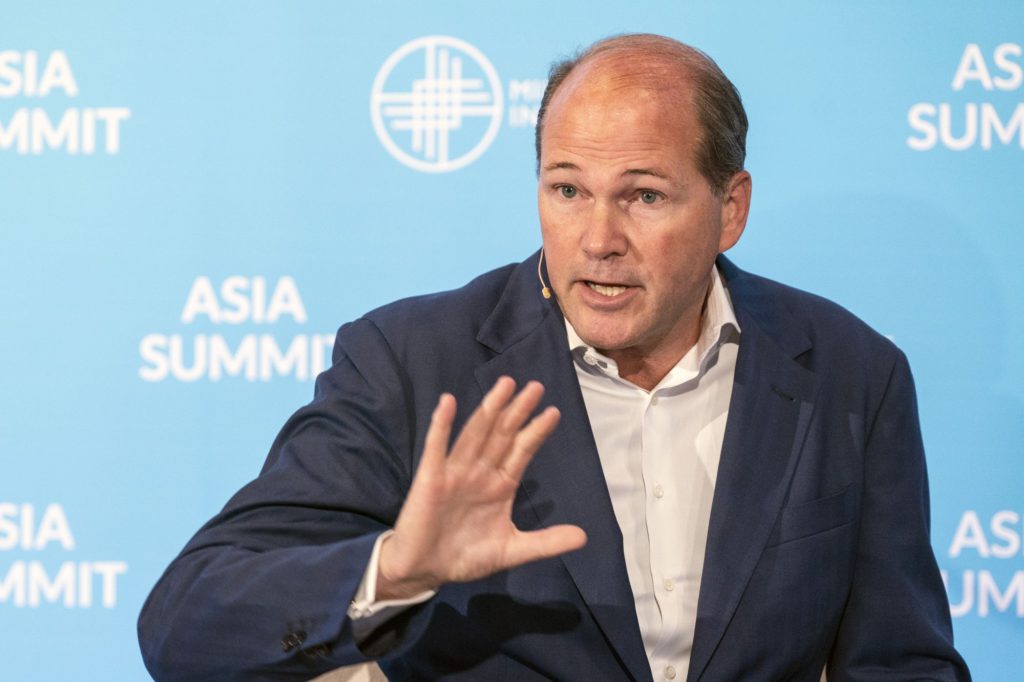
PE Firm MBK Partners Considers Joining JIC’s Toshiba Bid, Sources Say

(Bloomberg) — MBK Partners is considering joining a consortium led by state-backed investment fund Japan Investment Corp. seeking to buy Toshiba Corp., according to people familiar with the matter.

The North Asia-focused private equity firm has held initial discussions to explore backing JIC’s bid, said the people, who asked not to be identified as the information is private. JIC is also in talks to team up with Bain Capital, the people said.

Toshiba aims to collect second-round bids by the end of this month, they said. Deliberations are ongoing and no final decision has been made, the people said. Representatives for Bain, JIC and MBK declined to comment. A representative for Toshiba declined to comment on information about investor candidates, including co-investors. 

Toshiba started seeking proposals in April after its shareholders rejected a plan put forward by management to split the company. The conglomerate has received eight bids to privatize the company and two offers to form business alliances.

Shares of Toshiba rose about 1.5% as of 9:32 a.m. in Tokyo, ending a three-day losing streak. The stock has risen about 10% this year, giving the company a market value of about $15.6 billion.

A buyout of Toshiba could be private equity’s biggest ever deal in the country. CVC Capital Partners and Japan Industrial Partners are among potential bidders for the Japanese firm, Bloomberg News has reported.

Any sale of Toshiba, which owns a sensitive nuclear power business would require approval from the Japanese government. Toshiba is categorized as a company of interest to national security under the Foreign Exchange and Foreign Trade Act for its nuclear expertise.

(Updates Toshiba’s share price in fifth paragraph.)

More stories like this are available on bloomberg.com

©2022 Bloomberg L.P.
Close Bitnami banner
Bitnami