

Bloomberg

China’s Race to Avoid a Wall Street Ban Is Off to a Tense Start

(Bloomberg) — The latest high-stakes drama between the world’s biggest superpowers is unfolding in the unlikeliest of places: a Hong Kong office tower full of accountants.

It’s here, on the 23rd floor of Prince’s Building in central Hong Kong, where number crunchers and regulators will determine the fate of hundreds of billions of dollars in US-listed Chinese shares — and possibly the future of financial cooperation between Washington and Beijing.

US inspectors from the Public Company Accounting Oversight Board have converged on the financial hub to find out whether Chinese authorities will grant full access to audit work papers needed to prevent US delistings by companies including e-commerce giant Alibaba Group Holding Ltd. 

At the PricewaterhouseCoopers office in Prince’s Building and a KPMG office in southern Hong Kong, the two sides are facing off across conference tables or huddling in separate rooms to strategize, often late into the night, according to people familiar with the matter.

In the middle are auditors at firms including PwC. They’re fielding detailed questions from the PCAOB along with directions from Chinese authorities on which information they can’t divulge because it’s considered a state secret.

In some cases Chinese officials have asked to black out names, addresses and salary levels in company documents, the people said. So far, however, the redacted information has mostly been inconsequential to the overall integrity of the inspections, the people added.

While it’s common that local regulators are present when PCAOB officials carry out inspections around the world, the US has said it will determine if the Chinese presence has hindered their access to audit papers and personnel, emphasizing they must have full access to documents without redactions.

“Any interference with our ability to retain information as needed is a dealbreaker,” PCAOB Chair Erica Williams said in a speech on Sept. 22.

The PCAOB declined to comment on the specifics of the inspections for this article, as did KPMG and PwC. The China Securities Regulatory Commission and the Ministry of Finance didn’t immediately respond to a request for a comment. 

The stakes are high after a breakthrough deal in August to allow US regulators to examine audit working papers of US-listed Chinese companies for the first time in two decades. More than 200 firms, including Alibaba, Netease Inc. and Baidu Inc., risk being kicked off New York stock exchanges should they fail to pass muster.

While inspections were mandated by US law in 2002, China had denied access on national security grounds. Since 2020, the US ratcheted up pressure with threats to expel Chinese companies, forcing a rare compromise by Beijing.

The PCAOB has sent two teams to Hong Kong as part of an initial inspection to test China’s commitment to the deal. The agency is “working swiftly” and will make a determination by the end of the year whether the terms of the deal have been met, Williams has said. 

People familiar with the inspections said the information flagged for redaction has been largely trivial. The PCAOB isn’t prying for sensitive materials, but only checking if the audit work was done thoroughly, they said. 

Auditors familiar with mainland China are also well-trained to make sure any sensitive information isn’t included in the working papers to begin with.

While a deal could save the Chinese presence in New York, the standoff has already had significant impact. Two weeks before August’s agreement, five major state-owned firms, including China Life Insurance Co. and PetroChina Co., announced plans to delist. Ride-hailing giant Didi Global Inc. was forced to delist amid pressure from Chinese regulators who feared the firm’s vast troves of data would be exposed to foreign powers.

Beijing flew in about 10 mostly English speaking officials from the CSRC and the Ministry of Finance to Hong Kong, one person familiar with the matter said. While China and the auditing firms spent significant time putting documents together, some requests from the US officials have been so specific, and older, that it required those being inspected to go back and look for further information, said the person.

The Chinese regulators in Hong Kong are holding nightly debrief sessions, sometimes as late as midnight, to catalog and study the materials requested by the US to be prepared for broader audit checks down the line. Auditors are also working under the assumption that all of their US-listed Chinese clients will be checked eventually, the people familiar said.

More stories like this are available on bloomberg.com

©2022 Bloomberg L.P.
SEC Says Backers of Crypto Token Hydro ‘Airdrop’ Broke Its Rules

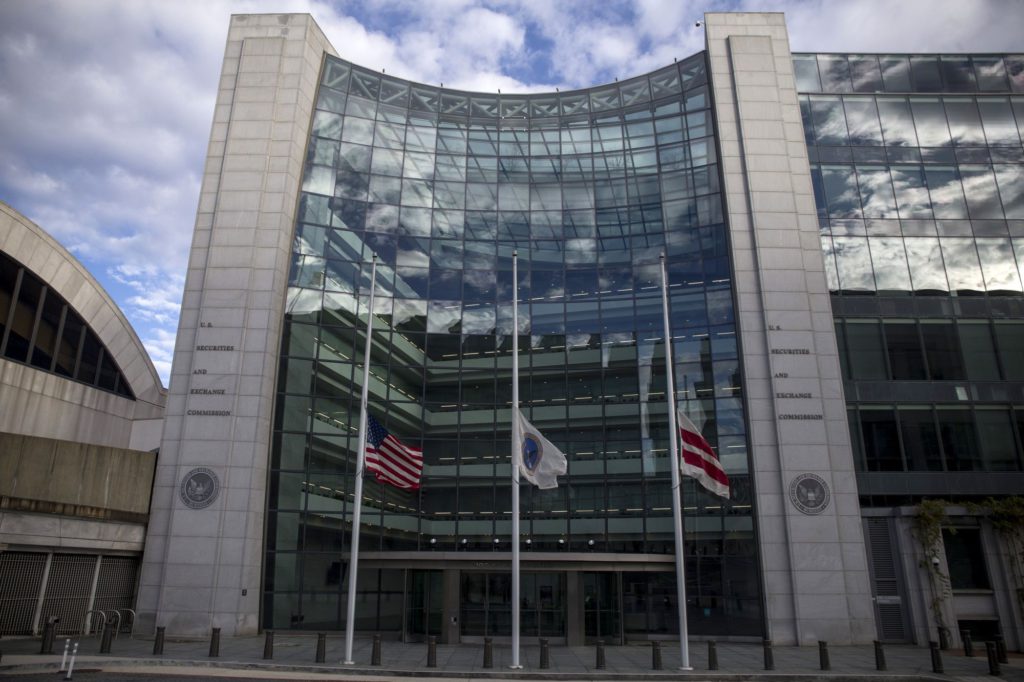
(Bloomberg) — The company behind the digital coin Hydro and a crypto market-making firm tried to artificially inflate the token’s price after it was offered through a so-called airdrop, according to the Securities and Exchange Commission.

The SEC said on Wednesday that The Hydrogen Technology Corp., its former chief executive officer, Michael Ross Kane, and Tyler Ostern, the CEO of Moonwalkers Trading Ltd., broke its rules by selling tokens the agency identified as securities into a market artificially inflated using bots. The regulator said that the Hydro tokens were initially distributed to investors through a variety of means, including airdrops and as employee compensation. 

Hydrogen hired Moonwalkers to “to create the false appearance of robust market activity for Hydro” and made more than $2 million in profits due to the effort, the regulator alleged. “Companies cannot avoid the federal securities laws by structuring the unregistered offers and sales of their securities as bounties, compensation, or other such methods,” said Carolyn M. Welshhans, associate director of the regulator’s enforcement division. 

In a statement, Hydrogen said the SEC’s case “wholly lacks merit” and vowed to litigate the matter. Kane didn’t immediately respond to a request for comment and attempts to locate contact information for Ostern were unsuccessful.  


Without admitting or denying the SEC’s allegations, Ostern, the Moonwalkers CEO, agreed to pay back around $40,000 in ill-gotten gains and a fine to be determined later by the court, the SEC said. In a filing in federal court in Manhattan, the SEC also sought a series of penalties against Hydrogen and Kane. 

Wall Street’s main regulator has long asserted that many virtual tokens are securities and under its jurisdiction, but crypto firms and promoters have sought ways to distribute coins outside of traditional financial offerings. Airdrops, where tokens are given out to users and developers for continued participation in a project for free, have become an increasingly popular method. 

The alleged misconduct involving Hydro, which occurred from January 2018 to April 2019, could raise the stakes for the practice, which has become a mainstay in decentralized finance and crypto gaming. 

To determine whether something is a security, the SEC applies a legal test, which comes from a 1946 Supreme Court decision. Under that framework, an asset can be under SEC purview when it involves investors kicking in money with the intention of profiting from the efforts of the organization’s leadership.

Eric Rosen, a partner at Roche Freedman, said that the SEC’s case signals that the regulator may consider a token offered through an airdrop to be a security. “An airdrop, even though technically free,” could violate securities because the purpose is to benefit the distributor, he said. 

More stories like this are available on bloomberg.com

©2022 Bloomberg L.P.

Ukraine Latest: Crucial US Rocket Systems Have Yet to Be Built

(Bloomberg) — The 18 High Mobility Artillery Systems that are part of the new $1.1 billion US assistance package to Ukraine have not yet been built and it will take a few years before they are delivered, a Defense Department official said Wednesday. 

The Ukrainians have used the HIMARS rocket launchers that have already been shipped to strike Russian supply lines. 

European Commission President Ursula von der Leyen announced an eighth package of sanctions that will target Russia over its attempt to annex more territory in Ukraine. The measures will include a price cap on Russian oil exports. “We intend to make the Kremlin pay” for this further escalation, she said. 

Separately, European allies were considering how to respond to a disruption of the Nord Stream natural gas pipeline as Russia threatened to cut off the last gas supplies to them via Ukraine. Jens Stoltenberg, secretary general of the NATO military alliance, said after meeting Danish Defense Minister Morten Bodskov that they discussed “the protection of critical infrastructure.”


(See RSAN on the Bloomberg Terminal for the Russian Sanctions Dashboard.)

Key Developments

  • More US Artillery Prized by Ukrainians Won’t Arrive for Years
  • Iran’s Drones Are Cheap, Plentiful and Helping Russia in Ukraine
  • Ukraine’s Plea for Tanks Bogs Down as US, Germany Confront Risks
  • Russia Declares Victory in Sham Ukraine ‘Referendums’

On the Ground

Russia pounded Ukraine’s second largest city Kharkiv Tuesday evening, the regional governor Oleh Synyehubov said on Telegram, adding that there were no casualties according to preliminary information. Air-defense forces shot down Russian missiles in the Mykolaiv, Odesa and Dnipropetrovsk regions, Ukrainian military’s southern command said on Facebook. Ukrainian troops repelled Russian attacks near eight settlements, Ukraine’s General Staff reported in its morning update. The Washington-based Institute for the Study of War said in its latest report that Ukrainian forces consolidated positions on the eastern bank of the Oskil river and advanced further on the outskirts of Lyman in the Donetsk region, while continuing to target Russian supply lines as part of a southern counter-offensive.

All times CET:

US Artillery Prized by Ukrainians Won’t Arrive for Years (10:59 p.m.)

The highly-prized HIMARS artillery system in the US’s latest $1.1 billion security assistance package for Ukraine will take a few years to be built and delivered, a Pentagon official said Wednesday.

The US announced it would send 18 High Mobility Artillery Systems, made by Lockheed Martin Corp., as part of the new assistance package. Unlike the 16 HIMARS already sent from existing Pentagon stocks, the new ones will have to be produced under contract through the Ukraine Security Assistance Initiative, according to the official, who briefed reporters on condition of anonymity.

Although Ukraine’s President Volodymyr Zelenskiy welcomed what he called the “critical equipment that’ll bring victory closer,” the latest security assistance package is meant to be the beginning of a contracting process for Ukraine’s mid-to-long-term defense, the US defense official said. Other equipment will take six to 24 months to get to Ukraine as well, the official added.

EU Says Gas Price Cap Alone Risks Aggravating Energy Crisis (8:32 p.m.)

The European Union needs to rely on a combination of tools rather than market intervention alone to limit the effects of an energy crunch that has companies and households reeling from record power and gas bills, the bloc’s executive arm told governments on Wednesday.

Capping natural gas prices, a move urged by more than a half of member states seeking to quickly contain the crisis, risks increasing demand for the fuel rather than addressing its scarcity if imposed in isolation, the European Commission said in a document seen by Bloomberg News. The 27-member bloc is grappling to limit soaring energy costs after Russia cut supplies of natural gas following President Vladimir Putin’s decision to invade Ukraine.

Read the full story here.

US Sending HIMARS Rockets, Armored Vehicles in $1.1 Billion Package (8:03 p.m.)

The Biden administration announced a $1.1 billion package of additional weapons and equipment to Ukraine.

White House Press Secretary Karine Jean-Pierre told reporters that it includes 18 new High Mobility Artillery Rocket Systems, beyond the 16 already committed. She said “it also includes hundreds of armored vehicles, radars and counter drone systems.”

Jean-Pierre also said sham referendums conducted by Russia in occupied areas of Ukraine “were straight from the Kremlin playbook. They were manufactured and manipulated. Ukrainian civilians were forced to cast ballots under the watch of armed guards.”

Putin’s Approval Rating Falls Amid Partial Mobilization (7:51 p.m.)

Approval ratings for Putin fell to 77% in September from 83% in August, according to the latest poll by the independent Levada Center. The first drop in approval since April comes days after Putin ordered a partial mobilization last week. The poll found 21% of respondents don’t approve Putin’s actions as his nation’s leader, the highest since February, when Russia invaded Ukraine.

Finland Says Only a State Actor Capable of Nord Stream Sabotage (7:45 p.m.)

The rupture of the Nord Stream natural-gas pipelines in the Baltic Sea can only have been carried out by a state actor, Finland’s Foreign Minister Pekka Haavisto said.

“We’ve known that sabotage against critical infrastructure has been a realistic threat,” Haavisto told reporters in Helsinki on Wednesday. The acts appear to have been “deliberate” and “may have been intended to destabilize the Baltic Sea area,” Prime Minister Sanna Marin said at the same news conference.

Even so, the three leaks in international waters in the exclusive economic zones of Denmark and Sweden indicate no military threat against Finland, said Antti Kaikkonen, the defense minister. The military situation in Finland’s vicinity is stable and calm, he said.

Putin’s Draft Order Sparks Exodus of Russians (5:12 p.m.) 

At least 200,000 Russians left the country after President Vladimir Putin’s mobilization order in a dash for safety that’s causing turmoil at the borders and stirring fears in neighboring states about potential instability from the influx.

While Russia hasn’t released official data, statistics from Georgia, Kazakhstan and the European Union showed the scale of the departures amid fears among conscription-age men that the Kremlin may close the border for them. The total is likely an underestimate as other nearby countries popular with Russians including Armenia, Azerbaijan and Turkey haven’t disclosed arrival figures.

Scholz Rejects Russia’s ‘Pretend Referenda’ (5:03 p.m.)

German Chancellor Olaf Scholz held another telephone call with Ukrainian President Volodymyr Zelenskiy and reiterated that the government in Berlin will “never recognize” the results of what he called “pretend referenda” in Russian occupied areas of Ukraine.

Scholz “stressed that Germany would not stop providing concrete political, financial and humanitarian support to Ukraine, as well as in the defense of its sovereignty and territorial integrity, including with weapons supplies,” according to an emailed statement from his spokesman.

EU Announces New Sanctions Package (4:16 p.m.) 

The European Union proposed a new round of sanctions targeting Russia after Moscow announced a partial mobilization and staged widely condemned referendums on annexations in Ukrainian territory it’s occupying.

In addition to imposing a price cap on Russian oil, the measures will include an import ban on Russian products that will deprive Moscow of 7 billion euros ($6.7 billion) in revenue as well as export restrictions on aviation products, electronic components and chemical substances, von der Leyen told reporters in Brussels. 

Sanctions need to be approved unanimously by the EU’s 27 member states before they can be imposed.

Read more: EU Plans New Russia Import Bans, Tech Curbs Over Putin Land Grab

Lithuania to Mull Further Security Measures For Infrastructure (12:40 a.m.)

Lithuania, which stepped up security for its strategic energy infrastructure in February when Russia invaded Ukraine, said the government will discuss whether additional measures are needed following the Nord Stream disruption. Energy Minister Dainius Kreivys said consultations will be held with the defense ministry and army officials. 

More stories like this are available on bloomberg.com

©2022 Bloomberg L.P.
Amazon Raises Hourly Wages at Cost of Almost $1 Billion a Year

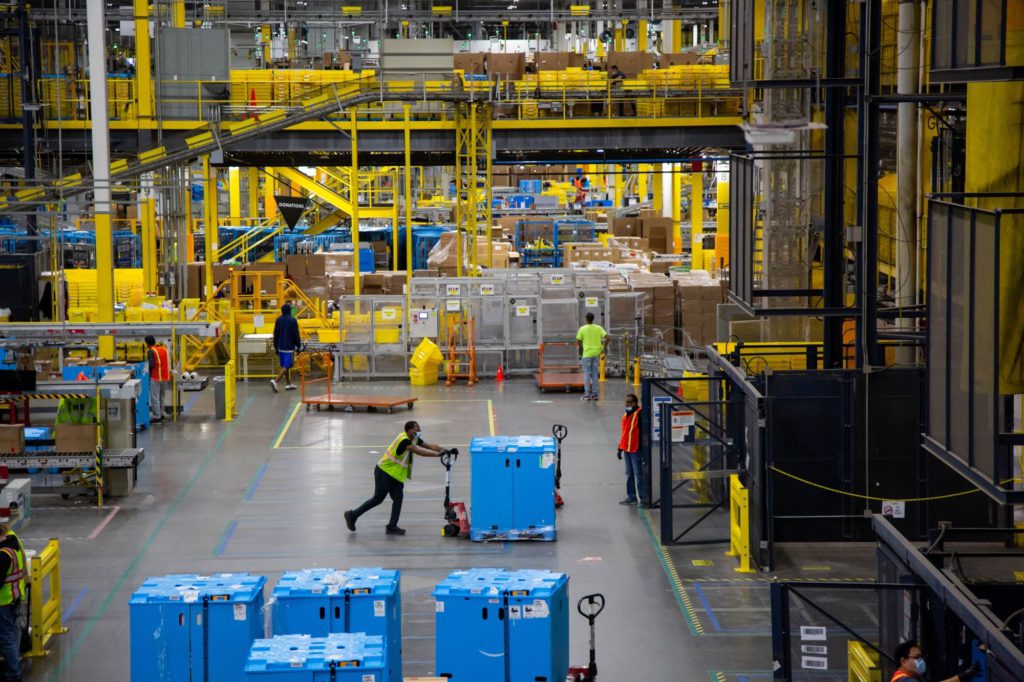
(Bloomberg) — Amazon.com Inc. announced a pay increase for hourly workers in the US that it says will take average starting wage for most front-line employees in warehousing and transportation to more than $19 an hour.

The company’s minimum level of $15 an hour for all hourly workers in the US remains unchanged. For jobs in Amazon’s customer fulfillment and transportation groups, the starting pay will increase to $16 an hour, a spokesperson said Wednesday in an email. 

The Seattle-based company said the raise represents additional spending of almost $1 billion over the next year. Amazon is the second-largest private employer in the US, behind Walmart Inc. Amazon employed more than 1.1 million people in the US at the end of 2021. The company’s total workforce was more than 1.5 million as of June 30. Most of those employees are hourly workers who pack and ship items, or work in retail stores like Whole Foods Market and Amazon Fresh. 

The company also is expanding access to a program that lets employees get paid more frequently than once or twice a month, according to a statement.

Amazon faces employee activism and union drives at some of its facilities, including at an Albany, New York-area warehouse where a vote is scheduled for next month. The company is challenging an election last April in which more than 8,000 workers at a Staten Island, New York, warehouse won the right to be represented by a union.

More stories like this are available on bloomberg.com

©2022 Bloomberg L.P.
Nikola Founder Bought Utah Ranch With ‘Worthless’ Stock Options

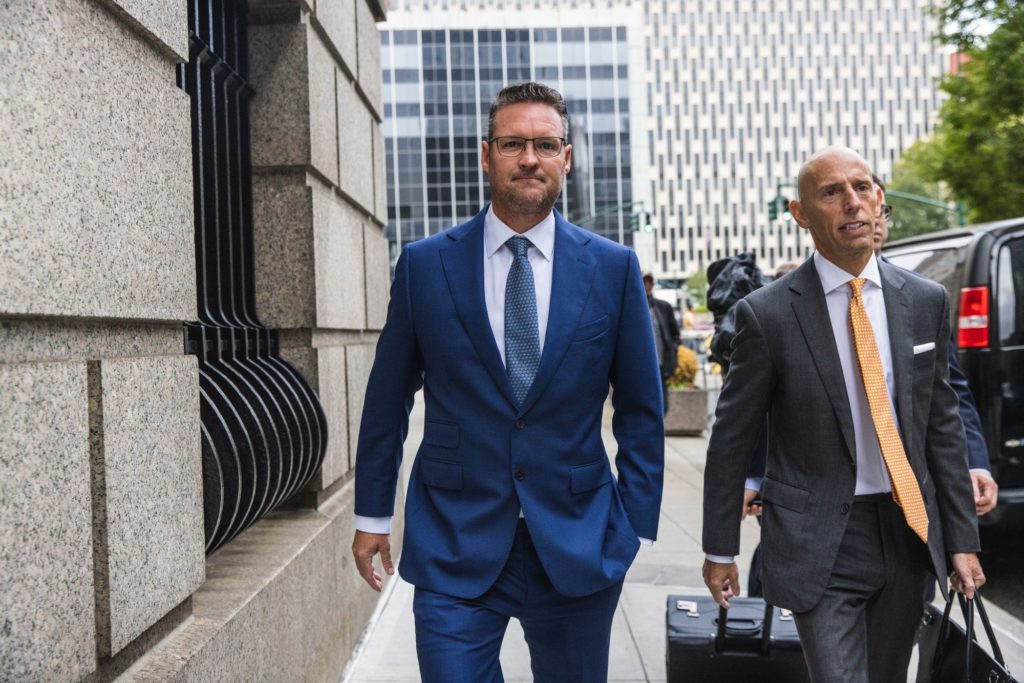
(Bloomberg) — Nikola Corp. founder Trevor Milton’s hype about the electric truck startup’s prospects lulled a real estate investor into accepting millions of dollars in Nikola stock options as partial payment for a 4,600-acre ranch, he told the jury in Milton’s criminal fraud trial.  

The investor, Peter Hicks, testified on Wednesday that he was first contacted in March 2020 with an offer from Milton to pay $5 million in cash to buy the Wasatch Creeks Ranch, a sprawling Utah property 12 miles from Salt Lake City that features five miles of pristine fishing streams, which Hicks had bought earlier that month for $6.85 million. 

The Massachusetts investor rejected the offer, and Milton came back a month later with an offer of $7.5 million in cash and $7.5 million in Nikola stock options.

Hicks told the jurors in federal court in Manhattan that he was wary because he had never heard of Nikola or Milton and didn’t like the looks of a purchase funded partly by stock in a company without revenue, calling it “pretty risky.” 

“I believe in things that are very tangible to me, and that is real estate and cash,” Hicks testified. 

Changed His Mind

Then, after a conference call with Milton that same month, Hicks changed his mind. On the call, Hicks testified, Milton told him the company already had $14 million in truck orders and an agreement with Anheuser-Busch to use Nikola trucks on a delivery route between Los Angeles and Phoenix. Hicks told the jury Milton’s assurances that Nikola had begun procuring charging stations for 13 routes meant it had contracts in place, a “crucial” piece of information for him.

“A pre-revenue company, I needed convincing to be even slightly interested in any of this,” Hicks said, explaining that he needed “something tangible to show they would produce substantial revenue.” The charging stations clinched it, he said.

Hicks said he agreed to sell the ranch that June and got $8.5 million in cash and options to purchase 515,095 Nikola shares at a below-market price, which were valued at $15 million when the deal closed in August 2020. That month, the stock was trading at more than $40 a share. But by December, when Hicks was first able to exercise the options, they had plunged to as little as $13.51. That was below the $16.50 strike price on the options, which made them “worthless,” he said.

Hicks said he never paid attention to the company’s Securities and Exchange Commission filings because all of his impressions of the company came from the conference call.

‘False Representations’

“This information was being conveyed to me by the founder and the CEO of Nikola, of a many-billion-dollar company,” Hicks testified. “It never struck me he would be making false representations — in fact, made false representations. I thought it all to be credible and true.”

Milton was freed pending trial on $100 million bail secured by two properties he owns in Utah — one of them the ranch, according to a civil suit Hicks filed against Milton. Milton paid $32.5 million for another ranch near Salt Lake City in August 2019, the highest sale price ever recorded for a residential property in the state. A 16,800-square-foot home on the property, called Riverband Ranch, boasts nine bedrooms, nine bathrooms and hickory floors.

Nikola went public through a reverse merger with a blank check company in June 2020 in a deal that made Milton into a billionaire several times over. At one point, the company’s shares ballooned to almost $80 each, giving Nikola a market capitalization greater than Ford Motor Co., all with scant revenue. Nikola’s market value plunged after Milton and the company were accused of exaggerating the capability of its debut truck, the Nikola One. 

Prosecutors accused Milton of making false and misleading statements on social media and other outlets to induce retail investors to buy the stock, and of wire fraud for deceiving Hicks, who sued Milton in federal court in Utah in March 2022 over the deal. 

Milton’s lawyers contend that their client never intended to deceive any investors, was just following the company’s marketing plan and never said anything he didn’t believe to be true.

Hicks’s testimony came in the trial’s third week and near the end of the government’s case against Milton. Prosecutors could rest as soon as Thursday.

The case is US v. Milton, 21-cr-478, US District Court, Southern District of New York (Manhattan.)

More stories like this are available on bloomberg.com

©2022 Bloomberg L.P.

Amazon Says a Wide Release of Astro Home Robot Is Finally ‘in Sight’

(Bloomberg) — Amazon.com Inc.’s Astro robot, unveiled with fanfare last year but then shipped in very low quantities, should be more widely available within the coming months, the company’s devices chief said. 

Amazon is still working out kinks related to Astro’s ability to map and navigate customers’ homes, said Dave Limp, a senior vice president who leads its devices and services group. For now, the robots are only available by invitation, and they remain a rare sight outside of Amazon.

But general availability of the bot “is not a year away,” Limp said in an interview. He said it would likely be sooner but was reluctant to predict a date. “I think we’re close,” he said. “I do think we have a little bit to solve. But it’s in sight.” 

Despite remaining a work in progress, Astro had a starring role in Amazon’s new-device event on Wednesday, when the company said it was looking to turn the robot into a security guard for businesses. The announcement was part of a flurry of product news, including the debut of a sleep-tracking gadget and a Kindle e-reader that lets users write on digital pages.

Amazon’s Ring division also announced a pair of new home-security cameras and other updated devices. Ring’s Spotlight Cam Pro — the most significant new Ring hardware introduced at the event — will get radar-based cameras to enable 3D motion detection and a bird’s-eye view. These features previously were included in Ring’s high-end doorbells to give a better picture of the surrounding environment, but will now be more affordable.

Regardless of Astro’s fate, home robots are poised to become a bigger part of Amazon’s lineup. The company announced plans in August to buy Roomba maker IRobot Corp. for $1.65 billion. That deal still needs regulatory approval from governments around the world, but Limp told Bloomberg Television on Wednesday he was optimistic about getting the transaction done.

With a $1,000 price tag, rising to $1,450 after an introductory period, the Astro robot is likely to remain more of a niche product than Amazon’s Kindles or Echo smart speakers. But Limp and his team discussed plans for a wider release this week, he said, and they just want to shore up its navigational powers before Amazon offers the bot to all comers. Astro can still get confused in rare room setups, such as areas with floor-to-ceiling glass near a mirror, he said. 

Limp said that Amazon had originally hoped to ship its first Astro units to invited customers before the end of 2021. Supply-chain constraints prevented that from happening until the end of January or February, he said. 

Packing Astro with sensors and four processors made it powerful enough to reassure Amazon engineers it wouldn’t tumble down stairs. But that also made the product more susceptible to supply shortages. “In many ways, we overbuilt the hardware there,” Limp said.

More broadly, supply-chain constraints have eased after a difficult stretch, Limp said on Bloomberg Television. “I don’t think we are through it,” he said, “but I can start seeing a light at the end of the tunnel.”

Hundreds of thousands of people have requested invitations to purchase an Astro, Limp said, adding that he’s not sure how many of those queries will turn into actual sales. 

Initial reviewers and some customers said the device, which looks a bit like a tablet on wheels strapped to a cup holder, was charming but lacked must-have features. Limp said his teams are working to pack more personality into Astro’s responses to questions. 

Limp said he also was surprised by the strong demand for the device from businesses. That’s what led Amazon’s Ring division to see Astro’s potential as a security guard.

As part of a pilot project, Ring is expanding its security monitoring service to tap into Astro’s capabilities. The robot could potentially investigate alerts, observe scenes with its cameras and notify Ring-contracted security centers in instances when the police may need to be called. Ring plans to test the service in the coming months with a small group of businesses.

Amazon acquired Ring in 2018 and has turned the group into a key piece of its hardware business. Beyond enlisting Astro, it’s building more intelligence and capabilities into its security equipment.

New radar technology will allow Ring’s Spotlight Cam Pro cameras to better measure the distance of an object and more accurately trigger alerts. That addresses a complaint of some Ring owners, who have said that current cameras and motion sensors can set off false alarms.

The radar system will allow the camera to more accurately pinpoint specific objects or tell whether a human is in the frame. And the bird’s-eye view feature shows an overhead picture of movements picked up by Ring devices. 

Amazon will sell a battery-powered version of the Spotlight Cam Pro for $230, with a solar model costing $250. The Spotlight Cam Plus, a lower-end alternative priced at $200, is getting a new design as well and will launch in the coming months, the company said. Ring’s latest panic button, a device that can be carried around or mounted on a wall, is cheaper than the previous model. It will cost $30, down from $35.

Some of Amazon’s innovations can take a while to catch on — if at all. Ring announced a flying indoor drone two years ago, but it’s still only available in limited quantities. 

(Updates with details on Amazon Astro availability beginning in the first paragraph.)

More stories like this are available on bloomberg.com

©2022 Bloomberg L.P.

Florida Tourism Economy Could Take $7 Billion Hurricane Ian Hit

(Bloomberg) — Walt Disney Co. theme-park guests are used to standing in lines, but there was a particularly long queue at the Coronado Springs Resort this week.

Guests at that and other Disney properties in Orlando, Florida, stocked up on $5 breakfast boxes and $7 sandwiches, as Hurricane Ian made its way toward the state.

Disney, Comcast Corp.’s Universal Orlando Resort and SeaWorld Entertainment Inc. closed their Florida theme parks this week as Ian neared, but Disney and Universal kept many of their hotels open so guests could take shelter from the storm.

Ports on both sides of the state have shut down, forcing big cruise operators like Carnival Corp. to cancel departures and reroute ships. Airlines canceled thousands of flights and Tampa International Airport closed.  

Florida ranks among the most-visited states by both foreign and domestic tourists. Orlando alone welcomed 59.3 million visitors last year. And the state’s tourism industry had been roaring back after two years of pandemic. But Ian, heading straight toward the center of the Sunshine State, could upend that. 

Physical damage to Florida’s tourism infrastructure, mostly hotels, could reach $5 billion, estimates Chuck Watson, a disaster modeler with Enki Research. Lost revenue from tourists not being able to rent boats, ride theme-park rides or buy drinks at the pool, could top $2 billion.

“So much depends on how quickly Ian decays as it moves across the Orlando area,” Watson said in an email. At current storm levels, closures could last a week or more. If the storm dissipates more quickly, the outage could be just a few days.

The state’s tourism industry has plenty of experience with storms. Hurricane Irma, in September 2017, forced Disney to close its theme parks for two days and cancel three cruises. The parks reopened with minimal damage, however, and the first guests to return got a treat: lighter-than-usual crowds.

Other storms that year, including Hurricanes Harvey and Maria, caused trouble for the cruise industry. They canceled some trips and redirected others. Royal Caribbean Cruises Ltd. and Norwegian Cruise Line Holdings Ltd. sent their empty ships to the Caribbean to evacuate tourists from the islands. Royal Caribbean reported a $55 million earnings hit due to the storms that year.

More stories like this are available on bloomberg.com

©2022 Bloomberg L.P.
Tesla Adds Airbnb Co-Founder Gebbia to Its Board After Ellison Exit

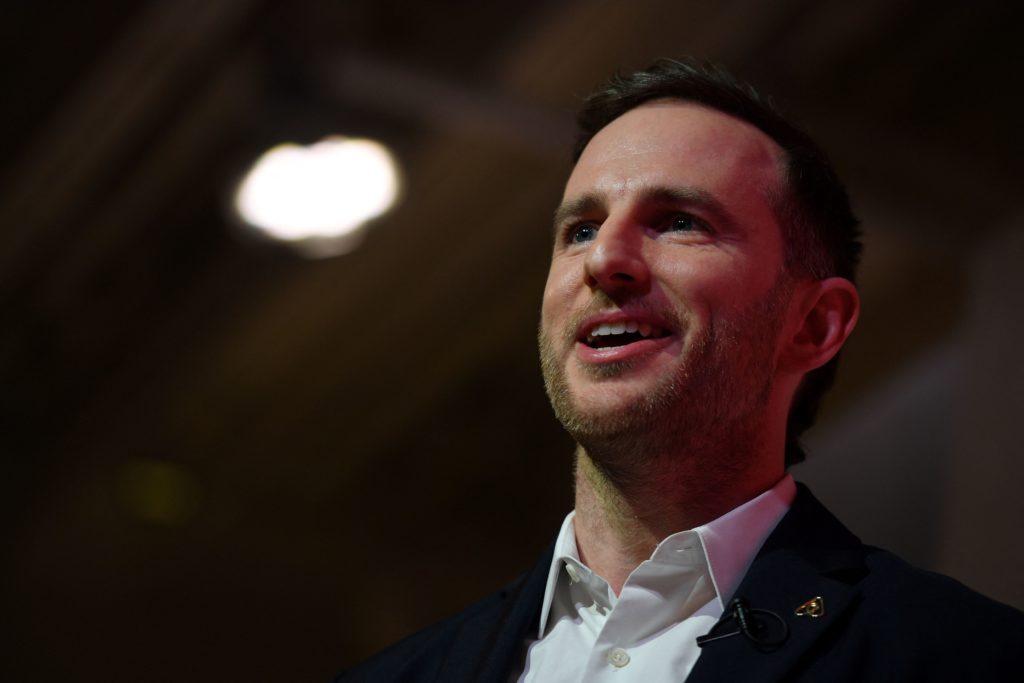
(Bloomberg) — Tesla Inc. is adding Airbnb co-founder Joe Gebbia to its board just over three months after Larry Ellison stepped down as an independent director. 

The Austin, Texas-based company now has eight directors, including Chief Executive Officer Elon Musk and his brother, Kimbal. Tesla disclosed Gebbia’s appointment Wednesday in a securities filing, noting it was effective as of Sept. 25.

The move brings another apparent friend and ally of Musk to the automaker’s board. The two entrepreneurs have been in touch at least as far back as 2018, when Musk attempted to take Tesla private at $420 a share via a now-infamous tweet.

‘Weak Sauce’: Elon Musk’s 2018 Feud With Saudi Fund Revealed (1)

“Baller move,” Gebbia texted Musk about the plan in August 2018, according to records that later surfaced in shareholder litigation. “Sucks being private without IPO alternative” for investors and employees holding restricted shares, he added. 

Musk responded that it worked for SpaceX, which did a liquidity program every six months, but he had had trouble with Tesla, citing “too many individual financing rounds with aggravating terms.”

“Exactly,” Gebbia texted back. “No other IPO alternative exists at the moment.”

Gebbia stepped back from his role at Airbnb in July, saying in a public letter that he would be spending more time with his family and exploring new projects. He co-founded the San Francisco-based home sharing company in 2008 with CEO Brian Chesky and Chief Strategy Officer Nathan Blecharczyk. Gebbia will continue to serve on Airbnb’s board and with Airbnb.org, its nonprofit arm.

Tesla, the electric-vehicle market leader, had said Ellison would not be replaced when he left the board in June. Ellison, the chair of Oracle Corp., was one of two independent members named to the board in late 2018 as part of a settlement with the US Securities and Exchange Commission over Musk’s take-private saga.

(Updates with additional details beginning in the third paragraph)

More stories like this are available on bloomberg.com

©2022 Bloomberg L.P.
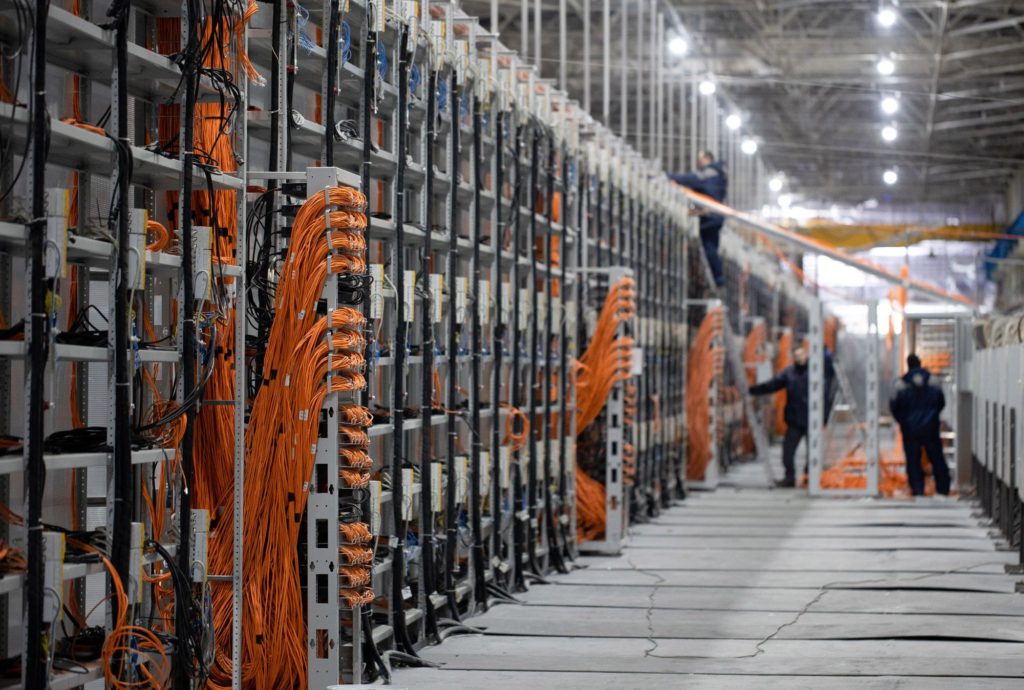
Genesis’s Co-Head of Crypto Sales, Trading Leaves in Latest Exit

(Bloomberg) — Four senior executives at crypto brokerage Genesis have departed, as part of a leadership shuffle in the aftermath of its exposure to bankrupt hedge fund Three Arrows Capital and a broad market downturn.

Matt Ballensweig, co-head of sales and trading, said on Twitter he’s leaving the company after more than five years. Michael Paleokrassas, managing director of trading, and Reed Werbitt, head of cash trading, have also departed, according to a person close to the matter. Joshua Lim, head of derivatives at Genesis, said earlier that he had also left.  

Their departures signal the extent of upheaval at the New York-based firm, which announced a 20% layoff and a new leadership team last month. Genesis Chief Executive Officer Michael Moro stepped down, and Chief Operating Officer Derar Islim took over as interim CEO. 

“Over the last month I’ve started transitioning my core responsibilities to a handful of trusted colleagues who will step up to run our front-line businesses,” Ballensweig said in a tweet. He will stay close to the firm as an adviser “for the foreseeable future.”

Genesis’s Acheson Leaves in Latest Departure From Crypto Lender

Genesis was the biggest creditor ensnared in the collapse of Three Arrows after the fund failed to meet margin calls. Its parent Digital Currency Group assumed some liabilities and filed a $1.2 billion claim against Three Arrows, which is under liquidation. 

The crypto industry has seen a raft of successions recently. Celsius Network Ltd.’s CEO Alex Mashinsky and FTX US President Brett Harrison both announced departures this week. 

Genesis officials didn’t respond to a request for comment. 

Late last month, Noelle Acheson, head of market insights at Genesis, said she left after the layoffs were announced.  

(Adds departures of two more executives in the second paragraph.)

More stories like this are available on bloomberg.com

©2022 Bloomberg L.P.
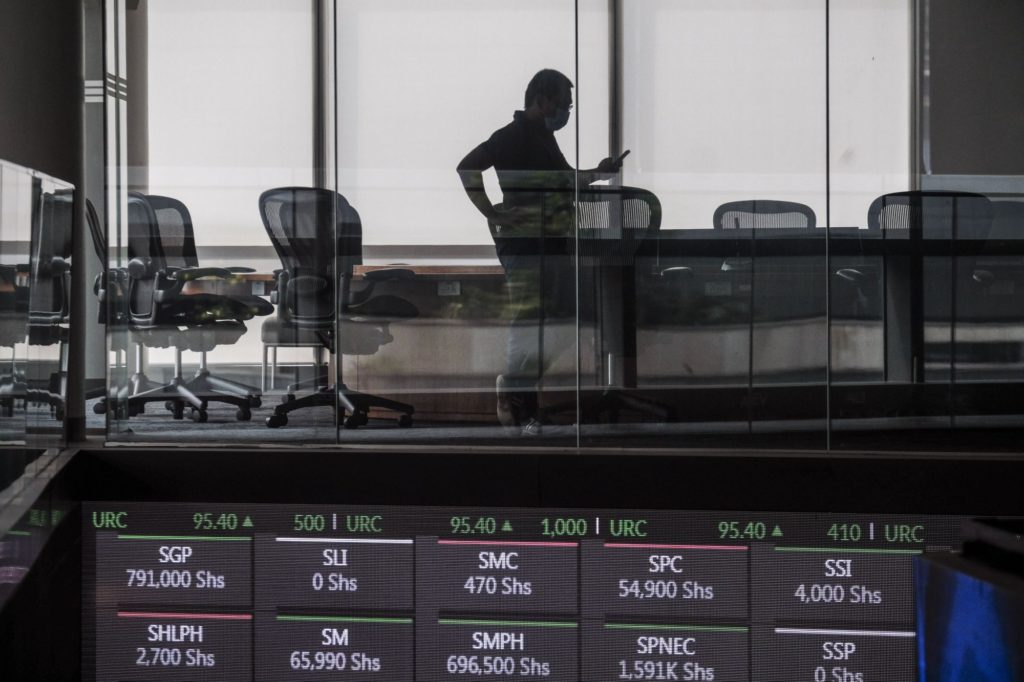
S&P 500 Roars Back From Six-Day Slide; Bonds Surge: Markets Wrap

(Bloomberg) — US stocks and Treasuries rallied on Wednesday after the Bank of England’s decision to stage a market intervention boosted UK bonds and tentatively calmed markets.

The S&P 500 snapped a six-day rout. It rose the most since early last month, and for the first time since the Federal Reserve boosted rates and dialed up its hawkishness a week ago. The index jumped more than 2% later in the session, bolstered by gains in Amazon.com Inc.’s shares after the company’s annual device event on Wednesday showed it pushing further into wellness, security and the auto industry.

The 10-year US Treasury yield dropped toward 3.72% after topping 4% earlier. The yield on 30-year UK gilts plunged more than one percentage point. Oil advanced with metals. Orange juice futures spiked as Hurricane Ian barreled ashore in Southwest Florida.

Global markets enjoyed a break from the brutal selling that has gripped them since the Fed embarked on the most aggressive path of interest-rate hikes by since the 1980s. The Bank of England soothed nerves after it said it would buy long-dated government bonds in whatever quantities were needed to end the chaos caused by the government’s plans to slash taxes. 

Fed officials remained diligent in warning that more rate-hike pain is yet to come, with Atlanta Fed President Raphael Bostic and Chicago Fed President Charles Evans reinforcing the hawkish stance their colleagues have been hammering home all week.

“All eyes are on inflation and interest rates, and this renewed hawkishness or more aggressive hawkishness from the Fed has certainly sent equity markets into a period of concern here,” said Josh Emanuel, chief investment officer of investment management at Wilshire. “From this point forward, equities are really going to take their cues from bond market. So if you see bond yields move lower, that is a good sign for equities.”

Stocks may also be rising because the markets have priced in the Fed’s hawkishness, according to Adrian Helfert, chief investment officer of multi-asset strategies at Westwood Holdings Group.

“It’s harder for the central bank and the speakers to say much more — short of saying that they’re going to start hiking by a hundred basis points for the next several meetings,” he said. “Maybe the market is at least now believing what the Fed is saying.”

But economists are still worried that the central bank is committing another error after being too slow to respond to inflation, since a series of jumbo hikes mean officials are not weighing the impact their actions are having on the economy.

Geopolitical tensions also continued to simmer. Natural gas prices in Europe surged after Russia said it may cut off supplies via Ukraine and the German Navy was deployed to investigate the suspected sabotage to the Nord Stream pipelines. While the European Union proposed a new round of sanctions on Russia, the growing exodus of Russians fleeing President Vladimir Putin’s mobilization order is creating turmoil at the borders with neighboring states and stirring fears about potential instability. 

Any rally in the face of these challenges “will likely be met with skepticism given the dual headwinds of rapidly slowing global growth, pressuring earnings, and increasingly tight liquidity, pressuring valuations,” said Cameron Dawson, chief investment officer at Newedge Wealth.

Read More: UK Government Hopes to Rebuild Credibility After BOE Bailout

The dollar dropped on Wednesday. But its recent rally brought losses to other currencies, including the euro and onshore yuan, which tumbled to its weakest level since 2008. A regulatory body guided by the People’s Bank of China urged banks to protect the authority of the yuan fixing.

How much damage is a strong dollar causing? That’s the theme of this week’s MLIV Pulse survey. It’s brief and we don’t collect your name or any contact information. Please click here to share your views.

Key events this week:

  • Euro zone economic confidence, consumer confidence, Germany CPI, Thursday
  • US initial jobless claims, GDP, Thursday
  • Fed’s Loretta Mester, Mary Daly speak at events, Thursday
  • China PMI, Friday
  • Euro zone CPI, unemployment, Friday
  • US consumer income , University of Michigan consumer sentiment, Friday
  • Fed’s Lael Brainard and John Williams speak, Friday

Some of the main moves in markets:

Stocks

  • The S&P 500 rose 2% as of 4 p.m. New York time
  • The Nasdaq 100 rose 2%
  • The Dow Jones Industrial Average rose 1.9%
  • The MSCI World index fell 0.1%

Currencies

  • The Bloomberg Dollar Spot Index fell 1%
  • The euro rose 1.4% to $0.9731
  • The British pound rose 1.4% to $1.0880
  • The Japanese yen rose 0.5% to 144.14 per dollar

Cryptocurrencies

  • Bitcoin rose 2.4% to $19,534.48
  • Ether rose 0.8% to $1,335.24

Bonds

  • The yield on 10-year Treasuries declined 23 basis points to 3.72%
  • Germany’s 10-year yield declined 11 basis points to 2.12%
  • Britain’s 10-year yield declined 49 basis points to 4.01%

Commodities

  • West Texas Intermediate crude rose 4.4% to $81.96 a barrel
  • Gold futures rose 2% to $1,669.60 an ounce

More stories like this are available on bloomberg.com

©2022 Bloomberg L.P.

Close Bitnami banner
Bitnami
