
Bloomberg

Wall Street Hires WhatsApp Cops as US Blasts Bosses Who Text

(Bloomberg) — A US investigation into unauthorized texting on Wall Street is forcing many of the world’s biggest banks to create a new compliance role: the WhatsApp cop.

Firms can blame the bosses who broke the rules.

As US regulators punished 11 Wall Street banks Tuesday for failing to stop staff from using unauthorized messaging platforms, investigators took a moment to describe some of the worst offenders — including heads of trading desks, dealmaking teams and executives with national and global responsibilities. In some cases, managers even texted with employees in charge of ensuring that banks complied with the law.

So as part of the solution — on top of more than $2 billion in fines levied so far — a roster of firms including Bank of America Corp., Citigroup Inc., Goldman Sachs Group Inc. and Morgan Stanley each promised to hire a compliance consultant to review how they monitor and archive any work-related communications, including on employees’ mobile phones or other personal devices.

The US Securities and Exchange Commission underscored past failures in oversight by describing at least a few senior managers at each firm who engaged in rampant texting with colleagues and clients. The agency previously said it’s particularly frustrated with executives who were supposed to help enforce the rules but broke them instead.

EXPLAINER: Why Wall Street Is in Hot Water for Using WhatsApp


Boss’s Advice

At Bank of America, which disclosed the most in penalties Tuesday, one head of a trading desk told brokers at other firms to delete messages they had exchanged on personal devices and to switch to Signal, which is encrypted, according to the Commodity Futures Trading Commission. The executive resigned this year.

The SEC’s decision to call out executives — based on a sampling of messages that banks were asked to gather for the investigation — may ramp up the pressure on firms to ensure certain managers are held accountable. JPMorgan Chase & Co., the first bank to settle the probe last year, ousted a few executives over the inquiries and disciplined many others, sometimes lowering their bonuses.

Authorities didn’t name anyone in the settlements. And a person close to one of the largest banks said investigators didn’t necessarily specify to companies which employees were described. Two executives close to the banks said that some of the people described as employed are no longer there and that people who left didn’t necessarily go because of the probe.

A spokeswoman for Citigroup said in a statement that the lender is pleased to have the case resolved. Deutsche Bank AG “proactively deployed fully compliant and convenient text and chat platforms and will continue to scale these technologies to meet the expectations of our regulators and our clients,” a spokesman said in a statement. Representatives for the other banks either declined to comment or didn’t immediately respond to messages seeking comment.

Spotlighting Managers

Here are some of the executives singled out in SEC settlement documents with major investment banks for allegedly broking the rules:

Bank of America: A managing director at the investment bank with a US-wide role sent and received thousands of messages, including to colleagues, clients and personnel at other firms. And the head of an equities trading desk texted with more than 50 colleagues and numerous people outside the firm.

Barclays Plc: A managing director in the investment bank exchanged thousands of business-related messages. And the head of a fixed-income trading desk texted with more than 29 colleagues, as well as people at other firms.

Cantor Fitzgerald: A managing director in a leadership role in the firm’s investment bank swapped about 3,000 messages with colleagues, investment banking clients and staff at other financial services firms. Another senior managing director with a leadership role in equities trading exchanged about 1,000 messages with colleagues.

Citigroup: A now-former managing director with a global role in the investment bank sent and received thousands of messages. And the head of a fixed-income trading desk texted with more than 70 colleagues.

Credit Suisse Group AG: A managing director in a leadership role at the investment bank exchanged thousands of messages. And a managing director in equities trading exchanged more than 1,000 messages with colleagues.

Deutsche Bank: A managing director in a US leadership role at the investment bank and a managing director overseeing fixed-income, trading and financing personnel each sent or received hundreds of messages.

Jefferies Financial Group Inc.: A managing director in a global leadership role in Jefferies’s investment bank exchanged thousands of messages with colleagues, investment banking clients and staff at other financial services firms. Another managing director and trading desk head texted with at least 90 colleagues using messaging platforms including WhatsApp and Signal.

Morgan Stanley: A managing director with a US-wide role in the institutional securities business sent and received more than 1,400 messages. And an associate on a derivatives trading desk exchanged more than 2,500 messages with colleagues.

Nomura Holdings Inc.: A managing director in a US leadership role in the firm’s investment bank exchanged more than 1,000 messages with colleagues, investment banking clients and personnel at other financial firms. Another managing director in a global leadership role in fixed-income trading sent and received more than 1,000 messages with colleagues. 

UBS Group AG: Three managing directors sent or received more than 1,000 messages with one another, other managing directors and employees under their supervision. One of those three and another executive communicated with personnel whose responsibilities included ensuring UBS’s compliance with the law.

(Updates with other bank employee texting examples from 13th paragraph.)

More stories like this are available on bloomberg.com

©2022 Bloomberg L.P.
Adobe Outlines Figma Feature Ideas, Commits to Keeping Free Tier

(Bloomberg) — Adobe Inc. plans to add technology from its creative software portfolio to Figma without tweaking pricing or simplicity after its acquisition, seeking to ease concerns among loyal users that the deal may significantly change the design app.  

Photo, video and illustration editing will likely be implemented into the software design app after the acquisition closes, as well as the ability to link projects from Adobe products such as Photoshop or Premiere, Adobe Chief Product Officer Scott Belsky said in an interview. The company is conscious that Figma customers appreciate its simplicity, and any updates will avoid clogging up the way users maneuver around the app, he said.

Figma’s pricing model will remain “freemium,” Belsky said — meaning that a basic tier will always be accessible without cost. “We don’t want to fix something that’s working really well.”

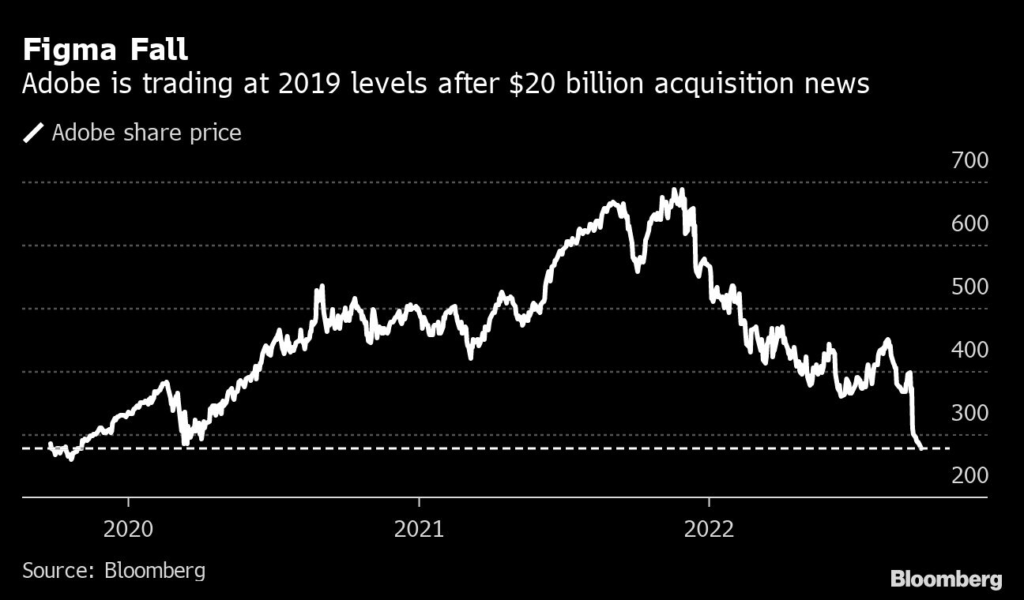
Adobe’s $20 billion deal to acquire startup rival Figma Inc. — the largest takeover of a private software maker ever — was announced earlier this month with a targeted 2023 close. The leader in creative software is looking to expand its web-based offerings to make inroads with more-casual designers and small businesses, a market that has gravitated in recent years to companies such as Figma, Canva Inc. and Lightricks Ltd.

Adobe’s XD program, which competes with Figma, will be supported for now, but the company will reevaluate once the purchase is completed, Belsky said. “XD has become a pretty immaterial product for us based on its growth and its business contribution,” Belsky said. “Once Figma comes in, we have to reevaluate where we want to shift our resources and focus.”

Belsky said these are all ideas at the moment and changes will depend on customer needs and feedback.

Figma’s streamlined browser-based design tool contrasts with Adobe’s programs, which have been increasingly seen as clunky and expensive. Many of Figma’s loyal users reacted negatively to the acquisition, fearing that Adobe would make the smaller rival less accessible and innovative. Wall Street panned the deal as too expensive and a sign that Adobe is under more competitive pressure than previously appreciated.

The uproar feels familiar to Belsky, who joined Adobe via acquisition of the company he co-founded, Behance, almost a decade ago. Negative Twitter posts about that deal mirror what’s being said about Adobe buying Figma now, Belsky said. 

“I understand why customers are always afraid of change,” Belsky said. “But when you have the right people that are really aligned with the same principles and recognize the value of what’s being brought in, sometimes it really turns out magnificently.” He added that Behance’s user base is 30 times the size it was when bought by Adobe.

File sharing without additional licensing costs helped fuel Figma’s rapid adoption, and Belsky said this dynamic won’t be changed. Users won’t need to have a Creative Cloud subscription to work on a document, he said.

Figma co-founder and Chief Executive Officer Dylan Field said he recognizes that users fear innovation will slow down after an acquisition, but he hopes the company can actually accelerate improvements to the platform with new technology and expertise at Adobe. “I think it’s good for the community,” he said in an interview. “That’s what I intend to prove.”

Adobe’s massive library of fonts and stock images, along with new media-editing features in the browser, will make working in Figma more efficient, Field said. Plus, Adobe has troves of usage data that can inform what tech is most important to port over. 

He echoed Belsky that there are no price increases planned, that Figma will always be fully free for education and that he is “very committed” to maintaining a free tier, which fuels adoption.

Field said he will continue to focus his attention on Figma after the deal is completed, although he’ll provide advice to Adobe. InDesign is one product he thinks would particularly benefit from more-collaborative workflows.

Belsky said the rest of Adobe’s portfolio will take cues from Figma on collaborative updates. Its multiplayer web platform may be adopted for Adobe’s other creative offerings, and its FigJam whiteboarding and presentation capabilities may be integrated into Adobe Express and Acrobat, Belsky said.

“We would only want to amplify and continue and learn from the things that Figma has done to become a viral product in the enterprise and throughout the world,” Belsky said.

More stories like this are available on bloomberg.com

©2022 Bloomberg L.P.
Crypto Crash Was Good for Industry, Weeded Out ‘Tourists’

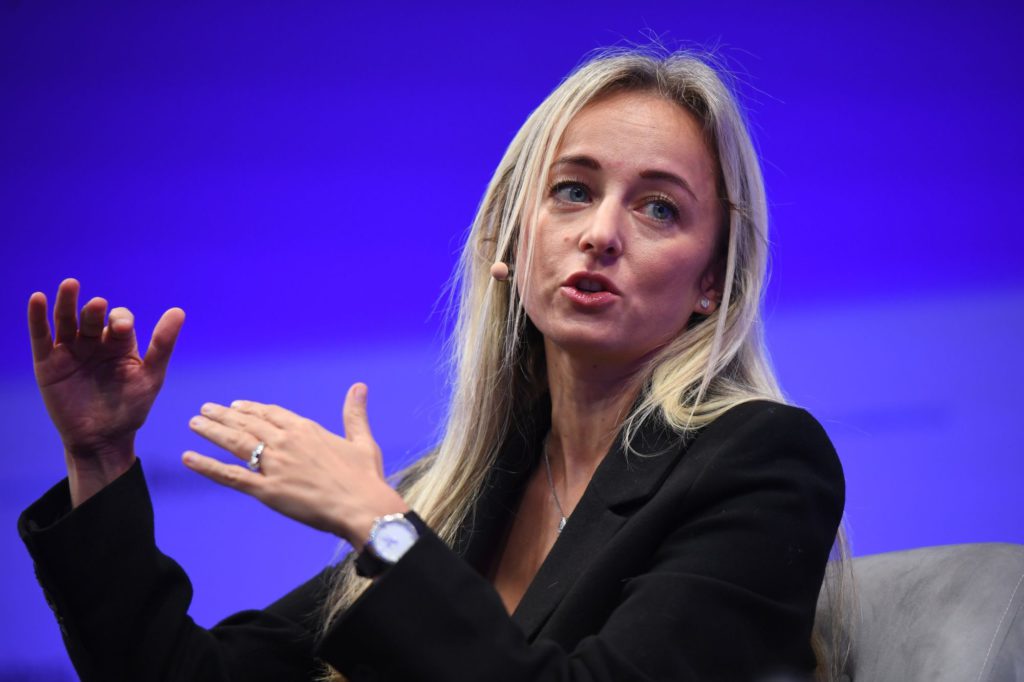
(Bloomberg) — This year’s difficult economic climate has weeded out some of the crypo industry “tourists,” leaving behind a stronger set of companies, said Irina Haivas, a partner at venture capital firm Atomico.

“It’s not bad that the hype has gone,” she said, speaking at the Bloomberg Technology Summit in London on Wednesday, as it means the people building crypto companies are aware of the market conditions and “want to build something more sustainable rather than speculate around it.”

Edward Cooper, head of crypto at fintech startup Revolut Ltd., agreed. He said that 2020 was very frothy and euphoric with lots of crypto companies emerging without a viable business model. 

“Then the tide goes out and the ones with good business models survive and they become stronger,” he said. 

Inside ‘Web3,’ Crypto’s Plan to Retool the Internet: QuickTake

Cooper added that trading volume in crypto assets among Revolut’s customers has fallen, but the number of customers signing up is much higher than in early 2020, which he credited to people recognizing that cryptocurrencies are becoming a “mainstream asset.”

Regulation of crypto assets has been helpful to Revolut’s business since it makes traditional businesses feel more comfortable about partnering with them, Cooper said.

Revolut received full FCA registration for its UK crypto operations earlier this week, Bloomberg reported.

More stories like this are available on bloomberg.com

©2022 Bloomberg L.P.
Royal Mail Slumps as Union Targets Online Retail Deliveries

(Bloomberg) —

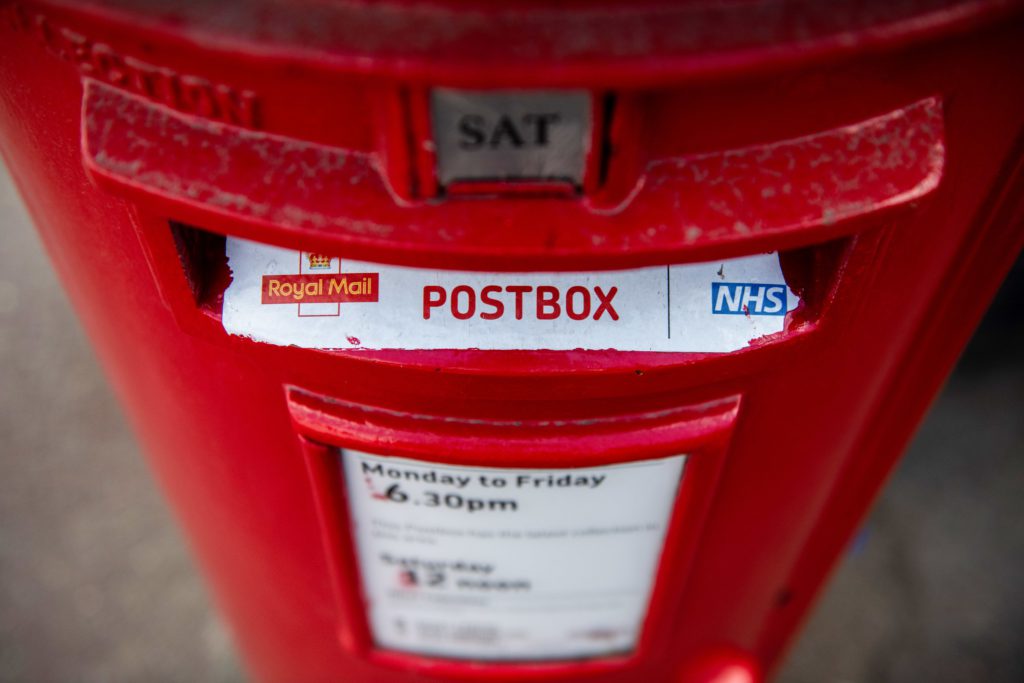
Royal Mail Plc shares tumbled after its main union unveiled plans to extend strikes involving 115,000 workers to disrupt online retail deliveries in the run up to Christmas.

The 19 days of walkouts, a mixture of single strikes and rolling action, will cover peak mail periods in October and November, including the traditional discount shopping days of Black Friday and Cyber Monday, the Communication Workers Union said in a statement late Tuesday.

Royal Mail fell 8.7% before trading 5.4% lower as of 1:08 p.m. in London on Wednesday. The stock has lost almost two-thirds of its value this year.

The move to target parcel deliveries follows the firm’s declaration that it will withdraw from national accords and push ahead with changes to terms and conditions after failing to reach agreement on a shake-up of working practices.

“This is a significant announcement, but it is one which matches the level of anger our members feel at the way Royal Mail has treated them,” CWU General Secretary Dave Ward said in the release.

The British Retail Consortium trade group said that retailers will be working with alternative delivery firms on contingency plans to ensure purchases reach customers and that crucial online shopping days aren’t jeopardized.

Prior Royal Mail strikes were limited to a few days but still led to significant delays for many postal items. Labor strife has deepened as the CWU resists management plans to move away from morning deliveries and toward late afternoon and early evening rounds to capture a greater share of a next-day parcels market whose growth has accelerated following pandemic lockdowns. 

Royal Mail last week offered to take the dispute to arbitration at the same time as saying historic agreements would be dispensed with. The CWU, which is also pushing for pay increases to match spiraling inflation, didn’t respond to the offer, calling the plans an “all-out attack” on unionization.

All CWU members across functions will strike on Oct. 13, Oct. 20, Oct. 25 and Nov. 28. Other strike dates will only involve certain parts of the workforce, such as deliveries or processing, collection and distribution.

(Updates with retail sector comment in sixth paragraph)

More stories like this are available on bloomberg.com

©2022 Bloomberg L.P.
Investors Make Long-Term Bet on Renewables as Gas Crisis Deepens

(Bloomberg) — Some bond investors are playing the long game as a deepening standoff with Russia threatens Europe’s energy supply, betting that gas shortages will speed up a transition to renewable energy.

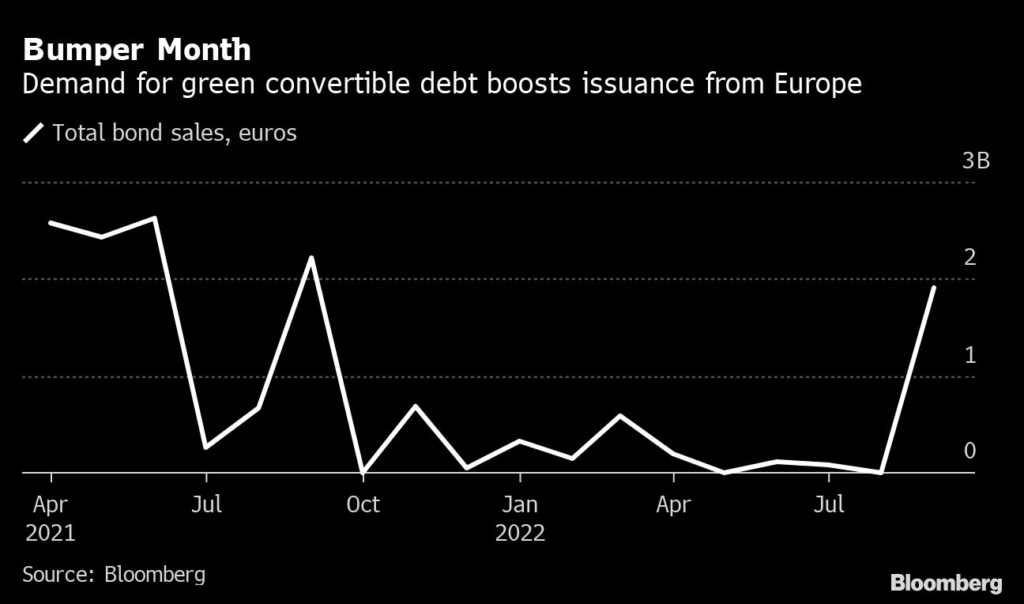
They’ve been buying up bonds linked to clean-energy companies that can be converted on maturity into stocks, meaning they will receive coupon payments throughout the coming gas crunch and potentially end up with a share in a flourishing company. September is shaping up to be the best month for sales of convertible bonds in a year after three renewables firms came to market, meeting with high demand at a time when many companies have had to pull sales. 

Russian President Vladimir Putin’s weaponizing of energy supplies has accelerated plans for the continent to transition away from fossil fuels. That process has taken on even more urgency this week following reports of suspected sabotage to pipelines carrying Russian gas to Europe. 

Siemens Energy AG issued a 960 million euro ($938 million) convertible bond to finance the purchase of Siemens Gamesa Renewable Energy on Sept. 6. The next day, French renewable energy producer Neoen SA sold 300 million euros of the debt and SGL Carbon SE, a German producer of wind and solar components, came to market a week later with a 100 million euro note. 

“When markets are weak the convertible bonds of these companies provide solid downside protection given their solid fundamentals and a good future, especially as Europe moves toward more electric and renewable energy,” said Ute Heyward, a portfolio manager at Fisch Asset Management in Zurich.

The Siemens bond matures in 2025, implying investors think the shift to renewables could start boosting clean energy stocks within three years. The other two notes convert to equity in 2027.

Until then, assets of all electricity suppliers could be in for a rocky ride as the standoff with Russia wreaks havoc with energy prices and prompts governments to intervene. A Bloomberg Index of global green bonds has slumped 27% in 2022, heading for its worst year of returns since inception in 2014. 

The Kremlin said it was “stupid and absurd” to suspect that Russia was behind gas leaks, but the continent is already gearing up for a winter without any significant imports from its eastern neighbor. Gazprom warned Tuesday that Moscow may sanction Ukraine’s Naftogaz, cutting off the last remaining route to western Europe. European gas prices surged more than 20% at one point on Tuesday. 

Why Europe Is Crippled By a Wartime Energy Crisis: QuickTake

Market Selloff

The convertible bond market has also been hammered by the crash in bonds and equities, with returns on an index of European equity-linked bonds down 18% so far this year. 

The big risk is that the underlying stocks don’t recover in time for the bonds to be converted. That’s a lesson learned by investors who rushed to buy convertible bonds during the pandemic in the hope that stock markets would rebound, only to find themselves stuck in another downturn. Many convertible bonds sold in 2020 and 2021 are now trading at distressed levels.

Still, the recent plunge in equities makes the new notes very attractive, according to Pierre-Henri de Monts de Savasse, an investor at BlueBay Asset Management LLP. For issuers grappling with rising borrowing costs, the bonds provide a vehicle to sell debt with a lower coupon than conventional debt, he said.

Twenty-one European convertible bonds still have negative yields, including a handful from energy companies such as Schneider Electric SE, which specializes in improving home electricity efficiency. Swedish battery producer NorthVolt AB has also tapped into the demand for convertible debt, selling a 1.1 billion euro note in July to private investors ahead of a planned initial public offering. 

“Converts are a great instrument for a long-term investment because it gives you that equity option, and investors see that opportunity in the renewable space,” said Lyle Schwartz, co-head of EMEA Alternative Equity Products at Goldman Sachs in London. “And because there’s a coupon, it offers some downside protection as well.”  

(Updates to add details on gas standoff througout.)

More stories like this are available on bloomberg.com

©2022 Bloomberg L.P.

Germany Says Infrastructure Faces Security Threat: Energy Update

(Bloomberg) — European governments and companies moved to bolster security around their energy assets after the Nord Stream blasts, as the German Navy was deployed to investigate the suspected sabotage. 

European leaders lined up to say the almost simultaneous explosions on the three Russian-gas pipelines were deliberate, with Polish Prime Minister Mateusz Morawiecki blaming Russia for what he called a probable “act of sabotage.” The blasts coincided with the opening of a new pipeline taking Norwegian gas to Poland.

Gas prices jumped on supply concerns, after Gazprom PJSC warned late Tuesday that flows via Ukraine are also at risk. All eyes are now on what European governments will do next, and traders are watching gas flow data from Ukraine. 

Key Developments:

  • Norwegian companies strengthen security
  • Nord Stream leaks could be ‘unprecedented’ climate disaster
  • EU, Denmark, Sweden say Nord Stream leaks caused deliberately
  • German navy deployed to investigate
  • NATO addressing security on critical infrastructure
  • Kremlin dismisses accusations Russian was to blame for damage
  • Ukraine gas flows are at risk, says Gazprom
  • Gas prices rise
  • EU considers ban on shipping Russian oil as part of price cap

Try Your Hand at the Policy Levers: How Would You Manage the Crisis?

(All times are UK.)

German Infrastructure Faces Security Threat (1 p.m.)

German energy infrastructure faces a general security threat, according to a spokesman for the Interior Ministry.

There is no indication that the Nord Stream leaks were the result of a natural phenomenon, a government spokesman said, adding that the pipelines will have to be empty before the cause can be investigated.

Naftogaz Says Gazprom Has Paid Oct. Transit (12:30 p.m.)

Ukrainian energy company Naftogaz said Gazprom has paid transit fees for October already.

That may ease some concerns about an immediate cut to flows to Europe via Ukraine. Gazprom said late Tuesday that there’s a risk Russia will sanction Naftogaz in retaliation for a legal dispute, and if that happens Gazprom won’t be able to pay Ukraine’s transit fees. 

Equinor, Var Energi Tighten Security (12 p.m.)

Equinor ASA and Var Energi ASA are tightening security at their facilities in Norway.

“Var Energi has operated with an increased level of security since Russia’s invasion of Ukraine in February and is now introducing even more measures on the basis of the incident in the Baltic Sea,” spokesman Andreas Wulff said in an email.

Gassco, whose network of pipes supplies Norwegian gas to continental Europe, said it has also boosted both cyber and physical security measures.

Ministers to Discuss Nord Stream on Friday (12 p.m)

Energy ministers will discuss the pipeline damage when they meet on Friday in Brussels, according to EU Justice Commissioner Didier Reynders. 

“Before the summer, the council and the commission reached an agreement on security measures for infrastructure which are being implemented,” he said. “And it may be that we need to go even further to secure infrastructure in the light of the recent events.”

German Navy Deployed in Pipeline Probe (11:15 a.m.)

Germany has deployed naval vessels to help in the investigation into the pipeline breaches, the defense ministry said, adding that the “alleged act of sabotage” highlights the vulnerability of critical infrastructure.

“The circumstances of this disturbing event must now be quickly clarified and those responsible identified,” Defense Minister Christine Lambrecht said. “I have already exchanged views on this with my Danish counterpart,” she added. “We have agreed to share information and our navy will contribute its expertise to the investigation.”

Kremlin Dismisses Blame For Sabotage (10:48 a.m.)

Western accusations that Russia sabotaged the Nord Stream pipeline system are “stupid” and “absurd,” Kremlin spokesman Dmitry Peskov said.

The results of an investigation are needed to show the nature of the damage, Peskov said, pointing to the benefit for the US from the Nord Stream pipelines being halted. 

Russia has been taking steps in recent weeks to cut off gas supplies to Europe, including shutting down Nord Stream for maintenance on turbines that the manufacturer said wasn’t necessary.

Equinor Raises Vigilance on Energy Assets (10:35 a.m.)

Equinor decided to raise the level of preparedness last night for all its energy-related facilities in Norway, national broadcaster NRK reported. 

The decision covers offices, installations, supply locations, helicopter bases, land facilities and vessels. A separate contingency team consisting of local management and stewards has been established for the Kollsnes gas processing plant, the broadcaster said.

Explosions Equivalent to 100 kg of TNT (10:07 a.m.)

In Sweden, seismologists said the bigger of the two explosions detected in the area of the Nord Stream gas leak on Monday corresponded to a blast of about 100 kilograms of TNT.

The calculation is based on a comparison with other detonations, for example naval mines where the size of the charge is known. But this is “very much an estimate as it depends on local conditions,” Peter Schmidt of the Swedish National Seismic Network said in an interview.

On Wednesday, the Swedish Prosecution Authority confirmed that the police has opened a case into the Nord Stream incident but would not provide further comment.

‘Unprecedented’ Climate Disaster (10:03 a.m.)

Scientists are scrambling to work out just how much methane, one of the most powerful greenhouse gases, has escaped into the atmosphere. The fear is that it could be one of the worst releases ever.

Many so-called super-emitting events — large continuous discharges of methane — are captured by satellite imagery over land-based pipelines or fossil-fuel production sites. But capturing accurate data over water, is far more challenging given the light that reflects of the surface.

Pipeline Probe Won’t Start for at Least a Week (9:55 a.m.)

It may take as long as two weeks before an investigation of the Nord Stream leaks can begin, Danish Defense Minister Morten Bodskov told local media.

“It can take a week or 14 days before the pressure in the pipelines has fallen enough for there to be enough calm to see anything,” he said.

NATO Chief Looking at Protecting Infrastructure (9:20 a.m.)

NATO chief Jens Stoltenberg discussed the sabotage on the Nord Stream pipelines with the Danish Defence Minister addressing the need to protect critical infrastructure.

15 EU Countries Back Price Cap on Gas (8:40 a.m.)

A cap on the price of natural gas should be applied to all transactions, and not limited to imports from specific jurisdictions, 15 EU Energy Ministers said in a letter to the European Commission. The cap is a priority and can be combined with proposals to strengthen the financial oversight of the gas market and develop alternative benchmarks for gas pricing in Europe, energy ministers of Belgium, Bulgaria, Croatia, France, Greece, Italy, Latvia, Lithuania, Malta, Poland, Portugal, Romania, Slovakia, Slovenia and Spain said in the letter.

The European Union’s executive arm plans to discuss the feasibility of imposing a price cap on gas in a document to be presented to member states Wednesday.

Ukraine to Press Ahead With Arbitration (8:10 a.m.) 

Ukraine’s NJSC Naftogaz Ukrainy intends to continue with arbitration against Gazprom PJSC, its chief executive officer said on Twitter. The legal dispute could lead to Russia sanctioning the country and cutting supplies of gas.

Gas Prices Jump (7:23 a.m.)

Natural gas prices in Europe jumped 11%, after Russia’s Gazprom warned supplies via Ukraine are at risk if the country pursues a dispute over transit payments. The warning came after leaks were reported on Nord Stream pipelines to Germany, which authorities suspect are caused by sabotage. 

Sweden Calls Foul Play (7:15 a.m.)

Sweden’s government maintained its stance that the leaks were a result of foul play on Wednesday. “We can say that it likely is sabotage,” Foreign Minister Ann Linde told state broadcaster SVT.

EU Warns of Strong Response (9:20 p.m. Tuesday)

President of the European Commission, Ursula von der Leyen warned that Europe will carry out “the strongest possible response” if the damage on the Nord Stream 1 and 2 pipelines proves to be deliberate. She said any deliberate damage to Europe’s energy infrastructure is “unacceptable.”

More stories like this are available on bloomberg.com

©2022 Bloomberg L.P.
Dollar Climbs; UK Bonds Jump on BOE Purchase Plan: Markets Wrap

(Bloomberg) — The dollar rose to another record after the White House talked down the prospect of weakening the currency, while UK bonds surged after the Bank of England said it would buy long-dated government bonds in whatever quantities were needed to restore order to the market.

The yield on 30-year gilts plummeted by the most in data going back to 1996, erasing an earlier jump to the highest since 1998. The pound initially bounced before falling back amid mounting global criticism of Prime Minister Liz Truss’s historic tax-cutting plan. Ten-year Treasury yields reversed lower after earlier rising to the highest since 2008.

US futures fell and European stocks extended declines as Citigroup Inc. strategists said investors are abandoning that region at levels last seen during the euro area debt crisis. Asian shares also dropped.

Health care shares rose after Eisai Co. and partner Biogen Inc. said their drug significantly slowed Alzheimer’s disease, while miners underperformed as the strong dollar and concerns about demand for raw materials sent commodity prices to the lowest level since January. Apple Inc. fell in premarket trading after a report that it scrapped plans to increase iPhone production.

Meanwhile, natural gas prices in Europe surged after Russia said it may cut off supplies via Ukraine and the German Navy was deployed to investigate the suspected sabotage to the Nord Stream pipelines. Putin moved to annex a large chunk of Ukrainian territory amid a string of military setbacks in its seven-month-old invasion.

The BOE’s decision to announce unlimited and immediate purchases of long-dated bonds was prompted by fears that collateral calls as soon as Wednesday afternoon could trigger a further crash in gilts, according to a person familiar with policy makers’ decision making. 

The BOE said purchases will be up to £5 billion per operation and that it stands ready to purchase conventional gilts with a residual maturity of more than 20 years in the secondary market. It will also postpone the beginning of its quantitative tightening bond sales, due to begin on Monday.

Earlier, the International Monetary Fund called the unfunded tax cuts excessive and in need of revision, while Moody’s Investors Service warned that it risks doing lasting damage to the nation’s debt affordability. Mohamed El-Erian, chief economic adviser at Allianz SE, said it means the Bank of England will need to raise interest rates by at least 100 basis points at its next meeting on Nov. 3.

The dollar’s rally brought losses to other currencies, including the euro and onshore yuan, which tumbled to its weakest level since 2008. A regulatory body guided by the People’s Bank of China urged banks to protect the authority of the yuan fixing.

The yen remained near levels that have drawn intervention from Japan, spurring speculation it may intervene further, potentially funded by Treasuries sales.

“The fact we have such a strong increase in US yields is attracting flows into the US dollar,” said Nanette Hechler-Fayd’herbe, chief investment officer of international wealth management for Credit Suisse Group AG. “As long as monetary and fiscal policy worldwide are really not coming to strengthen their own currencies, we should be anticipating a very strong dollar.”

Adding to concerns, Deutsche Bank AG Chief Executive Officer Christian Sewing predicted a severe downturn in the lender’s home region and said the volatility whipsawing markets will continue for another year as central banks tighten rates to fight inflation.

European Central Bank President Christine Lagarde said borrowing costs will be raised at the next “several meetings,” with several Governing Council members favoring a 75 basis point hike in October.

In other news, Hurricane Ian rapidly gained strength, with winds just 2 mph away from reaching Category 5 strength, the most powerful category for a storm on the Saffir-Simpson scale, according to the National Hurricane Center.

How much damage is a strong dollar causing? That’s the theme of this week’s MLIV Pulse survey. It’s brief and we don’t collect your name or any contact information. Please click here to share your views.

Key events this week:

  • Fed’s Mary Daly, Raphael Bostic and Charles Evans speak at events, Wednesday
  • Euro zone economic confidence, consumer confidence, Germany CPI, Thursday
  • US initial jobless claims, GDP, Thursday
  • Fed’s Loretta Mester, Mary Daly speak at events, Thursday
  • China PMI, Friday
  • Euro zone CPI, unemployment, Friday
  • US consumer income , University of Michigan consumer sentiment, Friday
  • Fed’s Lael Brainard and John Williams speak, Friday

Some of the main moves in markets:

Stocks

  • Futures on the S&P 500 fell 0.2% as of 8:30 a.m. New York time
  • Futures on the Nasdaq 100 fell 0.6%
  • Futures on the Dow Jones Industrial Average were little changed
  • The Stoxx Europe 600 fell 1.2%
  • The MSCI World index fell 0.1%

Currencies

  • The Bloomberg Dollar Spot Index rose 0.2%
  • The euro fell 0.2% to $0.9579
  • The British pound fell 1% to $1.0626
  • The Japanese yen rose 0.1% to 144.61 per dollar

Cryptocurrencies

  • Bitcoin fell 0.4% to $19,005.7
  • Ether fell 1.9% to $1,299.93

Bonds

  • The yield on 10-year Treasuries declined five basis points to 3.89%
  • Germany’s 10-year yield advanced one basis point to 2.24%
  • Britain’s 10-year yield declined 39 basis points to 4.11%

Commodities

  • West Texas Intermediate crude rose 1.2% to $79.47 a barrel
  • Gold futures rose 0.3% to $1,640.60 an ounce

More stories like this are available on bloomberg.com

©2022 Bloomberg L.P.
Apollo Turns to Banks to Fund Most of Equity in Brightspeed Buyout

(Bloomberg) — At first sight, the financing for Apollo Global Management Inc.’s acquisition of a suburban phone and internet provider looks like a textbook leveraged buyout: one part equity, two parts debt.

But look a little closer and you’ll notice something odd: most of the equity check is debt as well.

Over 60% of the $3 billion equity commitment that Apollo has agreed to pay to acquire telecom and broadband assets from Lumen Technologies Inc. — which will be run under the Brightspeed brand — will come from a five-year loan provided by banks, according to a person with knowledge of the matter and debt documents reviewed by Bloomberg.

The $1.9 billion loan is separate from the $6.3 billion of debt that Apollo also plans to use to finance the acquisition — part of which bank underwriters are now trying to sell to investors. The loan is issued by a holding company that benefits from no guarantees or security from Brightspeed’s operating assets. And it is Apollo, rather than Brightspeed, that’s expected to pay the principal and interest, according to reports from credit-rating firms.

It’s an example of the many types of backleverage — or debt that’s incurred on an equity investment — that have become increasingly popular among private equity firms. The arrangements, which can be specific to an individual investment or apply to entire funds or portfolios, can be used to boost returns, increase liquidity or monetize equity stakes.

Because the banks providing the financing have a claim on the equity commitment from the Apollo fund that’s investing in Brightspeed, the facility charges a much lower interest rate than what the telecom company is expected to pay on its own debt, said the person, who asked not to be named when discussing confidential deal terms.

Representatives for Apollo and Brightspeed declined to comment, while Lumen didn’t respond to requests seeking comment.

Cash Drag

Relying on borrowed funds rather than drawing the entire $3 billion from its investors will allow Apollo to provide Brightspeed with much-needed cash to upgrade its network to fiber optic cable while limiting the negative effect that such a large outlay would have on the fund’s internal rate of return — a closely watched measure of performance for private equity investments. Brightspeed is expected to have nearly $1.5 billion of cash at closing, according to the deal documents. 

In addition to the $3 billion contribution from Apollo, the $6.3 billion of debt that will be layered onto Brightspeed’s balance sheet includes a $1 billion term loan that banks will keep on their books, $3.9 billion of new loans and bonds that are being syndicated to investors, and $1.4 billion of existing notes that will remain in place.

Read more: Citrix Debt Debacle Heralds a Day of Reckoning on Wall Street

The syndication of the bonds and loans, which formally kicked off earlier this month, is one of the most closely watched transactions in credit markets, which have been rattled by rampant inflation, recession fears and geopolitical instability this year.

A drop in risk appetite among investors has already forced Wall Street banks to offload chunks of debt for the buyout of Citrix Systems Inc., which is expected to close this week, at steep discounts, and to keep nearly half of it on their books.

Complicating matters further, some holders of the bonds that are expected to remain outstanding as part of Apollo’s Brightspeed acquisition have claimed that the new financing would put one of the company’s subsidiaries in default by violating terms of the existing debt agreements, Bloomberg has reported.

PIK Option

Apollo has the option to service the five-year loan in kind, which involves paying interest in additional principal, the debt documents show. The private equity firm can voluntarily repay the loan at a premium during the first year, and with no premium or penalty thereafter.

S&P Global Ratings points out there are few restrictions on Apollo’s ability to upstream cash from the operating company to the holding company to repay the loan.

More stories like this are available on bloomberg.com

©2022 Bloomberg L.P.
Darktrace CEO Says ‘Unfounded Criticism’ Is ‘Deeply Frustrating’

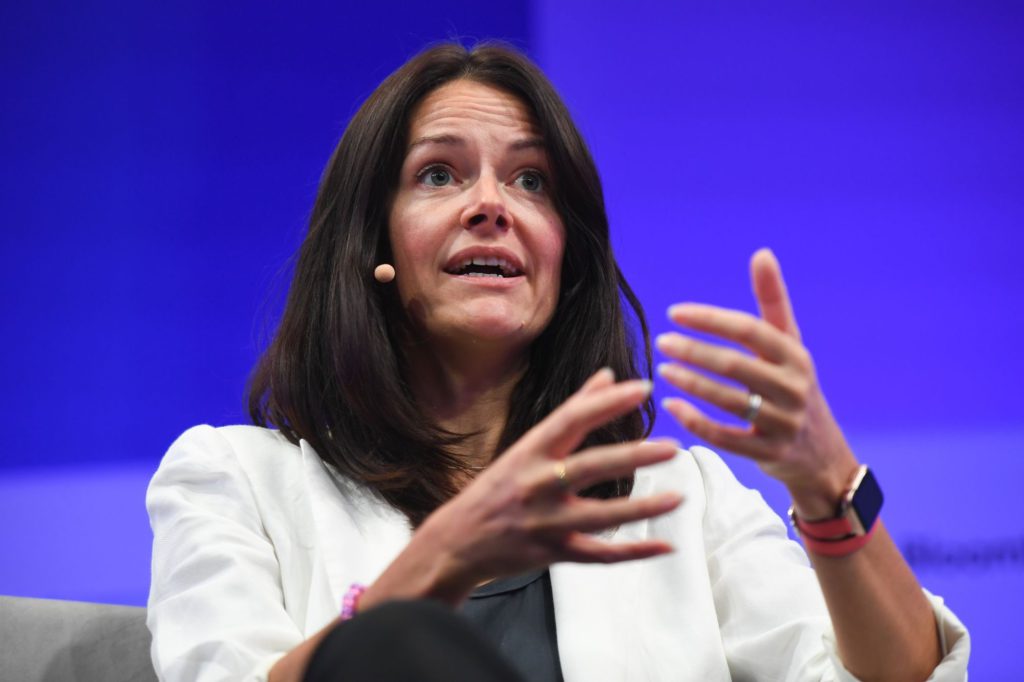
(Bloomberg) — Darktrace Plc Chief Executive Officer Poppy Gustafsson said the level of “unfounded criticism” the company comes under is “deeply irritating,” if inevitable for a publicly traded business.

“The thing that I always come back to is that we have 7,400 customers,” she said at the Bloomberg Technology Summit in London on Wednesday. “That means 7,400 CSOs and CIOs that thought, ‘I want to see Darktrace working in our business’. That’s the key indicator for me.”

Darktrace’s shares fell as much as 33% earlier this month after US private equity firm Thoma Bravo said it did not intend to make a takeover offer for the cybersecurity company, after it was earlier reported to be under discussion. 

The company has also been targeted by short seller Shadowfall, which has confirmed it had taken a position in Darktrace. The Telegraph quoted Shadowfall in January as saying that the quality of the Darktrace business is “watery-thin, driven by an aggressive, promotional, sales focus, which we doubt will stand the test of time.”


Read More: Darktrace Shares Drop 33% After Takeover Talks Collapse

“These conversations leaked at a very, very early stage of engagement with Thoma Bravo,” Gustafsson said in a separate interview on Bloomberg Television on Wednesday. “That unfortunately became public, and in September we said that those conversations had ended.” 

“We have a legal obligation to explore any such offers but if I were sat where Thoma Bravo is, I would be looking across at the UK thinking it’s a very cheap area to be able to come and potentially do some takeovers now,” she said.

Founded in 2013 by mathematicians and cyber-defense experts, Darktrace uses artificial intelligence to check for hacks and suspicious data leaks. Its founding investor was Invoke Capital Partners, an investment firm created by embattled British entrepreneur Mike Lynch.

More stories like this are available on bloomberg.com

©2022 Bloomberg L.P.

These Are the Cheap UK Stocks Seen as Next Takeover Targets

(Bloomberg) — In a bad year for equities, UK domestic stocks have had a particularly tough time, and that’s not gone unnoticed by dealmakers.

British companies represent seven of the top 10 potential targets in an informal Bloomberg survey of 18 event-driven desks, fund managers and analysts, with low valuations, a sinking pound and a favorable regulatory climate making the country’s stocks more attractive to overseas buyers.

Top of the pile is BT Group Plc, whose largest shareholder, billionaire Patrick Drahi, last month received a nod of approval from the UK government over his late-2021 stakebuilding. The telecommunication company was mentioned in six mergers and acquisitions watch lists, while other UK names to feature highly included Entain Plc, Playtech Plc, Burberry Group Plc and Darktrace Plc.

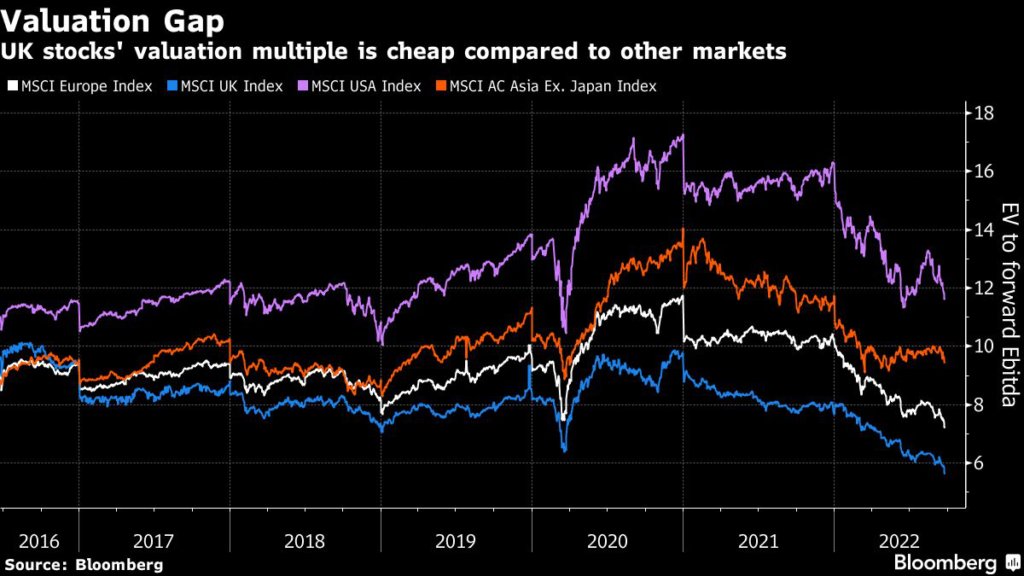
Low valuations are a key attraction. The UK MSCI United Kingdom Index trades at a 16% discount to its Eurozone equivalent based on forward price-to-earnings multiples and a 45% discount to the US, the biggest since 2005.

“The mismatch between the perceived underlying value of UK companies and their share prices will continue to make UK companies attractive to private equity and trade buyers,” said Ben Kelly, an analyst at Louis Capital Markets. Overseas bidders will also be lured by sterling’s slide and the country avoiding a protectionist stance that could harm trade and productivity, he said.

By industry, telecom operators and technology companies placed highly in the poll. Vodafone Group Plc, Telecom Italia SpA and Telenet Group Holding NV all got mentions, as did Temenos AG and SUSE SA.

According to Danni Hewson, an analyst at AJ Bell Plc, UK technology and telecom firms “look almost irresistibly cheap right now,” with sterling’s slide “creating a sweet spot for foreign investors to swoop in.” The pound continued its descent on Wednesday despite the Bank of England saying it will buy long-dated UK government bonds in whatever quantities are needed to restore order to the market.

Representatives for the top 10 companies in the survey either declined to comment or didn’t respond to requests for comment.

Even though M&A activity generally is dwindling with the era of cheap financing coming to an end, firms in more defensive areas, along with those offering strong growth prospects, are still attracting interest, particularly after this year’s rise in bond yields led to reduced valuations.

“Private equity firms are hunting around, looking to snap up a bargain,” said Susannah Streeter, a senior analyst at Hargreaves Lansdown Plc.

Read more: End of Easy Money Raises the Risk of Deals Dying in Europe

A flurry of deals in the software industry highlights the strong interest in cross-border transactions with Canadian Open Text Corp. acquiring Micro Focus International Plc, Nikon Corp. agreeing to buy SLM Solutions Group AG, and US buyout group Thoma Bravo LLC eyeing up Darktrace before withdrawing.

Read more: Foreign Buyers Hoover Up Britain’s Fast-Growing Tech Firms

“M&A has cut like a scythe through the UK tech sector this year,” wrote George O’Connor, an analyst at Goodbody.

(Adds analyst comment, BOE announcement in sixth paragraph)

More stories like this are available on bloomberg.com

©2022 Bloomberg L.P.

Close Bitnami banner
Bitnami