Bloomberg

Snap Says Augmented Reality Key to Luring Luxury Buyers Online

(Bloomberg) — Snap Inc.’s head of luxury is betting on augmented reality and other advanced kinds of video filters to showcase clothing and other branded products.

“Every day we have 250 million people engaging with augmented reality on our platform,” Geoffrey Perez said at the Bloomberg Technology Summit in London on Wednesday. “Not just to try dresses on, but also jewelery and makeup.” 

Wearing a pair of Snapchat’s augmented reality spectacles on stage, Perez said, “This is how we see engaging with the real world in future.”

Snap works with retailers to develop tools that let customers try on clothing virtually. Eventually, Snap could expand that into an “AR enterprise business,” charging a startup fee and small transaction fees to merchants using the technology, Snap Chief Executive Officer Evan Spiegel said earlier this month.

The company may also eventually look at ways to use the so-called metaverse to sell products, though augmented reality is its primary focus for now, he said. 

What the Metaverse Is, Who’s In It and Why It Matters: QuickTake

The “metaverse” is a virtual universe that blends aspects of digital technologies including video-conferencing, games like Minecraft or Roblox, cryptocurrencies, email, virtual reality, social media and live-streaming. Quite how these pieces will fit together is a work in progress, but some tech giants already see it as the future of human communication and interaction. 

More stories like this are available on bloomberg.com

©2022 Bloomberg L.P.

Amazon’s Robotaxi Arm Zoox Coming ‘Sooner Than People Expect’

(Bloomberg) — The chief executive officer of Zoox, Amazon.com Inc.’s self-driving unit, expects autonomous vehicles to be present in cities “sooner than people expect,” but stopped short of saying when her own company’s product would appear on roads.

“We don’t get into dates at Zoox; we prefer to show not tell,” Aicha Evans, speaking virtually, said at the Bloomberg Technology Summit in London on Wednesday. She added that “testing has already started.”

The bigger challenge, she said, will be expanding autonomous infrastructure beyond initial cities and maintaining a user experience that’s consistent. 

“Our focus is being on public roads with our robotaxi soon, but it’ll be to a small-to-moderate scale,” Evans said. “The question is our ability to add cities on a continual basis that’s good for customers.”

Amazon purchased Zoox in 2020, a move that analysts at the time said could help automate the e-commerce giant’s delivery fleet. Zoox is developing autonomous vehicles that it characterizes as robotaxis — machines have no steering wheel or pedals and can carry as many as four passengers.

Read More: Amazon’s Zoox Expands Testing to Seattle for the Rain and Talent

“We’ve been talking to regulators since our inception,” Evans said. “We provide data, advice, and it’s an ongoing dialog we expect to go on forever.”

Evans said she believes the development of Zoox’s so-called robotaxis is the “beginning of a wave” for autonomous driving. 


More stories like this are available on bloomberg.com

©2022 Bloomberg L.P.

Tesla’s AI Day Offers a Glimpse of Just How Sentient Its Bots Have Become

(Bloomberg) —

Tesla has long staged splashy events to generate buzz and media coverage of forthcoming — and sometimes aspirational — products. Part revival meeting, part recruiting event, the faithful get to see CEO Elon Musk speak, and investors get updates on priorities and progress.

On Friday, Musk will host Tesla’s second AI Day in Palo Alto, California, formerly the home to its global headquarters. The invitations that went out recently promised the latest developments in the company’s artificial intelligence efforts, including:

  • Full Self-Driving, or FSD, the in-beta system that still needs an attentive human driver minding the wheel at all times;
  • Tesla Bot, aka Optimus, the humanoid Musk has said will one day take over dangerous, repetitive and boring tasks from humans;
  • and Dojo, the supercomputer Musk has said Tesla’s FSD team may utilize to improve the “brains” behind its driving systems, using the massive volume of video footage that the company’s cars capture.

The show-stopper of Tesla’s first AI Day, held in August of last year, was the humanoid bot that, at that time, was actually entirely human. After engineers gave detailed, highly technical presentations on the company’s driving-system development work, a person dressed in a skintight white suit and black helmet took to the stage to perform a jerky dance and presage an announcement from Musk.

“Tesla is arguably the world’s biggest robotics company,” he said, explaining the rationale behind the automaker working on a bot. “Our cars are basically semi-sentient robots on wheels.”

Just how sentient Tesla’s cars actually are is the subject of more than just debate. Days before Musk made those comments, the US National Highway Traffic Safety Administration opened an investigation into whether the company’s Autopilot system is defective, after drivers using it repeatedly collided with vehicles at crash scenes, including emergency responders. NHTSA opened a second defect probe in February.

Earlier this month, a California man filed a proposed class action suit in San Francisco federal court, claiming the carmaker has “deceptively and misleadingly” marketed its driver-assistance systems and strung consumers along by suggesting for years that it’s on the cusp of mastering the technology.

Musk has nonetheless extended access of FSD to about 160,000 owners in the US and Canada. When one of those owners posted videos last month showing the latest beta version struggling with right turns, the CEO told the customer not to complain. When another Twitter fan suggested the world’s richest man may have been having a bad day and should apologize, Musk wrote back no — the owner was in the wrong.

The mood will surely be more jovial during AI Day, which Musk postponed back in June to give Tesla time to develop a working Optimus prototype. On its website and in job listings, the company refers to work on a bi-pedal humanoid for manufacturing, logistics and general purposes.

“The code you will write will at term run in millions of humanoid robots across the world, and will therefore be held to high quality standards,” a posting for a controls engineer says.

Tesla employs more than 20,000 people just at its auto plant in Fremont, California. How many of those jobs will be eliminated by bots is far from certain. An attempt to extensively automate the facility when the Model 3 first went into production ended in disaster. The CEO took ownership of the calamity back in 2018, saying it was his mistake.

“Humans are underrated,” Musk quipped.

(Updated to embed Musk tweet.)

More stories like this are available on bloomberg.com

©2022 Bloomberg L.P.

Pantera Seeking $1.25 Billion for Second Blockchain Fund

(Bloomberg) — Pantera Capital plans to raise $1.25 billion for its second blockchain fund, tapping into growing appetite for digital assets among institutional investors even as prices swoon, founder Dan Morehead said. 

Morehead aims to close the fund, which will invest in equity as well as digital tokens, by May, he said in an interview Wednesday at a conference in Singapore. He’s also looking to buy additional shares in some companies Pantera already owns, after valuations dropped. 

“We want to provide liquidity for people that are kind of giving up because we’re still very bullish for the next 10 or 20 years,” Morehead said. 

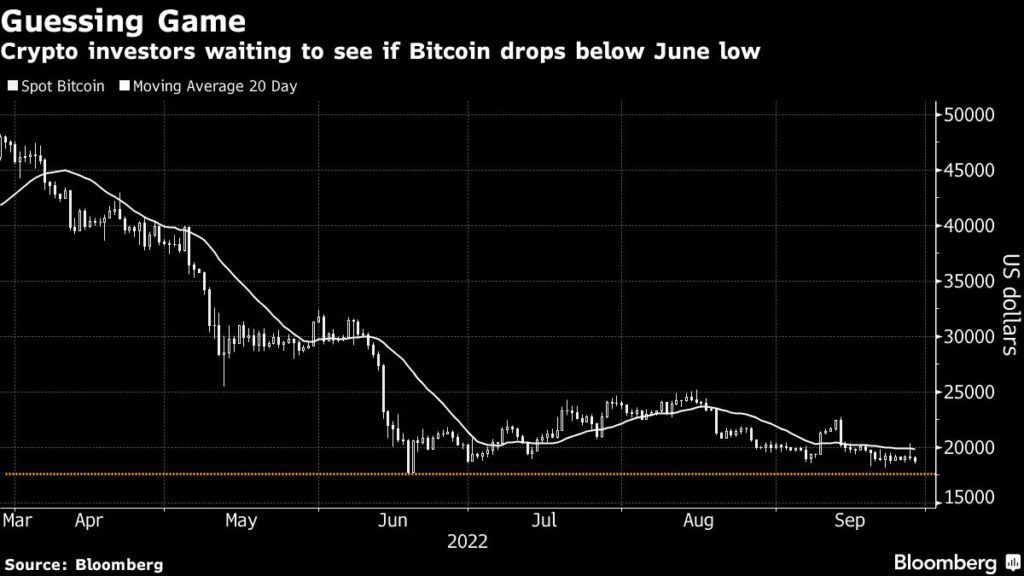
Morehead is ramping up investments after a collapse in prices that saw a major crypto project implode, several companies go bankrupt and a raft of CEOs resigning. Bitcoin is stuck trading below $20,000, pressured along with equities and bonds by monetary tightening by central banks from the US to New Zealand. 

Read More: Crypto Leadership Upheaval Gives Fresh Jolt to Industry

“Unfortunately, crypto pricing has become correlated with risk assets, which I honestly don’t think has to be true,” Morehead said. “My hope is that soon crypto will decouple from the macro markets.”

(Updates with detail on fund’s strategy in second paragraph.)

More stories like this are available on bloomberg.com

©2022 Bloomberg L.P.
Farfetch CEO Sees Luxury Recession Resilience and China Return

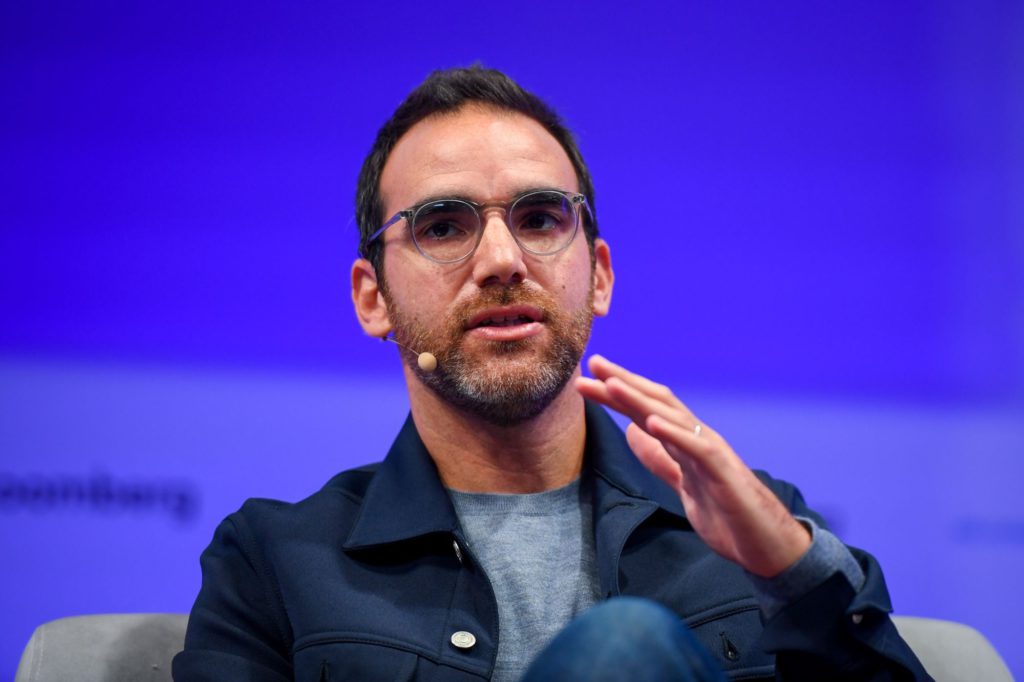
(Bloomberg) — Luxury-goods sales will prove resilient in the case of a global recession and demand from China will return by next year, said the head of online luxury retailing platform Farfetch Ltd. 

Handbags, fashion and watches are less sensitive to economic downturns as well-heeled consumers keep buying such items, Chief Executive Officer Jose Neves said in an interview at the Bloomberg Technology Summit in London. Sales of such products should remain more buoyant than bigger-ticket purchases like yachts and high-end real estate, he said.

“It is a very resilient industry,” said Neves, citing the bounce in demand for luxury goods during the pandemic after an initial decline. “It will be the same this time if a recession happens.”  

Still, making a profit in the online luxury business isn’t easy because of intense competition. Farfetch shares have lost about 76% of their value this year, even after the company struck a long-anticipated deal to buy a stake Richemont’s Yoox Net-a-Porter online businesses, known as YNAP. Farfetch has yet to break even, due to investments to expand its business.

While some investors initially cheered the YNAP deal as “transformational,” Farfetch shares resumed their decline after the company cut its guidance in August and analysts raised concerns about its ability to meet long-term Ebitda margin targets of 30%.

Neves said margins are increasing as luxury producers raise prices to counter inflation and customers keep spending. He said he expects demand in China, which has been hit by Covid-related lockdowns, to “be back sometime next year.”

More stories like this are available on bloomberg.com

©2022 Bloomberg L.P.
General Mills Backs GrubMarket at More Than $2 Billion Valuation

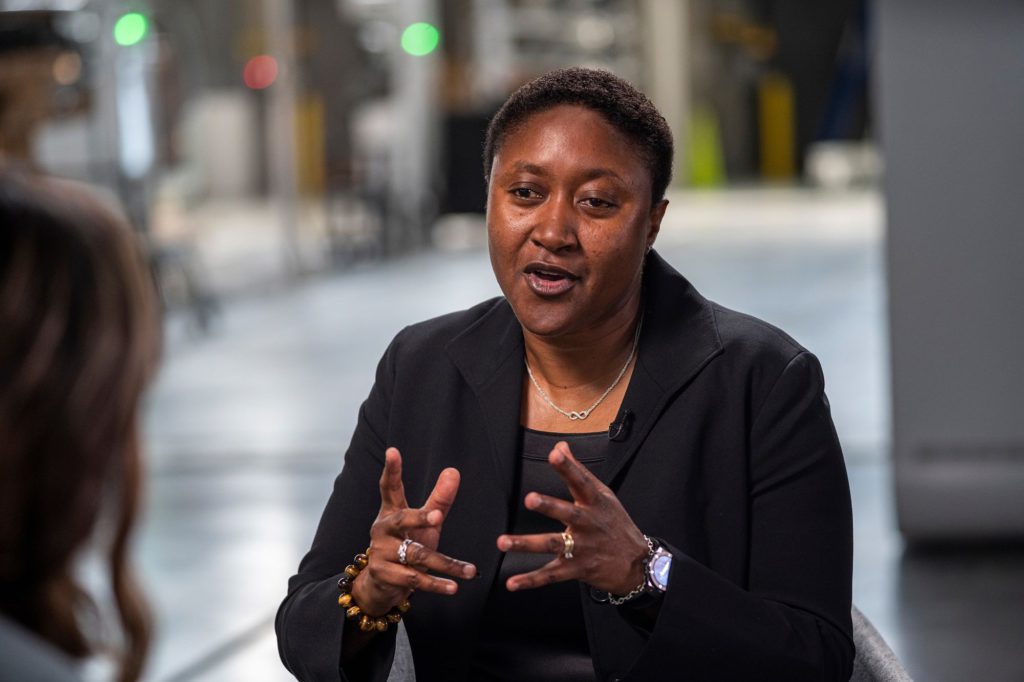
(Bloomberg) — GrubMarket, which offers software and operates an e-commerce platform connecting farmers and other food suppliers with customers, said it’s valued at more than $2 billion after raising $120 million in equity from new backers including General Mills Inc.’s venture arm. 

Squarepoint Capital, Portfolia and Grosvenor Food & AgTech are among new investors, GrubMarket Chief Executive Officer Mike Xu said. Existing investors including Tiger Global, Liberty Street Funds, Walleye Capital, Celtic House Asia Partners and Apeira Capital also participated. Xu said GrubMarket is keen to acquire traditional, offline wholesalers and distributors.

“We’re a very profitable business and don’t need financing for working capital purposes — we’ll use proceeds for mergers and acquisitions,” he said. “We want to digitally transform the American food supply chain industry.”  

San Francisco-based GrubMarket is operating at an annual run-rate of about $1.5 billion, Xu said, adding that the company is on track to achieve net profitability this year. It operates in all 50 U.S. states, and in Canada, South America, Africa, Europe and Asia.

“As an industry, we need innovation not only on the foods consumers are seeking, but also on the way food gets to consumers,” Johnny Tran, managing director of General Mills’ venture arm, 301 Inc., said in a statement. “GrubMarket’s software-based approach is re-imagining produce distribution, automating tasks such as inventory management to reduce waste.”

The company says it has made more than 60 acquisitions in the past four years, and that it’s among the largest providers of South American fruit in the US. It supplies almost all the major U.S. grocery chains including Costco Wholesale Corp., Walmart Inc., Albertsons Cos., Kroger Co. and Amazon.com Inc.’s Whole Foods, as well as thousands of restaurants nationwide.   

“In a massive industry that has operated on a fragmented basis, GrubMarket has impressively leveraged the capital efficiency of its AWS-like technology to quickly build a significant enterprise and establish a growing market position,” Apeira Capital managing partner Natalie Hwang said in a statement. 

GrubMarket, which last year raised $200 million at an over $1.2 billion valuation, has held discussions with underwriters regarding an initial public offering, Bloomberg News has reported. Xu declined to comment on the company’s IPO plans. 

Read more: Tiger-Backed GrubMarket Said to Interview Banks for 2022 IPO

More stories like this are available on bloomberg.com

©2022 Bloomberg L.P.

Dollar Rallies, Treasury Yields Touch 2008 High: Markets Wrap

(Bloomberg) — The dollar soared to another record after the White House talked down the prospect of weakening the currency, while the continuing global bond rout pushed 10-year Treasury yields to the highest since 2008.

Major equity levels crumbled after a slew of hawkish Federal Reserve speakers stoked fears about rising interest rates and the economic outlook. European stocks dropped for a fifth day as investors abandon the region at levels last seen during the euro area debt crisis, according to Citigroup Inc. strategists. US futures and Asian shares also fell.

Health care was the only sector in the green, supported by Roche Holding AG, which rose after Eisai Co. and partner Biogen Inc. said their drug significantly slowed Alzheimer’s disease. Miners underperformed as the surging dollar and concerns about demand for raw materials sent a Bloomberg index of commodity prices to the lowest level since January. Apple Inc. fell in premarket trading after a report that it scrapped plans to increase iPhone production.

Meanwhile, natural gas prices in Europe surged after Russia said it may cut off supplies via Ukraine and the European Union said severe damage to two gas pipelines from Russia was deliberate. Putin moved to annex a large chunk of Ukrainian territory amid a string of military setbacks in its seven-month-old invasion.

UK 30-year yields jumped to the the highest since 1998 ahead of a green bond sale that has already pulled in more than £24 billion ($25.7 billion) of orders, while the pound fell amid mounting global criticism of the government’s fiscal plan. 

The International Monetary Fund called the unfunded tax cuts excessive and in need of revision, while Moody’s Investors Service warned that it risks doing lasting damage to the nation’s debt affordability. Chancellor of the Exchequer Kwasi Kwarteng will ask financiers not to bet against the pound in a meeting today, Sky News reported without naming its sources.

The dollar’s rally brought losses to other currencies, including the euro and the onshore yuan. 

The yen remained near the key 145 mark versus the dollar and within sight of levels that have drawn intervention from Japan. Speculation the sliding yen will compel Japan to intervene further, potentially funded by Treasuries sales, weighed on US debt.

“The fact we have such a strong increase in US yields is attracting flows into the US dollar,” said Nanette Hechler-Fayd’herbe, chief investment officer of international wealth management for Credit Suisse Group AG. “As long as monetary and fiscal policy worldwide are really not coming to strengthen their own currencies, we should be anticipating a very strong dollar.”

Adding to concerns, Deutsche Bank AG Chief Executive Officer Christian Sewing predicted a severe downturn in the lender’s home region and said the volatility whipsawing markets will continue for another year as central banks tighten rates to fight inflation.

European Central Bank President Christine Lagarde said borrowing costs will be raised at the next “several meetings,” with several Governing Council members favoring a 75 basis point hike in October.

In other news, Hurricane Ian became a dangerous Category 4 storm as it roars toward Florida, threatening to batter the Gulf Coast with devastating wind gusts and floods.

How much damage is a strong dollar causing? That’s the theme of this week’s MLIV Pulse survey. It’s brief and we don’t collect your name or any contact information. Please click here to share your views.

Key events this week:

  • Fed’s Mary Daly, Raphael Bostic, Charles Evans and ECB President Christine Lagarde speak at events, Wednesday
  • Euro zone economic confidence, consumer confidence, Germany CPI, Thursday
  • US initial jobless claims, GDP, Thursday
  • Fed’s Loretta Mester, Mary Daly speak at events, Thursday
  • China PMI, Friday
  • Euro zone CPI, unemployment, Friday
  • US consumer income , University of Michigan consumer sentiment, Friday
  • Fed’s Lael Brainard and John Williams speak, Friday

Some of the main moves in markets:

Stocks

  • Futures on the S&P 500 fell 1.1% as of 5:45 a.m. New York time
  • Futures on the Nasdaq 100 fell 1.5%
  • Futures on the Dow Jones Industrial Average fell 0.8%
  • The Stoxx Europe 600 fell 1.6%
  • The MSCI World index fell 0.1%

Currencies

  • The Bloomberg Dollar Spot Index rose 0.4%
  • The euro fell 0.4% to $0.9559
  • The British pound fell 0.4% to $1.0686
  • The Japanese yen was little changed at 144.71 per dollar

Cryptocurrencies

  • Bitcoin fell 2.1% to $18,664.65
  • Ether fell 3.8% to $1,275.01

Bonds

  • The yield on 10-year Treasuries advanced five basis points to 3.99%
  • Germany’s 10-year yield advanced nine basis points to 2.32%
  • Britain’s 10-year yield advanced three basis points to 4.53%

Commodities

  • West Texas Intermediate crude fell 0.1% to $78.41 a barrel
  • Gold futures fell 0.6% to $1,625.80 an ounce

More stories like this are available on bloomberg.com

©2022 Bloomberg L.P.
ARM Founder Sees ‘No Chance in Hell’ UK Getting Tech Sovereignty

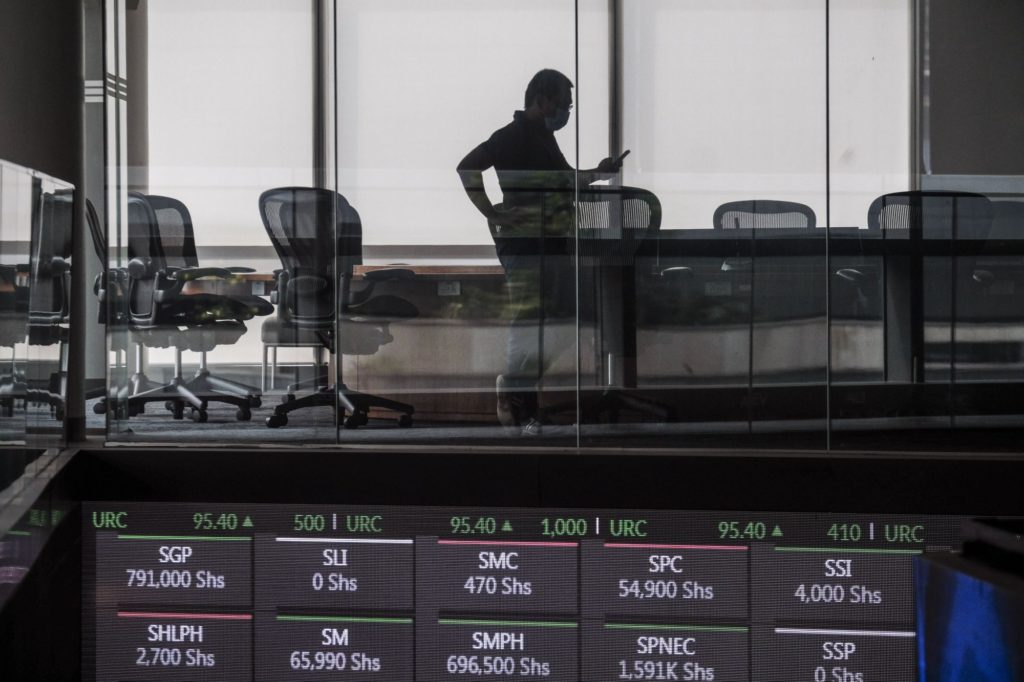
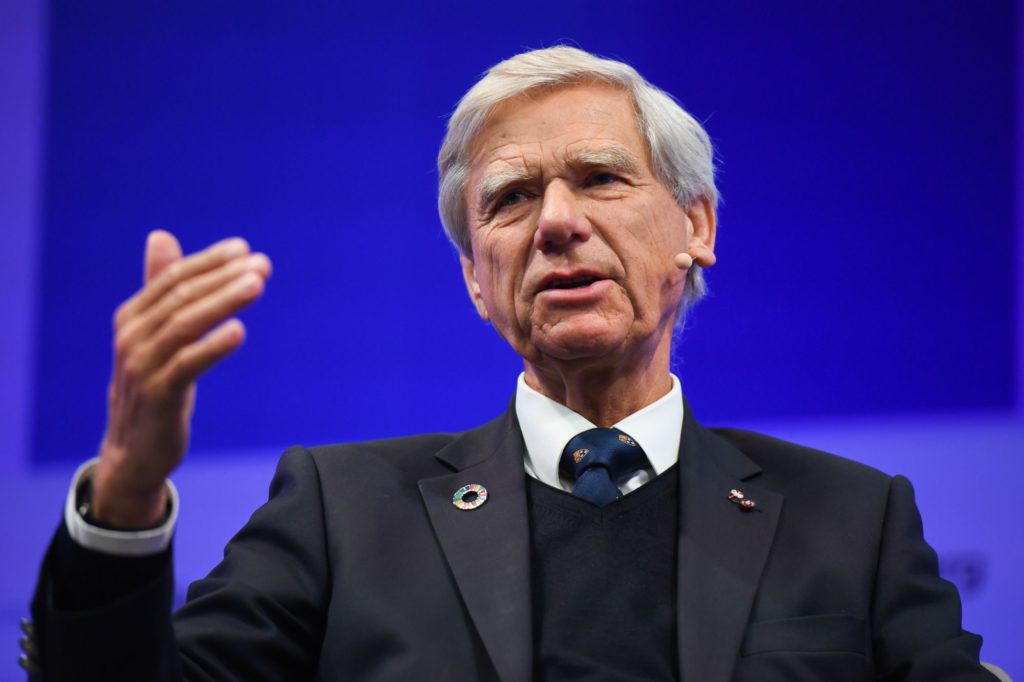
(Bloomberg) — The UK has “no chance in hell” of becoming technologically sovereign, Hermann Hauser, the co-founder of Amadeus Capital Partners and founder of Arm, said at Bloomberg’s Technology Summit in London.

Hauser emphasized the need for Europe and the UK to have access to critical technologies so it is not dependent on countries like the US. He mentioned former US President Donald Trump, who he said used semiconductor design software as “a weapon to force other countries including Britain to do what he wants.”

The UK has struggled to keep its tech firms owned by local investors. Arm, one of the most significant global tech companies, is currently being prepped to be floated in the US by its Japanese owner SoftBank Group Corp.

French firm Schneider Electric SE has recently agreed to buy out minority shareholders in Aveva Group Plc, currently the UK’s largest listed tech firm, in a deal that values the industrial software company at £9.5 billion ($10.8 billion).

The UK government is beginning to push back on foreign takeovers. Welsh chipmaker Newport Wafer Fab’s sale to a Chinese-owned company is being probed by the UK government, which is leaning toward restricting or blocking the takeover more than a year after it was signed, people familiar with the matter had said. 

Read More: A Chinese Chip Deal Exposes the UK’s Muddled Industrial Strategy

“These dependencies are as severe now as military occupation was in the past,” Hauser said. “And we just have to find our own independent access to critical technologies.”

One question countries have to ask themselves if whether they have all the critical technologies needed to run a country and its economy. 

“The answer for Britain” is “absolutely no, there is no chance in hell that Britain could ever become technologically sovereign,” he said.

Hauser added that Europe is clearly in a recession that could last a year or two. “It’s difficult to know for how long with so many imponderables.”

“The UK in particular is in this very stormy period of having a financially undereducated chancellor, who goes by neoliberal ideology rather than rational decision making so that doesn’t help,” he added.

EXPLAINER: Understanding Arm’s Strategic Importance in Chips

More stories like this are available on bloomberg.com

©2022 Bloomberg L.P.
UK Has ‘No Chance in Hell’ of Making Its Own Tech Champs: ARM Founder

(Bloomberg) — The UK has “no chance in hell” of becoming technologically sovereign, Hermann Hauser, the co-founder of Amadeus Capital Partners and founder of Arm, said at Bloomberg’s Technology Summit in London.

Hauser emphasized the need for Europe and the UK to have access to critical technologies so it is not dependent on countries like the US. He mentioned former US President Donald Trump, who he said used semiconductor design software as “a weapon to force other countries including Britain to do what he wants.”

The UK has struggled to keep its tech firms owned by local investors. Arm, one of the most significant global tech companies, is currently being prepped to be floated in the US by its Japanese owner SoftBank Group Corp.

French firm Schneider Electric SE has recently agreed to buy out minority shareholders in Aveva Group Plc, currently the UK’s largest listed tech firm, in a deal that values the industrial software company at £9.5 billion ($10.8 billion).

The UK government is beginning to push back on foreign takeovers. Welsh chipmaker Newport Wafer Fab’s sale to a Chinese-owned company is being probed by the UK government, which is leaning toward restricting or blocking the takeover more than a year after it was signed, people familiar with the matter had said. 

Read More: A Chinese Chip Deal Exposes the UK’s Muddled Industrial Strategy

“These dependencies are as severe now as military occupation was in the past,” Hauser said. “And we just have to find our own independent access to critical technologies.”

One question countries have to ask themselves if whether they have all the critical technologies needed to run a country and its economy. 

“The answer for Britain” is “absolutely no, there is no chance in hell that Britain could ever become technologically sovereign,” he said.

Hauser added that Europe is clearly in a recession that could last a year or two. “It’s difficult to know for how long with so many imponderables.”

“The UK in particular is in this very stormy period of having a financially undereducated chancellor, who goes by neoliberal ideology rather than rational decision making so that doesn’t help,” he added.

EXPLAINER: Understanding Arm’s Strategic Importance in Chips

More stories like this are available on bloomberg.com

©2022 Bloomberg L.P.
JPMorgan’s UK Digital Bank Has More Than 1 Million Customers

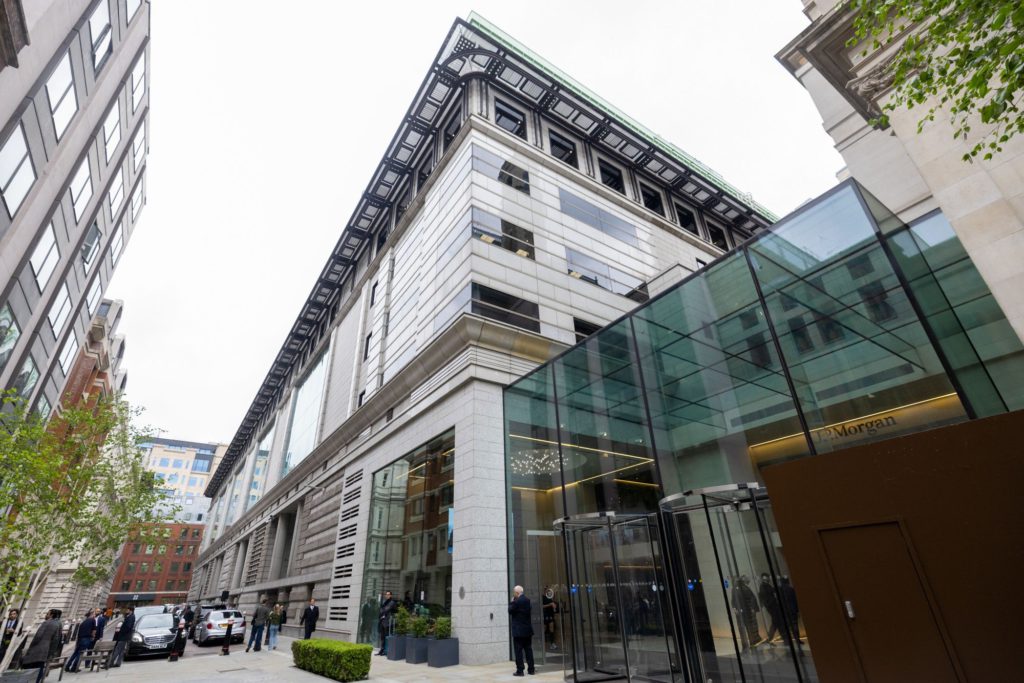
(Bloomberg) — JPMorgan Chase & Co.’s UK digital lender has attracted 1 million customers in its first year of operation, making it one of the UK’s most popular neobanks.

Chase UK clients hold an average of £27,000 ($29,084) in their Chase Saver account, according to a statement Wednesday. The lender said it has processed about 92 million card and payment transactions since launch.

The US lender entered the British retail banking market in September 2021, initially offering a fee-free current account. It now holds more than £10 billion pounds of deposits. That’s more than Monzo Bank and Starling Bank but less than Goldman Sachs Group Inc.’s Marcus UK offering, which has accrued about £22 billion in deposits from 750,000 customers since launching in 2018.  

Chase UK has 1,000 UK-based employees and said it is planning more hires. Still, such growth comes with a price tag. The New York-headquartered financial group earlier this year said it expected losses on its overseas digital banks to exceed $1 billion over the next five years.

“We’ve been extremely pleased with our performance in the first year,” Sanjiv Somani, UK chief executive officer of Chase and Nutmeg, the digital wealth manager bought by JPMorgan last year, said in a Bloomberg Television interview Wednesday. 

Somani said the bank would consider acquisitions if the “right opportunities” presented themselves. He also said the lender is planning to offer full-service banking to UK retail consumers in the medium-term.

(Adds CEO comments.)

More stories like this are available on bloomberg.com

©2022 Bloomberg L.P.
Close Bitnami banner
Bitnami

