Bloomberg

Chinese Dealmaker That Backed Tencent Casts a Wider Startup Net

(Bloomberg) — Hillhouse, the private equity firm known for its bets on Tencent Holdings Ltd. and JD.com Inc., is now looking to back startups far earlier in their life cycles.

The China-focused firm has set up a dedicated team with a mandate to seed 100 startups in three years, focusing on areas like new energy and biotechnology that have gained favor since Beijing cracked down on gaming and the consumer internet. Led by founding partner Li Liang, it will specialize in deals of $2 million to $3 million, far smaller than the investments the firm is generally known for.

Hillhouse began expanding the scope of its early-stage investments around the time it established VC brand GL Ventures two years ago. Beijing has since accelerated a nationwide campaign to develop cutting-edge technologies in areas from manufacturing to clean energy, part of a broader race for economic primacy with the US. 

“Today’s early-stage investment has transitioned from ‘discovering value’ to ‘discovering and creating value’,” Zhang Lei, founder of the company, said in a statement. “Investment institutions need to truly go to the frontline of technological and industrial innovation.”

Founded by the Yale alumnus and billionaire about two decades ago, Hillhouse is one of the biggest backers of the Chinese internet today. Its private equity and VC arm has been a champion of fast-growing companies, often backing them from their early stages and holding large stakes for years in the same fashion as Chase Coleman’s Tiger Global Management and Philippe Laffont’s Coatue Management.

More stories like this are available on bloomberg.com

©2022 Bloomberg L.P.

Apple Suppliers Drop as Firm Said to Ditch iPhone Output Boost

(Bloomberg) — Shares in Apple Inc.’s Asian suppliers extended losses Wednesday after Bloomberg reported the Californian company is backing off plans to increase production of its new iPhones.

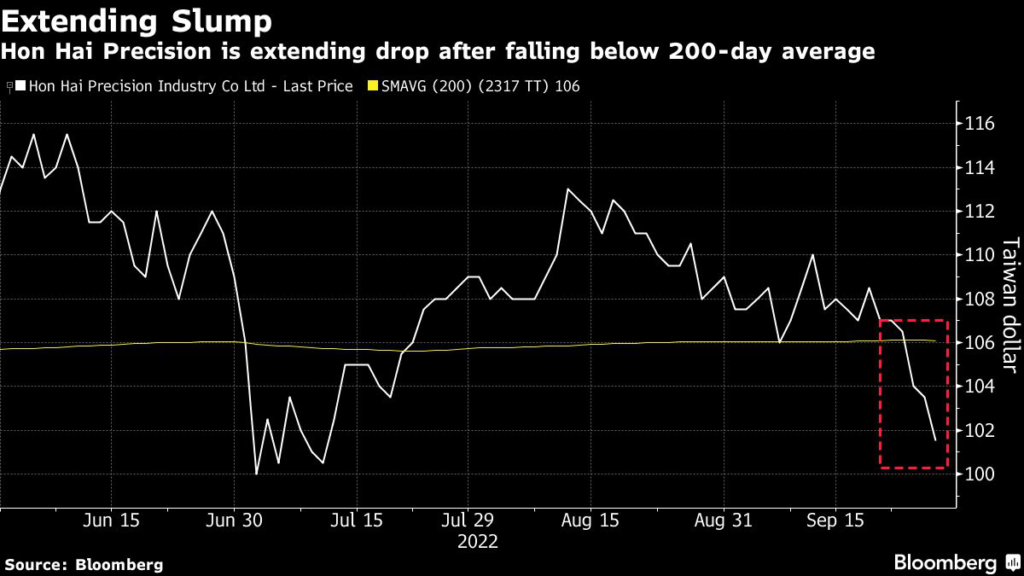
Hon Hai Precision Industry Co., which assembles most of the world’s iPhones, dropped as much as 2.9% while chip bellwether Taiwan Semiconductor Manufacturing Co. fell as much 1.8%. The fall in the two stocks helped move Taiwan’s equity benchmark down as much as 2.3% to its lowest level since November 2020. Asia’s regional stock benchmark dipped about 2% amid a hawkish Fed and a strong dollar. 

Lacklustre interest in new Apple products is just the latest sign of waning global demand as central banks hike interest rates in their quest to cool inflation.

“Disappointing iPhone demand may reverberate throughout the supply chain, and impact tech heavy Taiwan and Korea the most,” said Marvin Chen, an analyst with Bloomberg Intelligence.

Apple has told suppliers to pull back from efforts to increase assembly of the iPhone 14 product family by as many as 6 million units in the second half of this year after an anticipated surge in demand failed to materialize, people familiar with the matter told Bloomberg News. 

Instead, the company will aim to produce 90 million handsets for the period, roughly the same level as the prior year and in line with Apple’s original forecast this summer, the people said.

Among other key stocks, Hong Kong-listed lensmaker Sunny Optical Technology Group Co. declined as much as 3.7% and Taiwan’s Largan Precision Co. plunged as much as 8.8%. South Korea’s LG Innotek Co., which gets 70% of its revenue from Apple, extended its decline to 9.2%.

For a list of some key Apple suppliers globally, click here.

More stories like this are available on bloomberg.com

©2022 Bloomberg L.P.

CALB Is Said Poised to Price Hong Kong IPO at Bottom of Range

(Bloomberg) — CALB Co., a Chinese battery supplier for electric vehicle makers, is telling prospective investors it plans to price its Hong Kong initial public offering at the bottom of its marketed range, according to people familiar with the matter.

The Jiangsu-based company is poised to price the offering at HK$38 per share, the people said, asking not to be identified as the information is private. At that price, it would raise about HK$10.1 billion ($1.3 billion). The firm is offering about 265.8 million shares at HK$38 to HK$51 each.

Deliberations are ongoing and a final decision hasn’t been made, the people said. An external representative for CALB declined to comment.

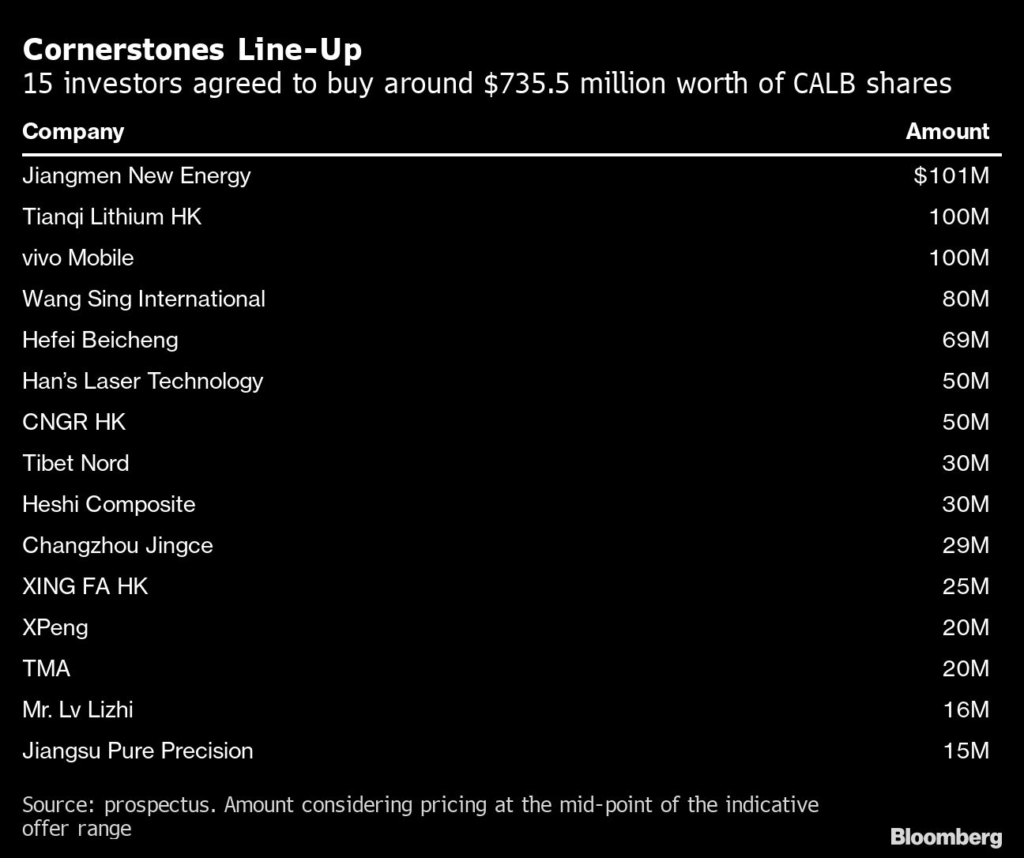
The offering drew 15 cornerstone investors who agreed to purchase around $735.5 million worth of stock in the offering. They include Tianqi Lithium Corp., which began trading in Hong Kong in July, electric carmaker XPeng Inc. and phone manufacturer Vivo Mobile Communication Co.

CALB could be the third company to raise over $1 billion through a first-time share sale in Hong Kong this year, as mid-to-large sized deals return to the Asian financial hub after a slow first half. Still, funds raised in the city are down about 78% since the start of January as rising interest rates drove volatility in equities and kept issuers on the sidelines.

Established in 2007, CALB makes lithium batteries for electric vehicles and other products. It operates major production bases in China, including Changzhou, Xiamen and Wuhan, according to its website. 

The company supplies batteries to the EV brands of carmakers including Guangzhou Automobile Group, Chongqing Changan Automobile Co. and Zhejiang Leapmotor Technology Co., which raised about $800 million in its Hong Kong IPO and is slated to debut in the city on Thursday.

CALB ranked sixth by sales in the global EV battery market in July, overtaking South Korea’s Samsung SDI Co., according to data from Seoul-based SNE Research. The Chinese firm will use part of the proceeds for the construction of production lines of EV batteries and to invest in new production facilities in different parts of China.

Huatai International Ltd. is the sole sponsor of CALB’s Hong Kong IPO. The shares are scheduled to start trading Oct. 6.

More stories like this are available on bloomberg.com

©2022 Bloomberg L.P.

JPMorgan’s UK Digital Lender Has More Than 1 Million Customers

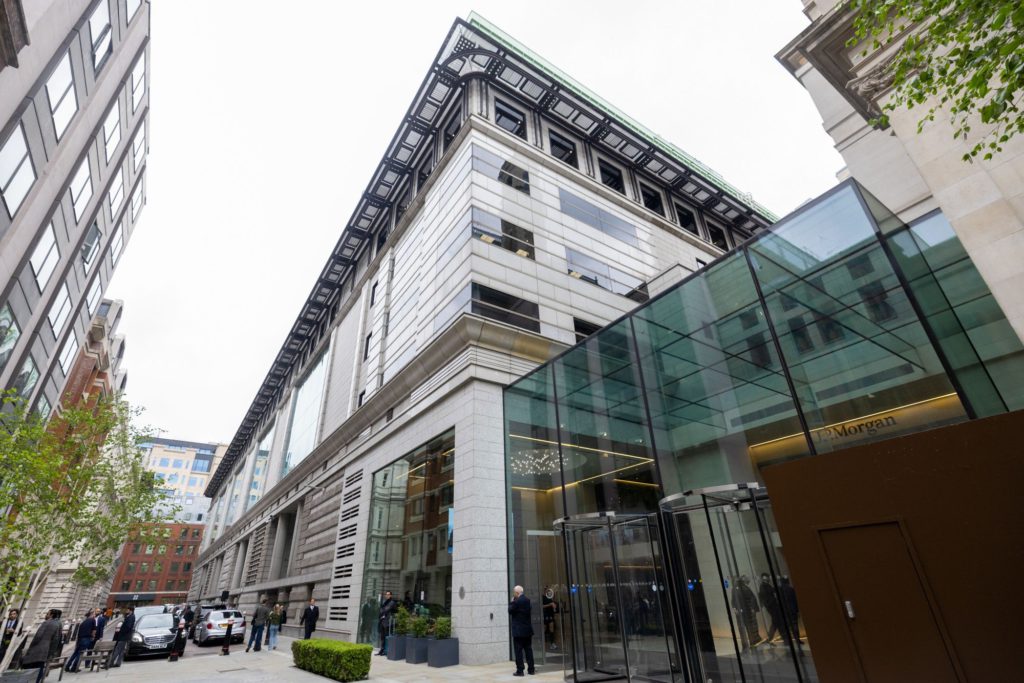
(Bloomberg) — JPMorgan Chase & Co.’s UK digital lender has attracted 1 million customers in its first year of operation, making it one of the UK’s most popular neobanks.

Chase UK clients hold an average of £27,000 ($29,084) in their Chase Saver account, according to a statement Wednesday. The lender said it has processed about 92 million card and payment transactions since launch.

The US lender entered the British retail banking market in September 2021, initially offering a fee-free current account. It now holds more than £10 billion pounds of deposits. That’s more than Monzo Bank and Starling Bank but less than Goldman Sachs Group Inc.’s Marcus UK offering, which has accrued about £22 billion in deposits from 750,000 customers since launching in 2018.  

Chase UK has 1,000 UK-based employees and said it is planning more hires. Still, such growth comes with a price tag. The New York-headquartered financial group earlier this year said it expected losses on its overseas digital banks to exceed $1 billion over the next five years.

More stories like this are available on bloomberg.com

©2022 Bloomberg L.P.

BT Tops List of Cheap UK Stocks Seen as Next Takeover Targets

(Bloomberg) — In a bad year for equities, UK domestic stocks have had a particularly tough time, and that’s not gone unnoticed by dealmakers.

British companies represent seven of the top 10 potential targets in an informal Bloomberg survey of 18 event-driven desks, fund managers and analysts, with low valuations, a sinking pound and a favorable regulatory climate making the country’s stocks more attractive to overseas buyers.

Top of the pile is BT Group Plc, whose largest shareholder, billionaire Patrick Drahi, last month received a nod of approval from the UK government over his late-2021 stakebuilding. The telecommunication company was mentioned in six mergers and acquisitions watch lists, while other UK names to feature highly included Entain Plc, Playtech Plc, Burberry Group Plc and Darktrace Plc.

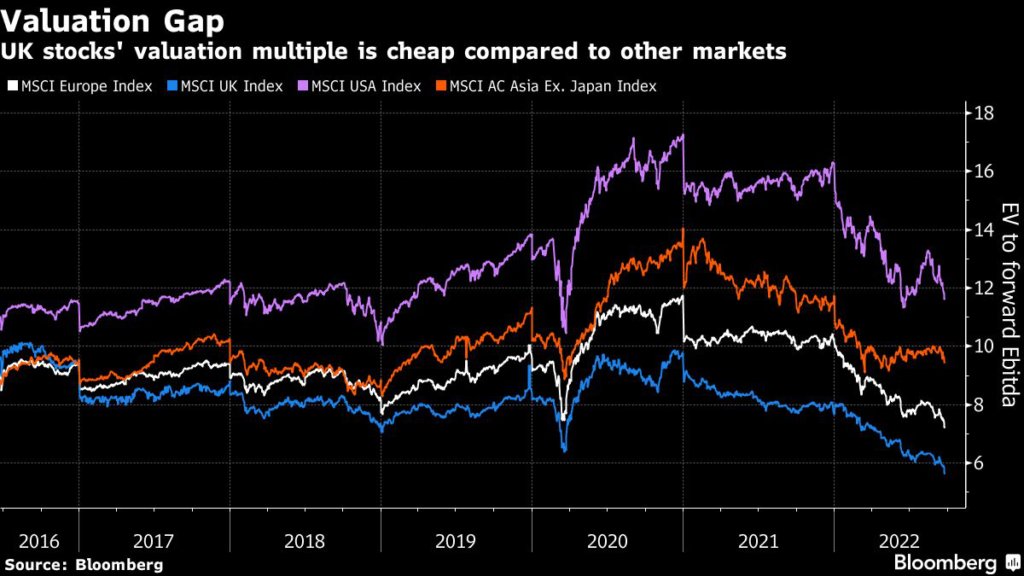
Low valuations are a key attraction. The UK MSCI United Kingdom Index trades at a 16% discount to its Eurozone equivalent based on forward price-to-earnings multiples and a 45% discount to the US, the biggest since 2005.

“The mismatch between the perceived underlying value of UK companies and their share prices will continue to make UK companies attractive to private equity and trade buyers,” said Ben Kelly, an analyst at Louis Capital Markets. Overseas bidders will also be lured by sterling’s slide and the country avoiding a protectionist stance that could harm trade and productivity, he said.

By industry, telecom operators and technology companies placed highly in the poll. Vodafone Group Plc, Telecom Italia SpA and Telenet Group Holding NV all got mentions, as did Temenos AG and SUSE SA.

Representatives for the top 10 companies in the survey either declined to comment or didn’t respond to requests for comment.

Even though M&A activity generally is dwindling with the era of cheap financing coming to an end, firms in more defensive areas, along with those offering strong growth prospects, are still attracting interest, particularly after this year’s rise in bond yields led to reduced valuations.

“Private equity firms are hunting around, looking to snap up a bargain,” said Susannah Streeter, a senior analyst at Hargreaves Lansdown Plc.

Read more: End of Easy Money Raises the Risk of Deals Dying in Europe

A flurry of deals in the software industry highlights the strong interest in cross-border transactions with Canadian Open Text Corp. acquiring Micro Focus International Plc, Nikon Corp. agreeing to buy SLM Solutions Group AG, and US buyout group Thoma Bravo LLC eyeing up Darktrace before withdrawing.

Read more: Foreign Buyers Hoover Up Britain’s Fast-Growing Tech Firms

“M&A has cut like a scythe through the UK tech sector this year,” wrote George O’Connor, an analyst at Goodbody.

More stories like this are available on bloomberg.com

©2022 Bloomberg L.P.

Apple News Users Receive Racist Alerts After Fast Company Hack

(Bloomberg) — A hacker who infiltrated Fast Company, a publication owned by Morningstar Inc.’s billionaire founder Joe Mansueto, sent obscene push notifications to Apple News users’ home screens on Tuesday night, sparking a shutdown of the magazine’s website.

The US-based business magazine, published by Mansueto Ventures LLC, said on Twitter that “two obscene and racist push notifications were sent about a minute apart” after its content management system was hacked on Tuesday evening.

Apple Inc.’s news aggregation service, which curates stories from media providers, had 125 million monthly active users as of early 2020. It was not immediately clear how many people received the push notifications. The company had 1.8 billion active device users as of the start of this year.

Apple News said in a tweet that it disabled Fast Company’s channel on its platform after the hack. Apple could not be immediately reached for further comment. In a separate statement to Bloomberg News, Fast Company said the Tuesday hack follows an “apparently related hack” of its website that occurred on Sunday afternoon, when similar language appeared on the site’s home page and other pages, with the site shut down and restored two hours later at the time.

Fast Company apologized to users who saw the message and said it is investigating the incident and has shut down both its feed as well as its website until it is certain the situation is resolved. “The messages are vile and not in line with the content and ethos of Fast Company,” it said.

(Updates with number of active iPhone users; an earlier version of the story corrected number of Apple News users)

More stories like this are available on bloomberg.com

©2022 Bloomberg L.P.

Elon Musk Asks Appeals Court to End His ‘Twitter Sitter’ Deal

(Bloomberg) — Elon Musk asked a federal appeals court to throw out the deal he made with the US Securities and Exchange Commission in 2018 requiring a Tesla Inc. lawyer to screen all his company-related tweets, calling it an illegal effort to muzzle him.

Musk, Tesla’s chief executive officer, has claimed without success that the SEC is harassing him and that the agreement violates his free-speech rights. US District Judge Lewis Liman in April refused to release him from the deal and end the requirement for a “Twitter Sitter.” Liman said Musk was “simply bemoaning that he felt like he had to agree to it at the time” and now “wishes that he had not.”

“The pre-approval provision is a classic prior restraint that the Constitution forbids: a government-imposed muzzle on Mr. Musk’s speech before it is made,” Musk’s lawyers said in papers asking the 2nd US Circuit Court of Appeals in Manhattan to invalidate the agreement, or at least remove the screening requirement. “The effect of the provision is to inhibit and chill Mr. Musk’s lawful speech.”

The world’s richest man has been battling with the SEC over his social media statements since he tweeted in 2018 that he had “funding secured” to take Tesla private, sending shares of the electric-car maker surging. The regulator sued claiming Musk and Tesla had misled shareholders. Musk and the company settled with the SEC, with each paying $20 million and agreeing that Musk’s Tesla-related tweets would be reviewed before he posts them.

In his April decision, Liman ruled that Musk waived his 1st Amendment Constitutional Right to free speech, a finding Musk denied in his appeal brief.

“Mr. Musk could not possibly have known the circumstances and consequences of the pre-approval provision because the provision applies to future speech about circumstances no one could anticipate in advance,” his lawyers wrote. But even if he did waive his rights, such a waiver is invalid and unenforceable they said.

Liman also denied Musk’s effort to block an SEC subpoena seeking information on his tweets, ruling that he’s as subject to investigation by the agency as anybody else.

Musk agreed to buy Twitter Inc. for $44 billion in late April, then said he was pulling out of the deal. Twitter claims Musk got cold feet due to buyer’s remorse, not over concerns about the number of spam and robot accounts embedded in the platform’s more than 230 million users.

The case is US Securities and Exchange Commission v. Musk,  22-1291, Second US Circuit Court of Appeals (Manhattan).

More stories like this are available on bloomberg.com

©2022 Bloomberg L.P.

Bitcoin Slips as a Wave of Investor Angst Saps Global Markets

(Bloomberg) — The gloom enveloping global markets pushed cryptocurrencies including Bitcoin lower on Wednesday.

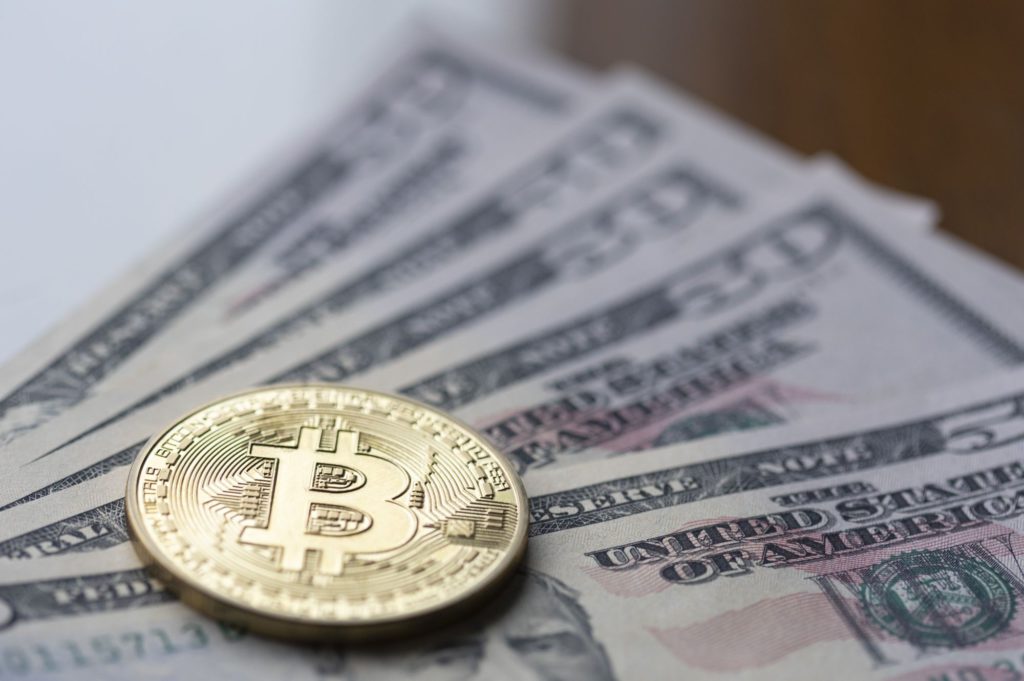
The largest token fell as much as 3.1% to a near one-week low and was trading around $18,700 as of 12:45 p.m. in Tokyo. Ether and most other major coins also posted losses.

Stocks, bonds and commodities are swooning under a noxious mix of sharp interest-rate hikes, high inflation and a dim economic outlook. A dollar gauge is at a record amid demand for a haven from the maelstrom. 

If there’s any consolation for crypto investors, it’s that other assets are breaching major markers whereas Bitcoin is still roughly 6% above June lows. 

For instance, Asian stocks are at levels last seen during the pandemic’s onset, the US 10-year Treasury yield hit 4% for the first time since 2010 and the pound is around a record low against the greenback.

Conversely, if crypto takes out the June floor, that could sour sentiment not just for digital tokens but riskier investments more generally.

“You want to talk about Bitcoin, you want to talk about Netflix stock or you want to talk about the British pound?” Jack Mallers, founder of Bitcoin money-transfer startup Strike, said on Bloomberg Television. The macro environment “is a little bit of a mess” but he contended that Bitcoin has time on its side given its fixed supply.

The MVIS CryptoCompare Digital Assets 100 Index has plunged 60% this year in a crypto rout that toppled brokers, lenders and a major hedge fund focused on the sector. Bitcoin has shed some $50,000 since its peak in November 2021.

Still, the fact the cryptocurrency is holding above its June low, despite the intense pressure on world markets, is leading to some speculation that its currently tight correlation with stocks could shift.

“Followers of the ecosystem have been excited to see correlations with risk-assets begin to break, meaning the ‘fast-money’ speculative crowd may be losing their influence on the space,” said Stephane Ouellette, chief executive of FRNT Financial Inc.

More stories like this are available on bloomberg.com

©2022 Bloomberg L.P.

For Angola’s Super Rich, It’s No Longer Cool to Drive a Ferrari

(Bloomberg) — Toward the tail-end of Jose Eduardo dos Santos’s almost four-decade rule of Angola, Porsches, BMWs and even the occasional Ferrari meandered through the streets of downtown Luanda past legions of beggars.

Such public displays of affluence in one of the world’s most unequal nations are becoming less commonplace as the government intensifies a crackdown on graft, with many of the well-heeled trying to hide their wealth or pretending they were never really that rich after all.

“The market is tough,” said Kolly Villa, a luxury-car salesman in Luanda, the capital, who imports custom-made vehicles from the US to Angola. “People aren’t buying or using their own luxury cars because they’re afraid to go out on the street.”

Angola’s oil-fired economy boomed after a 27-year civil war ended in 2002, but the spoils largely ended up in the hands of a tiny elite with close ties to the former president. They included his daughter, Isabel, who became the continent’s richest woman with stakes in industries ranging from banking and cement to telecommunications and diamonds.

Rich Angolans who made their way to Portugal, the southwestern African nation’s former colonial power, established a reputation for living flashy lifestyles. Several bought multimillion-euro apartments and mansions in the seaside town of Cascais, and some residents blamed them for inflating real-estate prices. “You must think I’m Angolan,” became a common retort from those who felt they were being over-charged.

Then Joao Lourenco, a former army general, replaced Dos Santos in 2017 and unleashed an anti-corruption drive that’s targeted several members of his predecessor’s inner circle, and ostentatious displays of wealth became noticeably less prevalent. As Lourenco, 68, began a new five-year term this month, he pledged to intensify his campaign and spread wealth more evenly in a nation where the World Bank estimates that about half of the population of 33 million lives on less than $1.90 per day.

Corruption Probes

The government says it has already opened more than 3,000 corruption, money-laundering and other commercial probes since Lourenco came to power, and more than $20 billion worth of illicitly acquired assets have been seized in Angola and abroad.

Those targeted include Isabel dos Santos, who had her assets in Angola and Portugal frozen after an international media investigation dubbed the Luanda Leaks implicated her in several questionable business deals. She served as the chairwoman of Sonangol, Angola’s state oil company, during her father’s tenure and her net worth exceeded $2 billion. She’s denied wrongdoing and alleged that she is the victim of a political vendetta.  

Jose Filomeno dos Santos, Isabel’s half-brother who ran Angola’s $5-billion sovereign wealth fund, was accused by Angola’s finance ministry of trying to siphon $1.5 billion from the central bank just days before his father stepped down as president. He was sentenced to five years in prison after a court found him guilty of taking part in an illegal transfer of $500 million from the central bank to an account in the UK.

At least three former ministers who served in Dos Santos’s cabinet have also been subjected to judicial inquiries. Dos Santos, who held power from 1979 to 2017, died in July at the age of 79. 

Read more: Why Impoverished Angola Is Targeting a Billionaire: QuickTake

Paulo Carvalho, a sociology professor at Agostinho Neto University in Luanda, is among those who’ve observed distinct behavioral changes among the wealthy. 

“Rich Angolans always had a tendency to flaunt their wealth in the face of others,” he said. “The fight against corruption forced many in the so-called elite to become more discreet.”

Alexandre Pacheco, founder of Luanda-based online real estate broker My Imovel, has seen a pick-up in demand for luxury properties after a prolonged recession, and also detected a shift in attitude among those shopping for homes worth more than $500,000. 

“Most of the people who have the financial capacity to buy these properties ask others to do it for them,” he said. 

Election Outcome

Opposition parties accuse Lourenco of using his anti-graft crusade as a smokescreen to distract from the country’s economic woes and settle political scores, and allege that the abuse of taxpayer funds remains rife. Public disenchantment over corruption, rampant poverty and unemployment saw support for the Popular Movement for the Liberation of Angola, which has held power for almost half a century, fall to 51% in Aug. 24 elections — the lowest level since the civil war ended.

Lourenco denies that prosecutions have been selective, and said he remains committed to raising living standards.

“The bodies of justice will proceed with their work in preventing and fighting corruption and impunity, which still exists,” he said in a Sept. 16 speech after being inaugurated for a second term. 

Rich Angolans’ newfound penchant for austerity was absent from that ceremony — dozens of Toyota Land Cruisers with tinted windows were seen leaving the venue in Luanda. 

“Such displays of wealth, even if they have been tamed down, are no longer acceptable,” said Manuel Alves da Rocha, an economics professor at the Catholic University of Angola in Luanda, who has taught many of the nation’s top government officials. “The time has come to start caring for the rest of the population.”

More stories like this are available on bloomberg.com

©2022 Bloomberg L.P.

Investors Bet Gas Crunch Will Tip Europe Away From Fossil Fuels

(Bloomberg) — Some investors are playing the long game as a fresh wave of misery engulfs European stocks and bonds, betting that gas shortages will speed up a transition to renewable energy.

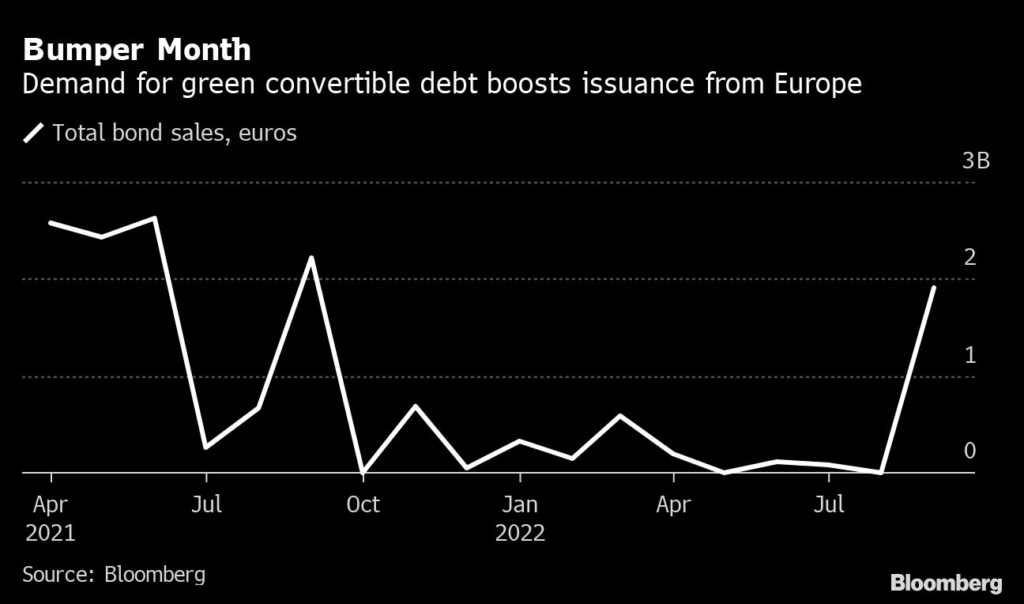
They’ve been buying up bonds linked to clean energy companies that can be converted on maturity into stocks, meaning they will receive coupon payments throughout the coming gas crunch and potentially end up with a share in a flourishing company in a few years’ time. September is shaping up to be the best month for sales of convertible bonds in a year after three renewables firms came to market, meeting with high demand at a time when many companies have had to pull sales. 

Russian President Vladimir Putin’s hostage-taking of Europe’s gas supply has accelerated a trend for electrification in Europe that investors have been predicting for years, but never with so much certainty. If Russia can no longer be depended on as a reliable supplier of energy, the continent may have little choice but to make a rapid switch to clean energy that could see stocks linked to the sector surge.

“When markets are weak the convertible bonds of these companies provide solid downside protection given their solid fundamentals and a good future, especially as Europe moves toward more electric and renewable energy,” said Ute Heyward, a portfolio manager at Fisch Asset Management in Zurich.

Siemens Energy AG issued a 960 million euro ($938 million) convertible bond to finance the purchase of Siemens Gamesa Renewable Energy on Sept. 6. The next day, French renewable energy producer Neoen SA sold 300 million euros of the debt and SGL Carbon SE, a German producer of wind and solar components, came to market a week later with a 100 million euro note. 

The Siemens bond matures in 2025, implying investors think the shift to renewables could start boosting clean energy stocks within three years. The other two notes convert to equity in 2027.

Until then assets of all electricity suppliers could be in for a rocky ride as the standoff wreaks havoc with energy prices and prompts governments to intervene. A Bloomberg Index of global green bonds has slumped 27% in 2022, heading for its worst year of returns since inception in 2014. 

Suspected sabotage of the Nord Stream pipeline system that transports Russian gas to Europe, alongside Gazprom’s warning that Moscow may sanction Ukraine’s Naftogaz, are the clearest signals yet that the continent will have to survive the winter without any significant imports from its eastern neighbor. 

Why Europe Is Crippled By a Wartime Energy Crisis: QuickTake

Market Selloff

The convertible bond market has also been hammered by the crash in bond and equity markets, with returns on an index of European equity-linked bonds down 18% so far this year. 

The big risk is that the underlying stocks don’t recover in time for the bonds to be converted. That’s a lesson learned by investors who rushed to buy convertible bonds during the pandemic in the hope that stock markets would rebound, only to find themselves stuck in another downturn. Many convertible bonds sold in 2020 and 2021 are now trading at distressed levels.

Still, the recent plunge in equities makes the new notes very attractive, according to Pierre-Henri de Monts de Savasse, an investor at BlueBay Asset Management LLP. For issuers grappling with rising borrowing costs, the bonds provide a vehicle to sell debt with a lower coupon than conventional debt, he said.

Twenty-one European convertible bonds still have negative yields, including a handful from energy companies such as Schneider Electric SE, which specializes in improving home electricity efficiency. Swedish battery producer NorthVolt AB has also tapped into the demand for convertible debt, selling a 1.1 billion euro note in July to private investors ahead of a planned initial public offering. 

“Converts are a great instrument for a long-term investment because it gives you that equity option, and investors see that opportunity in the renewable space,” said Lyle Schwartz, co-head of EMEA Alternative Equity Products at Goldman Sachs in London. “And because there’s a coupon, it offers some downside protection as well.”  

More stories like this are available on bloomberg.com

©2022 Bloomberg L.P.
Close Bitnami banner
Bitnami