Bloomberg

Amazon Closes Warehouse Due to Bed Bug Infestation, KFDA Reports

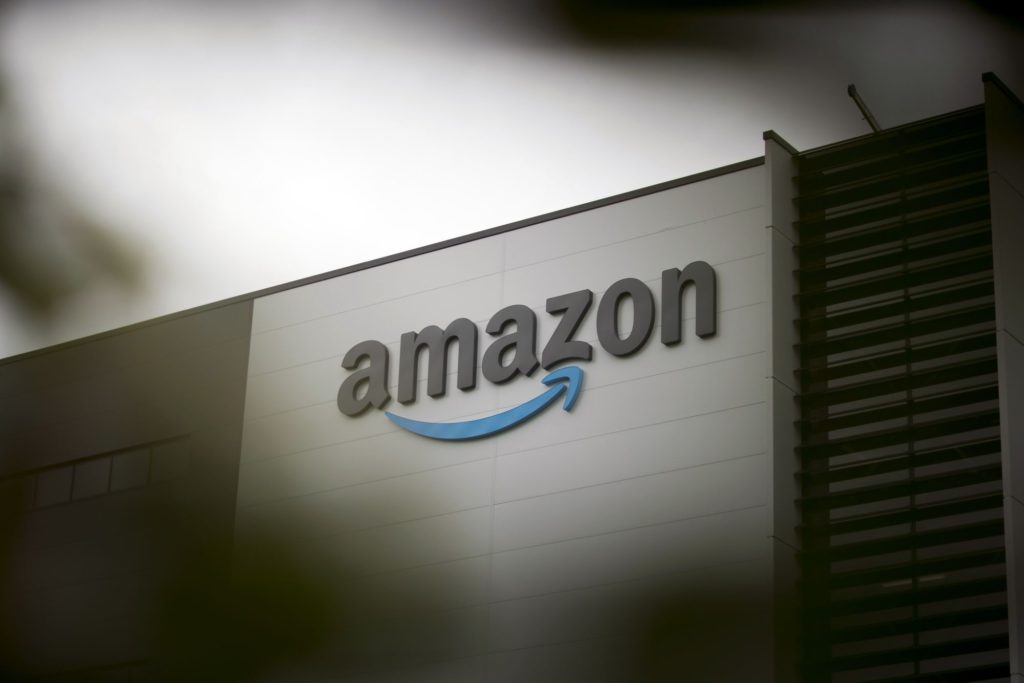
(Bloomberg) — Amazon.com has been forced to close a 1 million square foot fulfilment center in Amarillo, Texas, after it was invaded by bed bugs.

The site, which employs some 500 workers, was closed temporarily, according to the city’s KFDA TV news channel, with all customer orders put on hold.

All workers will be paid while the site is shut, KFDA quoted an Amazon spokesman as saying.

The US Centers for Disease Control and Prevention says bed bugs feed solely on the blood of people and animals, and usually occur in or near areas where people sleep. The critters are experts at hiding and can survive for long periods without a feed.

Crucially for Amazon and its customers, they are usually transported from place to place as people travel, stowing away in luggage, bags and boxes.

More stories like this are available on bloomberg.com

©2022 Bloomberg L.P.

Harris Says Japan Plays ‘Critical Role’ in Chips Supply Chain

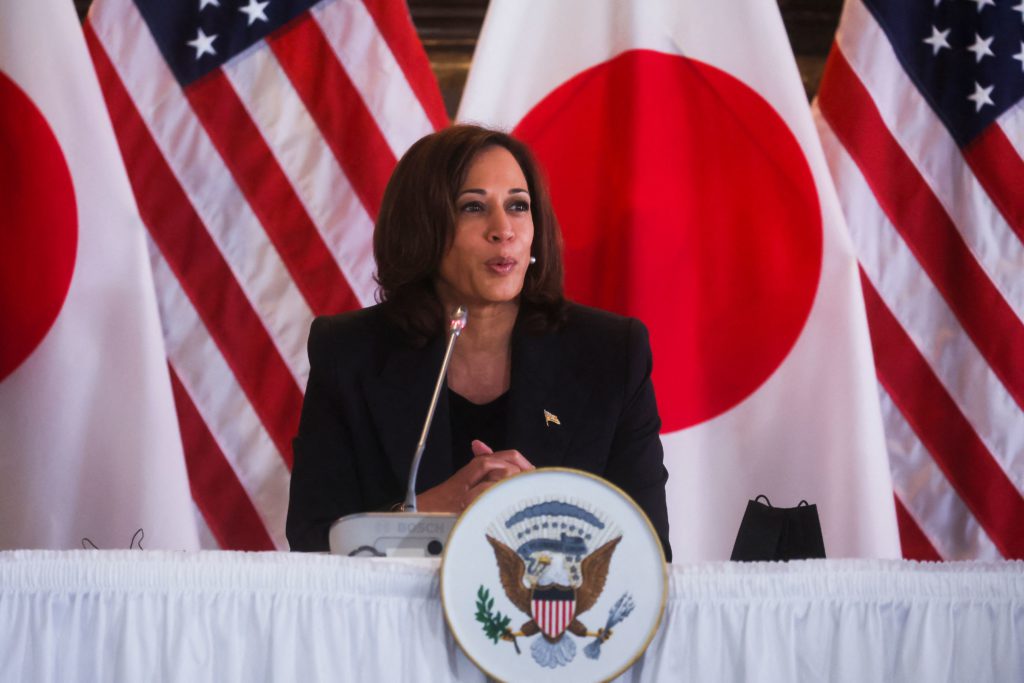
(Bloomberg) — Vice President Kamala Harris said Wednesday that Japan plays a “critical role” in building resilient supply chains for chips, as she sought to rally allies in Asia to build redundancies for strategic purposes.

Harris hosted a roundtable with business leaders, which gave her a chance to tout a new law aimed at boosting competitiveness with China that authorizes $52 billion for US semiconductor research and manufacturing.

“We have to diversify our reliance on essential supplies, Japan and United States and the world,” Harris said. “We also understand, on this issue, that no one country can satisfy the globe’s demand. But it is important that we and our allies partner in a way that allows us to grow, and in a way that allows us to function at a very practical level.”

The vice president’s four-day visit to Japan and South Korea is intended to shore up economic and national security ties between the U.S. and Asian allies. A new so-called chip alliance between the US, South Korea, Japan and Taiwan held its first working-level pre-meeting on Tuesday, the Seoul Economic Daily reported, citing unidentified people in industry. 

Earlier: Biden Signs Chips Bill, Unleashing Funding for US Production

A senior administration official said Harris’s discussion with business leaders was focused on the benefits of the new chip policies not just to the US but to its trading partners as well.

Companies participating in the meeting were expected to include Tokyo Electron Ltd., Nikon Corp., Advantest Corp., Hitachi High-Tech Corp., Lasertec Corp., Sanken Electric Co., Showa Denko KK, Toyo Gosei Co., Fujitsu Ltd. and Micron Technology Inc., according to the White House.

The senior administration official said Harris planned to talk to the CEOs about fresh investment in manufacturing in the US, supply-chain resilience and using the new law to bolster US collaboration with Japan and other allies.

More stories like this are available on bloomberg.com

©2022 Bloomberg L.P.

Wall Street Hires WhatsApp Cops as US Blasts Bosses Who Texted

(Bloomberg) — A US investigation into unauthorized texting on Wall Street is forcing many of the world’s biggest banks to create a new compliance role: the WhatsApp cop.

Firms can blame the bosses who broke the rules.

As US regulators punished 11 Wall Street banks Tuesday for failing to stop staff from using unauthorized messaging platforms, investigators took a moment to describe some of the worst offenders — including heads of trading desks, dealmaking teams and executives with national and global responsibilities. In some cases, managers even texted with employees in charge of ensuring that banks complied with the law.

So as part of the solution — on top of more than $2 billion in fines levied so far — a roster of firms including Bank of America Corp., Citigroup Inc., Goldman Sachs Group Inc. and Morgan Stanley each promised to hire a compliance consultant to review how they monitor and archive any work-related communications, including on employees’ mobile phones or other personal devices.

The US Securities and Exchange Commission underscored past failures in oversight by describing at least a few senior managers at each firm who engaged in rampant texting with colleagues and clients. The agency previously said it’s particularly frustrated with executives who were supposed to help enforce the rules but broke them instead.

EXPLAINER: Why Wall Street Is in Hot Water for Using WhatsApp


Boss’s Advice

At Bank of America, which paid the most in penalties Tuesday, one head of a trading desk told brokers at other firms to delete messages they had exchanged on personal devices and to switch to Signal, which is encrypted, according to the Commodity Futures Trading Commission. The executive resigned this year.

The SEC’s decision to call out executives — based on a sampling of messages that banks were asked to gather for the investigation — may ramp up the pressure on firms to ensure certain managers are held accountable. JPMorgan Chase & Co., the first bank to settle the probe last year, ousted a few executives over the inquiries and disciplined many others, sometimes lowering their bonuses.

Authorities didn’t name anyone in the settlements. And a person close to one of the largest banks said investigators didn’t necessarily specify to companies which employees were described. Two executives close to the banks said that some of the people described as employed are no longer there and that people who left didn’t necessarily go because of the probe.

A spokeswoman for Citigroup said in a statement that the lender is pleased to have the case resolved. Deutsche Bank AG “proactively deployed fully compliant and convenient text and chat platforms and will continue to scale these technologies to meet the expectations of our regulators and our clients,” a spokesman said in a statement. Representatives for the other banks either declined to comment or didn’t immediately respond to messages seeking comment.

Spotlighting Managers

Here are some of the executives singled out in SEC settlement documents with major investment banks for allegedly broking the rules (Cantor Fitzgerald, Jefferies Financial Group Inc., and Nomura Holdings Inc. also settled cases): 

Bank of America: A managing director at the investment bank with a US-wide role sent and received thousands of messages, including to colleagues, clients and personnel at other firms. And the head of an equities trading desk texted with more than 50 colleagues and numerous people outside the firm.

Barclays Plc: A managing director in the investment bank exchanged thousands of business-related messages. And the head of a fixed-income trading desk texted with more than 29 colleagues, as well as people at other firms.

Citigroup: A now-former managing director with a global role in the investment bank sent and received thousands of messages. And the head of a fixed-income trading desk texted with more than 70 colleagues.

Credit Suisse Group AG: A managing director in a leadership role at the investment bank exchanged thousands of messages. And a managing director in equities trading exchanged more than 1,000 messages with colleagues.

Deutsche Bank: A managing director in a US leadership role at the investment bank and a managing director overseeing fixed-income, trading and financing personnel each sent or received hundreds of messages.

Morgan Stanley: A managing director with a US-wide role in the institutional securities business sent and received more than 1,400 messages. And an associate on a derivatives trading desk exchanged more than 2,500 messages with colleagues.

UBS Group AG: Three managing directors sent or received more than 1,000 messages with one another, other managing directors and employees under their supervision. One of those three and another executive communicated with personnel whose responsibilities included ensuring UBS’s compliance with the law.

More stories like this are available on bloomberg.com

©2022 Bloomberg L.P.

Crypto Billionaire Bankman-Fried Eyeing Bid for Celsius Assets

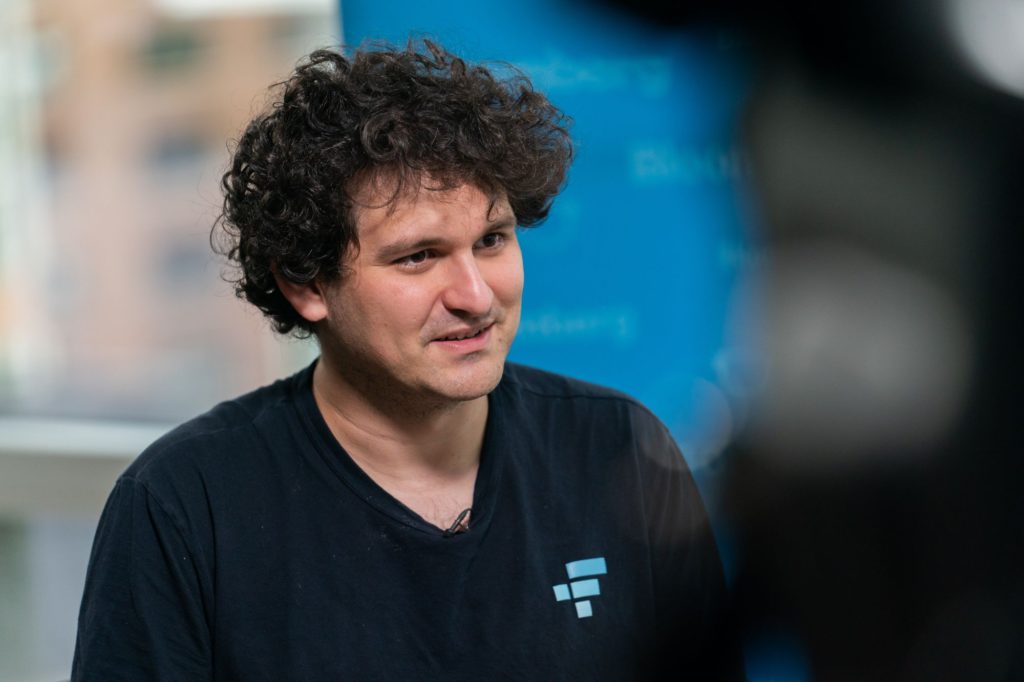
(Bloomberg) — Sam Bankman-Fried, the crypto billionaire who has been bailing out distressed industry players in recent months, is considering bidding for the assets of bankrupt lender Celsius Network, according to a person familiar with his deal-making. 

FTX is also in the process of raising a $1 billion funding round, the same person said. That round hasn’t closed yet or been made public.

In addition to its lending business, Celsius, which filed for bankruptcy in July, owns large Bitcoin mining operations and a crypto custody business. It’s unclear if Bankman-Fried’s crypto companies — the FTX crypto exchange or trading firm Alameda Research — are considering bidding for some or all of Celsius’s assets.

  • Listen: What Links Alameda, FTX and Sam Bankman-Fried? (Podcast)

Celsius’s token, Cel, jumped as much as 9.9% on the development before retreating again, according to data from CoinGecko.

Bankman-Fried already scooped up the assets of bankrupt crypto brokerage Voyager Digital Ltd. in an agreement valued at about $1.4 billion. Earlier this year, FTX propped up the crypto platform BlockFi and was exploring a potential takeover of Robinhood Markets Inc., in which Bankman-Fried owns a stake. He is estimated to own more than 50% of FTX US, and almost all of Alameda.

  • Read more: Quant Shop With Ties to FTX Powers Bankman-Fried’s Crypto Empire

Celsius’s Chief Executive Officer Alex Mashinsky resigned Tuesday, and the company and its creditors are considering a slew of alternatives, ranging from restructuring to liquidation. In August, the company said it received multiple offers of fresh cash to help fund its restructuring process. 

  • Read more: Celsius CEO Resigns as Bankrupt Crypto Firm Works to Survive

(Updates with move in Celsius’s token Cel in the fourth paragraph.)

More stories like this are available on bloomberg.com

©2022 Bloomberg L.P.

Ford Unveils Big, Gas-Fueled Pickup That’s Funding Its EV Future

(Bloomberg) — Ford Motor Co.’s redesigned F-Series Super Duty pickup may lack the sex appeal of the Mustang introduced earlier this month, but this hulking warhorse is critical to funding the automaker’s electric future.

The new Super Duty introduced Tuesday is the antithesis of an electric vehicle. According to Ford, it received a thorough overhaul that includes a new 6.8-liter V8 gasoline engine and a new 6.7-liter diesel engine to go along with a massive 7.3-liter gas engine the media have dubbed Godzilla. In its largest configuration, the truck stands over 6 and 1/2 feet tall and stretches more than 22 feet.

To Ford, this truck isn’t so much about saving the planet as it is about keeping it turning. According to the automaker, the Super Duty generates more in annual revenue than Southwest Airlines Co., which last year booked $15.8 billion in sales. It dominates commercial sales to construction crews, utilities, mining companies and emergency-response teams, and has twice the market share of rivals, Ford said.

Chief Executive Officer Jim Farley, who unveiled the redesigned truck at Churchill Downs in Louisville, Kentucky, close to where it’s built, has said Ford’s traditional gas-powered vehicles will be “a profit and cash engine” that finances the company’s electric-car ambitions. That includes spending $50 billion electrifying Ford’s lineup and building 2 million EVs a year by the end of 2026.

“The Super Duty is clearly a big revenue driver which is extremely important to Ford as they move toward this new future,” said Jessica Caldwell, executive director of insights for automotive researcher Edmunds.com. “Having the Super Duty contribute so much to the bottom line certainly makes that challenge much easier.”

Read more: Ford invests $700 million in Kentucky plant

To keep revenue rolling in, Ford updated the Super Duty with plenty of tech to go with all that brawn.

It’s the first model in Ford’s lineup — and the first pickup on the market — with a superfast 5G modem. This enables over-the-air software updates while driving and creates a Wi-Fi hot spot capable of supporting 10 devices. 

Ford plans to capitalize on that data flow by selling software to fleet managers to keep track of their trucks every move and monitor maintenance needs in real time. 

Ford says the Super Duty’s beefy engines will allow it to tow and haul more cargo. The vehicle goes on sale in late 2022 or early next year. The current version of the Super Duty starts at just under $40,000, but can climb above $100,000.

“We really see a lot of opportunity to grow in internal combustion,” Ted Cannis, head of the Ford Pro commercial unit, said in an interview. “The Super Duty is a critical product for us.”

Just don’t look for Ford to electrify the Super Duty any time soon. A battery big enough to power the truck and meet its towing needs would be so heavy it would reduce the cargo capacity, Cannis said.

More stories like this are available on bloomberg.com

©2022 Bloomberg L.P.

A Hostile Media Bid Shows How Asia’s Richest Men Can Align and Dominate a Sector

(Bloomberg) — Soon after Gautam Adani announced his hostile takeover bid for news broadcaster New Delhi Television Ltd., he was congratulated via tweet by a senior executive at the conglomerate helmed by Mukesh Ambani — Adani’s billionaire rival and his predecessor as Asia’s richest man.

The public toast from Parimal Nathwani, director of corporate affairs at Ambani-led Reliance Industries Ltd., hinted at an amicable co-existence, if not cooperation, between the established empire and the rising upstart at its heels. 

In fact, Adani could not have mounted his NDTV bid without at least the knowledge of a couple of close Reliance associates who were linked to a little-known entity, called Vishvapradhan Commercial Pvt Ltd., or VCPL. It was the world’s new second-richest man’s acquisition of VCPL that in turn helped him make a takeover bid for NDTV.

The NDTV acquisition, if successful, would make Adani and Ambani straight-up rivals in a sector for the first time, given Ambani’s control of large media assets including news channels. While observers have long anticipated the tycoons going head-to-head in industries across India’s $3.2 trillion economy, the first of these encounters appears to be more conciliatory than confrontational, with potentially worrying consequences for the thousands of small firms in the sectors they’re aiming to dominate. 

Never Consented

NDTV’s founders — Prannoy Roy and Radhika Roy — took a loan from VCPL in 2009 to repay another debt. This interest-free loan from VCPL could be converted into NDTV equity and, as the Indian markets regulator later found, was sourced from a firm that was a wholly-owned subsidiary of Reliance Industries. While VCPL since changed owners, it retained links to the Reliance group, according to public filings.

Adani Group acquired VCPL last month and with it, an indirect 29.2% share in NDTV. The Roys said they never consented to this stake purchase. The Adani Group is set to make an open offer in October to NDTV’s minority shareholders in order to buy a further 26%.

“It looks like the two corporate giants are hand in glove,” said Zoya Hasan, professor emerita at the Centre for Political Studies at Jawaharlal Nehru University in New Delhi, referring to the sale of VCPL to the Adani Group. Increased control of India’s nascent but fast-growing media sector by the two billionaires will have “significant consequences,” she said.

Representatives for Reliance Industries and the Adani Group did not respond to emailed queries on the NDTV deal and VCPL’s ownership chain. The Roys didn’t respond to multiple requests for comment. Nathwani didn’t respond to emails seeking comment on his tweet.

Same Ground

Asia’s two richest men are increasingly treading the same ground as Adani expands beyond ports and coal mining and into digital services, telecom, media and retail — sectors that Ambani has dominated for years. Both the tycoons also align very closely to Indian Prime Minister Narendra Modi’s policy initiatives and nation-building priorities. 

A report that the two tycoons have put in place a non-poaching pact in which they have agreed not to hire each other’s employees, in order to avoid a war for talent in their overlapping business interests, have added to concerns that the two conglomerates may one day carve up the Indian economy to the detriment of smaller players. 

Some contracts extended to potential employees were withdrawn after the pact was put in place, Business Insider reported. Representatives for both companies declined to comment on the report.

Buyouts by giants like Reliance and Adani can “hurt smaller media firms” who stand no chance against them, said Indira Hirway, director of the Centre for Development Alternatives in Ahmedabad, Gujarat. “This is applicable for any business including green energy, cement or retail,” she said.

The lever that Adani pulled in the NDTV deal is linked to the loan taken by the Roys 13 years back. 

A June 2018 order from the Securities and Exchange Board of India said that the Roys’ 3.5 billion rupee ($44 million) loan from VCPL was ultimately sourced from Reliance Strategic Investment Ltd., a subsidiary of Ambani’s flagship listed firm. The loan agreement entitled VCPL to share warrants that could be converted into NDTV equity even if the loan was repaid, according to the order. The regulator investigated the loan at the time because of allegations that VCPL had skirted share purchase and takeover rules.

Tangled Web 

In 2012, Reliance sold VCPL to entities with links to the Reliance group, according to people familiar with the matter who asked not to be named discussing the private arrangement. Two names come up in Indian media reports: Surendra Lunia and Mahendra Nahata. 

Lunia told The Economic Times in August that he owned VCPL “for the last 10 years” until he sold it to the Adani Group. Lunia was CEO of the Nahata-owned Himachal Futuristic Communications Ltd. until 2010, and is currently a director of Infotel Telecom Ltd. that operates out of Reliance headquarters in Mumbai, according to corporate filings.

Nahata was a director at Reliance Jio Infocomm Ltd. through at least March 2021 and has represented Ambani’s telecom unit at high profile industry events. Reliance had entered the telecom sector in 2010 by buying a firm, Infotel Broadband, that Nahata founded. 

Nahata and Lunia did not respond to emails and calls seeking comment on VCPL and its sale to the Adani Group.

Cross-directorships don’t necessarily imply that Adani had or needed Ambani’s nod to make his moves, according to people familiar with the situation.

“It’s not a very transparent deal,” said Anand Pradhan, a professor at Indian Institute of Mass Communication in New Delhi. 

Media Push

Set up in the 1980s, NDTV was a pioneer at a time when India’s main news channel was a stodgy state-owned broadcaster. It’s grown into a prominent media house that broadcasts news in English and Hindi and is one of the most popular news handles with more than 35 million social media followers. 

To allay some of the fears around its bid, Adani Enterprises Ltd. said in an exchange filing that it intends to grow NDTV’s business and “empower Indian citizens” by setting up a “credible next generation media platform.”

Seen as relatively critical of Modi’s government in a country where press freedom has been in decline, the house of NDTV’s founders has been raided by local tax authorities and the firm probed by investigative agencies for alleged money laundering in recent years. The Roys have denied wrongdoing in the past.

NDTV, with its nationwide reach, makes it a good asset for Adani as he looks to scale up. His first known foray into the sector was earlier this year after his Adani Media Ventures Ltd. announced its plan to buy a stake in Quintillion Business Media Pvt. Quintillion Media Pvt. Ltd. and Quintillion Business Media Pvt. Ltd. were parties to a joint venture with Bloomberg LP, the parent of Bloomberg News, which was terminated in November 2021. 

NDTV would be a far bigger stake in the sand for the Adani Group, with its three news channels and big online audience. 

It’s unlikely to be the last, as Adani — fueled by a rapid rise to the top of global wealth rankings — pushes into green energy, airports, data centers, digital services and cement as he diversifies away from coal businesses his empire was initially built on. 

The two tycoons together have the potential — and maybe the relationship — to remake the face of the Indian economy. 

“They have big pockets,” said Pradhan, the journalism professor at Indian Institute of Mass Communication. “They can afford losses and give the competition a run for their money.”

More stories like this are available on bloomberg.com

©2022 Bloomberg L.P.

Cloud-Storage Firm Wasabi Reaches $1.1 Billion Valuation

(Bloomberg) — Wasabi Technologies Inc., a Boston-based cloud-storage startup, has reached unicorn status with its latest fundraising.

The company has raised $250 million at a valuation of more than $1.1 billion, according to the company’s chief executive officer. That’s up from the $700 million valuation it fetched in the first of two funding rounds last year. 

The new round will be used to fund geographic expansion, to invest in sales and marketing and for the building of new data centers, Wasabi CEO David Friend said in an interview. The funding includes $125 million in debt and $125 million in equity, he said. 

Wasabi is a relatively new player in the hyper-competitive cloud-storage services market, which is dominated by big players including Amazon.com Inc.’s Amazon Web Services, Alphabet Inc.’s Google and Microsoft Corp. Unlike larger competitors, Wasabi only offers storage services and hasn’t expanded into other areas like cloud-computing and analytics. 

It aims to differentiate itself by charging a flat rate to store data and allowing all data to be retrieved swiftly. Other cloud-storage firms have tiered pricing that depends on how data is stored and retrieved. 

Wasabi has a rare opportunity to capture the vast quantity of data migrating to the cloud, according to Friend. 

“This is a land grab,” Friend said. “This is a one-time migration of data to a completely new environment. It’s kind of like the electrification of America. So it’s incumbent on us to move as quickly as we can to create a channel for cloud storage.”

That potential helped drum up investor interest amid a harsh fundraising environment. The funding round was oversubscribed by at least $100 million, Friend said in an interview with Bloomberg Radio. 

The Series D round was led by L2 Point Management and included Cedar Pine as well as return investors such as Aramco’s venture arm Prosperity7 Ventures, Fidelity Management & Research Co., Western Digital Corp.’s venture capital arm and Forestay Capital SA.

Venture-backed companies in the US reaching a valuation of $1 billion fell to 159 for the first eight months of the year, compared with 226 for the same period in 2021 in what was a peak year, according to data provider PitchBook. The US accounts for 60% of new unicorns globally this year, the data show.

L2 Point Managing Partner Kerstin Dittmar is joining Wasabi’s board as part of the round. 

“We believe Wasabi, with a singular focus on storage and on optimizing costs for their customers, is extremely well positioned to win in this space,” Dittmar said.  

(Updates with data on new unicorns in 10th paragraph.)

More stories like this are available on bloomberg.com

©2022 Bloomberg L.P.

Jaguar Land Rover to Train 29,000 Staff to Work on Electric Cars

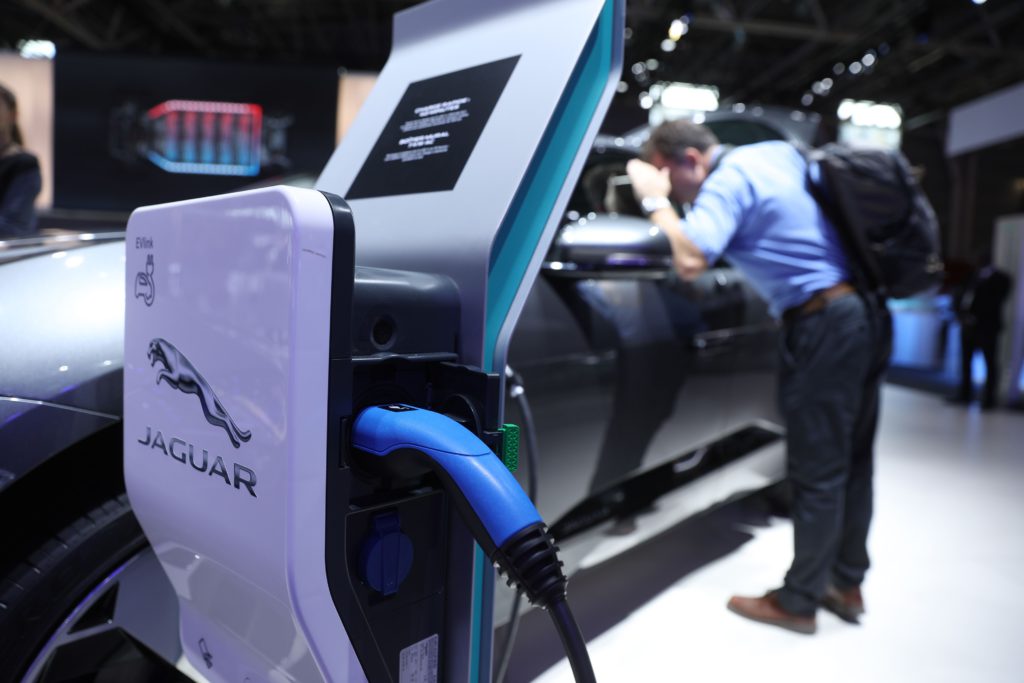
(Bloomberg) — Jaguar Land Rover Automotive Plc said it would teach 60% of its global workforce to develop, manufacture and service electric vehicles as the carmaker tries to set itself up for a post-fossil fuels future.

The British company said it would train 29,000 of its own employees as well as workers in franchised dealerships. A majority of the company’s retail technicians will be taught to repair and service electric vehicles during this financial year, JLR said in a statement Wednesday, adding that almost 10,000 of the workers are in the UK.

Automakers around the world have been working to re-skill workers as they ramp up electrification plans. In July, Mercedes-Benz Group AG said it would spend more than €1.3 billion ($1.25 billion) on training staff through 2030.

JLR has previously announced plans to completely ditch combustion engines at Jaguar, the smaller of the two brands, by 2025, while Land Rover will get its first fully electric model in 2024. The carmaker has struggled in recent months as semiconductor shortages hobbled deliveries of its luxury SUVs and sports cars.

More stories like this are available on bloomberg.com

©2022 Bloomberg L.P.

China Lacks the Right Workers to Boost Xi’s Favored Tech Jobs

(Bloomberg) — For a decade, China’s tech giants like Alibaba Group Holding Ltd. and Tencent Holdings Ltd. were a major driver of its economy, drawing the lion’s share of top talent to work in their ecosystems that controlled everything from messaging to payments. 

Their boom years have come to an abrupt halt, with a regulatory crackdown, an economic slowdown and recurring Covid lockdowns now forcing them to cut thousands of jobs. 

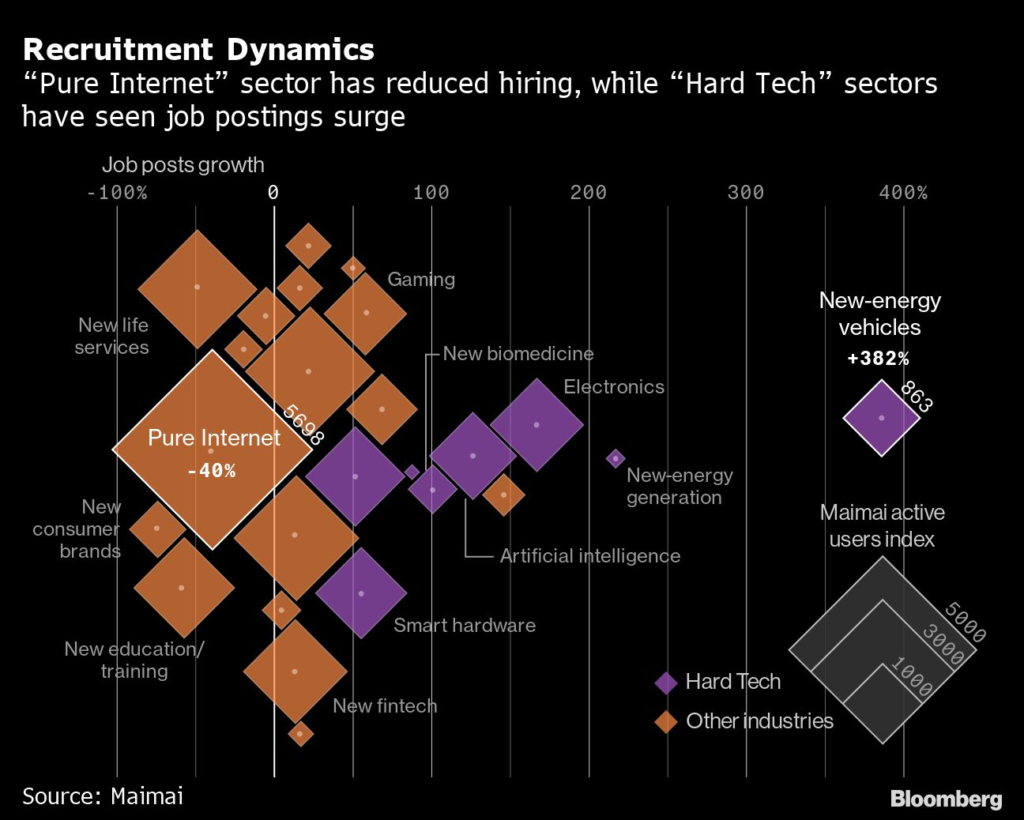
The hiring momentum has shifted to a slew of burgeoning industries favored by Beijing, from electric vehicles to bio-pharmaceuticals and artificial intelligence, where China wants to develop its own cutting-edge technology that can supply the rest of the world – and prevent it from being reliant on Western innovation. Job postings over the past year in these industries, collectively known as “Hard Tech,” have surged by as much as 382%, while that for the internet sector fell by 40%. 

Yet a skills mismatch in the highly-educated segment of China’s workforce is hobbling the transition, with many of those cut loose from the internet sector lacking the skills to pivot into the emerging industries where both state and venture capital funding is flowing.

It’s a discrepancy that partly accounts for the high rate of unemployment, particularly among those 16 to 24 in China, and may potentially slow advancements in prioritized industries facing a talent shortage. 

That’s the picture from a new trove of data from Maimai, a careers-focused social platform that can be thought of as China’s LinkedIn, but with a far broader reach: two in three staff employed by the largest Chinese tech companies use the site. They’re required to submit proof of employment to enable some interaction functions, and 80% of users do so, which allows Maimai to see detailed company and sector-level trends that nationwide statistics can’t provide.

For the first half of 2022, job posts on Maimai for the “Pure Internet” sector – which includes Tencent, Alibaba and Bytedance Ltd. – fell 40% from a year ago. In “Hard Tech” sectors like new-energy vehicles and new-energy generation, job postings surged 382% and 215% respectively. Openings in electronics, AI and new biomedicine climbed by more than 100%. 

A closer look at job flow data in the same period of time — which tracks people who update their employer information on the site — shows the bottlenecks facing jobseekers leaving internet companies. 

Among those exiting the Pure Internet category, most end up in adjacent industries like corporate digital services, e-commerce, and gaming. In the first half of 2022, just 7% moved into AI, 5.2% into electric vehicles and 2% into electronics, a category that includes semiconductor chipmakers. Fewer than 0.6% went into biomedicine. 

Those Hard Tech industries are fighting over a small pool of candidates, with fierce competition for core technical positions, said Lin Fan, founder and chief executive officer of Maimai. In the AI industry for example, an average of 12.5 companies are competing for one vision algorithm engineer, according to Maimai’s data. For experts in natural language processing, over 2 companies on average are interested.

“Many talented people in the internet sector now, they are people with general skills, but there are not many general-purpose talents who can break technical barriers,” said Zeng Xiangquan, a labor economics professor and the director of the China Institute for Employment Research at Renmin University of China in Beijing.

The skills needed in the internet sector are mainly algorithm and software building coupled with operations and marketing, Zeng said. But what emerging Hard Tech companies need are industry-specific skills that combine software, hardware and mechanics, he noted. 

“The career change from the internet sector to these emerging industries, whether it is biomedicine or chips, the shift must happen. But this shift is not that simple,” he said. 

Compounding the problem is that China’s tech giants paid relatively well in their heyday, making these new jobseekers expensive for emerging-technology industries. Those companies also supplied perks like dining halls and gyms.

Ye Yichuan, a 29-year-old product manager at an AI healthcare company in Beijing, switched jobs three times after leaving his e-commerce employer in 2016. First he joined a livestreaming company, then an AI voice-recognition firm, slowly building up his skillset.

It was a difficult and lonely path, he said, with few around him making the same push, out of inertia and a lack of industry nous. “I sensed the room for growth in the internet sector has shrunk and the boom years are behind us,” he said. “When the industry has gradually turned into a rat race, and your input doesn’t yield as much output, it’s time to look for the next blue sea. What’s the point of waiting to be eliminated?”

Despite the hurdles, Ye said that his operational skills from the internet sector, like the ability to scale up businesses quickly and combine online and offline channels, were in demand by emerging industry employers, which made his career switch possible.

Chinese government policy is pushing this pivot, with billions of state funds going into emerging industries in which Beijing wants to be self-sufficient, if not dominant globally. What Maimai’s job switch data shows is that these sorts of state-led economic transitions can take a long time to bear fruit.

“The unemployment situation has not been improving significantly even with easing policies and some incentives to the employers,” said Liu Peiqian, chief China economist at NatWest Group Plc. “That itself reflects the fact that structural unemployment is also a problem on the ground.”

Still, the country’s strategic approach of supporting certain industries has successfully created companies that are some of the world’s biggest in the manufacturing of smartphones, solar panels, auto batteries and active pharmaceutical ingredients, and officials are now focused on making advancements in frontier technologies like space exploration and biomedicine.

While those currently in the workforce may be facing a painful reckoning, future generations of young graduates could plug the skills gap.

“We’re not talking about the next few quarters, but rather, in the next decade, would China be able to reap more of the dividend from more skilled workers,” said Liu, pointing to the 11 million graduates that Chinese universities pump out every year. 

Maimai CEO Lin believes that it’ll take three to five years before the bottlenecks facing today’s young talent start to ease, unleashing a new chapter of Chinese innovation. 

“The era of the great migration of talent has begun,” he said. “Just like 20 years ago, a large number of young people rushed to the internet sector and set off an internet revolution, today’s young people will flock to the Hard Tech industry.”

More stories like this are available on bloomberg.com

©2022 Bloomberg L.P.

Musk Hasn’t Handed Over His Texts With Morgan Stanley’s CEO, Twitter Says

(Bloomberg) — Twitter Inc. is complaining Elon Musk’s legal team hasn’t turned over his texts with Morgan Stanley Chief Executive Officer James Gorman ahead of trial over the $44 billion acquisition offer Musk is trying to cancel.

Lawyers for Twitter asked Delaware Chancery Court Judge Kathaleen St. J. McCormick at a hearing Tuesday to sanction the billionaire and his lawyers for not producing texts with Gorman and Oracle Corp. Chairman Larry Ellison. The judge said she was “troubled” by how Musk’s team handled the messages, but said she’ll rule later.

Twitter subpoenaed the texts before the Oct. 17 trial in Wilmington, Delaware, in which McCormick will decide whether the world’s richest person had legitimate grounds for walking away from his $54.20-per-share offer to buy the social media platform. Morgan Stanley was Musk’s chief financial adviser and pledged more than $5 billion in financing, while Ellison invested $1 billion.

According to Twitter’s court filings, Musk withheld four texts with Gorman, including some from April 25, the day the company accepted Musk’s offer. “The time has come for the court to issue a severe sanction” over the handling of texts and emails by Musk and his top aides, said Bradley Wilson, one of Twitter’s lawyers. 

During the hearing Tuesday, the Twitter team also complained Musk’s lawyers with dragging their feet in disclosing research that may show the extent of spam and robot accounts on the platform wasn’t nearly as significant as the billionaire claimed publicly.   

‘Early Morning’ Texts

Earlier this month, Twitter’s legal team pointed to a May text by Musk to another Morgan Stanley banker seeking to slow down the deal process until after Russian President Vladimir Putin gave a speech the following day about the war Ukraine. “It won’t make sense to buy Twitter if we’re heading into World War III,” Musk wrote. 

Twitter is also targeting texts between Musk and Ellison just before the former announced he was withdrawing his offer. The two billionaires were communicating “into the early morning hours,” Twitter said. 

“Musk sent his final message to Ellison at 12:20 a.m. on May 13,” according to the filing. About four hours later, Musk tweeted he was putting the deal on hold over concerns Twitter was under-counting the number of bot accounts on the platform.

Twitter further complained Musk failed to turn over some of his own texts as well as some from top aide Jared Birchall and lead lawyer Alex Spiro. The company said it was able to obtain some of the texts from the other parties copied in the messages. Twitter called this another example of Musk’s “lackadaisical efforts” to hand over relevant information.

A spokesman for Musk’s lawyers didn’t have any immediate comment Tuesday. Mary Claire Delaney, a Morgan Stanley spokeswoman, and an Oracle spokesperson declined to comment.

McCormick denied a previous Twitter request for sanctions but sharply criticized Musk for failing to turn over texts. She noted Musk produced June 17 texts that Robert Steel of Perella Weinberg sent him 18 minutes apart. Steel first asked a question and then subsequently texted, “Ok. Got it…,” leaving a clear gap in the exchange, the judge said.

“Assuming that Musk’s response was not telepathic, one would expect some evidence of it in defendants’ document production,” McCormick wrote. “But defendants provided none by the deadline.”

Twitter seeks to convince McCormick that Musk pulled out of the deal because of buyer’s remorse, not over concerns about the number of bots embedded in the platform’s more than 230 million users. 

On Tuesday, the company’s lawyers complained their counterparts were dragging their feet in turning over unredacted reports by data scientists hired by Musk to assess the bot issue. 

Some of the materials already produced show Musk’s experts found only about 11% of the customer base was made up of bots, Wilson said. Twitter estimated in securities filings bots make up about 5%.

Musk claims his analysis shows as much as a third of Twitter’s customers may be robots rather than humans and the platform’s executives misled him and company investors about the issue to protect advertising revenue.

“We think it’s clear why” the Tesla CEO wants to avoid turning over the full bot reports because they are at odds with his estimates, Wilson said. McCormick said she’d rule later on the issue.

The case is Twitter v. Musk, 22-0613, Delaware Chancery Court (Wilmington). 

(Updates with judge’s comment in hearing starting in second paragraph)

More stories like this are available on bloomberg.com

©2022 Bloomberg L.P.
Close Bitnami banner
Bitnami