
Bloomberg

Ukraine Latest: US Will Give Another $1 Billion in Security Aid

(Bloomberg) — The Biden administration will announce another $1 billion in security aid to Ukraine on Wednesday, say two people familiar with the matter. European Commission President Ursula von der Leyen described the disruption of the Nord Stream natural gas pipeline as “sabotage” on Tuesday, and warned of “the strongest possible response.” Officials of US, Germany and Poland cited the prospect of sabotage by Russia after Swedish scientists said they had detected two powerful underwater explosions near enormous leaks coming from the pipeline system that usually supplies Europe. The prime ministers of Denmark and Sweden said the leaks were no accident.

Kremlin spokesman Dmitry Peskov said that Russia was “extremely concerned” about the reports of leaks, which prompted a surge in gas prices even though flows through the pipeline have been halted for months.

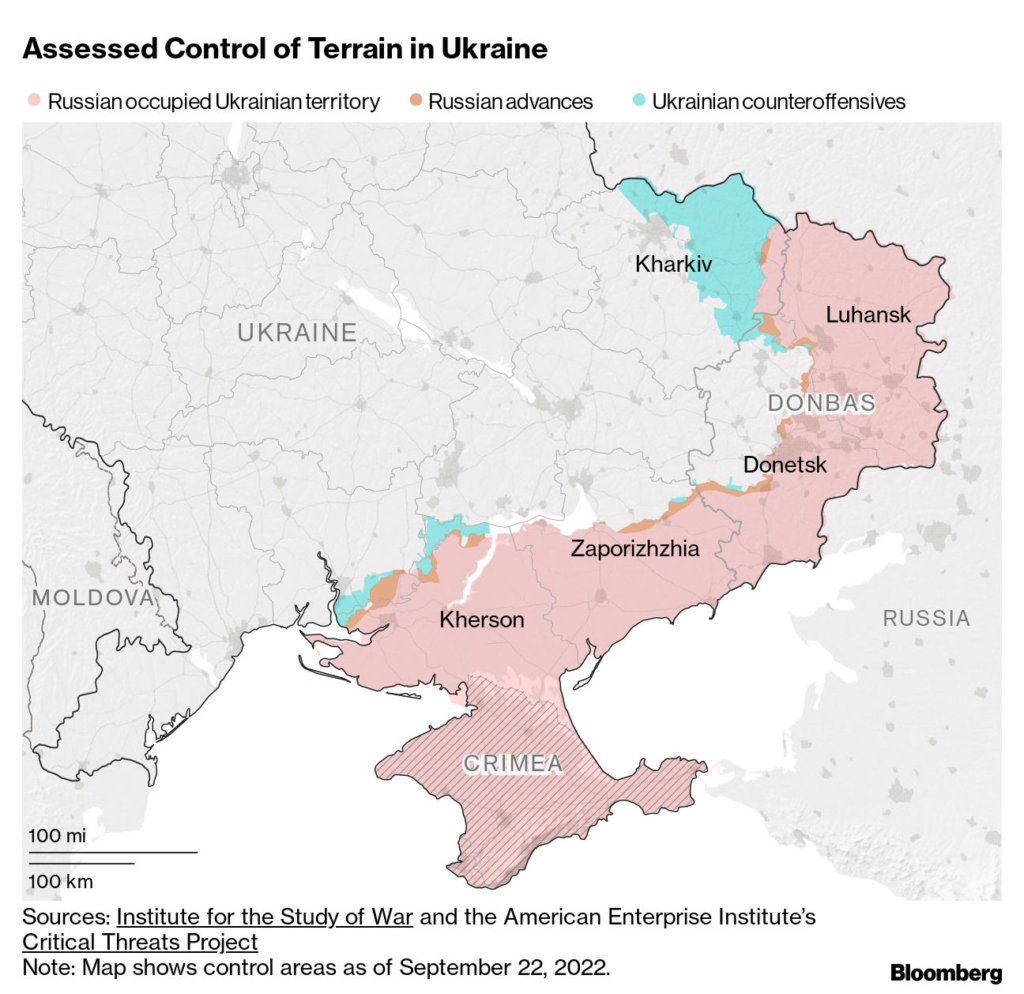
Ukrainian President Volodymyr Zelenskiy said the current focus of the war is Donetsk, describing the heavily industrial eastern region as the “primary target” for both Ukraine and invading Russian forces. He also urged the international community to step up pressure on Russia with sanctions.


(See RSAN on the Bloomberg Terminal for the Russian Sanctions Dashboard.)

Key Developments

  • Putin Raises Gas Pressure as He Moves to Annex Ukraine Regions
  • Putin’s Mobilization Hits Russia’s Economy in Its Weak Spots
  • Nord Stream Says Gas Pipeline Damage is Unprecedented
  • Putin Raises Stakes on Ukraine’s Bid for More Powerful Weapons
  • Sanctioned Billionaire’s Yacht Auctioned for $38 Million

On the Ground

Russian forces hit Kryvyi Rih airport in the Ukraine’s central Dnipropetrovsk region with a missile, rendering it inoperable, local authorities said late Monday. Russian rockets also struck the city of Zaporizhzhia. Ukraine’s General Staff reported that the situation at the Zaporizhzhia nuclear power plant remains tense, with staff reluctant to work with Russians and trying to flee occupied territories. In the south, Russia attacked the Odesa region with drones, all three of which were shot down by air-defense forces, while the city of Mykolaiv was heavily shelled overnight, local authorities said. Ukrainian forces continued to make advances north of Lyman and on the eastern bank of the Oskil River, according to the latest report by the Washington-based Institute for the Study of War.

All times CET:

US to Provide Another $1 Billion in Security Aid (1:30 a.m.)

The Biden administration was set to announce another $1 billion in security assistance to Ukraine on Wednesday, according to two people familiar with the matter.

The money, provided under the Ukraine Security Assistance Initiative, will allow Ukraine to buy weapons and equipment from US defense contractors, said the people, who asked not to be identified discussing a plan that wasn’t yet public. 

The assistance, to be announced Wednesday, will bring total US security aid to Ukraine to more than $16 billion since January 2021, the vast majority coming since Russia invaded on Feb 24. Ukraine has repeatedly asked the US for more powerful weapons as it seeks to maintain momentum in its counteroffensive against in the east. In an interview with “60 Minutes” on Sunday, Zelenskiy said the US had agreed to provide Ukraine with Nasams air defense systems, and US officials say they’re reviewing requests for other weapons as well.

Von Der Leyen Calls for Investigation of Pipeline ‘Incidents’ (12:08 a.m.)

Von der Leyen said she had spoken to Danish Prime Minister Mette Frederiksen about the “sabotage action” on the Nord Stream pipeline.

“Paramount to now investigate the incidents, get full clarity on events & why,” she tweeted on Tuesday. Von der Leyen added that “Any deliberate disruption of active European energy infrastructure is unacceptable & will lead to the strongest possible response.” 

Denmark, Sweden Say Nord Stream Leaks Caused Deliberately (9:37 p.m.)

Danish and Swedish governments both concluded that the leaks on the Nord Stream gas pipelines were the result of deliberate actions.

Denmark’s Prime Minister Mette Frederiksen told reporters late Tuesday in Copenhagen that “several explosions have occurred” and they’re “not an accident,” though her government wouldn’t speculate on who’s responsible. Sweden’s cabinet, which held an emergency meeting on Tuesday, is treating the events in the Baltic Sea as “suspected sabotage,” Prime Minister Magdalena Andersson told reporters.

Both premiers said the incident can’t be seen as an attack against their nations because it occurred in the Nordic countries’ exclusive economic zones, which are in international waters and not part of their territories. 

EU Eyes Ban on Work in Top Jobs at Russia State Enterprises (9:31 p.m.)

The European Union is considering a German proposal to ban EU nationals from holding high-paying roles in Russian state-owned companies, according to people familiar with the matter.

The proposal, if formally presented by the European Commission and backed by all member states, would cast a wide net over EU nationals. As a result, it would be likely to scoop up former German Chancellor Gerhard Schroeder, said the people who declined to be named on confidential talks.

According to German media, Schroeder is the chairman of the shareholders’ committee of Nord Stream AG, a joint project to transport Russian gas via pipeline, which is majority-owned by the energy giant Gazprom PJSC.

Read the full story here.

NATO Monitoring Nord Stream Leaks, Stoltenberg Says (7:13 p.m.)

NATO Secretary General Jens Stoltenberg said the military alliance was closely monitoring the reports of the Nord Stream leakages, adding NATO was in close contact with the allies involved. 

“This is something that is extremely important to get all the facts on the table. and therefore this is something we’ll look closely into in the coming hours and days,” he said.

Blinken Says Reports Indicate Nord Stream Leaks Were Sabotage (6:37 p.m.)

Leaks in the Nord Stream pipeline are under investigation and initial reports indicate they may have been the result of sabotage, US Secretary of State Antony Blinken said.

“There are initial reports indicating that this may be the result of an attack or some kind of sabotage, but these are initial reports and we haven’t confirmed that yet,” Blinken told a news conference in Washington.

Blinken said the US and its allies were “working day in, day out” to address Europe’s energy security, and “the leaks will not have a significant impact on Europe’s energy resilience.”

Russia Prepares to Declare Staged Annexation Votes Passed (6:22 p.m.)

Occupation authorities in Russian-held parts of Ukraine reported as many as 90% of those voting favored joining their eastern neighbor in initial returns from “referendums,” as officials in Moscow said they plan to move quickly to formalize the annexation.

The United Nations, as well as Ukraine and its allies in the US and Europe, have denounced the votes, conducted largely in an active war zone, as illegal and illegitimate.

Gazprom Warns of Sanctions Risk to Ukraine Gas Flows (5:30 p.m.)

Russia’s Gazprom PJSC warned there’s a risk Moscow will sanction Ukraine’s Naftogaz, which would prevent it from being able to pay transit fees, and therefore put at risk gas flows to Europe via Ukraine.

If supplies through Ukraine are shut down, it would leave Gazprom sending gas only via the TurkStream pipeline to Turkey and a handful of European countries that didn’t sever business ties with Russia. 

Gas prices were up as much as 22% as traders factored in the prospect that Europe will have to live without Russian gas this winter — and beyond.

Read more: After Nord Stream Hit, Gazprom Warns on Ukraine Flows

Ukraine Demands EU Add New Russia Sanctions (5:25 p.m.)

Ukraine seeks a clear signal on a new sanctions package in reaction on sham referendums being held on its territory by Russia, Zelenskiy said during a meeting with French Foreign Minister Catherine Colonna. “We expect clear sanctions — both in the 8th package and separate signals of what will happen if Russia recognizes sham referendums,” Zelenskiy added.

Russia Senate May Vote to Annex Ukraine Lands Next Week: Tass (4:10 p.m.)

The upper house of Russia’s parliament isn’t currently planning a special session to vote to annex occupied territories in Ukraine and may discuss the issue at its next regular session on Oct. 4, Speaker Valentina Matviyenko said, according to Tass.

The Kremlin has pushed through “referendums” on annexation in the Donetsk, Luhansk, Zaporizhzhia and Kherson regions and local occupation officials are already reporting initial results showing 90%-plus voting in favor. The United Nations has condemned the “referendums” as illegal, as have Kyiv and its allies in the US and Europe.

Sweden Detected Underwater Blasts Near Nord Stream Leak (4 p.m.)

Two powerful underwater explosions were detected on Monday in the same area of sea as the Nord Stream gas leaks, according to the Swedish National Seismic Network.

The monitoring network said the first explosion occurred on Monday at 2:03 a.m. Swedish time with a magnitude of 1.9 on the Richter scale, followed by a second at 7:04 p.m. on the same day with a magnitude of 2.3.

“It’s clear that there has been some kind of explosions, and the coordinates match the leaks,” Peter Schmidt, a seismologist who works with the group, said by phone.

Danish Video Shows Extent of Pipeline Damage (3:20 p.m.) 

The leaks on the Nord Stream pipelines are forming an area of natural gas bubbles about 1 kilometer (1,090 yards) in diameter in the Baltic Sea, a video released by the Danish army showed.

Another smaller area with gas bubbles measured about 200 meters in diameter, according to the footage, which the Danish Defense shared on its website and via its Twitter account. 

UN Recorded Near 6,000 Civilian Deaths in Ukraine (3 p.m.)

United Nations specialists recorded 5,996 civilians being killed in Ukraine since the beginning of the Russian invasion, including 382 children, the UN Human Rights Monitoring Mission in Ukraine said in a new report.

The mission reported 8,848 corroborated civilian injuries, noting that actual figures may be much higher as hostilities severely hinder information gathering and verification.

Most of civilian casualties were due to the use of explosive weapons in populated areas. The UN also recorded willful killings and numerous cases of arbitrary detention and enforced disappearances, torture and ill-treatment, as well as conflict-related sexual violence, mostly in the territories controlled by Russian armed forces or affiliated groups.

Meta Blocks Propaganda Accounts From Russia (2:45 p.m.)

Meta Platforms Inc. has blocked thousands of “inauthentic” accounts, pages and groups from Facebook and Instagram that originated in Russia and spread propaganda about that country’s invasion of Ukraine.

The group behind the accounts created 60 websites “carefully impersonating legitimate news organizations in Europe,” Meta said.

Russian Billionaire Fights UK Sanctions Probe (2:40 p.m.)

Russian billionaire Petr Aven, fighting a UK investigation for evading sanctions, used companies supposed to manage his luxury mansion as a personal “piggy bank,” according to British authorities.

The investigation has focused on around 3.7 million euros ($3.6 million) routed to the UK from an Austrian trust in the hours before European sanctions were imposed.

Read more: Billionaire Without a Bank Account Fights UK Sanctions Probe

Denmark Says Pipeline Sabotage Can’t be Ruled Out (12:50 p.m.)

Denmark’s prime minister, Mette Frederiksen, echoed Peskov is saying that sabotage cannot be ruled out as the cause of damage to Nord Stream infrastructure off the island of Bornholm in the Baltic Sea.

“It’s hard to imagine that these are coincidences,” the prime minister said in an interview with broadcaster TV2 from Poland, where she’s attending the opening ceremony of Baltic Pipe, a separate gas link between Norway and Poland.

Ukraine Slams Lufthansa Over Stake in Russian Airline Caterer (12:15 p.m.)

Ukraine’s foreign minister accused airline Deutsche Lufthansa AG of taking “blood money” and damaging Germany’s reputation over its minority stake in Russian airline caterer Aeromar.

“I urge the company’s management to immediately withdraw from Aeromar and stop supporting Russia’s war crimes,” Dmytro Kuleba said in an interview with German public broadcaster ZDF. Responding to ZDF’s inquiry about the Aeromar stake, Lufthansa said it’s not in breach of European Union sanctions on Russia and as a minority shareholder had no influence over a decision to establish a facility in Russian-annexed Crimea, the broadcaster said.

More stories like this are available on bloomberg.com

©2022 Bloomberg L.P.
Celsius CEO Resigns as Bankrupt Crypto Firm Works to Survive

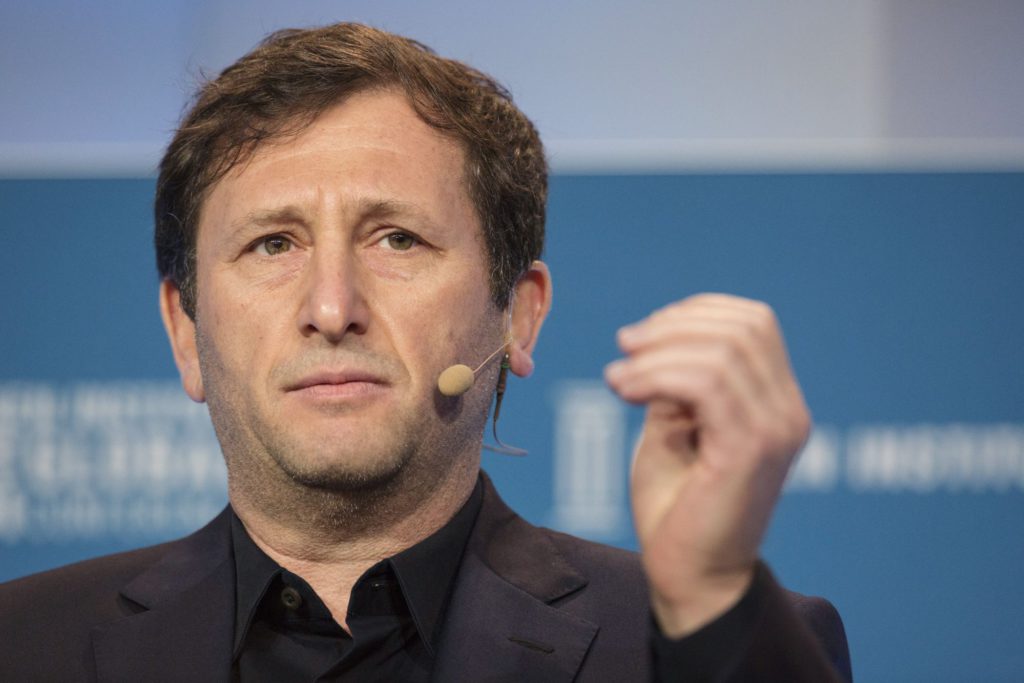
(Bloomberg) — Celsius Network Ltd. Chief Executive Officer Alex Mashinsky, who founded the embattled crypto startup and served as pitchman for the sky-high yields it promised to its thousands of investors, is stepping down as the company works its way through bankruptcy.

The Hoboken, NJ-based company said it appointed Chief Financial Officer Chris Ferraro, a JPMorgan Chase & Co. veteran, to the role of chief restructuring officer and interim CEO.

The leadership change represents a major shift for the company, which filed for bankruptcy protection in July. Celsius was one of the most notable casualties in this year’s crypto market meltdown, which started with the implosion of the TerraUSD algorithmic stablecoin in May and went on to engulf crypto lender Voyager Digital Holdings Inc., hedge fund Three Arrows Capital and others across the industry while handing investors billions of dollars in losses.

Mashinsky, 56, who co-founded Celsius in 2017, said that he will continue “working to help the community unite behind a plan that will provide the best outcome for all creditors – which is what I have been doing since the company filed for bankruptcy,” according to a statement from Cadwalader, Wickersham & Taft LLP, the law firm representing Mashinsky.

The statement included an excerpt from Mashinsky’s resignation letter, which said that he regrets that his role as CEO “has become an increasing distraction.” 

Under Mashinsky’s leadership, Celsius became mired in an increasing number of controversies. The company froze user withdrawals in June as it experienced liquidity issues, faced a lawsuit in July that called the firm a “Ponzi scheme” and disclosed a $1.19 billion deficit in its bankruptcy filing later that month. Along with Gemini Trust Co. and Voyager, Celsius faced scrutiny earlier this year from the US Securities and Exchange Commission over whether products that pay interest on crypto deposits should be registered as securities.

The startup has also faced the wrath of its customers. A chat group on the Telegram messaging app called “Celsius Custody Accts” has gained more than 1,300 members after being promoted on Reddit in July. The group’s members have contributed funds to secure legal representation in an effort to recover the money they invested on the Celsius platform. The company sought to return $50 million to users who were locked out of their Celsius accounts, but that’s just a fraction of the more than $200 million worth of crypto trapped on the platform.

Read more: Crypto Reddit Mobilizes After Being Pummeled by Bankruptcies

The company eyed a comeback as Mashinsky laid out plans to pivot to crypto custody during an internal meeting earlier this month, according to a report from The New York Times. Following Tuesday’s announcement, the price of the Celsius token fell 4% to $1.40, according to CoinMarketCap.

Mashinsky “doesn’t have any credibility to push through any reorganization plans, given his track record,” Mike Alfred, a private investor who co-founded BrightScope Inc. and who has been a notable critic of Celsius even before it filed for bankruptcy, said. “In order to get a reorganization plan approved, he probably has to walk away.”

Celsius’s official committee of unsecured creditors said in a statement filed in court today that after conducting an investigation it “concluded that allowing Mr. Mashinsky to remain as CEO was unacceptable and not in the best interests of the estates, and that new executive leadership was required.” 

“For the avoidance of any doubt, the Committee intends to pursue any actionable claims against Mr. Mashinsky, other insiders, and any related parties for the benefit of all account holders and unsecured creditors,” the filing said.

Read more: Crypto Shakeout Engulfs the C-Suite as CEOs Start Leaving (1)

Mashinsky joins a growing list of crypto executives who have resigned or announced plans to step down during the market’s downdraft. Jesse Powell, the often controversial co-founder of crypto exchange Kraken, announced last week that he was giving up the role of CEO to become chairman. In August, crypto brokerage Genesis’s CEO, Michael Moro, and Alameda Research co-CEO Sam Trabucco gave up their titles. Michael Saylor, the long-time CEO of MicroStrategy Inc., stepped down after the software maker and Bitcoin buyer reported more than $1 billion quarterly loss related to the cryptocurrency’s massive price plunge.

Also Tuesday, Brett Harrison, president of crypto exchange FTX US, announced plans of his own to step down.

(Adds creditors’ statement)

More stories like this are available on bloomberg.com

©2022 Bloomberg L.P.
Stocks Drop for Sixth Session as Rate Woes Persist: Markets Wrap

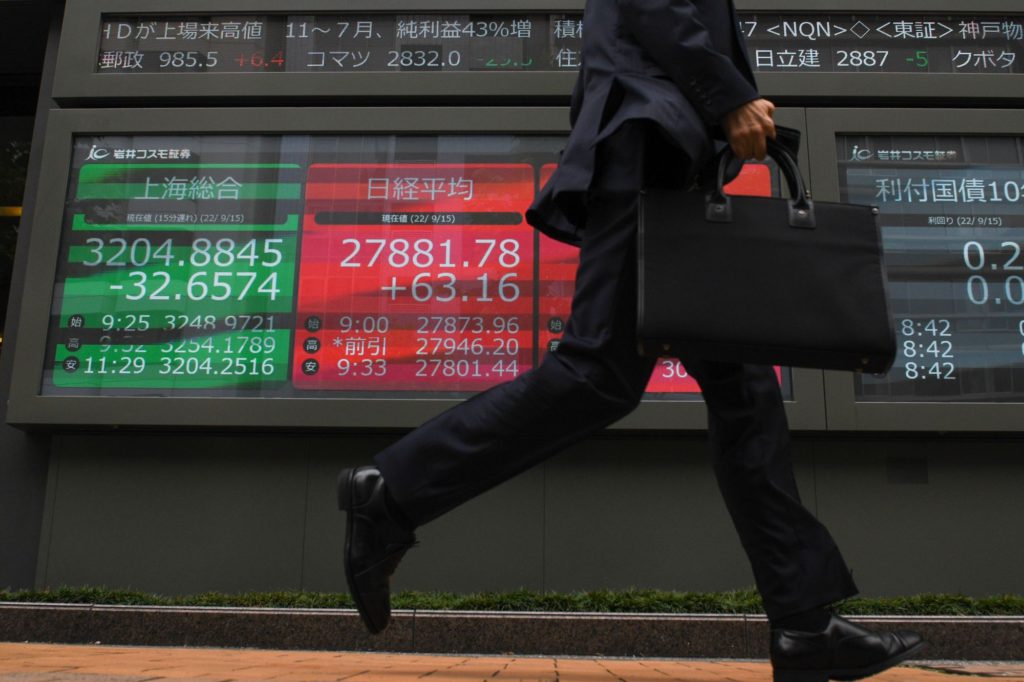
(Bloomberg) — US stocks ended a volatile session lower after a slew of Federal Reserve officials hammered home their resolve to remain aggressive in their fight against inflation.

The S&P 500 dropped for the sixth straight session, its longest losing streak since February 2020, sparked by harsh central bank tightening programs. The index swung between gains and losses throughout the session after the Federal Reserve’s James Bullard added to a chorus of officials saying more rate hikes are needed and the risks to the economy remain elevated.  

Longer-dated Treasuries swung to a loss, erasing an earlier rebound. The Bloomberg Dollar Spot Index set a fresh record high as investors sought haven assets. 

Risk assets have been in a tailspin since the Fed delivered a third jumbo hike and warned of more pain to come. An escalation of Russia’s energy conflict with Europe after three pipelines were wrecked in suspected sabotage pushed European natural gas prices higher, further bruising sentiment during the session. 

Investors also digested a flurry of data on Tuesday, including core capital goods orders and consumer sentiment, that paint a picture of an economy that can likely withstand additional harsh central bank tightening. 

Read More: Stock Bear Market Will Get Whole Lot Worse When Credit Cracks

“It is an unsettled market,” said Louise Goudy, partner at Crewe Advisors. “People aren’t sure what the direction and the terminal rate will be, and that’s until we get a better sense of where we’re really going. But the Fed knows that inflation is a genie that’s hard to get back in the bottle and they want to make sure that they take care of the problem at hand.”

Markets have been dealing with “one rolling shock after another,” and haven’t been able to fully recover, Jack Janasiewicz, portfolio manager with Natixis Investment Managers Solutions, said in an interview at Bloomberg’s New York headquarters.

“I think what’s driving the markets is they just aren’t comfortable with what’s the terminal rate that the Fed needs to get to — is it here, is it much higher, is it close?,” he said “That uncertainty creates interest-rate volatility and I think that’s what the market’s having a tough time digesting.”

Higher interest rates and the dollar are driving a lot of the recent selling, Shawn Cruz, head trading strategist at TD Ameritrade, said in an interview.

“Right now there’s a lot of variables up in the air and we’re not going back and forth between optimism and pessimism — there’s a legitimate repricing and re-evaluation going on at the moment, so it makes sense that you probably aren’t going to see technical levels hold, per se,” he said.

But every tumultuous market day is a step closer to recovery, according to Julie Biel, portfolio manager for Kayne Anderson Rudnick.

“I think there’s more realism, there’s more understanding that a soft landing is just impossible to really navigate when you’ve let out this much fiscal and monetary policy,” she said. “It’s just not possible to engineer this with inflation this high. And so that realism is a positive thing. The thing is that we still kind of have a long way to go in terms of a possible correction.”

UK markets also remained in turmoil days after the new prime minister unveiled sweeping tax cuts that threaten to add to inflationary pressures. The 30-year UK government bond yield topped 5% for the first time in two decades and the pound held near $1.07.

Read More: Bullard Leads Fed Speakers Pushing Hikes, Defending Credibility

How much damage is a strong dollar causing? That’s the theme of this week’s MLIV Pulse survey. It’s brief and we don’t collect your name or any contact information. Please click here to share your views.

Key events this week:

  • Fed’s Mary Daly, Raphael Bostic, Charles Evans and ECB President Christine Lagarde speak at events, Wednesday
  • Euro zone economic confidence, consumer confidence, Germany CPI, Thursday
  • US initial jobless claims, GDP, Thursday
  • Fed’s Loretta Mester, Mary Daly speak at events, Thursday
  • China PMI, Friday
  • Euro zone CPI, unemployment, Friday
  • US consumer income , University of Michigan consumer sentiment, Friday
  • Fed’s Lael Brainard and John Williams speak, Friday

Some of the main moves in markets:

Stocks

  • The S&P 500 fell 0.2% as of 4 p.m. New York time
  • The Nasdaq 100 rose 0.2%
  • The Dow Jones Industrial Average fell 0.4%
  • The MSCI World index fell 1.3%

Currencies

  • The Bloomberg Dollar Spot Index was little changed
  • The euro fell 0.2% to $0.9592
  • The British pound rose 0.3% to $1.0718
  • The Japanese yen was little changed at 144.83 per dollar

Cryptocurrencies

  • Bitcoin fell 0.2% to $19,074.67
  • Ether was little changed at $1,323.64

Bonds

  • The yield on 10-year Treasuries advanced five basis points to 3.98%
  • Germany’s 10-year yield advanced 12 basis points to 2.23%
  • Britain’s 10-year yield advanced 26 basis points to 4.51%

Commodities

  • West Texas Intermediate crude rose 2.4% to $78.54 a barrel
  • Gold futures rose 0.1% to $1,635.50 an ounce

(A previous version corrected the spelling of Atlanta Fed President Raphael Bostic in the ‘key events’ bullet.)

More stories like this are available on bloomberg.com

©2022 Bloomberg L.P.

GM Scales Back Return-to-Office Plan After Staff Backlash

(Bloomberg) — General Motors Co. walked back plans to require employees to return to a company office several days a week, delaying a change to its remote-work policies until next year, according to an internal memo seen by Bloomberg.

The update, sent to salaried staff on Tuesday, clarified a directive issued on Sept. 23 that would have mandated spending three days on GM’s campus each week, starting later this year. While the automaker is still seeking “a more regular, in-person presence,” GM retreated from its return-to-office stance after pushback from employees.

“We acknowledge that the timing of the message, late on a Friday afternoon, was unfortunate,” according to the memo signed by Chief Executive Officer Mary Barra and other members of her senior management team.

Instead, GM will spend the next several weeks developing a plan based in part on employee feedback and pledged not to implement any changes in work-from-home policies until the first quarter of 2023, the memo said.

GM is the latest member of Corporate America to grapple with remote-work policy as pandemic-era measures are reconsidered. A number of US firms, including Big Tech titans such as Apple Inc. and Wall Street banks like Jefferies Financial Group Inc., are nudging employees to return several days a week.

“As we move to a more regular in-person work cycle, our plan is to collaboratively design the solution that best balances the needs of the enterprise with the needs of employees,” a GM spokesperson said.

Many GM employees had complained on internal message boards after the sudden shift away from a work-from-home status quo. In reaction to that pushback, GM is recalibrating its policy and may not adopt a one-size-fits-all approach requiring a standard set of days for a return to office work, said two people familiar with the matter. 

News of GM’s policy about-face was reported earlier by the Detroit Free Press.

More stories like this are available on bloomberg.com

©2022 Bloomberg L.P.
Wall Street Banks Settle SEC’s WhatsApp Probe for $1.1 Billion

(Bloomberg) — Banking giants including Goldman Sachs Group Inc. and Citigroup Inc. agreed to pay regulators $1.1 billion in penalties for failing to monitor employees using unauthorized messaging apps.

The banks, along with Bank of America Corp. and Morgan Stanley, are among the 16 financial firms that reached agreements with the Securities and Exchange Commission, the regulator said in a statement Tuesday.

Finance firms are required to closely monitor staffers’ communications to limit improper conduct. That system, already challenged by the proliferation of mobile-messaging software including WhatsApp, was strained as financial firms sent workers home shortly after the start of the Covid-19 outbreak. 

More stories like this are available on bloomberg.com

©2022 Bloomberg L.P.
Bullard Leads Fed Speakers Pushing Hikes, Defending Credibility

(Bloomberg) — Federal Reserve officials said they needed to keep raising interest rates to restore price stability, with St. Louis Fed chief James Bullard warning that their credibility was on the line.

“This is a serious problem and we need to be sure we respond to it appropriately,” Bullard told an economic conference in London Tuesday. “We have increased the policy rate substantially this year and more increases are indicated,” in the Fed’s latest forecasts.

His commitment to reducing inflation to the Fed’s 2% target was broadly echoed by Chicago Fed chief Charles Evans and Neel Kashkari of Minneapolis, who said the central bank should deliver on the rate increases they have forecast and then hold them there to bring price pressures to heel. 

Their remarks maintain Chair Jerome Powell’s message last week that they will not flinch from confronting inflation despite pain for the US economy — a hawkish stance that’s roiled financial markets and contributed to a steep rise in bond yields. 

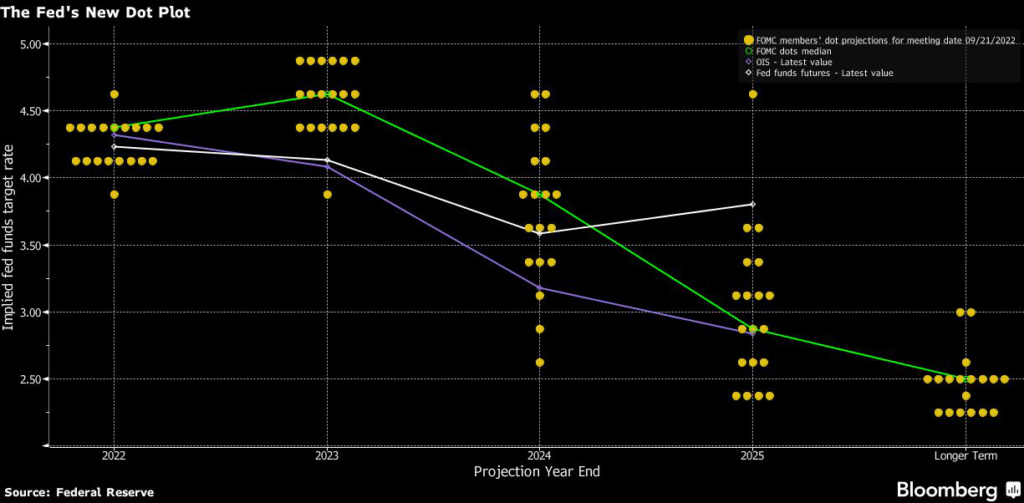
Fed officials raised interest rates by 75 basis points on Sept. 21 for the third straight meeting, bringing the target for the benchmark federal funds rate to a range of 3% to 3.25%. Median projections show officials forecast that rates would reach 4.4% by the end of this year and 4.6% in 2023, a more hawkish shift in their so-called dot plot than anticipated.

Interest rates may need to move to “the 4.5% range,” or about 1 percentage point higher than his projection in April, the St. Louis Fed official said, citing the latest policy committee forecasts as well as a recommended policy rate from an adapted version of the Taylor Rule, a guideline developed by Stanford University’s John Taylor.

 “We have just now gotten to the point where we can argue we are in restrictive territory,” Bullard said. Referring to the rate path laid out in the Fed’s dot plot, he said “I think we need to stay at that higher rate for some time to make sure we’ve got the inflation problem under control.”

Fed officials signaled they expect another 1.25 percentage points of increases over the final two policy meetings of the year in November and December, according to the median of their projections. Investors currently expect a fourth straight increase of 75 basis points at the Nov. 1-2 meeting, according to prices of futures contracts.

Bullard said the US faces recession risks. But he played down the degree of the threat signaled in financial markets by the inverted shape of the yield curve — with shorter-dated securities yielding more than longer-dated ones.

“You would expect the yield curve to be inverted based on the nominal outlook, and not necessarily based on the prediction of a recession,” he said. “It is encouraging that the inflation expectations are in the right place.”

While a number of Fed critics, including former New York Fed President William Dudley, have criticized the central bank for not being upfront with Americans about the level of pain that will be required to bring down inflation, Bullard disagreed and said today’s situation wasn’t too similar to the 1970s. Market pricing of Fed intentions means the tightening of policy has happened well in advance of actual rate hikes, unlike the Paul Volcker-led central bank, he said.

“I think that that means we have a better chance of success,” he said. “So strict comparisons to Volcker I think are inappropriate at this juncture.”

Fed critics are also basing their expectations of considerable pain needed to douse price pressures on the Phillips curve relationship between rising unemployment and falling inflation, which hasn’t worked in recent years, Bullard said. Instead, inflation should come down from reducing inflation expectations. 

“We’ve got a better chance of success with less disruption to the economy than Volcker would have had,” Bullard said.

He instead cited the experience of the Fed’s tightening in 1994 led by Alan Greenspan, when rates rose by 3 percentage points without a recession, setting the stage for “a stellar second half of the 1990s.”

“So I’m hopeful that we can get a similar performance here,” Bullard said.

Fed officials have been united in their calls for tightening to douse inflation near a four-decade high. Earlier, Evans said in a CNBC Europe interview he favored continued hikes, though he also said he could see rates peaking in March followed by a pause in any moves and possibly declines.

Neel Kashkari, in separate remarks during an online interview conducted by the Wall Street Journal, said the Fed should keep tightening until it saw compelling evidence that core inflation was falling and then “be patient,” while nodding to the danger that officials could go too far.

“There’s a lot of tightening in the pipeline. We are committed to restoring price stability but we also recognize given these lags there is a risk of overdoing it,” he said. Asked if he saw grounds for an even larger 100 basis-point increase, Kashkari said “the pace that we’re undertaking right now is appropriate.”

More stories like this are available on bloomberg.com

©2022 Bloomberg L.P.
Phil Falcone Uses Apollo Court Claim to Secure Loan From Michael Dell

(Bloomberg) — In the past decade, former billionaire Phil Falcone drove his multibillion-dollar hedge fund into the ground, was temporarily banished from the securities industry and wrangled in court with multiple creditors. 

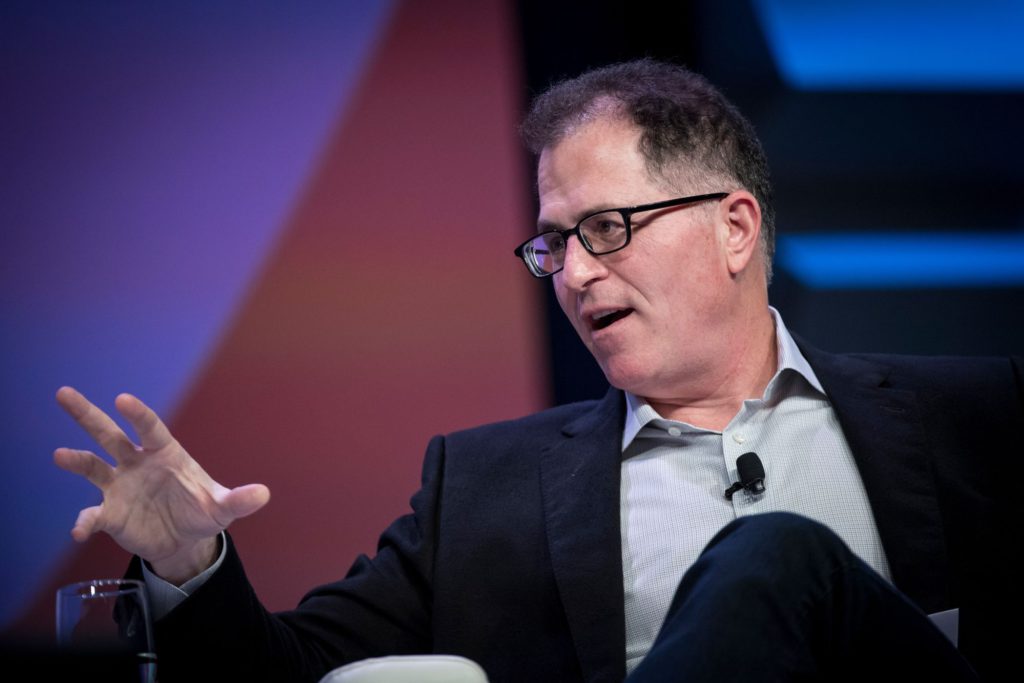
Even so, he’s still managing to raise cash from at least one deep-pocketed backer: Michael Dell. 

Falcone’s Harbinger Capital Partners landed a $3 million loan from Dell’s family office, in part by pledging one of its biggest potential assets: a lawsuit it filed against Apollo Global Management Inc. 

The loan, from an affiliate of Dell’s MSD Capital, is also secured by a portion of Falcone and his wife’s stake in a company that plans to launch a television network devoted to blockchain and cryptocurrencies. The venture marks Falcone’s latest attempt to revive his fortunes. At its peak, Harbinger managed $26 billion after his winning wager against the US housing market in the run-up to the 2008 financial crisis. 

But clients pulled cash after subsequent investments soured — including the acquisition of Apollo’s stake in wireless carrier SkyTerra Communications. In 2013, regulators banned Falcone from the securities industry for five years as part of a settlement in which he admitted borrowing $113 million from a Harbinger fund to pay personal taxes.

Falcone, 60, said in a phone interview that the financing from MSD Capital was a standard hedge fund loan, adding that it wasn’t the first time he had worked with Dell’s family office.

“I have done business with them for years and years,” he said.  

Read more: Falcone’s Harbinger Hedge Fund Turns to Dell’s MSD for Financing

Spokespeople for MSD Capital and Apollo declined to comment. 

The loan represents a tiny fraction of the roughly $15 billion managed by MSD Capital. But it illustrates Falcone’s ability to raise financing, albeit at high rates, even after years of bad publicity. 

Harbinger sued Apollo in 2017, seeking to recoup an investment of almost $2 billion. The hedge fund alleged it was the victim of a “massive fraud” by the private equity giant and its partners who sat on the board of SkyTerra, which was subsequently renamed LightSquared and filed for bankruptcy in 2012. The loan from MSD Capital is secured by “all profits and proceeds” from the pending litigation, according to a filing with New York state.  

Read more: Apollo ‘Fraud’ Led to $2 Billion Loss, Harbinger Claims in Suit

Madison Technologies Inc., the company behind the planned crypto TV venture, has a market value of about $320,000, and its stock most recently traded for less than 1 cent. The firm raised $15 million early last year by selling convertible notes at a discount to funds run by Daniel Zwirn’s Arena Investors, according to an August regulatory filing. The three-year notes, secured by Madison’s stations and licenses, have a face value of $16.5 million and pay annual interest of 11%. That jumped to 20% after Madison missed several recent payments.

The Falcones acquired their Madison Technologies stake through a deal with Jeffrey Canouse, an entrepreneur who had planned to use the company to market a line of women’s shaving products via a branding agreement with Casa Zeta Jones, the lifestyle collection curated by actress Catherine Zeta-Jones. 

Madison shifted gears under Falcone, who initially envisioned using it to buy low-power television stations in major US markets. He subsequently decided to set up a news and entertainment network called Blockchain TV, or BCTV, with programming focused on crypto, non-fungible tokens and other digital assets.

Falcone had been battling in court with multiple creditors  — including one of his longtime lawyers, a limousine company and the Internal Revenue Service — as he sought to maintain a lavish lifestyle and pursue new ventures, the Wall Street Journal reported in December.

“I’m behind on virtually every one of my bills,” Falcone said at one hearing, according to the newspaper. “Including my kids’ tuition.”

(Corrects reference to collateral in fourth paragraph of story originally published on Sept. 16.)

More stories like this are available on bloomberg.com

©2022 Bloomberg L.P.
Intel Unveils New Chips and Software as It Chases a Comeback

(Bloomberg) — Intel Corp., looking to regain its footing in the chip industry, introduced new personal-computer processors and graphics semiconductors, as well as software that makes it easier to use the company’s technology.

Intel’s latest Core desktop processors will provide gamers and other high-performance users with a significant boost, the company said at its Innovate event Tuesday in San Jose, California. A new graphics chip for data centers, meanwhile, is aimed at challenging Nvidia Corp.’s hold on that market. That product, called Ponte Vecchio, has been shipped for use in a new government super computer.

Chief Executive Officer Pat Gelsinger is trying to restore Intel to its former dominance, and the Innovate presentation is part of that. The chipmaker had hosted a well-attended product showcase called the Intel Developer Forum until 2017, when then-CEO Brian Krzanich scrapped the event. Now Gelsinger, in his second year at the helm, is bringing the stage show back.

The stakes are high. Intel lost its status as the world’s largest chipmaker in recent years and fell behind rivals in manufacturing prowess. Gelsinger, a longtime Intel executive who left to run VMware Inc. for more than a decade, returned to the company in 2021 to orchestrate a turnaround.

During Gelsinger’s time away, delays in product introductions led customers to look elsewhere for supplies and technological leadership. A company that once had market share of more than 80% has been losing ground, and customers such as Amazon.com Inc. have increasingly started to design their own chips. 

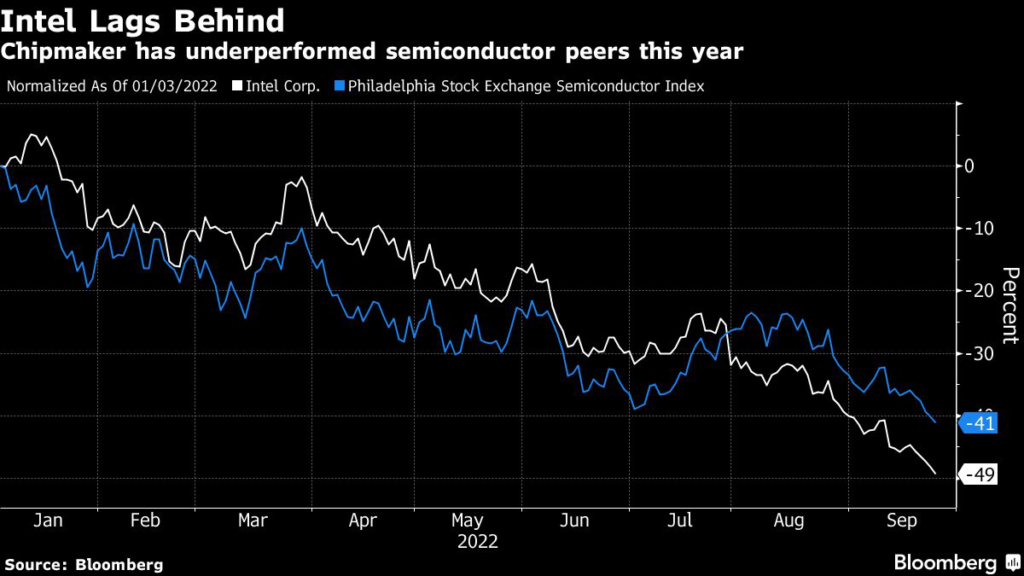
Gelsinger’s challenge: getting the industry to follow Intel’s lead without first proving that its products are the best again. He also faces a slump in demand for PCs, the biggest end market for Intel’s products. And the stock has fallen 48% in 2022, underperforming its peers during a bleak year for the overall chip industry.

Gelsinger’s pitch to investors has been that Intel still leads in many areas and the industry needs its innovations. Under his stewardship, the sleeping giant will take back its technical superiority and resume its central role, he has said.

But computing has changed, and Intel is trying to use the San Jose event to show it’s more open to working with partners. The company is letting its offerings work in tandem with those of others, a break from the past. 

“Fostering this open ecosystem is at the center of our transformation and the developer community is essential to our success,” Gelsinger said.

One of the company’s new products is the Intel Developer Cloud, a program that gives software makers and other customers early access to new chips — in particular, its forthcoming Xeon server products. 

Intel is making the announcements just days after rival Advanced Micro Devices Inc. debuted its new range of processors, a lineup that experts say is among the industry’s best.

At the event, Gelsinger acknowledged that Intel — like its peers — is facing slowing demand for its main product. But he reiterated his belief that the company shouldn’t pull back on investments needed for its long-term strategy.

“You cannot be driven by near-term financials,” he said. “You have to be investing for the future.”

(Updates with additional Gelsinger comment in final two paragraphs.)

More stories like this are available on bloomberg.com

©2022 Bloomberg L.P.

Stocks Fluctuate as Sentiment Remains Bruised: Markets Wrap

(Bloomberg) — Volatility continued to grip global financial markets as US stocks attempted to rebound from a crushing five-day rout sparked by harsh central bank tightening programs. 

The S&P 500 swung between gains and losses on Tuesday, struggling for direction after after the Federal Reserve’s James Bullard added to a chorus of officials saying more rate hikes are needed and the risks to the economy remain elevated. Sentiment stayed sour even after Bullard’s Minneapolis counterpart Neel Kashkari said a soft landing was still possible. Risk assets have been in a tailspin since the Fed delivered a third jumbo hike and warned of more pain to come.

UK markets remained in turmoil days after the new prime minister unveiled sweeping tax cuts that threaten to add to inflationary pressures. The 30-year UK government bond yield topped 5% for the first time in two decades and the pound held near $1.07.

An escalation of Russia’s energy conflict with Europe after three pipelines were wrecked in suspected sabotage pushed European natural gas prices higher, further weighing on sentiment. Investors are also digesting a flurry of data on Tuesday, including core capital goods orders and consumer sentiment, that paint a picture of an economy that can likely withstand additional harsh central bank tightening.

Markets have been dealing with “one rolling shock after another,” and haven’t been able to fully recover, Jack Janasiewicz, portfolio manager with Natixis Investment Managers Solutions, said in an interview at Bloomberg’s New York headquarters.

“I think what’s driving the markets is they just aren’t comfortable with what’s the terminal rate that the Fed needs to get to — is it here, is it much higher, is it close?,” he said “That uncertainty creates interest-rate volatility and I think that’s what the market’s having a tough time digesting.”

Higher interest rates and the dollar are driving a lot of the recent selling, Shawn Cruz, head trading strategist at TD Ameritrade, said in an interview.

“Right now there’s a lot of variables up in the air and we’re not going back and forth between optimism and pessimism — there’s a legitimate repricing and re-evaluation going on at the moment, so it makes sense that you probably aren’t going to see technical levels hold, per se,” he said.

But every tumultuous market day is a step closer to recovery, according to Julie Biel, portfolio manager for Kayne Anderson Rudnick.

“I think there’s more realism, there’s more understanding that a soft landing is just impossible to really navigate when you’ve let out this much fiscal and monetary policy,” she said. “It’s just not possible to engineer this with inflation this high. And so that realism is a positive thing. The thing is that we still kind of have a long way to go in terms of a possible correction.”

How much damage is a strong dollar causing? That’s the theme of this week’s MLIV Pulse survey. It’s brief and we don’t collect your name or any contact information. Please click here to share your views.

Key events this week:

  • Fed’s Mary Daly, Raphael Bostic, Charles Evans and ECB President Christine Lagarde speak at events, Wednesday
  • Euro zone economic confidence, consumer confidence, Germany CPI, Thursday
  • US initial jobless claims, GDP, Thursday
  • Fed’s Loretta Mester, Mary Daly speak at events, Thursday
  • China PMI, Friday
  • Euro zone CPI, unemployment, Friday
  • US consumer income , University of Michigan consumer sentiment, Friday
  • Fed’s Lael Brainard and John Williams speak, Friday

Some of the main moves in markets:

Stocks

  • The S&P 500 was little changed as of 2:59 p.m. New York time
  • The Nasdaq 100 rose 0.3%
  • The Dow Jones Industrial Average fell 0.2%
  • The MSCI World index fell 1.3%

Currencies

  • The Bloomberg Dollar Spot Index was little changed
  • The euro was little changed at $0.9601
  • The British pound rose 0.4% to $1.0733
  • The Japanese yen was little changed at 144.74 per dollar

Cryptocurrencies

  • Bitcoin rose 0.2% to $19,152.96
  • Ether was little changed at $1,324.17

Bonds

  • The yield on 10-year Treasuries advanced three basis points to 3.96%
  • Germany’s 10-year yield advanced 12 basis points to 2.23%
  • Britain’s 10-year yield advanced 26 basis points to 4.51%

Commodities

  • West Texas Intermediate crude rose 2.7% to $78.77 a barrel
  • Gold futures rose 0.3% to $1,639.10 an ounce

(A previous version corrected the spelling of Atlanta Fed President Raphael Bostic in the ‘key events’ bullet.)

More stories like this are available on bloomberg.com

©2022 Bloomberg L.P.

Harley’s Electric-Motorcycle Spinoff Raises Less Than Planned in SPAC Debut

(Bloomberg) — LiveWire Group Inc., the electric motorcycle division spun off by Harley-Davidson Inc., raised less than planned and was valued below expectations in a lackluster trading debut.

The company, which went public through a combination with a blank-check firm, brought in $295 million in net proceeds through the listing, a spokesperson said Tuesday. That’s far short of the $545 million anticipated when the deal was announced in December.

After an initial surge, the shares fell 7.1% at 2:27 p.m. in New York, valuing the company at about $2 billion. LiveWire originally expected an equity value of $2.3 billion at close.

The loss-making EV business merged with AEA-Bridges Impact Corp., a special purpose acquisition company, to help fund its business plan until it breaks even in 2026. But in the nine months since the deal was announced, investors have shied away from blank-check transactions and the broader market has declined amid runaway inflation and rising interest rates.

“We don’t have the excess liquidity that is needed to keep the SPAC bull market going,” Matthew Maley, chief market strategist at Miller Tabak + Co., said by phone. “The heyday of those is behind us.”

Harley unveiled its first electric motorcycle, LiveWire, in 2019, though sales were limited by its $30,000 price tag. It created the standalone brand and introduced the LiveWire One for $22,799 in 2021. Its lower-priced electric motorcycle, the S2 Del Mar, will go on sale next spring.

See also: Harley-Davidson’s LiveWire One Electric Motorcycle Has a Pulse

“We’re well equipped to get LiveWire through the next phase of development,” Harley Chief Executive Officer Jochen Zeitz said in an interview with Bloomberg Television. The spinoff will allow LiveWire to “innovate in the electric space while Harley focuses on its core segments.”

LiveWire began trading on the New York Stock Exchange under the ticker LVWR. Harley has said it would retain a 74% stake in the company.

(Adds comment in fifth paragraph)

More stories like this are available on bloomberg.com

©2022 Bloomberg L.P.

Close Bitnami banner
Bitnami