Bloomberg

Just Eat Takeaway Surges After Boosting Profit Outlook

(Bloomberg) —

Just Eat Takeaway.com NV’s shares soared after the company announced it expects to turn profitable this year, earlier than expected, after cutting expenses on delivery costs and operations.

Just Eat expects to generate positive adjusted earnings before interest, taxes, depreciation and amortization in the second half of this year, an improvement compared with an adjusted Ebitda loss of 134 million euros ($129 million) in the first half, the Amsterdam-based company said in a statement on Tuesday. 

The company, which had previously guided for a negative adjusted Ebitda margin, said it’s making improvements to the revenue and delivery costs it generates per order, and has been working on cutting other operating expenses. It said it expects to maintain positive adjusted Ebitda through next year. 

The stock rose 9.7% to 15.74 euros at 3:53 p.m. in Amsterdam trading. The shares had earlier gained as much as 11%, the biggest jump since Aug. 19. 

Read More: Just Eat Leads Food Delivery’s Stunning, Market-Beating Rally

The company is among a number of food-delivery stocks that have a made a comeback this quarter after the businesses, which have had to contend with a slowdown in growth after Covid-19 restrictions lifted, put more emphasis on reducing losses and improving their balance sheets. 

Just Eat lowered its expectations for its gross transaction value this year due to “uncertainty related to the impact of macroeconomic conditions and foreign exchange volatility” on its business. It now expects the gross transaction value to grow by low-single digits in 2022, compared to a previous expectation of mid-single-digit growth. 

Earlier this year, Just Eat agreed to sell its 33% stake in its Latin American joint venture iFood to Prosus NV for as much as 1.8 billion euros, a price below a previous offer the shares. It is also considering a partial or full sale of its Grubhub unit following criticism from investors that Just Eat was undervalued.

The company will provide a full update on the third quarter on Oct. 19.

What Bloomberg Intelligence Says:

Just Eat Takeaway.com’s (JET) surprise goal of returning to positive adjusted Ebitda in 2H is feasible and implies a 2022 loss at least 25% lower than consensus. That reflects management’s willingness to sacrifice growth, cutting this year’s guidance to low-single digits, in order to reach and sustain full-year Ebitda gains beyond 2023. Market exits and a vow to keep consumer fees relatively low may shield JET’s leading positions as rivals also need to increase prices to offset inflation.

Just Eat Early Profit Goal Feasible on Growth Sacrifice: React

–Diana Gomes, BI consumer analyst

(Updates with additional details throughout)

More stories like this are available on bloomberg.com

©2022 Bloomberg L.P.

SoftBank-Backed LTK Lures TikTok, Instagram Shopaholics to Its Own App

(Bloomberg) — LTK, the SoftBank Group Corp.-backed social shopping tool, is now allowing users to buy from virtual storefronts curated by influencers through its own app.

Formerly known as Like to Know It, LTK helps influencers on Instagram and TikTok sell items they’re wearing in their published photos and videos. It now fuels more than $3 billion in annual retail sales via 200,000 creators, the company said. 

Adding shopping to its standalone app makes it more of a destination, potentially drawing influencers and their fans to spend more time there than on other social media, and boosting its shopping business. LTK is betting that if shoppers have fewer steps to checkout on a purchase, they’ll be more likely to spend money.

LTK doesn’t hold any inventory. That means a shopper will browse influencers’ content and product recommendations, purchase in the LTK app, and the product brand or retailer will fulfill the orders directly to the customer. Content creators make brand-specific commission on any sales, while LTK takes a cut of the money brands spend on the influencer marketing.

“Our shoppers have asked for that,” co-founder and president of LTK Amber Venz Box said of the checkout function in an interview. “We want to make sure that our creators are offering a world-class shopping experience to their followers.”

Adding checkout in-app also makes it easier “for our creators to get the credit for the work that they’re doing,” Box said. Being able to attribute a sale to a certain influencer or marketing tool is more important than ever as Apple Inc.’s privacy policies make it more difficult for online platforms to track consumer behavior on iPhones, she added.

Dallas-based LTK, with the corporate name RewardStyle Inc., has been helping influencers make money off the products their followers discover via their feeds since 2011, when these creators were largely referred to as bloggers and before social media platforms like Instagram had their own commerce tools. Back then, influencers would add special links to their social media posts so users who liked that content would be sent an email with the products featured. In 2017, the company launched its own consumer-facing app.

The major social apps, including Instagram, TikTok and Pinterest, have tried to make forays into social shopping, but still make the vast majority of their revenue from advertising. Fundamental changes to apps like Instagram — such as the reworking of the algorithm so people see content from those they don’t follow — have made it harder for influencers to keep in touch with their superfans, providing an opening for apps like LTK to fill in the gap.

Read more: Zuckerberg Is So Worried About TikTok He’s Blowing Up Instagram

Still, Box says her company has a “symbiotic relationship” with other social media firms as its influencer partners usually post to three or more platforms at a time.

“They both need our creators’ content and they need creators to make money,” Box said. But the platforms make money by “taking free content and monetizing the eyeballs with advertising, so it’s inherently at odds with the creator.”

All are trying to take a bigger share of the growing social commerce market. US retail sales through social commerce are expected to increase by 63% to $86.7 billion in the next two years, according to eMarketer’s Insider Intelligence. Already, about half of US social media users are making purchases on those platforms, spending around $500 on average this year, the researchers said. LTK’s $3 billion in annual retail sales is 50 times what it saw in its first full year in business a decade ago.

Today, LTK is also rolling out more analytics tools for its 200,000 influencers to see more details on their commissions, and what users are tapping on and buying. Box is expected to announce the new features during LTK Live, its first product-focused event in Dallas this week.

More stories like this are available on bloomberg.com

©2022 Bloomberg L.P.

NBA’s New App Wants to Be a One-Stop Shop for Game Highlights

(Bloomberg) — The National Basketball Association has launched a new app with personalized highlights, snippets of live games and other content, creating a new destination for fans and generating more valuable data for the league about its audience. 

The app, which is free, seeks to capitalize on the sport’s large global fanbase that’s closely following the games on social media. On Instagram alone, the NBA has 71 million followers. It could also pose a challenge to TV shows or social media channels that have built their audience by offering game recaps or other news about the league.

The app’s debut comes just a few weeks before the new NBA regular season, which begins Oct. 18.

The goal “is to make it easier to be an NBA fan,” Christopher Benyarko, the NBA’s executive vice president of direct-to-consumer business, told reporters during a recent press briefing. He said the app was about “forming a direct relationship with fans, so we can understand them better and better.”

The product is part of a trend of sports leagues building closer ties with their audience after years of relying on TV channels or social media to deliver the action. The NFL just launched its own streaming service for watching games on mobile devices.

The idea is to get more information about fans, which can help drive other sources of revenue. The NBA hopes the app can help sell tickets to games and merchandise or entice people to play fantasy basketball. The league also created a membership program where fans can vote on jerseys and awards, and get access to additional content on the app.

The new NBA app doesn’t show full live games. Walt Disney Co.’s ESPN, Warner Bros. Discovery Inc.’s TNT and Sinclair Broadcast Group Inc. pay large sums for the league’s broadcast rights. But the app will show fans some live action from key moments of games.

It could also drive more subscribers to NBA League Pass, a streaming service that lets fans watch games other than their home teams. The NBA recently cut the price of a standard subscription to $100 a season from $230. NBA League Pass will be integrated into the new app. 

The app features a new docuseries called “Gold Blooded,” which tells the story of the Golden State Warriors’ 2022 NBA championship season. It will also have archival footage of famous games and content from influencers like Ben Taylor, who runs the popular YouTube channel “Thinking Basketball.”

And it will have a weekly streaming show with sports gambling information. The NBA won’t be taking bets through the app, Benyarko said. FanDuel Inc. and DraftKings Inc. are among the companies that are contributing content to the app.

The new app was created by NBA Digital, the league’s joint venture with Warner Bros., and was built in partnership with Microsoft Corp. 

More stories like this are available on bloomberg.com

©2022 Bloomberg L.P.

Hurricane Ian Strikes Cuba as Destructive Path Pushes to Florida

(Bloomberg) — Hurricane Ian has made landfall in western Cuba, triggering floods and power outages, as it pushes toward Florida’s coastline with the threat of becoming one of the costliest US storms.

Ian’s winds held at 125 miles (205 kilometers) an hour as it neared the Cuban city of Pinar del Rio, according to an advisory from the US National Hurricane Center at 8 a.m. New York time. It was about 130 miles from Dry Tortugas in the Florida Keys.

“There is a danger of life-threatening storm surge along much of the Florida west coast,” the center said in a forecast analysis, adding that the highest risk is from Fort Myers to the Tampa Bay region. “Preparations to protect life and property should be rushed to completion.”

Ian is already triggering floods, mudslides and blackouts Tuesday in western Cuba, the heartland of the island’s tobacco industry. At least 40,000 people were evacuated, mainly from Pinar del Rio province, according to state-run media.

Ian’s winds are forecast to peak at 140 miles per hour later Tuesday, making it a Category 4 storm on the five-step, Saffir-Simpson scale, the hurricane center said. With its track veering toward Tampa, Ian will have less time to weaken and it will likely be a Category 3 — a major hurricane — when it hits the Sunshine State, according to Adam Douty, a meteorologist with AccuWeather Inc.

The hurricane will probably make landfall along the southwest Florida coast Wednesday and the precise location could mean everything to Tampa, Douty said. A landfall north of Tampa Bay would slam the city with a flooding wall of water, while if Ian hits further south the worst could be felt in Sarasota and Fort Myers, with less surge for Tampa.

“Tampa may end up avoiding the worst-case scenario, but it looks like it is going to be pretty close,” Douty said. “By the time it is clear to determine where it is going to make landfall it will be too late to evacuate or make preparations.” 

The storm will bring as much as 25 inches or rain across Florida, in addition to any surge pushed on shore, Douty said. About half of all hurricane fatalities come from flooding. 

Damages and economic loss in the area could reach to $60 billion to $70 billion if the current forecast comes to pass, said Chuck Watson, a disaster modeler with Enki Research. That would rank Ian in the top 10 for costliest US hurricanes, according to data from the National Oceanic and Atmospheric Administration.

Tampa and the surrounding region has been preparing for the storm since Monday, with evacuation orders in place and a local utility warning that it may proactively cut power to some of downtown Tampa early Wednesday to avoid serious damage to its equipment from a storm surge.

Tampa International Airport will suspend operations at 5 p.m. Tuesday, and American Airlines Group Inc. issued a travel alert for 20 airports in the western Caribbean and Florida. More than 80% of Wednesday’s flights from Tampa have been cancelled, according to FlightAware, an airline tracking company.

Tampa tourist attraction Busch Gardens will close Tuesday and Wednesday, and the Tampa Bay Buccaneers National Football League team will use the practice facility of their cross-state rivals, the Miami Dolphins.

Ian is the second destructive hurricane to rip across the Atlantic in less than a week, following Hurricane Fiona. Fiona struck Atlantic Canada over the weekend, causing extensive damage, power outages and flooding across Nova Scotia and Prince Edward Island.

More stories like this are available on bloomberg.com

©2022 Bloomberg L.P.

Hurricane Ian Strikes Cuba as Destructive Path Pushes to Florida

(Bloomberg) — Hurricane Ian has made landfall in western Cuba, triggering floods and power outages, as it pushes toward Florida’s coastline with the threat of becoming one of the costliest US storms.

Ian’s winds held at 125 miles (205 kilometers) an hour as it neared the Cuban city of Pinar del Rio, according to an advisory from the US National Hurricane Center at 8 a.m. New York time. It was about 130 miles from Dry Tortugas in the Florida Keys.

“There is a danger of life-threatening storm surge along much of the Florida west coast,” the center said in a forecast analysis, adding that the highest risk is from Fort Myers to the Tampa Bay region. “Preparations to protect life and property should be rushed to completion.”

Ian is already triggering floods, mudslides and blackouts Tuesday in western Cuba, the heartland of the island’s tobacco industry. At least 40,000 people were evacuated, mainly from Pinar del Rio province, according to state-run media.

Ian’s winds are forecast to peak at 140 miles per hour later Tuesday, making it a Category 4 storm on the five-step, Saffir-Simpson scale, the hurricane center said. With its track veering toward Tampa, Ian will have less time to weaken and it will likely be a Category 3 — a major hurricane — when it hits the Sunshine State, according to Adam Douty, a meteorologist with AccuWeather Inc.

The hurricane will probably make landfall along the southwest Florida coast Wednesday and the precise location could mean everything to Tampa, Douty said. A landfall north of Tampa Bay would slam the city with a flooding wall of water, while if Ian hits further south the worst could be felt in Sarasota and Fort Myers, with less surge for Tampa.

“Tampa may end up avoiding the worst-case scenario, but it looks like it is going to be pretty close,” Douty said. “By the time it is clear to determine where it is going to make landfall it will be too late to evacuate or make preparations.” 

The storm will bring as much as 25 inches or rain across Florida, in addition to any surge pushed on shore, Douty said. About half of all hurricane fatalities come from flooding. 

Damages and economic loss in the area could reach to $60 billion to $70 billion if the current forecast comes to pass, said Chuck Watson, a disaster modeler with Enki Research. That would rank Ian in the top 10 for costliest US hurricanes, according to data from the National Oceanic and Atmospheric Administration.

Tampa and the surrounding region has been preparing for the storm since Monday, with evacuation orders in place and a local utility warning that it may proactively cut power to some of downtown Tampa early Wednesday to avoid serious damage to its equipment from a storm surge.

Tampa International Airport will suspend operations at 5 p.m. Tuesday, and American Airlines Group Inc. issued a travel alert for 20 airports in the western Caribbean and Florida. More than 80% of Wednesday’s flights from Tampa have been cancelled, according to FlightAware, an airline tracking company.

Tampa tourist attraction Busch Gardens will close Tuesday and Wednesday, and the Tampa Bay Buccaneers National Football League team will use the practice facility of their cross-state rivals, the Miami Dolphins.

Ian is the second destructive hurricane to rip across the Atlantic in less than a week, following Hurricane Fiona. Fiona struck Atlantic Canada over the weekend, causing extensive damage, power outages and flooding across Nova Scotia and Prince Edward Island.

More stories like this are available on bloomberg.com

©2022 Bloomberg L.P.

Revolut Receives Full FCA Registration For UK Crypto Business

(Bloomberg) —

The UK’s Financial Conduct Authority has approved the crypto operations of Revolut Ltd., a key step for the British fintech’s ambitions to expand in the space. 

The registration comes after Revolut spent months relying on temporary permission to operate its cryptoasset business. The firm was among a dozen firms that received an extension to get their applications or affairs in order after a March deadline passed. 

Read More: FCA Extends Key Crypto Deadline for Revolut, 11 Other Applicants

The London-headquartered firm now joins 37 other crypto companies granted permanent registration by the UK watchdog. More than one hundred firms had applied, with many pulling out or seeking European Union approval instead. 

In an emailed statement, a FCA spokesperson confirmed that Revolut has received full registration as a cryptoasset firm. 

“As with firms that were on the temporary register, firms that are on the full register are required to comply with the money laundering regulations,” the spokesperson said.

More stories like this are available on bloomberg.com

©2022 Bloomberg L.P.

This Climate Tech Boom Is Recession-Proof

(Bloomberg) —

Is a global economic recession imminent? That question has been giving many people watching markets sleepless nights. One group, however, seems less worried: climate tech investors.

Typically recessions see investors fleeing to safer assets like government bonds and mature companies. And they start investing less in or even divesting from riskier assets, such as venture capital, which bets on early-stage companies fully expecting many to fail and hoping that some succeed wildly.

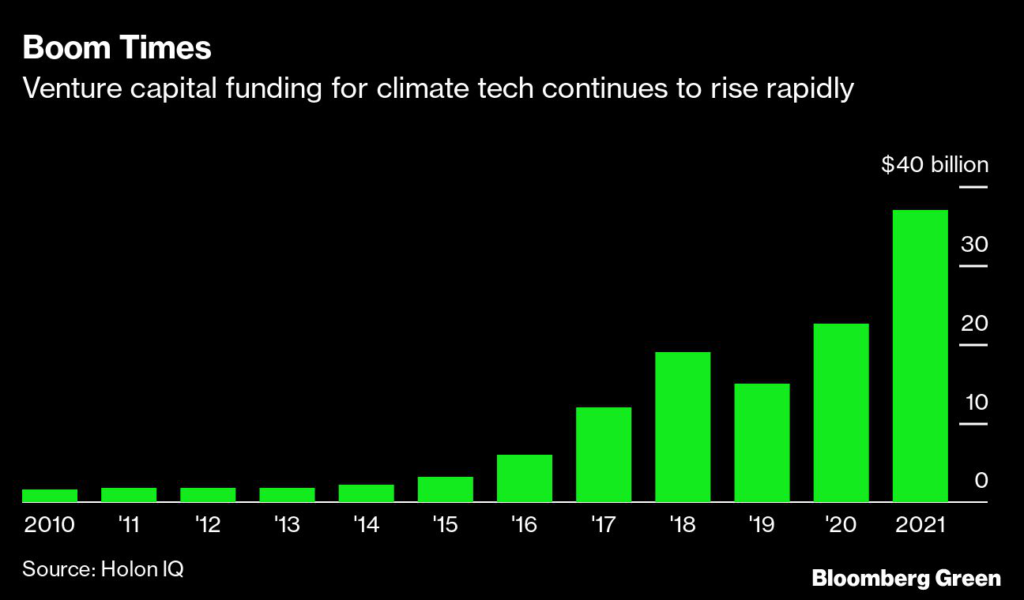
Things are different now, according to Mark Cupta, managing director of Prelude Ventures. “2022 is on pace to eclipse every other year in venture-capital fundraising” with the trend “amplified” for climate investing, he says. Every climate startup that Prelude has recently backed has received highly competitive investor bids in funding rounds. “There’s still a very robust, potentially recession-proof, segment within climate tech for people who are trying to solve really hard problems,” he says.

Climate tech covers a huge swathe of industries from electric cars and carbon-free cement to green hydrogen and technologies for removing carbon dioxide from the air. Investors see that funding these technologies will help avoid a hotter planet, which would have worse, long-lasting economic impacts than the short-term recession we might be about to face.

Investors understand that “we have fundamental risks that, if we don’t tackle with real deep science and engineering, that will take us a full step forward, or two steps forward, we’re in trouble,” says Katie Rae, chief executive officer of The Engine, a Boston-based firm that invests in climate startups.

The Engine was launched after research published by the Massachusetts Institute of Technology showed investment in companies that build physical products was going down for the past 30 years. MIT seeded The Engine, which has now invested more than $200 million and includes other investors, such as university endowments and offices that manage the funds of rich families.

Has it succeeded? Rae says that The Engine’s portfolio companies have raised more than $3.7 billion since 2016. “It’s not just us believing our schtick,” she says.

To be sure, the climate tech boom requires more than investment dollars. The bottleneck for many of the startups I visited last month in Seattle, Boston and around San Francisco wasn’t money, but people. “We’ve underinvested and de-incentivized kids to follow STEM, material science and chemistry programs for the last 20 to 30 years,” says Chamath Palihapitiya, founder of Social Capital, who has made big investments in rooftop-solar financing and battery materials companies. “It’s so hard to find these folks.”

Palihapitiya says that some of the largest companies in the traditional energy sector have so many trade secrets that it’s hard to be able to replicate on the same scale in the climate tech space what they do without deploying an army of PhDs. If you can find people with the science qualifications, say in the oil industry, retraining them to a new subject expertise in wind power, for example, is not easy either. “You can’t go and take an online course that will all of a sudden give you a certificate to work at these companies,” he says.

Meanwhile, there’s now more money than ever being unlocked for cutting-edge solutions to global warming. The new US climate bill, which will provide $370 billion in climate spending, has plenty of incentives for solar and wind power, but also for nascent technologies, such as direct air capture and long-duration energy storage for the grid. “That makes it economic for [these startups] to manufacture and sell from day zero,” says Gabriel Kra, who is also managing director at Prelude Ventures along with Cupta.

Kra was a guest on the second episode of Zero, where we discussed the role of venture capitalists in helping cleantech startups beyond providing money, dove deeper into the climate bill and took a fun diversion to talk about getting arrested at protests. You can listen to the episode and subscribe to Zero now on Apple, Spotify, Google, Stitcher or wherever you get podcasts.

For VCs who made their money backing software companies, investing in climate tech is a little different. While it still matters who the entrepreneurs are, it’s even more imperative that the technologies actually work. Any proposed solution for saving the planet can be — and should be — tested with known science. This makes it easier to find good ideas, according to Dipender Saluja, a partner at Capricorn Investment Group.

“I find it very hard to look into a crystal ball and say selling pet food on the internet is going to be a big deal,” says Saluja, who has turned huge returns on bets made on electric-car giant Tesla and satellite-company Planet Labs. “But on the other hand, if I look at what are the kinds of things that the world can’t do without and if I can find a company to build it, that to me is actually quite easy.”

Akshat Rathi writes the Zero newsletter, which examines the world’s race to cut emissions. You can email him with feedback.

More stories like this are available on bloomberg.com

©2022 Bloomberg L.P.

Podcasters Are Buying Millions of Listeners Through Mobile-Game Ads

(Bloomberg) — Want more stories like this from Ashley Carman? Sign up for Soundbite, a weekly newsletter with exclusive reporting on podcasting, the music industry and audio trends.Podcasters are always hunting for new, flashy places to promote their shows, ranging from billboards to floats in parades to airplane banners. Some networks, though, have uncovered a less-glamorous, yet highly effective way to gain millions of bankable listeners: loading up mobile games with a particular kind of ad.  

Each time a player taps on one of these fleeting in-game ads—and wins some virtual loot for doing so—a podcast episode begins downloading on their device. The podcast company, in turn, can claim the gamer as a new listener to its program and add another coveted download to its overall tally.

The practice allows networks to amass downloads quickly by tapping into a wellspring of hyperactive video-game users. But it also calls into question who a legitimate podcast listener is and what length of time should be required to count as a download.

“Not all impressions are created equal,” said Larry Chiagouris, a marketing professor at Pace University. “I’m not saying [this tactic is] not ethical or illegal, but it raises issues. If someone is trying to play a game and that’s the purpose of this interaction, they may just be eager to play the game and are not that interested in the information being shared.”

Podcasts typically rely on downloads as the primary metric for ad sales. When an individual taps on an in-app play button on their mobile device, an entire episode begins downloading so they can listen to it even in the absence of a good internet connection—say, on an airplane or in the subway. An episode’s ads are inserted at that moment of download, meaning that even if a consumer only listens to 10 minutes of a 30-minute show, the mid-roll ad at the 15-minute mark is often ready to be heard—not to mention, counted by the sales team. 

To date, the podcast industry has said next to nothing about its embrace of this video-game strategy. In August, DeepSee, an ad fraud detection company, published a research paper revealing how the practice harnesses gamers’ attention.

“No one really asked questions about this, or what the experience is like for users,” said Rocky Moss, DeepSee’s co-founder and chief executive officer. 

One game referenced in DeepSee’s paper is Subway Surfers, a popular mobile app from the Danish company Sybo, which has been downloaded some 3 billion times since its debut in 2012. Over a period of two weeks in August, Bloomberg found multiple publishers using the game to rack up podcast downloads, including the New York Post, independent podcaster Scott Savlov and IHeartMedia Inc.

Representatives for the Post and IHeart declined to comment. 

Savlov says he spends “nominal” money on in-game ads and initially used them to drum up interest in his show when it first launched. These days, he says, he looks more to social platform algorithms to promote his celebrity interviews.

“Don’t rely on [in-game ads] exclusively because at some point you’re going to want as much organic and authentic growth as you can get,” he said.

The podcast networks that are actively mining downloads in the mobile game space are doing so through an intermediary company, called Jun Group, which was founded in 2005 and sold to Advantage Solutions Inc., a marketing and sales company, in 2018. Corey Weiner, CEO at Jun Group, said the company specializes in making consumers aware of products, websites and podcasts by placing its ads in over 1,000 mobile apps that collectively reach 100 million unique users.

“There is a very big reason why all the largest brands in the world invest so much money in brand awareness, because without it you have no chance of breaking through the clutter,” he said. “Every publisher, every content creator, has invested in marketing to promote themselves since the dawn of time, and this is just another way of doing it.”

He said the company hasn’t specifically tracked how long gamers will stay on a podcast after clicking on an ad.

“I think that the standards bodies, the people who are involved in deciding what a play of a podcast is, could decide to raise the bar on what constitutes as a play of a podcast,” Weiner said. “Even if you raise the bar, [the ad] is still going to exceed the bar. So, in fact, I actually suggest let’s raise the bar because we can hop right over it.”

According to someone who’s spoken with Jun Group, the price the company charges podcast networks for these ads can vary depending on whether they’re targeted to particular demographics or guaranteed to attract unique listeners. The starting rate for a 20-second ad is $27 per 1,000 website page views. To monetize such downloads, podcast networks can turn around and sell the resulting audience to brand advertisers, presumably at a nice markup over what they pay to Jun Group. 

Jun Group’s main podcast client is IHeart, the maker of shows from Will Ferrell, Charlamagne tha God and Shonda Rhimes. According to a person familiar with the effort, the radio company, which bills itself as the top podcast publisher globally, has shelled out more than $10 million and gained approximately 6 million unique listeners per month through these ads since 2018. The company primarily runs its in-game campaigns at the beginnings and ends of months. The impact can be seen on the publicly available charts produced by Chartable, a podcast marketing company owned by Spotify Technology SA.

During the last week of August, IHeart podcasts represented more than half of the top 10 trending shows—even though one of the listed podcasts hadn’t published new episodes in months and another hadn’t published any new programming in over a year. Several of the specific shows that Bloomberg encountered in Subway Surfers appeared lower in the charts, as well, including “Life in Spanglish,” “Run That Prank” and “All the Smoke.”

(IHeart is a partner of Bloomberg Media, and DeepSee discovered promotions for one Bloomberg podcast running in Subway Surfers).

IHeart also maintains the top position on Podtrac, a monthly podcast ranker that measures networks’ unique audience and downloads. For the month of August, it reached approximately 35.5 million unique listeners, 11 million above its closest competitor, Amazon.com Inc.’s Wondery. The company first arrived at the top of that list in August 2020, with 24.6 million unique listeners compared with National Public Radio’s 24 million.

The incentives to invest in marketing channels like Jun Group’s are clear. The audio industry has been marked by a frenzy of investments. To make back the money as fast as possible, companies will be relying, in part, on growing the reach of their podcasts in order to bring in more advertising revenue. The industry is expected to surpass $4 billion in revenue in 2024, up from around $700 million in 2019. 

More stories like this are available on bloomberg.com

©2022 Bloomberg L.P.

Ukraine Latest: Zelenskiy Says Situation in Donetsk ‘Most Tense’

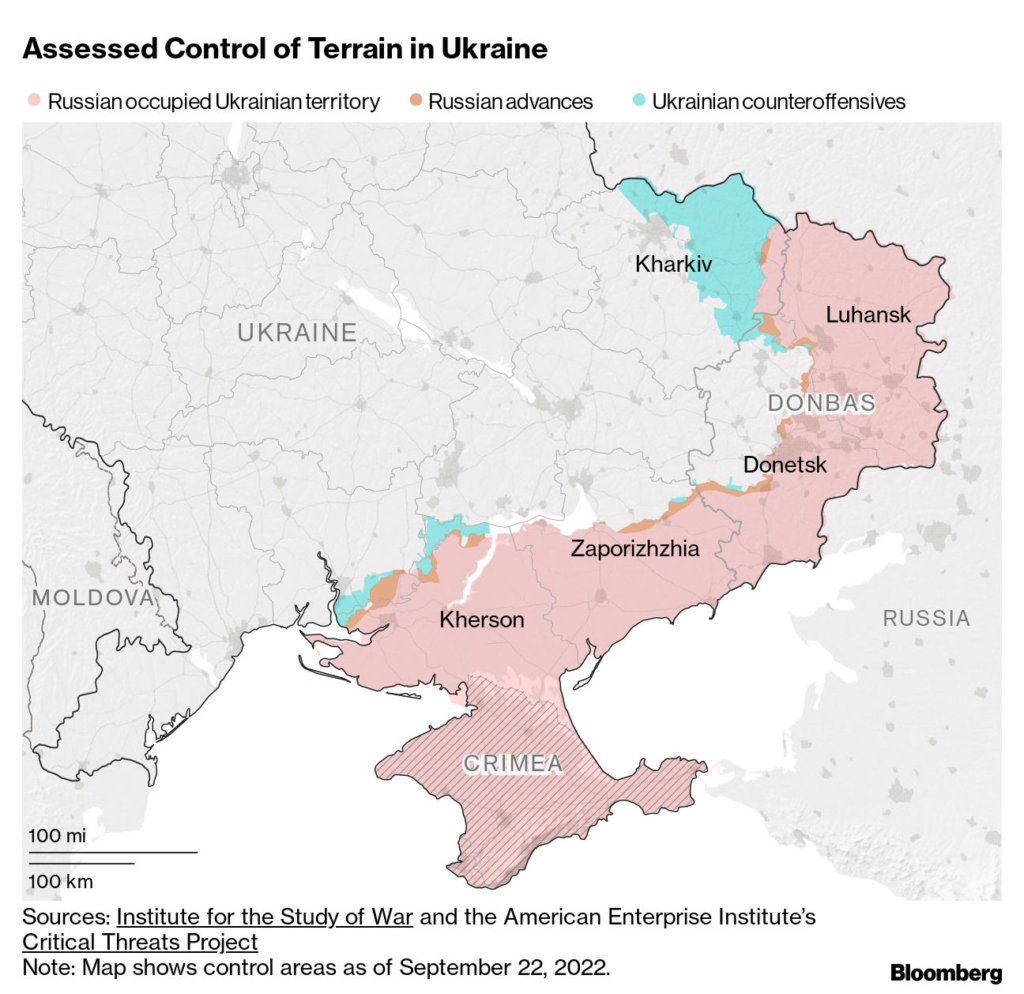
(Bloomberg) — President Volodymyr Zelenskiy said the current focus of the war is Donetsk, describing the heavily industrial eastern region as the “primary target” for both Ukraine and invading Russian forces.

The situation in Donetsk is “especially tense,” Zelenskiy said in his nightly address. In a separate tweet, he urged the international community to step up pressure on Russia with sanctions and called for a decisive response to what he called “sham referenda” in the four Russian-occupied regions of Ukraine, which include Donetsk.

Germany suspects sabotage is behind damage to the Nord Stream pipeline system that usually transports Russian gas to the region. Kremlin spokesman Dmitry Peskov said that Russia is “extremely concerned” about the reports, which prompted a surge in gas prices even though the flows have been halted for monmths.

(See RSAN on the Bloomberg Terminal for the Russian Sanctions Dashboard.)

Key Developments

  • Putin’s Mobilization Hits Russia’s Economy in Its Weak Spots
  • Energy Crunch Will Hurt Like 2009 Crash If Europe Gets It Wrong
  • Nord Stream Says Gas Pipeline Damage is Unprecedented
  • Putin Raises Stakes on Ukraine’s Bid for More Powerful Weapons
  • Putin Gives US Fugitive Edward Snowden Russian Citizenship

On the Ground

Russian forces hit Kryvyi Rih airport in the Ukraine’s central Dnipropetrovsk region with a missile, rendering it inoperable, local authorities said late Monday. Russian rockets also struck the city of Zaporizhzhia. Ukraine’s General Staff reported that the situation at the Zaporizhzhia nuclear power plant remains tense, with staff reluctant to work with Russians and trying to flee occupied territories. In the south, Russia attacked the Odesa region with drones, all three of which were shot down by air-defense forces, while the city of Mykolaiv was heavily shelled overnight, local authorities said. Ukrainian forces continued to make advances north of Lyman and on the eastern bank of the Oskil River, according to the latest report by the Washington-based Institute for the Study of War.

All times CET:

Russian Billionaire Fights UK Sanctions Probe (2:40 p.m.)

Russian billionaire Petr Aven, fighting a UK investigation for evading sanctions, used companies supposed to manage his luxury mansion as a personal “piggy bank,” according to British authorities.

The investigation has focused on around 3.7 million euros ($3.6 million) routed to the UK from an Austrian trust in the hours before European sanctions were imposed.

Read more: Billionaire Without a Bank Account Fights UK Sanctions Probe

Denmark Says Pipeline Sabotage Can’t be Ruled Out (12:50 p.m.)

Denmark’s prime minister, Mette Frederiksen, echoed Peskov is saying that sabotage cannot be ruled out as the cause of damage to Nord Stream infrastructure off the island of Bornholm in the Baltic Sea.

“It’s hard to imagine that these are coincidences,” the prime minister said in an interview with broadcaster TV2 from Poland, where she’s attending the opening ceremony of Baltic Pipe, a separate gas link between Norway and Poland.

Ukraine Slams Lufthansa Over Stake in Russian Airline Caterer (12:15 p.m.)

Ukraine’s foreign minister accused airline Deutsche Lufthansa AG of taking “blood money” and damaging Germany’s reputation over its minority stake in Russian airline caterer Aeromar.

“I urge the company’s management to immediately withdraw from Aeromar and stop supporting Russia’s war crimes,” Dmytro Kuleba said in an interview with German public broadcaster ZDF. Responding to ZDF’s inquiry about the Aeromar stake, Lufthansa said it’s not in breach of European Union sanctions on Russia and as a minority shareholder had no influence over a decision to establish a facility in Russian-annexed Crimea, the broadcaster said.

Nord Stream Says Pipeline Damage Unprecedented (10:45 a.m.)

Nord Stream said the damage to its key pipeline to Germany is “unprecedented” and it’s impossible to say when flows could resume.

Germany is probing the incidents in the Baltic Sea on the two idled Nord Stream gas pipelines from Russia, while Denmark steps up security on its energy installations. It’s the clearest signal yet that supplies won’t resume this winter. European Union officials have repeatedly accused Moscow of weaponizing energy.

Latvia ‘Taking Russian Nuclear Threats Seriously’ (10:20 a.m.)

Russia wouldn’t be making threats about deploying nuclear weapons if it was winning its war in Ukraine, Latvian Foreign Minister Edgars Rinkevics said in an interview with TV3.

“A cornered rat is a dangerous rat” and Latvia is preparing for all scenarios, Rinkevics said. Latvia is supplying Ukraine with all the military equipment it has available and a swift end to the conflict isn’t in sight, he added.

Lithuania Arms Donations Constrained by NATO Needs (10 a.m.)

Lithuania cannot immediately hand over some critical military equipment that Ukraine needs such as NASAMS air-defense systems or howitzers without compromising operations with its NATO partners, according to an adviser to the Baltic nation’s president.

Lithuania is looking to find replacements for the equipment but this is unlikely to happen quickly, Kestutis Budrys, the president’s chief national security adviser, told radio broadcaster LRT. Lithuania has already supplied Ukraine with 50 armored personnel carriers, according to Defense Minister Arvydas Anusauskas.

Russian Traffic on Finnish Border Easing Further (8:45 a.m.)

Traffic on Finland’s eastern border remained busy on Monday, even as numbers of Russians crossing fell from a weekend peak, the Nordic country’s Border Guard said. Some 7,743 Russians entered via the land border, with about half that number returning to Russia.

Europe Ready for Winter Without Russian Gas: BNEF (8:30 a.m.)

Europe’s frenzied buying of liquefied natural gas means it’s likely to have enough of the power-generation fuel this winter to offset supplies from Russia, according to BloombergNEF.

The region may import almost 40% more LNG during the coming winter than the prior year, and it may increase purchases next summer by about 14% to rebuild lost inventories, BNEF said in a report. Along with demand destruction from higher energy prices, those shipments are enough to cover a complete halt in Russian pipeline flows from Oct. 1, it added.

Russia Expels Japanese Diplomat on Spying Charges (2:32 a.m.)

Russia expelled a Japanese consul in Vladivostok, accusing the diplomat of paying for sensitive information.

Tatsunori Motoki was given 48 hours to leave the country, the Foreign Ministry said, according to Tass. Earlier, the Federal Security Service said the envoy in the Far Eastern city had been caught collecting “restricted information” about Russia’s ties with an unspecified country in the region, as well as on the impact of sanctions on the local economy.

More stories like this are available on bloomberg.com

©2022 Bloomberg L.P.

US Business Equipment Orders Rise by Most Since Start of Year

(Bloomberg) — Orders for business equipment at US factories rose in August by the most since the start of the year, reflecting broad advances across categories, including machinery and computers, even as interest rates rise.

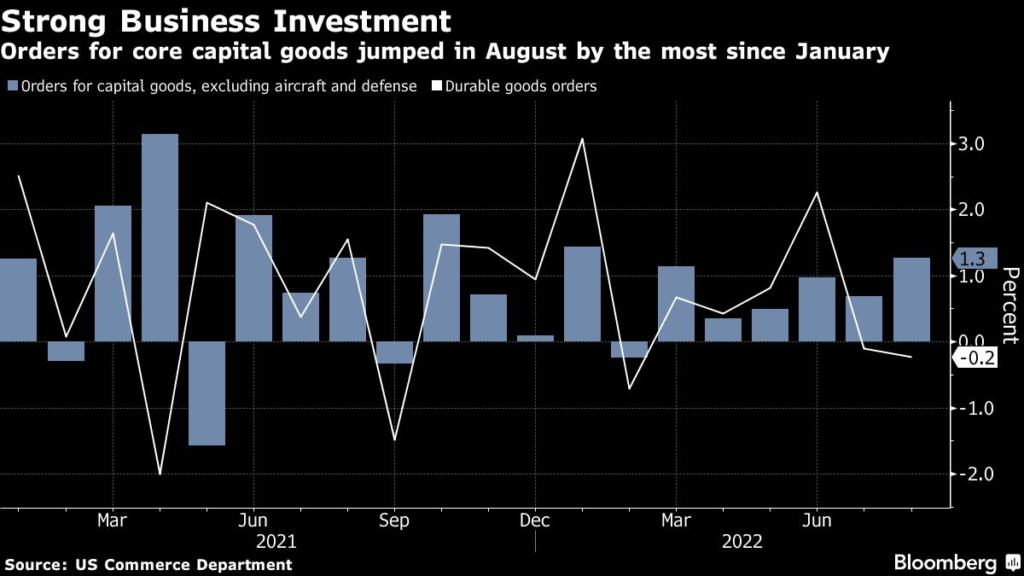
The value of core capital goods orders, a proxy for investment in equipment that excludes aircraft and military hardware, increased 1.3% last month — the most since January — after an upwardly revised 0.7% July advance, Commerce Department figures showed Tuesday. The data aren’t adjusted for inflation.

Bookings for durable goods — items meant to last at least three years — fell 0.2% in August, dragged down by a decline in commercial aircraft. Excluding transportation equipment, durable goods orders rose 0.2% for a second month.

The jump in the core figure exceeded all estimates in a Bloomberg survey of economists. In addition to machinery and computers, orders for primary metals, electrical equipment and communications gear also strengthened.

The figures indicate business investment, a key part of the quest to improve productivity, is so far largely holding up in the face of higher borrowing costs and a darkening economic picture. But risks are increasing that companies will dial back capital spending plans as the Federal Reserve presses on with steep interest-rate increases.

Plus, the broader manufacturing sector is grappling with a deteriorating global economic outlook.

Manufacturing data in recent weeks have generally pointed to a loss of momentum. Factory output growth decelerated last month, and several regional Fed bank measures indicated a sustained contraction in September factory activity. Meantime, two separate national purchasing managers’ indexes pointed to positive, albeit modest, growth. 

Commercial Aircraft

The Commerce Department’s report showed bookings for commercial aircraft, which are volatile from month to month, decreased 18.5%. Boeing Co. reported 30 orders in August, down from 130 in July. While often helpful to compare the two, aircraft orders are volatile and the government data don’t always correlate with the planemaker’s monthly figures.

Core capital goods shipments, a figure that is used to help calculate equipment investment in the government’s gross domestic product report, increased 0.3%. The preliminary estimate of third-quarter GDP will be released in late October. 

Orders for military aircraft, which are volatile on a monthly basis, surged in August after slumping in the prior month. Total defense capital goods climbed 10.1%.

The report also showed unfilled orders for all durable goods rose 0.5%, while inventories were up 0.2% for a second month.

(Adds graphic)

More stories like this are available on bloomberg.com

©2022 Bloomberg L.P.

Close Bitnami banner
Bitnami