Bloomberg

SEC Says Bankman-Fried Defrauded Investors of $1.8 Billion

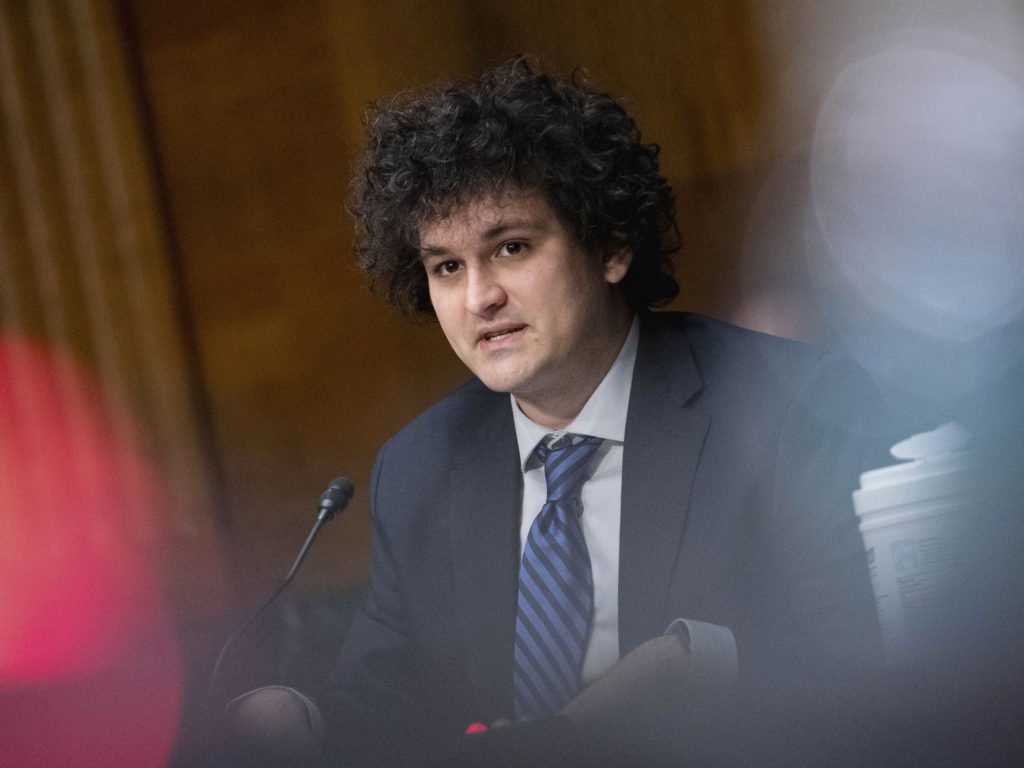
(Bloomberg) — FTX co-founder Sam Bankman-Fried was accused by US regulators of carrying out a multi-year scheme to defraud investors.

The Securities and Exchange Commission said on Tuesday that Bankman-Fried, who was arrested on Monday in the Bahamas and is facing criminal charges in the US, raised more than $1.8 billion from investors. The SEC also said he concealed risks and FTX’s relationship with his trading firm Alameda Research, and used commingled customer funds. 

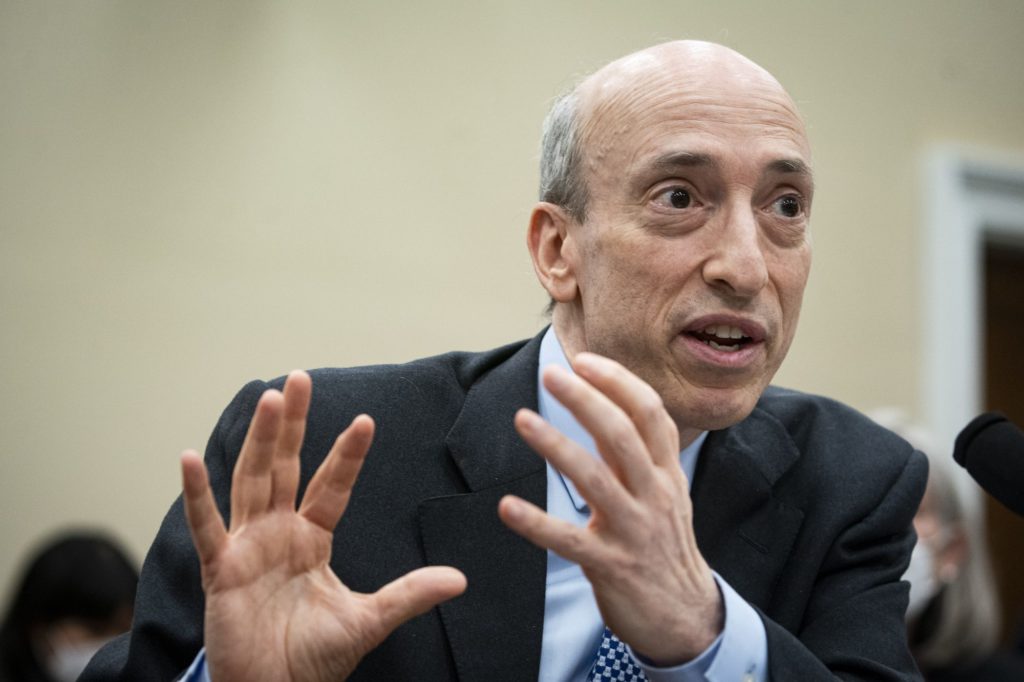
“We allege that Sam Bankman-Fried built a house of cards on a foundation of deception while telling investors that it was one of the safest buildings in crypto,” SEC Chair Gary Gensler said in a statement. 

Bankman-Fried diverted billions of dollars of customer funds to help grow his other entities, the SEC said in its complaint filed Tuesday in New York’s Southern District court. The SEC complaint alleges that FTX raised more than $1.8 billion, including $1.1 billion from about 90 US-based investors, in an “orchestrated scheme to defraud equity investors” who bought in based on the belief that FTX had appropriate controls.

Alameda Research was allowed to carry a negative balance on FTX and was exempt from the exchange’s risk protocols, according to the complaint. The SEC said that Bankman-Fried personally directed that FTX’s “risk engine” not apply to Alameda and hid the extent of the ties between the two entities from investors. 

The SEC claimed that as late as last month, Bankman-Fried was continuing to mislead investors while trying to fill a multi-billion-dollar hole while FTX was unable to make good on billions in withdrawal demands from customers. It only stopped when FTX and Alameda filed for bankruptcy protection on Nov. 11, the regulator said.

The SEC is seeking to bar Bankman-Fried as an officer or director of a public company or from offering crypto or other securities. The agency is seeking to force him to turn over his ill-gotten assets.

Read more on FTX:

  • Sam Bankman-Fried Arrested in Bahamas After US Files Charges
  • Bahamas Told Bankman-Fried to Mint New Coins as FTX Crumbled
  • Bankman-Fried Jolts Hearings, Upsets Senators With No-Show Plan
  • FTX Bankruptcy Team Said to Meet With Federal Prosecutors in NY


(Updates with details on complaint starting in fourth paragraph)

More stories like this are available on bloomberg.com

©2022 Bloomberg L.P.

FTX Sam Bankman-Fried Charged With Fraud by SEC: Read the Complaint

(Bloomberg) — The US Securities and Exchange Commission alleged in a court filing that Sam Bankman-Fried defrauded investors in FTX Trading Ltd., saying he was “orchestrating a massive, years-long fraud, diverting billions of dollars of the trading platform’s customer funds for his own personal benefit and to help grow his crypto empire.”

Read the full complaint here. 

More stories like this are available on bloomberg.com

©2022 Bloomberg L.P.

In the Era of iPhones, Is Rare Book Collecting an Increasingly Quixotic Mission?

(Bloomberg) — Books are like people. They have human characteristics. A book has a spine, as we know, and according to antiquarian booksellers, it also has joints (where the covers meet the spine) and a crown (the top of the spine). We are able to grasp a book in more senses than one, to hold it as we might hold another person’s hand. The sale of an old, rare book is not simply a matter of exchanging pages for money, trading one set of dry leaves for another. Besides the narrative told in its pages, there is the history of the book’s time in the world, the people who have touched it and the lives it has touched. 

A case in point is a 400-year-old copy of Don Quixote, considered the first novel in western literature. It’s a second edition, from 1605, and is expected to fetch £500,000 when it goes under the hammer in Paris on December 14. Cervantes’ romance about a man’s adventures in pursuit of noble ends finds an echo in the fortunes of the bundle of wood pulp and calfskin in which it is bound.

Our story begins in the 1930s, with the tinkling of a doorbell at Maggs Bros., a London book dealer. A young gentleman from South America asks if he may purchase a copy of Cervantes’ masterpiece. He is indulging a serious book-collecting habit earlier than most, but he certainly has the means for it. He is Jorges Ortiz Limones, en route from Bolivia to become that country’s ambassador to Paris, and he is the son-in-law of the so-called King of Tin, the “Rockefeller of the Andes,” Simón I. Patiño, who has vast metal interests in Latin America. The choice of the novel is apt. A cornerstone of Spanish literature—Cervantes is to his homeland what Shakespeare is to Britain and Dante to Italy—it is also full of the New World, and the conquest, exploration and colonization of the Indies by the Spanish.

Alas, the bookseller cannot fulfill Ortiz’s wishes. But the customer is assured that his name will go on the waiting list for a fine copy of Don Quixote.

A few years later, the phone rings in the ambassador’s residence at 34 Rue Foch in Paris. It’s Maggs Bros., with the good news that a copy of the book His Excellency ordered has become available. Ortiz sends a cable to say he’s on his way and catches a plane to London. It is December 1936.

Maggs Bros. have sourced the Cervantes from Yorkshire. They have the 1605 edition, and two other two volumes, from 1608 and 1615, which were bound in England at the end of the 17th century. They were all in the collection of a man called Beilby Thompson, an 18th-century MP and landowner. The books stayed in his family until his estate was sold off in the 1930s. 

The volumes of Cervantes become the centerpiece of Ortiz’s collection in Paris, alongside French literature of the Grand Siècle including handsome editions of Rabelais, Montaigne, Descartes, Pascal, Racine, Molière, La Fontaine and La Rochefoucauld. During the tenure of Ambassador Ortiz and his wife, Graciela Patiño, Rue Foch is a salon of the arts. Even after the Nazis occupy Paris in 1940, this outpost of Bolivia continues to be a tiny redoubt of free speech and civilization.  After the war, Ortiz is awarded the Legion d’Honneur by the French and has full military honors at his funeral in Paris in 1965. 

Ahead of their auction at Sotheby’s of Paris on December 14, the Ortiz books were returned to Maggs Bros., which occupies a splendid 18th-century town house in Bedford Square, Bloomsbury, the original home of the London book trade. There was a lunch to celebrate the forthcoming sale. A fire burned in a grate. Maggs Bros., founded in 1853 by Uriah Maggs, is a collector’s item in itself, a piece of Dickensian London in the high-stakes cosmopolitan milieu of rare books. Elegant Parisian booksellers and their British counterparts in slightly foxed suits stood around a pedestal table, admiring the volumes of the late ambassador.

Jean-Baptiste de Proyart, a consultant on the sale, said that the 1605 edition of Don Quixote was noted for its errors. The author made revisions for the 1608 print run. “That’s the last one that’s checked and revised by Cervantes himself,” said de Proyart. “It’s the good version of the text. It’s something like a miracle to find a very precious book like this that hasn’t been on the market for over 70 years.”

The books were looking good for their age. One was in a faded binding decorated with arabesques, as if it had been covered in swatches of furniture fabric. Documents from Maggs Bros. files were laid out beside the books, including the cable from Ortiz in 1936:  “SHALL BE IN LONDON NEXT MONDAY PLEASE KEEP BOOKS AND CASES ORTIZ LINARES.” Nothing seemed to tickle the old boys from the book trade as much as a bill of sale as thin as an onion skin in the sum of £850: a nice bit of business in its day (the equivalent of £71,000 in 2022). That’s what Ortiz paid for Don Quixote. He also spent £750 on Cervantes’ Novelas. Altogether, these books could fetch £800,000 in Paris.

I suggested to one dealer that it didn’t look as though the Bolivian—or anyone else—had ever cracked open one of his rare volumes, let alone read it from cover to faded cover. “People tend to keep two copies of a book they like, one of them to read. After all, the Cervantes is still in print, isn’t it?” he replied. 

As we ate lunch beneath the serried morocco spines of Maggs Bros. stock, I thought about the long odyssey of the Ortiz library. The books may have been largely unread, but they have been admired by many. They’re to be weighed in the palm for a moment or two, as if in a symbolic act of making a connection with those who’ve held them in the past and traced the arabesques on their faded covers with a fingertip. (They’ve become unlikely fetish items, palimpsests of epidermis and perspiration.) 

The volumes of Cervantes have been through so much history, good and bad, and had a bond to so many, that they’re like a totem of the value that culture has in the world, its power to transcend barriers and bring people together. In the dying days of another year that hasn’t been entirely hospitable to these ideas, I hope that’s not a quixotic thought. 

More stories like this are available on bloomberg.com

©2022 Bloomberg L.P.

US Equity-Index Futures Rise as Traders Await CPI: Markets Wrap

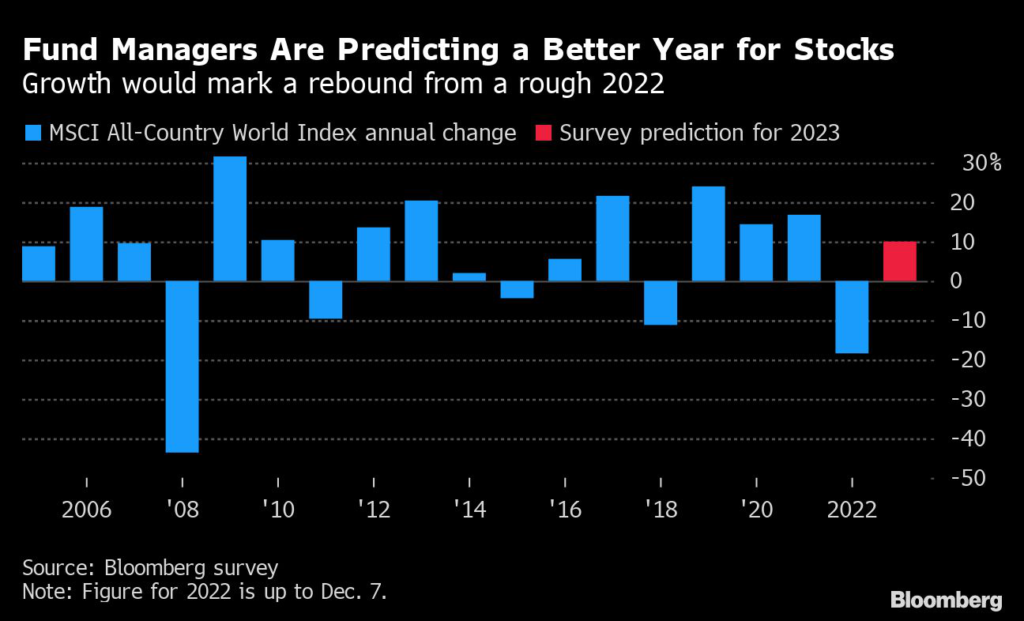
(Bloomberg) — US index futures rose and the dollar slid amid forecasts inflation in the world’s largest economy will post the lowest figure this year, warranting a less hawkish Federal Reserve. 

Contracts on the S&P 500 and Nasdaq 100 advanced at least 0.5% each after the underlying indexes climbed on Monday by the most in December. The greenback halted a two-day rally, while Treasuries gained. Oil traded higher on signs of further easing in China’s Covid rules. Oracle Corp. jumped in premarket New York trading after posting results above expectations.

US stocks advanced Monday as traders took comfort from economists’ projection for a 7.3% expansion in the US consumer price index for November. If that expectation comes true, it would be the lowest reading in 11 months and the fifth consecutive drop. While that would still leave inflation much higher than the Fed’s target of 2%, it could justify a slowdown in the pace of monetary tightening, with a projected half-point move on Wednesday. However, it also leaves the bar low for disappointment and a selloff. 

“Today’s US CPI data will give us an idea on how the market pricing for the Fed’s terminal rate will clash with the dot plot projections that will come out tomorrow, and that will, in all cases, hammer any potentially optimistic market sentiment,” Ipek Ozkardeskaya, a senior analyst at Swissquote Bank, wrote in a note. “Therefore, even if we see a great CPI print and a nice market rally today, it may not extend past the Fed decision on Wednesday.”


The European equity benchmark recovered from Monday’s losses as traders awaited the US release but were also mindful of the European Central Bank’s rate decision due Thursday. The continent’s policymakers are expected to follow the Fed with their own half-point hike. Meanwhile, data showed that UK wages are rising at close to a record pace, maintaining pressure on the Bank of England to keep hiking interest rates despite a worsening economic outlook.

Treasuries advanced with the 10-year rate shedding 2 basis points. The Bloomberg Dollar Spot Index traded below its 200-day moving average, having fallen below it earlier this month. An Asian equity benchmark rose after Hong Kong’s decision to scrap its three-day Covid monitoring period for arriving travelers. 

Crude oil rallied, with West Texas Intermediate futures trading around $74 a barrel. China’s ambassador to the US said the nation will continue relaxing its curbs and will welcome more international travelers soon.


Oracle rose 2.7% in premarket trading.The software company reported quarterly sales that exceeded analysts’ estimates on a strong effort from its Cerner digital health records unit.


Key events this week:

  • US CPI, Tuesday
  • FOMC rate decision and Fed Chair news conference, Wednesday
  • China medium-term lending, property investment, retail sales, industrial production, surveyed jobless, Thursday
  • ECB rate decision and ECB President Lagarde briefing, Thursday
  • Rate decisions for UK BOE, Mexico, Norway, Philippines, Switzerland, Taiwan, Thursday
  • US cross-border investment, business inventories, empire manufacturing, retail sales, initial jobless claims, industrial production, Thursday
  • Eurozone S&P Global PMI, CPI, Friday

Some of the main moves in markets:

Stocks

  • Futures on the S&P 500 rose 0.5% as of 6:28 a.m. New York time
  • Futures on the Nasdaq 100 rose 0.5%
  • Futures on the Dow Jones Industrial Average rose 0.5%
  • The Stoxx Europe 600 rose 0.7%
  • The MSCI World index rose 0.2%

Currencies

  • The Bloomberg Dollar Spot Index fell 0.1%
  • The euro was little changed at $1.0545
  • The British pound rose 0.2% to $1.2299
  • The Japanese yen rose 0.1% to 137.53 per dollar

Cryptocurrencies

  • Bitcoin rose 1.5% to $17,430.38
  • Ether rose 0.8% to $1,285.76

Bonds

  • The yield on 10-year Treasuries declined two basis points to 3.59%
  • Germany’s 10-year yield was little changed at 1.95%
  • Britain’s 10-year yield advanced six basis points to 3.26%

Commodities

  • West Texas Intermediate crude rose 0.9% to $73.82 a barrel
  • Gold futures rose 0.3% to $1,798.50 an ounce

This story was produced with the assistance of Bloomberg Automation.

–With assistance from Tassia Sipahutar and Jason Scott.

More stories like this are available on bloomberg.com

©2022 Bloomberg L.P.
PowerFlex Gets $100 Million Investment for Solar, EV Chargers

(Bloomberg) — PowerFlex Systems LLC, which deploys and coordinates solar arrays, batteries and electric car chargers for corporate clients, has received a $100 million investment from Manulife Investment Management, which will take a minority stake in the business.

Until now, PowerFlex has been a wholly owned affiliate of EDF Renewables North America, part of European utility giant Electricite de France SA. EDF will continue to hold majority ownership following Manulife’s investment.

PowerFlex, based in San Diego, has deployed more than 400 megawatts of solar arrays and 10,000 EV chargers for its clients, including Bloomberg L.P., for whom PowerFlex developed a 1.5-megawatt rooftop solar installation in Queens, New York. PowerFlex also provides software so those assets work together and are used efficiently. Such holistic management of distributed energy resources will be necessary to ensure that the coming electrification of cars and trucks doesn’t overload the electrical grid, said Chief Executive Officer Raphael Declercq.

“Those vehicles are batteries on wheels,” he said in an interview. “If you manage them the right way, you can not only avoid strain on the grid but help it.”

More stories like this are available on bloomberg.com

©2022 Bloomberg L.P.
Paytm’s Surprise Share Buyback Plan Is Drawing Skepticism

(Bloomberg) — Paytm’s plan to buy back shares has left investors surprised and worried about the loss-making Indian fintech firm’s growth prospects as it uses funds to prop up its hammered stock. 

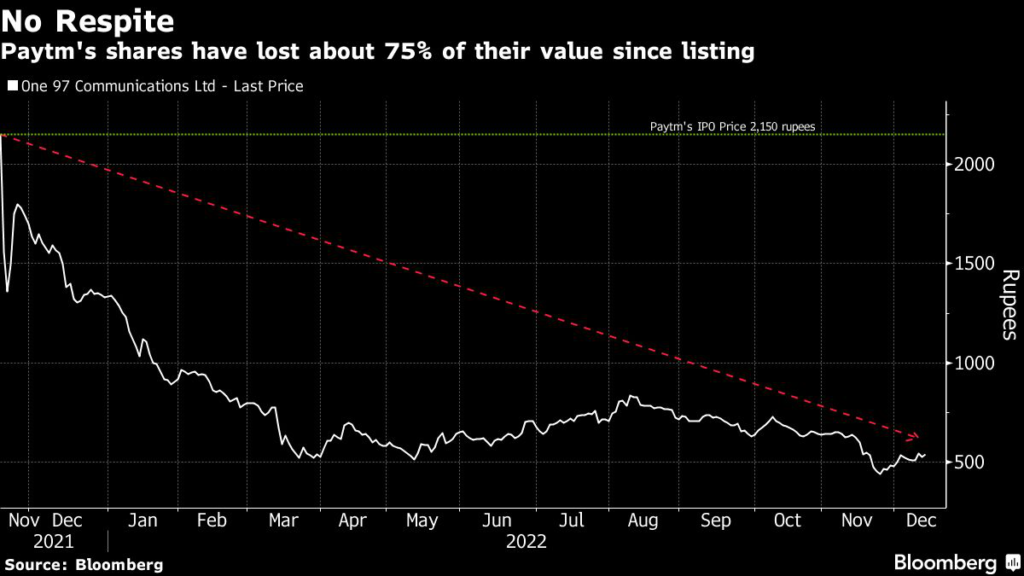
The board of One 97 Communications Ltd., the listed-entity that runs Paytm, will decide on the buyback on Tuesday. The move comes as the stock has plunged about 75% since its listing last November to emerge as the world’s worst-performing large initial public offering in a decade. The slump also prompted a unit of Japan’s SoftBank Group Corp. — a key backer — to trim its holding.

While a buyback could help stem the rout in Paytm shares at least temporarily, some investors are questioning the attempt to manage the stock price rather than putting the cash to use for business. The company, India’s leading digital payments brand, last month posted a wider second-quarter loss.

“Stock buyback is a strategy play for Paytm because the share price has seen sharp erosion,” said Karthick Jonagadla, the founder of Mumbai-based Quantace Research. “For the buyback to work, the company may need to pay 30%-40% premium over current price. Otherwise, it may not serve the purpose.”

Paytm’s shares were up 2% at the close of trade in Mumbai on Tuesday, taking their gains since the buyback announcement to about 6%.

“While tabling a proposal for a buyback, the company has ensured that there is surplus liquidity, which means that all cash requirements are adequately budgeted,” Paytm said in an emailed statement on Tuesday. “The management is confident of strong operational performance and remains focused on building long-term value for its shareholders.”

Buyback Size

Indian firms cannot use money raised from an IPO to fund a share buyback, the company had said earlier. Any buyback, if approved by the board, will be done using cash on the company’s books, it said.

Rahul Jain, an analyst at Dolat Capital Market Ltd. in Mumbai, estimates the appropriate size of a buyback at about 8 billion rupees ($97 million) to 10 billion rupees. Paytm would likely buy the shares on the open market, he wrote in a note earlier.

To be sure, sell-side analysts have turned more positive on Paytm’s stock in recent weeks. As many as eight of the 12 analysts tracking the stock recommend a buy or equivalent rating — the highest number since its trading debut, according to data compiled by Bloomberg.

Paytm wants to tell investors that the current stock price is not reflecting its value and even a small-sized buyback can help the company send them the signal, according to Vikas Gupta, a strategist at OmniScience Capital. “The company’s focus is clear, it now wants to attain profitability at a certain point of time and remains confident of it.”

Big IPO

Touted as India’s largest-ever IPO at the time of its listing, Paytm’s offering attracted traditional global stock pickers such as BlackRock Inc. and the Canada Pension Plan Investment Board. Shares were sold at the top of a marketed range as the deal attracted strong demand from individuals and funds, although they never traded above the listing price.

Helped by gush of global liquidity, India’s then booming IPO market saw strong investor appetite for other consumer technology companies as well — including online food delivery firm Zomato Ltd. and beauty products retailer Nykaa — despite questions over their profitability and valuations.

With shares of these companies coming under pressure following the global meltdown in the technology sector, a number of their early backers have exited or trimmed stakes.

“There is little merit in bucketing cash this way,” Institutional Investor Advisory Services India Ltd., a proxy advisory firm, wrote in a note on Monday. Unless the shares are repurchased at more than 2,150 rupees apiece — the price at which they were sold in the IPO — the buyback will favor only Paytm’s pre-IPO shareholders and employees, it wrote.

“It is unclear if the size of the buyback will be sufficiently meaningful to move the needle” for Paytm, IiAS wrote.

–With assistance from Sankalp Phartiyal.

(Updates the share price move in fifth paragraph.)

More stories like this are available on bloomberg.com

©2022 Bloomberg L.P.

Buffett’s Berkshire Has Now Offloaded More Than 25% of BYD Stake

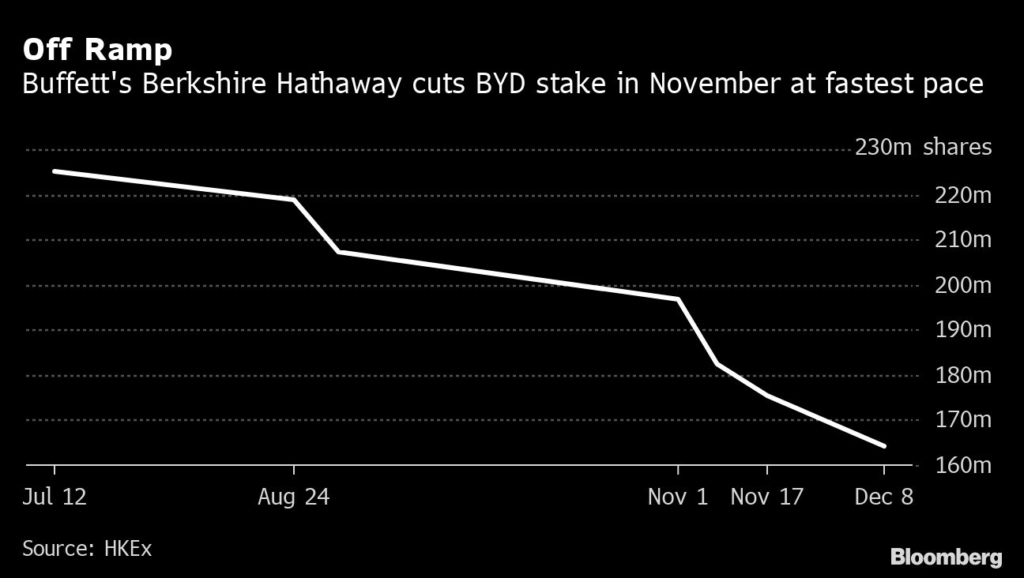
(Bloomberg) — Berkshire Hathaway Inc. further trimmed its stake in Chinese electric vehicle maker BYD Co., according to a filing Tuesday, offloading 1.3 million Hong Kong-listed shares to take its holding below 15%. That means the investment house has now sold more than one-quarter of its position in five months.

Warren Buffett’s firm started publicly reducing its stake in Shenzhen-based BYD in August, when it cut its holding from 20.49% to 19.92%. The pace of sales accelerated in November. Berkshire only has to disclose sales of 1% or more, with any transactions to counterparties under that figure not publicized. Berkshire’s holding now stands at 14.95%.

Read more: Buffett Still Loves BYD After Share Sales, Auto Executive Says

BYD’s stock has fallen around 31% since a Berkshire-sized stake was shown to have entered the Hong Kong exchange clearing system on Jul. 11, according to Webb-Site.com, eroding HK$248 billion ($31.9 billion) from its market value.

Top BYD executive Stella Li said in a recent Bloomberg News interview that Buffett still believed in the company but defended his reasoning to extract some returns on his long-held position in the Chinese automotive giant.

Berkshire, which remains BYD’s largest shareholder in Hong Kong, invested in the automaker in September 2008, buying 225 million shares for about $230 million. The value of that stake ballooned more than 2,700% to HK$331 per share through June this year, when BYD hit a record high.

The remaining 164 million shares held by Berkshire are worth around $4.4 billion as of Tuesday. The company has recouped about HK$3.4 billion from the six substantial stake sales of 1% or more, although those sales represent less than one-third of what has been declared.

BYD at one point was the third-most valuable automaker globally, behind only Tesla Inc. and Toyota Motor Corp. 

Despite the recent stock weakness, BYD has continued to notch up record monthly sales figures, selling almost 230,000 new-energy vehicles in November. And in the third quarter of this year, it sold 534,164 units — near-evenly split between pure electric cars and hybrids — compared to Tesla, which shifted some 343,830 pure battery-powered cars.

Andy Wong, a fund manager at LW Asset Management Advisors Ltd., said he expected BYD to continue with its original plans, referring to the automaker’s efforts to dominate the market, expand and maintain its leading position with a pipeline of new models.

Wong said he was “a bit surprised that they don’t care about the price movement in last few months,” referring to BYD’s somewhat sanguine reaction to the legendary investor’s disposal so far.

More stories like this are available on bloomberg.com

©2022 Bloomberg L.P.
How the ‘Alameda Gap’ in Liquidity Is Impacting Crypto Markets (Podcast)

(Bloomberg) — Listen to Bloomberg Crypto on the iHeartRadio App, Apple Podcasts or  Spotify.

For the last six months or so, the digital asset industry has been knee-deep in the trenches of a ‘crypto winter.’ Now, the demise of Sam Bankman-Fried’s FTX and Alameda Research has produced a dramatic decline in market liquidity. While these bankruptcies could take years to be resolved in the court system, the effects of the collapse have been immediate. Investors and traders are just beginning to grapple with the consequences.

Bloomberg reporter Katie Greifeld joins the episode to discuss.

This podcast is produced by the Bloomberg Crypto Podcast team: Supervising producer: Vicki Vergolina, Senior Producer: Janet Babin, Producers: Sharon Beriro and Muhammad Farouk, Associate Producers: Mo Andam and Ty Butler. Sound Design/Engineer: Desta Wondirad.

Subscribe to the Bloomberg Crypto Newsletter at https://bloom.bg/cryptonewsletter

More stories like this are available on bloomberg.com

©2022 Bloomberg L.P.
Turkish Carrier MNG Looks to Expand with SPAC Listing Proceeds

(Bloomberg) — MNG Cargo Airlines Inc., a Turkish logistics and transport company, is looking to use funds raised from a planned listing in New York to expand in the U.S. and Europe and add to its fleet of nine Airbus SE planes.

The freight specialist will seek to attract new customers with a range of end-to-end services beyond air transportation, including warehousing and handling, Chief Executive Officer Ali Sedat Ozkazanc said by phone. The Istanbul-based group is looking to add one narrowbody Airbus A321, he added, and will consider widebodies.

The executive declined to comment on the expected proceeds from the listing, which is being conducted via a merger with Golden Falcon Acquisition Corp., a special purpose acquisition company, or SPAC, led by European dealmakers Makram Azar and Scott Freidheim. More than 51% of the outstanding equity will remain with MNG’s Turkish founder, construction tycoon Mehmet Nazif Gunal’s Mapa Group conglomerate.

While Ozkazanc talked up the rise in global e-commerce as a reason for the listing, MNG’s move to go public comes at an uncertain time for the industry. Airborne cargo deliveries are falling after an unprecedented surge at the height of the Covid-19 crisis, spurred by shipments of masks and vaccines, dislocated maritime flows and a jump in online shopping.

Freight volumes will probably decline 4% in 2023 following an estimated 8% slump this year, the International Air Transport Association said last week, predicting a slide across all regions. Yields, or prices, that gained in 2022 are set to suffer a 22% reversal in the coming 12 months, it said.

SPAC Decline

Another move at odds with current trends is the decision to merge with a SPAC as a route to market — a type of deal that is on the wane. Blank-check companies have announced about $94 billion of business combinations this year, compared with more than $500 billion this time last year, according to data provider SPAC Research. 

“Our aim was to save time and money by means of a merger with the SPAC,” Ozkazanc said. “We have always seen the support and help from Golden Falcon since we were introduced to them.”

More stories like this are available on bloomberg.com

©2022 Bloomberg L.P.
Turkish Carrier MNG Looks to Expand With SPAC Listing Proceeds

(Bloomberg) — MNG Cargo Airlines Inc., a Turkish logistics and transport company, is looking to use funds raised from a planned listing in New York to expand in the U.S. and Europe and add to its fleet of nine Airbus SE planes.

The freight specialist will seek to attract new customers with a range of end-to-end services beyond air transportation, including warehousing and handling, Chief Executive Officer Ali Sedat Ozkazanc said in a phone interview. The Istanbul-based group is looking to add one Airbus A321 jet, he added, and will consider widebody planes.

The executive declined to comment on the expected proceeds from the listing, which is being conducted via a merger with Golden Falcon Acquisition Corp., a special purpose acquisition company, or SPAC, led by European dealmakers Makram Azar and Scott Freidheim. More than 51% of the outstanding equity will remain with MNG’s Turkish founder, construction tycoon Mehmet Nazif Gunal’s Mapa Group conglomerate.

While Ozkazanc talked up the rise in global e-commerce as a reason for the listing, MNG’s move to go public comes at an uncertain time for the industry. Airborne cargo deliveries are falling after an unprecedented surge at the height of the Covid-19 crisis, spurred by shipments of masks and vaccines, dislocated maritime flows and a jump in online shopping.

Freight volumes will probably decline 4% in 2023 following an estimated 8% slump this year, the International Air Transport Association said last week, predicting a slide across all regions. Yields, or prices, that gained in 2022 are set to suffer a 22% reversal in the coming 12 months, it said.

SPAC Decline

Another move at odds with current trends is the decision to merge with a SPAC as a route to market — a type of deal that is on the wane. Blank-check companies have announced about $94 billion of business combinations this year, compared with more than $500 billion this time last year, according to data provider SPAC Research. 

“Our aim was to save time and money by means of a merger with the SPAC,” Ozkazanc said. “We have always seen the support and help from Golden Falcon since we were introduced to them.”

More stories like this are available on bloomberg.com

©2022 Bloomberg L.P.
Close Bitnami banner
Bitnami

