Bloomberg

Iranians Race to Get Online in Web Blackout; Musk Eyes Fix

(Bloomberg) — People in Iran are relying on virtual private networks to thwart widespread internet outages, amid intensifying street protests. But the workarounds aren’t working perfectly.

On Friday, mobile networks suffered a “full shutdown,” according to Cloudflare, a content delivery network business. That follows nationwide blackouts from 3:30 p.m. until about 10:00 p.m. on Wednesday, according to a blog post from the company. Iran’s internet use is heavily mobile-based, with some 85% of site requests coming from mobile devices, the blog added. 

That would have disrupted attempts to organize street protests. At least 17 people have been killed in clashes between demonstrators and police following the death of a woman in police custody, according to state media sources. The Islamic Revolutionary Guard Corps has called the protests — which started last Friday following the death of 22-year-old Mahsa Amini after an arrest by Tehran’s “morality police” — a conspiracy against the state.

Read More: Iran Vows to Arrest All ‘Illegal’ Protesters to Halt Unrest 

Meysam, a Tehran resident who declined to give his surname because of sensitivities speaking to foreign media, said that mobile internet has been almost completely blocked for the last few days and Wi-Fi has been severely cut or restricted, though access appears to be improving slightly. Many virtual private networks, or VPNs — which hide a user’s location and can be deployed to look at sites that are banned based on geography — are blocked as is Google, he said.  

A representative for the Iranian government in London didn’t immediately respond to a request for comment on Friday.

NordVPN said it was seeing a “dramatic increase” in requests for its Emergency VPN product, a service that people can request during internet shutdowns, according to spokeswoman Laura Tyrylyte. 

Representatives for Alphabet Inc.’s Google didn’t immediately respond to requests for comment on the status of its services in the country. 

In addition to drops in traffic from mobile network operators, fixed-line traffic in the city of Sanandaj dropped to zero for much of Monday evening on the network run by the Telecommunication Company of Iran, according to Cloudflare. 

Billionaire entrepreneur Elon Musk said he will seek an exemption to Iranian sanctions so he can connect people using the Starlink satellite network owned by his Space Exploration Technologies Corp., which beams broadband directly between thousands of satellites in low-Earth orbit and small ground-based terminals. Starlink sent thousands of these terminals to Ukraine, proving critical in its resistance to Russia.

Bloomberg has found some VPNs are working, but only intermittently, and not on all devices. Likewise, when home and mobile connections work, they are not reliable. 

Iran has often used internet blackouts to quell unrest. It had also shuttered access in 2019 after an increase in fuel prices triggered demonstrations around the country, only displaying official and domestic websites and applications. 

Read More: Musk Should Get Starlink Waiver for Iran, Lawmakers Say 

Specific sites have also apparently suffered blocks: successful requests to access Instagram dropped sharply on Wednesday afternoon, and for WhatsApp the signals dropped to almost zero from 7:10 p.m. the same day, according to the Cloudflare blog. Head of Instagram Adam Mosseri said “people in Iran are being cut off from online apps and services” and added “we hope their right to be online will be reinstated quickly.”

WhatsApp was hit with complaints online that its services weren’t working properly for users with Iranian phone numbers – even, in some cases, if those people weren’t in Iran. 

In a Tweet, WhatsApp said “We are not blocking Iranian numbers. We are working to keep our Iranian friends connected and will do anything within our technical capacity to keep our service up and running.” 

Encrypted messaging app Signal said it was blocked in Iran and encouraged people to host more proxy servers, which can be used to bypass blockages, and shared instructions. It was an update of a post originally published in 2021 during a similar situation in Iran, it said. 

The Tor Project, which oversees the anonymity-focused Tor Browser associated with the “dark web”, also shared ways to circumvent blocks.

More stories like this are available on bloomberg.com

©2022 Bloomberg L.P.

Ukraine Latest: Annexation Votes Start; Russian Draft Exemptions

(Bloomberg) — On the eve of the war’s seven-month mark, voting began in four Moscow-occupied territories on whether to join Russia. Ukraine’s government and its allies have slammed the referendums as shams, reminiscent of a similar ballot in Crimea in 2014 ahead of annexation. 

The ballots in the Donetsk and Luhansk regions, as well as in Kherson and Zaporizhzhia, mark an escalation in Russia’s plans to annex swaths of its neighbor. They follow recent military setbacks by Russian troops and President Vladimir Putin’s move to call up as many as 300,000 reservists to fight in Ukraine. 

The draft triggered protests around the country, the biggest since the early days of the war, and conscription-age men rushed to find ways to flee. Workers in some industries will be exempt, authorities said. 

(See RSAN on the Bloomberg Terminal for the Russian Sanctions Dashboard.)

Key Developments

  • Putin’s Conscripts Won’t Win His War But May Drag It Out
  • Russia Stages ‘Referendums’ to Annex Occupied Ukraine Lands
  • EU Rushes to Agree on an Oil Price Cap After Putin’s Threats 
  • Russia’s Lavrov Scorns West by Arriving Late at UN, Walking Out
  • Abramovich Met Saudi Prince for Russia-Ukraine Prisoner Exchange
  • Wheat Rises to Two-Month High as War Again Threatens Black Sea Deal 

On the Ground

Ukraine’s General Staff said Russian forces continue to suffer losses, including among leadership, including a Major General wounded in a recent strike at Svatove in Luhansk region. The claim can’t be verified. Nataliya Humenyuk, spokeswoman for Ukraine’s southern military command, said Kyiv’s forces are gradually taking ground in their counteroffensive campaign. Russia overnight struck the city of Zaporizhzhia with missiles, regional governor Oleksandr Starukh said. A loud blast was heard in Melitopol, also in the Zaporizhzhia region, early Friday. Over the past day Ukrainian forces repelled Russian attacks near eight settlements, including in the vicinity of Donetsk and in the Kharkiv region. 

(All times CET) 


Finland to ‘Significantly’ Limit Entry of Russians (6:10 p.m.)

The decision by the president and key ministers came after Russia’s order of partial mobilization. Officials cited “harm to Finland’s international standing.” Foreign Minister Pekka Haavisto is set to announce details later on Friday.

Toyota Decides to End Vehicle Production in Russia (3:40 p.m.)

Manufacturing at the Saint Petersburg plant was suspended since March 4 due to the interruption in supply of key materials and parts. Six months later, the company still has not been able to resume normal activities and sees no indication that it can re-start in the future.

Russia Punishing Crimean Tatars, Envoy Says (2:44 p.m.)

Draft notices are being handed to Crimean tatars as a way of punishing them for a lack of support in Russia’s war, Volodymyr Zelenskiy’s representative to the occupied peninsula Tamila Tasheva said on Facebook.

Crimean Tatar men have received at least 1,000 mobilization notices across the Russia-seized peninsula, Tasheva said, describing this as a “catastrophe” for the indigenous ethnic group.

“They want to use mobilization in order to annihilate Crimean tatars,” she wrote.

Abramovich Met MBS for Prisoner Exchange (1:04 p.m.)

Russian billionaire Roman Abramovich met Saudi Crown Prince Mohammed bin Salman in Riyadh in August for talks that led to Russia and Ukraine swapping prisoners of war, said three people familiar with the matter.

In the swap this week, Ukraine turned over 55 captives, including pro-Russian tycoon Viktor Medvedchuk. Russia handed over 215 prisoners, the majority of whom were involved in the defense of Ukraine’s Azovstal steel plant in Mariupol. 

Saudi Arabia said Wednesday that the crown prince was involved in mediation efforts that led to the release of ten prisoners, without giving further details on the process. 

Russia Exempts Workers in Some Sectors From Military Draft (12 p.m.)

Russia’s Defense Ministry announced that workers in certain segments would be excused from the draft ordered Wednesday by President Vladimir Putin.

The exemptions apply to people working for IT companies, information and communications services, media, and organizations responsible for the stability of the national payment system and financial market infrastructure. Companies and organizations in these industries should submit lists of employees to apply for exemptions, the ministry said in a Telegram post. 

It earlier said university students also won’t be called up. The announcement comes amid signs some Russians are rushing to flee the country or otherwise avoid the prospect of being sent to join the war in Ukraine.

China Says It’s Committed to Promoting Peace Talks (11:55 a.m.) 

China’s Foreign Minister Wang Yi told his Ukrainian counterpart that the sovereignty and territorial integrity of all countries should be respected, when the two met at the UN General Assembly in New York, Xinhua reported. 

Beijing always stands on the side of peace and continues to play a constructive role in the Ukraine conflict, the minister said, without offering details.

Earlier, Wang Wenbin, a Foreign Ministry spokesman sidestepped a question at a regular press briefing in Beijing about Russia’s “referendums” in areas of Ukraine it occupies. 

Baltics Fear Blackouts if Russian Disconnects Them From Grid (10:02 a.m.)

Estonian Premier Kaja Kallas said Russia delayed plans to test disconnecting its exclave of Kaliningrad from the electricity system on Saturday. Such a move could be a precursor to desynchronizing the three Baltics countries and potentially lead to blackouts. 

“This doesn’t mean that they will not do it on another day and pick a worse time for us, be it winter, Dec. 24, or something like that,” Kallas told Estonia’s public broadcaster. 

“We have been preparing for desynchronization, or the disconnection of power grids from Russia’s frequency range, for years, but if Russia does this abruptly, we may have blackouts,” Kallas said. 

Russia Stages ‘Referendums’ to Annex Occupied Lands (9:40 a.m.) 

Russia on Friday began staging UN-condemned “votes” on annexing the roughly fifth of neighboring Ukraine it occupies in a step that marks a new escalation in the spiraling conflict between President Vladimir Putin and the US and its allies.

State media reported overwhelming support for accession to Russia in the four regions that its troops partially control. In Moscow, officials vowed to move quickly to finalize the absorption of the territories.

United Nations Secretary-General Antonio Guterres called the votes a “violation of the UN Charter and international law.”  

Putin’s Conscripts May Merely Drag Out His War (9:31 a.m.) 

Russian President Vladimir Putin’s move to draft in 300,000 reservists to reinforce his troops in Ukraine is likely to extend the war rather than influence its outcome.

Still, it could buy him time to execute a wider strategy — including exacerbating Europe’s energy crisis and threatening a nuclear strike on unspecified targets — aimed at undermining foreign military and financial support for Kyiv’s war effort.

Read more: Putin’s Conscripts Won’t Win His War But May Drag It Out 

Putin Loyalist Criticizes Prisoner Swap With Ukraine (9:23 a.m.)

Chechen leader Ramzan Kadyrov added to domestic criticism over Russia’s exchange of prisoners of war with Ukraine announced on Wednesday. “The whole situation is incomprehensible,” he wrote on Telegram to his 2.6 million followers, while being careful to declare that “any order” by President Vladimir Putin must be implemented. 

Kadyrov also indicated he had no plans to round up reservists following Putin’s order for partial mobilization, claiming volunteers in the largely Muslim southern Russian republic had already “over-fulfilled by 254%” its quota before the call-up was announced. 

The Chechen, regime has been accused of repeated human rights abuses, has become increasingly critical of the conduct of Russia’s war recently, while declaring total loyalty to Putin.

Zelenskiy Said Russia’s Votes, Mobilization ‘Bury’ Peace Prospects (8:30 a.m.)

Moscow was “burying” the prospects of talks with Kyiv with this week’s actions, Ukraine President Volodymyr Zelenskiy said in an address to the nation on Thursday. 

“Russia declares that it supposedly wants negotiations, but announces mobilization,” Zelenskiy said. Ukraine’s position on the impossibility of diplomacy after “sham referenda” was clear, he said. 

Putin’s new draft also meant the war in Ukraine “for the majority of Russian citizens is not something on TV or on the internet, but something that has entered every Russian home,” he said. 

Read more: Russia Hurries to Tighten Grip on Occupied Ukraine, Ups Stakes

Among EU, Only Hungary Held Bilateral Talks With Russia at UN (8:20 a.m)

Hungary’s Peter Szijjarto was the sole EU foreign minister to hold talks with Russia’s Sergei Lavrov on the sidelines of the UN General Assembly in New York, underscoring the special relationship between Budapest and Moscow. 

The pair discussed Hungary’s reliance on Russian energy, Szijjarto said after the meeting. Russia has cut gas supplies to much of the continent in retaliation for EU sanctions for Moscow’s invasion of Ukraine. 

Hungary, whose Prime Minister Viktor Orban this week called for the withdrawal of trade restrictions against Russia, has been rewarded with additional gas volumes on top of contracted amounts. 

Putin’s Mobilization Will Take Time, Won’t Solve Problems, US Says (9:46 p.m.)

Putin’s mobilization of as many as 300,000 reservists won’t happen quickly and won’t solve problems of morale and weak command that have hobbled Russian troops in Ukraine, according to the Pentagon.

“It would take time for Russia to train and prepare and equip these forces,” Brigadier General Pat Ryder, the Defense Department’s spokesman, told reporters at the Pentagon. “While in many ways this may address a manpower issue for Russia, what is not clear is whether or not it could significantly address the command-and-control, the logistics, the sustainment and importantly the morale issues that we have seen Russian forces in Ukraine experience.”

Russia’s Lavrov Scorns West by Arriving Late at UN, Walking Out (9 p.m.)

The UN Security Council gave Russia’s Foreign Minister Sergei Lavrov an icy reception when he went before it to defend his nation’s invasion of Ukraine. The veteran diplomat made sure he didn’t stick around to hear the criticism.

In a show of defiance toward Western condemnation, Lavrov arrived well after the council opened a special meeting to discuss the Ukraine conflict on Thursday. He gave his speech — accusing the West of forcing Russia to invade to protect itself — and then walked out.

EU Rushes to Agree on an Oil Price Cap After Putin’s Threats (8:36 p.m.)

European Union member states are racing to clinch a political agreement within weeks that would impose a price cap on Russian oil. 

The push has gained steam since Putin announced a “partial mobilization” of troops in an escalation of Russia’s war in Ukraine and will likely feature as part of a new a package of sanctions to be proposed by the European Commission, according to people familiar with the matter. A cap would align the EU with a US effort to keep the cost of crude from soaring and to hit Moscow’s revenue.

Despite the new effort from the commission, the EU’s executive arm, and some member states, the plan faces many hurdles and a positive outcome is not a given, said the people, who asked not to be identified because the discussions are private. 

EU Rushes to Agree on an Oil Price Cap After Putin’s Threats 

Russia Outlines Reduced Gas Flows Over Next Three Years (5:32 p.m.)

Russia set out just how much its gas flows to the global market will fall in the next three years — and the numbers underscore the scale of the challenge facing Europe’s energy consumers.

Annual pipeline gas exports are set to drop by almost 40% to 125.2 billion cubic meters in 2023-2025, according to the nation’s three-year draft plan, seen by Bloomberg News. Pipeline gas exports is estimated at 142 billion cubic meters this year, the draft showed. 

Read more: Russia Sets Out How Much It’s Going to Cut Gas Flow Through 2025   

More stories like this are available on bloomberg.com

©2022 Bloomberg L.P.

The Crypto Winter’s Latest Casualty Is Data Center Firm Compute North

(Bloomberg) — Compute North Holdings Inc., which provides data center services for cryptocurrency miners and blockchain companies, filed for bankruptcy in Texas on Thursday.

Based in Eden Prairie, Minnesota, Compute North blamed its financial woes on the troubled market for digital assets, the increasing cost of electricity and the time lag between spending to build data centers and getting revenue from those facilities. The decision to file a Chapter 11 bankruptcy now was forced on the company mainly by the actions of its primary lender, Generate Lending LLC, an affiliate of Generate Capital, according to a court declaration filed by Compute North’s chief financial officer and treasurer, Harold Coulby.

Generate seized control of key assets being built by Compute North after the lender accused the data center company of defaulting on some technical requirements of its loan agreement, Coulby said in court papers. 

“Compute North’s loss of control over the Generate Entities contributed to business disruptions leading up to the commencement of these Chapter 11 cases,” Coulby wrote in his declaration, referring to assets taken over by the lender.

Generate did not cause Compute North’s bankruptcy, the lender’s lawyer, Christopher Marcus, told the judge overseeing the case during a hearing Friday morning. Generate took action in order to preserve the value of its collateral, Marcus said.

Compute North owes as much as $500 million to at least 200 creditors. The company’s assets are worth between $100 million and $500 million, according to its court petition.

Chapter 11 filings allow a company to keep operating while it develops a plan to repay creditors. The company filed bankruptcy to stabilize its business while it restructures under court protection, Kristyan Mjolsnes, Compute North’s head of marketing and sustainability, said in an email.

Compute North started in 2017 as a crypto mining operation, branching out into co-location services that provided low-cost power for data centers, according to the company’s website. In April, the company broke ground on a 300 megawatt co-location facility in Granbury, Texas.

The bankruptcy is the latest to hit the the digital asset space, where falling cryptocurrency prices and rising US interest rates have sent investors fleeing and triggered the collapse of lenders and hedge funds. Crypto broker Voyager Digital Ltd. filed for Chapter 11 protection earlier this year, while liquidators have been called in for bankrupt crypto hedge fund Three Arrows Capital.

Mining companies have faced renewed stress from low Bitcoin prices and soaring energy costs. A closely watched gauge of mining revenue dropped to a two-year low earlier this month. Compute North faced delays in energizing mining machines for its client Marathon Digital Holdings Inc. in Texas due to local regulations in the state.

Marathon has about 40,000 mining machines installed in the company’s West Texas facility, which has a roughly 280 megawatt capacity. Compute North also operates data centers in North Dakota and Nebraska, according to its website. 

The case is Compute North Holdings Inc., 22-90272, US Bankruptcy Court, Southern District of Texas.

(Adds conflict with lender and reason for bankruptcy beginning in second paragraph.)

More stories like this are available on bloomberg.com

©2022 Bloomberg L.P.

Cryptocurrencies Extend Drop as ‘Tough Environment’ Culls Demand

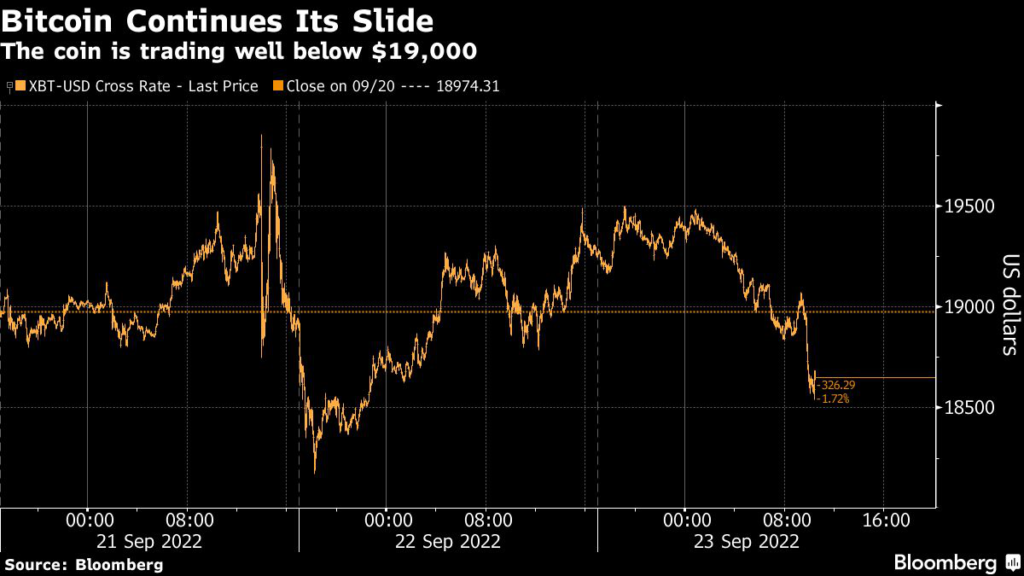
(Bloomberg) — Bitcoin and other cryptocurrencies slid on Friday as investors continued to bail from riskier assets following the Federal Reserve’s promise that it will stay aggressive in its fight against inflation.

The largest digital coin by market value fell as much as 3.7% during the session to trade around $18,538. Ether, the second-largest, was down 4.7% at one point to $1,262, while an index of 100 of the largest coins lost 1.6%. The S&P 500, meanwhile, was down 2% a little before noon in New York. 

The mood in the market has remained sour as the Fed and other global central banks raise interest rates to fight sticky price increases. The Fed delivered its third straight 75-basis point hike this week, and risk assets have taken a hit as Jerome Powell made it crystal clear that the central bank is going to keep raising rates sharply — until officials see signs that price pressures are easing. 

“It’s going to be a tough environment for crypto,” Chris Gaffney, president of world markets at TIAA Bank, said in an interview. “Sitting in an asset class that doesn’t earn you anything becomes very difficult, and the cost of owning crypto increases as interest rates increase because of alternatives.”

The crypto sector was already reeling from a $2 trillion plunge from a 2021 record high, an unraveling pockmarked with blowups such as the Three Arrows Capital hedge fund and the Terraform Labs project — whose co-founder Do Kwon is wanted by authorities.

“Macro continues to be a challenging theme, pressuring both crypto and equities as central banks still tighten in the quest to soften elevated inflation numbers,” crypto lender BlockFi wrote in a note. 

Chart watchers, cognizant of how quickly crypto can tank, are looking at $17,599 as a key price level for Bitcoin, should the token continue to post declines. That’s the low it hit in June. After that, they’re watching $17,589 — should Bitcoin hit that mark, it would touch its lowest point since the end of 2020. 

“Bitcoin is lower alongside other risk assets today, and I would assume it’s a reflection of general bearishness rather than something specific to Bitcoin,” Katie Stockton, managing partner at Fairlead Strategies, said. “The short-term indicators continue to point lower as support is tested.”

Bitcoin’s dominance has waned in recent months amid the selloff. That could be because it’s losing its appeal as an alternative store of value or because more value is being created elsewhere in the crypto ecosystem, according to a note from Charlie Erith of ByteTree Asset Management. 

“Is Bitcoin losing its appeal? It’s certainly taken some knocks,” Erith wrote. 

Risk assets in general are suffering, says Brian Pellegrini, founder of research firm Intertemporal Economics. “The market is believing the Fed’s rhetoric and all leveraged trades are pulling back,” he said.

Crypto and stocks have traded in tandem all year as both have been impacted by the Fed’s policy path. The 60-day correlation coefficient of Bitcoin and the S&P 500 currently stands around 0.70, among the highest such readings in Bloomberg data going back to 2010 (A coefficient of 1 means the assets are moving in lockstep, while minus-1 would show they’re moving in opposite directions.)

Shiliang Tang, chief investment officer at crypto asset investment firm LedgerPrime, added that going into the weekend, people might be “derisking a bit into possible margin calls Monday.”

More stories like this are available on bloomberg.com

©2022 Bloomberg L.P.
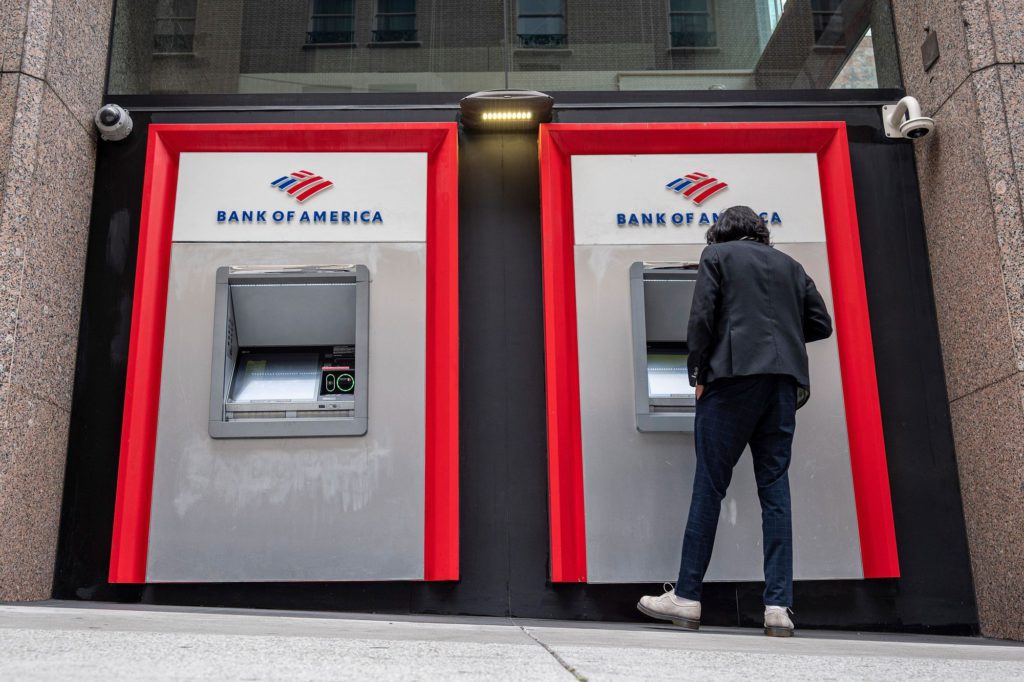
BofA Strategists Dial Back Predictions for a US Digital Dollar

(Bloomberg) — Strategists at Bank of America Corp. are walking back a previous prediction that the US would issue its own digital dollar between 2025 and 2030, saying that the estimate now seems “too optimistic.” 

The US is still early in the research and development stage, Alkesh Shah and Andrew Moss wrote in a report Thursday. “An extensive set of complex design choices will need to be discussed before moving into any potential pilot phase,” they said. 

Further research and technology development could take years, the Treasury Department said in a recent report on the future of money and payments. The Treasury study was one of several released last week under a March executive order that called for a government-wide strategy for digital assets.

Proponents of a US digital dollar — also known as central bank digital currency or CBDC — have argued that it would help preserve the dollar’s dominance as other countries, like China, move forward with their own forms of virtual money. But critics have warned of potential risks, including the possibility for a CBDC to disrupt the US banking system. 

“Our view is that it‘s better to be right than first when it comes to CBDC issuance,” the Bank of America strategists said.  “But the digital yuan is already in circulation and a US CBDC issued significantly after a digital euro issuance could potentially pressure the dollar‘s status as the world‘s reserve currency.” 

Digital Dollar Looks ‘Inevitable,’ BofA Strategists Say

Apart from the Treasury Department, the White House Office of Science and Technology Policy also released two reports last week on a possible US digital dollar — one looking at the technical aspects of designing a CBDC and another on the US’s policy objectives. Other executive-order reports released last week covered a range of topics from illicit finance to US competitiveness in the digital-asset space. 

More stories like this are available on bloomberg.com

©2022 Bloomberg L.P.
S&P 500 Within a Whisker of Cracking Its June Lows: Markets Wrap

(Bloomberg) — A selloff in the riskier corners of the market deepened as the UK’s plan to lift the economy fueled concerns about heightened inflation that could lead to higher rates, adding to fears of a global recession.

It was a sea of red across equity trading desks, with the rout in the S&P 500 pushing the gauge within a striking distance of its June bottom — which stands less than 1% below current levels. The lack of full-blown capitulation may be a sign that the carnage isn’t over yet. Big firms like Goldman Sachs Group Inc. are slashing their targets for stocks, warning that a dramatic upward shift in the outlook for rates will weigh on valuations.

As the risk-off sentiment took hold, the greenback saw a fresh record, sweeping aside other currencies. The euro slid to its weakest since 2002, while sterling hit its lowest in 37 years — with former US Treasury Secretary Lawrence Summers saying that “naive” UK policies may create the circumstances for the pound to sink past parity with the dollar. Treasury 10-year yields resumed their ascent above 3.7%.

“It appears that traders and investors are going to throw in the towel on this week in what feels like ‘the sky is falling’ type of event,” said Kenny Polcari, chief strategist at SlateStone Wealth. “Once everyone stops saying that they ‘think a recession is coming’ and accepts the fact that it is here already – then the psyche will change.”

Liz Truss’s new UK government delivered the most sweeping tax cuts since 1972 at a time when the Bank of England is struggling to rein in inflation, which is running at almost five times its target. The plunge in gilts means that investors are now betting the central bank boosts its benchmark lending rate by a full point to 3.25% in November, which would be the sharpest increase since 1989.

‘Meaningful Drag’

Amid heightened fears over a hard economic landing, commodities took a hit across the board. West Texas Intermediate dropped below $80 a barrel for the first time since January and was set for a fourth week of declines. Not even gold, which is seen as a haven asset, was able to gain due to a surging dollar.

China’s yuan extended losses to a level closest to the weak end of its allowed trading band since a shock currency devaluation in 2015. With a hawkish Federal Reserve set to sustain the dollar at high levels, analysts say there’s only so much Beijing could do to shore up its currency at a time of economic difficulties.   

The greenback’s strength has been unrelenting and will also exert a “meaningful drag” on corporate earnings — serving as a key headwind for stocks, said David Rosenberg, founder of his namesake research firm.

KKR & Co. sees potential trouble ahead, including a mild recession next year, with the Fed narrowly focused on driving up unemployment to tame inflation. The US labor shortage is so severe that it’s possible the Fed’s tightening doesn’t work, wrote Henry McVey, chief investment officer of the firm’s balance sheet.

“This is a more draconian outcome than corporate profits falling,” he noted, “because it will encourage the Fed to tighten even further.”

Investors are flocking to cash and shunning almost every other asset class as they turn the most pessimistic since the global financial crisis, according to Bank of America Corp. Investor sentiment is “unquestionably” the worst it’s been since the crisis of 2008, with losses in government bonds being the highest since 1920, strategists led by Michael Hartnett wrote in a note.

“It’s a realization that interest rates are going to continue to rise here and that that’s going to put pressure on earnings,” said Chris Gaffney, president of world markets at TIAA Bank. “Valuations are still a little high even though they’ve come down, interest rates still have a lot further to go up and what impact that will have on the global economy — are we headed for a sharper recession than the recession everybody expected? I think it’s a combination of all of that, it’s not good news.”

Extreme Pessimism

Indeed stocks are still far from being obvious bargains. At the low in June, the S&P 500 was trading at 18 times earnings, a multiple that surpassed trough valuations seen in all previous 11 bear cycles, data compiled by Bloomberg show. In other words, should equities recover from here, this bear-market bottom will have been the most expensive since the 1950s. 

Gloomy sentiment is often considered a contrarian indicator for the US stock market, under the belief that extreme pessimism may signal brighter times ahead. But history suggests that equity losses may accelerate even further from here before the current bear market ends, according to Ned Davis Research.

The firm’s Crowd Sentiment Poll has been in an extreme pessimism zone since April 11, or 112 consecutive trading days that mark the third-longest streak of gloom since the data began in 1995. Over the subsequent few months following those periods of extreme pessimistic sentiment, equity gains were fleeting, with negative median returns three and six months after the 100-day mark.

In another threat to stocks, different iterations of the so-called Fed model, which compares bond yields to stock earnings’ yields, show equities are least appealing relative to corporate bonds and Treasuries since 2009 and early 2010, respectively. This signal is getting attention among investors, who can now know look to other markets for similar or better returns.

The S&P 500’s plunge since the August peak solidifies the downtrend channel in place since the bull-market apex in early January, according to Gina Martin Adams at Bloomberg Intelligence. 

“The breakdown beneath 3,900 support leaves little for the index to grasp at on its way to testing the June lows,” she wrote.

Here are some of the main moves in markets:

Stocks

  • The S&P 500 fell 1.7% as of 11:30 a.m. New York time
  • The Nasdaq 100 fell 1.6%
  • The Dow Jones Industrial Average fell 1.5%
  • The Stoxx Europe 600 fell 2.4%
  • The MSCI World index fell 2%

Currencies

  • The Bloomberg Dollar Spot Index rose 1.1%
  • The euro fell 1.1% to $0.9726
  • The British pound fell 2.9% to $1.0936
  • The Japanese yen fell 0.6% to 143.20 per dollar

Cryptocurrencies

  • Bitcoin fell 2.4% to $18,779.83
  • Ether fell 1.6% to $1,303.66

Bonds

  • The yield on 10-year Treasuries advanced three basis points to 3.74%
  • Germany’s 10-year yield advanced seven basis points to 2.03%
  • Britain’s 10-year yield advanced 32 basis points to 3.82%

Commodities

  • West Texas Intermediate crude fell 5.1% to $79.23 a barrel
  • Gold futures fell 1.6% to $1,654.60 an ounce

More stories like this are available on bloomberg.com

©2022 Bloomberg L.P.
UK Police Arrest Teenager on Suspicion of Hacking

(Bloomberg) — A 17-year-old teenager in England was arrested Thursday on suspicion of hacking, according to a statement from City of London Police.

The unnamed suspect was apprehended in Oxfordshire, southeast England, and remains in police custody. The UK’s National Cyber Crime Unit aided in the investigation, according to the statement.

City of London Police declined to comment, referring Bloomberg to its Twitter feed. 

Recent breaches have affected Uber Technologies Inc., in which an intruder infiltrated the company’s network and sent messages to employees. The company later blamed a notorious extortion group called Lapsus$ for that incident.

In another case, a hacker breached the gaming company Rockstar Games and leaked videos from Grand Theft Auto VI, a highly anticipated title from Take-Two Interactive Software Inc.

More stories like this are available on bloomberg.com

©2022 Bloomberg L.P.
Joe Biden’s Climate Bill Has the US Battery Industry Revved Up

(Bloomberg) —

While Joe Biden was busy throttling the latest Corvette with car executives at the Detroit auto show last week, much of the rest of the industry filed into a jam-packed convention center about 30 miles west for a forum the president also managed to rev up.

The Battery Show saw its biggest attendance yet: 15,000 people, up 64% from last year and almost 50% from pre-pandemic levels, according to organizers. One big factor behind all the interest was the Inflation Reduction Act that Biden signed into law last month. Battery upstarts are salivating over the goodies in the bill, particularly the tax credits for manufacturing components here in the US.

Jim Greenberger, the head of a trade association for battery tech in North America, said when he went to the welcome reception, he thought he might be in the wrong room because he didn’t recognize anyone.

“These are all people that suddenly are seeing an opportunity in an industry that’s growing, where there’s substantial government support and everybody’s trying to figure out how they play in it,” Greenberger said.

Kurt Kelty, a Tesla and Panasonic veteran who’s now an executive at battery startup Sila Nanotechnologies, said his company has seen more serious interest from automakers looking to procure battery materials domestically. Same for Mitra Chem, a Silicon Valley company aiming to produce lithium iron phosphate cathodes in the US. There’s a months-long wait list for samples, and the firm is already scouting sites for a new factory, CEO Vivas Kumar said.

While US startups are loving the carrots in the IRA, others are unhappy about the sticks. The auto industry lobbied against content rules that will limit how many EVs will be eligible for consumer tax credits. Korean trade officials have objected to their US counterparts on behalf of Hyundai, Kia and battery manufacturers who fear excluding Chinese-sourced materials and imported cars will put them at a disadvantage. China’s US ambassador showed up at the Detroit show last week to warn against trying to cut the country out of the battery supply chain.

China’s dominance of the space was never far from peoples’ minds at the Battery Show. For all the gold-rush mentality and rhetoric about the power of American innovation, companies are anxious that if the US goes too far in its bid to cut out China, their products could be vulnerable to retaliation.

One panel debated whether the US should create a “white list” similar to what China adopted from 2015 through 2019. The government drafted a list of domestic battery manufacturers whose products were eligible for subsidies. This was key to the rise of Chinese champions like CATL and and a blow to LG Chem and Samsung SDI, which had to repurpose newly built factories in China after being excluded.

The idea was roundly criticized by the panel as un-American.

Another option being kicked around is a “battery passport” system similar to what’s been proposed in Europe. This would involve setting up digital traceability for all the raw materials in a battery to ensure compliance with environmental and labor standards. It wouldn’t explicitly ban Chinese suppliers, but if you exclude nickel from Indonesia or cobalt from the Democratic Republic of Congo, it could have that effect.

Automakers in the US don’t like the passport idea because they see the data as proprietary and are wary of the added cost of a digital tracking system, Greenberger said. They’re also concerned about alienating China not just as a supplier, but as a customer — it’s the world’s biggest auto market.

The US is still dependent on China for minerals to feed its nascent battery manufacturing efforts, and an independent supply chain is still years away, said Ben Wrightsman, CEO of the Indiana-based Battery Innovation Center, which helps commercialize battery tech.

“The message has been heard that the US needs to have its place,” Wrightsman said. “Now we need to clarify what we’re doing and don’t shoot anybody in the head over it.”

Kelty, who’s been working in the battery industry since the 1990s, sees real potential for the US to commercialize its technology after losing out to Japan and China for decades. He thinks Chinese battery companies should be welcome in the US and also likes the idea of a battery passport.

“It’s what China’s been doing all these years — it’s not like we’re playing by some new rules that are unfair,” he said. “For us to pick winners and losers? No. We’re terrible at that. But establish some rules that are transparent about local content, and call it quits.”

(Updated deck headline.)

More stories like this are available on bloomberg.com

©2022 Bloomberg L.P.

US Gives Lift to Iran Protesters, Easing Curbs on Internet Links

(Bloomberg) — The Treasury Department is easing restrictions around internet communications in Iran as protests continue in the country, adding social media, video-conferencing, and online learning and gaming to its list of allowed services.

New guidance released Friday expands the list of services US people and companies can provide in Iran despite broad sanctions that prohibit most foreign business. The guidance was released a week after demonstrations began over the fate of 22-year-old Mahsa Amini, who died in custody after she was arrested for allegedly flouting Islamic dress codes.

“The United States is redoubling its support for the free flow of information to the Iranian people,” Treasury Deputy Secretary Wally Adeyemo said in a statement. “With these changes, we are helping the Iranian people be better equipped to counter the government’s efforts to surveil and censor them.”

Iran cut off internet access to 80 million people and follows recent speculation about whether Elon Musk’s Starlink company would be able to operate in the country. The Treasury Department says satellite Internet services such as Starlink are allowed but some types of equipment, including certain types of satellite receivers, still require a specific license before they can be exported to Iran.

Musk Should Get Starlink Waiver for Iran, Lawmakers Say (1)

“In the face of these steps, we are going to help make sure the Iranian people are not kept isolated and in the dark,” Secretary of State Antony Blinken said in a statement. “This is a concrete step to provide meaningful support to Iranians demanding that their basic rights be respected.” 

The Treasury Department is adding social media, video-conferencing and cloud-based computing to its list of cleared activities and is removing a condition that communications be “personal.” That condition made it too hard for companies to verify the purpose of communications. It’s also adding online maps, automated translation, web maps and user authentication services to the list.

The department is also expanding its case-by-case licensing policy, which it says is meant to allow Iranian developers to create the anti-surveillance and anti-censorship apps used by many people there to circumvent government controls on the Internet. The new guidelines are contained in General License D-2.

More stories like this are available on bloomberg.com

©2022 Bloomberg L.P.

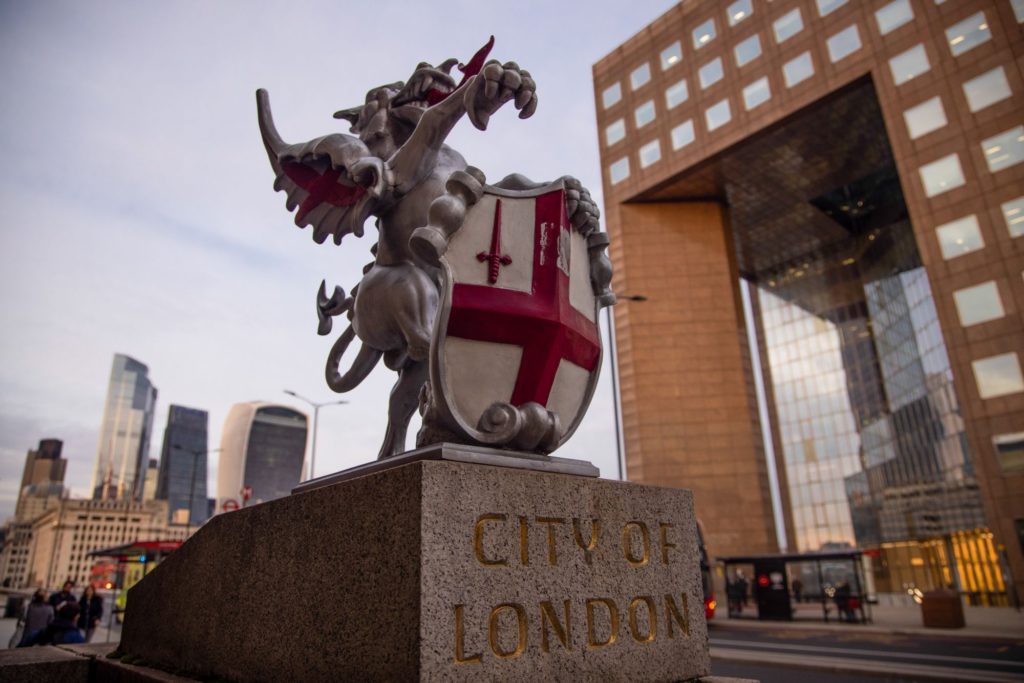
Here’s What Happened in the City of London This Week

(Bloomberg) —

Good afternoon from Bloomberg’s UK finance team. Here are five news stories from the Square Mile and beyond that caught our eye this week.

1)  UK’s Biggest Tax Cuts Since 1972 Trigger Crash in Pound, BondsLiz Truss’s new UK government delivered the most sweeping tax cuts since 1972, slashing levies on rich households and companies in a bid to boost economic growth in a move that triggered a massive market selloff of the currency and bonds.2)  London’s Bankers Have Little Use for Lifted Bonus Cap This YearLondon’s investment bankers have long grumbled that the region’s bonus cap crimped their pay in high times. Its demise arrives in a year when few expect the change to unleash bumper payouts.3)  Banks Dust Off Lockdown Plans to Beat Possible Power Blackouts in LondonSome of the world’s largest banks are dusting down their lockdown contingency plans to guard against possible power outages in London this winter.

4) Deutsche Bank’s New London Headquarters to Sell for a DiscountLandsec has exchanged contracts for the sale of the office development with an investment vehicle managed by Australia’s Lendlease Corp. for £809 million, according to a statement Wednesday. That’s 9% less than the March valuation. 5)  Organic Milk Off the Table as Barclays Sees Consumer CutbacksCutting back on organic milk and avoiding pricier grocery stores are among the adjustments UK shoppers are taking as they look to navigate the rising cost of living.

More stories like this are available on bloomberg.com

©2022 Bloomberg L.P.

Close Bitnami banner
Bitnami