Bloomberg

Trudeau Spars With New Tory Leader on Taxes and Cryptocurrencies

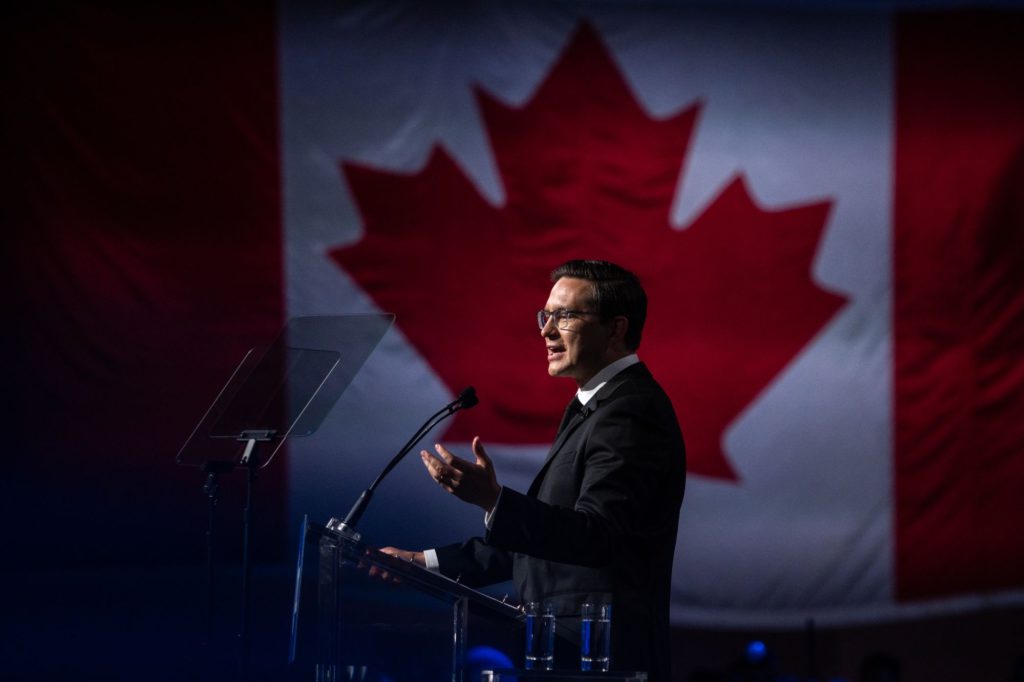
(Bloomberg) — Canadian Prime Minister Justin Trudeau squared off against new Conservative Leader Pierre Poilievre for the first time in parliament, with taxes and inflation relief at the top of the agenda.

The opposition leader framed Trudeau as an extravagant spender who needs to hike taxes to pay for it, and the prime minister painted Poilievre as a populist sacrificing his party’s credibility on the economy. The exchange Thursday sets up the main event in Canadian politics over the coming years. 

Poilievre was elected Conservative Party leader in a landslide victory two weeks ago. He has focused relentlessly on taxes since then, accusing the governing Liberals of hiking carbon and payroll levies despite Canada’s inflation rate running at a 40-year high.

“Heating your home in January and February in Canada is not a luxury, and it does not make those Canadians polluters,” Poilievre said in his opening salvo during the daily legislative question period, referring to Trudeau’s plan to gradually raise the national carbon price. He also targeted rises in federal pension plan and employment insurance premiums.

In his response, Trudeau pointed to his government’s move to give inflation assistance to low-income Canadians, including by temporarily doubling the rebate from the federal sales tax.

The prime minister then went further, singling out Poilievre’s vocal support for cryptocurrencies in early 2022, before the price of the digital assets crashed in response to higher interest rates.

“If Canadians had followed the advice of the Leader of the Opposition and invested in volatile cryptocurrencies in an attempt to ‘opt out of inflation,’ they would have lost half of their savings,” Trudeau said.

Although parliament returned from its summer break earlier this week, Thursday was the first chance for Trudeau and Poilievre to go head-to-head due to the prime minister’s trips to London and New York for Queen Elizabeth II’s funeral and the United Nations General Assembly.

But the two leaders may not be sparring in a general election for another three years, however, due to a power-sharing deal signed earlier this year between the Liberals and the left-leaning New Democratic Party.

More stories like this are available on bloomberg.com

©2022 Bloomberg L.P.

Brazil Favors Removal of Trump-Picked Bank Chief on Ethics Probe

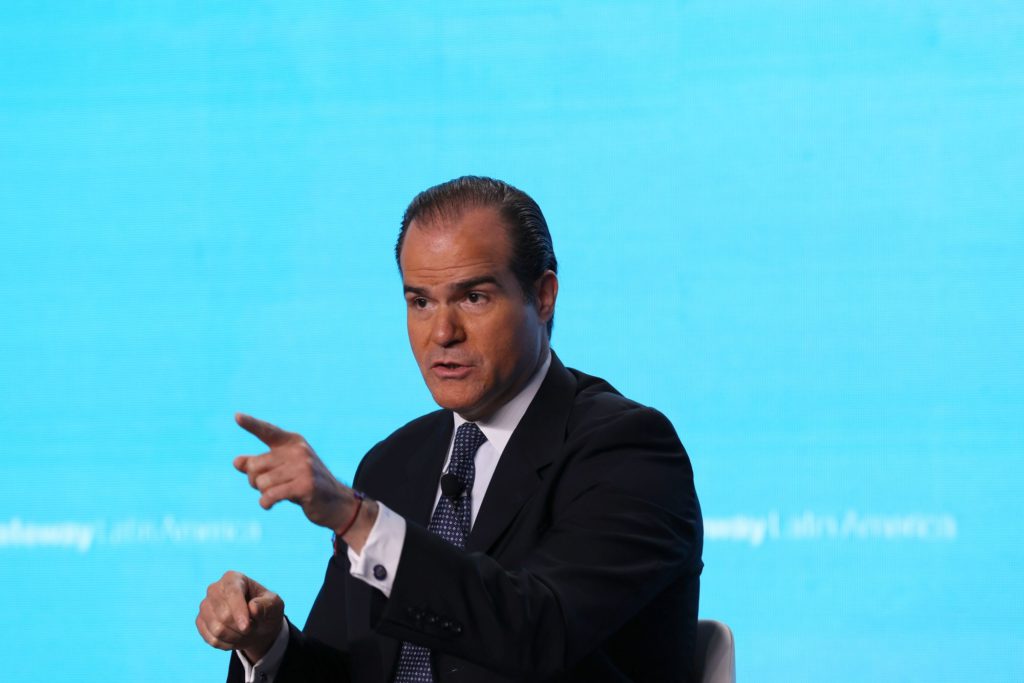
(Bloomberg) — Brazil, the second-largest shareholder of the Inter-American Development Bank, supports the removal of the lender’s president amid an ethics probe into his role, according to a top government official from the South American nation.

The administration of President Jair Bolsonaro sees the IDB’s Mauricio Claver-Carone as being unable to continue leading the Washington-based bank after the investigation highlighted an alleged romantic relationship with a subordinate and apparent breaches of the bank’s rules, the official said, asking not to be identified because the government’s position isn’t public.

The Brazilian government, which holds an 11.4% stake in the bank and together with the US and Argentina make up almost 53% of its voting power, expects a resolution of the case soon as Claver-Carone is losing internal support, according to the person. In order for Claver-Carone to be removed, the countries seeking his ouster would need a simple majority of voting shares.

The ultimate decision would be made by the board of governors, mostly finance ministers from the governments to which the board’s executive directors report, though they are expected to back the recommendation of the executive board.

Brazil’s Economy Ministry, which oversees the relationship with the IDB, declined to comment, as did the press office of the IDB itself.

The appointment of Claver-Carone, a former Trump administration official, to lead the development bank focused on Latin America opened a rift between the US and the region in 2020. He was the first US citizen to lead an institution traditionally presided over by a Latin American since its creation in 1959.

While Brazil at the time supported his candidacy as part of a Bolsonaro-Trump agreement, the relationship between Claver-Carone and Economy Minister Paulo Guedes has been rocky, with clashes over the Brazilian representatives to the bank, the person said.

Claver-Carone was expected to address the bank’s board on Thursday to respond to the allegations in a session with the institution’s executive directors, Bloomberg News reported earlier. 

Read More: Trump-Picked Latin American Bank Chief to Address Board on Probe

The former top Treasury adviser, International Monetary Fund representative and foreign-policy satellite radio host from Miami has mounted an aggressive defense to keep his job. In a statement posted Tuesday on the IDB’s website, Claver-Carone said he fully cooperated with the investigation and asserted that it “does not substantiate the false and anonymous allegations that were made against me or IDB staff in the press.”

He said the probe itself violated IDB rules because he and other IDB staff members didn’t have a chance to “review the final investigative report, respond to its conclusions, or correct inaccuracies.”

The investigation found evidence — backed by handwriting analysis, divorce records and interviewee statements — supporting the conclusion that the pair were in a romantic relationship prior to joining the Washington-based IDB in late 2020 “and that the relationship may have continued during their employment at the bank,” according to the Sept. 19 report prepared by law firm Davis Polk & Wardwell LLP at the direction of the IDB’s board. 

The probe also found that Claver-Carone took employment action to benefit the aide, raising her salary twice in less than a year for a cumulative 46% increase to more than $400,000.

The report hasn’t been made public but has been seen by Bloomberg.

Neither Claver-Carone nor the aide fully cooperated with the probe, according to the report. Claver-Carone in interviews with Davis Polk in recent weeks denied ever having a romantic relationship with the aide, who declined to be interviewed for the investigation, according to the report. The person didn’t respond to requests for comment.

Read More: Latin America Development Bank Head Decries Personal Accusations

In comments to Bloomberg, Claver-Carone said he was interviewed by investigators for more than seven hours and responded to many of their requests for information.

He said the investigation failed to provide him with due process. “The absence of basic fairness shows this process has been purely political,” he said.

Davis Polk didn’t respond to requests for comment.

The IDB, which is strategic to US influence in Latin America, loaned $23.5 billion last year, focusing on boosting economies and offering credit lines to buy Covid-19 vaccines for a region that was one of hardest hit globally by the pandemic. Nations experienced one of the worst economic contractions in their history in 2020, with millions losing jobs or fallen into poverty.

(Updates with details of votes and investigation and Claver-Carone’s comments starting in fourth paragraph.)

More stories like this are available on bloomberg.com

©2022 Bloomberg L.P.

SEC Set to Let Wall Street Keep Payment-for-Order-Flow Deals

(Bloomberg) — The US Securities and Exchange Commission will stop short of banning payment for order flow, a controversial way to process retail stock trades, as it proposes new rules for the $48 trillion American equities market.

The decision, described by people familiar with the matter, follows months of internal deliberations at the agency. It marks a win for brokerages that get paid for processing rights, although the SEC may still enact other changes that make the practice less profitable, according to the people.

The regulator is expected to unveil its plans in the coming months.  

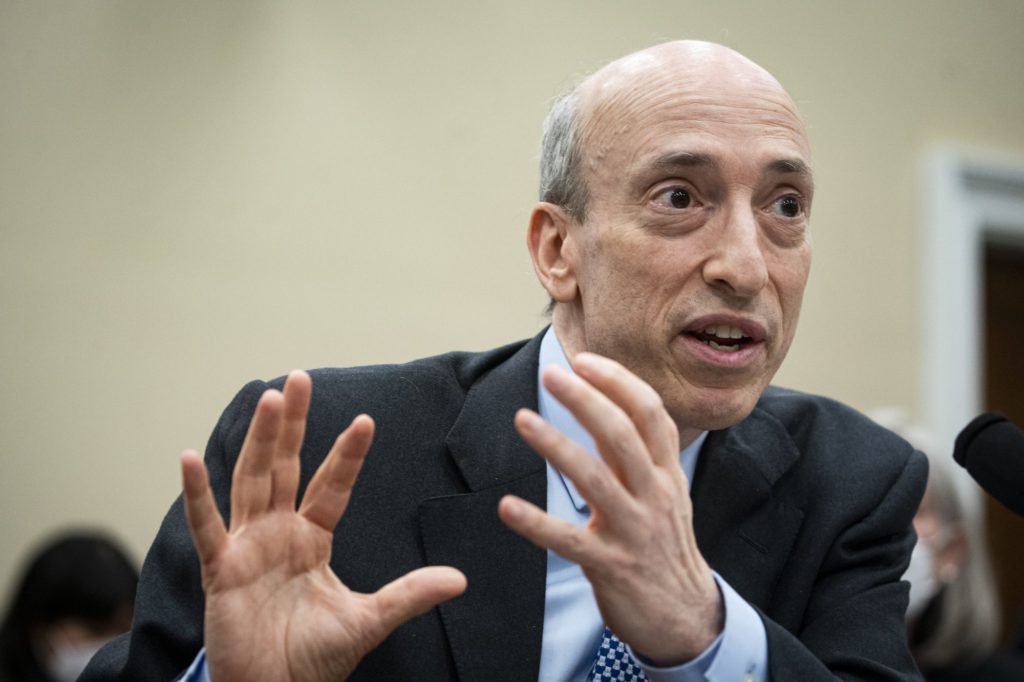
Wall Street has been on edge since Gary Gensler signaled last year that the agency may outlaw payment for order flow during the overhaul. The practice often involves one brokerage routing retail stock trade orders to another firm for execution rather than to the New York Stock Exchange or Nasdaq.

The arrangements are pitched as giving investors the benefits of greater liquidity, but critics have questioned whether traders actually are getting the best price, with some of their potential profits going to the firm that bought the trading rights. 

Long the subject of wonky, market structure debates, payment for order flow crashed in to the US political mainstream during the meme stock madness of 2021. 

Unlike some countries where the practice is banned, the arrangements are common in the US and represent a chunk of revenue for Charles Schwab Corp. and Robinhood Markets Inc. Those retail-focused brokerages sell the rights to execute their clients’ trade orders to firms like Citadel Securities and Virtu Financial Inc. 

Why the SEC Is Targeting ‘Payment for Order Flow’: QuickTake

Robinhood rose by as much as 12% and Virtu by 11% in morning trading in New York. Later Thursday, Robinhood reversed its gains and fell 2.2% at 2:38 p.m. Virtu maintained a 7.7% advance for the day. 

After taking a hard line for months, senior SEC officials have signaled in recent meetings with executives that a ban is no longer on the table, the people said, asking not to be named discussing private conversations. They said the SEC now appears to be focused on other ways to make the market more transparent following pushback from industry.

While the regulator declined to comment on not pursuing the ban, the agency said in a statement Gensler made clear in congressional testimony that “he believes that it’s appropriate to look at ways to freshen up the SEC’s rules to make our equity markets as fair, efficient, and competitive as possible for investors, particularly for retail investors.” Officials are considering a range of possible changes, the agency said. 

Commission-Free Trading

Backers of payment for order flow say it’s responsible for widespread commission-free trading in the US. 

Since 2019, most major online brokerages haven’t charged retail clients fees for their transactions, following a model made popular by Robinhood. Legions of traders who put money in the market for the first time during the Covid-19 pandemic have known nothing else.

Gensler has held the practice up as an example of a lack of transparency in markets. He’s called for changes to create “a level playing field” for retail investors. 

The decision by the SEC not to seek a ban could be a victory for brokerages like Robinhood, which rely on revenue from payment-for-order-flow arrangements. However, the firms may still face tough new regulations from the agency. 

As part of its overhaul, the SEC is considering a move to lower access fees that exchanges charge brokerages to execute trades for some stocks, which could push more trading onto the exchanges, the people said.

The agency also may propose changes that could affect the complicated system of rebates that exchange operators use to lure trading volume, they said. Additionally, the regulator is weighing a plan to force brokers to disclose more about how much trading with them costs compared with benchmarks, a metric known as price improvement, said the people. 

The SEC may also seek to clarify requirements for brokerages to provide “best execution” for stock orders, according to the people.

No final decision has been made on the scope of the overhaul. Even without a ban, taken together, the changes could make payment for order flow less profitable.

In its Thursday statement, the SEC said that “staff is considering possible recommendations related to best execution; disclosure of order execution quality; the National Best Bid and Offer; minimum price increments (“tick size”); exchange access fees and rebates; payment for order flow; and order-by-order competition.” 

Gensler and some of his top deputies recently have been holding extensive talks with trading firms, exchanges, broker-dealers and lobbyists about equity market structure reform, according to the people. 

That’s more engagement than previously, with longer and more frequent calls with the chair, the people said.

(Updates with SEC statement in 10th and 19th paragraphs.)

More stories like this are available on bloomberg.com

©2022 Bloomberg L.P.

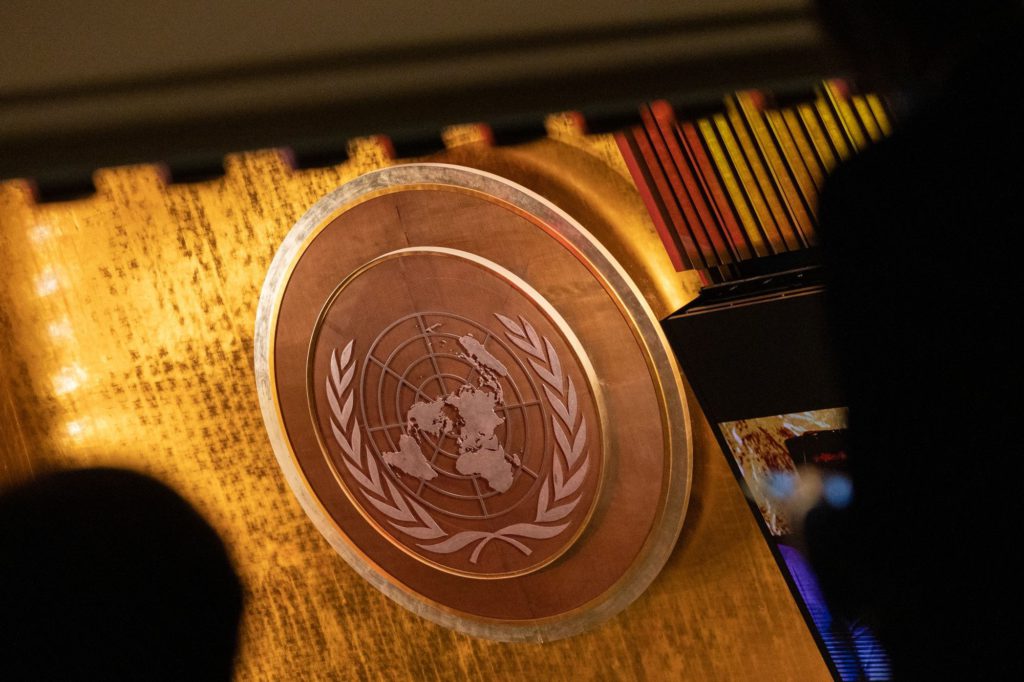
UN Latest: Lavrov Walks Out, Israel Revives Two-State Solution

(Bloomberg) — Russia’s Foreign Minister Sergei Lavrov walked out of a UN Security Council meeting where the US and its allies were criticizing President Vladimir Putin’s government over the invasion of Ukraine, in a stark demonstration of the divisions opened up by the war.

Lavrov arrived at the meeting late, delivered his speech and left once it was done, refusing to stay for the speeches that accused Russia of committing war crimes and violating the UN Charter. He said the West forced Russia to launch it’s so-called “special military operation” to protect its own security.

Click here for the full schedule of speakers on Thursday. 

(All times ET)

Essential reading:

  • How the UN Became a Bystander to the World’s Biggest Flashpoint
  • To catch up on the latest developments on Ukraine, click here.
  • And listen to our Twitter Space on UN’s struggle for relevance
  • Russia Is Left an Outlier Among World Leaders Gathered at the UN

Israeli Leader Resurrects Two-State Solution (2:25 p.m.)

Yair Lapid called for a two-state solution to the Israel-Palestine conflict, the first Israeli leader to do so at the  General Assembly in six years.

“An agreement with the Palestinians, based on two states for two peoples, is the right thing for Isra

el’s security, for Israel’s economy and for the future of our children,” he said, adding that the only condition Israel had was for a future Palestinian state to be “a peaceful one.”

Lavrov Defends Invasion on Security Council Meeting (12:45 p.m.)

Lavrov, Russia’s top representative at the General Assembly, defended his country’s invasion of Ukraine in a speech to a Security Council session on the crisis, before leaving the session midway through.

Lavrov reiterated the Kremlin’s assertion that what it calls a “special military operation” was “inevitable” because the US and its allies sought to use Ukraine as a “base for creating and realizing threats to Russian security.” Both Ukraine and the West have rejected those allegations.

Lavrov didn’t stay to listen to the other speeches at the session, nearly all of which blasted Russia’s invasion.

“He has left the chamber, I’m not surprised,” UK Foreign Secretary James Cleverly told the session shortly after Lavrov spoke. “I don’t think Mr. Lavrov wants to hear the collective condemnation of this council.”

Russia has also struggled to marshal support outside the Security Council. The General Assembly voted 101-7 with 19 abstentions to allow Ukrainian President Volodymyr Zelenskiy to speak by video link this week.

Guterres Denounces Russian Plans for Referendums (10:58 a.m.)

Secretary-General Guterres said he was “deeply concerned by reports of plans to organize so-called referenda in areas of Ukraine that are currently not under government control.”

“Any annexation of a state’s territory by another state resulting from the threat or use of force is a violation of the UN Charter and of international law,” Guterres told the Security Council in condemning Putin’s plans to stage sham referendums to justify claiming Ukrainian territory as part of Russia.

ICC Prosecutor Says World Must Show ‘Law Has Meaning’ (10:47 a.m.)

International Criminal Court Prosecutor Karim Khan said those guilty of war crimes or other abuses in Ukraine must be brought to justice, as diplomats used a Security Council session to again lament Russia’s invasion.

“This is a moment where we must collectively demonstrate — by action, not words — that the law has meaning,” Khan said. “Anybody who picks up a gun, anybody who fires a missile” must know the law applies and will be employed, Khan said.

Ireland’s Leader Cites ‘Shared Determination’ for Resolution With Truss (10:44 a.m.)

There’s a renewed sense of determination to resolve issues surrounding the Northern Irish Protocol as the UK’s Liz Truss begins work as prime mMinister, according to Ireland’s leader Micheal Martin.

Martin’s meeting at the weekend with Truss was “constructive” and “there is shared determination to get the issue resolved,” he said in an interview with Bloomberg Television.

While the difficulties in getting a resolution on the part of the Brexit agreement that deals with trade into Northern Ireland shouldn’t be underestimated, Martin said, he was “clear now that there is a will to get it resolved on all sides and where there is a will there’s always a means to doing that.”

US and Chinese Foreign Ministers to Meet on Friday (8:40 a.m.)

US Secretary of State Antony Blinken will meet with China’s Foreign Minister Wang Yi on Friday on  the margins of the UN session, the State Department said in a statement.

The department said it’s “part of our ongoing efforts to maintain open lines of communication and manage competition responsibly.” 

Amid tensions over issues from trade to the future of Taiwan, President Joe Biden told the UN gathering on Wednesday that “we do not seek a Cold War. We do not ask any nation to choose between the United States or any other partner.”

South Korean Leader Heard Insulting Congress (6:30 a.m.)

South Korean leader Yoon Suk Yeol was overheard insulting American lawmakers as “idiots,” after briefly meeting President Joe Biden to discuss issues including US electric-vehicle subsidies that South Korea wants to change.

“What an embarrassment for Biden, if these idiots refuse to grant it in Congress,” video broadcast on South Korean television showed Yoon telling Foreign Minster Park Jin in New York. The comments were caught on a microphone as Yoon and Park were leaving a brief chat with Biden at a Global Fund event. 

Yoon has come under pressure at home to remedy provisions in the Inflation Reduction Act signed by Biden, which includes tax credits of as much as $7,500 for purchases of electric vehicles made in North America. That could disadvantage major South Korean brands like Hyundai and Kia, which don’t yet have operational EV plants in the US. 

China and Russia Foreign Ministers Meet (11:15 p.m.)

China vouched for Russia’s role in the UN in a meeting between the two nations’ foreign ministers on the sidelines of the General Assembly, according to Tass. “Russia is a permanent member of the Security Council and must continue to play its important role in the UN. No one can deprive Russia of this right,” it quoted China’s Wang Yi as saying.

The meeting underscored the two countries’ similar approach to global affairs that allows them to “play a constructive role in the formation of a more just and sustainable polycentric world order,” Tass reported separately, citing a statement from the Russian Foreign Ministry. The two foreign ministers also criticized US foreign policy, particularly toward Taiwan.

Last week, Putin told Chinese leader Xi Jinping he understands Beijing’s “questions and concerns” about his invasion of Ukraine, a rare admission of tensions between the diplomatic allies that came in the first in-person talks between the leaders of the long-time partners since the war began.

Putin Acknowledges Xi’s ‘Concerns’ on Ukraine, Showing Tension

Truss Says Democracies ‘Must Deliver’ for Citizens (9:30 p.m.) 

Truss evoked the struggle between democracy and autocracy as the UK prime minister paid tribute to the late Queen Elizabeth II, saying when the queen “addressed this general assembly 65 years ago, she warned that it was vital not only to have strong ideals but also to have the political will to deliver on them. Now we must show that will.”

The premier praised the international alliance that has supported Ukraine in the war against Russia and “at this crucial moment in the conflict, I pledge that we sustain or increase our military support to Ukraine for as long as it takes.”  

US Sees General Assembly as Fertile Ground for Price Cap (8:20 p.m.)

US diplomats are using meetings on the sidelines of the General Assembly to push for other countries to adopt a price cap on Russian oil and petroleum products, a senior State Department official said.

The US is emphasizing that the price cap is meant to limit Putin’s ability to finance the Ukraine war. They also stress — particularly to developing countries — that the mechanism can keep cheap Russian oil on the market and stabilize global energy prices, the official said, adding countries have been receptive to the cap, especially those that haven’t previously discussed the subject with the US. Even nations that won’t agree to the cap understand they can benefit from discounts on Russian energy.

Zelenskiy Warns of Negotiations as Delaying Tactic (8 p.m.)

Zelenskiy, in his speech, asked for more weapons to pursue his country’s efforts to repel Russia’s invasion and warned that Moscow would try to use the prospect of negotiations as a delaying tactic. The Russians, he added, are “afraid of real negotiations.”

He spoke of a recent prisoner swap between Russia and Ukraine and praised the efforts of Saudi Arabia in brokering the deal.   

Yoon, Kishida Sit Down Together in New York (7 p.m.)

The leaders of Japan and South Korea used their first summit in nearly three years to pledge to resolve historical issues that have damaged ties between the US allies.

Japan, South Korea Pledge Better Ties in First Summit Since 2019

South Korean President Yoon Suk Yeol and Japanese Prime Minister Fumio Kishida met for about 30 minutes in New York, where both had addressed a session of the assembly. Statements from both sides said the pair also discussed the importance of cooperation that includes the US as they face threats from the likes of North Korea.

Decisions by South Korean courts in recent years finding certain Japanese companies liable for compensation to Korean laborers for work done during Japan’s 1910-1945 colonial rule over the peninsula has soured ties. It also briefly touched off a trade dispute between the neighbors that the Biden administration has been courting as it seeks to secure supply lines for crucial goods such as semiconductors that diminish dependence on China.

Trump-Picked World Bank Boss Under Fire at UN (5 p.m.)

It’s one of the biggest talking points on the sidelines of the UN and among officials: why David Malpass insists on being a climate denier.

Pressure to replace the World Bank chief installed three years ago by former President Donald Trump has ramped up after his equivocations on the impact of burning fossil fuels sharpened criticism of the lender’s track record on climate change. 

The controversy kicked off Tuesday when former US Vice President Al Gore labeled World Bank President David Malpass a climate denier and called for a change of leadership. Asked about the criticism during the same event in New York, Malpass dodged questions on the effects of man-made emissions on climate change before saying: “I don’t know. I’m not a scientist.”

Macron and Truss Appear to Put ‘Friend or Foe’ Question to Rest (4 p.m.)

French President Emmanuel Macron appeared to try to bury the hatchet with Truss on the sidelines of the assembly.

“There is a willingness to re-engage, to move forward and to show that we are, as it were, allies and friends in a complex world,” Macron told a group of reporters in New York City after the talks. “Now, I believe in evidence, and results.”

Macron’s government has repeatedly been at odds with former UK Prime Minister Boris Johnson’s, especially during post-Brexit negotiations and on issues related to migrants crossing the English Channel. When Truss was eying the position, she said “the jury’s out” on whether France was UK’s “friend or foe.”

The two leaders appeared to shake off tensions, smiling and shaking hands during a photo op preceding their meeting. Readouts of the conversation shared by their aides focused on their common stance on Ukraine and Russia rather than thornier issues including Northern Ireland.

Biden and Truss Present a United Front on Ukraine (2:31 p.m.)

Biden and Truss brushed shoulders at Queen Elizabeth II’s funeral but had to wait till now to formally sit down and get acquainted. At the Group of Seven summit in Germany, it was still Boris Johnson who was in power and the two men did not have a bilateral, a fact that the UK press was quick to pounce on. 

Truss is a vocal hawk and the UK is the US’s closest geopolitical ally. On Ukraine the two countries are very much on the same page. Where there is tension is on the post-Brexit reality of a problematic Irish border.

The US president said he and Truss were both “committed to protecting” the Good Friday Agreement in Northern Ireland and that aiding Ukraine and countering China also were on the agenda. 

The meeting was a chance for Biden and Truss to form a stronger personal bond and cool simmering tensions over trade and Northern Ireland. Truss has questioned the nature of the so-called “special relationship” between the US and UK. Asked Wednesday if the “special relationship” is intact, Truss gave a single, firm head nod.

Biden-Truss Era Dawns With Caution, Doubt, Silence on Trade 


Biden Says US Doesn’t Seek Conflict With China (11:32 a.m.)

Biden told the General Assembly that the US doesn’t seek conflict with China and will conduct itself as “a reasonable leader.”

“We do not seek a Cold War We do not ask any nation to choose between the United States or any other partner,” Biden said in his speech. He also sought to tamp down speculation that his recent pledge to defend Taiwan if China invades marks a change in US policy.

“We seek to promote peace and stability across the Taiwan Strait, remain committed to our one China policy, which has helped prevent conflict for four decades,” Biden said. “We continue to oppose unilateral changes in the status quo by either side.”

Macron To Discuss Gas Prices, Supplies With Biden (11:30 a.m.)

Macron expects to improve coordination on energy and food with the US following a meeting with Biden this afternoon on the sidelines of the assembly. Europe needs to secure gas supplies and “reasonable pricing,” Macron said.

The French president called for “everyone to put maximum pressure on President Putin for him to end this senseless war.”

He declined to say how France would react if Russia were to use nuclear weapons. France’s doctrine is not to take part in any escalation, Macron said.

War in Ukraine Is Not Going Well For Putin, Greek Premier Says (11:26 a.m.)

Putin is going to try everything to turn the table as his invasion is not going well, Greek Prime Minister Kyriakos Mitsotakis said.

“We’re all united in supporting Ukraine defend itself against an open act of aggression,” Mitsotakis told Bloomberg TV in New York. “The war is not going well for Russia and I’m convinced Putin won’t succeed.” 

Biden Says Putin’s War is About ‘Extinguishing Ukraine’s Right to Exist’ (11:12 a.m.)

Biden opened his speech to the General Assembly by condemning Putin’s push to escalate his military campaign in Ukraine, condemning it as a “brutal, needless war.”

Biden again sought to rally support from the rest of the world to stand up against Putin. The US president has marshaled a global campaign to aid Ukraine and counter Russia, authorizing billions of dollars of military assistance for Kyiv’s forces and imposing sanctions that have hobbled the Russian economy. 

“This war is about extinguishing Ukraine’s right to exist as a state, plain and simple. And Ukraine’s right to exist as a people. Whoever you are, wherever you live, whatever you believe, that should make your blood run cold,” Biden said.

The US president has hailed the effort as proof he has been able to revitalize US alliances that were frayed by former President Donald Trump. Finland and Sweden, countries that for decades prized non-alignment, are on the brink of being welcomed into NATO amid concerns about Russian aggression. Existing allies have boosted defense spending, long a US goal.

Biden has also used bellicose language to condemn Putin for his invasion, calling him a war criminal and declaring in a major address in Warsaw earlier this year that “this man cannot remain in power.”

Iran Protests in New York (11 a.m.)

Hundreds of Iranians and others from across the US gathered at UN Plaza on Wednesday to protest Iranian President Ebrahim Raisi, following protests in his own country after the death in police custody of a 22-year-old woman accused of being inappropriately dressed.

In New York, attendees said they were there to fight for regime change. Chants, primarily in Farsi, called for the ousting of Raisi. Some called for the arrest of Raisi on US soil, denouncing that he was greeted upon arrival in New York with a US Secret Service detail.

Event speakers included former Kansas Governor Sam Brownback, former Connecticut Senator Joseph Lieberman, while many Iranian-Americans in attendance traveled from states across the US including California, Virginia, and Washington, D.C.

Why a Woman’s Death in Iran Has Ignited New Protests: QuickTake

Iran Accuses US and Holds up Photo of Soleimani (9:30 a.m.)

Raisi spoke from the podium as protests roil several cities in Iran following the death of a young woman who fell into a coma after being detained for flouting Islamic dress codes by the so-called “morality police.” State media reported six people were killed.

The Iranian president accused the US of trampling on the nuclear accord and called for “justice” for General Qassem Soleimani, the Iranian general who was killed in a drone strike ordered by former President Trump in 2020. 

He held up a photo of Soleimani for the audience and admonished the US for “hypocrisy” and said the world “needs a strong Iran today.” He said his country would only agree to a nuclear deal that had tangible benefits for the country’s economy.

He made no mention of the protests that are currently embroiling his security forces — they have so far overshadowed his visit to New York and any efforts to break the latest deadlock in Tehran’s indirect talks with Washington to revive the 2015 nuclear deal. About 1000 Iranian-Americans are protesting his presence at the UN outside its headquarters.

It was his first in-person speech to the annual gathering and he’s the first hardline president to do so since Mahmoud Ahmadinejad, who once emptied the General Assembly hall after giving a diatribe against NATO, Israel and the West.

No contact is expected between Biden and Raisi at this gathering.

Nigeria Calls for More Debt Relief (9:50 a.m.)

Nigerian President Muhammadu Buhari called for more debt relief to be given to poorer nations.

A former army general, Buhari has served as president of Nigeria, which has Africa’s largest economy since 2015 and is due to step down next year after serving the maximum two terms. His tenure has been marred by spiraling state debt, rampant unemployment and widespread insecurity, with attacks being staged by Islamist group Boko Haram and other armed groups. 

“The multifaceted challenges facing most developing countries have placed a debilitating choke-hold on their fiscal space,” he said at his last address to the General Assembly before leaving office next year. This situation requires “a global commitment to the expansion and extension of the debt-service suspension initiative to countries facing fiscal and liquidity challenges as well as outright cancellation for countries facing the most severe challenges,” he said.

More stories like this are available on bloomberg.com

©2022 Bloomberg L.P.

Polaroid Takes Up Music With Speakers and Radio-Style Streaming

(Bloomberg) — Polaroid International BV, the brand that’s been a staple of still photography industry since 1937, sees music in its future.

On Wednesday, the instant camera maker unveiled four Bluetooth music players and an internet radio streaming service, Polaroid Radio.

Though entering into the world of music seems like quite a departure, Polaroid has long had music genes in its making, Polaroid Chairman Oskar Smolokowski said in an interview Wednesday. Shortly after joining the company in 2012, he discovered a concept sketch made in the 1970s showing the idea of incorporating music into Polaroid photos. Now, the 30-year-odd has finally taken a step toward making it happen.

“We need to be open to new frontiers in this world of creativity,” Smolokowski said at the Wednesday launch event in Manhattan, where dozens of speakers of various shapes, sizes and colors sat on top of a pyramid of red and pink plastic crates. “We felt like we got our footing a little bit with instant photography. We know what we’re doing. But we wanted to go beyond that.”

Music, like photography, is at the intersection of art and science — the core of Polaroid’s product design, he said.

The new line of products include four speakers, from the more portable P1 and P2 to the bigger P3 and P4, as well as an online music service called Polaroid Radio, which the company describes as a “FM-nostalgia” radio station. 

Polaroid Players

About the size of an apple, with the weight of two baseballs, the P1 is the smallest and most portable music player the company offers. Priced at $59.99, the square-shaped model can easily fit into a purse or be attach to a backpack via a carabiner clip. It is IPX5 water proof, meaning that it’s splash and spray resistant. P1 has a battery life of up to 10 hours and comes in black, red, yellow, and blue. It’s also the only Polaroid speaker that doesn’t work with Polaroid Radio — I’ll explain this later.

At $129.99, P2 works with all the features in the Polaroid Music App and comes with an additional grey color. With slightly more than double the size of the P1, the pill-shaped P2 is still a portable player that can be wrapped around your wrist or attached to bags. All players have a red “play” button that’s a hat tip to the classic red shutter button on Polaroid’s cameras. Like P3 and P4, P2 has a battery life that lasts up to 15 hours. 

With a handle attached to the top, the Polaroid P3 ($189.99) most resembles a boom box and is available in the same colors as P2. The biggest speaker, P4, is one for the party as it can fill up the whole room with music. You can set the speaker on a table with the handle on top or plug a separate stand on its right side for it to stand vertically. It’s about the size of a flattened watermelon. At $289.99, P4 speakers come in black and yellow.

Polaroid Radio

All four players have Bluetooth connections and stereo pairing so listeners can connect them to their phone or computer. But what’s unique is an old-fashioned analog dial on the top of P2, P3 and P4, which allows users to choose among five Polaroid Radio stations and change volumes. P1 also has a scrollable dial at the corner, but it’s solely for volume control.

Polaroid Radio is accessible on the Polaroid Music App and on the web. It’s like a free Spotify or Pandora, with no ads—the only cost is that listeners must relinquish control of what music they listen to. A traditional radio-style station! How retro—just like having a separate camera aside from your phone.

“We created something that’s in between a real radio station, and a playlist, where we’re live streaming FM-like (music) so you tune into it,” says Smolokowski. “We work on the curation with these incredible DJs and curators offline.” (Polaroid Radio doesn’t actually work with electromagnetic waves; it has to be connected via Bluetooth to a “brain,” like a phone or a computer.)

Press the “music” button and you’re dialed into one of the five Polaroid curated stations. By scrolling the dial, you can try out the Heatwave station filled with hip-pop, Latin pop, and Afrobeats by artists including Nigerian singer Burna Boy and Spanish singer-songwriter Rosalia. There’s Poly Chrome, which is techno by acts like Kraftwerk and Northern Ireland duo Bicep. The Iris station features Erykah Badu’s or Cleo Sol’s R&B, jazz and funk. Royal Pine carries rock, folk and soul music from musicians like Joni Mitchell and Maggie Rogers. And Itchy Teeth plays alt-pop, alt-indie songs by bands like Talking Heads and Tyler the Creator. 

Each station’s playlist is designed by curators such as Bianca Lexis, Hannah Faith, and Rachel Grace Almeida and groups like ABOE and Girl’s Don’t Sync, who sometimes jump in like a radio host to introduce the songs.

If you like a song, you can press the “like” button on top of the speaker so that the song is saved to your Polaroid Music App, or an Apple Music account you link with the app. Spotify support is coming soon. 

At launch, Polaroid Radio is available in US, Canada, UK, France, Germany, Italy, Netherlands, Sweden, Portugal, and Austria. More territories to come.

Polaroid isn’t leaving the camera world either. The company plans to launch its first continuous-focus camera in 2023, which will detect a subject’s movement, refocus accordingly, and show a better depth of field in photos compared to the previous fixed-focus models.

(Corrects official company name in first paragraph.Updates with information about radio-style DJs in the 14th paragraph.)

More stories like this are available on bloomberg.com

©2022 Bloomberg L.P.
Bond Yields Hit Milestones in Global Hike Marathon: Markets Wrap

(Bloomberg) — Treasury yields surged to multiyear highs after a parade of global central banks joined the Federal Reserve in boosting interest rates to curb scorching levels of inflation at the expense of economic growth.

Ten-year US yields hovered near 3.7%, the highest since February 2011 while the two-year rate topped 4.1%. Equities came off session lows, with gains in defensive shares tempering a slide in big tech. Sentiment was still fragile, with some prominent Wall Street voices predicting the S&P 500 may test its June bottom that stands less than 3% below current levels.

The dollar remained near its all-time high. Fueled by hawkish Fed policy and investors in search of a haven, the greenback has climbed against counterparts by the most in decades. The Swiss franc slumped as a central bank hike proved not enough to satisfy expectations, while Japan propped up its currency for the first time since 1998.

The Fed gave its clearest signal yet that it’s willing to tolerate a recession as the necessary trade-off for regaining control of inflation, with officials forecasting a further 1.25 percentage points of tightening before year-end. Norway, Britain and South Africa also followed with hikes of their own as officials rush to get to grips with rampant price increases.

“We see this new even-higher-for-longer rate path as associated with a substantially greater higher likelihood of a hard landing, and so not just unambiguously hawkish but unambiguously bad for risk,” said Krishna Guha, vice chairman of Evercore ISI.

Read: Fed Repo Facility Use Surges to Record High as Rates Rise

Read: Mortgage Investors Jump In After Fed Says MBS Sales Aren’t Near

The S&P 500 could be poised for more downside after breaking through a rare technical indicator, according to Berenberg strategists including Jonathan Stubbs. 

It has traded below its 200-day moving average for over 100 sessions — a streak that was previously breached only during the tech bubble and the global financial crisis in the past 30 years. In both of those instances, the gauge posted most of its losses after surpassing that level, with the index declining by a further 50% in 2000-2003 and 40% in 2008-2009 before troughing, they said. 

Evercore’s chief equity and quantitative strategist Julian Emanuel cut his S&P 500 year-end projection to 3,975 from 4,200 and expects a “full retest” of the June low in the weeks ahead. The target cut accounts for a rising probability of a recession following Fed Chair Jerome Powell’s warning that the rate-hike process won’t be “painless” for the labor and housing markets.

“The bad news is we are still in one of the weakest seasonal windows of the year, especially in a mid-term year,” said Jonathan Krinsky, chief market technician at BTIG. “The good news is that it quickly reverses by mid-October. We think we test or break the June lows before then, which should set up a better entry point for a year-end rally.”

Dennis DeBusschere at 22V Research expects markets to remain volatile while maintaining his neutral, range-bound stance for stocks.

“It’s tough to get long until we get signs of slower underlying demand growth, but tail risk is limited by already tighter financial conditions, lower PEs, and higher implied vol,” he wrote.

The environment isn’t suitable for strong directional positioning on overall indexes, according to Mark Haefele at UBS Global Wealth Management. However, he advises against retreating to the sidelines, “especially given the drag on cash from high inflation and the challenge of timing a return to markets without missing out on rebounds.”

“Instead, we stay invested but also selective, and focus our preferences on the themes of defensives, income, value, diversification, and security,” he added.

Will the Nasdaq 100 Stock Index hit 10,000 or 14,000 first? This week’s MLIV Pulse survey focuses on technology. It’s brief and we don’t collect your name or any contact information. Please click here to share your views.

Here are some of the main moves in markets:

Stocks

  • The S&P 500 fell 0.5% as of 2 p.m. New York time
  • The Nasdaq 100 fell 0.9%
  • The Dow Jones Industrial Average was little changed
  • The MSCI World index fell 0.8%

Currencies

  • The Bloomberg Dollar Spot Index was little changed
  • The euro was little changed at $0.9843
  • The British pound was little changed at $1.1266
  • The Japanese yen rose 1.2% to 142.29 per dollar

Bonds

  • The yield on 10-year Treasuries advanced 15 basis points to 3.68%
  • Germany’s 10-year yield advanced seven basis points to 1.96%
  • Britain’s 10-year yield advanced 18 basis points to 3.50%

Commodities

  • West Texas Intermediate crude rose 0.9% to $83.65 a barrel
  • Gold futures rose 0.3% to $1,680.50 an ounce

More stories like this are available on bloomberg.com

©2022 Bloomberg L.P.
Instagram Plans to Protect Users From Unsolicited Nude Photos

(Bloomberg) — Instagram is developing a feature that will allow users to block unsolicited nude photos in their direct messages. 

“Nudity protection” will be an optional privacy setting, similar to the Hidden Words feature launched last year, which filters out messages containing abusive language and emojis. Using machine learning, Instagram will prevent nude pictures from being delivered. The company also won’t view or store any of the images.  

The feature, first reported by the Verge, addresses persistent complaints of abuse on the social media application, owned by Meta Platforms Inc. Some 41% of Americans reported online harassment and 79% believe social media companies are doing a fair or poor job of addressing such problems, according to a report last year from the Pew Research Center, which surveyed more than 10,000 adults in September 2020. One-third of women under 35 experienced sexual harassment online, compared with 11% of men in the same age range, according to the report.

Nudity protection on Instagram is still in the early stages of development. “We’re working closely with experts to ensure these new features preserve people’s privacy, while giving them control over the messages they receive,” a Meta spokesperson said.

More stories like this are available on bloomberg.com

©2022 Bloomberg L.P.
Musk Can Use $7.8 Million Twitter Whistle-Blower Payment in His Counterclaims

(Bloomberg) — Elon Musk can use a $7.8 million severance payment to a Twitter Inc. whistle-blower to argue he was justified in walking away from his $44 billion buyout of the company, the latest turn in a bruising battle set for trial next month.

Delaware Chancery Judge Kathaleen St. J. McCormick ruled Thursday that the billionaire can amend his counterclaims to Twitter’s lawsuit against him with the payment to Peiter Zatko. Musk claims Twitter failed to get his consent for the severance agreement, violating the terms of the buyout. Twitter sued Musk in July to force him to consummate the $54.20-per-share deal.

The ruling is a boost for Musk in a closely watched case that has seen a torrent of subpoenas, including Musk’s of Twitter co-founder Jack Dorsey, who has been an energetic booster of the buyout. The trial is set for five days starting Oct. 17.

Zatko, Twitter’s former head of security, made headlines when he came forward to allege that he raised questions about the number of spam and bot accounts embedded in Twitter’s customer base but was ignored by management. He testified this month before the Senate Judiciary Committee that the lapses were so serious they threatened national security. 

‘False Narrative’

Twitter has said it fired Zatko in January for poor performance and has cited “a false narrative about Twitter and our privacy and data security practices that is riddled with inconsistencies and inaccuracies and lacks important context.”

Twitter representatives didn’t immediately return an email seeking comment on Thursday’s decision. The company didn’t oppose Musk’s request to amend his arguments with the Zatko payment.

Read More: Twitter Accused in Suit of Hiding Whistle-Blower’s Concerns 

In her brief ruling, McCormick said Delaware’s laws allow for “liberal amendment in the interest of resolving cases on the merits.”

Musk backed away from his planned purchase of Twitter earlier this year, claiming the company hadn’t leveled with him about the number of bot accounts among its more than 230 million users. Twitter counters the concerns are a pretext to get out of a deal over which the world’s richest person began to experience buyer’s remorse.

‘Extremely Disturbed’

Earlier this month, McCormick allowed Musk to add Zatko’s claims about lax computer security, privacy issues and the bots to his case for canceling the buyout. But she rebuffed his bid to push back the trial so he would have more time to dig into the whistle-blower’s allegations.

Those claims were addressed at a Senate Judiciary subcommittee hearing Tuesday. At the hearing, Federal Trade Commission Chair Lina Khan said she was struck by Zatko’s allegation that Twitter misled regulators about its compliance with a 2011 agreement to tighten security controls and respect user privacy.

“There has absolutely been a problem with companies treating FTC orders as suggestions,” Khan said. “We have a program underway to really toughen that up.” She described Twitter’s 2011 deal with the FTC as “a more legacy approach” that her team is moving away from in favor of “bright line” rules setting specific boundaries for corporate behavior. 

Read More: Khan Says FTC Orders to Be Tougher After Twitter Whistle-Blower

Khan’s congressional testimony could actually make it harder for Musk to use Zatko’s allegations about noncompliance with the FTC accord as a legitimate reason to torpedo the deal, Bloomberg Intelligence analyst Matthew Schettenhelm wrote. Her comments may make it more difficult for the judge “to say a future FTC penalty is likely to rise to a Material Adverse Effect,” a substantial change in circumstances that affects a deal, he said. 

Musk is trying to show that what he calls Twitter’s failure to be transparent about the number of bot and spam accounts in its customer base — along with Zatko’s myriad allegations — is enough to create an MAE under Delaware law that supports his abandoning the deal.

The case is Twitter v. Musk, 22-0613, Delaware Chancery Court (Wilmington).

Read More

  • Musk Can Use Twitter Whistle-Blower Claims in Buyout Fight 
  • Twitter Whistle-Blower Raised No Spam Concerns, Company Says 

(Adds details and context throughout, starting in third paragraph.)

More stories like this are available on bloomberg.com

©2022 Bloomberg L.P.
Alex Jones Renews ‘Deep State’ Claim at Defamation Damages Trial

(Bloomberg) — Combative conspiracy theorist Alex Jones doubled down on his claim that defamation lawsuits filed by the families of 26 children and educators gunned down at Sandy Hook Elementary School are part of a liberal plot to destroy him.

“I think this is a Deep State situation,” Jones told jurors Thursday during the second week of a civil trial in Connecticut. When asked if his credibility is the most important thing to him, the Infowars host replied: “No, crushing the globalists.”

Jurors are hearing testimony to determine how much the Internet host must pay in damages for defaming eight families and an FBI agent who responded to the scene of the 2012 school shooting by repeatedly calling the massacre a hoax. Jones already was found liable for defamation against the victims, who say his false claims encouraged his fans to harass and pursue them, turning their lives into living nightmares.

Connecticut State Judge Barbara Bellis, who ruled Jones was liable in a separate non-jury proceeding, is overseeing the case in New Haven, about 25 miles from Sandy Hook. Bellis and judges in two similar Sandy Hook lawsuits ruled against Jones for failing to turn over financial records.

Jones has repeatedly insisted his First Amendment free speech rights protect his statements, even if they were false. He claims he should be able to speak freely on topics of national importance like any other journalist. Having already been found liable, Jones isn’t legally allowed to make that argument to jurors in any of these trials, which are strictly to determine damages.

Texas Case

In the first of the three Sandy Hook defamation trials last month, a jury in Austin, Texas, ordered Jones to pay almost $50 million to the parents of one of the slain first graders.

On the stand Thursday, Jones admitted he’s blasted Bellis as a “tyrant” and mocked the Connecticut proceeding as a “kangaroo court.” He said his Infowars.com staff has added a “kangaroocourt” page so fans can follow the trial.

“This is a travesty of justice, and this judge is a tyrant,” Jones told reporters outside the courthouse on Wednesday. “This judge is ordering me to say that I’m guilty and to say that I’m a liar. None of that’s true. I was not wrong about Sandy Hook on purpose.”

He added that he was merely questioning whether government agents staged the school shooting — with the help of “crisis actors” portraying grieving parents — as part of a liberal plot to confiscate citizens’ guns.

“There have been a lot of staged events in history, like WMDs in Iraq, and I question every major event that we see,” Jones told reporters Wednesday. “And so I’m being put in an impossible position inside of this courthouse where I’m being ordered to say I’m guilty.”

Jurors have heard family members of the murdered children describe how Jones’s fans stalked them in person and online, threatening violence and denying their loved ones ever existed. The jury was also shown video clips of Jones telling millions of viewers the massacre never happened and was a “false flag” operation by the government.

The Law & Crime Network, which is livestreaming the Connecticut trial, disabled its comments section Wednesday, after Jones’s fans swarmed the webcast with violent threats to the families.

The case is Lafferty v. Jones, 22-05019, US Bankruptcy Court, District of Connecticut (Bridgeport).

More stories like this are available on bloomberg.com

©2022 Bloomberg L.P.

Meta Sued for Skirting Apple Privacy Rules to Snoop on Users

(Bloomberg) — Meta Platforms Inc. was sued for allegedly building a secret work-around to safeguards that Apple Inc. launched last year to protect iPhone users from having their internet activity tracked.

In a proposed class-action complaint filed Wednesday in San Francisco federal court, two Facebook users accused the company of skirting Apple’s 2021 privacy rules and violating state and federal laws limiting the unauthorized collection of personal data. A similar complaint was filed in the same court last week.

The suits are based on a report by data privacy researcher Felix Krause, who said that Meta’s Facebook and Instagram apps for Apple’s iOS inject JavaScript code onto websites visited by users. Krause said the code allowed the apps to track “anything you do on any website,” including typing passwords.

Read More: Facebook Users Said No to Tracking. Now Advertisers are Panicking

A Meta spokesperson said the allegations are “without merit” and the company will defend itself.

“We have designed our in-app browser to respect users’ privacy choices, including how data may be used for ads,” the company said in an emailed statement.

According to the suits, Meta’s collection of user data from the Facebook app helps it circumvent rules instituted by Apple in 2021 requiring all third-party apps to obtain consent from users before tracking their activities, online or off. 

Meta has said it expected to miss out on $10 billion in ad revenue in 2022 because of Apple’s changes.

The Facebook app gets around Apple privacy rules by opening web links in an in-app browser, rather than the user’s default browser, according to Wednesday’s complaint.

“This allows Meta to intercept, monitor and record its users’ interactions and communications with third parties, providing data to Meta that it aggregates, analyzes, and uses to boost its advertising revenue,” according to the suit.

The cases are Willis v. Meta Platforms Inc., 22-cv-05376, and Mitchell v. Meta Platforms Inc., 22-cv-05267, US District Court, Northern District of California (San Francisco).

(Updates with company spokesperson’s comment in fourth paragraph.)

More stories like this are available on bloomberg.com

©2022 Bloomberg L.P.

Close Bitnami banner
Bitnami