Bloomberg

Bond Yields Surge With Central Bank Hiking Frenzy: Markets Wrap

(Bloomberg) — Bond yields hit multiyear highs after a slew of global central banks joined the Federal Reserve in hiking interest rates to curb scorching levels of inflation at the expense of economic growth.

Ten-year US yields hovered near 3.7%, the highest since February 2011 while the two-year rate topped 4.1%. Equities pared losses, though some prominent Wall Street voices predict the S&P 500 may test its June bottom that stands 2.5% below current levels. Traders also parsed a news report saying that Credit Suisse Group AG is discussing a possible US market exit.

The dollar remained near its all-time high. Fueled by hawkish Fed policy and investors in search of a haven from market swoons, the greenback has climbed against counterparts by the most in decades. The move prompted Japan to prop up the currency for the first time since 1998. The Swiss franc dropped the most since 2015 against the euro after a central bank hike proved not enough to satisfy expectations. 

The Fed gave its clearest signal yet that it’s willing to tolerate a recession as the necessary trade-off for regaining control of inflation, with officials forecasting a further 1.25 percentage points of tightening before year-end. Norway, Britain and South Africa also followed with hikes of their own as officials rush to get to grips with rampant price increases.

“We see this new even-higher-for-longer rate path as associated with a substantially greater higher likelihood of a hard landing,  and so not just unambiguously hawkish but unambiguously bad for risk,” said Krishna Guha, vice chairman of Evercore ISI.

Read: Mortgage Rates in US Jump to 6.29%, Highest Since October 2008

The S&P 500 could be poised for more downside after breaking through a rare technical indicator, according to Berenberg strategists including Jonathan Stubbs. 

It has traded below its 200-day moving average for over 100 sessions — a streak that was previously breached only during the tech bubble and the global financial crisis in the past 30 years. In both of those instances, the gauge posted most of its losses after surpassing that level, with the index declining by a further 50% in 2000-2003 and 40% in 2008-2009 before troughing, they said. 

Evercore’s chief equity and quantitative strategist Julian Emanuel cut his S&P 500 year-end projection to 3,975 from 4,200 and expects a “full retest” of the June low in the weeks ahead. The target cut accounts for a rising probability of a recession following Fed Chair Jerome Powell’s warning that the rate-hike process won’t be “painless” for the labor and housing markets.

“The bad news is we are still in one of the weakest seasonal windows of the year, especially in a mid-term year,” said Jonathan Krinsky, chief market technician at BTIG. “The good news is that it quickly reverses by mid-October. We think we test or break the June lows before then, which should set up a better entry point for a year-end rally.”

Dennis DeBusschere at 22V Research expects markets to remain volatile while maintaining his neutral, range-bound stance for stocks.

“It’s tough to get long until we get signs of slower underlying demand growth, but tail risk is limited by already tighter financial conditions, lower PEs, and higher implied vol,” he wrote.

The environment isn’t suitable for strong directional positioning on overall indexes, according to Mark Haefele at UBS Global Wealth Management. However, he advises against retreating to the sidelines, “especially given the drag on cash from high inflation and the challenge of timing a return to markets without missing out on rebounds.”

“Instead, we stay invested but also selective, and focus our preferences on the themes of defensives, income, value, diversification, and security,” he added.

Will the Nasdaq 100 Stock Index hit 10,000 or 14,000 first? This week’s MLIV Pulse survey focuses on technology. It’s brief and we don’t collect your name or any contact information. Please click here to share your views.

Here are some of the main moves in markets:

Stocks

  • The S&P 500 fell 0.7% as of 11:53 a.m. New York time
  • The Nasdaq 100 fell 1.1%
  • The Dow Jones Industrial Average fell 0.2%
  • The Stoxx Europe 600 fell 1.8%
  • The MSCI World index fell 0.9%

Currencies

  • The Bloomberg Dollar Spot Index was little changed
  • The euro was unchanged at $0.9837
  • The British pound was little changed at $1.1272
  • The Japanese yen rose 1.4% to 142.05 per dollar

Bonds

  • The yield on 10-year Treasuries advanced 14 basis points to 3.67%
  • Germany’s 10-year yield advanced seven basis points to 1.96%
  • Britain’s 10-year yield advanced 17 basis points to 3.48%

Commodities

  • West Texas Intermediate crude rose 0.7% to $83.51 a barrel
  • Gold futures rose 0.2% to $1,679.80 an ounce

More stories like this are available on bloomberg.com

©2022 Bloomberg L.P.

Microsoft CEO Is Confident About Activision Deal Approval, Handling of Economy

(Bloomberg) — Microsoft Corp. Chief Executive Officer Satya Nadella said he’s confident the company can gain regulatory approval for its $69 billion purchase of Activision Blizzard Inc. even in the face of an in-depth regulatory probe in the UK.

“Of course, any acquisition of this size will go through scrutiny, but we feel very, very confident that we’ll come out,” he said in an interview with Bloomberg Television.

Nadella’s prediction puts him at odds with investors’ skepticism about the deal. While Activision rose Thursday, outperforming a slump in tech stocks, Wednesday’s close of $75.32 still left the company more than 20% below the offer price—a signal of massive doubt that Microsoft will ever be able to consummate the transaction.

Microsoft is either the No. 4 or No. 5 competitor in the video game industry, depending on how you count, Nadella said. And the No. 1 player, Sony Group Corp., has made several recent acquisitions. “So if this is about competition, let us have competition,” he said.

The UK’s Competition and Markets Authority said earlier this month that it decided to kick-start a longer review, a move that was expected after the CMA flagged concerns that the deal could lessen competition in the markets for consoles, subscriptions and cloud gaming. The combination with Activision—which owns franchises such as Call of Duty, World of Warcraft and Guitar Hero—will make Microsoft the world’s third-largest gaming company.

Nadella also expressed optimism that Microsoft can cope with a weaker economy and rising inflation—and help its customers endure as well.

“The constraints are real—inflation is definitely all around us,” he said. “I always go back to the point that in an uncertain time, in an inflationary time, software is the deflationary force.”

Microsoft is focused on “ensuring that our customers are able to do more with less,” Nadella said. “So in terms of outlook, I am optimistic about Microsoft’s value proposition. I’m optimistic about our share, but we are not immune from anything that is a macroeconomic headwind.”

The company has been slowing hiring and eliminating many open jobs, including in its Azure cloud business and security software unit, as well as Windows and Office, Bloomberg News reported earlier this year. Nadella said the company will keep growing in some areas after adding approximately 70,000 workers during the pandemic. 

“We are going to be more deliberate,” he said.

Microsoft will be “taking the same medicine, which is doing more with less,” Nadella said. “We have many businesses that are really doing super well and will continue to grow, but we will also be looking at what the macroeconomic situation is.”

With the company continuing to grow and increase productivity, “we’ll be able to navigate the waters,” he said.

(Updates with Activision shares in third paragraph.)

More stories like this are available on bloomberg.com

©2022 Bloomberg L.P.

OceanSky Bets On Return of Airship Travel With $200,000 Cruises

(Bloomberg) — You know all about cruising on the high seas. River cruising, too. Maybe you’ve even heard of cruising over land.

But a cruise ship that flies through the skies? That’s the stuff of history, right?

Sweden-based OceanSky Cruises AB is betting millions that pretty soon, travelers will be lining up for the chance to take a leisurely journey through the air—where being in transit is the point, rather than a hurdle between where you are and where you want to go.

OceanSky’s first “air cruise” departure is currently slated for February 2024. Up to 16 passengers, plus eight crew members (including four pilots, a chef, and the expedition leader), will make their way from Longyearbyen in the Norwegian archipelago of Svalbard to the North Pole in a 136-foot, 2,100-square-foot cabin attached to a massive, helium-filled air chamber. (That cabin area is slightly larger than two Boeing 737 Max jets set side by side.)

The airship will cruise for 15 hours at an altitude low enough for wildlife spotting (about 1,000 feet.) It will then land for a six-hour sojourn, during which guests will either embark upon a hike or go cross-country skiing, take a dip in Arctic waters, and enjoy a catered lunch in the snow before making the 15-hour return journey.

Led by polar explorer and environmental activist Robert Swan, the 36-hour round trip will offer some of the same rewards as luxury train or ocean cruising: a relaxing ride in which passengers have their own amenity-filled cabins while sharing plush common areas. On longer itineraries, one could travel without the tedium of having to unpack at each stop. Also in the works is a six-day Southern Africa itinerary starting in Windhoek, Namibia, or Livingstone, Zambia, then touching down on Namibia’s Skeleton Coast, Botswana’s Okavango Delta, and Victoria Falls on the Zambia-Zimbabwe border before circling back.

That is, if negotiations go to plan.

The Airship, Reborn

Chief Executive Officer Carl-Oscar Lawaczeck co-founded OceanSky with three partners in 2014 after years of research into sustainable transport. He says the company is in talks with UK-based manufacturer Hybrid Air Vehicles Ltd. to use its Airlander 10 airships, which were developed for the US Army as surveillance tools. Air Nostrum, a regional partner carrier for Iberia, announced in June that it had signed an agreement to be the launch airline for 100-seat versions of the craft, aiming to have them in service from 2026.

Renderings on OceanSky’s website show a vessel far from being military Spartan or regional jet utilitarian. The white, elliptical shaped Airlander 10 has been reconfigured into a fusion of sightseeing vehicle and floating luxury hotel, with eight en-suite double cabins (each with panoramic windows), a restaurant, lounge, and bar area. The large common area has panoramic windows and a special sightseeing room with glass on both sides and underneath.

Providing the lift is a 1.6 million cubic feet helium-filled air chamber that’s about the length of a football field. Four propellers driven by diesel engines can move the dirigible as fast as 81 mph, with a cruising speed around 58 mph. Vertical takeoff and landing capabilities could open up access to such remote locations as the North Pole and Botswana’s Makgadikgadi Pan for exploration where airstrips are impossible. The Airlander 10 can land on any flat surface, including the sea.

Lawaczeck promises an on-board experience even more glamorous than those in the era of the zeppelin. The rigid airships built by German General Ferdinand von Zeppelin dominated long-distance flight from 1910 until the well-documented Hindenburg disaster on May 6, 1937,  in which a craft caught fire and crashed, killing 35 out of 97 people aboard. After that, airships faded from widespread use and the airplane quickly took over.

But unlike the ill-fated LZ 129 Hindenburg, which used flammable hydrogen, these modern dirigibles use helium, an inert gas that won’t catch fire and is spread across multiple internal chambers. The vessels’ semi-rigid hulls are made from three layers of fabric—including Vectran, a material five times stronger than steel—and land at “bicycle speed” of around 20 mph, which is safer than an airplane’s typical landing speed of about 170 mph.

OceanSky is banking on that sense of safety, as well as a sense of adventure, to get the vessels—and the company—off the ground.

Investment by Adventure

In addition to private investments, Lawaczeck says he is raising additional funds through ticket pre-sales. Buyers of the first 50 cabins for the North Pole expeditions, spread out across nine journeys, will have the opportunity to become OceanSky shareholders. These “Pioneer” tickets start at 2 million kroner ($205,000) per cabin and go as high as 12 million kroner for a cabin on the maiden voyage. (The earlier you fly, the higher the price.)

For a non-refundable ticket fully paid at $205,000, a buyer would receive 333 shares for a the price of approximately $600 per Class B share. “In the end, we expect you to make a hefty profit,” Lawaczeck says.

Less-bullish souls can purchase the very same ticket as an “Adventurer,” putting up a 5% deposit to secure the cabin, 45% to be paid nine months before departure, and the final 50% paid six months prior to departure. Unlike “Pioneers,” these tickets are to be refunded in full if the flight is not delivered by the end of 2026, a protection guaranteed by the Swedish government authority Kammarkollegiet.

Lawaczeck says the ultimate goal of OceanSky is to bring airships into mass market air travel.   

“Their challenge will be to find an airship for the service,” says aviation historian Dan Grossman on contemplating OceanSky’s luxury travel itineraries. So far, Airlander 10 test flights have not been ringing successes. Its second flight crashed in 2016. In its sixth, in 2017, the ship broke from its moorings and deflated; that prototype was retired in 2019.

Hybrid Air Vehicles CEO Tom Grundy says he expects a new Airlander 10 to be built by 2026. The company has since received a £1 million ($1.15 million) grant from the UK Aerospace Research and Technology Program to develop a 500-kilowatt electric propulsor to replace its fuel-burning engines.

Bill McGee, senior fellow for aviation at the American Economic Liberties Project, calls OceanSky’s ambitions “intriguing,” but questions whether the economics make sense.

Lawaczeck responds that in OceanSky’s simulations, airships have a lower unit cost per passenger, per mile than do airplanes—as an ecological bonus, about 80% fewer carbon emissions, too. “Fuel and energy cost less. The wear and tear on airships is less due to its slowness. What’s expensive is the staff,” says Lawaczeck. “And in the beginning, we will get punished because the market sees risk.”

But, he continues, “we’ve generated a demand for airships. Tesla introduced the Roadster to break into the industry. It’s the same with our concept. In a few months, we will have a waiting list.”

To that end, Lawaczeck says OceanSky is in discussions with several other prominent airship manufacturers, including LTA Research, and Flying Whales, although their interest is uncertain.

France-based Flying Whales has yet to go beyond computer-generated prototypes to build an actual airship. And LTA Research, backed by Google co-founder Sergey Brin, states on its website that its mission is to “provide humanitarian aid in places where conventional transportation can’t reach, such as in the aftermath of a disaster.” Asked whether it might partner with OceanSky on high-end expeditions for the well-heeled, LTA declined to comment.

(Corrects cruising speed in 10th paragraph.)

More stories like this are available on bloomberg.com

©2022 Bloomberg L.P.

Amazon Gets NFL Streaming Win With 13 Million Viewers in Debut

(Bloomberg) — Amazon.com Inc.’s first regular-season NFL broadcast drew 13 million viewers to its streaming service, delivering an online audience that rivals traditional TV.

The total, reported by Nielsen, was up 47% from last season’s week 2 Thursday night game, which aired only on the NFL Network, and it was more than the 12.6 million viewers Amazon is guaranteeing that advertisers will reach. 

But it also fell short of the average of 16.4 million viewers who watched Thursday NFL games last year, which included coverage on the Fox broadcast network, and it was down from the nearly 22 million who saw the opening game of this NFL season on NBC and its streaming platforms. 

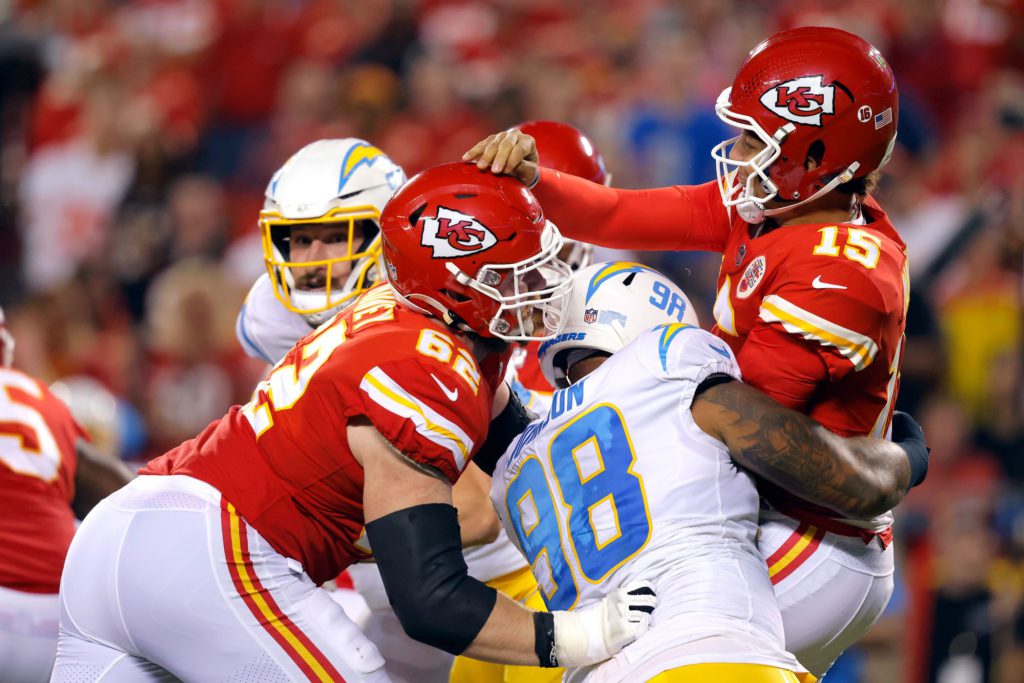
The Sept. 15 game between the Los Angeles Chargers and Kansas City Chiefs marked the debut of an 11-year, $13 billion deal that makes Amazon the exclusive home of “Thursday Night Football.” The early audience numbers should ease one of the big questions about that deal: whether fans would be able to find the games on Prime Video instead of TV. 

Amazon said it had a bigger audience than what Nielsen reported. The game averaged 15.3 million viewers across all platforms, based on a combination of the company’s own first-party measurement and Nielsen data, a spokesperson said.

Read more: Amazon breaches TV’s last stronghold with bet on NFL

In a Sept. 19 memo to staff, Amazon sports chief Jay Marine said the program was the streaming service’s most-watched show ever in prime time in the US. The company also attracted a record number of new Prime subscribers for a three-hour period. The Prime service includes benefits such as music, TV and free shipping.

“Our measurement shows that the audience numbers exceeded all of our expectations for viewership,” Marine said in the memo.

Amazon’s games are also available on TV stations in the competing teams’ local markets, and the total viewership number includes those fans. Local broadcasts averaged 602,000 viewers in Los Angeles and 555,000 in Kansas City, according to Nielsen.

Amazon struck a deal with DirecTV so the games would still be available in bars and restaurants.

(Updates with local viewers in second to last paragraph.)

More stories like this are available on bloomberg.com

©2022 Bloomberg L.P.

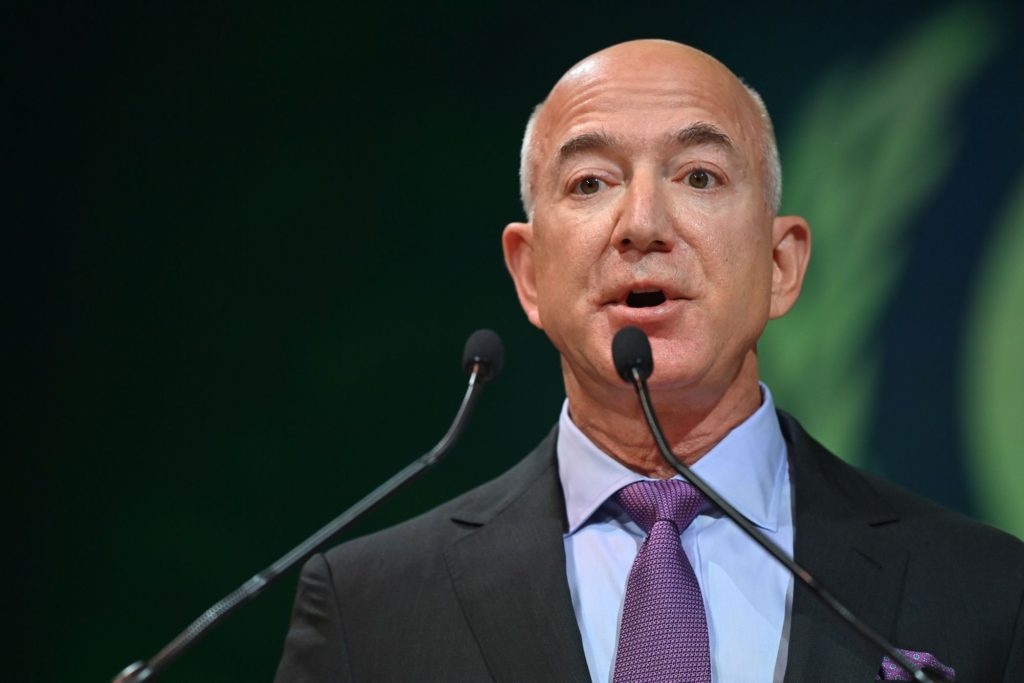
Amazon’s Bezos, Jassy Can be Forced to Testify in FTC Probe

(Bloomberg) — Amazon.com Inc. lost a bid to exclude top executives including billionaire founder Jeff Bezos and Chief Executive Officer Andy Jassy from having to testify in a Federal Trade Commission probe. 

The company filed a petition with the FTC last month, arguing that the agency’s information and interview requests were “unduly burdensome.” 

In an order published late on Wednesday, the FTC rejected that request, saying the two executives could be interviewed as part of a probe, though it extended the time period for when sworn testimony could occur. 

“Amazon provides no reason why the Commission must accept anything less than all the relevant testimony it can obtain from these two witnesses,” the FTC said in its decision. 

Amazon Accuses FTC of Harassing Bezos in ‘Burdensome’ Probe

Amazon said in a statement that it was “disappointed” by the FTC’s order and will “explore all our options.”

“We are committed to engaging constructively with FTC staff, but we remain concerned that the latest requests are overly broad and needlessly burdensome,” the company said. 

The FTC, which has both antitrust and consumer protection mandates, has been investigating Amazon for potential anticompetitive conduct for several years. The agency opened an investigation into Amazon Prime last year, investigating whether the subscription service may have violated consumer protection laws.

The Biden administration has stepped up antitrust enforcement as a keystone of its economic policy, seeking to reverse what antitrust officials view as decades of lax oversight over corporate consolidation and market power. 

(Updates to add Amazon comment from fifth paragraph)

More stories like this are available on bloomberg.com

©2022 Bloomberg L.P.

Iran Protests’ Death Toll Rises to 17 as the Unrest Deepens

(Bloomberg) — The number of people killed in Iranian protests that were sparked by the death of a woman in police custody rose to 17 including demonstrators and police, state TV reported.

The elite Islamic Revolutionary Guard Corps issued a statement describing the unrest as a “conspiracy” in which protesters had been organized and armed by the “enemy,” usually a reference to the US and Israel. The US imposed new sanctions in response to the government’s actions.

Demonstrations started last Friday following the death of 22-year-old Mahsa Amini, a young woman who fell into a coma after Tehran’s so-called “morality police” arrested her for allegedly flouting Islamic dress codes. 

Protests have been reported in scores of towns and cities including the capital Tehran as well as Karaj, Shiraz, Tabriz, Kerman, Kish Island, Yazd, Neyshapur, Esfahan and Mashhad. It’s the most widespread unrest in Iran since November 2019 when authorities shut down the internet and, rights groups say, killed hundreds of people. 

The “morality police” units have long been highly unpopular, but the protests are the first major rebuke of their actions. However that doesn’t mean the establishment is about to be swept aside, with security forces retaining a strong grip on the country as they seek to protect the clerical establishment.

Why a Woman’s Death in Iran Has Ignited New Protests: QuickTake

The US Treasury sanctioned the “morality police” on Thursday for what it described as the group’s violence against women and violation of the rights of peaceful protesters. 

Treasury also sanctioned seven senior leaders of Iran’s military, intelligence and law enforcement units, saying these entities use violence to suppress peaceful protests.

Footage of the protests posted to social media over the past few days has shown unarmed demonstrators turning on uniformed police and anti-riot officers wielding tasers or handguns as well as members of the plain-clothed Basij, who are also known to carry weapons. None of the videos can be verified by Bloomberg.

The militias, which are under the command of the Islamic Revolutionary Guard Corps, are deployed in order to infiltrate public gatherings and violently disperse protests. They are known to video tape and photograph protesters and passersby in order to later target them for harassment and arrest.  

Internet disruptions were widely reported in Iran last night with mobile internet access down in Tehran and slow speeds reported on broadband connections. Internet watchdog Netblocks said on Wednesday that access to Instagram, a hugely popular platform in Iran, has also been restricted. 

Iran’s President Ebrahim Raisi is currently attending the United Nations General Assembly in New York where his trip has been overshadowed by the violence at home.   

(Updates with new US sanctions starting in second paragraph)

More stories like this are available on bloomberg.com

©2022 Bloomberg L.P.

UN Latest: South Korean Leader Heard Insulting US Congress

(Bloomberg) — UN Secretary-General Antonio Guterrez again called out President Vladimir Putin’s government over the invasion of Ukraine at a General Assembly gathering where Russia was largely isolated but defiant in its determination to press ahead with the war.

“At the global level, the conflict has supercharged a triple crisis of food, energy and finance,” Guterres told the UN Security Council. “This is driving millions more people into extreme poverty and hunger, and reversing years of progress on development.”

Guterres spoke a day after China defended Russia’s role in the United Nations. US President Joe Biden also addressed the UN General Assembly on Wednesday, saying Putin had “shamelessly violated” the core tenets of the UN Charter. UK’s new prime minister, Liz Truss, said Putin was “desperately trying to justify his catastrophic failures.”

South Korean leader Yoon Suk Yeol was overheard insulting American lawmakers as “idiots,” after briefly meeting Biden to discuss issues including US electric-vehicle subsidies that South Korea wants to change.

Click here for the full schedule of speakers on Thursday. 

(All times ET)

Essential reading:

  • EXCLUSIVE: Greece Is Ready for Potential Russian Gas Cutoff
  • How the UN Became a Bystander to the World’s Biggest Flashpoint
  • To catch up on the latest developments on Ukraine, click here.
  • And listen to our Twitter Space on UN’s struggle for relevance
  • Russia Is Left an Outlier Among World Leaders Gathered at the UN
  • North Korea Denies Selling Russia Arms, Blasts US for ‘Rumors’

Guterres Denounces Russian Plans for Referendums (10:58 a.m.)

Secretary-General Guterres said he was “deeply concerned by reports of plans to organize so-called referenda in areas of Ukraine that are currently not under government control.”

“Any annexation of a state’s territory by another state resulting from the threat or use of force is a violation of the UN Charter and of international law,” Guterres told the Security Council in condemning Putin’s plans to stage sham referendums to justify claiming Ukrainian territory as part of Russia.

ICC Prosecutor Says World Must Show ‘Law Has Meaning’ (10:47 a.m.)

International Criminal Court Prosecutor Karim Khan said those guilty of war crimes or other abuses in Ukraine must be brought to justice, as diplomats used a Security Council session to again lament Russia’s invasion.

“This is a moment where we must collectively demonstrate — by action, not words — that the law has meaning,” Khan said. “Anybody who picks up a gun, anybody who fires a missile” must know the law applies and will be employed, Khan said.

Ireland’s Leader Cites ‘Shared Determination’ for Resolution With Truss (10:44 a.m.)

There’s a renewed sense of determination to resolve issues surrounding the Northern Irish Protocol as the UK’s Liz Truss begins work as prime mMinister, according to Ireland’s leader Micheal Martin.

Martin’s meeting at the weekend with Truss was “constructive” and “there is shared determination to get the issue resolved,” he said in an interview with Bloomberg Television.

While the difficulties in getting a resolution on the part of the Brexit agreement that deals with trade into Northern Ireland shouldn’t be underestimated, Martin said, he was “clear now that there is a will to get it resolved on all sides and where there is a will there’s always a means to doing that.”

US and Chinese Foreign Ministers to Meet on Friday (8:40 a.m.)

US Secretary of State Antony Blinken will meet with China’s Foreign Minister Wang Yi on Friday on  the margins of the UN session, the State Department said in a statement.

The department said it’s “part of our ongoing efforts to maintain open lines of communication and manage competition responsibly.” 

Amid tensions over issues from trade to the future of Taiwan, President Joe Biden told the UN gathering on Wednesday that “we do not seek a Cold War. We do not ask any nation to choose between the United States or any other partner.”

South Korean Leader Heard Insulting Congress (6:30 a.m.)

South Korean leader Yoon Suk Yeol was overheard insulting American lawmakers, after briefly meeting Biden to discuss issues including US electric-vehicle subsidies that South Korea wants to change.

“What an embarrassment for Biden, if these idiots refuse to grant it in Congress,” video broadcast on South Korean television showed Yoon telling Foreign Minster Park Jin in New York. The comments were caught on a microphone as Yoon and Park were leaving a brief chat with Biden at a Global Fund event. 

Yoon has come under pressure at home to remedy provisions in the Inflation Reduction Act signed by Biden, which includes tax credits of as much as $7,500 for purchases of electric vehicles made in North America. That could disadvantage major South Korean brands like Hyundai and Kia, which don’t yet have operational EV plants in the US. 

China and Russia Foreign Ministers Meet (11:15 p.m.)

China vouched for Russia’s role in the UN in a meeting between the two nations’ foreign ministers on the sidelines of the General Assembly, according to Tass. “Russia is a permanent member of the Security Council and must continue to play its important role in the UN. No one can deprive Russia of this right,” it quoted China’s Wang Yi as saying.

The meeting underscored the two countries’ similar approach to global affairs that allows them to “play a constructive role in the formation of a more just and sustainable polycentric world order,” Tass reported separately, citing a statement from the Russian Foreign Ministry. The two foreign ministers also criticized US foreign policy, particularly toward Taiwan.

Last week, Putin told Chinese leader Xi Jinping he understands Beijing’s “questions and concerns” about his invasion of Ukraine, a rare admission of tensions between the diplomatic allies that came in the first in-person talks between the leaders of the long-time partners since the war began.

Putin Acknowledges Xi’s ‘Concerns’ on Ukraine, Showing Tension

Truss Says Democracies ‘Must Deliver’ for Citizens (9:30 p.m.) 

Truss evoked the struggle between democracy and autocracy as the UK prime minister paid tribute to the late Queen Elizabeth II, saying when the queen “addressed this general assembly 65 years ago, she warned that it was vital not only to have strong ideals but also to have the political will to deliver on them. Now we must show that will.”

The premier praised the international alliance that has supported Ukraine in the war against Russia and “at this crucial moment in the conflict, I pledge that we sustain or increase our military support to Ukraine for as long as it takes.”  

US Sees General Assembly as Fertile Ground for Price Cap (8:20 p.m.)

US diplomats are using meetings on the sidelines of the General Assembly to push for other countries to adopt a price cap on Russian oil and petroleum products, a senior State Department official said.

The US is emphasizing that the price cap is meant to limit Putin’s ability to finance the Ukraine war. They also stress — particularly to developing countries — that the mechanism can keep cheap Russian oil on the market and stabilize global energy prices, the official said, adding countries have been receptive to the cap, especially those that haven’t previously discussed the subject with the US. Even nations that won’t agree to the cap understand they can benefit from discounts on Russian energy.

Zelenskiy Warns of Negotiations as Delaying Tactic (8 p.m.)

Zelenskiy, in his speech, asked for more weapons to pursue his country’s efforts to repel Russia’s invasion and warned that Moscow would try to use the prospect of negotiations as a delaying tactic. The Russians, he added, are “afraid of real negotiations.”

He spoke of a recent prisoner swap between Russia and Ukraine and praised the efforts of Saudi Arabia in brokering the deal.   

Yoon, Kishida Sit Down Together in New York (7 p.m.)

The leaders of Japan and South Korea used their first summit in nearly three years to pledge to resolve historical issues that have damaged ties between the US allies.

Japan, South Korea Pledge Better Ties in First Summit Since 2019

South Korean President Yoon Suk Yeol and Japanese Prime Minister Fumio Kishida met for about 30 minutes in New York, where both had addressed a session of the assembly. Statements from both sides said the pair also discussed the importance of cooperation that includes the US as they face threats from the likes of North Korea.

Decisions by South Korean courts in recent years finding certain Japanese companies liable for compensation to Korean laborers for work done during Japan’s 1910-1945 colonial rule over the peninsula has soured ties. It also briefly touched off a trade dispute between the neighbors that the Biden administration has been courting as it seeks to secure supply lines for crucial goods such as semiconductors that diminish dependence on China.

Trump-Picked World Bank Boss Under Fire at UN (5 p.m.)

It’s one of the biggest talking points on the sidelines of the UN and among officials: why David Malpass insists on being a climate denier.

Pressure to replace the World Bank chief installed three years ago by former President Donald Trump has ramped up after his equivocations on the impact of burning fossil fuels sharpened criticism of the lender’s track record on climate change. 

The controversy kicked off Tuesday when former US Vice President Al Gore labeled World Bank President David Malpass a climate denier and called for a change of leadership. Asked about the criticism during the same event in New York, Malpass dodged questions on the effects of man-made emissions on climate change before saying: “I don’t know. I’m not a scientist.”

Macron and Truss Appear to Put ‘Friend or Foe’ Question to Rest (4 p.m.)

French President Emmanuel Macron appeared to try to bury the hatchet with Truss on the sidelines of the assembly.

“There is a willingness to re-engage, to move forward and to show that we are, as it were, allies and friends in a complex world,” Macron told a group of reporters in New York City after the talks. “Now, I believe in evidence, and results.”

Macron’s government has repeatedly been at odds with former UK Prime Minister Boris Johnson’s, especially during post-Brexit negotiations and on issues related to migrants crossing the English Channel. When Truss was eying the position, she said “the jury’s out” on whether France was UK’s “friend or foe.”

The two leaders appeared to shake off tensions, smiling and shaking hands during a photo op preceding their meeting. Readouts of the conversation shared by their aides focused on their common stance on Ukraine and Russia rather than thornier issues including Northern Ireland.

Biden and Truss Present a United Front on Ukraine (2:31 p.m.)

Biden and Truss brushed shoulders at Queen Elizabeth II’s funeral but had to wait till now to formally sit down and get acquainted. At the Group of Seven summit in Germany, it was still Boris Johnson who was in power and the two men did not have a bilateral, a fact that the UK press was quick to pounce on. 

Truss is a vocal hawk and the UK is the US’s closest geopolitical ally. On Ukraine the two countries are very much on the same page. Where there is tension is on the post-Brexit reality of a problematic Irish border.

The US president said he and Truss were both “committed to protecting” the Good Friday Agreement in Northern Ireland and that aiding Ukraine and countering China also were on the agenda. 

The meeting was a chance for Biden and Truss to form a stronger personal bond and cool simmering tensions over trade and Northern Ireland. Truss has questioned the nature of the so-called “special relationship” between the US and UK. Asked Wednesday if the “special relationship” is intact, Truss gave a single, firm head nod.

Biden-Truss Era Dawns With Caution, Doubt, Silence on Trade 


Biden Says US Doesn’t Seek Conflict With China (11:32 a.m.)

Biden told the General Assembly that the US doesn’t seek conflict with China and will conduct itself as “a reasonable leader.”

“We do not seek a Cold War We do not ask any nation to choose between the United States or any other partner,” Biden said in his speech. He also sought to tamp down speculation that his recent pledge to defend Taiwan if China invades marks a change in US policy.

“We seek to promote peace and stability across the Taiwan Strait, remain committed to our one China policy, which has helped prevent conflict for four decades,” Biden said. “We continue to oppose unilateral changes in the status quo by either side.”

Macron To Discuss Gas Prices, Supplies With Biden (11:30 a.m.)

Macron expects to improve coordination on energy and food with the US following a meeting with Biden this afternoon on the sidelines of the assembly. Europe needs to secure gas supplies and “reasonable pricing,” Macron said.

The French president called for “everyone to put maximum pressure on President Putin for him to end this senseless war.”

He declined to say how France would react if Russia were to use nuclear weapons. France’s doctrine is not to take part in any escalation, Macron said.

War in Ukraine Is Not Going Well For Putin, Greek Premier Says (11:26 a.m.)

Putin is going to try everything to turn the table as his invasion is not going well, Greek Prime Minister Kyriakos Mitsotakis said.

“We’re all united in supporting Ukraine defend itself against an open act of aggression,” Mitsotakis told Bloomberg TV in New York. “The war is not going well for Russia and I’m convinced Putin won’t succeed.” 

Biden Says Putin’s War is About ‘Extinguishing Ukraine’s Right to Exist’ (11:12 a.m.)

Biden opened his speech to the General Assembly by condemning Putin’s push to escalate his military campaign in Ukraine, condemning it as a “brutal, needless war.”

Biden again sought to rally support from the rest of the world to stand up against Putin. The US president has marshaled a global campaign to aid Ukraine and counter Russia, authorizing billions of dollars of military assistance for Kyiv’s forces and imposing sanctions that have hobbled the Russian economy. 

“This war is about extinguishing Ukraine’s right to exist as a state, plain and simple. And Ukraine’s right to exist as a people. Whoever you are, wherever you live, whatever you believe, that should make your blood run cold,” Biden said.

The US president has hailed the effort as proof he has been able to revitalize US alliances that were frayed by former President Donald Trump. Finland and Sweden, countries that for decades prized non-alignment, are on the brink of being welcomed into NATO amid concerns about Russian aggression. Existing allies have boosted defense spending, long a US goal.

Biden has also used bellicose language to condemn Putin for his invasion, calling him a war criminal and declaring in a major address in Warsaw earlier this year that “this man cannot remain in power.”

Iran Protests in New York (11 a.m.)

Hundreds of Iranians and others from across the US gathered at UN Plaza on Wednesday to protest Iranian President Ebrahim Raisi, following protests in his own country after the death in police custody of a 22-year-old woman accused of being inappropriately dressed.

In New York, attendees said they were there to fight for regime change. Chants, primarily in Farsi, called for the ousting of Raisi. Some called for the arrest of Raisi on US soil, denouncing that he was greeted upon arrival in New York with a US Secret Service detail.

Event speakers included former Kansas Governor Sam Brownback, former Connecticut Senator Joseph Lieberman, while many Iranian-Americans in attendance traveled from states across the US including California, Virginia, and Washington, D.C.

Why a Woman’s Death in Iran Has Ignited New Protests: QuickTake

Iran Accuses US and Holds up Photo of Soleimani (9:30 a.m.)

Raisi spoke from the podium as protests roil several cities in Iran following the death of a young woman who fell into a coma after being detained for flouting Islamic dress codes by the so-called “morality police.” State media reported six people were killed.

The Iranian president accused the US of trampling on the nuclear accord and called for “justice” for General Qassem Soleimani, the Iranian general who was killed in a drone strike ordered by former President Trump in 2020. 

He held up a photo of Soleimani for the audience and admonished the US for “hypocrisy” and said the world “needs a strong Iran today.” He said his country would only agree to a nuclear deal that had tangible benefits for the country’s economy.

He made no mention of the protests that are currently embroiling his security forces — they have so far overshadowed his visit to New York and any efforts to break the latest deadlock in Tehran’s indirect talks with Washington to revive the 2015 nuclear deal. About 1000 Iranian-Americans are protesting his presence at the UN outside its headquarters.

It was his first in-person speech to the annual gathering and he’s the first hardline president to do so since Mahmoud Ahmadinejad, who once emptied the General Assembly hall after giving a diatribe against NATO, Israel and the West.

No contact is expected between Biden and Raisi at this gathering.

Nigeria Calls for More Debt Relief (9:50 a.m.)

Nigerian President Muhammadu Buhari called for more debt relief to be given to poorer nations.

A former army general, Buhari has served as president of Nigeria, which has Africa’s largest economy since 2015 and is due to step down next year after serving the maximum two terms. His tenure has been marred by spiraling state debt, rampant unemployment and widespread insecurity, with attacks being staged by Islamist group Boko Haram and other armed groups. 

“The multifaceted challenges facing most developing countries have placed a debilitating choke-hold on their fiscal space,” he said at his last address to the General Assembly before leaving office next year. This situation requires “a global commitment to the expansion and extension of the debt-service suspension initiative to countries facing fiscal and liquidity challenges as well as outright cancellation for countries facing the most severe challenges,” he said.

More stories like this are available on bloomberg.com

©2022 Bloomberg L.P.

EV Startup Faraday Cites Death Threats in Campaign Against Board

(Bloomberg) — Faraday Future Intelligent Electric Inc. said its leaders have faced death threats in an increasingly contentious effort to disrupt the troubled EV startup’s plan to raise capital.

Attempts to bring in new funds have been affected by a “misinformation campaign of completely baseless allegations” that some directors plan to pursue bankruptcy for their personal gain, Faraday said Thursday in a statement. That has led to lawsuits, which have “escalated to threats of physical violence and even death threats.”

Faraday said it was referring the incidents to law enforcement agencies including the FBI, as well as to the US Securities and Exchange Commission.

The automaker didn’t specify who it believes is responsible. Faraday has been battling efforts by a shareholder group affiliated with co-founder Jia Yueting to oust some directors. The investors this week filed a lawsuit that cited “a crisis of leadership” at the company. Jia and the shareholder group didn’t immediately respond to requests for comment.

Read more: Faraday Shareholder Sues Over Startup’s ‘Bitterly Divided’ Board

Faraday is facing a number of other challenges. The Los Angeles-based startup delayed the launch of its first electric SUV in July, and its auditor resigned in August. The SEC has opened a probe into Faraday’s financial statements.

Its shares fell 6.4% at 11:01 a.m. in New York.

More stories like this are available on bloomberg.com

©2022 Bloomberg L.P.

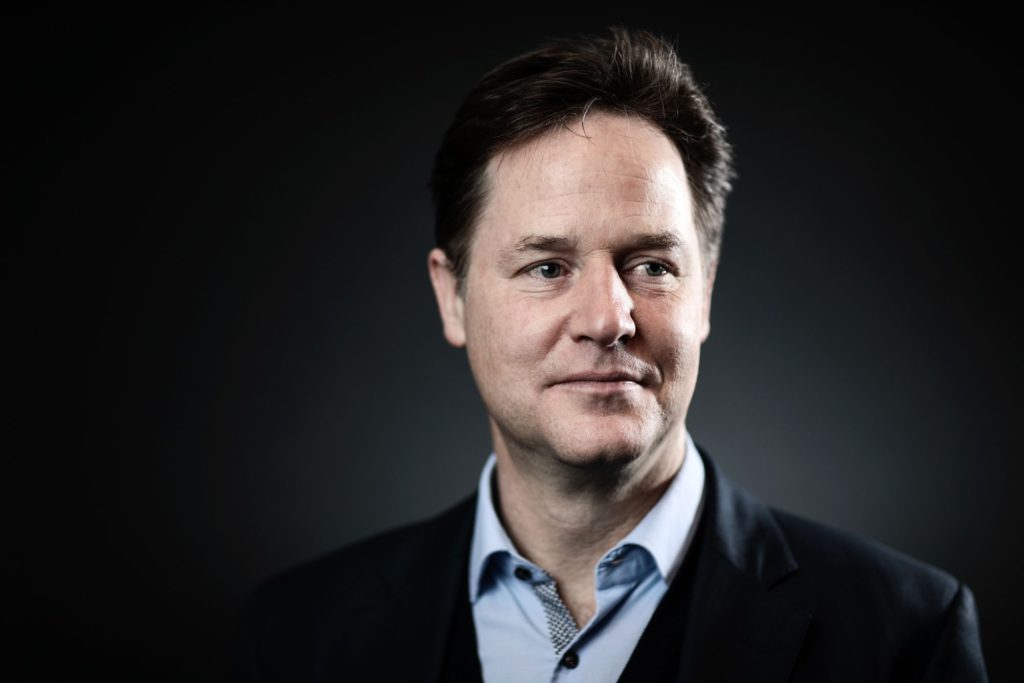
Meta’s Nick Clegg Warns Against ‘Industrial-Scale’ Censorship

(Bloomberg) — Nick Clegg, Meta Platforms Inc.’s president for global affairs, on Thursday said Facebook’s parent company would become “the greatest industrial-scale censor ever in human history” if it removes too much content from its platforms.

Clegg, speaking at an event hosted by news outlet Semafor in Washington, said the company focuses most of its content moderation efforts on posts that can lead to real-world harm. His remarks came in response to a question about when the company chooses to remove abusive content aimed at women and the LGBTQ community. 

“We work with experts, advocates in the LGBTQ community and elsewhere to set the policy right,” Clegg said. He said the company strives to remove the most extreme cases of hate speech rather than taking down offensive comments. 

Clegg, the former deputy prime minister of the United Kingdom, has been tasked with improving Meta’s reputation in the U.S. and around the world. 

Meta has come under enormous criticism from activists who say the platform allows hate speech against marginalized groups to proliferate across its platform. A recent report from advocacy group GLAAD found that Facebook is failing to remove harassment aimed at LGBTQ people. 

Clegg also defended the right of politicians to speak freely online. He reaffirmed the company’s stated timetable to make a decision about whether to restore former President Donald Trump’s account by early 2023. Facebook banned Trump from its platforms following the Jan. 6 riots on Capitol Hill. 

Clegg said the company is conferring with experts and third parties to make its final decision on Trump.

“You want to act proportionately and you want to be transparent about why you’re doing this,” Clegg said. 

Meta’s reputation has taken a severe hit in Washington as lawmakers blast the company over its handling of election misinformation, user data, harmful content and children’s privacy. The Menlo Park, California-based company’s business has been struggling recently as well — Meta’s stock is down more than 50% this year. Meta Chief Executive Officer Mark Zuckerberg warned last month that the company is facing one of the “worst downturns that we’ve seen in recent history.” 

Clegg pointed out that Meta’s market cap has “declined quite sharply in recent months.” Apple Inc. last year introduced new privacy features that reduce the ability of advertisers to target iPhone users, a change that Zuckerberg said would cost $10 billion in revenue. 

Apple, under the guise of privacy, “is trying to kneecap competitors of Apple’s businesses,” Clegg said Thursday, referring to the feature that allows users to opt out of sharing their data with particular apps. The move by Apple has undermined the efficacy of Meta’s digital advertising, which is the core of its business. 

More stories like this are available on bloomberg.com

©2022 Bloomberg L.P.
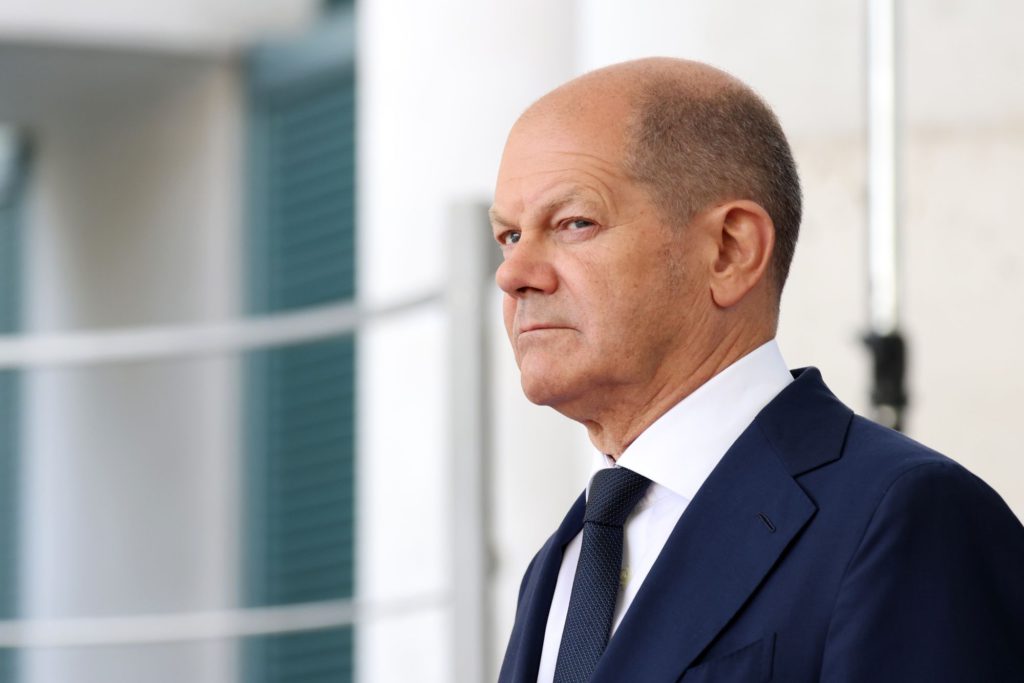
Scholz Prepares First Official Trip to China as German Position Turns Hawkish

(Bloomberg) — Chancellor Olaf Scholz is making plans for his first trip to China as German leader in addition to a trip to Southeast Asia later this year, during which he’s expected to showcase a more hawkish stance toward Beijing. 

Scholz will visit Beijing in the near future and preparations are at an advanced stage, according to people familiar with the plans, who declined to be identified in line with government protocol. 

The China visit would come on top of Scholz’s trip to attend the Group of 20 summit in Bali in mid-November, which will include a large business delegation with stops in Vietnam and Singapore, one of the people said. 

Scholz’s Asia travel is part of an effort to reshape Germany’s strategy in the Asia-Pacific region that has the potential of increasing tension with Chinese President Xi Jinping. Germany’s government is working to hone a national strategy on China that aims to ensure less reliance on the world’s second largest economy, diversify supply chains and enhance security. 

That represents a shift in tone for Europe’s largest economy, which had maintained steady trade ties under Scholz’s predecessor Angela Merkel, and brings it more in line with the US and other western allies who have raised increasing concern over China under Xi. 

The European Union has taken issue with China’s human rights record in Hong Kong and Xinjiang as well as its actions on Taiwan and the South China Sea. 

French President Emmanuel Macron has also said he’s considering a trip by year-end. German and French government spokespeople declined to comment.

Scholz used his speech at the United Nations this week to denounce China’s human rights record, calling on Beijing to implement the recommendations of a recent report on the treatment of Uyghurs in Xinjiang by the former High Commissioner for Human Rights, which accused China of  “serious” rights abuses there. Scholz will bring that message to Beijing, the person said. 

Chinese Foreign Ministry spokesman Wang Wenbin said during a regular press briefing in Beijing Wednesday that he had no information to offer on either of the visits. Earlier this summer, China dismissed reports of a planned visit to China by several European leaders, including those from Germany and France as “fake news.” 

More stories like this are available on bloomberg.com

©2022 Bloomberg L.P.

Close Bitnami banner
Bitnami