Bloomberg

Ether’s ‘Oversold’ Reading Belies History of More Losses

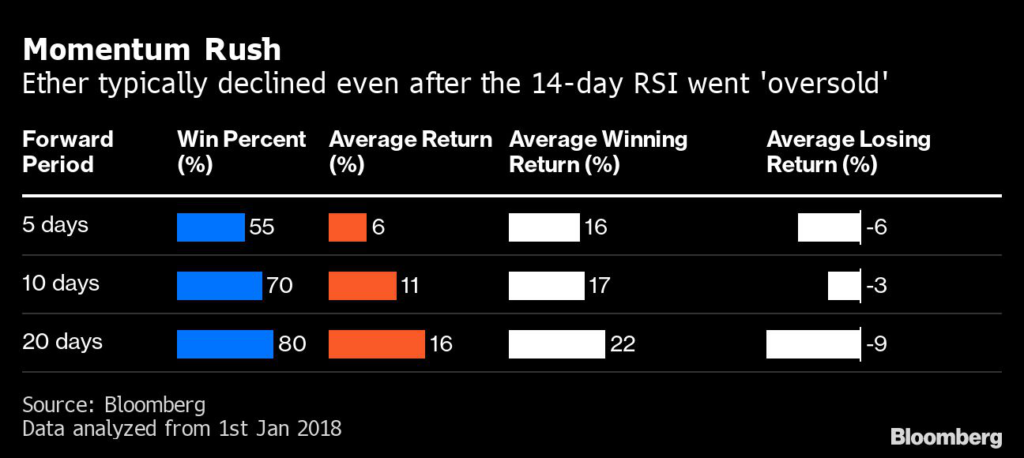
(Bloomberg) — Ether has lost 22% this week, the most since mid-June, and evidence based on technical analysis points to more downside. The token’s relative strength index — a gauge of price momentum — dipped below the “oversold” reading of 30 on Thursday. In the past, though, investors that bet on a tactical bounce based on the RSI indicator lost money in the short term — with the cryptocurrency down 16% on average 20 days after what is often a signal to buy.    


More stories like this are available on bloomberg.com

©2022 Bloomberg L.P.

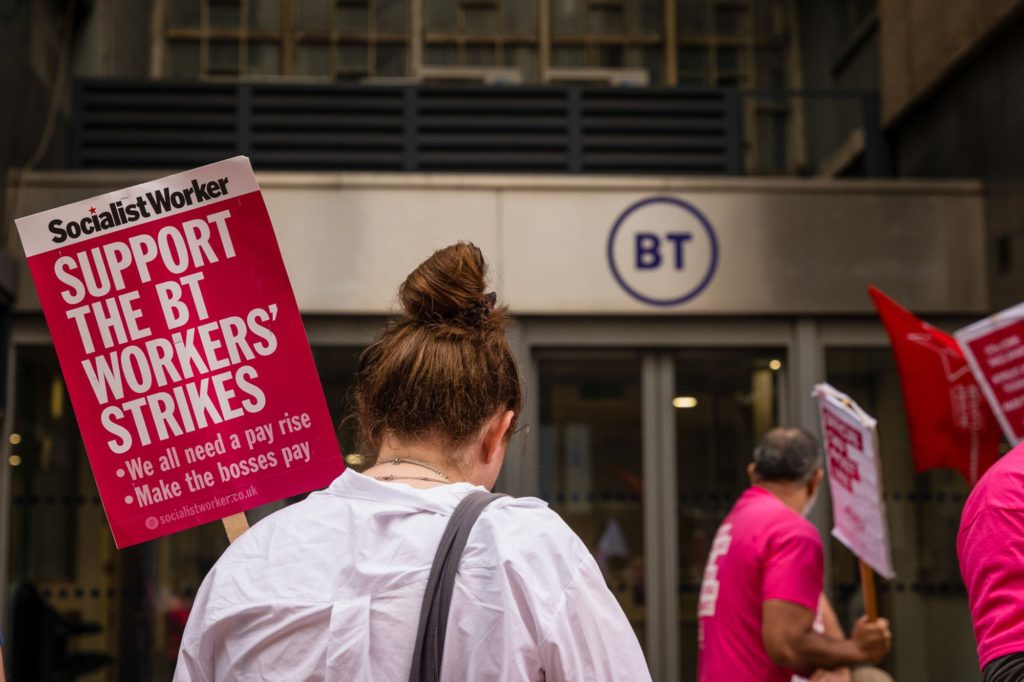
BT Strikes Escalate to Include ‘999’ Emergency Call Handlers

(Bloomberg) —

BT Group Plc faces walkouts from staff who handle ‘999’ calls for the emergency services, intensifying their dispute on pay amid a national surge in industrial action.

Late Wednesday the Communication Workers Union announced four strikes in October, after two earlier rounds of action in recent weeks failed to secure pay increases. They’d previously excluded staff who handle calls for those needing the police, an ambulance or firefighters. 

“We will do whatever it takes to protect 999 services – redeploying our people to the most important priority is a normal part of BT operations,” a BT spokesman said by email. “We are profoundly disappointed that CWU is prepared to take this reckless course of action, but we respect the right of colleagues to strike.”

Some 40,000 staff will walk out on Oct. 6, Oct. 10, Oct. 20 and Oct. 24, the CWU added, with 30,000 coming from its infrastructure division Openreach and 10,000 from call centers. The dates follow two rounds of strikes on July 29 and Aug. 1, and then another on Aug. 30 and Aug. 31. 

In April, BT implemented a flat pay increase for what it called “front line” workers, which equated to an average 5% increase. That’s against a backdrop of UK consumer price inflation of 9.9%, around a 40-year-high. 

Chief Executive Officer Philip Jansen previously argued the London-based telecommunications group can’t afford to pay more as input costs like energy are skyrocketing following Russia’s invasion of Ukraine, according to an internal call reported by Bloomberg.

“This dispute is modern Britain in a nutshell: lives are at risk because a company’s top brass won’t listen to workers,” CWU general secretary Dave Ward said. “This decision was not taken lightly, but our union’s repeated attempts to initiate discussions was declined by a management who clearly believe they are above negotiating a fair deal for people who make massive profits for them.”

More stories like this are available on bloomberg.com

©2022 Bloomberg L.P.

UK Watchdog to Probe Amazon, Google, Microsoft Cloud Business

(Bloomberg) — UK digital regulator Ofcom said it will launch a range of investigations into digital markets including cloud computing, internet messaging, and smart devices, marking another step up in the scrutiny of the world’s largest tech firms. 

Ofcom, which also oversees broadcasting, telecommunications and the postal service, said it will first look at whether the so-called hyperscale cloud providers, Amazon.com Inc’s AWS, Microsoft Corp’s Azure, Alphabet Inc.’s Google Cloud, might limit innovation and growth. They receive about 81% of the revenues in the UK public cloud infrastructure market, which Ofcom said is worth £15 billion ($16.85 billion). 

The investigations continue a crescendo of global scrutiny into the possible dominance Silicon Valley firms have gained over a range of markets. In June the Competition and Markets Authority, Britain’s antitrust regulator, launched a separate investigation into the Google Play store over suspected anticompetitive conduct. 

Ofcom said if it finds a market isn’t working as it should, it can take the matter to government, refer antitrust matters to the CMA, take enforcement action itself or accept remedies from a business. The independent regulator said it will public a final report within a year.

The calling and messaging study will look at services like Meta Platforms Inc’s WhatsApp, Apple Inc.’s FaceTime, and Zoom Video Communications Inc., and issues like whether they should be able to interact with each other more. 

The smart devices investigation is to examine connected televisions and speakers and their bargaining power with those who produce content like entertainment and news. 

More stories like this are available on bloomberg.com

©2022 Bloomberg L.P.

UN Latest: China Stands by Russia; Zelenskiy Wants Weapons

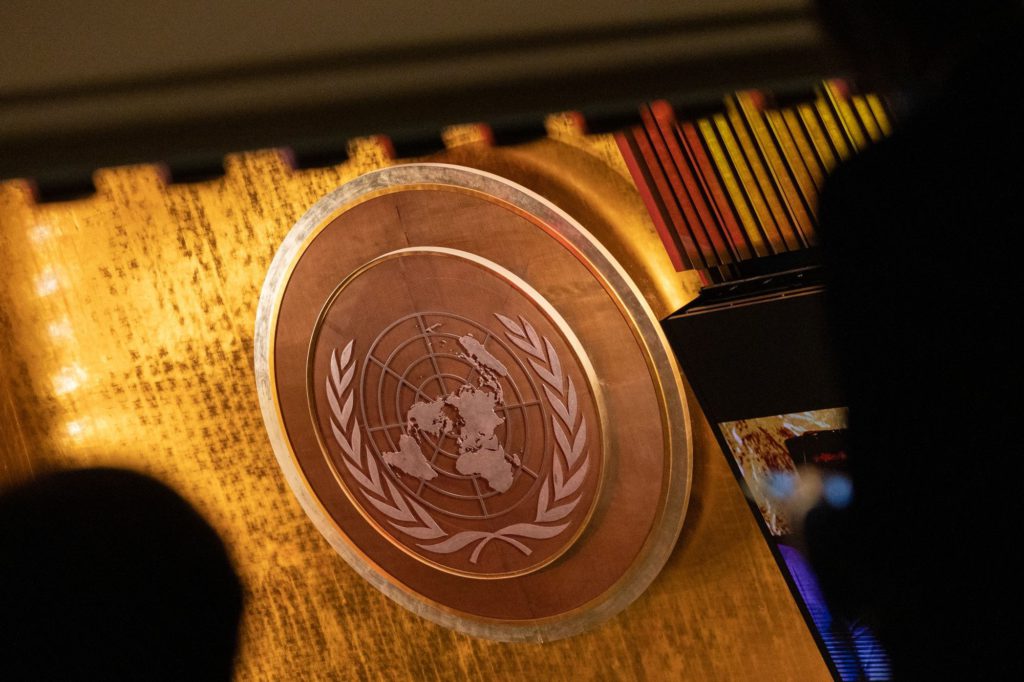
(Bloomberg) — China backed Russia’s role in the United Nations as leaders from around the world decried the Kremlin at a session of the General Assembly for its war in Ukraine, which the leaders of France and Germany likened to imperialism.

The UK’s new prime minister, Liz Truss, warned the assembly that democracies must rise to the challenge posed by autocracies and suggested “the G7 and our like-minded partners should act as an economic NATO collectively defending our prosperity.”

Ukrainian President Volodymyr Zelenskiy, in a video address, urged world leaders to keep up the pressure on Russia, which he said was “afraid of real negotiations.” Earlier, President Joe Biden took center stage to rally international support for Ukraine following Russia’s military escalation and Vladimir Putin’s threats, saying Russia had “shamelessly violated” the core tenets of the UN Charter.

On Wednesday, the Russian leader stoked worries of intensifying the war by mobilizing army reserves and renewing his nuclear threats. 

Click here for the full schedule of speakers on Wednesday. 

(All times ET)

Essential reading:

  • EXCLUSIVE: Greece Is Ready for Potential Russian Gas Cutoff
  • How the UN Became a Bystander to the World’s Biggest Flashpoint
  • To catch up on the latest developments on Ukraine, click here.
  • And listen to our Twitter Space on UN’s struggle for relevance
  • Russia Is Left an Outlier Among World Leaders Gathered at the UN
  • North Korea Denies Selling Russia Arms, Blasts US for ‘Rumors’

China, Russia Foreign Ministers Meet (11:15 p.m.)

China vouched for Russia’s role in the UN in a meeting between the two nations’ foreign ministers on the sidelines of the General Assembly, according to Tass. “Russia is a permanent member of the Security Council and must continue to play its important role in the UN. No one can deprive Russia of this right,” it quoted China’s Wang Yi as saying.

The meeting underscored the two countries’ similar approach to global affairs that allows them to “play a constructive role in the formation of a more just and sustainable polycentric world order,” Tass reported separately, citing a statement from the Russian Foreign Ministry. The two foreign ministers also criticized US foreign policy, particularly toward Taiwan.

Last week, Putin told Chinese leader Xi Jinping he understands Beijing’s “questions and concerns” about his invasion of Ukraine, a rare admission of tensions between the diplomatic allies that came in the first in-person talks between the leaders of the long-time partners since the war began.

Putin Acknowledges Xi’s ‘Concerns’ on Ukraine, Showing Tension

Truss Says Democracies ‘Must Deliver’ for Citizens (9:30 p.m.) 

Truss evoked the struggle between democracy and autocracy as the UK prime minister paid tribute to the late Queen Elizabeth II, saying when the queen “addressed this general assembly 65 years ago, she warned that it was vital not only to have strong ideals but also to have the political will to deliver on them. Now we must show that will.”

The premier praised the international alliance that has supported Ukraine in the war against Russia and “at this crucial moment in the conflict, I pledge that we sustain or increase our military support to Ukraine for as long as it takes.”  

US Sees General Assembly as Fertile Ground for Price Cap (8:20 p.m.)

US diplomats are using meetings on the sidelines of the General Assembly to push for other countries to adopt a price cap on Russian oil and petroleum products, a senior State Department official said.

The US is emphasizing that the price cap is meant to limit Putin’s ability to finance the Ukraine war. They also stress — particularly to developing countries — that the mechanism can keep cheap Russian oil on the market and stabilize global energy prices, the official said, adding countries have been receptive to the cap, especially those that haven’t previously discussed the subject with the US. Even nations that won’t agree to the cap understand they can benefit from discounts on Russian energy.

Zelenskiy Warns of Negotiations as Delaying Tactic (8 p.m.)

Zelenskiy, in his speech, asked for more weapons to pursue his country’s efforts to repel Russia’s invasion and warned that Moscow would try to use the prospect of negotiations as a delaying tactic. The Russians, he added, are “afraid of real negotiations.”

He spoke of a recent prisoner swap between Russia and Ukraine and praised the efforts of Saudi Arabia in brokering the deal.   

Yoon, Kishida Sit Down Together in New York (7 p.m.)

The leaders of Japan and South Korea used their first summit in nearly three years to pledge to resolve historical issues that have damaged ties between the US allies.

Japan, South Korea Pledge Better Ties in First Summit Since 2019

South Korean President Yoon Suk Yeol and Japanese Prime Minister Fumio Kishida met for about 30 minutes in New York, where both had addressed a session of the assembly. Statements from both sides said the pair also discussed the importance of cooperation that includes the US as they face threats from the likes of North Korea.

Decisions by South Korean courts in recent years finding certain Japanese companies liable for compensation to Korean laborers for work done during Japan’s 1910-1945 colonial rule over the peninsula has soured ties. It also briefly touched off a trade dispute between the neighbors that the Biden administration has been courting as it seeks to secure supply lines for crucial goods such as semiconductors that diminish dependence on China.

Trump-Picked World Bank Boss Under Fire at UN (5 p.m.)

It’s one of the biggest talking points on the sidelines of the UN and among officials: why David Malpass insists on being a climate denier.

Pressure to replace the World Bank chief installed three years ago by former President Donald Trump has ramped up after his equivocations on the impact of burning fossil fuels sharpened criticism of the lender’s track record on climate change. 

The controversy kicked off Tuesday when former US Vice President Al Gore labeled World Bank President David Malpass a climate denier and called for a change of leadership. Asked about the criticism during the same event in New York, Malpass dodged questions on the effects of man-made emissions on climate change before saying: “I don’t know. I’m not a scientist.”

Macron and Truss Appear to Put ‘Friend or Foe’ Question to Rest (4 p.m.)

French President Emmanuel Macron appeared to try to bury the hatchet with Truss on the sidelines of the assembly.

“There is a willingness to re-engage, to move forward and to show that we are, as it were, allies and friends in a complex world,” Macron told a group of reporters in New York City after the talks. “Now, I believe in evidence, and results.”

Macron’s government has repeatedly been at odds with former UK Prime Minister Boris Johnson’s, especially during post-Brexit negotiations and on issues related to migrants crossing the English Channel. When Truss was eying the position, she said “the jury’s out” on whether France was UK’s “friend or foe.”

The two leaders appeared to shake off tensions, smiling and shaking hands during a photo op preceding their meeting. Readouts of the conversation shared by their aides focused on their common stance on Ukraine and Russia rather than thornier issues including Northern Ireland.

Biden and Truss Present a United Front on Ukraine (2:31 p.m.)

Biden and Truss brushed shoulders at Queen Elizabeth II’s funeral but had to wait till now to formally sit down and get acquainted. At the Group of Seven summit in Germany, it was still Boris Johnson who was in power and the two men did not have a bilateral, a fact that the UK press was quick to pounce on. 

Truss is a vocal hawk and the UK is the US’s closest geopolitical ally. On Ukraine the two countries are very much on the same page. Where there is tension is on the post-Brexit reality of a problematic Irish border.

The US president said he and Truss were both “committed to protecting” the Good Friday Agreement in Northern Ireland and that aiding Ukraine and countering China also were on the agenda. 

The meeting was a chance for Biden and Truss to form a stronger personal bond and cool simmering tensions over trade and Northern Ireland. Truss has questioned the nature of the so-called “special relationship” between the US and UK. Asked Wednesday if the “special relationship” is intact, Truss gave a single, firm head nod.

Biden-Truss Era Dawns With Caution, Doubt, Silence on Trade 


Biden Says US Doesn’t Seek Conflict With China (11:32 a.m.)

Biden told the General Assembly that the US doesn’t seek conflict with China and will conduct itself as “a reasonable leader.”

“We do not seek a Cold War We do not ask any nation to choose between the United States or any other partner,” Biden said in his speech. He also sought to tamp down speculation that his recent pledge to defend Taiwan if China invades marks a change in US policy.

“We seek to promote peace and stability across the Taiwan Strait, remain committed to our one China policy, which has helped prevent conflict for four decades,” Biden said. “We continue to oppose unilateral changes in the status quo by either side.”

Macron To Discuss Gas Prices, Supplies With Biden (11:30 a.m.)

Macron expects to improve coordination on energy and food with the US following a meeting with Biden this afternoon on the sidelines of the assembly. Europe needs to secure gas supplies and “reasonable pricing,” Macron said.

The French president called for “everyone to put maximum pressure on President Putin for him to end this senseless war.”

He declined to say how France would react if Russia were to use nuclear weapons. France’s doctrine is not to take part in any escalation, Macron said.

War in Ukraine Is Not Going Well For Putin, Greek Premier Says (11:26 a.m.)

Putin is going to try everything to turn the table as his invasion is not going well, Greek Prime Minister Kyriakos Mitsotakis said.

“We’re all united in supporting Ukraine defend itself against an open act of aggression,” Mitsotakis told Bloomberg TV in New York. “The war is not going well for Russia and I’m convinced Putin won’t succeed.” 

Biden Says Putin’s War is About ‘Extinguishing Ukraine’s Right to Exist’ (11:12 a.m.)

Biden opened his speech to the General Assembly by condemning Putin’s push to escalate his military campaign in Ukraine, condemning it as a “brutal, needless war.”

Biden again sought to rally support from the rest of the world to stand up against Putin. The US president has marshaled a global campaign to aid Ukraine and counter Russia, authorizing billions of dollars of military assistance for Kyiv’s forces and imposing sanctions that have hobbled the Russian economy. 

“This war is about extinguishing Ukraine’s right to exist as a state, plain and simple. And Ukraine’s right to exist as a people. Whoever you are, wherever you live, whatever you believe, that should make your blood run cold,” Biden said.

The US president has hailed the effort as proof he has been able to revitalize US alliances that were frayed by former President Donald Trump. Finland and Sweden, countries that for decades prized non-alignment, are on the brink of being welcomed into NATO amid concerns about Russian aggression. Existing allies have boosted defense spending, long a US goal.

Biden has also used bellicose language to condemn Putin for his invasion, calling him a war criminal and declaring in a major address in Warsaw earlier this year that “this man cannot remain in power.”

Iran Protests in New York (11 a.m.)

Hundreds of Iranians and others from across the US gathered at UN Plaza on Wednesday to protest Iranian President Ebrahim Raisi, following protests in his own country after the death in police custody of a 22-year-old woman accused of being inappropriately dressed.

In New York, attendees said they were there to fight for regime change. Chants, primarily in Farsi, called for the ousting of Raisi. Some called for the arrest of Raisi on US soil, denouncing that he was greeted upon arrival in New York with a US Secret Service detail.

Event speakers included former Kansas Governor Sam Brownback, former Connecticut Senator Joseph Lieberman, while many Iranian-Americans in attendance traveled from states across the US including California, Virginia, and Washington, D.C.

Why a Woman’s Death in Iran Has Ignited New Protests: QuickTake

Iran Accuses US and Holds up Photo of Soleimani (9:30 a.m.)

Raisi spoke from the podium as protests roil several cities in Iran following the death of a young woman who fell into a coma after being detained for flouting Islamic dress codes by the so-called “morality police.” State media reported six people were killed.

The Iranian president accused the US of trampling on the nuclear accord and called for “justice” for General Qassem Soleimani, the Iranian general who was killed in a drone strike ordered by former President Trump in 2020. 

He held up a photo of Soleimani for the audience and admonished the US for “hypocrisy” and said the world “needs a strong Iran today.” He said his country would only agree to a nuclear deal that had tangible benefits for the country’s economy.

He made no mention of the protests that are currently embroiling his security forces — they have so far overshadowed his visit to New York and any efforts to break the latest deadlock in Tehran’s indirect talks with Washington to revive the 2015 nuclear deal. About 1000 Iranian-Americans are protesting his presence at the UN outside its headquarters.

It was his first in-person speech to the annual gathering and he’s the first hardline president to do so since Mahmoud Ahmadinejad, who once emptied the General Assembly hall after giving a diatribe against NATO, Israel and the West.

No contact is expected between Biden and Raisi at this gathering.

Nigeria Calls for More Debt Relief (9:50 a.m.)

Nigerian President Muhammadu Buhari called for more debt relief to be given to poorer nations.

A former army general, Buhari has served as president of Nigeria, which has Africa’s largest economy since 2015 and is due to step down next year after serving the maximum two terms. His tenure has been marred by spiraling state debt, rampant unemployment and widespread insecurity, with attacks being staged by Islamist group Boko Haram and other armed groups. 

“The multifaceted challenges facing most developing countries have placed a debilitating choke-hold on their fiscal space,” he said at his last address to the General Assembly before leaving office next year. This situation requires “a global commitment to the expansion and extension of the debt-service suspension initiative to countries facing fiscal and liquidity challenges as well as outright cancellation for countries facing the most severe challenges,” he said.

More stories like this are available on bloomberg.com

©2022 Bloomberg L.P.

Optus Probes Cyberattack That May Have Exposed Customer Data

(Bloomberg) — Singapore Telecommunications Ltd. said its Australian unit Optus is investigating a cyberattack that may have led to the unauthorized access of current and former customers’ information.

Customer names, birth dates, phone numbers and email addresses are among the data that may have been exposed, SingTel said in a statement to the Singapore exchange Thursday. The attack may have exposed the addresses and identification-document details of a smaller number of customers, it said.

“As soon as we knew, we took action to block the attack and began an immediate investigation,” Optus CEO Kelly Bayer Rosmarin said in the statement. “While not everyone may be affected and our investigation is not yet complete, we want all of our customers to be aware of what has happened as soon as possible so that they can increase their vigilance.”

The company said it’s working with the Australian Cyber Security Centre to mitigate risks to customers, and it also notified the Australian police, the Office of the Australian Information Commissioner and key regulators. Optus services, including mobile and home internet, weren’t affected and the company says its services remain safe to use. 

Australian markets are closed Thursday for a national public holiday to commemorate Queen Elizabeth II.

More stories like this are available on bloomberg.com

©2022 Bloomberg L.P.
Stocks Extend Drop on Fed; Yen Hits 145 to Dollar: Markets Wrap

(Bloomberg) — Share market declines deepened amid diminishing odds of a soft economic landing after the Federal Reserve hiked interest rates by 75 basis points and signaled further aggressive tightening.

Equities fell in China, Japan and South Korea after the S&P 500’s slide overnight took it more than 20% below the record high in January. Chinese tech stocks led declines as Hong Kong’s benchmark gauge headed for the lowest close since 2011. US and European futures dropped. 

A dollar index traded near a record high and the yen weakened through 145 versus the greenback after the Bank of Japan maintained its ultra-loose monetary policy. Japan’s top currency official said “stealth intervention” was an option to address the depreciation, which has the yen trading around levels last seen in 1998. 

Treasury two-year yields rose further above 4% to trade the highest since 2007 as investors positioned for further rate hikes in the US. The 10-year yield erased some of Wednesday’s fall while still reflecting market worries of recession. 

Sentiment took an additional hit from Russia’s escalation of its war with Ukraine and tensions between Beijing and Taiwan. 

The euro was around the lowest in 20 years and the yuan weakened even as China set its reference rate for the currency stronger-than-expected for a record 21st day.

“After an initial bout of volatility in the first couple hours after the Fed hike, the market has clearly sided with the US dollar, which offers better carry and safe-haven appeal as downside US and global growth fears percolate,” said David Croy, a strategist at Australia & New Zealand Banking Group Ltd. 

Jerome Powell vowed that the Fed would crush inflation and said his main message was that officials were “strongly resolved” to bring it down to the 2% goal, adding that “we will keep at it until the job is done.” The phrase invoked the title of former Fed chief Paul Volcker’s memoir “Keeping at It.”

Officials forecast that rates would reach 4.4% by the end of this year and 4.6% in 2023, a more hawkish shift in their so-called dot plot than expected. That implies a fourth-straight 75-basis-point hike may be on the table for the next gathering in November — about a week before the US midterm elections.

Markets in Asia were also contending with a host of other central bank meetings in the region. Taiwan, Indonesia and the Philippines were all set to raise rates on Thursday. 

The Fed’s “outcome is likely to keep pressure on risk assets” in Asia, Clara Cheong, a global market strategist at JPMorgan Asset Management, said on Bloomberg Radio. “It could especially hurt export-oriented companies due to the effect of a strong dollar.”

Elsewhere in markets, South Korea’s won weakened past the 1,400 threshold to the greenback for the first time since 2009. Bitcoin was under pressure below $19,000.

Gold fell to near a two-year low and was on the cusp of sinking into a bear market. Oil traded near $83 a barrel.

Key events this week:

  • The Bank of England interest rate decision, Thursday
  • US Conference Board leading index, initial jobless claims, Thursday

Will the Nasdaq 100 Stock Index hit 10,000 or 14,000 first? This week’s MLIV Pulse survey focuses on technology. It’s brief and we don’t collect your name or any contact information. Please click here to share your views.

Here are some of the main moves in markets:

Stocks

  • S&P 500 futures fell 0.5% as of 6:55 a.m. in London. The S&P 500 fell 1.7%
  • Nasdaq 100 futures dropped 0.7%. The Nasdaq 100 fell 1.8%
  • Euro Stoxx 50 futures fell 1.7%
  • The Hang Seng Index dropped 1.9%
  • The Shanghai Composite Index slid 0.3%
  • The Topix index weakened 0.2%
  • The Kospi index lost 0.6%

Currencies

  • The Bloomberg Dollar Spot Index rose 0.4%
  • The Japanese yen fell 0.6% to 144.93 per dollar
  • The offshore yuan weakened 0.3% to 7.0957 to the dollar
  • The euro was down 0.1% at $0.9830

Bonds

  • The yield on 10-year Treasuries rose two basis points to 3.55%

Commodities

  • West Texas Intermediate crude rose 0.5% to $83.36 a barrel
  • Gold declined 0.7% to $1,661.79 an ounce

More stories like this are available on bloomberg.com

©2022 Bloomberg L.P.
Kittyhawk, Larry Page’s Flying-Car Company, Will Shut Down

(Bloomberg) — Kittyhawk, the air-taxi company backed by billionaire Google co-founder Larry Page, will be closing down, dealing a setback to the long-elusive dream of developing flying cars. 

“We have made the decision to wind down Kittyhawk,” the company said on Twitter. “We’re still working on the details of what’s next.”

The company’s technology is expected to live on in the form of its Wisk Aero joint venture with Boeing Co. Wisk’s operations won’t be affected by Kittyhawk’s shutdown, Boeing said on Wednesday.

Kittyhawk traces its history to 2010, when a company then known as Zee.Aero set out to pioneer the market for so-called eVTOLs — electric vertical takeoff and landing aircraft — ultimately with the goal of democratizing the skies. The secretive company was run by Sebastian Thrun, a Google veteran who worked on self-driving cars, augmented-reality glasses and other projects.

The business was one of several startups working on the concept, which has proven to be a greater challenge than some expected. Air taxis have suffered crashes during testing in recent months, raising concerns about their safety.

Insider previously reported on Kittyhawk’s plans to close.

Kittyhawk formed its Wisk venture with Boeing Co. in 2019, and the airplane manufacturer went on to invest $450 million in the partnership. Earlier this week, Boeing and Wisk presented their vision for a world where eVTOLs can coexist with larger commercial aircraft.

“Kittyhawk’s decision to cease operations does not change Boeing’s commitment to Wisk,” a spokeswoman for the plane manufacturer said in an email. “We are proud to be a founding member of Wisk Aero and are excited to see the work they are doing to drive innovation and sustainability through the future of electric air travel.”

The aviation titan helped showcase Wisk’s rotor-powered Cora aircraft at the Farnborough International Airshow in July. Along with financing the business, Boeing has been providing engineering resources for a larger, electric four-seater aircraft that Wisk intends to eventually certify with US regulators. 

The air-taxi market still has numerous competitors, including Joby Aviation Inc., Archer Aviation Inc., Germany’s Lilium NV and Brazil’s Eve, but they face uncertain prospects for these futuristic vehicles. Aviation regulators haven’t yet certified the new generation of flying machines to transport humans.

Kittyhawk’s goal was to make an air taxi that could be remotely piloted, was smaller and lighter than other eVTOLs, and could take off from nearly anywhere. The company was targeting a cost of less than $1 a mile, which would have made the taxis cheaper than ride-sharing services.

Now Kittyhawk’s shutdown closes a chapter for one of the highest-profile eVTOL pioneers — and shows how hard the market is to crack. As of Wednesday, the company still had this message on its home page: “If anyone can do this, we can.”

(Updates with more on Kittyhawk’s history in fourth paragraph. A previous version of the story was corrected to fix a wrong day of the week in the final paragraph.)

More stories like this are available on bloomberg.com

©2022 Bloomberg L.P.

Ava Labs’ Wu Says Crypto ‘Staking’ Could Prompt Regulation

(Bloomberg) — Ava Labs President John Wu said cryptocurrency “staking” is “a different construct” that does not exist in traditional finance even as regulators indicate the practice could make some digital assets more akin to traditional securities. 

Wu told Bloomberg TV on Tuesday that some, although not all, digital currencies are likely securities. Last week, Securities and Exchange Commission Chair Gary Gensler signaled that the Ethereum upgrade could lead to tokens being considered securities. Gensler stopped short of calling out specific coins. 

Ava operates the open-source Avalanche platform for decentralized financial applications. 

“You’re kind of putting labor to work,” says Wu. “You’re putting collateral down to get yield. So it’s a hybrid, so maybe it should be income for work that you contribute, as opposed to a security.” 

Regulatory focus on ‘staking’ has intensified amid Ethereum’s software upgrade, dubbed the “Merge.” Completed last week, the change transitions the network from a “proof-of-work” model to a “proof-of-stake” one. As a result, Ethereum now allows coin holders to put up, or stake, digital tokens to validate transactions on the Blockchain in exchange for Ether. 

That distinguishes the network from other blockchains like the one on which Bitcoin runs. That system relies on a proof-of-work model and requires intensive computing power to validate transactions. 

Wu said the “Merge” will not affect “layer 1” coins in the short term, adding that any scalability issues would be addressed in 2023. 

Avalanche, Ava Labs’ digital token, sank as much as 3.5% to $16.58 on Tuesday, in line with a broader dip in crypto markets.

(Corrects headline and first paragraph of a story published Sept. 20 to clarify Wu’s view on staking and regulation.)

More stories like this are available on bloomberg.com

©2022 Bloomberg L.P.
Amazon’s Bezos, Jassy Can be Forced to Testify in FTC’s Probe

(Bloomberg) — Amazon.com Inc. lost a bid to exclude top executives including billionaire founder Jeff Bezos and Chief Executive Officer Andy Jassy from having to testify in a Federal Trade Commission probe. 

The company filed a petition with the FTC last month, arguing that the agency’s information and interview requests were “unduly burdensome.” 

In an order published late on Wednesday, the FTC rejected that request, saying the two executives could be interviewed as part of a probe, though it extended the time period for when sworn testimony could occur. 

“Amazon provides no reason why the Commission must accept anything less than all the relevant testimony it can obtain from these two witnesses,” the FTC said in its decision. 

Amazon Accuses FTC of Harassing Bezos in ‘Burdensome’ Probe

The FTC, which has both antitrust and consumer protection mandates, has been investigating Amazon for potential anticompetitive conduct for several years. The agency opened an investigation into Amazon Prime last year, investigating whether the subscription service may have violated consumer protection laws.

The Biden administration has stepped up antitrust enforcement as a keystone of its economic policy, seeking to reverse what antitrust officials view as decades of lax oversight over corporate consolidation and market power.  

More stories like this are available on bloomberg.com

©2022 Bloomberg L.P.

Korea Finds More ‘Abnormal’ FX Transactions via Crypto Exchanges

(Bloomberg) — South Korea confirmed more cases of “abnormal” foreign-exchange transactions, mostly related to cryptocurrencies,  the nation’s financial watchdog said.

The Financial Supervisory Service discovered an additional $680 million of “abnormal” money transfers, taking the value of confirmed unusual transactions found since June to $7.2 billion, it said in a statement Thursday. Most transactions have involved funds transferred from cryptocurrency exchanges to local companies before the money was sent overseas, the FSS said.

Of the total, 72% of the funds were transferred to Hong Kong, 15% to Japan and 5% to China, the FSS data show. The probe, which has so far involved 82 companies, found that 82% of transfers were in US dollars, with the Japanese yen accounting for 15%. Transfers from Shinhan Bank, Woori Bank, Hana Bank, Kookmin Bank, Nonghyup Bank and seven other Korean banks were investigated, FSS said.

Read more: Crypto Takes Leading Role in Illegal South Korea Currency Trades

The FSS said it aims to finalize the probe into the 12 banks by the end of October, and it will take strong measures if the investigation shows that lenders haven’t complied with regulations.

More stories like this are available on bloomberg.com

©2022 Bloomberg L.P.

Close Bitnami banner
Bitnami