Bloomberg

Twitch to Ban Crypto Gambling Livestreams After Backlash From Influencers

(Bloomberg) — Twitch will ban controversial crypto gambling livestreams after backlash against recent multi-million-dollar sponsorship deals enjoyed by top Twitch personalities.

Twitch, which is owned by Amazon.com Inc., will prohibit livestreaming gambling sites like Stake.com, Rollbit and Duelbits.com that “aren’t licensed either in the US or other jurisdictions that provide sufficient consumer protection,” Twitch said in a statement posted on Twitter. Stake.com, the most popular of these sites, is licensed in Curacao. The ban goes into effect October 18.

“While we prohibit sharing links or referral codes to all sites that include slots, roulette or dice games, we’ve seen some people circumvent those rules and expose our community to potential harm,” the statement reads.

Listen: Even Drake Is Crypto Gambling on Twitch (Podcast)

Watching streamers gamble is almost as popular as watching gamers play Fortnite on Twitch, according to data from TwitchTracker. At any given time, over 50,000 people are watching Twitch celebrities play slots, Blackjack and other games of chance, primarily gambling with cryptocurrencies like Ether and Bitcoin. Sites like Stake.com sponsor the biggest influencers for upwards of $1 million a month, according to one popular streamer. 

Both Twitch streamers and fans have spoken out against gambling livestreams. This week, several top Twitch personalities threatened as a group to stop livestreaming on Twitch should Twitch not act on gambling. Some fans have become hooked on crypto gambling after watching their favorite streamers participate, Bloomberg earlier reported. 

More stories like this are available on bloomberg.com

©2022 Bloomberg L.P.

Banks Offload $8.55 Billion of Citrix Debt at Rock-Bottom Prices

(Bloomberg) — A group of banks led by Bank of America Corp. and Credit Suisse Group AG has finally offloaded more than half of the $15 billion debt package supporting the buyout of Citrix Systems Inc. at steep discounts. 

The $4 billion secured high-yield bond portion of the deal priced at a discount of 83.56 cents on the dollar, for an all-in yield of 10%, according to a person familiar with the matter. Earlier price discussions called for a much lower yield in the high-8% range. Meanwhile, the $4.05 billion leveraged loan sold at a discount of 91 cents, according to another person close to the situation. 

The package also includes a euro-denominated loan equivalent in size to $500 million, which also priced at 91 cents on the dollar.

Banks have been struggling to offload risky debt backing leveraged buyouts to institutional investors as the outlook for the global economy continues to dim. This means that money managers are shying away from lower-rated credit, instead allocating cash to safer, higher-quality debt. 

The cost of borrowing has spiked as well, driving up the average junk yield to 8.7%. That level far exceeds the maximum interest rates that banks had guaranteed when they underwrote the debt commitments backing the buyout by Vista Equity Partners and Elliott Investment Management in January, and ultimately forced them to offer steep discounts to drum up demand.

Bank of America is leading Citrix’s leveraged loan sale, while Credit Suisse is leading the bond sale.

The remainder of the acquisition financing comprises $3.95 billion of second-lien debt and a $2.5 billion loan that the banks plan to hold on their own balance sheets. Goldman Sachs Group Inc. is leading the second-lien debt portion. 

(Updates with final pricing.)

More stories like this are available on bloomberg.com

©2022 Bloomberg L.P.

Khan’s FTC to Tighten Orders as Twitter Whistle-Blower Exposes Flaws

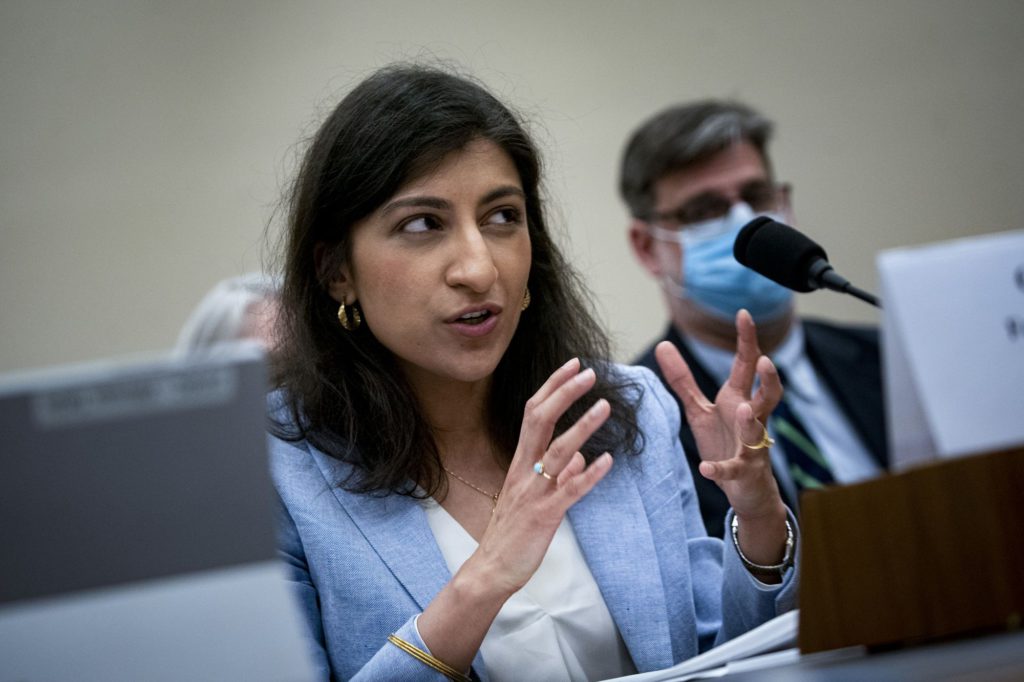
(Bloomberg) — Federal Trade Commission Chair Lina Khan said her agency is taking a stronger approach to consent decrees compared to a 2011 deal with Twitter Inc. that was criticized in a whistle-blower’s complaint.  

“There absolutely has been a problem with companies treating FTC orders as suggestions,” Khan told the Senate Judiciary Antitrust Subcommittee on Tuesday. “We have a program under way to really toughen that up.”

Khan said future consent decrees would tighten assessment of a company’s compliance and could name individual executives responsible for the underlying conduct. She described Twitter’s 2011 deal with the FTC as “a more legacy approach” that her team is eschewing in favor of “bright line” rules that set more specific boundaries for corporate behavior. 

Twitter’s former head of security, Peiter Zatko, last month filed a whistle-blower complaint with federal regulators, including the FTC, criticizing the platform’s data management and accusing the company of a lack of transparency with its board and investors. He also called US consumer protections inadequate compared to those of other countries. 

In a hearing with the Senate Judiciary Committee last week, Zatko said the FTC was “letting companies grade their own homework,” which sparked calls from senators for an independent regulator focused on the technology industry. 

The FTC in May fined Twitter $150 million for not complying with that 2011 agreement to tighten security controls and respect user privacy. Zatko said a one-time fine for a profitable company isn’t an adequate deterrent. 

More stories like this are available on bloomberg.com

©2022 Bloomberg L.P.

Traders on Tenterhooks Sink Stocks in Fed Run-Up: Markets Wrap

(Bloomberg) — Stocks came under pressure as Treasury yields hit multiyear highs, with traders bracing for a hawkish Federal Reserve that’s expected to boost rates to levels not seen since before the 2008 financial crisis.

A slide in equities pushed the S&P 500 more than 10% below its Aug. 16 high — which marked the peak of rally from the June bottom. About 93% of its companies were down Tuesday, with all major groups in the red. Ford Motor Co. tumbled the most in 11 years after warning on inflation costs. Two-year US yields approached 4% while a dollar gauge rose to a record.

Fed officials are about to put numbers on the “pain” they’ve been warning of when they publish new economic projections Wednesday. They could show a substantial rise in rates and unemployment ahead as the estimated price tag for reducing inflation. Officials are expected to hike by 75 basis points again — and a few market observers say a full-point move might also be on the table.

To Charlie McElligott, cross-asset strategist at Nomura Securities International, the market is underpricing the possibility that the Fed could opt for a bigger move of 100 basis points. In addition to last week’s inflation surprise, he cited the fact that both the labor market and wages remained “hot” since Fed Chair Jerome Powell’s Jackson Hole speech at the end of August.

Only two of the 96 analysts surveyed by Bloomberg are currently predicting a full-point increase this month. 

“The idea that the Fed will raise rates and immediately cut again in mid-2023 should now be put back into storage alongside the beach chairs,” said Gargi Chaudhuri, head of iShares investment strategy for the Americas at BlackRock Inc. “Recent data have confirmed the necessity of the Fed’s tough stance. We believe we are entering a new regime of structurally higher volatility and slowing growth.”

Nouriel Roubini, who correctly predicted the financial crisis, sees a “long and ugly” recession occurring at the end of 2022 that could last all of 2023 and a sharp correction in the S&P 500. “Even in a plain vanilla recession, the S&P 500 can fall by 30%,” said the chairman of Roubini Macro Associates. In “a real hard landing,” which he expects, it could fall 40%.

For traders grappling with a hawkish Fed and a looming recession, the next shoe to drop will be on corporate earnings, said a BlackRock co-chief investment officer. 

“What we’re concerned about increasingly is earnings downgrades and we haven’t had that yet,” said Nigel Bolton of BlackRock Fundamental Equities, which comprises active stock strategies. “The tone of management teams is already starting to change and we’re going to see pretty substantial reductions for 2023,” he said.

Professional speculators are refusing to surrender to a punishing equity market prone to volatility — boosting bullish and bearish positions at the fastest rate in five years. As the S&P 500 plunged last week, hedge funds snapped up single stocks while betting against the broad market with products like exchange-traded funds, data from Goldman Sachs Group Inc.’s prime brokerage show.

The appetite for protection against an index-wide drop in the S&P 500 in the next three months has been falling together with the stock market, pushing the put-to-call ratio to a fresh one-year low, data compiled by Credit Suisse Group AG’s derivatives strategists show. 

The opposite has been happening on a single-stock level: A similar ratio jumped to a one-year high as company-specific announcements have been triggering outsized stock reactions.

Investors also kept an eye on geopolitical developments Tuesday amid news the Kremlin was moving hastily to stage sham votes on annexing the regions of Ukraine its forces still control.

Read: Fraser, Dimon Lead Bank CEOs Warning Congress on Economic Risks

Key events this week:

  • Federal Reserve decision, followed by a news conference with Chair Jerome Powell, Wednesday
  • Big-bank CEOs testify before US Congress in a pair of hearings on Wednesday and Thursday
  • US existing home sales, Wednesday
  • EIA crude oil inventory report, Wednesday
  • Bank of Japan monetary policy decision, Thursday
  • The Bank of England interest rate decision, Thursday
  • US Conference Board leading index, initial jobless claims, Thursday

Will the Nasdaq 100 Stock Index hit 10,000 or 14,000 first? This week’s MLIV Pulse survey focuses on technology. It’s brief and we don’t collect your name or any contact information. Please click here to share your views.

Some of the main moves in markets:

Stocks

  • The S&P 500 fell 1.1% as of 4 p.m. New York time
  • The Nasdaq 100 fell 0.9%
  • The Dow Jones Industrial Average fell 1%
  • The MSCI World index fell 0.9%

Currencies

  • The Bloomberg Dollar Spot Index rose 0.4%
  • The euro fell 0.5% to $0.9978
  • The British pound fell 0.4% to $1.1386
  • The Japanese yen fell 0.3% to 143.66 per dollar

Bonds

  • The yield on 10-year Treasuries advanced seven basis points to 3.56%
  • Germany’s 10-year yield advanced 12 basis points to 1.93%
  • Britain’s 10-year yield advanced 15 basis points to 3.29%

Commodities

  • West Texas Intermediate crude fell 1.5% to $84.45 a barrel
  • Gold futures fell 0.3% to $1,673.80 an ounce

More stories like this are available on bloomberg.com

©2022 Bloomberg L.P.

YouTube Takes On TikTok by Plugging Advertising Into Shorts Videos 

(Bloomberg) — YouTube is fighting back against TikTok using the video giant’s key advantage: money.

On Tuesday, YouTube announced plans to share advertising sales with creators of Shorts, its bite-sized video feature. Unlike on YouTube’s main site, the new program will compensate creators using a pool from ads that run in Shorts. That’s similar to the way that TikTok pays its popular stars, although TikTok has used a fixed fund that’s been criticized for meager payouts.

But YouTube sees its effort as more ambitious than what TikTok has done. Neal Mohan, the company’s chief product officer, described the plan as the first to fund short-form online video “at scale.”

Creators can join “whether they want to be the next big thing or just need help paying the bills,” Mohan said at the company’s Los Angeles production space. “We want YouTube to be the place that gives them the greatest support in the digital landscape.”

YouTube, part of Alphabet Inc.’s Google, is facing competition from TikTok for both young viewers and the online stars that made the video platform a commercial success.

Like Instagram, YouTube has responded to TikTok with mimicry. In 2020, YouTube introduced Shorts, a format for vertical videos that it has increasingly promoted in the company’s app. Earlier this year, YouTube disclosed that Shorts had over 1.5 billion monthly viewers and told investors that it would bring ads to the format.

YouTube began sharing ad sales with producers in 2007 and now has more than 2 million creators in its program. Last year, YouTube reported more than $28 billion in ad sales, before creator payouts. Yet growth has slowed this year, which analysts attribute to Apple Inc.’s restriction on ad targeting and TikTok’s rise.

Mohan said that creators can join YouTube’s partner program if they have more than 10 million views on Shorts and over 1,000 subscribers. Historically, YouTube has given 55% of its ad sales to creators and kept the remainder. With Shorts, YouTube will only share 45% of its ads program.

Tara Walpert Levy, a YouTube vice president, said the company changed its commission because it was better for building “a long-term business.” 

YouTube also introduced a new feature called Creator Music that allows creators to license popular songs in videos easily and still make money. Previously, music rights holders took the entire cut of revenue from songs that played in videos. Popular music in clips has been a big driver of TikTok’s popularity.

To announce the feature, YouTube brought on stage Jason Derulo, a musician with a huge following on TikTok. 

“To me, this announcement is going to shake the world,” he said about YouTube’s new feature.

(Updates with fund details in the fourth paragraph)

More stories like this are available on bloomberg.com

©2022 Bloomberg L.P.

American Air CEO Wants Rockets, Private Jets to Help Fund FAA

(Bloomberg) — The air up there is getting crowded — and at least one major airline says other users need to pay their fair share. 

Companies launching rockets and satellite payloads, along with private jet operators need to pay — or pay more — to fund the nation’s monitoring grid for flights, which is seeing an uptick in airborne vehicles, says Robert Isom, chief executive officer of American Airlines Group Inc. 

Gridlock in the skies over Florida earlier this year cast a spotlight on the combined effect of increased competition for space, severe weather and staffing shortages at air traffic control facilities in the region. Airlines and federal regulators have exchanged blame in lieu of an easy solution. 

“Airspace is going to be a critical, critical issue,” Isom said Tuesday at a Washington conference sponsored by the US Travel Association. “The only ones that pay for that are the airlines. Commercial airlines are paying FAA and ATC for all these other things. We’re going to have to find a way for new industries that are going to have to contribute.”

Business jets pay far less in taxes than a typical airline flight over the same route. The National Business Aviation Association, a trade group for private jet operators, rejected Isom’s claim that business aviation isn’t paying enough. “Instead of trying to shift their responsibilities onto others, the airlines should work with all stakeholders to continue modernizing the aviation system,” it said in an emailed statement. 

The American Airlines CEO also called out drone flights as something that could one day become a taxable event. “We also have a lot of general type flight traffic, a lot more corporate traffic, and we have to mix all of that in with the advancements in drones,” Isom said.

(Updates with comment from private jet trade group in fifth paragraph.)

More stories like this are available on bloomberg.com

©2022 Bloomberg L.P.
Ford Selloff Deepens After Warning of $1 Billion in Extra Costs

(Bloomberg) — Ford Motor Co. fell the most in over a decade after saying inflation is pushing supplier costs $1 billion higher than expected in the current quarter, joining the chorus of major corporations warning about challenges rippling through the economy.

The automaker expects adjusted earnings before interest and taxes in the range of $1.4 billion to $1.7 billion when it reports results next month. The preliminary estimate is well below the $3.7 billion in adjusted EBIT Ford reported last quarter and the $3 billion it earned a year ago. Shortages of key parts will also keep its inventory of half-completed vehicles elevated, according to a statement late Monday.

“Higher inflation-related supplier costs seem to have a higher chance of recurring in comparison to chip shortages, suggesting some impact to 2023,” Ryan Brinkman, an analyst with JPMorgan Chase & Co., said in a note.

Ford’s shares fell 12% Tuesday in New York, the worst decline in the S&P 500 and Ford’s biggest one-day loss since 2011. Other automakers tumbled as well, including General Motors Co., which finished 5.6% lower.

The manufacturer is the latest household name to cite economic pressures weighing on operations. From FedEx Corp. to General Electric Co. to McDonald’s Corp., companies are pointing to flagging demand, stubborn supply-chain snags and the growing possibility of a recession.

Ford’s warning comes as the Federal Reserve is expected this week to raise interest rates again in the fight against inflation, which has moderated little in recent months.

Read more: Fed to Reveal ‘Pain’ Coming in Next Stage of Inflation Fight

Ford now anticipates that the number of partially built vehicles — which it described as “largely high-margin trucks and SUVs” — will stand at around 40,000 to 45,000 as of the end of the third quarter, which ends Sept. 30. It expressed confidence that it could complete and sell those vehicles by the end of the year.

The carmaker said it still expects to earn $11.5 billion to $12.5 billion for the full year, unchanged from its previous forecast. Ford will “provide more dimension” about its financial expectations for 2022 along with its quarterly earnings report on Oct. 26.

Still, the inventory issue shows automakers continue to struggle with ongoing parts shortages. Ford’s latest comments echo those of rival GM, which said in July that was trying to cut down its inventory of partially completed vehicles, which had swelled amid short supplies of semiconductors. 

More stories like this are available on bloomberg.com

©2022 Bloomberg L.P.
Tellurian Plunges After Axing $1 Billion Bond for LNG Plant

(Bloomberg) — Tellurian Inc. withdrew a $1 billion high-yield bond sale, leaving the future of its US natural gas export project in limbo. The stock plunged 24%.

Citing uncertainty in the junk-bond market, the Houston-based company halted the offering of senior secured notes and warrants on Monday. Tellurian had previously sweetened the deal to include a sky-high 12.5% all-in yield, friendlier terms for investors and collateral that included shale-gas fields. 

Tellurian has struggled to attract financing for its liquefied gas complex in Lake Charles, Louisiana, which it began constructing prior to obtaining funding. The bond deal and warrants were intended to kickstart further financing on the roughly $13 billion first phase of the project known as Driftwood LNG. 

The latest US inflation data has fueled concerns that the Federal Reserve will continue hiking rates, leading to a broader risk-off move among investors. Rising yields and widening spreads have put pressure on other deals, including a $4 billion bond offering for the buyout of Citrix Systems Inc. which came with a bigger discount on Monday.

A representative for B. Riley Securities, the sole bookrunner on the deal, and Tellurian didn’t respond to requests for comment. The stock dropped the most since November 2020, when India’s Petronet LNG Ltd. walked away from plans to invest in Driftwood.

Tellurian fell 93 cents to $2.97 as of 4:10 p.m. in New York.

Tellurian Co-Founder and Chairman Charif Souki has been pitching the LNG project for about six years. 

Souki, his management team and Tellurian directors drew criticism last week from investor Achur Iskounen, who said poor corporate governance and a lack of relevant experience made the project untenable. Iskounen urged the company to put itself up for sale. 

(Updates stock-price decline in first, fifth paragraphs)

More stories like this are available on bloomberg.com

©2022 Bloomberg L.P.
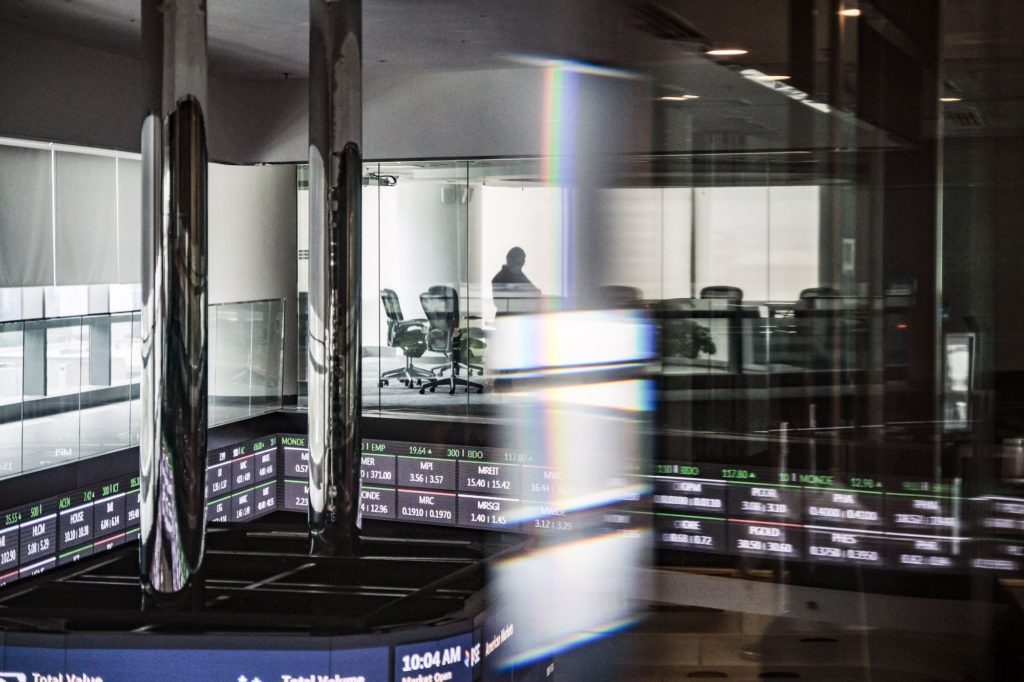
Stocks See Widespread Losses as Fed Decision Looms: Markets Wrap

(Bloomberg) — Stocks came under pressure as Treasury yields hit multiyear highs, with traders bracing for a hawkish Federal Reserve that’s expected to boost rates to levels not seen since before the 2008 financial crisis.

Traders also kept an eye on geopolitical developments amid news that the Kremlin is moving hastily to stage sham votes on annexing the regions of Ukraine its forces still control. A slide in equities pushed the S&P 500 more than 10% below its Aug. 16 high — which marked the peak of rally from its June lows. More than 95% of its companies were down Tuesday, with all major groups in the red. Two-year US yields approached 4%.

Fed officials are about to put numbers on the “pain” they’ve been warning of when they publish new projections for the economy Wednesday. They could show a substantial rise in rates and unemployment ahead as the estimated price tag for reducing inflation. Officials are also widely expected to boost rates by 75 basis points — and a few market observers say a full-point hike might also be on the table.

To Charlie McElligott, cross-asset strategist at Nomura Securities International, the market is underpricing the possibility that the Fed could opt for a bigger move of 100 basis points. In addition to last week’s inflation surprise, he cited the fact that both the labor market and wages remained “hot” since Fed Chair Jerome Powell’s Jackson Hole speech at the end of August.

Only two of the 96 analysts surveyed by Bloomberg are currently predicting a full-point move this month. 

“The idea that the Fed will raise rates and immediately cut again in mid-2023 should now be put back into storage alongside the beach chairs,” said Gargi Chaudhuri,  head of iShares investment strategy for the Americas at BlackRock Inc. “Recent data have confirmed the necessity of the Fed’s tough stance. We believe we are entering a new regime of structurally higher volatility and slowing growth.”

Nouriel Roubini, who correctly predicted the financial crisis, sees a “long and ugly” recession occurring at the end of 2022 that could last all of 2023 and a sharp correction in the S&P 500. “Even in a plain vanilla recession, the S&P 500 can fall by 30%,” said the chairman of Roubini Macro Associates. In “a real hard landing,” which he expects, it could fall 40%.

Read: Soaring Hedging Costs Dent Demand for US Corporate Bonds

For traders grappling with a hawkish Fed and a looming recession, the next shoe to drop will be on corporate earnings, said a BlackRock co-chief investment officer. 

“What we’re concerned about increasingly is earnings downgrades and we haven’t had that yet,” said Nigel Bolton of BlackRock Fundamental Equities, which comprises active stock strategies. “The tone of management teams is already starting to change and we’re going to see pretty substantial reductions for 2023,” he said.

Professional speculators are refusing to surrender to a punishing equity market prone to seemingly endless volatility — boosting bullish and bearish positions at the fastest rate in five years. As the S&P 500 plunged last week, hedge funds snapped up single stocks while betting against the broad market with products like exchange-traded funds, data from Goldman Sachs Group Inc.’s prime brokerage show.

The appetite for protection against an index-wide drop in the S&P 500 in the next three months has been falling together with the stock market, pushing the put-to-call ratio to a fresh one-year low, data compiled by Credit Suisse Group AG’s derivatives strategists show. The opposite has been happening on a single-stock level: A similar ratio jumped to a one-year high as company-specific announcements have been triggering outsized stock reactions.

The risk-off sentiment on Tuesday also dragged down cryptocurrencies, with Bitcoin sinking below $19,000.

Key events this week:

  • Federal Reserve decision, followed by a news conference with Chair Jerome Powell, Wednesday
  • Big-bank CEOs testify before US Congress in a pair of hearings on Wednesday and Thursday
  • US existing home sales, Wednesday
  • EIA crude oil inventory report, Wednesday
  • Bank of Japan monetary policy decision, Thursday
  • The Bank of England interest rate decision, Thursday
  • US Conference Board leading index, initial jobless claims, Thursday

Will the Nasdaq 100 Stock Index hit 10,000 or 14,000 first? This week’s MLIV Pulse survey focuses on technology. It’s brief and we don’t collect your name or any contact information. Please click here to share your views.

Some of the main moves in markets:

Stocks

  • The S&P 500 fell 1.3% as of 2:49 p.m. New York time
  • The Nasdaq 100 fell 1%
  • The Dow Jones Industrial Average fell 1.3%
  • The MSCI World index fell 1%

Currencies

  • The Bloomberg Dollar Spot Index rose 0.5%
  • The euro fell 0.6% to $0.9967
  • The British pound fell 0.5% to $1.1370
  • The Japanese yen fell 0.3% to 143.69 per dollar

Bonds

  • The yield on 10-year Treasuries advanced eight basis points to 3.57%
  • Germany’s 10-year yield advanced 12 basis points to 1.93%
  • Britain’s 10-year yield advanced 15 basis points to 3.29%

Commodities

  • West Texas Intermediate crude fell 1.5% to $84.45 a barrel
  • Gold futures fell 0.3% to $1,672.90 an ounce

More stories like this are available on bloomberg.com

©2022 Bloomberg L.P.

Schneider Electric Nears £9.4 Billion Aveva Buyout in One of Year’s Biggest UK Deals

(Bloomberg) — Schneider Electric SE is nearing an agreement to buy out minority shareholders of Aveva Group Plc in a deal valuing the industrial software developer at about £9.4 billion ($10.6 billion), people with knowledge of the matter said. 

The French industrial conglomerate is in advanced talks about a potential bid of around £31 per share, according to the people, who asked not to be identified because the information is private. That would represent more than a 40% premium to Aveva’s closing price on Aug. 23, the last full trading day before Bloomberg News first reported the potential bid. 

Schneider, which already owns about 60% of London-listed Aveva, is aiming to announce a deal Wednesday, according to the people. Under UK takeover rules, Schneider has until 5 p.m. Wednesday to announce its plans for a formal bid, unless the deadline is extended. 

Deliberations are ongoing, and negotiations could still drag on longer or hit a last-minute snag, the people said. Representatives for Aveva and Schneider declined to comment.

Any transaction would mark the second big cross-border deal between France and the UK in recent months. Paris-listed Eutelsat Communications SA agreed in July to combine with OneWeb Ltd. in a deal valuing the UK government-backed satellite operator at $3.4 billion.

Chief Executive Officer Jean-Pascal Tricoire has been offloading Schneider’s non-core businesses and channeling more investment into areas that help companies with the shift to digitalization. Cambridge, England-based Aveva provides software tools for utilities, oil and gas producers, transportation firms and other companies, according to its website. 

Schneider took control of Aveva after agreeing in 2017 to combine its own industrial software business with the British company. Aveva has since bulked up further through acquisitions, buying SoftBank Group Corp.-backed industrial software maker Osisoft in 2020 at a valuation of $5 billion including debt. 

Aveva’s original deal with Schneider prevented the French company from boosting its stake for two years after the transaction closed, and capped its holding below 75% for a further 18 months unless certain conditions were fulfilled.

More stories like this are available on bloomberg.com

©2022 Bloomberg L.P.

Close Bitnami banner
Bitnami