Bloomberg

Hertz Plans to Buy 175,000 Electric Vehicles From GM Over Five Years

(Bloomberg) — Hertz Global Holdings Inc. plans to buy as many as 175,000 electric vehicles from General Motors Co. over the next five years, the latest major step by the rental giant to embrace plug-in cars.

The deal includes the Chevrolet, Buick, GMC, Cadillac and BrightDrop brands spanning categories such as pickups and luxury automobiles, according to a statement Tuesday. Deliveries will begin with Chevrolet Bolt EV and Bolt EUV models in the first quarter of next year.

The agreement “will dramatically expand our EV offering to Hertz customers, including leisure and business travelers, rideshare drivers and corporates,” Hertz Chief Executive Officer Stephen Scherr said in the statement.

The move comes as the auto industry accelerates a shift toward production of more EVs, with GM making a bold pledge to fully electrify its lineup by 2035. For Hertz, the deal will deepen its push to electrify its rental fleet after announcing a plan to buy 100,000 Tesla Inc. EVs a year ago. 

GM will get an influx of sales just as the company starts building a total of five electric models using its Ultium battery this year and next. The Detroit automaker has been selling its Hummer electric pickup and started production of the Cadillac Lyriq SUV recently, but the big push comes in 2023 when GM starts building electric versions of its Chevrolet Silverado pickup, and Chevy Blazer and Equinox SUVs.

Read more: GM Wants to Be the Tortoise, Not the Hare, in the Great EV Race

GM North America President Steve Carlisle said he expects margins on EVs sold to fleets will be similar to profits on retail vehicles.

In addition to fleet sales, GM sees the deal as a way to boost interest in electric vehicles among consumers who don’t yet own one. Carlisle said research shows consumers are twice as likely to consider an EV once they test one.

“Our goal is EVs for everyone everywhere,” Carlisle said on a call with journalists. “We see this as a key enabler to that.”

Hertz shares fell 2.6% as of 2:30 p.m. in New York amid broad market declines, while GM dropped 5.6%.

Build Scale

The latest deal builds on orders Hertz already has in place for other EV models. Besides the Tesla tie-up, Hertz also revealed an agreement earlier this year to buy 65,000 vehicles from Polestar, the all-electric automaker controlled by Volvo Car AB and its owner Zhejiang Geely Holding Group Co. Hertz has a goal of making one-quarter of its fleet electric by the end of 2024.

Commitments from fleet buyers such as Hertz offer GM a way to accelerate sales of EVs and build scale economies from larger production volumes. The first version of the Silverado that goes on sale next spring is designed for fleet clients. So, too, are GM’s BrightDrop electric delivery vans. FedEx Corp. took delivery of its first 150 BrightDrop vehicles in June.

Separately, GM issued a joint statement with the Environmental Defense Fund recommending that the Environmental Protection Agency issue tougher vehicle emissions standards for the automotive industry. 

The pair called on the EPA ensure that at least 50% of new vehicles sold by 2030 are zero emitting, while achieving at least a 60% reduction in greenhouse gas emissions in model year 2030. That coincides with GM’s plan to make Cadillac and Buick all-electric by 2030 and have its entire US fleet battery powered by 2035.

(Updates with executive quote in the sixth paragraph.)

More stories like this are available on bloomberg.com

©2022 Bloomberg L.P.

Diller Dismisses Corporate ESG Principles as ‘Virtue Signaling’

(Bloomberg) — Expedia Group Inc. Chairman Barry Diller largely dismissed the inclusion of environmental, social and governance principles in corporate decision making, saying many such programs just produce “glossy reports.”

“Most of ESG is virtue signaling, I’m afraid,” Diller said Tuesday at the Skift Global Forum travel conference in New York. BlackRock Inc. Chief Executive Officer Larry Fink’s push for companies to become more sustainable was “above criticism” for several years, Diller said. But, while some ESG programs make sense, most of them are “truly empty calories.” 

Many of the energy companies are beginning to get it right, Diller said. “When you talk about the big issue in practical terms, they’re at the crux of it.” 

Improving sustainability across industries has become popular in recent years as asset managers, banks and regulators pressure companies to lower emissions. While most agree that’s a worthy cause, critics of the ESG movement say some companies oversell their green credentials or that the principles shouldn’t be included in business decisions. 

Expedia is among other travel companies like rival Booking Holdings Inc. that are adopting sustainability principles. The Seattle-based company unveiled a strategy last week focused on expanding access to underserved travelers, such as people with disabilities, and developing a long-term climate plan.

More stories like this are available on bloomberg.com

©2022 Bloomberg L.P.

Bitcoin Dips Back Below $19,000 as Risk-Off Sentiment Worsens

(Bloomberg) — Cryptocurrencies fell Tuesday, dragging down Bitcoin in line with US stocks as investors prepare for expected rate hikes from the Federal Reserve this week. 

The largest digital token sank as much as 4% to $18,740. The coin on Monday fell to $18,273, its lowest value since prices tumbled after the collapse of crypto lender Celsius in June. Also on Tuesday, Ether slid as much as 2% to $1,330. Coins like Cardano and Avalanche fell even more. 

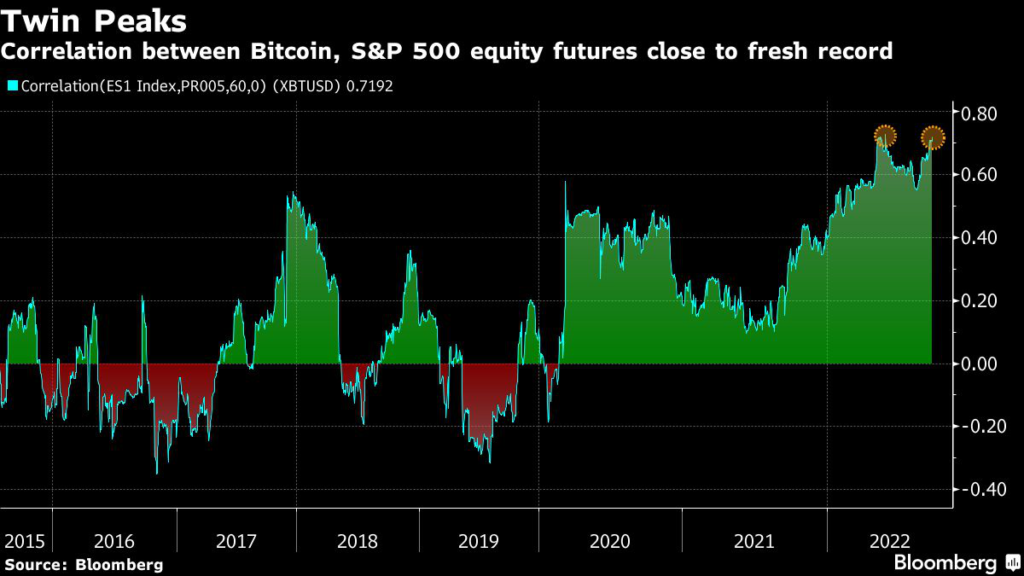
The drop aligns with a selloff in US stocks, which cryptocurrencies have been moving in tandem with all year. A 60-day correlation coefficient for Bitcoin and contracts on the S&P 500 grew to 0.72, just short of a May record. (A coefficient of 1 means the assets are moving in lockstep, while minus-1 would show they’re moving in opposite directions.)

“Right now, it is very much a proxy for beta in the market,” John Porter, CIO and head of equities at Newton Investment Management, said of Bitcoin. “Crypto’s going through growing pains right now. We just don’t know what it’s going to be when it grows up, if you will.”

Interest in digital assets has waned in recent weeks. Investors are bracing for volatility from the jumbo Federal Reserve interest-rate hike expected Wednesday to fight sticky price pressures. Higher borrowing costs are sapping the liquidity that the crypto sector relies on. 

“It’s trading like a leveraged play on broader risk assets,” Matt Miskin, co-chief investment strategist at John Hancock Investment Management, said in an interview. “It’s a more speculative investment and right now investors care more about dependability and cash flows and all that. In our view, that’s not a backdrop that changes into next year. So we see more downside risk in risk assets and crypto would be a part of that market.”

The declines also come despite MicroStrategy Inc.’s announcement that it purchased about $6 million in Bitcoin between Aug. 2 and Sept. 19. 

“Markets — both crypto and broader — are in full macro risk mode ahead of the FOMC this week,” said Tagus Capital’s Ilan Solot. “I don’t think MicroStrategy’s purchase moves the needle much. A chunk of the leverage longs, especially in ETH, has been cleared out. So that’s a better technical position, but we still need a positive catalyst to make a difference in sentiment.” 

More stories like this are available on bloomberg.com

©2022 Bloomberg L.P.

Vodafone Invests $15 Million to Help Curb Maternal Mortality in Africa

(Bloomberg) — The Vodafone Foundation and USAID are investing $15 million to expand an emergency transportation system in Tanzania that provides free emergency rides to the hospital for pregnant women, in order to help reduce maternal mortality in the country. 

Vodafone Group Plc.’s foundation is committing $10 million in partnership with the US Agency for International Development, which will contribute $5 million, to build the infrastructure necessary to support the program after a successful pilot run, Joakim Reiter, Vodafone chief external and corporate affairs officer, said at an event at the United Nations General Assembly.

The funds will extend the program’s initial coverage from two districts in Tanzania, home to about 1 million people, to the entire country of about 60 million. Tanzania has one of the highest maternal mortality rates in the world, with 524 deaths per 100,000 births, according to a report by the Touch Foundation, which helped start the program. The Vodafone Foundation also committed an additional $5 million to replicate the program in other sub-Saharan countries with high rates of  maternal mortality.

During the pilot program, which ran from 2013 to 2020, patients called a dispatch center to be connected to a medical professional to assess their health through a mobile application called m-mama. A local taxi driver, functioning as an ambulance, used the app to find the patient and take them to a hospital. Upon safe arrival, the government paid the driver through M-Pesa, a digital money transfer program developed by Vodafone’s African arm, Vodacom, which works via SMS messaging. 

The program was initially available to pregnant women in the Shinyanga and Sengerema/Buchosa districts of Tanzania. The service — funded by Vodafone and USAID and implemented by the Touch Foundation, Pathfinder International and the local government — has saved 300 lives and transported over 15,000 women and newborns, reducing the maternal mortality rate by 30%, according to the report from the Touch Foundation. 

Despite local government and international efforts to improve neonatal health, a history of economic deprivation and an urban-rural divide keeps conditions dire in Tanzania. Maternal deaths, 99% of which occur in low and middle-income countries, according to the World Bank, are often treatable with proper medical care for hemorrhage or hypertension. 

The lack of health infrastructure and education in rural Tanzania leaves many mothers on their own. Running the program at national scale could save around 17,000 lives in the first five years, Reiter said. “We are actively looking to extend the program to new territories,” he added.

More stories like this are available on bloomberg.com

©2022 Bloomberg L.P.

Amazon Air Cargo Flights Grow at Slowest Pace Since Early Pandemic

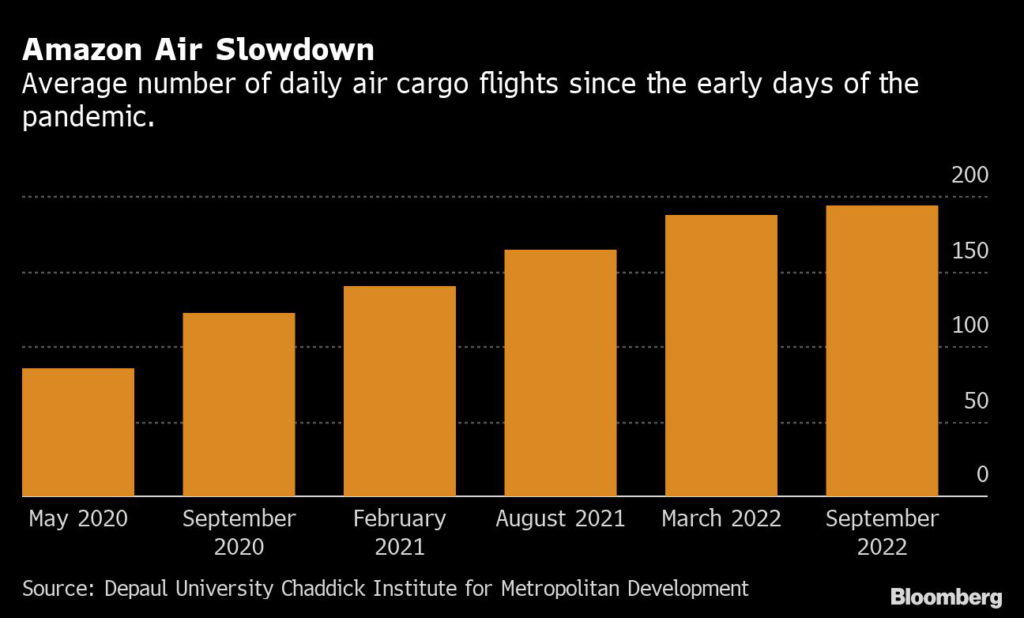
(Bloomberg) — Amazon.com Inc.’s cargo airline is growing at the slowest pace since the start of the pandemic, the latest sign that the e-commerce giant is adjusting to slackening demand.   

Amazon Air freighters averaged about 194 flights a day during a week earlier this month, up 3.8% from March, according to researchers with DePaul University’s Chaddick Institute for Metropolitan Development. That’s the smallest increase in the institute’s periodic snapshots, compiled roughly once every six months since May 2020. 

“Amazon is making significant adjustments,” Joseph Schwieterman, the Chicago-based institute’s director, said in an interview. “The company apparently was overly optimistic about its need to grow its supply chain so rapidly at the height of the pandemic.” 

The world’s largest online retailer entered this year with too many workers and facilities as consumers returned to normal shopping habits. Amazon has shuttered, delayed or abandoned plans for dozens of warehouses in the US and Europe, Bloomberg reported earlier this month. The company reduced its workforce — primarily through attrition, Amazon says — by almost 100,000 people between March and June, the biggest quarterly decline in its history. 

The company didn’t immediately respond to a request for comment. The shares fell 2.3% to $121.85 at 1:37 p.m. in New York.

Amazon Air, which relies on pilots from a handful of partner carriers, flies packaged items en route to customers. That operation grew rapidly in the last few years, tacking on new airport hubs, leasing and purchasing more aircraft. It even contemplated acquiring bigger long-haul jets to import goods directly from Asia. 

FedEx Corp. shocked investors last week after withdrawing its annual earnings forecast and saying preliminary results for the quarter fell short of expectations, sending shares of the package-delivery giant tumbling. Analysts subsequently said some of the company’s woes were self-inflicted and weren’t solely the result of slowing consumer demand.

Amazon Air began flying to Las Vegas and El Paso, Texas, recently, Schwieterman said, and has continued to grow in Europe, where it relies on hubs in Milan and Leipzig, Germany. Amazon also charters flight on planes operated by its partners but not branded “Amazon Air,” Schwieterman said. The number of those flights, which can be difficult to assess, appears little changed since March, he said. 

Schwieterman said the Seattle-based comany has been increasing flight activity from its $1.5 billion hub at Cincinnati/Northern Kentucky International Airport, since expanding operations last year. A cluster of overnight flights, departing between midnight and 6 a.m., seem designed to enable next-day delivery. The hub is small compared with major facilities operated by FedEx and United Parcel Service Inc., but serves a similar function, facilitating connections to other flights within Amazon’s network. 

“Amazon wants CVG to be the nerve center of its overnight shipping system,” Schwieterman said, using the airport’s abbreviation. 

(Updated with shares.)

More stories like this are available on bloomberg.com

©2022 Bloomberg L.P.

Jeff Bezos Space Station Orbital Reef Will Be Featured in New Sci-Fi Movie

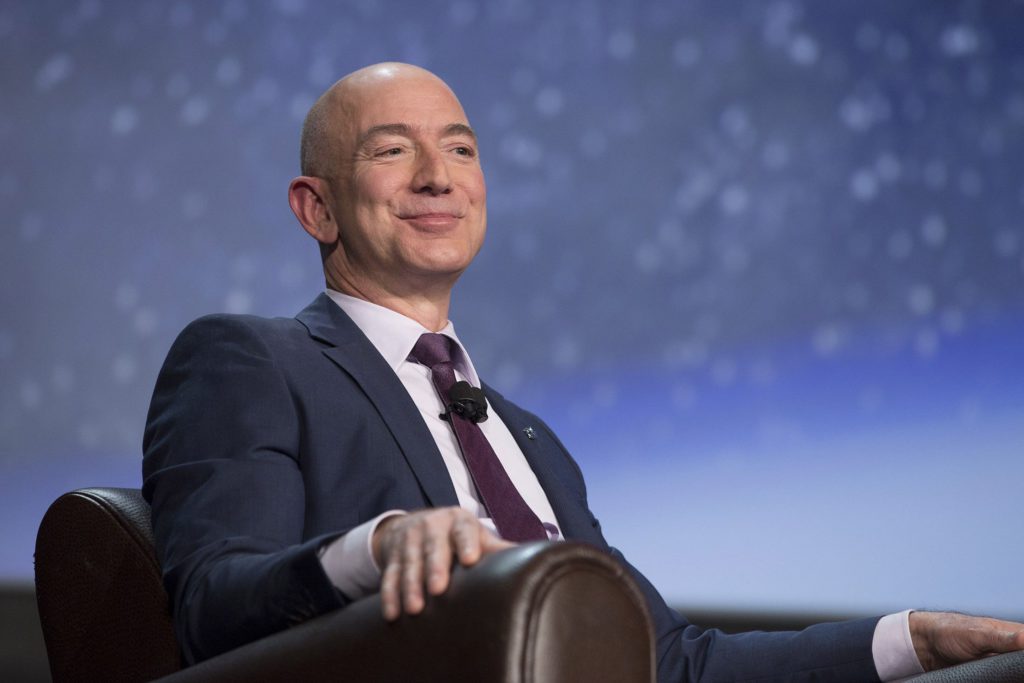
(Bloomberg) — Jeff Bezos’ space company Blue Origin, along with partner Sierra Space, have struck a deal with Centerboro Productions to feature its Orbital Reef space station in the upcoming feature film, “Helios.” 

Set in 2030, the movie will tell the story of a spaceship crew on a mission to save the International Space Station after it’s been damaged by a solar flare. The goal is to give fans a realistic depiction of the future of living and working in space, and coordinating a response to a space weather emergency, the companies said in a press release Tuesday. 

“Helios” will begin shooting next year. Orbital Reef, which is still in the design phase, isn’t expected to be operational until 2027, however.

Whether Bezos will make a cameo in the picture, or if it will be filmed on the space station, remains to be seen. In 2016, the billionaire appeared in the movie, “Star Trek Beyond.” Other films since have been shot in space. Last year, a Russian film crew began shooting the space drama “The Challenge” on board the ISS, and Universal Studios has a film scheduled to begin production with Tom Cruise sometime next year which may involve a ride on a SpaceX vessel, although nothing has yet been confirmed.

Bezos-founded Amazon.com Inc. has become a big player in the movie business with its Prime Video offering, but there’s wasn’t any mention the company distribution the film in the “Helios” press release. Blue Origin declined to comment further.

NASA is targeting 2030 for the decommissioning of ISS as commercial space stations from companies like Axiom, Blue Origin, Sierra Space and others become operational. 

More stories like this are available on bloomberg.com

©2022 Bloomberg L.P.

Tom Cruise, Sandra Bullock Say Paramount Is Cheating Them Out of Millions

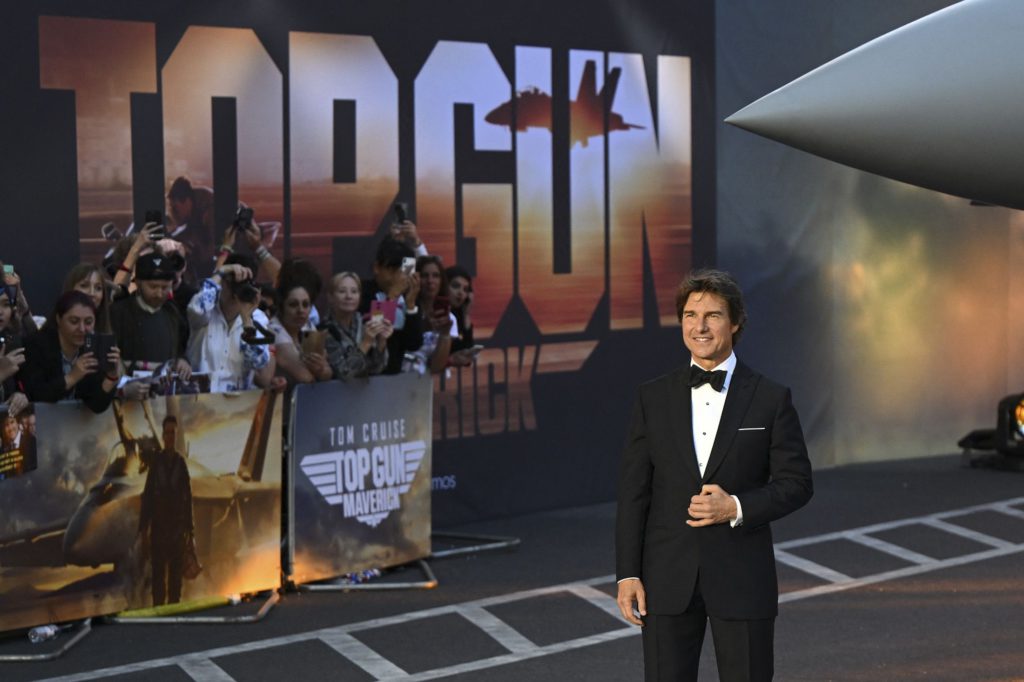
(Bloomberg) — After years of losses and underwhelming performance, the movie studio Paramount Pictures has delivered its best box-office results in a decade. The first five movies it released in theaters this year all opened in the top spot, culminating with “Top Gun: Maverick,” the highest-grossing film of the year so far.

But not everyone is celebrating. Many of the stars and producers of these movies, including Tom Cruise, Sandra Bullock and the creators of “Jackass,” believe they are going to miss out on millions of dollars because of a deal involving Paramount, its Paramount+ streaming service and the cable channel Epix, which is owned by Amazon.com Inc.

Movie stars, producers and filmmakers often get a cut of the profits from their movies, including a share of digital sales and licensing to third parties. Those paydays can amount to tens of millions of dollars on a big movie like “Top Gun: Maverick,” starring Cruise, or millions on a smaller-scale hit like “The Lost City,” starring Bullock.

Profit participants in Paramount movies believe their earnings are below what they should be because the studio is receiving less from Epix than other studios are getting in similar deals, according to several people familiar with the conversations. Representatives for the talent have met with Paramount to ask for extra money, said the people, who asked not to be identified because the talks are ongoing.

While no one has threatened a lawsuit yet, lawyers are assessing their options. One possibility is that Hollywood labor unions will take action. Guilds also collect residuals on these movies, and Paramount’s deal with Epix means they too may have also missed out on millions of dollars relative to what they get from other studios. The guilds declined to comment. Representatives for Cruise, Bullock and “Jackass” star Johnny Knoxville didn’t respond to requests for comment.

In a statement to Bloomberg News, Paramount said it hasn’t had an ownership interest in Epix for five years, and that “our agreements are entered into at market rates.”

Lawyers and agents have always bemoaned “Hollywood accounting,” in which studios overstate costs and disguise profits so as not to share proceeds with financial partners. Both sides would rather avoid a lawsuit, but there have been some big cases over the last decade. AMC Networks Inc. was forced to pay $200 million to one of the creators of “The Walking Dead,” while Fox settled a multimillion dollar dispute with the participants in the show “Bones.”

Workers worry that the rise of streaming services has made it even easier for studios to hide their profits from talent by self-dealing. Most studios used to license their films to premium cable networks like HBO, but now they license them to streaming services, often ones they own. Warner Bros. puts its movies on HBO Max, Walt Disney Co. sends its movies to Disney+ and Universal has a deal with its corporate sibling, Peacock. Universal also struck a deal with Amazon.

Streaming services typically don’t license their original movies to others at all. Rather than give talent a share of the ownership in a project, Netflix Inc., Amazon and Apple Inc. buy out their rights up front. The Writers Guild has already secured $42 million in arbitration from Netflix for what the union called “self-dealing” and $4 million from Amazon in unpaid residuals.

Paramount and Epix aren’t owned by the same company, but they used to be. Paramount, Lions Gate Entertainment Corp. and Metro-Goldwyn-Mayer created Epix in 2008 as an outlet for their movies. While these companies hoped that Epix would turn into a viable player, it never reached the stature of HBO, Showtime or Starz. To generate extra money, Epix sub-licensed movies to Amazon. Talent didn’t squawk at the time because Epix was paying similar rates to other streaming services and cable networks, the people said.

In 2017, MGM took full control of Epix, buying out its partners. As part of that deal, Paramount agreed to renew its movie output deal with Epix for another five years. That became a problem in 2020 when Paramount prepared to relaunch its CBS All Access streaming service as Paramount+. Paramount is best known as a movie studio, and yet none of its new movies would be available on its flagship streaming service for years to come. It needed to bring those movies to Paramount+.

So early last year, Paramount and Epix negotiated a new deal under which Paramount got the rights to show most of its movies on Paramount+ after a shortened window of just 45 days in theaters, and Epix extended its deal for Paramount movies by a year.

Shortly after that, Universal and Sony Group signed new licensing agreements as well. Netflix paid Sony about double what Epix paid Paramount, said the people. Peacock and Amazon also paid Universal more than Paramount got from Epix, even though Peacock and Universal are part of the same company. 

Nobody thought too much about this at the time. But then talent started to notice the difference between the Universal and Sony paychecks and the Paramount paychecks. Paramount’s Epix deal expires at the end of 2023. 

(Updates ownership of Epix in second paragraph.)

More stories like this are available on bloomberg.com

©2022 Bloomberg L.P.

Biden’s Vow to Defend Taiwan Makes US Policy Shift Explicit

(Bloomberg) — Three times as president, Joe Biden has said the US would defend Taiwan if China invades the island, and each time his staff argued he wasn’t changing longstanding US policy to keep Beijing guessing about US intentions. His fourth time makes that much harder to do.

In comments to “60 Minutes” on Sunday, Biden left no doubt where he stood, saying the US would commit military forces in the event of an “unprecedented attack” by China. Pressed if that would involve US men and women — unlike in Ukraine, where Biden has ruled out sending American forces — he said “yes.”

A spokeswoman again insisted that policy toward the island hadn’t changed. But with the US stance toward China hardening more broadly, it was difficult to see Biden’s comments as anything other than a refutation of decades of so-called “strategic ambiguity” in which the US declined to make its intentions clear.

The consequences of such a policy would be significant, raising the question yet again of whether Biden sought to chart a new strategy or was simply expressing his own beliefs. Even more jarring was that Biden went further. He said decisions about independence are up to Taiwan. Historically, US policy has been not to support Taiwanese independence.

Knowing they have US military backing, Taiwan’s leaders could move closer to independence — an explicit red line for Beijing to invade. Countries in the region will likely bridle, wary of the possibility of a war on their doorstep. And US allies like Japan or South Korea will almost certainly be made more uneasy knowing that US bases on their soil would be involved in any conflict — a fact that risks pulling them into a war as well.

“Such comments will do more to feed Beijing’s sense of urgency than they will bolster deterrence,”  said Jessica Chen Weiss, professor of China and Asia-Pacific Studies at Cornell University.

“Not supporting Taiwan independence is longstanding US policy,” Weiss said. “But this new combination — a pledge to send troops and the statement that decisions about independence are Taiwan’s to make — suggests an unconditional US defense commitment, one that will strengthen perceptions that the US is issuing Taiwan a blank check.” 

Some White House officials expressed exasperation about questions surrounding Biden’s remarks, refusing to parse them or engage in debate about whether they reflect the change in policy that analysts, Chinese officials and lawmakers believe they do.

“The president’s remarks speak for themselves,” Kurt Campbell, the White House National Security Council’s Indo-Pacific coordinator, said at an event hosted by the Carnegie Endowment for International Peace. “I do think our policy has been consistent and it’s unchanged, and we’ll continue. Our primary goal is to maintain peace and stability across the Taiwan Strait, to secure and stabilize the status quo, to make sure that there is a healthy dialogue and discussion.”

National Security Adviser Jake Sullivan told reporters that Biden merely answered a hypothetical question as a “direct and straightforward person,” and stressed again that US policy has not changed. 

“When the president of the United States wants to announce a policy change he will do so,” Sullivan said Tuesday. “He has not done so.”

Meanwhile, a US destroyer transited the Taiwan Strait Tuesday without “incident,” Pentagon spokesman Pat Ryder, told reporters at the Pentagon. The USS Higgins crossed the strait in accordance with international law, Ryder said.

Strategic Ambiguity 2.0

Either way, China views the White House statements and congressional action like Nancy Pelosi’s trip to Taiwan — the first by a US house speaker in 25 years — as a shift in the status quo that requires a stronger response from Beijing. Over the past few months, Chinese officials have accused the US of incremental “salami-slicing tactics” to cross Beijing’s red line over Taiwan and vowed to take action as necessary. 

Chinese Foreign Minister Wang Yi told former US Secretary of State Henry Kissinger in a meeting Monday in New York that issues related to Taiwan should be properly managed, according to a statement on the ministry’s website.

“Better lose a thousand troops than an inch of land,” Wang said in the meeting, using an old Chinese saying.

Taiwan has avoided any moves toward formal independence that could provoke a Chinese invasion, with President Tsai Ing-wen saying last month the island wants to maintain the status quo in the strait. She has previously said Taiwan doesn’t need to declare independence, because the island is already a de facto state.

One person familiar with the matter, who asked not to be identified discussing Biden’s remarks, described them as a new take on strategic ambiguity — the president reaffirmed existing US policy and said there’s no formal defense commitment, but also said he’d go to war under certain scenarios.

Some Biden officials have said privately that the president personally believes the US should defend Taiwan militarily. But they also know he’s cognizant of the history of US policy toward the self-governed island and why it’s guided the US-China relationship for so long.

Whatever the truth, there’s no question that US policy toward Taiwan has become far more hawkish as tensions with China have grown. Last week, the Senate Foreign Relations Committee voted to approve legislation that would pledge more support for Taiwan. And a succession of US lawmakers have taken advantage of the attention to visit Taiwan, infuriating Beijing.

No visit was more inflammatory than that of Pelosi, who landed in Taipei in August. Afterward, Beijing staged unprecedented military exercises in the waters around the island, and has continued to send warplanes on provocative flight paths in the Taiwan Strait.

Why Taiwan’s Status Risks Igniting a US-China Clash: QuickTake

Biden isn’t the first president to publicly wrestle with US-Taiwan policy, or the first to have his aides try to clean up his remarks. Former President Donald Trump’s aides repeatedly argued that their boss didn’t know what US policy was — toward Russia, or North Korea or myriad other issues, including Taiwan. Trump violated protocol in 2016 by accepting a congratulatory call from Tsai upon his election.

While Taiwan has long been a minefield, making Biden’s remarks all the more startling is that he called out a previous president for purportedly shifting US policy. Asked in 2001 if the US would use its military to respond to a Chinese invasion, President George W. Bush answered: “Whatever it took.”

Biden wrote an opinion piece in the Washington Post calling Bush’s remark a “startling new commitment.” 

Biden’s own commitment to defend Taiwan underscores the crucial strategic role the island plays for the US economically as the source of half the world’s microchips. But also strategically, it’s a foothold of democracy in the region. 

Xi’s Power

There’s growing consensus among White House officials that Chinese President Xi Jinping’s views on Taiwan will only harden after the 20th Party Congress this year and that he could be more willing to forcibly unify the island with the mainland, people familiar with the internal deliberations said. While the administration has privately stressed that Taiwan is not part of the bilateral relationship with Beijing, officials in Washington know that China has a different opinion on the matter.

There is meanwhile growing frustration in Congress with the administration’s back-and-forth over Taiwan policy. Bob Menendez, chair of the Senate Foreign Relations Committee, said he doesn’t understand why the White House is pushing back on certain aspects of the Taiwan Policy Act, which would formally designate the island a “major non-NATO ally,” given Biden has repeatedly said he would send US troops if China invaded.

“That’s why I think it’s crazy that they’ve pushed back on our bill,” Menendez said. “That why I think some of my colleagues are off base when they’re worried about the changing ambiguity. The president has said what he said.”

Republican Senator Mitt Romney, meanwhile, noted the White House walked back Biden’s comment yet again. 

“I think that’s the right posture — strategic ambiguity — and I think we’re wise not to be provocative,” he said.

Some outside analysts, however, believe that a clearer and harder US stance regarding a Chinese attack on Taiwan will help deter Beijing.

“Ironically, strategic ambiguity routinely awarded Beijing’s bad behavior and legitimized the Chinese Communist Party at the expense of Taiwan’s liberal and responsible government,” said Ian Easton, senior director at the Project 2049 Institute in Virginia.

“Beijing will continue acting provocatively, but the odds of a radical miscalculation and nightmare scenario have just been greatly reduced,” he said.

(Updates with US destroyer’s movement in 11th paragraph)

More stories like this are available on bloomberg.com

©2022 Bloomberg L.P.

Citrix Offers Steeper Discounts on Buyout Debt to Lure Investors

(Bloomberg) — A group of banks led by Bank of America Corp. and Credit Suisse Group AG is being forced to offer even steeper discounts on more than half of the $15 billion debt package supporting the buyout of Citrix Systems Inc. 

The $4 billion secured high-yield bond portion of the deal is now being offered at a discount of about 83.6 cents on the dollar, for an all-in yield of 10%, according to a person familiar with the matter. Meanwhile, the $4.05 billion leveraged loan is being marketed at a discount of 91 to 92 cents, according to another person close to the situation. 

The package also includes a euro-denominated loan equivalent in size to $500 million, and offered at 91 to 92 cents on the dollar from 92 cents earlier.

Banks have been struggling to offload risky debt backing leveraged buyouts lately as the outlook for the global economy continues to dim. This means that money managers are shying away from lower-rated credit, instead allocating cash to safer, higher-quality debt. 

The cost of borrowing has spiked as well, driving up the average junk yield to 8.7%. This shift is also forcing banks to concede to steep discounts in order to drum up enough demand for debt sales.

Bank of America is leading Citrix’s leveraged loan sale, while Credit Suisse is leading the bond sale.

The leveraged loan, bond and euro-denominated loan all make up part of the larger $15 billion financing arranged by banks back in January to back Citrix’s buyout by Vista Equity Partners and Elliott Investment Management. Since then, borrowing costs have soared to levels that far exceed the maximum interest rates that the banks had guaranteed the buyout firms.

The remainder of the acquisition financing comprises $3.95 billion of second-lien debt and a $2.5 billion loan that the banks plan to hold on their own balance sheets. 

Goldman Sachs Group Inc. is leading the second-lien debt portion. 

More stories like this are available on bloomberg.com

©2022 Bloomberg L.P.
Nvidia Puts AI at Center of Latest GeForce Graphics Card Upgrade

(Bloomberg) — Nvidia Corp., the most valuable semiconductor maker in the US, unveiled a new type of graphics chip that uses enhanced artificial intelligence to create more realistic images in games.

Codenamed Ada Lovelace, the new architecture underpins the company’s GeForce RTX 40 series of graphics cards, unveiled by co-founder and Chief Executive Officer Jensen Huang at an online event Tuesday. The top-of-the-line RTX 4090 will cost $1,599 and go on sale Oct. 12. Other versions that come in November will retail for $899 and $1,199.

The high-end version of the new chip will have 76 billion transistors and will be accompanied by 24GB of onboard memory on the RTX 4090, making it one of the most advanced in the industry. Nvidia is relying on Taiwan Semiconductor Manufacturing Co. to produce the processor with its so-called 4N technology while Micron Technology Inc. is the memory provider. Nvidia has been using Samsung Electronics Co. to make Ada’s predecessor.

The new technology promises to speed up the rate at which cards generate images using the traditional method of calculating where pixels are located on the screen while at the same time using AI to simulate others. It’s continuing a shift that Nvidia is pioneering that allows computers to make images appear more natural by building them using calculations of the path of individual rays of light.

The approach could give customers a fresh reason to upgrade their technology — something Nvidia could use right now. The chipmaker is suffering from a steep slowdown in demand for PC components. Last month, Nvidia reported much lower quarterly sales than it originally predicted and gave a disappointing forecast.

Nvidia has been forced to deliberately slow down shipments to make sure its customers — primarily makers of graphics cards sold as add-ins for high-end computers — work through their stockpiles of unused inventory. That process should be completed by the end of the year, Huang has said. 

The new generation of technology, named after a 19th-century mathematician who many consider the first computer programmer, will improve existing games immediately and also learn from gameplay. That intelligence will go back to Nvidia, which will use its own computers to further improve the cards’ software. 

More stories like this are available on bloomberg.com

©2022 Bloomberg L.P.
Close Bitnami banner
Bitnami