Bloomberg

Uniper Woes Trigger Confidence Motions for Finnish Government

(Bloomberg) — Finland’s government is coming under heavy pressure over taxpayer money flowing to Germany as part of the bailout of Uniper SE, a unit of Finnish utility Fortum Oyj.

The government of Prime Minister Sanna Marin faces two motions of no-confidence in the country’s parliament, filed on Tuesday by all opposition parties. While the motions will spark a debate in parliament and add to pressure on Marin’s administration, the five-party coalition is likely to survive thanks to a majority in the legislature.

The opposition berated ministers for what it said was a failure to adequately oversee the state’s majority stake in Fortum and sought clarity about who in the government approved 8 billion euros ($8 billion) in loans and guarantees made to its German subsidiary last winter.

“German plans to nationalize Uniper are going to lead to losses of 10 billion euros to 15 billion euros in a bad, but likely scenario,” Riikka Purra, leader of the opposition Finns Party, said in an emailed statement, adding that’s as much as a quarter of the state’s 2022 budget.

Opposition lawmakers also called on Marin to step in.

“I expected especially the prime minister to take a stronger role in this issue,” said Kai Mykkanen, a member of parliament for the center-right National Coalition.

“Uniper is about billions of euros worth of Finnish holdings — both the state and private shareholders,” he added. “The government shouldn’t just accept Germany treating a Finnish company unfairly.”

More stories like this are available on bloomberg.com

©2022 Bloomberg L.P.

Spotify Users Can Now Buy Audiobooks in the US App

(Bloomberg) — Spotify Technology SA has started selling audiobooks on its US app, allowing the music streaming giant to draw in new customers and keep existing ones closer.

The Swedish company will start by offering more than 300,000 titles, including those from the five biggest publishing houses, and customers will be able to listen to them without ads. None of the books are exclusive to Spotify, and existing app subscribers don’t get any discounts or additional perks, though the company said it plans to experiment with different business models.

Audiobooks represent a “substantially untapped” market, Nir Zicherman, global head of audiobooks and gated content at Spotify, said in a press briefing Monday. They account for 6% to 7% of the $140 billion book industry and the category is growing by about 20% a year, he said earlier this year.

In June Spotify completed a €117 million ($117 million) purchase of Findaway, an audiobook distributor, which will factor into the new storefront. Authors who publish through the platform can submit their books to Spotify. Zicherman also said the company is seeking to use algorithms to better connect customers with literary content, though for now it’s using human curation efforts.

Zicherman stressed that the current version of the audiobook purchase platform is only a first go. All pricing is set by Spotify and individually decided by title, as is each agreement with publishers about royalty payments. Users will be able to adjust a book’s playback speed, download content for offline listening and rate their books.

More stories like this are available on bloomberg.com

©2022 Bloomberg L.P.

Morgan Stanley Pays $35 Million SEC Fine Over Data Security

(Bloomberg) — Morgan Stanley will pay $35 million to settle US Securities and Exchange Commission allegations that one of its units failed to secure the personal data of millions of customers when replacing company hard drives and servers.

The bank improperly disposed of thousands of devices and some were auctioned off online without checking that customer data they contained had been deleted, according to the SEC. About 15 million clients’ details were compromised over a five-year period starting 2015.

Following the announcement by the SEC, Morgan Stanley said in a statement that it was pleased to have resolved the matter. “We have previously notified applicable clients regarding these matters, which occurred several years ago, and have not detected any unauthorized access to, or misuse of, personal client information,” the firm said.  

Morgan Stanley agreed to pay the penalty and settle the case without admitting or denying the allegations.

The violations occurred because the firm hired a moving and storage company with no experience in data destruction and then failed to properly monitor the company’s work, the SEC said. Morgan Stanley recovered some of the devices, which had thousands of pieces of unencrypted customer data. The vast majority of devices were not found, according to the regulator.

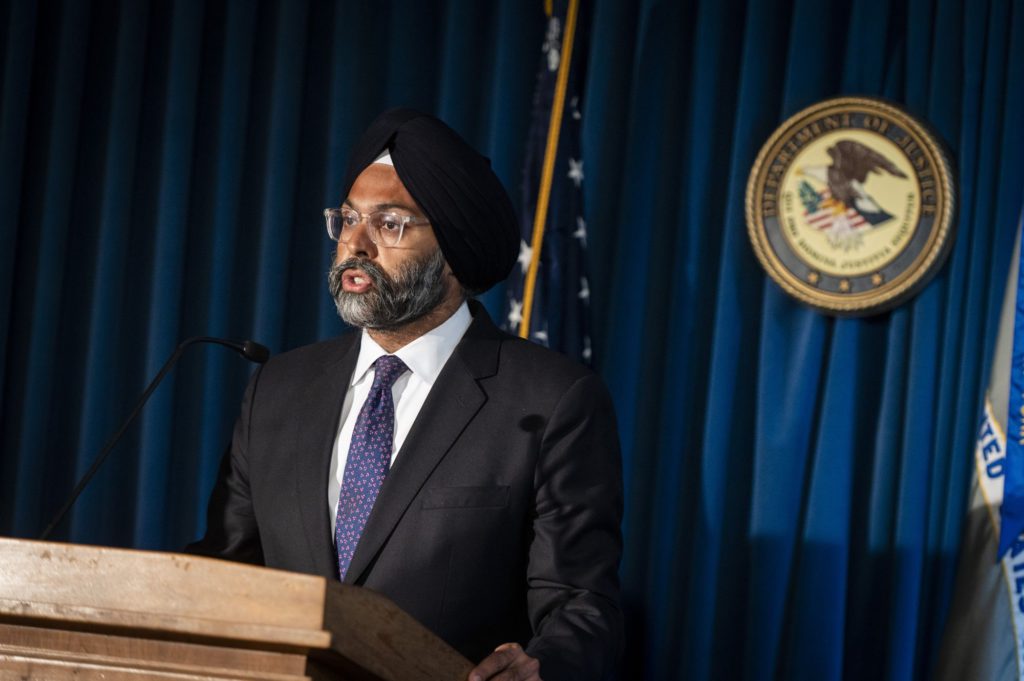
Gurbir Grewal, director of the SEC’s enforcement division, called the findings “astonishing.” Grewal added that “customers entrust their personal information to financial professionals with the understanding and expectation that it will be protected.” 

Tuesday’s penalty is also related to the brokerage’s failure to properly dispose of customer and consumer report information as part of a broader hardware refresh program, during which the firm found that 42 servers were missing. The unit didn’t activate available encryption programs that were available on the devices, the SEC said. 

(Updates with Morgan Stanley comment in third paragraph.)

More stories like this are available on bloomberg.com

©2022 Bloomberg L.P.

Goldman Sachs Strikes Credit Card Deal With T-Mobile After Apple and GM

(Bloomberg) — Three years after expanding into credit cards, Goldman Sachs Group Inc. has quietly signed up a third partner, T-Mobile US Inc.

The agreement to collaborate, under discussion since at least last year, was reached in recent months, according to people familiar with the matter, asking not to be identified discussing private talks. So far, neither company has discussed the project publicly, and spokespeople for T-Mobile and Goldman declined to comment.

The accord was struck just as pressure began mounting on the Wall Street giant to stem the cost of a yearslong effort to build a consumer business, dubbed Marcus, that has yet to become profitable. Goldman’s management has been wrestling with how to choke off losses in its consumer business and follow through with aspirations for expansion. 

After card deals with Apple Inc. and General Motors Co., Goldman will have to navigate new types of risks signing up T-Mobile customers. The carrier offers a wide variety of phones and plans, designed to provide service to people with low incomes or spotty credit histories. But the company has been investing in its network, and that is helping attract more prime customers than ever before, T-Mobile Chief Executive Officer Mike Sievert has said.

“Our prime percentage is up several points from year-ago, and we’re getting more and more,” he told analysts on a call last year.

It can take years for banks to make money on new card offerings. There are up-front costs for marketing and rewards programs. Lenders also need time to cultivate a large portfolio of customers who reliably pay their debts.

Even JPMorgan Chase & Co.’s wildly popular Sapphire Reserve card took awhile to pay off. When that card debuted in 2016, analysts estimated it would be 5.5 years before the bank would break even.

Not all card partnerships successfully launch a card. A few years ago, Lyft Inc. selected a bank partner — Synchrony Financial — and spent months trying to cobble together a card program before it ultimately decided to shutter the effort.

Goldman’s consumer unit has also recently became the focus of a review by the Federal Reserve. Officials at the regulator have been asking the Wall Street giant questions about the business’s practices and development.

If they succeed in developing a new card, it would give the second-biggest US wireless carrier a financial product to pitch to 88 million regular monthly subscribers, competing with a card already offered by Verizon Communications Inc. 

The agreement with T-Mobile sets the stage for the companies to design a rewards program and other features that can turn customers into longtime, dedicated users of their services. Persuading T-Mobile customers to automatically pay their wireless bills with their cards, for example, can strengthen relationships with both companies.

Verizon launched its credit card with Synchrony in 2020. That card’s perks include 4% back on grocery and gas purchases in the form of “Verizon Dollars” that can be redeemed for future Verizon purchases. Executives at Synchrony, the country’s largest store-card provider, have said the Verizon card may grow into one of its top-10 programs.

More stories like this are available on bloomberg.com

©2022 Bloomberg L.P.

Goldman Cuts at Least 25 Asia Bankers as China Deals Swoon

(Bloomberg) — Goldman Sachs Group Inc. has started axing at least 25 investment bankers in Asia as a drought in dealmaking prompts cuts across sectors, people familiar with the matter said. 

The cuts span its equity capital markets, health care and telecommunication, media and technology teams in Asia, the people said, asking not to be identified because the matter is confidential. The majority of the reductions are affecting junior level bankers involved in deals in Greater China, the people said. 

“Every year globally we conduct a strategic assessment of our resources and calibrate headcount to the current operating environment,” a spokesman said in an email, without commenting on the extent of cuts. “We continue to remain flexible while executing against our strategic growth priorities.” 

The Wall Street firm is planning its biggest round of jobs cuts since the start of the pandemic, seeking to eliminate several hundred roles starting this month, people with knowledge of the matter said earlier. While the total number is lower than some previous rounds, the reductions are a resumption of an annual culling cycle that the New York-based bank largely paused during the Covid outbreak.

The Asia reductions come after Goldman went on an unprecedented hiring spree in mainland China and Hong Kong last year as the world’s second-biggest economy opened its financial market fully to foreign brokerages and asset managers. The cuts in investment banking are deeper than for the securities division after dealmaking in China ground to a near halt this year as Covid lockdowns and rising political tension hinder the economy, one of the people said. 

Global banks in Asia are under pressure to reduce costs this year after Asia-Pacific equity offerings plunged by around half to about $175 billion this year, Bloomberg data shows. Credit Susise Group AG cut more than two dozen front line roles at its investment bank in July, while UBS Group AG also let go half a dozen China-focused bankers.

(Adds deeper cut in investment banking in fifth paragraph and deal volumes in sixth)

More stories like this are available on bloomberg.com

©2022 Bloomberg L.P.

US Futures Fall as Traders Eye Supersized Fed Hike: Markets Wrap

(Bloomberg) — US equity futures fell after giving up early gains, as traders braced for another supersized US rate hike amid rising anxiety the Federal Reserve could overtighten and raise the odds of a hard landing. The dollar rebounded on haven demand.

Contracts on the tech-heavy and rate-sensitive Nasdaq 100 slipped 0.8%, underperforming S&P 500 peers. In premarket trading, Ford Motor Co. fell after issuing its third-quarter profit forecast, with analysts concerned about the impact of higher costs.

The US central bank kicks off its meeting today and is expected to again hike by 75 basis points Wednesday, signal rates are heading above 4% and will then pause. The long hold strategy is rooted in the idea the central bank would avoid the disastrous stop-go policy of the 1970s that allowed inflation to get out of hand. Market participants have dialed back expectations of an even larger increase and only two of 96 economists in a Bloomberg survey now predict a full-point move.

“The Federal Reserve is likely tightening policy straight into the teeth of a recession,” Danielle DiMartino Booth, CEO and chief strategist of Quill Intelligence, wrote in an email.  “The stock market’s addiction to Fed easing when stocks decline may be what Jerome Powell is aiming to quash by aggressively hiking rates, in addition to inflation.”

Treasury 10-year yields topped 3.5% while yields on the more policy-sensitive two-year rate hit the highest since 2007 and are poised to crack above 4%, reflecting hard-landing fears.

Meanwhile, in a worrying trend for stocks, real rates — Treasury yields adjusted for inflation — rose to the highest level since 2011. When they were pinned in negative territory during a decade of easy-money policies, real rates had been a key driver of risk-asset rallies. 

Data showed resilience in the US housing market starts to higher borrowing costs, as new starts in August increased more than expected. 

A Citigroup Inc. index shows US profit downgrades have outnumbered upgrades in the past 15 weeks, and on Monday, strategists at Morgan Stanley and Goldman Sachs Group Inc. both warned that risks are mounting for earnings and equity valuations. 

Elsewhere, Europe’s benchmark Stoxx 600 Index retreated, paced by losses on real estate and miners. Bitcoin struggled to return to the $20,000 level. Oil slipped below $86 per barrel and gold fell.

Will the Nasdaq 100 Stock Index hit 10,000 or 14,000 first? This week’s MLIV Pulse survey focuses on technology. It’s brief and we don’t collect your name or any contact information. Please click here to share your views.

Key events this week:

  • US housing starts, Tuesday
  • EIA crude oil inventory report, Wednesday
  • US existing home sales, Wednesday
  • Federal Reserve decision, followed by a news conference with Chair Jerome Powell, Wednesday
  • Bank of Japan monetary policy decision, Thursday
  • The Bank of England interest rate decision, Thursday
  • US Conference Board leading index, initial jobless claims, Thursday

Some of the main moves in markets:

Stocks

  • Futures on the S&P 500 fell 0.7% as of 8:38 a.m. New York time
  • Futures on the Nasdaq 100 fell 0.8%
  • Futures on the Dow Jones Industrial Average fell 0.7%
  • The Stoxx Europe 600 fell 0.8%
  • The MSCI World index was little changed

Currencies

  • The Bloomberg Dollar Spot Index rose 0.4%
  • The euro fell 0.6% to $0.9963
  • The British pound fell 0.2% to $1.1409
  • The Japanese yen fell 0.4% to 143.72 per dollar

Bonds

  • The yield on 10-year Treasuries advanced eight basis points to 3.57%
  • Germany’s 10-year yield advanced 12 basis points to 1.92%
  • Britain’s 10-year yield advanced 15 basis points to 3.29%

Commodities

  • West Texas Intermediate crude rose 0.5% to $86.17 a barrel
  • Gold futures fell 0.2% to $1,674.40 an ounce

More stories like this are available on bloomberg.com

©2022 Bloomberg L.P.

UnitedHealth Wins Court Approval of Its Change Healthcare Takeover

(Bloomberg) — UnitedHealth Group Inc. won court approval for its $7.8 billion acquisition of Change Healthcare Inc., defeating a Justice Department lawsuit that sought to block the deal. 

The decision by a Washington federal judge Monday is a win for UnitedHealth Group, which has sought to diversify its business beyond insurance. The company plans to merge Change — which operates a network used by doctors, hospitals, dentists and pharmacies to exchange health insurance claims for reimbursement — with its Optum Insight data and consulting business.

In a one-page order, US District Judge Carl Nichols ruled in favor of the merger and directed the companies to divest ClaimsXten to TPG Capital, as proposed.

Shares of Change rose by more than 7% in early trading Tuesday. UnitedHealth shares were little changed.

UnitedHealth is pleased with the verdict and looks forward to “combining with Change Healthcare as quickly as possible,” a spokesman said in an email. A spokeswoman for Change also praised the verdict. 

Jonathan Kanter, the assistant attorney general in the Justice Department’s antitrust division, said in a statement that the agency “is reviewing the opinion closely to evaluate next steps.”

The judge, who was appointed by former President Donald Trump, said his legal analysis supporting the ruling will remain temporarily sealed because “it may contain competitively sensitive information.”

The decision is a blow to President Joe Biden’s antitrust agenda. The case was the first major challenge to a health-care deal to go to trial during the Biden administration. The government argued that putting Change’s data on rival insurance companies in UnitedHealth’s hands could damage competition. The companies countered that UnitedHealth has policies in place to protect sensitive data, and that exploiting data on other insurers would put its business at risk.

The case is US v UnitedHealth Group, 22-cv-481, US District Court for the District of Columbia.

(Updates with comment from Justice Department in sixth paragraph.)

More stories like this are available on bloomberg.com

©2022 Bloomberg L.P.

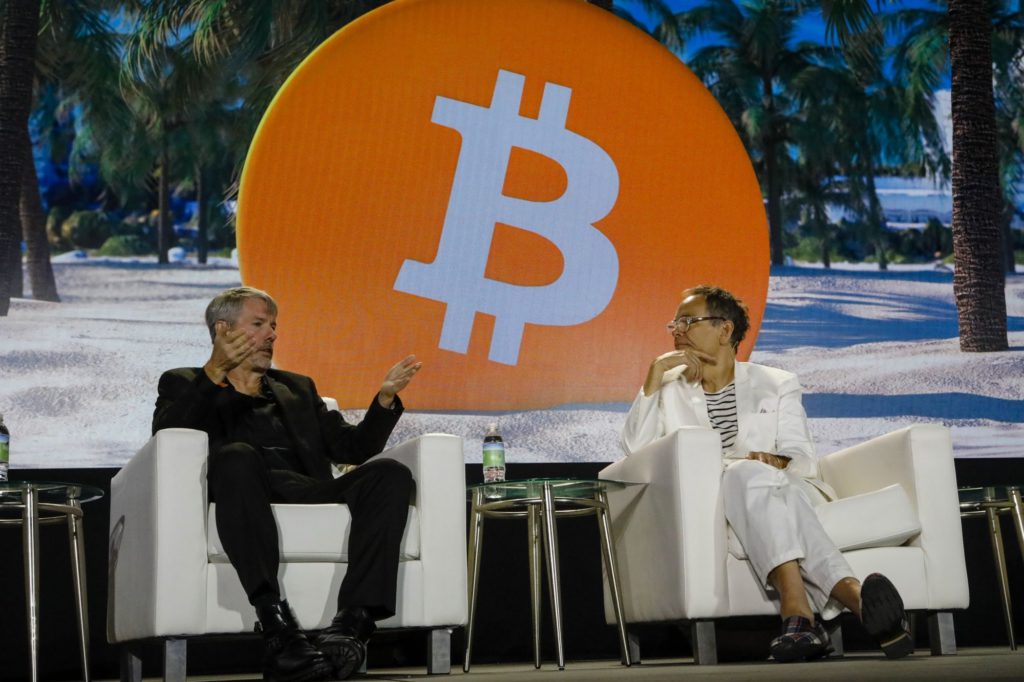
MicroStrategy Says It Purchased $6 Million in Bitcoin

(Bloomberg) — MicroStrategy Inc. says it purchased about $6 million in Bitcoin between Aug. 2 and Sept. 19.

The approximately 301 Bitcoin was acquired for about $6 million, at an average price of about $19,851, the company said in a US Securities and Exchange Commission filing Tuesday. The purchases were made with excess cash. 

As of Sept. 22, MicroStrategy and its subsidiaries held an about 130,000 Bitcoin, which were acquired at an aggregate purchase price of approximately $3.98 billion and an average purchase price of about $30,639 per token. 

Bitcoin fell about 2.1% to $10,114 as of 8:09 a.m. in New York.  

More stories like this are available on bloomberg.com

©2022 Bloomberg L.P.

Truck Duels Kick Off With Batteries Battling Fuel Cells For Top Spot

(Bloomberg) — Nikola President Michael Lohscheller was beaming when he unveiled the US startup’s fuel cell truck for the European market at the region’s biggest commercial-vehicle show this week.

Series production of Nikola’s Tre FCEV, which boasts a range of up to 500 miles and refueling times of 20 minutes, will start in early 2024 in Europe, Lohscheller told reporters Monday at the IAA Transportation event in Hanover, Germany. 

“We believe this truck will change the world as we know it today,” he said.

But Nikola this week also began taking orders in Europe for its battery-electric Tre, which is closer to series production. The US startup’s dual-technology approach — Lohscheller described it as “standing on two legs” — shows how most manufacturers haven’t yet made up their mind on which technology will become the dominant drivetrain for emissions-free commercial vehicles.

Companies like Nikola, Volvo and Daimler Truck are pursuing both battery-electric rigs and vehicles powered by hydrogen fuel cells, in a costly bet on two technologies. The odd player out is Volkswagen’s Traton, which argues that batteries will win out over fuel cells because they’re more energy-efficient.

Sweden’s Volvo, the second-biggest truckmaker behind Daimler, is touting renewable fuels as an alternative to diesel and a viable third option. The company argues they’ll be needed to help make the existing fleet of combustion-engine trucks more environmentally friendly.

“It will not be one solution that fits all,” said Jessica Sandstrom, a senior vice president of global product management at Volvo Trucks. “To reach zero emissions, there are some customers who will continue to operate with a combustion engine.”Daimler’s Mercedes-Benz Trucks is investing in both long-haul electric and hydrogen fuel cell trucks, a move that will allow the company to follow customer demand if it breaks in favor of one technology or the other. While lithium-ion batteries are generally considered ideal for short and medium-distance trips, hydrogen was long seen as the only alternative for longer, heavier hauls. Yet with surging raw material prices and a slowing global economy, the math on what works best can change quickly.

“It’s super hard to predict what will happen in 2030 and what will bring the most efficient cost of operation to the customer,” said Mercedes-Benz Trucks CEO Karin Radstrom, adding that she expects the availability of charging infrastructure and clean energy to determine how much share each technology will get.

“That’s why it’s so important to develop both in parallel,” she said.

Electric Perk

Have you ever driven an electric truck? Pretty much everyone my colleague William Wilkes and I talked to at the show told me it’s a major upgrade from a diesel rig. Fossil-fired trucks have a jerky first gear that can shake the driver about in stop-start traffic, and they often produce a rumbling noise on the road. Maneuvering an electric truck is smooth, it’s virtually silent and it emits no stinky fumes. 

“Many of the drivers that have driven an electric truck don’t want to go back to a diesel truck,” said Roger Alm, president of Volvo Trucks.

More stringent environmental protection rules may add to their attractiveness. In California, most trucks are allowed to idle for at most five minutes, meaning drivers waiting in line longer than that at LA port, for example, would have to turn off their AC, even when it’s really hot. Unless the battery is almost empty, that’s not an issue in an electric vehicle. 

Volvo is convinced battery rigs can help counter a painful truck-driver shortage that only worsened during the pandemic.

With their smooth ride experience, electric trucks “will be a competitive advantage to attract new drivers and keep the ones you have,” Sandstrom said.

More stories like this are available on bloomberg.com

©2022 Bloomberg L.P.

Salesforce Launches Marketplace for Carbon Emission Offsets

(Bloomberg) — Salesforce Inc. is launching a marketplace for carbon credits that will aggregate offset providers and rating agencies, aiming to reduce confusion about which offerings are legitimate.

Carbon credits, marketed as a way for companies to atone for their emissions by investing in climate-friendly actions like tree planting, are difficult to measure and verify. If companies have access to transparent pricing and multiple third-party ratings for each project, it will encourage them to make more effective investments in offsets, said Patrick Flynn, Salesforce’s global head of sustainability. “Because of the controversy, many organizations are cautious about taking action.”

There will be about 90 projects available at launch. Climate Impact Partners, Cloverly and Lune are among the carbon credit sellers, while Calyx Global and Sylvera will provide ratings. Stripe Inc. will process payments on the marketplace, said Nina Schoen, product director for Salesforce’s climate initiative, called Net Zero.

When a company, government or individual is responsible for emitting carbon dioxide, a carbon offset is supposed to allow them to remove the same amount of the greenhouse gas from the atmosphere by other means. Scientists have raised doubts about the practice, and several high-profile projects were revealed to be less effective than advertised.

For more: What Are Carbon Offsets and How Many Really Work?

Still, there is demand for the offsets. The marketplace expands Salesforce’s suite of green products. The company currently operates an emission accounting solution, Net Zero Cloud, which will be integrated with the new marketplace, though organizations do not need to be a customer of Net Zero Cloud to use the new feature, Schoen said. Offset quality ratings and prices aren’t behind paywalls and can be accessed without an account, which is “first of its kind,” Schoen said.

The marketplace will be available in the US next month and internationally in 2023. Salesforce’s fees for each transaction on the marketplace will be about 1%, Flynn said. 

More stories like this are available on bloomberg.com

©2022 Bloomberg L.P.
Close Bitnami banner
Bitnami