Bloomberg

El Salvador’s Bukele Seeks Re-Election Bolstered by Crime Fight

(Bloomberg) — El Salvador President Nayib Bukele — who made Bitcoin his nation’s legal currency and jailed tens of thousands of gang members — said Thursday he’ll seek a second five-year term, despite criticism from human rights groups and warnings the country is close to default.

In a speech on the nation’s independence day, the 41-year-old former mayor of San Salvador said he anticipated criticism from other countries over the decision to run again next year. 

“It’s certain that more than one developed country won’t agree with this decision,” Bukele said. “But they’re not the ones who get to decide. The people of El Salvador do.”

Bukele enjoys approval ratings that are among the highest of any leader in the Americas, including wide support for his hard line approach on crime. 

Read more: Taking Stock of El Salvador’s Bitcoin Gamble at One-Year Mark

A poll by Cid Gallup in April showed that 91% of those surveyed supported Bukele’s crackdown on criminal gangs that regularly put El Salvador near the top of the list in terms of most homicides per capita. Human rights groups, however, have criticized a lack of due process, arbitrary and violent arrests and deaths in custody. 

Ahead of Bukele’s announcement, El Salvador’s credit rating was downgraded on Thursday by Fitch Ratings, who said that its high current-account deficit and large upcoming amortizations on international debt make “default of some sort probable.” The new CCC rating puts the Central American nation on a par with war-ravaged Ukraine.

Read more: El Salvador Cut by Fitch as Default Becomes More ‘Probable’

More stories like this are available on bloomberg.com

©2022 Bloomberg L.P.

Korea’s Exports of Key Memory Chip Plummet as Demand Chills

(Bloomberg) — South Korea’s exports of its most lucrative memory chip fell by the most since 2019, indicating a deepening slump in technology demand central to global economic growth.

Shipments of dynamic random access memory fell 24.7% from a year earlier in August, compared with a 7% decline in the previous month, according to data released Friday by the trade ministry.

DRAM accounts for almost half of Korean exports of memory chips, and works with processors and other types of semiconductors to store and process information in a wide range of electronics.

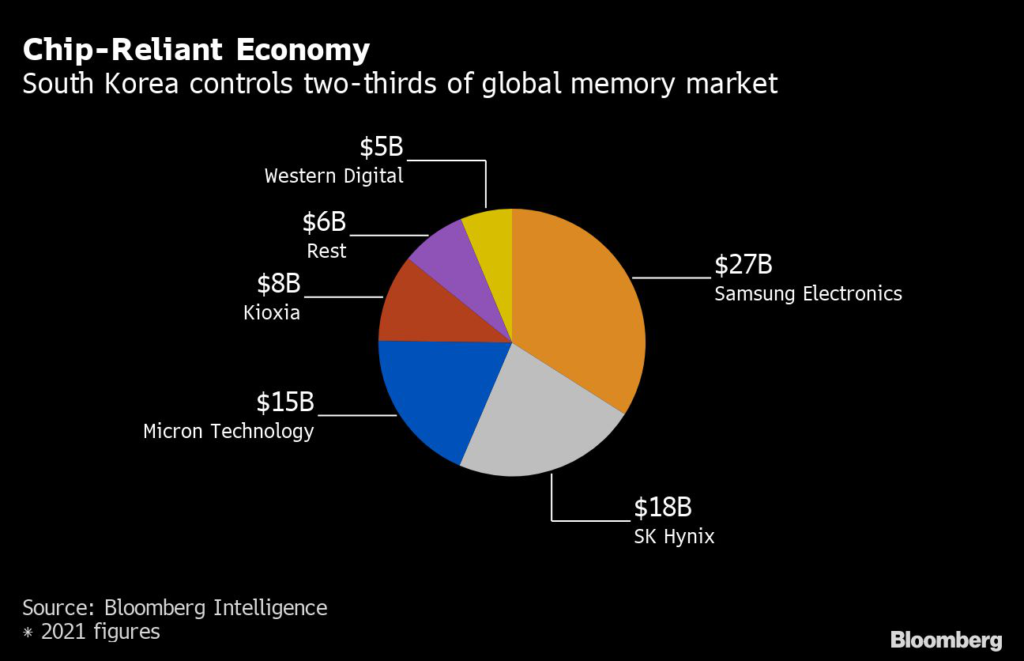
Samsung Electronics Co. and SK Hynix Inc., both based in Korea, control roughly two thirds of the world’s memory market. Their revenues were hit in 2019 when the memory-chip industry entered a bust cycle.

Korea’s tech exports, which account for a third of the country’s total shipments abroad, fell 4.6% in August, separate data from the ministry showed. Smartphones, displays and computers all declined in shipment value as consumer demand slackened, the ministry said.

A growing number of indicators suggest the world chip industry is cooling after years of a boom on pandemic demand for electronic devices such as laptops and tablets. Rapid central bank policy tightening to curb inflation is also fueling concerns of a recession.

The US-based Semiconductor Industry Association said earlier this month that global chip sales rose 7.3% from a year earlier in July, the seventh month of deceleration. Separately, the lead times for semiconductors were down again in August, according to Susquehanna Financial Group.

Economic slowdowns in China where the government is imposing strict Covid controls are another reason for the cooling. Tech exports to China fell 14.4% in August, the ministry said, pointing to the Shanghai lockdown among key factors.

Korea’s total exports grew last month by a single-digit figure for a third month while trade deficits snowballed to a record on a weakening won and high energy costs. The nation increasingly relies on imports of high-tech equipment and Trade Minister Ahn Duk-geun told Bloomberg this week that the depreciation of the won is more negative than positive for trade.

More stories like this are available on bloomberg.com

©2022 Bloomberg L.P.

Uber Probes Hacker’s Claim to Have Penetrated Internal Databases

(Bloomberg) — Uber Technologies Inc. has shut down internal Slack messaging as it investigates a cybersecurity breach by a hacker claiming to have accessed the company’s data.

Employees on Thursday received a Slack message from an unknown person claiming “I am a hacker,” according to one person with knowledge of the matter. The perpetrator co-opted a staff member’s account and claimed to have gained access also to internal databases, the person said. 

The company, which said on Twitter it’s contacted law enforcement, froze all Slack communications while it investigates the hacker’s claims. Uber’s ride-hailing and food delivery services appeared to be operating normally across the world, the people said.

Uber has run afoul of hackers before. It paid $148 million to settle claims related to a large-scale data breach that exposed the personal information of more than 25 million of its US users in 2016. The New York Times reported the latest hack earlier on Thursday.

An Uber representative confirmed a breach had occurred but declined to elaborate.


More stories like this are available on bloomberg.com

©2022 Bloomberg L.P.

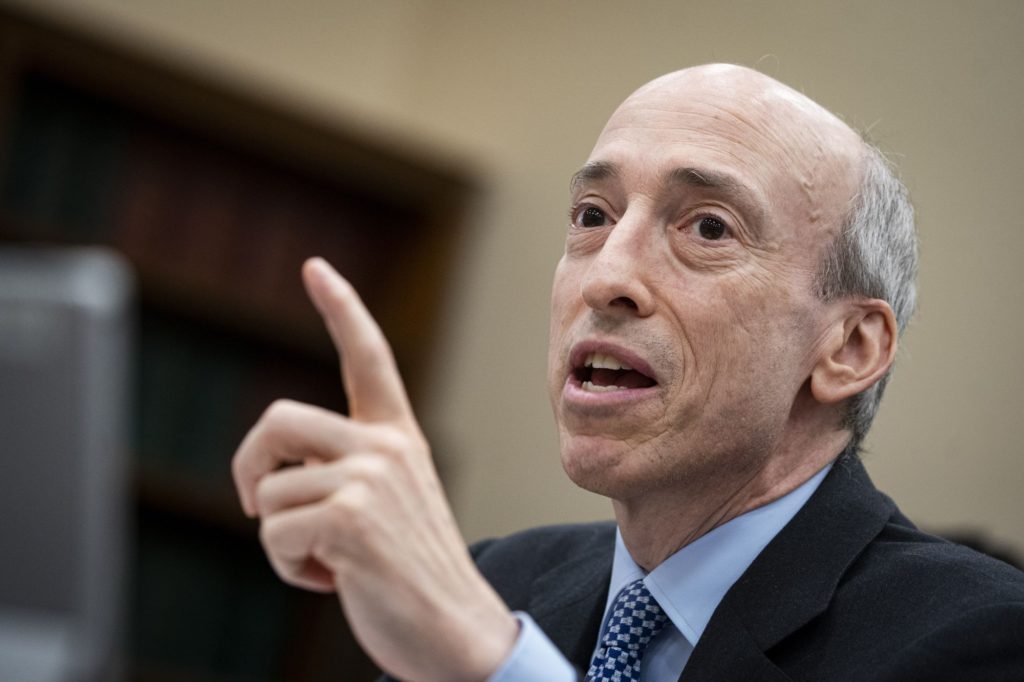
SEC Chair Gensler Raises Concerns Over ‘Staking’ Model on Ethereum

(Bloomberg) — Crypto investors who have been celebrating this week’s overhaul of Ethereum’s blockchain may have to deal with an unwelcome guest at their party: US Securities and Exchange Commission Chair Gary Gensler.

Gensler on Thursday signaled that a feature of the network’s software could lead to tokens being considered securities by the SEC. While Gensler was careful to say he wasn’t speaking about any digital coin specifically, his comments add to questions about the Wall Street regulator’s views on Ether, which is the second-biggest virtual currency.  

Gensler has said that Bitcoin, the largest cryptocurrency, isn’t covered by the agency’s securities rules. However, he’s been less unequivocal on Ether. That stance contrasts with that of the agency during the Trump administration and comments made by the top US derivatives regulator, which considers Ether to be a commodity — a legal label that places the token outside of the SEC’s purview. 

On Thursday, Gensler took issue with a feature of Ethereum’s new upgraded blockchain, which has been dubbed the “Merge.” He said that a process known as “proof-of-stake,” in which coin holders can earn financial rewards by allowing a network to use some of their assets, could fall under securities rules. Ether had used the “proof-of-work” method that Bitcoin uses to run its blockchain.

Crypto firms are seeking to avoid the security label because it carries investor-protection requirements that many say are incompatible with with the asset class. “There is a full disclosure obligation on these projects,” Gensler told reporters. 

Figuring out if the process of staking Ether — or earning a return by permitting the revamped Ethereum to deploy the coin — leads to a security involves complicated legal analysis, according to Brett Harrison, president of FTX.US. 

“Perhaps the staking in such a system might be considered an investment contract of some kind and that is really an open question,” Harrison said on Bloomberg Television.

Harrison added that there are multiple kinds of staking, adding to the complexity. These include directly participating in the network to get rewards, achieving the same goal indirectly and a very different opportunity set of putting coins into a decentralized finance protocol.

(Updates with FTX.US comments from the sixth paragraph.)

More stories like this are available on bloomberg.com

©2022 Bloomberg L.P.

Terra Founder Kwon Under More Pressure From Crypto Collapse

(Bloomberg) — Do Kwon, whose collapsed Terraform Labs cryptocurrency ecosystem sparked a meltdown in digital assets, faces being forced to return to South Korea after officials sought to have his passport revoked.

A request has been passed to the nation’s Foreign Ministry to scrap the travel document, the prosecutor’s office said Thursday. If the ministry accedes, Kwon — who prosecutors have said is in Singapore — in theory would have to return to Seoul within 14 days after receiving the notice of revocation.

The ministry said it’s evaluating the request and earlier indicated it’s possible Kwon can stay in Singapore without a passport. The latest steps came after a court in South Korea issued an arrest warrant for Kwon and five others on allegations that include violations of capital-markets law. 

Kwon couldn’t be reached for comment. A Terraform Labs spokesperson declined to comment.

Kwon found himself at the center of one of crypto’s biggest blowups when TerraUSD, also known as UST, crumbled from its dollar peg and brought down the ecosystem he had built. The $60 billion wipeout also saw the implosion of a related token known as Luna. The collapse in May shook faith in the digital-asset sector, which has yet to recover much of the losses.

Some investors in Luna have filed a complaint with local prosecutors alleging Kwon engaged in fraud and illegal fundraising, according to Han Sang Jun, a lawyer at Daegun. LKB & Partners also filed a complaint with South Korean prosecutors making similar allegations.

An estimated 280,000 South Koreans had invested in Luna, according to the Financial Services Commission, the country’s financial regulator. Kwon said in an interview with crypto media startup Coinage that he plans to cooperate with authorities when the time comes.

(Updates with Terraform Labs declining to comment in the fourth paragraph.)

More stories like this are available on bloomberg.com

©2022 Bloomberg L.P.

Adobe Shrugs Off Sticker Shock From $20 Billion Deal for Figma

(Bloomberg) — Adobe Systems Inc. spent $20 billion on its biggest acquisition ever of design software maker Figma Inc. to win the exact kind of consumers and small businesses the company has struggled to reach in recent years.

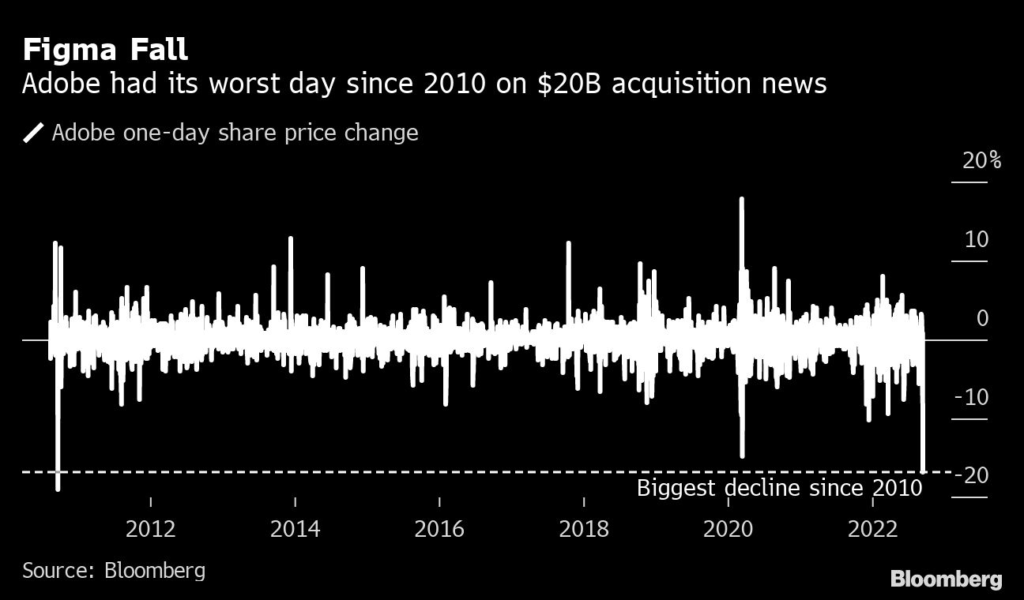
Wall Street panned the half-stock, half-cash purchase as too expensive, and Adobe shares suffered their worst day since 2010. But leaders from both companies said the deal buttressed their plans for the future.

Figma will help accelerate improvements to Adobe’s main flagship applications, bolster its appeal to creative arts professionals and help find new customers, David Wadhwani, president of Adobe’s digital media business, said Thursday in an interview with Bloomberg Television. “The market opportunity here is massive, this was a great time to make that play,” he said.

Investors have been increasingly skeptical about the future sales growth of Adobe’s products for design professionals, which increasingly have been seen as cumbersome, expensive and outdated. Upstarts like Figma, Lightricks Ltd. and Canva Inc., which offer more consumer-friendly services, have dented Adobe’s once-unquestioned dominance. The maker of Photoshop relied on acquisitions as it increased sales an average of about 20% a year since 2015 to an estimated $17 billion, but most of the purchases have been in adjacent business or new sectors such as marketing, e-commerce and analytics.

The fact that Adobe bought one of its creative software competitors suggests a “more competitive urgency, and a significant narrative change in M&A,” Citigroup analyst Tyler Radke wrote in a note.

Adobe’s announcement Thursday confirmed earlier reporting by Bloomberg. Wadhwani said talks between the two companies started a few months ago. The deal is the biggest for a closely held software company, according to data compiled by Bloomberg.

The shares plunged 17% after the deal was announced, sending Adobe’s valuation down to April 2020 levels, and making it the worst-performing company Thursday in the S&P 500.

San Francisco-based Figma was founded about a decade ago by Dylan Field and Evan Wallace. The company, which lets customers collaborate on software as they build it, “pioneered product design on the web,” Adobe and Figma said in announcing the deal. Figma expanded its customer base in recent years from software designers at big companies like Airbnb Inc. and Alphabet Inc.’s Google to individuals building games, maps and presentations, particularly on mobile phones. It has also attracted a loyal student following.

Field, who is chief executive officer, said the company could “choose our own destiny” by staying independent or joining Adobe. “We believe this accelerates the impact we can have,” he said in the joint Bloomberg TV interview with Adobe’s Wadhwani. 

The company was valued at $10 billion in its last funding round a year ago. Figma’s backers include venture capital firms Kleiner Perkins, Index Ventures and Greylock Partners.

Field said the more he learned about Adobe, the less he saw them as competitors, adding Adobe is more focused on marketing. 

“I grew up using Adobe software,” Field said. “So, the chance to help Adobe think about the next generation of creative tools, and how they are used collaboratively and what they mean in a web browser context — that’s a dream come true.”

The transaction is expected to close in 2023, pending regulatory clearance and other approvals, Adobe said. After closing, Field will continue to lead the Figma team, reporting to Wadhwani. Figma will continue to exist as a stand-alone product. 

The deal price was widely criticized by analysts. “We think the company overpaid for Figma, which indicates it was a defensive move,” wrote Oppenheimer’s Brian Schwartz in a note downgrading his price target for Adobe.

Adobe’s leadership was undeterred.

“We’re confident that if you look at this in the long run, it’s going to be a big value for their shareholders and our shareholders as well,” Adobe CEO Shantanu Narayen said in an earlier interview with Bloomberg.

More stories like this are available on bloomberg.com

©2022 Bloomberg L.P.

Binance Labs Boosts Investment in Blockchain Startup Aptos

(Bloomberg) — Binance Labs, the venture capital arm of the world’s biggest cryptocurrency exchange, is increasing its investment in Aptos Labs, a blockchain startup founded by former Meta Platforms Inc. employees who worked on the company’s failed Diem stablecoin project.

Binance Labs chose to add to its investment in Aptos in part because of the programming language the company is using to build its blockchain, according Yi He, co-founder of Binance and the head of Binance Labs. Called Move, the language was supposed to power the Diem blockchain, and “is different from BNB Chain and Solana and is more efficient and secure,” He said in an interview in Paris. 

“It is an opportunity to build the future,” she said. Aptos declined to comment on the new funding.

Binance announced its first investment in Aptos Labs in March. The Palo Alto, California-based company had recently raised $200 million at a more than $1 billion valuation from investors that included Andreessen Horowitz, Multicoin Capital and disgraced crypto hedge fund Three Arrows Capital. Aptos then raised another $150 million in July, more than doubling its valuation. 

Binance Labs is unable to disclose the amount of this latest investment, but the market value for Aptos Labs is estimated to be more than $4 billion, according to He. A spokesperson for Binance later said He’s estimate was wrong, but did not provide an updated valuation. 

He said recent hacks and network outages show the importance of blockchain infrastructure, noting that the company has also invested in Polygon.

Mysten Labs, an Aptos rival, said last week that it had raised $300 million at a more than $2 billion valuation. The company was also founded by ex-Meta employees who worked on Diem and uses the Move language for its blockchain.

(Adds statement from Binance in the fifth paragraph disputing He’s estimated valuation for Aptos.)

More stories like this are available on bloomberg.com

©2022 Bloomberg L.P.

Google Android Decision Encouraging ‘Win’ for EU, Vestager Says

(Bloomberg) — A European court ruling this week that upheld a record European Union antitrust fine against Alphabet Inc.’s Google over its Android mobile operating system represents a clear “win” for regulators who confront technology giants, said EU competition chief Margrethe Vestager. 

“This is a win,” Vestager said in an interview with Bloomberg TV Thursday. “A huge majority of the case is completely upheld, which means that the court has confirmed our view. Because of that, we also feel the encouragement to continue enforcing when it comes to Big Tech.” 

EU judges on Wednesday upheld the vast majority of the European Commission’s arguments against Google over Android, which regulators said cemented the dominance of the company’s search engine. They slightly reduced Google’s record-settling penalty to 4.1 billion euros ($4.1 billion) from 4.3 billion euros ($4.3 billion).

Vestager pointed out that the commission has ongoing competition inquiries into Apple Inc., Meta Platforms Inc. in addition to Google.

Wednesday’s ruling can be appealed to the bloc’s top court, the EU’s Court of Justice.

More stories like this are available on bloomberg.com

©2022 Bloomberg L.P.
Ethereum Faces ‘Blockchain Trilemma’ When ‘Merge’ Mania Cools

(Bloomberg) — After much celebration over the successful transition of Ethereum, the question remains what’s next for the most commercially-significant crypto project. 

The long-awaited software revision, termed the Merge, shifted the blockchain from a so-called proof-of-work system to a more energy efficient proof-of-stake method for securing the network. There was no changes related to network transaction costs or speed, which are common gripes among Ethereum users. 

Completing the upgrade without any software downtime is a brilliant engineering feat, said Harsh Rajat, the Mumbai-based co-founder of Ethereum Push Notification Service or EPNS. “Akin to changing the foundation of a skyscraper while it still remains standing!”

Now developers will address a key existential question. The Merge was the first step toward a series of upgrades on Ethereum to solve the scalability trilemma. After some point, the theory suggests that a blockchain has to compromise on one of its three key aspects — scalability, decentralization and security. And that a blockchain cannot have all three at the same time. 

Read More: The ‘Blockchain Trilemma’ That’s Holding Back Crypto: QuickTake

For Ethereum the first step to solve this problem was moving to POS with the merge and next comes four more phases of development.

  • The Surge: Implementation of sharding, a scaling solution which will lower the cost of bundled transactions on Ethereum.
  • The Verge: Introduction of ‘verkle trees,’ an update which will make the network more decentralized by making it easier for users to become validators.
  • The Purge: Elimination of historical data and technical debt.
  • The Splurge: Miscellaneous updates after the first four stages to ensure smooth functioning of the network.

“The ultimate aim for all these upgrades is to make Ethereum more scalable, faster and cheaper to use,” said Aditya Khanduri, head of marketing at Biconomy, a protocol that helps improve user onboarding and transaction experience on decentralized applications.   

“It’s hard to talk about the timelines of the following four stages because all of them are still under active research and development. But, in my opinion, it will easily take 2-3 years before all phases are complete,” said Sameep Singhania, co-creator of QuickSwap, a decentralized exchange built on Ethereum scaling solution Polygon.

The network will eventually be able to process 100,000 transactions per second after the completion of these five stages, according to Ethereum co-founder Vitalik Buterin.

In the meantime, more investors in Ether, the native token of the network, are expected to lock up their tokens in digital wallets that earn their owners a return under the new proof of stake format. But they won’t be able to take them out, at least not for a while.

Locked Ether plays a vital role on the upgraded network. Wallets with what’s being referred to as staked Ether are being used to help order network transactions. Currently, about 11% of Ether is already locked up — either directly or via providers such as Lido, Coinbase Global Inc. and Kraken — in staking wallets on the Beacon Chain of Ethereum that was used to test the process, according to blockchain analytics firm Nansen.

Ethereum will have to undergo yet another software change dubbed Shanghai, which is at least six months away, to enable withdrawals of the staked Ether. Even then, the withdrawals will be capped.

“After the Merge, the Ether locked in the staking contract would still not be available to withdraw,” said Kunal Goel, a research analyst at Messari.  

Ethereum developers are also working on something called EIP 4844, or Proto DankSharding, that seeks to minimize the high network transaction costs referred to by users as gas fees, Goel said. 

More stories like this are available on bloomberg.com

©2022 Bloomberg L.P.

Japan Fund Manager Mines Online Job Reviews to Pick Investments

(Bloomberg) — One of Japan’s largest asset managers is dissecting online job reviews to identify quality companies and boost investment returns.

Sumitomo Mitsui Trust Holdings Inc.’s asset management arm, which oversees 84.8 trillion yen ($591 billion), is increasingly using such information posted on websites to look for companies with sound governance and work practices, said Munehisa Matsumoto, general manager of the research department. 

“Alternative data is helping raise marginal returns,” Matsumoto said in an interview. Comments posted online about jobs and employers help investors find companies with cultural and organizational strengths, which tend to generate better results, he said.

Investment managers worldwide are turning to alternative data, which has become a multibillion-dollar industry after regulatory tightening made it more difficult to gather information using more conventional methods, such as direct communication with companies. 

Sumitomo Mitsui Trust Asset Management Co. is one of the few mainstream financial institutions to use such information in Japan, where the uptake has mostly been by hedge funds and other shorter-term investors, according to Masashi Tsujinaka, chief executive officer of Nowcast Inc., an alternative data provider. 

Mitsubishi UFJ Trust & Banking Corp.’s asset management division is also studying whether reviews posted at job placement websites can help aid its investment decisions, said Yuichiro Iwata, chief manager of advanced quantitative research and investment. 

Sumitomo Mitsui Trust Asset Management examines employees’ comments online about whether they feel motivated or find it easy to work at their companies, among other things, Matsumoto said. While it’s hard to quantify their specific impact on fund performance, job reviews are “working positively,” he added.

“Alternative data are probably usable for long-term or long-only investing since they not only help quicken our analysis but also deepen it,” he said. 

More stories like this are available on bloomberg.com

©2022 Bloomberg L.P.
Close Bitnami banner
Bitnami