Bloomberg

France’s Canal+ Doubles Stake in South Africa’s MultiChoice in a Year

(Bloomberg) — Part of French billionaire Vincent Bollore’s media empire has nearly doubled its stake in South African pay-TV company MultiChoice Group Ltd. following a collaboration between the two companies on local productions.

Vivendi SE-owned broadcaster Canal+ has gradually acquired tranches of shares and now owns 26% of the Johannesburg-based firm, compared with 15% a year ago, according to stock market filings, with the latest reported on Wednesday.

Canal+ initially bought a 6.5% holding in MultiChoice in October 2020, sparking market speculation of a potential buyout. The French firm has called the share buying a long-term investment and the two companies have collaborated on local productions such as “Blood Psalms,” a drama based on pre-colonial South African mythology. That’s helped to differentiate MultiChoice from larger rivals like Netflix Inc. with local content.

Read More: MultiChoice, Vivendi to Team Up on New Africa TV Productions

A spokeswoman for Canal+ declined to comment on the stakebuilding. 

Over the last few years, Bollore has accelerated media purchases, seeking to create a streaming and pay-TV empire with a goal to rank among the world’s top five paid-content providers by the end of this decade. The group is increasing its focus on Africa, with MultiChoice in the English-speaking part of the continent and Canal+ channels in the French-speaking area. It recently launched a daily TV soap as a sign of this effort.

Read More: Billionaire ‘French Murdoch’ Builds Own Right-Wing Media Empire

The purchases of MultiChoice shares look “opportunistic and value-driven rather than presaging a takeover attempt,” John Davies, a senior analyst at Bloomberg Intelligence, said in a note. 

A full deal for the holder of lucrative live-sport rights would be complicated by South African rules over foreign ownership of broadcasters and regulators would be unlikely to approve a takeover under the current setup, according to Davies. A deeper partnership could bring “modest financial benefits to MultiChoice,” he said.

MultiChoice shares gained 0.7% as of 2:14 p.m. in Johannesburg, and have gained 8.5% over the past 12 months. 

If Canal+ were to buy 35% or more of MultiChoice’s shares, it would trigger a mandatory offer to shareholders. 

More stories like this are available on bloomberg.com

©2022 Bloomberg L.P.

French Billionaire Uses Canal+ to Buy More Africa Pay-TV Stock

(Bloomberg) — Part of French billionaire Vincent Bollore’s media empire has nearly doubled its stake in South African pay-TV company MultiChoice Group Ltd. following a collaboration between the two companies on local productions.

Vivendi SE-owned broadcaster Canal+ has gradually acquired tranches of shares and now owns 26% of the Johannesburg-based firm, compared with 15% a year ago, according to stock market filings, with the latest reported on Wednesday.

Canal+ initially bought a 6.5% holding in MultiChoice in October 2020, sparking market speculation of a potential buyout. The French firm has called the share buying a long-term investment and the two companies have collaborated on local productions such as “Blood Psalms,” a drama based on pre-colonial South African mythology. That’s helped to differentiate MultiChoice from larger rivals like Netflix Inc. with local content.

Read More: MultiChoice, Vivendi to Team Up on New Africa TV Productions

A spokeswoman for Canal+ declined to comment on the stakebuilding. 

Over the last few years, Bollore has accelerated media purchases, seeking to create a streaming and pay-TV empire with a goal to rank among the world’s top five paid-content providers by the end of this decade. The group is increasing its focus on Africa, with MultiChoice in the English-speaking part of the continent and Canal+ channels in the French-speaking area. It recently launched a daily TV soap as a sign of this effort.

Read More: Billionaire ‘French Murdoch’ Builds Own Right-Wing Media Empire

The purchases of MultiChoice shares look “opportunistic and value-driven rather than presaging a takeover attempt,” John Davies, a senior analyst at Bloomberg Intelligence, said in a note. 

A full deal for the holder of lucrative live-sport rights would be complicated by South African rules over foreign ownership of broadcasters and regulators would be unlikely to approve a takeover under the current setup, according to Davies. A deeper partnership could bring “modest financial benefits to MultiChoice,” he said.

MultiChoice shares gained 0.7% as of 2:14 p.m. in Johannesburg, and have gained 8.5% over the past 12 months. 

If Canal+ were to buy 35% or more of MultiChoice’s shares, it would trigger a mandatory offer to shareholders. 

More stories like this are available on bloomberg.com

©2022 Bloomberg L.P.

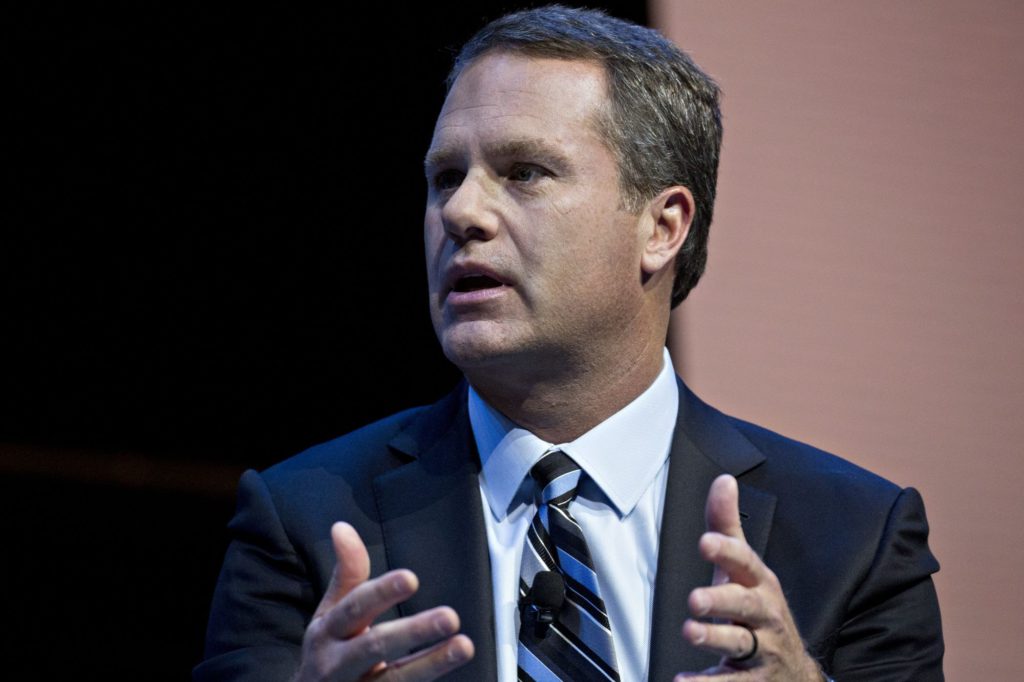
Milk, Diapers and Checking Accounts: Banking Comes to Walmart

(Bloomberg) — Coming soon from the world’s largest retailer: checking accounts.

A venture that’s majority-backed by Walmart Inc. is poised to emerge from the shadows this month with digital bank accounts meant for the retail giant’s 1.6 million US employees and legions of weekly shoppers. In coming weeks, the company will start offering the accounts to thousands of workers and a small percentage of its online customers as part of an initial beta test of the new service, according to people with knowledge of the matter.

The move heralds the arrival of Walmart’s fintech push after years of fitful efforts to expand its financial-services offerings. Eventually, One — the financial-technology startup Walmart is leaning on for the effort — is hoping to offer a bevy of other products, from loans to investing, in an effort to become a one-stop shop for consumers’ financial needs, the people said. Watching closely will be lawmakers, regulators and Wall Street titans.

Representatives for Walmart and One declined to comment.

At One, the work is being led by Omer Ismail, a former Goldman Sachs Group Inc. partner who left his post as head of the firm’s consumer bank in early 2021 to become chief executive officer of the independent fintech startup Walmart formed with Ribbit Capital. At the time, Walmart was vague about its intentions with the venture, saying only it was “designed to develop and offer modern, innovative and affordable financial solutions.”

Nearly two years later, those ambitions have begun to take shape. In January, the venture announced it would acquire One Finance Inc., which operates a digital banking account, and fellow fintech Even Responsible Finance Inc., which provides workers with early access to their wages.  

The combined companies, which have operated under the One name since the deals were completed in April, had 200 employees and more than $250 million in cash on their balance sheet at the time of the close. One has since hired 100 additional staffers, including Afterpay Ltd.’s Laura Nadler as chief financial officer and Apple Inc.’s Raffi Vartkessian as head of customer operations. 

One operates as a completely independent company, though it is majority-owned by Bentonville, Arkansas-based Walmart. John Furner, chief executive officer of Walmart US, sits on One’s board. 

So far, much of the work has been done from a WeWork in Manhattan’s tony Tribeca neighborhood, though staffers are scattered in offices in San Francisco and Sacramento, California, as well. 

Digital Opportunity

Walmart’s interest in financial services is nothing new. The company’s MoneyCenter locations already allow customers to cash checks, access tax-preparation services and send money overseas through partners such as MoneyGram International Inc. and Euronet Worldwide Inc.’s Ria. The retail giant also already offers a bevy of credit and prepaid debit cards through lenders including Capital One Financial Corp., Synchrony Financial and Green Dot Corp.

But the company hasn’t been shy about setting more ambitious goals. 

“We’ve got a pretty big financial services business, but I would characterize it as being analog, and the opportunity to make it digital is right there in front of us,” Walmart Chief Executive Officer Doug McMillon said last year at an investor conference. “There are so many digital products that we can go build that will help people with managing their family’s expenses and their accounts and ultimately, hopefully, build wealth.”

In 2005, Walmart shocked critics when it applied to be an industrial bank in Utah. Back then, Walmart said it wasn’t seeking to open bank branches; rather, it was hoping to use the charter to process credit and debit card transactions internally, a move that would have saved it millions of dollars a year. After two years and several delays, Walmart withdrew its application.

This time around, the retailer has opted for a different path. The One venture has long relied on a partnership with Coastal Community Bank to issue its debit card and provide other banking services. The company plans to continue partnering with Coastal Community for those activities, according to one of the people. 

Walmart’s Aspirations

With Walmart, One has access to a retail behemoth with 5,335 stores across the US — more locations than any of the four biggest US banks has. The company has touted 150 million weekly customers and says more than 90% of the US population lives within a 10-minute drive of a Walmart store.

That means One will have to spend far less than fintech rivals on marketing and other customer-acquisition costs as it plots its expansion. 

“Given the eyeballs that we have and the number of people who transact with us every week, customer-acquisition cost is actually something we already bring to the table,” Brett Biggs, then Walmart’s chief financial officer, said at an investor conference in March. “We should have lower customer-acquisition costs than other companies like that.”

The One venture is hoping to lure shoppers with discounts on purchases. The company will soon revamp the One app to offer shoppers 2% back for every dollar spent at drugstores, gas stations and Walmart itself, according to one of the people familiar with the matter. For Walmart employees, the venture promises faster access to wages — at no cost to the workers. 

“We want to be the best retailer — the first, best place where people come to shop,” McMillon has said. “But we also have aspirations to help improve their lives as it relates to health care and financial services — help families reduce the cost of money, save for the future.”

More stories like this are available on bloomberg.com

©2022 Bloomberg L.P.

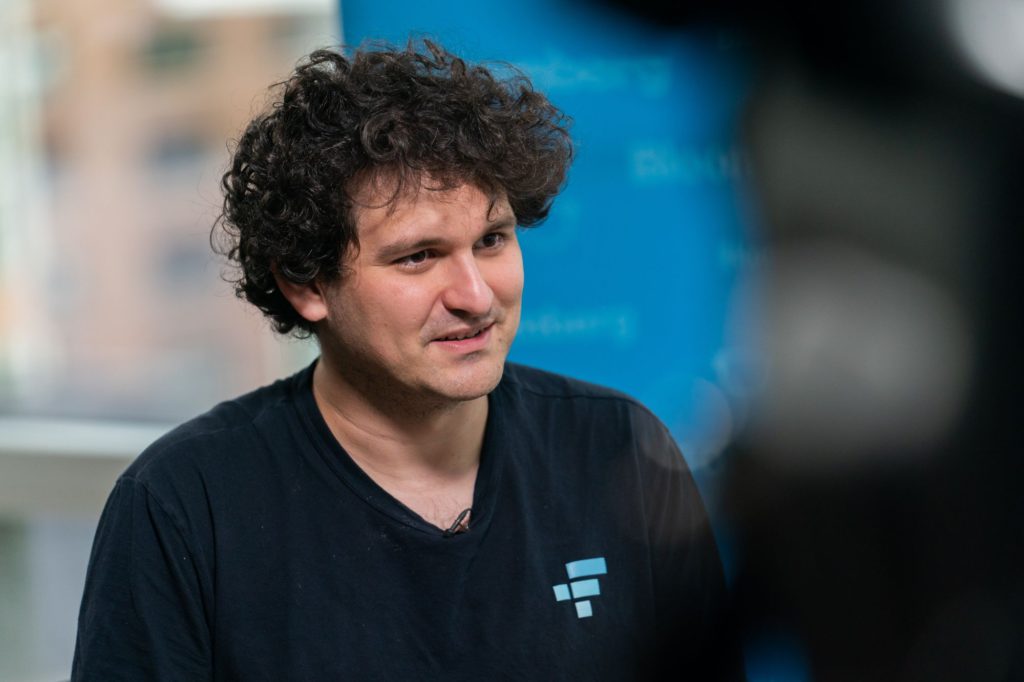
Crypto Quant Shop With Ties to FTX Powers Bankman-Fried’s Empire

(Bloomberg) — To the uninitiated, Alameda Research sounds more like a Silicon Valley robotics lab than a crypto trading powerhouse.

Even as its billionaire co-founder Sam Bankman-Fried graces the pages of Vogue and Vanity Fair, and sister company FTX spends millions stamping its logo on stadiums and sports gear, the Bahamas-based quant shop is barely known outside of crypto circles.

That’s just the way Alameda likes it — in fact, its name was specifically chosen to not draw attention.

In recent months, though, it’s gotten harder for Alameda to fly under the radar.

After starting off as a lucrative arbitrage trading firm, Alameda has transformed itself into one of the largest market makers of digital tokens globally. With a staff of only 30, it generated about $1 billion in profit last year alone, putting it on par with Wall Street mainstays, including some of the biggest traders of US stocks. And it has quickly become a force in everything from decentralized finance to venture investing and even  distressed lending.

As its influence spreads, so have concerns over potential conflicts of interest — particularly its relationship with FTX, the world’s second-largest cryptocurrency exchange. At a minimum, some say Alameda is able to benefit from a dearth of regulation, a claim that carries even more weight as Bankman-Fried strives to use his position and influence in the crypto community to shape US oversight of the sector.

FTX and Alameda “have been able to benefit from a regulatory gap that has allowed them to trade and profit from cryptocurrencies without having to follow the same rules as traditional financial institutions,” said Cory Klippsten, chief executive officer of startup Swan Bitcoin.

Amplifying these concerns, the collapse in crypto has revealed a tangle of interconnections between Alameda, FTX and the broader virtual-currency markets — and a larger role behind the scenes for both firms than many had previously known.

In interviews, Bankman-Fried, 30, and Alameda CEO Caroline Ellison, 27, who took over last year when Bankman-Fried shifted to FTX full-time, say that the companies have strict barriers in place when it comes to information and resource sharing.

“Alameda is a wholly separate entity,” said Bankman-Fried, who’s estimated to own more than 50% of FTX, based on the firm’s fundraising history, and almost all of Alameda. It sends orders and accesses customer information the same way other users do, he added.

To be clear, the concerns are to this point largely theoretical — no one claims to have evidence of preferential treatment. But market participants, many of whom would only speak on background given Alameda and FTX’s outsized roles in the industry,  are nonetheless concerned about the potential for unfair advantage.

Prop Shop

Questions persist, in part, because the lives of the firms’ leadership and employees are so deeply entwined.

Bankman-Fried and Ellison, along with roughly eight other colleagues, until recently shared an apartment not far from FTX and Alameda’s offices. Gary Wang, who co-founded Alameda with Bankman-Fried, is the chief technology officer at FTX, and many of their co-workers live and socialize together in the Bahamas, where FTX is also headquartered.

“We’re arm’s length and don’t get any different treatment from other market makers,” said Ellison, who’s leading Alameda following the departure of co-CEO  Sam Trabucco last month.

Ellison, much like the company she runs, isn’t one for the limelight. The executive, who tends to avoid interviews and posting on social media, joined Alameda in 2018, a few months after its launch. Initially, it was little more than a proprietary trading shop made up of a handful of young alums from quantitative firms including Jane Street and Susquehanna.

One of its initial strategies sought to capitalize off of price differences between cryptocurrencies in the US and Japan, where Bitcoin traded at a roughly 10% premium. At the peak, Alameda was sending $15 million between the two countries daily and generating $1.5 million in profit. Within a few weeks the price gap disappeared, but not before the company had earned about $20 million.

Read more: A 30-Year-Old Crypto Billionaire Wants to Give His Fortune Away

As crypto expanded in popularity and attracted more professional investors, the arbitrage opportunities became less lucrative. Partly in response, and partly as a way to reinvest their winnings, Bankman-Fried and company launched FTX, and Alameda began shifting its focus from arbitrage to market making.

Nascent Regulation

Whereas exchanges like FTX make money via transaction fees and the interest on loans to traders, Alameda generates income from buying and selling tokens — profiting from the spread between what it pays and what it offers.

In traditional financial markets — on stock exchanges, for instance — the two lines of business are usually unaffiliated, helping ensure competition among stakeholders and lower prices for customers.

In crypto, regulation is less defined. Disclosure rules or even industry norms that discourage close ties between a market center and a trading operation have yet to develop. In the case of FTX and Alameda, it’s as if the New York Stock Exchange and market-making giant Citadel Securities shared the same owner.

Having exchanges and market makers with close ties and financial interests is “not conducive to being a fair marketplace,” said Larry Tabb, head of market-structure research at Bloomberg Intelligence, speaking broadly. There are “reasons to split up the functions, to make sure everyone is on the up and up. When you consolidate and decompress divisions, you get inherent conflicts.”

More on Sam Bankman-Fried’s Crypto Realm:

  • Sam Bankman-Fried Expands Crypto Empire During $2 Trillion Rout
  • Crypto Billionaires Tempt Antitrust Fate: Bloomberg Crypto
  • Sam Bankman-Fried Says His Crypto Bailouts Had ‘Mixed Results’
  • Bankman-Fried’s Crypto Firm Alameda Is All Things to Voyager

Bankman-Fried says that while Alameda once was the largest trader on FTX — a situation born out of the exchange’s limited access to liquidity in its early years — its role has lessened over time, to the point that it’s no longer the platform’s biggest market maker.

The full scope of Alameda’s current market-making activity on FTX is difficult to gauge. Trading happening on crypto exchanges is not typically recorded on blockchains, the public ledgers that track transactions of cryptocurrencies. Instead, buying and selling on centralized digital asset venues is normally recorded on the order books of exchanges. While bids, offers and volume data is public, information on who’s behind the trades is not, making it hard to determine which parties are the most active.

Public blockchains do, however, record flows of cryptocurrencies into wallets that analytics firms can identify as belonging to exchanges. So data gathered from analyzing on-chain activity — transactions recorded on blockchains — can help provide a glimpse into the flows of assets between FTX and Alameda.

By this limited measure of activity, Alameda remains a large player on FTX.  Between June 1st and July 22nd, Alameda’s known wallets were the largest stablecoin depositors and sources of liquidity to all of FTX’s known wallet addresses, according to data provided to Bloomberg by analytics firm AnChain.ai (stablecoins, typically pegged 1-for-1 with a dollar, are the most actively traded virtual tokens as they function as a bridge between hard currencies and crypto assets.)

Over the period analyzed, Alameda accounted for more than 10% of all transfers involving Tether, the most widely held stablecoin globally, and 30% of all USD Coin transfers, the second most widely held, the data show.

Trades via FTX’s order book all go through the same process for matching with counterparties, and Alameda operates under the same terms and conditions as other comparable users, an FTX spokesperson said in response to questions, noting that Alameda has been one of the larger liquidity providers for stablecoins on all platforms for many years.

For a QuickTake explainer on stablecoins, click here

More broadly, FTX appears to be an exchange of choice for Alameda. About 50% of Alameda’s deposit and withdrawal volume since early 2018 has flown through FTX,  according to data on the platform of Arkham, a crypto intelligence firm that builds software to decloak anonymous transactions.

Similarly, 22% of on-chain deposits and withdrawals to FTX digital wallets interact with wallets belonging to Alameda, the data show. In contrast, only 4% of the on-chain volume associated with deposit addresses and digital wallets on  Binance, the biggest crypto exchange, interact with Alameda.

A spokesperson for Alameda declined to comment on the data.

The figures don’t show whether Alameda is the largest market maker on FTX, as the exchange’s full order book data with identifiers would be required to make that determination. But they do show that a significant amount of digital assets continue to flow between FTX and Alameda.

Based on Alameda’s own data, it has averaged about 2.15% of overall two-sided transaction volume on FTX this year, the firm said.

“We definitely have a Chinese wall in terms of information sharing to ensure that no one in Alameda would get customer information from FTX or anything like that, or any sort of special treatment from FTX,” Ellison said. “It’s very important for FTX to be perceived as a fair, neutral marketplace where everyone gets an equal shot.”

The concern isn’t necessarily over Alameda’s market share on FTX, but also the fact that there are fewer regulatory guardrails between the two to foster transparency and prevent potential conflicts of interest compared to traditional finance.

Most crypto platforms such as FTX aren’t registered with the US Securities and Exchange Commission. Registering with the SEC comes with additional oversight from the watchdog, along with disclosures about finances, ownership, users and protocols.

“The big difference between crypto and equities is that in equities, you have policies, procedures, and a regulator that will investigate,” said David Weisberger, co-founder of crypto trading platform CoinRoutes. In crypto, “there is a clear case for having a regulator to prove that potential conflicts aren’t happening, and to stop them from happening.”

SEC Chair Gary Gensler in late July said that the agency is considering whether to address potential conflicts of interest when crypto platforms also serve as market-makers, after previously raising concerns that some platforms are shirking rules and may be betting against their own customers.  He didn’t single out any firms by name.

Bankman-Fried notes that FTX’s global reach means that it is among the most regulated exchanges in the world. In addition to being registered with multiple US federal agencies, it’s authorized by financial authorities in the European Union, Japan, Australia, Switzerland, Dubai and the Bahamas, among others.

“Crypto has been substantially more lightly regulated with much less oversight than traditional finance, but I don’t think it’s that’s actually true of FTX,” he said.

Market watchers are quick to point out that being under the supervision of authorities from the Bahamas is different than falling under the purview of the SEC. 

Read more: SEC’s Gensler Says Crypto Exchanges Trading Against Clients

Alameda, in fact, was originally based in Berkeley, California, before uprooting for Hong Kong and ultimately the more crypto-friendly Caribbean.

The SEC’s regulatory ambitions have coincided with Bankman-Fried’s recent efforts to be at the vanguard of establishing federal oversight for the industry, pushing what governance should look like and who should be in charge. 

He’s traveled frequently to Washington, spent millions on lobbyists, and has testified before Congress as an advocate for the industry, arguing for a bigger role for the U.S. Commodity Futures Trading Commission, widely viewed as friendlier to the industry than the SEC.

FTX US, the American affiliate of FTX, is actively engaged in talks with the SEC about registering  with the regulator once a framework for digital-asset exchanges is established, the spokesperson for FTX said.

DeFi, Venture

Any perceived lack of oversight hasn’t stopped traders from flocking to FTX. The company reported $719 billion in spot trading volume in 2021, a 2,400% increase from the previous year.

Meanwhile Alameda has branched further out through the crypto ecosystem.

Alameda said in February that it would borrow up to $750 million from TrueFi, a crypto lending platform that allows investors to earn a return in exchange for staking their tokens to borrowers. The funds were to finance some of its $5 billion in daily trading activity, “a double-digit percentage” of which takes place on DeFi applications rather than centralized exchanges, Alameda said at the time.

On the venture front, the firm has backed some of the biggest up and comers in crypto, including Anchorage Digital, a federally chartered crypto bank, and Magic Eden, the largest nonfungible token marketplace on the Solana blockchain.

Combined, Alameda, FTX and Bankman-Fried have made 117 investments since 2020, according to data provider CBInsights.

Alameda’s venture operations were recently shifted to FTX’s startup investment arm FTX Ventures, Bloomberg reported last month.

As the rout in crypto worsened earlier this year, the bankruptcy filings of firms including Voyager Digital and Celsius Network shed further light on Alameda’s vast industry influence.

Alameda extended a $485 million credit line to Voyager Digital just days before the broker sought bankruptcy protection (and before it could tap the full loan), a deal Bankman-Fried was actively involved in. It also owed Voyager Digital at the time, while simultaneously being one of its biggest shareholders. Alameda is also listed as a creditor for Celsius.

Alameda and FTX jointly offered to buy much of Voyager Digital’s assets, an offer the bankrupt company referred to as a “low-ball bid” in a court filing.

“Alameda is probably the largest discretionary book of capital in crypto,” said Kyle Samani, managing partner at crypto venture capital firm Multicoin Capital, which invested in FTX. “They had a lot of cash, and they are now in a position to go shopping for assets at very, very good prices.”

More stories like this are available on bloomberg.com

©2022 Bloomberg L.P.

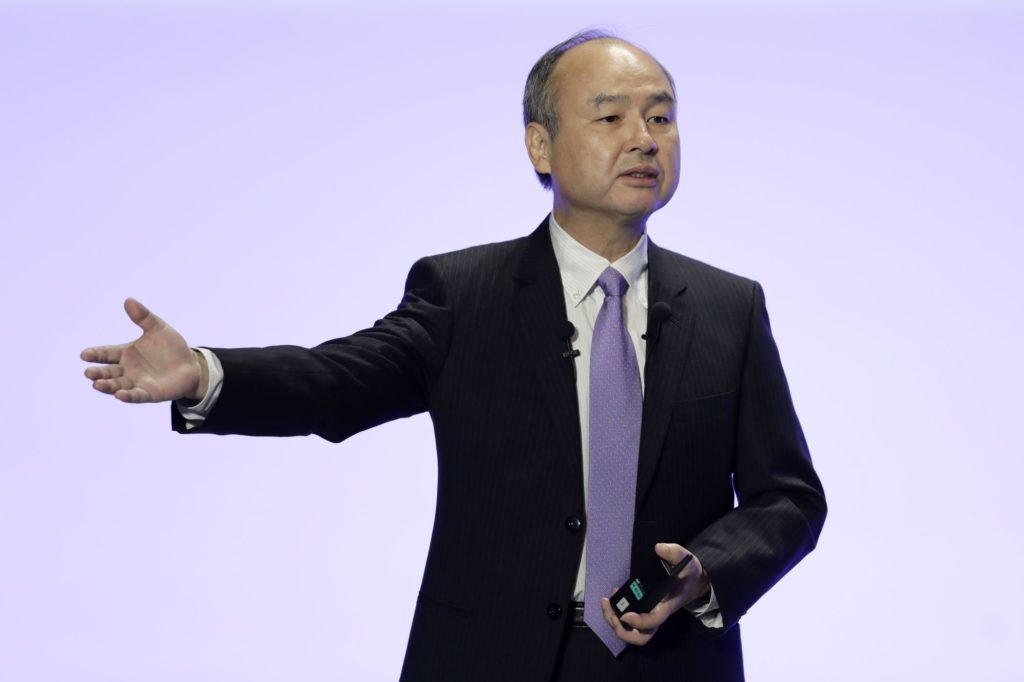
SoftBank’s Son Discusses Setting Up Third Vision Fund

(Bloomberg) — SoftBank Group Corp. founder Masayoshi Son has revived discussions of setting up a third Vision Fund, weeks after apologizing for the disappointing performance of his first two funds, according to people familiar with the matter. 

The 65-year-old entrepreneur has raised billions of dollars in cash recently and sees another startup fund as one of several possible priorities for the money, said the people, asking not to be identified because the matter is private. It’s not yet clear how much capital Son would want to inject into a third fund, they said. The first Vision Fund was slightly less than $100 billion with outside investors such as Saudi Arabia’s Public Investment Fund, while the second has over $40 billion and was solely financed by SoftBank.

A SoftBank spokesman did not comment in time for publication.

After unveiling plans for the initial Vision Fund, Son said he anticipated raising similarly sized funds every two to three years. But he then made a series of disastrous mistakes, including investing in WeWork Inc., Wirecard AG and Greensill Capital. The plunge in tech stocks this year has prompted SoftBank to write down its portfolio, with more than $40 billion in losses in the past two quarters. 

Son, a self-made billionaire who founded his company four decades ago, prides himself on his contrarian business strategies. He set up the first Vision Fund in part because he thought traditional venture firms were too stodgy and conservative. He may see the current moment — with tumbling stock prices and fearful investors — as just the right moment to prepare for big bets. 

SoftBank had more than $50 billion in cash and equivalents on its balance sheet at the end of June, and that hoard has grown to more than $60 billion as the company sold down part of its stake in Alibaba Group Holding Ltd., one of the people said. It’s unclear what other options Son is considering for his money, but he has repeatedly talked internally about taking SoftBank private.

If Son decides to proceed with a Vision Fund 3, he’ll have to overcome several hurdles. For one, his performance is subpar compared to the venture firms he hoped to best. The internal rate of return for the first Vision Fund’s limited partners was just 11% through March of this year, compared with an average of about 38% for the industry, according to the investment data firm Preqin. The second Vision Fund’s IRR is 0%, compared with an average of 45%. 

In addition, it would be awkward for Son to unveil a new fund just as he lays off employees. SoftBank is planning to cut at least 20% of staff at the Vision Fund operation, Bloomberg News reported this month.

The Wall Street Journal first reported news regarding the potential third Vision Fund.

More stories like this are available on bloomberg.com

©2022 Bloomberg L.P.

Hollywood Producer Behind ‘The Dark Knight’ Seeks $5 Billion for New Fund

(Bloomberg) — Thomas Tull, the billionaire who started the production studio behind “The Dark Knight” and “Dune,” is raising money for a private investment fund that will count a unit of Guggenheim Partners among its biggest backers.

The US Innovative Technology Fund is seeking $3 billion to $5 billion to invest in companies catering to the defense industry and the commercial sector, according to a fundraising document seen by Bloomberg.

Tull, who runs his own investment holding company known as Tulco, will be chairman of the new fund that will focus on growth- and early-stage companies in industries including quantum computing, artificial intelligence, cyber, satellites, biotechnology and space. The new fund is not affiliated with Tulco, according a person familiar with the matter, who asked not to be identified discussing the fundraising effort.

A spokesman for Guggenheim declined to comment, as did a Tull representative.

The fund aims to invest in technologies to put the US at a strategic advantage to global rivals, particularly China, whose military investments and innovation “threaten the US-led global order that has been in place since World War II,” according the document. The advisory board will count investors including Guggenheim’s Scott Minerd, Jim Breyer and venture capitalist Joe Lonsdale. 

The new fund’s advisers will also have longtime government experience, including Ryan McCarthy, former Secretary of the Army, and Rear Admiral Wyman Howard, commander of Naval Special Warfare Command. 

To read more about Tull, click here.

The fund “intends to leverage its knowledge, relationships and ongoing communication with the US Department of Defense and Congress, together with its financial and national security expertise, with the objective of investing in and rapidly scaling dual-purpose technology companies with proven national security and commercial sector use,” according to the document.

Tull sold the film and TV company he founded, Legendary Entertainment, to China’s Dalian Wanda Group in 2016 for more than $3.5 billion. He was known for using data analytics for the production, marketing and distribution of multiple blockbuster films, including “Inception” and “The Dark Knight Rises.” 

He then founded Tulco to focus on AI, machine learning and analytics to help grow companies. The firm has backed medical scrubs supplier FIGS and insurance brokerage Acrisure, which raised money earlier this year at a $23 billion valuation and counts Guggenheim Investments as a backer.

More stories like this are available on bloomberg.com

©2022 Bloomberg L.P.
Terra Co-Founder Do Kwon Faces Arrest Warrant in South Korea

(Bloomberg) — A court in South Korea issued an arrest warrant for Do Kwon, the founder of the Terraform Labs cryptocurrency ecosystem, whose implosion earlier this year sparked a global crypto rout.

The court in Seoul issued a warrant for Do Kwon and five others on allegations that include violations of the nation’s capital markets law, according to a text message from the prosecutor’s office. 

All six individuals are located in Singapore, the prosecutor’s office said. Do Kwon didn’t immediately reply to an email seeking comment.

He found himself at the center of one of crypto’s biggest blowups when TerraUSD, also known as UST, crumbled from its dollar peg and brought down the ecosystem he had built. The collapse in May shook faith in the digital-asset sector, which has yet to recover much of the losses.

Do Kwon’s followers referred to themselves as “Lunatics” in reference to Luna, another token that was part of the ecosystem he helped to create. The prices of both tokens tumbled to near zero, a shadow of the combined $60 billion they once commanded.

After the crash Do Kwon moved on to create a new version of Luna. The price of the new token fell as much as 45% to $2.40 following news of the warrant, according to data from CoinGecko. The coin’s market cap fell 42% to $413.2 million.

Terra’s unraveling triggered investigations in South Korea and the US, as well as renewed regulatory scrutiny of stablecoins — digital tokens that are pegged to an asset like the dollar. Stablecoins are a popular vehicle for investors seeking to park cash away from more volatile coins, and they make it easier to move funds onto crypto exchanges.

In July, prosecutors raided the home of Terraform Labs co-founder Daniel Shin as the probe into allegations of illegal activity behind the collapse of TerraUSD deepened.

Kwon has said he plans to cooperate when the time comes. In an interview with crypto media startup Coinage that floated the prospect of jail time, Kwon said, “Life is long.”   

(Updates with price move of new Luna token in paragraph 6)

More stories like this are available on bloomberg.com

©2022 Bloomberg L.P.
VW Software Issues Point to iOS and Android-Like Future for Cars

(Bloomberg) —

On his last day as Volkswagen’s chief executive officer, Herbert Diess shared footage from his farewell dinner. The video clip captures the 63-year-old grabbing a microphone, asking his colleagues to gather a little closer and then making a prediction: Other old-guard manufacturers will have trouble with software just as VW has.

“Where we are struggling through,” Diess said, “that will be the same for everybody else.”

The comment was a nod to issues many VW owners are having with their vehicles, from freezing touchscreens to buggy driver-assistance functions customers are opting to just turn off. Trouble at the company’s software unit Cariad is delaying crucial new models and one of the major reasons Diess was forced to turn over the keys this month to new CEO Oliver Blume.

While traditional carmakers have been quickly retooling factories to make EVs and investing heavily in battery-making capacity, their software efforts appear more hit-and-miss. The sheer amount of new in-vehicle digital features is expected to create fresh revenue streams and boost profit margins. Manufacturers are going to have a hard time reaping those potential rewards without faster software development and smoother user experiences.

We spoke about the car industry’s tech push with Jan Becker, the CEO and co-founder of Palo Alto, California-based Apex.AI, which has developed an operating system to act as a base for specific software from vehicle manufacturers. Apex.AI’s partners include Toyota, Volvo Cars and Jaguar Land Rover, as well as several major suppliers.

Here are excerpts from the interview, edited for length and clarity.

Why do automakers like VW seem to be having more trouble with software than switching to battery power?

It’s easier to master electrification because that’s a different way of converting energy, and one that makes vehicles less complex.

Modern software is a completely new area of competence that needs to be built up from scratch, unlike the ongoing development of existing skills. What we’re seeing now is a departure from how things were done before, when a carmaker bought systems from suppliers, such as braking or steering, that already contained the software. So previously, the software expertise was primarily with the supplier rather than the carmaker.

What was your reaction to Herbert Diess’s replacement, which came after mounting troubles at VW’s Cariad unit?

A lot of what he did with regard to software were positive developments. Setting up a dedicated unit was the right move, and so was focusing the whole company on the growing importance of this technology.

Has electrification been supplanted by a focus on software development? And if so, why?

The focus has moved on since all leading manufacturers have realized that the lion’s share of future innovation in vehicles will come from software — estimates are at around 80%. That’s partly because the traditional engineering features like braking systems, steering, chassis, are all fully developed. And since vehicle makers want to be innovation owners, they will now have to master software.

Different carmakers are going at this at different speeds. What regional differences do you see?

In Europe and particularly in Germany, carmakers are most aware that they have to develop software expertise and that they need a solid, clean base operating system for their vehicles upon which they can then establish software systems. The struggles with the VW ID.3 clearly demonstrated the need for such a platform. It’s a huge topic in Germany, more so than anywhere else.

It’s not quite the same in Japan, where Toyota — which, like VW, has a dedicated software unit — is the innovation leader. From there, technology usually quickly trickles down to the other manufacturers.

In the US, Tesla’s unique selling point is the car built around a software platform, while the traditional carmakers are less advanced.

China has been pushing its homegrown tech companies, with products like WeChat used almost exclusively in the country. What is this going to mean for future vehicle operating systems?

China’s government is likely to push for vehicle software solutions that at least keep the data generated within the country. The example of Tesla vehicles being blocked from entering certain areas due to concerns about their cameras collecting sensitive data is a good indicator.

So how will this race pan out?

In vehicle software, I think what we’ll see is a similar development like we did in mobile phones. There will be a dominant player, the equivalent of Apple, that is first to market with an operating system delivering a superior user experience.

That’s where we currently have Tesla. They were first to market with a vehicle with a central computer where all the innovation is permanently updated via new software. That’s where the others are only now starting to catch up.

Will we see multiple vehicle operating systems emerge? 

All carmakers will be building up their software expertise, but they’ll likely realize it’s not the smartest move for every mid-size manufacturer to develop and keep their own operating system up-to-date. That’s because the effort of updating some 10 different systems doesn’t create enough value.

There’s again the parallel with mobile phone operating systems, where software and app developers gravitate to the largest systems like Android. They will only keep up-to-date the biggest operating systems where there’s the biggest customer penetration.

How does Apex.AI benefit from the pickup in software spending and the urgency to move fast? 

We’ve developed a vehicle operating system that functions in a modular way, based on how the robotics industry has been approaching this issue for the better part of the last decade. While we were a bit ahead of our time, we now have a ready solution up our sleeve where we can deliver certain modular items to carmakers and allow them to move faster than having to develop everything themselves.

Our significant advantage is that our system is fully certified to meet the high safety standards required by the car industry. Carmakers can then customize our building blocks to their requirements — again similar to how Samsung or LG would customize Android to their needs.

We’re talking to everyone in the car industry and have started discussions on integrating our systems into future series-production models.

More stories like this are available on bloomberg.com

©2022 Bloomberg L.P.
Liquidity Risk Is a Side Effect of Ethereum Crypto Upgrade

(Bloomberg) — As the buzz around the revision of the Ethereum blockchain reaches a crescendo, few observers appear to be talking about the potentially risky trade-off that cryptocurrency holders face. 

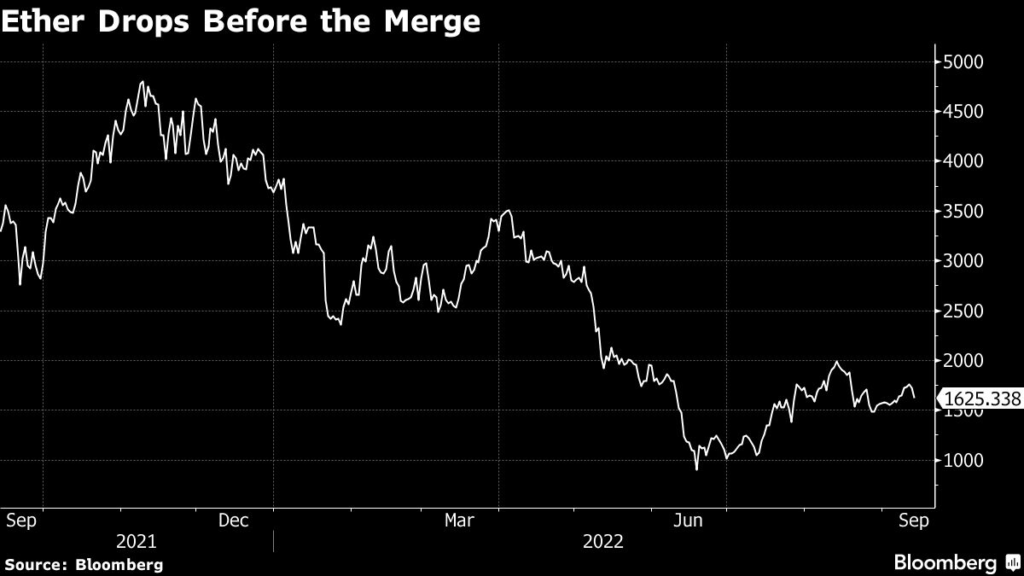
More investors in Ether, the native token of the most commercially important crypto network, are expected to lock up their tokens in special digital wallets that earn their owners a return once the network transition takes place as soon as later today. But they won’t be able to take them out, at least not for a while.

Locked Ether will play a vital role on the upgraded network. Wallets with what’s being referred to as staked Ether will be used to help order network transactions via the new system that is dubbed proof of stake. Currently, about 11% of Ether is already locked up — either directly or via providers such as Lido, Coinbase Global Inc. and Kraken — in staking wallets on the Beacon Chain of Ethereum that is being used to test the process, according to blockchain analytics firm Nansen.

The only problem is that Ethereum will have to undergo yet another software change dubbed Shanghai, which is at least six months away, to enable withdrawals of the staked Ether. Even then, the withdrawals will be capped.

“This is another type of risk called illiquidity risk, because it’s not a liquid asset,” said Campbell Harvey, a professor of finance at Duke University. “This is the reason the yield is higher.”

In exchange for staking their tokens, Ether owners are paid rewards in the form of more tokens at a rate of about 4%. The yield could jump to 5.2% right after the upgrade is completed, before declining over time, according to data tracker Staking Rewards. The software upgrade is called the Merge because Ethereum’s main blockchain will be merged with the Beacon Chain.  

To make staked Ether holdings more liquid, some investors have been buying derivatives such as Lido’s stEth, which represents staked Ether but can be traded, lent or borrowed. Coinbase, the biggest US crypto exchange, recently announced a similar derivative. The risk is that the proxies can be illiquid as well. Lido’s product has recently traded at a discount to Ether. Liquidity issues with stEth contributed to problems at crypto lender Celsius Network, which filed for bankruptcy this summer.

Even so, the products have increased in popularity. About 80,000 unique depositors have poured 13.6 million Ether into staking to date, according to Nansen. Eventually, about 80% of all Ether supply will be staked, according to ConsenSys, an Ethereum blockchain technology provider.   

Ethereum developers, for their part, haven’t yet provided a definitive timeline for the Shanghai software update.

“There’s no agreed timeline for withdrawals yet, just a commitment to do it ‘soon’ after the Merge,” said Ben Edgington, lead product manager at ConsenSys. “This is likely to be a minimum of six months, but may be longer depending on what other work we decide to bundle in with it. Deciding on this will be high priority once the Merge is behind us.”

Ethereum has a history of software upgrades happening later than expected, as developers complete extensive testing and work to implement other priority features. Ethereum is home to about 3,500 active distributed apps, and its ecosystem handles billions of dollars in transactions. 

After the Shanghai upgrade, staking withdrawals will be limited to about 43,200 Ether per day out of every 10 million Ether staked. The limit has been put in place to prevent a mass exodus of funds. A stampede out is probably unlikely since most stakers are underwater in the wake of this year’s more than 50% drop in the value of Ether. 

“Unlocking of the Merge assets is unlikely to be a top priority for the Ethereum Foundation,” said Toby Lewis, chief executive officer of analytics provider Novum Insights. Staked holders may have to “hold their breath for a while.”  

More stories like this are available on bloomberg.com

©2022 Bloomberg L.P.
Danish Podcaster Podimo Raises $59 Million for Shows, Expansion

(Bloomberg) — The Danish podcast platform Podimo, which creates shows with Walt Disney Co. and Warner Bros. Discovery Inc. in Europe and Latin America, raised 58.6 million euros ($58.6 million), funds that it will use to expand its programming and geographic footprint.

The round was led by 83North Ltd., Highland Europe and Saban Ventures, all existing investors, the company said. Podimo raised 78 million euros in November. Its total funding now stands at 162 million euros.

The latest investment will go toward acquiring more shows and intellectual property, while also supporting expansion to new markets and possibly deals in the technology area, founder and Chief Executive Officer Morten Strunge said in an interview. Until now, Podimo has spent the majority of its money on programs, he said.

“Demonstrating growth is not enough these days, you have to show sustainability in your business model and show you’ll someday be profitable,” Strunge said, adding the company expects to become profitable in the markets where it now operates, without additional capital.

Podimo sells subscriptions to its podcast platform and exclusive content in six European markets, as well as in Latin America, all in different languages for local listeners. It has signed deals with Disney, IHeartMedia Inc. Wondery and Warner Bros., and acquired a podcast company in the Netherlands, Dag en Nacht Media.

Strunge wouldn’t share the number of subscribers Podimo has around the world, but said it’s grown fivefold in the past year, with the average user spending 20 hours a month listening. 

“We’re winning on being very local and establishing teams on the ground consisting of content developers and creator relations and so forth,” he said.  

Podimo is vying in a crowed landscape of European companies looking to capitalize on audio entertainment. PodX Group AB plans to spend $10 million to $15 million this year to acquire independent podcast production companies, Bloomberg News  reported last week. Industry leader Spotify Technology SA  has spent more than $1 billion on podcast-related acquisitions, while another Swedish company, Acast AB, went public last year with similar goals.

Podimo, for now, is mostly focused on subscription revenue, though Strunge said advertising will likely factor into the business at some point. In a report last week, B. Riley Securities, estimated podcasting ad revenue will surpass $6 billion by 2026.

More stories like this are available on bloomberg.com

©2022 Bloomberg L.P.

Close Bitnami banner
Bitnami