
Bloomberg

Investors Brace for Profit Squeeze as Inflation Pushes Up Rates

(Bloomberg) — Investors and strategists in Asia warned of fresh pressure on corporate profits and weakness in currencies across the region following stronger-than-expected US inflation data.

While the price report raised the likelihood that the Federal Reserve will continue to tighten policy aggressively, fund managers held to existing positions even as the region’s stocks followed Wall Street lower and a Bloomberg dollar index traded near its all-time high.

Equities headwinds

Chi Lo, senior market strategist for Asia Pacific at BNP Paribas Asset Management

“Expect equities to continue to face strong policy headwinds in the next few months, as earnings growth seems unlikely to improve at the current levels and high inflation should ultimately eat into margins.

Expect continued Fed tightening at least for the rest of the year. We may be approaching an inflection point by this year-end for the Fed to transit from policy tightening to neutral before easing toward the latter half of 2023.”

Christina Woon, investment director for Asia equities at abrdn plc

“We’ve not made any changes post the CPI report. We had already been moderating growth names over the quarter into rallies, and that’s been on the back of fundamentals. In tech hardware, the expectations remains that the cycle will remain weak for a while.

We are heading into earnings season again at the end of the month, so another round of checks for how companies are faring in this environment.

For catalysts into the rest of the year, the CCP meeting in mid-October is a key one that people are watching for policy direction out of China given implications of China’s trajectory on wider growth in Asia.”

Sat Duhra, a Singapore-based fund manager at Janus Henderson Investors

“We won’t be making any changes following the CPI numbers but have already been positioning for a tougher period for the consumer and therefore reducing consumer and technology exposure and adding more telco exposure which has been defensive.”

“We see the greatest risk at consumer-focused names and also exporters – we would expect North Asian export data to remain weak alongside Covid restrictions and favor new positions in South Asia with Singapore and Indonesia expected to weather the volatility better than others.”

Currency vulnerabilities

Trinh Nguyen, a senior economist at Natixis SA in Hong Kong

“We see the Korean won, the Thai baht and the Malaysian ringgit vulnerable as they likely won’t move as much as the Fed and inflationary pressures remain high.

We see both INR and IDR more supported than low yielders that have limited room to move and also exposed to the slowing global trade cycle through higher export share of GDP.”

Suresh Tantia, senior investment strategist at Credit Suisse Group AG

“We see the impact of the US inflation marginally negative for Asia ex-Japan. Importantly, the impact is felt via the USD, which is already at a 10-year high, although continues to see risks of moving higher. A strong USD has been weighing on emerging market growth and flows.

We continue to be cautious and underweight in Asian equities over 3-6m, in line with our developed markets view as recession/growth risks have increased, while leading central banks continue to be hawkish to contain inflation.”

Asia’s dollar bonds

Mark Reade, head of fixed-income desk research at Mizuho Securities Asia

“Persistent inflation and further FOMC rate hikes foreshadow a challenging outlook for most global risk assets.

While the PBOC’s divergent stance of policy easing might allow Chinese assets to outperform, Asian dollar bonds are unlikely to emerge unscathed.

With risk assets increasingly vulnerable and global growth set to slow, we continue to favor higher quality credits.”


More stories like this are available on bloomberg.com

©2022 Bloomberg L.P.

Earnings Squeeze Seen With Inflation Still to Peak, Funds Say

(Bloomberg) — Investors and strategists in Asia warned of fresh pressure on corporate profits and weakness in currencies across the region following stronger-than-expected US inflation data.

While the price report raised the likelihood that the Federal Reserve will continue to tighten policy aggressively, fund managers held to existing positions even as the region’s stocks followed Wall Street lower and a Bloomberg dollar index traded near its all-time high.

Equities headwinds

Chi Lo, senior market strategist for Asia Pacific at BNP Paribas Asset Management

“Expect equities to continue to face strong policy headwinds in the next few months, as earnings growth seems unlikely to improve at the current levels and high inflation should ultimately eat into margins.

Expect continued Fed tightening at least for the rest of the year. We may be approaching an inflection point by this year-end for the Fed to transit from policy tightening to neutral before easing toward the latter half of 2023.”

Christina Woon, investment director for Asia equities at abrdn plc

“We’ve not made any changes post the CPI report. We had already been moderating growth names over the quarter into rallies, and that’s been on the back of fundamentals. In tech hardware, the expectations remains that the cycle will remain weak for a while.

We are heading into earnings season again at the end of the month, so another round of checks for how companies are faring in this environment.

For catalysts into the rest of the year, the CCP meeting in mid-October is a key one that people are watching for policy direction out of China given implications of China’s trajectory on wider growth in Asia.”

Sat Duhra, a Singapore-based fund manager at Janus Henderson Investors

“We won’t be making any changes following the CPI numbers but have already been positioning for a tougher period for the consumer and therefore reducing consumer and technology exposure and adding more telco exposure which has been defensive.”

“We see the greatest risk at consumer-focused names and also exporters – we would expect North Asian export data to remain weak alongside Covid restrictions and favor new positions in South Asia with Singapore and Indonesia expected to weather the volatility better than others.”

Currency vulnerabilities

Trinh Nguyen, a senior economist at Natixis SA in Hong Kong

“We see the Korean won, the Thai baht and the Malaysian ringgit vulnerable as they likely won’t move as much as the Fed and inflationary pressures remain high.

We see both INR and IDR more supported than low yielders that have limited room to move and also exposed to the slowing global trade cycle through higher export share of GDP.”

Suresh Tantia, senior investment strategist at Credit Suisse Group AG

“We see the impact of the US inflation marginally negative for Asia ex-Japan. Importantly, the impact is felt via the USD, which is already at a 10-year high, although continues to see risks of moving higher. A strong USD has been weighing on emerging market growth and flows.

We continue to be cautious and underweight in Asian equities over 3-6m, in line with our developed markets view as recession/growth risks have increased, while leading central banks continue to be hawkish to contain inflation.”

Asia’s dollar bonds

Mark Reade, head of fixed-income desk research at Mizuho Securities Asia

“Persistent inflation and further FOMC rate hikes foreshadow a challenging outlook for most global risk assets.

While the PBOC’s divergent stance of policy easing might allow Chinese assets to outperform, Asian dollar bonds are unlikely to emerge unscathed.

With risk assets increasingly vulnerable and global growth set to slow, we continue to favor higher quality credits.”


More stories like this are available on bloomberg.com

©2022 Bloomberg L.P.
Petrol Prices Cause Inflation to Ease in August: The London Rush

(Bloomberg) — Here’s the key business news from London-listed companies this morning.

UK Inflation:  Britain’s Consumer Prices Index rose 9.9% from a year ago last month, compared to 10.1% in July, the Office for National Statistics said Wednesday. Economists were expecting a reading of 10%.

  • That eases the country’s inflation rate from its highest in four decades after petrol declined, although the pace of price increases is uncomfortably high for the Bank of England

Redrow Plc: The homebuilder says the “buoyant” housing market has moderated recently, with demand returning to “historically average” levels in the wake of rising inflation and higher interest rates.

  • Still, the business said its results exceeded pre-pandemic levels, with underlying profit before tax up nearly a third year on year

ITM Power Plc: The energy company is seeing the economic case for green hydrogen projects increasing, saying that as the prices of methane and fertilizer have increased, it has become cheaper to make these commodities from hydrogen than gas. 

Dunelm Group Plc: The furniture retailer reported a “healthy” gross margin of 51.2%, despite soaring inflation.

  • The company said it is managing input cost inflation through a “tight operational grip,” and expects to keep its margins above 50% 

Outside The City

Queen Elizabeth II’s coffin has arrived at Buckingham Palace ahead of today’s procession through London to Westminster Hall, where she will lie in state for four days until her funeral. 

The Canadian government has declared Monday a federal holiday for the Queen’s funeral, but financial markets will function normally.

In Case You Missed It 

UK businesses have still not been given details, figures or the timings of the government’s proposed energy support package, raising fears that it won’t be ready in time to be implemented in October. Liz Truss’s plan will do little to curb inflation while repeating the problems wrought by large government spending during the pandemic, writes Richard Cookson for Bloomberg Opinion. 

Meanwhile, UK public-sector workers are falling further behind their colleagues in the private sector when it comes to pay increases, a gap that is almost certain to escalate calls for strikes.

That’s as most technology professionals say their pay isn’t keeping up with inflation, raising pressure on employers to meet growing demand for remote work. 

Looking Ahead

Online retailer THG Plc is among the companies due to report results tomorrow. THG’s Ingenuity unit, which helps third party businesses sell goods, could struggle to reach “meaningful scale” amid a recent drop in online sales, according to Bloomberg Intelligence analysts Tatiana Lisitsina and Charles Allen. 

For a news fix when the day is done, sign up to The Readout with Allegra Stratton, to make sense of the day’s events.

More stories like this are available on bloomberg.com

©2022 Bloomberg L.P.
Ukraine Latest: US Prepares More Aid Amid ‘Shift in Momentum’

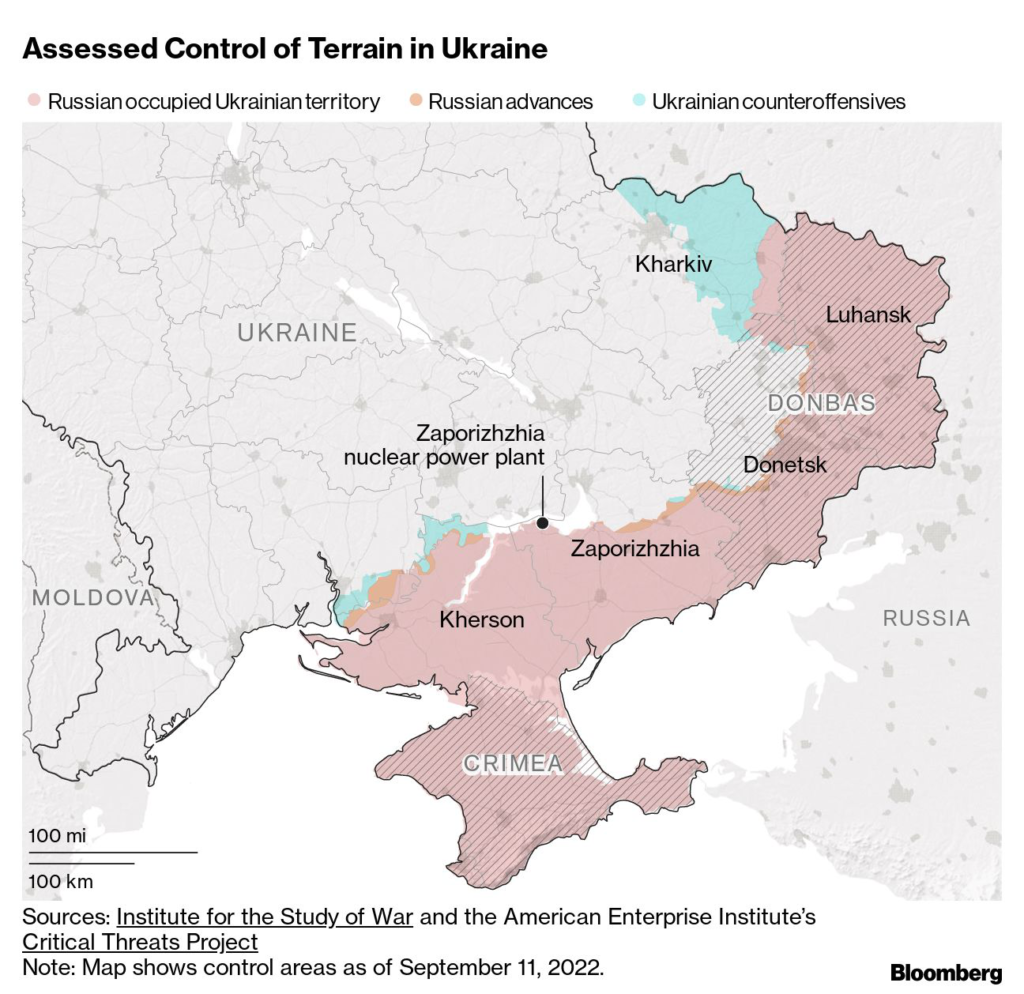
(Bloomberg) — The US is preparing another package of aid to Ukraine, according to John Kirby, spokesman for the National Security Council, who cited a “shift in momentum” in the war after Ukraine said it recaptured more than 2,300 square miles of occupied territory. President Joe Biden said it was too early to tell if the recent Ukrainian counteroffensive amounted to a turning point in the conflict. 

Vladimir Putin will hold bilateral meetings this week with the leaders of China, India, Turkey and Iran, as the Russian president seeks to use a summit in Uzbekistan to counter his diplomatic isolation. 

Russia has secretly funneled more than $300 million to foreign political parties and candidates since 2014 to influence elections, and may ramp up its efforts in the coming months in a bid to blunt the effect of sanctions, a senior US official told reporters.

(See RSAN on the Bloomberg Terminal for the Russian Sanctions Dashboard.)

Key Developments

  • Xi Returns to World Stage With Putin to Counter US Dominance
  • Yuan’s Clout Gets a Boost From Russia Trade as Sanctions Bite
  • At Least 99 Killed in Worst Azeri-Armenian Clashes in Years
  • US Says Russia Covertly Spent $300 Million to Sway Foreign Votes
  • IMF Plans Food-Shock Help as It Mulls Revamp of Global Role
  • EU Pushes for Rationing and Levies in Energy-Crisis Fight

On the Ground

Ukraine was consolidating control over territory retaken from occupying Russian forces during its recent counteroffensive, Ukrainian President Volodymyr Zelenskiy said, following a push that shifted momentum in Kyiv’s favor. Fighting continued in the south, the Ukrainian military said. Russia again targeted civilian infrastructure, according to Ukraine’s General Staff, while local authorities said the cities of Mykolaiv and Nikopol were shelled overnight.

(All times CET)

US Says Russia Gave $300 Million to Foreign Political Parties (7:30 a.m.)

Russia has secretly given more than $300 million since 2014 to influence elections in more than two dozen countries, according to a senior US official, who spoke to reporters on condition of anonymity.

Russia transfers the funds — cash, cryptocurrency and non-monetary contributions — using intermediaries including security services, oligarchs and supposedly independent foundations or think tanks, the State Department said in a note to dozens of US embassies that was shared with reporters.

Biden Cites ‘Significant Progress,’ With Caveat (3:10 a.m.) 

Biden, asked if Ukraine’s recent battlefield successes marked an inflection point in the war, said Tuesday evening that “the question is unanswerable right now.”

“It’s clear the Ukrainians have made significant progress,” he told reporters after voting in Wilmington, Delaware. “I think it’s gonna be a long haul.”

US Cites ‘Shift in Momentum,’ Readies Another Round of Aid (8:25 p.m.)

The US is preparing another round of military aid for Ukraine, as the Biden administration sees a “shift in momentum” favoring Kyiv’s forces against its Russian opponents, National Security Council spokesman Kirby told reporters.

Additional supplies of weapons that will be announced in the “coming days” could help Ukraine keep up its counteroffensives against the Russians, Kirby said without detailing what will be provided.

Saying Ukrainians have made “more dramatic” advances in the country’s north than in the south, Kirby said, “I would let President Zelenskiy determine and decide whether he feels militarily they’ve reached a turning point. But clearly, at least in the Donbas, there’s a sense of momentum here by the Ukrainian armed forces.”

More stories like this are available on bloomberg.com

©2022 Bloomberg L.P.
South Korea Seeks the Arrest of Terraform Labs Founder Do Kwon

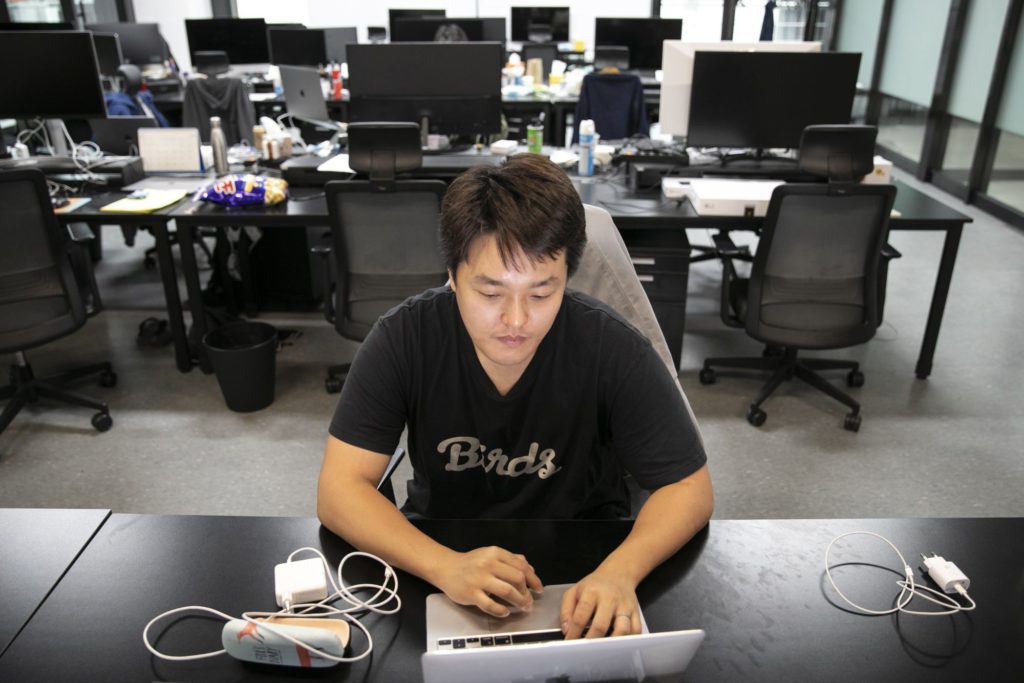
(Bloomberg) — A court in South Korea issued an arrest warrant for Do Kwon, the founder of the Terraform Labs cryptocurrency ecosystem, whose $40 billion wipeout earlier this year sparked a global crypto rout.

The court in Seoul issued a warrant for Do Kwon and five others, according to a text message from the prosecutor’s office. A local newspaper earlier reported that the warrant was related to a violation of capital market rules.

The unraveling of the Terra platform in May included the collapse of the TerraUSD stablecoin, shaking faith in the digital-asset sector, which has yet to recover much of the losses.

More stories like this are available on bloomberg.com

©2022 Bloomberg L.P.
Crypto Nurses Post-CPI Losses as Clock Ticks to Ethereum Upgrade

(Bloomberg) — Cryptocurrency markets Wednesday took stock of sharp losses triggered by hardening expectations of restrictive US monetary policy and braced for a possible test ahead from the upgrade of the Ethereum blockchain.

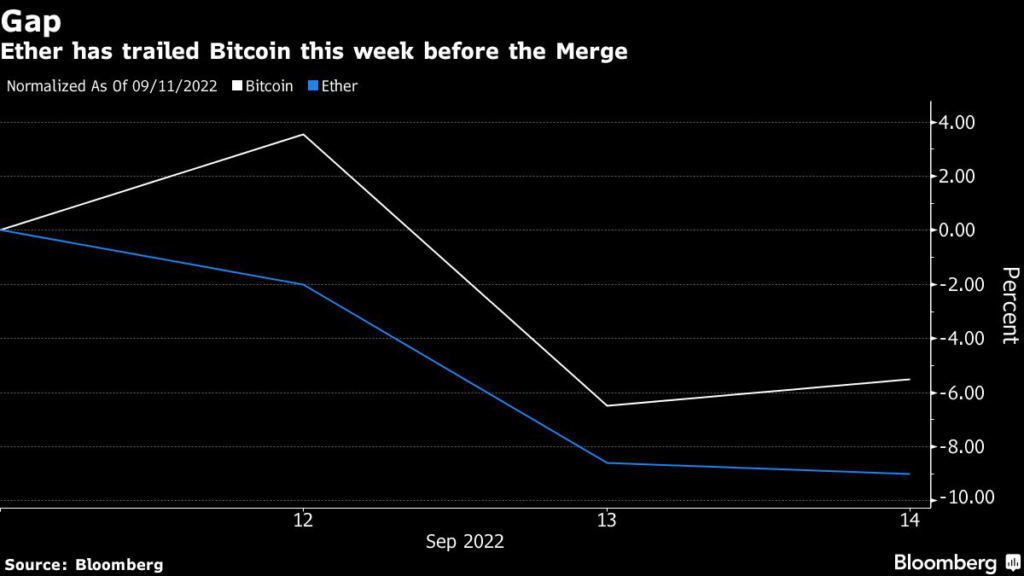
Bitcoin was near $20,000 as of 6:15 a.m. in London after a near-10% plunge a day earlier. Ether, the native token of Ethereum, struggled to hold above $1,600. Stocks, bonds and digital tokens plunged Tuesday after hot US inflation data pointed to further large Federal Reserve interest-rate hikes.

The Fed has no alternative but to “pump the brakes, tighten financial conditions, ratchet real yields higher and that’s just going to crunch on risky assets,” Charlie McElligott, cross-asset macro strategist at Nomura Securities International Inc., said on Bloomberg Television.

Such macroeconomic factors are currently overshadowing the Ethereum revamp, known as the Merge. But the upgrade to slash the blockchain’s energy use is due late Wednesday or Thursday and will come back into the spotlight.

An array of financial services are built atop Ethereum, making it a critical crypto highway, so any snafus in the software shift from a so-called proof-of-work to a proof-of-stake paradigm could ripple across digital assets.

“There’s been so much testing that the Merge itself is overwhelmingly likely to be very smooth,” Joseph Lubin, a co-founder of Ethereum, said on Bloomberg Television, drawing a comparison with an overnight iPhone update. Major Ethereum-based services are ready for the upgrade but some smaller ones may need to do more work, he added.

An Ether rally since mid-June, spurred partly by buzz around the Merge, has cooled of late. Both Ether and Bitcoin have more than halved in 2022.

Bitcoin could drop below $18,000 before prices reach a bottom in October, Mark Newton, head of technical strategy at Fundstrat, wrote in a note Tuesday.

More stories like this are available on bloomberg.com

©2022 Bloomberg L.P.
Crypto Traders Flee India Exchanges to Binance to Escape Tax

(Bloomberg) — Binance Holdings Ltd.’s billionaire Chief Executive Officer Changpeng Zhao is tightening his grip on India’s market for cryptocurrency trading in the fallout from a major tax change.

Downloads of Binance’s app in India jumped to 429,000 in August, the highest this year and almost triple that of runner-up CoinDCX, data from market intelligence firm Sensor Tower show. Only Binance among the top exchanges achieved higher downloads in India compared with July. 

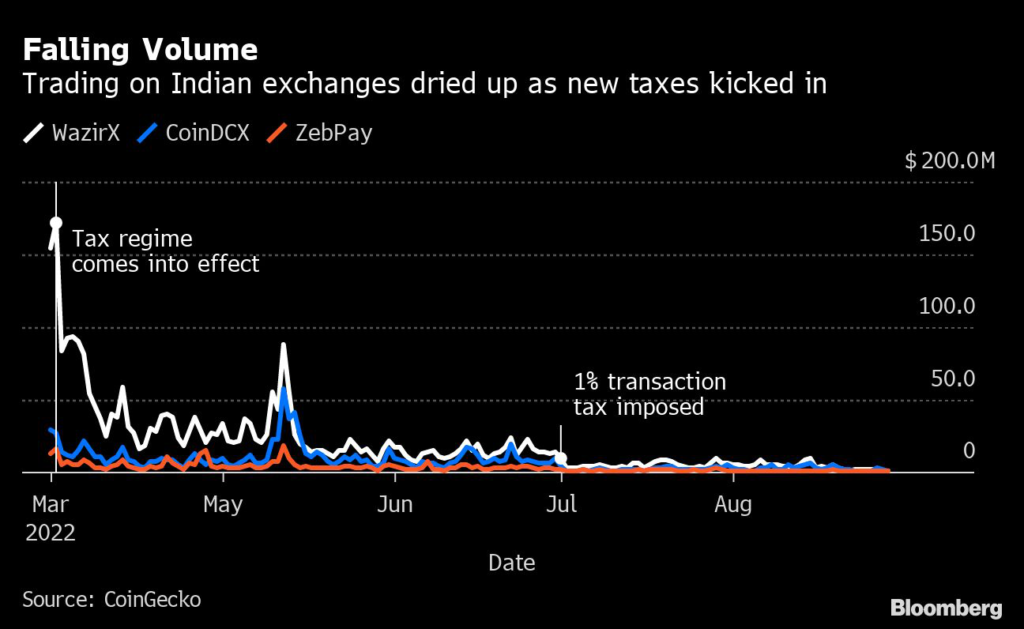
The operator of the world’s largest crypto exchange stands out in a market where rivals are reeling from steep taxes and the difficulty of moving money in and out of trading venues. Daily volumes at key India-based platforms are down over 90% since a 1% tax on crypto transactions took effect in July. 

While Zhao has outflanked competitors with low fees, varied offerings and a popular peer-to-peer marketplace that allows easier movement between tokens and cash, another factor is the contrast in the way foreign exchanges and those with Indian roots handle the transaction tax imposed on domestic residents.

Indian-origin platforms have begun deducting the levy but many foreign peers like Binance and FTX haven’t, prompting investors to switch to the latter, according to several users of the apps who asked to remain anonymous given the matter relates to tax law. Traders may see a loophole in lax enforcement and a gray area over whether the law applies to more complex transactions.

“The recent tax regulation is not explicitly clear on whether the 1% tax deducted at source extends to crypto derivatives transactions involving futures, as it does to crypto spot transactions,” said Rohan Misra, chief executive officer at SEBA India, a subsidiary of Swiss-based SEBA Bank AG.

Binance “is currently monitoring the situation and will make further announcements in due course,” a spokesperson said in response to questions about whether it has started collecting the levy. FTX declined to comment and India’s Finance Ministry didn’t respond to emails seeking comment.

Binance’s gains come amid a rare public spat with WazirX, its partner in India, which led Zhao to encourage WazirX customers to defect to Binance. WazirX’s monthly downloads tumbled to 92,000 in August from about 596,000 in January.

The 1% levy known colloquially as the TDS came on top of a new 30% tax on gains from the transfer of crypto assets, which is steeper than in many other jurisdictions like the US and the UK. 

Rules introduced this year also bar crypto trading losses from being offset against income. In addition, limited support from the banking system makes it hard to fund accounts or switch from tokens to fiat currency.

Shrinking Downloads

The wider embrace of the Binance app contrasts with declines for most other players. CoinDCX downloads, for example, shrank to 163,000 in August from 2.2 million in January, Sensor Tower data show. 

Billionaire Sam Bankman-Fried’s FTX saw almost 96,000 downloads in India in July and 52,000 in August from about 40,000 in January. San Fransisco-based Coinbase Global Inc. has said it complies with the crypto transaction tax rules. It saw downloads in India fall to 16,000 in August from almost 31,000 in June.

In a situation where an exchange doesn’t keep aside the levy, the responsibility to do so then falls on the seller of the digital token, said Anoush Bhasin, founder of crypto asset tax advisory firm Quagmire Consulting.

“The government still needs their tax deducted at source, and they’ll get it one way or another, it’s just that the users are not aware of that,” Bhasin said.

(Updates with tax consultant’s quote in the last paragraph.)

More stories like this are available on bloomberg.com

©2022 Bloomberg L.P.

Weak Peso, Holidays Give Recovery Hopes to Philippine Chipmakers

(Bloomberg) — Philippine electronics exporters expect sales to grow 10% this year, hoping their products made cheaper by the peso’s weakness will attract buyers, including holiday shoppers.

“Almost everything around you has electronics, and year-end is the time that’s best for gifts and requirements for both industry and personal,” Dan Lachica, president of industry group Semiconductor and Electronics Industries in the Philippines Inc., said in an interview. “Historically, there’s a catch-up that happens towards the end of the year.”

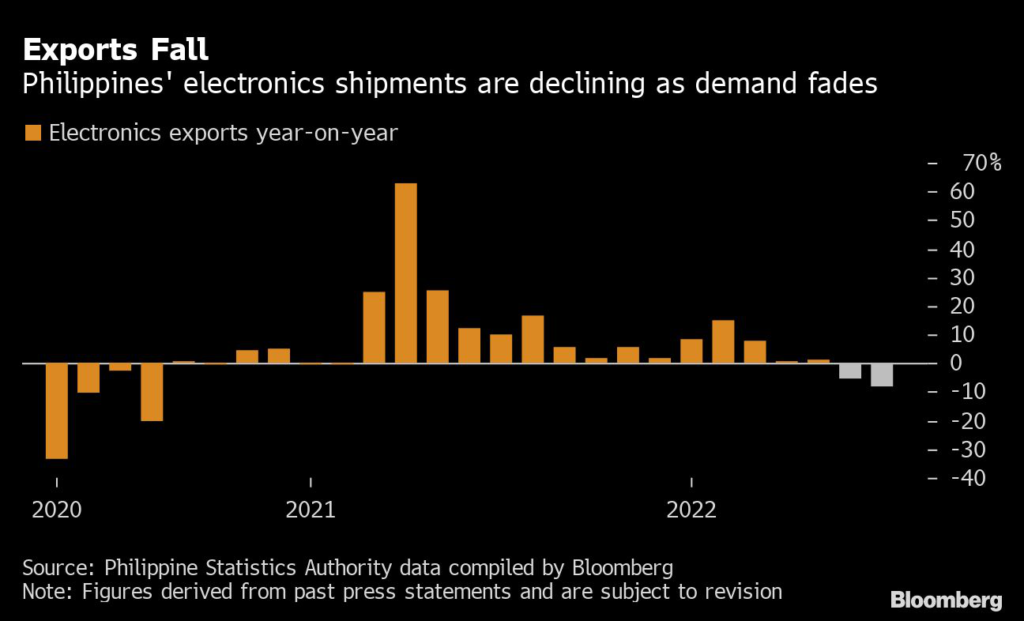
That will be key to reversing a recent decline in electronics shipments, the Southeast Asian nation’s top export by value. The trend mirrors weakness in global trade bellwether South Korea, which saw chip exports fall for the first time in more than two years last month.

Sales grew 2% from January to July, and the industry is poised to benefit from a weak peso, he said, while discounting a threat to demand from high inflation globally.

The Philippine currency’s depreciation has a net-positive effect for chipmakers even after accounting for imported materials, Lachica said, after the peso breached the 57 to the dollar level last week compared to 50 in the same period a year ago. A weaker peso makes the nation’s exports cheaper and encourages more foreign buyers, he said. 

“You still need medical electronics, automotive electronics, consumer products, cloud, artificial intelligence,” Lachica said. “They’re not going to disappear because of inflation.” 

The industry group, the nation’s largest grouping of foreign and local electronics companies with 344 members, aims to grow the sector’s revenue by 5% to 6% and produce higher-value products in the coming years. 

Still, some hiccups remain in the form of prolonged delivery times due to lingering effects of supply chain disruptions during the pandemic.

The previous government’s move to scrap tax incentives could put the industry’s growth target and jobs in peril, Lachica said, pointing to about $3.2 billion of investments getting diverted to countries such as Vietnam, Thailand, Malaysia, and China because of the absence of tax breaks and relatively high operating costs.

“We also have to be concerned about job preservation,” Lachica said, referring particularly to the electronics industry that directly employs some 400,000 workers and provides indirect employment to about 2.8 million people. “If we don’t do anything about rationalization of incentives, about 3 million of indirect and direct workers are at risk,” he said.

More stories like this are available on bloomberg.com

©2022 Bloomberg L.P.
Google Turns to Potato Chips to Promote Pixel 7 Phones in Japan

(Bloomberg) — Alphabet Inc.’s Google is bringing back its Original Chips snack in Japan, offering flavored potato chips branded with the company’s name to promote its upcoming smartphone release.

Google launched the first version of the campaign last year to publicize its Tensor processor — the first of its kind designed in-house and the product of four years of development. The snacks were an immediate hit, and this year’s reprise offers 2,000 people the chance to grab a bag via a lottery.

A choice of Snow Cheese, Hazel Onion, Salty Lemon or Obsidian Pepper flavors mirrors the color options of the Pixel 7 devices. Google seeks to showcase some of the potential of the world’s most popular mobile operating system through the flagship Android handsets, powered by the company’s second generation of Tensor chips. 

The Mountain View, California-based company has been engaged in designing its own-brand smartphones for over a decade, dating back to its series of Nexus handsets that were produced in partnership with major phone makers. With the Pixel line, which first launched in 2016, Google took on the full set of design, assembly and distribution of handsets, bringing it in line with Apple Inc.

Despite grand marketing efforts such as sponsoring the NBA playoffs in the US, the Pixel has never broken out of its niche status and remains a small player. Outside the US, the device has found most success in Japan, where Google is exclusively launching its Original Chips, despite evident demand elsewhere around the world.

More stories like this are available on bloomberg.com

©2022 Bloomberg L.P.

Tencent Music Plans Hong Kong Debut as Soon as Next Week

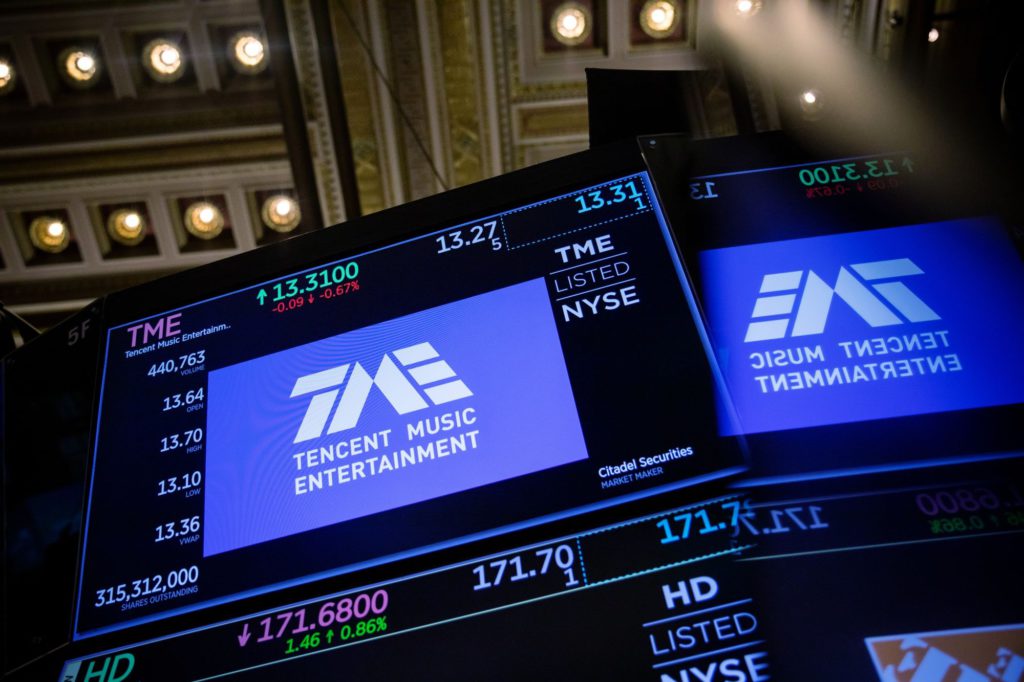
(Bloomberg) — Tencent Music Entertainment Group is pressing ahead with its Hong Kong listing plans with a goal to start trading in the Asian financial hub as soon as next week, according to people familiar with the matter.

The Shenzhen-based company, whose shares already trade in New York, is working with advisers on the preparations for its second listing, the people said. Marketing activities could start as early as in the coming days, said the people, who asked not to be identified as the information is private. 

Deliberations are ongoing and details of the listing including timeline could still change, the people said. A representative for Tencent Music didn’t immediately respond to requests for comment.

Tencent Music in March said it plans to pursue a secondary listing in Hong Kong, joining a flurry of Chinese firms seeking alternative listing as escalating Sino-US tensions fuel delisting risks. The listing in the Asian financial hub would be by way of introduction, meaning it won’t sell new shares or raise money.

Tencent Music raised about $1.07 billion in a US initial public offering in 2018. Shares of Tencent Music have tumbled by about 31% this year, giving it a market value of about $8 billion.

More stories like this are available on bloomberg.com

©2022 Bloomberg L.P.

Close Bitnami banner
Bitnami