

Bloomberg

Bitcoin Hits Three-Week High Before CPI Data, Ethereum Upgrade

(Bloomberg) — Bitcoin extended a rally amid a brighter mood in global markets and as traders await US inflation data and monitor a seminal upgrade of the Ethereum blockchain.

The largest token rose as much as 3.9% on Monday and was trading a little above $22,000 as of 12:20 p.m. in New York. Smaller coins like Solana also pushed higher but Ether lagged.

Bitcoin jumped about 10% on Sept. 9, part of a broader embrace of beaten-down assets encouraged by a weaker dollar that hinted at a little less investor fear in a tough year. The greenback continued to slide at the start of the week. Meanwhile, US stocks also rose, with the S&P 500 adding 0.7% Monday. 

“The strong bounce in crypto last week happened with risk-on in global markets, so we should heavily discount it,” wrote Tagus Capital’s Ilan Solot in a note. “US CPI is due on Tuesday, so expect correlations to remain elevated if markets become volatile again.”

A blackout period for comments from Federal Reserve officials before the US interest-rate decision this month may be one of the factors helping Bitcoin, according to Tony Sycamore, senior market analyst for City Index in Sydney.

“The market knows that it’s got a break from this unrelenting hawkish Fedspeak for a couple of weeks and that the pace of central bank rate hikes is likely to slow,” he said.

The US inflation report due Tuesday is expected to show cooling headline price pressures. But a higher-than-anticipated print could harden expectations for restrictive monetary settings that are anathema for crypto prices. 

Any bumps in the upgrade later this week of Ethereum — the most important crypto network commercially — could also sow disquiet.

Rising borrowing costs alongside blowups at crypto lenders and hedge funds have saddled Bitcoin, Ether and the wider MVIS CryptoCompare Digital Assets 100 Index with losses of more than 50% in 2022.

Ether, the native token for the Ethereum network, is particularly in focus ahead of the latter’s transition to a more energy-efficient blockchain, a process known as the Merge. The crypto community is on alert for any snafus that buffet the many financial applications that rely on the network.

Ether futures volumes have been “consistently” surpassing spot volumes this year, according to CryptoCompare. In August, $997 million worth of futures were traded, compared with $689 million in spot markets. 

“We continue to be long Ether into the Merge, using dips as buying opportunities,” Sean Farrell, head of digital asset strategy at Fundstrat Global Advisors LLC, wrote in a note. He added that Ether didn’t succumb to a “sell-the-news” drop after three earlier Ethereum upgrades. 

The pattern of bets around options on Ether is weighted toward bullish calls, but the picture is more balanced around the Merge date, suggesting hedging in the lead up to the event, according to a note from Genesis Global Trading Inc.

(Adds new commentary and data from CryptoCompare.)

More stories like this are available on bloomberg.com

©2022 Bloomberg L.P.

Biden Signs Order to Boost Biomanufacturing, Compete with China

(Bloomberg) — President Joe Biden signed an executive order laying out a strategy to bolster domestic biomanufacturing and reduce reliance on China for new medicines, chemicals and other products. 

Biden signed the order Monday morning before giving a speech in Boston. The White House will also hold a summit Sept. 14 to discuss the initiative and announce new investments in domestic research, development and production capabilities, according to a statement.

While the US has one of the world’s strongest biotechnology industries, some high-tech production has migrated abroad. US national security and intelligence officials are particularly concerned about reliance on China’s advanced biomanufacturing infrastructure. Bloomberg News reported details of the executive order on Sept. 10. 

The National Biotechnology and Biomanufacturing Initiative will aim to create new jobs, strengthen the supply chain and lower prices, according to the White House statement. Looking beyond health care, the US will aim to advance biomanufacturing in agriculture, energy and other industries.

“Global industry is on the cusp of an industrial revolution powered by biotechnology,” the White House said. The country has “relied too heavily on foreign materials and bioproduction, and our past off-shoring of critical industries, including biotechnology, threatens our ability to access materials like important chemicals and active pharmaceutical ingredients.” 

Sense of Urgency

Covid-19 created a sense of urgency within the administration around developing a clear, consistent industrial strategy, according to people familiar with the matter who asked not to be identified as the details aren’t public. Fast development and production of messenger RNA vaccines are an example of successful domestic investment, the people said. 

The order contains the outlines of how the US should develop a trained, diverse workforce capable of using naturally occurring processes to create bio-based products and materials. The Biden administration plans to support biomanufacturing infrastructure, though it’s not yet clear how much funding there is to back the executive order.

Two weeks ago, Biden signed an executive order to boost domestic semiconductor manufacturing that’s also part of the administration’s drive to shift the balance of US competition with China.

In May, China’s National Development and Reform Commission released a five-year plan for bioeconomic development, which described efforts to accelerate new technologies and spur growth in health care, agriculture and fuel. As tensions mount between the the US and China, the Biden administration has looked for ways to curb investment in China’s industries.

More stories like this are available on bloomberg.com

©2022 Bloomberg L.P.
Twitter Rejects Musk’s Bid to End Deal Ahead of Shareholder Vote

(Bloomberg) — Twitter Inc. rejected a third attempt by Elon Musk to cancel his agreement to buy the social network, a day before the company’s shareholders are to vote on the $44 billion deal. 

Twitter’s lawyers said in a letter Monday that the billionaire’s attempt to walk away is “invalid and wrongful” and “Twitter has breached none of its representations or obligations,” according to a regulatory filing. Musk has said Twitter should have notified him before it spent $7.75 million in a separation agreement with Peiter Zatko, the company’s former security chief, who has raised concerns about lax security, privacy issues and the number of “bots” on the platform. 

Musk has previously raised concerns about the number of bot accounts on the platform, as well as the company’s hiring-and-firing decisions, and has argued that violations of the buyout agreement should enable him to withdraw his offer. Twitter investors are nevertheless likely to accept Musk’s bid, and the Oct. 17 court case to decide whether he must go through with his offer remains on track. 

“The shareholder approval expected tomorrow formally sets the stage for the Game of Thrones Battle between Musk and Twitter in the Delaware Courts with the high possibility in our opinion that some form of negotiation likely takes place,” ahead of the October trial, Wedbush Securities analysts Daniel Ives and John Katsingris wrote in a note. 

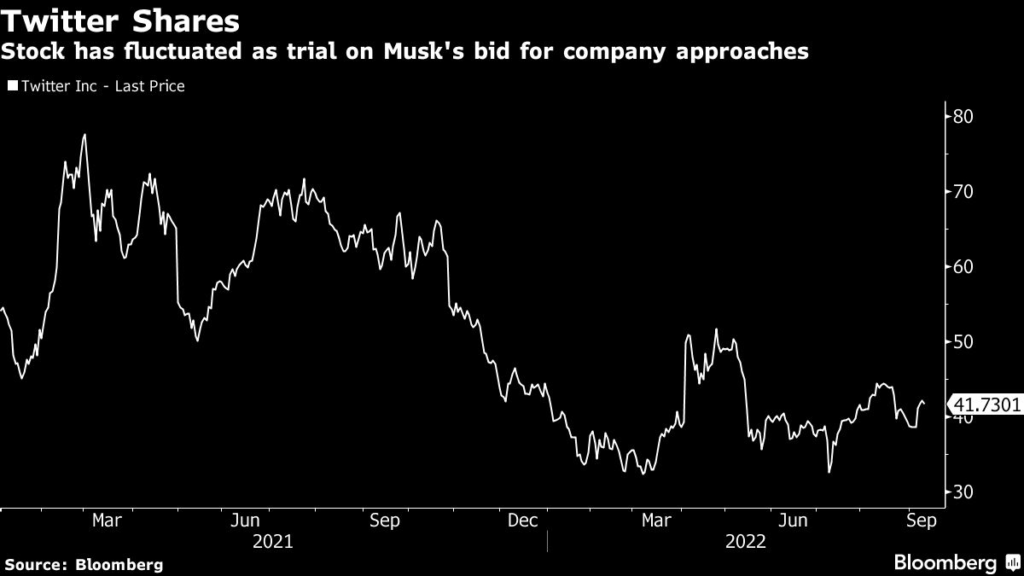
Twitter shares fell 2% to $41.33 at 12:06 p.m. in New York. The stock has declined 4.4% this year.  

Read More: Musk Says Whistle-Blower Deal Lets Him Drop Twitter Purchase

Zatko is due to testify Tuesday before the US Senate Judiciary Committee in Washington about his allegations. He has been subpoenaed to testify in the Twitter lawsuit as well. 


Delaware Chancery Judge Kathaleen St. Jude McCormick has allowed Musk to add Zatko’s allegations of “egregious deficiencies” at Twitter to his legal arguments, permitting the billionaire to argue a material adverse effect on the acquisition through Twitter’s failure to disclose Zatko’s statements. 

However, McCormick has denied his bid to push back the trial date. This may limit the time that Musk’s team has to explore the allegations. 

Musk decided in April he wanted to own Twitter, but since then the spread between Twitter’s stock and the $54.20 deal price has widened, signaling skepticism the transaction will go through. Meanwhile, the social network implemented a hiring freeze while it struggled to sell ads and the shares were pounded by a broader market downturn. 

The San Francisco-based company has denied Musk’s claims over spam bots. The deal included a provision that if it fell apart, the party breaking the agreement would pay a termination fee of $1 billion, under certain circumstances.

“Though this allegation is stronger than Musk’s earlier hiring-and-firing claims, only ‘material’ breaches let Musk walk away,” Matthew Schettenhelm, a Bloomberg Intelligence litigation analyst, said in a note. “And we doubt a $7.75 million severance payment qualifies, even if Twitter can’t show it tracks its past practice.”

More stories like this are available on bloomberg.com

©2022 Bloomberg L.P.
Crypto Trade Group for Circle, Kraken Seeks Clout With PAC to Spread Cash Haul

(Bloomberg) — The Blockchain Association, a prominent crypto trade group with members that include stablecoin issuer Circle and exchanges Crypto.com and Kraken, is launching its own political action committee. The move represents another attempt from an industry under pressure to push US politics in a more crypto-friendly direction. 

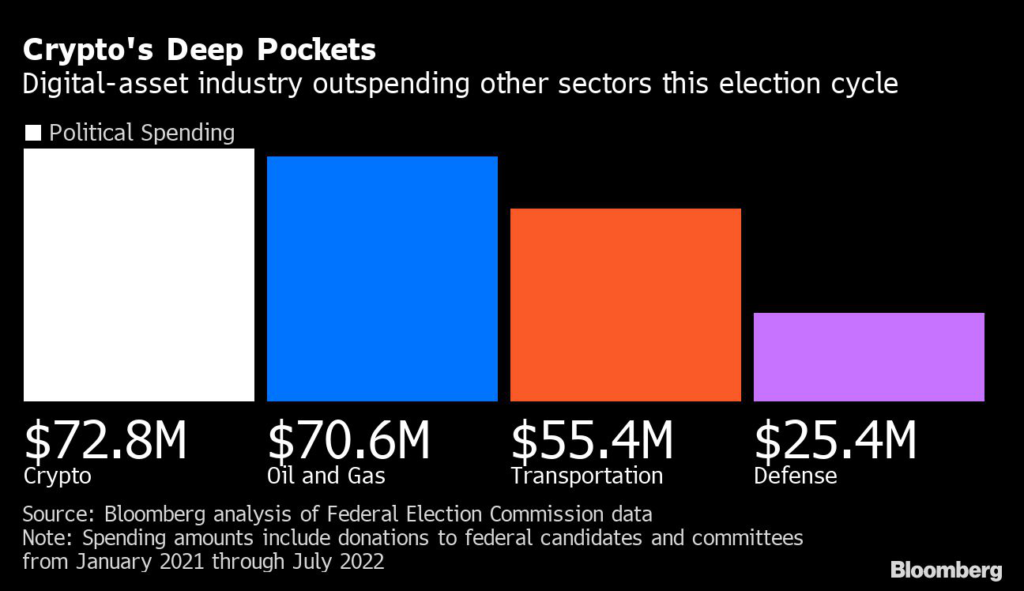
As the sector has grown so to has its political spending, with millions of crypto-backed dollars going into candidate’s coffers ahead of November’s congressional elections. Donors from the industry have given $72.8 million to federal candidates and committees from January 2021 through July, a Bloomberg analysis of Federal Election Commission records shows. That total surpasses the $70.6 million given by the oil and gas industry, the $55.4 million given by the transportation sector and the $25.4 million given by the defense companies over the same period.

“There are a lot of different avenues to being effective in Washington, but relationships are a key part of that,” Kristin Smith, the executive director of the Blockchain Association told Bloomberg in an interview. “Political giving is a key part of relationships.”

Smith said she’s hopeful the new committee, called BA PAC, will be able to parlay the existing relationships of the nearly 100 member companies of the Blockchain Association into its fundraising efforts. Over the next several months, the PAC will be reaching out to those companies to ask for permission to solicit donations from their employees. Then, the PAC board of directors will determine the best strategy for distributing any funds it receives. 

Julie Stitzel, vice president of public policy at the Digital Currency Group, is the chairwoman of the PAC board. Directors include: Smith; Jonathan Jachym, global head of policy at Kraken; John McCarthy, general counsel at Wicklow Capital Inc.; Ryan Selkis, founder and CEO of Messari Inc.; and Seth Hertlein, global head of policy at Ledger SAS. 

Given that the upcoming midterm elections are just two months away, the PAC is focused on the next cycle, which will include the presidential election, in 2024. 

  • Read more: Crypto Donors Poured Money Into Politics in May Despite Downturn

BA PAC joins a growing number of committees that include supers PACs backed by some of the industry’s most-influential names, such as Sam Bankman-Fried, the CEO of crypto trading juggernaut FTX. Bankman-Fried and his co-chief executive Ryan Salame have been the two largest donors from the sector, giving $41.1 million and $18.4 million, respectively. 

Bankman-Fried has used a super PAC known as Protect Our Future, which is currently focused on candidates with plans for preparing for the next pandemic, for a big chunk of his spending. 

  • Read more: Crypto’s Bankman-Fried Gave $16 Million to Super PACs in April

By contrast, the mission of BA PAC will be to “support pro-crypto candidates across the political spectrum,” according to a statement provided to Bloomberg. Smith said the hope is to donate roughly 50% of the committees’ funds to Democrats and 50% to Republicans. The PAC will help bolster the association’s existing advocacy and lobbying efforts in Washington, she said. 

Smith herself is an active donor having contributed more than $160,000 this election cycle. That total includes $50,000 given to Republican Congressman Tom Emmer’s joint fundraising committee — $45,000 of which was distributed to the National Republican Congressional Committee and $5,000 of which went to Emmer’s leadership PAC. 

More stories like this are available on bloomberg.com

©2022 Bloomberg L.P.
BofA Names New North America Corporate, Investment-Banking Head

(Bloomberg) — Bank of America Corp. named Mike Joo North America head of its global corporate and investment-banking group, a newly created role.

Joo’s appointment comes in addition to his responsibilities as chief operating officer of global corporate and investment banking, Matthew Koder, president of GCIB, wrote in a staff memo Monday seen by Bloomberg News. 

“Our ability to deliver holistic solutions across corporate and investment banking has been a key advantage for us in driving market share, and in today’s environment it is vital that we continue to partner and connect across all of our lines of business,” Koder said in the memo, adding that Joo will continue to report to him and serve on the GCIB executive committee. 

Joo, who has worked at BofA since 2006, has held a variety of roles at the Charlotte, North Carolina-based firm, including COO for global markets, head of global rates and currencies solutions, and head of Asia debt capital markets. 

“Mike’s extensive experience across the firm will enable him to fully utilize the entire Bank of America platform, including the market presidents, to leverage our expansive network and capabilities to deepen and broaden client relationships,” Koder said, adding that Joo will work with business heads across capital markets, corporate banking, investment banking and global transaction services. 

A Bank of America spokesman confirmed the memo’s contents.

Read more: BofA Names Burkhardt Investment Banking Chief Strategy Officer

More stories like this are available on bloomberg.com

©2022 Bloomberg L.P.

Woodford Fund Liability Threatens Dye & Durham’s Australia Deal

(Bloomberg) — The collapse of Neil Woodford’s fund in 2019 has thrown a wrench into a Canadian firm’s proposed $1.7 billion acquisition of Australia’s Link Administration Holdings Ltd.

Toronto-based Dye & Durham Ltd. said Monday that UK regulators won’t approve the deal unless it agrees to cover restitution or other liabilities related to Link’s role in the Woodford blowup, to a maximum of £306 million ($358 million).

Dye & Durham said it’s assessing the impact of that demand made by the UK’s Financial Conduct Authority. If it can’t accept those terms, then the Link deal might not be able to meet the conditions for closing, the company said in a statement. Dye & Durham was up 1% to C$14.83 at 10:51 a.m. in Toronto. 

Link was the fund administrator on the LF Woodford Equity Income Fund, which was liquidated nearly three years ago as Woodford, one of the UK’s most celebrated stock pickers, was ousted as its manager. The FCA began an investigation into Link in 2019 as the fund was beginning to unravel, according to Dye & Durham’s statement.  

Read more: Dye & Durham Agrees to $1.7 Billion Deal For Australia’s Link

More stories like this are available on bloomberg.com

©2022 Bloomberg L.P.
Galaxy’s Novogratz Says Fidelity to Shift Retail to Crypto Soon

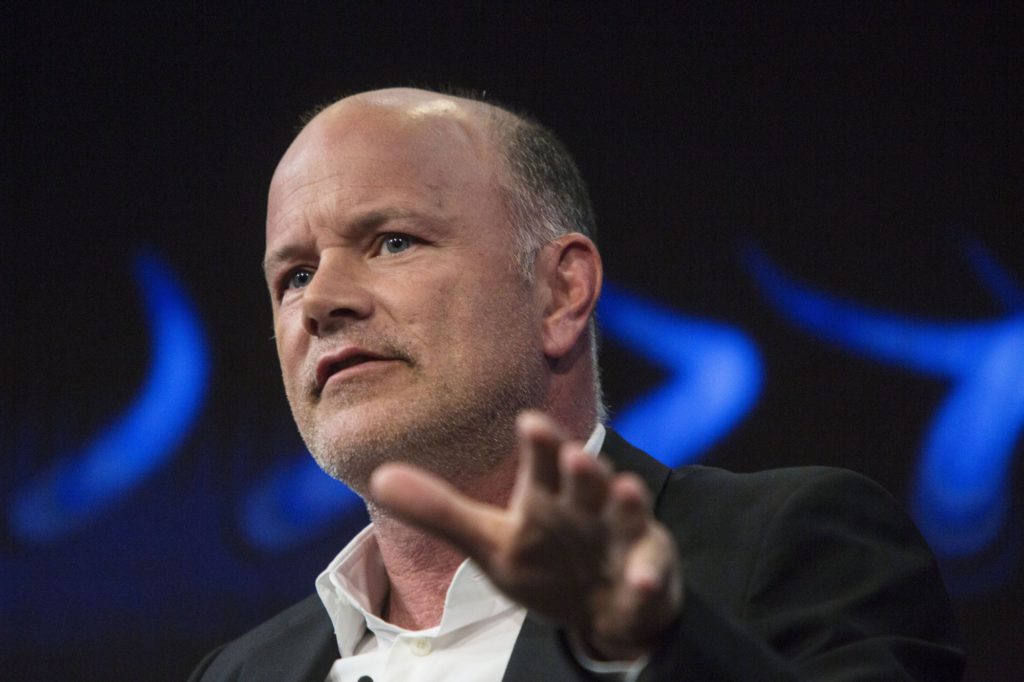
(Bloomberg) — Mike Novogratz, the founder and chief executive of Galaxy Digital Holdings Ltd., said he’s heard that Fidelity Investments will “shift retail customers into crypto soon.”

Fidelity has been one of the most visible institutional proponents of digital assets, saying earlier this year that it would have a product ready in coming months to allow 401(k) plan participants to direct a portion of their savings into Bitcoin.

“A bird told me Fidelity is going to shift their retail customers into crypto soon enough,” Novogratz said during the SALT conference in New York on Monday. “I hope that bird is right. So we are still this institutional march and that gives crypto its floor.”

Cryptocurrency prices tumbled soon after Fidelity announced its plans for a 401(k) in the springtime.     

More stories like this are available on bloomberg.com

©2022 Bloomberg L.P.

Crypto Exchange Huobi to Delist Privacy Tokens Like Zcash, Monero

(Bloomberg) — Huobi, once one of the largest Chinese cryptocurrency exchanges, will delist a number of privacy-focused tokens including Zcash and Monero amid rising regulatory concern worldwide. 

“Huobi Global strictly complies with the compliance policies of every country and always endeavors to safeguard our users’ assets,” the firm said in a statement dated Sept. 11. The tokens that will be delisted on Sept 19 include Zcash, Monero, Dash, Decred, Firo, and Verge.

Unlike Bitcoin or Ether, privacy tokens such as Monero are designed to avoid tracking. Privacy is a key objective of many crypto proponents, however, there have been increased regulatory concerns in the digital-asset privacy sector.

The US Treasury Department’s Office of Foreign Assets Control accused Tornado Cash, a project to mask crypto transactions, of laundering more than $7 billion of tokens since it’s created in 2019. The agency sanctioned not only digital wallets associated with Tornado Cash, but code running on blockchains known as smart contracts.

Huobi recently secured a license from the financial watchdog in the British Virgin Islands to operate a crypto exchange there.  

More stories like this are available on bloomberg.com

©2022 Bloomberg L.P.

DOJ Short-Selling Probe Eyes Bets on Amazon, Microsoft and JPMorgan

(Bloomberg) — Federal investigators searching for collusion among short sellers have posed a surprising question in recent months: Tell us about your trading in companies like Amazon.com Inc., Microsoft Corp. and JPMorgan Chase & Co.

US prosecutors have sent subpoenas that ask about transactions in a variety of blue-chip stocks to some of the same short sellers who previously responded to inquiries about a long list of lesser-known companies, according to people familiar with the matter. Those prior demands were part of a look at how bearish investors gather and publish research about companies with the aim of profiting when stocks drop. 

The demands make clear that authorities are continuing to amass vast tracts of data. In earlier requests that emerged publicly in December, investigators gathered information on dozens of investment firms and researchers, as well as transactions involving more than 50 stocks. People with knowledge of those inquiries have said authorities are looking for evidence activist firms sought to exacerbate stock drops or otherwise manipulate markets, potentially through a variety of strategies.

But activist short sellers don’t typically target the world’s most valuable companies — which makes the latest requests all the more puzzling.

Giants like retailer Amazon, software powerhouse Microsoft and JPMorgan, the largest US bank, are closely scrutinized. Their share prices are anchored by legions of index-tracking funds that have to own them, as well as institutional buyers such as pensions with long investment horizons. This leaves little room for short sellers proffering bearish forecasts to move stock prices more than, say, the underlying economy does.

Smaller companies, on the other hand, don’t attract as much attention from market professionals or index funds and are thinly traded, leaving them vulnerable when short sellers present evidence of malfeasance that scares off individual investors.

The look at megacap securities suggests investigators found something among the reams of data culled from the first round of subpoenas issued to individuals and firms last year, said James Cox, a professor at Duke University School of Law.

“It doesn’t surprise me that they’ve come back with another round of subpoenas,” Cox said. “There’s a learning curve for the government when it comes to market-manipulation cases.”

Spokespeople for the Justice Department and Securities and Exchange Commission, which is running a parallel investigation, declined to comment. Representatives for Amazon, Microsoft and JPMorgan also had no comment.

Since subpoenas went out a few months ago, word has percolated through the gossipy world of short sellers, and so too has conjecture about what theories the feds might be exploring on the hunt for illegal collusion. Of note, the latest subpoenas were issued under prosecutors who took over after colleagues left the department for private practice.

While it’s unclear what kind of trading patterns investigators may be zeroing in on, potentially abusive short-selling practices can include spoofing, in which traders rapidly submit and cancel orders to mislead the market, and matched trading, which usually involves a few parties working together, arranging trades designed to set prices or inflate volume and create the appearance of interest in a stock.

“It certainly suggests that they’re still working and that they’re following the path that the documents and the information from witness statements may be providing to them,” said Ken Joseph, a former SEC enforcement official who’s now a managing director at Kroll LLC.

The subpoenas aren’t the only movement in the case. The SEC is on the hunt for possible cooperators. The regulator recently sought assistance from a researcher regarding several short-selling and research firms under scrutiny, according to two people who asked not to be named in order to protect the confidentiality of that query. The SEC didn’t respond to messages seeking comment.

As Bloomberg previously reported, the Federal Bureau of Investigation seized computers from the home of prominent short seller Andrew Left, the founder of Citron Research, in early 2021. In October, Carson Block of Muddy Waters and two of his associates had their phones taken while also receiving a subpoena and search warrant. Around that time, the Justice Department subpoenaed other market participants seeking communications, calendars and other records relating to almost 30 investment and research firms, as well as three dozen individuals associated with them. 

No one has been accused of wrongdoing. The opening of an investigation doesn’t necessarily mean that any claims will be brought.

More stories like this are available on bloomberg.com

©2022 Bloomberg L.P.
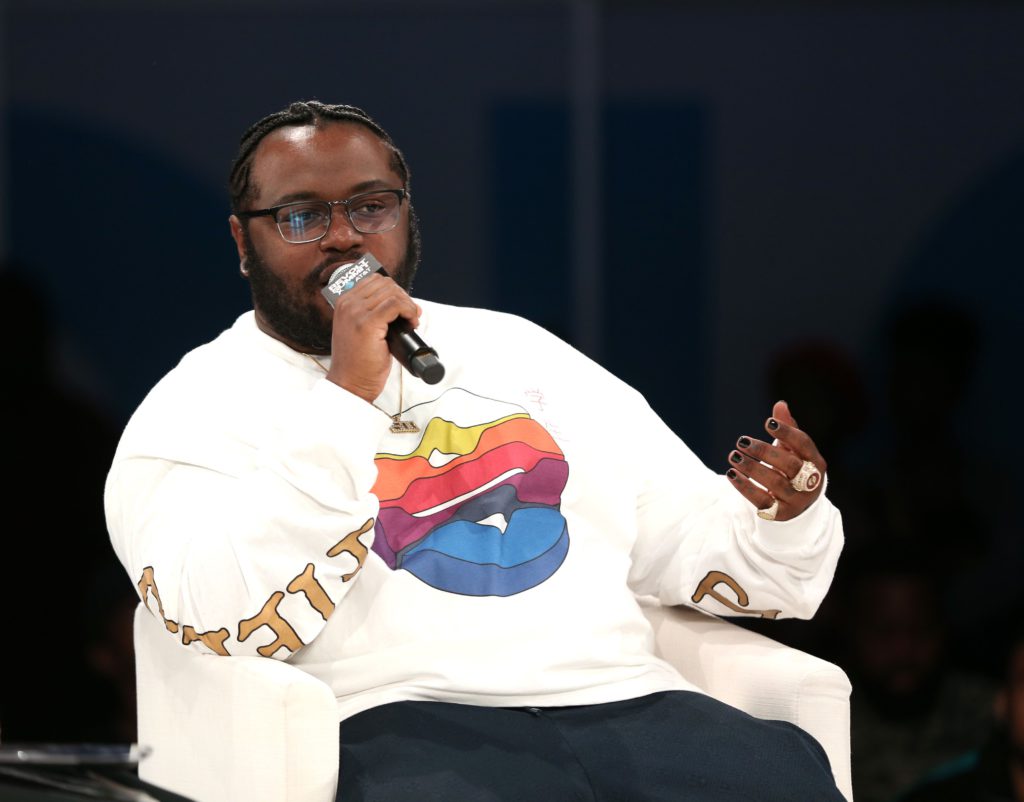
Beyonce, Nas Producers Will Make Music for Bored Ape Rock Band

(Bloomberg) — A rock band made up of virtual apes, created last year at the height of crypto mania, now has actual musicians putting together its sound — a pair of sought-after producers who have worked with Beyonce and Rihanna.

James Fauntleroy and Chauncey Hollis Jr., better known as Hit-Boy, have begun work on a new album for Kingship, a band Universal Music Group NV formed as part of a bet it can generate revenue from selling virtual goods and services built around acts. The hiring of artistic heavyweights marks a new phase of the project. Fauntleroy has won Grammys for his work with Bruno Mars and Justin Timberlake, while Jay-Z and Nas have collaborated with Hit-Boy. 

“It only made sense to bring in the best creators and producers and songwriters,” said Celine Joshua, founder of Universal’s 10:22 record label. “For me, that process led to James and Hit-Boy.” 

Joshua is the architect of Kingship, which consists of four digital characters from a collection of nonfungible tokens known called the Bored Ape Yacht Club. She has conceived a multiyear story arc for the apes, including album releases and metaverse performances. If all goes according to plan, they’ll take the world by storm and prove cryptocurrencies and NFTs are viable tools for the music industry.

Techno-optimists have long been outlining the promise of so-called Web3, a decentralized version of today’s internet. There, artists can raise money to fund production of an album by selling NFTs. Payments are more transparent, through the use of blockchain technology, and musical groups can give their fans a literal stake in their business. 

All of it allows fans to forge a greater connection with their favorite acts. The people who own NFTs for Kingship get special access to a Discord server where they can talk with one another, or learn new information about the group first. There are also perks associated with future music and performances. 

Crypto Collapse

A collapse in the market for cryptocurrencies and NFTs has complicated the plan, which Joshua said is now in its second of at least seven phases.

Universal unveiled Kingship last November when optimism about cryptocurrencies was near its peak. NFT sales neared $25 billion in 2021 and the price of Ether (a popular currency for NFTs) peaked at almost $4,800. Investors, collectors and society at large were enamored with the new speculative market. The price of Ether has plummeted more than 55% this year, according to CoinMarketCap. Sales of NFTs are currently around their one-year lows.

That caused Joshua to delay her plans to sell NFTs for the band, and reduce the number of NFTs they first sold. But she has regrouped, generating $1.5 million by selling 5,000 Kingship NFTs earlier this year. She also struck a deal with Mars Inc. for a special edition M&M’s.

“We have seen the fluctuations in the marketplace and the decline of Ether and so many projects not fulfilling promises,” Joshua said. “Consumer sentiment changed. But we decided, or I decided, that we have a development plan.”

Yet her enthusiasm helped attract Fauntleroy, a self-professed nerd who has a second career as a digital artist. He started collecting Bitcoin, now trading at about $19,000, when it went for $9,000. He also has a collection of more than 30 NFTs. 

“I bought a bunch of things that ended up not being worth” anything, Fauntleroy said. “But when I saw this community, I was like, ‘Oh.’ This is an inevitable transition to fan-based interaction.”

In an early meeting with Fauntleroy and Hit-Boy, Joshua played Van Halen’s “Jump” as an inspiration for the sound. The 1984 song topped the Billboard charts in the US and was ranked by Rolling Stone as one of the 200 greatest songs of all-time.

Fauntleroy and Hit-Boy are now in the middle of working out how they want this group to sound. After weeks debating the members’ personalities, they’ve at least settled on their instruments of choice. Hud, an ape with laser eyes, is a lead singer. Arnell, a mutated ape, is the DJ/drummer. King is the bassist and vocals, and Captain is on lead guitar.

“They are a rock band with rock ‘n’ roll personalities,” Fauntleroy said. “We are still building out exactly how they’ll express themselves.” 

(Corrects spelling of Celine Joshua’s name in third paragraph.)

More stories like this are available on bloomberg.com

©2022 Bloomberg L.P.

Close Bitnami banner
Bitnami
