Bloomberg

Checkout.com Fires Staff Over Harassment Claims From Cyprus Trip

(Bloomberg) — UK payments startup Checkout.com fired several employees earlier this year due to harassment complaints that arose from an off-site trip to Cyprus, according to people familiar with the matter. 

Following concerns raised in May, Checkout conducted an investigation that led to the termination of six members from its 120-person UK commercial team, a company spokesperson said in an emailed statement.

“We have a zero-tolerance policy for any behavior that is not in line with our values. Any complaint will always be taken seriously and acted on,” the company said in the statement. “Since May, we have carried out mandatory in-person workplace culture training for the UK Commercial team facilitated by an external provider, and have developed a standalone Harassment & Bullying Policy to strengthen our existing framework.”

Checkout was last valued at $40 billion in January, following an investment from backers such as the Qatar Investment Authority and Tiger Global Management. The company processes payments for firms such as Pizza Hut Inc., and competes with Stripe Inc. and Adyen NV. At the start of the year, Checkout said it had more than 1,700 employees in 19 countries. 

In late May, Chief Revenue Officer Nick Worswick sent an email to commercial staffers about the trip, saying the company was taking disciplinary action including terminating two members of the team following complaints, and that the company would not tolerate any kind of harassment, according to people familiar with the matter. 

The company later terminated some additional staffers as part of an ongoing investigation, the people said, asking not to be identified because the decision wasn’t public. Checkout’s investigation was launched within 24 hours of the allegations being raised, one of the people said. The exact details of the complaints could not be learned. 

More stories like this are available on bloomberg.com

©2022 Bloomberg L.P.

How a Startup Folded Just a Year After Raising $85 Million

(Bloomberg) — In early July, things looked rosy at Airlift Technologies Pvt. as it prepared to raise more cash for expansion. Six days later, the startup — one of Pakistan’s most prominent — was bust.

The e-commerce company collapsed less than a week after failing to complete a funding round, underscoring how severely the global rout in tech valuations is affecting fragile startups in emerging markets. Airlift had raised $85 million a year earlier — a record for the country — and had curbed spending in a bid to appeal to investors as it worked toward a fresh round. But then the lead backer pulled its commitment, leaving Airlift with no capital to continue and forcing it to abruptly shut down.

“The entire team, including myself, was taken by surprise when the round fell apart at the final moment,” co-founder Usman Gul said in an interview. “Airlift was not prepared for the shift in sentiment in capital markets.”

Healthy growth and progress toward profitability wasn’t enough to convince investors spooked by a global economic slowdown and slumping tech stocks. Airlift joins a slew of startups in Pakistan and neighboring India that have hit a wall as venture capitalists curb investing in the region in favor of countries and industries they consider less risky.

Gul, 33, said one of Airlift’s mistakes was not to raise more funds last year, when the markets were more favorable. This year, investors’ attention has turned from growth toward earnings potential, bringing startups’ business models under more intense scrutiny. As Airlift prepared for it latest fundraising effort, it let go a third of its employees, reduced the target size of the round and lowered its valuation.

The company appeared to have the commitments it needed as it sent the final documents to investors on July 5. But just two days later, things took a turn for the worse. The lead backer delayed sending the money, wanting more investors to wire funds together with it, Gul said, without revealing the main investor’s name. The other investors asked for two to three months, citing fears of a global recession and downturn in capital markets. Less than a week into the negotiations, Airlift’s coffers had dried up and the company had no option but to wind down its business.

“The biggest miss on our end is not prioritizing a multi-stage institutional investor,” Gul said, referring to larger anchor backers who support startups through several funding rounds. “You need that multi-stage institutional investor, someone like Accel or Sequoia, who believes in the project and can write larger checks.”

Gul praised the support it received from its early backers, but said their relatively small size didn’t allow them to invest as much as Airlift required to keep fueling its growth. The company had commitments from previous investors First Round Capital, Indus Valley Capital, Buckley Ventures, 20VC and others for the latest round before it fell apart.

Airlift helped shine a spotlight on Pakistan with its record funding round that stood out during what turned to be a breakout year for the South Asian nation’s startups — they raised a record of more than $350 million during 2021. But the pace of fundraising has slowed since, prompting companies to put the brakes on their expansion plans. Vitol-backed VavaCars has exited Pakistan, Dubai-based Swvl Holdings has paused daily rides in the country and Uber Technologies Inc. unit Careem Inc. has halted its food-delivery business. In India, shares of Zomato Ltd. and Paytm have plunged since their market debuts last year and even the country’s most valuable startup Byju’s has struggled to raise more funds.

Airlift started by operating vans and small buses used by office workers and students. When that business slowed during the pandemic, the company pivoted to quick commerce. Before its demise, the startup deployed about $85 million over 18 months to set up more than 70 warehouses in Pakistan, expand in South Africa, and add visibility through marketing spending. As it worked toward the last fundraising effort, the company had reduced its cash burn by 66% and was about three months away from operating profitability and about six to nine months from company-level profitability, according to Gul.

“We intend to learn from this experience,” Gul said. “Market turnarounds are a reality that require better planning and preparation on our end.”

More stories like this are available on bloomberg.com

©2022 Bloomberg L.P.

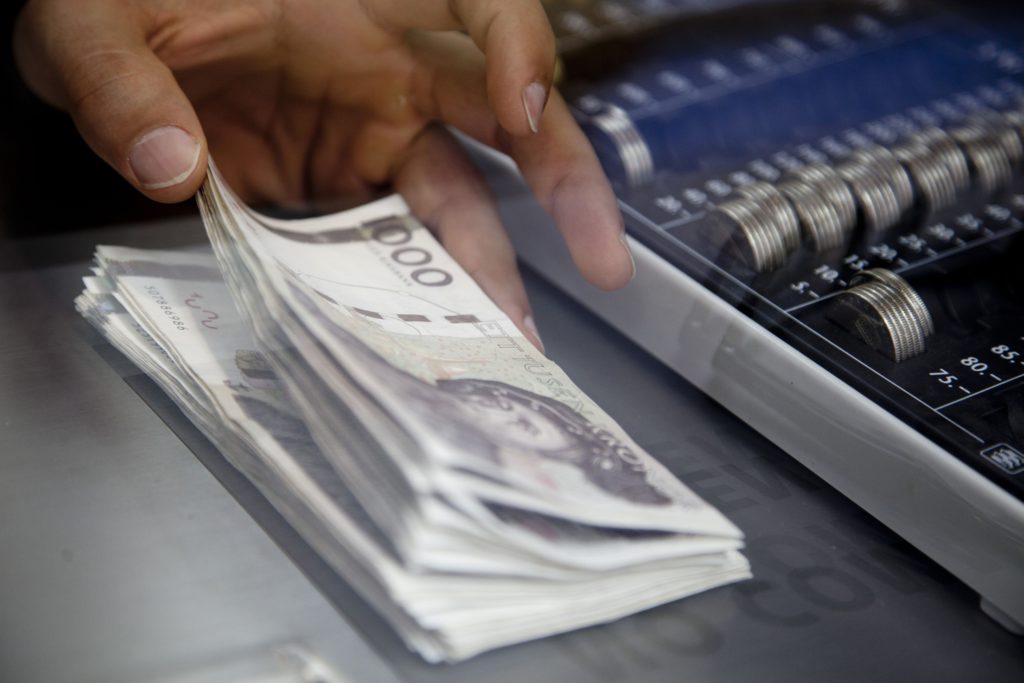
Swedish Krona Unfazed by Uncertainty Around New Government

(Bloomberg) — Sunday night’s general election in Sweden, in which the right-wing bloc holds a narrow one-seat lead over the ruling party and its allies, has so far failed to impact the krona, which traded little changed at 10.67 per euro as of 9:30 a.m. in Stockholm.

The country’s currency has slumped almost 14% against the dollar and nearly 4% against the euro this year on the back of a broad-based selloff of risk-sensitive assets.

But political risks may emerge further out. While a right-wing victory seems likely at this point, forming a new government is set to be a “difficult, drawn-out process,” Swedbank analysts Knut Hallberg and Glenn Nielsen said in a note. 

The analysts say that a tricky process to form a new government won’t increease the risk premia on Swedish assets, but “a new government that fails to the address the societal challenges and improve growth potential could eventually have a negative impact on the market in the long run.”

Elsewhere in markets, Swedish government bonds mostly fell, tracking wider moves among European peers. In equities, school group AcadeMedia AB led gains in Stockholm, with health-care providers Ambea AB and Humana AB also among the best performers. The moves come as the Social Democrats’ side has mulled introducing limits on taxpayer-funded sectors, including restricting dividend payouts.

The final election outcome is not expected until Wednesday, but Nordea economist Gustav Helgesson says Sweden is likely to have another “weak minority government.” 

Robert Bergqvist, a senior economist with SEB, says that while krona is little changed, the economic situation requires a synchronized fiscal and monetary policy. 

Read More: Sweden Headed for New Political Era as Right Wing Nears Win (1)

More stories like this are available on bloomberg.com

©2022 Bloomberg L.P.

Ethereum Upgrade Brings Risks for Ailing Crypto Lender Hodlnaut

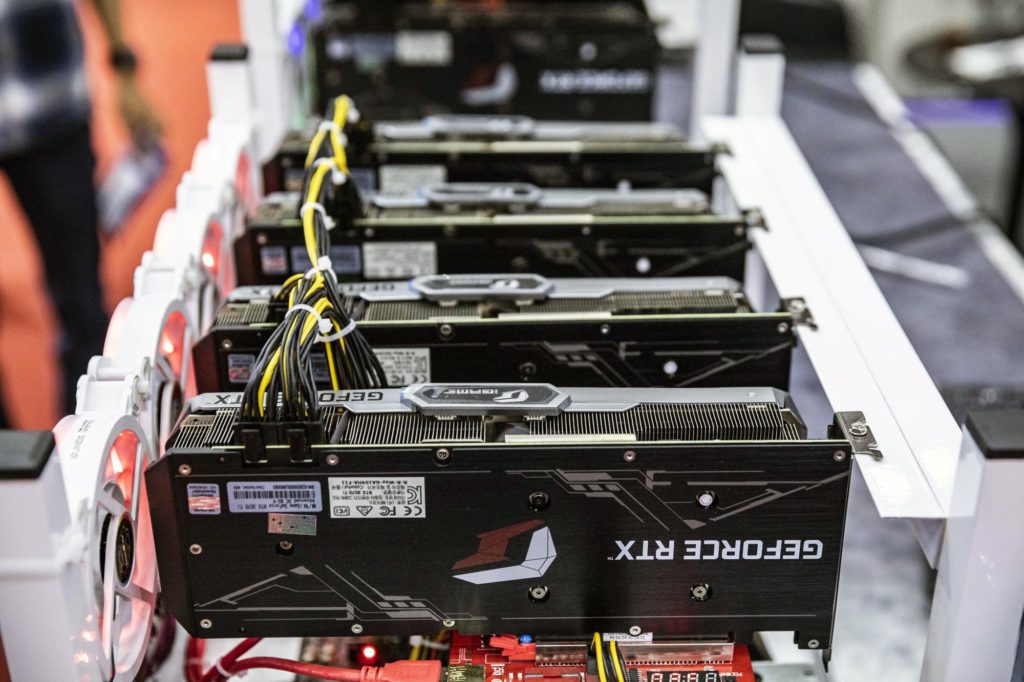
(Bloomberg) — Struggling cryptocurrency lender Hodlnaut warned of risks to its assets if a looming upgrade of the Ethereum blockchain known as the Merge stokes a bout of volatility in virtual coins.

Sharp moves in the prices of tokens linked to the Ethereum network could cause “smart contracts to automatically liquidate the assets,” the company said in a statement released on its blog on Monday.

Smart contracts are programs that automatically execute when certain conditions are met and are popular in blockchain-based decentralized finance applications, where Ethereum is the dominant network.

Big price swings after the Merge could spark liquidations as such rules are triggered, for instance in protocols governing collateral, according to Hodlnaut.

Hodlnaut is under judicial management in Singapore after halting withdrawals. The firm, which also operates out of Hong Kong, is among a number that buckled around the world during this year’s meltdown in crypto markets.

The hotly-anticipated Merge, expected around Sept. 15, will transition Ethereum to a more energy efficient network. Investors are monitoring the long-awaited and challenging software upgrade very carefully, as hiccups could ripple across the crypto ecosystem.

One way to mitigate risks is to unwind tokens deployed on decentralized finance platforms, but that may result in “material losses,” Hodlnaut said.

Judicial managers have asked for estimated losses from such an unwinding and any precautionary steps that can be taken to preserve the value of assets.

A rally in Bitcoin and other digital assets fizzled on Monday in Asia in part as traders braced for the Ethereum upgrade.

More stories like this are available on bloomberg.com

©2022 Bloomberg L.P.

Inventor Behind Amazon’s Alexa Raises Funds for AI Startup

(Bloomberg) — The inventor of several key technologies used by Amazon.com Inc.’s Alexa service raised $20 million to fund a new startup in the UK.

William Tunstall-Pedoe said his Cambridge- and London-based company, Unlikely AI, needed the money to start hiring developers of a new type of artificial-intelligence software. 

“Everyone is locked onto a path of machine learning with big neural networks,” Tunstall-Pedoe said in an interview. “It is very unclear that this path will lead to a generally intelligent machine. We are taking a contrarian fresh look at doing this.” 

Amadeus Capital Partners, Octopus Ventures, and Patrick Pichette, the former chief financial officer of Google and current Twitter Inc. board member, are among the backers of the startup.  

Amazon’s Echo devices incorporate technology Tunstall-Pedoe helped develop at Evi, a British startup the world’s biggest retailer acquired in 2012. At the time, Evi’s voice-activated search app was among the strongest competitors to Apple Inc.’s infant Siri.

The first Alexa-powered Echo speaker was a runaway success for Amazon; Meta Platforms Inc., Apple, Google, and other companies all released rival products to the cylindrical device. Although selling millions of Echo speakers and employing 10,000 people to work on Alexa in the years since, Amazon has struggled to keep customers engaged, Bloomberg has previously reported. 

Tunstall-Pedoe left Amazon in 2016 and became one of a group of UK-based early-stage investors, advising AI companies such as Ada Heath and Fluent.ai.

“I always knew I had one or two Evi-sized startups left in me,” he said. “I’ve been thinking about it since I left Amazon.”

Unlikely.ai launched its first product during the Covid-19 pandemic — an app that solves and explains cryptic crossword clues. 

Long before Alexa’s creation, Tunstall-Pedoe built an anagram algorithm used by author Dan Brown for books such as his 2003 bestseller “The Da Vinci Code.”

More stories like this are available on bloomberg.com

©2022 Bloomberg L.P.

Bitcoin Rally Cools Ahead of CPI Data, Ethereum Network Upgrade

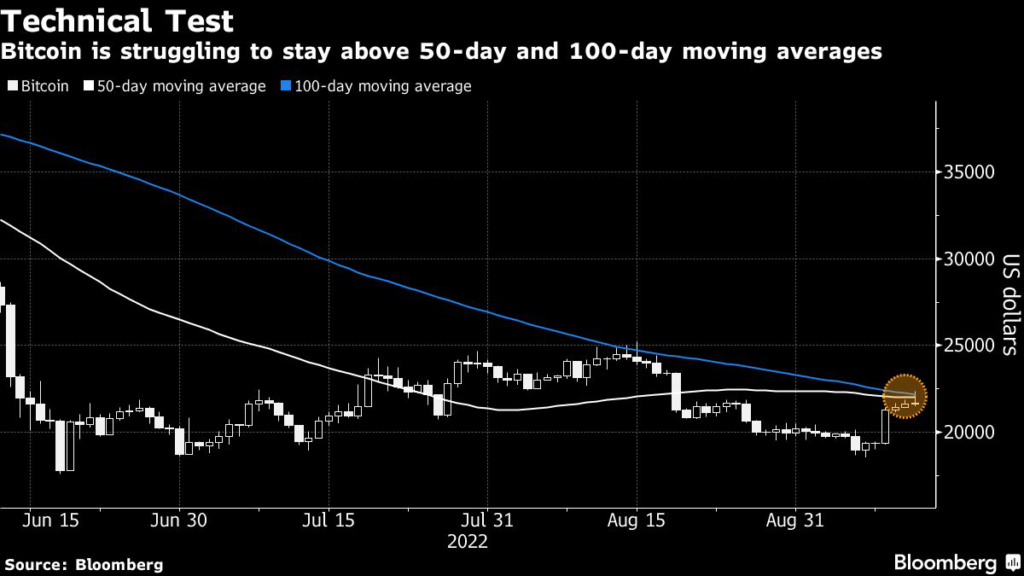
(Bloomberg) — A rally in Bitcoin is cooling as traders await US inflation data and monitor a seminal upgrade of the Ethereum blockchain, events that could stir volatility in cryptocurrency markets.

The largest token rose as much as 3.3% on Monday, briefly scaling $22,000 before falling back to trade little changed as of 1:16 p.m. in Tokyo. Ether along with smaller coins like Cardano and Solana were on the back foot.

Higher-than-expected US inflation on Tuesday could harden expectations for restrictive monetary settings that are anathema for crypto prices. Any bumps in the upgrade later this week of Ethereum — the most important crypto network commercially — also have the potential to sow disquiet.

Bitcoin jumped about 10% on Sept. 9 amid a broader embrace of beaten-down assets encouraged by a weaker dollar that hinted at a little less fear in a tough year for global markets. 

A blackout period for comments from Federal Reserve officials before the US central bank’s interest-rate decision later this month may be one of the factors helping Bitcoin, according to Tony Sycamore, senior market analyst for City Index Ltd. in Sydney.

“The market knows that it’s got a break from this unrelenting hawkish Fedspeak for a couple of weeks and that the pace of central bank rate hikes is likely to slow,” he said.

Rising borrowing costs alongside blowups at crypto lenders and hedge funds have saddled Bitcoin, Ether and the wider MVIS CryptoCompare Digital Assets 100 Index with losses of more than 50% in 2022.

Ether, the native token for the Ethereum network, is particularly in focus ahead of the latter’s transition to a more energy-efficient blockchain, a process known as the Merge. The crypto community is on alert for any snafus that buffet the many financial applications that rely on the network.

“We continue to be long Ether into the Merge, using dips as buying opportunities,” Sean Farrell, head of digital asset strategy at Fundstrat Global Advisors LLC, wrote in a note. He added that Ether didn’t succumb to a “sell-the-news” drop after three earlier Ethereum upgrades. 

The pattern of bets around options on Ether is weighted toward bullish calls, but the picture is more balanced around the Merge date, suggesting hedging in the lead up to the event, according to a note from Genesis Global Trading Inc.

More stories like this are available on bloomberg.com

©2022 Bloomberg L.P.

Tech Rally Haunted by ‘Palpable Fear’ of Chip Industry Weakness

(Bloomberg) — Technology stocks are treading on shaky ground despite last week’s rally as chipmakers signal more trouble may be ahead in an industry notorious for its booms and busts.

Semiconductor shares have been tumbling amid a series of corporate warnings about slowing demand for chips that are used in an array of electronic devices such as mobile phones. The Philadelphia semiconductor index has slumped 11% over the past four weeks, underperforming the 7% decline in the Nasdaq 100, with laggards such as Nvidia Corp. hitting lows for 2022.

Investors are concerned that slowing orders that are already plaguing makers of memory chips and other components used in personal computers may spread to the rest of the semiconductor industry. Adding to those worries are Biden administration’s focus on curbing chip exports to China and a Federal Reserve bent on aggressive interest-rate hikes to snuff out inflation. 

“There’s a palpable fear that the semiconductor cycle has begun to turn negative and demand is slowing,” said Jason Benowitz, a senior fund manager at Roosevelt Investment Group in New York. “If the downturn turns out to be deeper and longer and more broad, then we would expect technology to also underperform.”

The tech selloff since mid-August is a reversal from two months ago when the sector led a rebound in the S&P 500 amid optimism inflation was topping out, a scenario that traders believed would give the Fed flexibility to slow its rate hikes. That optimism was squelched on Aug. 26 by central bank chief Jerome Powell, who used his Jackson Hole speech to push back against the idea that it would soon reverse course. 

Samsung Electronics Co. added to concerns last week after a senior executive at the world’s largest chipmaker said the outlook for the second half of the year is gloomy and it isn’t seeing momentum for a recovery in 2023. That followed weak sales forecasts from companies such as Micron Technology Inc. and Western Digital Corp.

Supply Chains

Semiconductors take months to go through a complicated manufacturing process and chip buyers are acutely concerned about a recurrence of supply-chain shortages that arose after the Covid-19 pandemic caused demand to soar, making the industry’s orders an indicator of future demand for electronics and other goods.

Nvidia, which makes graphics processors used in personal computers and data centers, has lost more than half of its market value this year amid a rout in stocks with lofty valuations. The stock, however, remains a favorite for retail investors who have made more than $600 million in net purchases over the past two weeks, according to research firm Vanda.

Adding to the pain is the Biden administration’s moves to restrict China’s access to chipmaking equipment. The US is planning to broaden curbs on its shipments of semiconductors for artificial intelligence and chipmaking tools to China, Reuters reported, citing unidentified people familiar with the matter.

China Restrictions

The Commerce Department planned to publish new regulations based on restrictions communicated in letters to KLA Corp., Lam Research Corp. and Applied Materials Inc. The agency banned them from exporting chipmaking equipment to factories in China that produce 14-nanometer or more advanced semiconductors, unless the sellers obtain licenses, Bloomberg News reported in July.

Analysts have slashed profit estimates for semiconductor companies more than other parts of the tech sector. Earnings for chip-related companies in the S&P 500 are projected to be flat in 2023, down from expectations of 12% growth just three months ago, according to data compiled by Bloomberg Intelligence. By contrast, profits for the broader information technology sector are projected to expand 6%, down from 11% over the same span. 

Morgan Stanley analyst Joseph Moore said last week he sees increasing challenges for chipmakers with inventories on the rise. “We expect every sector to show some degree of inventory correction in the next 12-18 months,” he wrote in a research note, referring to the semiconductor industry.

Depressed Valuations

Bullish investors argue that most of the bad news is already priced in, creating an opportunity to buy chipmakers at depressed valuations. The chip index is priced at 15 times earnings projected over the next 12 months, down from a high of 24 in January 2021, and below the average of 16 over the past decade. 

However, the last time the Fed embarked on a similar tightening campaign in 2018, causing technology stocks to crater, the Philadelphia semiconductor index didn’t bottom out until the multiple fell to 11.

Citigroup Inc.’s Christopher Danely sees parallels with a semiconductor slump about a decade ago. “We remain cautious on semis and believe this downturn is similar to the 2011/2012 downturn, due to multiple contraction, demand contraction and inventory correction,” he said.

(Updates to add)

More stories like this are available on bloomberg.com

©2022 Bloomberg L.P.

Fuel-Shortage Risks Make Investors Bullish on Energy Stocks: MLIV Pulse

(Bloomberg) — Energy stocks and bonds are poised to get a fresh boost from investors positioning to benefit from the surging electricity prices and fuel shortages expected later this year. 

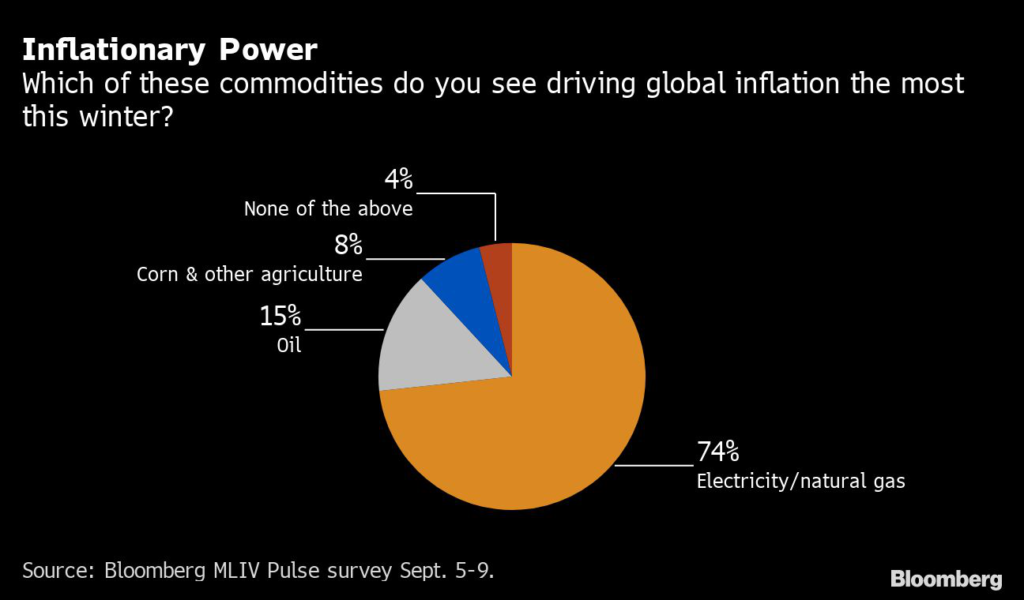
Two-thirds of respondents to an MLIV Pulse survey — which includes portfolio managers and retail investors — plan to increase exposure to the sector over the next six months. They see electricity and natural gas prices driving global inflation and expect that Russia will choke off flows of natural gas to Europe, leading to shortages of key fuels this winter.

Energy stocks are one of the rare bright spots in the world’s equity markets, with an index of energy companies in the S&P 500 rallying more than 40% so far this year as profits surged along with oil and gas prices. Yet, they remain significantly cheaper than their S&P 500 peers, based on their prices relative to the earnings they’re expected to report in the year ahead. While junk-rated energy bonds are expensive when compared with the global index, the US energy debt rated at investment grade BBB is relatively attractive, trading at a higher spread than the average of its peers by rating and duration. 

“I definitely want to remain invested in energy stocks because of massive supply constraints,” Chris Wood, global head of equity strategy at Jefferies LLC, said in a Bloomberg TV interview. “The other reason to own energy is quite simply that you need a hedge against the growing risk of escalation in Ukraine.”

Energy markets have come under further strain as Russia constricts deliveries of natural gas through its Nord Stream pipeline, causing prices to almost triple in Europe this year. European Union sanctions are set to squeeze Russian oil supplies when they take effect in December. 

Europe’s worst energy crisis in five decades is making rationing look all but inevitable this winter. The EU has already created a voluntary 15% demand-reduction target for gas, with the option of making it obligatory if needed, and warned of “further drastic reductions” if temperatures are especially low. 

Almost three quarters of 814 respondents expect electricity and natural gas prices to drive global inflation the most this winter. A similar majority said that if there will be any shortages over the next six months, it will be of key fuels, including natural gas.

Years of under-investment during the attempt to transition away from the fossil fuels have left global supplies unable to satisfy the post-pandemic rebound in demand.“It’s ultimately the revenge of the old economy: if you don’t invest in the old economy, it comes back to haunt you,” said Jeff Currie, head of commodities research at Goldman Sachs Group Inc. “The only way you’re solving the energy problem in the long run is through investment – and oil companies are the conduit for the capex to solve the problem.”

The surge in energy prices has hit major economies with a brutal wave of inflation, which has reached record levels in the Euro-area and the hottest pace in almost four decades in the US. Goldman Sachs has warned that inflation in the UK could top 22% next year if natural-gas prices remain elevated. Economists increasingly predict a Euro-area recession in the coming quarters as the rising cost of living saps demand, undermining the pandemic rebound.

“The European gas market is likely to remain tight throughout the 2020s,” said Katja Yafimava, a senior research fellow at Oxford Institute for Energy Studies. The “global shortage of gas, hesitancy about new investment in new gas production” and the EU’s “political decision to phase out its dependence on Russian gas altogether” are driving the tightness. 

Nonetheless, bullish investors may have their nerves tested in the months ahead as the inflationary wave batters the global economy. Demand in China, the world’s second-biggest consumer, remains overshadowed by the property crisis and virus restrictions. 

In the oil market, there are already signs of demand destruction taking place, with crude prices retreating about 25% over the past three months.

Most respondents expect oil prices to remain between $70 and this year’s peak of $139, with only 10% seeing crude surging above that level. About 46% expect energy crisis to accelerate the pace of green power generation.

Energy price volatility is itself posing a risk to the financial system, with the rising prices forcing utilities to put up more collateral for fuel-delivery contracts purchased with loans. Norwegian energy company Equinor ASA warned that margin calls of at least $1.5 trillion are straining energy trading and pushing governments to provide greater liquidity buffers. 

Yet energy bulls are unperturbed. Even if a global economic slowdown causes oil prices to falter, they see another line of defense in the OPEC+ producers’ cartel led by Saudi Arabia. The alliance demonstrated its readiness to intervene by announcing a symbolic production cutback earlier this month.

The kingdom and its partners are likely to either hold production steady or cut rather than increase it over the next six months, according to the survey. Some 44% of respondents believe that oil prices are failing to reflect the realities of supply and demand — a disconnect recently identified by Saudi Energy Minister Prince Abdulaziz bin Salman.

“We continue to warn of significantly tighter markets at year-end,” said Amrita Sen, chief oil analyst at consultant Energy Aspects. “OPEC+ has provided a price put which should serve as a clear reminder that they will stop stockpiles from building should the world economy slump into a severe recession.”

The appetite for energy stocks appears to be sector-specific, as majority of respondents said they will keep their exposure to the S&P 500 the same over the next month. Information technology and communication services shares, which have underperformed this year, are sensitive to economic slowdowns. Meanwhile, those of financial services companies, heading for their worst year since 2018, have been taking their cues from the Federal Reserve as it steps up its monetary tightening regiment to tame inflation.Join us on Sept. 12 at 10 a.m. New York time for a discussion on the survey results. For more markets analysis, see the MLIV blog. 

More stories like this are available on bloomberg.com

©2022 Bloomberg L.P.

Biden Seeks Boost for US Biomanufacturing to Compete With China

(Bloomberg) — President Joe Biden is poised to sign an executive order to help expand US biomanufacturing and reduce reliance on China. 

The draft order lays out a strategy to bolster domestic manufacturing that harnesses biological systems to create a sweeping array of products and materials, from new medicines and human tissues to biofuels and food, according to people familiar with the matter, who asked not to be identified as details of the executive order aren’t yet public. 

The US has one of the world’s most robust biotechnology industries and while it has led in research and development, it has allowed high-tech production to migrate abroad. US national security and intelligence officials are particularly concerned about reliance on China’s advanced biomanufacturing infrastructure.

The Covid-19 pandemic created a sense of urgency around developing a clear and consistent industrial strategy, according to two of the people, who pointed to the fast development and production of messenger RNA vaccines as an example of successful domestic investment. Looking beyond health care, the US will aim to advance biomanufacturing in agriculture, energy and other industries.

The order will outline how the US should develop a trained workforce capable of using naturally occurring process to create bio-based products and materials, the people said. The Biden administration plans to deploy resources to support scaling out biomanufacturing infrastructure, though it’s not yet clear whether there’s funding to back the executive order.

The White House will suggest that improving domestic biomanufacturing will ultimately lower prices and strengthen supply-chain security, according to the people.

Two weeks ago, Biden signed an executive order to boost domestic semiconductor manufacturing that’s also part of the administration’s drive to shift the balance of US competition with China.

In May, China’s National Development and Reform Commission released a 5-year plan for bioeconomic development, which described efforts to accelerate new technologies and spur growth in health care, agriculture and fuel. As tensions mount between the the US and China, the Biden administration has looked for ways to curb investment in China’s industries.

More stories like this are available on bloomberg.com

©2022 Bloomberg L.P.

Scholz Says Germany Prepared for Russia Gas Halt Amid War

(Bloomberg) — Germany and Europe are prepared to weather the fallout should Russia decide to halt gas deliveries altogether, the country’s chancellor Olaf Scholz said in a statement on Saturday.

Germany has prepared “for Russia to largely cut off gas supplies because of the war against Ukraine,” Scholz said, adding his country has set up terminals on the north German coast to import liquid gas. 

The chancellor’s claim that the country is prepared was disputed, however, by Germany’s Association of Towns and Municipalities, which represents around 14,000 municipalities and towns across the nation, as well as by economic think tank DIW. 

Europe’s largest economy is at the center of the continent’s energy crunch as Russian President Vladimir Putin slashes supplies in retaliation for sanctions related to the war in Ukraine. Concerns have been mounting that Germany could face a wave of bankruptcies in the fallout from the crisis. 

“We saved gas. We are once again using the production capabilities of coal-fired power plants. At the beginning of next year we will have the opportunity to use the remaining southern German nuclear power plants if that is necessary,” the chancellor said.

Yet the government’s power pledge was questioned on Saturday, when the president of the Association of Towns and Municipalities said the country is running the risk of an energy crisis.

“A hacker attack and/or an overload of the electricity grid” could cause a severe blackout, Gerd Landsberg, president of the association, told newspaper Welt am Sonntag. Such an overload could be triggered if too many households plug in electric heaters instead of gas heaters, he said.

Germany has acknowledged that the situation is serious, but isn’t doing enough yet to prepare, Landsberg said, according to the newspaper.

Marcel Fratzscher, president of German think tank DIW, told media network RND on Saturday that he expects a longer downturn in Germany.

“Recession is unavoidable, we are already in a downturn,” said Fratzscher, adding he is concerned the economy won’t recover fast and instead shrink in 2023. “2024 won’t be such a good year either,” the economist said and warned Germany is at risk of having to put up with a few years of stagflation.

Fratzscher predicted that “many companies will go bankrupt” because the government can’t save them all. He suggested the government limit energy costs and offer help to transform.

Earlier this week, the German government was dealt a blow to its plans to keep some nuclear power plants online as back-up reserve. The plan, unveiled by Economy Minister Robert Habeck, was rejected by one of Germany’s nuclear power plant operators, which said it “is technically not doable and therefore not suitable as a means to secure the supply share of these plants.”

(Adds comment from economic think tank DIW)

More stories like this are available on bloomberg.com

©2022 Bloomberg L.P.

Close Bitnami banner
Bitnami