
Bloomberg

Scholz Says Germany Prepared for Russia Gas Halt Over Ukraine

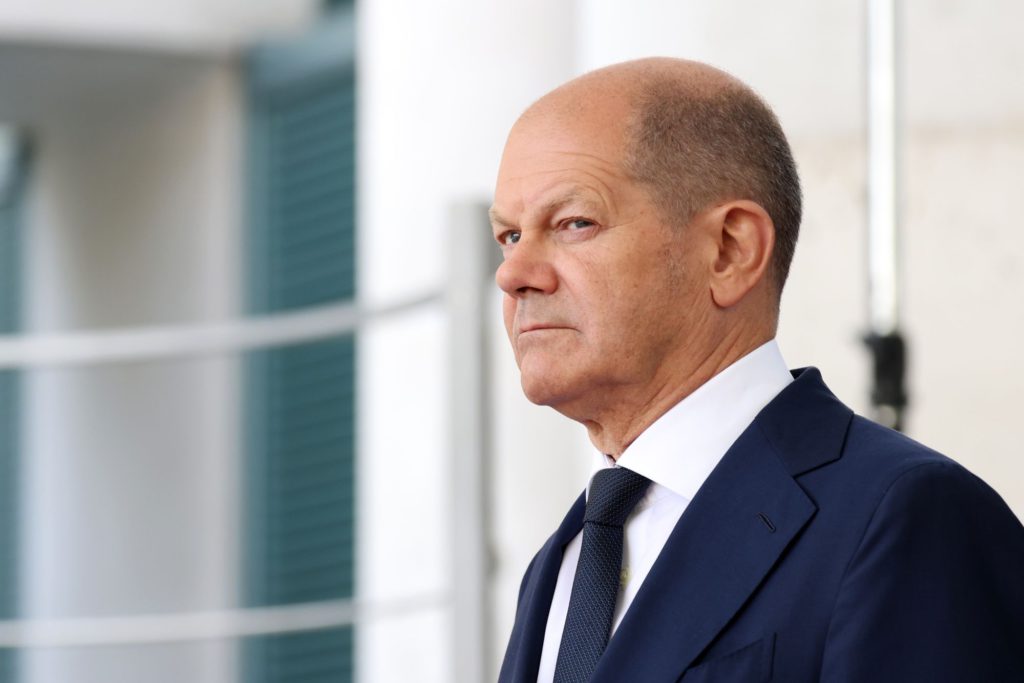
(Bloomberg) — Germany and Europe are prepared to weather the fallout should Russia decide to halt gas deliveries altogether, the country’s chancellor Olaf Scholz said in a statement on Saturday.

Germany has prepared “for Russia to largely cut off gas supplies because of the war against Ukraine,” Scholz said, adding his country has set up terminals on the north German coast to import liquid gas. 

The chancellor’s claim that the country is prepared was disputed, however, by Germany’s Association of Towns and Municipalities, which represents around 14,000 municipalities and towns across the nation, as well as by economic think tank DIW. 

Europe’s largest economy is at the center of the continent’s energy crunch as Russian President Vladimir Putin slashes supplies in retaliation for sanctions related to the war in Ukraine. Concerns have been mounting that Germany could face a wave of bankruptcies in the fallout from the crisis. 

“We saved gas. We are once again using the production capabilities of coal-fired power plants. At the beginning of next year we will have the opportunity to use the remaining southern German nuclear power plants if that is necessary,” the chancellor said.

Yet the government’s power pledge was questioned on Saturday, when the president of the Association of Towns and Municipalities said the country is running the risk of an energy crisis.

“A hacker attack and/or an overload of the electricity grid” could cause a severe blackout, Gerd Landsberg, president of the association, told newspaper Welt am Sonntag. Such an overload could be triggered if too many households plug in electric heaters instead of gas heaters, he said.

Germany has acknowledged that the situation is serious, but isn’t doing enough yet to prepare, Landsberg said, according to the newspaper.

Marcel Fratzscher, president of German think tank DIW, told media network RND on Saturday that he expects a longer downturn in Germany.

“Recession is unavoidable, we are already in a downturn,” said Fratzscher, adding he is concerned the economy won’t recover fast and instead shrink in 2023. “2024 won’t be such a good year either,” the economist said and warned Germany is at risk of having to put up with a few years of stagflation.

Fratzscher predicted that “many companies will go bankrupt” because the government can’t save them all. He suggested the government limit energy costs and offer help to transform.

Earlier this week, the German government was dealt a blow to its plans to keep some nuclear power plants online as back-up reserve. The plan, unveiled by Economy Minister Robert Habeck, was rejected by one of Germany’s nuclear power plant operators, which said it “is technically not doable and therefore not suitable as a means to secure the supply share of these plants.”

(Adds comment from economic think tank DIW)

More stories like this are available on bloomberg.com

©2022 Bloomberg L.P.

EU Is Assessing If US Inflation Act in Breach of WTO Rules

(Bloomberg) — The European Union is checking whether protectionist elements of a $437 billion health, climate and tax law recently passed by the US are in violation of World Trade Organization rules, according to Trade Commissioner Valdis Dombrovskis.

“We have concerns about a number of discriminatory elements in this Inflation Reduction Act which puts requirement for local content, for local production,” Dombrovskis, who also is a European Commission vice president, told Bloomberg in Prague. “So we are assessing if it’s in line with WTO requirements and with government procurement agreement.” 

US President Joe Biden’s new laws aim to increase domestic production of electric cars and reduce reliance on China for battery components and materials. It includes tax credits for electric vehicles made in North America but the EU’s concerns go beyond this sector.

“Currently we are doing this assessment and based on that we will check what our options are to best react to this situation,” Dombrovskis said. Let’s “not jump into conclusions before we do the assessment but we are assessing the options.”

South Korea has already said it views the US rules that favor American-made EVs and batteries as a “betrayal” and that it will “actively” consider filing a complaint with the WTO.

Issues over the US Inflation Reduction Act have cast a pall over the talks leading up to the next Trade and Technology Council, a forum for the two sides to discuss trade and technology topics including semiconductors and tariffs. European and US officials plan to meet before the end of the year and announce results at the third meeting.

But the issues, especially on trade, are making it difficult to agree to a list of priorities the two sides want to focus on at the next in-person meeting. There will be no ministerial if the two sides cannot agree to concrete deliverables, a person familiar with the matter said, although officials are confident the two will.

More stories like this are available on bloomberg.com

©2022 Bloomberg L.P.

China Plans More Moon Missions After Finding New Lunar Mineral

(Bloomberg) — China plans to launch three unmanned missions to the moon over the next 10 years, as it seeks to rival the US in the new era of space exploration.

China’s National Space Administration, its equivalent of NASA, received approval to send three orbiters to the moon as part of the Chang’e lunar program, said Liu Jizhong, an official with the China Lunar Exploration and Space Program Center, according to state-backed CCTV.

The announcement came a day after China said it discovered a new lunar mineral, via samples retrieved by its Chang’e-5 mission. Named Changesite-(Y), it was described by the state-run Xinhua news agency as a kind-of colorless transparent columnar crystal. It’s said to contain helium-3, an isotype that’s been speculated as a future energy source. 

China has ramped up its ambitions in space in recent years, sending probes to the moon, building its own space station and setting its sights on Mars, plans that have put it in direct competition with the US. NASA has a rover on the Red Planet and is seeking to put astronauts on the moon again this decade. Both countries are eyeing the moon’s minerals with space mining expected to be the next source of tension.

The two sides have been trading barbs in recent weeks, after the US’s Artemis I mission, its first major push to return to the moon in half a century, was delayed. NASA Administrator Bill Nelson has accused China of stealing space technology, and the country has been criticized over space debris.  

US and China Spar in New Space Race to Tap Moon’s Resources

Established in 2004, China’s lunar exploration program launched its first spacecraft three years later. The Chang’e program takes its name from the Chinese moon goddess, and has been recently focused on collecting samples from the lunar surface. The Chang’e-7 program will target the moon’s South Pole, an area scientists think is the best place to find water. NASA is also targeting that part of the moon. 

China aims to eventually build a moon-based international research station, Liu, the government official, said Saturday. 

More stories like this are available on bloomberg.com

©2022 Bloomberg L.P.

Top Media School in China Sealed After Student Covid Infection

(Bloomberg) — China’s capital sealed off a top-tier media school after one suspected Covid case was found among students, raising public concerns of on-campus transmission. 

The Communication University of China, a media school famous for tutoring celebrity TV anchors, imposed a closed-loop management system from 5 p.m. on Friday, according to a university statement released Saturday.

The 14,000-student institution, located in the eastern suburbs of Beijing, is the latest educational establishment to fall victim to the highly transmissive virus. Two other schools in the capital city reported 14 new cases on the same day, all from quarantine, the Beijing Health Commission said.  

The intensified Covid-control measures ahead of the crucial Party Congress set for mid-October are putting the reins on the world’s second-largest economy. The National Health Commission announced on Thursday plans to minimize residents’ travel during the mid-Autumn festival this weekend and National Day holidays in October, which are normally key periods for domestic tourism. 

The virus is sweeping across 28 out of China’s 31 provinces, based on the latest figures released by the commission on Saturday. Tibet, Sichuan in the southwest, and the northeastern province of Heilongjiang remain the epicenters. They account for nearly half the total infections in China. 

The nation reported a total of 1,233 new local cases on Sept. 9, keeping the figures above 1,000 a day for more than a month now as Beijing struggles to contain outbreaks.

The megacity Chengdu, home to 21 million people in Sichuan province, extended a weeklong lockdown this week, making it the biggest city to shut since Shanghai’s bruising two-month confinement earlier this year. China’s strict Covid-Zero policy is being challenged by food supply strains and public service capacity. An overload of test requests have crashed local health code apps in Chengdu, local media reported.

Yibin city, about three hours’ drive from Chengdu, also imposed lockdown measures in some key districts from Friday night. The city government told residents to stay at home and rolled out massive testing to prevent a spread. Meanwhile Zunyi City in a neighboring province also announced three-day restrictions in the downtown area from Saturday morning. 

More stories like this are available on bloomberg.com

©2022 Bloomberg L.P.

Revamp of Federal Software Buys Could Force Microsoft Changes

(Bloomberg) — The top Democratic senator responsible for government oversight is drafting legislation that would overhaul how the federal government buys software, a move that could force Microsoft Corp., Oracle Corp. and other technology companies to remove limits on how their products interact with those made by rivals.

The draft bill, a copy of which was obtained by Bloomberg, would require agencies to move toward buying unlimited software licenses, rather than ones for a specific number of employees. Known as “enterprise licenses,” these contracts can save money by eliminating added costs when software is overused. 

The legislation, written by Senator Gary Peters, the Michigan Democrat who chairs the Senate Homeland Security and Government Affairs Committee, would mandate government buyers to review all of their software, including any rules that limit how it can be used on computers, servers or cloud providers.

The draft legislation is still being finalized, according to a Peters aide, and is subject to change. His office didn’t comment on when the measure will be introduced. But the senator’s sponsorship boosts the likelihood that the bill will pass, given his role at the helm of the key committee.

While the bill doesn’t identify any of the software makers by name, if passed into law it would affect how companies like Microsoft and Oracle sell their products to the federal government. 

Microsoft has come under fire from customers and rival cloud sellers like Amazon Web Services and Alphabet Inc.’s Google Cloud Platform for licensing rules that make it harder, more expensive or in some cases impossible to run products like Windows and Office in rival clouds, even if customers have already purchased licenses to use these programs.

A 2014 GAO review found most agencies didn’t adequately manage their software licenses, leading to higher costs when they purchased duplicative licenses or paid fees for violating license terms. Two years later, Congress passed a law requiring each agency establish a software licensing policy and track its purchases.

The Peters bill would build on that law, which his office said has saved the federal government $450 million since it was enacted. In addition to requiring that each agency move to unlimited software licenses where possible, the legislation also proposes the administration make plans to adopt government-wide licenses for popular software as a move to further reduce costs and use its purchasing power to promote interoperability — the seamless transfer of data and information between systems.

The bill also asks agencies to identify limitations in software licenses on how programs can be used and to come up with ways to minimize such restrictions.

The federal government budgeted about $92.2 billion for information technology spending in fiscal 2021. Each of the federal government’s 24 agencies contracts on its own, buying thousands of software licenses each year, according to the Government Accountability Office. 

Last month, Microsoft detailed some changes in its licensing policies to make it easier to run existing programs in clouds maintained by smaller providers, but the company hasn’t addressed license strictures related to the software maker’s joint customers with Google, Amazon.com Inc. and China’s Alibaba. Amazon said in a statement last month that the new changes, the exact language of which hasn’t yet been released, add new limits that impact them and their partners.

A lack of software interoperability has also hampered some government projects such as the effort to connect the Defense Department’s electronic medical records system to the one operated by Veterans Affairs. The VA signed a $10 billion contract in 2018 to move from its own proprietary electronic health records system to one developed by Cerner Corp., which was recently acquired by Oracle. 

More stories like this are available on bloomberg.com

©2022 Bloomberg L.P.
Musk Says Whistle-Blower Deal Lets Him Drop Twitter Purchase

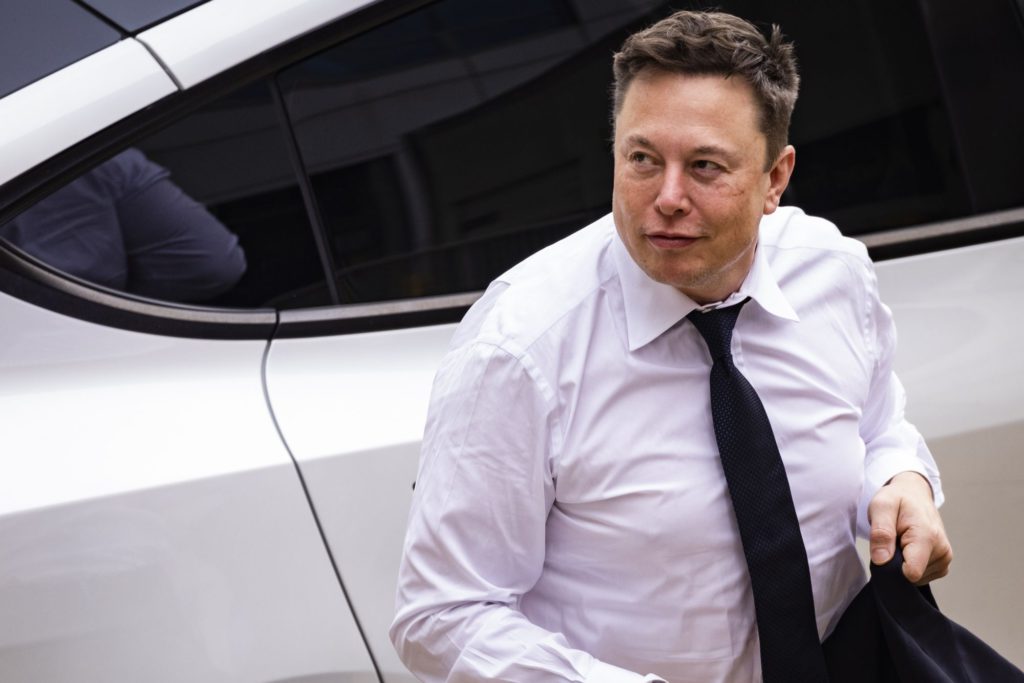
(Bloomberg) — Elon Musk told Twitter Inc. that a $7 million severance payment to a whistle-blower who raised questions about problems at the company gives him another reason to walk away from his $44 billion purchase of the social media platform.

Musk is trying to terminate his acquisition of Twitter after claiming the platform misled him and investors about the number of spam and bot accounts among its more than 230 million users. Twitter counters that Musk’s bot concerns are a pretext to get out of a deal in which the world’s richest person allegedly developed buyer’s remorse.

Musk’s lawyers, in a filing Friday, said as part of the purchase deal, Twitter needed to notify the billionaire before it spent $7.75 million in a separation agreement on June 28 with Peiter Zatko, the company’s former security chief. Musk’s lawyers said they learned of Zatko’s agreement Sept. 3 when Twitter filed paperwork in court. Zatko is scheduled to testify before a US Senate committee next week on his concerns about lax security, privacy issues and the number of bots on the platform. He has been subpoenaed to testify in the Twitter lawsuit, as well.

Both sides are gearing up for an October trial of Twitter’s lawsuit to force Musk to consummate the deal. Delaware Chancery Judge Kathaleen St. Jude McCormick on Wednesday approved Musk’s request to add Zatko’s allegations to his counterclaims. But she denied his bid to delay the trial.

Twitter representatives didn’t immediately respond to an emailed request for comment.

It’s the third time Musk has told Twitter officials he’s withdrawing his $54.20-per-share bid for the platform because of violations of the buyout agreement covering the transactions.


“This severance payment violated” the requirement that Twitter executives run the company “in the ordinary course of business” while the legal dispute over Musk’s efforts to torpedo the deal are hashed out.

The case is Twitter v. Musk, 22-0613, Delaware Chancery Court (Wilmington).

More stories like this are available on bloomberg.com

©2022 Bloomberg L.P.
Civilian Space Crashes to be Investigated by NTSB, Agency Says

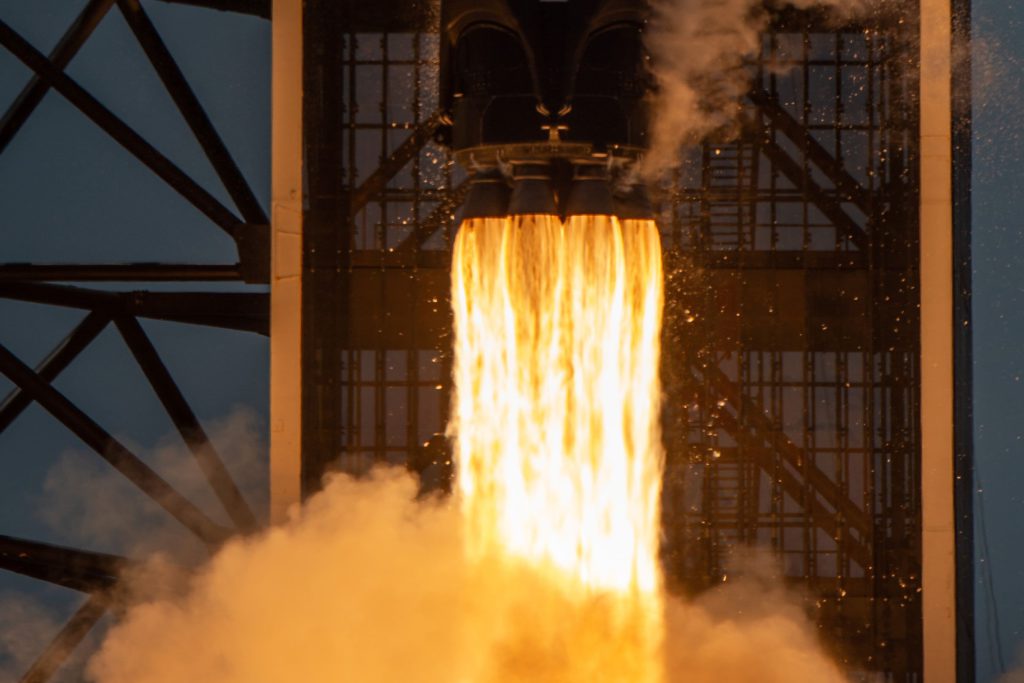
(Bloomberg) — US officials have agreed on an updated framework for investigating major accidents in the commercial space industry as human tourism and flights hauling hardware into orbit expand rapidly. 

The National Transportation Safety Board, the independent agency that leads investigations into plane crashes, will conduct similar reviews for mishaps involving private sector rockets and space capsules, according to an agreement signed Friday. The NTSB will work in coordination with the Federal Aviation Administration, which is responsible for licensing commercial space activity, NTSB Chairwoman Jennifer Homendy said in an interview. 

“We were able to come to an agreement that benefits safety, and certainly still allows innovation and allows the commercial space industry to grow,” Homendy said after NTSB and FAA signed the agreement at NASA’s Johnson Space Center near Houston.

While the NTSB has investigated some space-related accidents in the past under agreements signed in 2000 and 2004, the new memorandum formalizes its authority for launches carrying people and codifies requirements for reporting mishaps. It also resolves what had been growing tension over how to handle the next space tragedy. 

The commercial space industry is growing rapidly. The number of approved space launches and reentries by ventures such as SpaceX, Virgin Galactic and Blue Origin reached 64 last year, nearly double the total in 2020, according to FAA. This year the industry is poised to grow again, with 63 approved just through Aug. 9, the agency said. 

The most significant space accident by a commercial venture occurred in the 2014 crash of a Virgin Galactic test flight that killed one pilot. 

The agreement doesn’t apply to accidents that occur on NASA or military launches, though NTSB and FAA have assisted in such investigations in the past. 

For commercial space activity, NTSB will investigate all accidents with fatalities or serious injuries, and those that cause significant damage to property outside of launch zones. Reviews of more minor incidents will be overseen by FAA, but NTSB can participate as an observer, Homendy said.  

More stories like this are available on bloomberg.com

©2022 Bloomberg L.P.

MicroStrategy Says It May Buy More Bitcoin in Stock Sale Filing

(Bloomberg) — MicroStrategy Inc., probably best known as the largest corporate buyer of Bitcoin, filed with the US Securities and Exchange Commission to sell as much as $500 million in stock. Proceeds may be used to buy more of the cryptocurrency. 

The Class A shares will be sold through Cowen & Co. and BTIG LLC, according to a filing Friday by the enterprise software company. No specific date was provided for any potential sales. The firm added that it intends to retain all future earnings, if any, to purchase additional Bitcoin and for the development of the software business.

MicroStrategy co-founder Michael Saylor gave up his chief executive officer title in August to increase his advocacy efforts for holding Bitcoin. That was the same day the Tysons Corner, Virginia-based company reported a loss of more than $1 billion related to the second-quarter plunge in the price of the cryptocurrency. Saylor, who co-founded the company in 1989, continues to serve as executive chairman.  

More stories like this are available on bloomberg.com

©2022 Bloomberg L.P.
Roblox Boasts of Its Popularity in Russia Even as Rivals Have Left

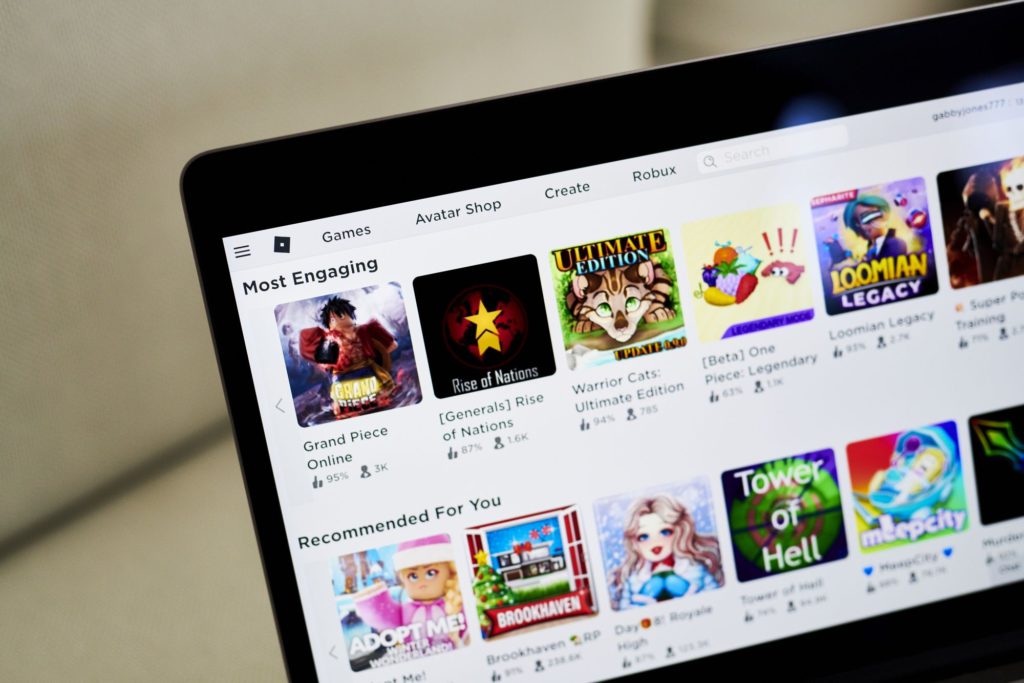
(Bloomberg) — Roblox Corp.’s popularity in Russia is increasing even as almost every other publicly traded gaming company has retreated from the country after its invasion of Ukraine.

At Roblox’s developer conference on Friday, Chief Executive Officer Dave Baszucki said Russia sees more than 2 million active Roblox users a day. Russians are among Roblox’s largest consumer base after the US, Brazil and the Philippines. The US has more than 11 million daily active users.

“We’re growing in every country,” Baszucki said.  

Roblox said it’s also getting a boost from a machine translation tool in the Russian language, which saw playtime increase 3.6% among those who used it compared with those who didn’t.  

Electronic Arts Inc., Nintendo Co., Take-Two Interactive Software Inc., Epic Games Inc., Ubisoft Entertainment SA, Microsoft Corp., and Sony Group Corp. have slowed or ceased sales from Russia. The moves are in line with a long list of multinational companies that have withdrawn from the country amid government sanctions and financial and reputational risks to continuing to do business in Russia since it invaded Ukraine in February.

Roblox said in a statement that its “mission is to unite a billion people around the world with optimism and civility, and as a global platform we believe the right direction is to enable people around the world to stay as connected as possible.”

Read more about the withdrawal of international business from Russia

Also at the developers conference, Roblox announced plans to introduce ads into the virtual worlds created on its platform next year. Roblox has had lucrative partnerships with the likes of Ralph Lauren, Chipotle and other top companies to offer users branded games, virtual concerts and items. But the plan is to go even further, for players to be able to interact with advertisements inside of games, including ones that function as portals, taking gamers to branded zones, Baszucki said.

(Updates to add plans for advertising. An earlier version of this story was corrected to clarify that growth in Russia came from use of a translation tool.)

More stories like this are available on bloomberg.com

©2022 Bloomberg L.P.

Crypto Trading Firm Amber Cut as Much as 10% of Its Staff

(Bloomberg) — Amber Group, a cryptocurrency trading platform that was seeking to raise funding as recently as May, has cut as much as 10% of its staff this year due to an overall market downturn.

The Singapore-based company’s co-founder, Tiantian Kullander, said the company adjusts global headcount every quarter, and estimated that this year’s total net headcount change has been a 5% to 10% reduction in jobs.

“We are currently reducing in roles that are lower in priority given market conditions, and increasing headcount in roles that are higher priority,” Kullander told Bloomberg in a LinkedIn message.

According to LinkedIn, Amber is currently seeking to fill 18 positions across its locations in the United States, Singapore, Hong Kong and United Kingdom. 

During the bull market last year, the company grew to roughly 900 employees, from a team of 200 to 300, according to Kullander. 

Last year, “was the year every crypto company’s growth exploded,” he said.

Earlier this year, the company raised $200 million from the Singaporean state investment firm Temasek Holdings Pte and other investors, bringing its valuation to $3 billion. In May, Bloomberg reported that Amber began talks with potential investors about a new round of fresh funding that would triple the company’s valuation to $10 billion.

More stories like this are available on bloomberg.com

©2022 Bloomberg L.P.

Close Bitnami banner
Bitnami
