Bloomberg

Alphabet’s Verily Raises $1 Billion and Shakes Up Leadership Team

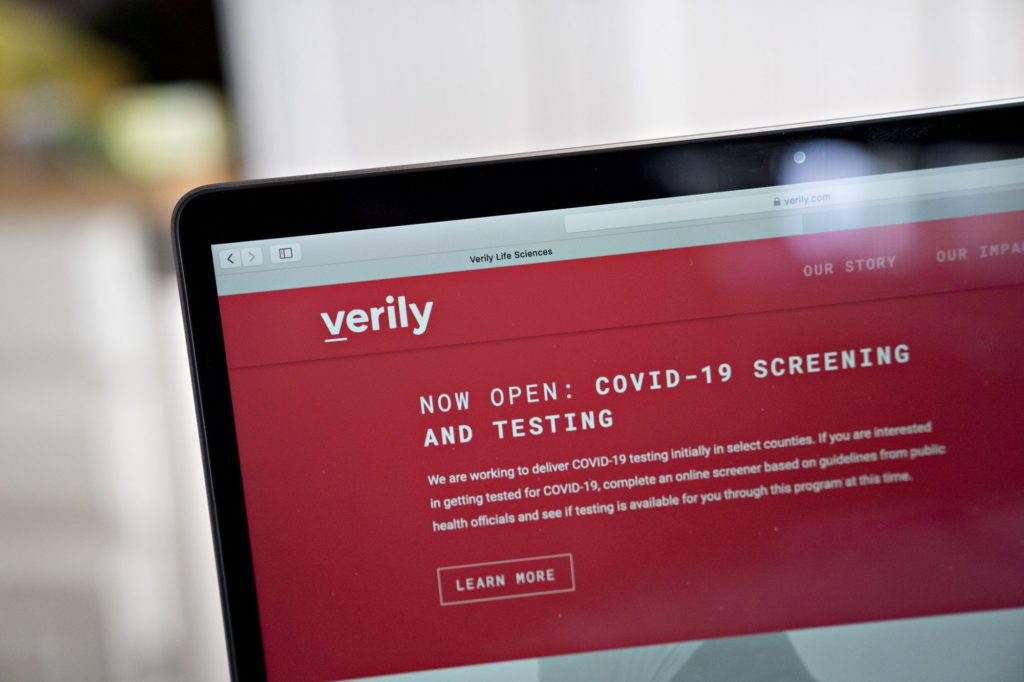
(Bloomberg) — Verily, the Alphabet Inc. life sciences unit that experimented with diabetes-detecting contact lenses and launched Covid-19 testing programs, said it raised $1 billion in new investments led by its parent company, padding its war chest as the health-tech market heats up. 

As part of Friday’s announcement, Verily also said two executives would leave their positions at the company. Founder and long-serving Chief Executive Officer Andy Conrad will become executive chairman, and Verily’s current president, Stephen Gillett, will step into the CEO role in January. Chief Financial Officer Deepak Ahuja is leaving “for another opportunity.”

The capital infusion will be used to support the company’s efforts in data platforms, research and technology that aims to make health care more individualized, Verily said. The company will also consider further investment in strategic partnerships and potential acquisitions. Verily said the new roles are part of succession planning as the company becomes more operationally and commercially focused.

Verily, formerly Google Life Sciences, was a division of the semi-secret research and development group at the company called Google X, until it split off as an independent subsidiary of Alphabet in 2015. 

The infusion of cash prepares Verily to better compete as deal-making in the health-tech arena accelerates, said Daniel Ives, an analyst at Wedbush Securities. In July, Amazon said it would acquire the One Medical chain of clinics in an all-cash deal valued at $3.49 billion.

“It’s an arms race with Amazon, Apple, Microsoft and other tech stalwarts building out their strategic partnerships and muscles within the health-care vertical,” Ives said. “I view the billion dollars of capital as dry powder just to do more M&A and really go more into investment mode at a time where it’s a pivotal 12 to 18 months ahead.”

Alphabet is working to nudge its Other Bets businesses toward profitablility. The group registered an operating loss of about $5.3 billion last year. The developments at Verily mirror a restructuring at Alphabet’s self-driving car unit, Waymo, that took place last year and could pave the way for a divestiture, Bloomberg Intelligence analysts wrote in a note after the announcement.

(Updates with comments from analysts beginning in the fifth paragraph.)

More stories like this are available on bloomberg.com

©2022 Bloomberg L.P.

Roblox Jumps on Plan to Introduce Immersive Ads in Games

(Bloomberg) — Roblox Corp. jumped after the gaming company announced plans to introduce ads into the virtual worlds created on its platform next year.

Adding immersive ads has been a “dream” for Roblox for 15 years, Chief Executive Officer Dave Baszucki said at the company’s developers’ conference on Friday. Roblox has had lucrative partnerships with the likes of Ralph Lauren, Chipotle and other top companies to offer users branded games, virtual concerts and items. But the plan is to go even further, for players to be able to interact with advertisements inside of games, including ones that function as portals, taking gamers to branded zones, Baszucki said.

The shares rose 7.7% to $45.09 at 1:55 p.m. in New York. They’re down 56% this year.

Roblox has been talking about introducing advertising for months as a way to boost revenue from games that are largely free to play. The company generates income through the sale of in-game currency, called Robux, and takes a cut from money spent within games on user-generated content. But introducing advertising on Roblox has been controversial because most of its users are younger than 18. In April, advertising watchdog Truth In Advertising sent a complaint to the US Federal Trade Commission arguing that “Roblox has failed to establish any meaningful guardrails to ensure compliance with truth in advertising laws.”

Baszucki emphasized that initial ad partnerships will be selective.

In other online immersive worlds, like Decentraland, branded spaces are relatively unpopular. However, in the popular game Fortnite, integrations such as branded costumes from popular names like Walt Disney Co.’s Marvel have been a hit. 

More stories like this are available on bloomberg.com

©2022 Bloomberg L.P.

Senators Ask Meta How It’s Fighting Crypto Scams on Platforms

(Bloomberg) — A group of Democratic senators has asked Meta Platforms Inc. CEO Mark Zuckerberg what his company is doing to stop cryptocurrency scams on its social platforms, including Facebook and Instagram. 

The Federal Trade Commission in June said more than 46,000 people reported losing more than $1 billion in cryptocurrency to scams between January 2021 and March 2022. Nearly half of those people said the fraud started with an ad, post, or message on a social media platform, the FTC said at the time. 

“We are concerned that Meta provides a breeding ground for cryptocurrency fraud that causes significant harm to consumers,” the lawmakers, including Senate Banking Committee Chairman Sherrod Brown, said in a letter released Friday. The FTC data showed that three of Meta’s platforms — Instagram, Facebook, and WhatsApp — were among the top four used in the scams. 

“Scam ads breach our ad policies and harm our business by negatively affecting people’s experiences,” Meta spokesman Andy Stone said in an emailed statement. “The people behind scam ads use various methods and channels to reach victims across the internet, and we invest substantial resources to detect and prevent scams on our platforms.”

Other senators on the letter include Robert Menendez, Elizabeth Warren, Dianne Feinstein, Bernie Sanders and Cory Booker. 

The lawmakers asked Zuckerberg to respond to a series of questions by Oct. 24. Those include inquiries on its policies for proactively identifying and stopping fraudsters, procedures for verifying that ads on the platforms aren’t scams, the company’s collaboration with law enforcement, and measures for helping customers who are victims of scams. 

More stories like this are available on bloomberg.com

©2022 Bloomberg L.P.

FTX Ventures Buys 30% Stake in Scaramucci’s SkyBridge Capital

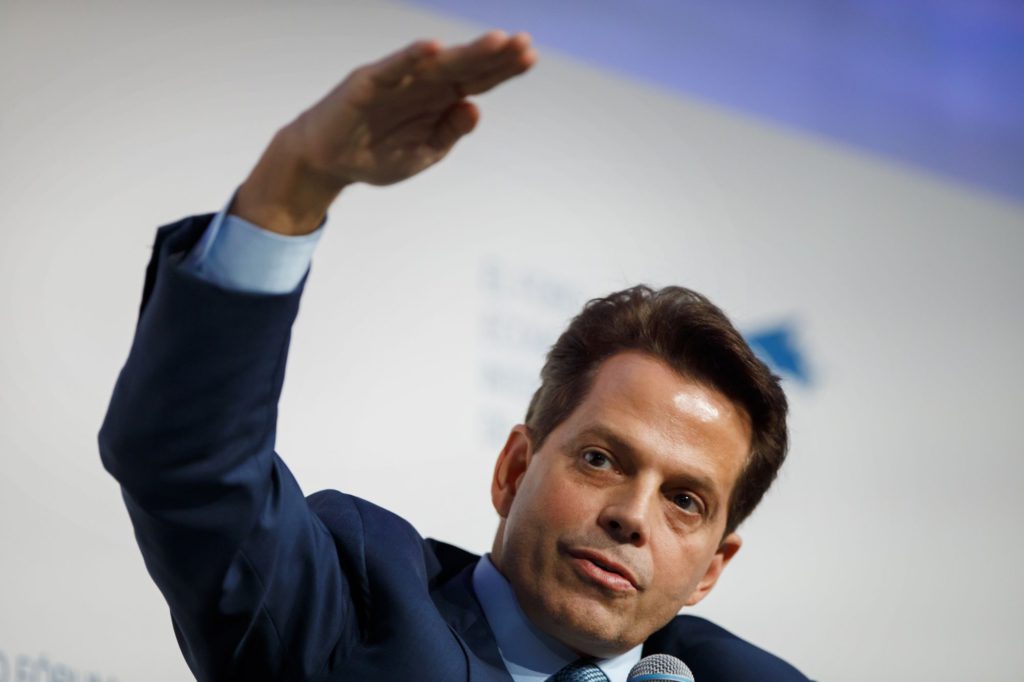
(Bloomberg) — The venture capital unit of Sam Bankman-Fried’s FTX is taking a 30% stake in Anthony Scaramucci’s SkyBridge Capital. 

SkyBridge has been wading deeper into crypto through direct token acquisitions as well as private investments in digital-asset firms, filings show. The new capital is intended to help SkyBridge’s growth, with a portion being used to buy $40 million worth of cryptocurrencies as a balance sheet investment, according to a statement released on Friday.  

“After working with Anthony and his team following our SALT conference partnership, we saw there was an opportunity to work closer together in ways that could complement both our businesses,” Bankman-Fried said in a statement. “We look forward to collaborating closely with SkyBridge on its crypto investment activity and also working alongside them on promising non-crypto-related investments.”

Scaramucci, who is turning 60 in January 2024, said he intends to keep working but doesn’t “want to be a Shakespearean figure where I’m overly clinging to the firm,” he said in a Zoom interview with Bloomberg. “I’m thinking about the next decade of SkyBridge.”

John Darsie, a SkyBridge partner, said FTX and FTX Ventures don’t expect Scaramucci’s firm to fully become a crypto shop. Instead, both Darsie and Scaramucci believe FTX views Skybridge as a bigger window into traditional finance. He said the companies have ambitions similar to that of a traditional merchant bank. 

“FTX is not an asset manager, they don’t accept outside capital, there’s a lot of deal flow that they get,” Darsie said. “We’ll work closely with them on investment sourcing and deal flow.” 

Digital-token exposure accounted for more than $800 million of the overall $2.5 billion in assets managed by SkyBridge at the end of June, according to the firm’s website. In July, SkyBridge suspended withdrawals from its Legion Strategies fund, which had exposure to companies including FTX.

Scaramucci said the FTX capital could help SkyBridge further its goal of nearly doubling assets in the next two years and surpassing $10 billion within the next seven years. 

Read more: Scaramucci Halts Withdrawals in a Fund After Stock, Crypto Swoon

The FTX Ventures investment deepens the relationship between Scaramucci’s enterprises and Bankman-Fried’s companies. The two jointly launched a new crypto conference in the Bahamas, where FTX is located. The conference, held in April 2022, featured speakers including former US President Bill Clinton, ex-UK Prime Minister Tony Blair and football star Tom Brady. Bankman-Fried’s FTX is the presenting sponsor for Scaramucci’s conference series, according to a June press release.

Darsie said the goal was to make Bahamas event the “Sun Valley of crypto,” referring to the annual Allen & Co. event in the Idaho town that attracts billionaires across media, entertainment, sports and investing. 

The two groups did not disclose the financial terms of the deal. Earlier in June, Scaramucci described Bankman-Fried as “the new John Pierpont Morgan,” saying he was bailing out crypto companies and markets “the way the original JPMorgan did after the crisis of 1907.”

“Our business has continued to evolve since we founded the firm in 2005,” Scaramucci said. “We will remain a diversified asset management firm, while investing heavily in blockchain.” 

Watch: Bankman-Fried Happy to Be Called the JP Morgan of Crypto (Video)

(Adds comments from interview with Anthony Scaramucci and John Darsie starting in fourth paragraph)

More stories like this are available on bloomberg.com

©2022 Bloomberg L.P.

Biden Touts Chips Law at Intel Site in Midterm Battleground Ohio

(Bloomberg) — President Joe Biden attended the groundbreaking of Intel Corp.’s new semiconductor manufacturing facility outside Columbus, Ohio, touting one of his legislative wins in a crucial midterm state.

But the visit Friday also underscored the political challenges for Biden as he looks to translate a series of legislative and policy victories for Democrats into gains in November’s midterm elections.

The state’s Democratic Senate candidate, Representative Tim Ryan, joined Biden at the event but declined to say if the president should even run for re-election.

“That is up to him,” said Ryan.

Biden, for his part, acknowledged Ryan in his remarks, offering support to a candidate, who like other Democrats in tight races, has been reluctant to embrace the president. Ryan and Ohio’s Democratic gubernatorial candidate, Nan Whaley, have both avoided the Biden during past visits to the state, including in July.

“Tim Ryan, thank you for your leadership,” the president said, praising him for representing “working people.”

Read more: Ohio Democrat Tim Ryan Breaks With Biden and Targets Trump Base

Ryan is locked in a close contest with Republican venture capitalist and author J.D. Vance to replace retiring GOP Senator Rob Portman. The race has emerged as a pickup opportunity for Democrats — albeit a long-shot one — in a state former President Donald Trump won easily in 2020.

Biden focused his remarks at the groundbreaking on the impact of the CHIPS and Science Act, which he said would bring semiconductor manufacturing that is crucial to national security back to the US and help curb inflation, a political liability for the president.

“Imagine if we had more of these kinds of factories across the country,” Biden said. “This law makes that a reality.”

Auto and electronics companies have struggled in recent years to source semiconductors crucial to modern products.

“In fact, one-third of the core inflation last year was due to higher prices of automobiles, because of a shortage of the semiconductors needed to build those automobiles,” said Biden.

Intel says the Ohio facility — which will support 3,000 full time jobs — was made possible by bipartisan legislation passed earlier this year providing more than $50 billion in subsidies to the semiconductor industry. As part of the trip, Intel also announced it has distributed $17.7 million to Ohio colleges and universities to develop semiconductor-related curricula that will help better train the state’s workforce.

Read more: Democrats Sense New Optimism for Blunting GOP’s Midterm Gains

The trip allowed Biden the chance to tout a signature accomplishment in a state that may be key to Democrats’ hopes for protecting their slim Senate majority. But Ryan has been running a campaign trying to appeal to moderates and working-class voters — many of whom backed Trump after once supporting Democrats. He’s emphasized a willingness to oppose Biden and his party on issues such as trade. 

Polls indicate the Senate race is tight two months before the election. Trump is planning a rally for Vance next Saturday.

Asked in an interview that aired on WFMJ in Youngstown this week whether he thinks Biden should run again in 2024, Ryan demurred.

“My hunch is that like, we need new leadership across the board, Democrats, Republicans,” Ryan said. “I think it’s time for like a generational move for new leaders on both sides.”

More stories like this are available on bloomberg.com

©2022 Bloomberg L.P.

Bitcoin Gains the Most Since July While Breaking Trading Range

(Bloomberg) — Bitcoin rallied the most since July, breaking out of the narrowest trading range in about two years, as a drop in the dollar renewed demand for battered risk assets worldwide. 

The largest cryptocurrency by market value advanced as much as 10.1% to $21,341 as of 12:05 p.m. in New York. The increase was the most since July 19. Bitcoin is outperforming most of the other top tokens such as Ether and Cardano. Bitcoin and Ether are still both down about 50% this year.

“It’s too early to predict that we are approaching another bull run, but if Bitcoin regains a higher support level between $22,000-$25,000 then it may boost investor confidence and ease off the selling pressure across crypto assets,” said Tarusha Mittal, co-founder of crypto staking platform UniFarm. “Given the fact that central banks around the world remain cautious due to the high inflation numbers, the current surge in the crypto market might be short-lived,” she adds.

The Bloomberg Dollar Spot Index tumbled 0.9% on Friday after surging to the highest on record this week. Every Group-of-10 currency strengthened against the greenback, with the risk-sensitive Australian dollar and Norwegian krone leading gains.

Bitcoin has been stuck in the tightest trading range in almost two years in September, in part reflecting uncertainty about how far central banks will go in raising interest rates in the face of a slowing global economy. Amid the lack of direction, some analysts have pointed to activity in futures markets as suggesting Bitcoin may be poised to break out. 

Read more: Bitcoin Is Seen Poised to Escape From Tightest Range in 2 Years

Riyad Carey, an analyst at crypto researcher Kaiko, highlighted a jump in open interest in Bitcoin futures on some of the biggest exchanges. 

“It appears that there was a bit of pent up demand for BTC (and BTC volatility), which has traded in a relatively tight range for the past couple months with decreasing volatility,” Carey said in a direct message over Twitter. 

Friday’s move was unusual in that Bitcoin outperformed almost all other top tokens tracked by Bloomberg. The MVIS CryptoComparte Digital Assets 100 Index advanced 6.1%. Smaller so-called altcoins typically fluctuate by larger magnitudes than Bitcoin, the industry’s bellwether.    

More stories like this are available on bloomberg.com

©2022 Bloomberg L.P.

Key EU Policymakers Want Netflix to Pay More for Infrastructure

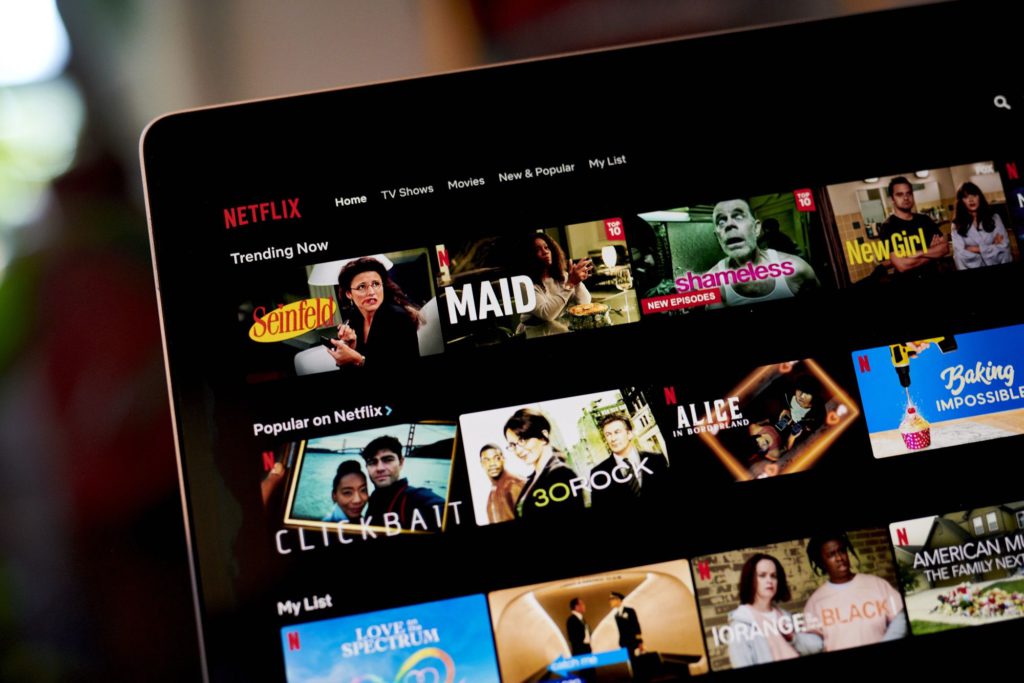
(Bloomberg) — Key European parliamentarians are backing a push to make streaming sites like Netflix and YouTube pay their “fair share” to support internet infrastructure upgrades, according to a draft letter seen by Bloomberg.

“In a time when climbing inflation puts pressure on consumers and businesses, a fair and transparent contribution from all the relevant market players, i.e. the largest traffic generators,” to the European Union’s target of equipping all European households with a gigabit network and all populated areas with 5G by 2030 “has become all the more urgent,” the draft said.

The letter, which will be sent to Executive Vice President Margrethe Vestager and Internal Market Commissioner Thierry Breton, has already been signed by key MEPs who played a major role in negotiating the Digital Markets Act and Digital Services Act, EU legislation meant to loosen major tech companies’ grip on the digital market and force platforms to better handle illegal and harmful content.

The European Commission has since the spring been looking into writing a legislative proposal that would require streaming sites to contribute to internet infrastructure. Although a proposal is not likely until 2023 at the earliest, tech companies, as well as some parliamentarians and EU countries, have already raised concerns about the idea, mostly focused that it could threaten net neutrality in the EU.

The letter, however, shows that the proposal has support from signatories including Andreas Schwab, a German member of the European People’s Party who led the negotiations on the DMA, as well as Stéphanie Yon-Courtin, a French MEP from the Renew group; and Paul Tang, a Dutch MEP from the S&D group. Other members of parliament are likely to sign the letter next week when the plenary is in session.

Schwab, Yon-Courtin and Tang raised concerns that Europe needs to improve its digital infrastructure, especially in the wake of the Covid-19 pandemic, which increased the amount of data and internet traffic people were using.

“It has been noted that today the costs of digital infrastructure are not fairly shared by all the market players,” the parliamentarians wrote. The debate is taking place in other countries and regions including South Korea. They note that “in the EU, the limited growth of telecom markets should be a reason for concern.”

They added that any proposal should respect the EU’s open internet and ensure that “this fairer contribution should not be discriminatory against specific companies, but reflect the role and impact of those generating the most traffic in the network.”

More stories like this are available on bloomberg.com

©2022 Bloomberg L.P.

US Earnings to Watch: Oracle, Adobe, Li-Cycle

(Bloomberg) — Equity investors are assessing the impact of global rate hikes before market attention shifts back to corporate earnings. Guidance boosts from this week by companies including Kroger, Tapestry, DocuSign and Gitlab suggest that strong demand may help firms in a variety of sectors weather macro headwinds and deliver better-than-expected results for the full year.

  • To subscribe to earnings coverage across your portfolio or other earnings analysis, run NSUB EARNINGS.

Earnings highlights to look for next week:

Monday: Oracle (ORCL US) reports postmarket. Following mixed guidance from peers Microsoft and Salesforce over the summer, investors will be looking to see how well the software marker’s cloud migration plans have held up against the slowing macro environment. Worse-than-anticipated foreign exchange headwinds during the fiscal first quarter could drive the reported results to levels below the Street’s expectations, analysts at Guggeheim Securities wrote. That said, thanks to its recent acquisition of digital medical records provider Cerner, the company’s top line on a constancy-currency basis may grow at the fastest pace in over a decade, according to Bloomberg consensus. On the earnings call later that day, investors will be listening for the company’s plan to improve the margin structure. After Oracle slashed jobs last month in a unit where results lagged expectations, management is expected to also cut back on new hirings in the coming year or undertake another restructuring, said Bloomberg Intelligence.  

Tuesday: No major earnings scheduled.

Wednesday: Li-Cycle (LICY US) will announce third-quarter results premarket. The Canadian battery recycler has had its revenue estimates trimmed by analysts since it last reported, with Cowen attributing the revision to lower cobalt and nickel pricing, which in turn impacts black mass: the powder substance used to create new batteries that’s produced during the recycling process. Having returned to a loss last quarter, investors may focus on the company’s cost and cash burn forecast as it prioritizes building more plants in North America and beyond. 

  • ESG in Focus: Investors may also watch for big-picture commentary from the company on market outlook, as analysts see a favorable global regulatory environment for Li-Cycle in the long term. Cowen analysts rate the stock “outperform”, and said that the company is positioned to benefit from a proposed US tax credit for the use of recycled batteries in electric vehicles. A mandate by European regulators forcing automakers to use more recycled materials in batteries starting in 2030 also bodes well for the company, BI Senior ESG Analyst Gail Glazerman noted. Some recyclers are concerned, however, about whether there is even enough waste material for them to process, risking the introduction of using freshly mined material in plants.

Thursday: Adobe (ADBE US) is due after the market close. According to Bloomberg consensus, analysts see both top and bottom lines for the fiscal third quarter to be in line with company guidance of $4.43 billion and $3.33, respectively. Pricing changes could offset seasonal slowness among enterprises, giving the company’s key Digital Media net new annualized revenue metric a lift, or even a beat, Barclays analysts wrote. Still, disappointing sales guidance from peer Salesforce may cast doubts over Adobe’s ability to steer clear of macro headwinds going forward. Finally, foreign exchange impact — which in part forced the California-based company to trim its full-year outlook in June — continues to worsen, said Jefferies analysts. 

Friday: No major earnings scheduled.

More stories like this are available on bloomberg.com

©2022 Bloomberg L.P.

Amazon Sellers See ‘Scary’ Holiday Season as Consumers Pull Back

(Bloomberg) — Amazon.com Inc. sellers are bracing for a bleak holiday shopping season as inflation-bitten consumers curb their spending.

Many merchants, who sell more than half of the goods on Amazon’s web store, fear they’ll be forced to cut prices to move a mountain of unsold inventory. It’s an abrupt change from the previous two years when sellers scrambled to get enough products into Amazon warehouses to meet pandemic-fueled demand even as chronic shortages let them jack up prices.

This year US online sales will rise just 9.4% to $1 trillion, the first time growth has slipped into the single digits, according to Insider Intelligence, which in June lowered its earlier annual forecast. Spending on Amazon will hit $400 billion, up 9% and slower than the overall industry, the research firm says.

“Consumers don’t seem to be spending much on anything beyond basic necessities, so sellers have to offer discounts and coupons and aggressive marketing, which can be expensive,” said Lesley Hensell, a co-founder of Riverbend Consulting, which advises Amazon sellers. “The fourth quarter looks scary this year.” 

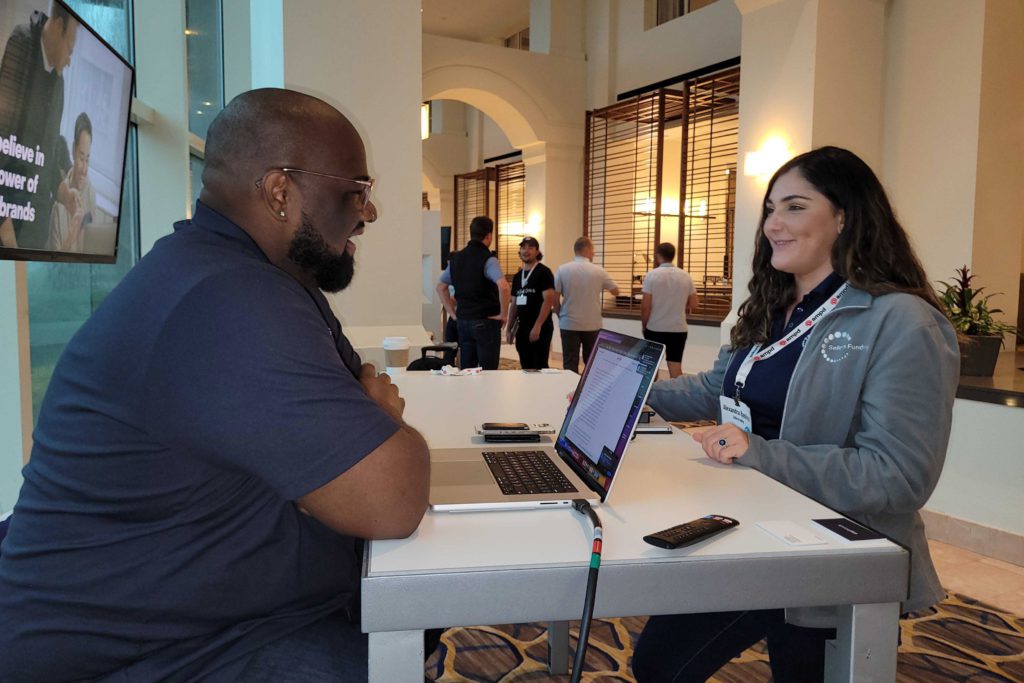
The challenging holiday shopping season was Topic A this week at the Surge Summit, an e-commerce networking event hosted by Hensell’s firm that drew about 300 sellers to Tampa, Florida. During a session called “Navigating the Bear Market as a Seller,” dozens of merchants discussed the abrupt shift in consumer behavior and how to adjust their businesses accordingly.

Korion Morris, who ran the bear-market session, is the director of growth at Unybrands, which owns e-commerce companies in such categories as baby, fitness and personal care. He told attendees that Unybrands is trying to hold the line on prices by cutting logistical and other costs. 

“Consumers are hurting right now,” Morris said during the event. “In the rare instances we do increase pricing, we’ll add a promotion to offset it.”

Amazon itself is being forced to adjust to the new new normal. The world’s largest e-commerce company was saddled with too many warehouses and workers when the pandemic boom ended. Amazon has since abandoned dozens of existing and planned facilities around the US, according to MWPVL International Inc., a closely watched research firm. Some of the closings are related to a modernization program, an Amazon spokesperson said last week, and the company continues to open facilities where customer demand requires extra capacity.

Responding to merchants’ concerns about a lackluster holiday shopping season, an Amazon spokesperson said sellers using the company’s logistics service typically pay less than other methods. Amazon has also expanded a program offering low shipping costs on inexpensive items to include products weighing up to three pounds; previously the limit was 12 ounces. 

“Sellers are incredibly important to Amazon, and we work every day to provide them with powerful tools and services that help reduce their operational burdens, build their brands and connect them with customers so they can rapidly grow their businesses through busy shopping periods and beyond,” spokesperson Patrick Graham said in an emailed statement.

Meanwhile, merchants are making their own moves to cut shipping costs. Marlee Rabin of Montreal launched her organization brand Homie Collection on Amazon two years ago and her best seller was a $25 transparent plastic pantry bin. She’s preparing to launch a smaller kitchen organizer this year that she expects to sell for less than $10. Besides targeting cost-conscious shoppers, she says, the smaller, lighter bin will save her a bundle on Amazon storage and shipping fees.

“I’d love to charge premium prices,” she said. “But in this environment I think I’ll do a lot better at the lower price point.”

The effects are rippling from sellers to firms that support them, including small business lenders. Amazon merchants commonly borrow about $100,000 to buy inventory and pay for marketing campaigns during the holidays, paying the loans off with their proceeds. Seth Broman, chief revenue officer of Swiftline, which offers loans to online merchants, is turning down more loan applications this year. Rising costs and slower growth has simply made lending sellers money too risky, he said.

“A lot of customers are over-leveraged, and their sales are off,” Broman said.

Even the smallest merchants are feeling the pinch. Nancy Philips sells used books on Amazon that she snags at yard sales and library clearance sales. She’s slashing prices on about 100 books that have been lingering in Amazon warehouses for about a year before her storage fees go up. Amazon increases storage fees on products that don’t sell quickly to prevent its warehouses from getting cluttered.

“Books I’d sell for $20 I marked down to $10 or less,” she said. “Amazon fees are about $8, so I won’t make any money. I need to get rid of them, and people are buying less.”

Steven Pope, who has been selling gifts on Amazon for seven years, says he’s never been more nervous about a holiday season. Sales of his $50 “mom box” that includes a bath bomb, soaps and lotion, plunged more than 50% this Mother’s Day compared to 2021. He fears a similar drop heading into Christmas since shoppers are focused on necessities like food and gas and have less money for indulgences.

“The gift-giving industry has completely collapsed,” said Atlanta-based Pope, who is developing new snack products to compensate for slowing gift sales.

Pope, who also provides consulting services to more than 300 merchants, recently changed his marketing slogan to reflect leaner times. Before it was “We grow sales.” Now it’s “We deliver peace of mind.”

“It’s very difficult to navigate the climate right now,” he said. “This will be a make or break year for a lot of businesses.”

More stories like this are available on bloomberg.com

©2022 Bloomberg L.P.

Argentina’s Uala Eyes Booming Mexico Remittances

(Bloomberg) — Argentine fintech Uala will allow clients in Mexico to receive money from abroad starting Friday as it taps the fast-growing remittances market, which is expected to reach $60 billion in this year.

The new service will be operated by Mexican bank ABC Capital, whose acquisition by Uala was announced in November, with the aim of expanding its financial services in Latin America’s second largest economy. The ABC Capital purchase is still pending regulatory approval.

“We’re trying to reach part of the population that today doesn’t have banking services, to offer a financial service that allows them to forget about cash and start operating in a more digital and reliable way,” Carlos Hernandez, CEO of ABC Capital, said to Bloomberg News.

Money can be sent from abroad through MoneyGram to users of the Uala ABC mobile app in Mexico. The country is one of the three biggest recipients of remittances in the world along with India and China.

Operations will be limited to $900 per month and money received can be used to pay for goods and services using the Uala ABC card, or cash withdrawals at ATMs.

Uala currently has more than 5 million clients with operations in three Latin American countries.

(Clarifies in 2nd paragraph that the ABC acquisition is not final yet)

More stories like this are available on bloomberg.com

©2022 Bloomberg L.P.
Close Bitnami banner
Bitnami