
Bloomberg

Rivian Gets a $3 Billion Boost by Making Mercedes a Frenemy

(Bloomberg) —

Rivian just added almost $3 billion to its market capitalization in a day, and all it took was a fairly bare-bones deal with a new frenemy.

The upstart and Mercedes-Benz will join forces to build big electric vans in Europe “in a few years,” the two revealed Thursday, sending Rivian shares soaring 11%, their biggest jump in four months. Thin as the announcement was on detail, it sent an obvious signal. Yes, this young plug-in pickup maker is having trouble ramping up production, but one of the most storied manufacturers in the world still sees real potential.

A friendship with a competitor is nothing new for Rivian. One of the reasons investors were so high on the company when it was preparing to go public a year ago was the way General Motors and Ford raced one another to strike a strategic partnership with the up-and-comer around the time it was in the process of securing major backing from Amazon. One of Ford’s senior-most executives at the time later bragged about “stealing” a promising investment from its Detroit-based nemesis at the 11th hour.

There’s another “blast from the past” element to this from Mercedes’s perspective, as Baird analyst Ben Kallo put it in a note to clients Friday. Daimler played a critical role in helping Tesla get off the ground by acquiring a stake during the great financial crisis and buying drivetrains from the company to power Mercedes hatchbacks. Elon Musk has described that deal as fundamental to Tesla surviving its early struggles.

There’s a lot left to unpack about this new tie-up — how and why it came together, what it means and who wins and loses. Here are a few thoughts and questions to ponder:

Conserving Cash

In the months before and after its blockbuster initial public offering in November, Rivian was furiously hiring and building out its sales and service operations to support its growth ambitions. Those have been held up by the company’s plant in Normal, Illinois, which isn’t assembling nearly as many R1T trucks, R1S SUVs and Amazon delivery vehicles as hoped. Supply chain woes are plaguing all of the auto industry but hitting inexperienced companies particularly hard.

While Rivian still had $15.5 billion in the bank at the end of June, management has made several moves lately to be more capital-efficient amid rising costs and concern about a global downturn. The joint venture with Mercedes will be a cheaper way to enter the European market and boost the company’s credibility with suppliers and prospective customers that might otherwise have been skittish.

A lot of Rivian’s cash is also already earmarked for other expensive projects. It has yet to break ground on a $5 billion factory near Atlanta, and executives have said the amount the company has on hand offers just enough runway to get to the start of production of the mid-price car to be built at that plant by 2025.

Burden-sharing with Mercedes may also reflect how difficult it’s become for companies in the EV sector to raise capital, D.A. Davidson analyst Michael Shlisky wrote in an email. In a July memo to staff about cutting 6% of Rivian’s workforce, CEO RJ Scaringe noted that global capital markets were tightening. “We need to be able to continue to grow and scale without additional financing in this macro environment,” he wrote.

Ford Ties

After Ford worked so hard years ago to beat GM to the punch in linking up with Rivian, their relationship has taken many curious twists and turns.

First, Joe Hinrichs, the former Ford president who played a leading role in brokering the partnership, abruptly retired and left Rivian’s board. Soon thereafter, the companies called off plans that had been announced three months earlier to jointly develop Lincoln’s first fully electric model. Alexandra Ford English, the great-great granddaughter of founder Henry Ford, replaced Hinrichs as a Rivian director, but didn’t stay on for long. Yet another replacement stepped down leading up to Rivian’s IPO, leaving Ford without a board seat.

Ford and Rivian have been relatively mum about their future together. Now the former, which still owns a 9.6% stake in the latter, may end up with more formidable competition in the commercial vehicle business that is a huge point of pride and emphasis for Ford CEO Jim Farley. The automaker announced plans just this week to start selling the electric version of its best-selling European delivery van, the E-Transit Custom, roughly a year from now.

Upside for Amazon

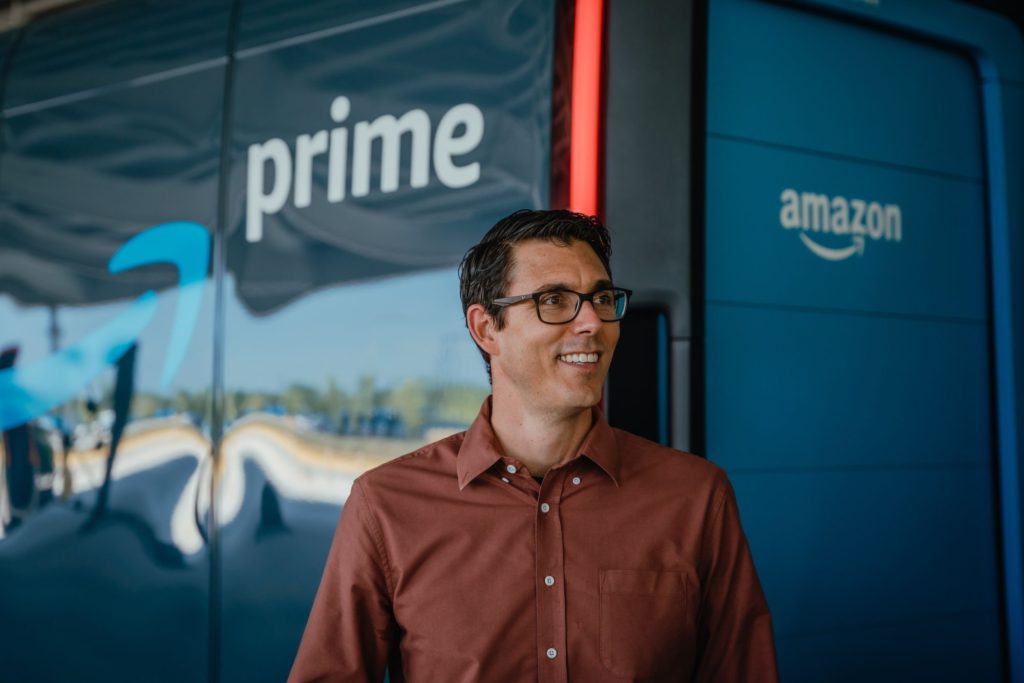
What Rivian, Mercedes and Ford all have in common is Amazon.

The e-commerce giant has a contract with Rivian for 100,000 electric vans due to be delivered by the end of the decade. It also buys vans from Ford, Mercedes and others. Given the size of Amazon’s global fleet and its ambitious sustainability targets, it has to look beyond just Rivian for electric last-mile delivery options.

Amazon has exclusive rights to Rivian’s delivery vehicles for four years after receiving its first one, as well as the right of first refusal to buy its vans for two years after that. It’s surely hoping the Rivian-Mercedes deal will mean more electric van availability, and ideally at lower costs.

Carry On

Rivian seeking to establish production in Europe is not a surprise: executives have had their eye on the market for some time.

The company scouted locations for a potential factory in locations including the UK, Germany and Hungary, people familiar with the matter told Bloomberg in February last year. Rivian opting to set up shop with Mercedes somewhere in central or eastern Europe will be a letdown to those who courted the company.

In one indication of just how eager leaders were to land the investment, then-Prime Minister Boris Johnson tried to woo Scaringe himself, Sky News reported late last year.

More stories like this are available on bloomberg.com

©2022 Bloomberg L.P.
Pinduoduo Emerges as Big Winner in Covid-Zero China

(Bloomberg) — As Chinese consumers curb their spending in a pandemic-stricken economy, one discount e-commerce firm is emerging as a clear stock-market winner.

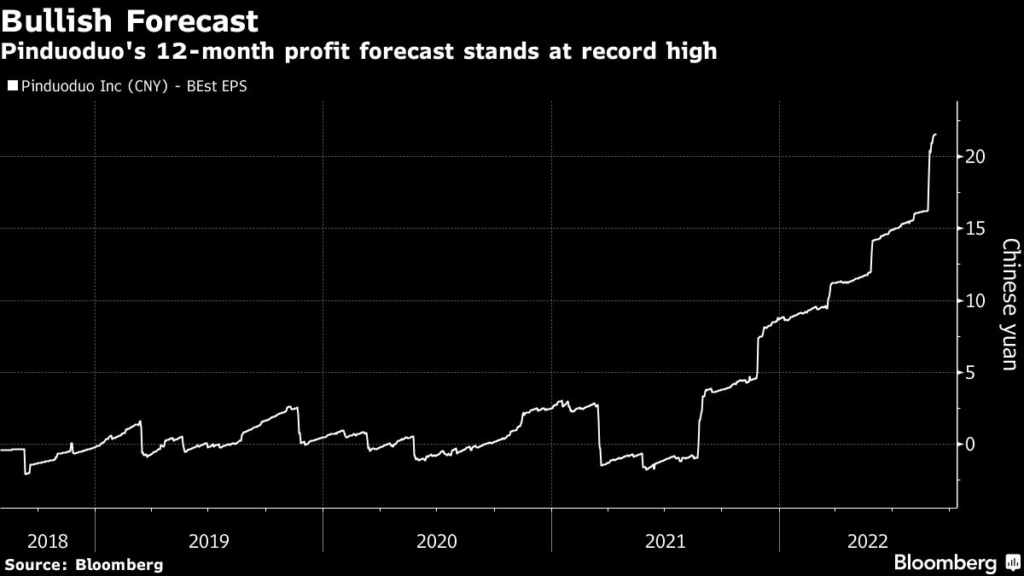
Shares of Pinduoduo Inc., which sells everything from groceries to beauty products, have soared 43% over the past month, ranking as the top performer in the Nasdaq Golden Dragon China Index, which has slipped 0.9%. The stock has now rallied 167% from its March low, trouncing competitors including Alibaba Group Holding Ltd. and JD.com Inc.

That outperformance highlights just how price-sensitive consumers have become as the economy falters under China’s Covid-Zero policies and mounting debt woes in the property market. Data on China exports this weak added to the signs of a darkening economy. 

“Pinduoduo benefits because the Chinese don’t want to spend much on luxury goods. They want to find bargains, so that’s a platform where they will go to,” said Paul Pong, managing director at Pegasus Fund Managers Ltd. “Its outperformance might continue as long as Covid Zero is in force.” 

The rest of the world is long past lockdowns because of the coronavirus, and the stock market’s one-time pandemic winners have plunged as a result. But China persists in ordering people to stay home when an outbreak emerges. Chengdu, a megacity housing more people than New York, on Thursday extended a weeklong lockdown in most downtown areas. 

Founded in 2015, Pinduoduo has become one of the country’s biggest e-commerce platforms by active users, even briefly surpassing rival Alibaba in 2020. Part of the firm’s appeal is its ability to offer group buying options, an increasing popular trend in China whereby networks of friends or neighbors purchase products together to fetch deeper discounts. 

It’s not just about cheap products. The company has been working to trim costs and seek out new areas for growth, including launching coupon campaigns. Pinduoduo is also in the process of entering the North American market as a way to shift from its sputtering domestic economy. 

Those efforts propelled the e-commerce firm to be the only one among the Chinese internet players to see a surge in second-quarter profit, with its own net income more than tripling. Meanwhile, bigger rivals like Alibaba and Tencent Holdings Ltd. saw revenue decline for the first time ever. 

Analysts have lifted Pinduoduo’s earnings consensus estimate by 40% over the last month, among the biggest increases in the 1,379-member MSCI Emerging Markets Index, Bloomberg data show.

There are reasons to be wary. China’s retail sales for July grew at about half the pace that economists projected, underscoring a growing crisis in confidence. Investors say that if the trend holds, eventually all goods, including consumer staples and other lower-margin products, could suffer in the long run.

“We have seen signs of consumption downgrade, as consumers now have muted income growth expectations,” said Jian Shi Cortesi, investment director at GAM Investment Management in Zurich.

Still, Cortesi — who owns the stock — touted Pinduoduo as an overall bright spot thanks to its “value-for-money products.”


Tech Chart of the Day

The Nasdaq 100 Index rose about 1% on Friday as investors assessed whether monetary tightening to tackle inflation in the US is getting closer to being priced in. The technology gauge is set to gain for a third straight session and snap its streak of three weekly declines. 

Top Tech Stories

  • Alphabet Inc.’s Google pays billions of dollars each year to Apple Inc., Samsung Electronics Co. and other telecom giants to illegally maintain its spot as the No. 1 search engine, the US Justice Department told a federal judge Thursday.
  • Twitter Inc. paid a whistle-blower who raised questions about operational problems within the social media platform $7 million to secure his silence, according to a lawyer for Elon Musk.
  • Tata Group is in talks with a Taiwanese supplier to Apple Inc. to establish an electronics manufacturing joint venture in India, seeking to assemble iPhones in the South Asian country.
  • Bain Capital is exploring options for Works Human Intelligence Co. including a potential sale that could value the human resources software developer at as much as $2 billion, according to people familiar with the matter.
  • Animoca Brands Corp., Asia’s biggest crypto investor and game developer, raised $110 million in a fundraising round led by Temasek Holdings Pte, bankrolling expansion even after a $2 trillion market meltdown.

(Updates to market open.)

More stories like this are available on bloomberg.com

©2022 Bloomberg L.P.
Tesla Seeks Tax Breaks for ‘First of Its Kind’ Lithium Refinery

(Bloomberg) — Tesla Inc. is plotting a potential lithium refinery on the gulf coast of Texas, a move that would bolster the company’s battery-production efforts and further expand its footprint in the state.

The electric-car maker has told officials that it’s considering constructing a “battery-grade lithium hydroxide refining facility,” in Nueces County, according to a newly public application for tax breaks filed with the Texas Comptroller’s Office. Tesla pitched it as “the first of its kind in North America.”

If built, Tesla told the state that the facility would process the raw ore material into a state suitable for battery production. The resulting lithium hydroxide it creates would be “packaged and shipped by truck and rail to various Tesla battery manufacturing sites supporting the necessary supply chain for large-scale and electric vehicle batteries.”

Tesla also said the process it will use is “innovative and designed to consume less hazardous reagents and create usable by-products compared to the conventional process.” 

Construction could begin as soon as the fourth quarter of 2022, but wouldn’t reach commercial production until the fourth quarter of 2024. Tesla has told the state that the facility could be located “anywhere with access to the Gulf Coast shipping channel,” but that the company is evaluating a competing site in Louisiana.

Tesla didn’t respond to a request for comment.

Chief Executive Officer Elon Musk has spent much of the last year agitating for rapid development of lithium mining in North America, comparing the opportunity to the fat margins typically made in the software industry.

“I’d like to once again urge entrepreneurs to enter the lithium refining business. The mining is relatively easy, the refining is much harder,” Musk said on Tesla’s second-quarter earnings call in July. “You can’t lose, it’s a license to print money.”

While merchant refiners’ profitability spiked earlier this year in part because of EV demand, margins declined considerably from a March peak as the companies were squeezed by rising raw-material prices.

Read more: The Big Money in Lithium Is Getting Harder to Make

Dozens of projects are underway to add similar plants in other nations, including developments in Germany and Australia, which began production at a first refinery earlier this year. Albemarle Corp., the world’s top lithium producer, is planning to build a new processing site in the southeastern US.

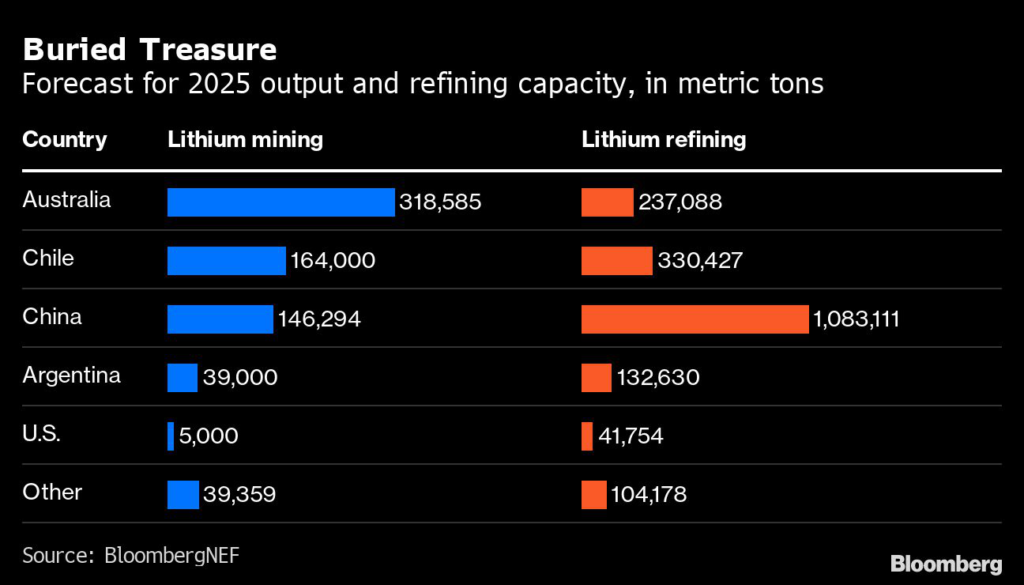
China currently dominates lithium refining and has more than half of global capacity to process raw materials harvested at mines or from salt-rich underground brines into the specialist chemicals used in EV batteries.

A lithium mining facility would be just the latest addition to Musk’s growing Texas empire. Beyond the new automotive factory in Austin that started production this year, Musk has built out a massive rocket prototyping and launch facility in Boca Chica, Texas. His tunneling outfit, The Boring Company, is also pursuing numerous projects across the state. 

Tesla has previously applied for permits to make similar battery materials adjacent to its Austin factory, though the current status of the project is unclear.

Tesla’s shares rose 1.5% at 9:33 a.m. in New York.

More stories like this are available on bloomberg.com

©2022 Bloomberg L.P.
Kirk Cameron’s Anti-Abortion Film ‘Lifemark’ Rides Wave of Christian Movies

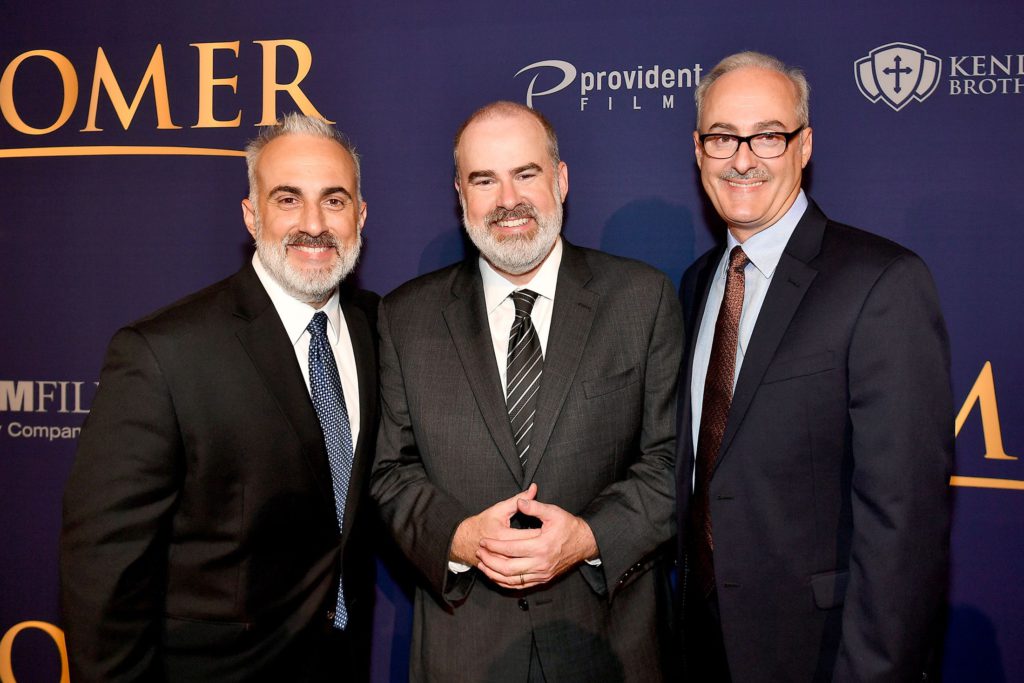
(Bloomberg) — When the Kendrick brothers met with their usual Hollywood movie studio contacts to distribute their latest picture, “Lifemark,” which comes out Friday, the Christian filmmakers received a response they weren’t used to hearing: No thanks.

The three brothers based in Albany, Georgia, are known for making religious-themed pictures that perform fairly well at the box office, yet none of the big studios wanted “Lifemark,” two of them said. That’s because the movie dives head first into the abortion debate and expresses a clear opinion — that putting a child up for adoption is a much better choice than terminating a pregnancy. 

The brothers, Alex, Stephen and Shannon, found a new partner in Fathom Events, a company owned by the three largest US theater chains, to distribute the movie, and box office analysts said it could become a breakout hit in what’s expected to be an otherwise slow weekend for new releases.

The movie is part of a growing segment of the entertainment industry: faith-based pictures, particularly Christian ones. While films centered around God and stories from the Bible have always been around, they’re increasing in popularity. By some counts, eight of the top ten highest-grossing Christian films of all time were released in the past decade.

Fathom Events Chief Executive Officer Ray Nutt said religious films are the biggest single part of his business. Christian filmmakers are expecting an additional windfall after the US Supreme Court overturned a landmark abortion-rights ruling in June, Nutt said, saying filmgoers are energized by the verdict.

“People, producers and filmmakers have seen the value that this brings, not only the message that it brings to audiences and the way that it moves audiences, but also the financial end of it and how much money it makes,” said Nutt. “We are looking at many, many faith-based films into 2023.”

“Lifemark” came about after Kirk Cameron, a 51-year-old actor who rose to fame on the 1980s sitcom “Growing Pains,” heard of a documentary about the main characters in the movie. He acquired the rights and sought to partner with the Kendricks, who have mostly distributed their films through a unit of Sony Group. 

The Kendrick brothers believe their faith has allowed them to create movies. They said they once prayed for “$100,000 and a specific high-definition camera” to make “Facing the Giants,” about high school football players turning to religion. It grossed about $10.2 million in North America upon its release in 2006. 

They founded their company, Kendrick Brothers, in 2013. Their hits include 2015’s “War Room,” about a couple saving their marriage through faith. It took in nearly $68 million in ticket sales.

“Lifemark” stars Cameron as the adoptive father of a boy whose teen birth mother previously considered an abortion. Fathom doesn’t have an estimate for how much money the movie will generate but Cameron said he’d be delighted with $15 million over its limited, seven-day run. He’s also excited about the film’s message, because he believes the revocation of federal abortion rights, a political position for which he’s advocated, will lead to unwanted and neglected kids.

“There will be a lot more babies in the country who will need moms and dads in homes and need to be taken care of because of the overturning of Roe versus Wade,” he said. “Who takes care of them? Well, there is an answer to that. At least one part of the answer is adoption.”

Cameron acknowledged adoption doesn’t always work as well as portrayed in “Lifemark.” Teens comprised 12% of abortion patients in 2014, according to the Guttmacher Institute, a pro-abortion rights research group. Pro-choice advocates say depictions can create a skewed view of the average abortion recipient, who is typically in their 20s and already has at least one child.

And some of the estimated 100,000 kids in the US who are waiting to be adopted will be among those seeing “Lifemark.” Group homes for children bought out theaters to promote their adoption work, according to Jackie Papier, who manages group sales for Fathom. She’s also gotten inquiries from political groups, a woman who wants to start a pro-life club at her school and an insurance company that wants to take wealthy clients interested in funding similar projects.

The Kendrick brothers have also said they want to influence public opinion, arguing in a promotional video that the rights of individual people are less important than God’s will. “We believe in morally responsible filmmaking, which can come out of a heart of love,” Stephen Kendrick added in an interview.

The $15 million figure Cameron is hoping for is moderate by Hollywood standards, but conventional studios aren’t planning any big movies until the DC Comics film “Black Adam” is released in late October. 

“Faith-based movies often are underestimated, and fly under the radar until they open and suddenly become a number one movie,” said Paul Dergarabedian, a senior analyst at research group Comscore Inc. “In the very slow marketplace such as it is right now, this could be a opportune time for such a release.”

Church Screenings

Nutt, who specializes in films not suited for typical theatrical debuts, like concerts or old classics, has worked to put other faith-based movies straight to congregates in pews. A few years ago Fathom tasked Bob Elder, a faith-based movie marketer who started his career running Christian bookstores, with circumventing the normal theater distribution system to put religious movies in churches. They now do so through the Faith Content Network, which gives churches free digital tools to show first-run religious movies and charge for tickets.

After offering ministries the typical studio-theater split of ticket revenue, they found many churches wouldn’t even cash the checks they received. Churches no longer get a cut of ticket sales, Elder said.

“They exist to serve and to love and so they see the movies as ministry tools,” Elder said. “It’s about expanding their reach, influence the message in the community.”

The Kendrick brothers aren’t deterred by the recent rejection of “Lifemark” by some Hollywood studios. They see plenty of opportunity for their films in the future.

“There’s over a billion people around the world that say they want to be followers of Christ,” Stephen Kendrick said. “And so there’s actually a massive underserved market.”

More stories like this are available on bloomberg.com

©2022 Bloomberg L.P.
Bitcoin Miner CleanSpark Buys Mawson Site as Consolidation Rises

(Bloomberg) — CleanSpark Inc., a publicly traded Bitcoin miner, has agreed to acquire a mining facility and machines from Mawson Infrastructure Group Inc. — a likely sign that more industry consolidation is ahead. 

The deal, announced Friday, comes as Bitcoin mining companies’ revenue nears a two-year low due to increasing network competition, low Bitcoin prices and soaring energy costs. While some miners scale back mining operations or reorganize their facilities to be more efficient, relatively well-capitalized mining firms like Henderson, Nevada-based CleanSpark are expanding by acquiring infrastructure such as data centers and machines at a discount. 

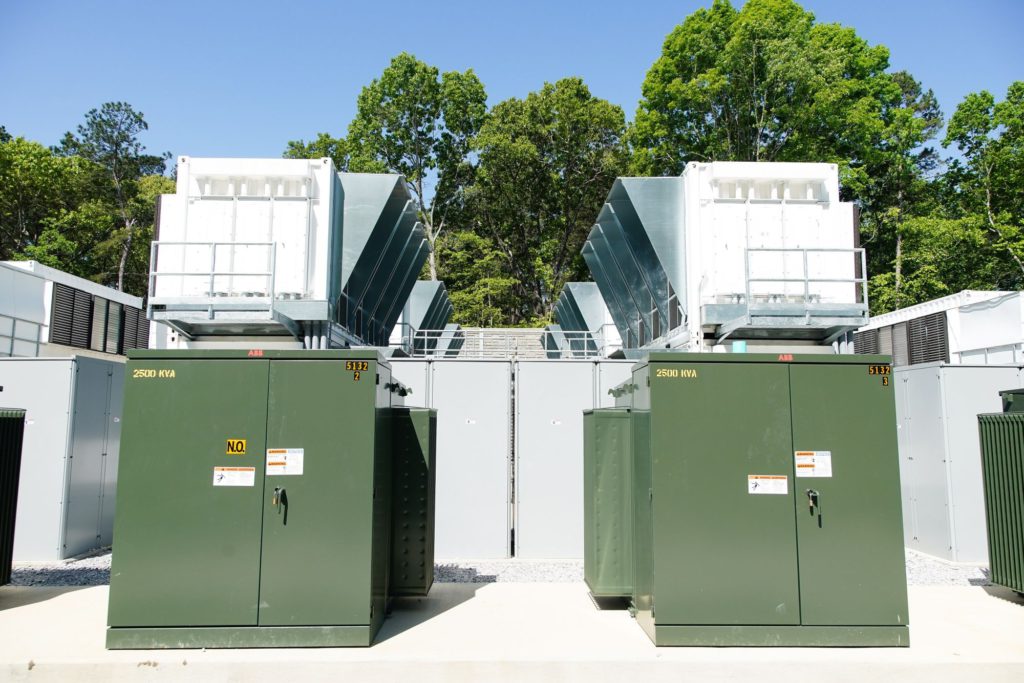
Sydney-based Mawson will receive $26.5 million cash consideration and $11 million in CleanSpark’s stock, $4.5 million of which is subject to certain earn-out commitments, for its facility in Sandersville, Georgia. The operational facility has an 80-megawatt capacity, with plans to increase capacity to 230 megawatts by the end of next year and can currently support about 24,108 latest-generation mining rigs. CleanSpark also agreed to buy 6,468 machines from Mawson for $9.48 million in cash. 

Bitcoin miners use powerful computers to be the first to come up with a solution to validate transactions encrypted by the Bitcoin network and win limited rewards in the form of newly minted tokens. The more competition there is on the network, the less rewards each miner will receive. 

CleanSpark has been on a shopping spree for large-scale mining facilities and machines. On Wednesday, the company announced the purchase of 10,000 rigs for $28 million from Cryptech Solutions. And last month it bought a mining farm in Washington, Georgia, with 86-megawatt capacity for an undisclosed amount. 

In late April, CleanSpark finalized $35 million in non-dilutive financing from Trinity Capital, a provider of venture debt financing. 

While publicly traded miners like Hut 8 Mining Corp. and Marathon Digital Holdings have chosen to hoard Bitcoin, CleanSpark has been selling tokens for a higher price as it focuses more on mining. 

“CleanSpark is considering strategic alternatives for our legacy energy business,” Zach Bradford, CleanSpark’s chief executive, said in a statement in February. “Focusing our efforts on our Bitcoin mining segment allows the Company to capitalize on the tremendous opportunity Bitcoin presents.”

More stories like this are available on bloomberg.com

©2022 Bloomberg L.P.

Tesla Weighs New Lithium Refinery in Texas, Seeks Tax Breaks

(Bloomberg) — Tesla Inc. is plotting a potential lithium refinery on the gulf coast of Texas, a move that would bolster the company’s battery-production efforts and further expand its footprint in the state.

The electric-car maker has told officials that it’s considering constructing a “battery-grade lithium hydroxide refining facility,” in Nueces County, which it has pitched as “the first of its kind in North America,” according to a newly public application for tax breaks filed with the Texas Comptroller’s Office.

If built, Tesla told the state that the facility would process “raw ore material into a usable state for battery production.” The resulting lithium hydroxide it creates would be “packaged and shipped by truck and rail to various Tesla battery manufacturing sites supporting the necessary supply chain for large-scale and electric vehicle batteries.”

Tesla also said the process it will use is “innovative and designed to consume less hazardous reagents and create usable by-products compared to the conventional process.” 

Construction could begin as soon as the fourth quarter of 2022, but wouldn’t reach commercial production until the fourth quarter of 2024. Tesla has told the state that the facility could be located “anywhere with access to the Gulf Coast shipping channel,” but that the company is evaluating a competing site in Louisiana.

Tesla didn’t respond to a request for comment.

Tesla’s shares rose 1.3% as of 7:56 a.m. in New York.

Chief Executive Officer Elon Musk has spent much of the last year agitating for rapid development in lithium mining in North America, comparing the opportunity to the fat margins typically made in the software industry.

“I’d like to once again urge entrepreneurs to enter the lithium refining business. The mining is relatively easy, the refining is much harder,” Musk said on Tesla’s second-quarter earnings call in July. “You can’t lose, it’s a license to print money.”

Dozens of projects are underway to add similar plants in other nations, including developments in Germany and Australia, which began production at a first refinery earlier this year. Albemarle Corp., the world’s top lithium producer, is planning to build a new processing site in the southeastern US.

China currently dominates lithium refining and has more than half of global capacity to process raw materials harvested at mines or from salt-rich underground brines into the specialist chemicals used in EV batteries.

A lithium mining facility would be just the latest addition to Musk’s growing Texas empire. Beyond the new automotive factory in Austin that started production this year, Musk has built out a massive rocket prototyping and launch facility in Boca Chica, Texas. His tunneling outfit, The Boring Company, is also pursuing numerous projects across the state. 

Tesla has previously applied for permits to make similar battery materials adjacent to its Austin factory, though the current status of the project is unclear.

(Updates with share trading in eighth paragraph)

More stories like this are available on bloomberg.com

©2022 Bloomberg L.P.
German Mobile Consumers May Not Stomach Price Hikes

(Bloomberg) — The ability of German carriers to introduce inflation-matching price increases may be met by high customer churn, a nationally representative survey of German mobile consumers by Bloomberg Intelligence conducted in early September shows. Contrasting with an expected inflation rate of 8% this year in Germany, a 6% to 10% price increase without any commensurate change in services provided would prompt at least 47% of survey respondents to consider switching carriers, according to the survey. Deutsche Telekom may be best-placed among mobile-network operators to introduce mobile-tariff hikes, based on BI’s survey findings on customer satisfaction.

More stories like this are available on bloomberg.com

©2022 Bloomberg L.P.
Bitcoin Gains the Most in a Month as Dollar Drop Boosts Crypto

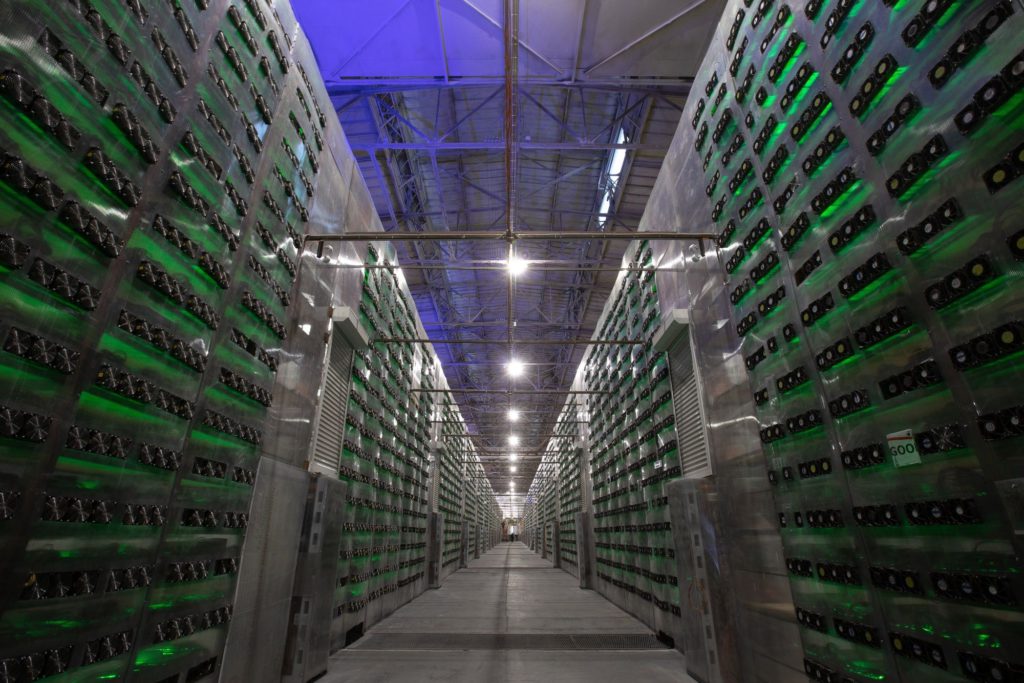
(Bloomberg) — Bitcoin rose the most in more than a month, gaining along with global equities and pushing past the psychologically important $20,000 level as a bout of dollar weakness drove demand for risk assets. 

The world’s largest cryptocurrency advanced 6.8% to $20,685 at 10:26 a.m. in London, the highest since Aug. 27 and outperforming most of the other top tokens like Ether. Asian and European stocks were also in the green as risk appetite returned, with the Hang Seng Index up about 2.7%.  

The Bloomberg Dollar Spot Index tumbled 0.9% on Friday after surging to the highest on record this week. Every Group-of-10 currency strengthened against the greenback, with the risk-sensitive Australian dollar and Norwegian krone leading gains.

Bitcoin has been stuck in the tightest trading range in almost two years in September, in part reflecting uncertainty about how far central banks will go in raising interest rates in the face of a slowing global economy. Amid the lack of direction, some analysts have pointed to activity in futures markets as suggesting Bitcoin may be poised to break out. 

Read more: Bitcoin Is Seen Poised to Escape From Tightest Range in 2 Years

Riyad Carey, an analyst at crypto researcher Kaiko, highlighted a jump in open interest in Bitcoin futures on some of the biggest exchanges. 

“It appears that there was a bit of pent up demand for BTC (and BTC volatility), which has traded in a relatively tight range for the past couple months with decreasing volatility,” Carey said in a direct message over Twitter. 

Friday’s move was unusual in that Bitcoin outperformed almost all other top tokens tracked by Bloomberg. The MVIS CryptoCompare Digital Assets 100 Index advanced 5.2%. Smaller so-called altcoins typically fluctuate by larger magnitudes than Bitcoin, the industry’s bellwether. 

(Update with comment from analyst in fifth paragraph.)

More stories like this are available on bloomberg.com

©2022 Bloomberg L.P.
Bitcoin Miners Are Struggling to Cope With the Crypto Winter

  • Listen to Bloomberg Crypto on the iHeartRadio App
  • Listen to Bloomberg Crypto on Apple Podcasts
  • Listen to Bloomberg Crypto on Spotify  

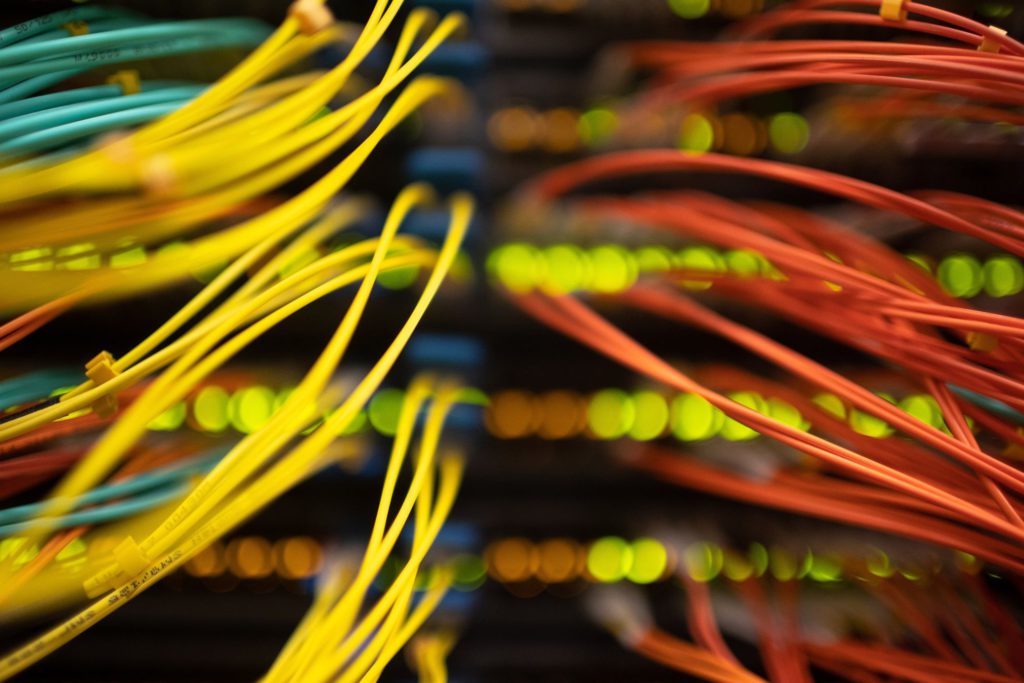
(Bloomberg) — As crypto prices remain stuck well below their all-time highs, the companies that mine Bitcoin are starting to show signs of financial strain. Second-quarter earnings reports laid bare the industry’s troubles, with the largest U.S. publicly traded Bitcoin mining firms recording over $1 billion in combined losses. Core Scientific Inc. and Marathon Digital Holdings Inc. each reported net losses topping $100 million. 

Bloomberg reporter David Pan and Galaxy Digital’s Head of Crypto Mining, Amanda Fabiano, join this episode to discuss what’s driving this distress.

Follow us on Twitter @crypto, and subscribe to the Bloomberg Crypto Newsletter at https://bloom.bg/cryptonewsletter

More stories like this are available on bloomberg.com

©2022 Bloomberg L.P.

US Business Groups Say Vietnam Data Rules a ‘Significant Burden’

(Bloomberg) — Vietnam’s new rules requiring foreign tech companies to store user data in the Southeast Asian country impose a “significant burden” and may affect investments, US business groups said in a letter to Prime Minister Pham Minh Chinh.  

The letter was posted on Friday and signed by the US Chamber of Commerce and the American Chambers of Commerce in Vietnam along with the Asia Internet Coalition, which includes Amazon, Google and Meta. They say rules make it difficult for companies to accurately assess the cost of doing business in Vietnam.

“These obligations are a significant burden on affected enterprises and may have considerable impact on the investment and business climate in Vietnam,” it reads. The wording of certain clauses is “ambiguous and creates uncertainty as to what compliance actions are necessary.”

The push from the US groups comes as Southeast Asia’s fastest-growing economy looks to bolster its appeal as a destination for foreign investment amid trade and geopolitical tensions between America and China. 

Vietnam Relies on Once-Banned Facebook to Kick-Start Businesses

The new rules, unveiled last month, are expected to take effect on Oct. 1 and cover tech companies as well as telco operators and data storage providers. These firms have to store personal data in the country for at least 24 months, including credit card information, email addresses, recent logins, phone numbers and the groups that users interact with. 

The companies will have 12 months to set up local data storage once given instructions from the Minister of Public Security. The rules will apply to companies if the services they offer are used in activities that violate Vietnam’s cybersecurity regulations and adequate measures are not taken to contain these issues. 

The Communist Party runs Vietnam with tight media censorship and has clamped down on the Internet over the past few years. This started with a cybersecurity law in 2019 and has moved to guidelines on social media last year. 

Vietnam’s Ministry of Foreign Affairs as well as Google and Facebook didn’t immediately respond to requests for comments over the letter.

The government was under pressure to balance between economic interests and national security when drafting the decree as it doesn’t want to discourage businesses or see a reduction in investments, said Vu Tu Thanh, the Vietnam representative of the US-Asean Business Council. 

The new rules are more flexible than those in previous drafts and the government has been taking in feedback from businesses, Thanh said. 

“Legal bases” have now been set out from which local authorities to take action against illegal activities in cyberspace such as take down requests and requesting data disclosure, said Manh-Hung Tran, Partner & Head of IPTech Practice of Baker McKenzie Vietnam.

“It is reasonable to expect that Vietnamese authorities will be more active in their cybersecurity enforcement efforts once it takes effect,” he said. 

(Updates with comments from US-Asean Business Council representative)

More stories like this are available on bloomberg.com

©2022 Bloomberg L.P.

Close Bitnami banner
Bitnami