
Bloomberg

Crypto Dreams Dashed in Thailand as Regulators Tighten Rules

(Bloomberg) — Thailand’s goal of becoming Southeast Asia’s leading trading center for digital assets has suffered a setback, following moves by regulators to tighten rules in the wake of trading irregularities and the collapse of a major acquisition involving a crypto exchange.

The country was the first in the region to implement digital-asset legislation in 2018, which helped attract droves of so-called millennials to put their money into cryptocurrencies. The Securities and Exchange Commission licensed six platforms as exchanges, including Bitkub Capital Group Holdings Co. and Zipmex Thailand. Bitkub founder and CEO Jirayut Srupsrisopa even became a pop-culture icon as a frequent guest on TV shows and YouTube, with his face plastered on highway billboards.    

The SEC’s 8.5 million baht ($233,459) fine against a Bitkub executive last month for insider trading and a police complaint earlier this week against Zipmex and its chief executive officer sent shudders through a market already unnerved by the global crypto rout. The SEC also plans a working group to enhance supervision of digital assets to enhance investor protection. 

The stricter oversight, experts said, has compounded the blows from beyond Thailand: the plunge in Bitcoin, Ether and other tokens, as well as meltdowns of crypto lender Celsius Network Ltd., broker Voyager Digital Ltd. and hedge fund Three Arrows Capital.

“Most investors and market players are extremely deflated with negative headlines almost every day,” said Nares Laopannarai, secretary-general of the Thai Digital Asset Association. “Rising regulatory risks will make it harder to restore the excitement in the market, which has already been hit by weakening global sentiment.”

The number of active trading accounts in Thailand fell to 246,000 in August, about a third the tally in January. 

SCB X Pcl, a financial group in which Thailand’s royal family is a major shareholder, last month scrapped its 18 billion baht plan to buy a majority of Bitkub Online, citing the exchange operator’s ongoing issues with regulators. 

“The collapse of digital-asset prices has wiped out a vast amount of wealth among Thai investors,” said Karin Boonlertvanich, executive vice president at Kasikornbank Pcl. “The realization of bubble-price risk will scare those people for quite some time to come.”

Trading of cryptocurrencies on Thailand’s licensed exchanges slumped to 64 billion baht in August, the least since December 2020, according SEC data. 

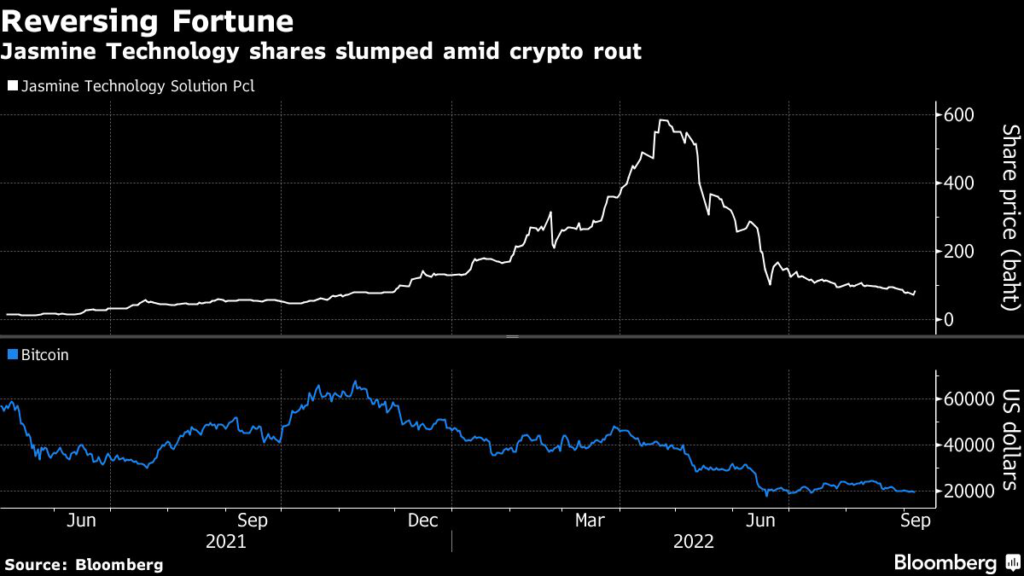
Some Thai companies have also been scarred by their foray into crypto. Shares of Jasmine Technology Solution Pcl have plunged more than 80% from their peak in April on its increased investment in Bitcoin mining. Its stock is now one of the worst-performing among global telecommunications equipment companies this year after being a world leader in 2021. 

To be sure, some are still betting on growth in the crypto market. Gulf Energy Development Pcl, Thailand’s biggest private power producer, has doubled down on its plans for expanding into digital-asset businesses to diversify earnings. The company, controlled by Thailand’s second-richest person, Sarath Ratanavadi, is seeking licenses from the SEC to operate a digital-asset exchange and brokerage in partnership with Binance Holdings Ltd.

“We are confident about the potential for cryptocurrencies and digital assets as the world moves further and further into blockchain technology and related ecosystems,” Yupapin Wangviwat, Gulf Energy’s chief financial officer, said in an interview last month. “Tokens with underlying assets will compliment the transformations of most companies.”

More stories like this are available on bloomberg.com

©2022 Bloomberg L.P.
Yellen Optimistic Inflation to Ease Further, But Risks Remain

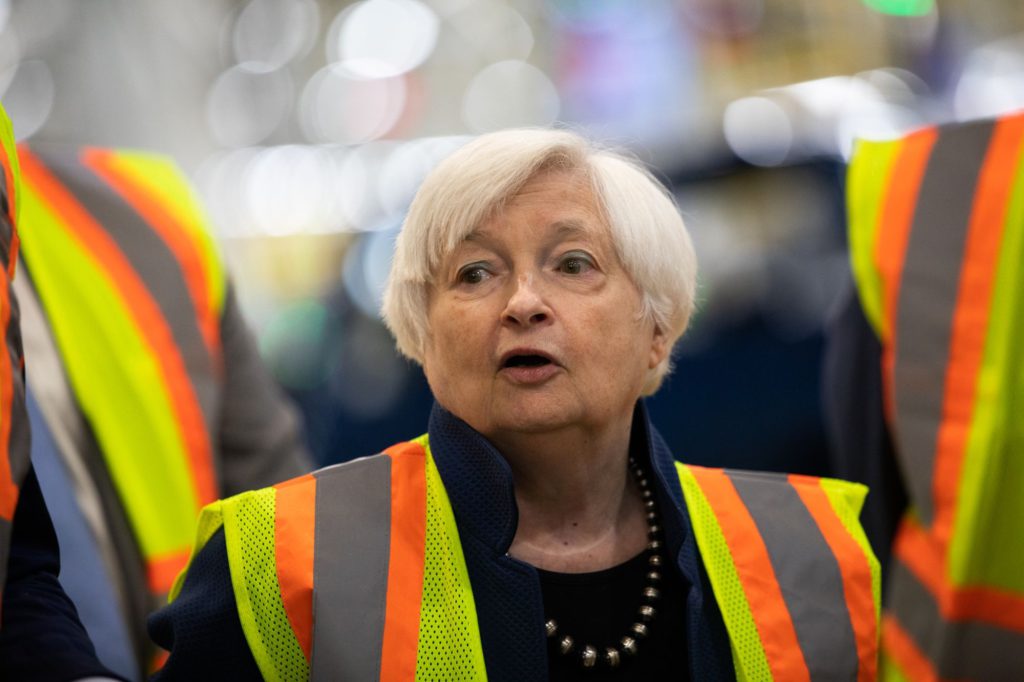
(Bloomberg) — Treasury Secretary Janet Yellen said she was optimistic that US inflation will decelerate further but warned that uncertainty remains. 

“Gas prices have been falling for 80 days in a row, which is certainly good news,” Yellen told reporters Thursday. “It caused headline inflation to actually go into negative territory in July, and I think there will be some further impetus in the next report.” 

Yellen, who spoke during a trip to Detroit to talk up the economic accomplishments of the Biden administration’s first two years, added that “there are a lot of global uncertainties associated with Russia.” 

Inflation, which is running at the hottest pace in almost four decades, is a crucial issue for the Biden administration as his Democratic Party approaches congressional mid-term elections in November. High gasoline and food prices earlier in the year severely dented the president’s popularity and the Democrats’ prospects for retaining control of Congress.

US central bankers are raising interest rates rapidly to counter red-hot inflation after being slow to respond as prices began to surge in late 2021. They hiked by 75 basis points at their meetings in June and July and have left the same again on the table when they next gather, or a smaller half-point move, depending on the data.

Inflation was 6.3% for the 12 months ending July, according to the Commerce Department gauge targeted by the Fed, which aims for 2% inflation. 

A separate Labor Department measure of consumer prices will be released on Sept. 13. Economists surveyed by Bloomberg expect it to moderate to 8.1% in the year through August, from 8.5% the month before. 

“The Fed is taking action and is committed and will do what’s needed to get inflation under control, but I don’t want to make a quantitative guess as to where inflation is going over the next year,” the Treasury chief said. 

Speaking at a Ford Motor Co. electric-vehicle plant in Dearborn, Michigan, earlier in the day, Yellen reviewed what she saw as the Biden administration’s biggest accomplishments, including new legislation that invested in infrastructure, green technology, domestic semiconductor production and other goals. 

She also pointed to unfinished business, saying the administration hoped to raise tax rates for the wealthy and corporations, and to increase federal government support for education and child care.


More stories like this are available on bloomberg.com

©2022 Bloomberg L.P.
DocuSign Jumps on Strong Quarterly Sales, Raised Billing Outlook

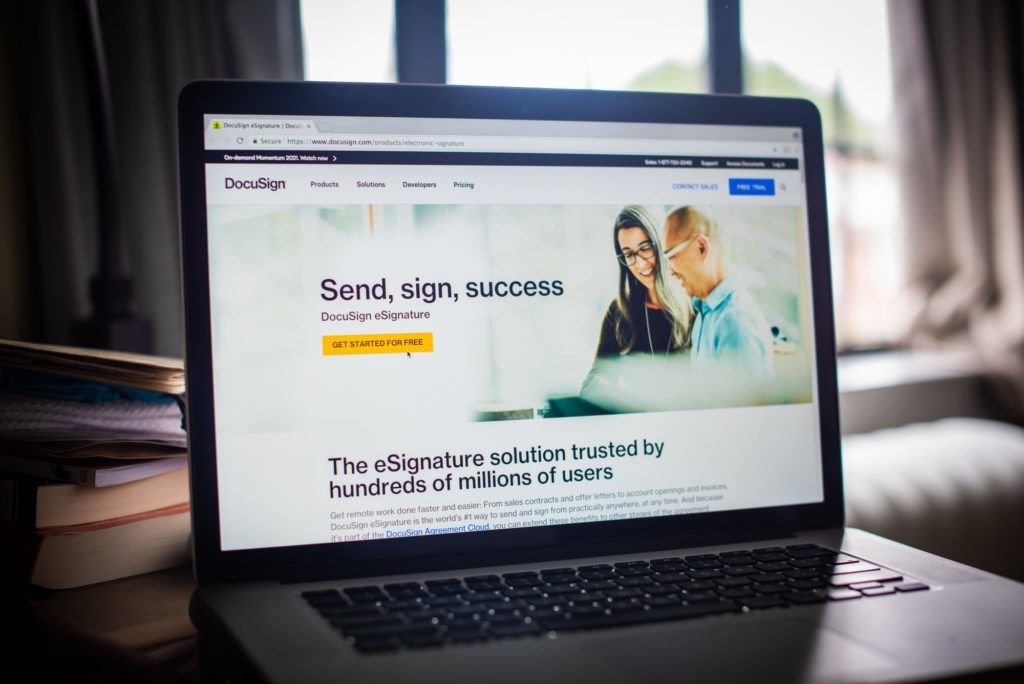
(Bloomberg) — DocuSign Inc. rallied 17% after reporting quarterly sales that topped analysts’ estimates and raising its billings forecast, signaling the e-signature business remains strong even as more workers return to offices.

Fiscal second-quarter revenue increased 22% to $622.2 million, the San Francisco-based company said Thursday in a statement. Analysts, on average, projected $602.7 million, according to data compiled by Bloomberg. Profit, excluding some items, was 44 cents a share, compared with the average estimate of 42 cents.

Expectations for the company were muted before the earnings were released, as sales growth slowed, Chief Executive Officer Dan Springer departed in June and the shares plunged 62% this year. Board Chair and Interim-CEO Maggie Wilderotter credited the positive results to the company’s execution “during this transition period.”

DocuSign boosted its forecast for full-year billings to as high as $2.57 billion from $2.54 billion. Analysts, on average, projected $2.53 billion. 

The stock rose to a high of $68.88 in extended trading after closing at $57.95 in New York.

More stories like this are available on bloomberg.com

©2022 Bloomberg L.P.

Stocks on Shaky Ground With Hawkish Fed Script: Markets Wrap

(Bloomberg) — Volatility gripped the stock market as unsurprising remarks from Jerome Powell and his colleagues did little to alter bets on another super-sized rate hike during the Federal Reserve’s September gathering.

In the final 15 minutes of trading, the S&P 500 extended its advance to close above 4,000 for the first time since late August — pushing further away from a level seen by chartists as critical for short-term direction. The benchmark swung between gains and losses all day as the Fed’s boss reprised his hawkish views from the Jackson Hole confab, saying officials are strongly committed to their fight against inflation.

A selloff in Treasuries sent the yield on the policy-sensitive two-year note up eight basis points to 3.51%. Swap traders priced a roughly four-in-five chance that Fed officials will implement a 75-basis-point hike this month.

Powell said the central bank won’t flinch in its efforts to curb inflation “until the job is done.” “We need to act now, forthrightly, strongly as we have been doing,” he noted at a Cato Institute’s conference. “It is very important that inflation expectations remain anchored,” Powell said, adding that “what we hope to achieve is a period of growth below trend, which will cause the labor market to get back into better balance.”

Separately, Fed Bank of Chicago President Charles Evans said “we could very well do 75 in September,” while adding that he’s “open minded.” His St. Louis counterpart James Bullard noted that bringing inflation back down to the 2% target is the “top priority.”

“Fedspeak has once again injected volatility (after all, it is September) into the rangebound environment,” wrote Julian Emanuel, chief equity and quantitative strategist at Evercore, highlighting “Powell’s view that the ‘clock is ticking’ on intolerably high inflation expectations becoming part of the American consumer’s behavioral norm.”

To Michael Gapen at Bank of America Corp., the September Fed meeting may still be a “game-time decision.” Should next week’s consumer inflation data surprise to the downside, that could open the door to a smaller rate increase. Still, the economist says it’s more likely than not that the Fed will deliver a 75-basis-point hike.

Read: Scott Minerd Says Stocks May Drop ‘Another 20%’ by Mid-October

Seasoned investors, staring at a world clouded by war, inflation and economic uncertainty, are buying catastrophe insurance at a record clip. Institutional traders paid a total of $8.1 billion to initiate purchases of equity puts last week, the highest premium in at least 22 years, Options Clearing Corp. data compiled by Sundial Capital Research show. Adjusted for market capitalization, demand for hedges matches levels from the 2008 financial crisis.

US stocks could slide a further 25% if the economy tips into recession, with risks to a sustained equity rally mounting, according to Deutsche Bank AG strategists. With company profits set to drop, valuations still high and economic risks looming, the fundamental picture is challenging, strategists led by Binky Chadha wrote in a note dated Sept. 7. Their base-case scenario still sees shares rising by year-end.

The recent equity selloff has left beaten-down smallcaps at the cheapest levels compared to their larger counterparts in nearly two decades, according to Bank of America. The group’s valuations could offer evidence of a stock bottom since historically, broader markets don’t bounce higher until smallcaps bottom.

“Very elevated valuation dispersion within the Russell 2000 overall — which can suggest more opportunity for stock selection  — is also supportive for value near-term,”  wrote Jill Carey Hall, equity and quantitative strategist at the firm.

Meantime, European bonds slid after the region’s central bank said it would temporarily remove a 0% cap for remunerating government deposits. That reduces the incentive to shift billions of euros of public money from cash into short-term debt. Officials are prepared to deliver another jumbo rate increase at their October meeting if the inflation outlook warrants an additional big step, according to people familiar with the debate.

Elsewhere, oil rebounded from an eight-month low as the market shrugged off a US report showing swelling crude stockpiles and slumping demand. Traders characterized the move as a technical correction following crude’s descent into oversold territory.

Are you bullish on energy-related assets? This week’s MLIV Pulse survey focuses on energy and commodities. Please click here to participate anonymously.

Some of the main moves in markets:

Stocks

  • The S&P 500 rose 0.7% as of 4 p.m. New York time
  • The Nasdaq 100 rose 0.5%
  • The Dow Jones Industrial Average rose 0.6%
  • The MSCI World index rose 0.8%

Currencies

  • The Bloomberg Dollar Spot Index was little changed
  • The euro was little changed at $0.9999
  • The British pound fell 0.3% to $1.1503
  • The Japanese yen fell 0.2% to 144.02 per dollar

Bonds

  • The yield on 10-year Treasuries advanced five basis points to 3.31%
  • Germany’s 10-year yield advanced 14 basis points to 1.72%
  • Britain’s 10-year yield advanced 11 basis points to 3.15%

Commodities

  • West Texas Intermediate crude rose 0.9% to $82.71 a barrel
  • Gold futures fell 0.6% to $1,718 an ounce

More stories like this are available on bloomberg.com

©2022 Bloomberg L.P.
Amazon, Apple and Google Pledge Training for Women in Indo-Pacific

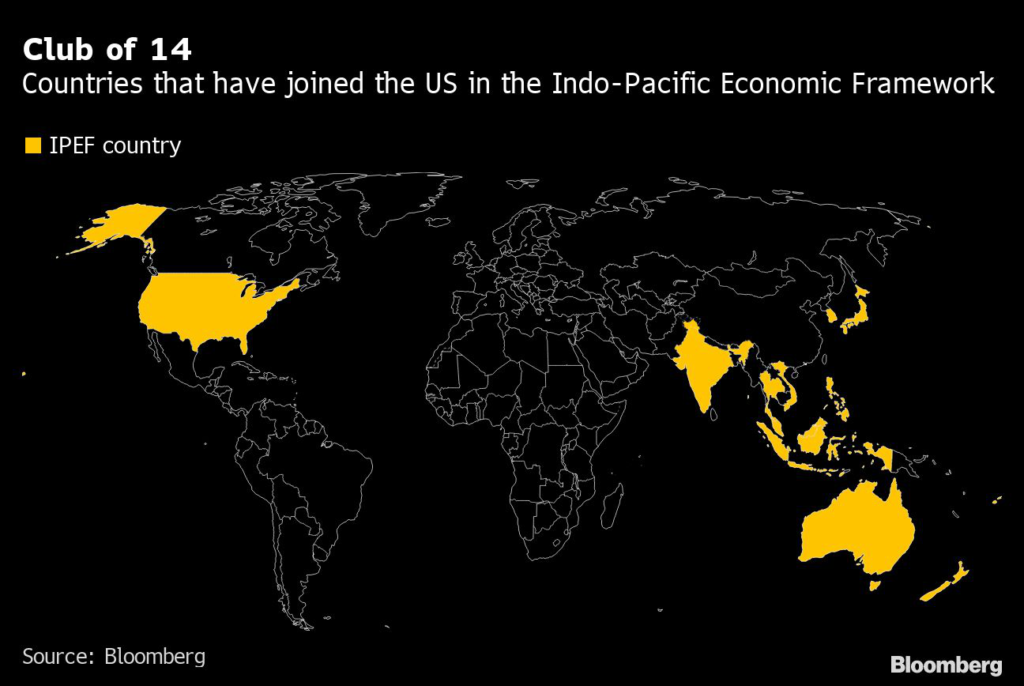
(Bloomberg) — Fourteen US companies including Amazon.com Inc. and Visa Inc. each pledged to provide at least 500,000 digital training and education opportunities for women and girls in the Indo-Pacific region as part of a Biden administration initiative.

The program, undertaken within the broader 14-nation Indo-Pacific Economic Framework for Prosperity, is focused on Brunei, Fiji, India, Indonesia, Malaysia, the Philippines, Thailand and Vietnam. 

The IPEF Upskilling Initiative, which will provide 7 million training opportunities in total over the next decade, was unveiled Thursday by Commerce Secretary Gina Raimondo and US Trade Representative Katherine Tai as they host a two-day meeting of the Asian nations in Los Angeles. The plan is designed to promote sustainable and inclusive economic growth, while advancing competitiveness in the region, they said. 

Read more: US Starts Broad Economic Talks With 13 Nations to Counter China

Other companies involved in the initiative are American Tower Corp.; Apple Inc.; Cisco Systems Inc.; Dell Technologies Inc.; public-relations firm Edelman; Google, which is part of Alphabet Inc.; HP Inc.; International Business Machines Corp.; Mastercard Inc.; Microsoft Corp.; PayPal Holdings Inc.; Salesforce Inc.; and Visa Inc.

The initiative — undertaken with The Asia Foundation, a nonprofit development organization — is focused on the emerging economies and middle-income countries in IPEF, which also includes rich countries such as Japan, South Korean, Australia and Singapore.

“I have heard loudly and clearly from the region, particularly in the developing countries, ‘We need concrete benefits, tangible economic benefits,’” Raimondo said at the launch of the initiative on Thursday. “I hear that and I promise you the Indo-Pacific Economic Framework will deliver tangible economic benefits to your countries.” 

The commerce chief added that she is hopeful more companies will join the initiative, and that it will expand beyond 14 countries. 

The contribution of this initiative has the potential to be “immeasurably valuable” and have a lasting impact, Fijian Trade Minister Faiyaz Koya said at the event

The plan will bolster US private-sector engagement in the fast-growing region in ways that pay long-term dividends for the companies and workers in both the US and its partner countries, Commerce and USTR said in statement announcing the strategy. The departments declined to disclose the value of the investments.

It also will support the region’s work to strengthen economic resilience, equity, inclusion and sustainability to help expand the middle class, as well as export opportunities for US goods and services and regional trade and investment, the agencies said.

Finally, by facilitating training in areas such as data, cloud and cyber-security work, the approach will allow IPEF countries to promote cross-border data flows and online privacy, as well as combat disinformation, corruption and cyber-theft, according to the Biden administration.

(Updates with comment from US Commerce Secretary in sixth paragraph.)

More stories like this are available on bloomberg.com

©2022 Bloomberg L.P.

Merriam-Webster Publisher Britannica Looking to Go Public in 2023

(Bloomberg) — Britannica Group, the publisher of the Merriam-Webster dictionary as well as its historic namesake encyclopedia, is weighing an initial public offering as soon as next year, according to people with knowledge of the matter. 

The company, now an education-technology business with mostly digital products, could be valued at more than $1 billion in an IPO, the people said, asking not to be identified discussing private matters. It’s also considering raising private capital ahead of the listing, the people said. 

The timing of a listing will depend on market conditions and Britannica could decide to remain private, they added.

Britannica, founded more than 250 years ago, will have revenue approaching $100 million in 2022, Chief Executive Officer Jorge Cauz said in an interview. The majority of that came from sales of online materials after the company retired most of its print operations a decade ago. Britannica has a combined growth rate and profit margin of about 50%, he said. 

“We are seeing significant increases in revenue and increases in margin. So we want to continue to grow obviously,” Cauz said. “But since the market changes so rapidly, especially after Covid, we do want to tap into the public markets to accelerate that growth.”

Digital Curriculum

The Chicago-based company has focused on building digital curriculum on so-called foundational skills — basic literacy, numeracy, and transferable skills. It also develops English language courses for international markets such as Latin America and Asia, Cauz said. 

School closures during the coronavirus pandemic put a spotlight on education technology, estimated to be a $45 billion market globally for K-12 instruction. The boom benefited edtech startups such as Byju’s, an Indian rival to Britannica that is seeking new funding that would value it at $23 billion, according to reports. 

Cauz said the market for edtech is very fragmented and no single player has a share exceeding 2%.

He added that market conditions will determine when an IPO would happen. “We really want to time it in a way so that our current shareholders and future shareholders would be able to benefit from what we’re going to be doing,” he said.

‘Adorkable’

Merriam-Webster continues to hold sway over language in the English-speaking world, updating its dictionaries to reflect newly coined words and usage. This week, it announced 370 additions, including “video doorbell” and “side hustle,” as well as “sus” (for suspicious), “adorkable” (a combination of adorable and dorky).

(Updates with plan to raise capital in second paragraph)

More stories like this are available on bloomberg.com

©2022 Bloomberg L.P.

Musk Says SpaceX Discussed iPhone Satellite Service With Apple

(Bloomberg) — SpaceX held talks with Apple Inc. about using Starlink connectivity for the iPhone maker’s new satellite features, Elon Musk said.

The companies have had “promising conversations,” SpaceX Chief Executive Officer Musk said Thursday on Twitter, adding that Apple’s iPhone team is “super smart.” It was unclear if the talks were ongoing.

The comments came a day after Apple announced Emergency SOS via Satellite, which will allow iPhone 14 users to ping emergency services using satellite networks in areas without standard cellular reception. For the service, Apple partnered with Globalstar Inc. to power the satellite infrastructure, the network provider said in a regulatory filing Wednesday.

Apple and SpaceX, whose full name is Space Exploration Technologies Corp., didn’t respond to requests for comment.

Last month, Musk’s SpaceX and US wireless carrier T-Mobile US Inc. preempted Apple’s long-anticipated announcement by revealing that phone users on T-Mobile’s network would be able to tap into SpaceX satellites to send text messages in areas without cellular connectivity. The collaboration is dependent on SpaceX launching an upgraded version of its Starlink satellites, known as Version 2.

Read more: T-Mobile Will Tap Musk’s Satellites for Remote Phone Service

That partnership, which won’t launch until the end of next year at the earliest, will differ from Apple’s feature in that it will allow for communication between consumers. Apple’s short length satellite texting service is only designed to message emergency responders, the company said Wednesday.

The satellite infrastructure will allow integration with Apple’s Find My app, allowing hikers and explorers to be more accurately tracked by friends in areas where GPS or cellular services may not normally work.

Satellite Investment

Apple’s feature is set to launch in November and will be free for two years. The company didn’t say how much it would cost after that initial period. Apple is investing hundreds of millions of dollars into Globalstar’s satellite infrastructure, the company said. The T-Mobile and Starlink feature will be free. 

Starlink is SpaceX’s ambitious plan to create a constellation of thousands of satellites, in order to beam broadband internet coverage to the Earth below. The company has roughly 3,000 satellites in orbit at the moment and recently said it has more than 400,000 subscribers.

Musk’s companies have never collaborated with Apple, though he did confirm in 2020 that he attempted to sell Tesla Inc. to the technology giant during some of the automaker’s darkest days. Apple CEO Tim Cook later said he had never spoken with Musk about such a deal.

More stories like this are available on bloomberg.com

©2022 Bloomberg L.P.
Stocks Face Wobbly Session With Hawkish Rhetoric: Markets Wrap

(Bloomberg) — Volatility gripped the stock market as unsurprising remarks from Jerome Powell and his colleagues did little to alter bets on another super-sized rate hike during the Federal Reserve’s September gathering.

The S&P 500 swung between gains and losses as the Fed’s boss just reprised his hawkish views from the Jackson Hole conference in late August, saying officials are strongly committed to their fight against inflation. The rate of the policy-sensitive two-year note jumped by as much as seven basis points to 3.5%. Swap traders priced in odds of around four-in-five the Fed will implement a 75-basis-point hike Sept. 21.

Powell said the US central bank will not flinch in its efforts to curb inflation “until the job is done.” “We need to act now, forthrightly, strongly as we have been doing,” he noted Thursday at the Cato Institute’s monetary policy conference in Washington. “It is very important that inflation expectations remain anchored,” Powell said, adding that “what we hope to achieve is a period of growth below trend, which will cause the labor market to get back into better balance.”

Separately, Fed Bank of Chicago President Charles Evans said “we could very well do 75 in September,” while adding that he’s “open minded.” His St. Louis counterpart James Bullard noted that bringing inflation back down to the 2% target is the “top priority” for the central bank.

“Fedspeak has once again injected volatility (after all, it is September) into the rangebound environment,” wrote Julian Emanuel, chief equity and quantitative strategist at Evercore, highlighting “Powell’s view that the ‘clock is ticking’ on intolerably high inflation expectations becoming part of the American consumer’s behavioral norm.”

To Michael Gapen at Bank of America Corp., the September Fed meeting may still be a “game-time decision.” Should next week’s consumer inflation data surprise to the downside, that could open the door to a smaller rate increase. Still, the economist says it’s more likely than not that the Fed will deliver a 75-basis-point hike in September.

Meantime, European bonds slid after the region’s central bank said it would remove a cap on how much interest government deposits can earn as it lifted rates above 0% for the first time in a decade. That reduces the incentive to shift billions of euros of public money from cash into short-term debt. Officials are prepared to deliver another jumbo rate increase at their October meeting if the inflation outlook warrants an additional big step, according to people familiar with the debate.

Seasoned investors, staring at a world clouded by war, inflation and economic uncertainty, are buying catastrophe insurance at a record clip. Institutional traders paid a total of $8.1 billion to initiate purchases of equity puts last week, the highest premium in at least 22 years, Options Clearing Corp. data compiled by Sundial Capital Research show. Adjusted for market capitalization, demand for hedges matches levels from the 2008 financial crisis.

US stocks could slide a further 25% if the economy tips into recession, with risks to a sustained equity rally mounting, according to Deutsche Bank AG strategists. With company profits set to drop, valuations still high and recession risks looming, the fundamental picture is challenging, strategists led by Binky Chadha wrote in a note dated Sept. 7. His base-case scenario still sees shares rising by year-end.

The recent equity selloff has left beaten-down smallcaps at the cheapest levels compared to their larger counterparts in nearly two decades, according to Bank of America. The group’s valuations could offer evidence of a stock bottom since historically, broader markets don’t bounce higher until smallcaps bottom.

“Very elevated valuation dispersion within the Russell 2000 overall — which can suggest more opportunity for stock selection  — is also supportive for value near-term,”  wrote Jill Carey Hall, equity and quantitative strategist at the firm.

On the economic front, applications for US unemployment insurance fell for a fourth straight week to the lowest since May, suggesting demand for workers remains healthy despite an uncertain economic outlook. Meanwhile, Mortgage rates in the US climbed for the third week in a row, reaching the highest level since 2008 and squeezing affordability as the US housing slowdown deepens.

Are you bullish on energy-related assets? This week’s MLIV Pulse survey focuses on energy and commodities. Please click here to participate anonymously.

Some of the main moves in markets:

Stocks

  • The S&P 500 rose 0.3% as of 2:52 p.m. New York time
  • The Nasdaq 100 was little changed
  • The Dow Jones Industrial Average rose 0.3%
  • The MSCI World index rose 0.5%

Currencies

  • The Bloomberg Dollar Spot Index was little changed
  • The euro was little changed at $0.9996
  • The British pound fell 0.2% to $1.1511
  • The Japanese yen fell 0.2% to 143.97 per dollar

Bonds

  • The yield on 10-year Treasuries advanced two basis points to 3.28%
  • Germany’s 10-year yield advanced 14 basis points to 1.72%
  • Britain’s 10-year yield advanced 11 basis points to 3.15%

Commodities

  • West Texas Intermediate crude rose 1.6% to $83.25 a barrel
  • Gold futures fell 0.5% to $1,719.30 an ounce

More stories like this are available on bloomberg.com

©2022 Bloomberg L.P.
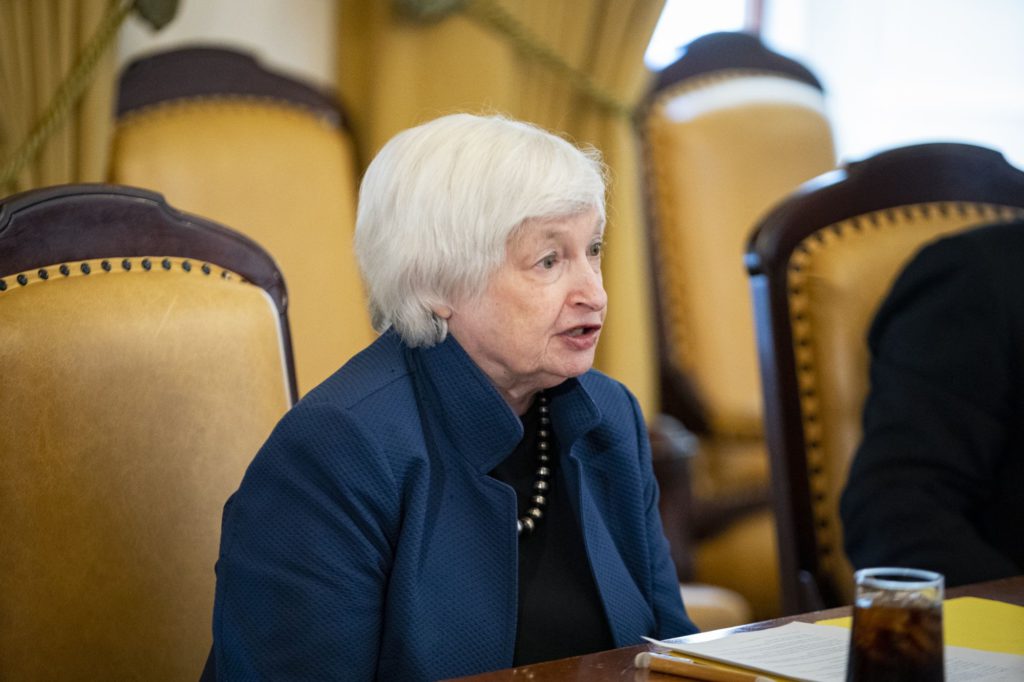
Yellen Renews Call for Tax Hikes on Rich, Social-Spending Boost

(Bloomberg) — Treasury Secretary Janet Yellen outlined some of the Biden administration’s unfinished economic business on Thursday in a speech calling for higher tax rates on the rich and on companies to help pay for social spending.

With less than two months before midterm elections where Democrats will be battling against the political odds to retain control of Congress, Yellen provided a sweeping review of what she saw as the administration’s bragging points: flooding the economy with fiscal support to weather the pandemic and enacting measures to boost long-term growth, productivity and fairness.

“The most immediate challenge is to return to an environment of stable prices without sacrificing the economic gains of the past two years,” Yellen sai

d in remarks prepared for delivery at an event in Michigan.

While the Federal Reserve has the “primary role” in restoring price stability, combating inflation is the administration’s top priority, she said. Part of that includes addressing public finances, she said, alluding to legislation passed last month that shrinks the fiscal deficit by boosting IRS funding and imposing a new minimum tax on some corporate earnings.

“As we look to the fall and the months beyond, our administration is ready to build on the achievements of the past year,” Yellen said. “We will build on the momentum of the Inflation Reduction Act’s corporate-tax reforms to advocate for additional reforms of our tax code and the global tax system.”

‘Closing Loopholes’

The Treasury secretary called for “closing loopholes and returning tax rates for high earners and corporations to historical norms.”

Meantime, the Internal Revenue Service will be using the $80 billion of funding from the Inflation Reduction Act to step up audits of high earners, who are disproportionately responsible for underpayments of taxes owed, Yellen said. The so-called tax gap is estimated at $7 trillion over the next decade, she said.

“By making everyone pay their fair share, these reforms will provide our government with additional fiscal room to make critical investments,” Yellen said of the further tax reforms Biden is seeking.

Read More: Democrats Go All In on Social Issues in Sprint to Midterms

President Joe Biden’s administration had to abandon a welter of proposed tax hikes to win approval of last month’s package, including rolling back the Trump administration’s cut to the top marginal income-tax rate. Progressive Democrats also had to jettison spending on child care, elder care and affordable housing.

Going forward, Yellen listed a number of priorities in her speech, at a Ford Motor Co. electric vehicle plant in Dearborn, Michigan. 

  • “Programs like free community college and expanded workforce training increase the productivity of our labor force.”
  • “High-quality, affordable child care and free preschool increase the likelihood that parents, particularly mothers, will participate in the workforce.”
  • “It is a national imperative to increase the affordability of housing,” she said. “We must continue advancing our coordinated government approach” to that end, she said.

“For all there is left to do, I will say this: after the progress we have made over the past few months, I am more optimistic about the course of our economy than I have been for quite a while,” Yellen said.

Along with the IRA — which featured $370 billion in tax incentives and other programs to help fight climate change — Congress passed two other economic packages over the past year. The Bipartisan Infrastructure Law added a net $550 billion over roughly five years, and the CHIPS Act had $52.7 billion in aid for semiconductors.

Taken together, the three packages “will expand the productive capacity of our economy,” Yellen said. “With an economy at full employment, we are uniquely suited for a supply-side expansion that delivers sustainable growth and reduces inequality.”

Yellen, not a familiar figure on the campaign trail, will need voters to buy that message — and ignore the fact that the administration’s Covid spending by most estimates helped fuel inflation — if she’s going to get a chance to implement remaining targets.

With voters stung by high gasoline and grocery prices over the past year, the prospects for the Democrats to hold on to Congress after the November elections plunged. It remains unlikely, according to polls, that they will hang on to both houses, but recent successes in Congress and a steady decline in gasoline prices have helped boost their chances.

More stories like this are available on bloomberg.com

©2022 Bloomberg L.P.

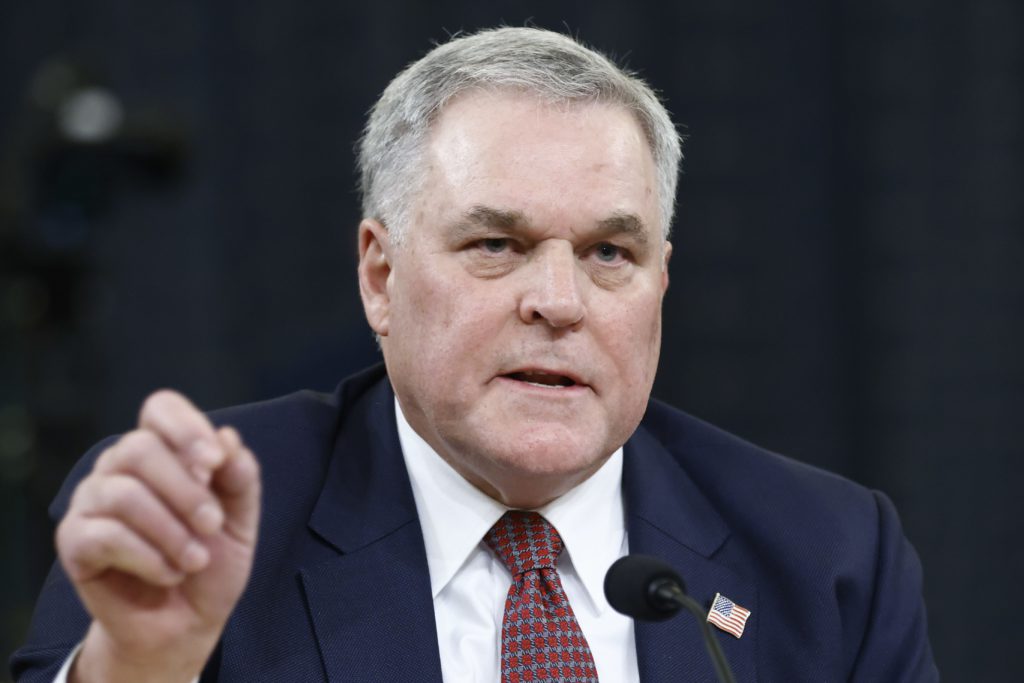
Biden Is Closing In on Naming IRS Chief to Succeed Trump Appointee Rettig

(Bloomberg) — President Joe Biden is narrowing the list of candidates to lead the Internal Revenue Service ahead of a massive expansion of tax enforcement.

The names of potential nominees to succeed Charles Rettig, a Donald Trump appointee whose term expires in November, are closely held secrets within the White House and Treasury Department. People familiar with the search say the administration wants someone with deep management and business experience as opposed to a tax attorney, someone who can help to lead and transform the sprawling agency that processes more than 150 million individual tax each year.

The next commissioner will be thrown into the middle of a political maelstrom as Republicans are attacking the IRS by claiming that additional funding passed by Democrats would lead to a massive increase in the number of armed IRS agents and that enhanced enforcement would be aimed at middle-income taxpayers.

In recent days, White House aides have consulted Senate Democrats for their informal advice on what they would like to see in the next commissioner, and Senate Democrats are pushing for a candidate with bipartisan credibility who can work well with Republicans, in case the GOP takes over the House following the November mid-terms.

No IRS commissioner has served two terms since the IRS Restructuring and Reform Act of 1998 which set up the current term structure. The White House hasn’t yet officially told Rettig they are not re-nominating him for the job when his term expires Nov. 12, said one Biden ally briefed on the search. A spokesman for Rettig didn’t immediately respond to a request for comment.

The turnover in the top job comes at a crucial time for the IRS, as an infusion of $80 billion from the Inflation Reduction Act will used to rebuild the agency’s enforcement capacity and upgrade its computer systems. Any new commissioner will also oversee how that funding is deployed in the agency that has been plagued staffing shortages and technology challenges for roughly a decade.

The IRS Commissioner job is subject to Senate approval. The chamber’s limited schedule in Washington for the remainder of the year means that Biden will likely have to select someone to lead the agency in an acting capacity while the nominee awaits for a Senate vote.

That wait could be even longer if Republicans win a Senate majority in the November election and Democrats aren’t able expedite the confirmation in the lame duck session after the election and before the new Congress is installed.

The IRS is under great scrutiny following the leak of thousands of internal documents and tax returns to the non-profit newsroom, ProPublica. If the Republicans take control of the House next year after the midterm elections in November, the commissioner can expect renewed efforts to investigate the agency. 

The incoming commissioner could also potentially be the target of impeachment attempts from far-right House lawmakers. That was the case for former IRS Commissioner John Koskinen, whom House Republicans repeatedly, and unsuccessfully, tried to impeach following reports that the IRS’s non-profit division was slow-walking requests for tax-exempt status from conservative groups.

The IRS is likely also to continue to face questions from Democrats about the decision to audit former FBI Director James Comey and his deputy Andrew McCabe — both outspoken critics of Trump — in the same year.

The IRS Commissioner job has historically been a difficult post to fill partially because of the special skills needed to lead an agency of roughly 80,000 employees that is responsible for collecting the revenue that funds the federal government.

Koskinen, who served as IRS Commissioner from 2013-2017 said that Biden should prioritize picking someone experience managing a large budget and big organization over someone who is a tax expert.

“The last thing in the world the IRS needs is more tax expertise,” Koskinen said at a Tax Policy Center event Thursday. “What the IRS needs in the next commissioner is somebody who can take advantage of this funding, organize internally to deal with it, take the plans that exist, update them, modify them as appropriate, and deal with the significant challenge of hiring the right people in the right numbers.”

Biden will also have the opportunity to select the IRS’s Chief Counsel, the top lawyer at the agency, which is the only other political appointee position at the large civil servant agency.

(Updates with remarks from former IRS commissioner in 13th, 14th paragraphs)

More stories like this are available on bloomberg.com

©2022 Bloomberg L.P.

Close Bitnami banner
Bitnami