

Bloomberg

Tesla Delivers Near-Record China-Made Cars in August

(Bloomberg) — Tesla Inc.’s China operations are back in full swing after an upgrade to its factory in Shanghai and a Covid-19 lockdown in the city slowed production earlier this year.  

Elon Musk’s electric-car maker delivered 76,965 Chinese-made vehicles in August, just shy of June’s record 77,938 and a sharp rebound from 28,217 in July, when assembly lines at Tesla’s plant in Shanghai were suspended for upgrades to double annual capacity to about 1 million units. 

Of Tesla’s August total, 34,502 vehicles went to the local market and 42,463 were shipped overseas, China Passenger Car Association data released Thursday showed. 

EVS in China 

Chinese drivers’ passion for new-energy vehicles shows no signs of abating. Total sales of NEVs, which include pure-electric cars and plug-in hybrids, rose 111% to 529,000 units, the PCA said. Last month, the association raised its forecast for total China NEV sales this year to 6 million, double the 2.99 million in 2021.

China’s Love of Local EVs Is Bad News for Foreign Carmakers

Warren Buffett-backed BYD Co. remained top with record deliveries of 174,915 cars. The Shenzhen-based automaker shipped about 1 million cars in the first eight months of the year, accounting for about two-thirds of its annual target of 1.5 million.  

China Car Sales

Overall passenger vehicle sales in China increased 28.4% from a year earlier to about 1.9 million units in August, the PCA said. 

Despite the overall increase in NEV sales, not all automakers were immune from regional disruptions, such as power cuts in Sichuan province and Covid outbreaks and lockdowns in several parts of the country. 

Automakers’ profit margins have been squeezed to about 5% due to price increases from raw material suppliers, PCA Secretary General Cui Dongshu said at a briefing Thursday. Companies will eventually improve supply-chain integration and pricing power, with a particular focus on batteries, he said. 

Production Snags

Li Auto Inc.’s deliveries fell more than 50% last month, due in part to production issues at one of its suppliers in Sichuan province, which suffered widespread power outages. Tesla and SAIC Motor Corp. also alerted Shanghai’s government that they may have difficulty maintaining production due to the power cuts, prompting city officials to ask the southwestern province if it could prioritize electricity for the carmakers’ suppliers. 

Volkswagen AG has entered a closed-loop operation in Chengdu, Sichuan’s capital, which is under lockdown due to a Covid outbreak. Volvo Car AB’s Sichuan plant has suspended production.

The PCA expects car sales to continue to grow rapidly this month, despite the unpredictability of Covid outbreaks. Chip supply and automakers’ production capabilities have improved, it said.

(Adds chart on Tesla deliveries.)

More stories like this are available on bloomberg.com

©2022 Bloomberg L.P.

What’s at Stake in the Voyager and Celsius Crypto Bankruptcies

  • Listen to Bloomberg Crypto on the iHeartRadio App
  • Listen to Bloomberg Crypto on Apple Podcasts
  • Listen to Bloomberg Crypto on Spotify  

(Bloomberg) — When we talk about “crypto winter” on this podcast, we don’t only mean the months-long decline in prices of different coins and tokens. We’re also referring to organizational failures, crypto CEOs losing their jobs and, of course, bankruptcy filings. In July, two major crypto players, Voyager Digital and Celsius Network, both sought court protection from creditors. 

These bankruptcy filings have opened something of a Pandora’s Box around the interpretation of US bankruptcy law as it relates to crypto. Asset holders, lenders, and the bankruptcy courts themselves are navigating uncharted legal waters. Whatever is decided in these proceedings could set precedents for billions of dollars worth of crypto. To tackle these important and complicated legal questions, Georgetown Law Professor Adam Levitin joins this episode.

Follow us on Twitter @crypto, and subscribe to the Bloomberg Crypto Newsletter at https://bloom.bg/cryptonewsletter


More stories like this are available on bloomberg.com

©2022 Bloomberg L.P.
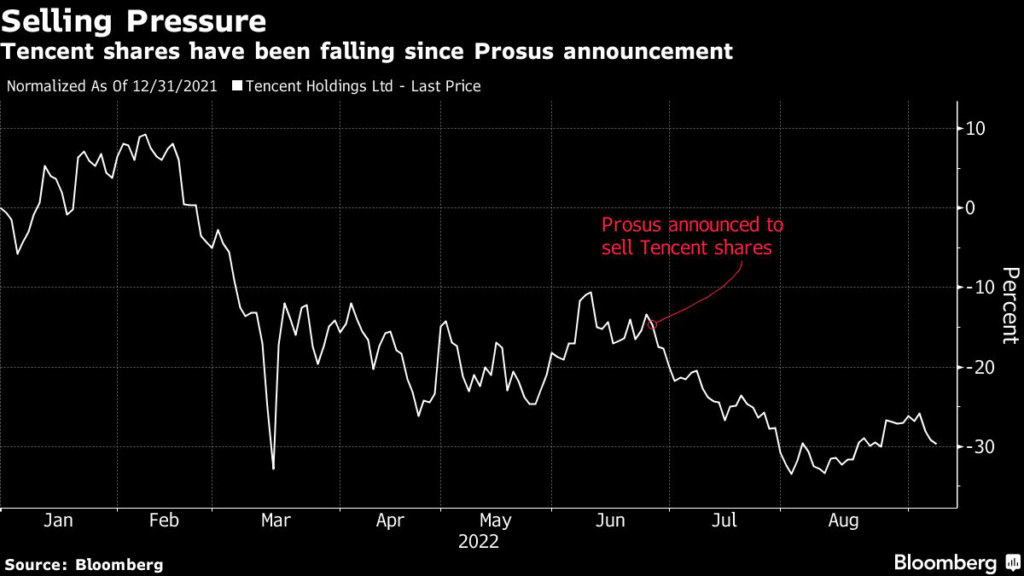
Tencent Stake Worth $7.6 Billion Appears in Hong Kong Clearing System

(Bloomberg) — Tencent Holdings Ltd. shares worth $7.6 billion appearing in Hong Kong’s clearing and settlement system has fueled speculation that a large stakeholder may be selling its holdings. 

About 192 million of additional shares, representing about 2% stake in the Chinese tech giant, were registered on the platform as of Wednesday, according to city’s exchange website. While there are several reasons for a stake to appear, such a move is typically seen as a precursor to selling and investors pointed to its most dominant backer Prosus NV as the likely culprit. 

The Dutch e-commerce firm owns a 29% stake in Tencent after its parent, Naspers Ltd., became an early investor more than two decades ago. In late June, Prosus said it planned to reduce its stake to fund a buyback program, adding pressure to the Chinese online game company’s stock. “We will keep selling Tencent shares to buy back our own, it’s open-ended and an unlimited program,”, Chief Executive Officer Bob Van Dijk said in an interview at the time. 

Prosus said then disposals of its stake in Tencent would be done in small chunks of about 3% to 5% of the Chinese company’s daily trading volumes. A stake sale of 2% would far exceed its stated sales policy, and the news of a possible deal has been weighing on Tencent’s share price. Shares fell 3.2% in Hong Kong on Thursday, taking their loss from a June high to 24%.

The move to start selling Tencent stock was done to narrow a discount between Prosus and its parent Napsers’ value, to that of its stake in the Chinese firm.

“People are worried that the big holder will keep selling their stake and there is no timetable when their sale will end,” said Steven Leung, executive director at Uob Kay Hian (Hong Kong) Ltd. “This kind of changes in the clearing system will always trigger worries that more selling will happen in near future.”   

Several global investors have trimmed their holdings in major Chinese firms in recent months, fanning concern of more selling to hit the market. That includes Warren Buffett’s Berkshire Hathaway Inc. paring back its stake in BYD Co., the nation’s biggest electric maker. SoftBank Group Corp. also has plans to sell its holdings in Alibaba Group Holding Ltd. 

Naspers and Prosus didn’t immediately respond to a Bloomberg email seeking comment. A spokesperson for Tencent declined to comment. 

Read: Tencent Backer Prosus to Cut $134 Billion Stake to Buy Stock (2) 

Headwinds

The stake reduction is likely the next setback for a company that’s seen multiple blows following Beijing’s broad regulatory crackdown and China’s slowing economic growth. Faced with declining revenue, Tencent has been looking to ease investor worry by cutting costs as well as selling off its own assets, which include online retailer JD.com Inc. and Singapore’s Sea Ltd.  

It’s also been buying back shares in the open market recently on a near daily basis, even though that’s not helped cushion broader market angst.  

According to the company’s latest filing, Prosus sold over 3.9 million of its shares in the six months through June, trimming holdings to about 2.765 billion shares. Since the Dutch firm announced its stake reduction plan in late June, Tencent has repurchased about 25.8 million shares in total, based on Bloomberg calculations.   

“There will be an overhang for Tencent for sure but given it’s not a block sale, should not be too negative,” said Justin Tang, head of Asian research at United First Partners. “Shares dropped in the past few days partly due to more Naspers selling, but also due to macro concerns. Plus the crackdown on the tech sector of course.”  

(Updates with more on Prosus sales plan, starting third paragraph)

More stories like this are available on bloomberg.com

©2022 Bloomberg L.P.

US Lawmaker Visits to Taiwan Hit Decade High, Irking China

(Bloomberg) — A bipartisan group of US lawmakers arrived in Taiwan on Wednesday, bringing the number of congressional visitors this year to the highest in at least a decade as displays of support for the island grow. 

The delegation of two Democratic and six Republican members of the House of Representatives, led by Florida Democrat Stephanie Murphy, landed in Taipei as part of a trip to the region, according to a statement from the de facto US embassy in Taipei. Murphy is vice-chair of the House Armed Services Subcommittee on Intelligence and Special Operations.

The visit means 28 members of Congress have traveled to Taiwan this year, the most since at least 2013, according to Bloomberg-compiled data. Bipartisan support for Taiwan is high as US politicians look to demonstrate their resolve in the face of what they see as China’s growing regional ambitions and fears that it might invade.

Murphy underscored the US’s determination to strengthen ties with Taiwan in the face of Chinese pressure. “One of the most important things Congress can do right now is to deepen economic relationship with Taiwan, and in particular, by pushing for a high-quality free-trade agreement between the US and Taiwan,” Murphy said during the meeting with President Tsai Ing-wen on Thursday.

Another member of the delegation, Representative Scott Franklin, a Florida Republican, highlighted Taiwan’s economic value to the global economy, saying its production of semiconductors is critical to supply chains.

It’s the fourth US congressional delegation to touch down in Taipei since last month, when House Speaker Nancy Pelosi became the first sitting speaker to visit in a quarter century. More than 40 lawmakers have visited Taiwan since US President Joe Biden took office.

That compares with 35 during the previous four years under former President Donald Trump, when the pandemic interrupted travel.

“The baseline of congressional support for Taiwan is quite strong and always has been,” said Drew Thompson, a former Defense Department official and visiting senior fellow at the Lee Kuan Yew School of Public Policy at the National University of Singapore.

“Because of China’s pressure on Taiwan, military coercion in particular as demonstrated from Pelosi’s visit, the result is that Taiwan has a much higher priority and is much more competitive on the agenda.”

Why Taiwan’s Status Risks Igniting a US-China Clash: QuickTake

A French delegation was expected to meet Vice President William Lai on Thursday.

While the US views regular congressional visits as consistent with its “one China” policy of avoiding formal relations with Taipei, Beijing has accused American lawmakers of supporting  what it calls “separatists.” China responded to Pelosi’s visit by firing ballistic missiles over the island and holding near-daily flights across the US-drawn median line that divides the Taiwan Strait. 

When asked about the visiting US lawmakers, Chinese Foreign Ministry spokeswoman Mao Ning said at a regular press briefing Thursday that Beijing would “take strong measures to firmly safeguard our sovereignty and territorial integrity,” without elaborating.

The Biden administration sent two US Navy cruisers through the strait last month, in the first such transit since Pelosi’s visit. It is also preparing a potential $1.1 billion US arms package to Taiwan that would include missiles and radar support.

China Invading Taiwan Is ‘Distinct Threat,’ Jake Sullivan Says

US National Security Advisor Jake Sullivan said Wednesday a Chinese invasion of Taiwan remains a “distinct threat,” while insisting that Washington hasn’t changed its position over the island’s status, despite Chinese claims.

Although he offered no prediction of when such an attack might occur during an interview on Bloomberg Television, he said: “The People’s Republic of China has actually stated as official policy that it is not taking the invasion of Taiwan off the table.”

(Updates with comments from China’s Foreign Ministry. An earlier version corrected the number of lawmakers in the third paragraph.)

More stories like this are available on bloomberg.com

©2022 Bloomberg L.P.
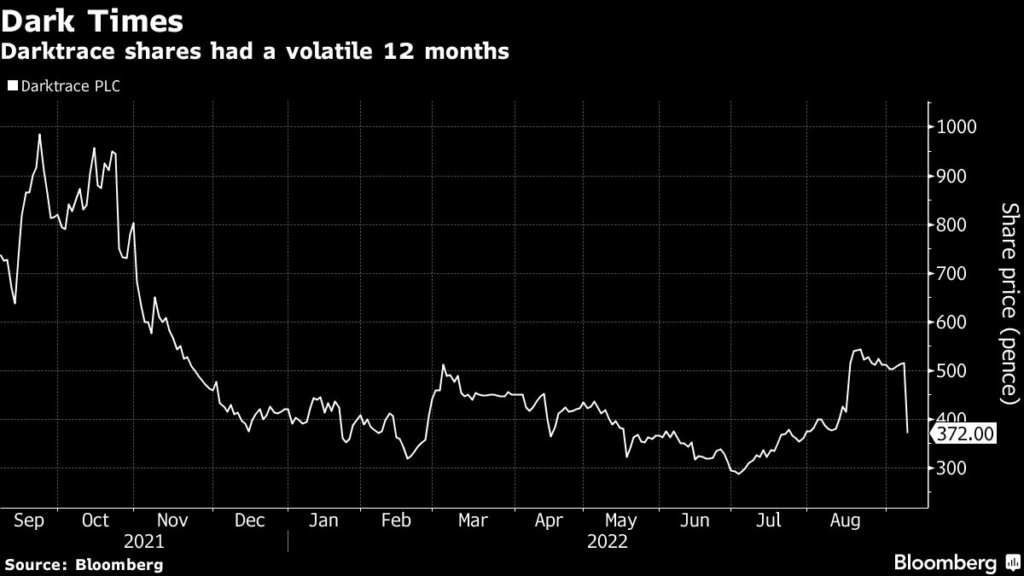
Darktrace Shares Drop 33% After Takeover Talks Collapse

(Bloomberg) — Shares of Darktrace Plc tumbled as much as 33% after US private equity firm Thoma Bravo said it did not intend to make a takeover offer for the cybersecurity firm.

London-based Darktrace revealed it was in early discussions with Thoma Bravo about a possible takeover last month, but said on Thursday that “an agreement could not be reached on the terms of a firm offer.”

The fall has wiped £1.17 billion from Darktrace’s market value, with the company currently worth about £2.5 billion.

Thoma Bravo separately said it reserved the option to make a bid under certain circumstances over the next six months. The San Francisco-based firm, which focuses on software investments, said this week it would open an office in London.

Darktrace shares have been volatile in 2022, reaching a high of 511.5 pence in March before falling to 287.6 pence in July. They soared to a new year-to-date high after the takeover talks were disclosed in August — gains erased on Thursday.

“For investors with long memories, this is par for the course — and they will remember that Micro Focus had the same thing happen a number of years ago, Goodbody analyst George O’Connor said in a note to clients. “The only rational explanation is that Thoma walked away because they couldn’t get to the price that they wanted.”

Founded in 2013 by mathematicians and cyber defense experts, Darktrace uses artificial intelligence to check for hacks and suspicious data leaks. Its founding investor was Invoke Capital Partners, an investment firm created by embattled British entrepreneur Mike Lynch. 

Read more: Lynch’s Legal Woes Barely Dent Loyalists’ $1.7 Billion Fortune 

Any possible takeover talks would’ve likely involved questions about Darktrace’s historic links to Lynch, the former Autonomy Corp. founder who’s fighting criminal fraud charges related to the sale of that company to Hewlett-Packard in 2011. Lynch formed Invoke following the Autonomy sale.

Darktrace warned about potential risks arising from Lynch’s legal battles in the prospectus released ahead of its initial public offering last year. 

Foreign buyers have been targeting UK tech firms recently. Canadian Open Text Corp.’s takeover offer for Micro Focus International Plc follows NortonLifeLock Inc.’s purchase of cybersecurity firm Avast Plc, and GTCR said Tuesday it’s considering a bid for identity verification and fraud prevention company GB Group Plc.

“I don’t think it really means much in terms of UK remaining an attractive market for PE buyers,” Ben Kelly, an analyst at Louis Capital Markets, said in an emailed comment. “One could argue that jobs and valuable IP will — for now — remain here in the UK at a time when Truss is keen to ‘get Britain moving,’ but that doesn’t mean another buyer won’t sweep in within the coming months.”

Darktrace also reported revenue for the full year on Thursday that met the average analyst estimate.

Read More: Foreign Buyers Hoover Up Britain’s Fast-Growing Tech Firms

(Updates with analyst comments.)

More stories like this are available on bloomberg.com

©2022 Bloomberg L.P.

Apple’s China iCloud Operator Warns of ‘Dire’ Covid Lockdown

(Bloomberg) — China’s latest Covid lockdown has virtually paralyzed a city of 6 million that houses much of the country’s electronic information, forcing Apple Inc.’s datacenter operator to take emergency measures to shut out the pandemic.

Apple’s partner in Guiyang, which operates the server center that houses all online data generated and stored by hundreds of millions of Chinese iPhone users, described what amounted to a “closed loop” system under which employees are barred from leaving the premises. Many haven’t seen their families for a week, Guizhou Cloud Big Data, Apple’s government-backed partner, said in a WeChat notice. 

The firm, which also manages data for other clients, didn’t say whether the iPhone maker’s servers had been affected or when the lockdown will lift. Guiyang, capital of the mountainous landlocked province of Guizhou, has in past years used incentives and policy support to attract massive server investments from the likes of e-commerce giant Alibaba Group Holding Ltd. and WeChat-operator Tencent Holdings Ltd.

Since its unveiling in 2017, Apple’s Chinese datacenter has become the heart of its nationwide operation, storing and handling an array of information from photos and videos to email. Apple was forced to hand control to a state firm under Chinese law, which critics have said jeopardizes user privacy and security.

Read more: Apple’s China Balancing Act Gets Harder During Xi Crackdown

An Apple spokesperson didn’t immediately respond to requests for comment. Cloud Big Data didn’t respond to an emailed inquiry sent to its public online address. 

“Faced with a dire situation, we need courageous people on the front lines,” the state-backed firm said in its post.

China sealed off parts of Guiyang this week after an increase in virus cases triggered a stringent response in line with the country’s Covid Zero strategy. Lockdowns were imposed in almost all communities in six of Guiyang’s 10 districts. 

Among the affected neighborhoods was Huaguoyuan, China’s biggest residential compound by area with 400,000 residents in 300 buildings. 

Residents in affected areas were only allowed to leave their homes for Covid tests, and all cab services were suspended, effectively freezing activity across the city. Guiyang officials have apologized for their inexperience in coordinating deliveries, as logistics disruptions all but choked off food supplies.

Read more: China Megacity Chengdu Extends Lockdown as Covid Persists

More stories like this are available on bloomberg.com

©2022 Bloomberg L.P.
As Crypto Reels, Polygon Deploys Cash Hoard in Hiring Binge

(Bloomberg) — Polygon, whose software makes transactions on the Ethereum blockchain more efficient, plans to expand its overall headcount by more than 40% this year as it moves to capitalize on the woes of other crypto companies. 

The company, founded in India and based in Dubai, plans to add some 200 people to teams that operate from remote locations around the world, human resources head Bhumika Srivastava said in an interview.  

Some of the new hires will join its ranks of roughly 500 full-time employees while others will be contractors working on projects related to the wider Polygon ecosystem. The company is hiring managers as well as engineers and staff for overseeing partnerships. 

This year’s crash in digital assets has led to a divergence of sorts, with many companies that built their business models on soaring prices and appetite for speculation crashing while others, buttressed by money raised before the upheaval, have continued to grow. 

Polygon, flush with cash from a $450 million sale of private tokens in February, sees the crypto bear market as a rare hiring opportunity, according to Srivastava. But it isn’t easy, she said: Developers for so-called Web3 projects remain hard to come by and command high salaries. 

Read more about Web3, billed as the next World Wide Web

“Overall tech talent is difficult to hire even if it is a Web2 organization,” Srivastava said, using a moniker for companies focused on the current generation of internet services. “It is difficult to hire the quality talent you want, especially as Web3 skills is something that’s still getting built.” 

$400,000 Salaries

The slump in crypto prices that began late last year and gathered pace in May and June sent a cascade of defaults and failures rippling through the industry. Companies including Coinbase Global Inc., Bitpanda, Crypto.com., Gemini Trust Co. and BlockFi Inc. have laid off employees in the past few months.

A subset of developers focused on building what’s often billed as the next generation of internet services have been insulated from the carnage, however. 

A recent report from LinkedIn and crypto exchange OKX highlighted an imbalance in the supply and demand for talent in the blockchain field, with qualified workers hard to recruit. The average annual salary offered to developers in Solidity, a popular blockchain programming language, stood at $101,000 in August, according to job listing site web3.career. More experienced engineers can command as much as $400,000. 

Developers of smart contracts, the pieces of code that automatically execute transactions on blockchains, earn an average of $120,000 and a maximum of $400,000, according to the site.   

Polygon lured 30 developers from One Planet, a nonfungible token launchpad which moved to Polygon after the Terra stablecoin project imploded in May. It is in talks to migrate 60 different projects from Terra to its own ecosystem, Srivastava said. 

The company has also hired from large technology firms such as Amazon.com Inc., Electronic Arts Inc. and YouTube, according to Srivastava, who joined Polygon from Airbnb Inc. Coinbase’s Ryan Kuhel recently joined Polygon as partnerships manager. 

More stories like this are available on bloomberg.com

©2022 Bloomberg L.P.
Thoma Bravo Ditches Potential Takeover Bid for Darktrace

(Bloomberg) — US private equity firm Thoma Bravo said it did not intend to make a takeover offer for cybersecurity firm Darktrace Plc, after failing to agree on terms of the deal.

Darktrace revealed it was in early discussions with Thoma Bravo about a possible takeover last month. In a statement Thursday, the UK firm said early-stage discussions took place “but an agreement could not be reached on the terms of a firm offer.”

Thoma Bravo said it still reserved the option to make a bid under certain circumstances over the next six months, in a separate statement. 

Founded in 2013 by mathematicians and cyber defense experts, Darktrace uses artificial intelligence to check for hacks and suspicious data leaks. Its founding investor was Invoke Capital Partners, an investment firm created by embattled British entrepreneur Mike Lynch. 

Any possible takeover talks would’ve likely involved questions about Darktrace’s historic links to Lynch, the former Autonomy Corp. founder who’s fighting criminal fraud charges related to the sale of that company to Hewlett-Packard in 2011. Lynch formed Invoke following the Autonomy sale.

Read more: Lynch’s Legal Woes Barely Dent Loyalists’ $1.7 Billion Fortune 

Darktrace warned about potential risks arising from Lynch’s legal battles in the prospectus released ahead of its initial public offering last year. The stock has been volatile in 2022, reaching a high of 511.5 pence in March before tumbling to 287.6 pence in July.

Darktrace also reported revenue for the full year on Thursday that met the average analyst estimate., in a separate statement. 

More stories like this are available on bloomberg.com

©2022 Bloomberg L.P.

Stocks Rebound in Asia; Australia Spurs Bond Rally: Markets Wrap

(Bloomberg) — An Asian stock gauge rebounded Thursday from the lowest level since 2020, while bonds climbed after Australia’s central bank chief signaled a potential end to jumbo interest-rate hikes.

The regional index rose about 1%, paced by Japanese and Australian shares. US and European equity futures also made gains after a near-2% advance in the S&P 500 and Nasdaq 100 on Wednesday.

Australia’s bourse was lifted by Reserve Bank Governor Philip Lowe’s comment that the case for slower monetary tightening gets stronger as borrowing costs climb. Australia’s bond yields and currency sank.

Treasuries pushed higher, lowering the US 10-year yield to 3.22%, as Lowe’s comment spotlighted the potential for an eventual pivot toward a less aggressive global wave of monetary tightening. 

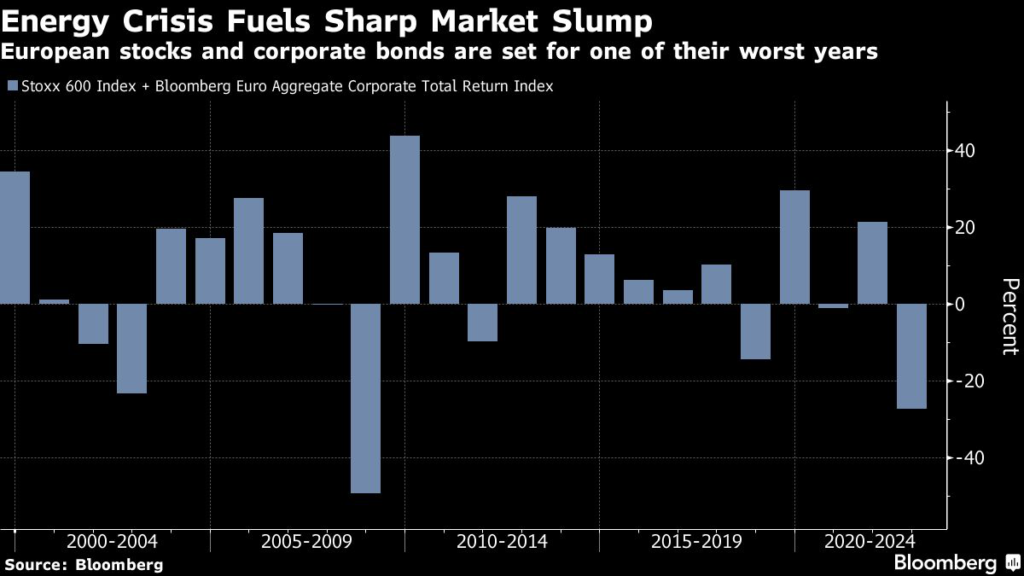
In the meantime, investors face the harsh reality of sharp rate rises. The European Central Bank takes center stage later Thursday, with Bloomberg Economics predicting a 75 basis points increase to front-load tightening even as the region grapples with an energy crisis.

The dollar was firm, while the yen erased losses after Japanese officials arranged a meeting to discuss international financial markets. Greenback strength is pressuring some Asian policy makers to step up efforts to curtail currency weakness.

Central banks are walking a tightrope, raising interest rates sharply to tackle inflation while remaining leery of sparking a damaging economic contraction in the process. The uncertainty is whipsawing markets and has saddled equities and bonds with steep losses this year.

Federal Reserve officials reiterated their determination to get inflation under control. Vice Chair Lael Brainard said interest rates will need to rise to restrictive levels, while cautioning risks would become more two-sided in the future. Chair Jerome Powell is due to speak on Thursday.

“What’s clear to us is the Fed continues to emphasize they are not done until they see inflation coming back toward that 2% target,” Nadia Lovell, UBS Global Wealth Management’s senior US equity strategist, said on Bloomberg Radio.

The Fed’s Beige Book report said US economic expansion prospects were weak, while adding that price growth showed signs of decelerating.

Elsewhere, oil pared a sharp slide this week sparked by demand risks from monetary tightening and China’s Covid travails — the megacity of Chengdu extended a weeklong lockdown in most downtown areas.

Gold wavered, while Bitcoin held above the $19,000 level.

What to watch this week:

  • European Central Bank rate decision, Thursday
  • Fed Chair Jerome Powell due to speak, Thursday
  • Chicago Fed President Charles Evans and his Minneapolis counterpart Neel Kashkari due to speak, Thursday
  • EU energy ministers extraordinary meeting on emergency intervention in electricity markets, Friday

Are you bullish on energy-related assets? This week’s MLIV Pulse survey focuses on energy and commodities. Please click here to participate anonymously.

Some of the main moves in markets:

Stocks

  • S&P 500 futures rose 0.2% as of 7:07 a.m. in London. The S&P 500 rose 1.8%
  • Nasdaq 100 futures increased 0.3%. The Nasdaq 100 rose 2.1%
  • Japan’s Topix index rose 2.2%
  • Australia’s S&P/ASX 200 index added 1.6%
  • South Korea’s Kospi index advanced 0.3%
  • Hong Kong’s Hang Seng Index shed 0.8%
  • China’s Shanghai Composite Index lost 0.2%
  • Euro Stoxx 50 futures rose 0.6%

Currencies

  • The Bloomberg Dollar Spot Index was steady
  • The euro was at $1.0005
  • The Japanese yen was at 143.71 per dollar
  • The offshore yuan was at 6.9678 per dollar, down 0.1%

Bonds

  • The yield on 10-year Treasuries fell four basis points to 3.22%
  • Australia’s 10-year bond yield fell 14 basis points to 3.56%

Commodities

  • West Texas Intermediate crude added 0.8% to $82.61 a barrel
  • Gold was at $1,716.75 an ounce, down 0.1%

More stories like this are available on bloomberg.com

©2022 Bloomberg L.P.

British Staple Wild Game Flocks to Menus All Over London

(Bloomberg) — Game, one of the most traditional British delicacies of the season, is finding its way onto some of London’s most enticing Indian, Thai, Nordic, and Italian menus.

The “Glorious Twelfth”—or Aug. 12—marked the beginning of the grouse season, giving a much-needed boost to the UK’s rural economy after two lean years of poor weather and pandemic restrictions. Grouse shooting alone supports more than 2,500 jobs nationwide and is worth £100 million ($115 million) annually to the economy.

Grouse and other wild game—lean, healthy, and flavorsome—is also a boon for the nation’s chefs. More restaurants are offering it on menus, and in less traditionally British ways. Its affinity with spice is key.

Kutir, chef Rohit Ghai’s flagship restaurant, offers a whole tasting menu of Indian-spiced game. “The strong flavors of game lend themselves perfectly to spices,” he says. “Game is always lean, so marinating in yogurt and spice and cooking it on a slow heat keeps it tender and juicy.”

Mark Dobbie, co-founder of Som Saa, looks to the dense forests of the mountains in northern Thailand for inspiration. “The big, bold flavor, fragrant herbs, and umami-rich seasonings work really well with British game,” he says.

Brits haven’t been the only ones with a taste for the hunt.

“Wild game was historically an important part of Rajasthani cuisine,” says Vivek Singh, chef and proprietor of the Cinnamon Club. “When the Rajput, Rajasthan’s ‘warrior’ caste, didn’t have anyone to fight, they would go hunting instead. It is a way of life that doesn’t exist in India anymore. It’s a privilege to preserve some of these recipes.”

Meanwhile, Aquavit London, in St James’s Market, offers a distinctly Nordic take on wild game, while chef and restaurateur Jacob Kenedy draws on both his Italian and his American Deep South heritage to inform his menus at Bocca di Lupo and Plaquemine Lock, braising venison in a wine-rich ragu at the former, for example, and blackening spiced mallard in a searing hot pan at the latter.

Here are a handful of London’s most exciting restaurants in which to go wild:

Kutir

Many Indian restaurant menus stay the same year-round, but not Kutir’s. “I like to keep my chefs motivated and interested,” Ghai says. “Game season is great for that: You never quite know what will turn up in the kitchen.” The five-course Hunter’s Expedition menu (£65 a head) at his intimate Chelsea town house features Chettinad-spiced mallard with curry leaf and coconut as well as venison slow-cooked with fresh chiles and fennel. Look out, too, for Ghai’s tandoor-roasted grouse, pepped up—in a nod to the grouse’s origins—with a dram of smoky malt Scotch.

Som Saa

September’s menu at the buzzy, industrial-chic Som Saa in Spitalfields offers a banana-leaf-grilled curry of mallard with long-leaf coriander as well as a classic northern laab (a warm, meaty salad) made with venison and fresh spices. Later in the season, expect fiery, brothy jungle curries, perhaps with pheasant, and salads of mallard with sour leaves and ancient chile jam. About £80 for two, excluding drinks.

Bocca di Lupo

Kenedy’s hugely popular Soho Italian restaurant (book well in advance) delights in celebrating the seasons, and none more so than the game season. Recipes come from the Veneto, Lombardy, and Tuscany regions: Right now, there’s grouse, lavishly stuffed with butter and herbs, then grilled with a thick slice of guanciale over the crown. Later in the season, look out for hare marinated and slow-cooked in red wine as a ragu for pappardelle. Kenedy says his philosophy is “to try to cook game as Italians would if they lived here.” About £90 for two, excluding drinks.

Plaquemine Lock

The menu at Kenedy’s lively, laid-back canal-side pub and restaurant in Islington pays homage to his Louisiana ancestors, and Southern-style game is now on the menu. The Regent’s Canal isn’t the bayou, so there is no alligator, but you’ll find grouse and pheasant breasts that have been buttermilk-brined, coated in Cajun spices, deep-fried, and dressed with pineapple, tarragon, and jalapeño. Hunter’s jambalaya—made Cajun-style, with no tomato, in a wide cast-iron pot—features rabbit and a miscellany of game, and partridge is pot-roasted with chestnuts and served with grits.

The Cinnamon Club

Singh was an early champion of game at this airy former library, which is still lined with books and has proven a favorite with Westminster politicos. Grouse has just landed on his menu—the breast marinated, then cooked in the tandoor, the leg meat minced and wrapped in a parcel of roomali roti (“handkerchief bread”), served with peppery charred corn and creamy black lentils (£37). Roast partridge follows in September, marinated in ginger, garlic, and amchur (green mango powder) and crusted with crushed peanuts. Finally, October brings pheasant, marinated in fresh herbs, flash-roasted in the tandoor and served with khichri (spiced rice and lentils).

Aquavit London

The handsome, high-ceilinged London outpost of the Midtown Manhattan original, Aquavit London has a September menu offering head chef Jonas Karlsson’s Nordic-inspired roast Yorkshire grouse with a grouse liver parfait, buttered cabbage, and licorice jus. Venison aficionados, meanwhile, should book for one of three six-course “A Savour of Scandinavia” dinners (£95, details and bookings via the website) before Christmas, at which the pièce de résistance will be roe deer from the Scottish Highlands paired with chocolate and beetroot.

(Corrects identification of Bocca di Lupo restaurant in photo.)

More stories like this are available on bloomberg.com

©2022 Bloomberg L.P.

Close Bitnami banner
Bitnami