Bloomberg

India Is Going After Fake, Paid Reviews on Social Media

(Bloomberg) — India will tighten rules to root out fake or paid reviews for products from cars to smartphones on e-commerce websites and social media, responding to a growing consumer outcry. 

The government will soon announce a framework of regulations that target people paid to endorse merchandise, Rohit Kumar Singh, the most senior bureaucrat at India’s consumer affairs department, told reporters in New Delhi on Wednesday. Such reviewers will be held liable in case of issues related to the product, he said. 

India is a key market for Alphabet Inc’s Google and YouTube, which is closing in on half a billion users. Some of the country’s savvy early internet users have gained huge followings by posting reviews of products on the platform, but most don’t disclose whether they’re paid by companies to do so.

The country is grappling with a phenomenon that other more mature internet arenas have dealt with in past years. With 600 million smartphones and cheap mobile data, more and more Indians are using the internet to check out and buy everything from soap to smartphones.

More stories like this are available on bloomberg.com

©2022 Bloomberg L.P.

Google and Meta Find Video App Success Where TikTok Is Banned

(Bloomberg) — Prateek Bhardwaj broke out as a social media star on TikTok’s short-video platform, drawing in close to a million followers and a slew of big-brand endorsements. But he’s no longer on the app.

The 30-year-old from small-town India defected to Moj, one of several Google-backed TikTok clones that sprouted after New Delhi banned the app from China’s ByteDance Ltd.’s in 2020. He barely missed a beat: his fan base has ballooned to 3.4 million and the content creator still plugs products from Xiaomi phones to Diageo whiskey.

Bhardwaj’s smooth transition highlights the opportunity presented by TikTok’s banishment from the world’s fastest-growing mobile arena. The global leader in short video was swept up in a purge of Chinese apps by India after a violent border clash two years ago. That gave the impetus for Google’s YouTube Shorts service as well as Moj and a slew of other contenders to fill the void. Far from blunting the growth of social video, TikTok’s abrupt withdrawal has supercharged the segment.

US giants Meta Platforms Inc. and Alphabet Inc. are now battling for the lead in what promises to be a nearly $20 billion market, recruiting content creators with incentives and expanding their investment even while they’re scaling back elsewhere in the world.

To them, India represents the best growth potential for online video on the planet — and the field is wide open. Meta, which already counts India as its biggest Instagram user base with about 400 million, wants to turn its Reels short-video offering into a direct TikTok replacement and is beefing it up with comparable recommendation algorithms. Google, whose YouTube is closing in on half a billion Indian users, introduced a TikTok copycat service immediately after the ban, but its local strategy also includes funding and grooming four of the biggest homegrown clones: InMobi’s Roposo, DailyHunt’s Josh and ShareChat’s Moj and MX Takatak.

“What has really defined the last two years for us is the explosive growth of Reels on Instagram,” Ajit Mohan, Meta’s India chief, said in an interview at the company’s sprawling headquarters on the outskirts of New Delhi. “Our goal is to have a big global celebrity come out of India, out of its small towns. That’s our North Star.”

The South Asian nation had been TikTok’s single biggest market — ByteDance offers cousin app Douyin in China — and the prohibition pushed its more than 200 million Indian users to seek alternatives. Bhardwaj, who’d quit his prized IT job to jump on the TikTok bandwagon, was welcomed on Moj and Instagram when the Chinese service was halted. Instagram is spending more than $1 billion globally, a significant part of which will be deployed in India, on programs that help creators make money. Google is betting on the local savvy of operators like Moj.

While pursuing different courses, the two US firms agree that replacing TikTok must start with recruiting and training India-born creators.

“India’s mobile and video usage is among the top opportunities that Google’s $10 billion India Digitization Fund wants to power,” YouTube regional director Ajay Vidyasagar said. “Storytelling is an intrinsic part of Indians’ lives starting with the ancient aural traditions to the current many-to-many digital storytelling through channels like YouTube and short video apps.”

Both Silicon Valley titans eye the same prize: a short-video app economy that’s expected to generate sales of as much as $19 billion by 2030, according to consultancy Redseer. Short-video apps may command as much as 20% of the digital ad market in India by then, the Bangalore-based consultants said, making it a sector the internet firms can’t afford to ignore.

Read more: Facebook Needs to Solve Its TikTok Problem

The US duo also want to use India as a testing ground for their algorithms, influencer campaigns and content experiments that can be exported to the US — where an unfettered TikTok is laying waste to their ad revenue models. YouTube Shorts made its global debut in India as a beta service in September 2020 before expanding to the US six months later. Google is now starting to run ads on Shorts, whereas Meta is still struggling to find the right advertising format for Reels and might hope to unearth the solution in India.

“Leading digital media players have clearly shifted their content focus to short-form video, a step away from pursuing other opportunities like live cricket,” said Vipin Gupta, managing director at Boston Consulting Group. Google and Meta “are investing heavily on Bharat-focused creators – influencers that are local to a region or a language or a culture.”

Read more: YouTube Is Starting to Run Ads on Shorts, Its TikTok Clone

This push to support online creators and social media stars is starting to play an instrumental role in India’s wider entertainment ecosystem. Kabeer Kathpalia, known to his more than 31,000 Instagram followers by the moniker OAFF, landed a job in film production after his music caught the eye of a director.

“Even in my wildest dreams, I’d never imagined my videos would lead me to Bollywood,” 33-year-old Kathpalia said. The music maker’s performances on Instagram laid the path for him to produce the score and songs for a blockbuster headlined by A-list actor Deepika Padukone.

Affordable devices and wireless data will fuel the growth of short-form video, which is expected to be a regular part of the online diet of 67% of all Indian smartphone users by 2025, doubling its share from 2020, according to Redseer.

To capture that growth and keep up with Meta’s spending, the local contenders are investing heavily too. Moj operator ShareChat doubled its losses to $180 million in the fiscal year ending March 2021, spending more to amass its 300 million users who watch 6 billion short videos monthly. 

The bulk of online ad spending in India still goes to Meta and Google. Both are going all-out to protect their share of that revenue, ShareChat co-founder Ankush Sachdeva said. “When your core is under threat, you’ll invest whatever it takes.”

Google’s gross ad revenue in India is roughly 1.5 times that of Meta’s local unit, though Instagram’s owner is growing much faster in the country. Short video ad sales are still a small part of the overall pie for both.

“Short video is not Google’s singular game,” 29-year-old Sachdeva said. “But for Meta, content is bread and butter.”

Instagram currently leads India’s fledgling short-video market with users spread across noisy, overcrowded cities as well as idyllic towns. Its teams look for budding musicians, dancers or comedians showing promise on the platform and go out to train them in audio-video tools and social media trends. Instagram scored twice as many downloads as two versions of Moj combined on Google’s Play Store for Android devices in the first half of this year, according to app analytics firm SensorTower.

Meta’s Instagram lite for phones with slower data connections, its move to allow cross-posting of some Instagram content to Facebook and its adoption of as many as 11 local languages have all helped it race ahead. Its India ad revenue grew 41% to 93.3 billion rupees ($1.2 billion) in the fiscal year to end-March 2021, more than the combined ad sales of two of the country’s biggest broadcasters.

When TikTok was expelled, Sachdeva and two of his classmates from the Indian Institute of Technology Kanpur jumped at the opportunity. “We charged like bulls and launched Moj in 30 hours,” Sachdeva said. Their Bangalore-based startup went on to raise $520 million in mid-June from investors including Google and Temasek Holdings Pte at a valuation of $5 billion.

Moj was designed to serve “snackable” content in an infinitely scrolling feed, particularly in Indian languages. To bring its tech to global standards like TikTok’s, the firm put together an artificial intelligence team with engineers based in Bangalore, London and Silicon Valley.

“Unless the AI is world class, you are out of the game,” Sachdeva said. Short video is set to be as ubiquitous on Indian phones as WhatsApp messaging is now, he added. Like rivals, Moj is tackling the supply side of creator videos by assembling a large influencer base. It recently turned its attention to generating revenue though channels like virtual gifting and video commerce on top of its traditional ad-based model.

But no matter who wins India’s short-video war, a US tech company is sure to profit.

“Diversity of content and the ability to target the right users with the right content are key to creating stickiness in short video. In that sense, Meta’s Instagram is far superior,” said Vishal Jacob, Chief Digital Officer at media agency Wavemaker India. “But Indian apps are poised to grow, benefiting from Google’s tech as well as ad expertise.”

More stories like this are available on bloomberg.com

©2022 Bloomberg L.P.

Stocks Retreat in Face of Record Dollar Strength: Markets Wrap

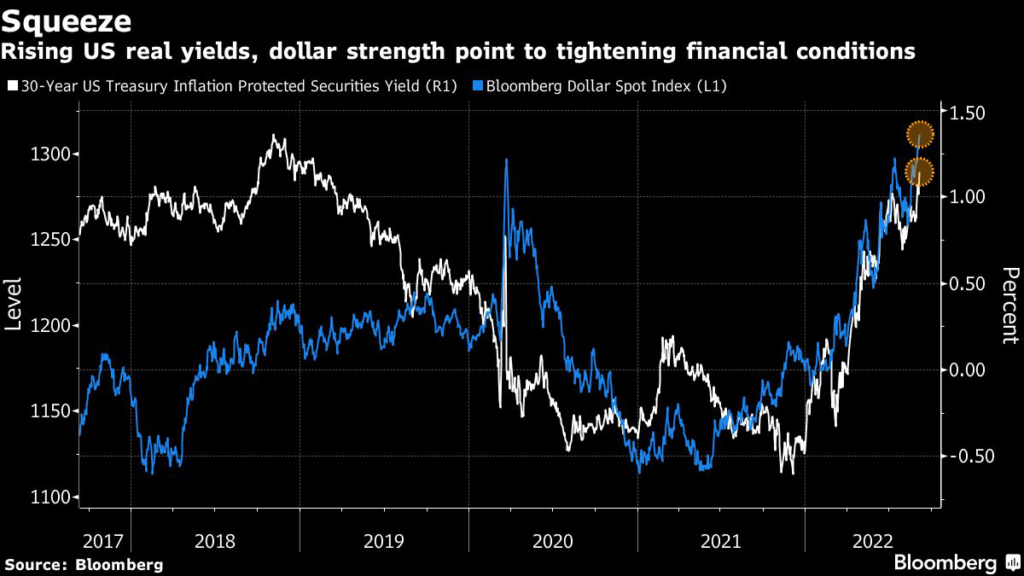
(Bloomberg) — Stocks dropped in Europe and US equity futures fluctuated as investors assessed prospects for aggressive central bank monetary tightening and as a dollar gauge climbed to a record.

Europe’s Stoxx 600 Index fell 0.6%, with tumbling miners leading the declines. Utilities jumped on news of a European Union power-price cap proposal. Contracts on the S&P 500 and Nasdaq 100 edged higher before the market hears from a slew of Federal Reserve speakers. In premarket trading, UiPath Inc. tumbled after the application software company’s weaker-than-expected revenue forecast. Gitlab Inc. rose after boosting its revenue guidance.

Greenback strength stoked by higher Treasury yields and worries about the economic outlook is rippling across the world, leading to tighter financial conditions that could further undermine risk assets. 

Bets on another 75 basis points Fed interest-rate hike to tackle high inflation have spurred a selloff in Treasuries. Traders are bracing for a European Central Bank rates decision due on Thursday, with the potential for a similar-size move.

Aside from tightening monetary settings and an apparently unstoppable dollar, markets are also contending with a debilitating energy crisis in Europe and Covid lockdowns in China. Concerns are growing about the outlook for company earnings given the various global economic headwinds. 

“Many investors are walking on egg shells,” Kristina Hooper, chief global market strategist at Invesco, said on Bloomberg Television. “The real issue is that it could be a one-two punch. We could see the Fed continuing to pummel the economy with a significant rate hike, lets say 75 basis points, and then of course we get downward revisions to earnings that are significant.”

Oil erased a decline after Russian President Vladimir Putin underlined that his country won’t supply oil and fuel if price caps on the country’s exports are introduced. Bitcoin flirted with a test of lows for the year and gold recovered to trade above $1,700 an ounce.

European policymakers are pulling together proposals to bring to a meeting of energy ministers in Brussels on Friday where emergency interventions will be hammered out to address the region’s energy crisis. Meanwhile, Deutsche Bank AG Chief Executive Officer Christian Sewing warned Wednesday that Germany won’t be able to avert a recession. 

While global stocks are on pace for their worst run since the European debt crisis a decade ago, Goldman Sachs Group Inc. strategists are among those warning that more selling is possible. The MSCI All Country World Index is in its longest losing stretch since 2011 and rapidly erasing a bounce from mid-June that a Goldman team led by Peter Oppenheimer described as a “bear market rally.” 

“We expect further weakness and bumpy markets before a decisive trough is established,” the strategists wrote.


What to watch this week:

  • Apple event due to feature new iPhones, watches, Wednesday
  • Bank of England Governor Andrew Bailey at Treasury Committee, Wednesday
  • Fed’s Beige Book of regional economic activity, Wednesday
  • Cleveland Fed President Loretta Mester due to speak, Wednesday
  • European Central Bank rate decision, Thursday
  • Fed Chair Jerome Powell due to speak, Thursday
  • Chicago Fed President Charles Evans and his Minneapolis counterpart Neel Kashkari due to speak, Thursday
  • EU energy ministers extraordinary meeting on emergency intervention in electricity markets, Friday

Are you bullish on energy-related assets? This week’s MLIV Pulse survey focuses on energy and commodities. Please click here to participate anonymously.

Some of the main moves in markets:

Stocks

  • The Stoxx Europe 600 fell 0.5% as of 10:57 a.m. London time
  • Futures on the S&P 500 rose 0.2%
  • Futures on the Nasdaq 100 rose 0.3%
  • Futures on the Dow Jones Industrial Average rose 0.1%
  • The MSCI Asia Pacific Index fell 1.3%
  • The MSCI Emerging Markets Index fell 1%

Currencies

  • The Bloomberg Dollar Spot Index rose 0.2%
  • The euro was little changed at $0.9909
  • The Japanese yen fell 0.9% to 144.12 per dollar
  • The offshore yuan fell 0.3% to 6.9893 per dollar
  • The British pound fell 0.3% to $1.1489

Bonds

  • The yield on 10-year Treasuries declined four basis points to 3.31%
  • Germany’s 10-year yield declined six basis points to 1.57%
  • Britain’s 10-year yield declined eight basis points to 3.02%

Commodities

  • Brent crude rose 0.8% to $93.55 a barrel
  • Spot gold rose 0.3% to $1,706.41 an ounce

More stories like this are available on bloomberg.com

©2022 Bloomberg L.P.

Putin Says Price Caps on Russia Would Halt Supply: Energy Update

(Bloomberg) — President Vladimir Putin said Russia will not supply crude oil, refined products or gas to any nations that introduce price caps on Russian commodities, describing such measures as “another stupidity.”

The European Union is considering a price cap as part of a package of measures, which also include to reducing power demand across the bloc by 10%. More emphasis is needed on reducing demand to bridge the gap with supply, Jefferies said.

With industry warning of further closures over the winter months, pressure is mounting on policymakers ahead of an energy minister meeting in Brussels on Friday. Emergency interventions will be drawn up to try to stem the impact of surging prices for power and natural gas on industry, businesses and households. 

There is even more urgency to take action after Russia last week halted gas supplies on the Nord Stream pipeline indefinitely. Proposed EU measures expected include removing gas from other power generation in the way electricity is priced. Windfall taxes on excess profits may also be introduced to pay for help for households with ballooning costs, rising inflation and a region-wide recession. 

Key Developments:

  • Putin: ‘Give Us Turbines and We’ll Turn on Nord Stream Tomorrow’
  • Scholz Accuses Russia of ‘Blackmail’ Over Gas Pipeline Shutdown
  • German Aluminum Smelter Halves Output on Soaring Energy Costs
  • Europe Gas Extends Losses as Politicians Rush to Contain Crisis
  • Europe’s Top Aluminum Plant Will Cut Output 22% on Energy Costs
  • Australia Moves to Allay Japan’s Fear It Will Cut Gas Supply

EU Seeks Power-Demand Cut of 10% (10:25 a.m.)

The European Commission is seeking a deal to reduce power demand across the bloc by 10%, according to people familiar with the situation.

There’s also a proposal to cut demand during peak hours by 5%, while the commission is proposing a price cap on electricity not generated by gas of EU200/MWh, people familiar with situation said.

Soaring Energy Threatens German Companies (10:15 a.m.)

More than 90% of German companies view the rising energy prices as a serious or even existential threat to their businesses, according to a survey of the influential business lobby group BDI. 

About 40% of companies are planning to postpone investments into ecological or digital transformation because of rising energy prices.

Pakistan Sees Gas Becoming Unaffordable (10:05 a.m.)

Gas will become unaffordable for developing countries, Iqbal Z Ahmed, chairman of Pakistan GasPort Consortium Limister, said on a panel at Gastech in Milan.

“There should be some focus on making volumes available to emerging markets,” and the industry, gas producers and developed nations should find a solution, he said.

LNG Import Capacity Offers Europe Leverage (9:55 a.m.)

If Europe doubled its import capacity for liquefied natural gas, it would give the region more negotiating leverage with Russia, said Michael Sabel, chief executive officer of Venture Global LNG.

The company is supporting LNG regasification projects in Europe, which typically cost $500 million to $2 billion, he said.

Gas Storage May Run Empty, Industry Warns (9:45 a.m.)

Europe’s gas storage could run empty this winter if demand cuts are not rolled out urgently, industry group Eurelectric warned.

“Energy prices are soaring, amid throttled gas flows and increased scarcity in the market, pointing towards supply shortages this coming heating season,” the lobby group said in a report. Record wholesale electricity prices are exerting pressure on the retail market with prices up 84% since January 2021, it said.

Putin Says Give Us Turbines for Gas (9:25 a.m.)

“Give us turbines and we’ll turn on Nord Stream tomorrow, but they won’t give us anything,” President Vladimir Putin said at the Eastern Economic Forum in Vladivostok.

Accusations that Russia is using gas as an energy weapon are “nonsense,” said Putin, adding that a potential price cap on Russian oil and gas is “another stupidity.”

Greece Moves to Cut Energy Use (9:15 a.m.)

Greece announced measures and penalties Wednesday that aim to cut the use of energy in the public sector by 10% in the near future and by 30% by 2030. 

Measures include changes to street lighting and ensuring that lighting and air conditioning units are turned off when offices are not in use. Measures and incentives to encourage a reduction in energy consumption in the private sector and households will be announced in the coming days, the government said.

Scholz Accuses Russia of Blackmail (9:05 a.m.)

Chancellor Olaf Scholz accused Russia of seeking to blackmail Germany and its European partners by shutting off gas deliveries and dismissed an apparent leak in a key pipeline as “pretense.”

“Russia could deliver if it wanted to,” Scholz said Wednesday, according to the text of a speech to the lower house of parliament in Berlin. He said Gazprom PJSC simply needs to request a turbine for the Nord Stream 1 link that is in western Germany and ready for use after repairs.

Deutsche Bank CEO Sees Recession in Germany (9:00 a.m.)

Europe’s largest economy is set for contraction on the back of soaring inflation, energy supply bottlenecks and the disruption to global supply chains, Deutsche Bank AG Chief Executive Officer Christian Sewing warned.

“We will no longer be able to avert a recession in Germany,” Sewing said during a speech in Frankfurt on Wednesday. “We believe that our economy is resilient enough to cope well with this recession — provided the central banks act quickly and decisively now.” 

German Aluminum Smelter Halves Output on Energy Costs (8:41 a.m.)

Aluminum producer Speira GmbH will cut output at its smelter in Germany by 50% in response to soaring energy costs.

The curtailment adds to the extreme toll that the energy crisis is having on Europe’s metals industry, which is one of the biggest industrial consumers of power and gas. The region’s aluminum and zinc production capacity has fallen by about 50% within the past year, and industry groups have warned of further closures over the winter months.

Gas, Power Futures Fall Again, Giving Up Gains (8:41 a.m.)

European gas futures erased earlier gains, with traders awaiting details from the region’s policymakers on measures to stem the effects of the energy crisis. Benchmark front-month gas contracts traded in Amsterdam dropped as much as 6.2%, while German next-year power declined 3%.

“The market is currently torn between conflicting feelings: fears on Russian supply, optimism on LNG supply and stock levels, all while waiting for the reforms on energy markets that EU is about to adopt,” according to EnergyScan, the market analysis platform of Engie SA.

Europe’s Energy Costs Surge by 1 Trillion Euros (8:11 a.m.)

Europe’s energy costs will exceed pre-pandemic levels by more than 1 trillion euros, according to estimates by S&P Global Ratings. The impending redesign of EU gas and power markets will be “complex and bear many risks” Emmanuel Dubois-Pelerin, lead analyst for EMEA utilities said. 

“Given massive collateral postings in volatile power markets, we believe European governments are increasingly willing to support liquidity on energy exchanges and at European utilities against massive hedge collateral posting movements,” he said.

Netherlands Reaches EU Gas Storage Target Early (7:44 a.m.)

The Dutch government confirmed on Wednesday that the country’s gas storage facilities are on average 80% full, nearly two months before the EU deadline. The cabinet had previously allocated an addition 10 million euros ($9.9 million) to fill the large Bergermeer gas storage facility as much as possible over the previous 68% target. Levels are expected to reach around 90%. Facilities at Grijpskerk and Alkmaar will be filled to full capacity and the Norg storage facility has now been filled to about 85%.

“We will continue to fill the gas storage facilities in the Netherlands in the coming period so that we have a buffer for the uncertain times that Europe is facing,” said Climate and Energy Minister Rob Jetten.

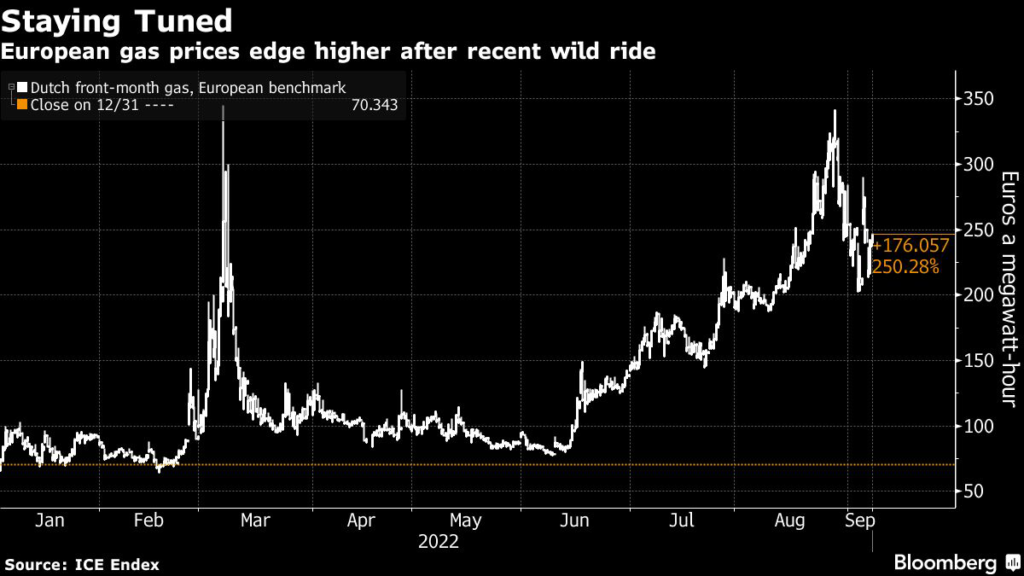
Gas Prices Move Higher After Recent Wild Ride (7:33 a.m.)

Gas futures in Europe edged higher early Wednesday after wild moves in the previous two days. Dutch front-month contract, the European benchmark, added 2.7%, with traders weighing risks to Russian supplies against moves drafted by politicians to fix the crisis ahead of winter. Gas supplies from Norway are also curbed due to seasonal maintenance, with volumes bottoming out at the lowest since mid-July on Wednesday. Works will wrap up next month.

Germany Seen Sliding Into Recession (7:33 a.m.)

For Germany’s industrial backbone, small and medium-sized enterprises, higher energy prices look like a “ticking time bomb”, according to according to ING Groep NV. With ongoing pressure on consumers’ disposable incomes, companies’ pricing power is fading, Carsten Brzeski, chief macro-economist said.

“Judging from the first macro data for the third quarter, the German economy has not fallen off a cliff at the start of the third quarter but is rather sliding into recession,” he said.

Australia Moves to Allay Japan’s Gas Cut Fears (7:33 a.m.)

Australia says it’s doing what it can to ensure supplies of liquefied natural gas to Asian customers will remain reliable, in response to concerns producers could be forced to redirect to relieve domestic shortfalls.

The nation, which vies with Qatar for the title of top LNG exporter, has the power to force producers in the east to redirect uncontracted cargoes tipped for international markets for domestic consumption, but has so far declined to use it. Even if Canberra decides to tighten the rules when the current agreement expires on Jan. 1, the impacted volumes are likely to be relatively minor — about 4% of Australia’s exports, according to BloombergNEF.

Crisis May Extend Beyond Next Winter (7 am)

Europe could face an even bigger problem next winter with no end in sight for the energy crisis, Niek Den Hollander, Uniper’s Chief Commercial Officer, said in an interview in Milan.

If Russian gas flows remain curtailed, it’s possible that nations won’t be able to fill up storage sites effectively next summer, he said. 

“We could see low inventories in the end of this winter, and that would make it very difficult to procure gas and fill up storage again for security of supply next winter,” Den Hollander said. “It all depends on how much LNG Europe will be able to attract and will also depend very much on the weather.”

More stories like this are available on bloomberg.com

©2022 Bloomberg L.P.

Netflix Told by Gulf States to Drop Videos Violating Islam

(Bloomberg) —

Six Gulf Arab states have told streaming service company Netflix Inc. to stop broadcasting material that they said violates the region’s Islamic values, and threatened legal action if the firm didn’t act. 

The countries said some Netflix content “contradicts Islamic and societal values and principles,” adding they had contacted the US-based company to drop the offending material. They didn’t specify which content had caused the issue.  

The move comes after a debate on social media and television in the Gulf about content for children which was said to promote homosexuality. 

“In the event of continued broadcasting of infringing content, the necessary legal measures will be taken,” a statement from the six-nation Gulf Cooperation Council said on Tuesday. Attempts to contact regional representatives for Netflix for comment weren’t immediately successful.

Ekhbariya, a Saudi TV channel, ran a recent interview with a behavioral and family consultant who decried what she said was Netflix’s promotion of homosexuality to children. 

In a tweet, Ekhbariya displayed clips of a recently released season of the animated series Jurassic World Camp Cretaceous, where two female characters kiss in one of the episodes.

Homosexuality is prohibited in Islam and same-sex activity is criminalized in Gulf countries. 

Habib Al Mulla, a prominent lawyer in the United Arab Emirates, praised his country’s telecommunications authority for its separate announcement on the GCC move.  

The Gulf bloc, which comprises Saudi Arabia, the UAE, Oman, Bahrain, Kuwait and Qatar, hosts a predominantly Muslim population. 

(Updates with tweet details in sixth paragraph.)

More stories like this are available on bloomberg.com

©2022 Bloomberg L.P.

Billionaire Adani Adds More Detail on $70 Billion Green Push

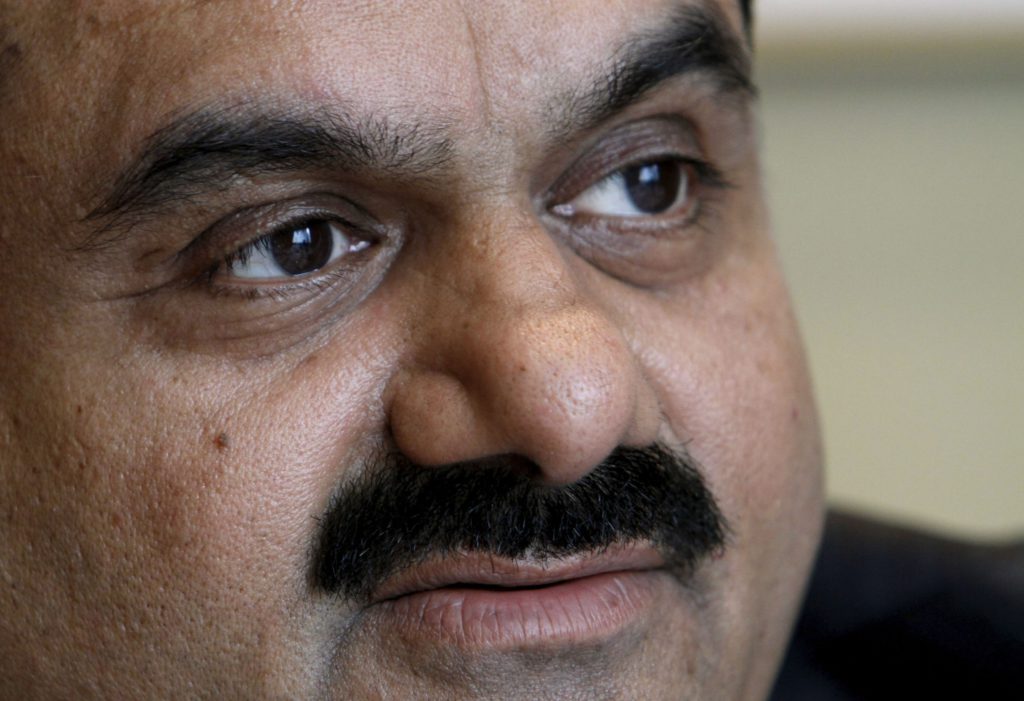
(Bloomberg) — Indian tycoon Gautam Adani, the world’s third-richest person, offered new details on his $70 billion push to tap the global shift to clean energy, outlining plans for three giant factories to produce renewable power equipment.

Adani’s coal-to-ports conglomerate, which still relies heavily on profits from fossil fuels, will build major facilities to manufacture electrolyzers for making green hydrogen, wind power turbines and solar panels, he told a meeting of the U.S.-India Business Council on Wednesday.

The billionaire called the plants “gigafactories,” a term usually used to describe EV battery facilities and implying they’d have gigawatt-scale capacities, though didn’t give any details on their size or location. They will be completed by 2030, he said.

Adani and his rival Mukesh Ambani, who controls Reliance Industries Ltd., are planning to produce the world’s cheapest green hydrogen, responding to calls from Prime Minister Narendra Modi for India to become a global hub for the fuel. Adani plans to invest more than $50 billion in the green hydrogen value chain and has attracted French oil major TotalEnergies SE as an investor in the business.

Read more: Adani’s $70 Billion Pledge to Include Greenest Data Centers

“Cooling the planet down – equitably – is necessary and can be one of the most profitable businesses over the next several decades,” Adani told the meeting. “I believe we can further accelerate our goals with support from companies in the US.” 

Green hydrogen, which is made by splitting hydrogen from water with the help of electrolyzers powered by clean energy, is seen as a potential panacea for decarbonizing hard-to-abate industries. The industry is still in its infancy, however, with costs still too high to encourage widespread adoption. 

India is counting on its energy billionaires as well as state energy firms to drive down the costs to help replace use of fossil fuels in refineries, fertilizer plants and steel mills. It’s targeting 25 million tons of annual green hydrogen capacity by 2047, from a miniscule output now that comes from a few pilot plants. 

Adani said efforts to tackle global warming need grater collaboration between developed and developing nations, and mentioned semiconductors as an area where India needs technological help from US companies. 

“India cannot remain dependent on global supply chains that are based on semiconductor nationalism and will need US support with technology transfer,” he said.    

More stories like this are available on bloomberg.com

©2022 Bloomberg L.P.

‘Winter Is Coming,’ Taiwan Warns as Exports Slow to a Crawl

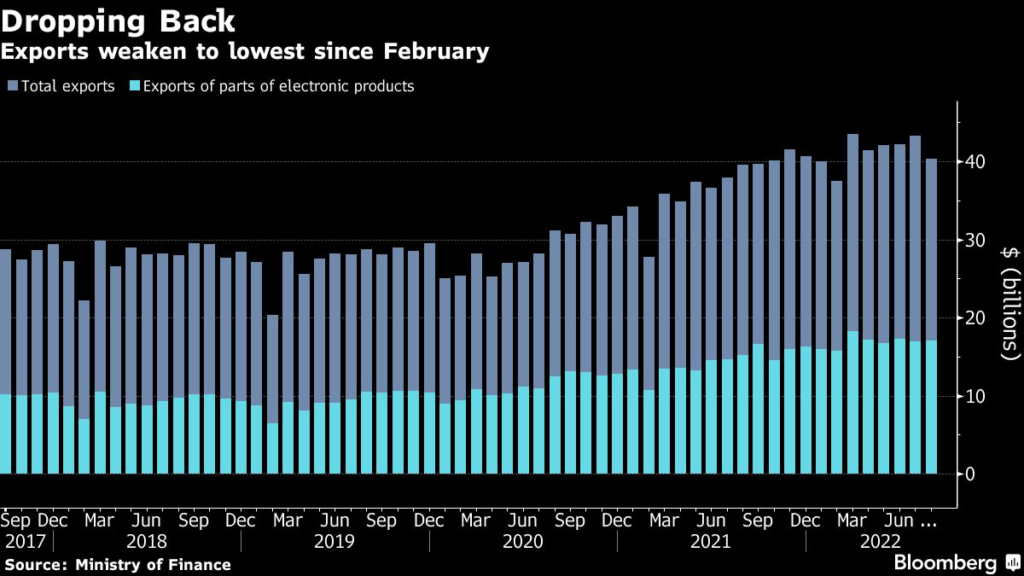
(Bloomberg) — Taiwan’s exports grew at the slowest pace in more than two years, the latest sign that a slowdown in global demand is weighing on the economy and could cause more trade pain in the months to come.

Overseas shipments grew just 2% in August compared to a year earlier, according to a statement from the Finance Ministry in Taipei on Wednesday. That was the slowest pace of growth since July 2020, when exports expanded 0.3% as the pandemic hit. 

Economists surveyed by Bloomberg had forecast an increase of 11.6%.

Imports increased 3.5% in August, compared to a 19.4% expansion in July. Economists had projected an 8.7% increase.

“Winter is coming” earlier than expected, said Beatrice Tsai, chief statistician of the Ministry of Finance at a Wednesday briefing. The ministry said it saw little chance of double-digit export growth in the third quarter, adding that September exports could even shrink by as much as 3% from a year earlier. 

“While demand for integrated circuits and mineral products continued to be hot, export sales of traditional products such as plastics and base metals were sluggish due to weak end-user demand,” according to a statement from the finance ministry.

Read More: Factory Slowdown in Europe and Asia Is Warning for Global Trade

The figures came as the global economy has slowed, impacting demand and snagging trade. 

“There are clearer signs showing that the tech sector has entered a downturn, driven by weakening global demand for mobile phones, PCs and other consumer electronics products, which also weighs on demand for the upstream semiconductors,” said Ma Tieying, economist at DBS Group Holdings Ltd.

Widespread Covid lockdowns in China have also threatened demand coming from Taiwan’s largest export market, as business and consumer confidence in the world’s second-largest economy struggles. Earlier data showed Taiwan’s export orders unexpectedly contracting in July, as demand from Chinese customers plunged.

The fallout continued in Wednesday’s data, which showed that Taiwan’s combined exports to China and Hong Kong fell 9.9% in August, compared with a 2.3% increase for the US, the No. 2 destination for shipments.

Earlier data released Wednesday also captured the demand issues in China, where imports grew just 0.3% in August.

Read More: China’s Economy Takes Hit From Global Slowdown as Exports Weaken

Taiwan’s trade figures are closely watched for signals that could point to a sharp decline this year in global trade, especially as other indicators have flashed warning signs about exports and manufacturing. 

Taiwan’s manufacturing purchasing managers index fell to 42.7 in August, its lowest level since May 2020. There’s also been a cut in the prices Taiwanese manufacturers charged their customers, the first reduction in more than two years, according to S&P Global, as they passed on a fall in input costs in an effort to attract sales.

Geopolitical tensions also rose in August as US House Speaker Nancy Pelosi visited the island, sparking retaliatory economic sanctions from Beijing. The value of trade targeted by China’s sanctions contributes less than 1% to Taiwan’s gross domestic product, according to economists.

Taiwan officials on Wednesday said those sanctions had little impact on the trade figures.

(Updates with additional comments from Taiwan officials and more context.)

More stories like this are available on bloomberg.com

©2022 Bloomberg L.P.
A Look at the State of Crypto Regulation in Singapore

  • Listen to Bloomberg Crypto on the iHeartRadio App
  • Listen to Bloomberg Crypto on Apple Podcasts
  • Listen to Bloomberg Crypto on Spotify  

(Bloomberg) — Singapore was an early proponent of crypto regulation, attempting to establish itself as a hub for global digital-asset companies long before similar pronouncements by countries like the UK. 

For a while, the city-state succeeded. Then 2022 arrived. It’s been a year of high-profile crypto failures and market meltdowns. Several of the biggest casualties of the crypto winter, such as hedge fund Three Arrows Capital, call Singapore home. Vauld, Zipmex and Hodlnaut —  all of which sought protection from their creditors after being unable to meet their financial obligations — were also based there. These collapses have shone a harsh light on the city-state’s regulatory framework.

What’s next for crypto in Singapore?  Bloomberg reporters Joanna Ossinger and Suvashree Ghosh join this episode.

Follow us on Twitter @crypto, and subscribe to the Bloomberg Crypto Newsletter at https://bloom.bg/cryptonewsletter


More stories like this are available on bloomberg.com

©2022 Bloomberg L.P.
Tencent Set to Double Ubisoft Stake in Latest Overseas Bet

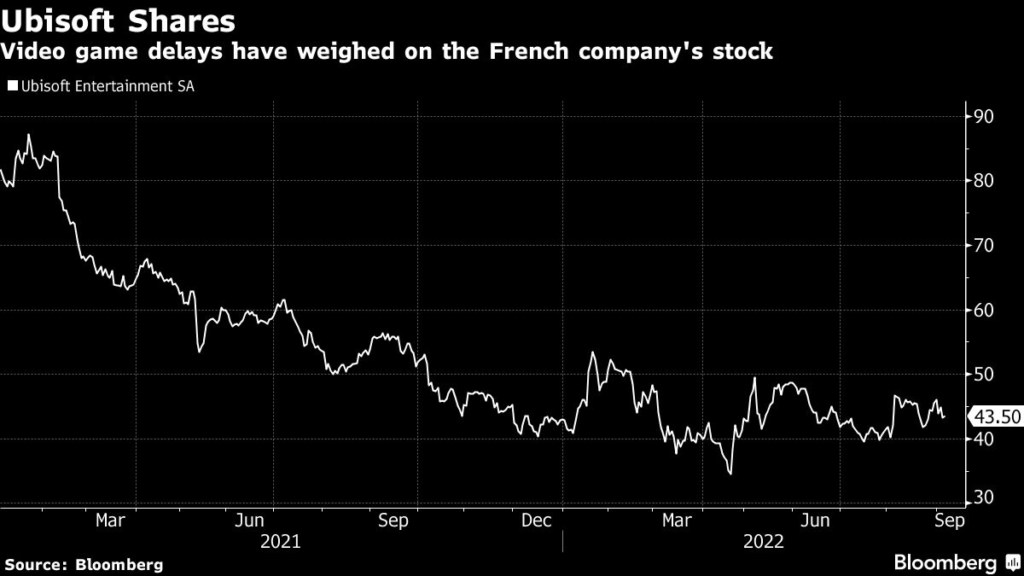
(Bloomberg) — Ubisoft Entertainment SA shares sank 12% in Paris after Chinese gaming giant Tencent Holdings Ltd. raised its stake, which analysts said could put a full takeover on the back burner.

Tencent will buy 49.9% of the Guillemot Brothers Ltd. holding company, according to a statement late Tuesday. The Chinese tech giant will pay 200 million euros ($198 million) to buy an indirect stake in Ubisoft at an implied value of 80 euros per share, and invest a further 100 million euros in the holding company. 

The transaction also authorizes Tencent to eventually raise its direct stake to 9.99% from 4.5% currently. The brothers will remain in control, and Tencent won’t have any operational veto rights.

The French video game publisher has been deemed a takeover target as concerns over delayed launches and allegations of sexual misconduct pushed the stock down about 45% since the start of last year. Its status as one of the few remaining independent video game publishers has also fueled interest after Microsoft Corp. agreed to buy Activision Blizzard.

Tencent’s increased involvement will give the brothers, who founded Ubisoft in 1986, some certainty in the shareholder register while the recovery plan takes hold. Chief Executive Officer Yves Guillemot introduced cost cuts and in July reduced the full-year sales target as Ubisoft announced a delay to its upcoming Avatar game from the 2022 holiday season to the next fiscal year.

The deal with Tencent “helps us bring stability in the shareholding of the company,” Guillemot said in an interview.

Tencent is ratcheting up international expansion efforts after a slumping economy and tightened regulations choked off growth at home. It recently purchased a stake in Japan’s FromSoftware Inc., maker of global hit Elden Ring, and last year spent $1.26 billion to acquire British game studio Sumo Group. Tencent’s strategy to date has been to tap popular franchises from investees like Activision Blizzard Inc. and turn them into mobile hits — as it did with Call of Duty Mobile and PUBG Mobile.

Tencent, which bought a stake in Assassin’s Creed-developer Ubisoft about five years ago, is likely to help the French studio introduce franchises such as Rainbow Six Siege to China. Beijing is gradually relaxing restrictions on gaming nationwide.

“The plan then and still is to cooperate on mobile games using Ubisoft IP and to bring key Ubisoft PC games to China,” said Matthew Kanterman, director of research at Ball Metaverse Research Partners. “If and when the regulatory environment improves and we start to see approvals for foreign games again, these popular global franchises could stand out in an increasingly saturated and mature China online games market.”

Read more: Tencent’s Sales Fall for First Time as China’s Economy Sinks

Shenzhen-based Tencent has been selling off assets in recent times, including some of its investments in Chinese online retailer JD.com Inc. and Singapore’s Sea Ltd., which operates in e-commerce and has a popular mobile title in Free Fire. Yuxin Ren, who heads Tencent’s games business, stepped down from Sea’s board this week, signaling a realignment of the firm’s priorities.

Singapore’s Sea Says Tencent Executive Resigns From Board

Tencent initially took a 5% stake in Ubisoft in 2018 to help it thwart a hostile takeover from Vivendi. Ubisoft said the latest deal includes a partnership with Tencent to bring some of its biggest franchises to mobile platforms, but it is also helpful at a time when Ubisoft has been struggling.

Ubisoft has faced a weak lineup of games, delays and a talent retention problem in the wake of a 2020 sexual misconduct scandal that led to the ousting of top executives. Over the summer, the company also delayed Assassin’s Creed Mirage, a smaller entry in the action franchise. Mirage will be set in Baghdad and look to return to the franchise’s stealth roots, Bloomberg reported. Ubisoft will hold an event Saturday to reveal more on the future of Assassin’s Creed as well as other upcoming games.

However, the founding family will retain control. Tencent will not be able to sell its shares in Ubisoft for five years, and after that the Guillemot family will have priority claim on any sale. In addition, Tencent will not be able to increase its stake in Ubisoft beyond 9.99% of Ubisoft’s capital and voting rights for eight years.

After the purchase from the Guillemot brothers, Tencent will have an 11.3% total stake in Ubisoft. It could hold as much as 16.8% of the business through the increase to its direct holding that’s been authorized, according to Bloomberg calculations.

The agreement may allow the total stake in Ubisoft held by Tencent, the family and Guillemot Brothers to rise to 29.9% of Ubisoft voting rights, according to the statement. Tencent is also providing the holding company with a long-term unsecured loan that to repay debt. 

The transactions still leave room for another investor to step in. 

“If someone wants to make a bid for the whole of Ubisoft, it still can, and the bid will be reviewed by our board,” Chief Financial Officer Frederick Duguet said in an interview.

(Updates with shares in first paragraph)

More stories like this are available on bloomberg.com

©2022 Bloomberg L.P.
China State-Backed Expo Pulls Ukraine Trade Event at Last Minute

(Bloomberg) — A Chinese state-backed trade expo abruptly canceled an event hosted by Ukraine touting the war-torn nation’s investment opportunities, according to a Ukrainian diplomat, a move that could fuel concern Beijing is tacitly backing Moscow in the conflict.

The forum had been scheduled to take place Monday at the China International Fair for Trade in Services, according to the diplomat, who asked not to be identified because he isn’t authorized to discuss the issue publicly. The fair ran from Aug. 31 to Sept. 5.

The official said the Ukraine embassy was not happy about the U-turn as it deprived his country of the chance to promote investment opportunities back home to Chinese companies. He declined to elaborate on the reasons behind the move, only saying it sent a bad signal. 

Last week, President Xi Jinping described the expo as a “crucial platform for China to expand opening-up,” the official Xinhua News Agency reported, underscoring the high-profile status of the event. 

Officials at the fair didn’t immediately reply to a request for comment. The South China Morning Post first reported that the Ukraine event had been canceled. Chinese Foreign Ministry spokeswoman Mao Ning said she wasn’t aware of the situation at a Wednesday news briefing in Beijing. 

READ: China’s No. 3 to Visit Russia in First Foreign Trip Since Covid

China’s efforts to cast itself as a neutral party in Russia’s war in Ukraine have been undermined by repeated shows of diplomatic support for Moscow. Xi declared a “no limits” friendship with Russian President Vladimir Putin weeks before the invasion and hasn’t publicly spoken to Ukraine President Volodymyr Zelenskiy since the war began. 

Beijing is currently participating in major military exercises in Russia, while the nation’s No. 3 official, Li Zhanshu, is attending the Seventh Eastern Economic Forum in Vladivostok on Wednesday. Xi could interact with Putin again as soon as next week at a meeting of the Shanghai Cooperation Organization taking place in Uzbekistan. 

The Chinese leader has already accepted an invitation to visit neighboring Kazakhstan next week, Interfax reported citing Kazakh Foreign Ministry spokesman Aibek Smadiyarov. China has not confirmed Xi’s attendance. 

While Beijing has been careful not to anger the US by providing sanctions relief or military supplies to Moscow, Chinese exports of cars, televisions and smartphones have helped Russia fill a void as foreign brands flee. In the second quarter, 81% of Russia’s new car imports were Chinese, while Xiaomi Corp. was Russia’s best-selling smartphone maker. 

China’s exports to Ukraine have decreased 75% over the past 12 months as of July, while imports over that period also fell 93%, the Observatory of Economic Complexity found. China was Ukraine’s biggest trading partner in 2019 and 2020, according to Ukrainian law firm Crane IP. 

(Updates with Chinese Foreign Ministry comment.)

More stories like this are available on bloomberg.com

©2022 Bloomberg L.P.
Close Bitnami banner
Bitnami