

Bloomberg

Samsung Warns Chip Industry Is Headed for Tough Close to 2022

(Bloomberg) — South Korea’s Samsung Electronics Co. is warning that the semiconductor industry could be in for a rocky close to 2022.

A senior executive at the world’s largest maker of memory chips said the outlook for the second half of the year is gloomy, and Samsung is not yet seeing momentum for a recovery next year. Rival chipmakers such as SK Hynix Inc. and Micron Technology Inc. have cautioned about slowing demand in recent weeks.  

“The general perception earlier this year was that the second half of would be better than the first half, but from April to May, it changed drastically,” said Kyung Kyehyun, head of Samsung’s Device Solutions Division, which oversees the company’s semiconductor operations. “The world is changing so quickly.”

Kyung made the comments during a rare briefing at the company’s new chip fab in Pyeongtaek on Wednesday. Samsung’s strategy is to respond faster to market changes, rather than stick to an investment plan prepared in advance, Kyung said during the event. That said, the company will do its best to keep capital expenditures steady, he added.

Samsung historically has invested heavily in new chip initiatives, which now include the foundry business to better compete with Taiwan Semiconductor Manufacturing Co. for global customers. Samsung kicked off mass production of 3-nanometer chips at its foundry in June, edging out TSMC in a race to build the most advanced chips in the world. Samsung will work on improving the performance and lowering the cost of the chips, as it aims to create its next-generation 3 nm chips in 2024, Kyung said. 

Besides a slumping chip market, Samsung is also struggling with the clash between China and the US. While South Korea has historically aligned with Washington, the tech giant counts on being able to sell chips, smartphones and other products into the massive Chinese market. Samsung has both customers and factories in China.

“It is difficult for us to miss such a market, and there are many important customers,” said Kyung. “We’re trying to find a win-win solution for everyone in the midst of this conflict.”

The US government is tightening flows of technologies to China, most recently restricting sales of artificial intelligence chips and cutting-edge chip gear to Chinese customers. It is also considering moves to restrict US investment in Chinese tech companies, while at the same time offering billions of dollars in incentives to bolster semiconductor production on American soil. Washington is demanding that any chipmaker receiving a part of the federal grant refrain from manufacturing advanced chips in China for a period of ten years. The Korean government is seeking to negotiate that with US officials.

As the US beefs up efforts to solidify a chip supply chain at home, Samsung announced plans for an advanced $17 billion chip plant in Taylor, Texas, with construction slated to start later this year.

The new plant would lure new clients with closer partnerships, Kyung said, adding the company will continue to invest in the US. Samsung has also floated the idea of a broad expansion of its semiconductor manufacturing facilities in Texas, laying out potential plans to spend almost $200 billion on 11 plants in a series of filings in the state in July.  

Seoul is joining working-level talks with US, Taiwan and Japan to explore ways to further corral China’s ambition become a world’s leader in chip technology and lower its dependence on the West. 

On Washington’s initiative, dubbed the Chip 4 alliance, Kyung said he hoped South Korea will “seek understanding from China first, and then negotiate with the US.” But he also said, “In the long run, it may be difficult to put new equipment into our fabs in China.”

More stories like this are available on bloomberg.com

©2022 Bloomberg L.P.
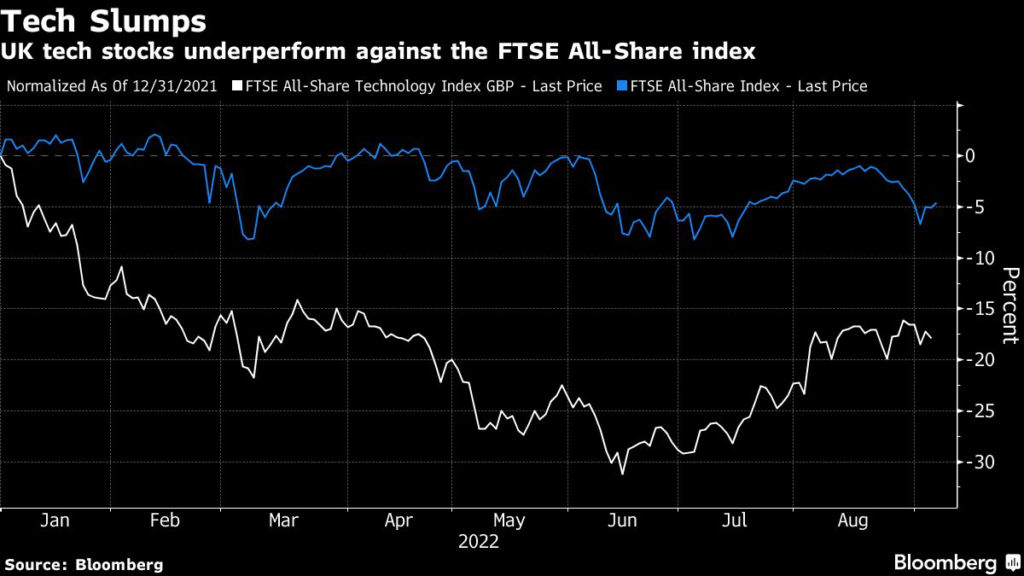
Foreign Buyers Hoover Up Britain’s Fast-Growing Tech Firms

(Bloomberg) — A wave of foreign buyers is coming after British technology companies, threatening to rob the UK market of what little exposure it still has to high-growth assets.

Canadian Open Text Corp.’s takeover offer for Micro Focus International Plc follows NortonLifeLock Inc.’s purchase of cybersecurity firm Avast Plc, interest from France’s Schneider Electric SE in industrial software developer Aveva Group Plc and US buyout group Thoma Bravo’s overtures toward Darktrace Plc. And GTCR said Tuesday it’s considering a bid for identity verification and fraud prevention company GB Group Plc.

These deals may not be the last, as a protracted selloff in growth assets and a weaker pound make the UK fertile ground for bargain hunters. But the foreign shopping spree is completely at odds with the British government’s efforts to foster a strong domestic tech scene and attract more growth listings in London.

“The swoop on UK targets by overseas buyers will undoubtedly cause unease among politicians,” said Susannah Streeter, senior analyst at Hargreaves Lansdown. “It’s fresh evidence that UK assets are considered to be cheap, weighed down by the impact of Brexit, the weakening pound, the energy crisis and the looming recession set to hit the economy.”

London has been lobbying hard for the chip designer Arm Ltd. to list at home, six years after SoftBank Group Corp. took it private. The Japanese group’s founder, Masayoshi Son, has repeatedly said his primary focus is to take Arm public in the US because of its deep investor base and attractive valuations, but is also considering a UK listing in part because of political appeals.

Darktrace was one of several high-profile initial public offerings across 2021 in London and listed less than 18 months ago. The stock has had a wild ride since, nearly quadrupling before tumbling back to trade at twice the listing price. It’s one of the few tech IPOs from last year that hasn’t plunged since its debut.

The latest flurry of takeovers will eat into the FTSE All-Share index’s already meager 1.5% exposure to tech, as all the suitors are based outside of the UK. Analysts also see Kape Technologies Plc, Redcentric Plc, The Sage Group Plc, and Keywords Studios Plc among the most likely takeover candidates in the space.

“The relative cheap valuations of many UK tech companies compared to their US peers, combined with the weakness of sterling are likely to continue to attract suitors,” said Neil Campling, head of TMT research at Mirabaud Securities. Buyout groups are sitting on tremendous piles of dry powder and firms may conclude that buying is quicker than building, he said.

Still, the UK’s startup scene is the liveliest of any European country. It’ll take a few years for the effects of the government’s tax incentives and easing of visa rules to attract talent in the sector to come to fruition. But in some areas, like fintech and health tech, Britain is already ahead of other major financial centers like New York, according to Goodbody analyst George O’Connor.

“Once upon a time UK tech companies wanted to list on Nasdaq seeing that venue as the tech mothership. This is no longer the case,” he said. London is a “superb venue for earlier-stage growth companies with a generation of entrepreneurial fund managers unrivaled on the global stage,” he said.

(Adds news about GTRC’s interest in GB Group in the second paragraph.)

More stories like this are available on bloomberg.com

©2022 Bloomberg L.P.
Traders Warn Crisis Will Last Beyond This Winter: Energy Update

(Bloomberg) — Policymakers are pulling together proposals to bring to a meeting of energy ministers in Brussels on Friday where emergency interventions will be hammered out to try to stem surging prices for power and natural gas. 

There is even more urgency to take action with prices edging higher after Russia last week halted gas supplies on the Nord Stream pipeline indefinitely. Proposed EU measures expected include removing gas from other power generation in the way electricity is priced. Windfall taxes on excess profits may also be introduced to pay for help for households with ballooning costs, rising inflation and a region-wide recession. 

Energy traders are also increasingly worried that the crisis may last for years. 

Key Developments:

  • European Gas Edges Higher Amid Russia Risks, Anti-Crisis Moves
  • Europe’s Top Aluminum Plant Will Cut Output 22% on Energy Costs
  • Australia Moves to Allay Japan’s Fear It Will Cut Gas Supply

Netherlands Reaches EU Gas Storage Target Early (7:44 a.m.)

The Dutch government confirmed on Wednesday that the country’s gas storage facilities are on average 80% full, nearly two months before the EU deadline. The cabinet had previously allocated an addition 10 million euros ($9.9 million) to fill the large Bergermeer gas storage facility as much as possible over the previous 68% target. Levels are expected to reach around 90%. Facilities at Grijpskerk and Alkmaar will be filled to full capacity and the Norg storage facility has now been filled to about 85%.

“We will continue to fill the gas storage facilities in the Netherlands in the coming period so that we have a buffer for the uncertain times that Europe is facing,” said Climate and Energy Minister Rob Jetten.

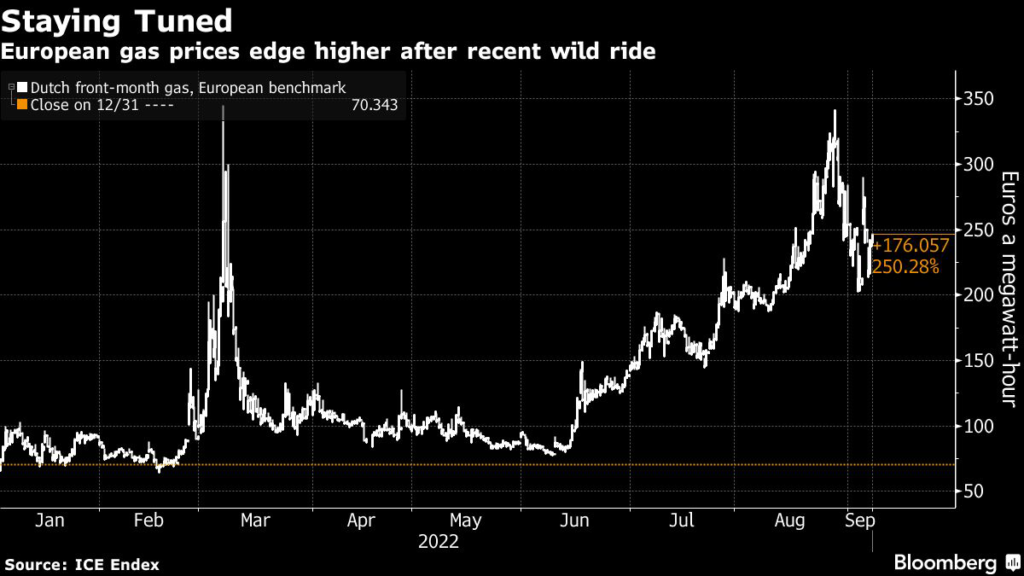
Gas Prices Move Higher After Recent Wild Ride (7:33 a.m.)

Gas futures in Europe edged higher early Wednesday after wild moves in the previous two days. Dutch front-month contract, the European benchmark, added 2.7%, with traders weighing risks to Russian supplies against moves drafted by politicians to fix the crisis ahead of winter. Gas supplies from Norway are also curbed due to seasonal maintenance, with volumes bottoming out at the lowest since mid-July on Wednesday. Works will wrap up next month.

Germany Seen Sliding Into Recession (7:33 a.m.)

For Germany’s industrial backbone, small and medium-sized enterprises, higher energy prices look like a “ticking time bomb”, according to according to ING Groep NV. With ongoing pressure on consumers’ disposable incomes, companies’ pricing power is fading, Carsten Brzeski, chief macro-economist said.

“Judging from the first macro data for the third quarter, the German economy has not fallen off a cliff at the start of the third quarter but is rather sliding into recession,” he said.

Australia Moves to Allay Japan’s Gas Cut Fears (7:33 a.m.)

Australia says it’s doing what it can to ensure supplies of liquefied natural gas to Asian customers will remain reliable, in response to concerns producers could be forced to redirect to relieve domestic shortfalls.

The nation, which vies with Qatar for the title of top LNG exporter, has the power to force producers in the east to redirect uncontracted cargoes tipped for international markets for domestic consumption, but has so far declined to use it. Even if Canberra decides to tighten the rules when the current agreement expires on Jan. 1, the impacted volumes are likely to be relatively minor — about 4% of Australia’s exports, according to BloombergNEF.

Crisis May Extend Beyond Next Winter (7 am)

Europe could face an even bigger problem next winter with no end in sight for the energy crisis, Niek Den Hollander, Uniper’s Chief Commercial Officer, said in an interview in Milan.

If Russian gas flows remain curtailed, it’s possible that nations won’t be able to fill up storage sites effectively next summer, he said. 

“We could see low inventories in the end of this winter, and that would make it very difficult to procure gas and fill up storage again for security of supply next winter,” Den Hollander said. “It all depends on how much LNG Europe will be able to attract and will also depend very much on the weather.”

More stories like this are available on bloomberg.com

©2022 Bloomberg L.P.

Gulf States Tell Netflix to Drop Videos Violating Islamic Values

(Bloomberg) —

Six Gulf Arab countries have told streaming service company Netflix Inc. to stop broadcasting material that they said violates the region’s Islamic values and threatened legal action if it did not stop. 

The countries said some Netflix content “contradicts Islamic and societal values and principles” and said they had contacted the US-based company to drop it.  

“In the event of continued broadcasting of infringing content, the necessary legal measures will be taken,” a statement from the six-nation Gulf Cooperation Council (GCC) said on Tuesday. They did not specify which content had caused the issue. 

The GCC region which comprises Saudi Arabia, the United Arab Emirates, Oman, Bahrain, Kuwait and Qatar hosts a predominantly Muslim population. 

Read: Netflix Rout Is Worst Since 2004, Punishing Roku and Disney, Too

More stories like this are available on bloomberg.com

©2022 Bloomberg L.P.
Surging Dollar Roils Currencies and Sinks Stocks: Markets Wrap

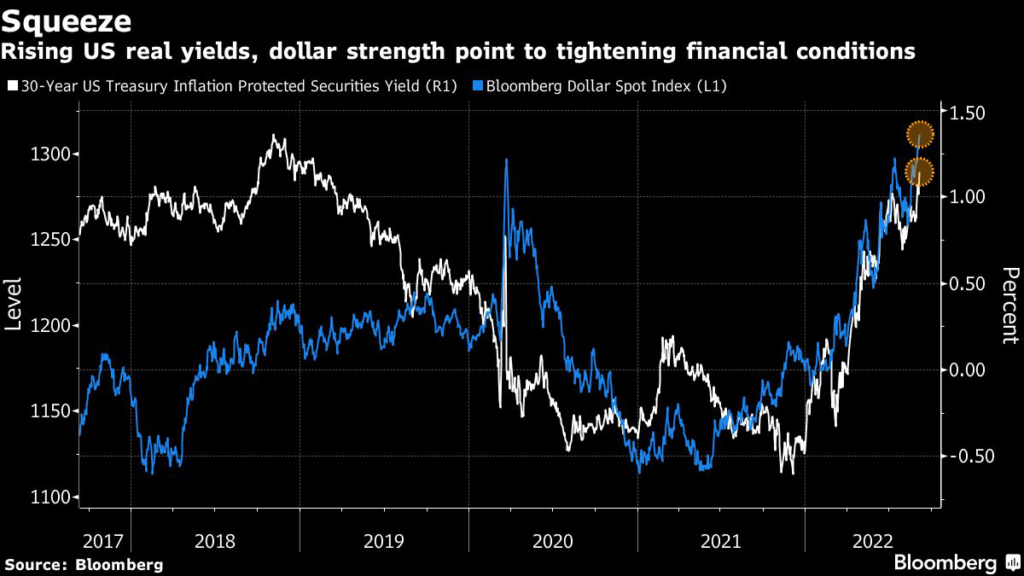
(Bloomberg) — The prospect of aggressive Federal Reserve monetary tightening lifted a dollar gauge to another record Wednesday, hurting stocks and commodities and sparking efforts in Asia to stem currency weakness.

An Asian equity gauge slid to levels last seen in the pandemic fallout of 2020, European futures shed about 1% and S&P 500 contracts retreated. 

In Japan, the yen sank 1% and officials warned they are concerned about rapid, one-sided moves. China, meanwhile, set its yuan reference rate with the strongest bias on record — a signal of discomfort with a swooning currency. 

Greenback strength stoked by higher Treasury yields and worries about the economic outlook is rippling across the world, leading to tighter financial conditions that could further undermine risk assets.

The 30-year US Treasury yield was around the highest since 2014 amid a bond selloff exacerbated by bets on another 75 basis points Fed interest-rate hike to tackle high inflation. The Bank of Japan said it would boost scheduled bond purchases as the nation’s 10-year rate neared the 0.25% upper limit.

Aside from tightening monetary settings and an apparently unstoppable dollar, markets are also contending with a debilitating energy crisis in Europe and Covid lockdowns in China. Concerns are growing about the outlook for company earnings given the various global economic headwinds.

“Many investors are walking on egg shells,” Kristina Hooper, chief global market strategist at Invesco, said on Bloomberg Television. “The real issue is that it could be a one-two punch. We could see the Fed continuing to pummel the economy with a significant rate hike, lets say 75 basis points, and then of course we get downward revisions to earnings that are significant.”

In commodities, crude plunged to the lowest since January and iron ore extended declines. Bitcoin flirted with a test of lows for the year and gold slipped below $1,700 an ounce.

The latest data, meanwhile, showed China’s export growth slowed more than expected in August, adding to signs of a flagging world economy. But the key driver of investor angst remains the Fed’s determination to make monetary policy restrictive until price pressures are conquered.

Fed Chair Jerome Powell “knows they need to be very aggressive for a lot longer than people think because they don’t only want to get inflation under control, they want to get it stable for a persistent period of time,” said Shana Orczyk Sissel, Banrion Capital Management founder and president, on Bloomberg Television.

What to watch this week:

  • Apple event due to feature new iPhones, watches, Wednesday
  • Bank of England Governor Andrew Bailey at Treasury Committee, Wednesday
  • Fed’s Beige Book of regional economic activity, Wednesday
  • Cleveland Fed President Loretta Mester due to speak, Wednesday
  • European Central Bank rate decision, Thursday
  • Fed Chair Jerome Powell due to speak, Thursday
  • Chicago Fed President Charles Evans and his Minneapolis counterpart Neel Kashkari due to speak, Thursday
  • EU energy ministers extraordinary meeting on emergency intervention in electricity markets, Friday

Are you bullish on energy-related assets? This week’s MLIV Pulse survey focuses on energy and commodities. Please click here to participate anonymously.

Some of the main moves in markets:

Stocks

  • S&P 500 futures fell 0.4% as of 7:04 a.m. in London. The S&P 500 fell 0.4%
  • Nasdaq 100 futures dropped 0.4%. The Nasdaq 100 fell 0.7%
  • Japan’s Topix index shed 0.6%
  • Australia’s S&P/ASX 200 Index fell 1.4%
  • South Korea’s Kospi lost 1.5%
  • Hong Kong’s Hang Seng Index fell 1.8%
  • China’s Shanghai Composite Index was steady
  • Euro Stoxx 50 futures declined 1%

Currencies

  • The Bloomberg Dollar Spot Index rose 0.3%
  • The euro was at $0.9891, down 0.1%
  • The Japanese yen was at 144.09 per dollar, down 0.9%
  • The offshore yuan was at 6.9818 per dollar, down 0.2%

Bonds

  • The yield on 10-year Treasuries dipped to 3.34%
  • Australia’s 10-year bond yield rose six basis points to 3.71%

Commodities

  • West Texas Intermediate crude fell 1.6% to $85.48 a barrel
  • Gold was at $1,696.28 an ounce, down 0.3%

More stories like this are available on bloomberg.com

©2022 Bloomberg L.P.
Xi Renews Call for China Tech Push After US Escalates Curbs

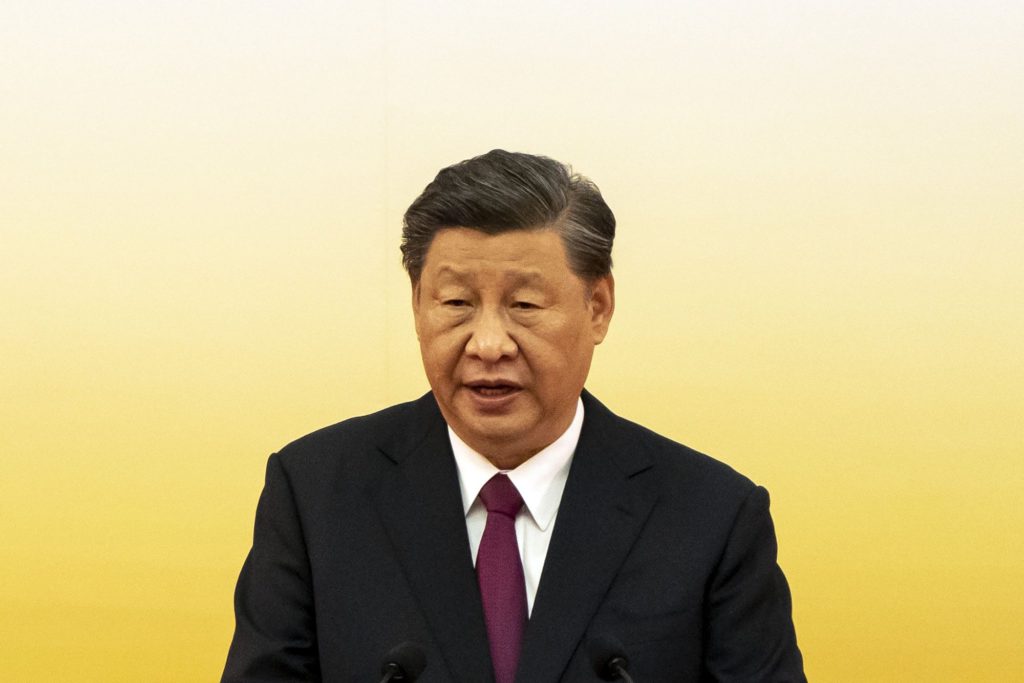
(Bloomberg) — Xi Jinping renewed calls for China to step up the development of technology critical to national security, issuing a forceful reminder just as escalating US sanctions threaten Beijing’s efforts to become self-reliant in semiconductors. 

Invoking the so-called “whole nation system” that propelled China’s space and nuclear weapons programs, Xi exhorted top officials to pool their resources and focus on breakthroughs critical to the country’s future. The government should play a more active role in orchestrating this process, he told a Party summit attended by senior policy-makers including Premier Li Keqiang.

Xi’s personal intervention suggests growing concern in Beijing about stepped-up US efforts to contain China’s advances in fields from artificial intelligence and biotech to the $600 billion global semiconductor arena. The statement, while scarce on details, could signal a desire to give the campaign greater standing in party policy, since it comes little more than a month before a twice-a-decade Communist Party congress.

Read more: Biden Weighing Actions to Curb US Investment in China Tech

The US, after years of targeting specific companies like Huawei Technologies Co., is enacting a series of broader restrictions on the entire Chinese economy. The Biden administration implemented new controls over the sale of artificial intelligence chips to Chinese customers, a blow to the development of cutting-edge technologies, and is weighing an executive order that would curtail investment in the country.

In calling for direct government intervention, Xi is pursuing a playbook that in recent years has prioritized the role of state institutions over private giants such as Alibaba Group Holding Ltd. or Tencent Holdings Ltd. in spurring technological advancement. Since 2020, Beijing has cracked down on private tech giants, particularly in the consumer internet arena.

“This meeting readout is a signal that Xi is likely to double down on the state influencing the direction of the domestic chip industry, as opposed to increasing the influence market-drivers have on resource allocation,” said Jordan Schneider, a senior analyst at Rhodium Group and host of the China Talk podcast.

An escalation in US efforts would only stoke increasing frustration in Beijing with a years-long failure to develop semiconductors that can replace US circuitry.

China has launched a flurry of anti-graft probes into top chip industry figures in past months. Senior officials are angry at how tens of billions of dollars funneled into the sector over the past decade haven’t produced the sorts of breakthroughs that emerged from previous national-level scientific endeavors, Bloomberg News has reported. Instead, the perception is that Washington has managed to strong-arm Beijing and successfully contain its technological ambitions.

“Competitive advantages should be achieved in certain sectors to win strategic initiative opportunities,” state broadcaster Central China Television cited Xi as telling a high-level Communist Party committee he chairs. “Pool resources to get major undertakings done.”

Xi is expected to receive a third term as party chief at the congress next month, despite a slowing economy, geopolitical tensions and frustrations over his zero-tolerance Covid strategy. The precedent-breaking move will extend his mandate to pursue sweeping goals to overhaul the country’s technology sector.

“US competition strategy is leaning more blatantly towards containing China by blocking off access to the resources needed to develop advanced semiconductors,” said Kendra Schaefer, a partner at Beijing-based consultancy Trivium China. “Top leaders are seeking to make sci-tech not just an endeavor for the government, innovators, and researchers, but a whole-of-society effort not dissimilar to the Soviet-era space race.”

China’s Vast Blueprint for Tech Supremacy Over U.S.: QuickTake

First introduced under Mao Zedong to help the then-fledgling Communist China industrialize, the “whole nation” approach was crucial to helping Beijing attain a number of top national priorities, from developing its first atomic bomb in the early 1960s to achieving Olympic sporting success. After that it was largely set aside as officials shifted to focus on economic growth. But following a series of U.S. sanctions that exposed the vulnerabilities of China’s chip capabilities, Xi is once again reactivating the mechanism to achieve breakthroughs in advanced chip development and manufacturing.

About a trillion dollars of government funding have been set aside under the technology initiative, part of which will be used by central and local governments to jointly invest in a series of third-generation chip projects, Bloomberg News has reported. Top chipmakers and research institutes have submitted proposals to the ministries of science and information technology, all vying for a place in the national program and a share of the financing.

Beyond self-sufficiency in technology, Xi also stressed the importance of conserving energy, spurring health care advances and rural development — familiar policy priorities for China’s leader. That includes more efficient use of resources from water and grain to minerals and raw materials, the official Xinhua News Agency reported, citing Xi. He called for lower carbon emissions in the production of goods and services, and opposed “extravagant consumption and over-consumption.”

Among other things, China should set up a pricing mechanism that reflects resource scarcity as well as the cost of ecological damage, Xinhua cited Xi as saying.

“It remains to be seen how much progress they can make. Unlike resources, it’s difficult for ‘innovation’ to be state-directed,” said Union Bancaire Privee analyst Vey-Sern Ling.

Read more: China Searches for Chipmaking Advance That Can Change the Game

(Updates with analyst’s comment from the fifth paragraph)

More stories like this are available on bloomberg.com

©2022 Bloomberg L.P.
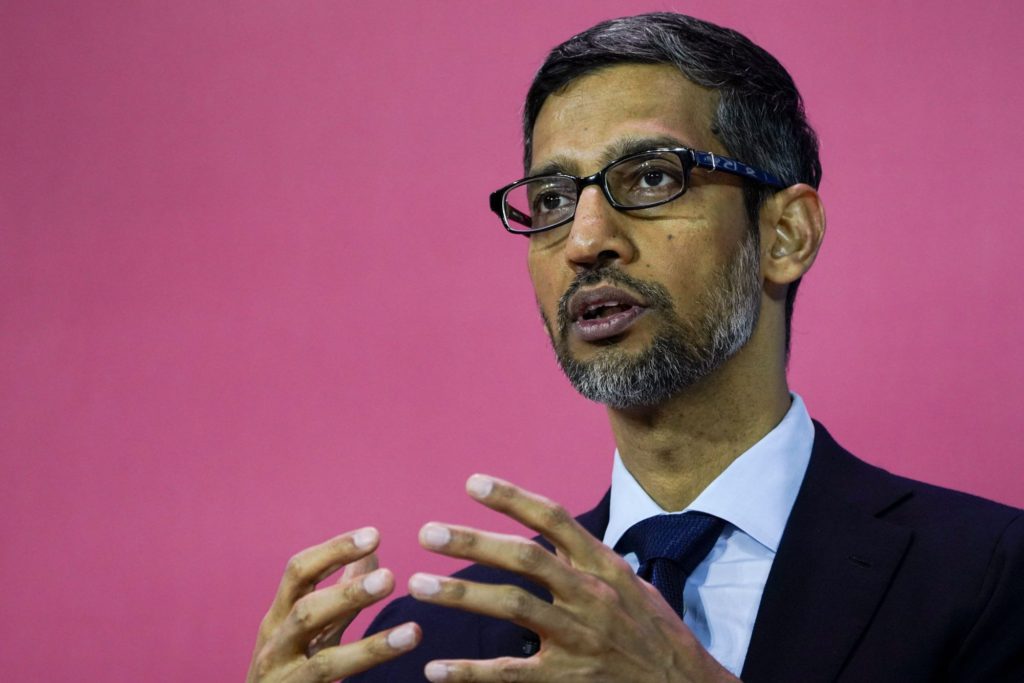
Pichai Says Google ‘Pro-Competitive,’ Sees Vibrant Tech Market

(Bloomberg) — Sundar Pichai, chief executive officer of Google parent Alphabet Inc., defended the internet-search giant against claims that it is anticompetitive, citing established rivals in the digital advertising market and upstart mobile app TikTok as examples of robust competition in technology.

Pichai made the remarks late Tuesday at the Code Conference in Los Angeles. He said the company is “pro-competitive” and named companies including Apple Inc. and Microsoft Corp. as competitors in the advertising business and TikTok as a rival in the video space. He said that YouTube Shorts, Google’s TikTok competitor, is off to a “great start.”

“Competition in tech is hyper-intense,” Pichai said. The rise of TikTok “shows there is competition in the space” and “how vibrant this market is” compared to years past.

The US Justice Department sued Google in 2020, alleging the company dominates the search market in violation of antitrust laws. The company is the most popular search engine and only has limited competition in that business from Microsoft Bing and Yahoo Search. The DOJ is also preparing to sue Google on claims it illegally dominates the digital advertising market, people familiar with the matter told Bloomberg last month.

“Do I wake up and worry about all the stuff that’s coming down?” Pichai said Tuesday. “Absolutely.”

Still, he said, “my guidance to our teams is to be respectful and engage the way we have in Europe” and “engage constructively through the process.”

In response to an audience question about the fees Google pays Apple to be the default search engine in the Safari web browser across iPhones, iPads and Macs, Pichai said the deal is a “standard” one, and the company competed with others for the deal. 

Pichai also said Google would continue to pursue acquisitions that make sense for the company. He cited Google’s purchase of Fitbit and noted that the technology it gained will power Google’s upcoming Pixel Watch, which he wore on stage.

While Pichai said Google didn’t consider buying Twitter Inc. earlier this year amid the social network’s talks with Elon Musk, he declined to comment on interest in taking over Pinterest Inc. 

More stories like this are available on bloomberg.com

©2022 Bloomberg L.P.
Investor Who Made 1,700% on Mt. Gox Crash Circles Crypto Again

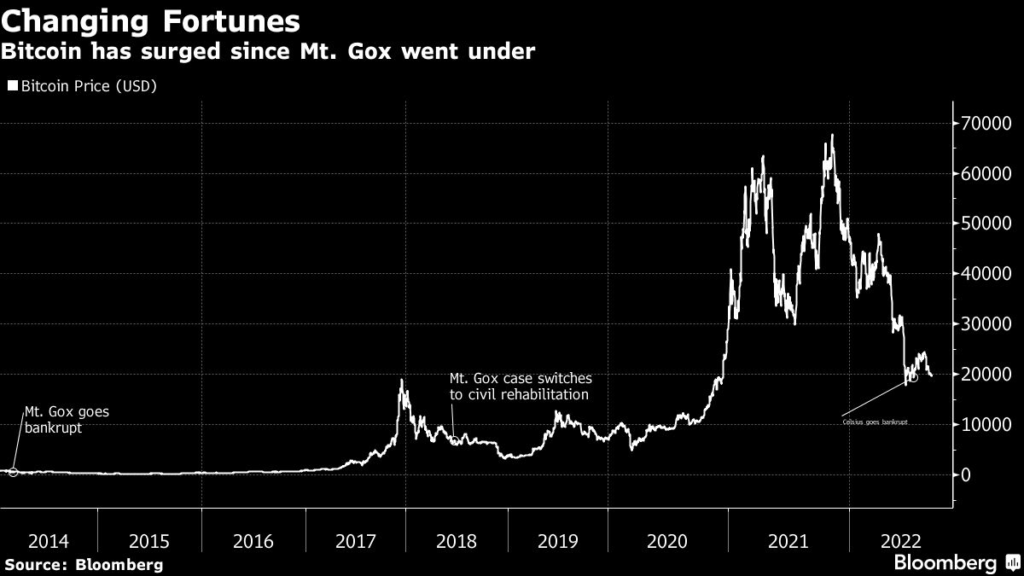
(Bloomberg) — In 2017, Thomas Braziel didn’t have much of an interest in Bitcoin. But as an investor in obscure distressed assets, his sport, as he called it, was bankruptcies — and there was nothing quite as enticing as the collapse of crypto exchange Mt. Gox.  

“The first instance was: boy, wouldn’t it be cool to buy a Japanese cryptocurrency bankruptcy claim?” said the founder of 507 Capital, a two-man shop named after a section of the U.S. bankruptcy code. 

Braziel, the son of two insolvency lawyers, bought nearly 4,000 Bitcoins worth of claims from Mt. Gox customers, using $1 million raised from a family office. Former users of the exchange were waiting to get their money back after a hack of about 850,000 Bitcoins drove the Tokyo-based exchange into bankruptcy in 2014. 

With payouts expected to finally begin, Braziel’s investment is set to return nearly 18 times, thanks to Bitcoin’s surge since he bought the claims. Now, after a $2 trillion rout in digital assets brought down some of crypto’s most prominent players, Braziel is again on the prowl for deals.

Crypto is about as niche as it gets in the world of distressed assets, but some of the investment opportunities and thorny questions raised by Mt. Gox’s collapse have started resurfacing as bankruptcies from Celsius Network to Voyager Digital Ltd. hit US courts for the first time. One of the biggest conundrums for judges: Should customers get their money back in fixed dollar values or in tokens? 

“Nothing in the bankruptcy code talks about crypto assets,” said Elie Worenklein, a restructuring lawyer at Debevoise & Plimpton. “So the parties and bankruptcy courts will likely be analogizing various novel crypto issues to existing legal principles.”

‘I’ll Just be Let Down’

Crypto remains a novelty in US courts. When a regulated brokerage fails, customer assets are segregated and insured. But under the terms of Celsius’s high-yield Earn account, which held about $4.2 billion as of early July, customers were effectively turning their tokens over to the firm and giving it full control to lend them out. That means those depositors could now be unsecured creditors jostling for a share of a firm with a $1.19 billion hole in its balance sheet. 

Bankrupt Celsius Seeks to Return $50 Million of Locked Crypto

They include Katie, a 27-year-old speech pathologist in Sydney who asked for her surname to be withheld as she hasn’t told her friends and family about losing money when Celsius failed. She was counting on the $138,000 she and her husband put on Celsius to help buy a house and start a family. 

“I don’t want to put in my head that we’re going to get any back because then I’ll just be let down once again,” she said. 

Like many other users, Katie would like her Bitcoin and Ether, rather than dollars, back. After Celsius officially filed for bankruptcy, Bitcoin initially rebounded as much as 30% and is now roughly flat. Ether is 60% higher. 

More Like Commodities?

Whether she will pocket any of those gains remains unsettled, though the firm has said it intends to see customers capture any upside. Normally, if the assets are determined to be Celsius’s, such claim amounts are fixed in dollar terms. Customers can, however, argue that cryptocurrencies are more like commodities or securities, which are valued at the time they are sold, said Vincent Indelicato, a partner at Proskauer Rose LLP who specializes in restructurings. 

Fear of missing out on a crypto recovery is driving some users to sell their claims. Oliver, an IT professional in his 40s who lives near Nantes in France, said he’s looking for a buyer for his $1 million Earn account for as little as 30% of the nominal value so he can free up cash to buy more crypto — and store it in his own wallet this time.

“Say in five years the crypto market goes up 10x, even if I get back 100% of the value as of July 13, I’m still losing a lot,” he said, referring to the date of Celsius’s bankruptcy.  

The same debate loomed over the Mt. Gox case after Bitcoin started rallying in 2016, which meant the tokens that remained after the hack were enough to pay out the initial yen-denominated claims. The value of Mt. Gox’s estate also rose further when a free Bitcoin Cash — a token now worth $124 apiece — was given to every Bitcoin holder in 2017. 

Braziel’s Windfall

The rest of the windfall could then have flowed into the pockets of equity owners including convicted founder Mark Karpeles. To avoid that, the case was shifted in 2018 from bankruptcy proceedings to a civil procedure that let users re-value their claims and get their money back in a combination of fiat and digital coins. 

That payout is now going to mean hefty profits for those who started snapping up the claims at sharp discounts, like Braziel and his clients. He bought his first claim for $106,333 at 38% of the face value. It’s now worth more than $2 million. Fortress Investment Group LLC, an asset manager owned by Softbank, also bought Mt. Gox claims. 

With the rehabilitation trustee making final administrative preparations based on a plan passed last year, Braziel said he expects the disbursement to begin in early 2023. 

Still, that case won’t have much bearing on this new wave of insolvencies in US courts, and some potential investors are holding off from making any moves for now. At distressed investing firm Argo Partners, which owns claims on Mt. Gox and collapsed Canadian crypto exchange Quadriga, Jonathan Maruri says the current cases are still early in the process. The head of trading has spoken to a few Celsius users but hasn’t bought anything yet. 

“These are some of the first interactions the crypto space has with the bankruptcy space,” he said. 

Braziel said he’s talking to the holders of a few multimillion-dollar claims, but hasn’t struck any deals so far. Compared to Mt. Gox, whose users tended to be early crypto enthusiasts with cash to spare, he said he’s now hearing more from customers who have lost their life savings after being lured by the high yields Celsius and other crypto lenders marketed. 

“For us, it’s exciting to see stuff,” Braziel said. “But at the same time you feel bad.”  

More stories like this are available on bloomberg.com

©2022 Bloomberg L.P.
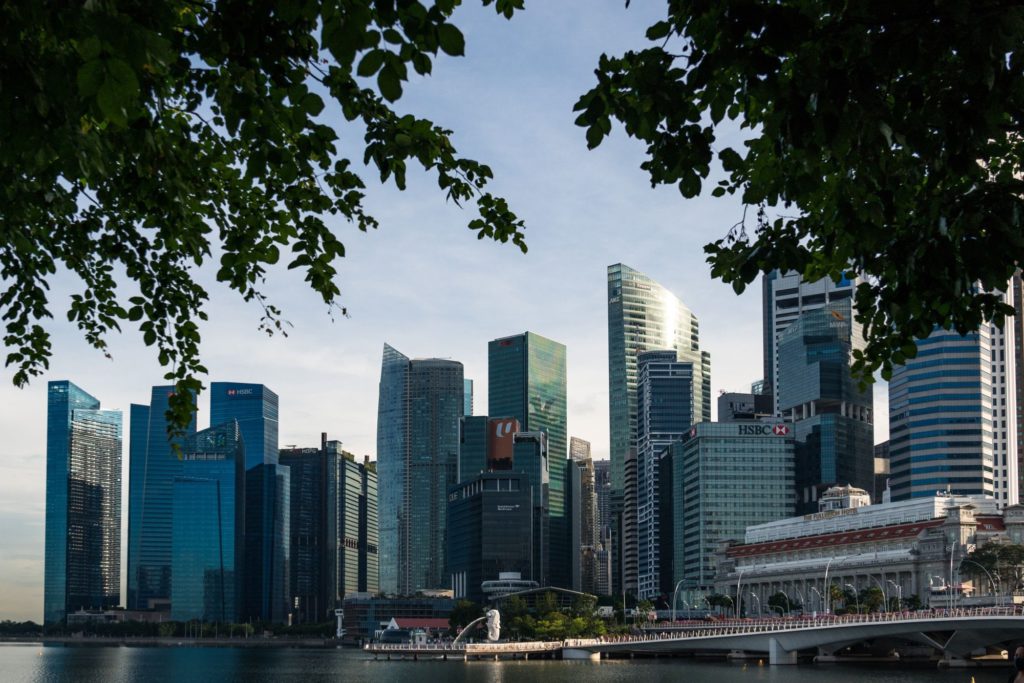
Here’s Where Asia’s Rich Are Putting Their Cash as Global Risks Grow

(Bloomberg) — With growing concerns over rising inflation and market volatility, Asia’s wealthy are turning cautious.

People with more than $1 million of investable funds are repositioning toward private markets to shield their assets from market volatility, Lombard Odier’s 2022 study about high net-worth individuals in Asia Pacific found. 

They’ve increasingly shunned stocks and bonds to focus on their own companies or assets deemed safer such as gold and cash. At the same time, they’ve largely stayed clear of crypto, which has proved particularly volatile.

“APAC investors are becoming more conservative in their portfolio construction and are diverting to ‘safer’ alternative and private assets, whilst increasingly diversifying beyond their local markets,” Vincent Magnenat, Lombard Odier’s Asia head, wrote in a statement. “Allocation to digital assets is extremely low,” he added at a press briefing Wednesday.

A slump in tech stocks and soaring inflation amid rising interest rates have shaved off $1.4 trillion from the cumulative wealth of the world’s 500 richest people in the first half of 2022, according to the Bloomberg Billionaires Index. That’s a reversal from the past two years, when central-bank largesse to combat the effects of Covid-19 helped boost assets and personal fortunes with them. 

The surge in inflation and its repercussions on the global economy are the biggest concern for 77% of the people polled, Lombard Odier said. Half of them are worried about market volatility, which has pushed as much as 56% of them to increase diversification. The wealthy individuals in the survey are also shunning crypto, with 83% of them having no investment or less than 5% of their portfolio backing such assets.

Low liquidity concerns, particularly among older generations, underscore the enthusiasm for private assets, the Swiss bank said. The region’s investors seem to believe that those allow them to capture structural changes in a regulated and risk-managed way, it added. The rich in Singapore and Australia are leading the trend, with about 60% of them planning to increase their allocations to private markets. 

Lombard Odier, which oversees about 358 billion Swiss francs ($363 billion) in client assets globally, surveyed more than 450 high-net-worth individuals domiciled in Singapore, Hong Kong, Japan, Thailand, the Philippines, Indonesia, Taiwan and Australia between May and June.

“The concern of lack of visibility, volatility and the willingness to manage it are homogeneous across the markets and across age brackets,” said Jean-Francois Aboulker, the bank’s Asia head of ultra-high net-worth individual offering.

(Adds quotes, details from sixth paragraph)

More stories like this are available on bloomberg.com

©2022 Bloomberg L.P.
Tencent Set to Double Ubisoft Stake in Latest Overseas Gambit

(Bloomberg) — Tencent Holdings Ltd. is set to more than double its stake in Ubisoft Entertainment SA, forging its latest major overseas deal and giving the founding Guillemot brothers capital to get the company back on track.

Tencent will buy 49.9% of the Guillemot Brothers Ltd. holding company, according to a statement. The Chinese tech giant will pay 200 million euros ($198 million) to buy an indirect stake in Ubisoft at an implied value of 80 euros per share, and invest a further 100 million euros in the holding company. The transaction also authorizes Tencent to eventually raise its direct stake to 9.99% from 4.5% currently. The brothers will remain in control, and Tencent won’t have any operational veto rights.

Tencent is ratcheting up international expansion efforts after a slumping economy and tightened regulations choked off growth at home. It recently purchased a stake in Japan’s FromSoftware Inc., maker of global hit Elden Ring, and last year spent $1.26 billion to acquire British game studio Sumo Group. Tencent’s strategy to date has been to tap popular franchises from investees like Activision Blizzard Inc. and turn them into mobile hits — as it did with Call of Duty Mobile and PUBG Mobile.

Tencent, which bought a stake in Assassin’s Creed-developer Ubisoft about five years ago, is likely to help the French studio introduce franchises such as Rainbow Six Siege to China. Beijing is gradually relaxing restrictions on gaming nationwide.

“The plan then and still is to cooperate on mobile games using Ubisoft IP and to bring key Ubisoft PC games to China,” said Matthew Kanterman, director of research at Ball Metaverse Research Partners. “If and when the regulatory environment improves and we start to see approvals for foreign games again, these popular global franchises could stand out in an increasingly saturated and mature China online games market.”

Read more: Tencent’s Sales Fall for First Time as China’s Economy Sinks

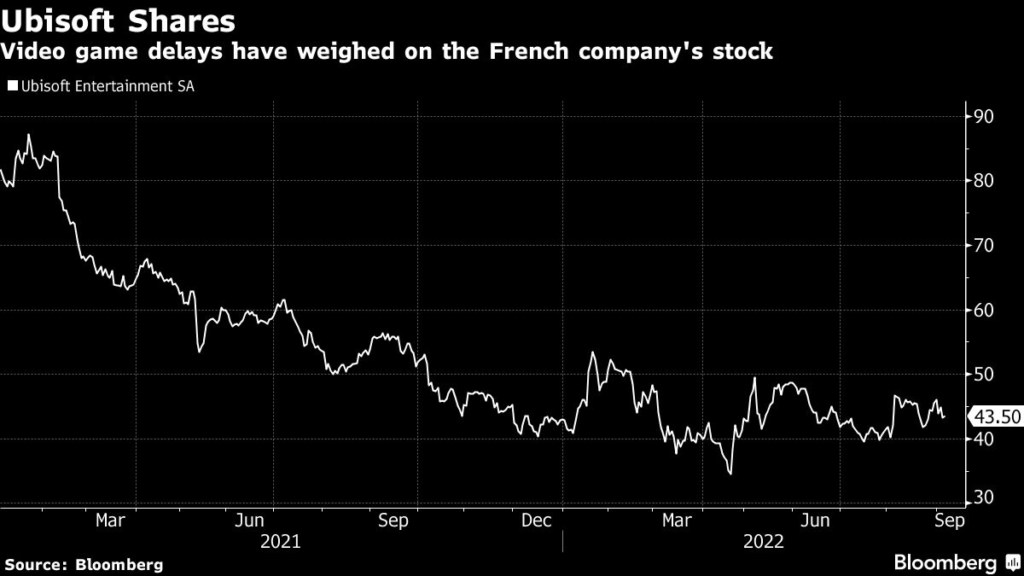
Ubisoft’s US-traded shares rose 3.7% on Tuesday. The French video game publisher has been deemed a takeover target as concerns over delayed launches and allegations of sexual misconduct pushed the stock down about 45% since the start of last year. Its status as one of the few remaining independent video game publishers has also fueled interest after Microsoft Corp. agreed to buy Activision Blizzard.

Tencent’s increased involvement will give the brothers, who founded Ubisoft in 1986, some certainty in the shareholder register while the recovery plan takes hold. Chief Executive Officer Yves Guillemot introduced cost cuts and in July reduced the full-year sales target as Ubisoft announced a delay to its upcoming Avatar game from the 2022 holiday season to the next fiscal year.

The deal with Tencent “helps us bring stability in the shareholding of the company,” Guillemot said in an interview.

Shenzhen-based Tencent has been selling off assets in recent times, including some of its investments in Chinese online retailer JD.com Inc. and Singapore’s Sea Ltd., which operates in e-commerce and has a popular mobile title in Free Fire. Yuxin Ren, who heads Tencent’s games business, stepped down from Sea’s board this week, signaling a realignment of the firm’s priorities.

Singapore’s Sea Says Tencent Executive Resigns From Board

Tencent initially took a 5% stake in Ubisoft in 2018 to help it thwart a hostile takeover from Vivendi. Ubisoft said the latest deal includes a partnership with Tencent to bring some of its biggest franchises to mobile platforms, but it is also helpful at a time when Ubisoft has been struggling.

Ubisoft has faced a weak lineup of games, delays and a talent retention problem in the wake of a 2020 sexual misconduct scandal that led to the ousting of top executives. Over the summer, the company also delayed Assassin’s Creed Mirage, a smaller entry in the action franchise. Mirage will be set in Baghdad and look to return to the franchise’s stealth roots, Bloomberg reported. Ubisoft will hold an event Saturday to reveal more on the future of Assassin’s Creed as well as other upcoming games.

However, the founding family will retain control. Tencent will not be able to sell its shares in Ubisoft for five years, and after that the Guillemot family will have priority claim on any sale. In addition, Tencent will not be able to increase its stake in Ubisoft beyond 9.99% of Ubisoft’s capital and voting rights for eight years.

After the purchase from the Guillemot brothers, Tencent will have an 11.3% total stake in Ubisoft. It could hold as much as 16.8% of the business through the increase to its direct holding that’s been authorized, according to Bloomberg calculations.

The agreement may allow the total stake in Ubisoft held by Tencent, the family and Guillemot Brothers to rise to 29.9% of Ubisoft voting rights, according to the statement. Tencent is also providing the holding company with a long-term unsecured loan that to repay debt. 

The transactions still leave room for another investor to step in. 

“If someone wants to make a bid for the whole of Ubisoft, it still can, and the bid will be reviewed by our board,” Chief Financial Officer Frederick Duguet said in an interview.

More stories like this are available on bloomberg.com

©2022 Bloomberg L.P.

Close Bitnami banner
Bitnami
