
Bloomberg

Foreign Buyers Hoover Up Britain’s Fast-Growing Tech Companies

(Bloomberg) — A wave of foreign buyers is coming after British technology companies, threatening to rob the UK market of what little exposure it still has to high-growth assets.

Canadian Open Text Corp.’s takeover offer for Micro Focus International Plc follows NortonLifeLock Inc.’s purchase of cybersecurity firm Avast Plc, interest from France’s Schneider Electric SE in industrial software developer Aveva Group Plc and US buyout group Thoma Bravo’s overtures toward Darktrace Plc.

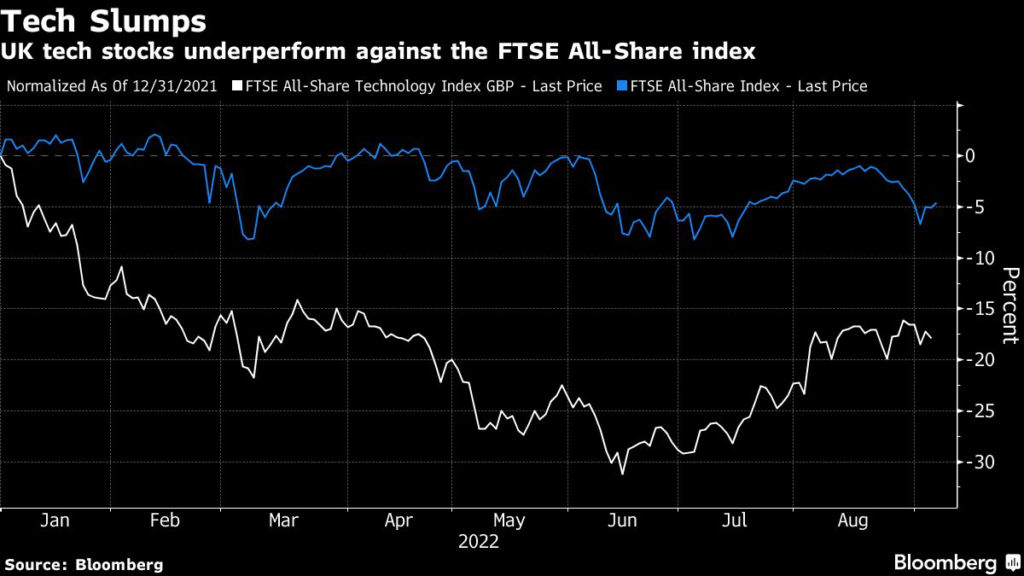
These deals may not be the last, as a protracted selloff in growth assets and a weaker pound make the UK fertile ground for bargain hunters. But the foreign shopping spree is completely at odds with the British government’s efforts to foster a strong domestic tech scene and attract more growth listings in London.

“The swoop on UK targets by overseas buyers will undoubtedly cause unease among politicians,” said Susannah Streeter, senior analyst at Hargreaves Lansdown. “It’s fresh evidence that UK assets are considered to be cheap, weighed down by the impact of Brexit, the weakening pound, the energy crisis and the looming recession set to hit the economy.”

London has been lobbying hard for the chip designer Arm Ltd. to list at home, six years after SoftBank Group Corp. took it private. The Japanese group’s founder, Masayoshi Son, has repeatedly said his primary focus is to take Arm public in the US because of its deep investor base and attractive valuations, but is also considering a UK listing in part because of political appeals.

Darktrace was one of several high-profile initial public offerings across 2021 in London and listed less than 18 months ago. The stock has had a wild ride since, nearly quadrupling before tumbling back to trade at twice the listing price. It’s one of the few tech IPOs from last year that hasn’t plunged since its debut.

The latest flurry of takeovers will eat into the FTSE All-Share index’s already meager 1.5% exposure to tech, as all the suitors are based outside of the UK. Analysts also see Kape Technologies Plc, Redcentric Plc, The Sage Group Plc, and Keywords Studios Plc among the most likely takeover candidates in the space.

“The relative cheap valuations of many UK tech companies compared to their US peers, combined with the weakness of sterling are likely to continue to attract suitors,” said Neil Campling, head of TMT research at Mirabaud Securities. Buyout groups are sitting on tremendous piles of dry powder and firms may conclude that buying is quicker than building, he said.

Still, the UK’s startup scene is the liveliest of any European country. It’ll take a few years for the effects of the government’s tax incentives and easing of visa rules to attract talent in the sector to come to fruition. But in some areas, like fintech and health tech, Britain is already ahead of other major financial centers like New York, according to Goodbody analyst George O’Connor.

“Once upon a time UK tech companies wanted to list on Nasdaq seeing that venue as the tech mothership. This is no longer the case,” he said. London is a “superb venue for earlier-stage growth companies with a generation of entrepreneurial fund managers unrivaled on the global stage,” he said.

More stories like this are available on bloomberg.com

©2022 Bloomberg L.P.
Asia’s Rich Are Tilting Toward Private Assets on Global Risks

(Bloomberg) — With growing concerns over rising inflation and market volatility, Asia’s wealthy are turning cautious.

People with more than $1 million of investable funds are repositioning toward private assets to shield their investments from market volatility, Lombard Odier’s 2022 study about high net-worth individuals in Asia Pacific found. 

They’ve increasingly shunned stocks and bonds to focus on their own companies or assets deemed safer such as gold and cash. At the same time, they’ve largely stayed clear of crypto, a market that’s proved particularly volatile.

A slump in tech stocks and soaring inflation amid rising interest rates have shaved off $1.4 trillion from the cumulative wealth of the world’s 500 richest people in the first half of the year, according to the Bloomberg Billionaires Index. That’s a reversal from the past two years, when central-bank largesse to combat the effects of Covid-19 helped boost assets and personal fortunes with them. 

“APAC investors are becoming more conservative in their portfolio construction and are diverting to ‘safer’ alternative and private assets, whilst increasingly diversifying beyond their local markets,” said Vincent Magnenat, Lombard Odier’s Asia Regional Head.

Low liquidity concerns, particularly among older generations, underscore the enthusiasm for private assets, the Swiss bank said. The region’s investors seem to believe that those allow them to capture structural changes in a regulated and risk-managed way, it added. 

The bank, which oversees about 358 billion Swiss francs ($363 billion) in client assets globally, surveyed over 450 high-net-worth individuals domiciled in Singapore, Hong Kong, Japan, Thailand, the Philippines, Indonesia, Taiwan and Australia between May and June.

More stories like this are available on bloomberg.com

©2022 Bloomberg L.P.
Dollar Rallies as Risk-Off Sentiment Sinks Stocks: Markets Wrap

(Bloomberg) — The dollar extended its rally on Wednesday while Treasury yields held gains, weighing down stocks and commodities amid expectations for aggressive monetary tightening by the Federal Reserve to tackle inflation.

Equities fell from Tokyo to Sydney and Chinese tech shares slid, taking an Asian stock gauge to the lowest since 2020. US and European futures were in the red. The S&P 500 dipped Tuesday but held above the 3,900 technical level.

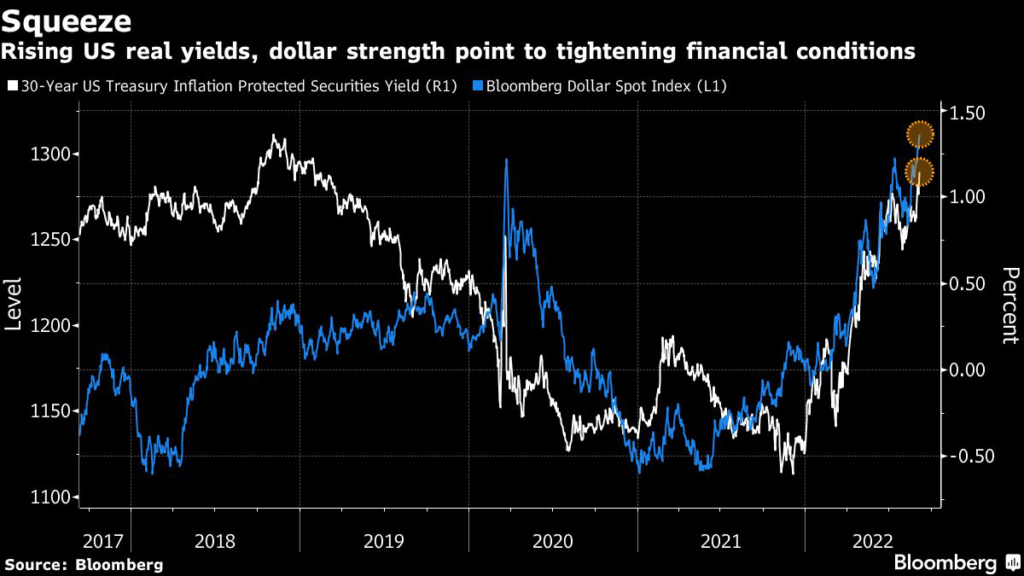
Australian and New Zealand debt dropped after a Treasuries selloff, which was helped along by a slew of corporate debt offerings and solid US service-sector activity. The 30-year US yield is around the highest level since 2014. The economic data spurred bets on another 75 basis points Fed interest-rate hike.

The Bank of Japan said it would boost scheduled bond purchases as the intensifying weakness in Treasuries puts upward pressure on global yields.

The Bloomberg Dollar Spot Index hit another record, the yen slid to a fresh 24-year low and China set its yuan reference rate with the strongest bias on record — a signal of discomfort with currency weakness. Greenback strength is rippling across the world, squeezing financial conditions and stoking inflation in other economies as rival currencies drop. 

Markets are also contending with a debilitating energy crisis in Europe and Covid lockdowns in China, which continues to pursue a strategy of eliminating the virus despite the attendant economic cost. Concerns are growing about the outlook for company earnings given the various global economic headwinds.

“Many investors are walking on egg shells,” Kristina Hooper, chief global market strategist at Invesco, said on Bloomberg Television. “The real issue is that it could be a one-two punch. We could see the Fed continuing to pummel the economy with a significant rate hike, lets say 75 basis points, and then of course we get downward revisions to earnings that are significant.”

Bitcoin held a retreat below $19,000. Crude dropped under $86 a barrel, hampered by worries about demand. Gold slipped below $1,700 an ounce.

Fed Chair Jerome Powell “knows they need to be very aggressive for a lot longer than people think because they don’t only want to get inflation under control, they want to get it stable for a persistent period of time,” said Shana Orczyk Sissel, Banrion Capital Management founder and president, on Bloomberg Television.

What to watch this week:

  • Apple event due to feature new iPhones, watches, Wednesday
  • Bank of England Governor Andrew Bailey at Treasury Committee, Wednesday
  • Fed’s Beige Book of regional economic activity, Wednesday
  • Cleveland Fed President Loretta Mester due to speak, Wednesday
  • European Central Bank rate decision, Thursday
  • Fed Chair Jerome Powell due to speak, Thursday
  • Chicago Fed President Charles Evans and his Minneapolis counterpart Neel Kashkari due to speak, Thursday
  • EU energy ministers extraordinary meeting on emergency intervention in electricity markets, Friday

Are you bullish on energy-related assets? This week’s MLIV Pulse survey focuses on energy and commodities. Please click here to participate anonymously.

Some of the main moves in markets:

Stocks

  • S&P 500 futures fell 0.4% as of 11:48 a.m. in Tokyo. The S&P 500 fell 0.4%
  • Nasdaq 100 futures dropped 0.4%. The Nasdaq 100 fell 0.7%
  • Japan’s Topix index shed 0.8%
  • Australia’s S&P/ASX 200 Index fell 1.3%
  • South Korea’s Kospi lost 1.6%
  • Hong Kong’s Hang Seng Index fell 1.2%
  • China’s Shanghai Composite Index rose 0.2%
  • Euro Stoxx 50 futures declined 1.1%

Currencies

  • The Bloomberg Dollar Spot Index rose 0.3%
  • The euro was at $0.9888, down 0.2%
  • The Japanese yen was at 143.534 per dollar, down 0.5%
  • The offshore yuan was at 6.9816 per dollar, down 0.2%

Bonds

  • The yield on 10-year Treasuries was steady at 3.35%
  • Australia’s 10-year bond yield rose nine basis points to 3.74%

Commodities

  • West Texas Intermediate crude fell 1.4% to $85.64 a barrel
  • Gold was at $1,6967.38 an ounce, down 0.3%

More stories like this are available on bloomberg.com

©2022 Bloomberg L.P.
Crypto Market Cap Sinks Below $1 Trillion, Bitcoin Near 2022 Low

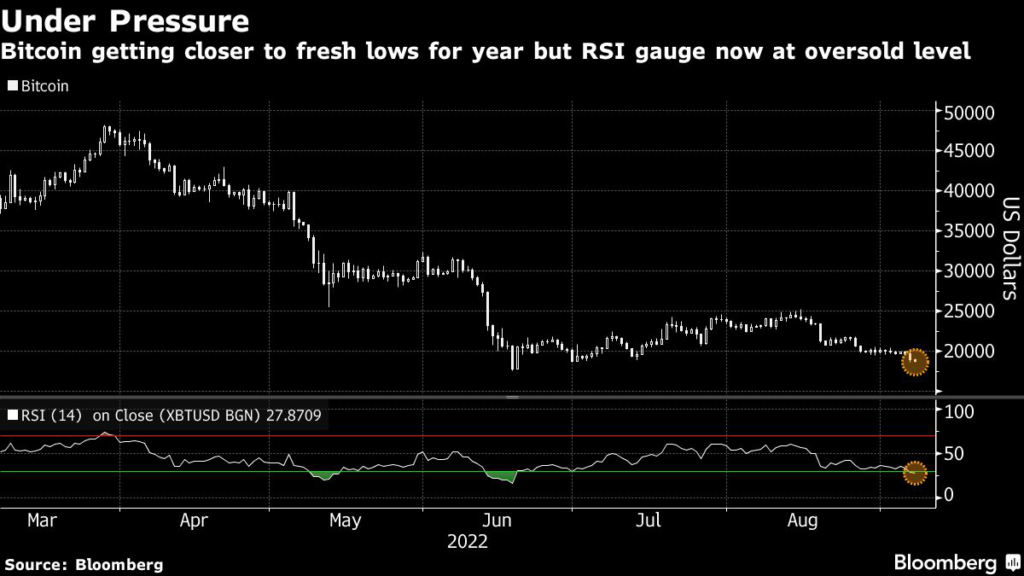
(Bloomberg) — Bitcoin is flirting with a test of this year’s lows following a cryptocurrency selloff that again pushed the sector’s overall market value below $1 trillion.

The largest digital token has shed more than 6% so far this week and was trading at about $18,620 as of 10:28 a.m. in Singapore. Crypto market capitalization has fallen by a similar proportion in the past 24 hours, according to CoinGecko.

Surging real interest rates — seen as the true cost of borrowing — are heaping pressure on a range of risk assets and crypto is no exception. The retreat in Bitcoin is taking it closer to a nadir of about $17,600 that was hit in June in the wake of blowups at crypto lenders and hedge funds.

“The macro narrative is very hard to be able to let go and will drive risk assets,” Kevin Loo, head of investment insights at IDEG Asset Management Ltd., said on Bloomberg Television. “Bitcoin is below $20,000. We have been here before and it’s likely that we could actually go slightly lower.”

At the same time, there remains residual optimism from the upcoming upgrade of the Ethereum network, which some analysts hope will draw investment flows into Ether and other digital assets.

“Bitcoin was at $3,000 in the first crypto winter and if you measure trough to trough, the trend is we are heading higher in the longer term,” Loo said.

The MVIS CryptoCompare Digital Assets 100 index of the largest tokens is down about 60% this year. Bitcoin has tumbled from a pandemic-era peak of almost $69,000 in November last year.

More stories like this are available on bloomberg.com

©2022 Bloomberg L.P.
Xi Calls for Revived Tech Push in China After US Escalates Curbs

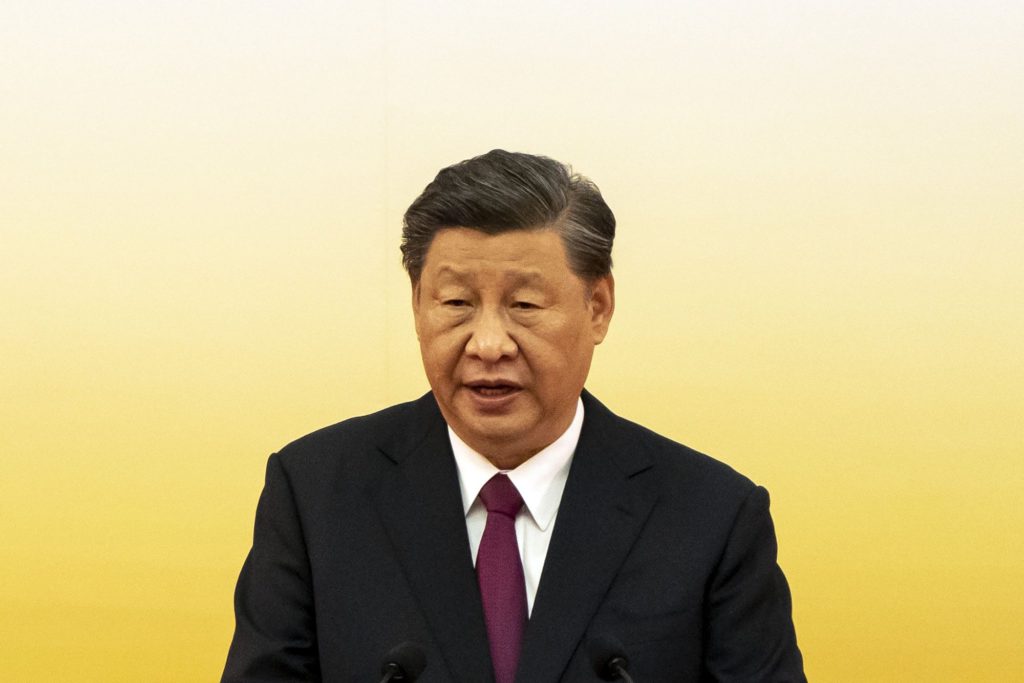
(Bloomberg) — Xi Jinping renewed calls for China to step up the development of technology critical to national security, issuing a forceful reminder just as escalating US sanctions threaten Beijing’s efforts to become self-reliant in semiconductors. 

Invoking the so-called “whole nation system” that propelled China’s space and nuclear weapons programs, Xi exhorted top officials to pool their resources and focus on breakthroughs critical to the country’s future. The government should play a more active role in orchestrating this process, he told a Party summit attended by senior policy-makers including Premier Li Keqiang.

While scarce on details, Xi’s personal intervention suggests Beijing is growing increasingly concerned about Washington’s stepped-up efforts to contain China’s efforts to advance in fields from artificial intelligence and biotech to the $600 billion global semiconductor arena.  

The US, after years of targeting specific companies like Huawei Technologies Co., is enacting a series of broader restrictions on the entire Chinese economy. The Biden administration implemented new controls over the sale of artificial intelligence chips to Chinese customers, a blow to the development of cutting-edge technologies, and is weighing an executive order that would curtail investment in the country.

“US competition strategy is leaning more blatantly towards containing China by blocking off access to the resources needed to develop advanced semiconductors,” said Kendra Schaefer, a partner at Beijing-based consultancy Trivium China. “Top leaders are seeking to make sci-tech not just an endeavor for the government, innovators, and researchers, but a whole-of-society effort not dissimilar to the Soviet-era space race.”

Read more: Biden Weighing Actions to Curb US Investment in China Tech

An escalation in US efforts would only stoke increasing frustration in Beijing with a years-long failure to develop semiconductors that can replace US circuitry.

China has launched a flurry of anti-graft probes into top chip industry figures in past months. Senior officials are angry at how tens of billions of dollars funneled into the sector over the past decade haven’t produced the sorts of breakthroughs that emerged from previous national-level scientific endeavors, Bloomberg News has reported. Instead, the perception is that Washington has managed to strong-arm Beijing and successfully contain its technological ambitions.

In calling for government intervention, Xi is pursuing a playbook that in recent years has prioritized the role of state institutions over private giants such as Alibaba Group Holding Ltd. or Tencent Holdings Ltd. in spurring technological advancement. 

“Competitive advantages should be achieved in certain sectors to win strategic initiative opportunities,” state broadcaster Central China Television cited Xi as telling a high-level Communist Party committee he chairs. “Pool resources to get major undertakings done.”

Xi is expected to retain his supreme Party post at the twice-a-decade congress next month, despite a slowing economy, geopolitical tensions and frustrations over his zero-tolerance Covid strategy. That grants him a mandate to pursue sweeping goals including a broad array of government-backed tech programs, often involving billions of dollars in direct state funding.

“It remains to be seen how much progress they can make. Unlike resources, it’s difficult for ‘innovation’ to be state-directed,” said Union Bancaire Privee analyst Vey-Sern Ling.

China’s Vast Blueprint for Tech Supremacy Over U.S.: QuickTake

First introduced under Mao Zedong to help the then-fledgling Communist China industrialize, the “whole nation” approach was crucial to helping Beijing attain a number of top national priorities, from developing its first atomic bomb in the early 1960s to achieving Olympic sporting success. After that it was largely set aside as officials shifted to focus on economic growth. But following a series of U.S. sanctions that exposed the vulnerabilities of China’s chip capabilities, Xi is once again reactivating the mechanism to achieve breakthroughs in advanced chip development and manufacturing.

About a trillion dollars of government funding have been set aside under the technology initiative, part of which will be used by central and local governments to jointly invest in a series of third-generation chip projects, Bloomberg News has reported. Top chipmakers and research institutes have submitted proposals to the ministries of science and information technology, all vying for a place in the national program and a share of the financing.

Beyond self-sufficiency in technology, Xi also stressed the importance of conserving energy, spurring health care advances and rural development — familiar policy priorities for China’s leader. That includes more efficient use of resources from water and grain to minerals and raw materials, the official Xinhua News Agency reported, citing Xi. He called for lower carbon emissions in the production of goods and services, and opposed “extravagant consumption and over-consumption.”

Among other things, China should set up a pricing mechanism that reflects resource scarcity as well as the cost of ecological damage, Xinhua cited Xi as saying.

Read more: China Searches for Chipmaking Advance That Can Change the Game

More stories like this are available on bloomberg.com

©2022 Bloomberg L.P.
Hedge Funds Return to Sohn With 2021 Bullish Bets Mostly Ruined

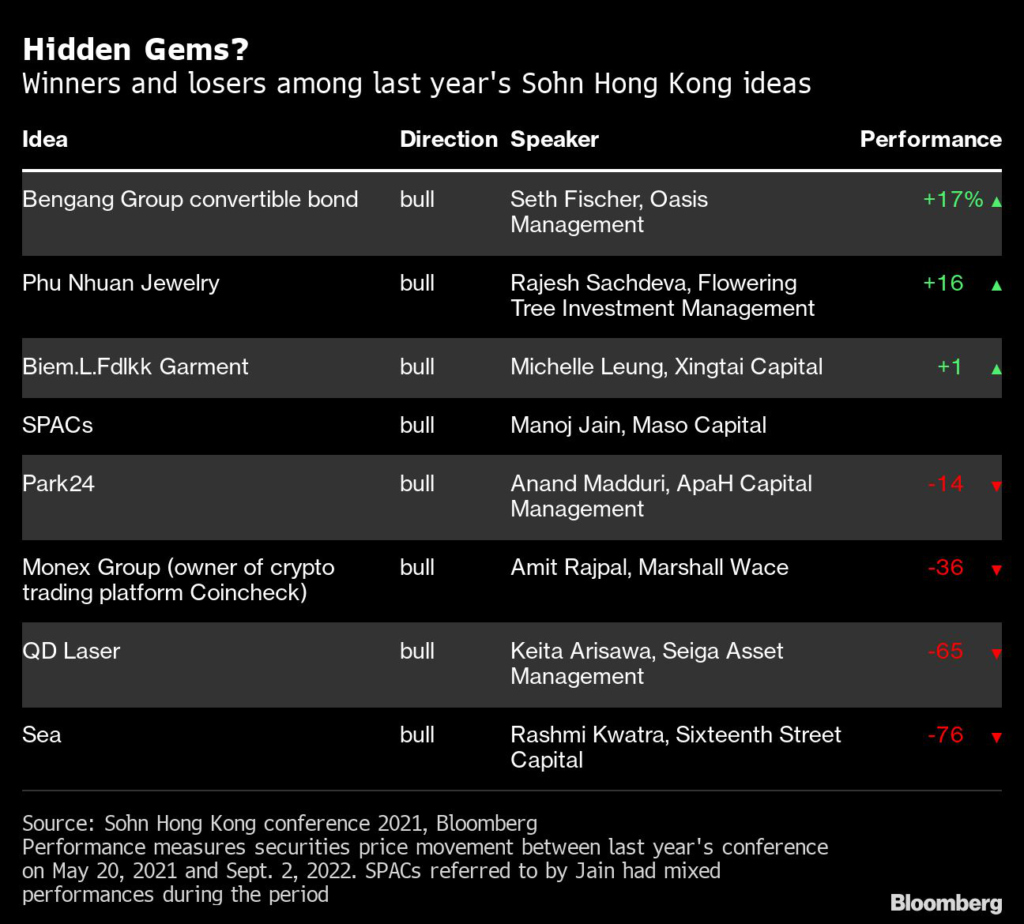
(Bloomberg) — Hedge fund managers were in an upbeat mood at last year’s Sohn Hong Kong investment conference, only for many to see their bullish bets derailed by the market turmoil that followed. 

Among those who made investment calls at the May 2021 event, Sixteenth Street Capital’s Rashmi Kwatra touted Sea Ltd., Southeast Asia’s largest tech company that later tumbled during the industry sell-off. Marshall Wace’s Amit Rajpal vouched for Japanese digital finance firm Monex Group Inc., which plunged in tandem with the crypto rout. Keita Arisawa at Seiga Asset Management picked QD Laser Inc., a Japanese eyewear maker that has lost momentum since its initial public offering in early 2021.

There were some winners, including Oasis Management Co.’s Seth Fischer and Flowering Tree Investment Management Pte.’s Rajesh Sachdeva, whose respective calls tied to Chinese steel making and Vietnam’s growing taste for jewelry paid off. 

Regional hedge funds have been caught out by headwinds that have buffeted markets in the past year. Surging inflation, aggressive interest rate hikes, Russia’s Ukraine invasion and other geopolitical tensions have plagued equities, bonds, currencies and riskier assets like crypto. China’s economic slowdown in the wake of its zero-Covid policy and regulatory clampdowns added to the pain.

The turmoil has clearly been felt in hedge fund returns. The Eurekahedge Asian Hedge Fund Index is down 7.4% this year, heading for the worst annual performance since 2018, according to preliminary data through August. 

Against this backdrop, ahead of the Sohn Hong Kong conference being presented by the Karen Leung Foundation on Wednesday, it should be no surprise that a number of the ideas pitched at last year’s event didn’t deliver their promises. 

The worst performer was Sea, picked by Sixteenth Street’s Kwatra. Bad news has been piling up for the Singapore tech giant, which had soared 24 times in the four years to its October 2021 peak. 

After hitting a pandemic-era high, growth in Sea’s e-commerce arm is slowing, as high inflation and interest rates weaken consumer sentiment. It has had to cut jobs and scale back its overseas footprint and peripheral businesses to boost profitability. India suddenly banned its most popular mobile game and the company shut its main e-commerce unit in the nation months after opening. 

Marshall Wace’s Rajpal backed Monex to capitalize on the theme of blockchain, decentralized finance and crypto potentially redefining payments and investable asset classes. 

But cryptocurrency prices have tumbled since May, with the collapse of the stablecoin project Terra setting off a wave of liquidations, bankruptcies and layoffs. Although Monex went ahead with its plans for a crypto spinoff and US brokerage listing, the market downturn meant those couldn’t be completed. Still, its 36% share price decline, in yen terms, since last year’s conference was half of that for US peer Coinbase Global Inc.

Arisawa at Seiga touted QD Laser in part for its eyewear product that can help the vision-impaired see by directly projecting digitized information onto the retina. But the spinoff from Fujitsu Laboratories Ltd. posted a bigger operating loss last fiscal year, citing stagnation of its overseas expansion as the pandemic impacted its laser eyewear business.

Still, two clear winners emerged.

Oasis Chief Investment Officer Fischer’s pick of Bengang Group’s convertible bond was a play on China’s pledge toward carbon neutrality by 2060. He said the goal would trigger industry consolidation and lead domestic demand for steel to outstrip supply. Sure enough, state-owned Ansteel Group announced a deal to buy its smaller peer Bengang in August last year. 

“Our thesis played out,” Fischer said. “We predicted supply-side reform given China’s carbon neutrality goals, production cuts, and it happened. We predicted market consolidation and the acquisition of Bengang by Angang, and it happened. We predicted strong demand post-Covid, and it happened. We predicted margin expansion given stable iron ore prices, and it happened.”

Sachdeva, who founded Flowering Tree around the global financial crisis, was another winner with his bullish call on Phu Nhuan Jewelry JSC to benefit as rising incomes boost jewelry sales in Vietnam. His firm still holds the stock, which is up about 19% this year. 

“They’re having a blockbuster year,” Sachdeva said in a Bloomberg Television interview this week. “There’s a lot of pent-up demand that continues to drive earnings for them, and so we remain very optimistic.”

More stories like this are available on bloomberg.com

©2022 Bloomberg L.P.
A 120-Year-Old Broker Creates Moon-Landing Metaverse for Staff

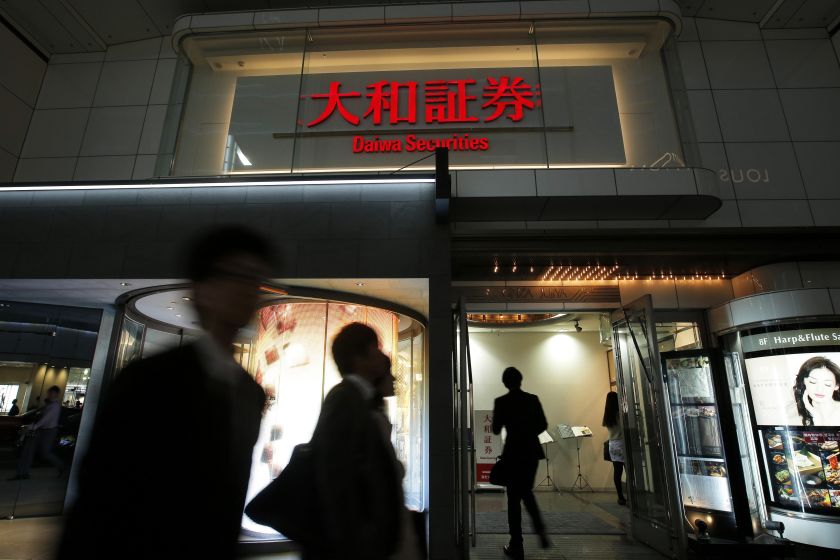
(Bloomberg) — Daiwa Securities Group Inc. has created its own metaverse for employees to interact with one another on a virtual moon landing, in part so that they can learn first-hand about the technology.

Japan’s second-largest brokerage opened the virtual space this week for staff and their families, as part of its 120th-anniversary celebrations. While it’s partly an educational experience, the company’s main goal is to encourage workers to bond more, said Chiharu Mori, a human resources director.

Daiwa is joining Japanese rivals Nomura Holdings Inc. and Mizuho Financial Group Inc. in exploring how the metaverse could reshape the way they and their clients do business. Globally, companies and investors poured about $120 billion into the virtual world in the first five months of 2022, more than double the $57 billion invested in all of 2021, according to a June report by management consulting firm McKinsey & Co.

In Daiwa’s metaverse, its more than 15,000 staff worldwide can manipulate avatars on the virtual moon. They can chat with colleagues at a bar over a digital beer, listen to Chief Executive Officer Seiji Nakata make a speech in a theater, and tour a replica of the firm’s old headquarters. 

More stories like this are available on bloomberg.com

©2022 Bloomberg L.P.

India’s Flooded Tech Hub Faces Fresh Chaos as More Rain Is Forecast

(Bloomberg) — Weather officials are predicting further bouts of severe weather in Bangalore as torrential rains pounded the city, submerged access to office parks and hit back-office operations that are the nerve center of the global financial and technology industries.  

Known as India’s Silicon Valley, Bangalore has faced consecutive nights of relentless monsoon rains that have crippled transport and business operations on the city’s key Outer Ring Road (ORR), an area where big name international firms such as Microsoft Corp, Intel Corp, Goldman Sachs Group Inc. and Morgan Stanley have offices. It’s also caused tens of millions in productivity losses locally, according to an industry group. 

A cluster of chrome-and-glass towers on the ORR, as well as office parks nearby have become home to about a million software coders and support workers. They handle such vital operations as risk management, customer support and financial compliance. The companies that employ them had returned to a semblance of workplace normalcy after prolonged Covid-19 restrictions, but have been forced to send workers back to working from home yet again.

The downpour of the past days, described by local media as some of the wettest on record for Bangalore, highlighted the dilapidated public facilities in one of India’s most global cities and irked the global businesses that have made it their base. The city has already reported two deaths due to the rains and India’s Meteorological Department has issued a yellow alert for Bangalore, indicating further bad weather.

Poor infrastructure in the city’s technology corridor is “bringing down the efficiency and productivity of the companies and putting employees’ safety and wellbeing at risk,” members of the Outer Ring Road Companies’ Association, which includes Wall Street banks and global tech behemoths, complained in a strongly-worded letter to the chief minister of Karnataka state, of which Bangalore is capital. Flooding led to a five-hour traffic jam where workers were stuck leading to a loss of about $30 million, the group said in the letter.


Companies had to trigger emergency business continuity plans, allow work from home or pass on critical work to locations outside of Bangalore, causing reputational damage and economic losses, the group said.  

The ORR stretch generates about $22 billion in annual revenues, a third of the city’s technology revenues, but “the lack of focus on the development of infrastructure in this corridor is appalling,” said the association whose members also include Wells Fargo & Co, Dell Technologies Inc and Capgemini SE besides a host of Wall Street banks and Silicon Valley corporations.

Bangalore, home to over 10 million people, serves as a base for major outsourcing companies, dozens of prominent startups, and the India ecommerce operations of Amazon and Walmart. It also houses the global technology units of hundreds of companies from consultancy KPMG, software tools maker Adobe Inc and travel software provider Amadeus IT Group.  It’s becoming a popular hub for expatriates drawn to its moderate weather and cosmopolitan lifestyle.

Yet, this week, photos of the submerged entrance to the headquarters of one of India’s largest IT services companies, Wipro Ltd, circulated on messaging groups. 

“The scale of disruption is unbelievable,” said Pradeep Kar, chairman of Microland Ltd. a technology provider which specializes in managing digital infrastructure such as cloud networks and data centers for clients like Microsoft Corp. and the London borough of Ealing.  “Our customers expect us to provide 24×7 uninterrupted services; thankfully we were equipped for work-from-home because of the pandemic and could continue to manage our clients’ infrastructure,” said Kar, a pioneering tech entrepreneur. Microland has three facilities on ORR stretch that house about 5,000 employees.  

Weddings and school lessons went back online, citizens complained on social media of miles-long traffic jams because of water-logging, residents of upscale communities were marooned inside their homes, international flights were diverted and drinking water supply and power cut off in several neighborhoods. Local TV channels streamed videos of fire brigades deploying boats to rescue stranded people. The chief executive officer of prominent edtech startup UpGrad said he had to reach his office riding on a tractor as his home faced a power cut.


Many have blamed the events on the rampant and chaotic development in the city where lakes and storm water drains have been filled to make way for glitzy buildings and posh homes. Traffic jams have only worsened in the last decade. But this week’s flooding took the pain to another level for many residents who waded through waist-deep water to get out of their flooded homes. On WhatsApp groups, photos appeared of rescues by delivery people and of stalled vehicles getting pushed through the water by helpful security guards.


More stories like this are available on bloomberg.com

©2022 Bloomberg L.P.
Biden and Truss Talk Brexit With Special Relationship at Stake

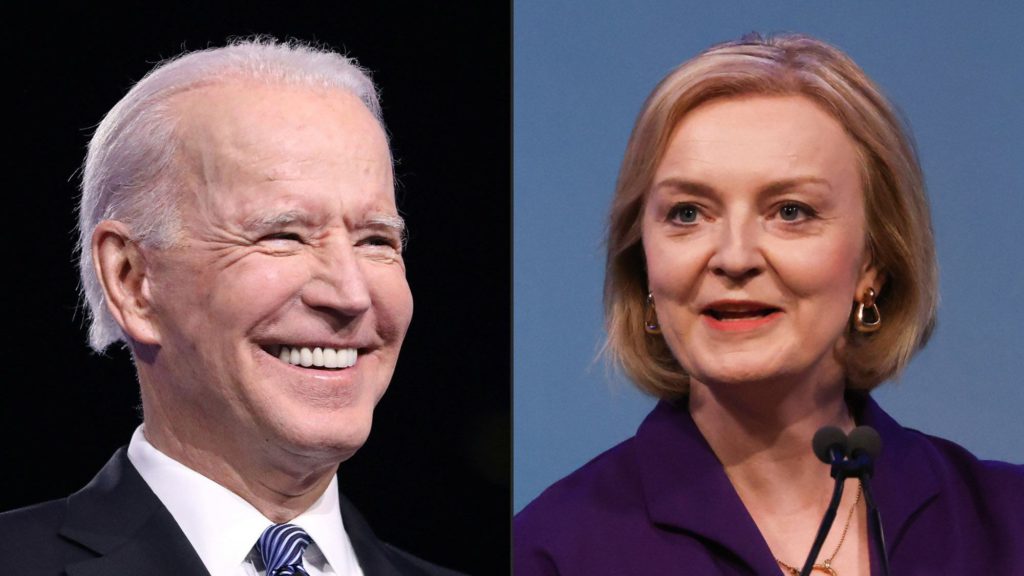
(Bloomberg) — With Liz Truss as the new UK prime minister, the “special relationship” with the US is on course for redefinition with a conservative leader who is more of a Brexit hard-liner than her predecessor.

President Joe Biden spoke to his counterpart Tuesday afternoon, in a conversation that will set the tone for the future working relationship of two allies that have been historically close but do not always see eye-to-eye. 

The White House’s description of the call alluded to the potential friction between Biden, a Democrat, and Truss, a Conservative who underwent a political transformation and went from being anti-Brexit to one of its most dedicated cheerleaders.

The leaders “discussed their shared commitment to protecting the gains of the Belfast/Good Friday Agreement and the importance of reaching a negotiated agreement with the European Union on the Northern Ireland Protocol,” the White House said in a statement. 

Before the call, White House Press Secretary Karine Jean-Pierre emphasized the need of “preserving peace, stability and prosperity for the people of Northern Ireland.” 

Biden was openly critical of the UK departing the European Union and given his Irish-American background felt particular concern about how a UK government could undermine the 1998 Good Friday Agreement, which drew a line under three decades of violence in the region.

The worry is whether Truss, who succeeded Boris Johnson, could tear up key parts of the Brexit deal that keeps Northern Ireland in the bloc’s single market for goods to avoid imposing a hard border on the island of Ireland.

The transfer of political power comes at a tricky juncture for UK-EU relations as the deadline approaches for Truss’s government to respond to reactive legal proceedings launched by Brussels accusing the UK of four infringements to the Northern Ireland treaty. The deadline for the response is Sept. 15.

Truss is seeking to meet Biden when she makes her international debut at the United Nations General Assembly later in September, according to a person familiar with her thinking. 

Sealing a free trade agreement with the US was once touted as the biggest benefit of Brexit by its biggest advocates, including Johnson and Truss, yet it’s something that has scarcely been mentioned of late.  

Truss’s domestic in-tray is laden with an announcement on energy this week and tax plans next, leaving her less bandwidth for pursuing trade deals with a reluctant American president. 

But the White House did say that the Biden-Truss conversation included “securing sustainable and affordable energy resources.” Cooperation on Ukraine, China, and the Iran nuclear talks were also mentioned.

Most pointedly, Truss is less keen on the “special relationship,” a term fetishized by the Tory press to describe the personal affinity between Ronald Reagan and Margaret Thatcher in the 1980s.

Last year, on the fringes of the annual Tory party conference, she said she sees the relationship with the US as “special but not exclusive,” comparing the jostling of nations positioning to be close to the US as a “beauty contest.” 

The UK, she told the audience, shouldn’t be “worried like some teenage girl at a party if we’re not considered to be good enough. I don’t I just don’t see it like that.”

(Updates throughout with White House statement.)

More stories like this are available on bloomberg.com

©2022 Bloomberg L.P.
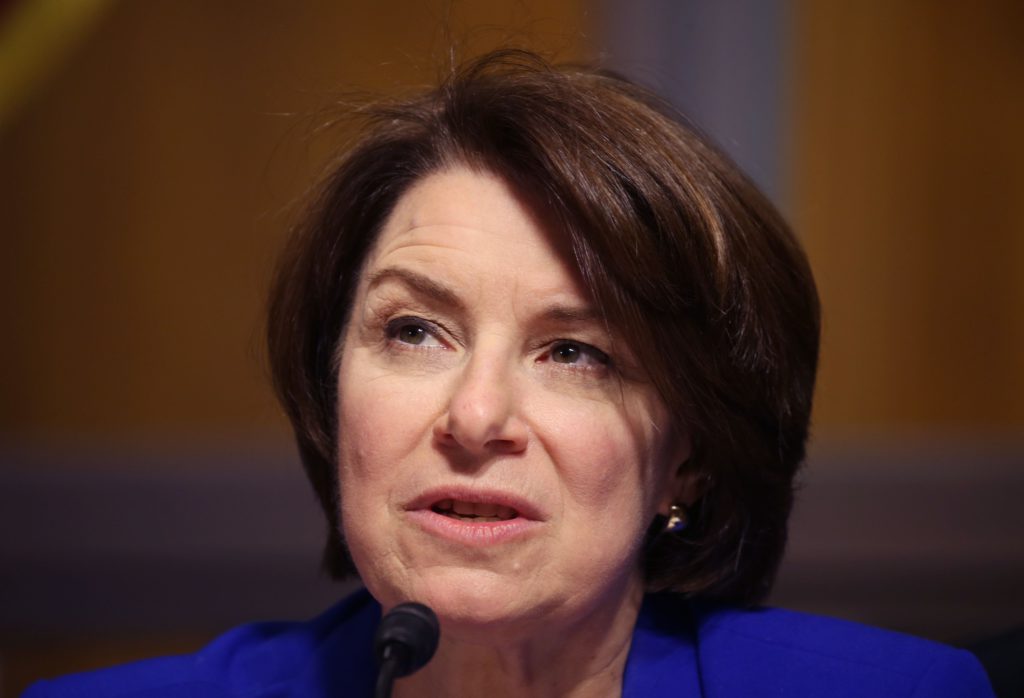
Tech Industry’s Ad Push Stalling Antitrust Bill, Klobuchar Says

(Bloomberg) — An “incredible onslaught of money” against a landmark bill meant to rein in the power of the biggest US technology companies has been an obstacle to passing the legislation, according to Senator Amy Klobuchar, the primary sponsor of the bill.

Those dollars have funded advertisements designed to stir opposition to the American Innovation and Choice Online Act, targeting citizens in both Republican and Democratic states, she said Tuesday at the Code Conference in Los Angeles.

“What has slowed us down is the incredible onslaught of money, and that’s what happens with monopolies,” said Klobuchar, a Democrat from Minnesota. “The senators are talking about it, about the ads running in each state.”

The legislation is at risk of failing with Congress running out of time to act before midterm elections in November. Organizations funded by the technology industry have spent almost $120 million on political ads since the beginning of 2021, according to ad-tracking service AdImpact, outpacing the pharmaceutical industry for the first time. Almost all that money was directed against Klobuchar’s bill.

That’s in addition to the almost $95 million that Alphabet Inc.’s Google, Apple Inc., Amazon.com Inc. and Meta Platforms Inc. and their trade groups have spent on lobbying since 2021.

Concerns have been raised about the bill’s impact on content moderation, but Klobuchar doesn’t see that as a true obstacle. Legislators may add some language to clarify concerns regarding moderation on platforms.

Read more: Tech Antitrust Bill Teeters Near Defeat After Lobbying Spree

More stories like this are available on bloomberg.com

©2022 Bloomberg L.P.

Close Bitnami banner
Bitnami
