Bloomberg

Covid Is Likely to Require Yearly Booster Like Flu Shot, Fauci Says

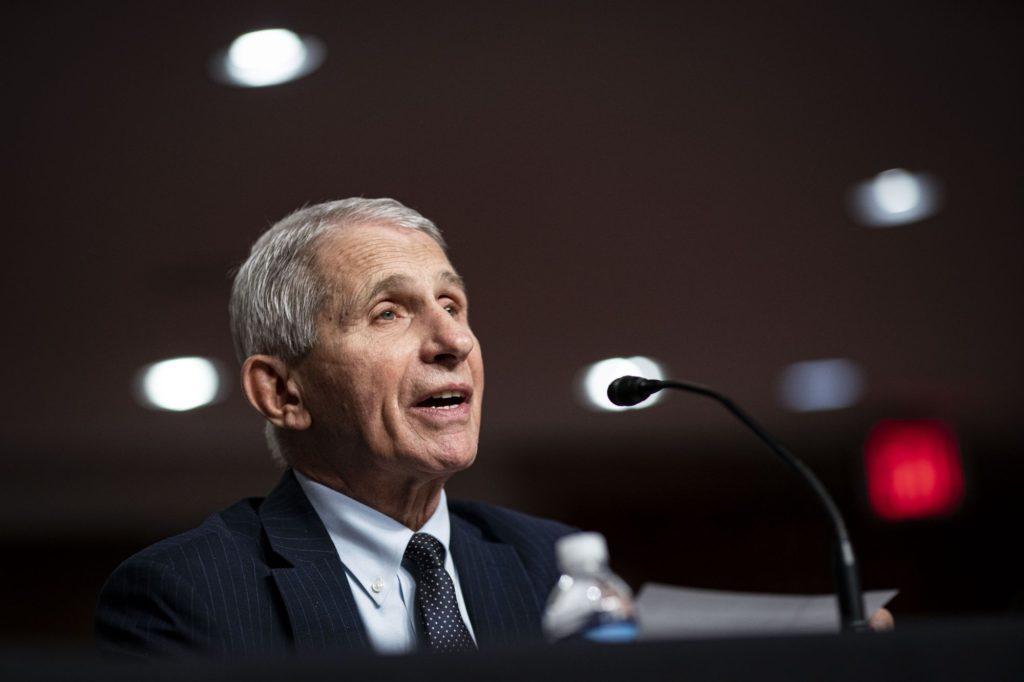
(Bloomberg) — Covid-19 vaccines will largely become an annual vaccination akin to the flu shot, President Joe Biden said Tuesday as his administration urged Americans to seek out newly authorized booster shots tailored to fight the omicron subvariants that are now dominant.

“As the virus continues to change, we will now be able to update our vaccines annually to target the dominant variant,” Biden said in a statement. “Just like your annual flu shot, you should get it sometime between Labor Day and Halloween.”

Health officials held a briefing Tuesday after regulators cleared the new generation of coronavirus inoculations and threw open eligibility — calling on people age 12 and older to get another dose if they haven’t had one in the past two months. 

Covid vaccinations will likely shift to an annual injection — tailored to the latest strains — for the majority of the population, with more frequent doses offered for higher-risk people, the officials said. The latest version of the vaccine — the first approved in almost two years — will be available at pharmacies and doctors’ offices beginning this week.

Read more: Omicron-Targeting Boosters From Moderna, Pfizer Ready for US Use

Still, Anthony Fauci, a Biden Covid adviser who heads the National Institute of Allergy and Infectious Diseases, cautioned that a sharp change in the virus could alter the interval at which doses are deployed. 

“If a wild card variant comes in, all bets are off,” Fauci said, referring to the protection currently offered by the modified vaccines produced by Pfizer Inc. and Moderna Inc.

Ashish Jha, who serves as Biden’s Covid czar, said officials expect people to get boosters throughout the fall, in routine doctor visits or at the same time as they receive a flu shot. The modified boosters will be widely available by the end of this week.

Jha called on Congress to allocate new funding to continue the availability of vaccines and treatments to fight the virus. “It is now critical that you step up and provide additional Covid-19 funding so that we can stay ahead of this virus,” Jha said.

(Updates With Biden statement, through first five paragraphs.)

More stories like this are available on bloomberg.com

©2022 Bloomberg L.P.

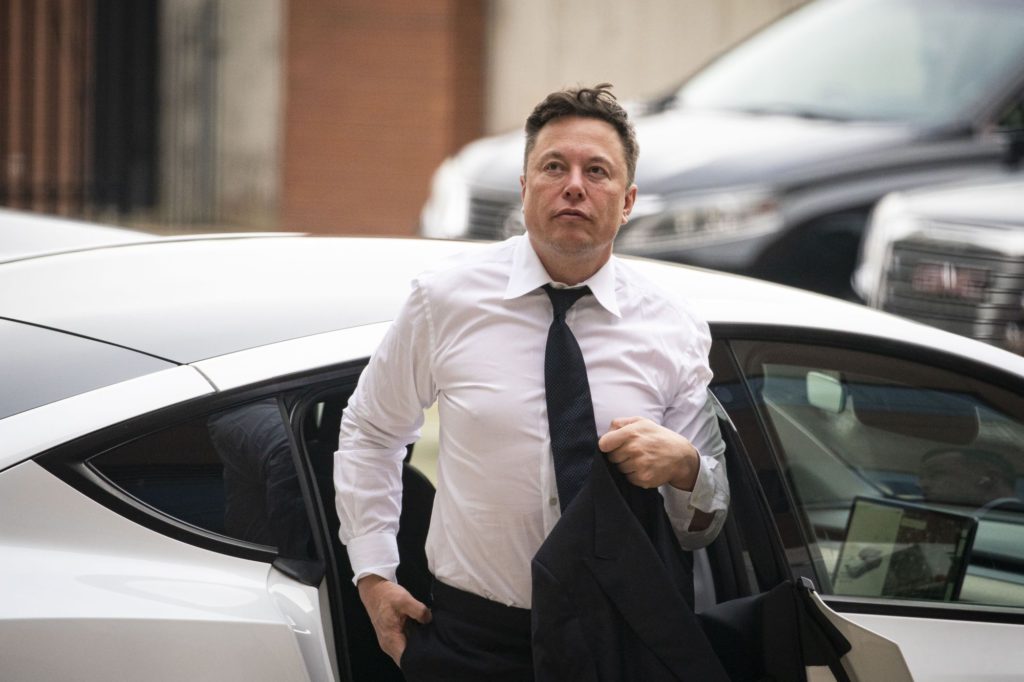
Musk Urged Bankers to Slow Twitter Deal on War Risk, Lawyer Says

(Bloomberg) — Twitter Inc.’s lawyers are using Elon Musk’s text messages to try to convince a Delaware judge that the billionaire wants to abandon his $44 billion deal to acquire the company because of buyer’s remorse, rather than concern about the social network’s spam or bot accounts.

Bill Savitt, an attorney for Twitter, brought up a text message between Musk and one of his bankers as evidence during a Chancery Court hearing Tuesday. In the message from May 8, Musk asked the banker to slow down the deal process until after Russian President Vladimir Putin gave a speech the following day, during which Putin defended his decision to invade Ukraine.

“It won’t make sense to buy Twitter if we’re heading into World War III,” Musk wrote. He had already agreed to buy Twitter for $44 billion two weeks earlier.

Tuesday’s hearing before Delaware Chancery Judge Kathaleen St. J. McCormick focused on Musk’s request to delay the trial, now set for Oct. 17, following a whistle-blower’s allegations that Twitter misled investors about spam and bot accounts — an assertion that is at the center of Musk’s effort to walk away from the agreement. The judge is expected to hand down the decision on the matter later this week.

The San Francisco-based social network is seeking to compel Musk to complete his proposed buyout after he backed away from the deal, claiming Twitter hadn’t leveled with him about the quality of accounts and posts on its service. Twitter argues that Musk’s reason for walking away from his takeover of the social networking company is due to a broader market decline tied, in part, to Putin’s war in Ukraine.

Musk, meanwhile, contends that fake users and spam accounts make up a much larger portion of Twitter’s daily active user base than the company lets on, giving him grounds to cancel his planned acquisition.

Read more: Twitter Whistle-Blower Raised No Spam Concerns, Company Says

More stories like this are available on bloomberg.com

©2022 Bloomberg L.P.

Twitter Whistle-Blower Never Flagged Spam, Company Tells Judge in Buyout Case

(Bloomberg) — A lawyer for Twitter Inc. said a whistle-blower who claims the company responded inadequately to spam and bot accounts never raised those concerns when he was employed at the social media platform.

None of former security head Peiter Zatko’s questions “had anything to do with spam” until he filed his whistler-blower complaint, Bradley Wilson told Delaware Chancery Judge Kathaleen St. J. McCormick at a hearing on Tuesday. Then Zatko “started parroting” Musk’s allegations against the company, Wilson said, calling it “very, very strange.”

McCormick held the hearing to consider Elon Musk’s request to amend his counterclaims to Twitter’s suit seeking to force the completion of Musk’s $44 billion buyout. The judge didn’t rule on the request, or Musk’s bid to push back an Oct. 17 trial date to early December.

Musk backed away from his planned purchase of Twitter claiming the company hadn’t leveled with him about the number of spam and robot accounts among its more than 230 million users.

Lawyers for the billionaire cast Zatko’s accusations of shoddy operations as further violations of the buyout agreement. Zatko said Twitter officials brushed off his worries about the number of bot accounts embedded in the platform’s customer base and misled investors about the problem.

For the first time Tuesday, Twitter’s attorneys specifically disputed Zatko’s assertions he raised such questions while at the company. They noted addressing the bots issue wasn’t a part of his “portfolio” while he oversaw computer-security issues.


Musk’s legal team has made the bot issue the centerpiece of its case that the proposed acquisition can be legally canceled. Twitter counters it’s just a pretext for Musk’s buyer’s remorse and he must pay the $54.20-per-share he originally agreed to in the deal. Twitter shares closed at $38.65 in New York Tuesday.

The company has maintained bots make up fewer than 5% of the network’s accounts. Musk, however, claims as many as a third of Twitter’s users may fall into the bot category. His lawyers complained Twitter is sitting on key evidence in hopes of weakening their case.

While bots on Twitter can annoy users by pushing spam posts, they can also be informative, with bots automatically reporting earthquakes, for example.

The current October trial date is not “remotely achievable,” Musk’s lawyer Andrew Rossman told the judge, saying there have been unreasonable delays in information exchanges. He chided Twitter officials for pushing back pretrial depositions and dragging their feet in handing over documents from current and former employees who handled bot accounts.

“We’re not on pace” to be ready for the October trial, and “it’s not because we’re not working,” he said. Wilson, Twitter’s lawyer, responded the company already turned over Zatko’s internal emails going back to 2021 and “Twitter has nothing to hide.”

Alex Spiro, another of the billionaire’s attorneys, said Musk’s request to push back the trial is part of an effort to protect justice in the fast-moving case. “It all comes down to weighing speed versus finding the truth,” he told McCormick. “Finding that truth is going to take more time. It will take a few more weeks.”

The case is Twitter v. Musk, 22-0613, Delaware Chancery Court (Wilmington).

(Updates with judge reserving decision in third paragraph)

More stories like this are available on bloomberg.com

©2022 Bloomberg L.P.

Stocks End Well Off Lows With S&P 500 Above 3,900: Markets Wrap

(Bloomberg) — Stocks trimmed losses from nearly oversold levels, while bond yields soared on bets the Federal Reserve will stay hawkish as it confronts the hottest inflation in about four decades.

After exhausting gyrations, the S&P 500 managed to close slightly above 3,900 — a threshold seen by some technical analysts as a make-or-break level for short-term direction. Treasuries tumbled across the curve, taking the 30-year rate to the highest since 2014. The Bloomberg Dollar Spot Index rose to another record, while the Japanese yen hit a fresh 24-year low.

“We continue to advise against big market direction calls,” said Solita Marcelli, chief investment officer Americas at UBS Global Wealth Management. “Investors should keep their asset allocations closer to their long-term strategic benchmarks. We also recommend incrementally tilting portfolios toward higher-quality and more defensive assets, which should hold up better across multiple scenarios.”

Hedge funds have raised exposure in back-to-back weeks, data from Goldman Sachs Group Inc.’s prime brokerage show, increasing short sales via macro products such as index futures while buying shares of individual firms. The data suggest that money managers are both keen to pick up bargains and leery about the broader market’s direction. 

US shares have given up about half of a rally from their June lows after a raft of Fed speakers signaled the central bank will keep its policy tight. While the equity market should still remain in “choppy waters,” several indicators suggest the selling is getting overdone, according to Keith Lerner at Truist Advisory Services. 

“Markets do not typically move in a straight line,” said Lerner. “Of course, oversold markets can get more oversold. Still, after advocating for trimming equities on strength, we would be less apt to do so now — at least over the short term.”

To Matt Maley at Miller Tabak + Co., any stock gains at this point should be seen as a short-term relief rally. He says traders should use those bounces as an opportunity to get more defensive.

Meantime, one of Wall Street’s biggest bears is turning even more pessimistic on the outlook for profits.

Morgan Stanley strategist Mike Wilson cut his expectations for earnings-per-share growth, saying that a slowing economy is now likely to be a bigger concern for stocks. In 2023, he expects profits to fall 3% — even in the absence of an economic recession.

Investors are unwinding their equity positions as if a deep recession is already here. So say strategists at Deutsche Bank AG, who found that a historically strong link between discretionary investors’ equity exposure and the ISM manufacturing index is unwinding. 

Their current stock exposure stands at the bottom-10th percentile of historical observations after a sharp drop last week. Historically, that’s been consistent with an ISM print of 47, below the level of 50 that signals an economic contraction.

Traders bracing for a recession jolt have recently accelerated their retreat from stocks, with global equity funds posting outflows of $9.4 billion in the week to Aug. 31 — the fourth-largest redemptions this year, according to EPFR Global data cited by Bank of America Corp. 

Amid rising borrowing costs, US companies extended a worldwide wave of issuance — offering the largest amount of bonds in 12 months. The newfound urgency to raise debt is sparked by the potential for greater uncertainty — and higher cost — after this month’s meeting of the Federal Open Market Committee.

Data showing the US service sector expanded at the fastest pace in four months just reinforced trader bets on a still restrictive Fed policy.

In the final week before officials enter a blackout period ahead of the Sept. 20-21 policy meeting, Fed Chair Jerome Powell leads a hefty lineup of central bankers offering their views. Their remarks will be weighed carefully for evidence of a tilt toward another 75 basis-point rate increase, or if there’s scope for the hiking pace to be dialed back.

“The Fed is going to do whatever it takes to get inflation under control,” said Gene Podkaminer, head of research at Franklin Templeton Investment Solutions. “If market participants don’t believe them, it’s probably at their own peril.”

Read: Dollar Pain Spreads Beyond Emerging Economies to Developed Peers

What to watch this week:

  • Apple event due to feature new iPhones, watches, Wednesday
  • Bank of England Governor Andrew Bailey at Treasury Committee, Wednesday
  • Fed’s Beige Book of regional economic activity, Wednesday
  • Cleveland Fed President Loretta Mester due to speak, Wednesday
  • European Central Bank rate decision, Thursday
  • Fed Chair Jerome Powell due to speak, Thursday
  • Chicago Fed President Charles Evans and his Minneapolis counterpart Neel Kashkari due to speak, Thursday
  • EU energy ministers extraordinary meeting on emergency intervention in electricity markets, Friday

Are you bullish on energy-related assets? This week’s MLIV Pulse survey focuses on energy and commodities. Please click here to participate anonymously.

Some of the main moves in markets:

Stocks

  • The S&P 500 fell 0.4% as of 4 p.m. New York time
  • The Nasdaq 100 fell 0.7%
  • The Dow Jones Industrial Average fell 0.5%
  • The MSCI World index fell 0.5%

Currencies

  • The Bloomberg Dollar Spot Index rose 0.5%
  • The euro fell 0.3% to $0.9903
  • The British pound was little changed at $1.1516
  • The Japanese yen fell 1.6% to 142.82 per dollar

Bonds

  • The yield on 10-year Treasuries advanced 15 basis points to 3.34%
  • Germany’s 10-year yield advanced seven basis points to 1.64%
  • Britain’s 10-year yield advanced 16 basis points to 3.10%

Commodities

  • West Texas Intermediate crude fell 0.2% to $86.67 a barrel
  • Gold futures fell 0.7% to $1,711.10 an ounce

More stories like this are available on bloomberg.com

©2022 Bloomberg L.P.

Trump-Tied SPAC Drops Amid Uncertainty Over Deal Closure

(Bloomberg) — Investors dumped shares of Digital World Acquisition Corp., the blank-check firm set to merge with Donald Trump’s social media company, after executives deferred a shareholder vote that was meant to get an extension to complete the deal — signaling uncertainty surrounding the sponsors’ ability to get enough support.

Executives at the special purpose acquisition company adjourned the meeting to extend the deadline by up to a year until Thursday in an attempt to court retail shareholders to vote, a group that historically misses out on such events. The SPAC needs 65% of shareholders to support the extension.

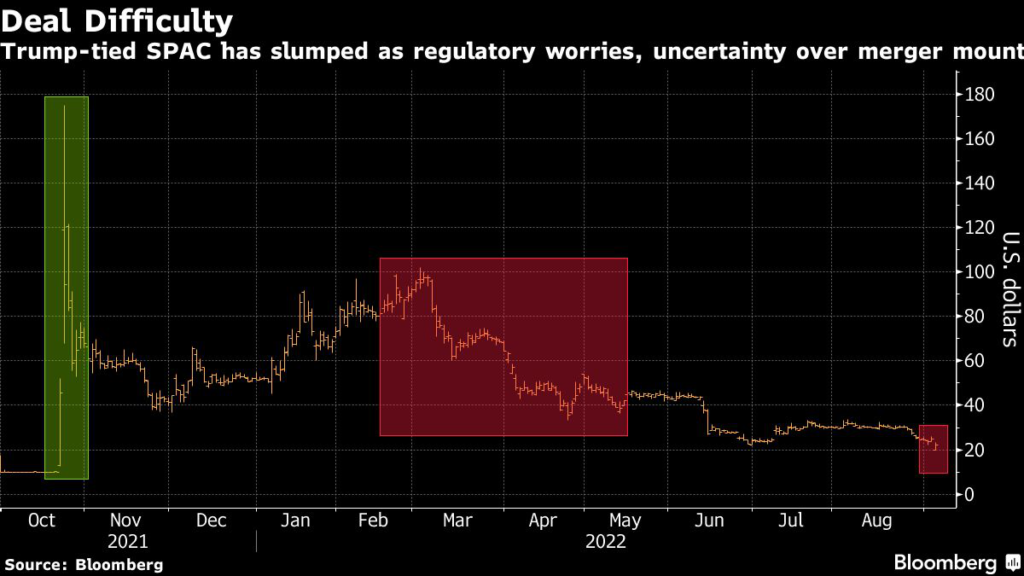
Digital World’s shares fell 11% to $22.13 on Tuesday, the lowest close since the deal was announced in October, while warrants tied to the firm sank 18%. Its shares plunged earlier Tuesday after Reuters reported that sponsors don’t expect to get enough holder support for a one-year extension to complete a deal with Trump Media & Technology Group.

Trading volume for both the stock and warrants were around 10-times higher than normal. Nearly six million shares changed hands as more than one million warrants were flipped.

Digital World shares soared to $175 after the merger with the former president’s company was announced in October, becoming a favorite among retail traders. The launch of Trump’s social media site, Truth Social, in February, provided another boost, before disappointing downloads for the platform and regulatory issues facing Digital World weighed on the shares.

The SPAC gave itself a one-year deadline to get a deal done when it debuted last September before risking the need to return the millions it raised to investors. The sponsor’s terms do give it an option to extend its deadline to up to six months, however, that would cost the team millions of dollars as it would push cash into its trust account.

“I’m not touching it,” said Matthew Tuttle, chief executive officer at Tuttle Capital Management. The risk is too great and even if the SPAC extends its deadline by six months, “that may just kick the can down the road.”

Retail traders were discussing Digital World, however, they didn’t appear to be actively buying the dip. The company’s ticker was among the most mentioned on Reddit’s WallStreetBets, but wasn’t among the 30 most traded assets on Fidelity’s platform.

The blank-check firm said in July that a federal grand jury is seeking information from Trump Media & Technology Group about the planned deal, while the Securities and Exchange Commission issued a subpoena for similar information the same week. Digital World said at the time that the grand jury is also seeking information from certain current and former TMTG personnel.

CF Acquisition Corp. VI, a SPAC taking video platform Rumble Inc. public, rose 14% to the highest since February ahead of a deadline for its shareholder vote next week. Rumble has a technology and cloud services pact with Trump Media.

(Updates share movement throughout)

More stories like this are available on bloomberg.com

©2022 Bloomberg L.P.

Apple to Appeal Brazil’s Move to Ban iPhones Without Chargers

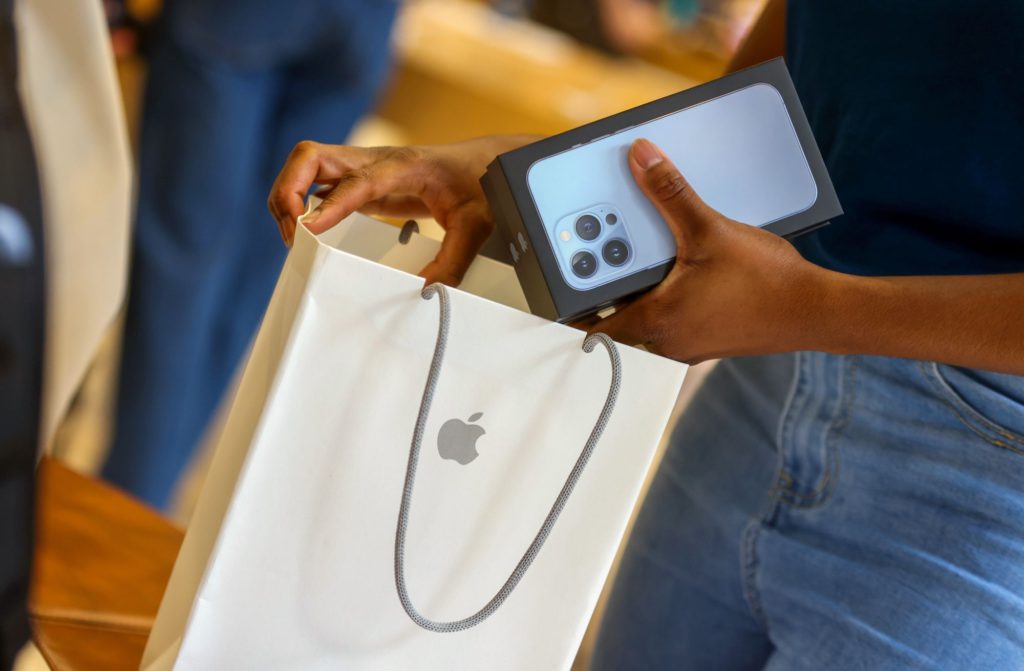
(Bloomberg) — Apple Inc. plans to appeal a move by Brazil to ban the sale of iPhones without battery chargers, arguing that the company has helped reduce environmental waste by not including the accessory with new devices.

“At Apple, we consider our impact on people and the planet in everything we do,” the company said in an emailed statement. “Power adapters represented our largest use of zinc and plastic and eliminating them from the box helped cut over 2 million metric tons of carbon emissions — equivalent to removing 500,000 cars from the road per year.”

Apple announced in 2020 that it would stop putting chargers in new iPhone boxes, drawing outcry from some consumers, who saw it as a cost-cutting move. The company argues that there are already billions of USB-A adapters in the world that customers can use to charge their devices.

Apple said Tuesday that it would continue working with SENACON, Brazil’s consumer protection agency, to “address their concerns and plan to appeal this decision.”

“We’ve already won a number of court decisions in Brazil on this topic and are confident our customers are aware of the various options to charge and connect their devices,” the Cupertino, California-based company said.

More stories like this are available on bloomberg.com

©2022 Bloomberg L.P.

Ubisoft Jumps as Tencent Set to Double Stake and Inject Cash

(Bloomberg) — Tencent Holdings Ltd is set to more than double its stake in Ubisoft Entertainment SA, giving the founding Guillemot brothers breathing room to get the company back on track without giving up control of the French video game publisher known for its Assassin’s Creed franchise.

Tencent will buy 49.9% of the Guillemot Brothers Ltd. holding company, according to a statement published Tuesday. The Chinese tech giant will pay 200 million euros ($198 million) to buy an indirect stake in Ubisoft at an implied value of 80 euros a share, and invest a further 100 million euros in the holding company. The transaction also authorizes Tencent to raise its direct stake to 9.99% from 4.5% currently. Governance at Ubisoft will remain unchanged, and Tencent will not have any operational veto rights. 

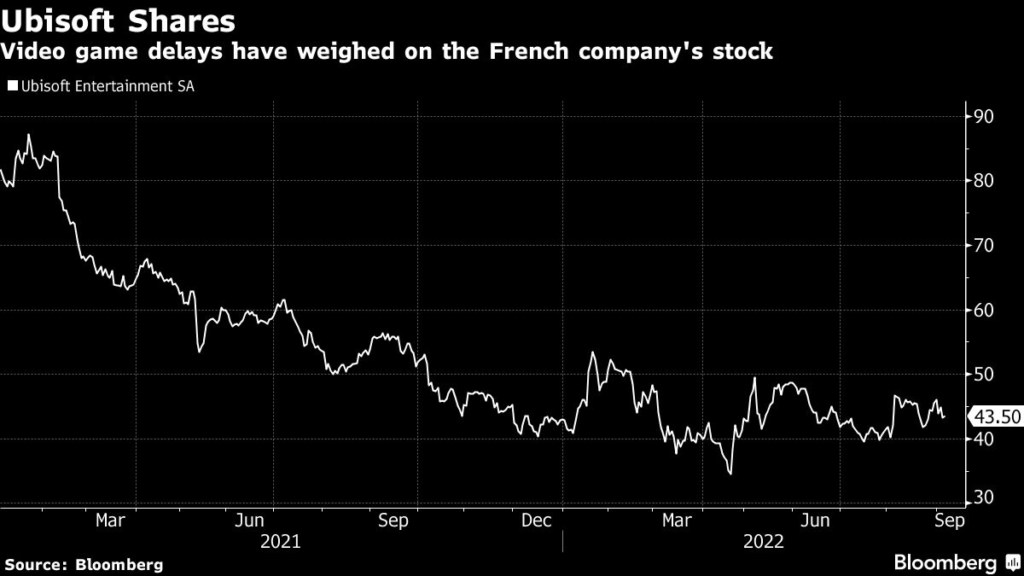
Ubisoft’s US-traded shares jumped as much as 17% on Tuesday, the most since a Bloomberg report in April that it had attracted preliminary takeover interest from buyout funds including Blackstone Inc. and KKR & Co. Ubisoft has been seen as a takeover target as concerns over delayed launches and allegations of widespread sexual misconduct pushed the stock down about 45% since the start of last year. Its status as one of the few remaining independent video game publishers has also fueled interest after Microsoft Corp. agreed to buy Activision Blizzard.

Tencent’s increased involvement will give the brothers, who founded Ubisoft in 1986, some certainty in the shareholder register while the recovery plan takes hold. Chief Executive Officer Yves Guillemot introduced cost cuts and in July reduced the full-year sales target as Ubisoft announced a delay to its upcoming Avatar game from the 2022 holiday season to the next fiscal year.

The deal with Tencent “helps us bring stability in the shareholding of the company,” Guillemot said in an interview.

Tencent initially took a 5% stake in Ubisoft in 2018 to help it thwart a hostile takeover from Vivendi. The Shenzhen-based company has investments in gaming publishers all over the world, including Epic Games and Activision Blizzard Inc., and its sway over the Chinese internet economy has made it a target of Beijing’s efforts to curb the influence of tech industry leaders. Tencent has yet to have a new video game approved by regulators, even though state officials have been allowing new titles following an industry-wide hiatus intended to curb addiction.  

Ubisoft said the latest deal includes a partnership with Tencent to bring some of its biggest franchises to mobile platforms, but it is also helpful at a time when Ubisoft has been struggling.

Ubisoft has faced a weak lineup of games, several delays and a talent retention problem in the wake of a 2020 sexual misconduct scandal that led to the ousting of multiple top executives. Over the summer, the company also delayed Assassin’s Creed Mirage, a smaller entry in the popular action franchise. Mirage will be set in Baghdad and look to return to the franchise’s stealth roots, Bloomberg reported. Ubisoft will hold an event Saturday to reveal more on the future of Assassin’s Creed as well as other upcoming games.

However, the founding family will retain control. Tencent will not be able to sell its shares in Ubisoft for five years, and after that the Guillemot family will have priority claim on any sale. In addition, Tencent will not be able to increase its stake in Ubisoft beyond 9.99% of Ubisoft’s capital and voting rights for eight years.

After the purchase from the Guillemot brothers, Tencent will have an 11.3% total stake in Ubisoft. It could hold as much as 16.8% of the business through the increase to its direct holding that’s been authorized, according to Bloomberg calculations.

The agreement may allow the total stake in Ubisoft held by Tencent, the family and Guillemot Brothers to rise to 29.9% of Ubisoft voting rights, according to the statement. Tencent is also providing the holding company with a long-term unsecured loan that to repay debt. 

The transactions still leave room for another investor to step in. 

“If someone wants to make a bid for the whole of Ubisoft, it still can, and the bid will be reviewed by our board,” Chief Financial Officer Frederick Duguet said in an interview.

More stories like this are available on bloomberg.com

©2022 Bloomberg L.P.

Ubisoft Set to Announce Several New Assassin’s Creed Games

(Bloomberg) — Ubisoft Entertainment SA will announce several new games in the Assassin’s Creed franchise Saturday, including one set in feudal Japan, according to media reports and people familiar with the company’s plans.

Assassin’s Creed, the French gaming publisher’s flagship franchise, has sold more than 155 million copies since its debut in 2007. Each title in the series has a different setting and historical period, such as ancient Egypt or America during the Revolutionary War.

Ubisoft has teased the idea that new titles will be announced at its Ubisoft Forward event on Saturday, saying it will reveal “a peek at the future of the franchise.” The company plans to showcase a mobile title and two major games, said the people, who asked not to be named discussing private information. The first major game, code-named Red and developed by Ubisoft’s Quebec City office, is set in Japan. The second major game, code-named Neo or Hexe and developed by Ubisoft’s Montreal office, is set during the latter stages of the Holy Roman Empire and revolves around witch trials.

Both Red and Neo are part of Assassin’s Creed Infinity, a platform for future games in the series that will contain multiple settings, as Bloomberg reported last year. The two games will likely not release until 2024 at the earliest. A Ubisoft spokesperson declined to comment.

On Saturday, Ubisoft also plans to show more of Assassin’s Creed Mirage, which it announced last week following widespread leaks. That game, code-named Rift, is set in Baghdad during the 800s and was once an expansion for the previous game, Valhalla, before it was converted into a full game, Bloomberg reported earlier this year. Assassin’s Creed Mirage will veer away from the role-playing game elements established in recent series entries and instead aim to return to the stealth focus of early titles, in which players sneak around to perform assassinations.

News of the announcements was first reported by the video game website Try Hard. Earlier Tuesday, Ubisoft announced that Tencent Holdings Ltd. is set to double its stake in the company and has given it a cash injection.

More stories like this are available on bloomberg.com

©2022 Bloomberg L.P.

Elizabeth Holmes Claims Witness Remorse in New Trial Request

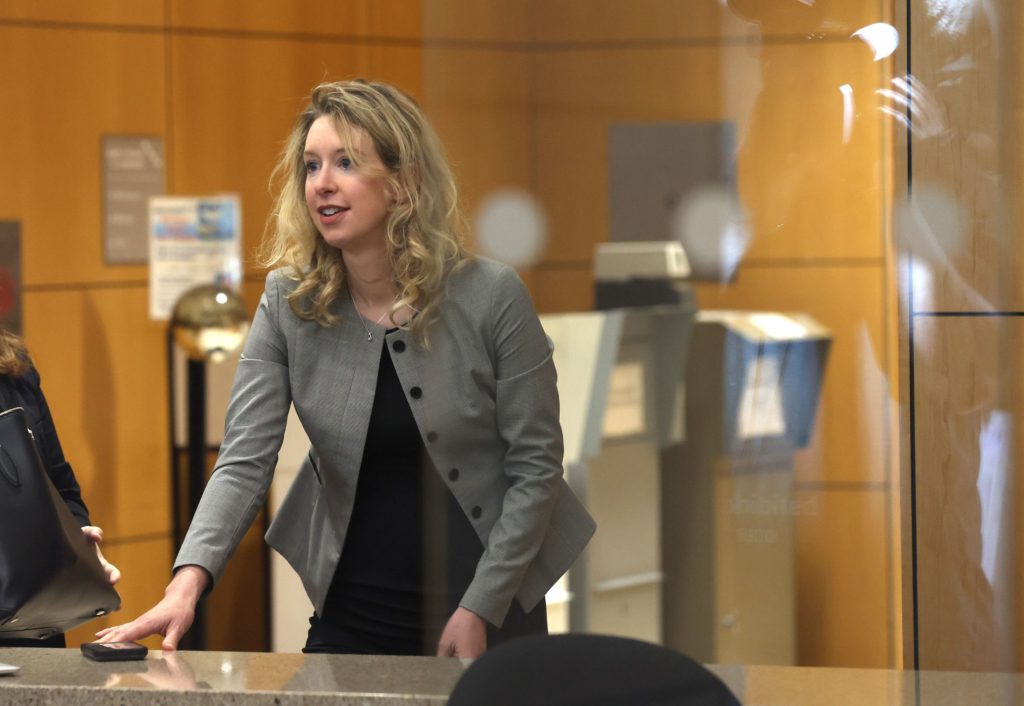
(Bloomberg) — Theranos Inc. founder Elizabeth Holmes asked for a new trial, claiming a key witness in her criminal case visited her after the verdict and expressed misgivings about his testimony.

Holmes said in a court filing Tuesday that Adam Rosendorff, a former Theranos lab director, showed up at her home on Aug. 8 eager to talk to her about how he thought his testimony last fall had been twisted by prosecutors.

When he arrived last month at about 6 p.m., Rosendorff was met at the door by Holmes’s partner, Billy Evans, who described the scientist in a court filing as “disheveled,” with an untucked shirt and messy hair. The two spoke briefly, including about the couple’s one-year-old son, with Rosendorff insisting that he needed to talk to Holmes, and Evans telling the former lab director to leave, according to the filing.

“He said he wants to help her,” Evans said, noting that Rosendorff’s voice was “slightly” trembling. “He said he is hurting. I remarked that it is easier to break things than to build them. He said that breaking things is the nature of America. He said that is what they did to Michael Jackson. They build things up only to tear them down.”

The allegations about a key government witness at the highest-profile trial in Silicon Valley history come eight months after Holmes was convicted of fraud and just weeks before she’s scheduled to be sentenced.

Rosendorff testified during Holmes’s trial that he emailed her about his concerns that the company’s blood analyzers weren’t ready for an imminent commercial roll-out at Walgreens drug stores. 

When Rosendorff spoke to Evans, he explained that “he tried to answer the questions honestly at Ms. Holmes’ trial, but the government tried to make everyone look bad,” according to her Tuesday filing.

“Under any interpretation of his statements, the statements warrant a new trial,” a lawyer for Holmes said in the filing. At a minimum, the court “should order an evidentiary hearing and permit Ms. Holmes to subpoena Dr. Rosendorff to testify about his concerns.”

The misgivings that Rosendorff voiced, absent any statement that he lied or didn’t testify accurately, probably won’t convince the judge that Holmes deserves a new trial, according to Michael Weinstein, a criminal defense attorney not involved in the case. 

“A witness having second thoughts and how they were generally perceived is not new in criminal trials but often don’t lead to new trials or much of anything,” Weinstein said in an email. “The burden for that is simply too high.”

Holmes, 38, was found guilty of defrauding investors and conspiracy for her role in the collapse of the blood-testing startup she founded that reached a peak valuation of $9 billion. Her ex-boyfriend and former Theranos President Ramesh “Sunny” Balwani was convicted in July of similar counts, as well as defrauding patients.

US District Judge Edward Davila on Tuesday issued an order rejecting Holmes’s long-shot attempt to get her fraud conviction thrown out, saying there was “sufficient evidence” for the jury to reach its verdict. Holmes’s bid for a new trial is another gamble that almost all white-collar criminal convicts make, and rarely win.

At trial, Rosendorff testified that he “was raising the alarm bells,” adding that “I felt it was important for Elizabeth to be aware of these issues as the chief executive of the company.”

Daniel Koffmann, a lawyer who represented Rosendorff during the trial, declined to comment. 

Lawyers for Holmes tried during the trial to undermine Rosendorff’s credibility by pointing out that he worked for other labs with regulatory troubles. Rosendorff spent multiple days on the witness stand and faced a grueling cross-examination.

After he left Theranos in 2014, Rosendorff went on to serve as a lab director at uBiome Inc. — a Silicon Valley medical startup that collapsed in a morass of insolvency, regulatory probes and criminal charges, similar to Theranos.

Rosendorff acknowledged that in 2021, two regulators who had investigated Theranos almost a decade earlier performed a review at PerkinElmer, the laboratory where he was working at the time. Rosendorff testified that he learned that the final outcome of the PerkinElmer review could lead to the suspension of his license.

It was also revealed that Rosendorff was a source for the Wall Street Journal reporter whose stories starting in 2015 led to the collapse of the blood-testing startup. He was later identified by a pseudonym in John Carreyrou’s 2018 book, “Bad Blood: Secrets and Lies in a Silicon Valley Startup.” 

The case is US v. Holmes, 18-cr-00258, US District Court, Northern District of California (San Jose).

(Updates with details about Rosendorff visit and comment by legal expert.)

More stories like this are available on bloomberg.com

©2022 Bloomberg L.P.

S&P 500 Back Above 3,900 With Technicals in Play: Markets Wrap

(Bloomberg) — Stocks trimmed losses from nearly oversold levels, while bond yields soared on the view that the Federal Reserve will stay hawkish as it confronts the hottest inflation in about 40 years.

The S&P 500 came back above 3,900 after briefly breaching that threshold seen by some technical analysts as a make-or-break level for short-term direction. Treasuries slid across the curve, taking the 10-year rate above 3.3%. The Bloomberg Dollar Spot Index rose to another record, and the Japanese yen hit a fresh 24-year low.

US shares have erased about half of a rally from their June lows after a raft of Fed speakers signaled the central bank will keep its policy tight. Data showing the US service sector expanded at the fastest pace in four months just reinforced trader bets on a still aggressive Fed.

While the equity market should still remain in “choppy waters,” several indicators suggest the selling is getting overdone, according to Keith Lerner at Truist Advisory Services. To Matt Maley at Miller Tabak + Co., any stock gain at this point should be seen as a short-term relief and an opportunity to get more defensive.

“We continue to advise against big market direction calls,” said Solita Marcelli, chief investment officer Americas at UBS Global Wealth Management. “Investors should keep their asset allocations closer to their long-term strategic benchmarks. We also recommend incrementally tilting portfolios toward higher-quality and more defensive assets, which should hold up better across multiple scenarios.”

Meantime, one of Wall Street’s biggest bears is turning even more pessimistic on the outlook for profits.

Morgan Stanley strategist Mike Wilson cut his expectations for earnings-per-share growth, saying that a slowing economy is now likely to be a bigger concern for stocks. In 2023, he expects profits to fall 3% — even in the absence of an economic recession.

Investors are unwinding their equity positions as if a deep recession is already here. So say strategists at Deutsche Bank AG, who found that a historically strong link between discretionary investors’ equity exposure and the ISM manufacturing index is unwinding. 

Their current stock exposure stands at the bottom-10th percentile of historical observations after a sharp drop last week. Historically, that’s been consistent with an ISM print of 47, below the level of 50 that signals an economic contraction.

Traders bracing for a recession jolt have recently accelerated their retreat from stocks, with global equity funds posting outflows of $9.4 billion in the week to Aug. 31 — the fourth-largest redemptions this year, according to EPFR Global data cited by Bank of America Corp. 

Amid rising borrowing costs, US companies extended a worldwide wave of issuance — offering the largest amount of bonds in 12 months. The newfound urgency to raise debt is sparked by the potential for greater uncertainty — and higher cost — after this month’s meeting of the Federal Open Market Committee.

Fed Chair Jerome Powell leads a hefty lineup of central bankers offering their views in the final week before officials enter a blackout period ahead of the Sept. 20-21 policy meeting. Their remarks will be weighed carefully for evidence of a tilt toward another 75 basis-point rate increase, or if there’s scope for the hiking pace to be dialed back.

“The Fed is going to do whatever it takes to get inflation under control,” said Gene Podkaminer, head of research at Franklin Templeton Investment Solutions. “If market participants don’t believe them, it’s probably at their own peril.”

What to watch this week:

  • Apple event due to feature new iPhones, watches, Wednesday
  • Bank of England Governor Andrew Bailey at Treasury Committee, Wednesday
  • Fed’s Beige Book of regional economic activity, Wednesday
  • Cleveland Fed President Loretta Mester due to speak, Wednesday
  • European Central Bank rate decision, Thursday
  • Fed Chair Jerome Powell due to speak, Thursday
  • Chicago Fed President Charles Evans and his Minneapolis counterpart Neel Kashkari due to speak, Thursday
  • EU energy ministers extraordinary meeting on emergency intervention in electricity markets, Friday

Are you bullish on energy-related assets? This week’s MLIV Pulse survey focuses on energy and commodities. Please click here to participate anonymously.

Some of the main moves in markets:

Stocks

  • The S&P 500 fell 0.3% as of 2:56 p.m. New York time
  • The Nasdaq 100 fell 0.6%
  • The Dow Jones Industrial Average fell 0.5%
  • The MSCI World index fell 0.4%

Currencies

  • The Bloomberg Dollar Spot Index rose 0.4%
  • The euro fell 0.2% to $0.9911
  • The British pound rose 0.1% to $1.1529
  • The Japanese yen fell 1.6% to 142.87 per dollar

Bonds

  • The yield on 10-year Treasuries advanced 15 basis points to 3.34%
  • Germany’s 10-year yield advanced seven basis points to 1.64%
  • Britain’s 10-year yield advanced 16 basis points to 3.10%

Commodities

  • West Texas Intermediate crude was little changed
  • Gold futures fell 0.6% to $1,712.10 an ounce

More stories like this are available on bloomberg.com

©2022 Bloomberg L.P.
Close Bitnami banner
Bitnami