Bloomberg

UK’s Crypto Future in Limbo as Truss Wins Prime Minister Race

(Bloomberg) —

Britain’s prospects as a crypto hub remain uncertain after Liz Truss won the race to be its new prime minister, leaving entrepreneurs and investors wondering what policies — if any — await the digital asset industry under fresh leadership.

Truss, who on Monday beat former Chancellor of the Exchequer Rishi Sunak in the contest to be Conservative Party leader, has remained tight-lipped on her plans for virtual currencies to date. Her campaign has not responded to multiple requests for comment on her future policies for digital assets. 

By contrast, Sunak had emerged as a champion for crypto while he was Chancellor, unveiling a plan aimed at reviving the UK’s reputation as a leader in financial technology in April. That included a call for stablecoins to be regulated like non-banks, crypto infrastructure to be embraced and a request that the UK’s Royal Mint create its own nonfungible token.

An eagerness in government to move some of those proposals into legislation faded after Sunak resigned in July. As Truss inherits a forbidding in-tray that includes the UK’s cost-of-living crisis and potential recession, other crypto proposals are at risk of being shelved indefinitely. 

“Specificity on crypto policy is key,” said Jackson Mueller, director of policy & government relations at Securrency. “Beyond several public statements, it’s not entirely clear how Ms. Truss will approach cryptoasset policy, nor what specific issues she intends to focus on.” 

In the short term, Truss’s win means businesses that spent months forging relationships with Sunak and his team at the Treasury will now have to start afresh. A major question is who Truss may select for her new chancellor, a role which arguably holds the most influence over crypto as a strategic priority for the Treasury. 

Read more UK’s Crypto Strategy ‘Back to Square One’ as Sunak, Glen Quit

Truss’s own silence on crypto has contributed to her status as an unknown entity for those in the industry, with little to go on bar a 2018 tweet in which she said digital assets should be welcomed “in a way that doesn’t constrain their potential”. 

“Given that we have the Treasury, Bank of England and the FCA all with their own crypto agendas, it would be good to get some clarity on the direction of travel,” said Bradley Duke, co-CEO and founder at crypto exchange-traded product provider ETC Group. He said he hoped for “a clear and unified policy framework on crypto, followed by execution.”

Many crypto companies had exited the UK in recent years after failing to meet the Financial Conduct Authority’s high standards on anti-money laundering, prompting concerns that Britain was losing its place as a global leader in financial innovation.

“Despite Rishi Sunak’s ambitions for the UK to be the ‘global hub’ for crypto, it has fallen behind other centres such as Frankfurt and Zurich,” said Gilbert Hill, chief strategy officer at UK-based Pool Data, citing issues including a lack of clarity on the role of stablecoins as methods of payment. “Now there is a fresh opportunity to get on the front foot.”

More stories like this are available on bloomberg.com

©2022 Bloomberg L.P.

Casino Workers to Join UK Striking Workforce in Pay Dispute

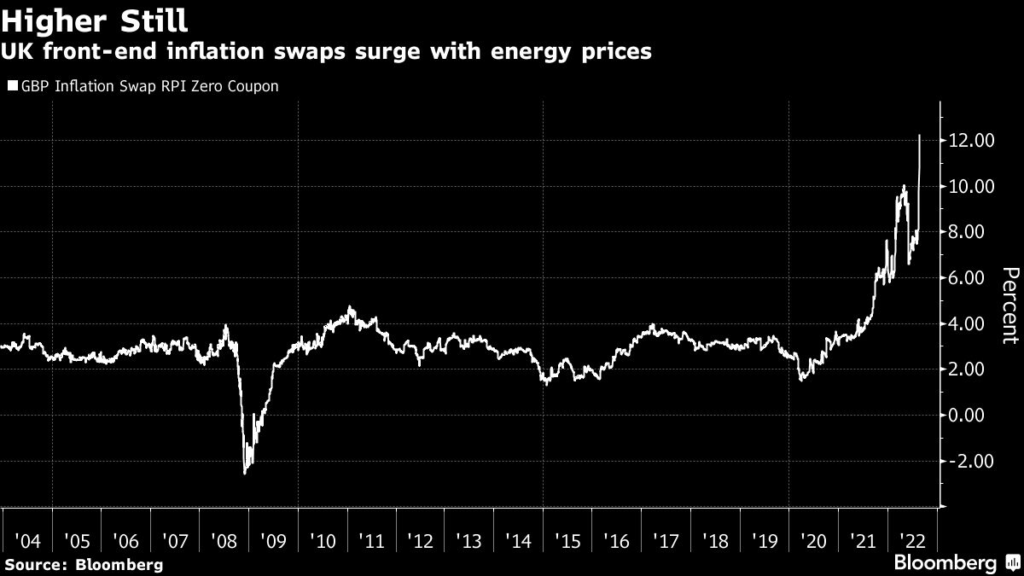
(Bloomberg) — The Rank Group’s Grosvenor Casino Unite union members are the latest UK workers to have voted overwhelming in favor of industrial action, planning a 72-hour strike from Sept. 9 as Britain’s economic crisis takes it toll on pockets.

A total of 150 workers from across Grosvenor Casinos’ seven London venues voted to reject retention bonus payments of £600 and £800 as “totally inadequate,” according to a Unite union statement. The Casino workers want an improved pay deal to counter record inflation, the union said.

A spokesperson for Rank said in a statement the company was “disappointed” by the move. “Against the backdrop of an extremely challenging trading environment for Rank, and for the sector as a whole, we have made a strong offer which we believe fairly addresses the current cost of living crisis,” they said.

The casino workers join a raft of the UK’s workforce voting in favor of industrial action in pay disputes. Most of the UK’s criminal trial lawyers started an indefinite strike Monday and in recent weeks postal staff, dockers, bus drivers, BT workers and airport and railway employees have demanded pay and job benefits to counter double-digit inflation, lagging income growth and soaring energy bills.

Read more: Inflation in UK Shops Climbs to Highest Rate on Record

“Grosvenor Casinos is another big money company that is raking it in but refusing to pay its workers a wage that they can live on,” Unite general secretary Sharon Graham said. “It’s just not acceptable and this huge vote for action underscores the sense of anger across this workforce.”

(Updates with comment in third paragraph.)

More stories like this are available on bloomberg.com

©2022 Bloomberg L.P.

Nordic Lawmakers Scrutinize $33 Billion Power Backstop

(Bloomberg) — Lawmakers in Sweden and Finland are on Monday reviewing their $33 billion emergency backstop plans devised over the weekend to prevent utilities from defaulting after a fresh surge in energy prices.

On Sunday, the two governments announced liquidity facilities made up of loans and credit guarantees to avoid some power companies going into technical defaults as soon as Monday over climbing collateral requirements. The aim is to prevent Russia’s energy curbs from sparking a financial crisis.

With price swings across the European energy space higher than ever, there are members on Nasdaq Inc.’s power market that are “facing hard times,” spokesman David Augustsson said on Monday without elaborating. The initiative for a guarantee package came from government and not the exchange, he said. 

“This is an extreme time of uncertainty and the addition of government liquidity guarantees will add an extra layer of stability to support orderly trading and energy companies,” he said by email. Overall margin requirements for traders using the power exchange are now four times higher than a year ago, he added. 

Finland’s Economy Minister Mika Lintila said on Sunday that several companies had been identified that could potentially be facing a liquidity crisis “quite quickly.” Vattenfall AB, the region’s biggest utility, said in a response to emailed questions on Monday that its finances were “stable,” and welcomed any initiatives that would help stabilize the market. 

The packages will be open to both larger and smaller utilities. Finland’s Fortum Oyj is currently in talks with the Finnish government on support. 

“Smaller utilities with slimmer cash balances and less established credit lines with banks might be feeling the squeeze currently,” Jakob Magnussen, global head of credit research at Danske Bank A/S, said by email. “And they will benefit and could potentially be a life-saver for some of them.”

The Nordic power market is the world’s oldest and was for a long time the most liquid too, until it was overtaken by Germany. Activity was gradually declining even before the massive price jumps that began last year. And in markets with low liquidity, prices tend to climb even more, which then inevitably leads to higher margin calls. 

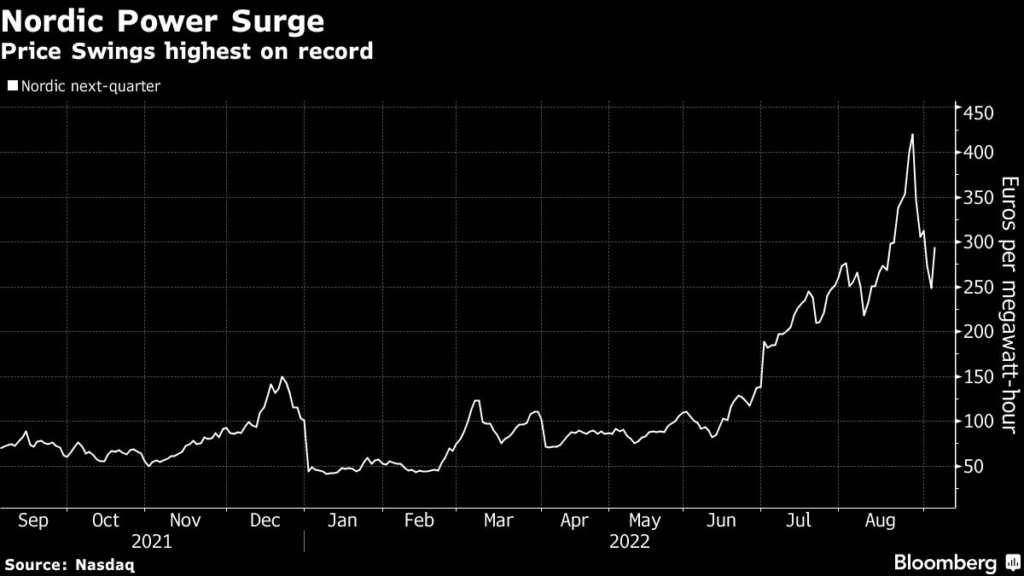
There were fears the market would spiral out of control on Monday after Russia kept its Nord Stream pipeline to Germany shut for the time being. But activity on Monday morning was “relatively calm,” according to Augustsson, with the benchmark next-quarter contract gaining 12% to 280 euros per megawatt-hour. It traded as high as 421 euros on Aug. 26. 

On Sunday, Sweden’s Finance Minister Mikael Damberg had warned that failing to act “could have contagion effects on the rest of the financial market,” even as the “issue is currently isolated to energy producers.” Sweden is home to Nasdaq Clearing AB, which sits at the heart of the Nordic power market, and also acts as the central counterparty for exchange and over-the-counter trades in equity derivatives and fixed income derivatives, among others.

Sweden’s Riksdag is set to take a decision after 3 p.m. in Stockholm, following a debate, the parliament said in a notice on its website. The Finnish motion was sent to lawmakers on Monday as part of a third supplementary budget for 2022. 

Europe Scrambles to Respond as Gas Prices Surge: Energy Update

“This has, in a way, the ingredients for an energy-industry Lehman Brothers” moment, Lintila said at a news conference in Helsinki on Sunday, referring to the US investment bank whose name has become synonymous with systemic risk after its collapse set off the global financial crisis in 2008.

Sweden is extending as much as 250 billion kronor ($23 billion) in credit guarantees, while Finland’s program worth as much as 10 billion euros ($10 billion) includes loans and guarantees. 

Norway’s government is closely monitoring developments in the financial power market but said it currently sees no need for measures of its own, and Denmark is reviewing the situation for its energy companies, newspaper Borsen quoted Business Minister Simon Kollerup as saying.

Collateral Demands

The skyrocketing price of energy in Europe has made it more expensive for utilities to buy and sell electricity, because of the collateral required to guarantee trades. Fortum Oyj said Aug. 29 its collateral rose by 1 billion euros in a week to 5 billion euros, excluding funds posted by its German subsidiary Uniper SE.

The utility welcomed the government action, and said its discussions on liquidity support continue with the Finnish state, its majority owner. It had turned to the state for assistance to secure its liquidity needs until its hedged power contracts go to delivery and collaterals are released. Uniper, which has also sought further liquidity help, is not eligible for funds under the Finnish plan. The German company was bailed out just weeks ago after a massive shortfall in deliveries of natural gas from Russia led to huge losses.

The European Energy Exchange AG has also asked for more government support to traders to guarantee their buying and selling as billions of euros put up as collateral for trades are sapping liquidity and making prices even more volatile.

While the Finnish program has no set limits per company, the European Commission may impose such restrictions, the government said. As many as 30 companies are eligible to seek two-year loans under the plan, and the loans are a last resort after companies have exhausted options from banks and their owners, the government said. Only companies with 100 megawatts of production can partake, or those critical to the functioning of society. 

The Swedish guarantees will be provided by the National Debt Office, and are primarily aimed at Swedish companies, though entities based in other Nordic and Baltic countries can access them during the initial two weeks, or until their governments provide support. The move comes a week ahead of Sweden’s election, in which a constellation of conservative and liberal parties are seeking to unseat the Social Democratic minority cabinet, led by Prime Minister Magdalena Andersson.

The European Union is also preparing to step into the energy market to dampen soaring power costs. European leaders have been working for months to try to offset the impact of Russia’s squeeze on gas — a move they describe as the weaponization of energy. Ministers gathering for an emergency meeting on Friday will discuss measures from natural gas price caps to a suspension of power derivatives trading, according to a draft document seen by Bloomberg News. 

(Updates with analyst comment in seventh paragraph.)

More stories like this are available on bloomberg.com

©2022 Bloomberg L.P.

Nordic Lawmakers to Scrutinize $33 Billion Power Backstop

(Bloomberg) — Lawmakers in Sweden and Finland are on Monday set to review their $33 billion emergency backstop plans devised over the weekend to prevent utilities from defaulting after a fresh surge in energy prices.

On Sunday, the two governments announced liquidity facilities made up of loans and credit guarantees to avoid some power companies going into technical defaults as soon as Monday over climbing collateral requirements. The aim is to prevent Russia’s energy curbs from sparking a financial crisis.

With price swings across the European energy space higher than ever, there are members on Nasdaq Inc.’s power market that are “facing hard times,” spokesman David Augustsson said on Monday without elaborating. The initiative for a guarantee package came from government and not the exchange, he said. 

“This is an extreme time of uncertainty and the addition of government liquidity guarantees will add an extra layer of stability to support orderly trading and energy companies,” he said by email. Overall margin requirements for traders using the power exchange are now four times higher than a year ago, he added. 

Finland’s Economy Minister Mika Lintila said on Sunday that several companies had been identified that could potentially be facing a liquidity crisis “quite quickly.” Vattenfall AB, the region’s biggest utility, said in a response to emailed questions on Monday that its finances were “stable,” and welcomed any initiatives that would help stabilize the market. 

The Nordic power market is the world’s oldest and was for a long time the most liquid too, until it was overtaken by Germany. Activity was gradually declining even before the massive price jumps that began last year. And in markets with low liquidity, prices tend to jump even more, which then inevitably leads to higher margin calls. 

There were fears the market would spiral out of control on Monday after Russia kept its Nord Stream pipeline to Germany shut for the time being. But activity on Monday morning was “relatively calm,” according to Augustsson, with the benchmark next-quarter contract gaining 12% to 280 euros per megawatt-hour. It traded as high as 421 euros on Aug. 26. 

On Sunday, Sweden’s Finance Minister Mikael Damberg had warned that failing to act “could have contagion effects on the rest of the financial market,” even as the “issue is currently isolated to energy producers.” Sweden is home to Nasdaq Clearing AB, which sits at the heart of the Nordic power market, and also acts as the central counterparty for exchange and over-the-counter trades in equity derivatives and fixed income derivatives, among others.

Sweden’s Riksdag is set to take a decision after 3 p.m. in Stockholm, following a debate, the parliament said in a notice on its website. The Finnish motion was sent to lawmakers on Monday as part of a third supplementary budget for 2022. 

Europe Scrambles to Respond as Gas Prices Surge: Energy Update

“This has, in a way, the ingredients for an energy-industry Lehman Brothers” moment, Lintila said at a news conference in Helsinki on Sunday, referring to the US investment bank whose name has become synonymous with systemic risk after its collapse set off the global financial crisis in 2008.

Sweden is extending as much as 250 billion kronor ($23 billion) in credit guarantees, while Finland’s program worth as much as 10 billion euros ($10 billion) includes loans and guarantees. 

Norway’s government is closely monitoring developments in the financial power market but said it currently sees no need for measures of its own, and Denmark is reviewing the situation for its energy companies, newspaper Borsen quoted Business Minister Simon Kollerup as saying.

Collateral Demands

The skyrocketing price of energy in Europe has made it more expensive for utilities to buy and sell electricity, because of the collateral required to guarantee trades. Fortum Oyj said Aug. 29 its collateral rose by 1 billion euros in a week to 5 billion euros, excluding funds posted by its German subsidiary Uniper SE.

The utility welcomed the government action, and said its discussions on liquidity support continue with the Finnish state, its majority owner. It had turned to the state for assistance to secure its liquidity needs until its hedged power contracts go to delivery and collaterals are released. Uniper, which has also sought further liquidity help, is not eligible for funds under the Finnish plan. The German company was bailed out just weeks ago after a massive shortfall in deliveries of natural gas from Russia led to huge losses.

The European Energy Exchange AG has also asked for more government support to traders to guarantee their buying and selling as billions of euros put up as collateral for trades are sapping liquidity and making prices even more volatile.

While the Finnish program has no set limits per company, the European Commission may impose such restrictions, the government said. As many as 30 companies are eligible to seek two-year loans under the plan, and the loans are a last resort after companies have exhausted options from banks and their owners, the government said.

The Swedish guarantees will be provided by the National Debt Office, and are primarily aimed at Swedish companies, though entities based in other Nordic and Baltic countries can access them during the initial two weeks, or until their governments provide support. The move comes a week ahead of Sweden’s election, in which a constellation of conservative and liberal parties are seeking to unseat the Social Democratic minority cabinet, led by Prime Minister Magdalena Andersson.

The European Union is also preparing to step into the energy market to dampen soaring power costs. European leaders have been working for months to try to offset the impact of Russia’s squeeze on gas — a move they describe as the weaponization of energy. Ministers gathering for an emergency meeting on Friday will discuss measures from natural gas price caps to a suspension of power derivatives trading, according to a draft document seen by Bloomberg News. 

(Updates with margin requirements in fourth paragraph.)

More stories like this are available on bloomberg.com

©2022 Bloomberg L.P.
Boris Johnson’s Father Halts Xinjiang Trip After Covid Lockdown

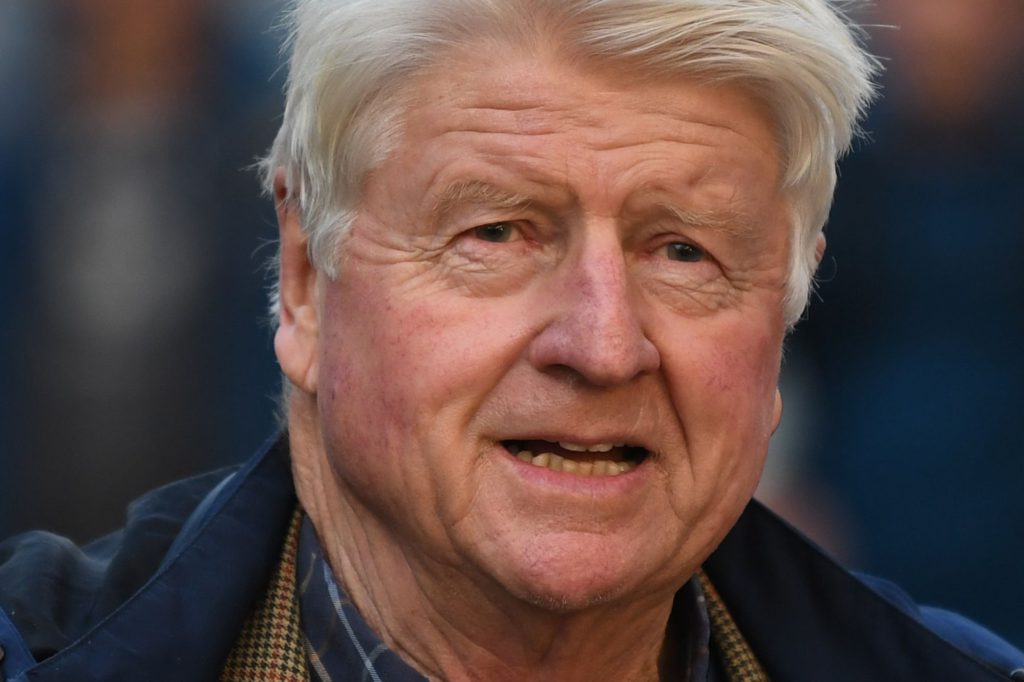
(Bloomberg) — Stanley Johnson, the father of the UK’s outgoing prime minister, has left China after being caught in a Covid lockdown that spoiled his plans to shoot a travel film in Xinjiang, where London has accused Beijing of widespread rights abuses.

The former Conservative member of the European Parliament, who has pushed for closer ties between the UK and China, was in quarantine in the megacity of Chengdu when it went into lockdown last week. His youngest child, Max, who studied for an MBA at Beijing’s prestigious Tsinghua University and had been due to accompany his father to Xinjiang, told Bloomberg News that Johnson had “left for the UK.”

“We will make a return trip next year when Covid rules are hopefully relaxed,” Max Johnson said in a text message. 

Boris Johnson, who leaves office this week, detailed his father’s experience in hotel quarantine, a requirement for all inbound travelers to China, in a letter published in the Sunday Express newspaper. 

“He has been shut in his hotel room for nine days, with food left outside his room by staff in hazmat suits,” he wrote on Sunday, adding that the 82-year-old was told of the lockdown “just as he thought he was coming to the end of his Covid quarantine.”

“When he looks out at the streets of Chengdu, they seem deserted,” he added, describing the city of 21 million people.

READ: UK Set to Find Out Next Prime Minister After Bruising Tory Race

Chengdu’s authorities have given no timeframe for lifting restrictions, raising fears of a reprise of the grueling two-month lockdown in Shanghai earlier this year. Under President Xi Jinping’s strict virus strategy, even a handful of cases can prompt authorities to seal off cities, send the infected to centralized quarantine and enforce mass Covid tests in order to eliminate community transmission.

Earlier this year, Johnson told the South China Morning Post that he planned to spend six weeks from August filming a documentary in the Xinjiang region. The film would retrace 13th-century Italian explorer Marco Polo’s journey along the Silk Road, and be filmed in part with state broadcaster CCTV. 

Read more: UN Report Accuses China of ‘Serious’ Rights Abuses in Xinjiang

Beijing committed “serious human rights abuses” against the Muslim majority Uyghur ethnic group in Xinjiang, then UN High Commissioner for Human Rights Michelle Bachelet said last week. Her long-awaited assessment found “patterns of torture or other forms of cruel, inhuman or degrading treatment or punishment” as part of a campaign that Beijing has defended as an effort to fight extremism.

The elder Johnson told the Post in June that his trip wasn’t “a political exercise” and the Chinese government had been “tremendously helpful,” commenting on preparations for the film.

Once a self-declared “Sinophile,” Boris Johnson became increasingly tough on China during his time in office under pressure from members of his ruling Tory party. 

The UK sanctioned Chinese officials and imposed a diplomatic boycott of the Beijing Olympics over alleged rights abuses in Xinjiang and banned Huawei Technologies from Britain’s 5G network due to security concerns. He also opened a visa program for Hong Kongers wanting to escape the former British colony after Beijing imposed a national security law that curtailed democratic freedoms.

Read more: China Relationship Is Casualty of Truss-Sunak Battle to Lead UK

His father, by comparison, has called for stronger ties with Beijing. In June, he thanked China’s ambassador to the UK, Zheng Zeguang, for assisting with his trip to Xinjiang. Getting access to the remote region is notoriously hard for foreign observers, who are typically tailed by government officials. Zheng was banned from the UK’s parliament after China sanctioned British politicians.

More stories like this are available on bloomberg.com

©2022 Bloomberg L.P.
Gas Crisis Batters European Stocks From Utilities to Industrials

(Bloomberg) — Investors are rushing to sell stocks most exposed to the energy crisis after Russia dealt a fresh blow by not resuming gas deliveries through the Nord Stream pipeline.

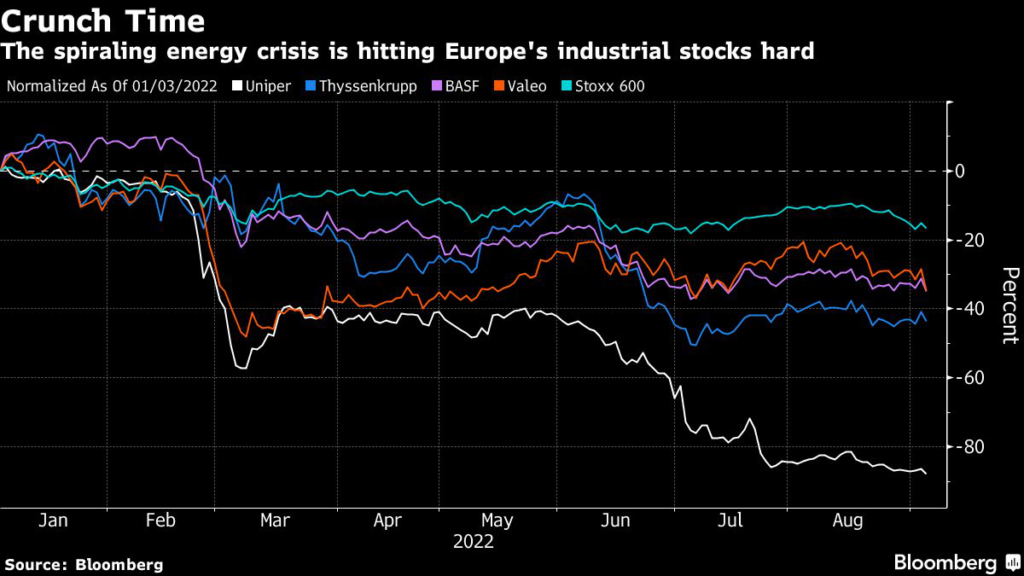
Gas prices surged more than 30% on Monday as traders reacted to Russia’s decision late Friday to keep its main gas pipeline shut indefinitely. Sectors most sensitive to a gas shock are bearing the brunt of the selloff, including industrials, chemicals, construction, automotive, energy and utilities. 

Steelmaker Thyssenkrupp AG, car-parts manufacturer Valeo, chemicals firm BASF SE, cement maker Cie de Saint-Gobain and gas utility Uniper SE are among the worst performers in Europe on Monday. Germany’s DAX index, filled with corporate heavyweights from these sectors, is the biggest laggard among the region’s major benchmarks.

“Fears mount that European industries may have to scale back some production in the months to come,” said Susannah Streeter, a senior analyst at Hargreaves Lansdown Plc. The jump in gas prices “will add fuel to the fire of inflation and intensify the clamor for emergency government help,” she said.

Industrial output has already taken a hit, with the latest surge in power prices likely to force more manufacturers to reduce operations. Fertilizer makers Yara International ASA and Grupa Azoty SA have slashed production, while gauges of manufacturing in Europe and Asia fell last week.

The prospects of a prolonged cutoff from Russian gas supplies is pushing European governments toward emergency measures and energy rationing to protect companies and consumers from soaring costs. Energy ministers are set to discuss proposals to curb power prices when they hold an emergency meeting on Friday — including gas-price caps and a suspension of power derivatives trading.

Read More: Nordic Utilities Get $33 Billion Aid as Power Markets Fray

Consumers are facing soaring energy bills on top of other inflation-driven cost increases, further denting discretionary spending. The Stoxx Europe 600’s retail and consumer products sub-indexes are also down sharply, with online clothing shop Zalando SE and meal-kit delivery firm HelloFresh SE sliding.

More stories like this are available on bloomberg.com

©2022 Bloomberg L.P.
BYD Sinks as Buffett Trims Stake, Daiwa Predicts Full Exit

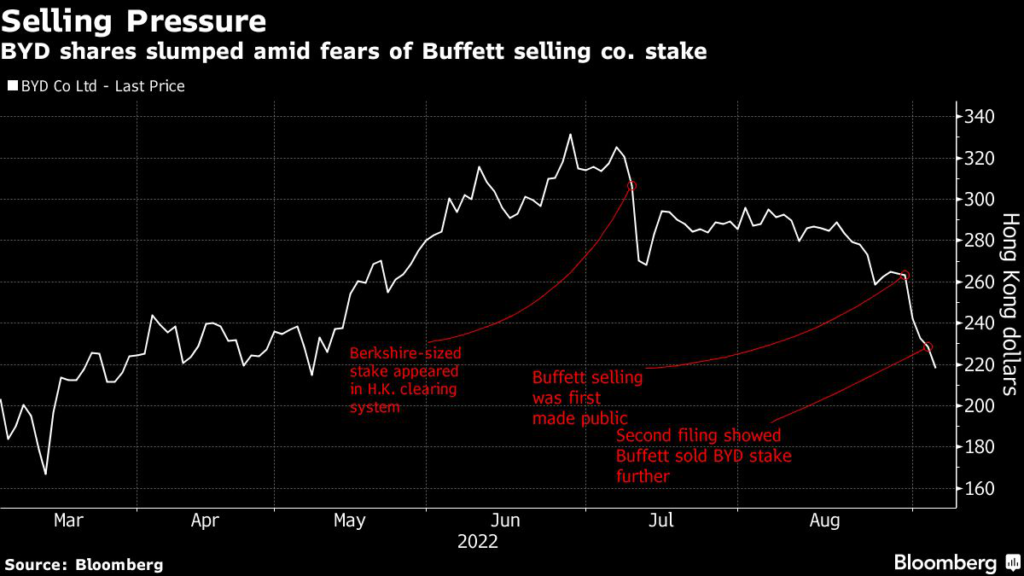
(Bloomberg) — Traders offloaded more shares of BYD Co. on Monday after a second filing showed Warren Buffett’s Berkshire Hathaway Inc. had further trimmed its stake in the company. 

The Chinese automaker’s stock dropped as much as 6.8% to the lowest level since May 10 in Hong Kong. The selloff extended the shares’ losses to almost 30% since a BYD stake that matched Berkshire’s stake appeared in Hong Kong’s clearing and settlement system in July. 

Berkshire’s waning interest in the stock, coupled with the prospect of the firm’s eventual exit, has outweighed news that BYD is now the world’s second biggest electric-car battery supplier. A year-on-year surge in new-energy vehicle sales volume in August also failed to lift sentiment. 

“We do expect Berkshire Hathaway to completely exit its position,” said Kelvin Lau, an analyst at Daiwa Capital Markets Hong Kong Ltd. “Even though we expect the fundamentals of the company to remain solid, we expect the stake sale from Berkshire Hathaway would impose near-term share-price pressure.” 

Theories about Buffett’s plans for the bellwether Chinese electric car company have swirled since a 20.49% stake — identical to the size of Berkshire’s last reported BYD position in Hong Kong as of end-June — entered the Central Clearing and Settlement System in July.

BYD Stock Sale Is an Old-School Value-Investing Move by Buffett

Berkshire has now disposed of about 18 million BYD shares and it still holds an 18.87% stake, or about 207 million shares, as of last Thursday, according to a Hong Kong stock exchange filing. 

(Updates with more details in the second paragraph.)

More stories like this are available on bloomberg.com

©2022 Bloomberg L.P.
French Bid to Counter Netflix Threat Falters on Antitrust Rules

(Bloomberg) — A proposed merger between two of France’s biggest television companies to better compete with fast-growing streaming services like Netflix Inc. looks increasingly unlikely in the face of regulatory opposition.

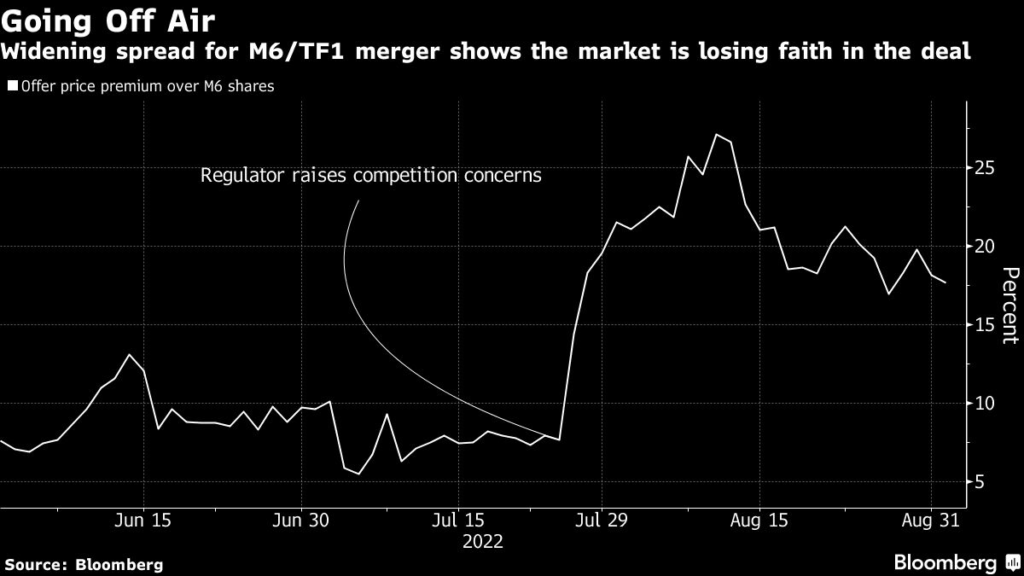
The French Competition Authority raised significant concerns in advertising over a tie-up between Television Francaise 1 SA and Groupe M6 that’s threatening the viability of a deal. The final decision is due by Oct. 17, but M6 is trading 17% below the offer price, signaling that the market sees the merger as unlikely to succeed.

TF1 and M6 are defending the plan in front of the regulator on Monday and Tuesday. They may well bring up recent decisions by streaming giants Disney+ and Netflix to add cheaper subscriptions that include ads to make their case.

“We would be surprised if a deal that effectively gives the combined entity 75% of the advertising market went through without some intervention,” said Graham Simpson, analyst at Canaccord Genuity’s research division Quest. “Some channels would have to be sold to satisfy the commission. However, management have made clear selling the flagship channels is a deal-breaker.”

Representatives from TF1 and M6 declined to comment. The head of M6, Nicolas de Tavernost, made it clear in a Telerama interview last week that he was still willing to convince the authority, saying the French now spend more time on YouTube than on TF1.

There’s a lot riding on the deal for two other companies: French construction and telecom conglomerate Bouygues SA, which is TF1’s biggest shareholder, and German media giant Bertelsmann SE, the largest owner of M6 via publicly traded RTL Group SA. Under the terms of the merger, Bouygues would end up as the controlling shareholder of the combined broadcaster, though it’s agreed to work in concert with RTL.

Aside from being the leader in France in terms of viewership, TF1 broadcasts the most popular news program in the country and hit shows like The Voice and celebrity dance competition Danse avec les stars. M6, the country’s most profitable private TV channel, is known for talent shows like Top Chef and airs popular TV series from the US. The companies compete for viewers with state-owned France Televisions, which operates four channels in mainland France but doesn’t carry advertising after 8 p.m.

Traditional free-to-air TV still accounts for the bulk of viewing time, but most of the growth is in streaming platforms. A tie-up between TF1 and M6 at this stage is seen as a defensive move that would create a stronger player in the market to go up against the likes of Netflix, Disney+ and Amazon.com Inc.’s Prime platform. 

“This merger is the most important event in French TV since TF1’s privatization 35 years ago, as it would permanently reshape the domestic landscape,” said Societe Generale SA analyst Christophe Cherblanc. “It would be a setback for France’s TV landscape if the regulator blocks the deal, as the market won’t benefit from a huge player that would have invested in more content.”

More stories like this are available on bloomberg.com

©2022 Bloomberg L.P.
Dollar Jumps as Euro, Europe Equity Futures Sink: Markets Wrap

(Bloomberg) — European equity futures tumbled about 3% and the euro fell Monday as the region’s worsening energy crisis added to risks for a global economy already facing high inflation and a wave of monetary tightening.

An Asian equity index was also in the red, paced by losses in Hong Kong, where tech shares slid as traders weighed the risk of curbs on investment from the US. US contracts wavered after the worst week for world shares since June.

The dollar jumped as commodity-linked currencies joined the euro’s retreat to a two-decade low. Oil rallied past $88 a barrel before an OPEC+ meeting on supply. Cash Treasuries and US stocks are closed because of Labor Day.

Russia’s Gazprom PJSC last week again halted its key European gas pipeline indefinitely after Group of Seven leaders agreed to implement a price cap on Russian oil as the Kremlin continues its war in Ukraine. Natural gas surged 31% in Europe and nations there could roll out special steps to rein in power costs. Germany plans a $65 billion package to shield consumers.

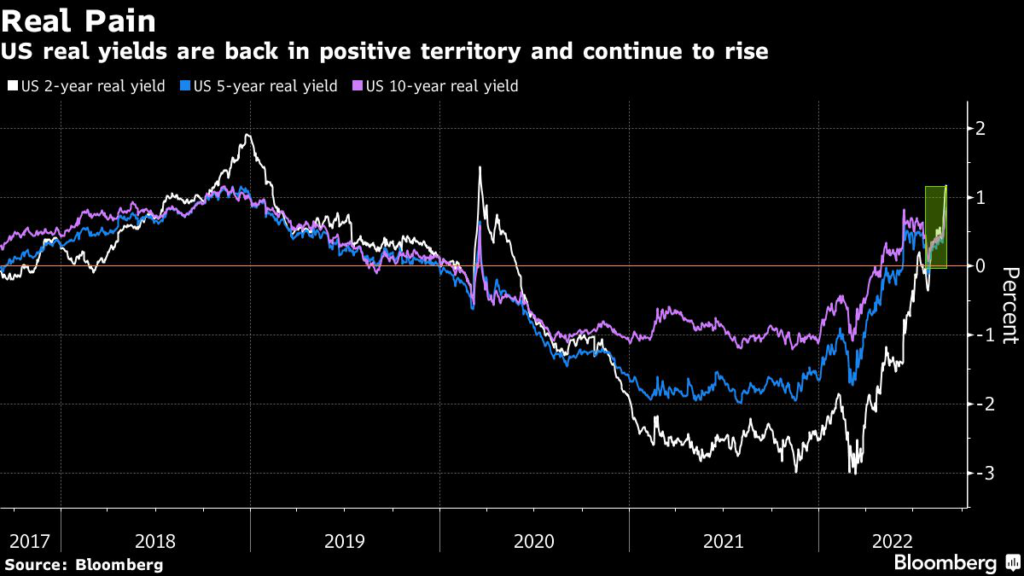
Monetary authorities including Europe’s central bank are set to keep hiking interest rates this week to fight inflation despite the darkening global economic outlook due to risks such power shortages and China’s Covid curbs. An attendant advance in real yields — seen as the true cost of money for borrowers — poses an obstacle to a variety of risk assets.

“The EU energy situation highlights the very challenging environment for central banks as they normalize policy settings and continue to hike,” said Su-Lin Ong, head of Australian economic and fixed-income strategy at Royal Bank of Canada.

Markets also face more uncertainty from US-China tension. The Biden administration is considering moves to curb US investment in Chinese technology firms and will allow Trump-era merchandise import tariffs to continue while the levies are reviewed.

Separately, China extended its lockdown in districts of the megacity Chengdu and ordered more mass testing there as it tries to contain a Covid outbreak.

In the UK, Conservative Party members are expected to name Liz Truss as their leader, clearing her way to become prime minister. Her plan to “turbo-charge” the economy by slashing taxes is already worrying investors amid double-digit inflation. The British pound weakened against the greenback. 

Elsewhere, Bitcoin dropped below the $20,000 level. Gold was little changed.

There will be a TOPLive event at around 2:30 p.m. Hong Kong time (7:30 a.m. London) for a discussion on the MLIV Pulse survey results with Becky Liu, managing director, head of China macro strategy at Standard Chartered Bank; Simon Flint, a Markets Live strategist at Bloomberg News; and Sofia Horta e Costa, chief correspondent for Chinese markets for Bloomberg News. Please send questions in advance to TOPLive@bloomberg.net, and we’ll pick some to ask when the Q&A begins.

What to watch this week:

  • UK prime minister to be announced, Monday
  • OPEC+ meeting on supply, Monday
  • Australia rate decision, Tuesday
  • Apple event due to feature new iPhones, watches, Wednesday
  • Bank of England Governor Andrew Bailey at Treasury Committee, Wednesday
  • Fed’s Beige Book of regional economic activity, Wednesday
  • Cleveland Fed President Loretta Mester due to speak, Wednesday
  • European Central Bank rate decision, Thursday
  • Fed Chair Jerome Powell speaks at a Cato Institute conference in Washington, Thursday
  • Reserve Bank of Australia Governor Philip Lowe speaks at event, Thursday
  • China PPI, aggregate financing, money supply, new yuan loans, Friday
  • EU energy ministers extraordinary meeting on emergency intervention in electricity markets, Friday

Some of the main moves in markets:

Stocks

  • S&P 500 futures rose 0.2% as of 7:06 a.m. in London. The S&P 500 fell 1.1%
  • Nasdaq 100 futures were steady. The Nasdaq 100 fell 1.4%
  • Japan’s Topix index fell 0.1%.
  • Australia’s S&P/ASX 200 index added 0.2%
  • South Korea’s Kospi index fell 0.3%
  • China’s Shanghai Composite Index was steady
  • Hong Kong’s Hang Seng Index declined 1.3%
  • Euro Stoxx 50 futures sank 2.7%

Currencies

  • The Bloomberg Dollar Spot Index rose 0.4%
  • The euro fell 0.7% to $0.9884
  • The Japanese yen was at 140.41 per dollar, down 0.1%
  • The offshore yuan fell 0.5% to 6.9489 per dollar

Bonds

  • The yield on 10-year Treasuries declined six basis points to 3.19% on Friday
  • Australia’s 10-year bond yield was at 3.64%

Commodities

  • West Texas Intermediate crude rose 2% to $88.57 a barrel
  • Gold was at $1,712.96 an ounce

More stories like this are available on bloomberg.com

©2022 Bloomberg L.P.
Xi to Give Boost to China Stocks But Not Yuan, Markets Survey Finds

(Bloomberg) — A precedent-breaking third term in office for President Xi Jinping is expected to give China’s beleaguered stock market a welcome boost, but investors appear wary.

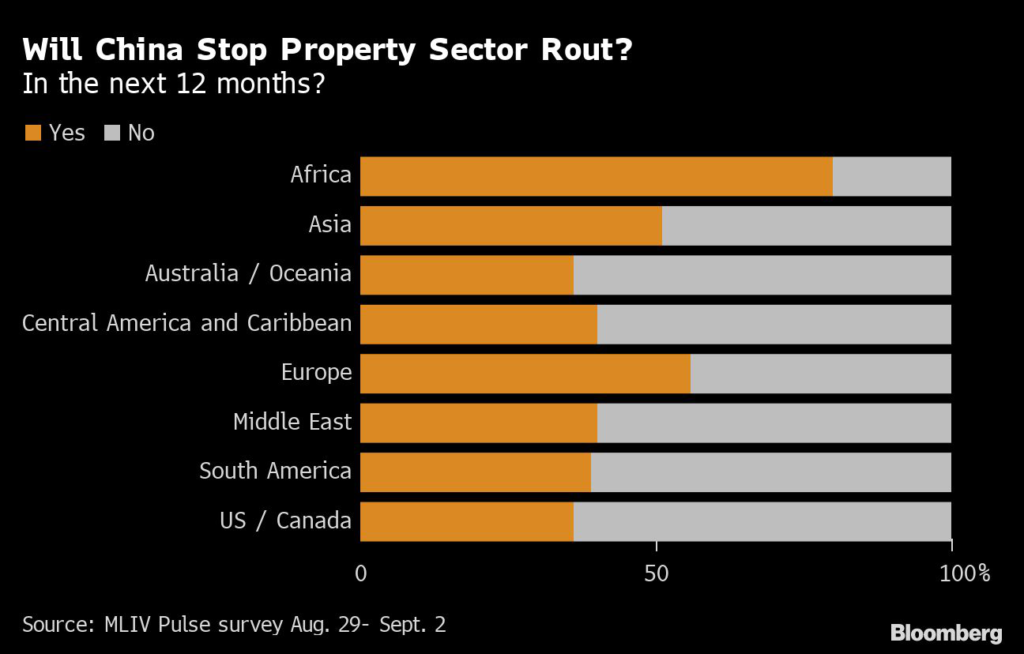
The yuan will continue to slide, while the property market crisis will fester for at least another 12 months, majority of MLIV Pulse survey respondents predict, making them more bearish on the world’s second-largest economy than they were in May.

“China obviously is grappling with a slowdown of some generational importance,” John Woods, Credit Suisse Asia Pacific chief investment officer, said on Bloomberg TV. “The China story is really contingent on policy support.”

A majority of the 451 survey contributors see Chinese equities gaining ahead of and over the six months following the confirmation of President Xi’s third term in power. Market watchers expect the Communist Party congress, scheduled to take place in mid-October, to remove any uncertainty about China’s leadership reshuffle, economic priorities and Covid policy direction.

“With clarity on leadership and policies post the event, it would not be inconceivable that all levels of government shift their focus in reviving economic growth for the country,” said Steven Luk, Chief Executive Officer at FountainCap Research & Investment in Hong Kong.

China’s stock market has been among the worst performing globally this year as an array of factors from the ongoing property crisis to worries over growth, Covid Zero strategy and regulatory uncertainty weigh on the sentiment. The benchmark index tracking onshore shares is down more than 30% from a 2021 peak. 

“It’s been quite volatile,” Nisa Leung of Qiming Venture Partners said on Bloomberg TV. “There is still a lot of opportunities.”

Even key earnings beats and stimulus efforts like a surprise rate cut have failed to generate optimism as traders see persistent Covid lockdowns standing in the way of any meaningful recovery. 

China’s Milestone Moment for Markets Is Now a Distant Memory

The real estate woes, in particular, are stoking concern about liquidity and indebtedness — and the extent to which that will impact other parts of the world’s second-largest economy. Despite a slew of government policies in recent months to prop up the sector, the majority of the poll respondents believe Beijing will be unable to stop the home market crisis in the next 12 months.

“The downside risks for the sector are decelerating, but it takes time to restore market confidence,” said Banny Lam, head of research at CEB International Investment Corp.

Regulatory uncertainty is another reason stopping investors from betting on China. About two thirds of investors said they have reduced or closed their exposure to China due to regulatory risks. 

Tech behemoths have been particularly hurt by Beijing’s sweeping crackdown on private enterprises, one aimed at curbing their market influence and monopolistic practices. A gauge tracking Chinese tech shares listed in Hong Kong is down more than 25% this year. 

Investors are also very bearish on the yuan. The currency has already fallen 8% against the dollar this year and saw a sharp selloff last month when the People’s Bank of China unexpectedly cut rates.

Amid Wall Street forecasts that the yuan will touch 7 per dollar — a key psychological breach that could trigger capital outflows — the survey suggested it is more likely to hit 7.20 before 6.50.

That’s likely predicated on a strong belief there are more gains ahead in the short term for the greenback, as a significant majority sees the Bloomberg Dollar Spot Index higher in a month’s time.

Dollar Gauge Rallies to Record High as Yen Cracks Key 140 Mark

With negative sentiment swirling around fresh lockdowns to curb Covid in China’s southwestern megacity of Chengdu, the backdrop of a weak currency lends little conviction for foreign investors to pick up the nation’s government debt either. The majority of those surveyed said they thought Treasuries would offer better value over the next 12 months.

China’s 10-year benchmark note now yields about a 60 basis point discount to its equivalent in the US, a far cry from last year, when investors bought the bonds at a record pace, hailing them as an alternative safe haven due to their lack of correlation with global assets. 

The Chinese Communist Party’s twice-a-decade leadership congress next month could bring some adjustments in Covid restrictions, which “would be great for markets globally,” Stephen Innes, a managing partner at SPI Asset Management, told Bloomberg TV. 

Citigroup Inc. strategists also see the possibility of positive developments for China investors coming out of the plenum, including a more definitive action plan to scale out of the Covid Zero strategy. Still, a team including Jamie Fahy don’t see much of an impact this year.

“These measures are most likely a 2023 theme once the politics have settled,” Citigroup analysts said.

Join us on Sept. 5 at 2:30 p.m. Hong Kong time (7:30 a.m. London) for a discussion of the survey results with Becky Liu, managing director, head of China macro strategy at Standard Chartered Bank, Simon Flint, a Markets Live strategist at Bloomberg News, and Sofia Horta e Costa, chief correspondent for Chinese markets for Bloomberg News. For more markets analysis, see the MLIV blog. 

(Updates with a TV clip and comments from an executive in the fifth paragraph.)

More stories like this are available on bloomberg.com

©2022 Bloomberg L.P.
Close Bitnami banner
Bitnami